Showing posts with label ncaa. Show all posts

Wednesday, November 16, 2022

November 16, 1940: The Cornell 5th Down Forfeit

November 16, 1940: A game in what will later be called the Ivy League is played at Memorial Field in Hanover, New Hampshire. Dartmouth College hosts Cornell University.

Cornell came into the game with a 6-0 record, a 14-game winning streak, an 18-game unbeaten streak, the nation's Number 2 ranking, and a claim on the previous season's National Championships. (Most sources, including the recently-established Associated Press poll of sportswriters, gave it to Texas A&M.)

Dartmouth came in 3-4, although only 1 of their losses was by more than 6 points. They were coached by Earl "Red" Blaik, who would later coach the U.S. Military Academy at West Point to 3 straight National Championships.

The game was scoreless until the 4th quarter, when a field goal gave Dartmouth a 3-0 lead. With less than a minute left in the game, Cornell got the ball on Dartmouth's 6-yard line. On 1st down, fullback Mort Landsberg gained 3 yards. On 2nd down, Cornell halfback Walt Scholl managed to run the ball to the 1-yard line. On 3rd down, Landsberg tried to run up the middle, but gained maybe a few inches.

Then came the 4th down. Cornell was penalized for delay of game, and referee Red Friesell spotted the ball just over the 5-yard line. With 9 seconds left on the clock, Cornell quarterback "Pop" Scholl threw an incomplete pass into the end zone.

That should have meant Cornell turned the ball over. and Dartmouth got the ball on their own 20-yard line, and could run out the clock with 1 play and win. Linesman Joe McKenney correctly signaled this. But Friesell had miscounted, and placed the ball on the 6-yard line, giving Cornell 1 more chance -- a 5th down, labeled as a 4th down. Given this extra life, Scholl threw a last-play touchdown pass to William Murphy. The extra point was good, and Cornell were 7-3 winners.

Two days later, while reviewing the game film, Cornell head coach Carl Snavely discovered that the officials had mistakenly given his team an extra down. He told acting athletic director Bob Kane and University President Edmund Day. Day happened to be a Dartmouth graduate, although that turned out to be irrelevant. They all agreed that Cornell should send a telegram to Dartmouth, offering to forfeit. Dartmouth's response was an acceptance, and Cornell sent another telegram to the NCAA, officially forfeiting the game. The NCAA declared Dartmouth the winners, 3-0.

What would have happened if Snavely hadn't noticed the mistake? Or had refused to forfeit? Friesell admitted his mistake to the Eastern Intercollegiate Football Association, and acknowledged that his authority "ceased at the close of the game," so there was little he could do about it. The NCAA might have overruled the result, and declared Dartmouth the winners, anyway. But Snavely's sporting gesture made their decision easy.

On December 8, 1966, the Los Angeles Rams were penalized for holding as they attempted a winning drive against the Chicago Bears at the Los Angeles Coliseum. Holding is one of the penalties that results in a down being replayed, not lost. But the officials mistakenly changed the down marker from 1st to 2nd. Nobody noticed, the Rams went on to turn the ball over on downs, and lost, 17-16. The loss didn't change the NFL's Playoff race, so nothing was ever done about it.

On October 14, 1972, the University of Miami played Tulane at the Orange Bowl, and the officials mistakenly called Miami's offense back on the field after it had turned over on downs. Miami scored a touchdown on the next play, and won, 24-21. They did not forfeit. It wasn't a conference game (both teams were then independents), and neither team went to a bowl game, so this didn't matter much.

On October 6, 1990, a Big Eight Conference game was played at Faurot Field in Columbia, Missouri, between the University of Missouri and the University of Colorado. Late in the game, needing a touchdown to win, Colorado called time-out on what should have been 3rd down, but the officials did not change the down marker. At the time, officials were not required to carry handheld down markers.

So on what should have been 3rd down, every on-field indication was of 2nd down. The scoreboard operator saw this, and put a "2" up on the board. Colorado thus got a 5th down, and scored a touchdown n a quarterback keeper, to win, 33-31. That win, which they refused to forfeit, was certified by the NCAA. They already had a loss and a tie, but still ended up winning the Big Eight and National Championships, neither of which they deserved.

It had been half a century, minus a few weeks, since Cornell's forfeit, and a few people involved in that game were still alive, so it was brought up as an example. But Colorado head coach Bill McCartney, so loud in his evangelical Christian faith, did not do the honorable thing and forfeit, the way Carl Snavely had done 50 years before.

In 2006, ESPN published The ESPN College Football Encyclopedia, which named Cornell's concession the 2nd-greatest moment in college football history. Number 1 was Notre Dame's 1928 win over Army, following coach Knute Rockne's halftime "Win one for the Gipper" speech. That shouldn't surprise anyone, given that the Encyclopedia was edited by Beano Cook, a University of Pittsburgh graduate, but one who, on the air, made no secret of his love of Notre Dame.

*

November 16, 1940 was a Saturday. These other notable college football games were played that day:

* Number 1 Minnesota beat Purdue, 33-6 at Memorial Stadium in Minneapolis. Minnesota won the Big Ten Conference, and were named National Champions by the AP.

* Number 3 Texas A&M beat Rice, 25-0 at Kyle Field in College Station, Texas. A&M won the Southwest Conference and the Cotton Bowl.

* Number 4 Stanford beat Number 19 Oregon State, 28-14 at the old Stanford Stadium in Palo Alto, California. Stanford won the Pacific Coast Conference and the Rose Bowl, and were named National Champions by some polling organizations.

* Number 5 Tennessee beat Virginia, 41-14 at Shields-Watkins Field (later renamed Neyland Stadium) in Knoxville, Tennessee. Tennessee won the Southeastern Conference.

* Number 6 Michigan beat Number 10 Northwestern, 20-13 at Michigan Stadium in Ann Arbor.

* Number 7 Notre Dame were upset by Iowa, 7-0 at Notre Dame Stadium in South Bend, Indiana.

* Number 8 Boston College beat Number 9 Georgetown, 19-18 at Fenway Park in Boston. BC went on to beat Tennessee in the Sugar Bowl, and claimed the National Championship, but most sources gave it to Minnesota or Stanford.

* In a rivalry game, Number 12 Duke were upset by North Carolina, 6-3 at Kenan Stadium in Chapel Hill, North Carolina.

* In what would later, but not yet, be considered a major rivalry game, Florida beat the University of Miami, 46-6 at Burdine Stadium (later the Orange Bowl) in Miami.

* In a rivalry game between Catholic schools on opposite sides of San Francisco Bay, St. Mary's beat the University of San Francisco, 13-7 at Kezar Stadium in San Francisco.

* Army lost to the University of Pennsylvania, 48-0 at Franklin Field in Philadelphia.

* Among New York City teams, New York University (NYU) lost to Penn State, 25-0 at Beaver Field in State College, Pennsylvania; while Columbia played Navy to a 0-0 tie at Baker Field; and Manhattan College lost to Villanova, 13-6 at the Polo Grounds.

* And among New Jersey teams, Princeton beat Yale, 10-7 at Palmer Stadium in Princeton; while Rutgers beat St. Lawrence, 20-0 at Rutgers Stadium in Piscataway.

Baseball was out of season. The NBA hadn't been founded yet. Two games were played in the NHL. The New York Rangers and the Detroit Red Wings played to a tie, 3-3 at the old Madison Square Garden. And the Toronto Maple Leafs beat the Montreal Canadiens, 4-2 at Maple Leaf Gardens in Toronto.

Thursday, October 20, 2022

October 20, 1951: The College Basketball Point-Shaving Scandal

Alex Groza

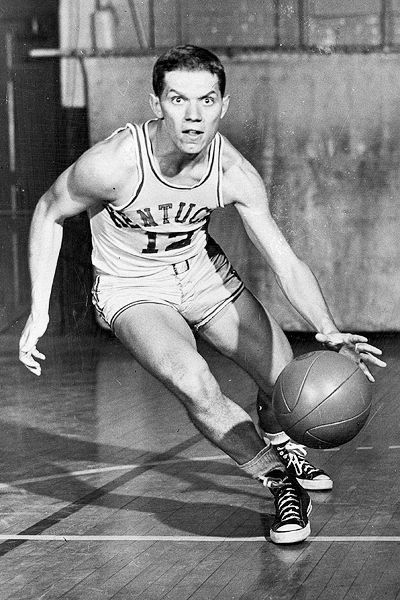
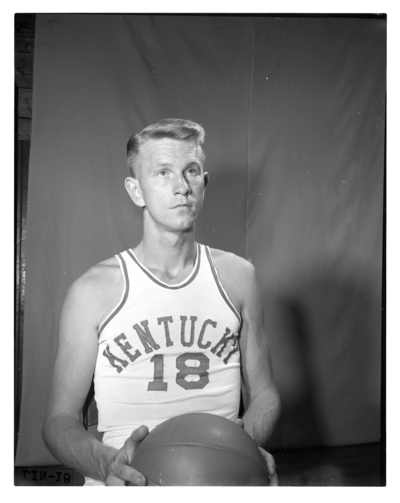
October 20, 1951: Alex Groza, Ralph Beard and Dale Barnstable of the Indianapolis Olympians are arrested for taking bribes from gamblers to "shave points" while they were at the University of Kentucky. When the dust settled in 1952, they were banned from the NBA for life. UK got its 1952-53 season canceled, and was banned from competing in the NCAA Tournament and the NIT in 1954.
Ralph Beard

Barnstable allegedly took $500 ($5,700), but never confessed. Nor did Groza, whose alleged "cut" was never publicly revealed.
Dale Barnstable

Beard admitted that he took $700 -- just under $8,000 in 2022 money -- but denied that he had ever shaved points in a game. He claimed that Frank Hogan, the Manhattan District Attorney, conspired with Podoloff of the NBA and Cardinal Francis Spellman, the Archbishop of New York, to go after Midwestern players in an effort to protect players at Catholic colleges.

Beard may have had a point, for want of a better choice of words. The point-shaving scandal also devastated the programs at New York's 3 main non-Catholic basketball schools. City College of New York won both the NCAA Tournament and the NIT in 1950, but some of its players were accused, and the program was never the same again. Nor were their arch-rivals, New York University. Nor was the leading program in Brooklyn, Long Island University.

But the leading Catholic programs in New York? Fordham University in The Bronx wasn't targeted, but that didn't matter much, because they weren't all that successful in basketball. Same with another Bronx school, Manhattan College, a Catholic school that had, as their name suggests, once been based in Manhattan. But St. John's University, in Queens, was the only successful New York City basketball program to emerge from the scandal unscathed and still winning.

If Spellman and Hogan conspired to knock off CCNY, NYU and LIU, while protecting St. John's and Fordham, then they were doing more to "fix" entire college basketball seasons, and defraud young men out of their entire careers, than organized crime had done to fix individual games.

An aside: When John F. Kennedy ran for President in 1960, at a time when no Catholic had ever been elected to that office, he asked Spellman what he should say if someone asks him whether he believes, as Catholic doctrine says, that the Pope is infallible in matters of faith. Spellman said of the Pope at the time, Pius XII, formerly named Eugenio Pacelli and a native of Rome, "All I know is, he keeps calling me 'Spillman.'" Spellman now has high schools named after him in The Bronx, and in Brockton, Massachusetts, hometown of champion boxers Rocky Marciano and Marvelous Marvin Hagler.

Kentucky, still banned from the postseason at that point, went 25-0 in 1954, and the Helms Foundation declared them -- not NCAA Champion LaSalle or NIT Champion Holy Cross -- the National Champions.

Groza, brother of Pro Football Hall-of-Famer Lou Groza, would later coach in college and in the ABA. Beard tried to play professional baseball, but his gambling connection got him banned from that sport as well. He became a scout for the ABA's Kentucky Colonels, and worked in the pharmaceutical industry. Barnstable wasn't playing in the pros anyway, but had gotten a job as a high school coach in Louisville, and was fired from that job as a result of the scandal. He later became a successful seller of air filters, and won senior golf tournaments. But none of the 3 were were ever involved in the NBA again, as their bans were never lifted.

Groza died in 1995, Beard in 2007, Barnstable in 2019. Though Groza's Number 15 and Beard's Number 12 were both retired by their school, and each lived to see the honor, neither has ever been elected to the Basketball Hall of Fame. Barnstable's Number 18 has not been retired.

*

October 20, 1951 was a Saturday. It was also the date of the Johnny Bright Incident, for which I have a separate entry. Drake University of Des Moines, Iowa played football against Oklahoma A&M – the name was changed to Oklahoma State in 1958 – at Lewis Field in Stillwater, Oklahoma. Drake quarterback Johnny Bright, one of the 1st black players to receive serious consideration for the Heisman Trophy, was assaulted by white A&M defensive tackle Wilbanks Smith. Smith knocked Bright unconscious 3 times in the 1st 7 minutes of the game, the last time breaking his jaw. A&M won the game, 27-14. It was Drake's 1st loss of the season.

The biggest game of the day came at California Memorial Stadium in Berkeley, where Number 11 USC upset Number 1 California, 21-14. Number 2 Tennessee beat Alabama, 27-13 at Legion Field in Birmingham. (The Vols winning this traditional 3rd Saturday in October game wasn't so rare back then.) Tennessee would remain undefeated until blowing the National Championship by losing to Maryland in the Sugar Bowl.

Number 3 Michigan State beat Penn State, 32-21 at old Beaver Field in State College, Pennsylvania. Number 4 Texas was shocked by Arkansas, 16-14 at Razorback Stadium in Fayetteville.

Notre Dame beat the University of Pittsburgh, 33-0 at Pitt Stadium. Harvard beat Army, 22-21 at Harvard Stadium in Boston. The University of San Francisco, putting together an undefeated season that would nonetheless see them end with a ranking of only Number 14, beat fellow Catholic school Fordham, 32-26 at Randall's Island Stadium (later Downing Stadium) in the East River.

New York University lost to Holy Cross, 53-6 at Fitton Field in Worcester, Massachusetts. NYU played one more season of football, winning just 2 more games, and dropped their program. Columbia lost to Penn, 28-13 at Franklin Field in Philadelphia.

Princeton, with the aforementioned Heisman winner Kazmaier, went undefeated, finishing as the Number 5 team in the country. On October 20, they beat Lafayette, 60-7 at Palmer Stadium. And Rutgers lost to Lehigh, 21-6 at Rutgers Stadium in Piscataway, New Jersey.

The baseball season had ended 10 days earlier, with the New York Yankees beating the New York Giants in Game 6 of the World Series. The NBA season didn't begin until November 1. Only 2 NHL games were played:

* The New York Rangers beat the Toronto Maple Leafs, 3-2 at Maple Leaf Gardens in Toronto. Nick Mickoski scored the winner for the Broadway Blueshirts with 3:15 left, to beat the defending Stanley Cup Champions.
* And the Detroit Red Wings beat the Montreal Canadiens, 3-0 at the Olympia Stadium in Detroit. This would be repeated in that season's Stanley Cup Finals, as the Wings swept the Habs.

Also, Arsenal beat Charlton Athletic, 3-1 at The Valley in Southeast London. Also in English soccer, Claudio Ranieri, the Italian manager who led Leicester City to the 2016 Premier League title, was born.

Friday, October 7, 2022

October 7, 1905: The Game That Made the NCAA

Robert "Tiny" Maxwell, center

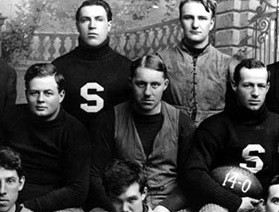
October 7, 1905: The University of Pennsylvania hosts nearby Swarthmore College in a football game at the original Franklin Field in Philadelphia. (Built in 1895, it was replaced by the current structure in 1922.) Penn won the game, 11-4.

Swarthmore guard Robert Maxwell, known as Tiny for being so big and fat, got his nose broken, but played both ways the whole game. It was the only game Swarthmore lost all season, and it would probably be forgotten today, especially since Swarthmore is now a Division III school.

Except a photograph was taken of Maxwell's bloody face, and the wire services put it on the front pages of newspapers all over the country. One of them made its way to President Theodore Roosevelt. A former athlete himself -- he had been on the Harvard boxing team in 1880, and played tennis even while President -- he requested figures, and found out that 18 young men had died playing college football in 1904.

So the Rough Rider hauled the presidents of Harvard, Yale and Princeton -- then the nation's leading football-playing universities -- into the White House, and, in a meeting on October 9, told them point-blank: Either you do something to make football safer, or I will take action.

TR -- he did not like the nickname "Teddy" -- didn't have to actually threaten to ban the sport. Given his reputation as a man who got things done and didn't let anything stand in his way, just the possibility that he would be taking over their sport, taking their power away, was enough to spur them into action. The safety measures they took over the next year are now considered the founding of the National Collegiate Athletic Association (NCAA).

One move that was made in the interest of safety was the invention of hashmarks, putting the ball at the yard-line where the last play ended, but closer to the middle of the field, instead of putting the ball exactly where the play ended every time.

Another suggestion was widening the field. But Harvard shot this idea down, since they had only opened Harvard Stadium in 1903, and they didn't have room to widen their field, and they weren't going to tear down half of their new stadium just to accommodate everyone else. In those days, what Harvard wanted, Harvard got. So an alternative was thought up: The legalization of the forward pass. It would take a few years, but football became considerably more exciting because of it.

This may have been the moment that saved the game Americans call "football," making the college game that became big business, and the NFL that was founded, both in the 1920s, possible. It may also have been the moment that prevented soccer, the sport that most of the rest of the world calls "football" or some linguistic variant, from becoming popular in America. Had the gridiron game been stopped in the Progressive Era, the world's game might have caught on, and, like so many other things that began elsewhere, been given an American touch, so it wouldn't have carried the "foreign" label.

What happened to Tiny Maxwell? He shrugged off his injury, and played early pro football in Ohio and Pennsylvania in the next few years. Oddly, he later served as an assistant coach at both Swarthmore and Penn. He became one of the most respected referees in the game, with his size and his vast knowledge of the rules both cowing players into submission. But he was killed in a car crash in 1922.

In 1937, a group of Philadelphia sportswriters founded the Maxwell Football Club in his memory. Ever since, it has presented the Maxwell Award to the best player in the country. It is considered secondary to the Heisman Trophy, but 40 out of its 70 awards, including the last 4, have gone to the player who also won the Heisman; 2 others have gone to a player who would win the Heisman in a different year.

*

October 7, 1905 was a Saturday. These other notable college football games were played that day:

* Harvard beat Maine, 22-0 at Harvard Stadium in Boston.

* Yale beat Syracuse, 15-0 at Yale Field in New Haven, Connecticut.

* Army beat Colgate, 18-6 at The Plain in West Point, New York.

* Navy beat Virginia Military Institute (VMI), 34-0 at Worden Field in Annapolis, Maryland.

* In New York City, New York University (NYU) lost to Lehigh, 11-2 at Ohio Field. Fordham did not play.

* In New Jersey, Princeton beat Georgetown, 34-0 at University Field in Princeton.

* Rutgers lost to Trinity College (now a Division III school), 11-0 in Hartford, Connecticut.

* Vanderbilt beat Alabama, 34-0 at Dudley Field in Nashville, Tennessee. At the time, this was not considered out of the ordinary. At pretty much any time in the last 100 years, though, it would be a huge story.

* The University of Texas beat Texas Christian University (TCU), 11-0 at Clark Field in Austin, Texas.

* The University of Michigan beat Case University, 36-0 at Regents Field in Ann Arbor, Michigan. Case, in Cleveland, is now Case Western Reserve University.

* And the University of Chicago beat the University of Iowa, 42-0 at Marshall Field in Chicago. (Marshall Field, who founded the department store that bore his name, also funded UC's stadium, and his name happened to fit.)

Actor Andy Devine was born on this day.

Saturday, September 17, 2022

September 17, 2011: Occupy Wall Street

September 17, 2011: The "Occupy Wall Street" demonstration began.

On February 2, Adbusters, a Canadian anti-consumerist publication, called for "A Million Man March on Wall Street," intending it as a peaceful occupation of Wall Street, the street in Lower Manhattan that is home to the New York Stock Exchange, making the Street itself a metaphor for American capitalism. The idea was to protest corporate influence on democracy, an increasing disparity in wealth, and a lack of legal consequences for the perpetrators of corporate malfeasance.

The original location planned was One Chase Manhattan Plaza, home of the world's largest bank, JPMorgan Chase, formed by the 2000 merger of J.P. Morgan & Co. and Chase Manhattan. That's at 28 Liberty Street, across the street from the New York branch of the Federal Reserve Bank, and 2 blocks north of Wall Street. The backup location was the "Charging Bull" statue in Bowling Green, about a 5-minute walk from the Stock Exchange. The police found out about this, and fenced both off. So they went with Plan C: Zuccotti Park, in front of One Liberty Plaza, at Broadway and Liberty Street, 3 blocks north of Wall Street.

In response to the charge that the Republican Party's tax cuts were designed for the top 1 percent of richest Americans, the demonstrators came up with the slogan, "We are the 99 percent." The conservative response to the protests was to use some of the lines they used on the 1960s' Hippies. They were Communists, or Socialists. They were dirty. They should get a haircut, take a shower, and get a job. The liberal response was practically nonexistent.

That seemed to fit with what the Occupy movement thought about the liberals. The "populist left" in America seems to hate the Democratic Party as much as the "populist right" does. It's because they view the Democrats as their oppressors.

They view them this way because the evidence shows it to them. Think of the defining moments in America's populist left:

* The populist left identified with the Civil Rights Movement, even though their contributions to it, and especially those of a then-young Bernie Sanders, have been seriously overblown, and even lied about. In 1963, the civil rights demonstrators in Birmingham, Alabama had police dogs and firehoses trained on them. At the time, the President was John F. Kennedy, a Democrat. And the Police Commissioner in Birmingham was Eugene "Bull" Connor, a Democrat.

* In 1968, the populist left protested at the Democratic National Convention, over the Vietnam War, and the Chicago Police beat them. At the time, the President was Lyndon Johnson, a Democrat. And the Mayor of Chicago was Richard J. Daley, a Democrat.

* It took a long time for there to be another defining moment for the populist left in America, but it came in 1999, in the protest of the World Trade Organization conference at Seattle. At the time, the President was a Democrat, Bill Clinton. 

* And the most recent major formative event for them, in 2011, was the Occupy Wall Street movement, where the police moved in and beat them. At the time, the President was a Democrat, Barack Obama.

It doesn't seem to have occurred the populist left that, in some of these cases, in some of these cases, it was a Republican Mayor or a Republican Governor sending the big boys in to beat them.

Nor does it seem to have occurred to them that, when it was a Democratic Mayor or Governor, it was a more conservative one than the liberal Democrat who was President at the time period.

Another thing that does not seem to have occurred to them is that, in each of these cases, the President of the United States didn't have a damn thing to do with the harm that was caused to them and their movement. 

But these people are so thick, all they saw was the top of the org chart: President, Democrat, liberal, not progressive, not one of us.

They either saw the President as ordering this (which he didn't), or approving of it, or standing by and letting it happen to them and doing nothing about it. 

That's why they see the Democrats as the greater enemy than the Republicans, even though it's not even close to being true. These people are just that thick.

The editors of Time magazine had named "The Protestor," as a generic representative of various causes, as their Person of the Year for 2011. Occupy Wall Street was a part of that. By the end of 2016, with Donald Trump in the White House, in large part because of many Occupiers helping Bernie Sanders undermine Hillary Clinton's campaign, a self-inflicted wound, the hope was over.

*

Over the next few days, shouting matches between demonstrators and uniformed police officers led to several arrests. On September 30, over 1,000 demonstrators marched on NYPD headquarters at One Police Plaza, half a mile away. The next day, they marched across the Brooklyn Bridge, and over 700 people were arrested.

Eventually, they were met with counter-protestors, sort of. One guy in a suit held up a sign that said "GET A JOB." That was the whole point: Those people destroyed their jobs. Maybe the Occupy people were doing their cause more harm than good with the way they were demonstrating, but one thing nobody could seriously call them was "lazy."

On October 10, Mayor Michael Bloomberg said that as long as the protesters operated under the law, they would not be arrested. Three days later, he contradicted this, saying that Zuccotti Park had to be cleared so it could be cleaned. The protestors refused to leave.

The park cleaning was continually delayed, until November 14. At 1:00 AM on November 15, the police cleared the park. On that occasion, they would return, but the momentum was lost.

Result? Within a year, President Barack Obama won an overwhelming victory against his Republican opponent, Mitt Romney, a former Governor of Massachusetts, a predatory businessman who called himself "severely conservative." Four years after that, an even more corrupt businessman, Donald Trump, took the Presidency, in part due to the resentment of rich people against the demonstrators, and of "Heartland" America against "coastal elites." Four years after that, Trump got his ass kicked by Joe Biden, who won in large part because, like the Occupy movement, he made a big deal of showing empathy.

And on the 10th Anniversary of the initial demonstration, income inequality has gotten worse. Obama wasn't able to do much about it. Trump refused to. Biden? We shall see.

*

September 17, 2011 was a Saturday. College football? Number 1 Oklahoma beat Number 5 Florida State, at Doak Campbell Stadium in Tallahassee, no less, 23-13. Alabama, then Number 2 but ending up as the National Champions, beat North Texas, 41-0 at Bryant-Denny Stadium in Tuscaloosa.

Notre Dame, unranked, beat Number 15 Michigan State, 31-13 at Notre Dame Stadium in South Bend, Indiana. Here in New Jersey, Rutgers had the week off.

And a full slate of Major League Baseball games was played:

* The New York Yankees beat the Toronto Bluey Jays, 7-6 at the Rogers Centre in Toronto. Alex Rodriguez and Curtis Granderson hit home runs. Bartolo Colon allowed 6 runs in the 1st 4 innings, but the bullpen allowed just 1 baserunner thereafter, and reliever Aaron Laffey got the win.

* The New York Mets beat the Atlanta Braves, 1-0 at Turner Field in Atlanta. Tim Hudson allowed 4 hits over 8 innings, with Craig Kimbrel completing the shutout.

* The Philadelphia Phillies beat the St. Louis Cardinals, 9-2 at Citizens Bank Park in Philadelphia.

* The Baltimore Orioles beat the Los Angeles Angels, 6-2 at Camden Yards in Baltimore.

* The Florida Marlins beat the Washington Nationals, 4-1 at Nationals Park in Washington. Donnie Murphy hit a home run in the top of the 13th inning.

* The Tampa Bay Rays beat the Boston Red Sox, 4-3 at Fenway Park in Boston. This was in the middle of a massive collapse that saw the Sox go from 1st place on Labor day to out of the Playoffs completed, with the Yankees winning the Division and the Rays the AL Wild Card.

* The Milwaukee Brewers beat the Cincinnati Reds, 10-1 at Great American Ball Park in Cincinnati.

* The Chicago Cubs beat the Houston Astros, 2-1 at Wrigley Field in Chicago.

* The Cleveland Indians beat the Minnesota Twins, 10-4 at Target Field in Minneapolis.

* The Kansas City Royals beat the Chicago White Sox, 10-3 at Kauffman Stadium in Kansas City.

* The San Francisco Giants beat the Colorado Rockies, 6-5 at Coors Field in Denver.

* The San Diego Padres beat the Arizona Diamondbacks, 3-1 at Petco Park in San Diego.

* The Los Angeles Dodgers beat the Pittsburgh Pirates, 6-1 at Dodger Stadium in Los Angeles.

* The Oakland Athletics beat the Detroit Tigers, 5-3 at the Oakland Coliseum (then named the O.co Coliseum).

* And the Texas Rangers beat the Seattle Mariners, 7-6 in 10 innings at Safeco Field (now T-Mobile Park) in Seattle.

Also, Arsenal lost to Blackburn Rovers, 4-3 at Ewood Park in Blackburn, Lancashire.

Tuesday, June 28, 2022

June 28, 1947: The 1st College World Series

The 1947 Cal Golden Bears, National Champions

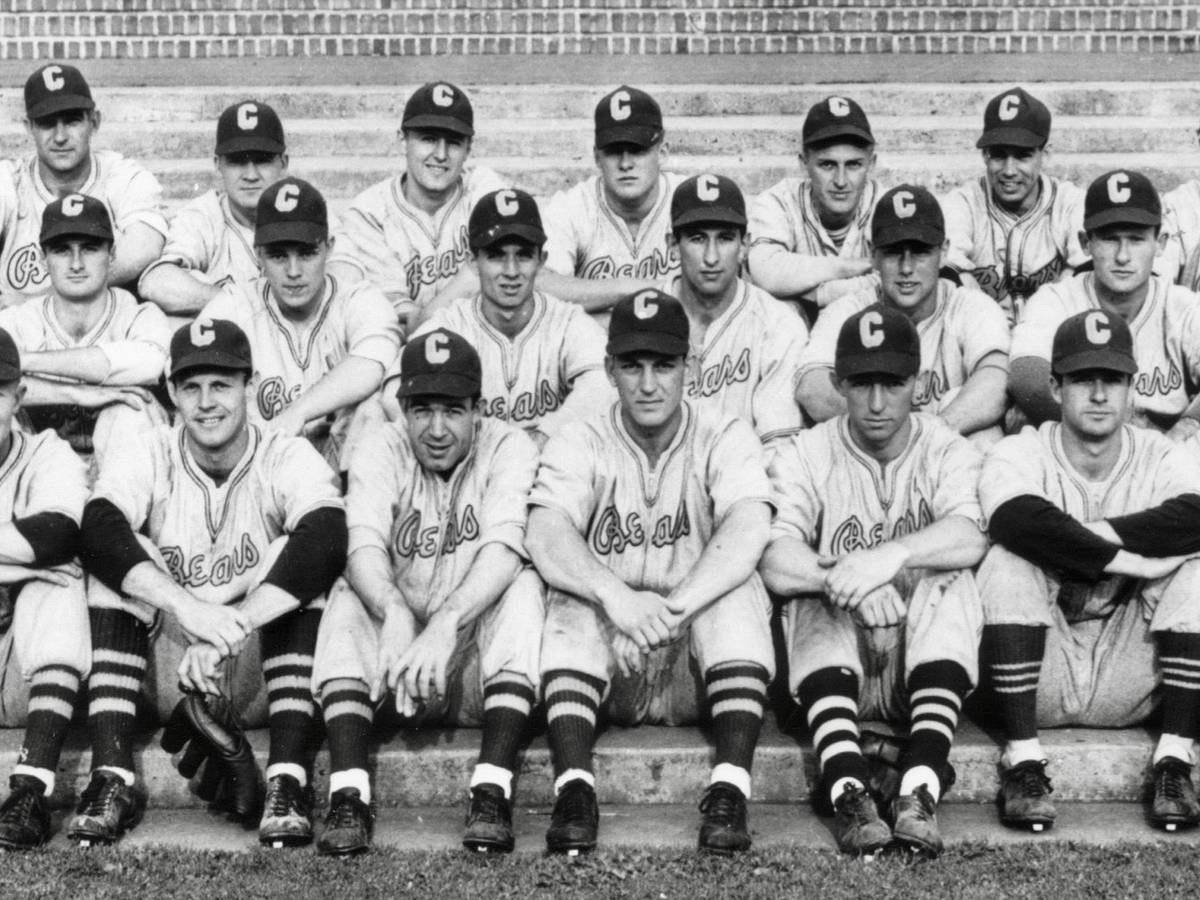
June 28, 1947: The 1st NCAA Baseball Tournament Final, the 1st College World Series, is played at Hyames Field, on the campus of Western Michigan University, in Kalamazoo, Michigan. It is an East vs. West matchup, as the University of California, having already won the day before, 17-4, defeat Yale University again, 8-7.

The Cal team featured Jackie Jensen, who would also play for them in the 1949 Rose Bowl. He went on to win the World Series with the New York Yankees in 1952, 1953 and 1956; win the American League Most Valuable Player award with the Boston Red Sox in 1958; make 3 All-Star Games; appear on the TV series Home Run Derby at the start of the 1960 season; and retire due to a fear of flying, after just 199 career home runs.

He remains the only player ever to play in the World Series, the College World Series, and the Rose Bowl. Chuck Essegian is the only other player to play in both the major-league World Series (in his case, with the 1959 Los Angeles Dodgers) and the Rose Bowl (1952, with Stanford).

Yale returned to the CWS in 1948, losing to another West Coast team, the University of Southern California (USC). Both times, Yale's 1st baseman was George H.W. Bush, who didn't play in Major League Baseball, but went into politics, eventually being elected the 41st President of the United States in 1988.

After its 1st 2 seasons, in Kalamazoo, the tournament was moved to Lawrence Stadium in Wichita, Kansas for 1949. Since 1950, it has been held in Omaha, Nebraska, first at what became known as Johnny Rosenblatt Stadium, and then, from 2011 onward, at Charles Schwab Field Omaha.

In 2008, with the rise of women's college softball, the names of the tournaments have been the Men's College World Series and the Women's College World Series. Both tournaments start with 64 teams, in 8 regions, and the 8 regional winners play in the CWS, in 2 4-team double-elimination tournaments, with the winners of each bracket playing a best-2-out-of-3 championship series.

Given the regional ability to play more games in better weather, it is not surprising that the most successful teams have been in the Sun Belt. USC have won 12 National Championships, Louisiana State University (LSU) 6, the University of Texas 6, Arizona State 5; and 4 each have been won by Arizona, the University of Miami, and California State University at Fullerton. Among Winter States, the University of Minnesota and Oregon State University have done the best, winning 3 each.

The Women's College World Series, though not yet under that name, was 1st played in 1969. As with the men, the Sun Belt dominates: The University of California at Los Angeles (UCLA) have won 12 titles, while Arizona have won 8, Oklahoma 6, and no other school has won more than 2.

(UPDATE: In 2023, the LSU men and the Oklahoma women each won a 7th title. The Oklahoma women won an 8th in 2024.)

*

June 28, 1947 was a Saturday. These baseball games were played that day:

* The New York Yankees beat the Philadelphia Athletics, 5-2 at Shibe Park in Philadelphia. Randy Gumpert went the distance for the win. George McQuinn and Tommy Henrich hit home runs. Joe DiMaggio went 1-for-2 with 2 walks. Rookie Yogi Berra went 2-for-4.

* The New York Giants beat the Philadelphia Phillies, 14-6 at the Polo Grounds.

* The Brooklyn Dodgers lost to the Boston Braves, 5-4 at Braves Field in Boston. Earl Torgeson doubled Tommy Holmes home with the winning run in the bottom of the 9th inning. For the Dodgers, Johnny "Spider" Jorgenson and Fred "Dixie" Walker hit home runs. They were among the players phased out after this Pennant-winning season, because they couldn't get along with Jackie Robinson, who went 1-for-3 with 2 walks.

* The Boston Red Sox beat the Washington Senators, 8-0 at Griffith Stadium in Washington. Denny Galehouse pitched a 4-hit shutout. Ted Williams went 2-for-3 with 2 walks and an RBI.

* The Cleveland Indians beat the Chicago White Sox, 3-2 at Cleveland Municipal Stadium.

* The Detroit Tigers beat the St. Louis Browns, 6-3 at Briggs Stadium (later Tiger Stadium) in Detroit.

* The Chicago Cubs swept a doubleheader from the Pittsburgh Pirates, 6-2 and 6-5 at Wrigley Field in Chicago.

* And the St. Louis Cardinals beat the Cincinnati Reds, 8-7 at Sportsman's Park in St. Louis. Stan Musial went 2-for-4 with a walk and 2 RBIs.

Friday, April 8, 2022

April 8, 2013: Rick Pitino's Corrupt Second Act

In 1932, F. Scott Fitzgerald wrote an essay, "My Lost City," saying, "I once thought that there were not second acts in American lives, but there was certainly to be a second act to New York's boom days." The quote has been misinterpreted -- indeed, contradicted -- as, "There are no second acts in American lives."

Many people have proven that to be untrue. And some have done so unfairly.

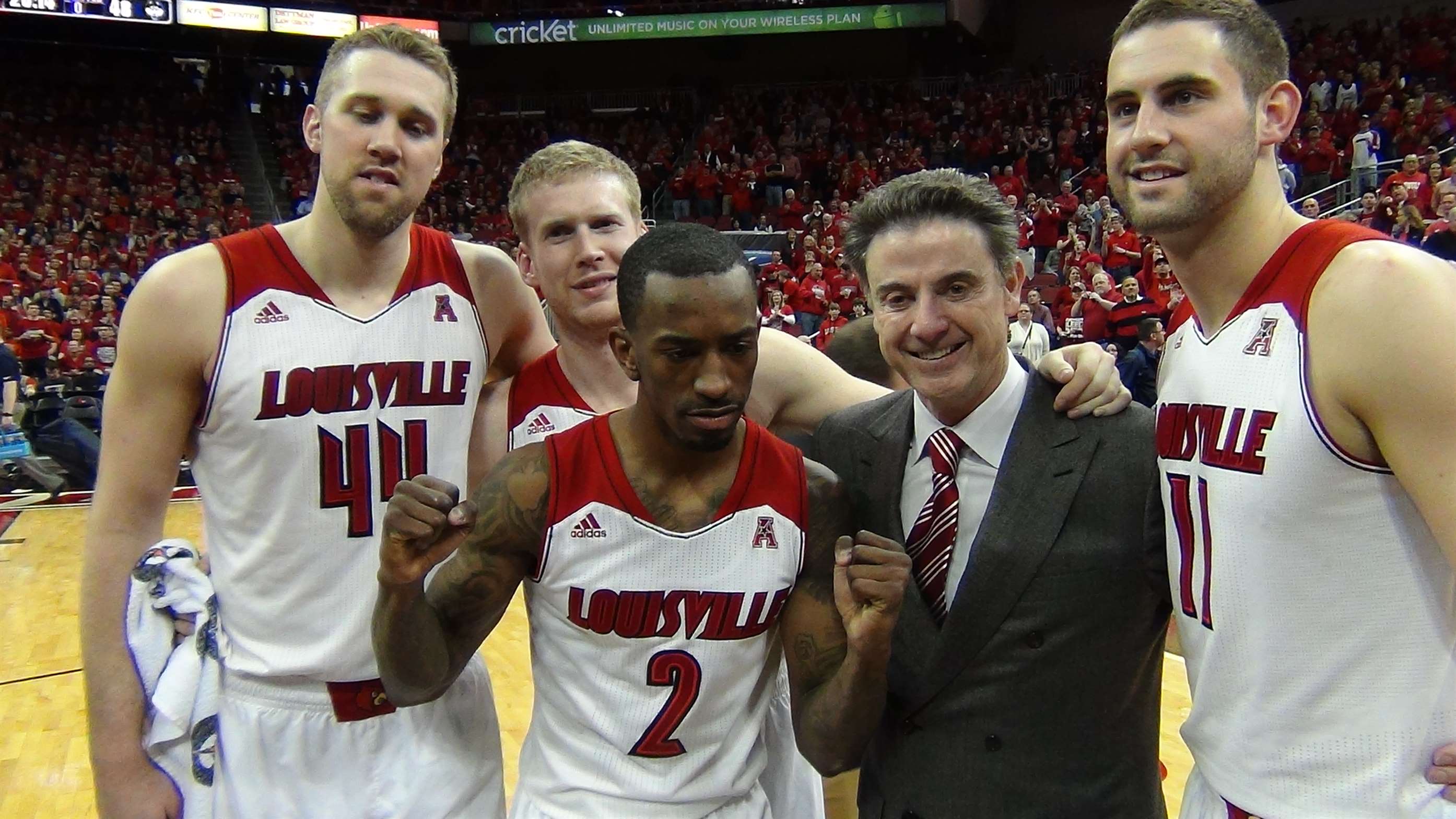
April 8, 2013: The University of Louisville wins college basketball's National Championship. It was their 3rd title, and the 2nd title for their coach, Rick Pitino.

The union of UL and Pitino seemed to be a match made in Heaven. It turned out to be a deal with the Devil.

Pitino was born on September 18, 1952 in Manhattan. He was a point guard at the University of Massachusetts. Not good enough to be drafted by a team in either the NBA or the ABA, he went into coaching.

He was head coach at Hawaii in 1976, an assistant to Jim Boeheim at Syracuse, head coach at Boston University from 1978 to 1983, an assistant to Hubie Brown on the New York Knicks in the 1983-84 and 1984-85 seasons, then was named head coach at Providence College, which he took to the Final Four in 1987. He was immediately hired to coach the Knicks, but left after 2 seasons, in 1989, because couldn't resist the chance to rebuild the scandal-ridden program at the University of Kentucky. He led them to the National Championship in 1996, and back to the NCAA Tournament Final the next year.

Then he got another offer he couldn't refuse, coaching the NBA's most successful franchise, the Boston Celtics. But he failed there, because management wouldn't bring better players there. Fans complained, and he said, "Larry Bird's not walking through that door," and naming some other team legends that weren't walking through the door. He was fired in 2001.

But Louisville offered him a lifeline, and the chance to be the head coach of Kentucky's arch-rivals was yet another offer he couldn't refuse. He got them to the Final Four in 2005, his 4th season there. He got them to the Elite Eight in 2008 and '09. In 2010, their new downtown arena, the KFC Yum! Center, opened, replacing the aging Freedom Hall, and giving them an arena more modern and up-to-date than UK's Rupp Arena in Lexngton.

In 2012, he got them to the Final Four, at the Superdome in New Orleans. But they lost to Kentucky in the Semifinal, 69-61. Kentucky then beat Kansas in the Final. It was the biggest disgrace in UL basketball history. Little did they know that worse was yet to come.

In 2012-13, Pitino guided Louisville to a 26-5 regular season, with All-American Russ Smith, Big East Conference Scholar-Athlete of the Year Peyton Siva, and Big East Defensive Player of the Year Gorgui Dieng. They lost to Number 5 Duke by 5 in an early-season tournament in the Bahamas; then 3 straight in January, by 2 at home to Number 6 Syracuse, by 9 to Villanova in Philadelphia, and by 2 to Georgetown in Washington; and finally by 3 in overtime, away to Notre Dame.

They breezed through the Big East Conference Tournament at Madison Square Garden in New York, avenging their defeats to Villanova, Notre Dame and Syracuse. They marched through the NCAA Tournament, beating North Carolina A&T and Colorado State, on Kentucky's floor at Rupp Arena, no less; then beat Number 25 Oregon and avenged their defeat to Duke, now Number 6, in Indianapolis to reach the Final Four, at the Georgia Dome in Atlanta. Cinderella-minded Wichita State gave them a scare in the Semifinal, but the Cardinals won, 72-68.

That set up a Final against Number 10 Michigan, a team with 2 sons of NBA stars, Tim Hardaway Jr. and Glenn Robinson III. Trey Burke of Michigan scored the game's 1st 7 points, but then picked up 2 fouls and had to sit some time out, to preserve his eligibility. Louisville closed to within 38-37 at the half. Luke Hancock came off the bench to score 22 points, including 5 3-pointers, to become the only non-starter ever to be named the Final Four's Most Outstanding Player. Louisville went on to win, 82-76.

This gave Louisville a 3-0 record in NCAA Tournament Finals, and Michigan a record of 1-5, and that 1 win coming in overtime. For the Cardinals, and for Pitino, it was a very sweet moment: The man that Tony Kornheiser of The Washington Post and ESPN's Pardon the Interruption had dubbed a "preening schmo" became the 1st man to coach college basketball National Champions at two different schools. Each other's arch-rivals, no less.

He became America's answer to Brian Clough, the manager who won English Football League titles with both Derby County and their arch-rivals, Nottingham Forest, in the 1970s. Minus the drinking (as far as we know), and plus a lot of hair-care products and a bit more ego. Clough, himself possessor of a considerable ego, had he ever met Pitino, would have said he isn't the most egotistical man he's ever met, but he's "in the top one."

Over the next few years, for Louisville and Pitino, the sweet moment soured. In 2015, Katina Powell published a book titled Breaking Cardinal Rules, in which she described how she was used as a prostitute to encourage high school stars to come to UL from 2010 to 2014. This reminded people of Pitino's own sex scandal, in which a woman he'd fooled around with in 2003, and paid for an abortion for her, was convicted in 2010 of trying to extort him.

The University tried in inoculate itself from serious penalties from the NCAA, by willingly withdrawing from consideration for the 2016 NCAA Tournament. But further allegations came out, and UL had to fire Pitino in 2017. It wasn't enough: On June 25 of that year, the NCAA vacated all of Louisville's wins in the 2011-12, 2012-13 and 2013-14 seasons, including both Final Four berths and the 2013 National Championship. Officially, there is no National Champion for 2012-13: They did not award it to defeated Michigan.

Many college sports scandals have resulted in the stripping of titles, but the 2012-13 University of Louisville basketball team remains the only team ever to be stripped of an NCAA Division I Men's Basketball Tournament Championship.

Louisville have not won a Conference title, either regular-season or Tournament, or reached the Sweet Sixteen since. In 2018, Pitino was hired by Panathinaikos of Athens, Greece, one of the top sport clubs in Europe, known for its soccer and basketball teams. He led them to 2 titles in Greece's basketball league. In 2020, he was hired as head coach at Iona University, a Catholic school in New Rochelle, New York.

In 2012, his son, Richard Pitino, got his 1st head coaching job, at Florida International University. After 1 year there, he went to the University of Minnesota, winning the 2014 NIT. In 2021, he was hired at the University of New Mexico.

UPDATE: In 2023, Rick Pitino was hired at another Catholic school, St. John's University of Queens. He led them to the Big East Conference title in 2025 and '26. In 2025, Richard Pitino left New Mexico to become the head coach at yet another Catholic school, Xavier University in Cincinnati.

*

April 9, 2013, as the day of the NCAA Tournament Final tends to be, was a Monday. These games were played in Major League Baseball:

* The New York Yankees beat the Cleveland Indians, 11-6 at Progressive Field in Cleveland. Hiroki Kuroda was the winning pitcher. The Yankees got 2 home runs from Robinson Canó, and 1 from former Cleveland star Travis Hafner.

* The New York Mets beat the Philadelphia Phillies, 7-2 at Citizens Bank Park in Philadelphia. Matt Harvey outpitched Roy Halladay. John Buck hit a home run.

* The Boston Red Sox beat the Baltimore Orioles, 3-1 at Fenway Park in Boston. David Ortiz did not play. I guess his steroid delivery didn't come in that day.

* The Atlanta Braves beat the Miami Marlins, 2-0 at Marlins Park (now LoanDepot Park) in Miami. How many Brave pitchers does it take to pitch a 2-hit shutout? This time, 2: Paul Maholm (1 hit and 3 walks over 7 innings), Eric O'Flaherty (a perfect 8th) and Craig Kimbrel (a hit and a walk in the 9th).

* The Milwaukee Brewers beat their arch-rivals, the Chicago Cubs, 7-4 at Wrigley Field in Chicago.

* The Cincinnati Reds beat the St. Louis Cardinals, 13-4 at Busch Stadium in St. Louis.

* The Kansas City Royals beat the Minnesota Twins, 3-1 at Kauffman Stadium in Kansas City.

* The Texas Rangers beat the Tampa Bay Rays, 5-4 at Rangers Ballpark in the Dallas suburb of Arlington, Texas.

* The Pittsburgh Pirates beat the Arizona Diamondbacks, 5-3 at Chase Field in Phoenix.

* The San Francisco Giants beat the Colorado Rockies, 4-2 at AT&T Park (now Oracle Park) in San Francisco.

* The Seattle Mariners beat the Houston Astros, 3-0 at Safeco Field (now T-Mobile Park) in Seattle. How many Mariner pitchers does it take to pitch a 7-hit shutout? This time, 4: Joe Saunders (6 hits over 6 1/3rd innings), Carter Capps (1 over 1 1/3rd), Charlie Furbush (1 batter, a strikeout) and Tom Wilhelmsen (a perfect 9th).

* And the Chicago White Sox, the Detroit Tigers, the Los Angeles Angels, the Los Angeles Dodgers, the Oakland Athletics, the San Diego Padres, the Toronto Blue Jays and the Washington Nationals were not scheduled.

Football was out of season. No games were scheduled for the NBA. There were 9 games played in the NHL:

* The New York Islanders beat the Philadelphia Flyers, 4-1 at the Nassau Coliseum.

* The Washington Capitals beat the Montreal Canadiens, 3-2 at the Bell Centre in Montreal.

* The Pittsburgh Penguins beat the Carolina Hurricanes, 5-3 at the PNC Arena (now the Lenovo Center) in Raleigh, North Carolina.

* The Tampa Bay Lightning beat the Ottawa Senators, 3-2 at the Tampa Bay Times Forum (now the Benchmark International Arena) in Tampa.

* The St. Louis Blues beat the Nashville Predators, 1-0 at the Bridgestone Arena in Nashville.

* The Columbus Blue Jackets beat the San Jose Sharks, 4-0 at the Nationwide Arena in Columbus.

* The Dallas Stars beat the Los Angeles Kings, 5-1 at the American Airlines Arena in Dallas.

* The Chicago Blackhawks beat the Minnesota Wild, 1-0 at the Xcel Energy Center (now the Grand Casino Arena) in St. Paul, Minnesota.

* And the Winnipeg Jets beat the Buffalo Sabres, 4-1 at the MTS Centre (now the Canada Life Centre) in Winnipeg.

Wednesday, April 6, 2022

April 6, 1992: "Barney & Friends" Premieres

April 6, 1992: Barney & Friends premieres on PBS. Sadly, it is not a reboot of the police sitcom Barney Miller.

Sheryl Leach created the series, aiming at children ages 2 to 5. The "Friends" included human kids and other actors in dinosaur costumes, including Baby Bop, DJ and Riff. The theme song, to the tune of "This Old Man," had Barney singing, "I love you, you love me... " and so on. For anybody above the age of 5, it grew old quickly. It aired on PBS until November 2, 2010.

Bob West voiced the character until 2000, and David Joyner wore the suit over that same stretch. For the rest of the show's run, Dean Wendt provided the voice, and Carey Stinson wore the suit.

In 1994, I was at a game of the Trenton Thunder minor-league baseball team. It was tied 1-1 in the bottom of the 9th. The Thunder loaded the bases. A foul ball was hit, and the video board played Barney's theme song, and showed a cartoon version of him dancing, and getting hit with a ball. The capacity crowd of 7,000, sick of their kids watching the purple dinosaur and his show, roared its approval. Next pitch, base hit, Thunder win. Every time I go back to the Trenton ballpark, I hope they play that clip: It's good luck.

On April 6, 1998, 6 years later to the day, the British kids series Teletubbies premiered in the U.S. News broadcasts had warned us ahead of time. Sure enough, it was every bit as annoying to people over age 5 as was Barney.

*

April 6, 1992 was a Monday. On the same day, Duke University beat the University of Michigan, 71-51, at the Metrodome in Minneapolis, to win the NCAA Division I Men's Basketball Tournament. It mades the Blue Devils the 1st team to win back-to-back National Championships since UCLA in 1972 and 1973.

This completed a unique treble for the Metrodome: Not only did it become the 1st stadium, and it would remain the only one, to host the World Series, the Super Bowl, and the Final Four, but it hosted all 3 within a period of 6 months. I have a separate entry for that event.

And American soccer player Julie Ertz, a 2-time winner of the Women's World Cup, was born.

The NBA didn't schedule any games for the night of the NCAA Final. The NHL was in the middle of its 1st players' strike, which ended up lasting 10 days. So there were no scores in that League.

And Major League Baseball had its Opening Day, and these games were played:

* The New York Mets beat the St. Louis Cardinals, 4-2 at Busch Memorial Stadium in St. Louis. Bobby Bonilla hit a home run in the top of the 10th inning. It would be the highlight of the season for the 1992 Mets, which local sportswriter Bob Klapisch would call, in the title of his book about them, The Worst Team Money Could Buy. Bonilla, in particular, did not appreciate it.

* The Baltimore Orioles beat the Cleveland Indians, 2-0. This was the 1st game at Oriole Park at Camden Yards. I have a separate entry for that event. Rick Sutcliffe pitched a 5-hit shutout.

* The Pittsburgh Pirates beat the Montreal Expos, 2-0 at Three Rivers Stadium in Pittsburgh. Doug Drabek pitched 8 innings of 5-hit shutout ball, with Roger Mason completing a 6-hit shutout. Barry Bonds went 1-for-3.

* The San Diego Padres beat the Cincinnati Reds, 4-3 at Riverfront Stadium in Cincinnati. Tony Gwynn went 2-for-4 with an RBI.

* The Toronto Blue Jays beat the Detroit Tigers, 4-2 at Tiger Stadium in Detroit.

* The Minnesota Twins beat the Milwaukee Brewers, 4-2 at Milwaukee County Stadium. Kirby Puckett hit a home run. Chuck Knoblauch went 4-for-5 with an RBI. Robin Yount went 2-for-3 with a walk. Paul Molitor went 0-for-4.

* The San Francisco Giants beat their arch-rivals, the Los Angeles Dodgers, 8-1 at Dodger Stadium in Los Angeles.

* The Oakland Athletics beat the Kansas City Royals, 5-3 at the Oakland Coliseum. Rickey Henderson went 1-for-4 with a walk and a stolen base. George Brett did not play.

* And the Texas Rangers beat the Seattle Mariners, 12-10 at the Kingdome in Seattle. In spite of the big score, it was a bad day for legends, old and young. Nolan Ryan didn't make it out of the 5th inning, and Randy Johnson didn't get out of the 6th. Ken Griffey Jr. went 0-for-4.

Thursday, March 31, 2022

March 31, 1975: The End of the John Wooden UCLA Dynasty

March 31, 1975: The Final of the NCAA Division I Men's Basketball Tournament is held at the San Diego Sports Arena. (It's now named the Pechanga Arena.)

The NCAA Tournament had varied from between 22 and 25 teams since 1953. For the 1974-75 season, due to the frustrations of teams unable to win the Conference Tournaments, and thus qualify for the NCAA Tournament, despite previously having exceptional seasons, the NCAA expanded the Tournament to 32 teams, and allowed teams that failed to win their conference in.

In the Mideast Regional Final, at the University of Dayton Arena in Dayton, Ohio, on March 22, Indiana, then undefeated at 31-0 and ranked Number 1 in the country, faced Number 5 Kentucky, who were 24-3, with 1 of their losses coming to Indiana in Bloomington. This time, Joe B. Hall's Wildcats beat Bobby Knight's Hoosiers, 92-90, and secure Kentucky's 1st berth in what would later be called "the Final Four" since losing the 1966 Final. This would be the only game that Indiana would lose between March 11, 1974 and December 1, 1976, a stretch over which they went 66-1.

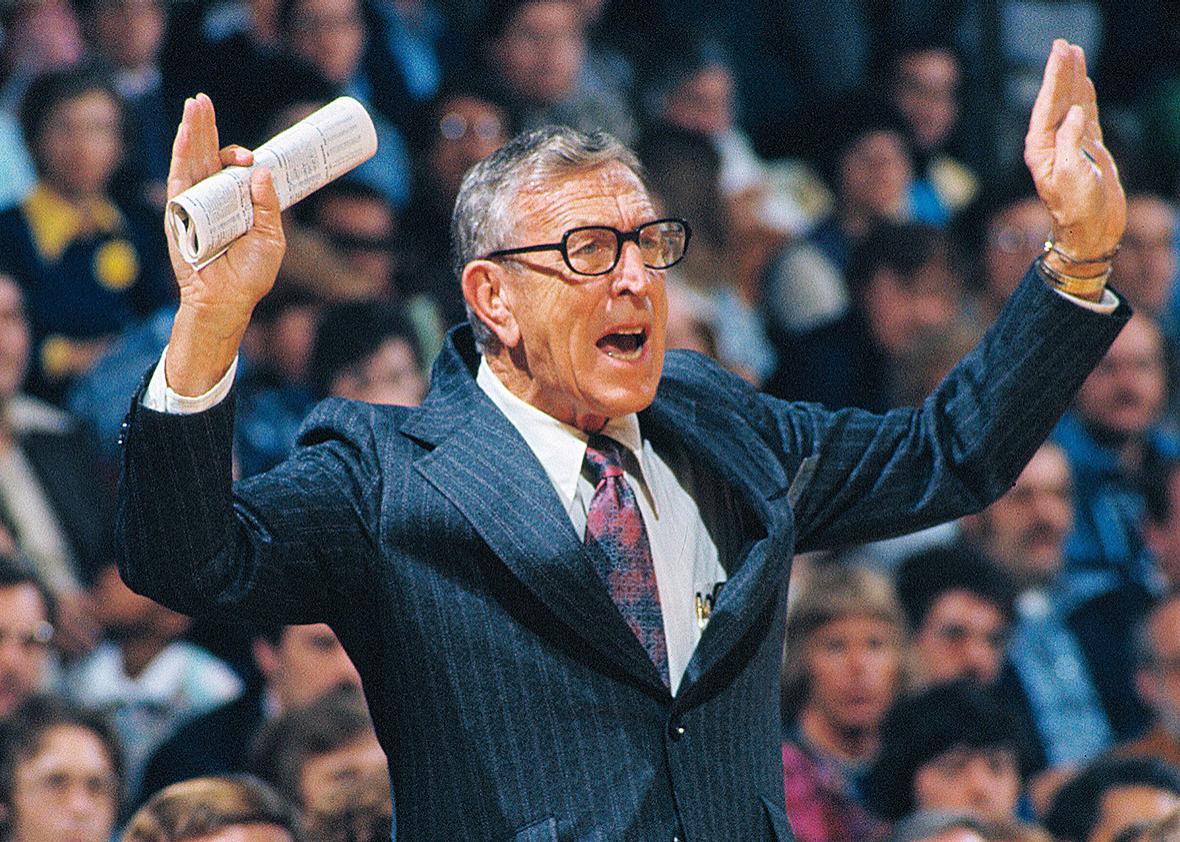
The University of California at Los Angeles had won 7 straight titles, and 9 out of 10, under coach John Wooden, before losing in the 1974 Semifinal to North Carolina State. In 1974-75, the Bruins finished the regular season 23-3, losing only away to Stanford by 4 points, away to Notre Dame (again) by 6, and, in their only bad game of the season, away to Washington by 22.

At the time, the league then known as the Pacific-Eight Conference had no Conference Tournament, but UCLA easily won the regular-season title. The Bruins struggled in the NCAA Tournament: They needed overtime to beat Michigan, beat the University of Montana by only 3 points, beat Arizona State to get to the Final Four, and needed overtime to beat the University of Louisville, coached by Wooden's former assistant, Denny Crum.

After that Semifinal win over Louisville, Wooden announced his retirement: Win or lose, the Final against Kentucky would be his last game.

The game was tight. So were the Bruins, as if they were trying too hard to send Wooden out a winner. The lead changed hands several times in the 1st half, which ended with UCLA ahead, 43-40. Kentucky stayed close, and were within 76-75 with less than 7 minutes left.

Dave Meyers -- brother of UCLA women's star Ann Meyers -- was called for an offensive foul on a shot attempt during which he bumped into Grevey. Meyers yelled at referee Hank Nichols for this, and was assessed a technical foul. This led the normally mild-mannered Wooden to run onto the court, and call Nichols a "crook."

Maybe this shook the Wildcats up, because Kevin Grevey, their best player, missed all 3 free throws. Kentucky never recovered, and UCLA won, 92-85. Wooden and UCLA had their 10th National Championship, all within the last 12 years.

As with so many other great college coaches, Wooden cast a shadow that his successors found it difficult to get out of. The following year, Gene Bartow got UCLA back to the Final Four, but lost to Indiana, with Knight leading them to what remains the last undefeated season for an NCAA Division I men's basketball team.

In 1978, Hall led Kentucky to their 1st National Championship in 20 years, while Grevey helped the Washington Bullets win the NBA Championship. Under Larry Brown, UCLA got back to the Final in 1980, losing to Louisville and Wooden's former assistant Crum, who would win the National Championship again in 1986.

UCLA has won 1 National Championship without Wooden, in 1995, under Jim Harrick Sr. In 2006, Ben Howland took them to the Final, where they lost to Florida.

Of Wooden's '75 Bruins: Marques Johnson starred with the Milwaukee Bucks, becoming a 5-time NBA All-Star; Dave Meyers was his teammate on the Bucks; Andre McCarter played a season each with the Kansas City Kings and the Bullets; Ralph Drollinger played 1 season, the expansion season of the Dallas Mavericks, 1980-81; Brett Vroman, that same season, played 11 games with his home-State Utah Jazz, the extent of his NBA career, though he also played in Europe, mostly in Italy; Richard Washington, named the Tournament's Most Outstanding Player, played 6 seasons in the NBA, including 1 as a teammate of Johnson and Meyers, and another as a teammate of Drollinger; and Wilbert Olinde never played in the NBA, but starred in Germany's basketball league.

And then there was Gavin Smith. He transferred to the University of Hawaii, where he set the school's single-season scoring record, which still stands. He became a stuntman, an actor, and a film studio executive. In 2012, he disappeared after leaving a friend's house in the Los Angeles suburbs. Two years later, his remains were found, and a man was convicted of his murder.

John Wooden had been a star player at Purdue University in the early 1930s, before coaching at Indiana State (later the Alma Mater of Larry Bird) from 1946 to 1948, and then at UCLA until 1975. His career record was 664-162 -- including 335-22 from 1963 to 1975, for a percentage of .938.

He won National Championships in 1964, with Walt Hazzard and Gail Goodrich; 1965, with Goodrich; 1967 and 1968, with Lew Alcindor, who later changed his name to Kareem Abdul-Jabbar; 1969, with Kareem and Sidney Wicks; 1970 and 1971, with Wicks; 1972 and 1973, with Bill Walton and Keith Wilkes, who later changed his name to Jamaal Wilkes; and 1975, with Marques Johnson.

In 1972, Sports Illustrated split its Sportsman of the Year award for the 1st time, between Wooden and tennis star Billie Jean King. For King, it was a recognition of not just her performance in her sport, but her activism for it, including for female players to be paid as much as male players. For Wooden, who had won his 8th title, it seemed more like a lifetime achievement award.

It's worth noting that Wooden titled his autobiography They Call Me Coach. Even long after his retirement, his former players, even those who had gone into coaching themselves, still called him "Coach" rather than "John." It's also worth noting that Kareem only let 2 people continue to call him "Lewis": His father, Ferdinand Lewis Alcindor Sr.; and Wooden.

It's also worth noting that Wooden was just 64 when he retired, though he looked older. To put this in perspective: Dean Smith and Gary Williams each coached their last college game at 66, Bobby Knight and Jud Heathcote 67, Don Haskins 69, Roy Williams 70, Lute Olson 72, Denny Crum 74, Mike Krzyzewski and Larry Brown 75, Jim Calhoun 79, Rollie Massimino 83. As of March 31, 2022, Jim Boeheim and Tom Izzo are still coaching at 67, Rick Pitino at 69.

He was the 1st person elected to the Basketball Hall of Fame as both a player and a coach, the former in 1960 and the latter while still coaching in 1973. His success led to UCLA building the Edwin W. Pauley Pavilion in 1965. In 2003, the school named the playing surface the Nell and John Wooden Court. John insisted that, if he were going to be so honored, his late wife's name should go first. That same year, President George W. Bush awarded him the Presidential Medal of Freedom. He died in 2010, 4 months short of his 100th birthday.

In 1995, Marques Johnson's son, Kris Johnson, won a National Championship at Duke. The Johnsons are 1 of 4 father-son pairs to win National Championships, along with Henry and Mike Bibby, Scott and Sean May, and Derek and Nolan Smith; and the only pair to both win for the same school.

*

March 31, 1975 was a Monday. There were no games in the NBA. There were 2 in the American Basketball Association. The Kentucky Colonels beat the San Antonio Spurs, 103-89 at Freedom Hall in Louisville. Artis Gilmore had 36 pionts and grabbed 25 rebounds. And the Utah Stars beat the Virginia Squires, 103-97 at the Salt Palace in Salt Lake City, Utah. Ron Boone scored 36 points.

Baseball was in Spring Training. Football was out of season. There were no games in the NHL. There were 2 in the World Hockey Association. The Winnipeg Jets beat the Indianapolis Racers, 4-1 at the Winnipeg Arena. And the San Diego Mariners beat the Edmonton Oilers, 5-2 at the brand-new Northlands Coliseum in Edmonton.

Monday, March 28, 2022

March 28, 1970: Dan Gable Falls to 181-1

March 28, 1970: The NCAA Wrestling Championships are held, at McGaw Hall (now known as Welsh-Ryan Arena), on the campus of Northwestern University in Evanston, Illinois, just north of Chicago.

The team title is won by Iowa State University. They had previously won in 1950, 1965 and 1969. On an individual basis, however, the tournament is known not for any of its winners, but for a defeated finalist: Dan Gable.

He is the greatest wrestler who ever lived, and the greatest wrestling coach who ever lived, and you can take all your WWE stars and stick them where the Sun don't shine.

At Waterloo West High School in Waterloo, Iowa, his career record as a wrestler was 64-0, winning 3 State Championships. He was also a State Champion swimmer, their quarterback, and a baseball player. At Iowa State University, he went 117-1, winning 2 National Championships, losing only in the NCAA Final in his senior year. In other words, he won 225 amateur wrestling matches before he was finally beaten.

(Gable could have won 3 National Championships, but, until 1972, the NCAA didn't allow freshmen to compete on varsity teams in any sport, with a few exceptions, such as during wartime or following a team tragedy, as happened later in 1970 with the football teams at Wichita State and Marshall universities.)

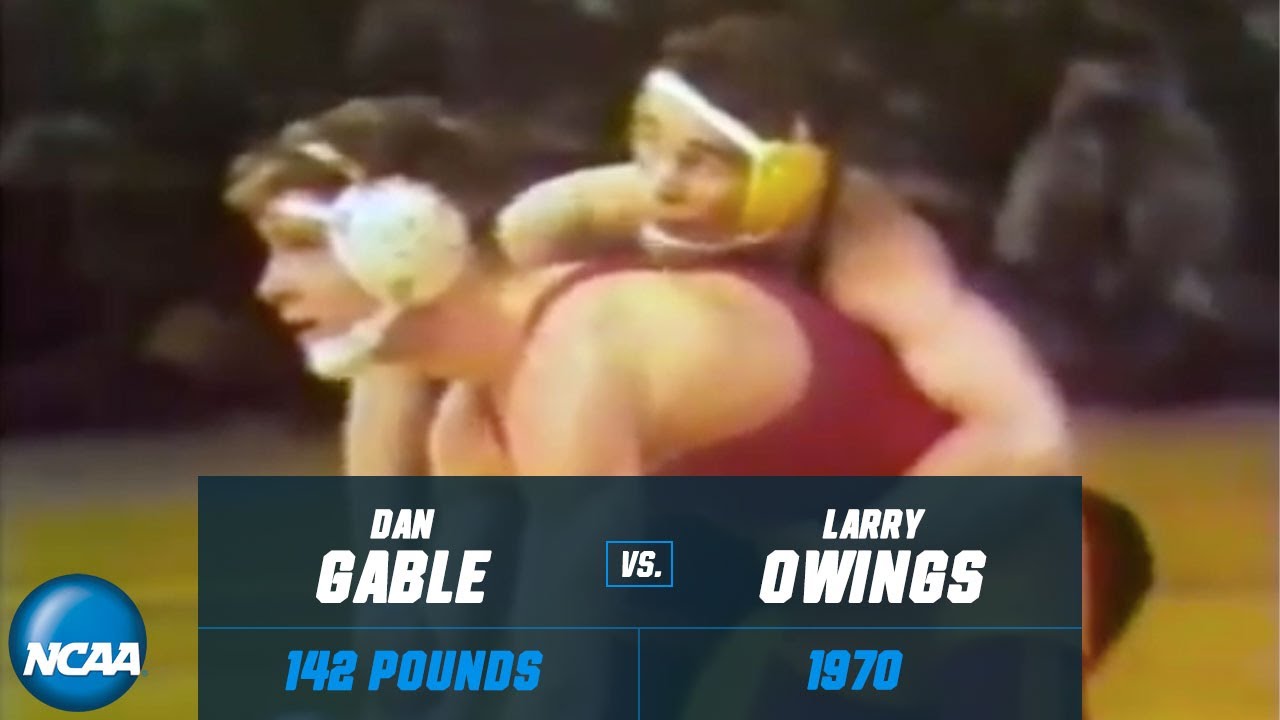
That loss was in the 142-pound weight class, which would be Welterweight in boxing. The bout was close: 13-11. The wrestler who defeated him was Larry Owings of the University of Washington, who was named the tournament's outstanding wrestler.

He kept competing as an amateur, winning Gold Medals in 1971, at the Pan American Games in Cali, Colombia; and at the World Championships in Sofia, Bulgaria, behind the Iron Curtain. That got the attention of the Soviet Union athletic machine: Rightly proud of their wrestling achievements, and looking to the 1972 Olympic Games in Munich, West Germany, they vowed to "scour the Eastern Bloc to find a wrestler who could take down Dan Gable."

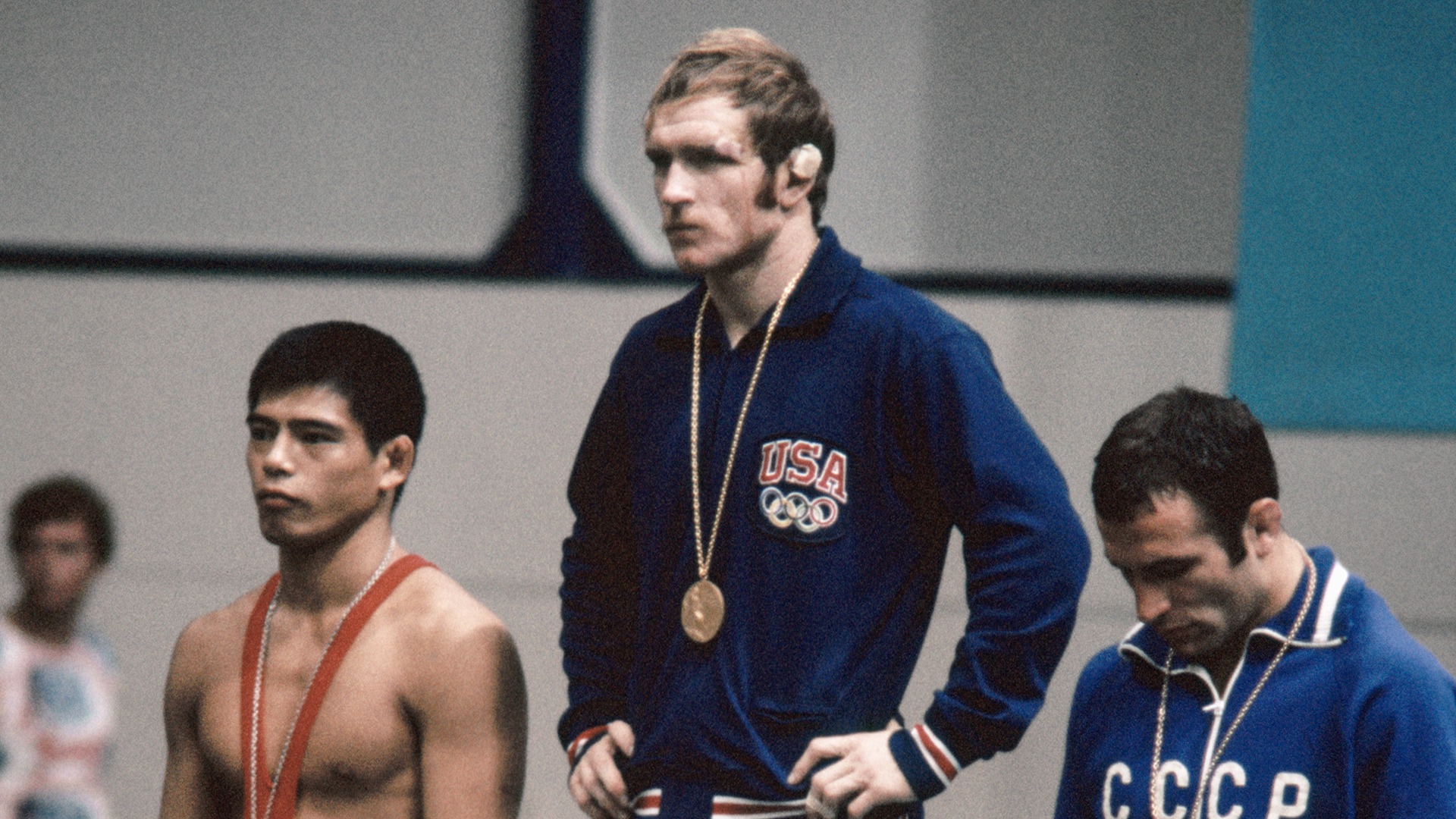
They were unsuccessful: Despite an injured knee and stitches in his head after an injury in his 1st match, he won the Gold Medal in the 150-pound weight class, without surrendering a single point in any match, an absolutely dominating performance.

He defeated Safer Sali of Yugoslavia (the part that is now the Republic of North Macedonia), Klaus Rost of West Germany, Stefanos Ioannidis of Greece, Kikuo Wada of Japan, and WÅ‚odzimierz CieÅ›lak of Poland. In the Final, with 3 wrestlers, each competing against the other 2, Gable beat Wada again, and both beat the Soviet contender, Ruslan Ashuraliyev. So Gable beat 3 wrestlers from Warsaw Pact nations.
Despite having been an Iowa State graduate, he went to their arch-rivals, the University of Iowa, in 1976. He coached them to 9 straight National Championships from 1978 to 1986, finally being dethroned in 1987 by... Iowa State.

He coached until 1997, with a dual meet record of 355-21-5, 16 team National Championships, 152 All-Americans, 45 individual National Champions, and 4 Olympic Gold Medalists. He also coached the U.S. Olympic team in 1980 (boycotted), 1984 and 2000. He also, literally, wrote the book on coaching the sport: Coaching Wrestling Successfully, published in 1999. Of course, he is in the National Wrestling Hall of Fame. He should be: He is both the Babe Ruth and the Casey Stengel of his sport.

And what, you might ask, happened to Larry Owings? The native of Canby, Oregon was unable to follow up his great achievement, losing in the NCAA Tournament Final in 1971 and 1972, and was not selected to the U.S. Olympic Team for Munich. He became a high school wrestling coach and a building contractor in Oregon and Washington State. He has particularly been an advocate for women's wrestling, and has also been elected to the National Wrestling Hall of Fame. As of March 28, 2022, both Gable and Owings are still alive.
Larry Owings (left) and Dan Gable, 2018

The NCAA first conducted a National Championship Tournament for wrestling in 1928, and Iowa State were the 1st hosts. They did not win: Oklahoma A&M did. Changing their name to Oklahoma State in 1958, they have won by far the most titles, 34, although none since 2006. Iowa have won 24, Penn State 10, Iowa State 8, Oklahoma 7, Minnesota 3; and 1 each by Indiana, Cornell, Northern Iowa, Michigan State, Arizona State and Ohio State.

(UPDATE: Penn State won in 2023 and 2024, raising their total to 12.)

*

March 28, 1970 was a Saturday. Actor Vince Vaughn was born. This was also the day that Major League Baseball held a preseason exhibition game to raise money for Dr. Martin Luther King's Southern Christian Leadership Conference. I have a separate entry for that event.

Baseball was otherwise in Spring Training. Football was out of season. One game was played in the NBA. Appropriately, it was in Dr. King's hometown: The Atlanta Hawks beat the Chicago Bulls, 124-104 at the Alexander Memorial Coliseum (now the McCamish Pavilion), on the Georgia Tech campus in Atlanta. Three games were played in the American Basketball Association:

* The New York Nets lost to the New Orleans Buccaneers, 100-92 at the New Orleans Municipal Auditorium. After this season, the Bucs would become the Memphis Pros, then the Memphis Tams, then the Memphis Sounds, and fold in 1975. The Nets would enter the NBA in 1976, moving to New Jersey in 1977 and Brooklyn in 2012. 

* The Kentucky Colonels beat the Carolina Cougars, 101-98 at the Greensboro Coliseum in Greensboro, North Carolina. The Cougars became the Spirits of St. Louis in 1974. The Spirits and the Colonels both survived to the end of the ABA in 1976, but neither team was admitted to the NBA.

* And the Dallas Chaparrals beat the Denver Rockets, 150-126 at the Moody Coliseum in Dallas. Both of these teams still exist, though not under those names: The Chaparrals became the San Antonio Spurs in 1973; and the Rockets, anticipating entering the NBA, which already had the Houston Rockets, took on the name of the 1st NBA team from their city, the Denver Nuggets. Both teams entered the NBA in 1976, along with the Nets and the Indiana Pacers.

There were 5 games in the NHL:

* The New York Rangers and the Montreal Canadiens played to a tie, 1-1 at the Montreal Forum.

* The Boston Bruins and the Detroit Red Wings played to a tie, 5-5 at the Boston Garden.

* The Pittsburgh Penguins beat the Philadelphia Flyers, 2-1 at The Spectrum in Philadelphia.

* The Chicago Black Hawks and the Toronto Maple Leafs played to a tie, 1-1 at Maple Leaf Gardens in Toronto.

* The Los Angeles Kings beat the Minnesota North Stars, 4-2 at The Forum outside Los Angeles in Inglewood, California.

* And the St. Louis Blues and the California Golden Seals were not scheduled.

And in English soccer, Arsenal played Birmingham-area team Wolverhampton Wanderers to a draw, 2-2 at the Arsenal Stadium, a.k.a. Highbury, in North London.

December 31, 1999 & January 1, 2000: The Millennium

December 31, 1999:  The Millennium arrives. The people of planet Earth survived. At a terrible cost. But we hadn't destroyed ourselves. ...