Showing posts with label 1966. Show all posts

Friday, December 30, 2022

December 30, 1966: "One Million Years B.C." Premieres

December 30, 1966: The film One Million Years B.C. premieres. Produced by Britain's Hammer Films, which specialized in horror films, and directed by Don Chaffey, it was a remake of the 1940 film One Million B.C.

Like so many other films of the era with fantasy elements, the special effects were provided by the master of stop-motion photography, Ray Harryhausen. Like so many other films set in humanity's prehistoric era, it puts people alongside dinosaurs. The dinosaurs were wiped out around 65 million years ago, while humans emerged back 3 million years ago, with our species, Homo sapiens, developing about 300,000 years ago.

Even the timeline of dinosaurs tends to get messed up by such films: Brontosaurus, the long-necked dinosaur, and Stegosaurus, with its triangular fins along its spine, both lived around 155 to 145 million years ago; and Tyrannosaurus rex, whose terrifying appearance, standing with long, sharp teeth, tends to make it the most familiar dinosaur, and Triceratops, with its 2 front horns and its horned collar, developed about 69 million years ago, making it a comparatively short-lived species. In other words, Brontosaurus and Stegosaurus co-existed, and Tyrannosaurus and Triceratops co-existed; but the latter 2 were closer in time to humans than to the 1st 2.

The film features a rivalry between the dark-haired Rock Tribe and the fair-haired, more civilized Shell Tribe. John Richardson plays Tumak, cast out of the Rock Tribe, and Raquel Welch plays Loana, a member of the Shell Tribe who takes him in. She eventually has to fight his former girlfriend, Nupodi, played by Hammer veteran Martine Beswick. Despite Beswick's experience in "catfights," having won one in the James Bond film From Russia with Love, Loana wins. Finally, a volcano erupts, killing members of both tribes, and the survivors of each are forced to form a new tribe, working together to survive.

Having already appeared in the science-fiction film Fantastic Voyage earlier in the year, One Million Years B.C. made Welch a star, as she went from a futuristic skin-tight pressure suit to a cavewoman's fur-skin bikini. Already 26 years old, with a son and a daughter, and engaged to the 2nd of what would be 4 husbands, she became one of the leading sex symbols of her generation.

Don Chaffey died in 1990. Ray Harryhausen died in 2013. John Richardson died in 2021. As of December 30, 2022, Raquel Welch and Martine Beswick are still alive. (UPDATE: She died in 2023.)

*

December 30, 1966 was a Friday. Baseball was out of season. The NFL and the AFL were between the ends of their regular seasons and their Championship Games. The NHL had no games scheduled.

There was 1 game played in the NBA: The Detroit Pistons bat the Los Angeles Lakers, 124-121, on a neutral court at the Montreal Forum.

Saturday, December 24, 2022

December 24, 1966: The 1st "Yule Log" Special

December 24, 1966: At 9:30 PM, New York television station WPIX, Channel 11, begins airing a six-minute loop of a Yule log burning in a fireplace. The program, titled simply Yule Log, was in color, and aired all through Christmas Day, December 25. In the years to come, other TV stations -- usually "independent" stations, not aligned with a major network -- would also run it.

The original footage was filmed on 16-millimeter film, at Gracie Mansion, the official residence of the Mayor of New York. (At the time, John Lindsay.) It was replaced in 1970, with a seven-minute loop, on 35-millimeter film.

In recent years, WPIX usually runs a marathon of 1950s sitcom The Honeymooners on Christmas Day. But it usually takes 5 hours out of the day to run Yule Log. (On both the 4th of July and New Year's Eve, they run a marathon of The Twilight Zone.)

The Yule log was originally one of the traditions that Christmas borrowed from the Winter Solstice. It was believed that burning one fended off evil spirits. Eventually, it became a symbol of Christmas cheer.

*

December 24, 1966 was a Saturday. Actor Diedrich Bader was born.

There was only one college football game played on this Christmas Eve, the Sun Bowl, at the stadium of the same name, in El Paso, Texas. The University of Wyoming beat Florida State, 28-20.

Baseball was out of season. The NFL and the AFL were between their regular seasons and their Championship Games. And no games were played in the NBA.

There were 2 games played in the NHL. The New York Rangers beat the Montreal Canadiens, 4-3 at the Montreal Forum. And the Toronto Maple Leafs beat the Boston Bruins, 3-0 at Maple Leaf Gardens in Toronto. The Chicago Black Hawks and the Detroit Red Wings were not scheduled.

Sunday, December 18, 2022

December 18, 1966: The Honor of Franca Viola

December 18, 1966: Franca Viola wins a court case. In so doing, she wins honor -- not just for herself, but for millions of women in her country.

She was born on January 9, 1948 in Alcamo, a rural town on the Italian island of Sicily. In such places, old traditions died hard. At 15, became engaged to Filippo Melodia, the 23-year-old nephew of a local Mafia figure. He was soon arrested for theft, and her father demanded she break off the engagement. She did. He fled to Germany.

In 1965, at 17, Viola was engaged to another man, and Melodia had returned to Alcamo, and was trying unsuccessfully to re-enter her life, stalking her and threatening both her father and boyfriend.

In the early hours of December 26, 1965, Melodia and a group of 12 armed companions broke into the Viola home, and kidnapped Franca by dragging her into a car, in the process beating up Viola's mother, and also taking Franca's 8-year-old brother Mariano, who refused to let go of his sister.

Mariano was released a few hours later, but Franca was held for 8 days in the home of Melodia's sister and her husband, a farmhouse on the outskirts of the town, where she was repeatedly raped. Melodia told her that, now, she would be forced to marry him, so as not to become a "dishonored" woman -- honor being something Mafia figures have always claimed to value.

She told him she had no intention of marrying him and, moreover, that she would have him sued for kidnapping and rape. So he decided to do what, in his mind, constituted "going over her heard": On December 31, Melodia contacted Viola's father Bernardo for the paciata (Sicilian for 'appeasement', striking a deal between the families of the man and woman who "eloped").

In Italian law, if a woman married her rapist, the crime was expunged from the record: It was known as matrimonio riparatore: A "rehabilitating marriage." In Italian culture, if a woman refused her husband, or if she refused her father's setup of a marriage, it was considered dishonorable. For all Italy's experimentation in art, music and (especially in the 1960s) film, it was then, and remains today, a rather conservative country.

Bernardo pretended to negotiate with the kidnappers, saying he agreed and consented to the marriage, while collaborating with the Carabinieri (Italy's national police) in preparing a rescue. Viola was freed and her kidnappers arrested on January 2, 1966, 7 days before her 18th birthday. She said her father asked her if she really wanted to marry Melodia. When she said she did not, he told her he would do everything possible to help her.

After Viola's refusal to marry the man who raped her, her family members were reportedly menaced, ostracised, and persecuted by most townspeople. Their vineyard and barn were torched. These events, and the eventual trial, resonated powerfully with the Italian media and public.

Melodia's lawyers claimed Viola had consented to an elopement, fleeing voluntarily to get married secretly, rather than being kidnapped. A jury refused to accept this, and, on December 18, 1966, found Melodia guilty. He was sentenced to 11 years in prison, later reduced to 10 years. Five of his friends were acquitted, and the others received relatively mild sentences.

Melodia was released from prison in 1976, and was killed on April 13, 1978, in a Mafia-style execution before he could return to Sicily.

In Italy, the article of law whereby a rapist could vacate his crime by marrying his victim was not abolished until 1981. And sexual violence became a crime against the person, instead of against "public morality," only in 1996.

In December 1968, shortly before turning 21, Franca Viola married the man she loved, Giuseppe Ruisi. The President of Italy (head of state, not head of government), Giuseppe Saragat, sent the couple a wedding gift. Pope Paul VI received them in a private audience soon after the wedding. They had two sons and one daughter. In 2014, President Giorgio Napolitano awarded her the title of Grande Ufficiale dell'Ordine al Merito della Repubblica (Grand Officer of the Order of Merit of the Republic), one of Italy's highest honors. As of December 18, 2022, Franca and Giuseppe, and their children, still live in Alcamo.
Franca Viola's story has been fictionalized in film, in 1970 with The Most Beautiful Wife, starring Ornella Muti; and in 2022 with The Girl from Tomorrow, starring Claudia Gusmano.

*

December 18, 1966 was a Sunday. Elsewhere in Italy, future soccer star Gianluca Pagliuca was born.

This was the last week of the regular season in the NFL, and these games were played:

* The New York Giants lost to the Dallas Cowboys, 17-7 at Yankee Stadium.

* The Philadelphia Eagles beat the Washington Redskins, 37-28 at District of Columbia Stadium (later renamed Robert F. Kennedy Stadium).

* The Pittsburgh Steelers beat the Atlanta Falcons, 57-33 at Atlanta Stadium (later renamed Atlanta-Fulton County Stadium).

* The Chicago Bears beat the Minnesota Vikings, 41-28 at Wrigley Field in Chicago.

* The Cleveland Browns beat the football version of the St. Louis Cardinals, 38-10 at Busch Memorial Stadium in St. Louis.

* The Green Bay Packers beat the Los Angeles Rams, 27-23 at the Los Angeles Memorial Coliseum.

* The Baltimore Colts beat the San Francisco 49ers, 30-14 at Kezar Stadium in San Francisco.

* And, with an odd number of teams in the NFL that season, each week had one team with the week off. This week, it was the Detroit Lions.

There were 3 games in the American Football League:

* The expansion Miami Dolphins beat the Houston Oilers, 29-28 at the Orange Bowl in Miami.

* The Buffalo Bills beat the Denver Broncos, 38-21 at War Memorial Stadium in Buffalo.

* And the Kansas City Chiefs beat the San Diego Chargers, 27-17 at Balboa Stadium in San Diego. This was the last game the Chargers played there: The next season, they moved into the new San Diego Stadium, which was renamed Jack Murphy Stadium in 1981 and Qualcomm Stadium in 1997. They played there until 2016, moving back to their original city, Los Angeles.

Baseball was out of season. There were 2 games in the NBA. The Cincinnati Royals beat the Baltimore Bullets, 138-114 at the Cincinnati Gardens. And the Los Angeles Lakers beat the Boston Celtics, 127-125 at the Los Angeles Memorial Sports Arena. Jerry West scored 35 points.

And in the last season of the NHL's "Original Six Era," all of the not-so-original 6 teams were in action:

* The New York Rangers lost to the Detroit Red Wings, 5-0 at the Olympia Stadium in Detroit.

* The Boston Bruins beat the Montreal Canadiens, 3-1 at the Boston Garden.

* And the Chicago Black Hawks beat the Toronto Maple Leafs, 3-1 at the Chicago Stadium.

Monday, December 12, 2022

December 12, 1966: "A Man for All Seasons" Premieres

Paul Scofield as Thomas More

December 12, 1966: The film A Man for All Seasons premieres. Directed by Fred Zinneman, it is based on the play by Robert Bolt, who also wrote the screenplay. Paul Scofield starred in the play, as Sir Thomas More, winning a Tony Award. He reprised his role in the film: Columbia Pictures didn't think he was big enough of a name, and wanted Richard Burton, but he turned the part down, and Zinneman, already the director of High Noon, From Here to Eternity, and the film version of the musical Oklahoma!, insisted upon Scofield.

More was born on February 7, 1478 in London, and rose to become the finest lawyer in early 16th Century England. In 1516, he wrote Utopia, describing the political system of an imaginary island state. The word means "no place," and has come to mean any idealized place. But since the expression had not yet come into use in the time of King Richard II, William Shakespeare couldn't use it in John of Gaunt's description of England as "this other Eden, demi-paradise," and so forth.

In 1520, Robert Whittington, a noted grammarian of the time, write, "More is a man of an angel's wit and singular learning. I know not his fellow. For where is the man of that gentleness, lowliness and affability? And, as time requireth, a man of marvellous mirth and pastimes, and sometime of as sad gravity. A man for all seasons."

More became an advisor to King Henry VIII, who appointed him Chancellor of the Duchy of Lancaster. Like Henry, he opposed the Protestant Reformation, writing polemics against Martin Luther of Germany, Huldrych Zwingli of Switzerland, and William Tyndale, who had published the 1st known English translation of the Bible. More's polemics pleased Henry.

What did not please Henry was More's opposition to his desire to get a divorce from his 1st wife, Catherine of Aragon, so he could marry his mistress, Anne Boleyn, and give himself a better chance at producing a male heir. This is where the film begins.

Henry is played by Robert Shaw; Anne by Vanessa Redgrave; and Catherine does not appear as a character in the film. Cardinal Thomas Wolsey (played by Orson Welles), Henry's closest advisor and England's Lord Chancellor -- effectively, the Minister of Justice, equivalent in America to the Attorney General -- tries to talk More into supporting the scheme, suggesting that its success would avoid a succession crisis and another conflict like the Wars of the Roses, which ended with Henry's father defeating King Richard III, becoming King Henry VII, and establishing the rule of the House of Tudor.

More refuses to accept this. Listening in on their conversation is Thomas Cromwell (Leo McKern, who went on to play another famous English lawyer, Horace Rumpole of the Bailey). Cromwell, another aide to Henry VIII, would turn out to be the great-great-granduncle of Oliver Cromwell, who turned out to be an even worse tyrant than Henry VIII.

The film is a little off with the timeline: In real life, Henry fired Wolsey on October 26, 1529, for not granting the annulment, and More was appointed the new Lord Chancellor. Wolsey died in disgrace on November 29, 1530: In his play Henry VIII, Shakespeare has him say, "Farewell, a long farewell to all my greatness!"

On February 11, 1531, Henry went before Parliament, and declared himself "Supreme Head of the English Church and Clergy," essentially founding his own Church, and declaring himself its Pope, excommunicating Pope Clement VII, who had warned him about divorcing Catherine and breaking with Rome.

In the film, it appears as though More resigned immediately; in fact, he did not resign until May 16, 1532. Henry divorces Catherine. Cromwell tells More than all will be forgiven if he attends Henry's wedding to Anne. He refuses.

On November 3, 1534, on Henry's order, Parliament established an Oath of Supremacy: Any person taking public or church office in the Kingdom of England had to swear allegiance to the monarch as Supreme Governor of the Church, and failure to do so would be considered treason. The modern Church of England considers this to be its founding.

More refused to take the Oath, and was imprisoned in the Tower of London. Being a lawyer who knew all the legal loopholes of the time, he said he could not be convicted of treason because he had not openly denied the King's supremacy. But a former friend, Richard Rich (John Hurt), testifies that More had told him that Parliament did not have the authority to make the monarch the head of the church. More denies saying that, openly accusing Rich of perjury.

Under a direct order from Cromwell, the jury convicts More, without even leaving the courtroom to deliberate. But as the judges begin to pronounce the death penalty, More, his legal mind still at work, interrupts and reminds them that prisoners are to be asked before sentencing if they have anything to say. Upon being so asked by the judges, More declares that he does.

With nothing more to lose, More calls Parliament's Act of Supremacy repugnant to every legal precedent and institution in all the history of Christendom. He cites the Biblical foundation for the authority of the Papacy, rather than national governments, over the Church. Furthermore, he declares that the Church's freedom from state control and interference is guaranteed both in the Magna Carta and in the King's own coronation oath. The judges don't buy it, and they sentence More to death.

On July 6, 1535, before kneeling at the block at the Tower, he delivers his last words: "I die his Majesty's good servant, but God's first." The film does not show the axe cutting off his head. He was 57 years old.

In the epilogue, a narrator describes the aftermath and the fates of those involved in More's downfall, and they don't end up much better: Thomas Cromwell was himself beheaded for treason five years later, Archbishop Thomas Cranmer (Cyril Luckham) was burned at the stake, and the Duke of Norfolk (Nigel Davenport) narrowly avoided his own execution due to Henry's death on January 28, 1547, which the film says was from syphilis. (Historians dismiss this, but don't agree on the actual cause.) The only exception is Richard Rich, who "became Chancellor of England, and died in his bed."

Also of note in the film: Wendy Hiller played More's wife Alice, Susannah York played their daughter Margaret, Vanessa Redgrave's brother Corin Redgrave played Margaret's husband Sir William Roper (himself a prominent lawyer of the era), and future Space: 1999 castmember Nick Tate as a Master at Arms.

The film was nominated for 8 Academy Awards, winning 6, including Best Picture, Best Director for Zinneman, Best Actor for Scofield, and Best Screen play for Bolt. Shaw and Hiller were nominated for Best Supporting Actor and Actress, but did not win.

More was canonized by the Catholic Church, and named the patron saint of lawyers and politicians. His friend, the Dutch theologian Desiderius Erasmus, defended his character as "more pure than any snow," and described his genius as "such as England never had and never again will have."
The real More, as painted by Hans Holbein the Younger in 1527

Charles V was then the head of the House of Habsburg, and thus the Holy Roman Emperor, the Archduke of Austria, the King of Spain (as Charles I) and thus also Lord of the Netherlands, the King of Sicily and Naples, and the Duke of Burgundy (as Charles II). Upon learning of More's execution, he said, "Had we been master of such a servant, we would rather have lost the best city of our dominions than such a worthy councillor."

Jonathan Swift, an 18th Century Anglican from Ireland, wrote that More was "a person of the greatest virtue this kingdom ever produced," and he put More in the company of Socrates, Brutus, Epaminondas and Junius.

G.K. Chesterton, an early 20th Century English novelist, and a Catholic convert from the Church of England, predicted More "may come to be counted the greatest Englishman, or at least the greatest historical character in English history." He wrote "the mind of More was like a diamond that a tyrant threw away into a ditch, because he could not break it."

The 20th Century English historian Hugh Trevor-Roper, a collateral descendant of Sir William Roper, called More "the first great Englishman whom we feel that we know, the most saintly of humanists, the most human of saints, the universal man of our cool northern renaissance."

But in 1995, More biographer Richard Marius wrote:

The film provided viewers with the comfortable feeling that they knew all about More. He became a Catholic Abraham Lincoln, an icon of purity and principle who provoked reverence and affection...

Nowhere do we see the historical More who produced hundreds of pages of ugly polemics shrieking for the blood of Protestants. He wanted to destroy heresy by fire... When heretics were burned, More gloated... Nowhere in the film is the More who intended that his hatred for heretics be inscribed on his tomb.

The film was remade for cable network TNT in 1998, with Charlton Heston as More, Vanessa Redgrave "promoted" to his wife Alice, Martin Chamberlain as Henry VIII, John Gielgud as Wolsey, and Benjamin Whitrow as Thomas Cromwell.

Scofield declined Queen Elizabeth's offer of a knighthood 3 times, and lived until 2008.

*

December 12, 1966 was a Monday. Baseball was out of season. Football was in midweek. And no games were scheduled for the NBA or the NHL. So there were no scores on this day.  

Thursday, December 8, 2022

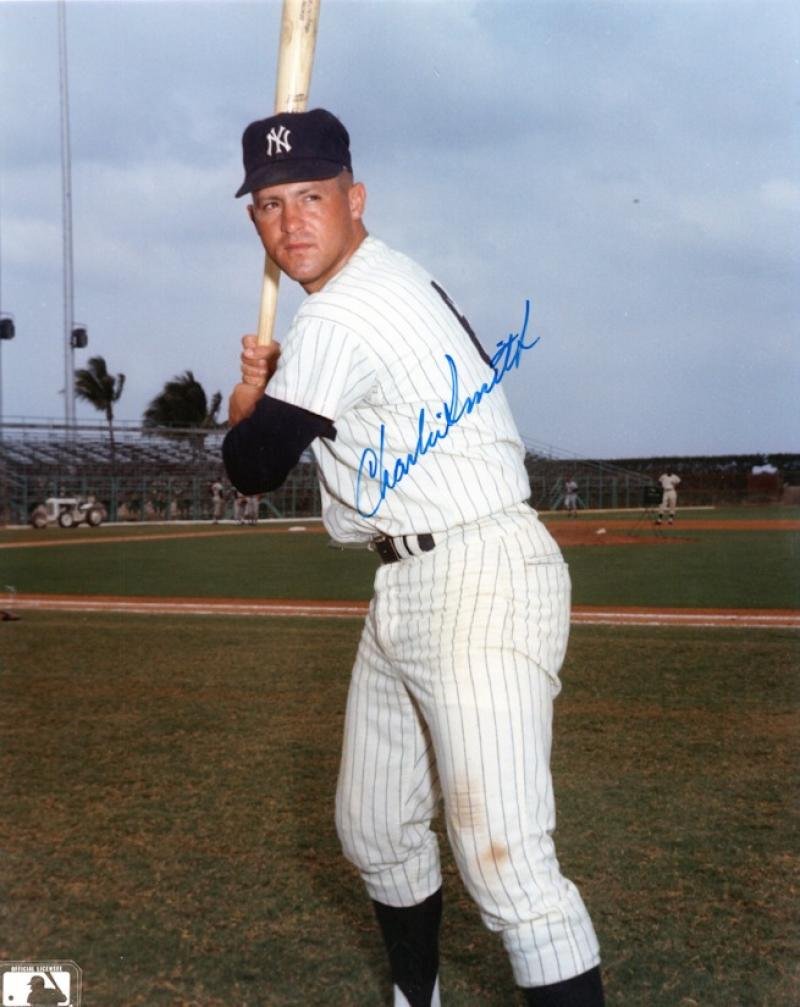
December 8, 1966: Roger Maris for Charley Smith

December 8, 1966: The New York Yankees trade right fielder Roger Maris to the St. Louis Cardinals for infielder Charley Smith.

The Yankee brass had treated Maris badly, failing to publicly support him as he set a single-season home run record of 61 in the 1961 season, helped them to win 5 American League Pennants and the 1961 and 1962 World Series, and suffered through a misdiagnosed hand injury in 1965.

Now, they had traded him for a nothing infielder who had already failed with 5 teams, including the New York Mets. In terms of decency, this one is right down there with the Mets' 1977 trade of Seaver for the worst in New York baseball history.

Free of Yankee management and the New York media, and happy to play for a team and a fan base that made him feel welcome, Maris helped the Cards win the 1967 World Series and the 1968 National League Pennant, then accepted Cardinal and Anheuser-Busch owner Gussie Busch's retirement gift of a beer distributorship in sunny Gainesville, Florida -- quite a prize for someone who grew up in Hibbing, Minnesota and Fargo, North Dakota. He died in 1985.

As for Smith? In 2 seasons in The Bronx, he batted .224 with 10 homers and 45 RBIs. At age 30, the Yankees traded him, and after another year he had played his last big-league game. He died in 1994.
Number 6. At least they didn't give him Roger's number.
They gave 9 to Steve Whitaker, not exactly worthy of it.

*

December 8, 1966 was a Thursday. Baseball was out of season. Football was in midweek. Two games were played in the NBA. The Chicago Bulls beat the Baltimore Bullets, 132-120 at the Baltimore Civic Center (now the CFG Bank Arena). And the San Francisco Warriors beat the St. Louis Hawks, 124-106 at the Cow Palace outside San Francisco in Daly City, California. Rick Barry scored 50 points for the Warriors.

Two games were played in the NHL. The New York Rangers beat the Detroit Red Wings, 4-2 at the Olympia Stadium in Detroit. And the Chicago Black Hawks beat the Boston Bruins, 10-2 at the Boston Garden. Doug Mohns scored 3 goals and an assist. Bobby Hull, the Golden Jet, and his brother, Dennis Hull, the Silver Jet, each scored a goal. The Montreal Canadiens and the Toronto Maple Leafs were not scheduled.

Monday, November 28, 2022

November 28, 1966: Truman Capote's Black and White Ball

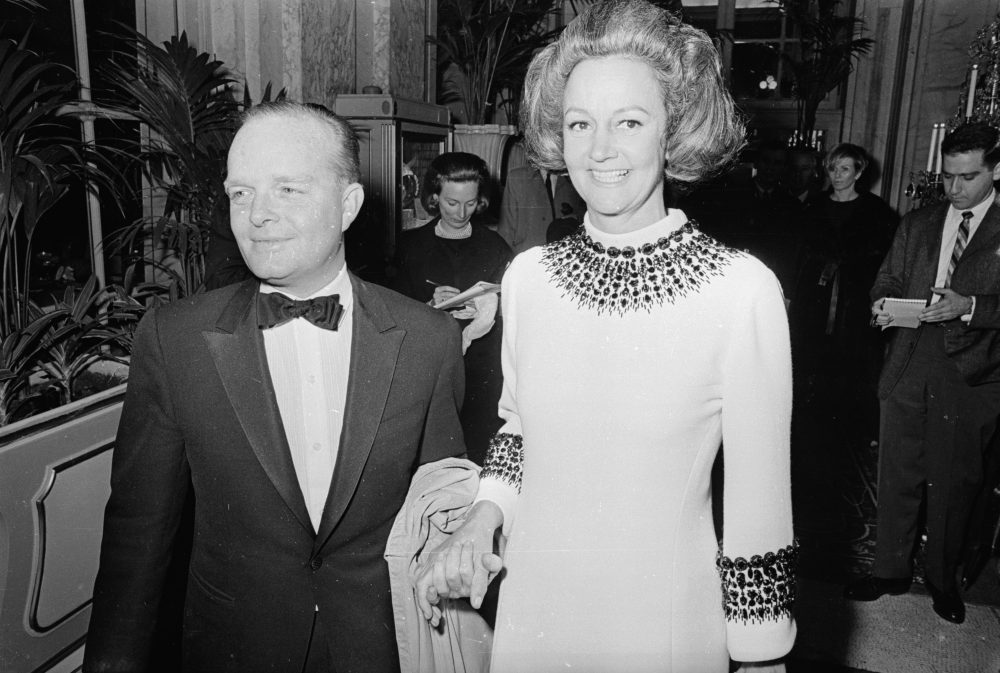
November 28, 1966: Author Truman Capote hosts "The Black and White Ball" at the Plaza Hotel, off Grand Army Plaza, at the southeastern corner of Central Park, at 59th Street and 5th Avenue in Manhattan, New York City.

Supposedly, it was meant to honor Katharine Graham, publisher of The Washington Post. Historian Deborah Davis, who wrote a biography of Graham, also wrote a book about the ball, titling it Party of the Century.

Truman Streckfus Persons was born on September 30, 1924 in New Orleans. After his parents divorced, his mother took him to her hometown of Monroeville, Alabama, where one of his childhood friends was another author-to-be, Harper Lee. In To Kill a Mockingbird, Lee named the character based on herself Jean Louise Finch, nicknamed Scout; and the one based on Capote "Dill."

When he was 8, his mother remarried, to a Cuban-born bookkeeper living in New York, named José García Capote (pronounced "Kah-POH-tay"), who adopted him as his son, and renamed him Truman García Capote. They lived on Park Avenue, so his stepfather was doing well. Too well, as it turned out: He was convicted of embezzlement.

By 11, the boy was writing. At 15, the family moved to nearby Greenwich, Connecticut. At 18, he got a job as a copyboy at The New Yorker magazine. Two years later, he was fired for having angered Robert Frost, America's greatest living poet. That was the 1st time he willingly annoyed a better writer than himself. It would not be the last: Speaking of Jack Kerouac in 1959, he said, "That's not writing, that's typing."

He published Other Voices, Other Rooms in 1948, The Grass Harp in 1951, and Breakfast at Tiffany's in 1958. In 1959, he went to Kansas to write about the murder of the Clutter family. In 1965, he published his "nonfiction novel" about the case, In Cold Blood. It gained him the greatest acclaim of his career.

And that's what he was after: Like many people who make it big, he was less interested in being good at what he did than he was in being a star. He was a relentless self-promoter. Had he been buried rather than cremated, his epitaph could well have been his self-description: "I'm an alcoholic. I'm a drug addict. I'm a homosexual. I'm a genius."

Yes, Truman Capote was openly gay -- not just in the 1960s, but in the hyper-repressive 1950s. He may have been the reason why the word "flamboyant" became a stereotype of gay men. His clothes, his mannerisms, his lisping voice... Even if he hadn't come out of the closet, people would have guessed.

According to a friend, writer Leo Lerman, as far back as 1942, he said that when (not if) he became rich and famous, he would throw a party for his rich and famous friends. In June 1966, he felt secure enough to start setting it up. He was inspired by another author, Dominick Dunne, who had given a black and white ball in 1964, for his 10th wedding anniversary. Capote was a guest. Another inspiration was that year's film version of the musical My Fair Lady: In the scene at Ascot Racecourse, the women all wore black and white dresses.

There had to be a guest of honor. And even Capote didn't have the chutzpah to make himself that. He decided that "Kay" Graham needed cheering up. She disagreed, but knew she couldn't stop him from giving the party: "I was sort of baffled... I felt a little bit like Truman was going to give the ball anyway, and that I was part of the props."
"Tru" and "Kay" at the Ball

While Other Voices, Other Rooms was his 1st published novel, the 1st he'd written was titled Summer Crossing, and its 1st scene was in a dining room at the Plaza Hotel. So he hired the Grand Ballroom of the Plaza. Red tablecloths, with gold candelabra as centerpieces. The menu, served at midnight: Scrambled eggs, sausages, biscuits (Breakfast at midnight?), pastries, spaghetti and meatballs, and, a specialty of the Plaza and one of Capote's favorite dishes, chicken hash. And 450 bottles of Taittinger champagne. How much did Capote spend on this thing? $16,000 -- about $147,000 in 2022 money.

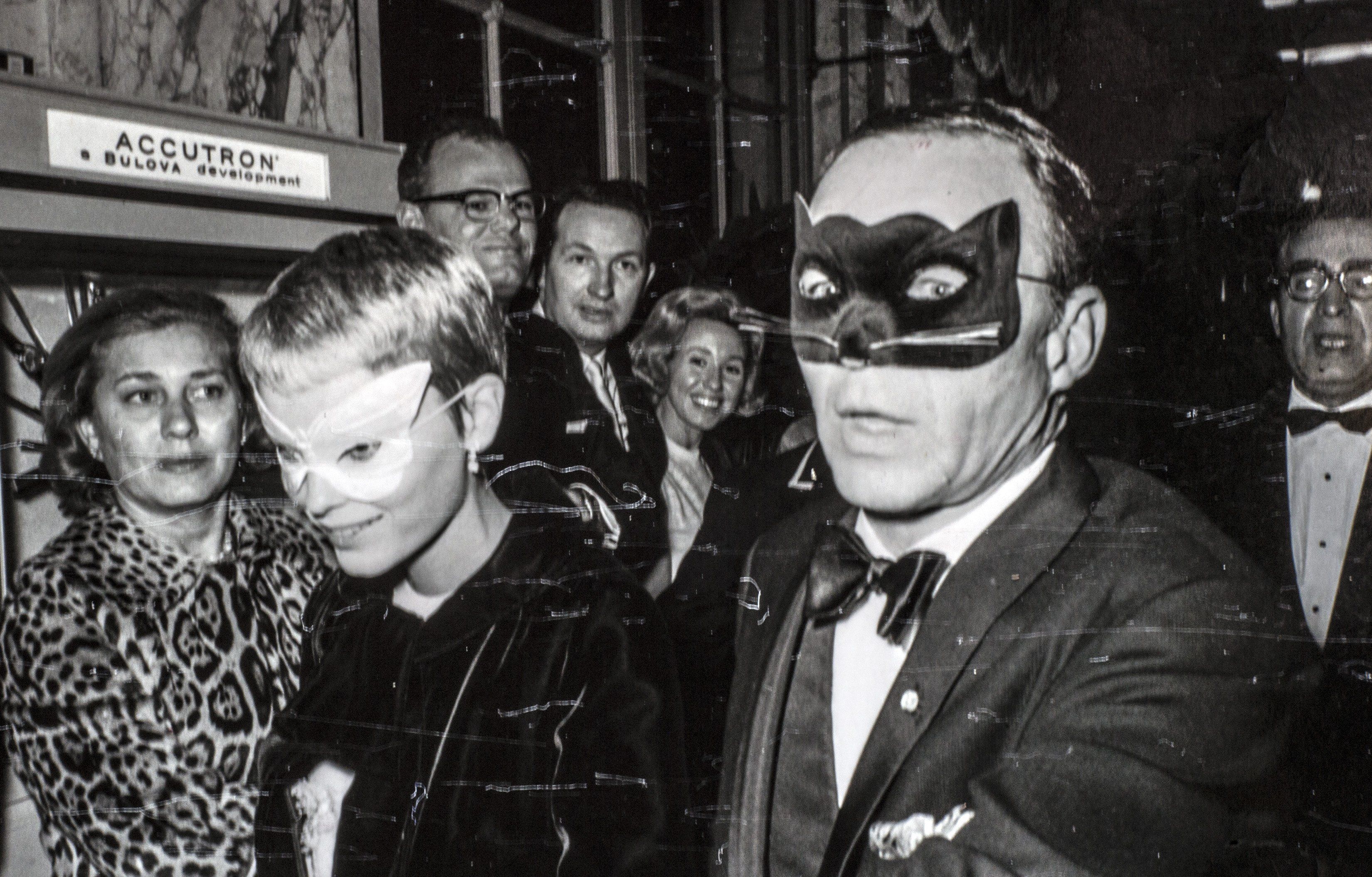
Capote's 540 guests, asked to wear black and white, and masks, included luminaries from New York, Washington, Hollywood and New Orleans. They included the aforementioned Graham and Lerman; CBS chairman William S. Paley and his wife, the former Barbara Cushing, now known as Babe Paley; Scottish businessman Kenneth Keith, Baron Keith of Castleacre, and his wife, the former Mary Gross, now known as Slim Keith; polo champion Winston Guest and his wife, the former Lucy Cochrane, now known as C.Z. Guest; and Prince StanisÅ‚aw "Stash" Radziwiłł, and his wife, the former Caroline Bouvier, now known as Lee Radzill, sister of former First Lady Jacqueline Kennedy -- but the invited guests did not include Jackie herself.

Babe, Slim, C.Z. and Lee were the leading members of a group of fabulously wealthy and stylish women who glommed onto Capote as a "safe" gay man that they could talk to while their husbands were off making deals and having affairs. He glommed onto them, too, calling them "my swans." He turned out not to be trustworthy, and exposed them in a very nasty article for Esquire magazine in 1975.

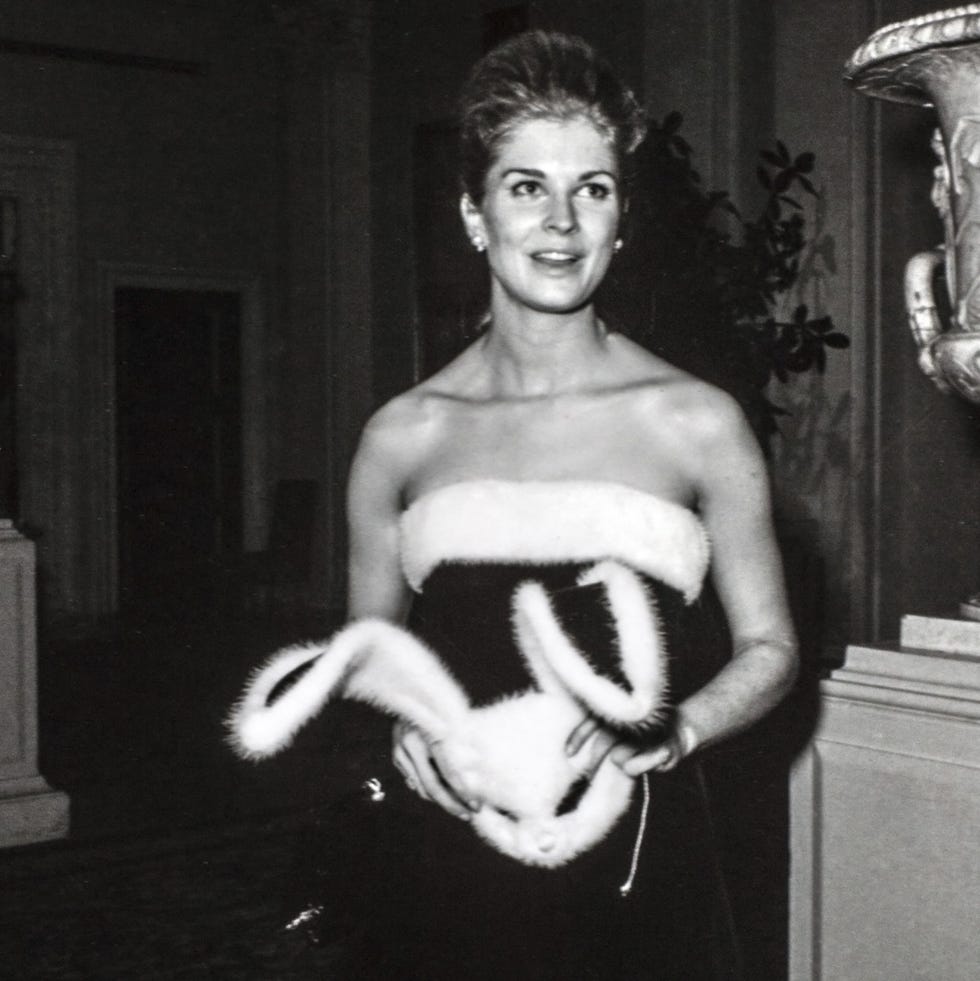
Also among the guests: First Lady Claudia "Lady Bird" Johnson (but not President Lyndon Johnson), the Duke and Duchess of Windsor (formerly King Edward VIII of Britain and Wallis Simpson); Ford Motor Company chairman Henry Ford II, journalist Walter Lippmann, economist John Kenneth Galbraith, National Security Adviser McGeorge Bundy, writers Lillian Hellman, Norman Mailer, John Knowles and George Plimpton; Random House publisher and What's My Line? panelist Bennett Cerf, his wife, and his children; San Francisco Chronicle columnist Herb Caen, historian Arthur Schlesinger Jr., editor Norman Podhoretz, Frank Sinatra and his then-wife Mia Farrow, fashion designer Oscar de la Renta and his wife, Vogue magazine editor Françoise de Langlade; heiress and fashion designer Gloria Vanderbilt, philanthropist Brooke Astor, Harper's Bazaar editor Gloria Guinness, poet Marianne Moore, painter Andy Warhol, Broadway producer Hal Prince, Broadway choreographer Jerome Robbins, photographer Gordon Parks, singer Harry Belafonte, actors Douglas Fairbanks Jr. and Henry Fonda, then-married actors Lauren Bacall and Jason Robards, actress Tallulah Bankhead, and actress Candice Bergen.
Mia looks comfortable attending. Frank does not.

Oddly, he didn't invite Dunne. Carson McCullers, a woman who, like Capote, was a novelist, a Southerner, and gay, and was allegedly a friend of his, was snubbed as well. Gore Vidal, also an openly gay writer, was not invited, but that wasn't a surprise: They were in a feud that lasted for the rest of Capote's life. Writer William Styron and his wife Rose were invited; he didn't want to go, and didn't, while she did want to go, and did.

Mailer and Bundy nearly got into a fight over the way the Administration was conducting the Vietnam War. Bergen -- only 20 years old at the time -- had misgivings involving the war as well:

I remember the guilt I felt, or actually the guilt that other people thought I should feel. I was 19, I think. Reporters accosted me. "Wasn't it inappropriate to have a ball for five hundred people, when a war was going on?"

Someone said -- could it have been Douglas Fairbanks, in his executioner's hood? -- "The question's inappropriate." Somebody else, who was wearing a mouse mask with little ears, said, "The war's inappropriate."

Nowadays, I don't see how anyone can rationalize a gesture like a ball.
Candice Bergen, 22 years before becoming Murphy Brown

Sinatra did not have a good time. Just before midnight, when the food would be served, he turned to Caen, and said, "Hey, let's get out of here." They and their wives tried to sneak out. Capote tried in vain to stop them. Caen later said of Capote, "I think he was hurt. It was one of those great parties that never got off the ground."

R. Couri Hay, eventually a gossip columnist for Warhol's magazine Interview, but then only 17 years old, once wrote, "Truman always claimed that he invited five hundred of his friends, and made fifteen thousand enemies."

But Mailer, who infamously stabbed his wife at a party he'd hosted at his New York apartment 6 years earlier, said, "It was one of the best parties I ever went to. There was so much action… so many people whom you'd never met before... Everybody there felt anointed that night. I think that's Truman's greatest coup. To me, that party's greater than any of his books."

As Deborah Davis wrote in her book about the Ball:

There was no question that the party triggered an insatiable thirst in readers for the very, "who-wore-it-better" coverage that is so popular today. But the distinction is that, at that moment in time, you had to earn your place on the red carpet. And celebrity had a different definition, it wasn't the "15 minutes of fame."

The thing about the black and white ball was that it was a private party that we were given an insider peek at, and it did create a monster, and it also marked Capote's demise in a sense, because, before the ball, he had always said that gregariousness is the enemy of art. When he was writing a book, he would go off into seclusion and he would never be interrupted by any element of social life. After the ball, he became the world's best guest. And he just went from one event to another, and he lost his hold on his art. And that was very sad. The culture changed, and Capote changed as well.

Capote did a little acting, including in the 1976 murder-mystery comedy Murder By Death, where he played a party host who ended up killed; and became a regular on the talk-show circuit, including making several appearances on The Tonight Show Starring Johnny Carson. He hadn't invited Carson to the Ball, but he did become close friends with Carson and his 2nd wife Joanne.

But he never wrote another novel after the Ball. In fact, if you don't count In Cold Blood -- which could count as a novel, since he was accused of making a lot of things up in it -- he published Breakfast at Tiffany's at the age of 34, and then didn't write another novel for the rest of his life. He died on August 25, 1984, from the effects of drinking, drugs and phlebitis, at Joanne Carson's Los Angeles home, where he'd been staying. He was a few weeks short of turning 60. Vidal got the last word in their feud, calling his death "a good career move."

In 1990, Robert Morse won a Tony Award for playing Capote in the play Tru, and an Emmy Award for reprising the role on PBS 2 years later. Philip Seymour Hoffman -- who, sadly, died from drugs even younger, at age 46 -- won an Oscar for starring in the 2005 film Capote, which was about the making of In Cold Blood.

Capote has also been played by Paul Williams in Oliver Stone's 1991 film The Doors, Louis Negin in 54 (about the discotheque Studio 54) in 1998, Sam Street in the Jacqueline Susann biopic Isn't She Great in 2000, and Toby Jones in Infamous in 2006. Michael J. Burg has played him 3 times: In The Audrey Hepburn Story in 2000, in The Hoax in 2006, and in the 1973-set 2009 TV series Life on Mars. (UPDATE: He was played by Tom Hollander in the 2024 FX miniseries Feud: Capote vs. The Swans.)

*

November 28, 1966 was a Monday. Baseball was out of season. Football was in midweek: There would be no Monday Night Football for another 4 years. And no games were scheduled in the NBA or the NHL. So there were no scores on this historic day. Unless you want to count: "Guests 500, Capote 0."

Sunday, November 27, 2022

November 27, 1966: The Highest-Scoring Game in NFL History

Sonny Jurgensen

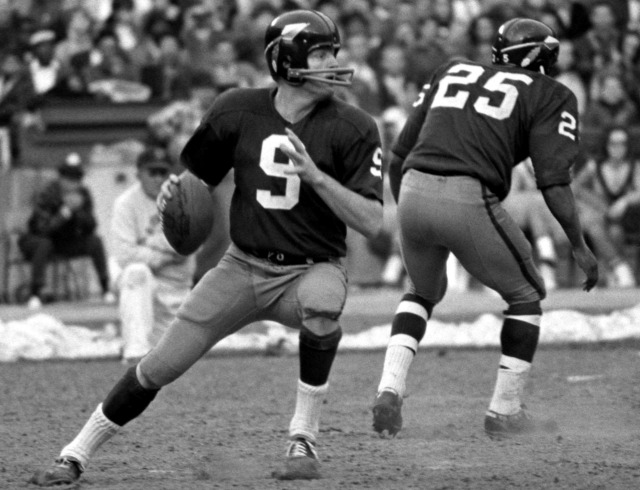
November 27, 1966: The highest-scoring game in NFL history is played.

On December 8, 1940, the Chicago Bears won the NFL Championship Game, walloping the Washington Redskins, 73-0. That remains the most points by one team in a professional football game in America. The Redskins almost matched it, 26 years later.

On October 22, 1950, we received the answer to this question: What would have happened if the team with the best offense in NFL history played the team with the worst defense -- in each case, in terms of points per game? The Los Angeles Rams beat the Baltimore Colts, 70-27, and those 97 points were a new pro football record for most points for both teams, combined.

On December 22, 1963, the Oakland Raiders beat the Houston Oilers, 52-49, for a total of 101 points, a new pro football record. But that was in the American Football League, not the NFL.

From 1956 to 1963, the New York Giants reached the NFL Championship Game 6 times in 8 seasons, although they only won the 1st one. And the Washington Redskins hadn't made one since 1945, or won one since 1942. But by 1966, they were going in opposite directions: The Giants had gotten old and collapsed, while the Redskins had rebuilt, largely because, as the last NFL team that hadn't racially integrated, they had finally done so, with players like receivers Bobby Mitchell and Charley Taylor. Quarterback Sonny Jurgensen was a big acquisition as well.

And when they played each other at District of Columbia Stadium -- renamed Robert F. Kennedy Memorial Stadium in 1969 -- on November 27, the Sunday of Thanksgiving weekend, a new record was set.

At first, the game wasn't all that remarkable, except for the placekickers being brothers: Charlie Gogolak of the Redskins, and Pete Gogolak of the Giants. They were Hungarian immigrants, and, as Europeans, Pete was the 1st "soccer-style kicker" in the NFL, starting from the side and kicking the football with his instep, instead of kicking straight on with his toes; and Charlie was the 2nd.
Charlie Gogolak

A.D. Whitfield scored 2 touchdowns in the 1st quarter, one on a short pass from Jurgensen, the other on a 63-yard run. Charlie Gogoloak missed the extra point after the 1st touchdown. That would be the only one he would miss on this day.

There would be a lot more scoring in the 2nd quarter. Safety Brigman "Brig" Owens returned a fumble 62 yards for a touchdown, putting the 'Skins up 20-0. Allen Jacobs ran for a touchdown, putting the Giants on the board. But the Redskins got a 3rd touchdown from Whitfield, and one from Joe Don Looney. Gary Wood scored on a quarterback sneak to close the Giants to within 34-14 at the half. Early in the 3rd quarter, Wood threw a 41-yard touchdown pass to Joe Morrison, closing the Giants to within 34-21.

But that was as close as the G-Men would get. Jurgensen threw a 32-yard touchdown pass to Taylor. Wood threw a 50-yard touchdown pass to Homer Jones to close the Giants to within 41-28. But Jurgensen threw a 74-yard touchdown pass to Taylor, and it was 48-28 Washington after 3 quarters.

Rickie Harris returned a punt 52 yards for a touchdown, and it was 55-28. Owens returned an interception 60 yards for a touchdown, and it was 62-28. He thus became the 4th player to have returned both a fumble and an interception for a touchdown in the same game. The 1st was Champ Seibold of the Chicago Cardinals in 1942. There have now been 16 players to do it, 1 in the AFL. Oddly, not only did Seibold, the 1st, play on the losing side of the game in question, but so did probably the best player ever to do it: Aeneas Williams, also of the Cardinals, then in Phoenix, in 1993.
Brig Owens

The Giants switched quarterbacks, to Tom Kennedy, and he threw a touchdown pass to Aaron Thomas, making it 62-34. Kennedy led Big Blue down the field again, and Dan Lewis ran it in for a touchdown, and it was 62-41.

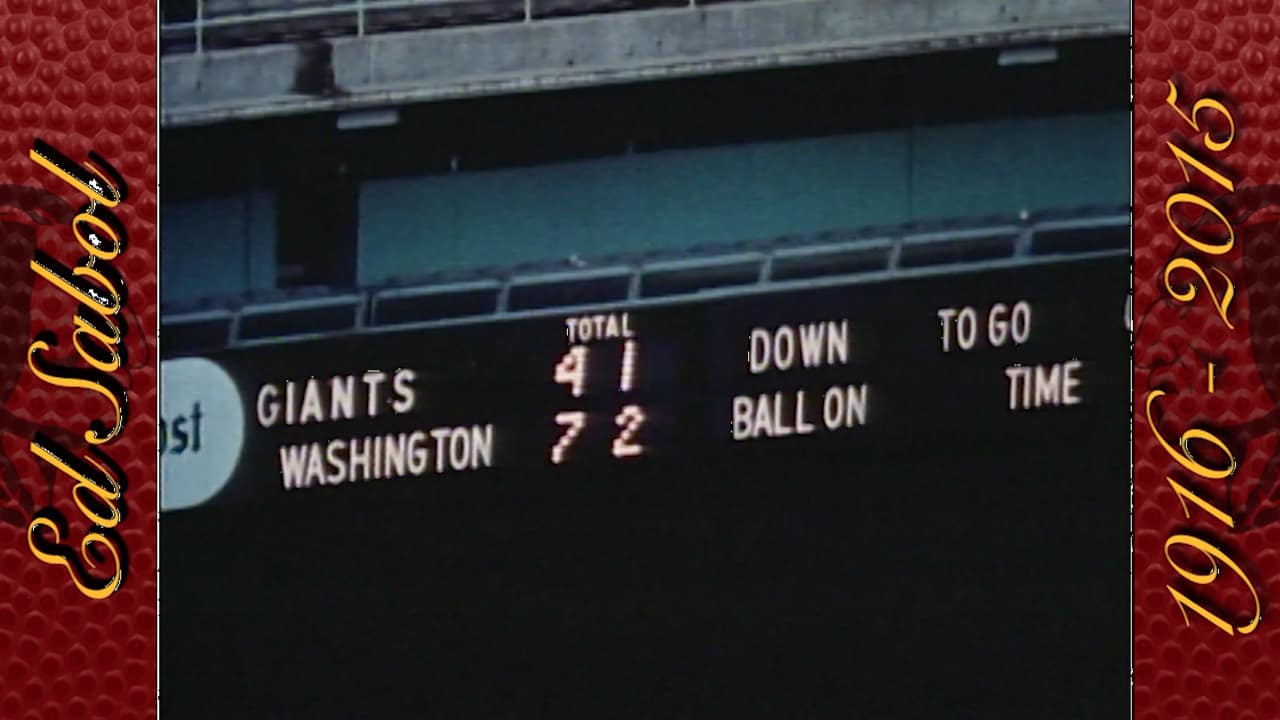
But Mitchell broke off a 45-yard run, and the Redskins had their 10th touchdown of the game. As time ran out, knowing that it wouldn't change much of anything, Redskin coach Otto Graham, once the great quarterback of the Cleveland Browns, ordered a field goal. Charlie Gogolak kicked it from 29 yards out. Final score: Redskins 72, Giants 41.
It was 1 point short of the most that any single team had scored. Combined, it was 113 points, a new American professional football record. Or, to put it another way: The Giants scored 41 points on the road, which would normally be something to be proud of... and didn't even come close to winning the ballgame.

Still, the Redskins struggled. The finally got to another title game in the 1972 season, winning the NFC Championship, but losing Super Bowl VII. From 1982 to 1991, 10 seasons, they reached 4 Super Bowls, winning 3. They have not been back to the NFC Championship Game since.

The Giants had their good moments over the next few years, including a 62-10 win over the Philadelphia Eagles in 1972. But they didn't make the Playoffs again until 1981. They have since been to 5 Super Bowls, winning 4 of them.

The highest-scoring NFL game since this one came 38 years later, almost to the day: On November 28, 2004, the Cincinnati Bengals beat their arch-rivals, the Cleveland Browns, 58-48 at what's now named Paycor Stadium in Cincinnati, for a total of 106 points.

*

November 27, 1966 was a Sunday. These other games were played in the NFL that day:

* The Los Angeles Rams beat the Baltimore Colts, 23-7 at Memorial Stadium in Baltimore.

* The Chicago Bears beat the expansion Atlanta Falcons, 23-6 at Wrigley Field in Chicago.

* The Green Bay Packers beat the Minnesota Vikings, 28-16 at Metropolitan Stadium in the Minneapolis suburb of Bloomington, Minnesota.

* The football version of the St. Louis Cardinals beat the Pittsburgh Steelers, 6-3 at the new Busch Memorial Stadium in St. Louis.

* Three days earlier, on Thanksgiving Day, the San Francisco 49ers beat the Detroit Lions, 41-14 at Tiger Stadium in Detroit.

* That was also the 1st time the Dallas Cowboys played at home on Thanksgiving, beating the Cleveland Browns, 26-14 at the Cotton Bowl in Dallas.

* And, with the arrival of the Falcons, but not yet the New Orleans Saints until the next season, there being an odd number of teams in the NFL (15), it was the Philadelphia Eagles' turn to have the bye week.

In the American Football League: 

* The New York Jets lost to the Kansas City Chiefs, 32-24 at Shea Stadium.

* The Boston Patriots beat the expansion Miami Dolphins, 20-14 at the Orange Bowl in Miami.

* The Denver Broncos beat the San Diego Chargers, 20-17 at Bears Stadium in Denver. (It was renamed Mile High Stadium in 1968.)

* The Buffalo Bills beat the Oakland Raiders, 31-10 at the new Oakland-Alameda County Coliseum.

* And, with the arrival of the Dolphins, but not yet the Cincinnati Bengals until the 1968 season, there being an odd number of teams in the AFL (9), it was the Houston Oilers' turn to have the bye week.

Baseball was in the off-season. No games were scheduled for the NBA that day. There were 2 NHL games played. The New York Rangers beat the Toronto Maple Leafs, 5-0 at the old Madison Square Garden. And the Chicago Black Hawks beat the Boston Bruins, 5-4 at the Boston Garden. The Montreal Canadiens and the Detroit Red Wings were not scheduled.

Friday, November 25, 2022

November 25, 1966: The Genesis of "Black Friday" Shopping

November 25, 1966: "Black Friday" becomes a thing on the day after Thanksgiving. According to a 2022 article on Cracked.com:

A common explanation of the name "Black Friday" is that is has to do with accounting. In older accounting practices, negative numbers were written in red ink and positive numbers in black ink. Thus, a business losing money is "in the red" and a profitable business is "in the black." Black Friday is supposedly the first day many stores turn a profit for the year.

In reality, Black Friday earned its name because it sucks. The term was coined in Philadelphia in 1966. "Black" was an adjective given to disastrous days in history. "Black Friday" also refers to the stock market crash in 1929 that started the Great Depression, as well as a flood in Cincinnati in 1937. 

In 1966, the Philadelphia police hated the first day of the holiday shopping season, because of the massive traffic jams and the packed sidewalks it caused. Also, presumably because they wished they could be off from work like everyone else. Frazzled retail workers and exhausted shoppers were more than willing to accept the term.

The red ink/black ink explanation was never heard of until the early 1980s. Store owners who were satisfied with their sales started to become disturbed by the negative-sounding nickname. The president of Strawbridge & Clothier said, "It sounds like the end of the world, and we really like the day. If anything it should be called "Green Friday." Another department store executive was even more hot and bothered, calling the name "the most disgusting thing I've ever heard. Why would anyone call a day, when everyone is happy and has smiles on their faces, Black Friday?"

*

Two mistakes: The Crash of 1929 began on a Thursday, and hit rock bottom on the following Tuesday. However, there were stock market "panics" (the pre-1929 term for a crash) in 1869, which became known as Black Friday; and in 1893, although that one didn't get the name. And the 1937 Mill Creek Flood in Cincinnati crested on a Sunday. Strawbridge & Clothier, a Philly retail icon, like so many other local department store chains, was bought out by Macy's, in their case in 2005.

In New York, the Macy's Thanksgiving Day Parade always concludes with a float with a man dressed as Santa Claus on it. This means that the next day is the semi-official beginning of the Christmas shopping season. Macy's had the clout to promote that, as they had successfully promoted their Herald Square (34th Street, 6th Avenue and Broadway) flagship store as "the world's biggest store." (Whether it is actually the world's largest department store is in dispute.)

The earliest known use of the phrase "Black Friday" to refer to the day after Thanksgiving occurred in the journal Factory Management and Maintenance, in its issue for November 1951, and again in 1952. There, it referred to the practice of workers calling in sick on the day after Thanksgiving, in order to have a four-day weekend. However, this use does not appear to have caught on. By the time I started school in the Autumn of 1975, schools were already giving the day after Thanksgiving off. But I hadn't yet heard of the day being called "Black Friday."

Also in 1975, on November 29, the Saturday after Thanksgiving that year, the phrase first appeared in The New York Times, referring to "the busiest shopping and traffic day of the year." However, acknowledging that their city was the 1st to use it, The Philadelphia Inquirer reported in 1985 that retailers in Cincinnati and Los Angeles were still unaware of the term.

By that time, I was in high school in Central Jersey, a little closer to New York than to Philadelphia, and I had heard of it. That year, on Black Friday, I went to the Monmouth Mall in Eatontown, near the Jersey Shore, and it was a mistake. It was the 1980s, a decade of conspicuous consumerism, and "Black Friday" had really become a thing.

For many years, it was common for retailers to open with "Doorbusters" sales at 6:00 AM, with some people lining up outside earlier than that, sometimes camping out all night long. Sometimes, people began pounding on the stores' front doors, trying to get them to open earlier. Sometimes, opening the doors -- on time or otherwise -- led to big crowd rushes, shoppers getting trampled, and fights over the year's most-wanted items, which led to arrests.

In the late 2000s, some stores moved their openings back to 4:00, then to 12:01 AM. In 2010, Toys 'R' Us broke the taboo against stores being open on T-Day itself, opening at 10:00 PM on Thanksgiving night. In 2012, Walmart moved it back to 8:00 PM. In 2014, some stores had just said the hell with it, and opened at 6:00 AM on Thanksgiving Day itself.

In response to the "big box stores" like Walmart and Home Depot that had forced many smaller companies and "mom-and-pop stores" out of business, some cities and States began promoting "Small Business Saturday." With the growth of the Internet, many retailers, including some that only exist online, had been promoting sales on "Cyber Monday," the day after the end of Thanksgiving weekend.

When I worked in retail, I always volunteered to work on the day after Thanksgiving, and also on Christmas Eve, New Year's Eve and New Year's Day, the last 3 of those usually having the stores close at 6:00 PM, partly in order to give a break to other workers who might want those days off, and partly so that I could get December 18, my birthday, off.

In 1995, I worked at a JCPenney store. There was a One Day Sale 2 Saturdays before Thanksgiving, and that was more crowded, and the shoppers less courteous, than they were on Black Friday. On that day, they were comparatively tame and reasonable.

*

November 25, 1966 was, as suggested, a Friday. Baseball was out of season. There were no football games: Not in the NFL, not in the AFL, not even in college ball. And there were no games scheduled in the NHL. But there were 4 games in the NBA:

* The New York Knicks lost to the Cincinnati Royals, 115-109 at the Cincinnati Gardens. Oscar Robertson had 27 points.

* The Philadelphia 76ers beat the Baltimore Bullets, 129-115 at the Baltimore Civic Center (now the CFG Bank Arena). It was just another day at the office for Wilt Chamberlain: 41 points and 19 rebounds.

* The Detroit Pistons beat the Boston Celtics, 107-105 at Cobo Hall (now Huntington Place) in Detroit.

* And the Chicago Bulls beat the Los Angeles Lakers, 121-117 at the Los Angeles Memorial Sports Arena. In defeat, Elgin Baylor had 32 points and 18 rebounds.

Thursday, November 24, 2022

November 24, 1966: New York's Smoggy Thanksgiving, 168 Dead

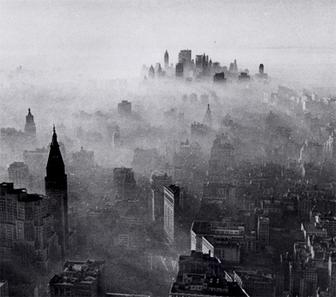
Photo on the front page of The New York Times,
November 25, 1966

November 24, 1966: New York City is struck with a major air-pollution episode and environmental disaster, coinciding with that year's Thanksgiving holiday weekend.

Smog -- the word is a combination, a portmanteau, of "smoke" and "fog" covered the New York Metropolitan Area (or "the New York Tri-State Area," including portions of the States of New York, New Jersey and Connecticut) from November 23 to 26, filling the City's air with damaging levels of several toxic pollutants. It was the City's 3rd major smog attack, following events of similar scale in 1953 and 1963.

On November 23, a large mass of stagnant air over the East Coast trapped pollutants in the city's air. For 3 days, New York City was engulfed in dangerously high levels of carbon monoxide, sulfur dioxide, smoke, and haze. Pockets of air pollution pervaded the Tri-State Area.

By November 25, the smog became severe enough that regional leaders announced a "first-stage alert." Leaders of local and State governments asked residents and industry to take voluntary steps to minimize emissions. Health officials advised people with respiratory or heart conditions to remain indoors. The City shut off garbage incinerators, requiring massive hauling of garbage to landfills.

Energy companies Consolidated Edison (called Con Ed for short) and the Long Island Lighting Company (LILCO) were asked to burn natural gas rather than fuel oil, to minimize the release of sulfur dioxide. Both companies voluntarily cut back emissions, with Con Ed reducing its emissions by 50 percent.

(Con Ed still runs New York City's electricity. LILCO lost favor over the years, and was replaced in 1998 by the Long Island Power Authority. In 2014, LIPA was bought out by Public Service Enterprise Group, or PSEG, which runs electricity for much of New Jersey.)

In spite of the danger, Macy's ran its Thanksgiving Day Parade as scheduled. Indeed, it ran the Parade every year from its 1st in 1924 until 2019, holding a virtual Parade due to COVID restrictions in 2020, and resuming in 2021. But fewer people than usual came out to attend.

A cold front dispersed the smog on November 26, and the alert ended. In the months that followed, medical researchers studied the smog's impact on health. City officials initially maintained that the smog had not caused any deaths, but it soon became clear that the smog had significantly harmed public health.

A study published in December 1966 estimated that 10 percent of the City's population -- around 800,000 people -- had suffered adverse health effects, such as stinging eyes, coughing and respiratory distress. A statistical analysis published in October 1967 found that 168 deaths had likely been caused by the smog. For comparison's sake: The smog event of 1953 is believed to have killed 260; the one in 1963, perhaps as many as 400.

The smog catalyzed greater national awareness of air pollution as a serious health problem and a political issue. The government of New York City updated local laws on air-pollution control. Prompted by the smog, President Lyndon B. Johnson and members of Congress worked to pass federal legislation regulating air pollution in the United States, culminating in the 1967 Air Quality Act and the 1970 Clean Air Act. The extent of harms from subsequent pollution events, including the health effects of pollution from the September 11, 2001 terrorist attack, have been judged by reference to the 1966 smog in New York.

*

November 24, 1966 was a Thursday, Thanksgiving Day. English singer Russell Watson, known for singing "Where My Heart Will Take Me," the theme from Star Trek: Enterprise, was born.

For the 1st time, the Dallas Cowboys hosted a Thanksgiving Day game, beating the Cleveland Browns, 26-14 at the Cotton Bowl in Dallas. The NFL's established T-Day team, the Detroit Lions, lost to the San Francisco 49ers, 41-14 at Tiger Stadium in Detroit. And in the American Football League, the Buffalo Bills beat the Oakland Raiders, 31-10 at the brand-new Oakland-Alameda County Coliseum.

There were 5 games played in college football:

* Number 4 Nebraska were upset by arch-rival Oklahoma, 10-9 at Memorial Stadium (later Owen Field, now Gaylord Family Memorial Stadium) in Norman, Oklahoma.

* Villanova beat George Washington University, 16-7 at District of Columbia Stadium in Washington. This turned out to be the last football game that GWU ever played: The school's trustees dropped its football program on January 17, 1967. In 1969, D.C. Stadium was renamed Robert F. Kennedy Memorial Stadium.

* Virginia Tech beat Virginia Military Institute, 70-12 at Victory Stadium in Roanoke, Virginia. VMI now compete in the NCAA Football Championship Subdivision (FCS), formerly Division I-AA.

* The University of Tulsa beat Wichita State, 47-14 at Skelly Stadium in Tulsa, Oklahoma. Wichita State dropped its program after the 1986 season.

* And Texas beat arch-rival Texas A&M, 22-14 at Memorial Stadium in Austin, Texas.

Baseball was out of season. There were 2 games played in the NBA. The Philadelphia 76ers beat the San Francisco Warriors, 140-123 at the Philadelphia Civic Center. Wilt Chamberlain scored 27 points and grabbed 36 rebounds against his former team. Rick Barry scored 36 in defeat.

And the Boston Celtics beat the St. Louis Hawks, 101-78 at the Kiel Auditorium in St. Louis. Larry Siegfried of the Celtics led all scorers with 24 points, while Bill Russell, now also the head coach of the Celtics, scored 8 points and grabbed 33 rebounds.

There were 2 games in the NHL. The Boston Bruins beat the Detroit Red wings, 8-3 at the Boston Garden. And the Chicago Black Hawks beat the Montreal Canadiens, 5-0 at the Chicago Stadium. The New York Rangers and the Toronto Maple Leafs were not scheduled.

December 31, 1999 & January 1, 2000: The Millennium

December 31, 1999:  The Millennium arrives. The people of planet Earth survived. At a terrible cost. But we hadn't destroyed ourselves. ...