Showing posts with label madrid. Show all posts

Wednesday, December 14, 2022

December 14, 1947: Estadio Santiago Bernabéu Opens

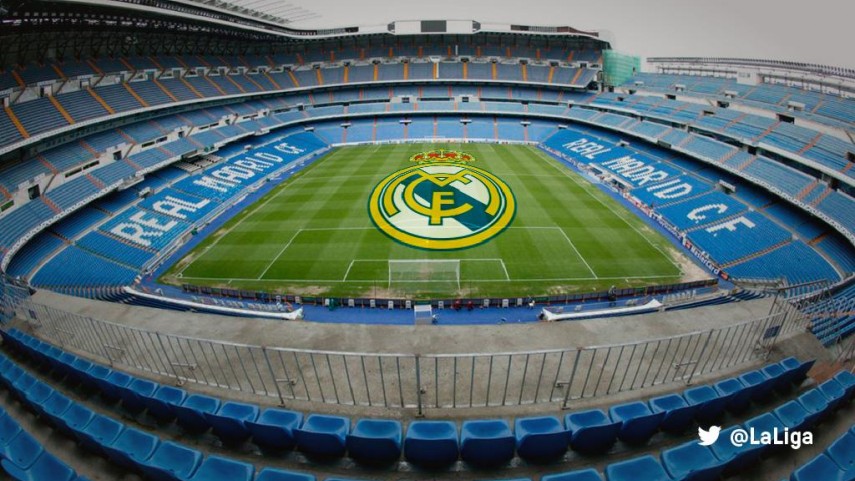
December 14, 1947: Real Madrid Club de Fútbol opens its new stadium, named Estadio Chamartín like the old one. In 1955, it was renamed after the man who got it built, team president Santiago Bernabéu.

Bernabéu the man is not to be celebrated: He was a dedicated follower of Fascist dictator Francisco Franco, which allowed him to fix results in favor of his team until his death in 1978, even after Franco died and Spain became free.
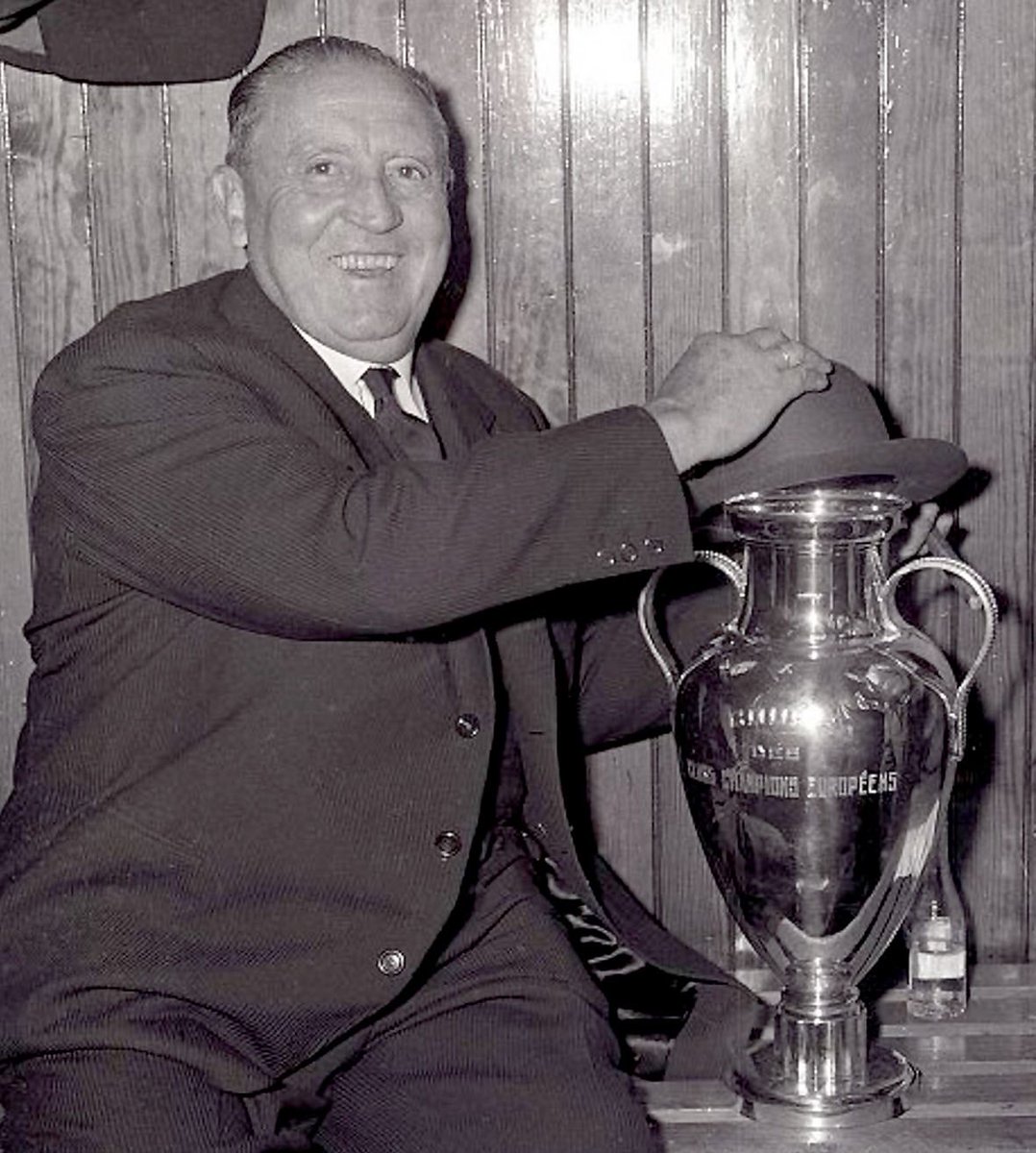
Santiago Bernabéu, with an early version of the European Cup

But the 84,744-seat stadium (it went as high as 129,690 before its conversion to all-seater) is one of the world's great sports palaces. It hosted the Finals of the 1964 European Nations Cup and the 1982 World Cup, making it the 1st to host the Final of both.
It's also hosted 4 Finals of the European Cup/UEFA Champions League, which Real Madrid have won a record 14 times:

* 1957: Real Madrid won it on home soil, beating Fiorentina of Florence, Italy, 2-0.

* 1969: AC Milan beat Ajax Amsterdam, 4-1.

* 1980: Nottingham Forest beat Hamburger SV, 1-0.

* 2010: Internazionale Milano of Milan, Italy, beat Bayern Munich, 2-0.

In 2018, CONMEBOL, the governing body for soccer in South America, moved the Final of its version of the Champions League, the Copa Libertadores, to the Bernabéu, because it was the biggest club soccer rivalry on the continent, and the Bernabéu would be, for them, a neutral site. River Plate beat their Buenos Aires, Argentina arch-rivals, Boca Juniors, 3-1.

In 2019, Real Madrid began a renovation of the stadium, expanding concourses and installing wider seats and a retractable roof.
(UPDATE: It reopened on December 23, 2023, with a seating capacity of 83,186. In 2025, the stadium was renamed simply "The Bernabéu." Apparently, old man Santiago was now considered too much of a symbol of Fascism to allow his name to remain on the stadium, but the Bernabéu name was too lucrative to remove it entirely.)

*

December 14, 1947 was a Sunday. Dilma Rousseff, who would later serve as President of the soccer-mad nation of Brazil, was born.

Baseball was out of season. There were 4 games played in the NFL:

* The New York Giants lost to the Los Angeles Rams, 34-10 at the Los Angeles Memorial Coliseum.

* The Philadelphia Eagles beat the Green Bay Packers, 28-14 at Shibe Park in Philadelphia.

* The Washington Redskins beat the Boston Yanks -- yes, Yankee fans and Red Sox fans, such a sports team actually existed -- 40-13 at Griffith Stadium in Washington.

* And the Chicago Cardinals beat the Chicago Bears, 30-21 at Wrigley Field in Chicago.

And the All-America Football Conference held its Championship Game. The Cleveland Browns beat the football version of the New York Yankees, 14-3 at Yankee Stadium.

No games were scheduled for the Basketball Association of America, the league that would become the NBA. But the NHL's entire "Original Six" were in action:

* The New York Rangers and the Detroit Red Wings played to a tie, 1-1 at the old Madison Square Garden.

* The Toronto Maple Leafs and the Boston Bruins played to a tie, 1-1 at the Boston Garden.

* And the Montreal Canadiens beat the Chicago Black Hawks, 4-3 at the Chicago Stadium.

Wednesday, November 23, 2022

November 23, 2002: The Pig's Head In El Clásico

November 23, 2002: El Clásico, the biggest sports rivalry in Spain, is played. It becomes the most famous game in the rivalry, but not for anything that was part of the actual game.

The country's 2 biggest soccer teams are Real Madrid Club de Fútbol and Futbol Club Barcelona. Real Madrid, the more successful of the two, became identified with the national government of Fascist leader Francisco Franco. Barcelona became identified with the resistance of the people of the Autonomous Community of Catalonia, which opposed Franco and the Fascists, and were seriously oppressed. They are so deeply engrained in Catalan culture that they have adopted the slogan "Mes Que Un Club" (More Than a Club). It's even "written" into the seats at their stadium, the 98,000-seat Camp Nou.

As a result, Real Madrid have been seen as a "cheating" club, somehow turning draws into wins and losses into draws, with dives for penalties and "horror tackles" overlooked by the referees. Eventually, Barcelona learned how to do that, too, especially in European tournaments like the UEFA Champions League, to the point where they became known as "UEFAlona."

Luís Figo was a winger from outside Lisbon, Portugal. He had starred for Sporting Clube de Portugal (a.k.a. "Sporting Lisbon") before Barcelona bought him in 1995. He helped "Barça" win La Liga in 1998 and 1999, and became their most popular player.

Former Real Madrid captain Manolo Sanchis said Figo was his stiffest opponent, even more of a handful than Diego Maradona: "All by himself, he drove us crazy, dribbling us. He was a tremendous player, a crack."

Real Madrid, who had won the UEFA Champions League in 1998 and 2000, had a new club president, Florentino Pérez. He didn't just want the team to reassert themselves: He wanted to send Barça a message, and metaphorically stab their fans in the heart. So he promised Real fans that he would sign Figo, who had a buyout clause of €62 million. (If he could get it done, it would be a world record for a transfer fee for a "footballer": About $68 million, or about 21 times what Barça had paid for him 5 years earlier.)

Contrasting this stance with that of outgoing club president Lorenzo Sanz, ousted in a club election in favor of Pérez, Diego Torres, writing for Madrid newspaper El Pais (The Country), in Madrid, said, "This promise fulfilled all the superpower fantasies of Madridistas. Will he destroy Barcelona with a single cheque? They didn't give a shit for Lorenzo Sanz and his European Cups." In other words, Pérez was going to make it personal, and Real's fans ate it up.

Figo had been trying to renegotiate his Barcelona contract, but the club was stalling. This made him receptive to a move. But he was stuck: He couldn't tell anyone the deal was done until it was legal to announce it. But word got out, and he denied it. In other words, he lied. And the Cules believed him. When the deal was announced on July 25, 2000, the reaction in Catalonia was fury and a sense of betrayal: Not only had he gone to their arch-rivals, but he had lied about it.
Luís Figo

(Cules is a nickname for Barcelona supporters. At the stadium they used from 1922 to 1957, fans made an artificial last row of the stands by sitting on the ledge, with their rear ends, or "cules" in Romance languages, over the edge. So the most common name for Barcelona fans is, literally, "asses.")

The next game between the teams was at the Camp Nou in Barcelona on October 21, 2000 -- the same day as Game 1 of the World Series between the New York Yankees and the New York Mets, but even Met fans don't hate the Yankees as much as the Cules hate the Madridistas and their team. Every time Figo touched the ball, the booing and whistling (often equivalent to booing in Europe) was intense. One banner in the stands read, "We hate you so much, because we loved you so much." Barcelona won, 2-0. 

But the Figo signing began the "Galácticos" era of Real Madrid, signing the best players in the world, and not caring how much it cost. They already had Raúl (González), Guti (real name: José María Gutiérrez), Fernando Hierro, Roberto Carlos, Fernando Morientes, Míchel Salgado, and goalkeeper Iker Casillas. To these were added Figo, Claude Makélélé, Zinedine Zidane, and finally Ronaldo (the Brazilian one, not the later Portuguese star Cristiano Ronaldo, although Real did eventually sign him, too). It worked, as Los Blancos won the Champions League in 2002.

Raúl wore Number 7. He became known as "El Siete." The Seven. Even Figo, who wore 7 for Barcelona and for the Portugal national team, knew that he couldn't talk Raúl into giving the number up. So he switched to 10.

On November 23, 2002, a few days after Figo's 30th birthday, Real Madrid returned to the Camp Nou. It was a 9:00 PM start, so the fans had more time to have pregame drinks than usual. Every time Figo came within throwing range of Barça fans, objected rained down on him: Beer cans, bottles, golf balls, even cigarette lighters. In the 2nd half, with the score 0-0, Figo, the team's regular taker of corner kicks, went to take one. More objects fell near him. He turned around, smiled, and made a thumbs-up gesture, to let them know that they weren't going to stop him.

But the referee, Luis Medina Cantalejo, had seen enough, and he decided the game had to stop, long enough for the throwing to stop and the debris to be cleared. For 16 minutes, there was no action. At one point, a pig's head was found on the edge of the pitch, preserved the way it would be if the entire pig were to be roasted. The message was clear: "Figo, you're a pig." The TV cameras caught the image, and the whole world saw it.

The game was finally resumed, and Figo's corner came to nothing. At 11:08 PM, the final whistle was blown, and the game remained goalless.

Figo, Zidane, and the rest helped Real Madrid win La Liga in that 2002-03 season, Figo's 2nd league title with them, along with the 2 he won at Barcelona. In 2005, he left for Internazionale Milano, and won 4 Serie A (Italian league) titles with them, then retired.

Real Madrid and FC Barcelona, and each team's fans, still hate each other's guts. And Barça fans still have not forgiven Figo. I suppose it hasn't occurred to them that if their own team had renegotiated his contract like he'd asked, he might not have gone.

*

November 23, 2002 was a Saturday. In English soccer, Arsenal traveled to Hampshire, and lost to Southampton, 3-2 at the St. Mary's Stadium.

El Clásico wasn't the only major rivalry being played that day. It was the beginning of Rivalry Week in American college football. Actually, no: The beginning was 3 days earlier, on Wedneasday night, when West Virginia upset Number 13 Virginia Tech, 21-18 at Lane Stadium in Blacksburg, Virginia. On Thursday night, Number 1 Miami beat Number 17 Pittsburgh, 28-21 at the Orange Bowl stadium in Miami. This clinched the Big East Conference title.

But among the games played on that Saturday:

* Rivalry: Number 2 Ohio State beat Number 12 Michigan, 14-9 at Ohio Stadium in Columbus. Ohio State thus won the Big Ten Conference title, and beat Miami in a controversial Fiesta Bowl to win the Bowl Championship Series National Championship.

* Rivalry: Number 3 Washington State were upset by Washington, 29-26 in the "Apple Cup" at Martin Stadium in Pullman, Washington. "Wazzu" still won the Pacific-Ten Conference title.

* Number 4 Oklahoma beat Number 24 Texas Tech, 60-15 at Memorial Stadium, a.k.a. Owen Field, in Norman, Oklahoma. Oklahoma then beat Colorado in the Big 12 Conference Championship Game, and, since Ohio State was Number 2 and locked into the BCS title game, were invited to the Rose Bowl as the now-Number 3 team. They beat Washington State.

* Number 5 Iowa had completed its regular season. They tied Ohio State for 1st in the Big 10, but they didn't play each other, and Ohio State had the higher ranking, so they went to the BCS title game.

* Number 6 Georgia had the week off, in preparation for next week's game against arch-rival Georgia Tech. They won that game, then beat Arkansas in the Southeastern Conference Championship Game.

* Rivalry: Number 7 USC, the University of Southern California, beat Number 25 UCLA, the University of California at Los Angeles, 52-21 at the Rose Bowl outside Los Angeles in Pasadena, California. USC thus finished in a tie with Washington State for the Pac-10 title. But since Wazzu had beaten USC head-to-head, this would be the only game USC would play at the Rose Bowl stadium that season. USC went to the Orange Bowl, where they beat Iowa.

* Number 8 Notre Dame beat Rutgers, 42-0 at Notre Dame Stadium in South Bend, Indiana.

* Rivalry: Number 9 Alabama were upset by Auburn, 17-7 in the "Iron Bowl" at Bryant-Denny Stadium in Tuscaloosa. 'Bama still finished 1st in the SEC Western Division, but were on probation, and not permitted to play in the SEC Championship Game.

* Number 10 Kansas State beat Missouri, 38-0 at Faurot Field in Columbia, Missouri.

* Number 14 Florida State were upset by North Carolina State, 17-7 at Carter-Finley Stadium in Raleigh, North Carolina. FSU still won the Atlantic Coast Conference title, but lost the Sugar Bowl to Georgia.

* Rivalry: Number 18 Maryland were upset by Virginia, 48-13 at Scott Stadium in Charlottesville, Virginia.

* Rivalry: North Carolina beat Duke, 23-21 at Wallace Wade Stadium in Durham, North Carolina.

* Rivalry: Tennessee beat Vanderbilt, 24-0 at Vanderbilt Stadium (now First Bank Stadium) in Nashville.

* Rivalry: Purdue beat Indiana, 34-10 for the "Old Oaken Bucket" at Ross-Ade Stadium in West Lafayette, Indiana.

* Rivalry: Illinois beat Northwestern, 31-24 at Ryan Field outside Chicago in Evanston, Illinois.

* Rivalry: Wisconsin beat Minnesota, 49-31 for "Paul Bunyan's Axe" at Camp Randall Stadium in Madison, Wisconsin.

* Rivalry: Utah beat Brigham Young, 13-6 in the "Holy War" at Rice-Eccles Stadium in Salt Lake City, Utah.

* Rivalry: The University of California beat Stanford, 30-7 in "The Big Game" at the original California Memorial Stadium in Berkeley.

* Rivalry: Oregon State beat Oregon, 45-24 in "The Civil War" at Reser Stadium in Corvallis, Oregon.

* And among the service academies, Army lost to the University of Memphis, 38-10 at the Liberty Bowl (now Simmons Bank Liberty Stadium) in Memphis; Navy lost to Wake Forest, 30-27 at Groves Stadium (now Allegacy Federal Credit Union Stadium) in Winston-Salem, North Carolina; and Air Force lost to San Diego State, 38-34 at Falcon Field in Colorado Springs, Colorado.

Baseball was out of season. There were 9 games played in the NBA:

* The New Jersey Nets beat the Minnesota Timberwolves, 96-82 at the Target Center in Minneapolis.

* The Boston Celtics beat the Atlanta Hawks, 109-99 at the Philips Arena (now the State Farm Arena) in Atlanta.

* The Memphis Grizzlies beat the Washington Wizards, 85-74 at the Great American Pyramid in Memphis.

* The New Orleans Hornets beat the Cleveland Cavaliers, 97-84 at the Gund Arena (now the Rocket Arena) in Cleveland.

* The Detroit Pistons beat the Indiana Pacers, 106-91 at the Bankers Life Fieldhouse (now the Gainbridge Fieldhouse) in Indianapolis

* The Dallas Mavericks beat the Seattle SuperSonics, 115-105 at the American Airlines Center in Dallas.

* The Utah Jazz beat the Chicago Bulls, 110-90 at the Delta Center in Salt Lake City.

* The Denver Nuggets beat the Phoenix Suns, 80-79 at the America West Arena (now the Mortgage Matchup Center) in Phoenix.

* And the Sacramento Kings beat the Portland Trail Blazers, 95-94 at the Rose Garden (now the Moda Center) in Portland.

And there were 13 games in the NHL:

* Speaking of rivalries, the New York Islanders beat the New York Rangers, 3-1 at Madison Square Garden.

* The New Jersey Devils lost to the Tampa Bay Lightning, 3-1 at the Continental Airlines Arena at the Meadowlands.

* The Carolina Hurricanes beat the Montreal Canadiens, 7-3 at the Bell Centre in Montreal.

* The Ottawa Senators beat the Columbus Blue Jackets, 5-2 at the Corel Centre (now the Canadian Tire Centre) in Ottawa.

* The Boston Bruins beat the Buffalo Sabres, 4-1 at the FleetCenter (now the TD Garden) in Boston.

* The Washington Capitals beat the Atlanta Thrashers, 6-3 at the MCI Center (now the Capital One Arena) in Washington.

* The Toronto Maple Leafs beat the Philadelphia Flyers, 6-0 at the Air Canada Centre (now the Scotiabank Arena) in Toronto.

* The Pittsburgh Penguins beat the San Jose Sharks, 4-1 at the Mellon Arena (as the Pittsburgh Civic Arena was then known).

* The Minnesota Wild beat the Nashville Predators, 4-2 at the Xcel Energy Center in St. Paul, Minnesota.

* The Colorado Avalanche beat the St. Louis Blues, 3-1 at the Savvis Center (now the Enterprise Center) in St. Louis.

* The Calgary Flames beat the Chicago Blackhawks, 3-1 at the Saddledome in Calgary.

* The Detroit Red Wings and the Edmonton Oilers played to a 1-1 tie at the Skyreach Centre (as the Northlands Coliseum was then known) in Edmonton.

* And the Los Angeles Kings beat the Dallas Stars, 2-0 at the Staples Center (now the Crypto.com Arena) in Los Angeles.

Tuesday, November 15, 2022

November 15, 1958: Tyrone Power Dies

November 15, 1958: Tyrone Power dies of a heart attack in Madrid, where he had been filming the Biblical movie Solomon and Sheba with Gina Lollobrigida. He was filming a dueling scene with George Sanders when he was stricken. He was only 44 years old.

Yul Brynner, who had turned the role of King Solomon down, was a friend of Power's, and accepted it in tribute, putting his planned film about Spartacus on hold, which allowed Kirk Douglas to make his planned version of Spartacus unopposed.

Tyrone Edmund Power III was born on May 5, 1914 in Cincinnati. He graduated from Marian High School (now Purcell Marian), which also produced Tom and Charlie Luken, a father and son who both became Mayors of Cincinnati; and football legend Roger Staubach.

He became a star with In Old Chicago in 1938, playing Dion O'Leary, owner of the barn where the Great Fire of 1871 began. He became a legend in 1940 in The Mark of Zorro, defining the role until Guy Williams played it on TV in the late 1950s, and typecasting him as a swashbuckler type.

Had somebody figured out how to make him fly, he might have been the right actor to be the 1st to play Superman. (Superheroes Batman, Captain Marvel and Captain America were filmed in the early 1940s.) But he found a way to become a real hero, flying rescue missions in the Pacific Theater for the U.S. Marine Corps in World War II. He stayed in the Marine Corps Reserves for the rest of his life, rising to the rank of Major.

He went on to play Suez Canal developer Ferdinand de Lesseps, Wild West desperado Jesse James, Ernest Hemingway's "hero" Jake Barnes in The Sun Also Rises, and bandleader Eddy Duchin, who also died young. His last completed role was defendant Leonard Vole in Witness for the Prosecution.

But, like so many people of his generation, including movie stars, he was a heavy smoker, and it is suspected that he had hereditary heart disease. Throw in the physicality of so many of his roles, and it's not surprising that he died while filming an action scene.

He had 3 daughters, including actress and singer Romina Power, and actress Taryn Power. Two months after his death, his 3rd and last wife, Deborah Jean Montgomery, gave birth to a son, Tyrone William Power IV, who acts under the name Tyrone Power Jr. His first film was Cocoon, with Tahnee Welch, Raquel's daughter.

*

November 15, 1958 was a Saturday. Baseball was out of season. Among the college football games played that day were these:

* Number 1 Louisiana State University beat Mississippi State, 7-6 at Mississippi Veterans Memorial Stadium in Jackson. LSU went undefeated, won the Southeastern Conference title, and beat Number 12 Clemson in the Sugar Bowl to win the National Championship.

* Number 2 Iowa were upset by Number 16 Ohio State, 38-28 at Iowa Stadium (now Kinnick Stadium) in Iowa City. This would be Iowa's only loss, as they went on to win the Big Ten title, and beat the University of California in the Rose Bowl. But despite wins over 5 ranked teams, this loss and a tie against Air Force, both at home, cost them the National Championship. They ended up ranked Number 2.

* Number 3 Army beat Villanova, 26-0 at Michie Stadium in West Point, New York. Led by Heisman Trophy-winning running back Pete Dawkins, Army finished 8-0-1, their only blemish a draw away to the University of Pittsburgh. But they did not accept a bowl bid, and were not seriously considered for the National Championship, finishing 3rd in the rankings.

* Number 4 Auburn beat Georgia, 21-6 at Memorial Stadium in Columbus, Georgia. Auburn finished 9-0-1, their only blemish a tie away to Georgia Tech, then an SEC team. This cost them the SEC title, and they were not invited to a bowl game. So they were not seriously considered for the National Championship, finishing 4th in the rankings.

* Number 5 Wisconsin beat Illinois, 31-12 at Memorial Stadium in Champaign, Illinois.

* Number 6 Oklahoma beat Missouri, 39-0 at Memorial Stadium in Norman, Oklahoma. OU won the Big Seven Conference title, and beat Syracuse in the Orange Bowl. Their only loss was to Texas in Dallas.

* Number 7 Mississippi were upset by Tennessee, 18-16 at Shields-Watkins Field (now Neyland Stadium) in Knoxville, Tennessee.

* Number 8 Purdue beat Number 13 Northwestern, 23-16 at Dyche Stadium in the Chicago suburb of Evanston, Illinois.

* Number 9 Texas Christian University beat Texas, 22-8 at Amon G. Carter Stadium in Fort Worth, Texas. TCU won the Southwest Conference title, and advanced to the Cotton Bowl, where Air Force held them to a tie.

* Number 10 Air Force beat Wyoming, 21-6 at Falcon Stadium in Colorado Springs, Colorado.

* Number 11 North Carolina were upset by Notre Dame, 34-24 at Notre Dame Stadium in South Bend, Indiana.

* Number 14 University of Pittsburgh were upset by Nebraska, 14-6 at Memorial Stadium in Lincoln, Nebraska.

* Number 15 Southern Methodist University (SMU) were upset by Arkansas, 13-6 at Razorback Stadium in Fayetteville, Arkansas.

* Number 17 Rice were upset by Texas A&M, 28-21 at Rice Stadium in Houston.

* Number 19 Rutgers -- a rare moment for Rutgers to be ranked in the 20th Century -- were upset by the Quantico Marines, 13-12 at Rutgers Stadium in Piscataway, New Jersey. It would be RU's only loss, and they were not invited to a bowl game. They ended the season ranked Number 20. The other New Jersey team, Princeton, beat Yale, 50-14 at the Yale Bowl in New Haven, Connecticut.

As for the Marines, they dropped the team from the Quantico base in the town of the same name in Virginia after the 1972 season.

* Number 20 Georgia Tech were upset by Alabama, 17-8 at Grant Field in Atlanta.

* Navy beat George Washington University, 28-8 at Griffith Stadium in Washington.

* In a rivalry game, Boston College beat Boston University, 18-13 at Alumni Stadium in the Boston suburb of Chestnut Hill, Massachusetts.

There were 4 games in the NBA:

* The New York Knicks beat the Syracuse Nationals, 96-92 at the Onondaga County War Memorial Auditorium (now the Upstate Medical University Arena) in Syracuse, New York.

* The Boston Celtics beat the Cincinnati Royals, 130-105 at the Boston Garden.

* The Philadelphia Warriors beat the Minneapolis Lakers, 106-101 at the Philadelphia Civic Center.

* And the St. Louis Hawks beat the Detroit Pistons, 102-91 at the Kiel Auditorium in St. Louis. Bob Pettit led all scorers on the day with 36 points.

The NHL's entire "Original Six" were in action. The New York Rangers beat the Boston Bruins, 4-2 at the old Madison Square Garden. The Detroit Red Wings beat the Toronto Maple Leafs, 4-1 at Maple Leaf Gardens in Toronto. And the Montreal Canadiens beat the Chicago Black Hawks, 3-1 at the Chicago Stadium.

And in English soccer, Arsenal beat Nottingham Forest, 3-1 at the Arsenal Stadium, a.k.a. Highbury, in North London.

Tuesday, August 2, 2022

August 2, 2014: American Soccer's Biggest Crowd

August 2, 2014: The largest crowd ever to watch a soccer game in the United States of America files into Michigan Stadium in Ann Arbor, Michigan.

Every Summer, the U.S. Soccer Federation works with FIFA to set up the International Champions Cup, a series of exhibition games, or "friendlies," on American soil. This time, they got one of the biggest stadiums in the world, the University of Michigan's "Big House"; the biggest sports team in the English-speaking world, Manchester United; and the biggest sports team in the Spanish-speaking world, Real Madrid.

Prior to this, the biggest crowd ever to watch a soccer game played in America was 101,799, at the Rose Bowl in the Los Angeles suburb of Pasadena, California, to watch the Gold Medal game at the Olympics in Los Angeles on August 11, 1984. On that occasion, France beat Brazil, 2-0.

This time, the crowd was 109,318. Manchester United won, 3-1. United's Ashley Young scored 2 goals in the 1st half, bracketing a penalty taken by Real's Welsh star Gareth Bale. Javier Hernández, a.k.a. Chicharito, also scored for United. Cristiano Ronaldo, formerly of United, took the pitch as a substitute for Real, but had no effect on the game.
As of the Summer of 2022, Michigan Stadium has hosted 3 of the 4 biggest crowds in American soccer history. There were 105,826 in 2016 for a 3-2 Real Madrid win over West London team Chelsea, and 101,254 in 2018 for a 4-1 Liverpool win over Manchester United.

The stadium also holds the record for the largest hockey crowd in American, and world, history. But, surprisingly, not the record for the largest college football crowd ever.

*

August 2, 2014 was a Saturday. At the Emirates Stadium in North London, Arsenal beat Benfica of Lisbon, Portugal, 5-1 in the Emirates Cup tournament.

These games were played in Major League Baseball that day:

* The New York Yankees beat the Boston Red Sox, 6-4 at Fenway Park in Boston. Mark Teixeira hit a home run, the soon-to-retire Derek Jeter went 2-for-5 with 2 RBIs, and Shawn Kelley won in relief of Shane Greene.

* The Seattle Mariners beat the Baltimore Orioles, 6-3 at Camden Yards in Baltimore.

* The Washington Nationals beat the Philadelphia Phillies, 11-0 at Nationals Park in Washington. Jordan Simmons (7 innings) and 2 relievers pitched a 7-hit shutout.

* The Tampa Bay Rays beat the Los Angeles Angels, 10-3 Tropicana Field in St. Petersburg, Florida.

* The Miami Marlins beat the Cincinnati Reds, 2-1 at Marlins Park (now LoanDepot Park) in Miami. Christian Yelich singled home the winning run in the bottom of the 10th.

* The Cleveland Indians beat the Texas Rangers, 2-0 at Progressive Field in Cleveland. It shouldn't have taken 5 Cleveland pitchers to throw a 5-hit shutout, but it did.

* The Detroit Tigers beat the Colorado Rockies, 11-5 at Comerica Park in Detroit.

* The Minnesota Twins beat the Chicago White Sox, 8-6 at U.S. Cellular Field (now Rate Field) in Chicago.

* The St. Louis Cardinals beat the Milwaukee Breweres, 9-7 at Busch Stadium in St. Louis.

* The Houston Astros beat the Toronto Blue Jays, 8-2 at Minute Maid Park (now Daikin Park) in Houston.

* The Pittsburgh Pirates beat the Arizona Diamondbacks, 8-3 at Chase Field in Phoenix. Will Venable singled home the winning run in the 

* The San Diego Padres beat the Atlanta Braves, 3-2 at Petco Park in San Diego. Will Venable singled home the winning run in Will Venable singled home the winning run in the bottom of the 12th.

* The Los Angeles Dodgers beat the Chicago Cubs, 5-2 at Dodger Stadium in Los Angeles. Hanley Ramirez won the game with a home run in the bottom of the 12th.

* And the Oakland Athletics beat the Kansas City Royals, 8-3 at the Oakland Coliseum (then named the O.co Coliseum).

Monday, July 25, 2022

July 25, 2000: Luís Figo's Defection Begins the "Galácticos" Era

July 25, 2000: Real Madrid Club de Fútbol sign Luís Figo to a contract. This begins the team's "Galácticos" Era.

The Spanish soccer team define themselves by the UEFA Champions League, the tournament known from its 1955 establishment until 1992 as the European Cup, which is still the name of the trophy given to the winner. They won the 1st 5 in a row, from 1956 to 1960. They won it again in 1966. Then they didn't win it again until 1998. From 1966 onward, managers have been fired for not winning it, even after seasons when they won Spain's La Liga.

They won it in 2000, in large part because they had signed one of the best players from England, Liverpool FC's Steve McManaman. Inspired by this, and newly installed as the team's president, Florentino Pérez was determined to keep it. So, hearing that Figo, the most popular player for their arch-rivals, FC Barcelona, was disgruntled and wanted to leave, they paid €62 million for him.

The reaction in Catalonia was fury and a sense of betrayal: One banner at an El Clásico match between the teams read, "We hate you so much, because we loved you so much."

(Note: This post is about Real's Galácticos. Figo's move from Barcelona to Real Madrid, and how it affected the relationship between the teams, is a separate story, deserving of a separate post, which I have written.)

Pérez also signed Claude Makélélé from Spanish team Celta Vigo. He and Figo were added to a team that already included Fernando Hierro, Raúl (González), Guti (real name: José María Gutiérrez), Roberto Carlos, Fernando Morientes, Míchel Salgado, and goalkeeper Iker Casillas.

But Real were eliminated from the 2001 Champions League in the Semifinal, by Germany's Bayern Munich. So Pérez poached perhaps the best player in the world at the time, spending €73.5 million to get French midfielder Zinedine Zidane from Italian team Juventus. It worked, as Zidane led Los Blancos to win the Champions League in 2002.

But enough was never enough. Pérez shelled out €45 million to get the world's best forward, 2002 World Cup winner Ronaldo of Brazil, from Italian team Internazionale Milano. A generation later, it can now truthfully be said that Cristiano Ronaldo is not even the greatest Ronaldo to play for Real Madrid in the 21st Century.

But in 2003, Juventus knocked Real out in the Semifinals. So Pérez splashed the cash again, giving English champions Manchester United €37.5 million for the most famous (though hardly the best) player in England, David Beckham. It wasn't enough: In 2004, AS Monaco eliminated Real on penalties in the Quarterfinal.

So Pérez made another entreaty to England, getting Michael Owen from Liverpool. But the injuries that curtailed Owen's career were already taking effect. The era was fizzling out, and Real did not win the Champions League again until 2014 -- although that started a run of 5 in 9 years, giving them 14, twice as many as any other team.

The Galácticos concept inspired other teams. In 2003, Russian oligarch Roman Abramovich bought West London team Chelsea FC, and spent them to glory, including buying Makélélé. The royal family of the United Arab Emirates bought Manchester City, and did the same thing. The prices of players went up, up, up. A player whose talents might have cost €5 million in 2005 would, by 2015, have cost €50 million, leading to the joke, "Did somebody forget a decimal point?"

*

July 25, 2000 was a Tuesday. In America, the only sport in progress at the time was baseball. These games were played:

* The New York Yankees beat the Baltimore Orioles, 19-1 at Oriole Park at Camden Yards in Baltimore. The Bronx Bombers got home runs from Paul O'Neill, Derek Jeter, Bernie Williams, Ryan Thompson and Clay Bellinger. Andy Pettitte was the winning pitcher.

The Yankees knew a thing or two about building a team of superstars, although, being from an Anglophone country, they didn't use the term "Galácticos." The Orioles' "Galáctico," Cal Ripken Jr., having ended his streak in 1998, did not play in this game.

* The New York Mets beat the Montreal Expos, 5-0 at Shea Stadium. Glendon Rusch was the winning pitcher. The Mets' "Galáctico," Mike Piazza, went 3-for-4 with 2 RBIs. The Expos' "Galáctico," Vladimir Guerrero Sr., went 1-for-4.

* The Minnesota Twins beat the Boston Red Sox, 4-2 at Fenway Park in Boston. The New Englanders' "Galáctico," Nomar Garciaparra, went 2-for-4. David Ortiz went 2-for-3 with a walk and 2 RBIs -- for the Twins. He wouldn't join the Red Sox until 2003. It's not clear when his steroid use began, but that was the year he tested positive for them.

* The Chicago Cubs beat the Philadelphia Phillies, 8-7 at Veterans Stadium in Philadelphia. The Cubs' "Galáctico," Sammy Sosa, went 0-for-1... with 3 walks.

* The Atlanta Braves beat the Florida Marlins, 6-5 at Turner Field (now Center Parc Stadium) in Atlanta. The Braves' "Galáctico," Chipper Jones, went 1-for-3 with a walk and 2 RBIs. Tom Glavine was the winning pitcher.

* The Cleveland Indians beat the Toronto Blue Jays, 10-3 at the SkyDome (now the Rogers Centre) in Toronto. The Tribe's "Galáctico," Jim Thome, went 0-for-1 with 2 walks, then left the game due to injury.

* The Milwaukee Brewers beat the Pittsburgh Pirates, 4-1 at Three Rivers Stadium in Pittsburgh. José Hernández singled home the winning run in the top of the 11th inning.

* The Houston Astros beat the Cincinnati Reds, 7-4 at Cinergy Field (formerly Riverfront Stadium) in Cincinnati. The Astros had 2 "Galácticos": Craig Biggio went 2-for-4 with a walk, and Jeff Bagwell went 1-for-4 with a home run and 3 RBIs. The Reds also had 2 "Galácticos," both graduates of Cincinnati's Archbishop Moeller High School: Ken Griffey Jr. went 1-for-4 with a home run and 2 RBIs; while Barry Larkin (5 years older and never a teammate, even in an All-Star Game, until this season) went 1-for-2 with 2 walks.

* The Detroit Tigers beat the Tampa Bay Devil Rays, 6-4 at Comerica Park in Detroit. The Rays' "Galácticos," Jose Canseco and Fred McGriff, both went 2-for-3 with a walk. Canseco also had an RBI.

* The Kansas City Royals beat the Chicago White Sox, 6-1 at the new Comiskey Park (now Rate Field) in Chicago. The South Siders' "Galáctico," Frank Thomas, went 1-for-4.

* The St. Louis Cardinals beat the Arizona Diamondbacks, 7-3 at Busch Memorial Stadium in St. Louis. The Cards' "Galáctico," Mark McGwire, did not play. The Diamondbacks', Randy Johnson, did, but was the losing pitcher.

* The Texas Rangers beat the Anaheim Angels, 9-6 at The Ballpark (now Choctaw Stadium) in the Dallas suburb of Arlington, Texas.

* The Los Angeles Dodgers beat the Colorado Rockies, 6-4 at Coors Field in Denver.

* The San Diego Padres beat the San Francisco Giants, 3-2 at Qualcomm Stadium (formerly San Diego Stadium and Jack Murphy Stadium). The Padres' "Galáctico," Tony Gwynn, did not play, although you could count reliever Trevor Hoffman, who got the save in relief of Woody Williams. The Giants' "Galáctico," Barry Bonds, went 0-for-4.

* And the Oakland Athletics beat the Seattle Mariners, 8-7 at Safeco Field (now T-Mobile Park) in Seattle.

Tuesday, July 5, 2022

July 5, 1982: Paolo Rossi Makes Brazil Cry

July 5, 1982: Most soccer World Cups are best remembered for their Finals. The 1982 edition, in Spain, is not.

As they so often do, Italy went into the World Cup in controversy. The Totonero match-fixing scandal broke in 1980. Two of Italy's biggest teams, A.C. Milan and Rome team S.S. Lazio, were punished by relegation from Serie A to Serie B. Some others, including A.C. Perugia, were docked 5 points. Perugia star Paolo Rossi was punished more than any individual player, suspended for 3 seasons.

He always insisted he was innocent, but he missed his age 23 and 24 seasons. His suspension was lifted after the 2nd season. Turin-based Juventus F.C., known for their corruption (they were not charged in Totonero, but would be relegated and stripped of 2 titles in the 2006 Calciopoli scandal), didn't care that people still thought Rossi was guilty, and scooped him up for the 1981-82 season.

He helped them win the League in 1982, and he was once again selected for the national team. Despite there being no blue in Italy's national flag, their national team wears blue (this is also true for Japan), due to it being the color of their former ruling family, the House of Savoy, and are known as Gli Azzurri (The Blues).

Italy's sporting press is notorious for making bigger deals out of things than they should: For a big team like Juve, the Milan teams (A.C. Milan and Internazionale Milano F.C.) or the Rome teams (A.S. Roma and Lazio), a 3-game winless streak is a "crisis," and talk that the manager should be fired begins. So there was some fuss about Rossi being chosen for the World Cup.

The tournament was held in Spain, and 2 teams were the popular favorites, Brazil and France. Brazil, in particular, because, for the 1st time since their 1970 win, they seemed to have a team that was not only greatly talented, but stylish. Like most Brazil teams, they were led by men using single names, and the names still echo through the history of the game: Sócrates, Zico, Falcão, Éder. (Some of these names had been used for popular players before, and would again.) And one man who used 2 names, serving as a nickname: Roberto Dinamite.

Brazil had beaten Italy in the 1970 World Cup Final, and the contrast between the national teams' reputations couldn't have been more stark: While they had a high-scoring national team in 1970, Italy's best club teams had been notable for defense, with a style known as catenaccio, or "padlock."

Gianni Brera, the legendary writer for La Gazzetta dello Sport -- effectively, Italy's Grantland Rice -- had said that the perfect soccer game would end 0-0. Most Americans would find this boring, but Italian fans of the 1960s and '70s tended to agree with him.

Not surprisingly, Juventus were known for a strong defense, and had 6 players on Italy's team for the 1982 World Cup: Rossi, midfielder Marco Tardelli, goalkeeper Dino Zoff, and 3 defenders: Antonio Cabrini, Claudio Gentile and Gaetano Scirea.

Fiorentina, of Florence, had 5: Backup goalkeeper Giovanni Galli, defender Pietro Vierchowod, midfielder Giancarlo Antognoni, and forwards Daniele Massaro and Francesco Graziani. Inter Milan had 5: Backup goalkeeper Ivano Bordon, defender Giuseppe Bergomi, midfielders Giampiero Marini and Gabriele Oriali, and forward Alessandro Altobelli.

A.C. Milan had 2 players, both defenders: Franco Baresi and Fulvio Collovati. And 1 player each came from 4 other clubs: Forward Franco Selvaggi from Cagliari on Sardinia, midfielder Bruno Conti from A.S. Roma, midfielder Giuseppe Dossena from Turin team Torino, and midfielder Franco Causio from Udinese. The manager was Enzo Bearzot.

Italy excited no one in the First Group Stage, gaining 3 draws, all in the northwestern Spanish city of Vigo: 0-0 with Poland, 1-1 with Peru, and 1-1 with Cameroon. The Italian media ripped their own boys, singling Rossi out, with one writer calling him "a ghost aimlessly wandering over the field." But it was enough to finish 2nd to Poland in Group 1, and advance to the Second Group Stage.

They were put in Group C, with Brazil and Argentina. The latter were not only the defending champions, but had added a new star, Diego Maradona, and needed an emotional lift after getting clobbered by Britain in the Falklands War. Italy seemed like lambs being led to the slaughter. The term "Group of Death" was not yet in use in 1982, but, in 2007, with a quarter-century of hindsight, British newspaper The Guardian called this "the deadliest-ever Group of Death in World Cup history."

All the games in this Group were played at Estadi de Sarrià, home of RCD Espanyol in Barcelona. On June 29, Italy stunned Argentina -- a country which, despite having Spanish as its official language, has Italians as its largest ethnic group -- with 2nd-half goals by Tardelli and Cabrini within 10 minutes. Argentina pulled one back, but it wasn't enough, as Gentile and Scirea marked Maradona out of the action, and Italy were 2-1 winners.

On July 2, Brazil beat Argentina, their arch-rivals, 3-1 in a masterclass of what they called, in Portuguese, O Jogo Bonito: The Beautiful Game. Argentina were out, and the July 5 match between Brazil and Italy would decide one of the teams for the Semifinal.

Bearzot decided that keeping Zico from attacking was the answer. He sent Gentile to mark Zico, and it worked, but at a price: Gentile was called for a foul, and granted a yellow card. Due to accumulation of cards, he would be suspended for the Semifinal, should Italy qualify.

Rossi scored only 5 minutes in, with a header off a Cabrini cross. Sócrates answered in the 12th minute. In the 25th, Rossi stepped in front of Júnior, intercepted a pass from Cerezo, and scored a 2nd goal. It was 2-1 Italy at the half. Falcão tied it in the 68th. Had that 2-2 score held, Brazil would have advanced to the Semifinal on goal difference.

But in the 74th, Italy had a corner kick. Brazil did a poor job of clearing it. Rossi took the ball at the six-yard line, and drilled a shot to complete a hat trick. Antognoni seemed to score in the 86th, but it was disallowed for offside -- incorrectly, as an instant replay later showed. In stoppage time, Oscar nearly equalized for Brazil, but Zoff made an amazing save, clinching the 3-2 win for Italy.

Brazilian fans could be seen crying in the stands. Not since the Maracanazo of the 1950 Final, which they lost on home soil to Uruguay, had their team sustained such an impactful defeat. This one would also be named after the stadium where it was played: A tragédia do Sarrià. And Rossi, approached after the tournament to write a book, titled it Ho fatto piangere il Brasile: "I Made Brazil Cry."

It has been suggested that this loss was the end of O Jogo Bonito for Brazil: The attacking philosophy that had served them so well was scrapped for a defense-first approach. It paid off in 1994, when they won the World Cup -- beating Italy in the Final, on penalties after 120 minutes of goalless soccer. But the country practically revolted against this approach: Never was a team that won the World Cup less loved in its homeland. So they went back to the old approach, led by Ronaldo and Ronaldinho, reaching the Final in 1998 and winning it all in 2002.

But the 1982 tournament was not over. On July 8, at the Camp Nou, the already-storied home ground of FC Barcelona, Italy faced Poland in the Semifinal. Rossi was the star again, scoring in the 22nd and the 73rd minute, leading Italy to a 2-0 win. The Final would be on July 11, at the home of Real Madrid, Estadio Santiago Bernabéu. It would be against West Germany, which shocked France in what was widely seen as a dirty match.

In the World Cup, matches are usually refereed by a man from neither team's home continent, in the hopes of avoiding any bias. The referee for this match was Arnaldo Cézar Coelho -- from Brazil. Despite Rossi and his teammates having "made Brazil cry," in the end, he was not accused of showing any bias against Italy, and is generally considered one of the best referees in the sport's history.

The 1st half was scoreless. Italy were awarded a penalty, but Cabrini missed it. In the 57th minute, Rossi struck again, heading in a cross from Gentile. Tardelli scored in the 69th, and later said that he saw his life flashing before his eyes thereafter. Altobelli added a goal in the 81st. Paul Breitner scored for West Germany in the 83rd, but it was too little, too late. Italy won, 3-1.

Having previously won the World Cup in 1934 and 1938, this was their 3rd, tying Brazil for the most. Through 2018, the count is Brazil 5, Italy 4, Germany 4 (but only 1 since reunification with East Germany), France 2, Argentina 2, Uruguay 2, Spain 1, England 1.

Rossi was awarded the Golden Ball as the player of the tournament, and, in The Guardian, Peter Mason wrote that, for Italy, the World Cup "was a cathartic moment for the nation, which had been subject to significant social and political unrest for a number of years and, despite being regarded as one of the world's premier footballing nations, had not won a World Cup since 1938... With the victory came an incalculable lift to the nation’s spirits, and Rossi was at the centre of the celebrations."

Rossi became an icon wherever veins carried Italian blood. There was a pizzeria in my neighborhood, on the New York side of New Jersey. Before the tournament, one wall had pictures of Frank Sinatra and his Rat Pack pals, and other Italian actors like Sylvester Stallone, Robert De Niro and Al Pacino. Another wall was all New York Yankees, as this was right after the end of their 1976-81 dynasty.

The coverage of soccer in America was pathetic. If memory serves me correctly, I don't think a single game of that World Cup was shown on TV except the Final, on ABC Wide World of Sports. But Italy won it. The next day, the pizzeria had taken down all the Yankee pictures, and replaced it with pictures of the Italy team, especially Rossi. The guys running the place couldn't have named one player on the team before the Final, but they were front-runnering it. (As of 2022, it's still in business, but with very different decor.)

At his 25th birthday, Paolo Rossi was a genius with a cloud over his head. At his 26th, he was an all-time legend. He helped Juventus reach the Final of the European Cup (the tournament now known as the UEFA Champions League) in 1983, losing to German team Hamburger S.V.; and in 1985, beating Liverpool F.C. after a stadium disaster led to the deaths of 39 fans. The decision to play after it led to the Final being known as "the Cup of Blood."

Rossi moved on to A.C. Milan, and was selected for the 1986 World Cup, but had to drop out due to injury. He went into the real estate business, and became a commentator for Italy's top TV network, RAI. He died in 2020, due to smoking, at the age of 64.

*

July 5, 1982 was a Monday. These Major League Baseball games were played that day:

* The New York Yankees lost to the Seattle Mariners, 5-4 at the Kingdome in Seattle. Dave Winfield and John Mayberry hit home runs, but it wasn't enough.

* The New York Mets lost to the Los Angeles Dodgers, 4-1 at Shea Stadium.

* The San Diego Padres beat the Montreal Expos, 8-6 at the Olympic Stadium in Montreal. The Padres scored 6 runs in the 7th inning. Tony Gwynn made his major league debut for the Padres 2 weeks later.

* The San Francisco Giants beat the Philadelphia Phillies, 3-1 at Veterans Stadium in Philadelphia. Mike Schmidt went 1-for-5. Pete Rose went 1-for-3 with 2 walks.

* The Atlanta Braves beat the Chicago Cubs, 7-5 at Atlanta-Fulton County Stadium.

* The Houston Astros beat the Pittsburgh Pirates, 6-4 at Three Rivers Stadium in Pittsburgh. Willie Stargell, in his final season, appeared as a pinch-hitter, and did not reach base.

* The St. Louis Cardinals beat the Cincinnati Reds, 6-5 at Riverfront Stadium in Cincinnati. Ozzie Smith singled home the winning run in the top of the 10th inning.

* The Minnesota Twins beat the Detroit Tigers, 5-3 at Tiger Stadium in Detroit.

* The Milwaukee Brewers beat the Chicago White Sox, 10-4 at Comiskey Park in Chicago. Robin Yount went 2-for-3 with a home run and 2 RBIs. Paul Molitor went 1-for-5.

* A doubleheader was split at Royals Stadium (now Kauffman Stadium) in Kansas City. The Boston Red Sox won the opener, 4-3. Jim Rice drove in the winning run with a sacrifice fly in the top of the 11th inning. The Kansas City Royals won the nightcap, 4-3. Carl Yastrzemski appeared as a pinch-hitter in the opener, and did not reach base. But in the nightcap, he went 2-for-4 with a solo home run. Over the 2 games, George Brett went 1-for-10 with an RBI.

* The Texas Rangers beat the Toronto Blue Jays, 3-2 at Arlington Stadium in the Dallas suburb of Arlington, Texas.

* The Baltimore Orioles beat the California Angels, 8-5 at Anaheim Stadium (now Angel Stadium of Anaheim). Eddie Murray went 1-for-4 with a home run and 2 RBIs. Reggie Jackson went 2-for-4 with a solo home run. Cal Ripken and Rod Carew each went 0-for-4 with a walk.

* And the Oakland Athletics beat the Cleveland Indians, 2-0 at the Oakland Coliseum. Rickey Henderson went 1-for-3 with a walk. Tom Underwood (7 2/3rds innings) and Dave Beard combined on a 7-hit shutout.

Tuesday, June 21, 2022

June 21, 1964: Fascist Spain Beats the Soviet Union to Win Euro 64

Spain manager Pepe Villalonga with the trophy

June 21, 1964: The European Nations' Cup Final is held in Madrid, Spain, at the Santiago Bernabéu Stadium, named for the president of Real Madrid Club de Fútbol, whose home it was, and remains. The host nation defeat the Soviet Union, 2-1. The Soviets were the defending Champions, having won the tournament in 1960, beating Yugoslavia in the Final.

Spain were managed by José "Pepe" Villalonga, who had previously managed Real Madrid, leading them to the 1st 2 European Cups, in 1956 and 1957; and their local rivals, Atlético Madrid, leading them to the 1962 European Cup Winners' Cup. The Soviets were managed by Konstantin Beskov, who had both played for and managed Dynamo Moscow, and would later manage their arch-rivals, Spartak Moscow, to 2 Soviet Top League titles.

Spain wore dark blue, and the Soviets, as you might guess, wore red. This was fine for people in the stadium, not so much for people watching on television and in cinema newsreels. The way to tell them apart is that the Soviets had "CCCP" (Cyrillic alphabet for "SSSR," Russian for "USSR," Union of Soviet Socialist Republics) on their shirts, while Spain had only a small badge.

The game was 1-1 before some fans even reached their seats. Jesús María "Chus" Pereda, a midfielder formerly with Real Madrid, but now with their arch-rivals, FC Barcelona, scored in the 6th minute. But just 2 minutes later, the Soviets got a goal from Galimzyan Khusainov, a Tatar forward for Spartak Moscow.

The game remained 1-1, with the Soviets' Lev Yashin and Spain's José Ángel Iribar holding off all attackers. Iribar was a Basque who played for Athletic Bilbao, and was known as El Chopo, "The Poplar." Yashin, known for his dark hair, black kit, and dexterity as Chornyy Pauk, "The Black Spider," starred for Dynamo Moscow. In 1963, he was awarded the Ballon d'Or (Golden Ball) as world player of the year, and he remains the only goalkeeper ever to receive it. Spain also had a player named Luis Suárez, who starred for Italian club Inter Milan, and had no connection besides name to the later Barcelona and Liverpool star from Uruguay.

In the 84th minute, Real Zaragoza star Marcelino Martínez broke through and scored, to give Spain the victory, in front of 79,115 fans, most of them ecstatic over the home win.

In spite of Spain's Fascist dictatorship under Francisco Franco, and the Soviets' devotion to Communism, there was no controversy about this match. Franco didn't seem to care about sports at all. Soviet Premier Nikita Khrushchev cared enough to use Soviet athletic achievements as propaganda, but not to the extent that Adolf Hitler did when hosting the 1936 Olympics in Nazi Germany. So there were no political overtones in either the previews or the aftermath of the match. Nor was the match itself the subject of any complaints by the Soviets: Referee Arthur Holland, an Englishman, was not criticized for his officiating.

This would be Spain's last major tournament title until Euro 2008 -- which would be the first of 3 straight that they would win, followed by the 2010 World Cup and Euro 2012.

*

June 21, 1964 was a Sunday. This was also the day that members of the Ku Klux Klan murdered 3 men working to register black voters as part of "Mississippi Freedom Summer." I have a separate entry for that event.

As was often the case in that era, Sundays often featured baseball doubleheaders. These games were played:

* The Philadelphia Phillies swept a doubleheader from the New York Mets, 6-0 and 8-2 at Shea Stadium. In the opener, Jim Bunning pitched a perfect game for the Phillies, the 1st perfect game in the National League since 1880. It was Father's Day, and Bunning was already the father of 6 children. He would eventually have 9. It made him only the 2nd pitcher ever to pitch a no-hitter in each League: He had previously pitched one in the American League, for the Detroit Tigers in 1958. I have a separate entry for this event, too.
* The New York Yankees had one of their longest days, but a successful one, sweeping the Chicago White Sox, 2-0 and 2-1 at Comiskey Park in Chicago. In the opener, Jim Bouton pitched 3-hit shutout ball over 7 2/3rds innings, then Pete Mikkelsen went the rest of the way, completing a 4-hit shutout. Mickey Mantle and Elston Howard hit home runs.

The nightcap went 17 innings. With 1 out in the top of the 17th, Héctor López doubled of Don Mossi. White Sox manager Al López (no relation to Héctor) ordered that Howard be intentionally walked. But Mossi unintentionally walked Phil Linz to load the bases. Having no more available pinch-hitters, Yankee manager Yogi Berra sent pitcher Bill Stafford up to bat for himself. He hit a grounder to short, and future Met hero Al Weis bobbled it, allowing to Héctor to score. Stafford finished the South Siders off, getting the win. Al Downing had started, going 12 innings.

The games took a combined 26 innings to play, but, in time, just 6 hours and 42 minutes. To really show how times have changed, over those 26 innings, the Yankees used just 5 pitchers, although Mikkelsen pitched in both games. The Yankees ended up beating the White Sox for the Pennant by only 1 game, so this day may have decided the title.

* The Boston Red Sox beat the Baltimore Orioles, 9-6 at Memorial Stadium in Baltimore. Carl Yastrzemski went 3-for-4 with a walk and 2 RBIs. Brooks Robinson went 1-for-4 with a walk.

* The Chicago Cubs swept the Pittsburgh Pirates, 2-1 and 7-2 at Forbes Field in Pittsburgh. Ernie Banks went 1-for-8 with a walk and 2 RBIs, and Roberto Clemente went 0-for-8.

* A doubleheader was split at Crosley Field in Cincinnati. The Los Angeles Dodgers won the 1st game, 4-2. Sandy Koufax outpitched Bob Purkey. The Cincinnati Reds won the 2nd game, 2-1. Over the 2 games, Frank Robinson went 3-for-8. Pete Rose only appeared as a pinch-hitter in the 1st game, and did not reach base.

* The Houston Astros swept the Milwaukee Braves, 5-2 and 5-4 at Milwaukee County Stadium. Rusty Staub hit 2 home runs in the 1st game. Bob Bruce outpitched Warren Spahn. Ken Johnson won the 2nd game, and helped his own cause with a homer. Hank Aaron went 2-for-9 with 3 RBIs, but none was on a home run.

* The Detroit Tigers beat the Minnesota Twins, 4-2 at Metropolitan Stadium in the Minneapolis suburb of Bloomington, Minnesota. Al Kaline went 0-for-3, but drew a walk. Harmon Killebrew went 1-for-4.

* The San Francisco Giants beat the St. Louis Cardinals, 7-3 at Busch Stadium (formerly Sportsman's Park) in St. Louis. Willie Mays and Hal Lanier hit home runs for the Giants, while the newly-acquired Lou Brock did so for the Cardinals. Gaylord Perry pinch-hit for Giants starter Jack Sanford in the 6th, and had a sacrifice bunt. He then pitched the rest of the way for the save.

* The Washington Senators swept the Kansas City Athletics, 13-2 and 5-2 at Kansas City Municipal Stadium.

* And the Los Angeles Angels beat the Cleveland Indians, 4-1 at Dodger Stadium in Los Angeles, where the Angels groundshared with the Dodgers until their stadium in suburban Anaheim could open.

December 31, 1999 & January 1, 2000: The Millennium

December 31, 1999:  The Millennium arrives. The people of planet Earth survived. At a terrible cost. But we hadn't destroyed ourselves. ...