Showing posts with label hamilton tiger-cats. Show all posts

Friday, December 2, 2022

December 2, 1962: Bud Grant's Blue Bombers Win the Fog Bowl

December 2, 1962: The Winnipeg Blue Bombers win the Grey Cup, the Championship of the Canadian Football League. It is their 4th title in the last 5 years, concluding what passes for a dynasty in the CFL.

Harry Peter Grant Jr. was born on May 20, 1927, the day Charles Lindbergh took off from Long Island, in Superior, Wisconsin, across the Saint Louis River from Duluth, Minnesota, where the river flows into Lake Superior. His mother called him "Buddy Boy," and this was shortened to "Bud."

After graduating from high school, he enlisted in the U.S. Navy, playing for the Great Lakes Naval Training Center football team coached by Paul Brown. He starred in baseball, football and basketball at the University of Minnesota, and was a member of the Minneapolis Lakers' 1950 NBA Champions. He left basketball for football, and played 2 seasons for the Philadelphia Eagles, and 4 for the Blue Bombers. In 1957, he retired as a player to accept their post as head coach.

In 1958, just his 2nd season with them, he led them to a 13-3 record, winning the Western Interprovincial Football Union title. In the Grey Cup, held at the Empire Stadium in Vancouver, the Blue Bombers beat the Hamilton Tiger-Cats, 35-28, winning the Bombers their 1st title in 17 years.

The Ticats led 14-0 in the 1st quarter, before the Bombers closed to within 14-13. Instead of downing the ball before halftime, Hamilton coach Jim Trimble elected to punt the ball away on the last play. The punt was blocked, and recovered in the end zone by Norm Rauhaus to give the Bombers a 20-14 halftime lead. Angelo Mosca of the Ticats, one of the greatest linemen in CFL history, admitted: "We should have won the 1958 Grey Cup, but there was a bad coaching error before halftime."

In 1959, in a 2-legged West Final, they beat the Edmonton Eskimos, 19-11 in Edmonton and 16-8 at Winnipeg Stadium. That set up the Grey Cup, on neutral ground at the brand-new Canadian National Exhibition Stadium, home of the Toronto Argonauts, and eventually to be home of baseball's Toronto Blue Jays. The Bombers beat the Hamilton Tiger-Cats, 21-7. The key play came early in the 4th quarter: Roger Savoie hit Hamilton running back Gerry McDougall, causing him to fumble. Bud Tinsley recovered. A 41-yard pass from Ken Ploen to Farrell Funston set up a 2-yard touchdown run by Charlie Shepard, who was named the game's Most Valuable Player.

Four months' later, Bombers' running back Gerry James played on the right wing for the Toronto Maple Leafs as they lost the Stanley Cup Finals to the Montreal Canadiens. He remains the only man to play in the Grey Cup and the Stanley Cup Finals in the same season, and is a member of the Canadian Football Hall of Fame.

The Bombers didn't make it back in 1960, and the Ottawa Rough Riders beat the Edmonton Eskimos, 16-6. In 1961, Grant was asked by Max Winter, founding owner of the NFL's expansion Minnesota Vikings, to be the team's 1st head coach. He turned the offer down, and Winter hired recently retired star quarterback Norm Van Brocklin.

Grant again coached Winnipeg to a 13-3 season, winning the newly-renamed Western Football Conference. Again playing Hamilton at Exhibition Stadium, the Grey Cup went to overtime for the 1st time, and Ploen ran the winning touchdown in himself, giving the Blue Bombers a 21-14 win.
Ken Ploen

They got back in 1962, again facing the Tiger-Cats at Exhibition Stadium. But when the teams took the field on December 1, both hoping to win on the day, it turned out that no one would. By the 2nd quarter, a thick fog started to roll in over the field, a combination of cold, moist, humid air from Lake Ontario. Much as would happen in a 1988 NFL Playoff game on Chicago's Lake Michigan, which would also be nicknamed "The Fog Bowl," in this game, the fog was thick enough that fans could not see the action on the field, receivers lost sight of the ball after it left the quarterbacks' hand, and punt returners could not find punts until they hit the ground.
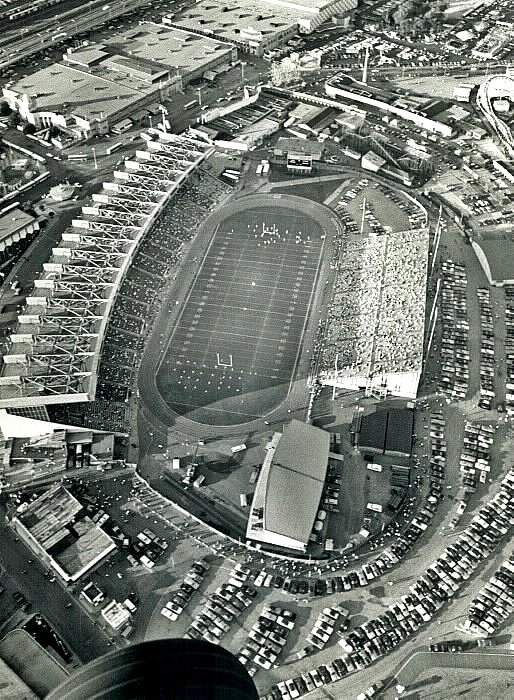
The fog became worse as the afternoon wore on, and, with 9 minutes and 29 seconds left in the 4th quarter, the game was suspended, with Winnipeg leading, 28–27. The game was resumed the following afternoon, but there was no further scoring, thus securing the Bomber win.

The 1962 Grey Cup was the first CFL contest to be broadcast by an American TV network, when ABC Wide World of Sports carried it on tape delay at 4:00 PM Eastern Time, while Canadians got to see it on CBC starting at 12:30 Eastern. Although ABC aired WWOS on both Saturdays and Sundays, they, unlike CBC, opted not to show the resumed game the next day.

The Blue Bombers had now won 4 titles in 5 seasons, as yet an unmatched run of success. Teams had won 3 straight Grey Cups, but not 4 in so few years. Then the quasi-dynasty went into a tailspin, going 7-9 in 1963. Grant was given the general manager's duties, on top of the head coaching duties, for 1964, and the team finished 1-14-1. He got them to a rebound season in 1965, going 11-5 and reaching the Grey Cup again, but losing to the Tiger-Cats, 22-16 in Toronto. He got them back to the Playoffs in 1966, but lost the West Final.

In 1967, Winter and his general manager, Jim Finks, fired Van Brocklin, and again made an overture to Grant. This time, he accepted, and led the Vikings to the 1969 NFL Championship, and the 1973, 1974 and 1976 NFC Championships. But they lost all 4 Super Bowls.

Still, to this day, he and Marv Levy are the only coaches to lead teams into both a Grey Cup and a Super Bowl. Grant, Levy and Steve Owen are the only coaches to win Coach of the Year in both the CFL and the NFL. And he and Levy are the only coaches to be in both the Pro Football and the Canadian Football Halls of Fame. The only player in both is Warren Moon.

Both the Blue Bombers and the Vikings have elected Grant to their team halls of fame. The Blue Bombers have dedicated a statue to him outside their new Princess Auto Stadium.

For the 1963 season, the CFL adopted an official policy for postponements of postseason games: Play may be stopped for up to 3 hours, and then resume. After 3 hours of stoppage, play is terminated at least for the day. A Playoff or Grey Cup game must then be resumed the following day, at the point where it left off. Through the 2022 season, this policy has never had to be invoked.

Since Grant left the Winnipeg Blue Bombers, they took until 1984 to win the Grey Cup again, a 22-year gap. They have since won in 1988, 1990, 2019 (a 29-year gap) and 2021.

UPDATE: Bud Grant died on March 11, 2023, at the age of 95, in Bloomington, Minnesota, the suburb of Minneapolis where Metropolitan Stadium, home of the NFL's Vikings and baseball's Twins from 1961 to 1981, stood.

*

December 2, 1962 was a Sunday. These games were played in the NFL:

* The New York Giants beat the Chicago Bears, 26-24 at Wrigley Field in Chicago.

* The Philadelphia Eagles beat the Washington Redskins, 37-14 at District of Columbia Stadium (later renamed Robert F. Kennedy Stadium) in Washington.

* The Pittsburgh Steelers beat the St. Louis Cardinals, 19-7 at Forbes Field in Pittsburgh.

* The Detroit Lions beat the Baltimore Colts, 21-14 at Tiger Stadium in Detroit.

* The Green Bay Packers beat the Los Angeles Rams, 41-10 at Milwaukee County Stadium.

* The San Francisco 49ers beat the Minnesota Vikings, 35-12 at Metropolitan Stadium in the Minneapolis suburb of Bloomington, Minnesota.

* And the Dallas Cowboys beat the Cleveland Browns, 45-21 at the Cotton Bowl in Dallas.

There were 3 games in the AFL:

* The Buffalo Bills beat the Dallas Texans, 23-14 at War Memorial Stadium in Buffalo.

* The Houston Oilers beat the Denver Broncos, 34-17 at Jeppesen Stadium (later Robertson Stadium) in Houston.

* And the San Diego Chargers beat the Oakland Raiders, 31-21 at Balboa Stadium in San Diego.

Baseball was out of season. There were 2 games played in the NBA. The Boston Celtics beat the Cincinnati Royals, 128-127 in overtime at the Cincinnati Gardens. And the St. Louis Hawks beat the San Francisco Warriors, 122-116 at the Cow Palace outside San Francisco in Daly City, California. Cliff Hagan scored 43 points for the Hawks. For the Warriors' Wilt Chamberlain, it was just another day at the office: He scored 59 points and grabbed 24 rebounds.

And the NHL's entire "Original Six" were in action:

* The New York Rangers lost to the Boston Bruins, 4-2 at the old Madison Square Garden.

* The Detroit Red Wings beat the Toronto Maple Leafs, 4-3 at the Olympia Stadium in Detroit.

* And the Chicago Black Hawks beat the Montreal Canadiens, 2-1 at the Chicago Stadium.

Monday, November 28, 2022

November 28, 1964: A Grey Cup for Vancouver

Joe Kapp

November 28, 1964: The Grey Cup, the championship of the Canadian Football League, is held at the Exhibition Stadium in Toronto. It is a rematch of the previous season's final, when the Hamilton Tiger-Cats beat the BC Lions, 21-10 at Empire Stadium in Vancouver.

That was the 1st time a team from the Province of British Columbia had gotten that far, and the Lions -- their geographic identifier always simply "BC," not "Vancouver," nor "British Columbia," nor even "B.C." -- were determined to avenge the defeat. Coached by Dave Skrien, and led by quarterback Joe Kapp, they had finished the season 11-2-3.

And everything went the Lions' way. Running back Bob Swift had scored a touchdown, but was subsequently injured. Bill Munsey took his place as if nothing had happened. In the 3rd quarter, he scored a touchdown on offense on a handoff from Kapp, running 18 yards; and another on defense, when he picked up a fumble and ran it in 71 yards.

The Lions even scored a touchdown on a bad field goal attempt: Holding Pete Ohler, couldn't get the snap down, had to scramble, and passed to Jim Carphin. Another touchdown was scored by one of the top black players in the CFL, Willie "Will o' the Wisp" Fleming. The Lions won the game, 34-24.

Kapp had quarterbacked the University of California into the 1959 Rose Bowl, but lost. In the 1969 season, he led the Minnesota Vikings into Super Bowl IV, but lost. He remains the only man ever to quarterback teams into the Rose Bowl, the Super Bowl, and the Grey Cup.

The Lions have since won the Grey Cup again in 1985, 1994, 2000, 2006 and 2011. They are easily Vancouver's most successful team: The NHL's Canucks are 0-3 in the Stanley Cup Finals, the NBA's Grizzlies lasted just 6 seasons before moving, and they have only been at the Class A level in minor-league baseball since 2000, having previously won 3 Pennants at the Class AAA level. Even if you count soccer, the NASL's version of the Whitecaps won just 1 title, in 1979; and MLS' version has only gotten as far as the Quarterfinals.

*

November 28, 1964 was a Saturday. This was the end of rivalry week in American college football. In the biggest game of the day, Number 1 Notre Dame were upset by the University of Southern California (USC), 20-17 at the Los Angeles Memorial Coliseum. I have a separate entry for that event.

These other notable college football games were played:

* Rivalry: Army beat Navy, 11-8 at John F. Kennedy Stadium in Philadelphia.

* Rivalry: Boston College beat Holy Cross, 10-8 at Alumni Stadium outside Boston in Chestnut Hill, Massachusetts.

* Rivalry: Georgia beat Georgia Tech, 7-0 at Sanford Stadium in Athens, Georgia.

* Rivalry: Florida beat Miami, 12-10 at Florida Field (now Ben Hill Griffin Stadium) in Gainesville, Florida.

* Rivalry: Vanderbilt beat Tennessee, 7-0 at Dudley Field (now FirstBank Stadium) in Nashville.

* Rivalry: Oklahoma beat Oklahoma State, 21-16 at Lewis Field (now Pickens Stadium) in Stillwater, Oklahoma.

* Rivalry: Texas Christian University (TCU) beat Southern Methodist University (SMU), 17-6 at the Cotton Bowl in Dallas.

* Rivalry: Arizona beat Arizona State, 30-6 at Arizona Stadium in Tucson.

Two days earlier, on Thanksgiving Day:

* Rivalry: Number 2 Alabama beat Auburn, 21-14 at Legion Field in Birmingham, Alabama. 'Bama won the Southeastern Conference title. 

* Rivalry: Number 5 Texas beat Texas A&M, 26-7 at Memorial Stadium in Austin, Texas.

* Idle: Number 3 Arkansas, who had beaten Texas, and won the Southwest Conference title; Number 6 Michigan, who had won the Big Ten Conference title; Number 7 Nebraska, who, despite losing the week before to arch-rival Oklahoma, had won the Big Eight Conference title; Number 8 Louisiana State University (LSU); Number 9 Oregon State, who had won the title in the Athletic Association of Western Universities (AAWU), the league that became the Pacific-Eight (or Pac-8) the next year; Number 10 Ohio State, which had blown the Big 10 title by losing their finale to Michigan; and New Jersey teams Rutgers and Princeton.

And so, at a time when the National Championship was awarded by the Associated Press' sportswriters' poll after the regular season, with Notre Dame's loss, Alabama, coached by Bear Bryant and quarterbacked by Joe Namath, rose to Number 1.

But Texas beat Alabama in the Orange Bowl, and Arkansas beat Nebraska in the Cotton Bowl, to earn a share of the National Championship with Alabama. Michigan beat Oregon State in the Rose Bowl, and LSU beat Syracuse in the Sugar Bowl.

Baseball was out of season. Both the NFL and the AFL played the next day, plus games 2 days earlier, on Thanksgiving. There were 4 games in the NBA:

* The New York Knicks beat the St. Louis Hawks, 106-91 at the old Madison Square Garden.

* The Boston Celtics beat the Cincinnati Royals, 129-98 at the Boston Garden.

* The Philadelphia76ers beat the Detroit Pistons, 101-93 at Cobo Hall (now Huntington Place) in Detroit.

* And the San Francisco Warriors beat their arch-rivals, the Los Angeles Lakers, 109-106 at the Civic Auditorium in San Francisco. Just another day at the office for Wilt Chamberlain: 40 points and 30 rebounds.

There were 2 games played in the NHL. The New York Rangers beat the Toronto Maple Leafs, 4-1 at Maple Leaf Gardens in Toronto. The Montreal Canadiens beat the Boston Bruins, 2-1 at the Montreal Forum. The Detroit Red Wings and the Chicago Black Hawks were not scheduled.

And in English soccer, Manchester United beat Arsenal, 3-2 at the Arsenal Stadium, a.k.a. Highbury, in North London. 

Wednesday, November 2, 2022

November 3, 1869: The Oldest Professional Sports Team In the World

Tiger-Cats 150th Anniversary Logo, 1869-2019

November 3, 1869: The Hamilton Football Club is founded. They play their 1st game on December 18, against the 13th Battalion, now known as the Royal Hamilton Light Infantry, in Hamilton, Ontario, Canada. The final score was not recorded.

The "football" played by this team was what would now be called "rugby union," though it would later evolve into the Canadian version of "gridiron football," with a field 110 yards long and 65 yards wide, compared with the American version, 100 by 53 1/3rd; 12 players on each side instead of 11; and 3 downs to make a new 1st down, instead of 4.

This team is the forerunner of the Hamilton Tigers, who in 1950 merged with the Hamilton Wildcats to become the Hamilton Tiger-Cats. This could, if you choose to define it this way, make the "Ticats" the oldest continuously operating professional sports team in the world.

The distinctions matter. That year, the Cincinnati Red Stockings became the 1st openly professional baseball team, but went out of business after the 1870 season, and the current team named the Cincinnati Reds, while they claim a connection to them, definitively goes back to 1881. The suggestion that the Los Angeles Dodgers date to the Brooklyn Atlantics is also not supported by the facts: The Atlantics were founded in 1855, but folded in 1875, and didn't turn professional until 1870, anyway. Which is key to this team: The Hamilton Tigers remained amateur until 1947.

There are soccer teams in England that claim a longer lineage, including Sheffield Football Club, which was founded in 1857, but they didn't turn professional until 1885, as Britain, and Europe as a whole, resisted professionalism in sports considerably longer than did North America. Germany proved especially resistant: They didn't have professional sports until its national soccer league, the Bundesliga, was founded in 1963.

(If you're a fan of the FX TV series Welcome to Wrexham, Wrexham Association Football Club were founded in 1864, making them the 3rd-oldest professional soccer team in the world, and older than the Tiger-Cats; but they did not turn professional until 1878, more recently than some other British soccer teams.)

On October 18, 1873, Hamilton FC played a new team, the Toronto Argonauts, on the campus of the University of Toronto. The Argos won by a goal and a try to nil -- in modern scoring, 8-0 -- and HFC wore black and yellow for the 1st time, leading to a newspaper calling them the Tigers. This game began a rivalry that still exists today, as the teams' current home fields are just 41 miles apart.

Before the merger, the Tigers won the Grey Cup, the championship of Canadian football, 5 times: In 1913, 1915, 1928, 1929 and 1932. In 1941, the Hamilton Wildcats were formed. With the onset of World War II, the Wildcats were sponsored by the Royal Canadian Air Force, and were renamed the Hamilton Flying Wildcats for the duration of the war. They won the 1943 Grey Cup, although this is officially not counted in the total of the combined team. In 1950, the Tigers and the Wildcats were merged, forming the Hamilton Tiger-Cats, shortened to "Ticats."

Since the merger, they've won 8 Grey Cups: 1953, 1957, 1963, 1965, the Canadian Centennial Cup in 1967, 1972, 1986 and 1999. This is a total of 13. For comparison's sake: The Argonauts have won 18, the Edmonton Elks (formerly the Edmonton Eskimos) 14, the Winnipeg Blue Bombers 12, the Calgary Stampeders 8, the Montreal Alouettes 7, the Vancouver-based BC Lions 6, the Saskatchewan Roughriders 4, and the Ottawa Redblacks 1 (although the history of the defunct Ottawa Rough Riders is usually counted with that of the Redblacks, which would give them 10).
Tiger-Cats players with the 1999 Grey Cup

In spite of their success, the Ticats have gone longer without winning the Grey Cup than any other Canadian Football League team, the only one not to have won it in the 21st Century. They have since lost the Final in 2013, '14, '19 and '21.

The Tigers played at the Hamilton Amateur Athletic Association Grounds from 1869 to 1949. The Wildcats played at Civic Stadium, which opened in 1928, from 1941 to 1949. The merged team played at Civic Stadium starting in 1950. In 1971, the stadium got its 1st artificial turf field, and was renamed Ivor Wynne Stadium, for the former director parks for the City of Hamilton.
On August 8, 1961, the Tiger-Cats defeated the visiting Buffalo Bills, at that time a member of the American Football League and playing 65 miles away, in a preseason exhibition game in Hamilton. The Bills, playing the entire game under Canadian rules, lost 38–21. It was the 1st time in 9 tries that a Canadian professional football team beat an American one -- and remains the last such game played, although the Bills have since played "home games" in Toronto, and preseason games between NFL teams have been played on Canadian soil (or Canadian plastic).

After the 2012 season, Ivor Wynne Stadium was demolished, with a new stadium built on the site, and the Tiger-Cats playing the 2013 season at the University of Guelph's Alumni Stadium. The new Tim Hortons Field opened in 2014. (UPDATE: Tim Hortons' 10-year naming rights ran out in 2024. As of the start of the 2026 CFL season, new naming rights have not yet been sold, and the facility is named Hamilton Stadium.)
The Canadian Football Hall of Fame is part of the complex, in recognition of the Tiger-Cats being the oldest CFL team, and the oldest professional sports team in the world. Of its members, 35 either played or coached for either the Tigers, the Wildcats, or the merged team. Despite this, the Ticats have retired only 2 numbers: 10, for 1957-64 quarterback Bernie Faloney; and 68, for 1958-72 defensive tackle Angelo Mosca, who was also a noted professional wrestler.
By claiming a direct connection to the Hamilton Tigers, the Tiger-Cats are older than any professional sports team in the United States of America. The Chicago White Stockings baseball team was founded in 1870, and has been known as the Chicago Cubs since 1903. The Boston Red Stockings baseball team was founded in 1871, and has gone through several name changes, including 2 moves to other cities. Since 1966, they have been the Atlanta Braves.

*

November 3, 1869 was a Wednesday. Baseball had just become North America's 1st professional sport, and its season was coming to a close. The 1st openly professional team, the Cincinnati Red Stockings, beat the Louisville Baseball Club, 56-0 in Louisville, Kentucky. 

Thursday, October 13, 2022

October 13, 1947: The 1st NHL All-Star Game

October 13, 1947: The National Hockey League hosts its 1st official All-Star Game, at Maple Leaf Gardens in Toronto.

There had been 3 unofficial all-star games, all benefits:

* In 1934, also at Maple Leaf Gardens, for Maple Leaf player Irvine "Ace" Bailey, who had suffered a career-ending injury. The Leafs beat a team made up of players from all the other teams in the League.

* In 1937, at the Montreal Forum, for the family of the late Montreal Canadiens superstar Howie Morenz. The Canadiens and the Montreal Maroons combined to face a team from the other teams of the League, which won.

* And in 1939, also at the Forum, for the family of the late Canadiens star Albert "Babe" Siebert. The Maroons having folded in the interim, it was just the Canadiens against the rest of the League. The late 1930s was a rare period when the Canadiens were actually a bad team, and they lost this one.

Unlike what would later be called Major League Baseball, which had its All-Star Game at roughly the midpoint of its season, and the National Football League, which had its Pro Bowl after the season, the NHL decided that its All-Star Game would be at the beginning of its season. Its setup would parallel the Chicago College All-Star Game, which began the football season with the defending NFL Champions and a team of recently graduated college stars playing at Soldier Field in Chicago.

(This game ran from 1934 to 1976. When the National Basketball Association first played an All-Star Game in 1951, it followed the baseball model and did it in midseason.)

And so, the 1st NHL All-Star Game would be the holders of the Stanley Cup, the Maple Leafs, against a team made up of players from the other five of the "Original Six" teams.

The Leafs: 1, goaltender Walter "Turk" Broda; 2, defenseman Bob Goldham; 3, defenseman Wally Stanowski; 4, left wing Harry Watson; 5, right wing Don Metz; 7, center Norman "Bud" Poile; 9, center Ted "Teeder" Kennedy; 10, center and team Captain Syl Apps; 12, right wing Bill Ezinicki; 14, defenseman Vic Lynn; 15, right wing Howie Meeker; 16, left wing Gaye Stewart; 17, left wing Joe Klukay; 19, defenseman Gus Mortson; 20, defenseman Jimmy Thomson; 21, defenseman Bill Barilko, and 22, center Fleming Mackell.

Broda, Watson, Poile, Kennedy, Apps would be elected to the Hockey Hall of Fame, which would eventually give Meeker its Foster Hewitt Award for broadcasters. Head coach Clarence "Hap" Day and general manager Conn Smythe would also be elected. Barilko, famously, would switch to Number 5, and score the goal that won the 1951 Stanley Cup, and then died in a plane crash 4 months later, getting the number retired.

The rest of the League:

* From the Boston Bruins: 1, goaltender Frank Brimsek, a native of Eveleth, Minnesota, and the only non-Canadian in the game; and the entire "Kraut Line": 14, left wing Woody Dumart; 15, center Milt Schmidt; and 17, left wing Bobby Bauer.

* From the Montreal Canadiens: 1, goaltender Bill Durnan (both he and Brimsek wore 1 on the night); 3, defenseman Emile "Butch" Bouchard; 9, right wing Maurice "the Rocket" Richard; and 17, defenseman Ken Reardon. Canadiens head coach Dick Irvin Sr. coached this team as well.

* From the Detroit Red Wings: 2, defenseman Jack Stewart; 4, defenseman Bill Quackenbush; and 11, left wing Ted Lindsay (better known for wearing 7).

* From the Chicago Black Hawks (the name began to be written as one word, "Blackhawks," in 1986): 5, center Max Bentley; 6, right wing Bill Mosienko; and 7, left wing Doug Bentley, Max's brother.

* And from the New York Rangers: 8, right wing Grant Warwick; 10, center Edgar Laprade; and 18, left wing Tony Leswick. Of all the players on this All-Star Team, only Warwick and Leswick have not yet been elected to the Hockey Hall of Fame. Leswick went on to score the Cup-winning goal in overtime of Game 7 for the 1954 Red Wings.
The NHL All-Stars. Top row, left to right:
Frank Brimsek, Woody Dumart, Dick Irvin, Butch Bouchard,
Ken Reardon, NHL President Clarence Campbell,
Jack Stewart and Bill Durnan. Middle row, left to right:
Milt Schmidt, Tony Leswick, Max Bentley, Grant Warwick,
Maurice Richard, Doug Bentley, and Canadiens trainer Ernie Cook.
Bottom row, left to right: Bill Quackenbush, Bill Mosienko,
Bobby Bauer, Ted Lindsay and Edgar Laprade.

The Leafs, as home teams usually did at the time, wore their white sweaters with blue trim. The All-Stars wore red sweaters, with a white and red NHL shield as their team logo.
Richard's sweater (Americans would say "jersey")

Richard and Lindsay had already fought often in regular-season games. Irvin put them on a line together. (This was after Toe Blake's injury broke up the Canadiens' "Punch Line" with Richard and Elmer Lach, but before the formation of the Wings' "Production Line" with Lindsay, Sid Abel and Gordie Howe.) In his memoir, Richard said that he and Lindsay did not speak a word to each other for the course of the game.

Reardon, the Canadiens' main tough guy, was involved in 2 incidents in the 2nd period. First, he laid a dirty cross-check on Goldham, resulting in a cut on Goldham's forehead. Later, he got into a stick-swinging incident with Ezinicki and Mortson.

Watson opened the scoring, at 12:29 of the 1st period. Ezinicki assisted on that goal, and put the Leafs up 2-0 just 1:03 into the 2nd period. Max Bentley got the All-Stars onto the board about 3 minutes later, but Apps made it 3-1 Leafs just 22 seconds after the restart.

Warwick, arguably the least talented player in the entire game, scored midway through the 2nd. Within 1:26 of the start of the 3rd period, Richard scored a spectacular unassisted goal to tie the game, and Doug Bentley scored to put the All-Stars up 4-3. That's how it ended.

The Leafs would end up winning the Cup in 1948, anyway. And again in 1949. And again in 1951, after the Wings won it in 1950. This completed a great run for Toronto: From 1942 to 1951, 10 seasons, they won 6 Cups.

Up until the 1966-67 season, the format remained defending Champions vs. the rest of the League at the beginning of the season. An exception was made for 1951 and 1952, when it was "Team #1" vs. "Team #2." But that season, the last of the "Original Six" lineup, the game was moved to midseason. So there was an NHL All-Star Game in 1965 and 1967, but not in 1966.

The defending Champs vs. the rest of the League format lasted until 1968. Over that stretch, Toronto went 2-4-1, Montreal went 3-4-1, Detroit went 2-0-1, Chicago went 0-1; and neither New York nor Boston won a Cup, so neither were All-Star hosts.

From 1969 to 1997, the format was an East (or Prince of Wales Conference) team against a West (or Clarence Campbell Conference) team. From 1998 to 2002, the format was North America vs. The World -- basically, Canada and the U.S. vs. Europe, as no player from a country outside North America or Europe was named to any roster. North America led this format, 3-2. East vs. West was restored from 2003 to 2009. All told, the East led, 21-9-1.

In 2011, 2012 and 2015, two captains were chosen, and they chose up sides, like it was a kids' game in the street. (The NBA has also tried this for its All-Star Game.) Since 2016, the NHL has made Divisional teams, which doesn't really work since there are now 6 Divisions.

The anomalies were 1979, replaced by a Challenge Cup between an NHL All-Star Team and a Soviet All-Star Team; 1987, replaced by the same format under the name Rendez-Vous '87; 1995 and 2005, canceled due to the team owners locking the players out; 2006, 2010 and 2014, canceled due to NHL players being allowed to play in the Winter Olympics (though this was not done in 1998, 2002, 2018 or 2022); and 2020, canceled due to the COVID-19 epidemic.

Howie Meeker was the last living player from the 1st NHL All-Star Game, living until November 8, 2020, at the age of 97.

*

October 13, 1947 was a Monday. As I said, this game started the NHL season, so there were no other games played in the League that day. The forerunners of the NBA, the Basketball Association of America and the National Basketball League, hadn't started their seasons yet, either. There was no Monday Night Football in those days. And the baseball season had ended a few days earlier, with the New York Yankees having beaten the Brooklyn Dodgers in the World Series.

In fact, the only other major league game on this historic day also took place in Toronto -- and that's if you count the top flight of Canadian football as "major league." It wasn't even the Canadian Football League, as that wouldn't be founded until 1958, although both of the teams involved would be charter members.

The game was in the Interprovincial Rugby Football Union. The game was played at Varsity Stadium, on the campus of the University of Toronto. And Ontario rivals, the Toronto Argonauts and the Hamilton Tigers, played to a 6-6 tie. In 1950, the Tigers would merge with the Hamilton Wildcats, and form the Hamilton Tiger-Cats, or "Ticats," and they maintain their rivalry with the "Argos" to this day.

In fact, they are 2 of the oldest professional sports teams in North America: The Tigers had been founded in 1869, making them older than any team in the "Big Four" North American sports leagues; while the Argos were founded in 1873, making them older than any team except the Ticats, the Chicago Cubs (1870) and the Atlanta Braves (founded as the Boston Red Stockings in 1871).

Also, rock singer Sammy Hagar, the 2nd lead singer of Van Halen, was born on this day.

Friday, October 7, 2022

October 7, 1960: "Spartacus" and "Route 66" Premiere

October 7, 1960: The film Spartacus premieres, a dramatization of the story of the Thracian gladiator who led a slave revolt in Rome in 71 BC. The film was based on the 1951 novel by Howard Fast, was directed by Stanley Kubrick, and was written by Dalton Trumbo, one of the Hollywood Ten. All were selected by the film's star, Kirk Douglas, who wanted to break the Hollywood Blacklist for once and for all. He did.
Among the film's other stars: Jean Simmons, Laurence Olivier, Charles Laughton, Peter Ustinov, Tony Curtis, Nina Foch, John Ireland, Herbert Lom, John Hoyt, and Woody Strode, who had previously broken a different barrier: He was 1 of the 4 black players who broke professional football's color barrier in 1946, before becoming an actor, working mainly in Westerns.
The film is best remembered for a scene near the end, where the Roman commander Crassus (Olivier), having surrounded Spartacus' army, offers a pardon (and return to enslavement) if the men will identify Spartacus, living or dead. But this would mean a return to slavery, and they would rather die. So every surviving man responds by shouting "I'm Spartacus!" (Most people trying to quote the movie get that wrong, saying, "I am Spartacus!")
History suggests that Spartacus died in battle, and no marriage or children have been ascribed to him. The film shows the character crucified, but living long enough for his wife to show him his infant son.
In modern times, Spartacus became an icon for the Communist movement. The most popular sports team in the Soviet Union was the soccer team run by Spartak Moscow, ironically because it turned the Spartacus ideal back on the Communist government, and became "the people's team." It remains the most popular sports team in the Russian Federation. Many other teams in former Soviet countries have the Spartak name.
*
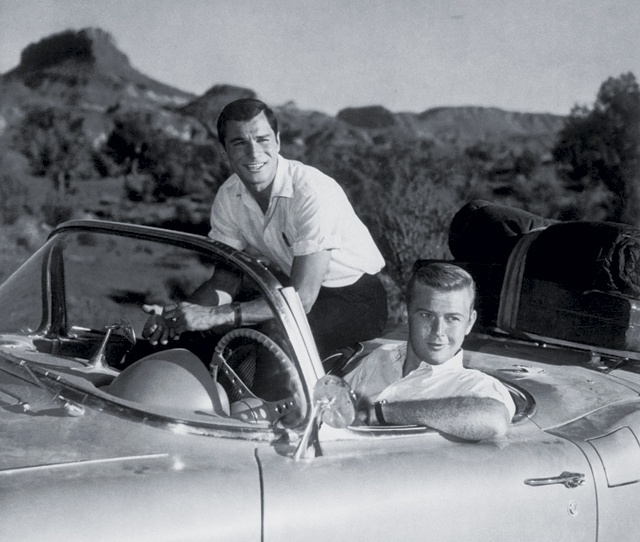
Also on this day, Route 66 premieres on CBS. It stars Martin Milner as Tod Stiles, and George Maharis as Buz Murdock, who travel around the country in a Chevrolet Corvette convertible, helping people wherever they can, because they were no longer needed or wanted where they were.
Maharis (left) and Milner
Tod grew up rich in Rye, Westchester County, New York, the son of a wealthy businessman. When his father died, he learned that his father's company was virtually bankrupt. The only thing his father had to leave him was the Corvette.
In contrast, Buz was a working-class orphan, who worked for the eldery Mr. Stiles in a New York shipyard. He talked Tod into going around the country together in the 'Vette.
U.S. Route 66 was commissioned in 1926. It started on Chicago's Loop, went down through Illinois, crossed the Mississippi River into St. Louis, went southwest across Missouri, briefly across the southeastern corner of Kansas, into Oklahoma through Tulsa to Oklahoma City. Then, it turned west, crossed the Texas Panhandle, and went through New Mexico, Arizona and California, including Los Angeles, before terminating at the Santa Monica Pier.
The federal government decommissioned the highway in 1985, as it had been mostly replaced by Interstate highways that bypassed some of the smaller towns along the route: I-55 in Illinois, I-44 from St. Louis to Oklahoma City, I-40 from there to Barstow, California, and I-15 and I-10 in California. Nevertheless, many of those small towns still call the remaining street "Route 66." For many of those towns, it served as their Main Street, and the road is still remembered as "America's Main Street."
But the show didn't exclusively stick to 66: Many of its adventures took place further east, even showing Tod and Buz working with lobstermen in Maine, and the series finale took place in Florida. 
Maharis came down with hepatitis, and decided to leave the show to focus on his health, saying, "Even if you have $4 million in the bank, you can't buy another liver." This soon proved to be incorrect, as liver transplants were becoming more common.
So, late in the show's 3rd season, with no explanation for what happened to Buz, Tod encountered Lincoln Case, played by Glenn Corbett. (Star Trek fans will recognize his name, as the first actor to play warp-drive inventor Zefram Cochrane.) "Linc" was a former U.S. Army Ranger and prisoner of war in Vietnam. This episode aired on March 22, 1963, so it was the 1st TV series featuring a character who was a Vietnam War veteran, and the earliest pop-culture representation of a Vietnam vet with post-traumatic stress disorder. After a difficult opening encounter, Tod invited Linc to join him on his travels.
Route 66 may have been the 1st regular TV series to have a planned series finale: On March 20, 1964, with the action in Tampa, far from the actual highway for which the show was named, Tod met Margo Tiffin, a commodities trader from Houston, played by Barbara Eden. They got married, and, since Linc was also from Texas, that's where Tod and Linc both ended up.
This show inspired many imitators, including The Fugitive and Run For Your Life in the 1960s, The Incredible Hulk in the 1970s, and Knight Rider and Hot Pursuit in the 1980s.
Despite having to leave the show due to illness, Maharis recovered. As of October 7, 2022, he is still alive, age 93. Milner died in 2015, Corbett in 1993. (UPDATE: Maharis died on May 24, 2023.)

In 1993, NBC tried a reboot, starring James Wilder as Nick Lewis, whose estranged father has recently died. It turns out, his father was Buz Murdock, who left him the Corvette, which suggests that Tod gave it to him at some point between 1964 and 1993. He then picks up Dan Cortese as hitchhiker Arthur Clark, and they start off on their own adventures together. But not many: Fans of the original series hated it, especially the suggestion that the orphaned Buz would gain and then abandon a family; and viewers not old enough to remember the original series didn't like it, either. Only 4 episodes aired.

*

October 7, 1960 was a Friday. So there was neither collegiate nor professional football played. The World Series was in a travel day. The NBA season hadn't started yet. And, while the NHL season had, 2 days earlier, no games were played on this day.

But there was one score, in the Canadian Football League: The Toronto Argonauts beat the Hamilton Tiger-Cats, 24-14 at Varsity Stadium in Toronto.

Saturday, October 1, 2022

October 1, 1975: The Thrilla In Manila

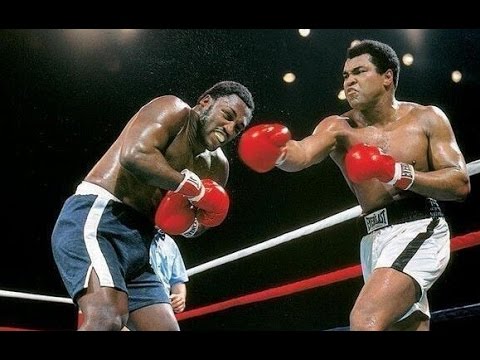
October 1, 1975: Heavyweight Champion Muhammad Ali fights former Heavyweight Champion Joe Frazier for the 3rd time, at the Araneta Coliseum in Quezon City, the capital of the Philippines. Quezon City is the national capital, and the arena is located about 5 miles east of the country's largest city, Manila.

Ali, under his birth name Cassius Clay, was an Olympic Gold Medalist in boxing, in 1960 in Rome. Frazier was as well, in 1964 in Tokyo. A man they would both memorably fight, George Foreman, followed them, in 1968 in Mexico City.

Ali first won the title in 1964 by knocking out Sonny Liston. He held it until he was stripped of it in 1967, for refusing to accept the U.S. military draft. Foreman won what was essentially a tournament for the title, ending in 1970 with a win over top contender Jimmy Ellis.

Ali got his conviction overturned by the Supreme Court, and his boxing license restored -- but not his title. That, he would have to win back. When he and Frazier met for "The Fight of the Century" at Madison Square Garden in 1971, it was the 1st time 2 undefeated Heavyweight Champions had ever met in the ring. It was a hard, even fight until the 15th and final round, when a classic Philly left hook floored the Louisvillian, and Ali received his first-ever knockdown, from which he got up to finish the fight, and his first-ever professional loss.

Ali got revenge in 1974, also at The Garden, although neither man was champion at the time. Frazier had lost the title in 1973 to Foreman, whom Ali subsequently beat to regain the title in Kinshasa, Zaire (now the Democratic Republic of the Congo), the fight known as "The Rumble In the Jungle."

Ali mocked Frazier for his fighting ability and his looks, saying, "It'll be a thrilla and a chilla and a killa, when I get the Gorilla in Manila!"

But it was intensely hot inside the Coliseum when "The Thrilla In Manila" was fought. Still, like the other 2 Ali-Frazier fights, it lived up to the hype. Ali led in the early rounds, but in the 5th round, Frazier began to turn the tide. At the end of the 6th, Ali, who'd been trash-talking (as we would say today) all the way, yelled, "They told me Joe Frazier was washed up!" Frazier yelled back, "They lied!"

Ali won the 8th round, but Frazier clobbered him in the 9th, leading him to go back to his corner and tell his trainer, Angelo Dundee, "Man, this is the closest I've ever been to dying." But Ali had landed so many punches that Frazier's face was swelling, and he was having trouble seeing.

Early in the 13th round, Ali hit Frazier in the jaw with a thunderous right hook, sending Frazier's mouthpiece flying out of his mouth and out of the ring. Ali dominated the 14th as well, because Frazier was too tired and having too much difficulty seeing. Ali was hitting Frazier with the same kind of punches that knocked out Foreman a year earlier. Except, when Ali knocked Foreman out, it took just a few seconds. He had been throwing these things at Frazier for the last 2 rounds, and Frazier simply would not go down.

Frazier had more courage and endurance than sense, and refused to go down, and refused to quit. As the 15th and final round approached, Frazier wanted to continue. His trainer, Eddie Futch, told him that he was going to stop the fight. Frazier said no: "I want him, boss." He was unable to talk Futch out of it: "The fight's over, Joe. No one will forget what you did here today." And he told the referee, Carlos Padilla, to stop the fight. Padilla did so.

Ali retained the crown, the belt, the title, whatever you want to call it. He got up off his stool, raised his right arm in victory... and collapsed. He had nothing left to give. If Futch had let Frazier fight the 15th round, he would have knocked Ali out.

It's been called the greatest prizefight in history. Today, most people know the name Manila for 3 things: The brown office folders that bear its name, its role in the Pacific Theater of World War II, and Ali-Frazier III.

Howard Cosell, who covered the fight for ABC Wide World of Sports, later said, "A big piece of Ali remained in that ring." Indeed, at age 33, with nothing left to prove, Ali probably should have retired right there. Instead, he kept fighting for 6 more years. So did Frazier. Both men would have their moments, but neither was ever so good again.
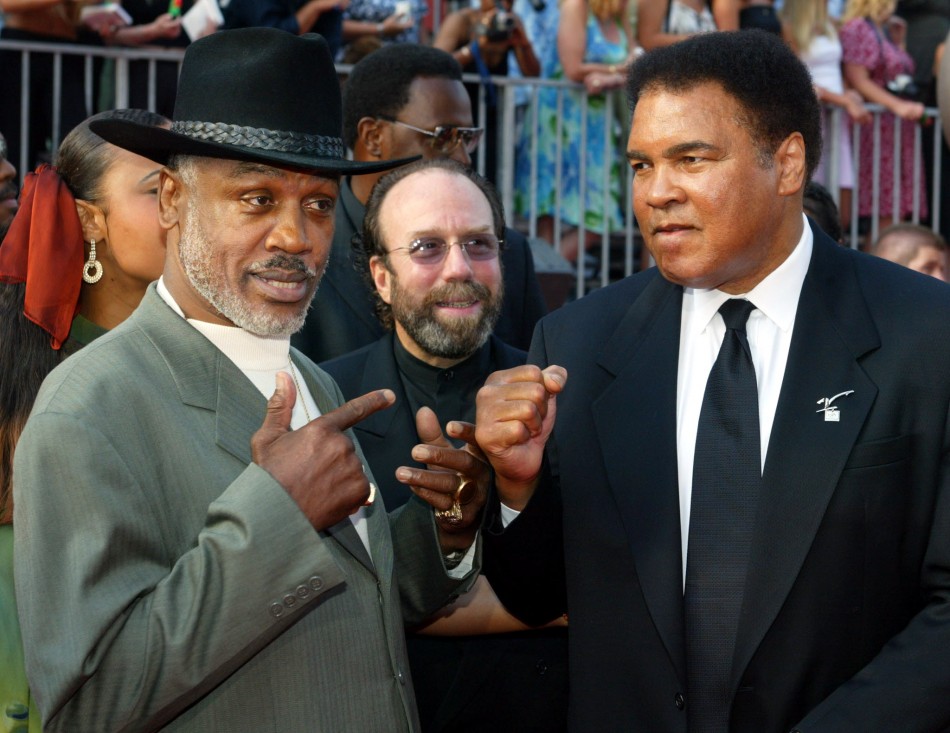
"The Greatest of All Time" developed Parkinson's disease as a result of his taking so many blows to the head. The big mouth that got him the early nickname "The Louisville Lip" was rendered mostly silent by the turn of the 21st Century. He died on June 3, 2016, at age 74.

"Smokin' Joe" would continue to alternately feud with Ali and reconcile with him, restart the feud, and reconcile again. Joe died of liver cancer on November 7, 2011, at age 67, after 30 years of training fighters at his gym in North Philadelphia.

One of the fighters he trained was his son Marvis, who, like Ali on that awful night in 1980, would get slaughtered by Larry Holmes in Las Vegas. His daughter Jackie Frazier-Lyde also fought professionally, as has Ali's daughter Laila Ali. (She went 24-0 with 21 knockouts, and won a majority decision against Frazier-Lyde in Verona, New York in 2001.) Another daughter of Ali's, Maryum, is a rapper using the name May May.

Opened in 1960, the Araneta Coliseum is still used for sporting events and concerts. A shopping center 2 blocks away is named Ali Mall.

*

October 1, 1975 was a Wednesday. Baseball was between the regular season and the Playoffs. The 1975-76 basketball and hockey seasons hadn't started yet. And the NFL was in midweek. But there was one score on this historic day, in the Canadian Football League: The Ottawa Rough Riders beat the Hamilton Tiger-Cats, 16-11 at Ivor Wynne Stadium in Hamilton, Ontario.


Tuesday, August 9, 2022

August 9, 1981: The Strike of '81 Ends

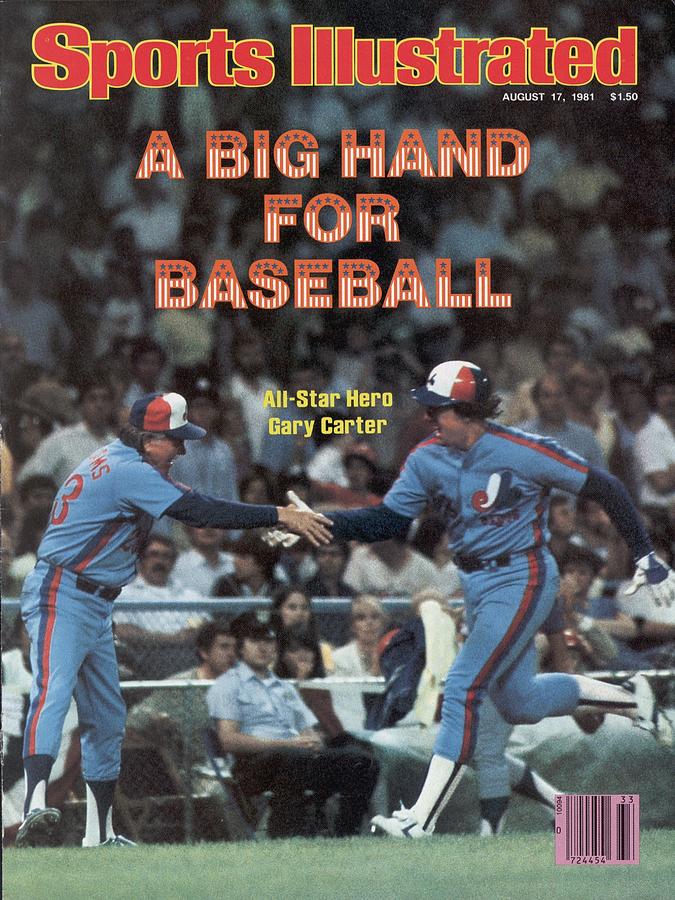
One exasperated reader wrote to SI with this killjoy question:
"'A big hand for baseball'? Whatever the hell for?"

August 9, 1981: The Major League Baseball strike comes to a symbolic end with the staging of the All-Star Game at Cleveland Municipal Stadium.

On June 12, Marvin Miller, Director of the Players' Association since 1966, announced that negotiations with Commissioner Bowie Kuhn and the 26 team owners had failed: "We have accomplished nothing. The strike is on."

The owners, angry that free agency had been ordered at all in 1975, demanded compensation: A player signed as a free agent by a team should mean that the signing team should give a player not on a protected list to the team losing the preceding player. The MLBPA said no, because that would undermine the value of free agency.
Marvin Miller

So the strike was on, and the middle one-third of the 1981 season's regular-season games were canceled. On July 31, the players and the owners reached a compromise, negotiated in part by Raymond J. Donovan, Secretary of Labor under President Ronald Reagan. Teams that lost a "premium" free agent could be compensated by drawing from a pool of players left unprotected from all of the clubs, rather than just the signing club. The players agreed to restricting free agency to players with 6 or more years of major league service, instead of the previous 5.

It was a minor victory for the owners, and there would be strikes again in 1985 and 1994, and lockouts in 1990 and the 2021-22 off-season. But, this time, baseball would resume, with the All-Star Game, originally scheduled for Cleveland on Tuesday night, July 14, moved to Sunday night, August 9, with regular-season games starting the next day.

The crowd of 72,086 was, and remains, an All-Star Game record. With his spectacular start to the season, Fernando Valenzuela of the Los Angeles Dodgers was a natural selection for the National League's starting pitcher. Jack Morris of the Detroit Tigers was chosen for the American League.

New York Yankees on the AL All-Star Team were Reggie Jackson, Willie Randolph, Bucky Dent, Ron Davis, Goose Gossage, and free agent bonanza Dave Winfield. The only New York Met selected for the NL All-Star Team was outfielder Joel Youngblood, although Randolph, Tom Seaver of the Cincinnati Reds, Nolan Ryan of the Houston Astros, Eddie Murray and Ken Singleton of the Baltimore Orioles, Gary Carter of the Montreal Expos, and George Foster of the Cincinnati Reds were selected, and each of those would play for the Mets at some point in their careers.

Singleton hit a home run off Seaver in the bottom of the 2nd, but Carter homered in the 5th, and Dave Parker of the Pittsburgh Pirates did so in the 6th to give the NL the lead. The AL took a 4-2 lead in the bottom of the 6th, but Carter went deep again in the 7th, this time off Davis. And Mike Schmidt of the Philadelphia Phillies homered off Rollie Fingers of the Milwaukee Brewers in the 8th, to give the NL a 5-4 win. Vida Blue, then with the San Francisco Giants, was the winning pitcher. Bruce Sutter of the St. Louis Cardinals got the save, and Fingers was the losing pitcher.

There was one other score on this historic day, in the Canadian Football League: The Vancouver-based B.C. Lions beat the Hamilton Tiger-Cats, 28-24 at Ivor Wynne Stadium in Hamilton, Ontario.

Sunday, July 24, 2022

July 24, 1974: “Death Wish” Premieres

July 24, 1974: Death Wish premieres. Charles Bronson, previously the only man to be a member of both The Magnificent Seven and The Dirty Dozen, stars as an urban vigilante, starting a franchise that stretched to 5 movies.

Bronson plays Paul Kersey, an architect at a Manhattan firm. Three men posing as deliverymen invade his house, murdering his wife Joanna (Hope Lange) and raping his daughter Carol (Kathleen Tolan), after finding out they have only $7.00 between them. On the way back from Joanna's funeral, Paul is accosted by a mugger, but fights him off with an improvised weapon, and is energized by the encounter.

Over the next several weeks, Paul walks through the city looking for criminals, killing several muggers by luring them into a confrontation by presenting himself as an affluent victim, or when he sees them attacking innocent people. The police notice a decrease in crime following the killings, and decide not to investigate.

Finally, Paul is wounded in a shootout, and the man he shot gets away. At the hospital, he makes a deal with the police: Get out of town, and they'll let him. They arrange for his company to transfer him to Chicago. Greeted at Union Station by a company representative, he notices hoodlums harassing a young woman. He excuses himself and helps her. As the hoodlums mock him, Paul smiles while making a finger-gun gesture at them. That's the image above, ending the film.

Among the other actors in the film are Chicago Seven defendant Tom Hayden as a doctor, Vincent Gardenia as a police inspector, Paul Dooley and Olympia Dukakis as cops, a young Christopher Guest as a cop, Munsters Grandpa Al Lewis as a security guard, Sesame Street actress Sonia Manzano as a grocery clerk, Lawrence Hilton-Jacobs and Eric Laneuville as muggers, and a young Jeff Goldblum as "Freak #1."

In 1978, Bronson was the subject of a question on the TV show Match Game. Both host Gene Rayburn and panelist Richard Dawson mentioned that they were a friend of Bronson's. Dawson, said, "He plays such an animal," but, "He's a very gentle man."

Somebody recently posted a meme of The Warriors, from the 1979 decaying-New-York film of the same title, on the Subway with Paul Kersey, and asked what would have happened if they'd met. It should be obvious: The Warriors were looking to avoid trouble, just to get home -- just like Kersey. They would have left each other alone, and nothing would have happened.

*

July 24, 1974 was a Wednesday. Major League Baseball was in its All-Star Break. The night before, the National League beat the American League, 7-2 at Three Rivers Stadium in Pittsburgh.

But there was one score on this historic day: The Canadian Football League opened its season. In the opening game, the Montreal Alouettes beat the Hamilton Tiger-Cats, 20-12 at the Autostade in Montreal.

December 31, 1999 & January 1, 2000: The Millennium

December 31, 1999:  The Millennium arrives. The people of planet Earth survived. At a terrible cost. But we hadn't destroyed ourselves. ...