Showing posts with label 1925. Show all posts

Thursday, December 15, 2022

December 15, 1925: New York's 1st NHL Team

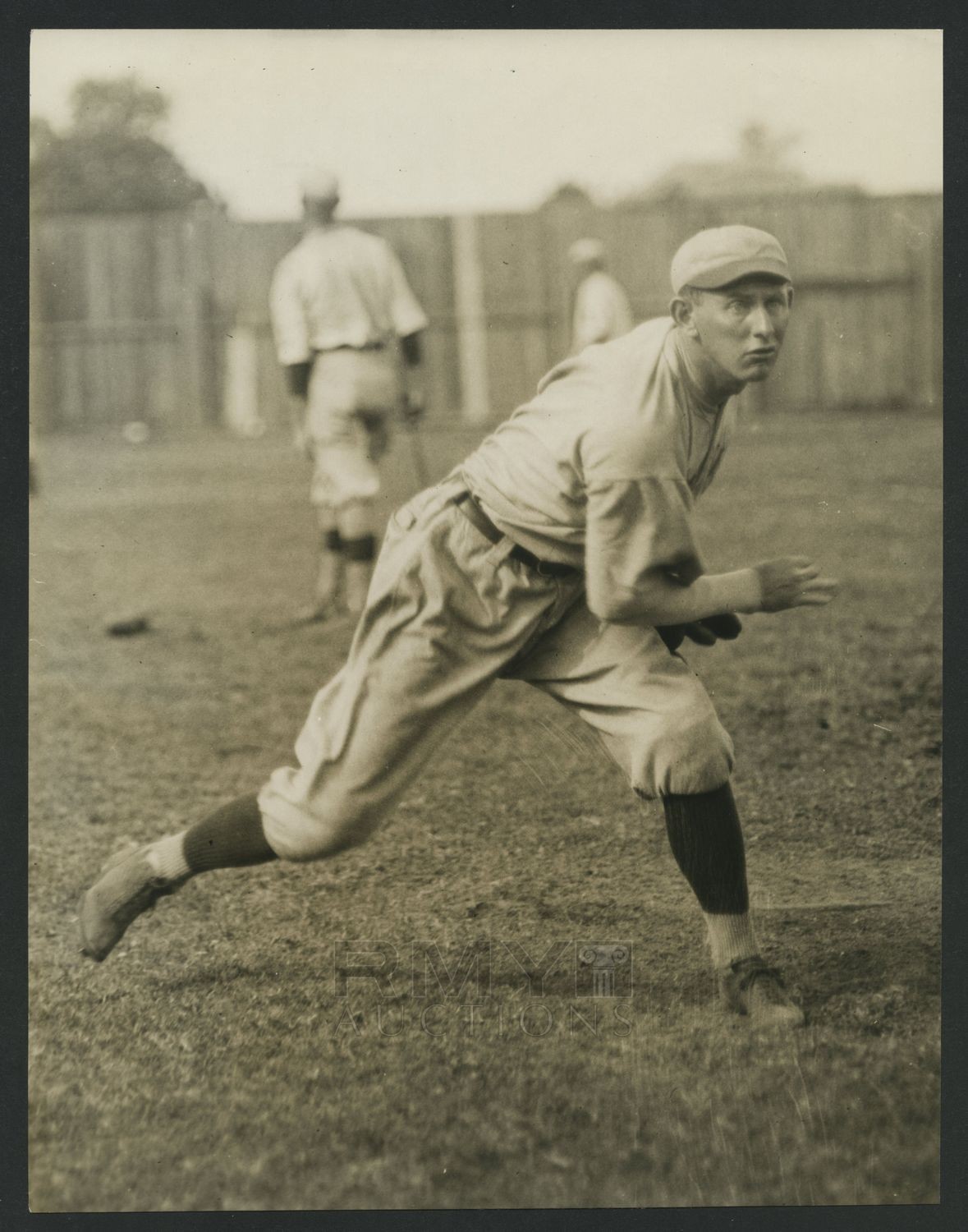
"Bullet" Joe Simpson

December 15, 1925: For the 1st time, a National Hockey League game is played in New York City. But the home team is not the New York Rangers. A few hours before the new, later "Old," Madison Square Garden held its 1st boxing card, it hosted a matinee of a brand-new hockey team, the New York Americans. In their 5th game, they lost to the Montreal Canadiens, 3-1.

The NHL began to expand into America the season before, with the Boston Bruins. This expansion continued in 1925-26, with the Americans and the Pittsburgh Pirates, who would also end up failing; then, in 1926-27, with the New York Rangers, the Detroit Red Wings and the Chicago Black Hawks.

The Americans' 1st game was on December 2, against the Pirates, at the Duquesne Gardens in Pittsburgh, and they won, 2-1, with Charlie Langlois scoring the winner, 3:10 into overtime.

The Americans were owned by Bill Dwyer, a bootlegger who was making money during Prohibition, and the hockey team became the toy he spent his money on. If that seems odd, let the record show that another major league sports team debuted in New York City that season: The football version of the New York Giants, and they were founded and owned by Tim Mara, who was a bookmaker at a time when that was legal in New York City.
Bill Dwyer

George "Tex" Rickard, builder and owner of the new version of Madison Square Garden -- eventually to be known as "The Old Garden" -- made so much money on the Americans' rent and concessions that he wanted his own team. The media called them "Tex's Rangers," and they immediately became more successful than the Americans. The Rangers became known as the "classy" team, while the Amerks were the "blue-collar" or "working man's" team.

When Prohibition ended in 1933, Dwyer's hockey ownership was doomed. The League took over ownership of the franchise in 1936, and let its head coach, one of their former players, run it: Norman "Red" Dutton. It didn't change the image of either team: The Rangers were seen as the team of classy people, the Americans the team of the working class, struggling through the Great Depression.

The Americans made the Playoffs for the 1st time in 1929, but lost -- to the Rangers. They didn't make it again until 1936, beating Chicago before losing to the Toronto Maple Leafs in the Semifinals, coming within 5 wins of the Stanley Cup. In 1938, the Americans beat the Rangers in the Quarterfinals, with Lorne Carr scoring in overtime to win the deciding Game 3, before losing to Chicago in the Semifinals, again coming within 5 games of the Cup. They made the Playoffs again in 1939, losing to Toronto; and in 1940, losing to Detroit.

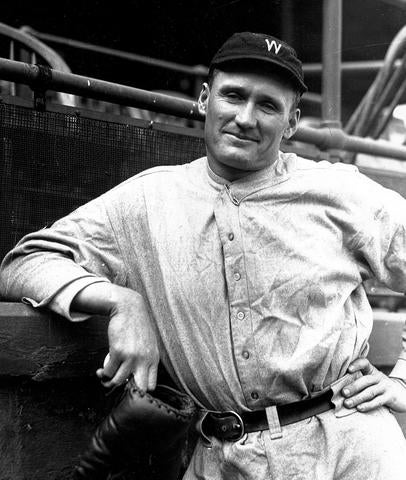
As New York teams would later tend to do, the Americans became a haven for great players looking for one last payday, including Boston Bruins legend Eddie Shore. But they had some Hockey Hall-of-Famers that they could call their own: Center Billy Burch; left wing David "Sweeney" Schriner; defensemen Bullet Joe Simpson and the aforementioned Red Dutton;, and, at 5-foot-3 the shortest player in NHL history, and thus nicknamed "Shrimp," but the winner of the Hart Memorial Trophy as league Most Valuable Player in 1929, and the Vezina Trophy as best goaltender in 1931, Roy Worters.
Roy "Shrimp" Worters

By the 1939-40 season, Canadian players were going off to fight for the British Empire in World War II. The Americans missed the Playoffs in 1941. In 1941-42, still bogged down by lingering debt from the Dwyer era, Dutton had to sell off his best players for cash.
Red Dutton

At his wit's end, Dutton changed the team's name to the Brooklyn Americans. He intended to move the team to Brooklyn, but there was no arena in that borough suitable enough even for temporary use. As result, they continued to play their home games at The Garden, while practicing in Brooklyn. They barely survived the season, finishing dead last for the second year in a row with a record of 16–29–3.

St. Patrick's Day, March 17, 1942, was no lucky day for the New York Americans. New York City's original National Hockey League team loses to the Boston Bruins, 8-3 at the Boston Garden. Since the Amerks did not qualify for the Playoffs, this was their last game of the season. Two days earlier, they had played their last home game, at the old Madison Square Garden, and won, beating the Maple Leafs, 6-3. Murph Chamberlain scored a hat trick.

The Amerks suspended operations for The War's duration. In 1945, a group emerged willing to build a new arena in Brooklyn, and Dutton was ready to resume operations. But in 1946, the year Bill Dwyer died, the NHL reneged on previous promises to reinstate the Amerks, and canceled the franchise.

Legend has it that Dutton blamed the Rangers for canceling the Americans' franchise, and placed a curse on them, saying they would never win the Stanley Cup again for as long as he lived. They had won it in 1928, 1933 and 1940. Dutton died in 1987, and the Rangers had not won the Cup again. But the New York Islanders, founded as an expansion team in 1972, had won 4 straight Cups, from 1980 to 1983.

The Rangers finally won the Cup again in 1994. The New Jersey Devils, founded when the Colorado Rockies moved to the Meadowlands in 1982, won the Cup in 1995, 2000 and 2003. Since the Americans were cut off in 1942, the won-loss records of the New York Tri-State Area's teams in the Stanley Cup Finals -- keeping in mind that it was only the Rangers from 1942 to 1972 -- are 1-4 for the Rangers, 4-1 for the Islanders, and 3-2 for the Devils.

The Americans' records and trademarks are still owned by the NHL. The Islanders have never worn "throwback uniforms" in their style. I don't know if they've ever even asked for permission to wear them.

*

December 15, 1925 was a Tuesday. This was also the day that Louis Mbarick Fall, the former Light Heavyweight Champion boxer known as Battling Siki, was murdered a few blocks downtown from Madison Square Garden. I have a separate entry for that event. And Hockey Hall of Fame executive Sam Pollock was born.

Baseball was out of season. The NBA hadn't been founded yet. The NFL season ended 3 days earlier, with the Chicago Cardinals claiming the title amid controversy.

There was 1 other game in the NHL: The Ottawa Senators beat the Boston Bruins, 2-1 at the Boston Arena, now named the Matthews Arena.

December 15, 1925: The Death of Battling Siki

December 15, 1925: The 1st fight card is held at the brand-new version of Madison Square Garden -- which will eventually become known as "The Old Garden," "The Mecca of Basketball," and "The Mecca of Boxing." This Garden would be replaced in 1968.

Battling Siki would never get to fight at this Garden. The same night, he was found shot and killed on 42nd Street, where the Port Authority Bus Terminal would later be built. He was 28, and may have been shot by a policeman for drunk and disorderly conduct.

He was born as Louis Mbarick Fall on September 16, 1897 in Saint-Louis, in Senegal, the West African land that had been a French colony since 1677, during the reign of King Louis XIV. He began boxing at the age of 14. When World War I broke out in 1914, he joined the French Army, serving in the 8th Colonial Infantry Regiment. He was decorated for bravery in battle with the Croix de Guerre and the Médaille Militaire.

After the war, he moved to Amsterdam, the Netherlands, and resumed his boxing career, under the name Battling Siki. He was romantically involved with a Dutch woman, Lijntje van Appelteer, who became his common-law wife, and, in 1921, the mother of his son, Louis Fall Jr.

From 1919 to 1922, he was 43 out of 46 fights, with 1 loss and 2 draws. He earned a fight against the Light Heavyweight Champion of the World, a white Frenchman named Georges Carpentier, a war hero who had famously lost a bout for the Heavyweight Championship to Jack Dempsey in 1921.

The fight was set for September 24, 1922, at the Stade Buffalo in Paris. The venue, normally a cycling track or "velodrome," was named for Buffalo Bill Cody, who had brought his Wild West Show to the site many years before. Ernest Hemingway, not yet world-famous but already known to the Paris literati, was in attendance.

Siki claimed that he had agreed to take a dive, but when Carpentier knocked him down, he was outraged: Although he had agreed to throw the fight, he did not intend to get beat up doing so. In the 6th round, Siki hit Carpentier with a powerful right uppercut that appeared to put him down and out for the count.

The referee, however, claimed Siki had tripped Carpentier, and awarded the bout to the unconscious champion on a foul. Fearing a riot from the aroused crowd, the three ringside judges overruled the referee, and Siki was declared the champion.

Like many boxers before and after, Siki let his newfound fame go to his head. He would walk down the Avenue des Champs-Élysées in Paris, wearing a tuxedo and top hat, and walking a pet lion. His carousing in postwar Paris knew no bounds, and his appetites for champagne and white women seemed endless. Had he acted like that in America, as had the 1st black Heavyweight Champion, Jack Johnson, his end might have come sooner.

He refused offers to come to America and fight boxers such as Dempsey and Harry Greb. He stayed in Europe, and lost his 1st title defense, to Mike McTigue, in Dublin, Ireland on March 17, 1923. He had been the champ for less than 6 months.

Later that year, he came to America, fighting at the soon-to-be-replaced Madison Square Garden at 26th Street and Madison Avenue, and also in Philadelphia, Buffalo, Memphis, New Orleans, Minneapolis, Rochester, Columbus, Syracuse and Baltimore. His partying had badly caught up with him: In 25 fights in America, he went 9-15-1.

He also married Lillian Werner, a white artist from Memphis who was 7 years older. His friends were under the impression that he was still married to Lijntje. With America under Prohibition, he would go into speakeasies, refuse to pay his tab, and fight his way out.

On December 15, 1925, a policeman saw him drunkenly staggering down 42nd Street. He told the cop he was on his way home, and walked off. That was the cop's story. Later that night, Siki was found dead, shot twice in the back at close range. No one was ever arrested for the crime.

He was buried in Flushing Cemetery in Queens. In 1993, his remains were repatriated to Senegal, which gained its independence from France in 1960.

*

December 15, 1925 was a Tuesday. Baseball was out of season. The NBA hadn't been founded yet. The NFL season ended 3 days earlier, with the Chicago Cardinals claiming the title amid controversy.

There were 2 games in the NHL. A few hours before the new, later "Old," Madison Square Garden held its 1st boxing card, it hosted a matinee of a brand-new hockey team, the New York Americans. In their 5th game, they lost to the Montreal Canadiens, 3-1. I have a separate entry for that event. And the Ottawa Senators beat the Boston Bruins, 2-1 at the Boston Arena, now named the Matthews Arena.

And Hockey Hall of Fame executive Sam Pollock was born.

Monday, December 12, 2022

December 12, 1925: The Cardinal-Maroon Controversy

December 12, 1925: The most controversial championship in the National Football League's history is awarded.

The Chicago Cardinals traced their founding to that of the Morgan Athletic Club, on the South Side of Chicago, in 1898. In 1920, they became charter members of the league that became the NFL. By 1925, head coach Norman Barry could call on some great talent: Backs John "Paddy" Driscoll (also one of the best placekickers of the era), Joseph "Red" Dunn, Bobby Koehler and Hal Erickson.
Paddy Driscoll, from his later tenure
with the Chicago Bears

They lost their opening game to the Hammond Pros, then rattled off 8 straight wins before a scoreless tie with the Chicago Bears, in the 1st NFL game played by Harold "Red" Grange. The Cardinals bounced back just 3 days later, beating the Rock Island Independents. But the following week, they lost 21-7 to the Pottsville Maroons.

Pottsville is about 100 miles northwest of Philadelphia, and around 50 miles northeast of Harrisburg. The Maroons were founded in 1920, and joined the NFL in 1925. At the time, their best player was end Charlie Berry, who also played 13 seasons in Major League Baseball, mostly as a catcher with the "nearby" Philadelphia Athletics.
They opened that season with a win over the Buffalo Bisons, lost 6-0 to the Providence Steam Roller, won 4 straight including a reversal of Providence, lost 20-0 to the Philadelphia-based Frankford Yellow Jackets, and then won 4 straight including a reversal of Frankford, before going to Comiskey Park and beating the Cardinals.

At that point, the Maroons were 10-2, the Cardinals 9-2-1. It was presumed that the NFL season was over, and that the Maroons' win over the Cardinals had clinched the Championship.

But scheduling was not fixed before the season -- one of the reasons why the early NFL was not exactly a "major league" operation. Teams could arrange additional games between them, and get them approved by the NFL office. Cardinals back Art Folz arranged a game with Ambrose McGuirk, owner the Milwaukee Badgers, who had finished 0-5, including an earlier 34-0 loss to the Cardinals. NFL President Joseph Carr approved the game for December 10, and the Cardinals won it, 58-0, lifting them to 10-2-1.

Then it got out that high school players had played for the Badgers under assumed names. McGuirk was ordered to sell the franchise, and it only lasted 1 more season. Folz was banned from the NFL for life. This ban was lifted after 1 year, but he chose not to return. Cardinals owner Chris O'Brien was fined $1,000. However, the game was allowed to remain in the official record. That was the wrong thing to do, but it was done.

Carr ordered both the Cardinals and the Maroons to play 1 more game. Just 2 days later, on December 12, the Cardinals played the only other team that had beaten them, the Hammond Pros -- Hammond is an industrial city in Indiana, just over the State Line from Chicago -- and beat them, 13-0 at Comiskey Park. Cardinals, 11-2-1.

On the same day, the Maroons played the Notre Dame All-Stars, a team of Notre Dame alumni (but not including any of the 1924 season's "Four Horsemen") at Shibe Park in Philadelphia. It was a sellout, and it made the Maroons, by the standards of the time, a lot of money. And they won, 9-7. Maroons, 11-2.

But Carr ruled that, since the All-Stars were not an NFL team, the game couldn't be counted in the NFL standings. Nor could their hastily-arranged game a week later, against the Atlantic City Roses at Bader Field, a field adjacent to the airport of the same name in Atlantic City. The Maroons won, 6-0, but it didn't count. So the final standings were:

1. Chicago Cardinals, 11-2-1
2. Pottsville Maroons, 10-2
3. Detroit Panthers, 8-2-2
4. New York Giants, 8-4 (Their 1st season in the league.)

Two other teams then in existence still are: The Bears finished 9-5-3, surprisingly only 3-3-1 after signing Grange; and the Green Bay Packers finished 8-5.

O'Brien never claimed the 1925 NFL Championship for the Cardinals. But in 1933, desperate for cash in the Great Depression, he sold the team to Charles Bidwill, who did claim it. 

For decades thereafter, the City of Pottsville sent representatives to NFL meetings to plead their case for being awarded the 1925 NFL Championship. They usually got the owners of the later Pennsylvania teams on their side: Art Rooney, and later his son Dan, owners of the Pittsburgh Steelers; and the owners of the Philadelphia Eagles. As recently as 2003, an appeal was made to NFL officials, and rejected.

Did the Cardinals win the title fairly? Yes: Like the Chicago Bears over the Buffalo All-Americans in "the Staley Swindle" of 1921, they didn't break the rules, they used the rules, as they stood at the time. The Maroons tried to use the rules, but it didn't work. Bob Carroll, a football historian, has summed it up properly: "The Cardinals didn't defy the league. Pottsville did. It was a great team, but the owner made a mistake."

The City of Pottsville, a coal-mining community, had a piece of anthracite coal carved into the shape of a football, turning it into a trophy, and labeled it, "POTTSVILLE MAROONS N.F.L. AND WORLD CHAMPIONS 1925." The Maroons folded after the 1929 season, victims of the Depression, and the trophy rested in City Hall until 1964. At that time, surviving members of the '25 Maroons donated it to the Pro Football Hall of Fame, where it remains on display.

The Cardinals never got close to the title again until 1947, when owner Charles Bidwill died. With his widow, Violet, becoming the NFL's 1st female owner, they faced the Eagles in back-to-back NFL Championships Games, winning in 1947 and losing in 1948.

In 1949, Violet married Walter Wolfner, a St. Louis-based businessman. In 1960, recognizing that they couldn't compete in Chicago with the Bears, they moved the Cardinals to St. Louis, even though there was already a baseball team named the St. Louis Cardinals.

Violet died in 1962, and her sons, Charles Jr. and Bill, cut their stepfather out of the operation of the team, resulting in Walter filing a lawsuit that turned nasty: He tried to have his adoption of them invalidated, which would turn control of Violet's team over to her husband, him. Except the court ruled that it didn't work that way: They were still her sons, and she left the team to them.

In 1972, Bill Bidwill bought his brother out. In 1974, 1975 and 1982, the Cardinals made the Playoffs, but didn't go far. In 1988, Bill moved them to the Phoenix area, renaming them the Phoenix Cardinals, and then the Arizona Cardinals in 1993. In 1998, they won a Playoff game for the 1st time in 51 years. In the 2008 season, they reached Super Bowl XLIII, but lost it to the Steelers. Bill died in 2019, and passed the team to his son Michael Bidwill. He still claims the 1925 NFL Championship for his team, 97 years after it was awarded, and 63 years after the team left the city where it was won.

Times change: As the Maroons, and the Chicago version of the Cardinals, faded from memory, and the Super Bowl took precedence, the fact that the Cardinals' titles came before the advent of the Super Bowl means that they get discounted: Even before the distance of time became what it is now, NFL fans have come to regard any title won before the Super Bowl -- in the NFL from 1920 to 1969, the AFL from 1960 to 1969, or the AAFC from 1946 to 1949 -- as not a "real" championship.

One final note: The Cardinals could have been named the Maroons. When the Morgan Athletic Club started its football team, they ordered used uniforms from the nearby University of Chicago, whose teams were named the Maroons. But when the uniforms arrived, they'd faded, and someone said the shade wasn't maroon, it was cardinal red. So the Cardinals they have been ever since.

*

December 12, 1925 was a Saturday. Theodore Samuel Kennedy was born in Port Colborne, Ontario, Canada. Despite having the same first and middle name as Ted Williams, he was not elected to the Baseball Hall of Fame. "Teeder" was, however, elected to the Hockey Hall of Fame, as a star for, and eventually Captain of, the Toronto Maple Leafs. And this Ted Kennedy's name really was Theodore, unlike Senator Edward Moore "Ted" Kennedy.

In addition to the Cardinals' win over Hammond and the Maroons' win over the Notre Dame All-Stars, 2 other games were played by NFL teams that day:

* The Chicago Bears lost to the Detroit Panthers, 21-0 at Navin Field in Detroit. This was the home of the Detroit Tigers, renamed Briggs Stadium in 1938 and Tiger Stadium in 1961. Red Grange had been injured against the Giants the week before, and did not play in this game.

* And the Cleveland Bulldogs beat the Frankford Yellow Jackets, 3-0 at Frankford Stadium in Northeast Philadelphia.

And there were 2 games played in the NHL that day:

* The Toronto St. Patricks beat the Montreal Canadiens, 4-0 at the Mutual Street Arena in Toronto. In 1927, the St. Patricks were renamed the Maple Leafs, and their color changed from green to blue.

* And the Montreal Maroons beat the Ottawa Senators, 5-2 at the Montreal Forum. By 1938, both of these teams would be defunct.

This was a big day in hockey history for another reason, although it would be many years before anyone knew: Toronto Maple Leafs Hall-of-Famer Ted "Teeder" Kennedy was born. Unlike the U.S. Senator known as Ted Kennedy, Teeder really was named Theodore, not Edward.

Tuesday, December 6, 2022

December 6, 1925: Red Grange Saves the NFL

December 6, 1925: The New York Giants football team, in its 1st season of play, is in deep financial trouble, in spite of a 10-3 record to this point -- 8-2 against NFL teams. Too few fans have come out to the Polo Grounds that team owners Tim and Jack Mara are afraid that their team will financially fail. And if the NFL's New York team fails, so will the League.

Red Grange to the rescue. Harold Edward Grange, "the Galloping Ghost" out of the University of Illinois, the most famous (or, at least, the most-hyped) player in the history of college football, comes in with his new teammates, the Chicago Bears.

A crowd of 68,000 people pays to get into the Polo Grounds, more than the Giants' last 3 home games combined. It's believed that another 8,000 crashed the gate, making the 74,000 crowd the biggest in the NFL's 6-season history to that point.

The Ghost lives up to the hype: He scores a touchdown on a 35-yard interception return, runs for 53 yards on 11 carries, catches a 23-yard pass, and completes 2 of 3 passes for 32 yards. And he is part of a defense that recorded a shutout. He could do everything except kick.

The Bears win, 19-0, but that's beside the point: The gate receipts from all the people coming out to see Grange mean that the Giants will be able to play the 1926 season. In 1927, they finish 1st, taking the 1st of what is now 8 NFL Championships, including 4 Super Bowls.

The Bears? They were a good team throughout the 1st decade of NFL play, winning the title in 1921, but won't win another title until 1932. By that point, Grange will be joined by Bronislau "Bronko" Nagurski, and they will win the title in 1933 as well.

Grange was the template for every speedy scatback who followed him: Steve Van Buren, Doak Walker, Frank Gifford, Lenny Moore, Paul Hornung, Gale Sayers, O.J. Simpson, Tony Dorsett, Marcus Allen, Walter Payton, Terrell Davis, Marshall Faulk, Chris Johnson, Joe Mixon.

Nagurski is the model for every big bruising fullback to come: Clarke Hinkle, Marion Motley, Tank Younger, Jim Taylor, Jim Brown, Larry Csonka, Franco Harris, John Riggins, Roger Craig, Emmitt Smith, Terrell Davis, Jerome Bettis, Adrian Peterson.

This -- not the 1958 NFL Championship Game that the Giants lost to the Baltimore Colts at Yankee Stadium -- is not only the biggest football game ever played in New York City; it is the most important game in the history of American professional football. If Grange had, for whatever reason, been unable to play in it, the Giants would have folded, and the NFL would probably have gone down the tubes during the Great Depression.

This might have opened the door for soccer, with its working-class roots and its ethnic appeal (most U.S. soccer teams at that point were ethnically based), to become America's Fall and Winter sport, possibly also hurting basketball and hockey. If you want to know why "football" made it in America, and "futbol" didn't until the 1970s, this, as much as America's natural distrust for "foreign" things, is the moment.

Even at the time, the 1920s, "The Roaring Twenties," was called "The Golden Age of Sports." It was Babe Ruth in baseball, Howie Morenz in hockey, Jack Dempsey in boxing, Paavo Nurmi in track, Bill Tilden in tennis, Bobby Jones in golf, and Man o' War in horse racing. In football, it was the Galloping Ghost, Red Grange.

Grange played until 1934, and became a broadcaster. He lived until 1991. He was ranked 80th on The Sporting News' 100 Greatest Football Players in 1999, named the greatest player in college football history by ESPN in 2008, had a statue of him dedicated outside Illinois' Memorial Stadium in 2009, was named to the NFL's 100 Greatest Players by the NFL Network in 2010 (ranked 48th, actually gaining 32 places in the intervening 11 years), and was named the Big Ten Conference's greatest sports icon by the Big Ten Network in 2011.

Keep in mind, most of those honoring him had never seen him play, as he played his last NFL game in 1934, and there is precious little surviving footage of him.


*

December 6, 1925 was a Sunday. These other NFL games were played that day:

* The Pottsville Maroons beat the Chicago Cardinals, 21-7 at Comiskey Park in Chicago. This led to the most controversial awarding of the NFL Championship in the League's history. 

* The Green Bay Packers beat the Providence Steam Rollers, 13-10 at the Cycledrome in Providence. The Steam Rollers debuted in 1916, joined the NFL for the 1925 season, won its Championship in 1928, and folded due to the Depression in 1933.

* The Cleveland Bulldogs beat the Canton Bulldogs, 6-0 at Dunn Field in Cleveland. (League Park used that name from 1921 to 1927.) Despite being just 60 miles apart, the cities' respective Bulldogs were separate teams.

* While baseball was in the off-season, and the NBA wasn't founded yet, there was also 1 NHL game played on this day. The Pittsburgh Pirates beat the Toronto St. Patricks, 6-3 at the Duquesne Gardens in Pittsburgh.

While the St. Patricks became the Toronto Maple Leafs in 1927, the Pirates -- as the NFL's Steelers were from their 1933 debut through 1939, named after the baseball team in town -- are not the forerunners of the Pittsburgh Penguins. In 1930, they moved across Pennsylvania, and became the Philadelphia Quakers. After one of the worst seasons in NHL history, both on the ice and at the Depression-addled box office, they folded.

Monday, November 28, 2022

November 28, 1925: The Grand Ole Opry Is First Broadcast

The Opry stage at the Ryman

November 28, 1925: The Grand Ole Opry is first broadcast, on radio station WSM, 650 on the AM dial, in Nashville, Tennessee. The station itself was brand-new, having gone on the air the preceding October 5, its call letters standing for the slogan of its original owner, the National Life & Accident Insurance Company: "We Shield Millions."

Note: This was also the day the 3rd Madison Square Garden, which would eventually be known as "The Old Garden," opened. I have a separate entry for that event.

George Hay, an Indiana native, had been a reporter for what was then the largest-circulating newspaper in Tennessee, the Memphis-based The Commercial Appeal. When that paper founded a radio station in 1923 (many early radio stations were founded by newspapers), WMC, he was its first evening announcer. In 1924, he left for Chicago station WLS, and hosted a program titled National Barn Dance.

In 1925, he took the concept to Nashville and WSM. The original Opry, officially titled WSM Barn Dance, was a one-hour program, simulating a barn dance but broadcasting from a radio studio. The show's 1st performer was Uncle Jimmy Thompson, a fiddler, already 77 years old. In other words, he had been born in 1848, only 52 years after Tennessee had become a State. (He lived until 1931.)

Most of the early performers on the show wouldn't be recognizable names today, but among them was Bill Monroe, the fiddler considered the inventor of bluegrass music, who was still performing up until his death in 1996, and whose song "Blue Moon of Kentucky" would be on the B-side of "That's All Right," the 1st single release of Elvis Presley.

(Elvis only appeared on the Opry once, on October 2, 1954. The audience reacted politely, but Jim Denny, by then the show's manager, told him that his style did not suit the program. Also before becoming nationally known, Elvis made several appearances, and was received considerably better, on a well-known radio show out of Shreveport: The Louisiana Hayride.)

An early regular act was the Fruit Jar Drinkers, whom Hay wanted to close every show, because he liked their "red hot fiddle playing." They were led by a banjo player, Uncle Dave Macon, a.k.a. the Dixie Dewdrop. Music historian Charles Wolfe wrote, "If people call yodelling Jimmie Rodgers 'the father of country music,' then Uncle Dave must certainly be 'the grandfather of country music.'"

If you've ever wondered why, in his song "Blue Suede Shoes" (covered by Elvis), among the things he would forgive before he would accept you stepping on said footwear, Carl Perkins listed, "drink my liquor from an ole fruit jar," this was clearly a tribute to the Fruit Jar Drinkers.

In 1926, WSM joined the 1st American radio network, the National Broadcasting Company, or NBC. On December 10, 1927, after playing Music Appreciation Hour, a classical music show which, that night, had been playing selections from grand opera, WSM Barn Dance came on. And Hay introduced DeFord Bailey by saying, "For the past hour, we have been listening to music largely from grand opera. But, from now on, we will present 'The Grand Ole Opry.'" The name stuck, and has been used ever since.

Bailey was the 1st black performer at the Opry. There wouldn't be a 2nd until Charley Pride in 1966, and a 3rd until Darius Rucker in 2008. As of November 28, 2022, there has yet to be a 4th. If that sounds exclusionary, keep in mind that it's not that easy for white performers to be invited, either. Most of the "members" of the Opry are regulars who live in and around Nashville, although they do tour.

The show became more popular, and made the City of Nashville synonymous with country music, and vice versa. People wanted to watch as they broadcast. The larger studio they built turned out not to be big enough. In 1934, they moved to the Hillsboro Theatre, so they could have a paying audience. They outgrew that, too. They moved to the Dixie Tabernacle in East Nashville in 1936. Then came the War Memorial Auditorium.

Finally, in 1943, they moved back downtown, to the 2,362-seat Ryman Auditorium, and it became known as "The Mother Church of Country Music."
It remained home to the show until 1974, when, due to cramped quarters, it was moved out to the new Grand Ole Opry House at the Opryland USA theme park. In 1997, the park closed, and the Opry Mills Mall was built on the site. All the while, the Opry House remained open.
The Ryman remained open, and was renovated with modern amenities in 1994. In 2010, the flooding of the Cumberland River damaged the Opry House, and the show temporarily moved back to the Ryman while repairs were made.

George Hay died in 1968, at the age of 72. The Opry lives on, sometimes alternating between the Ryman and the Opry House.

*

November 28, 1925 was a Saturday. Baseball season was over. There was no NBA yet. It was the 1st season for the American Basketball League, but that could hardly be called "major league," and I can't find a list of games played there that day. For all I know, there might not have been any.

Three games were played in the NHL. The Pittsburgh Pirates beat the Montreal Canadiens, 1-0 at the Mount Royal Arena in Montreal. The Ottawa Senators beat the Montreal Maroons, 3-2 at the Ottawa Auditorium. And the Boston Bruins beat the Toronto St. Patricks, 3-2 at the Mutual Street Arena. (The St. Patricks became the Toronto Maple Leafs in 1927.)

There were also college football games played that day. Most of them did not involved teams currently in major conferences. But one was the Army-Navy Game, played at the Polo Grounds in Upper Manhattan. Army won, 10-3.

Montana beat Montana State, 28-7 at Montana State's Dornblaser Field in Missoula. Baylor and Rice tied, 7-7 at Rice Field in Houston. And 2 games were played in the Pacific Coast Conference, the league that would eventually evolve into the Pac-12. Washington beat Oregon, 15-14 at Husky Stadium in Seattle. And Washington State beat USC, 17-12 at the Los Angeles Memorial Coliseum.

There was 1 NFL game played on that Saturday. The Frankford Yellow Jackets beat the Green Bay Packers, 13-7 at Frankford Stadium in Northeast Philadelphia. The Jackets won the NFL Championship in 1926, but the Great Depression did them in, and they folded in 1931. The Pennsylvania law banning professional sports on Sunday wasn't repealed until 1933, making the founding and profitability of the Philadelphia Eagles and the Pittsburgh Steelers possible.

The Cleveland Bulldogs were then an NFL team. The Atlantic City Roses were not: They were a semipro team run by the Melrose Athletic Club of Atlantic City, New Jersey. But the Bulldogs played the Roses on this day, winning 12-0 at Bader Field, a minor-league ballpark next to the airport of the same name, where The Sandcastle, later the home of the minor-league Atlantic City Surf, was built.

And in English soccer, Arsenal beat North-East team Sunderland, 2-0 at the Arsenal Stadium, a.k.a. Highbury, in North London.

November 28, 1925: The "Old" Madison Square Garden Opens

November 28, 1925: Madison Square Garden, the 3rd building with the name, opens between 49th and 50th Streets, between 8th and 9th Avenues, in Midtown Manhattan, at the northern end of the Theater District. The front entrance is on 8th Avenue, topped by a marquee that will soon be world-famous.
Note: This was also the day that The Grand Ole Opry radio show premiered on Nashville radio station WSM. I have a separate entry for that event.

The 1st Garden was built at the northeast corner of 26th Street and Madison Avenue, catty-corner from Madison Square Park, in 1879. It had no roof. 

It was replaced in 1890 with a Moorish-style building, designed by the renowned architect Stanford White, that not only had a roof, but a tower with a roof garden where shows were hosted, and an apartment for White atop that.

Atop that was a statue of Diana, the Roman goddess of the hunt. This statue, sculpted of gilt copper by Augustus Saint-Gaudens, was nude, and the hoity-toity critics of the day hated it.

One of the nastiest reviews came from a Philadelphia newspaper. Ironically, when the 2nd Garden was demolished, the Diana statue was taken to the Philadelphia Museum of Art (you know, the one whose steps Rocky Balboa ran up), and is still there. A copy now stands in New York's equivalent, the Metropolitan Museum of Art.
For both versions, the bowstring has been lost.
Otherwise, they are intact.

White would take showgirls up to his rooftop apartment, for a pre-movies version of a "casting couch." One was Evelyn Nesbit, whom he then made a star. She left him for a man named Harry Thaw. 

On June 25, 1906, jealous over Evelyn still having feelings for "Stanny," Thaw went to the roof garden during a show, and shot White. Evelyn's star faded: Late in life, she said, "Stanny White died. My fate was worse: I lived."

The New York Life insurance company owned the mortgage on the 2nd Garden, and decided to tear it down to build their new headquarters. George "Tex" Rickard, the top boxing promoter of the era, decided to build his own arena, where he wouldn't have to worry about anybody else's whims. He was lucky that New York Life was willing to sell him the rights to the name "Madison Square Garden": It was already a valuable brand name, which is a big reason why the "new Garden" has never sold naming rights.

When his Garden proved successful, he decided to build 6 copies, all over America. It didn't work out that way: He built the Boston Madison Square Garden in 1928 -- soon, it became simply "The Boston Garden" -- but died early the next year. He had gone to Miami to escape the cold New York weather, and to make a deal on a prizefight featuring up-and-coming heavyweight Jack Sharkey (who would hold the title from mid-1932 to mid-1933), but came down with appendicitis. This was before antibiotics, and he was dead at age 59.

The 1st event at The Garden was a six-day bicycle race. It sounds ridiculous today, but this kind of competition was huge in the "Roaring Twenties," especially in Europe, where it's still popular 100 years later. Teams of 2 men take turns riding for 6 days straight, from 6:00 PM to 2:00 AM, and the winner is the team that completes the most laps.

The 1st prizefight was held on December 8, for the Light Heavyweight Championship of the World. Paul Berlenbach defended the title by winning a unanimous decision over Jack Delaney. The following July, Delaney took the title from Berlenbach in a rematch at Ebbets Field.

Also in 1926, James. A. Farley, Commissioner of the New York State Athletic Commission, got the Madison Square Garden Corporation to allow racially-mixed fights. It was also Farley's insistence that Heavyweight Champion Jack Dempsey fight Harry Wills, the black man who was then ranked the Number 1 contender, or else not fight in the State of New York at all, that led to Dempsey caving in to an audience that didn't want to see such a fight. That led to his epic fights with Gene Tunney being held in Philadelphia and Chicago. Farley went on to become Chairman of the Democratic Party of the State of New York, Chairman of the Democratic National Committee, and the U.S. Postmaster General.

The Garden became known as "The Mecca of Boxing." Heavyweight Joe Louis, light heavyweight Archie Moore, middleweight Sugar Ray Robinson, lightweight Henry Armstrong, and more became internationally-known superstars from their fights at The Garden.

It would also be known as "The Mecca of Basketball," with collegiate doubleheaders starting in 1934. It became a secondary home court for the City's college teams: New York University (NYU), City College of New York (CCNY), Long Island University (LIU), Columbia, Fordham and St. John's.

It also hosted the annual National Invitational Tournament (NIT), starting in 1938. And it hosted what would now be called the NCAA Final Four in 1943, 1944, 1945, 1946, 1947, 1948 and 1950, the last of these won by CCNY, which also won the NIT that year, the only time this "double" was ever achieved. 

The point-shaving scandal the next year crippled college basketball in New York City, and not only led to St. John's, not accused in the scandal, being the only major program that has survived on that level, but the NCAA ruling that teams could no longer compete in both their tournament and the NIT. The Final Four did not return to the New York Tri-State Area until 1996, when it was held at the Meadowlands.

That scandal coincided with the 1st trip to the NBA Finals for the New York Knicks, who debuted at The Garden in 1946. The scandal may have saved the Knicks, and thus may also have saved the NBA: Hoop fans needed something to turn to.

Rickard, who didn't always do things on the up-and-up, offered use of The Garden to Big Bill Dwyer, a bootlegger, who founded a hockey team, the New York Americans. The 1st NHL team in New York debuted on December 15, 1925, losing to the Montreal Canadiens 3-1.

The "Amerks" did so well at the box office that Rickard, noting that New York had 3 Major League Baseball teams, decided that it could support 2 hockey teams. So he founded his own team, and when the media found out, they nicknamed the new team "Tex's Rangers." He decided to go with it, and the New York Rangers debuted at The Garden on November 16, 1926, beating the Montreal Maroons 1-0.

With Rickard's promotional skills, the Rangers proved even more successful than the Americans. World War II knocked the Amerks out, as the manpower drain caused by the American and Canadian military drafts forced them to suspend operations after the 1941-42 season, and they never returned.

But the Rangers, the Knicks, college basketball games, prizefights, circuses, musical performances, ice skating shows, rodeos, and an event that predated even the 1st Garden, the Westminster Kennel Club Dog Show, continued at The Garden through the 1930s, the '40s, and the '50s. Madison Square Garden was right up there with the Empire State Building and Grand Central Terminal as the most famous building in the City.

But poor sight lines, and the need for more space and more dates, proved the arena's undoing. In 1960, the Pennsylvania Railroad, desperate for money, sold the air rights above Pennsylvania Station, between 31st and 33rd Streets and 7th and 8th Avenues, to the Madison Square Garden Corporation. The plan was to build a new station on the site, and a new arena on top of that.

On the afternoon of February 11, 1968, the Rangers played their last game at "the Old Garden," a 3-3 tie with the Detroit Red Wings, which was followed by a final skate with several NHL legends, including the Wings' still-active Gordie Howe. That night, "the New Garden" opened with "The Night of the Century," a salute to the USO, the United Service Organizations, which since 1941 has worked with the armed forces to provide supplies and entertainment. The co-hosts were old film partners and golfing buddies Bob Hope and Bing Crosby.

The last event at the Old Garden was 2 days later, February 13, the Westminster Dog Show. Demolition soon began. The site became a parking lot while various parties haggled over what to build on the site. Finally, in 1989, the 778-foot office and residential tower Worldwide Plaza opened there. The Subway station at 50th Street includes a mural dedicated to the Old Garden.
Worldwide Plaza

*

November 28, 1925 was a Saturday. Baseball season was over. There was no NBA yet. It was the 1st season for the American Basketball League, but that could hardly be called "major league," and I can't find a list of games played there that day. For all I know, there might not have been any.

Three games were played in the NHL. The Pittsburgh Pirates beat the Montreal Canadiens, 1-0 at the Mount Royal Arena in Montreal. The Ottawa Senators beat the Montreal Maroons, 3-2 at the Ottawa Auditorium. And the Boston Bruins beat the Toronto St. Patricks, 3-2 at the Mutual Street Arena. (The St. Patricks became the Toronto Maple Leafs in 1927.)

There were also college football games played that day. Most of them did not involve teams currently in major conferences. But one was the Army-Navy Game, played at the Polo Grounds in Upper Manhattan. Army won, 10-3.

Montana beat Montana State, 28-7 at Montana State's Dornblaser Field in Missoula. Baylor and Rice tied, 7-7 at Rice Field in Houston. And 2 games were played in the Pacific Coast Conference, the league that would eventually evolve into the Pac-12. Washington beat Oregon, 15-14 at Husky Stadium in Seattle. And Washington State beat USC, 17-12 at the Los Angeles Memorial Coliseum.

There was 1 NFL game played on that Saturday. The Frankford Yellow Jackets beat the Green Bay Packers, 13-7 at Frankford Stadium in Northeast Philadelphia. The Jackets won the NFL Championship in 1926, but the Great Depression did them in, and they folded in 1931. The Pennsylvania law banning professional sports on Sunday wasn't repealed until 1933, making the founding and profitability of the Philadelphia Eagles and the Pittsburgh Steelers possible.

The Cleveland Bulldogs were then an NFL team. The Atlantic City Roses were not: They were a semipro team run by the Melrose Athletic Club of Atlantic City, New Jersey. But the Bulldogs played the Roses on this day, winning 12-0 at Bader Field, a minor-league ballpark next to the airport of the same name, where The Sandcastle, later the home of the minor-league Atlantic City Surf, was built.

And in English soccer, Arsenal beat North-East team Sunderland, 2-0 at the Arsenal Stadium, a.k.a. Highbury, in North London.

Saturday, November 26, 2022

November 26, 1925: Red Grange Makes His Professional Debut

November 26, 1925: Red Grange, just 5 days past his last game for the University of Illinois, plays his first professional football game. (That was within the rules at the time, as there was no NFL Draft, let alone restrictions connected to it.)

I don't think I can underestimate how big an event this was considered to be. This was "The Golden Age of Sports," and, what Babe Ruth was to baseball, Jack Dempsey to boxing, Man o' War to horse racing, Howie Morenz to hockey, Paavo Nurmi to track, Bill Tilden to tennis, and Bobby Jones to golf, Red Grange was to football. He had Peyton Manning and Tom Brady levels of hype at a time when the only real form of mass media was newspapers. Radio broadcasting was in its infancy, television was still in the experimental stage, and newsreels weren't much yet.

It is the annual Thanksgiving Day tussle between Chicago's NFL teams, the Bears and the Cardinals, and Cubs Park -- which was renamed Wrigley Field the next season -- is packed to the gills, 39,000 people, to watch the Galloping Ghost put on his Number 77 jersey for the Bears -- in the same colors as UI, dark blue and orange, and the first truly famous uniform number in North American sports. The game ends in a scoreless tie.

(The NHL already had uniform numbers, but was still not thought of as an American game, so Howie Morenz's 7 was not yet famous outside Canada. And Major League Baseball wouldn't adopt numbers until 1929, so Babe Ruth hadn't yet begun wearing 3.)

Both Chicago teams finished 9-2, but the Cardinals had only 1 tie, while the Bears had 3. Under the rules then in effect, the standings were decided by winning percentage, with a tie counting as half a win, and not every team played the same number of games against in-league opponents. So the Cardinals had a winning percentage of .846, and the Bears .643. And that wasn't even the most controversial part. The Pottsville Maroons went 10-2, with no ties, so their percentage was .833. I described how the title was settled in the Cardinals' favor in a separate post.

The uneven scheduling was a big reason why the NFL was not exactly "major league" yet, and also a big reason why it needed a big name like Grange. Even having Jim Thorpe didn't help. The Philadelphia-based Frankford Yellow Jackets played 17 games. The Bears played 14. The Green Bay Packers played 13. The Cardinals, the Maroons, the Cleveland Bulldogs played 12. The New York Giants, the Detroit Panthers, the Rock Island Independents played 11. The Providence Steam Roller played 10. The Buffalo Bisons and the Columbus Tigers played 9. The Kansas City Cowboys, the Dayton Triangles, and the Canton Bulldogs -- not to be confused with nearby Cleveland -- played 8. The Rochester Jeffersons played 7. And struggling teams that soon went out of business played fewer: The Milwaukee Badgers 5, the Indiana-based Hammond Pros 4, and the Minnesota-based Duluth Kelleys 3.

Grange is one of the greatest all-around players in football history, a sensational running back and one of the best defensive backs of his era. He is also, by far, the most important player in the history of the NFL: If he had failed, the NFL might never have become bigger than it was in 1925, and likely would have gone out of business during the Great Depression, and another sport would have had to fill the gap between the end of the World Series in October and Opening Day in April. Maybe it would have been that other "football."

But Grange did succeed, and, along with his coach George Halas and his contemporary Jim Thorpe, he was one of the first 3 men elected to the Pro Football Hall of Fame.

*

November 26, 1925, as are all Thanksgiving Days, was a Thursday. Also on this day, the New York Giants, an NFL team in its 1st season, won 7-0 over the Staten Island Stapletons, a non-NFL team founded in 1915, and played in the Stapleton neighborhood of Staten Island. The game was played at the Stapes' home, Thompson Stadium, which stood from 1924 to 1933, and the attendance is listed as 10,000, which might be a sellout.

The Stapes did not join the NFL until the 1929 season, and the Great Depression knocked them out in 1932. Berta A. Dreyfus Intermediate School is now on the site of Thompson Stadium, at 101 Warren Street.

The Kansas City Cowboys and the Cleveland Bulldogs, neither of them drawing very well (which would shock later fans in those cities), played at Clarkin Field in Hartford, Connecticut. The Cowboys won, 17-0. Since New England was then, and remains now, a big region for high school football on Thanksgiving, the attendance for this game was listed as only 1,000. The Cowboys played 1 more season before folding, the Bulldogs 1 more after that.

The Pottsville Maroons beat the Green Bay Packers, 31-0 at Minersville Park in Pottsville. The Maroons lasted until 1929.

And the Rock Island Independents beat the Detroit Panthers, 6-3 at Navin Field (later renamed Briggs Stadium and Tiger Stadium) in Detroit. Both teams lasted 1 more year.

Among the major college rivalry games played that day:

* Virginia and North Carolina played to a tie, 3-3 at Emerson Field in Chapel Hill, North Carolina.

* Alabama beat Georgia, 27-0 at Rickwood Field in Birmingham, Alabama.

* Kentucky beat Tennessee, 23-20 at Stoll Field in Lexington, Kentucky.

* Texas A&M 28 beat Texas, 28-0 at Kyle Field in College Station.

* Colorado A&M (which became Colorado State) beat Wyoming, 40-0 at Colorado Field in Fort Collins.

* And Utah State beat Utah, 10-6 at Cummings Field in Salt Lake City.

Not rivalries, but also (in my opinion) noteworthy:

* Syracuse beat Columbia, 16-5 at Baker Field in Upper Manhattan.

* The University of Pennsylvania beat Cornell, 7-0 at Franklin Field in Philadelphia.

* The University of Pittsburgh beat Penn State, 23-7 at Pitt Stadium in Pittsburgh. (It had opened 2 months earlier, on September 26, with a 28-0 win over Washington & Lee University.

* Nebraska beat Notre Dame, 17-0 at Memorial Stadium in Lincoln, Nebraska.

* Oklahoma beat Oklahoma State, 35-0 at Memorial Stadium in Norman.

Tuesday, November 15, 2022

November 15, 1925: "The Phantom of the Opera" Premieres

November 15, 1925: A film version of Gaston Leroux's 1910 novel The Phantom of the Opera premieres, director by Rupert Julian. Lon Chaney, already known as "The Man of a Thousand Faces," having starred in The Hunchback of Notre Dame 2 years earlier, stars as Erik, a hideously deformed escapee from the French prison on Devil's Island, who uses fear to dictate what happens at the Palais Garnier, the Paris opera house.

Chaney died of lung cancer in 1930, only 47 years old. His son, Creighton Tull Chaney, billed as Lon Chaney Jr., also became an actor specializing in monsters: Just from 1941 to 1944, he starred in the title role in The Wolf Man, reprising it in Frankenstein Meets the Wolf Man and House of Frankenstein, as the mummy Kharis in The Mummy's Tomb, The Mummy's Ghost and The Mummy's Curse; as the Monster in The Ghost of Frankenstein, and Count Dracula in Son of Dracula.

Mary Philbin played his intended star, Christine Daaé. She was later cast opposite Conrad Veidt as the similarly disfigured, but much more sympathetic, protagonist of The Man Who Laughs, rendering her typecast. She never made the adjustment to talking pictures, and became a recluse. One of her rare public appearances was at the Los Angeles premiere of the 1986 Andrew Lloyd Webber musical version of The Phantom of the Opera. She died in 1993.

There have been many adaptations. The 1st sound, and the 1st color, version was in 1943, with Claude Rains. The 1962 version starred Herbert Lom, and is the version that has permanently linked Johann Sebastian Bach's Toccata and Fugue in D minor with the character of the Phantom. (Although both Chaney and Rains were shown playing the organ, neither played that piece.)

In 1974, Brian De Palma directed a rock musical version, Phantom of the Paradise, starring William Finley. Maximilian Schell starred in a 1983 NBC TV version. Robert Englund, famed as Freddy Krueger in the Nightmare On Elm Street films, starred in a 1989 version. Charles Dance, later Twyin Lannister on Game of Thrones, starred in another NBC version, in 1990. 

A musical version, by Andrew Lloyd Webber, opened at Broadway's Majestic Theatre on January 26, 1988, with Michael Crawford as Erik and Sarah Brightman, then married Lloyd Webber, as Christine. It is the longest-running show in Broadway history, and is scheduled to close on February 18, 2023. Having debuted in London's West End in 1986, it is their 3rd-longest-running show, and their 2nd-longest-running musical. A film version was made in 2004, with Gerard Butler and Emmy Rossum.

*

November 15, 1925 was a Sunday. The only North American sport in operation that day was pro football:

* The New York Giants, in their 1st season of play, beat the Providence Steam Roller, 13-12 at the Polo Grounds.

* The Pottsville Maroons beat the Rochester Jeffersons, 14-6 at Minersville Park in Pottsville, Pennsylvania.

* The Chicago Cardinals beat the Buffalo Bisons, 23-6 at Comiskey Park in Chicago.

* The Chicago Bears beat the Detroit Panthers, 14-0 at Cubs Park in Chicago. It was renamed Wrigley Field the next year.

* The Green Bay Packers beat the Dayton Triangles, 7-0 at Green Bay City Stadium, which had just opened. A new City Stadium was built next-door in 1957, and was renamed Lambeau Field in 1965, after team founder Earl "Curly" Lambeau died.

* The Rock Island Independents beat the Kansas City Cowboys, 35-12 at Douglas Park in Rock Island, Illinois.

* The Frankford Yellow Jackets were forbidden by Pennsylvania law from playing on Sundays. So they played the day before, beating the Maroons, 20-0 at Frankford Stadium in Northeast Philadelphia. And yet, the Maroons played the next day. I can't find an explanation for why they got away with it. They were fools to schedule games on back-to-back days, possibly resting their better players on the Saturday. But since they controversially finished 2nd, 10-2 to the Cardinals' 11-2-1, this bit of scheduling may have cost them the NFL Championship. Had they only played 1 game that weekend, they might have finished 10-1, and the controversy that followed, giving the Cardinals the title, might not have happened.

* The Akron Pros, the Canton Bulldogs, the Cleveland Bulldogs, the Columbus Tigers, the Hammond Pros and the Milwaukee Badgers had a bye week.

* And the Duluth Kelleys had dropped out of the league after just 3 games. They would be replaced the next season by the Duluth Eskimos.

Monday, November 7, 2022

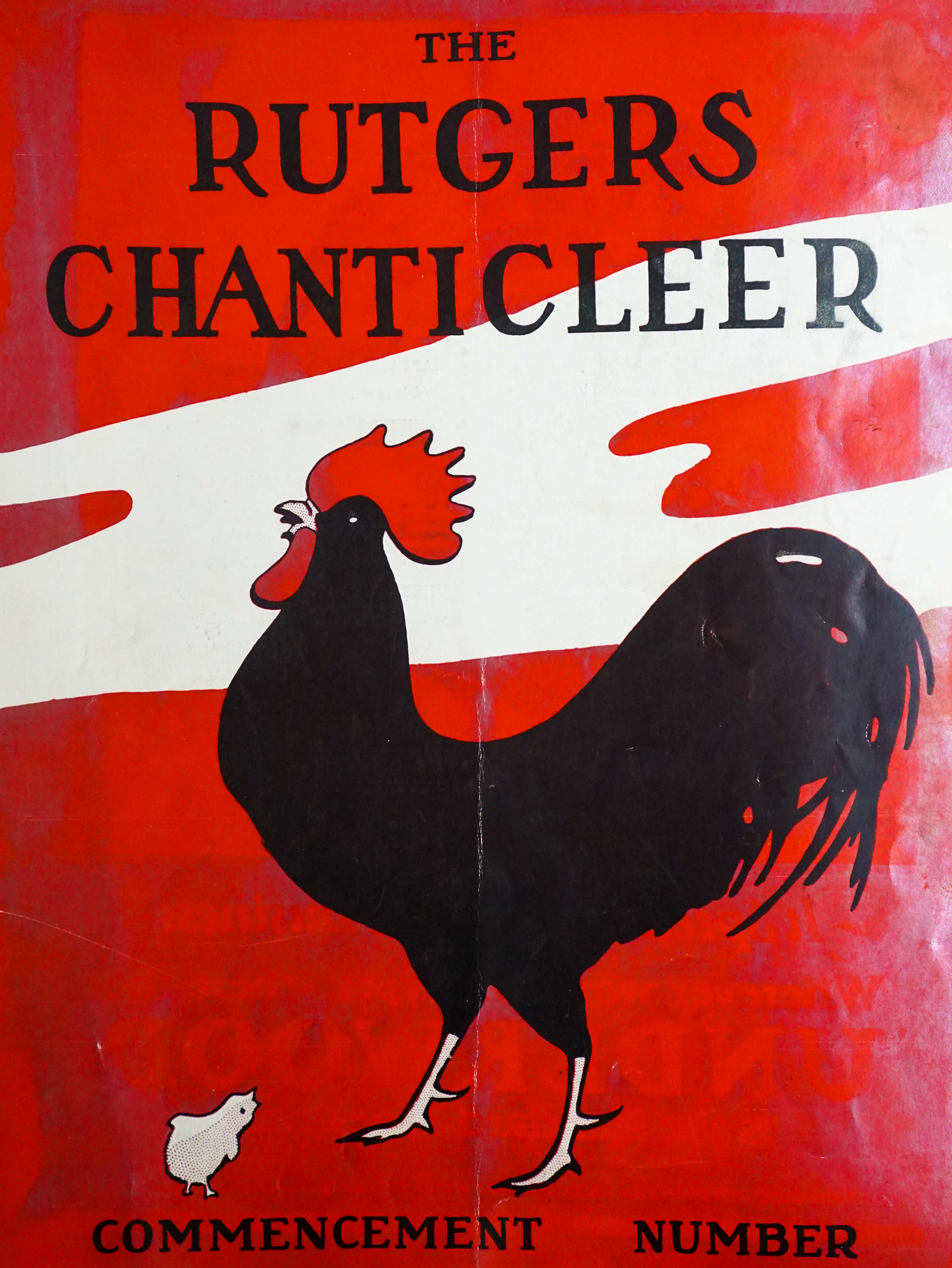
November 7, 1925: The Rutgers Chanticleer

November 7, 1925: Rutgers College, the New Brunswick, New Jersey-based "colonial college," whose teams had previously been called the Queensmen, after their school's original 1766-1825 name, Queen's College, takes on a new name: The Chanticleers. A chanticleer is a fighting rooster, roughly equivalent to the University of South Carolina's Gamecocks. Another school in South Carolina, Coastal Carolina University, a former junior college founded in 1954, uses "Chanticleers."

The change didn't work: They traveled to March Field in Easton, Pennsylvania, where Lafayette College was also introducing a new mascot, the Leopards, and Lafayette won, 34-0.

In 1946, a New Brunswick radio station was founded, at 1450 on the AM dial, and committed to broadcasting Rutgers games. It took its call letters from "Chanticleer": WCTC.

In 1955, the mascot was changed to the Scarlet Knights, after a campus-wide election. Head football coach Harvey Harman supported the change, saying, "You can call it the Chanticleer, you can call it a fighting cock, you can call it any damn thing you want. But everybody knows it's a chicken."

In Middlesex, north of London, fans of the soccer team Tottenham Hotspur Football Club, whose symbol was a cockerel, were unaware of the change, and had no comment.

In 2021, WCTC was bought by Fox, and is now "Fox Sports New Jersey," but it kept the call letters, a vestige of the Chanticleer name.

*

November 7, 1925 was a Saturday. Among the other noteworthy college football games that day were these:

* Army beat Davis & Elkins, 14-6 at Michie Stadium in West Point, New York.

* Fordham beat Holy Cross, 17-0 at the Polo Grounds.

* Columbia and New York University (NYU) played to a tie, 6-6 at Columbia's Baker Field in Upper Manhattan.

* City College of New York beat Manhattan College, 13-10 at CCNY's Lewisohn Stadium in Upper Manhattan.

* Princeton beat Harvard, 36-0 at Palmer Stadium in Princeton, New Jersey.

* Navy beat Western Maryland, 27-0 at Farragut Field in Annapolis, Maryland.

* Alabama beat Kentucky, 31-0 at Rickwood Field in Birmingham, Alabama. 'Bama won the Southern Conference, a precursor to the Southeastern Conference, and finished the season undefeated.

* Texas Christian University beat Texas A&M, 3-0 at Clark Field in Fort Worth, Texas. TCU won the Southwest Conference.

* Notre Dame and Penn State played to a tie, 0-0 at New Beaver Field in State College, Pennsylvania.

* Northwestern upset Michigan, 3-2 at Municipal Grant Park Stadium in Chicago, the building that would soon be renamed Soldier Field. This was the only game Michigan lost all season, and they still won the Big Ten Conference title, and were recognized by one of the determining bodies as the National Champions.

* In what then amounted to a rivalry game, the University of Illinois beat the University of Chicago, 13-6 at Memorial Stadium in Champaign, Illinois.

* Missouri beat Washington University, 14-0 at Francis Field in St. Louis. Mizzou won the Missouri Valley Conference, a precursor to the league eventually known as the Big Eight Conference.

* The University of Washington beat Stanford, 13-0 at University of Washington Stadium, later renamed Husky Stadium, in Seattle. Washington won the Pacific Coast Conference, a precursor to the league eventually known as the Pacific-12 Conference. They were invited to the Rose Bowl, where they were beaten by Alabama, which led to most organizations that chose the National Champion to recognize 'Bama as such.

One game was played in the NFL, due to Pennsylvania's ban on playing professional sports on Sundays, which remained in effect until 1933: The Frankford Yellow Jackets beat the Akron Pros, 17-7 at Frankford Stadium in Northeast Philadelphia.

Thursday, October 20, 2022

October 21, 1925: Marv Goodwin, the 1st Athlete Killed In a Plane Crash

October 21, 1925: For the 1st time, a professional athlete dies as the result of an airplane crash.

Marv Goodwin was born on January 16, 1891 in Gordonsville, Virginia, outside Charlottesville. He went 21-25 pitching for the Washington Senators, St. Louis Cardinals and Cincinnati Reds from 1916 to 1925. He was 1 of the 17 pitchers permitted to continue throwing any of the banned pitches that fell under the category of "spitball" in 1920. Had he lived a full life, this would be the most interesting fact about him: His pitching career was not otherwise notable.

He missed the 1918 season, serving in World War I as a pilot, becoming an aviation instructor for the U.S. Army, but hadn't yet been sent overseas when the Armistice was signed. He remained in the Army Reserve, rising to the rank of 1st Lieutenant. On October 18, 1925, he was conducting a training exercise at Ellington Field in Houston, when he went into a tailspin and crashed. He died 3 days later, only 34 years old.

He had been a player-manager with the Texas League's Houston Buffaloes in 1924, hence his reserve stationing in Houston. Given that fact, his age, and the fact that he made only 4 major league appearances in 1925, he may have played his last major league game anyway. That doesn't mean, however, that his baseball career was over: He could still have become a major league manager or pitching coach.

Had he survived the crash, and lived to be 71, in 1962, he would have seen Houston gain a Major League Baseball team.

*

October 21, 1925 was a Wednesday. Baseball season was over. Football was in midweek. The NBA hadn't been founded yet. And the NHL season wouldn't start for another month. So there were no scores on this historic day.

Saturday, October 15, 2022

October 15, 1925: Walter Johnson's Last Stand

October 15, 1925: A steady downpour yesterday and today has left the field at Forbes Field in Pittsburgh a muddy mess, as Game 7 of the World Series is scheduled to be played. The weather forecast suggested rain for the next 3 days for both cities involved, Pittsburgh and Washington, making the moving of Game 7 to Washington pointless, and Commissioner Kenesaw Mountain Landis was anxious to get it over with.

I've never seen film of this game. I don't even know if any survives, although YouTube has footage from earlier in the Series, and of the Game 7s of 1924 and 1926. Maybe the film crews didn't want to risk getting electrocuted in the rain. At any rate, all we have to go on for the inclement weather are news reports.

UPDATE: On August 8, 2025, as commemorations for the 100th Anniversary of this Series began, I saw a photograph of a rather dubious method of drying the infield: Dousing it with gasoline and setting it on fire.
This insane tactic actually happened. It wasn't the only time, either.

But it would have been just plain wrong to play if the rain were as bad as what Philadelphia and Tampa Bay faced when Game 5 of the 2008 Series was suspended. There was a 6-day delay due to rain in 1911, and there were 3-day delays in 1962 and 1975. It could have been done again.

It was a short day for Pirate starter Vic Aldridge: 3 walks and 2 hits‚ and he was out of there with just 1 out in the 1st. Walter Johnson, the winningest pitcher in American League history, who finally became a World Series hero the year before, took a 4-0 lead to the mound. In what became known as "Johnson's Last Stand," the Bucs clobbered the 38-year-old Big Train for 15 hits‚ good for 24 total bases. Max Carey's 4-for-5 gave him a Series-high batting average of .458.

The Senators made the most of 7 hits‚ scoring 7 runs‚ including shortstop Roger Peckinpaugh's home run‚ the 12th homer of the Series by both teams combined‚ then a Series record, despite Forbes Field and Washington's Griffith Stadium both having some of the most distant fences in the game. Johnson would have fared better but for 2 more errors by Peckinpaugh‚ his 7th and 8th‚ still the Series record for any position. The Senators made only 1 other error in the 7 games.

Ray Kremer picked up his 2nd win with a 4-inning relief effort‚ as the Pirates won, 9-7. This was the Pirates' 1st World Championship in 16 years, and only one player remains from that 1909 title with Honus Wagner: Charles "Babe" Adams, who had pitched and won 3 games in '09, and was riding out the string in '25. It would take until 2019 for another Washington team to get that close to a World Series win.

In the next day's New York Times, James Harrison wrote, "In a grave of mud was buried Walter Johnson's ambition to join the select panel of pitchers who have won three victories in one World Series. With mud shackling his ankles and water running down his neck, the grand old man of baseball succumbed to weariness, a sore leg, wretched support and the most miserable weather conditions that ever confronted a pitcher."

The last surviving member of the 1925 Pirates was shortstop Glenn Wright, who lived until 1984.

UPDATE: The Pirates have a team Hall of Fame. From their 1925 and 1927 National League Champions, including the 1925 World Series win, they have inducted 3rd baseman Harold "Pie" Traynor, center fielder Max Carey (who left after 1926), right fielders Hazen "Kiki" Cuyler and Paul Waner (who arrived in 1926), and Paul's brother, center fielder Lloyd Waner (who arrived in 1927).

*

October 15, 1925 was a Thursday. There was 1 other score on this historic day, a college football rivalry: North Carolina beat North Carolina State, 17-0 at Riddick Field on the N.C. State campus in Raleigh.

December 31, 1999 & January 1, 2000: The Millennium

December 31, 1999:  The Millennium arrives. The people of planet Earth survived. At a terrible cost. But we hadn't destroyed ourselves. ...