Showing posts with label clark gable. Show all posts

Tuesday, November 8, 2022

November 8, 1935: The Original Version of "Mutiny On the Bounty" Premieres

A mustache-less Gable (left) as Christian,
and Laughton as Bligh

November 8, 1935: The 1st film version of Mutiny On the Bounty premieres, based on the 1932 novel by Charles Nordhoff and James Norman Hall. I was based on historical events.

EDIT: This was actually the 3rd film based the story, and the 2nd to have been based on a novel about the story, by Charles Nordhoff and James Norman Hall. In the Wake of the Bounty premiered in 1933, starring the man who would become the king of seafaring movies, Errol Flynn, as Christian. A silent film, The Mutiny of the Bounty, was released in 1916, and is considered lost. It's easier for me to admit the error than it would be to change the title of the post, both on the post itself and in my records.

In 1788, the HMS Bounty set sail under the command of Lieutenant William Bligh, a 33-year-old native of Plymouth, in England's West Country, and a veteran of the 3rd voyage of Pacific explorer James Cook. It was to sail to Tahiti, in the South Pacific, to acquire breadfruit plants, which would then be taken to the British West Indies, as a cheap source of food for the region's slaves.

(Slavery was still legal in the British Empire until 1834. And while it was tradition in the Royal Navy, and became such in the U.S. Navy, for sailors to address their ship's commanding officer as "Captain," regardless of his actual rank, Bligh, at the time, was a Lieutenant -- and the British pronounce that "Lef-TEN-unt," instead of "Loo-TEN-unt.")
William Bligh

The original intent was to sail around Cape Horn, at the southern tip of South America. (In the era before the Panama Canal, this gave rise to the baseball term "around the horn," for a double play starting at the furthest position, 3rd base.) Bad weather prevented this, so, instead, they sailed east, rounding the southern tip of Africa, and crossing the Indian Ocean. This made the trip a lot longer.

During that voyage, Bligh demoted Sailing Master John Fryer, replacing him with Fletcher Christian, a 23-year-old native of Cumbria, in the North of England. This act caused dissension among the crew.
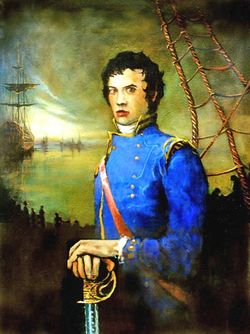
Fletcher Christian

The ship reached Tahiti after 10 months, and stayed 5 months. Bligh allowed the crew to live ashore and care for the potted breadfruit plants, and they became socialized to the customs and culture of the Tahitians. Many of the seamen and some of the "young gentlemen" had themselves tattooed in native fashion. Acting Lieutenant Christian married Maimiti, a Tahitian woman. Other warrant officers and seamen were also said to have formed "connections" with native women.

Bounty set sail with her breadfruit cargo on April 4, 1789. On April 28, about 1,300 miles west of Tahiti, near Tonga, a mutiny broke out. Despite strong words and threats heard on both sides, the ship was taken bloodlessly, and apparently without struggle by any of the loyalists except Bligh himself. 

The mutineers ordered Bligh, two midshipmen, the surgeon's mate, and the ship's clerk into the ship's boat. Several more men voluntarily joined Bligh rather than remain aboard. Of the 42 men on board aside from Bligh and Christian, 22 joined Christian in mutiny, two were passive, and 18 remained loyal to Bligh.

Bligh and his men sailed the open boat 30 miles to Tofua in search of supplies, but were forced to flee after attacks by hostile natives resulted in the death of one of the men. Bligh then undertook an arduous journey to the Dutch settlement of Coupang, over 3,500 miles from Tofua. He safely landed there 47 days later, having lost no men during the voyage except the one killed on Tofua.

The mutineers sailed for the island of Tubuai, where they tried to settle. After three months of bloody conflict with the natives, however, they returned to Tahiti. Sixteen of the mutineers – including the four loyalists who had been unable to accompany Bligh – remained there, taking their chances that the Royal Navy would not find them and bring them to justice.

HMS Pandora was sent out to capture the mutineers and bring them back to Britain to face a court martial. She arrived in March 1791, and captured fourteen men within two weeks. They were locked away in a makeshift wooden prison on Pandora's quarterdeck. The men called their cell "Pandora's box." They remained in their prison until August 29, 1791, when Pandora was wrecked on the Great Barrier Reef with the loss of 35 lives, including four mutineers.

As for the rest: On January 15, 1790, the Bounty reached Pitcairn Island. After the decision was made to settle on Pitcairn, livestock and other provisions were removed from Bounty. To prevent the ship's detection, and anyone's possible escape, the ship was burned on January 23. They were not found until 1808, when the last surviving mutineer, John Adams, and the surviving Tahitian women and their children were discovered by the Boston sealer Topaz

Adams lived on until 1829. He gave conflicting accounts of Christian's death to visitors on ships that subsequently visited Pitcairn. He was variously said to have died of natural causes, committed suicide, become insane or been murdered. Regardless, it appears to have happened in 1793, only 4 years after the mutiny.

Upon reaching British soil again, Bligh was court-martialed -- which was, and remains, a standard U.K. and U.S. procedure for a commander who loses his ship -- but was acquitted, and hailed as a hero. He was promoted to Commander, and eventually to Vice-Admiral. He commanded 11 ships after the Bounty, and from 1806 to 1808 served as the Governor of the Colony of New South Wales, now a State in Australia, which includes Sydney. William Bligh died in 1817, at the age of 63.

Nearly 100 years later, as First Lord of the Admiralty, Winston Churchill was accused of "destroying the traditions of the Royal Navy." He said, "And what are those? Rum, sodomy, and the lash." The last of these referred to sailors being whipped over minor offenses. Bligh was not an overly aggressive punisher: Indeed, he was known to be among the more tolerant commanding officers of his era.

The novel was a libel on his memory, and so have been the 3 major motion pictures made about the events. The 1935 film Mutiny On the Bounty starred Charles Laughton, already known for his portrayal of the wicked King Henry VIII, as a much meaner Bligh than actually existed; and Clark Gable as a considerably more dashing version of Fletcher Christian than actually existed. The last straw in starting the mutiny was cutting the crew's water rations, to provide more water for the breadfruit plants. Despite the inaccuracies, this was the highest-grossing film of 1935.

The film was remade in 1962, with Trevor Howard as Bligh and Marlon Brando as Christian. This one is more explicit, and is grossly inaccurate: Two men die in attempting to disobey Bligh's excessive orders, before Christian agrees to the mutiny. And it ends with Christian deciding to return to Britain to testify against Bligh, and the other mutineers burning the ship in order to prevent it, and Christian dying in an attempt to save it. Unlike the earlier film, this one was a box office flop.

The 1984 film The Bounty is not based on the novel. Anthony Hopkins played Bligh, and Mel Gibson played Christian. It was hailed as being considerably more historically accurate. Apparently, Gibson did not learn that lesson, and went on to make a bunch of historical films that were way off the mark.

note of interest: Movita Castaneda, an Arizona native of Mexican descent, played Tehani, the chief's daughter, in the 1935 film. She later married Marlon Brando. After their divorce, Brando starred in the 1962 version of the film, and married Tarita TeriĘ»ipaia, who played Maimiti, the real Christian's wife. Brando kept a home in the South Pacific for the rest of his life.

In the 1986 film Star Trek IV: The Voyage Home, Doctor McCoy (DeForest Kelley) named the Klingon ship that the crew of the lost USS Enterprise had taken the HMS Bounty.

*

November 8, 1935 was a Friday. French actor Alain Delon was born. This was also the day that famed pilot Charles Kingsford Smith disappeared. I have a separate entry for that event.

Baseball was out of season. The NBA hadn't been founded yet. And the NHL season had started the night before, but no games were scheduled for this day.

Two college football games were played. George Washington University beat Davis & Elkins, 53-7 at Griffith Stadium in Washington. GWU dropped its football program after the 1966 season. Davis & Elkins College, of Elkins, West Virginia, now play in NCAA Division II.

And Texas Christian University (TCU) beat Loyola University, 14-0 at Loyola University Stadium in New Orleans. Loyola dropped their program after the 1939 season.

Sunday, November 6, 2022

November 6, 1935: The Young-Gable Baby

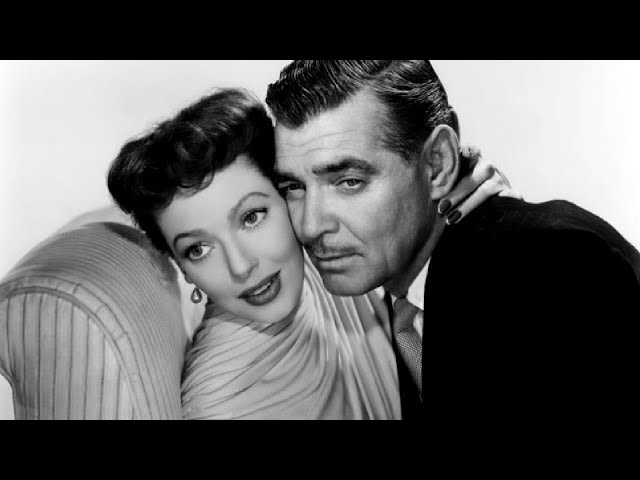
Loretta Young and Clark Gable -- on the set
of Key to the City, in 1950

November 6, 1935: Judith Young is born in the Venice section of Los Angeles. She is soon placed in an orphanage, and after a year and a half, is "adopted" by her birth mother, actress Loretta Young.

In fact, Judy was the daughter of actor Clark Gable, with whom her mother starred in the 1935 film version of Jack London's novel The Call of the Wild. Gable was 34, and married to the 2nd of his 4 wives, Texas socialite Maria Langham. Young was 22, and divorced. She later told her children that, once she learned what "date rape" was, that's what Gable had done to her.

At that time, the year after the Hays Code got serious about things like "immorality," having a child out of wedlock would have destroyed Young's career. But she was too devout a Catholic to have an abortion. (Just not too devout a Catholic to get a divorce from her ex, actor Grant Withers.) So she went on a "vacation" to England. In those days, the term "exhaustion" was used to cover for actors and actresses who went to alcohol or drug rehab, and for actresses who were pregnant or getting an abortion.

So Young kept up the appearance of propriety, and adopted her own daughter. But it was the worst-kept secret in Hollywood. Along with his mustache, Gable was known for his ears that stuck out. Judy -- whom Loretta named for St. Jude, the patron saint of lost causes -- inherited those ears. In 1940, Loretta married film producer Tom Lewis, and her daughter was renamed Judy Lewis. Two years later, at age 7, Judy underwent surgery to pin her ears back.

Young and Gable only appeared together in 1 more movie, in 1950: Key to the City. On the set, Judy met Gable for the only time in her life. In 1958, 2 weeks before she was going to marry Joe Tinney, she panicked, and told him she couldn't marry him, saying, "I don't know who I am." He told her, ""Judy, don't worry about it. I know everything about you. You're Clark Gable's daughter." She was astounded. She married him anyway, had a daughter, Maria, and divorced him in 1972.

Loretta became a big star, winning the Academy Award for Best Actress for her role in the 1947 film The Farmer's Daughter. She won 3 Emmy Awards for her dramatic anthology series on NBC, The Loretta Young Show, which ran from 1953 to 1961.

She was also a prominent Republican, publicly supporting Dwight D. Eisenhower, Richard Nixon and Ronald Reagan, taking up the conservative movement's moral crusade, including, from the 1973 Roe v. Wade decision onward, opposition to abortion.

With Tom Lewis, she had sons Christopher and Peter. She divorced Lewis in 1969. In 1993, she married Jean Louis, who had designed the costumes for The Loretta Young Show. Both were old and lonely, as Louis had recently been widowed. Louis died in 1997. Loretta died in 2000, a beloved figure in Hollywood, but with the truth about her relationship with Gable known.

Gable died in 1960. In 1966, at the age of 31, while appearing on the CBS soap opera The Secret Storm, Judy finally confronted her mother, and told her to tell the truth about her father. She did.
Dr. Judy Lewis, 2000

Judy left acting to become a psychotherapist, and lived until 2011. Christopher Lewis became a TV writer and producer, and lived until 2021. Peter Lewis became a rock musician, the rhythm guitarist for the psychedelic rock band Moby Grape. Sadly, he spent years battling mental illness and homelessness. Bandmate Skip Spence went on record saying that the Young/Lewis family wasn't interested in helping him: "All they were interested in was keeping him out of McDonald's with a machine gun." Skip found Peter some help, and he was able to resume his life. As of November 6, 2022, he is still alive.

*

November 6, 1935 was a Wednesday. Baseball was out of season. Football was in midweek. The NBA hadn't been founded yet. And the NHL season began the next night. So there were no scores on this historic day.  

Tuesday, February 22, 2022

February 22, 1934: “It Happened One Night” Premieres

February 22, 1934: It Happened One Night premieres. This film seemed to be doomed to disaster. Instead, it became one of the most beloved movies of its time.

The story was based on Night Bus, a short story by Samuel Hopkins Adams, published in Collier's magazine in August 1933. Robert Riskin wrote a screenplay around it for Columbia Pictures. Studio boss Harry Cohn assigned it to Frank Capra, who had only directed a few light comedies to that point. But his most recent film, Lady for a Day, had also been from a Riskin screenplay. That film was nominated for the Academy Award for Best Picture, and Capra was nominated for Best Director.

By this point, Clark Gable had become one of Metro-Goldwyn-Mayer's biggest stars, but he and the studio couldn't agree on his next project. Studio head Louis B. Mayer was, essentially, paying him $2,000 a week to do nothing. (This was in the middle of the Great Depression. The figure works out to about $45,000 a week in 2022 money, or $2.34 million a year.)

So Mayer lent him to Cohn for $2,500 a week, making a $500 weekly profit. Gable was not Capra's 1st choice to play newspaper reporter Peter Warne. Capra wanted Robert Montgomery, but he thought the script was poor. (Montgomery is not well-remembered today, and giving up this movie may be why.) A rumor got around that this movie was a punishment for Gable's turning down of another role, but it wasn't true: MGM simply didn't have anything for him.

Gable had already done some films with Myrna Loy, and would do more. But this would not be one of them. Loy was the 1st actress offered the role of spoiled heiress Ellen "Ellie" Andrews, but, like Montgomery, she didn't like the script, and later noted that the final story, as filmed, bore little resemblance to it.

Margaret Sullavan was offered the part next. She also turned it down. Next was Constance Bennett. She wanted to produce the film herself, but there was no way Cohn, one of the meanest and most hated studio bosses ever, would have allowed a woman to do that. Bette Davis, then working her way into stardom, wanted it, but Jack L. Warner, head of Warner Brothers, wouldn't let her leave his studio, even for a few weeks, to film it.

Interestingly, the next actress offered the role was Carole Lombard, who had recently divorced actor William Powell, who was about to join with Loy to play married amateur detectives Nick and Nora Charles in The Thin Man, starting a movie franchise. And in 1939, Lombard married Gable. She was signed to Paramount Pictures in 1933, but was filming Bolero for them, and the schedules conflicted, preventing her from filming.

Loretta Young turned it down as well. In 1935, Young would be paired with Gable for Call of the Wild. Married to someone else and 12 years her senior, Gable seduced Young, and she became pregnant. After a long subterfuge, she announced that she had adopted a daughter, Judy. But as Judy grew older, her resemblance to Gable was undeniable. It was only in her final years, when Young learned of the term "date rape," that she realized that this was what Gable had done to her.

Finally, Cohn told Capra to take Claudette Colbert. Her 1st film, in 1927, was a silent picture, For the Love of Mike, which Capra had directed. The experience was rotten for both, and neither wanted to work with the other again. Colbert agreed, on 2 conditions: That she be paid $50,000, and that filming would be done in 4 weeks, as she had a vacation planned. So Capra was making a movie he didn't want to make, with a male lead he didn't want and vice versa, and a female lead he didn't want and vice versa.

And neither star liked the script. Desperate to not have to look for yet another replacement for either role, Capra let Riskin rewrite it. Capra later said Colbert "had many little tantrums, motivated by her antipathy toward me."

For perhaps the film's best-remembered scene, after Peter is unable to use his thumb to hitch a ride -- including thumbing his nose at a passing driver, which would soon be a no-no under the Hays Code -- the script called for Ellie to hitch up her skirt and stick her leg out, causing a driver to slam on his brakes and let them in. Colbert refused to do it, saying it was "unladylike." So Capra hired a chorus girl for a body double. Apparently, she wasn't enough of a double, because Colbert saw her and said, "Get her out of here! I'll do it! That's not my leg!"

As for the story: Against the wishes of Alexander Andrews, her wealthy father, Ellie Andrews has eloped with King Westley, a pilot and a fortune-hunter. ("King" is his name, not a title.) Alexander wants to have the marriage annulled. So Ellie runs away in Florida, and boards a Greyhound bus to New York, to reunite with him.

One of the passengers is newly-fired newspaper reporter Peter Warne. He recognizes her from her picture in the papers, and offers her a deal: An exclusive on her story, in exchange for helping her reunite with her husband; or he tells her father where she is. She accepts the deal/blackmail.

As they go through several adventures, Ellie loses her initial disdain for Peter and they begin to fall in love. When the bus breaks down and they begin hitchhiking, they fail to secure a ride until Ellie displays a shapely leg to Danker, the next driver. When they stop en route, Danker tries to steal their luggage but Peter chases him down and seizes his Ford Model T.

Near the end of their journey, Ellie confesses her love to Peter. The owners of the motel in which they stay notice that Peter's car is gone, and then expel Ellie. Believing Peter has deserted her, Ellie telephones her father, who agrees to let her marry Westley. Meanwhile, Peter has obtained money from his editor to marry Ellie, but he just misses her on the road. Although Ellie no longer has any desire to be with Westley, she believes that Peter has betrayed her for the reward money, and so agrees to have a second, formal wedding with Westley.

On the wedding day, she finally reveals the whole story to her father. When Peter comes to Ellie's home, Andrews offers him the reward money, but Peter insists on being paid only his expenses, a paltry $39.60 (about $865 in 2022 money) for items that he had been forced to sell to buy gasoline. When Andrews presses Peter for an explanation of his odd behavior and demands to know if he loves her, Peter first tries to dodge the questions, but then admits that he loves Ellie, and storms out.

Westley arrives for his wedding via an autogyro, but at the ceremony, Andrews reveals to his daughter Peter's refusal of the reward money, and tells her that her car is waiting by the back gate, in case she changes her mind. At the last minute, just before she says "I do," she decides not to go through with the wedding. Ellie dumps Westley at the altar, bolts for her car, and drives away as the newsreel cameras crank.

A few days later, Andrews is working at his desk when Westley calls to tell him that he will take the financial settlement and not contest the annulment. His executive assistant brings him a telegram from Peter: "What's holding up the annulment, you slowpoke? The walls of Jericho are toppling!" That is a reference to a makeshift wall made of a blanket hung over a rope that was tied across the rooms separating the beds they had slept in, in order to give them each privacy while traveling together. With the annulment in hand, Andrews sends the reply, "Let 'em topple."

The last scene has Peter's battered Model T parked in a motor court in Glen Falls, Michigan. The mom-and-pop owners talk and wonder why, on such a warm night, the newlyweds (he had seen the marriage license) wanted a clothesline, an extra blanket, and the little tin trumpet that he had gotten for them. As they look at the cabin, the toy trumpet sounds a fanfare, the blanket falls to the floor, and the lights in the cabin go out.

The film was a smash. Gable and Colbert, already known dramatic stars, were embraced as comedy stars, too. The film was nominated for 5 Academy Awards, winning all of them: Best Picture, Best Director for Capra, Best Actor for Gable, Best Actress for Colbert, and Best Screenplay for the final draft by Riskin. It was the 1st nonmusical comedy to win Best Picture, and the 1st film to sweep those 5 Oscars. The only ones since have been One Flew Over the Cuckoo's Nest in 1975 and The Silence of the Lambs in 1991.

There was a scene in which Gable takes of his shirt, revealing a bare chest. It Happened One Night is credited for hurting the undershirt industry, because men who wanted to be like Gable stopped buying them. Between that and the implication at the end that Peter and Ellie were about to have sex, this was one of the films cited by the Legion of Decency as a reason why the censors had to get tougher, resulting in the rewriting of the Hays Code.

Gable went on to make many more classics, including Gone with the Wind, and died in 1960. His last film was also Marilyn Monroe's last film: The Misfits. Colbert appeared in Cleopatra in 1934, setting the standard for the role for nearly 30 years until Elizabeth Taylor, remained one of the highest-paid actresses into the 1940s, and lived until 1996.

In addition to the aforementioned You Can't Take It With You, Capra would direct "everyman" films like Mr. Deeds Goes to Town, Meet John Doe, Mr. Smith Goes to Washington, and It's a Wonderful Life. He also directed the Why We Fight documentaries for the U.S. Department of War during World War II. He lived until 1991.

Riskin wrote the screenplays for Mr. Deeds Goes to Town and You Can't Take It With You, and a few others, before a stroke debilitated him in 1950. He died in 1955. Cohn died in 1958, and just about everybody in Hollywood attended his funeral. This led comedian Red Skelton to say, "It proves what Harry always said: Give the public what they want, and they'll come out for it."

The musicals Eve Knew Her Apples in 1945 and You Can't Run Away From It in 1956 are considered remakes, but no one has ever tried a direct remake of It Happened One Night. It's just as well: These days, an heiress simply wouldn't be a sympathetic character, not even if she were as beautiful as Claudette Colbert.

*

February 22, 1934 was a Thursday. Baseball and football were out of season. And the NBA hadn't been founded yet. But the entire NHL was in play that night:

* The New York Rangers beat the Detroit Red Wings, 3-1 at the old Madison Square Garden.

* The New York Americans played the Chicago Black Hawks to a tie, 0-0 at the Chicago Stadium.

* The Montreal Maroons beat the Montreal Canadiens, 1-0 at the Montreal Forum.

* And the Ottawa Senators beat the Boston Bruins, 3-1 at the Boston Garden.

Sunday, January 16, 2022

January 16, 1942: Carole Lombard Is Killed

Clark Gable (left) and Carole Lombard

January 16, 1942: Actress Carole Lombard is killed in a plane crash outside Las Vegas, along with her mother and 21 other people. She was only 33, and was trying to return to Los Angeles from a war bond tour.

Despite actor-director Orson Welles' theory that Lombard was raising too much in war bond sales, and the plane was shot down by Nazi agents, the Civil Aeronautics Board determined that the crash was due to pilot error.

Born on October 6, 1908 in Fort Wayne, Indiana as Jane Alice Peters, she was raised by a single mother in Los Angeles. She was only 12 when she acted in her first film, but the arrival of "talkies" coincided with her adulthood, and she became a star.

She specialized in what came to be called "screwball comedies," such as Twentieth Century in 1934 and My Man Godfrey in 1936. She was briefly married to actor William Powell. She had married Clark Gable in 1939, and they were an early celebrity "supercouple." Their house in suburban Encino, California became known as "The House of the Two Gables," after the Nathaniel Hawthorne story The House of the Seven Gables. (A "gable" is the generally triangular portion of a wall between the edges of intersecting roof pitches.

Gable married twice more, but Lombard was the love of his life. Their only film together, No Man of Her Own, was released a year before they were married.

Carole Lombard has been called "the first American woman to die in World War II." Her last film, the anti-Nazi comedy To Be Or Not to Be, in which she co-starred with Jack Benny, was released a month after her death.

*

January 16, 1942 was a Friday. I have no scores for this historic day: Baseball and football were out of season, there was no NBA yet, records from the existing National Basketball League are hard to come by, and no NHL games were scheduled for the date.

December 31, 1999 & January 1, 2000: The Millennium

December 31, 1999:  The Millennium arrives. The people of planet Earth survived. At a terrible cost. But we hadn't destroyed ourselves. ...