Showing posts with label 1940. Show all posts

Saturday, December 31, 2022

December 31, 1940: The Nazi Plot to Hijack the Election

William Rhodes Davis

December 31, 1940: A Nazi plot to hijack the recent Presidential election is revealed. It had failed, of course.

As the calendar year began, it was believed by most people that President Franklin D. Roosevelt would respect the 2-term limit on the Presidency -- which, until the ratification of the 22nd Amendment to the Constitution, in 1951, was unofficial. The Nazis concluded that if Roosevelt could be replaced by someone not willing to intervene in the Nazis' takeover of Europe, the prospects of U.S. involvement in the European phase of World War II would be greatly reduced, and possibly eliminated.

So they found a sympathetic, well-connected American. William Rhodes Davis was an oilman with a sketchy business past who, in the late 1930s, made a fortune by selling cut-rate Mexican oil to the German government. Davis had cultivated connections inside the Democratic Party, making a big donation to its 1936 election efforts.

But when The War began, the British imposed a blockade on German ports, interfering with Davis' ability to make money from dealing with Germany. He believed that the only way to save his business was by personally making peace in Europe, by negotiating a deal between the warring parties himself. Davis approached the White House with his plan for peace. FDR turned him down.

Davis then traveled to Germany, met with leaders of the Third Reich, including Hermann Göring, President of the Reichstag -- in effect, Germany's equivalent of the Speaker of the U.S. House of Representatives -- and returned with the vague outlines of a deal that would have given Germany territorial gains in exchange for Roosevelt mediating a peace treaty. Roosevelt refused to even meet with Davis upon his return, worried that he might be compromised and acting as a Nazi agent.

As it turned out, FDR was absolutely right about that. Davis had talked to Göring about the possibility of a non-interventionist winning the 1940 election. He even had, he thought, the perfect candidate in mind: John L. Lewis, the head of the Congress of Industrial Organizations (CIO), and the President of the United Mine Workers. Widely popular among America's working people, he was nonetheless opposed to many of FDR's New Deal reforms, and was a non-interventionist. Of course, being the leader of a labor union, and aside from his New Deal opposition a leftist, he would have been considered unacceptable to German Chancellor Adolf Hitler himself, as anything other than a temporary tool to achieve Hitler's aims.

Göring gathered $5 million -- about $104 million in 2022 money, which would have bought quite a bit of newspaper and magazine advertising space, and radio airtime -- to support the plan, and had it stashed at the German embassy in Washington D.C. for Davis' use.

But both major parties put a stop to the plan. FDR ran for a 3rd term anyway, and was easily renominated. And the Republicans nominated an interventionist, Wendell Willkie. The Nazi money did Lewis no good: He paid for a national radio address by Lewis on Labor Day, September 2, denouncing Roosevelt. The President was re-elected on November 5, anyway, with an electoral landslide, although the popular vote was the closest of what turned out to be his 4 runs.

In December 1940, Verne Marshall, head of the No Foreign War Committee, claimed that Davis, upon returning from a trip to Germany in 1939, presented the State Department with a peace plan representing Göring's views, and called for President Roosevelt to serve as mediator between the warring nations. Marshall criticized FDR for failing to take advantage of the opportunity, but most viewed the plan as an attempt to impose a "German peace." The German government, of course, denied any knowledge of such a plan.

On December 31, 1940, in reaction to Davis's role in forming and financing the No Foreign Wars Committee, U.S. Senator Joshua B. Lee, Democrat of Oklahoma, said, "The record of this man Davis shows conclusively the great financial stake he has in a complete Nazi victory in the European war. Much of the gasoline sending showers of fiery death into the defenseless heart of London was sold to the German government by this man Davis."

On January 7, 1941, Davis was subpoenaed to testify before a grand jury in Washington, D.C., investigating campaign expenditures for violations of the Hatch Act and the Corrupt Practices Act during the 1940 Presidential campaign. The same day, Senator Burton K. Wheeler, Democrat of Montana, a non-interventionist, scheduled Davis to testify before the Senate Interstate Commerce Subcommittee about the "peace place" described by Marshall.

Davis died of a heart attack in Houston on August 1, 1941. The traitor was 52 years old. In 1946, O. John Rogge, an official in the U.S. Department of Justice, issued a report on Davis' activities, proving his guilt beyond a reasonable doubt. The report ended up being buried until 1961.

Davis' grandson, Joseph Graham Davis Jr., a.k.a. Gray Davis, served as Governor of California from 1999 to 2003 -- as a Democrat. His loyalty to America has never been seriously questioned.

*

December 31, 1940 was a Tuesday. Baseball was out of season. The NBA hadn't been founded yet. There were 2 games played in the NHL. The New York Rangers and the Boston Bruins played to a 2-2 tie at the Boston Garden. And the New York Americans beat the Montreal Canadiens, 4-2 at the old Madison Square Garden.

The next day, New Year's Day 1941, Stanford beat Nebraska in the Rose Bowl, Boston College beat Tennessee in the Sugar Bowl, Texas A&M beat Fordham in the Cotton Bowl, Mississippi State beat Georgetown in the Orange Bowl, and Western Reserve beat Arizona State in the Sun Bowl. 

Friday, December 30, 2022

December 30, 1940: Los Angeles' 1st Freeway Opens

December 30, 1940: The Arroyo Seco Parkway opens, along the seasonal river of the same name, running 8 miles northeast from downtown Los Angeles to Pasadena. It is the 1st of many freeways in the Los Angeles metropolitan area.

It became part of the historic U.S. Route 66, but is no longer designated as such. Rather, it is California Route 110. In 1954, it was renamed the Pasadena Freeway. In 2010, its original name was restored.

In the 1988 film Who Framed Roger Rabbit?, Judge Doom (played by Christopher Lloyd) lays out his plan for such a road: "Eight lanes of shimmering cement, running from here to Pasadena. Smooth, safe, fast. Traffic jams will be a thing of the past." (Yeah, surrre! He continued.) "I see a place where people get on and off the freeway, on and off, off and on, all day, all night! Soon, where Toontown once stood will be a string of gas stations, inexpensive motels, restaurants that serve rapidly prepared food, tire salons, automobile dealerships, and wonderful, wonderful billboards, reaching as far as the eye can see! My God, it'll be beautiful!"

In other words, he foresaw freeway exits, and the shopping centers that sprang up around them, serving as the new "downtown shopping districts" in what became suburban America after World War II. Except that the film took place in 1947, when said 8 lanes were already in place in real life. (But then, that entire film requires a major suspension of disbelief.)

Those 8 lanes would be the first of many, strangling Southern California in asphalt, and choking it in smog, because all those cars would be producing carbon dioxide, drifting east until the gas smacked into the San Gabriel Mountains, which would push it back, causing it, with nowhere else to go, to settle dangerously over what had become America's 3rd-largest city after World War II, and by 1970, the 2nd-largest.

Not until 1990 would Los Angeles open its 1st subway line.

*

December 30, 1940 was a Monday. TV sitcom writer, director and producer James Burrows was born.

Baseball and football were out of season. The NBA hadn't been founded yet. And no games were scheduled for the NHL. Therefore, there were no scores on this historic day.

Thursday, December 29, 2022

December 29, 1940: President Franklin D. Roosevelt's "Arsenal of Democracy" Speech

December 29, 1940: The Nazis' Luftwaffe carries out a massive incendiary bombing raid on London, starting 1,500 separate fires. Many famous buildings, including the Guildhall and Trinity House, are either damaged or destroyed. It becomes known as the Second Great Fire of London. (The first was in 1666.)

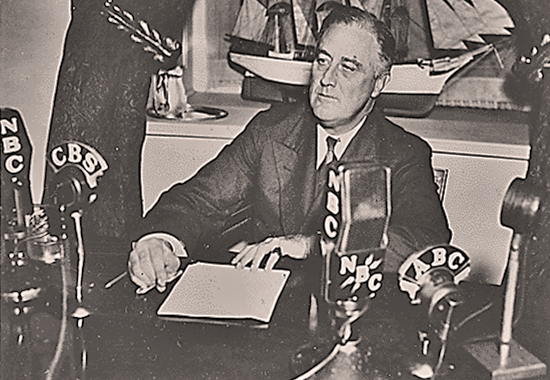
Hours later, President Franklin D. Roosevelt speaks from the White House, and his radio speech is broadcast around the world. He leaves no doubt that the fate of America is tied in with the fate of Britain. He used a phrase which had been hinted at before.

In 1918, Doubleday publishing executive Herbert S. Houston analyzed the soon-to-end World War I with an article titled "Blocking New Wars." He wrote that American business was the "Protector of Democracy," while the American free press was "one of the most effective weapons in the arsenal of democracy."

Writing in German, Nazi propagandist Joseph Goebbels useed the expression "arsenal of democracy" on April 30, 1928, in his newspaper Der Angriff (The Attack) to refer to using democratic institutions against themselves: "We enter the Reichstag to use the arsenal of democracy in order to assault it with its own weapons."

The concept of America as an actual arsenal came from the American playwright Robert E. Sherwood, who had written speeches for FDR. He who was quoted in the May 12, 1940 edition of The New York Times, as saying, "This country is already, in effect, an arsenal for the democratic Allies." Although the French economist Jean Monnet had used the phrase later in 1940, he was urged by Supreme Court Justice Felix Frankfurter, another longtime FDR ally, not to use it again, so FDR could make use of it in his speeches.

Which he did:

This is not a "fireside chat" on war. It is a talk on national security; because the nub of the whole purpose of your President is to keep you, now, and your children later, and your grandchildren much later, out of a last-ditch war for the preservation of American independence, and all the things that American independence means to you and to me and to ours...

The Nazi masters of Germany have made it clear that they intend not only to dominate all life and thought in their own country, but also to enslave the whole of Europe, and then to use the resources of Europe to dominate the rest of the world.

It was only three weeks ago that their leader stated this: "There are two worlds that stand opposed to each other." And then in defiant reply to his opponents, he said this: "Others are correct when they say: With this world we cannot ever reconcile ourselves... I can beat any other power in the world." So said the leader of the Nazis.

In other words, the Axis not merely admits, but the Axis proclaims that there can be no ultimate peace between their philosophy, their philosophy of government and our philosophy of government...

Some of our people like to believe that wars in Europe and in Asia are of no concern to us. But it is a matter of most vital concern to us that European and Asiatic war-makers should not gain control of the oceans which lead to this hemisphere.

One hundred and seventeen years ago, the Monroe Doctrine was conceived by our Government as a measure of defense in the face of a threat against this hemisphere by an alliance in Continental Europe. Thereafter, we stood guard in the Atlantic, with the British as neighbors. There was no treaty. There was no "unwritten agreement."

And yet, there was the feeling, proven correct by history, that we as neighbors could settle any disputes in peaceful fashion. The fact is that during the whole of this time the Western Hemisphere has remained free from aggression from Europe or from Asia.

Does anyone seriously believe that we need to fear attack anywhere in the Americas while a free Britain remains our most powerful naval neighbor in the Atlantic? Does anyone seriously believe, on the other hand, that we could rest easy if the Axis powers were our neighbors there?

If Great Britain goes down, the Axis powers will control the continents of Europe, Asia, Africa, Australasia, and the high seas -- and they will be in a position to bring enormous military and naval resources against this hemisphere. It is no exaggeration to say that all of us, in all the Americas, would be living at the point of a gun, a gun loaded with explosive bullets, economic as well as military...

Some nations of Europe were bound by solemn non-intervention pacts with Germany. Other nations were assured by Germany that they need never fear invasion. Non-intervention pact or not, the fact remains that they were attacked, overrun; thrown into modern slavery at an hour's notice, or even without any notice at all. As an exiled leader of one of these nations said to me the other day, "The notice was a minus quantity. It was given to my Government two hours after German troops had poured into my country in a hundred places."

The fate of these nations tells us what it means to live at the point of a Nazi gun.

The Nazis have justified such actions by various pious frauds. One of these frauds is the claim that they are occupying a nation for the purpose of "restoring order." Another is that they are occupying or controlling a nation on the excuse that they are "protecting it" against the aggression of somebody else.

For example, Germany has said that she was occupying Belgium to save the Belgians from the British. Would she then hesitate to say to any South American country, "We are occupying you to protect you from aggression by the United States"?

Belgium today is being used as an invasion base against Britain, now fighting for its life. And any South American country, in Nazi hands, would always constitute a jumping-off place for German attack on any one of the other Republics of this hemisphere.

In the election that FDR won a few weeks earlier, it was thought -- incorrectly, as it turned out -- that he might lose States in the Northeast where the Irish-American and Portuguese-American votes might turn on him, because the Irish hate the British and Portugal was neutral. So FDR went on to address the status of their ancestral homelands, to win their support:

Analyze for yourselves the future of two other places even nearer to Germany if the Nazis won. Could Ireland hold out? Would Irish freedom be permitted as an amazing pet exception in an unfree world? Or the Islands of the Azores which still fly the flag of Portugal after five centuries? You and I think of Hawaii as an outpost of defense in the Pacific. And yet, the Azores are closer to our shores in the Atlantic than Hawaii is on the other side.

There are those who say that the Axis powers would never have any desire to attack the Western Hemisphere. That is the same dangerous form of wishful thinking which has destroyed the powers of resistance of so many conquered peoples. The plain facts are that the Nazis have proclaimed, time and again, that all other races are their inferiors and therefore subject to their orders. And most important of all, the vast resources and wealth of this American Hemisphere constitute the most tempting loot in all the round world.

Let us no longer blind ourselves to the undeniable fact that the evil forces which have crushed and undermined and corrupted so many others are already within our own gates. Your Government knows much about them and every day is ferreting them out.

Their secret emissaries are active in our own and in neighboring countries. They seek to stir up suspicion and dissension to cause internal strife. They try to turn capital against labor, and vice versa. They try to reawaken long slumbering racial and religious enmities which should have no place in this country. They are active in every group that promotes intolerance. They exploit for their own ends our own natural abhorrence of war. These trouble-breeders have but one purpose. It is to divide our people; to divide them into hostile groups and to destroy our unity and shatter our will to defend ourselves.

There are also American citizens, many of them in high places, who, unwittingly in most cases, are aiding and abetting the work of these agents. I do not charge these American citizens with being foreign agents. But I do charge them with doing exactly the kind of work that the dictators want done in the United States.

These people not only believe that we can save our own skins by shutting our eyes to the fate of other nations. Some of them go much further than that. They say that we can and should become the friends and even the partners of the Axis powers. Some of them even suggest that we should imitate the methods of the dictatorships. But Americans never can and never will do that.

The experience of the past two years has proven beyond doubt that no nation can appease the Nazis. No man can tame a tiger into a kitten by stroking it. There can be no appeasement with ruthlessness. There can be no reasoning with an incendiary bomb. We know now that a nation can have peace with the Nazis only at the price of total surrender...

In a military sense Great Britain and the British Empire are today the spearhead of resistance to world conquest. And they are putting up a fight which will live forever in the story of human gallantry.
There is no demand for sending an American Expeditionary Force outside our own borders. There is no intention by any member of your Government to send such a force. You can, therefore, nail, nail any talk about sending armies to Europe as deliberate untruth...
He began his closing with the use of the key phrase:
As planes and ships and guns and shells are produced, your Government, with its defense experts, can then determine how best to use them to defend this hemisphere. The decision as to how much shall be sent abroad and how much shall remain at home must be made on the basis of our over-all military necessities.
We must be the great arsenal of democracy. For us this is an emergency as serious as war itself. We must apply ourselves to our task with the same resolution, the same sense of urgency, the same spirit of patriotism and sacrifice as we would show were we at war.

We have furnished the British great material support and we will furnish far more in the future.

There will be no "bottlenecks" in our determination to aid Great Britain. No dictator, no combination of dictators, will weaken that determination by threats of how they will construe that determination.

The British have received invaluable military support from the heroic Greek army, and from the forces of all the governments in exile. Their strength is growing. It is the strength of men and women who value their freedom more highly than they value their lives.

I believe that the Axis powers are not going to win this war. I base that belief on the latest and best of information.

We have no excuse for defeatism. We have every good reason for hope—hope for peace, yes, and hope for the defense of our civilization and for the building of a better civilization in the future.

I have the profound conviction that the American people are now determined to put forth a mightier effort than they have ever yet made to increase our production of all the implements of defense, to meet the threat to our democratic faith.

As President of the United States I call for that national effort. I call for it in the name of this nation which we love and honor and which we are privileged and proud to serve. I call upon our people with absolute confidence that our common cause will greatly succeed.


Given the preceding decade of English "football," FDR's use of the term "Arsenal" had greater resonance for the British than he could have realized.

At one point in this process, FDR called for the building of 50,000 airplanes to aid the Allied cause. In the end, twice as many were built: Over 100,000.

*

December 29, 1940 was a Sunday. Baseball and football were out of season. The NBA hadn't been founded yet.

There were 2 games in the NHL. The New York Rangers beat the Toronto Maple Leafs, 3-2 at the old Madison Square Garden. And the Detroit Red Wings beat the Chicago Black Hawks, 2-1 at the Olympia Stadium in Detroit. 

Sunday, December 25, 2022

December 25, 1940: Tommy Lawton's Christmas Doubleheader

Tommy Lawton

December 25, 1940: On this Christmas Day, a Wednesday, South Side Park burns down in Chicago. As far as anyone knows, the fire is not purposely set. It was the 1st home of the American League's Chicago White Sox (1901 to 1910), and of the Negro Leagues' Chicago American Giants (1910 to 1940). The American Giants won 7 Pennants while playing there, the White Sox 2.
There were 3 games played in the NHL. The New York Rangers played the Chicago Black Hawks to a tie, 3-3 at Madison Square Garden. The New York Americans lost to the Boston Bruins, 8-1 at the Boston Garden. And the Detroit Red Wings beat the Toronto Maple Leafs, 3-2 at the Olympia Stadium.
Also on this day, under the wartime conditions of depleted rosters, Tommy Lawton plays for Everton against Liverpool at Anfield in the morning. Liverpool win, 3-1. Then he is asked to play as a guest player for Merseyside club Tranmere Rovers at nearby Cheshire club Crewe Alexandra in the afternoon. As he recalled, "The Tranmere people came into the dressing room, and asked if anyone wanted to play, as they were two men short. I said, 'Go on, I'll help you out.' And I did."
He didn't help much: Crewe won the match, 2-1. Still, on Christmas Day 1940, Lawton played a full 90 minutes in the afternoon, after having already done so in the morning. Given the heavy leather balls and ragged pitches (especially in Winter) of the era, this may qualify as a Christmas miracle.
Just 4 days after Christmas, the Luftwaffe bombed the Rolls-Royce factory in Crewe, which had been making Spitfire planes for the Royal Air Force.
Also on this day, Arsenal lose 4-2 away to West Ham United. They finished 4th in the Southern Regional, the Hammers 2nd, and Crystal Palace of Southeast London won. 

Wednesday, December 21, 2022

December 21, 1940: F. Scott Fitzgerald Dies

December 21, 1940: F. Scott Fitzgerald dies of a heart attack in Los Angeles, where he had gone to write for movies. He was 44 years old.

Francis Scott Key Fitzgerald had been born on September 24, 1896 in St. Paul, Minnesota. He became known as part of the "Lost Generation" writers, disillusioned by their experiences in World War I, and willing to critique American society where mainstream writers went out of their way to praise it.

Although he wrote many short stories, including The Curious Case of Benjamin Button in 1922, he only published 5 novels. This Side of Paradise was published in 1920, and was a runaway success. The Beautiful and the Damned came in 1922, and was considerably less successful. The Great Gatsby was published in 1925, and did well at the time, but not well enough that people then would have considered it an all-time classic.

Fitzgerald stuck to writing short stories for a while, then went back to novels with Tender Is the Night in 1934. It didn't sell well. He moved west, thinking writing screenplays would make him a lot of money. He was right. But he had begun working on another novel, The Last Tycoon. It was unfinished at the time of his death. Edmund Wilson, a writer and literary critic who was a close friend, finished it and published it.

As with many creative people, death was a great career move for Fitzgerald. He could no longer disappoint people with weak new product, and what little he left behind left people wondering what more he could have done. His books became popular among U.S. soldiers in World War II. By the 1950s, the nostalgia wave for the "Roaring Twenties" was underway, and Fitzgerald and his wife Zelda Sayre, the archetypal "flapper," became icons. The other 4 novels are afterthoughts: It is The Great Gatsby that everyone remembers.

He was played by Gregory Peck in Beloved Infidel in 1959, Richard Chamberlain in Last of the Belles (which focused on Zelda) in 1974, Jason Miller in F. Scott Fitzgerald in Hollywood in 1976, Timothy Hutton in Zelda in 1993, Malcolm Gets in Mrs. Parker and the Vicious Circle (about the Algonquin Round Table, of which he was a semi-member) in 1994, Jeremy Irons in Last Call in 2002, Tom Hiddleston in Midnight in Paris in 2011, David Hoflin in Z: The Beginning of Everything in 2016, and Guy Pearce in Genius in 2016.

*

December 21, 1940 was a Saturday. Rock singer Frank Zappa was born on this day. That he was born the day Scott Fitzgerald died must mean something.

Baseball was out of season. College football was between the regular season and the bowls. The NFL season was over. And there was no NBA yet.

But there were 2 games played in the NHL.  The New York Americans played the Toronto Maple Leafs to a tie, 2-2 at Maple Leaf Gardens in Toronto. And the Montreal Canadiens beat the Boston Bruins, 3-1 at the Boston Garden. 

Monday, December 19, 2022

December 20, 1940: Captain America Debuts

December 20, 1940: Captain America Comics #1, with a publication date of March 1941, is published. It will still be nearly a full year before America enters World War II, but the cover shows the titular superhero giving Chancellor Adolf Hitler of Nazi Germany a right cross. The publisher is Timely Comics, which will become Marvel Comics in 1961.

As created by writer Joe Simon (1913-2011) and artist Jack Kirby (1917-1994), both of them Jewish and with a vested interest in the defeat of the Nazis, Steve Rogers is a young man from Brooklyn, New York City, rejected for service in the U.S. armed forces because he's too skinny and weak. But his persistent patriotism gets him recommended for a new project, the U.S. Army's "super-soldier serum."

It's a success, and now, he is, ironically, the Aryan ideal: A tall, blond, blue-eyed man with great strength and superior reflexes. But the scientist who developed the serum is killed by a Nazi saboteur before he can use the serum, whose formula only he knows, on anyone else. There will be no army of American super-soldiers, just one, and Steve becomes "Captain America."

Under both his real name (with the mere rank of Private) and as Cap, Steve fights the Nazis all through World War II, along with his Army camp's teenage mascot, James Buchanan "Bucky" Barnes, acting, to use an analogy to DC Comics, as Robin to his Batman. They fight Nazi super-soldiers such as the Red Skull and Baron Zemo, and lesser threats. Steve's star-spangled shield, whose design was adjusted from the first issue, becomes an item of offense as well as defense, as he becomes an expert at throwing it.
Cap became Timely's most popular character, and in 1944, he became the 1st character from what would become Marvel to appear in the movies, in a serial where he was portrayed by Dick Purcell. But after World War II, superhero stories declined in popularity, and Cap's appeal faded with the Nazis no longer a threat. The series was discontinued in 1950.
Dick Purcell as Cap

In 1964, Marvel revived the character, making him part of their superhero team The Avengers. They explained his absence by saying that he and Bucky were believed to have died on a mission just before V-E Day, May 8, 1945. Cap ended up frozen in the North Atlantic Ocean, revived by the Avengers, and had to adjust to a modern world, knowing that someone like him was needed again. It would be decades before Marvel explained that Bucky had survived, leaving Cap thinking that he hadn't, thus saddling him with survivor's guilt.

In addition to the Avengers, Cap forms alliances with Rick Jones, formerly sidekick to the Hulk, and who bears a freaky resemblance to Bucky (the first thing Cap noticed about him); and with Sam Wilson, a flying superhero known as the Falcon, who in 1969 became the 1st black American superhero in mainstream comics. (Black Panther debuted in 1966, but, as the king of a fictional African nation, was not American.)

After experimenting with Spider-Man and the Hulk in the late 1970s, CBS aired 2 Captain America TV-movies in 1979, starring Reb Brown with a somewhat different take on the character, one who was not involved in World War II, although his father was, and was heroic enough to be nicknamed "Captain America."
Reb Brown as a motorcyclist Cap,
complete with helmet

In 1990, a feature film was made, with Matt Salinger, son of author J.D. Salinger, playing a Cap that's revived in the present day, stunned to see that the Germans are now America's allies, but that the Red Skull has survived and leads a criminal organization, much like the comics' Hydra but not named as such in the film.
Matt Salinger as Cap

In 2001, Marvel launched the Ultimate Marvel series, with the idea of starting their legendary characters over in the present day, but otherwise getting them back to their roots. The twist with Cap was that he and Bucky started out as the same age, and as friends in Brooklyn, but that Bucky survived the war, and when Cap is thawed out in the present day, Bucky is an old man.

In 2011, the Marvel Cinematic Universe got around to Cap, releasing Captain America: The First Avenger. Chris Evans, who had previously played the Human Torch in 2 Fantastic Four movies, plays a Steve who has Bucky (Sebastian Stan) as a contemporary, and sees Bucky apparently die well before his own apparent sacrifice, but is otherwise the character previously known.
Chris Evans, the definitive Cap

The retcon (introduced in the 1960s) of his romance with British secret agent Peggy Carter, played in the MCU by Hayley Atwell, is played up, to the point where, when The Infinity Saga was finished with Avengers: Endgame, after putting the swiped Infinity Stones back to where and when they belonged, Cap stayed in the past, and lived out his life with Peggy, and, as an old man, handed his shield over to Sam Wilson (Anthony Mackie), who becomes the new Captain America.

There have been occasional DC and Marvel crossovers. One was Amalgam Comics, which imagined DC heroes combined with Marvel heroes. Batman and Wolverine became Darkclaw, Wonder Woman and Storm became Amazon, and so on. Superman and Captain America were merged to become Super-Soldier.

I'd like to believe that each company's stories exist in the other's universe -- so that Superman's hero is Captain America, and vice versa.

*

December 20, 1940 was a Friday. Baseball and football were out of season. The NBA hadn't been founded yet. And the NHL scheduled no games for this date. So there were no scores on this historic day.

Thursday, December 8, 2022

December 8, 1940: Bears 73, Redskins 0

The starting offense of the 1940 Chicago Bears,
the Monsters of the Midway. Back row, left to right:
5, George McAfee; 9, Bill Osmanski; 42, Sid Luckman; and 25, Ray Nolting.
Front low, left to right: 4, Harry Clarke; 35, Lee Artoe; 16, George Musso;
66, Clyde "Bulldog" Turner; 7, Edgar "Eggs" Manske;
28, Chet Chesney; and 30, George Wilson.

December 8, 1940: A score that doesn't seem possible in a major league sports final happened. Even Bill Belichick and Tom Brady -- together or separately -- haven't been able to cheat their way to anything remotely resembling this. But this was all too real.

George Halas, founding owner, general manager and head coach of the Chicago Bears, had built a new T-formation offense, led by quarterback Sid Luckman. The T had been around for a while, but Halas put in some new features, from a friend, Stanford University head coach Clark Shaughnessy. They got off to a 6-1 start, then dropped 2 straight, away to the Detroit Lions and away to the Washington Redskins.

Redskins owner George Preston Marshall and head coach Ray Flaherty had the other great quarterback of the era, Sammy Baugh. When Baugh was a rookie in 1937, he led the Redskins to victory over the Bears in the NFL Championship Game. He remains the only rookie quarterback ever to win the NFL title, either before or during the Super Bowl era.

In 1940, the Redskins won their 1st 7 games, before losing to the football version of the Brooklyn Dodgers. On November 17, at Griffith Stadium in Washington, the Redskins beat the Bears, 7-3. In one of the earliest examples in sports of what would one day be called "trash-talking," Marshall let it loose with the Washington newspapers: "The Bears are a bunch of crybabies," "They're frontrunners. They can't take defeat," and "rulebook weepers" following an official's call that went against them. He punctuated it all by saying, "The Bears are quitters when the going gets tough."

Halas was a tough and proud man, and he didn't like that. He thought Marshall was a friend. Between the 2 of them, they had done more to make the National Football League what it was -- for good and for ill. But now, Halas was mad.

He put a couple of extra tweaks into the T, and they beat the Cleveland Rams 47-25 and the Chicago Cardinals 31-23, to clinch the NFL Western Division. The Redskins lost their next game, to the New York Giants, before winning their season finale against the Philadelphia Eagles. So they won the Eastern Division title.

The Bears were 8-3, the Redskins 9-2. But home-field advantage was not determined by better record at the time: Under the system then in use, since it was an even-numbered year, the Eastern Division Champions hosted the Championship Game. So it was a return trip to Washington, 3 weeks after Marshall said the Bears had "quit."

Marshall certainly didn't quit: He told the press that teams from the West were "definitely inferior to our brand of football." One of the titles of a newspaper article in the leadup to the game was, "Gutless Bears Hit Capitol."

Halas didn't waste his time talking to the press. He talked to Shaughnessy. Shaughnessy had looked at film of the Redskins, and noticed their linebacker shifts. He gave Halas ideas to counter them. Halas trusted Shaughnessy completely. Shaughnessy was in the process of becoming football's 1st real offensive coordinator, but it was totally unofficial: I don't think he and Halas even met face-to-face during the season.

As the Bears prepared for the rematch, Halas showed his team newspaper articles containing Marshall's comments, then said, "Gentlemen, this is what George Preston Marshall thinks of you. Well, I think you're a great football team! Now, go out there and prove it!"

They went out there, all right: Luckman said the team was so fired up that they broke down the locker room doors on their way to the field for kickoff.
Griffith Stadium

Kickoff was 1:30 PM Eastern Time. The attendance was 36,034. That doesn't sound like much, but that's all that would fit into Griffith Stadium. And moving the game to a larger stadium was not an option: There was no larger stadium anywhere near the District of Columbia. (Georgetown and the University of Maryland had small stadiums at the time. Municipal Stadium in Baltimore seated 70,000, but that was too far away to be an advantage for the Redskins.) There was no television coverage, but the Mutual Broadcasting System sent it coast-to-coast over radio, with Red Barber as the announcer.

On the Bears' 2nd play from scrimmage, Bill Osmanski ran 68 yards for a touchdown. Baugh was unfazed, driving the Redskins to the Bears' 26-yard line. On the next play, he saw Charlie Malone uncovered in the end zone, and threw to him. But Malone dropped the pass that, presuming a successful extra point, would have made it 7-7.

Luckman didn't need a written invitation to capitalize on this gridiron faux pas by Washington. He drove the Bears back down the field, and scored himself on a 1-yard run. The Redskins could do nothing on their next drive, and before the 1st quarter ended, the Bears had a 21-0 lead, on a 42-yard touchdown run by Joe Maniaci.

The 2nd quarter was relatively quiet: The only score was a 30-yard touchdown pass from Luckman to Ken Kavanaugh. But, at 28-0 at the half, the game was pretty much over. Halas recognized that Marshall and his team had been punished enough, so he took his starters out.

But his reserves had their pride, too. Baugh threw 3 interceptions that the Bears returned for touchdowns in the 3rd quarter: Hampton Pool for 15 yards, George McAfee for 35, and Clyde "Bulldog" Turner for 20. And Ray Nolting ran 23 yards for a touchdown. All that was in a span of 14 minutes. Two missed extra points made it 54-0, instead of 56-0.

The reserves couldn't stop scoring. Harry Clarke scored on a 44-yard run, to make it 60-0, before another PAT attempt was missed. Now, referee Red Friesall made a request of Halas that no referee had ever had to ask of a coach before -- and, with this game in mind, provisions were made so that the request would never have to be made again: He told Halas that the officials were running out of footballs; so, in the event that they scored any more touchdowns, they should run or pass for the PAT, instead of kicking the ball into the stands. Halas, always with an eye on saving money, agreed.

And, at that point, it wasn't a ridiculous request. Gary Famiglietti scored on a 2-yard run. For the conversion, Solly Sherman threw a pass to Maniaci. (Sid Luckman and Solly Sherman: The 1940 Bears remain the only team in NFL history to have 2 Jewish quarterbacks play in a single game. Finally, Clarke scored another touchdown, on a 1-yard run.

The Bears had 501 yards of total offense, including 382 rushing yards. They intercepted Baugh 8 times. The final score was 73-0. That is not a typographical error: The Bears scored seventy-three points, and the Redskins scored none.

When Friesall fired his gun to signal the end of the game, a sportswriter yelled, "Marshall just shot himself!" Nevertheless, Marshall was man enough to face the press, and he said, "We needed a 50-man line against their power." 

Baugh also faced the media after the game. He was asked if the game would have been different if, when it was still only 7-0 Bears, Malone had not dropped a sure touchdown pass. Baugh said, "Sure. The final score would have been 73-7."

One more note about the game: Dick Plasman played in this game for the Bears, without a helmet. It was the last time an NFL player played without a helmet. Plasman played 4 more seasons, with a helmet, and eventually became one of the earliest recognized examples of football-related head injuries causing permanent damage, in his case both blindness and dementia. He died in 1981.

And Clark Shaughnessy's Stanford? They used the T formation to finish 9-0 and beat Nebraska in the Rose Bowl, to win the National Championship.

The Bears' 73-0 win was the biggest, most shocking win in NFL history. The biggest previous win in the League's history was a 64-0 win by the Philadelphia Eagles over the football version of the Cincinnati Reds on November 6, 1934. And it's worth repeating that the Bears' starters scored 28, and their reserves scored 45. The media, which had called the Bears all kinds of uncomplimentary things after their 7-3 loss to the Redskins, now gave them the nickname "The Monsters of the Midway."

John Siegal, a rookie that season, became a 3-time Pro Bowl end, and lived until 2015, making him the last surviving player from the 1940 NFL Championship Game.

The Bears won the NFL Championship again in 1941, defeating the Giants in the Championship Game. In 1942, they went undefeated during the regular season, but the Redskins got revenge in the Championship Game.

In 1943, Baugh had the single greatest season any player has ever had. He led the NFL in passing yards, interceptions by a defensive player, and punting yardage. He got the Redskins into another Championship Game. The Bears had lost several players to the World War II draft, but they had Bronko Nagurski, 35 years old and 6 years after a back injury led to his 1st retirement, coming back, and they beat the Redskins.

Neither team made it to the Championship Game in 1944. The Redskins made it in 1945, but lost to the Cleveland Rams, who still couldn't draw fans in a football city, and moved to Los Angeles the next season. In that 1946 season, the Bears won another title, beating the Giants.

From the 1940s Bears, Sid Luckman, George McAfee, Danny Fortmann, Bulldog Turner, George Musso, Joe Stydahar, Bronko Nagurski and George Halas were eventually elected to the Pro Football Hall of Fame. For the 1940s Redskins, Sammy Baugh, Wayne Millner, head coach Ray Flaherty and owner George Preston Marshall were elected -- although Flaherty was elected for his playing with the Giants.

There have been 2 other examples of an NFL team scoring 70 or more points in a game. On October 22, 1950, the Los Angeles Rams beat the Baltimore Colts, 70-27 at the Los Angeles Memorial Coliseum. The '50 Rams set a record for most points per game in an NFL season: 38.8. And the '50 Colts set a record for most points allowed per game in an NFL season: 38.5. Both of those records still stand, so we know what would happen if "the best offense in NFL history" met "the worst defense in NFL history," because it actually happened. No computer or video game simulation is necessary.

The Colts went 1-11, while the Rams -- coached by 1940s Bear Stydahar -- reached the NFL Championship Game, losing it to the Cleveland Browns, a loss they would avenge the following season, almost breaking their record for most points per game.

And on November 27, 1966, the Redskins beat the New York Giants, 72-41 at Griffith Stadium's successor, District of Columbia Stadium (now Robert F. Kennedy Stadium). Since then, the highest point total for a single team in a single game is 62, which has bene done on 5 occasions: By the 1972 Giants, the 1973 Atlanta Falcons, the 1985 New York Jets, the 1999 Jacksonville Jaguars and the 2011 New Orleans Saints.

The most points scored in an NFL Championship Game since? 59, by the 1957 Detroit Lions. The most in a Super Bowl? 55, by the 1989-90 San Francisco 49ers. Biggest margin of victory in an NFL Championship Game since 1940? 46, when the 1954 Cleveland Browns beat the Lions, 56-10. In the Super Bowl era? 45, when the aforementioned 49ers beat the Denver Broncos 55-10.

In 1981, John Thorn left his comfort zone, baseball, and published Pro Football's 10 Greatest Games. He included this game as one of them.

In 2019, in connection with their 100th Season (not their 100th Anniversary, which was the next year), the Bears did fan balloting for their 100 Greatest Players. From their 1940s title teams, they chose quarterback Sid Luckman, running backs Bill Osmanski and George McAfee, center Clyde "Bulldog" Turner; guards George Musso, Danny Fortmann and Ray Bray; tackle Joe Stydahar, and ends Ken Kavanaugh and Ed Sprinkle.

Also named, from the period between their 1946 and 1963 titles, were quarterbacks Johnny Lujack, George Blanda and Ed Brown; guard Dick Barwegen, and flankers Jim Dooley and Harlan Hill.In 1999, The Sporting News released their list of the 100 Greatest Football Players. In 2010, the NFL Network released their list of the 100 Greatest Players.


In 1999, The Sporting News released their list of the 100 Greatest Football Players. Luckman was ranked 39th. In 2010, the NFL Network released their list of the 100 Greatest Players. He was moved up to 33rd, despite not having played in 60 years.


*


December 8, 1940 was a Sunday. This was the only NFL game played that day. There was a "rebel" league named the American Football League, playing that season and the next, but their season ended on November 24. Baseball was out of season. There was no NBA yet.

There were 2 games played in the NHL. The New York Rangers lost to the Detroit Red Wings, 3-1 at Madison Square Garden. And the Chicago Black Hawks beat the Boston Bruins, 3-2 at the Chicago Stadium. Carl "Cully" Dahlstrom scored the winner, 7:22 into overtime. (In that era, overtime was a full period, 20 minutes, unless somebody scored.) 

Wednesday, November 16, 2022

November 16, 1940: The Cornell 5th Down Forfeit

November 16, 1940: A game in what will later be called the Ivy League is played at Memorial Field in Hanover, New Hampshire. Dartmouth College hosts Cornell University.

Cornell came into the game with a 6-0 record, a 14-game winning streak, an 18-game unbeaten streak, the nation's Number 2 ranking, and a claim on the previous season's National Championships. (Most sources, including the recently-established Associated Press poll of sportswriters, gave it to Texas A&M.)

Dartmouth came in 3-4, although only 1 of their losses was by more than 6 points. They were coached by Earl "Red" Blaik, who would later coach the U.S. Military Academy at West Point to 3 straight National Championships.

The game was scoreless until the 4th quarter, when a field goal gave Dartmouth a 3-0 lead. With less than a minute left in the game, Cornell got the ball on Dartmouth's 6-yard line. On 1st down, fullback Mort Landsberg gained 3 yards. On 2nd down, Cornell halfback Walt Scholl managed to run the ball to the 1-yard line. On 3rd down, Landsberg tried to run up the middle, but gained maybe a few inches.

Then came the 4th down. Cornell was penalized for delay of game, and referee Red Friesell spotted the ball just over the 5-yard line. With 9 seconds left on the clock, Cornell quarterback "Pop" Scholl threw an incomplete pass into the end zone.

That should have meant Cornell turned the ball over. and Dartmouth got the ball on their own 20-yard line, and could run out the clock with 1 play and win. Linesman Joe McKenney correctly signaled this. But Friesell had miscounted, and placed the ball on the 6-yard line, giving Cornell 1 more chance -- a 5th down, labeled as a 4th down. Given this extra life, Scholl threw a last-play touchdown pass to William Murphy. The extra point was good, and Cornell were 7-3 winners.

Two days later, while reviewing the game film, Cornell head coach Carl Snavely discovered that the officials had mistakenly given his team an extra down. He told acting athletic director Bob Kane and University President Edmund Day. Day happened to be a Dartmouth graduate, although that turned out to be irrelevant. They all agreed that Cornell should send a telegram to Dartmouth, offering to forfeit. Dartmouth's response was an acceptance, and Cornell sent another telegram to the NCAA, officially forfeiting the game. The NCAA declared Dartmouth the winners, 3-0.

What would have happened if Snavely hadn't noticed the mistake? Or had refused to forfeit? Friesell admitted his mistake to the Eastern Intercollegiate Football Association, and acknowledged that his authority "ceased at the close of the game," so there was little he could do about it. The NCAA might have overruled the result, and declared Dartmouth the winners, anyway. But Snavely's sporting gesture made their decision easy.

On December 8, 1966, the Los Angeles Rams were penalized for holding as they attempted a winning drive against the Chicago Bears at the Los Angeles Coliseum. Holding is one of the penalties that results in a down being replayed, not lost. But the officials mistakenly changed the down marker from 1st to 2nd. Nobody noticed, the Rams went on to turn the ball over on downs, and lost, 17-16. The loss didn't change the NFL's Playoff race, so nothing was ever done about it.

On October 14, 1972, the University of Miami played Tulane at the Orange Bowl, and the officials mistakenly called Miami's offense back on the field after it had turned over on downs. Miami scored a touchdown on the next play, and won, 24-21. They did not forfeit. It wasn't a conference game (both teams were then independents), and neither team went to a bowl game, so this didn't matter much.

On October 6, 1990, a Big Eight Conference game was played at Faurot Field in Columbia, Missouri, between the University of Missouri and the University of Colorado. Late in the game, needing a touchdown to win, Colorado called time-out on what should have been 3rd down, but the officials did not change the down marker. At the time, officials were not required to carry handheld down markers.

So on what should have been 3rd down, every on-field indication was of 2nd down. The scoreboard operator saw this, and put a "2" up on the board. Colorado thus got a 5th down, and scored a touchdown n a quarterback keeper, to win, 33-31. That win, which they refused to forfeit, was certified by the NCAA. They already had a loss and a tie, but still ended up winning the Big Eight and National Championships, neither of which they deserved.

It had been half a century, minus a few weeks, since Cornell's forfeit, and a few people involved in that game were still alive, so it was brought up as an example. But Colorado head coach Bill McCartney, so loud in his evangelical Christian faith, did not do the honorable thing and forfeit, the way Carl Snavely had done 50 years before.

In 2006, ESPN published The ESPN College Football Encyclopedia, which named Cornell's concession the 2nd-greatest moment in college football history. Number 1 was Notre Dame's 1928 win over Army, following coach Knute Rockne's halftime "Win one for the Gipper" speech. That shouldn't surprise anyone, given that the Encyclopedia was edited by Beano Cook, a University of Pittsburgh graduate, but one who, on the air, made no secret of his love of Notre Dame.

*

November 16, 1940 was a Saturday. These other notable college football games were played that day:

* Number 1 Minnesota beat Purdue, 33-6 at Memorial Stadium in Minneapolis. Minnesota won the Big Ten Conference, and were named National Champions by the AP.

* Number 3 Texas A&M beat Rice, 25-0 at Kyle Field in College Station, Texas. A&M won the Southwest Conference and the Cotton Bowl.

* Number 4 Stanford beat Number 19 Oregon State, 28-14 at the old Stanford Stadium in Palo Alto, California. Stanford won the Pacific Coast Conference and the Rose Bowl, and were named National Champions by some polling organizations.

* Number 5 Tennessee beat Virginia, 41-14 at Shields-Watkins Field (later renamed Neyland Stadium) in Knoxville, Tennessee. Tennessee won the Southeastern Conference.

* Number 6 Michigan beat Number 10 Northwestern, 20-13 at Michigan Stadium in Ann Arbor.

* Number 7 Notre Dame were upset by Iowa, 7-0 at Notre Dame Stadium in South Bend, Indiana.

* Number 8 Boston College beat Number 9 Georgetown, 19-18 at Fenway Park in Boston. BC went on to beat Tennessee in the Sugar Bowl, and claimed the National Championship, but most sources gave it to Minnesota or Stanford.

* In a rivalry game, Number 12 Duke were upset by North Carolina, 6-3 at Kenan Stadium in Chapel Hill, North Carolina.

* In what would later, but not yet, be considered a major rivalry game, Florida beat the University of Miami, 46-6 at Burdine Stadium (later the Orange Bowl) in Miami.

* In a rivalry game between Catholic schools on opposite sides of San Francisco Bay, St. Mary's beat the University of San Francisco, 13-7 at Kezar Stadium in San Francisco.

* Army lost to the University of Pennsylvania, 48-0 at Franklin Field in Philadelphia.

* Among New York City teams, New York University (NYU) lost to Penn State, 25-0 at Beaver Field in State College, Pennsylvania; while Columbia played Navy to a 0-0 tie at Baker Field; and Manhattan College lost to Villanova, 13-6 at the Polo Grounds.

* And among New Jersey teams, Princeton beat Yale, 10-7 at Palmer Stadium in Princeton; while Rutgers beat St. Lawrence, 20-0 at Rutgers Stadium in Piscataway.

Baseball was out of season. The NBA hadn't been founded yet. Two games were played in the NHL. The New York Rangers and the Detroit Red Wings played to a tie, 3-3 at the old Madison Square Garden. And the Toronto Maple Leafs beat the Montreal Canadiens, 4-2 at Maple Leaf Gardens in Toronto.

Sunday, November 13, 2022

November 13, 1940: "Fantasia" Premieres

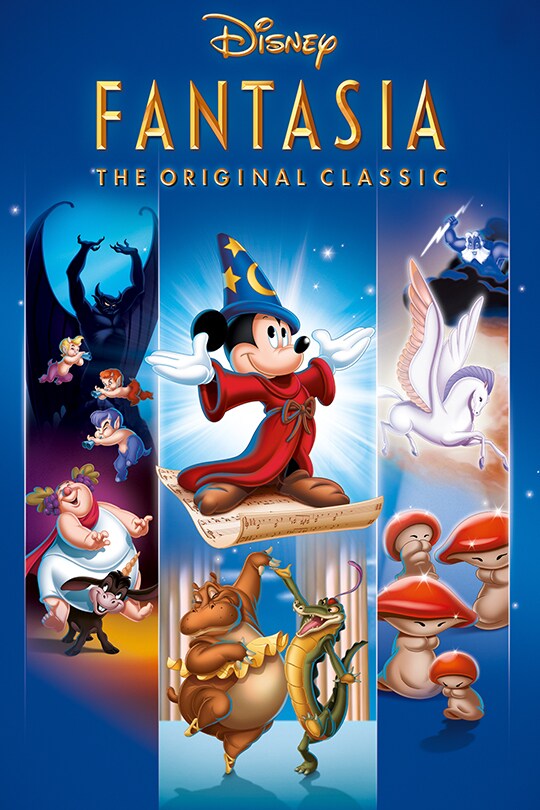
November 13, 1940: Walt Disney premieres his most epic animated film, Fantasia. It consists of 8 animated segments set to pieces of classical music, conducted by Leopold Stokowski, 7 of which are performed by the Philadelphia Orchestra. Music critic and composer Deems Taylor acts as the film's Master of Ceremonies, introducing each segment in live action.

Disney settled on the film's concept in 1938 as work neared completion on The Sorcerer's Apprentice, originally an elaborate Silly Symphony cartoon, designed as a comeback role for Mickey Mouse, who had declined in popularity. As production costs surpassed what the short could earn, Disney decided to include it in a feature-length film of multiple segments set to classical pieces with Stokowski and Taylor as collaborators. The soundtrack was recorded using multiple audio channels and reproduced with Fantasound, a pioneering sound system developed by Disney and RCA (Radio Corporation of America, owners of NBC) that made Fantasia the first commercial film shown in stereo, and a precursor to what became known as surround sound.

Fantasia was acclaimed by critics, but failed to make a profit, due to World War II having cut off distribution to the European market, the film's high production costs, and the expense of building Fantasound equipment and leasing theatres for the roadshow presentations. Since 1942, the film has been reissued multiple times, with its original footage and audio being deleted, modified, or restored in each version.

The Sorcerer's Apprentice segment helped to cement Mickey as the world's favorite cartoon character. Bugs Bunny had debuted 2 years earlier, and had his 1st starring role in A Wild Hare 4 months before Fantasia.

*

November 13, 1940 was a Wednesday. Baseball season was over. Football was in midweek. The NBA hadn't been founded yet. The NHL season was underway, but there were no games scheduled. So there were no scores on this historic day.

Thursday, November 10, 2022

November 10, 1940: Joe Kennedy Blows His Chance

The Kennedy family, 1938. Joe Sr. at center, with Ted on his lap.
JFK behind him, Bobby behind Ted, and Joe Jr. at right of top row.

November 10, 1940: A quote in The Boston Sunday Globe turns Joseph P. Kennedy from a man with a political future into persona non grata.

Joseph Patrick Kennedy was born on September 6, 1888 in Boston, the son of a Massachusetts State legislator, the grandson of a man who fled the Irish potato famine of the 1840s. Joe didn't quite belong to the street-level Boston Irish, and he certainly didn't belong to the city's English Protestant "Yankee" establishment -- and both groups let him know. This put not just a chip, but an entire potato on his shoulder: He saw anybody who wasn't openly a friend as an enemy. The saying, "Don't get mad, get even" has been attributed to him.

He took advantage of his father's connections, and got into Harvard University, outdoing the old Yankees at their own games. He did so again by making a fortune in the stock and commodity markets. He became the youngest president of any bank in America. During World War I, he became the manager of a shipyard, where he met the Assistant Secretary of the Navy, Franklin Delano Roosevelt. In the 1920s, he made money legally through the film studio that became RKO, and illegally through bootlegging liquor with Prohibition in effect.

Apparently, he started the family's fascination with actresses. His wife, Rose, daughter of former Mayor and Congressman John F. Fitzgerald, a.k.a. "Honey Fitz," found out about his fling with actress Gloria Swanson, and gave him an ultimatum: Gloria, or the kids -- at the time, numbering 8. Joe chose the kids, and there would be a 9th, Edward Moore Kennedy, later to be known as Ted.

When Roosevelt, recovering from polio and rebuilding his career by getting elected Governor of New York, ran for President in 1932, Joe Kennedy led New England's support for him. FDR rewarded him by appointing him to run first the brand-new Securities and Exchange Commission -- thinking, Joe had broken a lot of the old rules, so who better to enforce the new rules -- and then the U.S. Maritime Commission.

FDR was re-elected in 1936. At the time, no President had ever run for a 3rd consecutive term. And the Vice President, John Nance Garner, was from Texas, and no Southerner had been nominated by a major party since 1848. So it was widely thought that the Democratic nomination for President would be open in 1940. At the very least, it would come down to Garner against whoever could unite the North against him.

But there was another "None of these had ever... " going on: No Roman Catholic had ever been elected President. Alfred E. Smith, FDR's predecessor as Governor of New York, had been the only Catholic nominee of a major party, in 1928, and had gotten clobbered.

Two prominent Catholic politicians thought they had a serious chance for the Democratic nomination in 1940. But they were both Bostonians: Joseph P. Kennedy, and James Michael Curley, the once-popular Mayor of Boston, who had been a rival of Honey Fitz. In 1936, Curley had gotten himself elected Governor of Massachusetts. He was older, higher-ranking, and had a lot more of what would later be called "political I.O.U.s" than Kennedy. But he also had a criminal record, including a brief prison stint.

But by the dawn of 1938, Curley's Governorship had proven poor, and his bid to be elected to the U.S. Senate that year was doomed. In contrast, FDR appointed Kennedy to a post he had strongly lobbied for: U.S. Ambassador to Great Britain. He would be the 1st Irishman, of any faith, to be America's "Ambassador to the Court of St. James." It wasn't a Governorship, or a Senate seat, but it gave him a national profile. At the age of 50, it looked like he was a man with a big political future.

Joe reveled in his post, and so did the rest of the family. They went to balls, dinners, regattas, and horse racing derbies. King George VI and Queen Elizabeth invited them to spend a weekend in April 1939 at Windsor Castle, where the younger daughters, Patricia and Jean, played with the royal daughters, the Princesses Elizabeth and Margaret. This was a few weeks before the King and Queen went to America to visit the Roosevelts. Joe liked that he had met the Windsors sooner than FDR.

But Nazi Germany was on the march, and British Prime Minister Neville Chamberlain supported "appeasement" of Germany, letting them have what they wanted if it would avoid a World War II, because, at that point, both Britain and France still had fresh memories of World War I, and were terrified of going to war again, and were unprepared for it. And Ambassador Kennedy supported the Chamberlain government.

It didn't work, and on September 3, 1939, Chamberlain received a Declaration of War from Parliament. Kennedy had seen Germany's war machine, and wanted America to stay neutral. FDR wanted to aid Britain. In May 1940, the Nazis invaded and conquered the Low Countries: The Netherlands, Belgium and Luxembourg. In June, it invaded and conquered France.

If not for Hitler, it is unlikely that FDR would have crossed the Rubicon of running for a 3rd term. But he did, because -- due to the effects of Congressional elections on the Democrats in 1938, and on the Republicans in 1930, 1932, 1934 and 1936 -- he didn't see anyone in either major Party who could stand up to Hitler in case Britain fell. Garner still stood neutral, and so FDR wouldn't even take him for a 3rd term as Vice President. (He took Secretary of Agriculture Henry Wallace instead.) And he was not going to take a "defeatist" like Joe Kennedy, who saw what might have been his best chance taken by FDR.

Chamberlain, already sick with cancer -- he would be dead before the year was out -- retired as Prime Minister. Winston Churchill, the foremost anti-Nazi in the country, was named Prime Minister. He was determined to oppose the Nazis with everything Britain had, including (he was hoping) more aid from America.

The royal family stayed put in London: The Queen said, "The children will not leave without me, and I will not leave without the King, and the King will never leave." After Buckingham Palace took some bombing damage from German aircraft, the Queen said, "Now, we can look the East End in the face."

In contrast, Kennedy and his family retreated to the countryside during the bombings of London. In so doing, he damaged his reputation with the British people. This move prompted the Prime Minister's son, journalist Randolph Churchill, to say, "I thought my daffodils were yellow until I met Joe Kennedy."

In a London music hall, to the tune of "Disobedience" by Winnie-the-Pooh creator A.A. Milne -- with its refrain of "James, James, Morrison, Morrison," not exactly predicting the lead singer of The Doors -- someone sang:

Joe, Joe
Kennedy, Kennedy
went to the Court of St. James
where he was frequently seen
with the King and the Queen
at cricket and other games.

Said Joe, Joe
Kennedy, Kennedy
before England went to war:
"Swapping stories
with Dukes and with Tories
is what God intended me for!"

But when the bombs
began to fall
all over London Town
said Joe, Joe:
"I must go.
England has let me down."

Who let who down?

On October 22, FDR recalled Kennedy, ending his Ambassadorship. Still, Kennedy agreed to support FDR over the last few days of the campaign, in exchange for FDR supporting his son, Joseph P. Kennedy Jr., in a run for Governor of Massachusetts in 1942. (Joe Jr. had been a Delegate to the Democratic National Convention in 1940, but had not voted for FDR there.) Joe Sr. gave a nationwide radio speech, urging Irish-Americans, and Catholics of all ethnicities, to stand up and vote for FDR. FDR told Kennedy he was pleased with the speech.

On November 5, FDR won a 3rd term, defeating the Republican nominee, Wendell Willkie. The following Sunday, November 10, with the Battle of Britain seemingly still going -- the Luftwaffe had stopped attacking on October 31, for weather reasons, and this is now accepted as the end date of the battle, but nobody knew that in 1940 -- an interview with Kennedy, in Boston, by Louis M. Lyons, appeared in his hometown paper, The Boston Sunday Globe:

He said, "It's all a question of what we do with the next six months. The whole reason for aiding England is to give us time... As long as she is in there, we have time to prepare. It isn't that they are fighting for democracy. That's the bunk. She's fighting for self-preservation, just as we will if it comes to us... I know more about the European situation than anybody else, and it's up to me to see that the country gets it."

He added, "Democracy is finished in England. It may be here."

That was it: The nation as a whole turned on Kennedy for that statement, much as a similar statement killed the political career of aviation hero Charles Lindbergh the following year. If he was thinking that the U.S. could keep out of war, enabling him to be elected President in 1944, and enabling Joe Jr. to be elected Governor in 1942, such thoughts came to a crashing end. He had blown his chance: At the age of 52, he had never run for public office, and never would, and would never serve in public office again.

Kennedy's 3 older sons all enlisted in the U.S. Navy. Robert did not see combat. In 1943, John F. Kennedy became a hero in the Pacific Theater of the war. But the following year, stationed in England, Joe Jr. volunteered for a dangerous mission, and was killed in an accident before it could reach the enemy. He was 29.

Joe Sr. spent the rest of his life blaming FDR for the death of Joe Jr. Joe Sr. knew that his chance of being President was gone, so he had moved his hopes onto Joe Jr., as the eldest son. Now, he moved the hopes to the 2nd son, John, a.k.a. Jack. In 1946, Jack was elected to the House seat that had once been held by his grandfather, Honey Fitz -- and by Honey Fitz's old rival, Curley -- and had been intended for his brother Joe. In 1952, he was elected to the Senate.

When Jack ran for President in 1960, he enlisted the help of Franklin D. Roosevelt Jr., and it proved invaluable. (Apparently, old Joe didn't extend his grudge to FDR Jr.) In the general election campaign, JFK frequently used FDR as a model for the kind of Administration he would run if elected, saying that FDR "got America moving again," and that he wanted to do the same.

FDR's successor, Harry Truman, wasn't as supportive. Since, still, no Catholic had yet been elected, the old line used on Al Smith, "If he wins, the Pope will take over America," was used. But Truman, from the old Kansas City political machine, knew what really went on in politics, and said, "It's not the Pope that worries me, it's the Pop!" Jack won, and, as an elder statesman of the Democratic Party, Truman paid proper respect to his Party's leader, and came to realize that he was, if a young man, then one of substance.

But Joe Sr. suffered a paralyzing stroke in 1961, and could do nothing as Jack was assassinated while starting his re-election campaign in 1963, Bobby was assassinated while running in the Primaries in 1968, and Ted damaged his chances with a car crash in 1969. Joe died 4 months after that crash, on November 18, 1969, at the age of 81.

Strangely, though there had been 6 Jameses, 5 Johns and 4 Williams, there had never been a Joe to become President until 2020. But when it did, with Joseph Robinette Biden Jr., it was with an Irish Catholic.

*

November 10, 1940 was a Sunday. These games were played in the NFL:

* The football version of the New York Giants lost to the Cleveland Rams, 13-0 at the Polo Grounds.

* The football version of the Brooklyn Dodgers beat the Washington Redskins, 16-14 at Ebbets Field.

* The Pittsburgh Steelers beat the Philadelphia Eagles, 7-3 at Forbes Field in Pittsburgh.

* The Detroit Lions beat the Chicago Bears, 17-14 at Briggs Stadium (later Tiger Stadium) in Detroit.

* And the Green Bay Packers beat the Chicago Cardinals, 28-7 at Comiskey Park in Chicago.

Baseball was out of season. The NBA hadn't been founded yet. There were 2 games in the NHL:

* The New York Rangers and the Detroit Red Wings played to a tie, 2-2 at the Olympia Stadium in Detroit.

* And the Chicago Black Hawks beat the Montreal Canadiens, 3-1 at the Montreal Forum.

December 31, 1999 & January 1, 2000: The Millennium

December 31, 1999:  The Millennium arrives. The people of planet Earth survived. At a terrible cost. But we hadn't destroyed ourselves. ...