Showing posts with label jack dempsey. Show all posts

Wednesday, December 14, 2022

December 14, 1920: George Gipp Dies

December 14, 1920: George Gipp dies of pneumonia, possibly related to a streptococcus infection, at St. Joseph's Hospital in South Bend, Indiana, seat of the University of Notre Dame, where he was a student. He was 25 years old.

He was born on February 18, 1895, 13 days after Babe Ruth, and 16 days after George Halas, in Laurium, on the Upper Peninsula of Michigan. He went to Notre Dame hoping to play baseball. But their head coach, Knute Rockne, thought he would be a good back, both offensive and defensive, in football. Gipp had never played the sport before, but tried it anyway.

Rockne proved to be right: Gipp was named an All-American for the 1920 football season, as Notre Dame went undefeated, 9-0:

* October 2: Beat Kalamazoo College at home, 39-0. (They are now in NCAA Division III.)
* October 9: Beat Western State at home, 42-0. (Also based in Kalamazoo, they are now named Western Michigan University.)
* October 16: Beat Nebraska in Lincoln, 16-7.
* October 23: Beat Valparaiso at home, 28-3. (Valparaiso is based in the Indiana town of the same name.)
* October 30: Beat Army at West Point, 27-17.
* November 6: Beat Purdue at home, 28-0.
* November 13: Beat Indiana at Washington Park in Indianapolis, 13-10.
* November 20: Beat Northwestern in Evanston, 33-7.
* November 25, Thanksgiving Day: Beat Michigan Agricultural in East Lansing, 25-0. (Now known as Michigan State.)

Notre Dame outscored its opponents 251-44, for an average of 29-5. And Gipp was a major reason why, on both sides of the ball. There were no official National Championships in those days, but, retroactively, some sources have listed Notre Dame as such. (Other sources awarded it to Harvard or the University of California.) 

So how did he get sick? Most likely, he was giving punting lessons in cold weather. Being in northeastern Indiana, the cold weather is the reason that the Notre Dame-USC game is played in October when it's the Fighting Irish's turn to host it, and on Thanksgiving Saturday when it's USC's turn to host in Los Angeles.

The more popular version, but the less likely one, is that Gipp, a known carouser, returned to campus after curfew one night, and found his residence hall locked. He went to Washington Hall, the campus' theatre building, because he knew the back door was often unlocked, and spent many post-curfew nights in the hall. This time, the door was locked, so he slept outside, and that's how he got pneumonia.

This story is believable because Gipp was a carouser. He was a gambler, a womanizer, and a drunkard. He was a cardplayer and a pool hustler. He would bet on anything. He even bet on his own team, just like Pete Rose would decades later. He also tended to not show up for classes (mandatory) or Mass (equally mandatory for a Catholic school in those days).

And the University, including Rockne himself, covered up for him. Under modern NCAA rules, Gipp might have singlehandedly gotten Notre Dame put on probation.

At any rate, there were no antibiotics available then. Had there been, he could have recovered quickly, spent a nice Christmas at home on the U.P., and played in the early National Football League and become a star, making bundles of money. He, rather than Red Grange of Illinois and the Chicago Bears a few years later, could have become the NFL's 1st real star. (Or maybe its 2nd, after Jim Thorpe, who was already playing for the Canton Bulldogs.) Alas, in those pre-antibiotic days, you really could die from something as simple as "strep throat."

He was buried in Lake View Cemetery, outside Calumet, Michigan. Laurium put up a monument to him.

On November 10, 1928, Notre Dame played Army at Yankee Stadium. A crowd of 78,188 saw the Cadets lead the Fighting Irish 6-0 at halftime. It wasn't that surprising: Army was undefeated, 6-0, while Notre Dame was only 4-2.

In his halftime pep talk, instead of discussing strategy, Rockne told his players, who would have been in junior high school in 1920, about George Gipp. As Rockne told it, he went to see Gipp on his deathbed, and Gipp told him: 

I've got to go, Rock. It's all right. I'm not afraid. Some time, Rock, when the team is up against it, when things are wrong, and the breaks are beating the boys, ask them to go in there with all they've got, and win just one for the Gipper. I don't know where I'll be then, Rock. But I'll know about it, and I'll be happy.

Having told the 1928 players that story, Rockne concluded by saying, "Gentlemen, this is that game." And the players left the locker room in tears, and came from behind, and beat Army 12-6.

That's the story. But it makes no sense. First of all, why choose this game? Because it was in New York? Because it was against Army? Certainly, Rockne didn't need to be afraid of losing his job: He was already an icon in South Bend.

Second of all, they were only down by 6 points. Maybe if they needed a much bigger effort, to overcome a 2-touchdown deficit, such a speech might be warranted.

Third of all, like I said, those players were just kids when Gipp died. They never saw him play. It's not like there was television back then. The newsreels probably never showed Gipp. For all they knew, Rockne could have been lying, and Gipp could have walked into the room at that moment, and they wouldn't have recognized him. (Another coach, Edward "Slip" Madigan of St. Mary's in the San Francisco Bay Area, allegedly once tearfully told his players about his sick son, and said to win the game for him, when the son walked in, just fine.) Gipp's legend shouldn't have had any effect on the 1928 Fighting Irish.

And fourth of all, if the locker room speech did happen, Rockne probably made it up. As one sportswriter put it, decades later, If Gipp said anything to Rockne as he was dying on December 14, 1920, it was probably more along the lines of, "Put a hundred bucks on the 4 horse in tomorrow's 7th race at Arlington for me."

Rockne was killed in a plane crash near Bazaar, Kansas on March 31, 1931. So, whatever the truth of the final meeting between Gipp and Rockne was, it died with Rockne.

On October 4, 1940, the film Knute Rockne, All-American premiered. Pat O'Brien played the coach. Ronald Reagan, who had played guard at Eureka College in Illinois, now an NCAA Division III school, played Gipp, and played the speech scene straight.
Reagan as Gipp

As Reagan went into politics in the 1960s, and was elected President in 1980, he often played up his connection to Notre Dame. At the 1988 Republican Convention, at the Superdome in New Orleans, knowing he couldn't run for a 3rd term, he told the new nominee, his Vice President, George H.W. Bush (who played baseball at Yale), "Go out there, and win one for the Gipper!" Meaning himself. Bush did win the election.

As Reagan fell victim to Alzheimer's disease, and could no longer make public appearances, campaign signs reading, "WIN ONE FOR THE GIPPER" appeared at rallies for Bob Dole in 1996 and George W. Bush in 2000. Reagan died in 2004, and during Bush's re-election campaign, there were more "Gipper" signs than ever before. They still come up, every 4 years: For John McCain in 2008, for Mitt Romney in 2012, and for Donald Trump in 2016 and 2020.

Reagan's political career was built on many, many lies. The "Win one for the Gipper" story was the first. If the truth about Gipp had been widely known in 1966, when Reagan was making his 1st run for public office, for Governor of California, he might never have won an election. After all, the other movie people tended to remember him for was Bedtime for Bonzo, where he worked with a chimpanzee.

George Gipp was a real person, and he really was a great football player. But the thing everybody remembers about him almost certainly isn't true. But, like Reagan's campaign promises, Rockne's Gipper speech was a fraud -- or, as the actual Irish would say, it was blarney -- that worked very well.

*

December 14, 1920 was a Tuesday. There were no scores on this historic day: The college football season was over except for the Rose Bowl, baseball was out of season, the NBA hadn't been founded yet, and while the NHL season was underway, no games were scheduled.

But there was one notable sporting event that day. Jack Dempsey defended the Heavyweight Championship of the World, knocking Bill Brennan out in the 12th round, at the 2nd Madison Square Garden, the one that stood off the actual Madison Square, at 26th Street and 5th Avenue, from 1890 to 1925. It was his only fight at any building with the name Madison Square Garden.

Friday, September 23, 2022

September 23, 1926: Tunney Defeats Dempsey

September 23, 1926: Jack Dempsey, Heavyweight Champion of the World, defends his title against Gene Tunney at Sesquicentennial Stadium, the centerpiece of Philadelphia's World's Fair celebrating the 150th Anniversary of American independence. The huge horseshoe was packed with 120,557 fans, the largest crowd in boxing history to that point.
Dempsey hadn't fought in 3 years, and it showed. Once the most fearsome puncher ever, the Manassa Mauler couldn't handle the quickness of Tunney, who learned what he called "scientific pugilism" while serving in the U.S. Marine Corps in World War I.

It didn't help that this fight was outdoors, and it rained. By the 10th and final round, it was pouring, and Dempsey could do little to hurt Tunney.

For the 1st time ever, the Heavyweight Championship changed hands on a decision, rather than a knockout. Previously, decisions were considered unsatisfying, and judges were reluctant to take the title away from the Champion unless the challenger had knocked him out.

But this decision was an obvious one, and nobody objected at the time. Dempsey knew he had been fairly beaten: When his wife, actress Estelle Taylor, asked him what happened, he said, "Honey, I forgot to duck." A 15-year-old Illinois kid named Ronald Reagan read this in the newspaper, and, 55 years later, said it to his wife Nancy after he was shot.

Ironically, being dethroned made Dempsey more popular, as he had previously been called a "slacker" and a "draft dodger" for his avoidance of service in World War I. And Tunney, though the more skilled boxer, never developed the same kind of popularity as Dempsey.

Even after Tunney won by decision again a year later, in what became known as "The Long Count Fight," Dempsey's popularity grew, as some people thought he was robbed, not that they considered it Tunney's fault. Tunney, who retired as Champion rather than lose his title in the ring, was respected, but he was never truly loved.

In 1931, the 105,000-seat Sesquicentennial Stadium was renamed Municipal Stadium, and became famous as the neutral site of the Army-Navy Game. It hosted the 1952 fight where Rocky Marciano knocked out Jersey Joe Walcott to take the title.

In 1964, it was renamed John F. Kennedy Stadium. In 1966, it hosted the Beatles. In 1967, The Spectrum was built across the street; in 1971, Veterans Stadium to the north of the Spectrum, creating the South Philly sports complex. In 1985, it hosted the U.S. half of Live Aid. It was demolished in 1992, and the 76ers & Flyers arena now named the Xfinity Mobile Arena was built on the site.

*

September 23, 1926 was a Thursday. Jazz icon John Coltrane was born that day, and would later establish his home in Philadelphia, the city where Dempsey-Tunney I was held.

There were 2 games played in major league baseball that day. The Boston Braves beat the Pittsburgh Pirates, 2-1 at Braves Field in Boston. And the Cincinnati Reds played the Philadelphia Phillies to a 6-6 tie at Baker Bowl in Philadelphia, before it was called due to darkness after 15 innings.

Thursday, September 22, 2022

September 22, 1927: The Long Count Fight

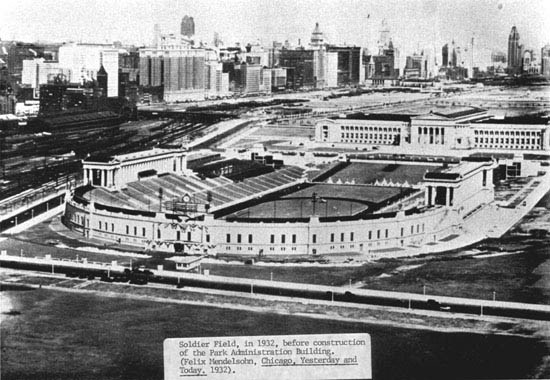
September 22, 1927: One of the most legendary prizefights ever takes place at Soldier Field in Chicago. The crowd has been listed at as high as 150,000, but was, officially, 104,943.

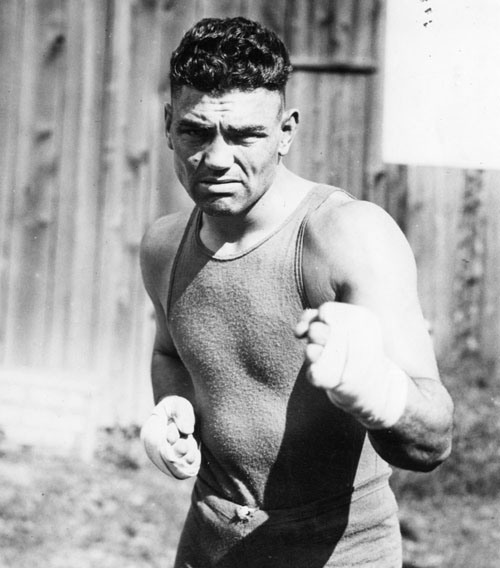
Jack Dempsey became Heavyweight Champion of the World on July 4, 1919, right after World War I. He was a polarizing figure, a devastating puncher known for his early knockouts, but also for being called a "slacker," because he had worked in a shipyard and continued to box during the war. 

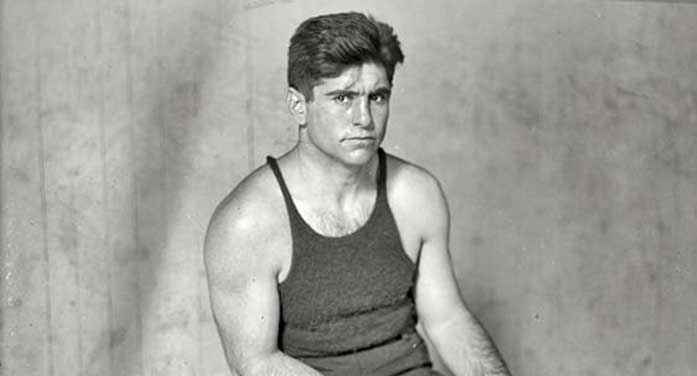
Gene Tunney, grew up a poor Irish-American kid as well. That aside, he couldn't have been much more different from Dempsey: Instead of a rural area, he grew up in Manhattan, and was a highly intelligent, very cultured, well-read man. He enlisted in the U.S. Marine Corps, and that's where he learned to box, earning him the rather redundant nickname "The Fighting Marine."

He was no stereotypical gruff "leatherneck" (an old term for Marines). He decided to treat boxing as a science. The term "the sweet science" had not yet been used, but Tunney treated it as such. He even preferred to call it "pugilism" rather than "boxing" or even "prizefighting."

On September 23, 1926, Dempsey got into the ring with Tunney, at the 105,000-seat Municipal Stadium in Philadelphia, later renamed John F. Kennedy Stadium. The crowd was listed at 120,557, which is still the highest official total for a prizefight, ever, anywhere in the world. Dempsey was not in shape, and was incredibly rusty. Tunney sensed this before the fight, and saw his suspicions confirmed during it. Tunney won the fight on a decision.

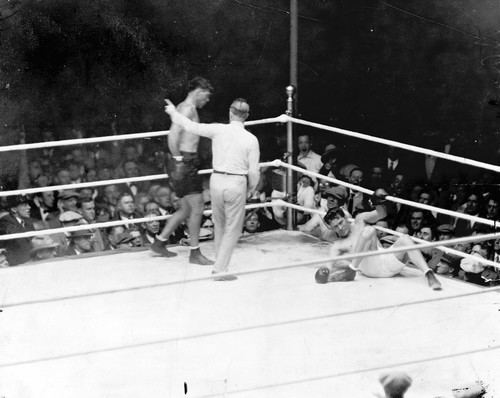
A rematch was set for Soldier Field in Chicago a year later, on September 22, 1927, in front of 104,000 people. Tunney led for the 1st 6 rounds. But in the 7th, Dempsey made a breakthrough, and knocked Tunney down. against the ropes. The Mauler smashed 2 right hands and 2 lefts into Tunney's chin, and he was staggered. Four punches later, and Tunney's knee had hit the canvas. For the 1st time in his boxing career, Gene Tunney had been knocked down.
Soldier Field, in 1932, 5 years after the fight

People listening on the radio reported that they couldn't hear any of what happened next, such was the noise from the crowd in the stadium. Talk about the "Roaring Twenties": That term first came about in regard to the rising stock market, but the decade may never have had a louder roar than this one.

But Dempsey did not immediately go to his corner when Tunney went down. As he had usually done in his previous fights, he just stood there. Referee Dave Barry remembered the new rule, and told Dempsey to get to a neutral corner. Dempsey still didn't do so: He just stood there, watching Tunney, waiting for him to get up.

Finally, Barry seemed to give Dempsey a little push, and point, and Dempsey got the hint. Only then did Barry turn back to Tunney, and swing his arm down, with his index finger pointed, and yell, "One!"

The fight was filmed, and, at some point, an early expert in film graphics put a graphic of a stopwatch in the corner of the screen. From the moment Tunney's knee hit the floor until Barry counted, "One!" it was a full 5 seconds. In other words, Tunney got 4 seconds more than he should have.

Tunney was clear-headed and clear-eyed, and he was going to stay down until the count of, "Nine!" so that he could get all the rest to which he was legally entitled. Having done exactly that, Tunney got up before Barry could bring his arm back down and yell, "Ten!" He had spent a total of 14 seconds down, 4 more than the usual limit.

In the 8th round, Tunney managed to knock Dempsey down. Interestingly, Barry began counting without checking that Tunney had reached a neutral corner -- and he hadn't gotten there yet. Dempsey got up, and finished the round and the fight, but it was no contest. When the bell rang to end the 10th and final round, Dempsey knew he'd lost. 

Dempsey's fans, and people who may not have liked him much but bet money on him, were furious. It became known as "The Long Count Fight." At the time, there was a federal law prohibiting the transportation of boxing movies across State Lines, meaning that most people never actually saw the fight until years later. People who heard the legend of the Long Count presumed it was true, based solely on hearsay, not on seeing the film.

And people who didn't previously like Dempsey began to sympathize with him. The sense that he may have been treated unfairly actually helped him: He had lost the fight, but won over a lot of fans, many of whom began appreciating him more in hindsight than they did when he was knocking out Jess Willard, Georges Carpentier and Luis Firpo.

Tunney defended his title once more, and retired as Champion, never making a comeback. He and Dempsey, like many other pairs of boxing rivals, became and remained good friends. Tunney lived until 1978, Dempsey until 1983.

In 1950, the Associated Press named Dempsey the greatest boxer of the 1st half of the 20th Century. Their other honorees: Babe Ruth for baseball, George Mikan for basketball, Howie Morenz for hockey, Bill Tilden -- despite his recent scandal -- for men's tennis, Suzanne Lenglen for women's tennis, Man o' War as the greatest racehorse; and Jim Thorpe for football and track and field, and as greatest athlete overall.

*

September 22, 1927 was a Thursday. Tommy Lasorda, the Hall of Fame manager of the Los Angeles Dodgers, was born.

Often a travel day in Major League Baseball, this time, there was a full slate of games:

* The New York Yankees beat the Detroit Tigers, 8-7 at Yankee Stadium -- the old one, but still new. The Yankees led 6-4 going into the 9th inning. The Tigers took a 7-6 lead. Cliché Alert: Walks can kill you, especially the leadoff variety. Mark Koenig drew a walk to lead off the bottom of the 9th, and Babe Ruth hit a walkoff home run.

Herb Pennock was the winning pitcher, in relief of Wilcy Moore. The other way around was much more common. The home run was Ruth's 56th home run of the season. A new record of 60 was within reach.

* The New York Giants split a doubleheader with the Pittsburgh Pirates at Forbes Field. The Pirates won the 1st game, 5-2; and the Giants won the 2nd game, 7-1.

* The Brooklyn Dodgers were swept by the Cincinnati Reds, in a doubleheader at Crosley Field in Cincinnati. In the opener, Chuck Dressen, later to manage the Dodgers to 2 Pennants, and Pid Purdy hit back-to-back doubles to give the Reds a 2-1 win in 12 innings. The Reds won the nightcap, 4-3.

* The Boston Red Sox beat the Chicago White Sox, 2-1 at Fenway Park in Boston. Cleo Carlyle's single won it for the BoSox in the bottom of the 10th.

* The Philadelphia Athletics swept a doubleheader with the Cleveland Indians at Shibe Park in Philadelphia. The A's won the 1st game 4-3, when Jimmie Foxx singled home a run in the bottom of the 13th inning. The A's won the 2nd game 5-2.

* The Washington Senators beat the St. Louis Browns, 10-7 at Griffith Stadium in Washington.

* The Chicago Cubs beat the Philadelphia Phillies, 8-4 at Wrigley Field in Chicago.

* And the St. Louis Cardinals beat the Boston Braves, 6-5 at Sportsman's Park in St. Louis.

Wednesday, September 14, 2022

September 14, 1923: Jack Dempsey vs. Luis Firpo

September 14, 1923: A fight for the Heavyweight Championship of the World is held at the Polo Grounds in New York. It is one of the most spectacular prizefights in American history.

Jack Dempsey had been Heavyweight Champion since July 4, 1919. He was enormously popular with many people, but hated by others, for the accusation that he was a "slacker" in World War I. But he was still the most devastating puncher that boxing had ever seen.

He was one of the people who made the 1920s "the Roaring Twenties." Even at the time, the 1920s was called "The Golden Age of Sports." It was Babe Ruth in baseball, Red Grange in football, Howie Morenz in hockey, Paavo Nurmi in track, Bill Tilden in tennis, Bobby Jones in golf, and Man o' War in horse racing. In boxing, it was the Manassa Mauler, Jack Dempsey. (Manassa was his hometown, in Colorado.)
Luis Ángel Firpo was the heavyweight champion of South America, and the 1st native of that continent, and the 1st fighter of Spanish descent, to get a shot at the title. Known as the Wild Bull of the Pampas, the Argentine had already faced contenders Edward "Gunboat" Smith and Bill Brennan, and had ended the career of the man from whom Dempsey brutally took the title, Jess Willard. He seemed like the obvious next opponent for Dempsey.
And it would be held in New York City. Boxing had just been legalized in the State of New York, and both the Polo Grounds, newly-expanded to 56,000 seats, and the brand-new Yankee Stadium, with 67,000, had already hosted professional prizefights. For this fight, the crowd, including in seats on the field, was 80,000. In terms of pre-fight hype, this would be the biggest fight ever held in the Empire State, and would remain so even after the old Madison Square Garden was built in 1925, and after the new Garden was built in 1968, possibly until the 1st fight between Muhammad Ali and Joe Frazier in 1971.
The 1923-64 edition of the Polo Grounds

Firpo came in with a record of 25-2, with 2 no-contests. Dempsey was 61-4, with 9 draws. (Don't be shocked by that last statistic: In those days, some States' athletic commissions had rules that any fight that didn't end with a knockout was classified as a draw.) It was one of the earliest prizefights to be broadcast nationwide on radio.

And the bell had barely rung to begin the fight when Dempsey lunged at Firpo, and left himself undefended, and Firpo threw a right hand that knocked him down. Dempsey was one of those fighters with whom the worst thing you could do was make him mad. With no knockdown rule, and no neutral-corner rule, Dempsey was able to pound away at Firpo, knocking him down 7 times. That's not a typographical error: Dempsey knocked Firpo down seven times in one round.

But the round still wasn't over. Firpo came back, trapped Dempsey against the ropes, and slammed a right into Dempsey's chin. It knocked Dempsey out of the ring. As he fell, he hit the back of his head against a sportswriter's typewriter. He could have been knocked unconscious, but wasn't.

According to the rules, when a fighter is knocked out of the ring, he gets 20 seconds to get back in, instead of the 10 he gets if he's merely knocked down inside the ring. It took Dempsey 14 seconds to get back in. There were those who believed that the writers had given Dempsey help in getting back in, which should have disqualified him. But he was not disqualified, and survived the round.

In the 2nd round, Dempsey knocked Firpo down twice more, and Firpo was counted out at the 57-second mark of the round. It was 4 minutes unlike any that boxing had ever seen, or has since. Bert Sugar, a sportswriter who was boxing's foremost historian, called it the greatest fight in the history of the sport. Did I mention that it wasn't even 4 minutes? Seriously: Roger Bannister's mile run that was the 1st in less than 4 minutes took 2 seconds longer than this fight.

George Bellows, one of the leading American painters of that generation, produced Dempsey and Firpo, one of the most famous paintings ever made of a sporting event. Showing Dempsey falling out of the ring, copies of it seem to appear in every saloon in America.
Firpo never fought for the title again, but remained popular, both in America and in Latin America. At the time of the fight, the Washington Senators had a pitcher named Fred Marberry. Due to a perceived facial resemblance, he was nicknamed Firpo Marberry.

Firpo retired with a career record of 31-4-2, his last fight in 1936, a defeat by another South American who would challenge for the Heavyweight Championship: Arturo Godoy of Chile, who twice fought Joe Louis, losing both times.

Firpo invested his boxing winnings in a ranch in Argentina, becoming one of the most successful ranchers in the country. He managed Abel Cestac, who became South America's Heavyweight Champion, and later fought Archie Moore for the Light Heavyweight Championship, but lost. Firpo lived until 1960.

Dempsey didn't fight again for 3 years, and when he did, he lost to Gene Tunney. He fought Tunney again, losing the "Long Count Fight." He became more popular in defeat than he ever had in victory. He ran a restaurant at the northern end of Times Square, a block from the old Madison Square Garden, from 1934 to 1974, and died in 1983.

*

September 14, 1923 was a Friday. Football was in midweek. Basketball and hockey were out of season. These baseball games were played that day:

* The New York Yankees lost to the Chicago White Sox, 7-4 at the brand-new original Yankee Stadium. Babe Ruth went 1-for-4, but Eddie Collins hit a home run off Bob Shawkey.

* The New York Giants lost to the Chicago Cubs, 7-1 at Cubs Park in Chicago. (It was renamed Wrigley Field in 1926.)

* The Boston Red Sox beat the Cleveland Indians, 4-3 at Fenway Park. Tris Speaker went 2-for-6, but Ira Flagstead singled home the winning run in the bottom of the 12th inning.

* The Detroit Tigers beat the Washington Senators, 8-3 at Griffith Stadium in Washington. Ty Cobb went 1-for-3.

* The Brooklyn Robins -- as the Dodgers were known under the managing of Wilbert Robinson, from 1914 to 1931 -- and the Pittsburgh Pirates were supposed to play each other at Forbes Field in Pittsburgh. The game was postponed -- due not to rain, but to cold. The game was played the next day, as part of a doubleheader. The Pirates won the 1st game, 4-1; and the Robins won the 2nd game, 13-2.

* The Philadelphia Athletics and the St. Louis Browns were supposed to play each other at Shibe Park in Philadelphia. This game was also postponed due to cold. The game was played the next day, as part of a doubleheader. The A's won the opener, 8-1; and the Browns won the nightcap, 3-2.

* A doubleheader was played at Redland Field in Philadelphia. (It was renamed Crosley Field in 1934.) The Cincinnati Reds won the 1st game, 9-1. The Boston Braves won the 2nd game, 4-0. Jesse Barnes allowed 11 hits, but only 1 walk, and pitched a shutout.

* And the St. Louis Cardinals beat the Philadelphia Phillies, 3-2 at Sportsman's Park in St. Louis.

Monday, July 4, 2022

July 4, 1919: Jack Dempsey Says Hello

July 4, 1919: The Heavyweight Championship of the World changes hands in the most devastating fashion in its history.

The Champion was Jess Willard, from Kansas. At 6 feet, 6½ inches at 245 pounds, he was known as the "Pottawatamie Giant." He had won the title 4 years earlier, knocking out Jack Johnson, the 1st black Heavyweight Champion. He successfully defended his title against Frank Moran in 1916, before World War I prevented him from making another defense.

The war over, he was set to defend it at Bayfront Park in Toledo, Ohio, on the 4th of July. He took a 21-3-1 record into the fight. But he was 37 years old, and it was going to be hot. And his opponent...
Bayfront Park

William Harrison Dempsey was 24, stood 6-foot-1 and weighed 187, and was 56-4-9. That's right: 13 years younger, and had won more than twice as many fights as Willard had fought.

He was called Jack because of an earlier fighter, former Middleweight Champion Jack "Nonpareil" Dempsey (real name John Edward Kelly, held the title from 1884 to 1891). He was from Mansassa, Colorado, and was known as the Manassa Mauler. And, because this was the 1910s, and he was a white man who nonetheless had a very dark complexion, he was called "Kid Blackie."

His last 6 fights before his title shot all ended in knockouts, all of them in the 1st round. Or, as boxing historian Bert Sugar put it, "In his last two fights before the Willard fight, Dempsey knocked his opponents out in 19 and 27 seconds. Not rounds."

But he had learned to box in hobo camps and saloons, places barely removed from the "Wild West." He hadn't fought serious contenders. Surely, a seasoned professional and a gigantic man, like Willard, would be able to handle him easily. But Lightweight Champion Benny Leonard wrote a newspaper column predicting that Dempsey would win, because, despite being smaller, he was stronger.

Leonard was right: The fight was a massacre. Dempsey knocked Willard down 7 times in the 1st round. At the time, the rules allowed the standing fighter to remain standing over the one knocked down, to wait for him to get up, and then go after him again. Dempsey took advantage of this rule.

Had current rules been in place, Willard still wouldn't have lasted much longer: Dempsey would have had to go to a neutral corner (a new rule that he forgot about in 1927, in what became known as the Long Count Fight), Willard would have been given a standing 8-count, and with the 3rd knockdown of the round, the fight would have been declared over.

Somehow, Willard got up for the 2nd and 3rd rounds, but not the 4th. Dempsey was the new Heavyweight Champion of the World, and became one of the sports icons of the 1920s. For a while, he was both loved and hated in equal measure: Loved, even more than Babe Ruth for a time, for his success and his personality; hated, because some accused him of not properly serving his country in World War I, calling him a "slacker." Out of the ring, Dempsey was a considerably more mild-mannered man, but the "slacker" tag bothered him.
Go ahead. Call him a slacker. I dare you.

Reports on Willard's injuries were conflicted. The New York Times reported "severe swelling" on one side of his face, but mentioned no broken bones. Other reports suggested broken facial bones, several broken teeth, a broken jaw, and broken ribs.

Willard would accuse Dempsey of cheating. Many others agreed: How could Dempsey have injured Willard's face so badly, without injuring his own hands?

Eventually, Dempsey would have a falling-out with his manager, Jack Kearns. In 1964, with both fighters also still alive, Kearns gave an interview to Sports Illustrated, claiming he applied plaster of Paris to the wrappings on Dempsey's hands.

Also still alive at that point was Nat Fleischer, founder and editor of The Ring magazine, known as "the Bible of Boxing." He said he was present when Dempsey's hands were wrapped:

Jack Dempsey had no loaded gloves, and no plaster of Paris over his bandages. I watched the proceedings and the only person who had anything to do with the taping of Jack's hands was Deforest. Kearns had nothing to do with it, so his plaster of Paris story is simply not true.

And boxing historian J.J. Johnston said, "the films show Willard upon entering the ring walking over to Dempsey and examining his hands." That, along with an experiment conducted by a boxing magazine designed to re-enact the fight, have been noted as proof that Kearns' story was a lie.

Willard fought only twice more. In the 1st prizefight ever held at the original Yankee Stadium, on May 12, 1923, he knocked Floyd Johnson out in the 11th round. Two months later, at Boyle's Thirty Acres in Jersey City, New Jersey, he got knocked out in the 8th round by Luis Angel Firpo. That was it for Willard, who died in 1968.

Willard's last fight was Firpo's warmup for a fight with Dempsey at the Polo Grounds, one of the greatest fights in Heavyweight Title history. It was to be Dempsey's last title defense, as he then didn't fight for 3 years, losing the title to Gene Tunney in 1926. He lived until 1983, one of the last surviving sports stars of "The Roaring Twenties," a.k.a. "The Golden Age of Sports."

*

July 4, 1919 was a Friday. Football, basketball and hockey were out of season. But baseball was in midseason, and the 4th of July was often a day for doubleheaders:

* The New York Yankees swept the Washington Senators at the Polo Grounds, 8-2 and 6-5. Bob Shawkey was supported in the opener by 2 home runs from former Athletics slugger Frank "Home Run" Baker. Former Red Sox star Duffy Lewis won the nightcap with a double in the bottom of the 9th.

* The New York Giants swept the Philadelphia Phillies at Baker Bowl, 3-1 and 8-3.

* A doubleheader was split at Ebbets Field in Brooklyn. The Brooklyn Robins (as the Dodgers were known from 1914 to 1931) won the 1st game, 7-3. The Boston Braves won the 2nd game, 5-2.

* The Boston Red Sox swept the Philadelphia Athletics at Fenway Park in Boston, 9-2 and 9-6. In the 2 games, Babe Ruth went 3-for-4 with an RBI double.

* The Chicago Cubs swept the Pittsburgh Pirates at Forbes Field in Pittsburgh, 7-3 and 4-1.

* The Cleveland Indians swept the St. Louis Browns at League Park in Cleveland, 9-4 and 11-1. Tris Speaker went 3-for-8, while George Sisler went 3-for-5.

* The Cincinnati Reds swept the St. Louis Cardinals at Redland Field in Cincinnati (it was renamed Crosley Field in 1934), 4-3 in 12 innings, and 4-2.

* And the Chicago White Sox swept the Detroit Tigers at Comiskey Park in Chicago, 8-1 and 2-1. Ty Cobb only appeared as a pinch-hitter in the 1st game, unsuccessfully, before going 1-for-4 in the 2nd game. Shoeless Joe Jackson went 3-for-7 with an RBI.

Saturday, July 2, 2022

July 2, 1921: Boxing's 1st Million-Dollar Gate

Boyle's Thirty Acres, July 2, 1921.
The little square in the middle is the boxing ring.
Fire laws? We don't need no stinkin' fire laws.

July 2, 1921: For the 1st time, a professional prizefight takes in more than $1 million in gate receipts. The era of the "Million-Dollar Gate" is on.

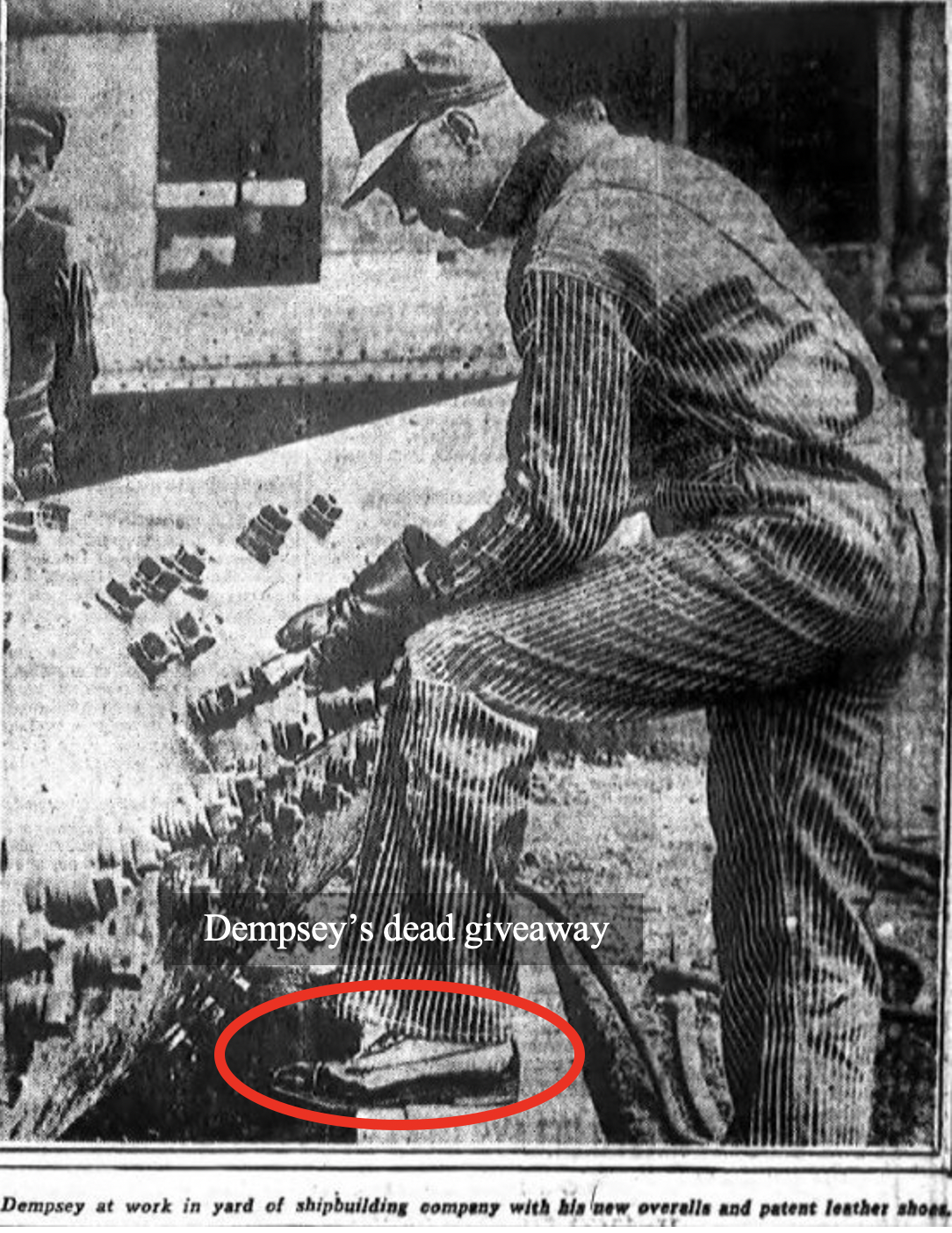
Jack Dempsey won the Heavyweight Championship in 1919, but he hadn't served in World War I. In 1920, a photo was produced showing Dempsey working in a shipyard, which should have ended the controversy right there. But someone noticed that he was wearing patent leather shoes in the photo, making some people think the photo was staged to take the curse off him.
Soon, evidence came to light that he had tried to enlist, but, despite being a very strong man for his size (he'd be classified as a cruiserweight today), the Army had classified him "4-F": "Registrant not acceptable for military service." This classification is nearly always applied to a person who fails either the physical or the psychological examination upon enlistment or reporting for the draft.
But some people still weren't satisfied. This became especially controversial in 1921, when he defended his title against the Light Heavyweight Champion, Georges Carpentier, a French pilot who had been awarded the Croix de Guerre and the Médaille Militaire. The contrast between the much-decorated Carpentier and the "slacker" Dempsey was staggering.
Professional boxing would still be illegal in the State of New York, not just the City of New York, for 2 more years. So George "Tex" Rickard, boxing's leading promoter, decided to put the fight as close to Midtown Manhattan as possible. He found a plot of land owned by John F. Boyle, a mile south of Journal Square in Jersey City, New Jersey, only 6 miles from Midtown Manhattan. There, Rickard built what was intended as a temporary structure, wooden bleachers to seat 90,000 people, calling it "Boyle's Thirty Acres."

The fight was a sellout, and generated $1,789,238, about $29 million in 2022 money. It was no contest: Dempsey knocked Carpentier out in the 4th round. Much of the crowd booed, but Carpentier showed no hard feelings. He kept the Light Heavyweight Championship for another year, and lived until 1975.

It wasn't until Dempsey was "robbed" in the "Long Count" fight against Gene Tunney in 1927 that he became a near-universal hero. He lived until 1983.

The year 1927 would also see the end of Boyle's Thirty Acres, having hosted boxing champions such as Dempsey, Benny Leonard and Jim Braddock, a Hudson County resident who would win the Heavyweight Championship in 1935. The site is now mixed residential and industrial.

*

July 2, 1921 was a Saturday. Football, basketball and hockey were out of season. These baseball games were played, all doubleheaders:

* The New York Yankees swept the Philadelphia Athletics at the Polo Grounds, 6-4 and 14-4. Bob Shawkey won the opener, with 2 home runs by Frank "Home Run" Baker. Both were former A's. Carl Mays won the nightcap. Babe Ruth went 3-for-7 with 2 walks and 3 RBIs, but no home runs.

* The New York Giants swept the Brooklyn Robins (as the Dodgers were known from 1914 to 1931) at Ebbets Field, 8-1 and 7-4.

* The Washington Senators swept the Boston Red Sox at Fenway Park in Boston, 4-1 and 7-3.

* The Boston Braves swept the Philadelphia Phillies at Baker Bowl in Philadelphia, 6-4 and 3-2, the latter in 10 innings.

* There was a split at Forbes Field in Pittsburgh. The Pittsburgh Pirates won the 1st game, 5-2. The St. Louis Cardinals won the 2nd game, 6-3.

* The Cleveland Indians swept the Chicago White Sox at League Park in Cleveland, 6-4 and 11-10. Tris Speaker went 4-for-7 with 2 walks and 2 RBIs.

* There was a split at Cubs Park in Chicago (renamed Wrigley Field in 1926). The Cincinnati Reds won the 1st game, 4-2. The Chicago Cubs won the 2nd game, 6-2.

* And the Detroit Tigers swept the St. Louis Browns at Sportsman's Park in St. Louis, 4-1 and 7-6. Neither team's superstar, the Tigers' Ty Cobb or the Browns' George Sisler, played in either game.

Monday, May 23, 2022

May 23, 1918: The "Work Or Fight" Order

Major General Enoch Crowder

May 23, 1918: With U.S. troops now in combat in World War I, the U.S. Department of War issues what becomes known as the "Work or Fight" order. It was ordered by the Secretary of War, Newton D. Baker, and implemented by the Provost Marshal of the Army, Major General Enoch Crowder.

As of July 1, those of draft age engaged in unproductive industries, or found "loafing around a poolroom," would be liable to be called up for military service, even if they had previously been exempted for other reasons.

The categories of "unproductive industries" included restaurant staff, doormen and elevator operators, the entire entertainment industry excluding actors, servants, and store clerks.

Exemptions could be provided for night shift workers, if it were found that the only replacements available for their jobs would be women. Notably not exempted were baseball players. The 1918 season would ultimately be cut short by several weeks as a result.

More importantly, the Work Or Fight order had clear racial implications. One circuit court clerk in Maryland estimated that 90 percent of those who ran afoul of the "anti-loafing" laws were black.  Throughout the South, States eagerly enforced the Work or Fight rule to supplement existing Jim Crow vagrancy laws. Throughout the country, many of the occupations specifically targeted by the rule were predominantly black.

And since, with limited exceptions, black soldiers were not allowed to fight, the Work or Fight rule essentially amounted to a forced labor program for black men -- what became known as "slavery by another name." In some cases, however, particularly among hotel waitstaff, young white men were replaced with black men outside of draft age.

Back to baseball. The season was cut short, but the War Department (renamed the Department of Defense in 1947) allowed them to play the World Series in September, with nobody having any idea of when they would start again. In World War II, it would be different: There was a Commissioner, a former federal Judge, who asked the President what he should do: Play the 1942 season and beyond, or suspend operations. The President wrote what became known as "The Green Light Letter." But there was no such letter in 1918.

Some players served. The great pitcher Grover Cleveland Alexander was already a heavy drinker, and the heavy shelling damaged his hearing, instigated the epilepsy that would plague him for the rest of his life, and accelerated his alcoholism.

Christy Mathewson, Ty Cobb and George Sisler were made officers -- Captain, Captain and Lieutenant, respectively -- and assigned to the Army's Chemical Warfare Service (now the Chemical Corps), under the command of Major Branch Rickey, not yet the man who invented the farm system and reintegrated the game, but already having served as a major league catcher, head coach at the University of Michigan, and the general manager of both St. Louis teams, the Cardinals and the Browns.

Big Six, the Georgia Peach and Gorgeous George were training soldiers in preparation for the war's notorious chemical attacks by exposing them to gas chambers in a controlled environment. But it wasn't "controlled" well enough: Mathewson got a lungful of gas, and it damaged his lungs. Strike one. Then he got hit with the Spanish Flu. Strike two.
Captain Christopher Mathewson and Captain Tyrus R. Cobb,
U.S. Army, Chemical Warfare Division

His lungs already weakened twice over, in an age before antibiotics, he contracted tuberculosis. He was treated at the famed Adirondack Cottage Sanitarium at Saranac Lake in upper New York State, tried to return to baseball as a coach with the Giants and an executive with the Braves, but had to go back. After years of "fouling pitches off," it was strike three. He died in 1925, just 45 years old.

Failure to join up, or resisting the draft, made you a "slacker," and that was worse, at the time, than being called a Communist. Bernie Morris, who had helped the Seattle Metropolitans become the 1st U.S.-based Stanley Cup winners in 1917, was arrested on the eve of the 1919 Finals for draft dodging. He was convicted, and sentenced to 2 years in prison. He appealed, and got the charges dropped in time for him to be allowed to play for the Metropolitans in the 1920 Playoffs.

Jack Dempsey won the Heavyweight Championship of the World in 1919, but he hadn't served in World War I. In 1920, a photo was produced showing Dempsey working in a shipyard, which should have ended the controversy right there. But someone noticed that he was wearing patent leather shoes in the photo, making some people think the photo was staged to take the curse off him.

Soon, evidence came to light that he had tried to enlist, but, despite being a very strong man for his size (he'd be classified as a cruiserweight today), the Army had classified him "4-F": "Registrant not acceptable for military service." This classification is nearly always applied to a person who fails either the physical or the psychological examination upon enlistment or reporting for the draft.

But some people still weren't satisfied. This became especially controversial in 1921, when he defended his title against the Light Heavyweight Champion, Georges Carpentier, a French pilot who had been awarded the Croix de Guerre and the Médaille Militaire. The contrast between the much-decorated Carpentier and the "slacker" Dempsey was staggering. Dempsey knocked Carpentier out in the 2nd round. It wasn't until Dempsey was "robbed" in the "Long Count" fight of 1927 that he became a near-universal hero.

What about Babe Ruth? He played for the Red Sox all the way through that 1918 World Series. Indeed, the war has been credited with moving him from the position of pitcher to right field, because the manpower drain had taken Sox pitchers. This made him an everyday player and an everyday hitter, setting him up to become the greatest baseball player who ever lived.

How did he respond to the Work Or Fight order? Until the World Series was over, he didn't respond to it at all. He kept on playing, exposing himself to the draft -- which he had every legal right to do. Once it ended, he gained exemption from the draft by accepting a nominal position with a Pennsylvania steel mill. The end of the war in November set Ruth free to play baseball without such contrivances.

I will leave it to the individual reader to decide whether Ruth's method of avoiding military service, while completely legal, was moral. However, unlike with what Dempsey did in 1917 and 1918, and unlike Mickey Mantle, who was exempt from service in the Korean War of the early 1950s because of his osteomyelitis, nobody ever called Ruth a "slacker" or a "coward."

Alvin Crowder, later to be an All-Star pitcher for the Washington Senators and the Detroit Tigers, was nicknamed "General" Crowder in remembrance of Enoch, who lived until 1932. Newton Baker died in 1937.

*

May 23, 1918 was a Thursday. These baseball games were played that day:

* The New York Giants beat the St. Louis Cardinals, 6-4 at Robison Field in St. Louis. Art Fletcher doubled home the winning run in the top of the 14th inning. Ross Youngs, George Burns (not the entertainer), Heinie Zimmerman and Lew McCarty each got 3 hits for the Giants. Rogers Hornsby singled as a pinch-hitter.

* The Brooklyn Robins (as the Dodgers were known while Wilbert Robinson managed them from 1914 to 1931) lost to the Chicago Cubs, 5-0 at Weeghman Park in Chicago. (It was renamed Cubs Park in 1920 and Wrigley Field in 1926.) Harry Weaver pitched a 4-hit shutout. Zack Wheat went 0-for-4.

* The Cleveland Indians beat the Boston Red Sox, 1-0 at Fenway Park in Boston. The Indians; Tris Speaker went 1-for-4 against his former team. The only run came in the top of the 4th inning, when Robert "Braggo" Roth doubled Ray Chapman home off Sad Sam Jones. Guy Morton allowed just 1 hit, a single by Amos Strunk in the bottom of the 7th.

* The St. Louis Browns beat the Washington Senators, 3-2 at American League Park (later Griffith Stadium) in Washington. An Earl Smith triple and a Les Nunamaker single in the top of the 9th inning gave the Browns a come-from-behind win. George Sisler went 2-for-4.

* The Philadelphia Phillies beat the Pittsburgh Pirates, 3-2 at Forbes Field in Pittsburgh.

* The Boston Braves beat the Cincinnati Reds, 4-3 at Redland Field in Cincinnati. (It was renamed Crosley Field in 1934.)

* The New York Yankees and the Chicago White Sox were rained out at the Polo Grounds. The game was made up as part of a doubleheader on July 9. The Yankees won the opener, 6-4. The White Sox won the nightcap, 4-3, when John "Shano" Collins singled Charles "Swede" Risberg home with the winning run in the top of the 10th inning. 

Over the 2 games, Eddie Collins -- Hall of Fame 2nd baseman, and no relation to Shano -- went 2-for-7 with a walk, a stolen base and 2 RBIs. "Shoeless" Joe Jackson was observing the Work Or Fight order by working in a shipyard.

* And the Philadelphia Athletics and the Detroit Tigers were rained out at Shibe Park in Philadelphia. The game was also made up as part of a doubleheader on July 9. The A's won the 1st game, 3-1. The Tigers won the 2nd game, 5-4. Over the 2 games, Ty Cobb went 4-for-8 with a stolen base.

December 31, 1999 & January 1, 2000: The Millennium

December 31, 1999:  The Millennium arrives. The people of planet Earth survived. At a terrible cost. But we hadn't destroyed ourselves. ...