Showing posts with label peanuts. Show all posts

Friday, December 9, 2022

December 9, 1965: "A Charlie Brown Christmas" Premieres

December 9, 1965: A Charlie Brown Christmas airs for the 1st time. Charles Schulz had been drawing the comic strip Peanuts since 1950, and CBS was ready to take a gamble on a holiday TV special about Charlie Brown, his dog Snoopy, and the other kids in the strip. (It was around this time that such a program began to be called a "special." Previously, it would have been a "spectacular.")

I have a theory, and, as far as I can tell, there is nothing in the images or the script of the special that disproves it. Charlie Brown is depressed during the Christmas season, and everyone else has thrown themselves into the superficial and commercial sides of it, for the same reason: The special takes place in December 1963, after the assassination of President John F. Kennedy, and they want to forget.

Charlie Brown (voiced here by Peter Robbins) wasn't the 1st fictional character to wonder what Christmas was all about, nor the last. Nor was he the first, nor the last, to get his Christmas hopes laughed at.

But, as his best friend Linus Van Pelt (voiced by Chris Shea) points out (after quoting The Gospel According to Luke, Chapter 2, Verses 8 through 14, to remind us of "what Christmas is all about"), like the scrawny little tree that he'd found, ol' Chuck just needed a little love.

The special was a great success, and it remains the most popular Peanuts TV special, maybe the most popular Christmas TV special. And, today, when someone describes a Christmas tree as "a Charlie Brown tree," we still know exactly what that means. It's not about the quality of the tree, it's about the hearts of the people decorating it.

The Halloween special It's the Great Pumpkin, Charlie Brown premiered on October 27, 1966. It featured the 1st animated sequence of Lucy, Linus' crabby older sister, pulling the football away from Charlie Brown. It also featured the 1st animated sequence of Snoopy as "The World War I Flying Ace," imagining himself taking on Manfred von Richtofen, the German ace known as the Red Baron.

A Charlie Brown Thanksgiving premiered on November 20, 1973. Again, Lucy is shown pulling the football away from him. In 2021, having watched the special for around the 20th time, I noticed something for the 1st time. When Peppermint Patty suggests that the kids have their own separate Thanksgiving meal at Charlie Brown's house, Lucy doesn't get invited. Her brother Linus does, and, in the spirit of the holiday, helps Charlie Brown with the "cooking." But Lucy isn't invited. Serves her right. (She doesn't crash it, either.)

It's the Easter Beagle, Charlie Brown premiered on April 9, 1974. After that, though, they kind of ran out of major holidays, so that was the last special to be considered a classic. Be My Valentine, Charlie Brown premiered on January 28, 1975, a little early for Valentine's Day, February 14. On March 16, 1976, CBS kinda pushed their luck with It's Arbor Day, Charlie Brown.

They redeemed themselves on Memorial Day, May 30, 1983. A sequel to Bon Voyage, Charlie Brown (And Don't Come Back), the 1980 feature film that showed the Peanuts gang as exchange students in France, What Have We Learned, Charlie Brown? A Tribute sees them visit battlefields of World War I and World War II. A reference is made to Snoopy as the Flying Ace, but, for the most part, it's deadly serious.

On New Year's Day, January 1, 1986, they aired Happy New Year, Charlie Brown! And on November 27, 1992, the day after Thanksgiving, they came full circle, sort of, with It's Christmastime Again, Charlie Brown. It was a series of short stories featuring the gang in Christmas situations, which would be done again on December 8, 2002 with Charlie Brown's Christmas Tales. That was the 1st special aired after Peanuts creator Charles Schulz died in 2000, ending the strip. It was also the 1st special after the move from CBS to ABC. ABC aired I Want a Dog for Christmas, Charlie Brown on December 9, 2003.

*

December 9, 1965 was a Thursday. This was also the day that the great baseball executive Branch Rickey died. And it was the day the Baltimore Orioles traded Milt Pappas to the Cincinnati Reds for Frank Robinson. I have a separate entry for that event.

Baseball was out of season. Football was in midweek. Only 1 NBA game was played that night. The San Francisco Warriors beat the Cincinnati Royals, 110-109 -- in Dayton, Ohio, at the University of Dayton Fieldhouse, now known as the Thomas J. Frericks Center, 45 miles northeast of the Royals' usual home court, the Cincinnati Gardens.

And only 1 NHL game was played that night. The New York Rangers lost to the Detroit Red Wings, 7-3 at the Olympia Stadium in Detroit. The Wings pulled off a rare feat, one which might even be worthy of a "Scores On This Historic Day" post all by itself: 7 different goalscorers. Floyd Smith and Doug Barkley scored in the 1st period; Norm Ullman, Gordie Howe and Ab McDonald in the 2nd; and Alex Delvecchio and former Ranger star Andy Bathgate in the 3rd. 

Sunday, October 2, 2022

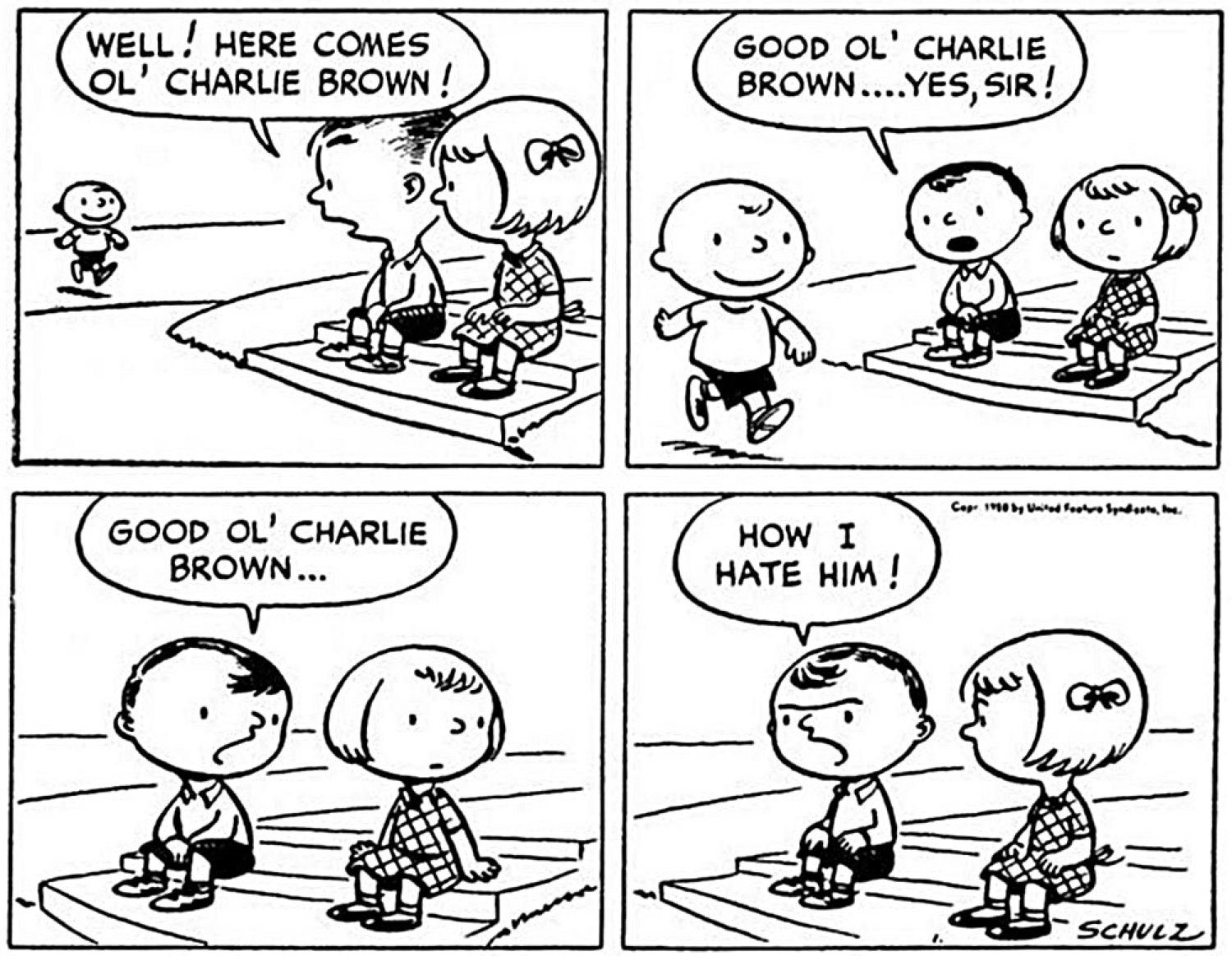
October 2, 1950: "Peanuts" Debuts

The first one

October 2, 1950: The comic strip Peanuts debuts in national syndication, drawn by Charles M. Schulz. Within 10 years, it becomes the most popular comic strip of all time.

The series is based around Charlie Brown -- almost everybody addressed him by both his first and last names -- a boy with very little hair and even less luck. Nothing he does seems to work out. And the other kids in the neighborhood torment him, calling him things like, "You blockhead!" Leaving him to say things like, "Aaugh!" and "Rats!" and "Good grief!" and "I can't stand it!" and "My stomach hurts!" It never seemed to occur to anyone that an 8-year-old boy had an ulcer. (His age was once mentioned on one of the TV specials.)

He did have one true friend, Linus Van Pelt, philosophical beyond his years. Linus has an older sister, Lucy, described as "crabby" and a "fussbudget." She is physically and emotionally abusive to her brother, to Charlie Brown, and to the one other character who seemed to be a real friend to Charlie Brown, Schroeder, frequently threatening characters, "I'll slug you!" and sometimes actually doing it: "POW!" or "WHOP!" I wonder if the writers of the 1966-68 Batman TV series were inspired by this, along with various other Schulzian visualized sounds like "WHUMP!" and "KLUNK!"

Schroeder was a classical pianist in training on whom Lucy has a crush, but she strikes back when he makes in plain that he's just not that into her. His full name is never mentioned, and it's not clear whether Schroeder is his first name or his last name.

Lucy pretended to be a psychiatrist, diagnosing the neuroses of Charlie Brown and the others, mostly making things worse, and charging 5 cents. And, starting in 1952, it was an annual tradition for Lucy to hold a football for Charlie Brown to kick, for him to tell her he knew she would pull it away and send him flying and landing flat on his back, for her to come up with some new cockamamie excuse for why she wouldn't do it, for him to figuratively fall for it, for him to then literally fall for it, and for her to come up with some new cockamamie excuse for why her reason for not pulling it away did not apply.

In 2021, after watching the 1973 special A Charlie Brown Thanksgiving for the first time in many years, I realized something for the first time. The special begins with Lucy once again pulling the football away from Charlie Brown, but she doesn't get invited to Thanksgiving dinner at his house. Her brother Linus is invited, and even does some of the "cooking." But Lucy isn't invited. Whether intentional or not, Charlie Brown got his revenge on her.

Lucy's abuse of Linus led to him carrying a security blanket everywhere he went. Which made things worse between them. Many times, she stole his blanket, and it was like Superman being affected by kryptonite, as he felt weak without it. He always got it back, though.

Charlie Brown had a dog, Snoopy, who usually slept on top of his doghouse, did a dance when he was about to be fed (or thought he was), and imagined himself as various things: An athlete in various sports, a World War I flying ace, even an astronaut who beat everybody to the Moon: "I beat the Russians, I beat everybody! I even beat that stupid cat who lives next door!" Snoopy became the strip's "breakout character," becoming more popular even than Charlie Brown.

Charlie Brown had a baseball team that never won. Except when he wasn't available. He was the manager and the pitcher, and line drives hit back at him led to him dodging them, and his clothes flying off. Schroeder was his catcher. Snoopy at shortstop and Linus at 2nd base made a good double-play combination, the team's one strength. Lucy, the worst player, was stuck at the usual worst-player position in those days, right field. As a song by Peter, Paul and Mary put it, "Little leagues never have lefties that pull."

In 1966, Schultz introduced Peppermint Patty, a tomboy who, despite being a girl, was the best athlete in the neighborhood. Her best friend, Marcie, was introduced in 1971. Peppermint Patty and Marcie have been retroactively viewed as a gay couple, ignoring that they're just children. Both seem to have some affection for Charlie Brown, although Peppermint Patty does ridicule him sometimes. She calls Charlie Brown "Chuck." Marcie calls him "Charles," and calls Peppermint Patty "Sir." Peppermint Patty doesn't like that: "Stop calling me 'Sir'!"

In 1968, Schulz responded to the assassination of Martin Luther King by introducing the strip's first black character, Franklin. All the kids accepted him, and he accepted Charlie Brown as a real friend, never once mocking his lack of luck or athletic ability. His appearance touched on more than civil rights: He mentioned that his father was serving in Vietnam.

Franklin's last name was never mentioned in the strip, but a TV special made it Armstrong, in honor of Robb Armstrong, one of the earliest widely-known black cartoonists.

Schulz argued with Larry Rutman, then the president of King Features Syndicate, the distributor of the Peanuts comic strips to newspapers. Schulz said, “I remember telling Larry at the time about Franklin. He wanted me to change it, and we talked about it for a long while on the phone, and I finally sighed and said, “Well, Larry, let’s put it this way: Either you print it just the way I draw it or I quit. How’s that?” Rutman printed it just the way Schulz drew it.
So why didn't Schulz ever show Charlie Brown kicking the football, winning a baseball game, winning a spelling bee, or winning anything? He said, "Because winning is happy, but happy isn't funny."

In 1999, Schulz knew he was dying of cancer, and so he decided to wrap the strip up, rather than leaving it to his son or some other collaborator to do, as some other cartoonists had done with theirs. He set his last strip to go on Sunday, February 13, 2000, with a farewell message. He died the day before.

*

October 2, 1950 was a Monday. Baseball was between the end of the regular season the day before, and the start of the World Series, which the Yankees would win over the Philadelphia Phillies. Football was in midweek: We were 20 years away from the start of Monday Night Football. The NHL season didn't start for another 9 days; the NBA season, another 29 days. So there were no scores on this historic day.

Saturday, August 13, 2022

August 13, 1914: "It's a Long Way To Tipperary" Becomes Britain's Song of World War I

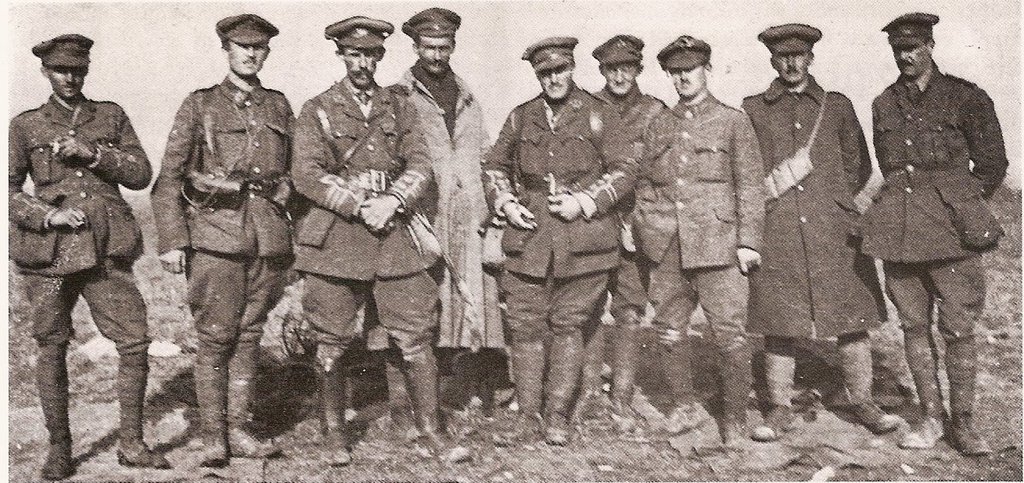
Soldiers in the Connaught Rangers

August 13, 1914: "It's a Long Way To Tipperary" is sung by the Connaught Rangers, an Irish unit in the British Army, as they marched through Boulogne, on the English Channel coast of France.

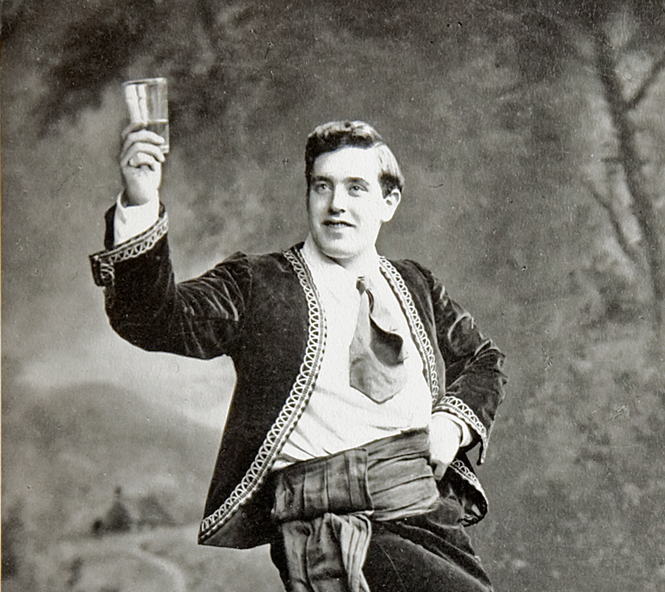
The song, written by composer Jack Judge (1872-1938) for a London music hall 2 years earlier, thus becomes identified with British soldiers, and is popularized further when popular tenor John McCormack (1884-1945) records it in November of that year.
John McCormack

Judge’s grandparents were from Tipperary, which is in County Tipperary, in the Province of Munster, in the south of what became, after 1922, the Republic of Ireland. For the record, Tipperary is 483 miles from London, 615 miles from Boulogne, and about 650 miles from World War I's Western Front – a long way by almost any measure, unless you're an astronaut.

It would take America until 1917 to enter "The Great War," and its song would be George M. Cohan's "Over There."

The song was revived in Charles Schulz' comic strip Peanuts, as Snoopy pretended to be a World War I flying ace; and was sung as a farewell by the main cast in the final episode of The Mary Tyler Moore Show. It was also adapted into a fight song for the University of Missouri.

Today, there are welcoming signs in central Tipperary, saying, "You've come a long way." According to Ireland's 2016 Census, it is home to just 4,979 people.

*

August 13, 1914 was a Thursday. That year, and the next, there were 3 major leagues in baseball.

In the American League: 

* The New York Yankees beat the Boston Red Sox, 1-0 at Fenway Park in Boston. Ray Fisher allowed 8 hits, but pitched a shutout, to defeat Hubert "Dutch" Leonard. Leonard's earned-run average rose to 0.94. He would finish at 1.01, the lowest in major league history. (Bob Gibson's 1.12 in 1968 is the lowest in the post-1920 Lively Ball Era.)

The only run came in the top of the 3rd inning, when Luke Boone -- no relation to later major leaguer Ray Boone, his son Bob Boone, or Bob's sons Bret Boone and Aaron Boone -- doubled Fritz Maisel home. Tris Speaker went 1-for-3. Babe Ruth had debuted for the Red Sox on July 11, but, still being only a pitcher, did not appear in this game.

* The Philadelphia Athletics beat the Washington Senators, 7-0 at Shibe Park in Philadelphia. Future Yankee ace Bob Shawkey pitched a 3-hit shutout.

* The Cleveland Naps beat the Detroit Tigers, 6-3 at League Park in Cleveland. Napoleon "Nap" Lajoie, the Cleveland team's manager, 2nd baseman, best hitter and namesake, went 1-for-2 with a walk and an RBI. "Shoeless" Joe Jackson went 2-for-3 with 3 RBIs. Ty Cobb went 1-for-3 with a walk. After this season, Lajoie left, and the team was renamed the Cleveland Indians.

* And the Chicago White Sox and the St. Louis Browns were rained out at Sportsman's Park in St. Louis. The game was made up as part of a doubleheader 3 days later. The ChiSox won the opener, 3-1. The Brownies won the nightcap, 9-7.

In the National League:

* The New York Giants lost to the Boston Braves, 5-3 at the Polo Grounds. Dick Rudolph outpitched Rube Marquard. The "Miracle Braves" were in the process of passing the Giants and winning the Pennant.

* The Brooklyn Dodgers beat the Philadelphia Phillies, 3-0 at Ebbets Field. Ed Reulbach pitched a 4-hit shutout. Zack Wheat went 1-for-1 with 2 walks.

* The Pittsburgh Pirates swept a doubleheader from the St. Louis Cardinals, 2-1 and 5-2 at Forbes Field in Pittsburgh. Over the 2 games, Honus Wagner went 3-for-7 with 2 RBIs.

* And the Chicago Cubs and the Cincinnati Reds were not scheduled.

And in the Federal League:

* The Brooklyn Tip-Tops beat the St. Louis Maroons, 1-0 at Handlan's Park in St. Louis. This game was stopped after 6 innings. Baseball-Reference.com does not list the reason, but, given the White Sox-Browns outcome, it was probably stopped by rain.

* The Indianapolis Hoosiers beat the Buffalo Blues, 2-1 at Federal League Park in Indianapolis.

* The Kansas City Packers beat the Baltimore Terrapins, 4-2 at Gordon and Koppel Field in Kansas City.

* And the Chicago Whales and the Pittsburgh Rebels were rained out at Weeghman Park in Chicago, the ballpark that would later become Wrigley Field. The game was made up the next day. The Rebels won, 5-3.

Thursday, April 21, 2022

April 21, 1918: The Red Baron Is Shot Down (Not By Snoopy)

April 21, 1918: The Red Baron is shot down, ending the career of the most famous -- but not the most successful -- "flying ace" in the history of aerial combat.

Manfred Albrecht Freiherr von Richthofen was born on May 2, 1892, in Kleinburg, near Breslau, Lower Silesia, then part of the German Empire. His family were Prussian aristocrats, and, when he was 4 years old, they moved to nearby Schweidnitz.

Due to the family's wealth, he, his elder sister, and his 2 younger brothers could enjoy pursuits not available to the vast number of people in the Second Reich. The brothers hunted birds, deer, elk, and wild boars. Manfred also enjoyed riding horses and gymnastics, particularly excelling at the parallel bars. At age 11, he was sent to a military school. Upon graduation in 1911, he joined a cavalry (horseborne) unit.

When World War I began in 1914, he served as a cavalry reconnaissance officer, seeing action in Russia, France, and Belgium. But the advent of trench warfare made traditional cavalry operations outdated and inefficient, so his regiment was dismounted, serving as dispatch runners and field telephone operators.

Disappointed and bored at not being able to directly participate in combat, the last straw for him was an order to transfer to the army's supply branch. His interest in the Air Service had been aroused by his examination of a German military aircraft behind the lines, and he applied for a transfer to Die Fliegertruppen des deutschen Kaiserreiches (Imperial German Army Air Service), later to be known as the Luftstreitkräfte (literally, "air forces").

He was widely reported to have written in his application for transfer, "I have not gone to war in order to collect cheese and eggs, but for another purpose." His request was granted, and he joined the flying service at the end of May 1915.

A "flying ace" is defined as a military pilot who has shot down at least five enemy aircraft. There were 13 cases in World War I of men becoming "ace in a day," shooting down 5 planes within 24 hours: 3 Americans, 3 British, 2 Canadians, 2 Germans (neither of them Richthofen), 1 South African and 1 Bermudian (from Bermuda). In World War II, a German pilot named Erich Rudorffer set an all-time record for a single mission, taking down 13 Soviet aircraft. Another German, Erich Hartmann, is credited as the all-time "ace of aces," with 352 confirmed kills.

The top American flying aces: World War I, Eddie Rickenbacker, with 26 shootdowns, already a renowned auto racer, later an airline executive; World War II, Richard Bong, 40, but was shot down the day of the Hiroshima bomb; the Korean War, Joseph C. McConnell, 16, survived the war, only to be killed in a training accident within months; and in the Vietnam War, 4 Americans were credited with 5: Future Congressman Randall "Duke" Cunningham, William P. Driscoll, Steve Ritchie and Jeff Feinstein.

In World War I, René Fonck of France shot down 75 enemy aircraft, making him "the Allies' Ace of Aces." But one man serving with the Central Powers topped him, and that was Manfred von Richthofen, with 80 opposing planes shot down.

Richthofen flew a Fokker Dr.I -- "Dr" standing for "Dreidecker," or "three-leveled," for its three stacked wings -- and painted it red, so it would stand out, partly to make himself a better target for the enemy, to spare the others in his squadron, the "Flying Circus," but also partly to make sure his men saw him, and didn't shoot at him by mistake.
A recreation of Richthoften's Fokker Dr.I,
complete with the pilot wearing a replica of his uniform.

Designed by Anthony Fokker, whose homeland of the Netherlands was neutral in the war, Richthoften's Dr.I became the most famous plane of the war, even more so than the Sopwith Camel, designed and flown by British pilot Thomas Sopwith.
This, Peanuts fans, is a real Sopwith Camel.

Richthofen was a Freiherr ("Free Lord"), a title of nobility often translated as "baron." This is not a given name, nor strictly a hereditary title, since all male members of the family were entitled to use it, even during the lifetime of their father. This, combined with his red plane, led to him being called Der Rote Baron, the "Red Baron," both inside and outside Germany.

During his lifetime, he was more frequently described in German as Der Rote Kampfflieger, variously translated as "The Red Battle Flyer" or "The Red Fighter Pilot." This name was used as the title of his autobiography, published in 1917, made possible because he was already famous.

On April 21, 1918, he was flying over Morlancourt Ridge, near the Somme River in France. His cousin, Lieutenant Wolfram von Richthofen, had been fired upon by a Canadian pilot, Wilfred May. Manfred went after May, and was himself followed by another Canadian, Captain Roy Brown.

It was in this pursuit that Richthofen was hit in the chest by a .303 caliber bullet. He never had a chance, and may have bled out before hitting the ground. The force of the crash pushed him into the butts of his machine guns, breaking his nose and his jaw. It didn't matter: He was already dead. He was not quite 26 years old.

Britain's Royal Air Force, then with jurisdiction over all British Empire aircraft, including what would become the Royal Canadian Air Force, ruled that Brown had shot Richthofen down. Historians now generally agree that this determination was an error, and that it was a ground-based antiaircraft gun that hit him.

His plane was quickly dismantled for souvenirs. But the British gave him a burial with full military honors. In 1925, his family reclaimed his remains, and reburied him in Berlin. After World War II, his tomb was in East Berlin. In 1975, his remains were moved to a family home in Wiesbaden, in what was then West Germany -- with some irony, not far from a U.S. Air Force base.

Post-World War II changes meant also that his birthplace of Kleinburg is now in Poland, part of the city of Wrocław; and that the town where he grew up is also in Poland, as Schweidnitz became Świdnica.

In film, he has been portrayed by Carl Walther Meyer in Richthofen in 1927, Carl Schell in The Blue Max in 1966, Ingo Mogendorf in Darling Lilli in 1970, John Philip Law in Von Richthofen and Brown in 1971, Ron Ely on a 1979 episode of Fantasy Island, and Matthias Schweighöfer in The Red Baron in 2008.

The DC Comics series Enemy Ace told of Hans von Hammer, a German knight who became a pilot with a red plane like Richthofen's. Unlike the general portrayal of the Germans by the Allies, he was shown to be an honorable man, guided by a knight's code of chivalry, and often disgusted by the excesses of war.

Unlike Richthofen, later adventures showed him fighting in World War II, and becoming even more disgusted by the Nazis who had taken over his homeland, and finally breaking and surrendering to the Allies when he survives a crash-landing on the grounds of the Dachau concentration camp. The character lives until 1969, dictating his memoirs to an American reporter.

Fantasy writer Kim Newman, advancing his Anno Dracula series up to World War I, made Richthofen a vampire in his 1995 novel The Bloody Red Baron.

On October 10, 1965, Peanuts author Charles Schulz first drew the dog Snoopy, in World War I-style pilot gear, on top of his doghouse, saying, "Here's the World War I Flying Ace, zooming through the air in his Sopwith Camel. My mission is to hunt the Red Baron, and shoot him down!" Snoopy's adventures as the Flying Ace always seemed to end with his doghouse getting shot full of holes and smoke coming out of the door, leading him to shake his fist and yell, "Curse you, Red Baron!" However, in real life, Richthofen is not known to have ever engaged in combat with U.S. forces.
The routine proved so popular that it was included in the 1966 Halloween TV special It's the Great Pumpkin, Charlie Brown, and was parodied by the rock band The Royal Guardsmen for their song "Snoopy vs. the Red Baron," which nearly hit Number 1 in 1967 -- partly because, in the end, unlike Schulz, they let Snoopy win.

In the 1968 cartoon Wacky Races, a character named The Red Max drove a red car/plane hybrid named the Crimson Haybaler, and he spoke with a German accent. He was voiced by Daws Butler, best known as the voice of Yogi Bear.

Another Wacky Races character, Dick Dastardly, was voiced by famed ventriloquist Paul Winchell. His dog, Muttley, was voiced by Don Messick, who became the original voice of Scooby-Doo. These characters were used in a spinoff cartoon the next year, Dastardly and Muttley in Their Flying Machines, which seemed to be based on World War I, and also on the 1965 film Those Magnificent Men In Their Flying Machines -- which made sense, since Wacky Races was based on a film that came out right after TMMITFM, The Great Race.

By 1975, Hanna-Barbera Productions had lost the legal rights to Dastardly and Muttley, and so, voiced by the same actors, they created the characters of the Dread Baron (who wore olive drab instead of red, suggesting that he was American) and Mumbly. A few years later, after they regained the rights to Dastardly and Muttley, a graphic novel was released, revealing that Dick Dastardly and the Dread Baron were identical twins, and that Muttley and Mumbly were litter brothers.

Athletes with red hair who have been nicknamed the Red Baron include baseball pitcher Rick Sutcliffe and hockey player and coach Gordon Berenson, whose nickname is usually just shortened to "Red." Michael Schumacher, a German racer on the Formula One circuit, drove a red Ferrari, and was nicknamed the Red Baron.

And from 1989 to 2006, a minor league baseball team in the Scranton, Pennsylvania area paid tribute to two former teams in the area, the Scranton Red Sox and the Wilkes-Barre Barons, becoming the Scranton/Wilkes-Barre Red Barons, and adopting a triplane logo. When their affiliation switched from the Philadelphia Phillies to the New York Yankees, the Red Barons name was dropped. Acknowledging a different form of transportation, the area's train heritage, they are now the Scranton/Wilkes-Barre RailRiders.

Perhaps the strangest piece of pop culture connected to Richthofen is Red Baron Pizza, produced by Schwan's Company. The company was founded by German-Americans, but pizza is Italian! And the figure on the box has a mustache that makes him look more Italian than German. (Richthofen did not have a mustache.)

Regardless, in the years since the World Wars, and the shame of the Kaiser and the Nazis, Manfred von Richthofen has become a "safe" hero for Germans, much like Field Marshal Erwin Rommel, who excelled as a combat commander, turned on the Nazis, and paid for it with his life.

Had he lived, the Red Baron would have been 47 years old in 1939 -- 6 months younger than Rommel, and 4 years younger than Adolf Hitler -- and would likely have been called back to service in the Luftwaffe. Whether he would have agreed with the Nazi ideology is something for those more expert on the subject of German military and political history than I to debate.

UPDATE: In 2025, the YouTube comedy series Epic Rap Battles of History paired the Red Baron (played by "Nice" Peter Shukoff) with Simo Häyhä, the Finnish sniper of the 1939-40 Winter War, nicknamed the White Death (played by "Epic" Lloyd Ahlquist). Both Snoopy and Red Baron pizza were referenced, as was a parody of the name "Fokker."

*

April 21, 1918 was a Sunday. The only scores on this historic day were 2 games in what would later be called Major League Baseball. The Chicago Cubs beat the Cincinnati Reds, 9-1 at Redland Field (later Crosley Field) in Cincinnati. Grover Cleveland Alexander was the winning pitcher. By the end of June, he had been drafted into the U.S. Army, and would soon go "over there," lose much of his hearing, and develop epilepsy, all of which made his existing drinking problem much worse.

And the St. Louis Browns beat the Cleveland Indians, 11-7 at League Park in Cleveland. George Sisler went 2-for-6 with an RBI for the Browns. Tris Speaker went 1-for-3 with 2 walks for the Indians.

Friday, January 21, 2022

January 21, 1921: George Washington Carver's Congressional Testimony

January 21, 1921: George Washington Carver, America's most prominent living scientist -- and America's most prominent living black person -- testifies before the Ways and Means Committee of the U.S. House of Representatives.

In 1921, peanut farmers and representatives of the peanut industry planned to appear at Congressional hearings to ask for a tariff. Based on the quality of Carver's presentation at their convention, they asked them to testify on the tariff issue before "Ways and Means," the committee that writes tax policy.

Due to segregation, it was highly unusual for a black person to be treated as an expert witness. Carver appeared, and unpacked numerous exhibits and samples to make his case for greater food and industrial uses for the peanut.

Southern Congressmen, all of them white supremacists, and some of them active members of the Ku Klux Klan, mocked him. But as he talked about the importance of the peanut and its uses for American agriculture and manufacturing, committee members repeatedly extended the time for his testimony.

The Fordney-McCumber Tariff -- named for its sponsors, Representative Joseph Fordney of Michigan and Senator Porter McCumber of North Dakota, both Republicans -- was passed the next year, and signed into law by President Warren G. Harding. It included a duty on imported peanuts. It raised the purchasing power of the farmers by 2 to 3 percent, but other industries raised the price of some farm equipment. In September 1926, economic statistics released by farming groups revealed the rising cost of farm machinery.

Carver's testimony, including samples of peanut milk, peanut flour, industrial dyes made from peanuts, and other peanut-based products, made him widely known as a public figure.

Carver was born into slavery, and, as a result, his birthdate is not known for sure. He was probably born sometime around the New Year of 1864, and definitely on a farm in Diamond, 16 miles southeast of Joplin in southwestern Missouri.

He eventually went to high school in Kansas, and a piano teacher noticed his interest in botany, encouraging him to study it at what is now Iowa State University. He was the school's 1st black student, became its 1st black faculty member, and earned Bachelor's and Masters degrees there. (Iowa State is now the only major football-playing college with a stadium named for a black player, Jack Trice Stadium.)

Booker T. Washington, the 1st president of the school now known as Tuskegee University in Tuskegee, Alabama, invited him to head its Agriculture Department. He taught there for the rest of his life, 47 years. He taught crop rotation, and discovered which crops and which kinds of soil worked best together, moving American agriculture forward, North and South, East and West, white and black.

He often traveled, telling of the Tuskegee Institute, and of his work there, spreading its fame from coast to coast, making him perhaps the greatest salesman that what are now called "Historically Black Colleges and Universities" (HBCUs) have ever had.

On the December 15, 1984 episode of Saturday Night Live, Eddie Murphy did a "Black History Minute" sketch. As Professor Shabazz K. Morton, he mentioned a dinner that Carver had: "Professor Carver’s two dinner guests, Edward “Skippy” Williamson and Frederick “Jif” Armstrong, two white men, stole George Washington Carver’s recipe for peanut butter, copyrighted it, and reaped untold fortunes from it. While Dr. Carver died penniless and insane, still trying to play a phonograph record with a peanut." It was funny, and yet not funny at the same time, as it was indicative of how black innovators have been treated by white-written American history.

But it wasn't true: When Carver died, on January 5, 1943, a few days after an accidental fall down stairs, believed to be about 79 years old, his frugal habits left him with savings of $60,000 -- with inflation, just under $1 million in 2022 money. And while the Skippy brand of peanut butter was introduced in 1932, during Carver's lifetime, Jif did not appear until 1955. (Skippy is now owned by Hormel Foods, while Jif was produced by Procter & Gamble until being bought out by Smucker's.)

He was buried in Tuskegee, next to Booker T. Washington, although the mutual admirers sometimes argued over administrative matters. In 1941, while Carver was still alive, The George Washington Carver Museum was opened at Tuskegee. In 1942, Henry Ford -- who apparently hated Jews but had little problem with black people, and became friends with Carver -- recreated Carver's log cabin birthplace as part of his Henry Ford Museum and Greenfield Village, outside Detroit in Dearborn, Michigan. The farm in Diamond, Missouri, where Carver grew up is now the George Washington Carver National Monument.

A high school on the largely-black South Side of Chicago is named for him, as was the fictional high school in Los Angeles that was the setting for the basketball-themed TV show The White Shadow.

*

January 21, 1921 was a Friday. Baseball and football were out of season. Professional basketball barely existed. And no games were scheduled in the NHL. So there were no scores on this historic day.

December 31, 1999 & January 1, 2000: The Millennium

December 31, 1999:  The Millennium arrives. The people of planet Earth survived. At a terrible cost. But we hadn't destroyed ourselves. ...