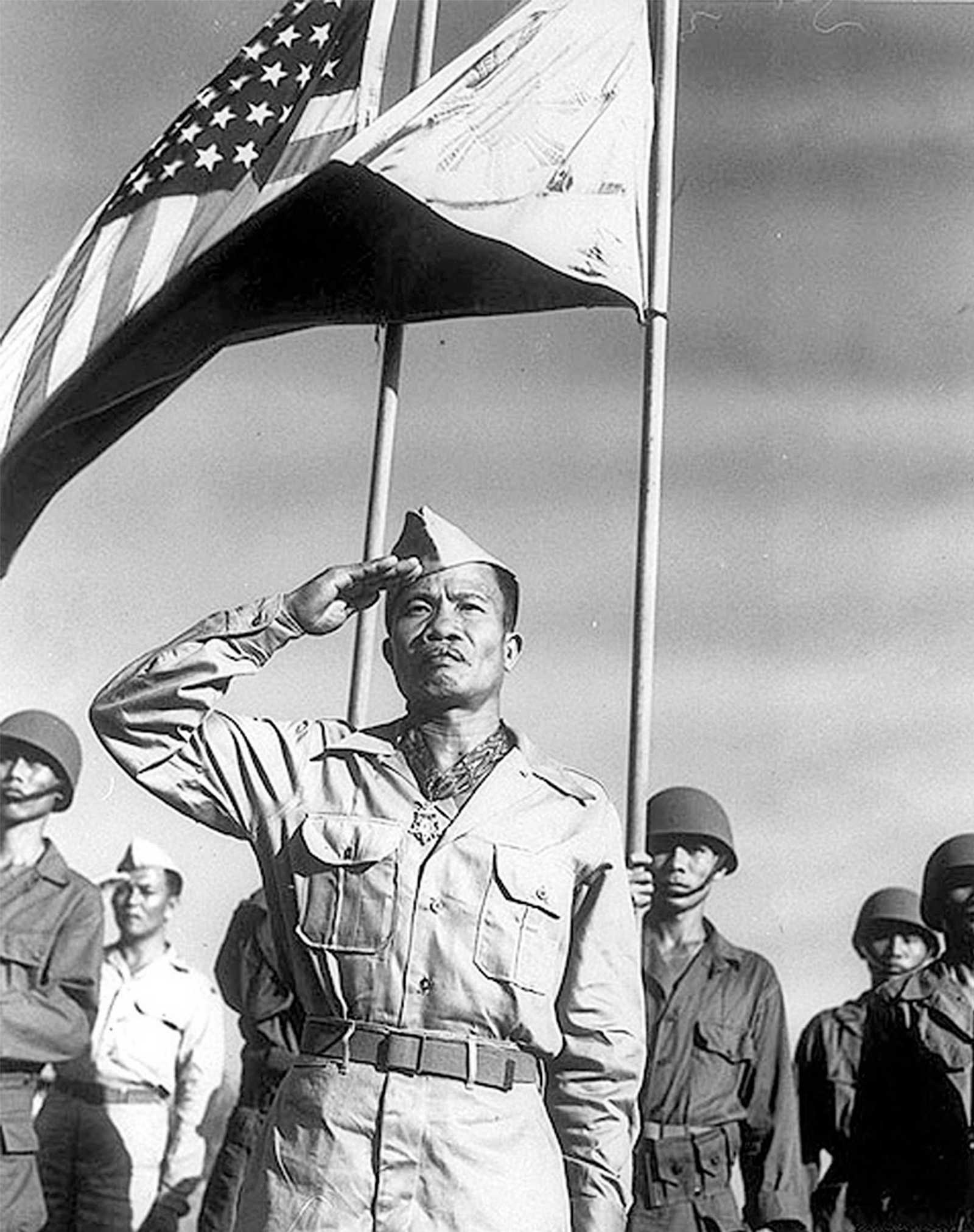
Showing posts with label douglas macarthur. Show all posts

Thursday, December 15, 2022

December 15, 1944: Five-Star Officers

Admiral of the Fleet William D. Leahy

December 15, 1944: William D. Leahy is named the 1st Fleet Admiral, a 5-star Admiral. This makes him the 1st U.S. military officer, in any branch, to wear 5 stars. Regardless of official status, George Washington, Andrew Jackson and Zachary Taylor never wore more than 2 stars; while Ulysses S. Grant and John J. Pershing limited themselves to 4.

The next day, December 16, George C. Marshall was named the 1st 5-star General in U.S. history: "General of the Army." On December 17, Ernest J. King was named a Fleet Admiral. On December 18, Douglas MacArthur was named a General of the Army. On December 19, Chester Nimitz was named an Admiral of the Fleet. On December 20, Dwight D. "Ike" Eisenhower was named a General of the Army. On December 21, 1944, Henry H. "Hap" Arnold was named a General of the Army.

On December 11, 1945, after V-E Day and V-J Day, William F. "Bull" Halsey was named an Admiral of the Fleet. On May 7, 1949, Hap Arnold was made the 1st General of the Air Force. He remains the only one.

On September 22, 1950, during the Korean War, Omar Bradley was named a General of the Army, our last. Despite some calls for it, there was no promotion from 4 stars for William C. Westmoreland (Vietnam War), Colin Powell (Persian Gulf War) or Norman Schwarzkopf (also the Persian Gulf War). There has never been a 5-star General in the U.S. Marine Corps.

After World War II, it was recommended that George C. Marshall be named the 1st Field Marshal in American history. Other countries have that rank, but America doesn't. President Harry S Truman admitted that Marshall deserved it, but thought that calling him "Marshal Marshall" wouldn't be dignified. So we still don’t have the rank.

*

December 15, 1944 was also the day the Battle of the Bulge began in the Ardennes Forest of France, Belgium and Luxembourg. It was Nazi Germany's last stand on the Western Front. On December 22, the Nazis sent an officer to deliver a surrender demand to the U.S. Army's 101st Airborne Division, then stationed in Bastogne, Belgium, and virtually surrounded. General Anthony McAuliffe, in command, sent him away with a one-word reply: "Nuts!"

The Nazis held the upper hand through Christmas, but the day after, the 4th Armored Division arrived with reinforcements, and turned the tide of the battle. Once that happened, the Nazis were doomed, both on the Western Front and overall.

It was also the day that Glenn Miller, the biggest bandleader of the World War II era, disappeared, his plane lost somewhere over the English Channel, as he was preparing for a concert for the troops in Paris. I have a separate entry for that event.

And it was the day the film Hollywood Canteen opened. I have a separate entry for that, too.

December 15, 1944 was a Friday. Baseball was in the off-season. The NFL Championship Game was played 2 days later, with the Green Bay Packers beating the New York Giants, 14-7 at the Polo Grounds in New York. The NBA hadn't been founded yet. And, while the NHL was in-season, no games were scheduled for that day. So there are no scores on this historic day.

Thursday, October 20, 2022

October 20, 1944: General Douglas MacArthur Returns

October 20, 1944: Keeping the promise he made 2 1/2 years earlier, General Douglas MacArthur returns to the Philippines, landing at Leyte Gulf. It will take until April 13, 1945 to get all Japanese troops out of the country.

In February 1942, as Japanese forces tightened their grip on the Philippines in World War II, President Franklin D. Roosevelt ordered MacArthur to relocate to Australia. On the night of March 12, MacArthur and a select group that included his wife Jean, son Arthur, and members of his staff, left Corregidor. They traveled in PT boats through stormy seas patrolled by Japanese warships, and reached Del Monte Airfield on Minanao, where B-17s picked them up, and flew them to Australia.

MacArthur ultimately arrived in Melbourne by train on March 21. Speaking by radio, he told the people of the Philippines, "I came through, and I shall return."

It took a lot of "island-hopping," but U.S. troops got close enough to the Philippines to launch an assault against the Japanese forces there, on October 20, 1944. The famous photo of MacArthur wading ashore, by his personal photographer, Gaetano Faillace? It wasn't planned: A landing craft was unavailable, and "Big Mac" was furious. But when he saw the photo later, and how determined he and his men looked, he was glad it happened that way.

In his prepared speech, he said:

People of the Philippines: I have returned. By the grace of Almighty God, our forces stand again on Philippine soil, soil consecrated in the blood of our two peoples. We have come dedicated and committed to the task of destroying every vestige of enemy control over your daily lives, and of restoring upon a foundation of indestructible strength, the liberties of your people.

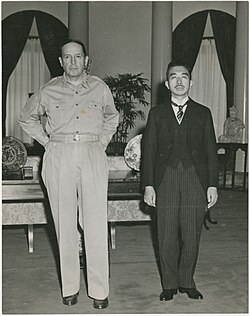
On September 27, 1945, a few weeks after V-J Day, Faillace took another famous photo of MacArthur, in uniform, but without his famous hat, sunglasses and pipe, standing next to Emperor Hirohito, in Western-style formal dress, to show the Japanese who was the bigger man: MacArthur was 6 feet even, while Hirohito was 5-foot-5.
MacArthur's lines, "I shall return" and "I have returned" would be homaged and parodied many times. Since the 1984 release of the Arnold Schwarzenegger film The Terminator, however, people no longer tend to say, "I shall return," instead using Arnold's line, "I'll be back."

Also on this day, in Europe, the Yugoslav capital of Belgrade is liberated from the Fascists by Yugoslav Partisans. The following year, a professional soccer team will be named for them: Football Klub Partizan Belgrade.

But it's not all a good day: A gas leak causes an explosion that destroys a square mile of the East Side of Cleveland, killing 131 people. I have a separate entry for that event.

*

October 20, 1944 was a Friday. Baseball season had ended 11 days earlier, with the St. Louis Cardinals defeating their landlords at Sportsman's Park, the St. Louis Browns. The NBA hadn't been founded yet. The NHL season wouldn't begin for another 8 days. And the NFL was in midweek. But there were 4 games in college football that night:

* In a rare college football version of the New York City vs. New England sports rivalry, Boston College beat New York University, 42-13 at Fenway Park. Until Alumni Stadium was built in 1957, BC played wherever they could get a playing date, and also played at Braves Field and Harvard Stadium, in addition to their on-campus Alumni Field, which Alumni Stadium would replace. NYU played its home games at Ohio Field in The Bronx, with games too big for that 12,000-seat facility moved across the Borough to Yankee Stadium.

* The University of Kentucky beat Virginia Military Institute, 26-9 at McLean Stadium in Lexington, Kentucky. Although VMI was (and is) a military school, this was not an example of a regular college football team struggling to find games due to the manpower drain of World War II, and settling for playing the college-age players on military bases. But there were many such games, in both World Wars, and these last 2 were among them:

* The team at the U.S. Army's Fort Pierce, in the town of the same name, north of Miami, beat the University of Miami, 38-0 at Burdine Stadium in Miami. In 1959, Burdine Stadium would be renamed for its biggest annual event: The Orange Bowl.

* And the University of Georgia beat Daniel Field, 57-6 at Sanford Stadium in Athens, Georgia. Daniel Field was a U.S. Army Air Forces base in Augusta, Georgia.

Thursday, September 15, 2022

September 15, 1950: The Incheon Landing

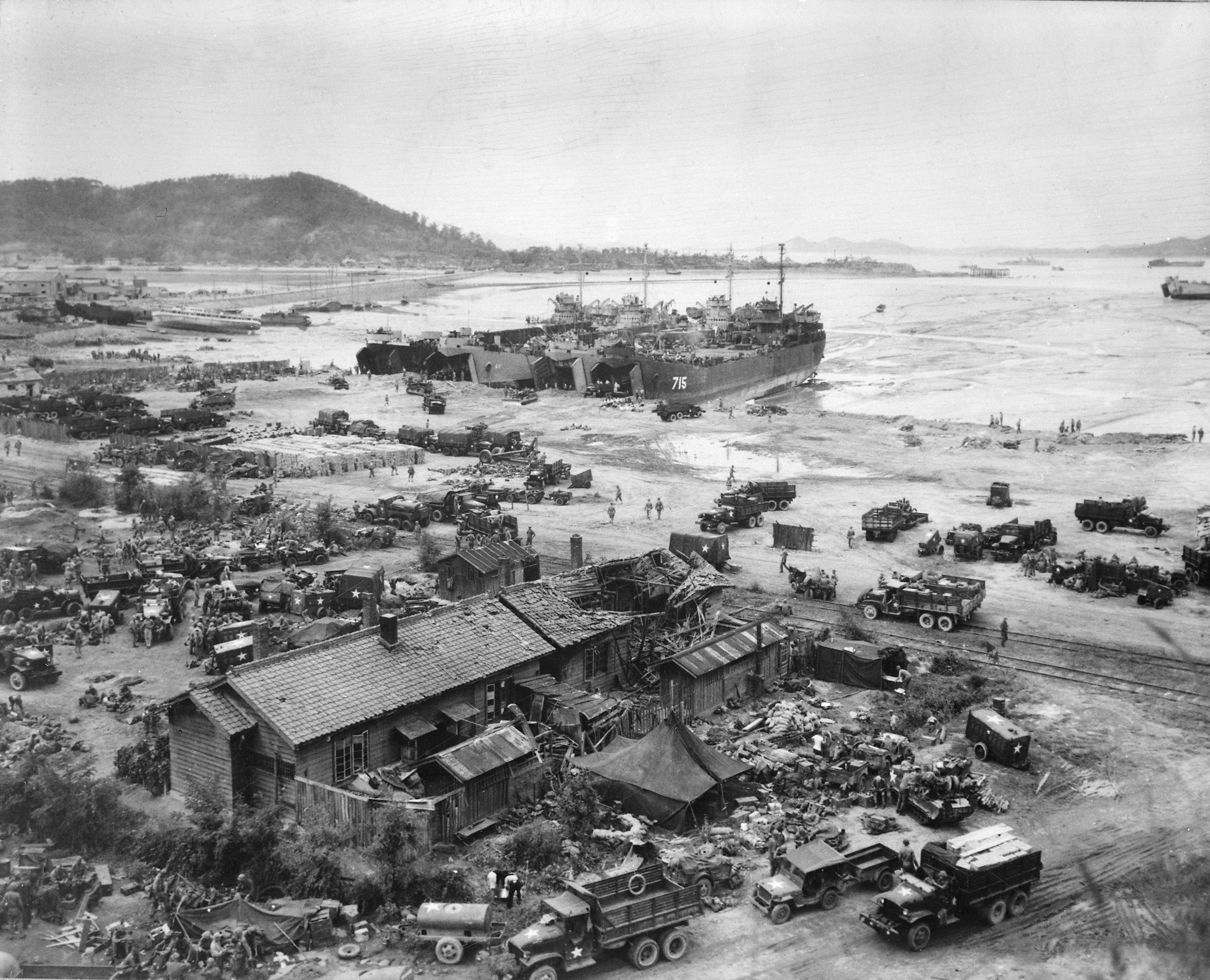
September 15, 1950: General of the Army Douglas MacArthur, supreme commander of United Nations forces, launches what amounts to the Korean War's "D-Day," an amphibious landing of 40,000 infantry from 230 ships.

On June 25, troops of the Democratic People's Republic of Korea (a.k.a. North Korea), a Communist nation, and by no means democratic or a republic -- crossed the parallel of 38th degrees north latitude, and invaded the Republic of Korea (a.k.a. South Korea), which was capitalist, but hardly free.

Two days later, President Harry S Truman announced that American and other NATO forces would come to the aid of South Korea. The next day, North Korean troops took the South Korean capital of Seoul. But it was not just NATO troops, but 15 United Nations countries that came to the South's aid.

At first, it looked like that aid might be too late. On August 5, North Korea had South Korean troops backed up into the southeastern corner of the peninsula, centered on the city of Pusan (now usually written in English as "Busan"). They held what became known as the Pusan Perimeter. It was a siege, but the ROK troops were holding on.

There would be no evacuation, the way the Nationalist Chinese had gone to Taiwan the previous year; the American troops had done in the Philippines in 1942, by escaping to Australia; or the British troops had done at Dunkirk in 1940 by retreating to their home island.

It wasn't just a matter of pride: The South Koreans had no place to go. American troops could have evacuated them to the nearest friendly country, but that would be Japan, where "friendly" was a bit of a stretch: That nation had occupied them from 1910 (and had effectively ruled them from 1876) until the end of World War II in 1945 -- just 5 years earlier. And Japan was still in the rebuilding process: Taking on millions of Korean refugees was not part of the plan of their military governor.

That was MacArthur, the 70-year-old 5-star General who had been commander of Allied forces in the Pacific. In spite of his age, there was no one more qualified to lead the mission than "Big Mac." As with D-Day, the invasion of Normandy in France in 1944, the U.S. had a deception operation underway, to convince the enemy that the invasion would be elsewhere -- in this case, at Kunsan, 105 miles to the south. The Communist spy network bought it.

After 5 days of bombing to provide air support, MacArthur, invading with his troops as he had at Leyte Gulf in the Philippines in 1944, gave the green light on September 15. The invasion began at 6:30 AM, local time. As with Normandy, there were invasion points given different code names: Green Beach, Red Beach and Blue Beach. The U.N. lost 224 troops; the North Koreans, 1,350.
MacArthur famously didn't like the photo
of him wading ashore in the Philippines in 1944.
I'm thinking he liked this one much more.

Within 2 days, U.S. forces were able to take Kimpo, Seoul's international airport. Within 2 more, they were able to use it to bring more troops in. By September 22, they had over 53,000 men on the ground. By September 25, Red troops had abandoned the Pusan Perimeter, and were attempting to defend their ill-gotten gains at Seoul. On September 28, they had to abandon that.

In a span of 2 weeks, MacArthur had led, for all intents and purposes, the liberation of South Korea. He wanted more: He wanted to kick the Commies completely off the peninsula. He nearly did it: By November 26, 10 weeks after the Incheon landing, he had them backed up to the Yalu River, which separates the Korean peninsula from mainland China (and, technically, makes Korea not a peninsula but an island).

China then intervened on behalf of its Communist "little brother." Again, U.N. troops were pushed below the 38th parallel. By April 1951, they had gained back most of South Korea's territory, and a line cutting southwest-to-northeast across the peninsula became like the trench warfare of World War I, 35 years earlier.

At the end of the calendar year 1950, Time magazine named its first collective "Men of the Year": "The American Fighting Man." In 2000, on the 50th Anniversary of the war, it published a special issue on the year, calling it "the fulcrum point of the 20th Century," not just the midpoint.

MacArthur wanted to use tactical nuclear weapons against China. Truman told him no, because that would get the Soviet Union involved, and it would be World War III. MacArthur let his objections be known to the Republican leader of the House of Representatives, Joe Martin of Massachusetts. Martin leaked this to the press. Truman found out, and fired MacArthur for subordination, replacing him with 4-star General Matthew Ridgeway, and later replacing him with 4-star General Mark Clark.

The war became a stalemate, lasting 3 years. About 327,000 Americans served in the conflict, and 36,574 were killed, with another 103,000 wounded but surviving.

It's not clear how many of those wounded, but surviving, were treated at Mobile Army Surgical Hospitals, or MASHes, which, due to the 1972-83 CBS TV series M*A*S*H, became popular culture's most familiar story of the Korean War. But, by being close to the front, they were able to save soldiers who surely would have died in the conditions of World War II. But that, and the addition of antibiotics and sulfa in World War II, saved a lot of lives that would have been lost in the conditions of World War I.

Today, Incheon is home to just under 3 million people, making it the 3rd-largest city in South Korea, behind Seoul, with 9.4 million; and Busan, with 3.3 million. Pyongyang, the North Korean capital, has 3.1 million.

*

September 15, 1950 was a Friday. These baseball games were played:

* The New York Yankees lost to the Detroit Tigers, 9-7 at Briggs Stadium (later Tiger Stadium) in Detroit. Johnny Mize hit 3 home runs and had 6 RBIs, but it wasn't enough. Tommy Byrne got knocked out of the box in the 2nd inning, and Allie Reynolds ended up the losing pitcher in relief. The winning pitcher, in relief? Hank Borowy, a former Yankee, from nearby Bloomfield, New Jersey. (Not to be confused with the Detroit suburb of Bloomfield Hills, Michigan.)

* The New York Giants lost to the Chicago Cubs, 4-3 at the Polo Grounds. Hal Jeffcoat singled home Johnny Klippstein with the winning run in the top of the 10th inning.

* The Brooklyn Dodgers lost to the St. Louis Cardinals, 6-2 at Ebbets Field. At first, it looked like the Dodgers had caught a break: Cloyd Boyer, older brother of Ken and Clete, was scheduled to start, but took the mound, and left during his warmups. But George "Red" Munger stepped in, and went the distance. Duke Snider hit a home run for the Dodgers, and Don Newcombe went the distance, singling in his own cause. Jackie Robinson did not play. But Stan Musial went 1-for-4 with a walk, and Albert "Red" Schoendienst went 3-for-5 with 2 RBIs.

* The Boston Braves beat the Pittsburgh Pirates, 7-4 at Braves Field in Boston. Ralph Kiner went 1-for-3 with 2 walks.

* The Philadelphia Phillies swept a doubleheader from the Cincinnati Reds, 2-1 and 8-7 at Shibe Park in Philadelphia. The 2nd game saw the Phils trailing 5-0 after 5 innings, but a double by Granville "Granny" Hamner sent the game to extra innings. And I do mean "extra": They played what amounted to another game, and then some.

The Reds scored 2 runs in the top of the 18th inning, The Phils tied it, with a double by Del Ennis, a single by Dick Sisler, a sacrifice fly by Hamner, and a triple by Stan Lopata. Then they won it in the bottom of the 19th: Eddie Watkus and Richie Ashburn singled, Willie "Puddin' Head" Jones walked to load the bases with nobody out, and Ennis singled Waitkus home. So fans got to have 28 innings for the price of 9, and, if they were root, root, rooting for the home team, won 2 games.

The Phils, known as the "Whiz Kids" for being mostly a young team, were now 7 1/2 games ahead of the Dodgers with 17 games to play. And yet, they had to go to extra innings of the last game of the season to clinch the Pennant, on a 10th-inning home run by Sisler off Newcombe.

* A doubleheader was split at Cleveland Municipal Stadium. The Cleveland Indians won the opener, 4-2. Luke Easter hit a 2-run home run in the bottom of the 9th to win it. The Washington Senators won the nightcap, 4-1.

* The Philadelphia Athletics beat the Chicago White Sox, 4-1 at Comiskey Park in Chicago.

* And the Boston Red Sox beat the St. Louis Browns, 12-9 at Sportsman's Park in St. Louis. Just another day at the office -- or, rather, business trip -- for Ted Williams: The Splendid Splinter went 4-for-6 with a home run and 3 RBIs.

Friday, September 2, 2022

September 2, 1945: The Battleship Missouri Surrender

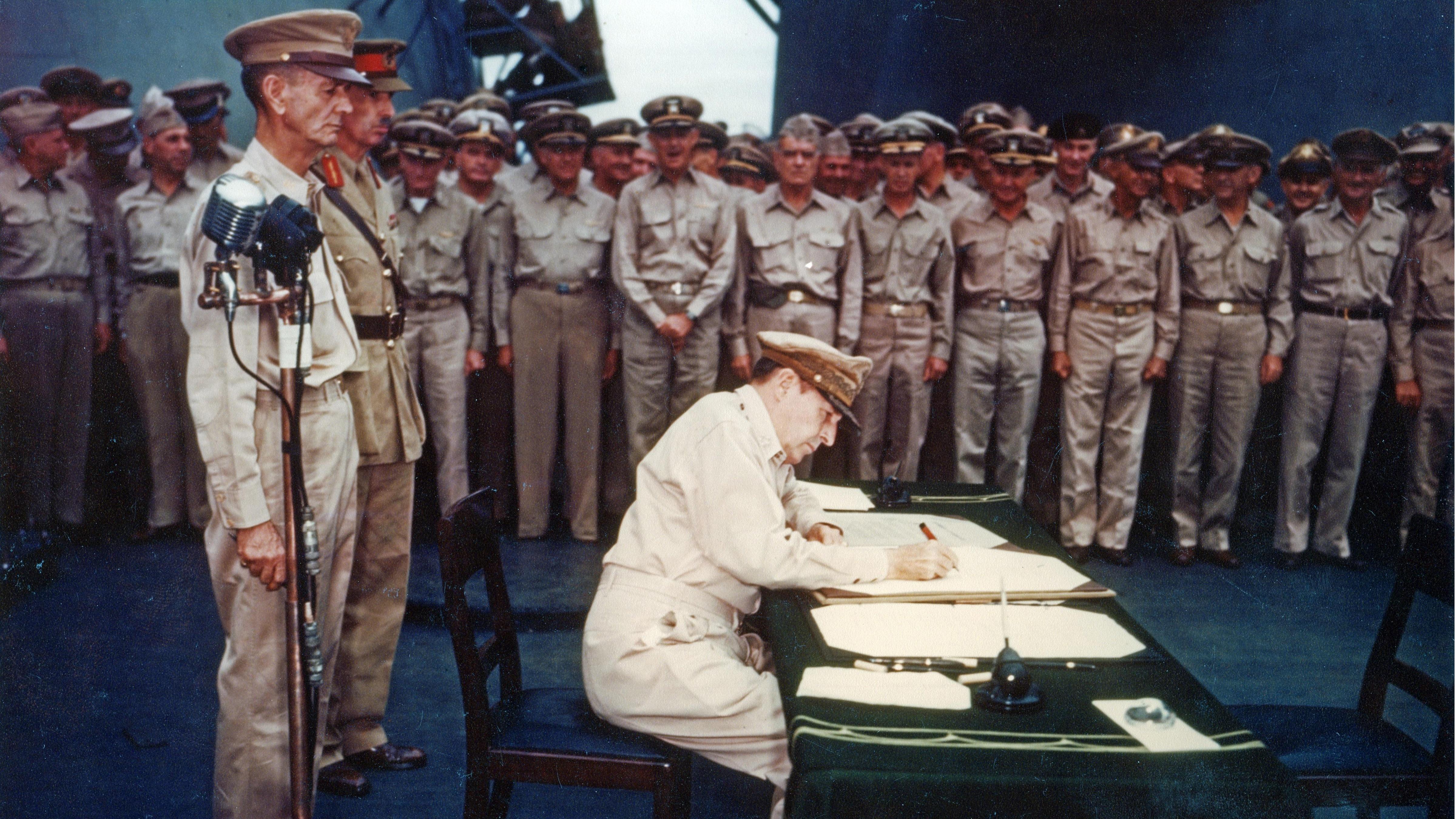
MacArthur signing, for the U.S. acknowledgement of the surrender

September 2, 1945: Foreign Minister Mamoru Shigemitsu, acting for the Empire of Japan, signs the Instrument of Surrender to end World War II, on the deck of the American battleship USS Missouri, anchored in Tokyo Bay. Shigemetsu later served as Deputy Prime Minister, and died in 1957.

The signing took place at 9:04 AM on September 2, Japan Standard Time -- 8:04 PM on September 1, U.S. Eastern. Representing the Allied Powers:

* The United States of America: General of the Army Douglas MacArthur, Fleet Admiral Chester Nimitz, and Admiral John S. McCain Sr., grandfather of the longtime Senator and Presidential candidate.

* The British Empire: British Admiral of the Fleet Sir Bruce Fraser, Canadian Colonel Lawrence Moore Cosgrave, Australian General Sir Thomas Blamey, and New Zealand Air Vice Marshall Sir Leonard Isitt.

* France: Général d'armée Philippe Leclerc.

* The Netherlands: Vice Admiral Conrad Helfrich.

* The Republic of China: General Xu Yongchang.

* The Union of Soviet Socialist Republics: Lieutenant General Kuzma Derevyanko.

Admiral Fraser was the last survivor of these men, living until 1981.

Among the sailors serving aboard the Missouri at the time, and thus a witness to the ceremony, was Bernard Schwartz, an aspiring actor from The Bronx, who was inspired to enlist in the Navy by Cary Grant and Tyrone Power, who had both appeared in films about submarine service. He took his stage name from the 1936 film Antony Adverse, and a name that had been in his mother's family: Kurtz. He anglicized the name to "Tony Curtis."

World War II was over, and the Allies had won. Now, the victorious nations had work to do, to set their own people free. The British Empire would get there first, mostly getting it done by 1960. France took a bit longer, due to a nasty war in Algeria. America took until the Voting Rights Act of 1965. The Soviet Union, and the countries formed when it broke apart? Some of those countries have never been free, to this day.
USS Missouri

The Missouri, built at the Brooklyn Navy Yard, was the last ship built by the U.S. Navy to be classified as a "battleship" and still be in active service. The "Mighty Mo" also served in the Korean War, the Vietnam War, and the Persian Gulf War, and was decommissioned in 1992. It is now a museum ship -- appropriately, docked at Pearl Harbor in Honolulu, Hawaii.

*

September 2, 1945 was a Sunday. Due to that fact, and the wartime travel restrictions that were still in place, not only was a full slate of baseball games played that day, but nearly every team was in a doubleheader:

* The New York Yankees split a doubleheader with the Washington Senators at Griffith Stadium in Washington. The Yankees won the opener, 4-2. Joe Page, later to be known as the best reliever in the game, started, and went 8 innings for the win. The Yankees scored all 4 runs in the 6th inning, including 3 on a bases-loaded triple by Nick Etten.

The Senators won the nightcap, 3-0. Roger Wolff almost pitched a 5-hit shutout, but he walked 2 batters in the bottom of the 9th, and Senators manager Ossie Bluege brought Mickey Haefner in to get the last out.

* The New York National League arch-rivals split a doubleheader at the Polo Grounds. The Brooklyn Dodgers won the 1st game, 7-4. The New York Giants won the 2nd game, 6-2. Dixie Walker singled home the winning run of the 1st game in the top of the 11th inning, and Tommy Brown singled home 2 more.

* A doubleheader was split at Braves Field in Boston. The Boston Braves won the 1st game, 6-3. The Philadelphia Phillies won the 2nd game, 5-4.

* The Philadelphia Athletics swept a doubleheader from the Boston Red Sox, 1-0 and 7-2 at Shibe Park in Philadelphia. Bobo Newsom pitched a 5-hit shutout in the 1st game. He would finish 8-20 with a 3.29 ERA for a team that finished 52-98.

* The Pittsburgh Pirates swept a doubleheader from the Cincinnati Reds, 4-2 and 7-3 at Crosley Field in Cincinnati.

* In a single game, the Cleveland Indians beat the Detroit Tigers, 3-2 at Briggs Stadium (later Tiger Stadium) in Detroit. Having already been discharged by the U.S. Army, Hank Greenberg went 1-for-3 with a walk and an RBI. At the end of the month, his grand slam on the last day of the regular season would win the Pennant for the Tigers.

* A doubleheader was split at Comiskey Park in Chicago. The Chicago White Sox won the 1st game, 6-0. Eddie Lopat, later to star with the Yankees, pitched a 5-hit shutout. The St. Louis Browns won the 2nd game, 3-2.

* And the NL's Midwestern arch-rivals split a doubleheader at Sportsman's Park in St. Louis. The Chicago Cubs won the 1st game, 4-1. Frank Secory hit a bases-loaded double in the top of the 10th inning.

The St. Louis Cardinals won the 2nd game, 4-0. Charles "Red" Barrett allowed only 1 hit, a single by Lennie Merullo in the 3rd inning. It was his 20th win of the season, and he finished 23-12. But his only full season with the Cards would be the one season between 1942 and 1946 in which they didn't win the Pennant. He did win one with the 1948 Boston Braves.

Thursday, July 28, 2022

July 28, 1932: The Rout of the Bonus Army

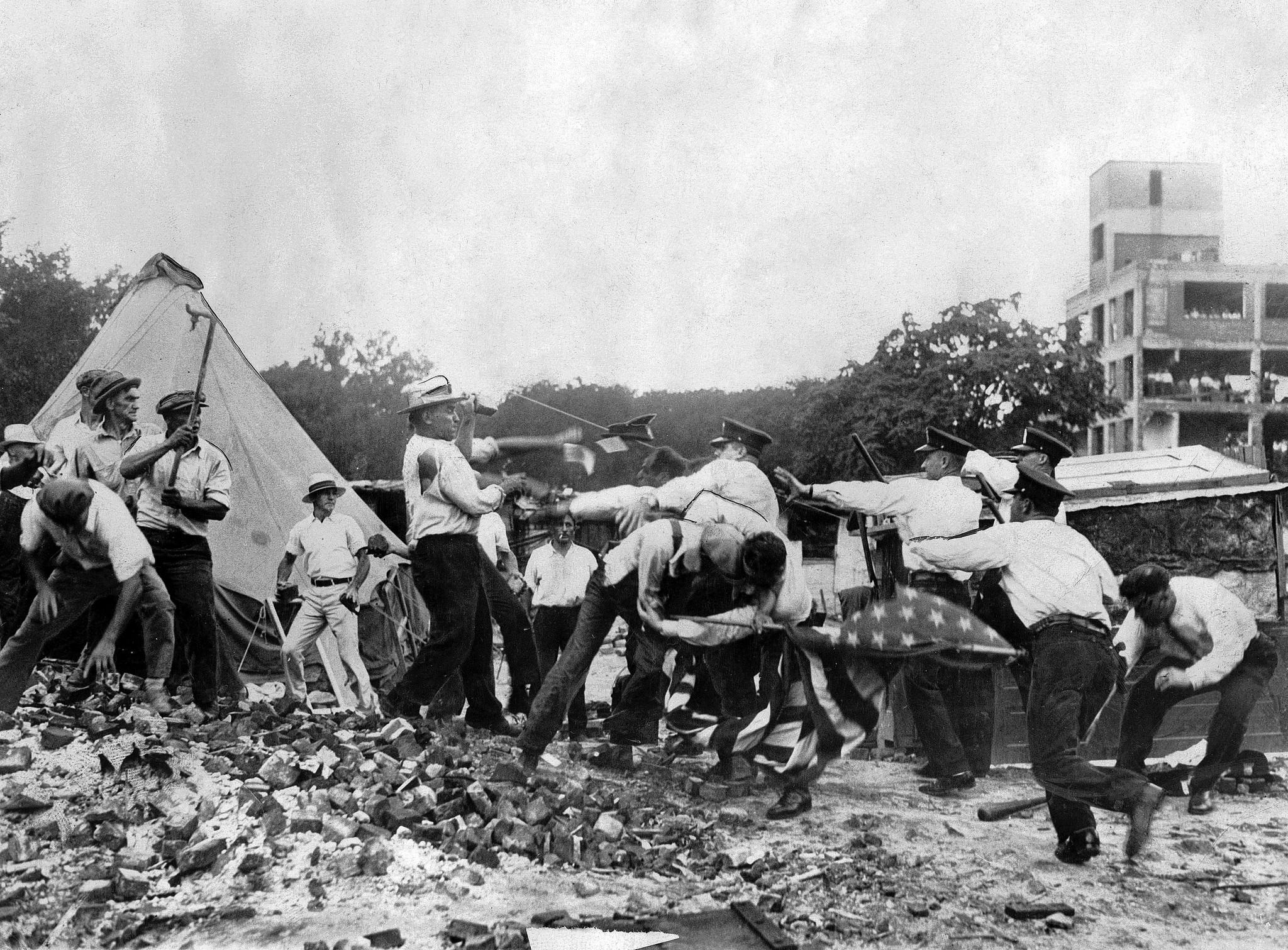
July 28, 1932: The Bonus Army is chased off Capitol Hill by the United States Army.

Those words might not make sense to you. Let's go back, much further than 1932:

The practice of war-time military bonuses began in 1776, as payment for the difference between what a soldier earned and what he could have earned had he not enlisted. America first did this, as you might expect, in the War of the American Revolution. 

In 1783, as the war ended, hundreds of veterans from Pennsylvania marched on the nation's capital, Philadelphia, demanding an increase in their bonuses. They surrounded the State House, which was doubling as the home of the U.S. Congress, and was soon to be renamed Independence Hall. Congress evacuated, and a few weeks later, the U.S. Army arrived, and kicked them out. Nobody died.

The U.S. entered World War I on April 6, 1917, and made the difference for the Allies, gaining the Armistice on November 11, 1918. In 1924, Congress passed a bill awarding that war's veterans $1.00 per day of domestic service, up to $500; and $1.25 per day of overseas service, up to $625.

Lest you think that Republican Presidents being conservative assholes is a relatively new phenomenon, President Calvin Coolidge vetoed the bill. Congress overrode his veto, and the bill became law. But here's the kicker: This bonus would not be made available to the veterans until 1945. (Which turned out to be the year that World War II ended.) They would have to wait 21 years.

Then came the stock market crash of 1929, and the Great Depression. President Herbert Hoover did not cause these things, but in 1930 and 1931, he didn't seem to be trying very hard to turn them around. (He never publicly said the infamous sentence, "Prosperity is just around the corner," and he knew it wasn't.)

By early 1932, with 13 years to go before the bonus kicked in, one out of every four men in the workforce could not find a job. Many of these men were veterans of the war. Some men sold their medals to get money for food, bringing to mind the expression, "What price glory?" The plight of unemployed veterans worked its way into songs, including Bing Crosby's "Brother, Can You Spare a Dime?", although that song was not released until a few weeks after the Bonus Army march.

Not for the first time in human history, or even in American history, and not for the last time, men asked the question, "I was there when my country needed me, so where is my country now that I need it?" And now, Hoover had to run for re-election.

On March 11, 1932, Oregon veteran Walter W. Waters organized a group of fellow veterans and began leading them East toward Washington. Taking their name from that of American troops in France in World War I, the American Expeditionary Force, he called them the Bonus Expeditionary Force. Most news reports just called them the Bonus Army.

They arrived in Washington 43,000 strong -- 17,000 veterans and their families -- on May 28, and camped in tents to the south of the U.S. Capitol Building, on the Anacostia Flats. Like so many other encampments of the homeless across America, it was quickly labeled a "Hooverville."

They demanded that Congress pass, and Hoover sign, a bill into law mandating the paying of their 1945-due bonuses immediately. On June 15, the House of Representatives, controlled by the Democratic Party, passed such a bill, 211-176. There was hope.

That hope was crushed only 2 days later: The Senate voted it down, and it wasn't even close, 62-18. So even though the Senate was controlled by the Republican Party, many Democratic Senators also voted it down.

There seemed to be very little reason for the Bonus Army army to stay. But they did. Through the 2nd half of June. And almost all the way through July.

Finally, on July 28, Hoover had had enough. He ordered Pelham Glassford, the Superintendent of the District of Columbia Police, to get the Bonus Army out.

The Bonusers refused to leave. The police opened fire, and killed 2 of them: William Hushka, 37, an immigrant from Lithuania who became a butcher in Chicago; and Eric Carlson, 38, of Oakland, California. Both, as they were legally entitled as honorably discharged veterans, were buried across the Potomac River in Arlington National Cemetery. Still, the campers refused to leave.

Finally, Hoover ordered Secretary of War Patrick J. Hurley to use the current real Army to get those aggrieved heroes away from Washington. Hurley passed the order to the U.S. Army's Chief of Staff. This 4-star General sent in cavalry and tanks, and told his troops to do whatever it took to disperse the Bonus Army. Nobody else died, but many were brutally beaten.

Had modern television coverage been available at the time, the outrage throughout the country would have meant that this General would have been forced to resign. Instead, his career continued. His name was Douglas MacArthur.

On November 8, 1932, Hoover was defeated for re-election, losing 42 out of the 48 States then in the Union to the Democratic Party's nominee, the Governor of New York, Franklin Delano Roosevelt.

In 1933, there was a smaller march on Washington demanding the Bonus. FDR responded by offering them federal government jobs. Those who accepted were better off. Those who refused were given transit fare home.

In 1935, Canada held its own version of the Bonus Army march, the On-to-Ottawa Trek. They never got anywhere near their country's capital, ending with the Regina Riot.

In 1936, with the Depression easing but by no means over, both houses of Congress passed a bill awarding the Bonus, now just 9 years ahead of schedule. FDR vetoed it -- something his hagiographers usually don't mention. Congress overrode his veto, and the Bonus was paid.

In 1944, with the end of World War II in sight, and determined not to make the same mistake, FDR asked Congress to pass a G.I. Bill of Rights. It did, and the returning veterans got immediate benefits far beyond what those who returned from World War I got.

Walter Waters was never prosecuted for anything he may have done with the Bonus Army. He lived until 1959. MacArthur died in 1964. Later that year, so did Hoover.

*

July 28, 1932 was a Thursday. It was the off-season for the NFL and the NHL, and the NBA hadn't been founded yet. But these games were played in Major League Baseball:

* The New York Yankees beat the Cleveland Indians, 10-1 at League Park in Cleveland. Babe Ruth hit 2 home runs in support of Red Ruffing.

* The New York Giants got swept in a doubleheader at the Polo Grounds. The Pittsburgh Pirates beat them in the 1st game 10-7, and in the 2nd game 9-1.

* The Brooklyn Dodgers split a doubleheader at Ebbets Field. They beat the St. Louis Cardinals in the opener, 9-6, before dropping the nightcap, 8-6.

* The Chicago Cubs beat the Boston Braves, 4-1 at Braves Field in Boston.

* The Cincinnati Reds beat the Philadelphia Phillies, 7-4 at Baker Bowl in Philadelphia. 

* The Detroit Tigers beat the Philadelphia Athletics, 4-2 at Navin Field in Detroit. (It was renamed Briggs Stadium in 1938 and Tiger Stadium in 1961.)

* The Boston Red Sox beat the Chicago White Sox, 2-1 at Comiskey Park in Chicago.

* And the St. Louis Browns beat the Washington Senators, 6-4 at Sportsman's Park in St. Louis. 

Tuesday, April 19, 2022

April 19, 1951: General Douglas MacArthur's Farewell Address

April 19, 1951: General of the Army Douglas MacArthur speaks before a Joint Session of the Congress of the United States.

Eight days earlier, President Harry S Truman had fired him as Supreme Commander of United Nations forces in the Korean War. MacArthur's offense: Insubordination. Truman had given him orders not to further engage the Chinese forces in Korea. MacArthur had sent a letter to Representative Joseph W. Martin of Massachusetts, the Republican Party's leader in the U.S. House of Representatives -- he had been Speaker in the 1947-48 session, and would be again in that of 1953-54 -- objecting to Truman's orders.

Had Martin not mentioned this letter to the media of the time, MacArthur probably would have gotten away with it. But Truman was incensed, and decided to give MacArthur, a 5-star General and perhaps the most popular living military man in America, a lesson that every American needs to learn: One of the guiding principles of the country is civilian control of the military.

But America did not accept this at first. MacArthur returned home, and was treated as a hero. The City of New York gave him the biggest ticker-tape parade in its history, breaking the record set for Charles Lindbergh in 1927, and lasting until the Mets won the 1969 World Series.

Martin talked his opposite number in the Democratic Party, Speaker Sam Rayburn of Texas, into letting MacArthur speak before a Joint Session of Congress on April 19. There was nothing Truman could do: He did not control Congress, and had already sent Mac into forced retirement. (Mac shouldn't still have been on active duty, anyway: He was 71 years old.)

He reminisced about his time as a young soldier, and quoted "one of the most popular barrack ballads of that day, which proclaimed, most proudly, that 'Old soldiers never die, they just fade away.' And like the old soldier of that ballad, I now close my military career and just fade away, an old soldier who tried to do his duty, as God gave him the light to see that duty. Good Bye."

For the record, the line is, "Old soldiers never die, they simply fade away."

MacArthur was more popular than ever, and people began to speculate that he would run for the Republican Party's nomination for President in 1952 -- and that he would win, easily.

He refused to campaign for that nomination, figuring he didn't need to work for it, because a popular groundswell would lead to his nomination. He was wrong: It was the man he had once called "the best clerk I ever had," Dwight D. Eisenhower, who was nominated due to a popular groundswell, the closest thing to a "draft" any Presidential candidate has ever had.

Truman could have run for what would have amounted to a 3rd term -- due to the 22nd Amendment to the Constitution having been ratified a few weeks earlier, he was the last President who could have done so -- but chose not to. He would have lost badly, as Governor Adlai Stevenson of Illinois, who turned out to be the Democratic nominee, did.

MacArthur lived until 1964. By that point, Truman's reputation, in the dumps when he left office, had recovered. He lived until 1972.

*

April 19, 1951 was a Thursday. There were 4 baseball games played that day:

* A doubleheader was split at Braves Field in Boston. The New York Giants won the opener, 4-2. Jim Hearn outpitched Warren Spahn. The Boston Braves won the nightcap, 13-12. Earl Torgeson singled home the winning run in the bottom of the 10th inning. Willie Mays made his major league debut for the Giants, 36 days later.

* The Chicago Cubs beat the Cincinnati Reds, 3-0 at Wrigley Field in Chicago. Paul Minner pitched a 7-hit shutout.

* And the Chicago White Sox beat the St. Louis Browns, 13-5 at Sportsman's Park in St. Louis.

Football was out of season. The NBA Finals were in progress, but did not play that night. The Rochester Royals went on to beat the New York Knicks in Game 7.

Game 4 of the Stanley Cup Finals was played at the Montreal Forum. Harry Watson scored at 5:15 of overtime, and the Toronto Maple Leafs beat the Montreal Canadiens, 3-2. Two days later, Bill Barilko's overtime goal gave the Leafs Game 5 and the Cup. This remains the only time that every game of the Stanley Cup Finals went to overtime.

Monday, April 11, 2022

April 11, 1951: President Harry Truman Fires General Douglas MacArthur

April 11, 1951: President Harry S Truman fires General of the Army Douglas MacArthur as Supreme Commander of United Nations forces in the Korean War.

MacArthur's offense: Insubordination. Truman had given him orders not to further engage the Chinese forces in Korea. MacArthur had sent a letter to Representative Joseph W. Martin of Massachusetts, the Republican Party's leader in the U.S. House of Representatives -- he had been Speaker in the 1947-48 session, and would be again in that of 1953-54 -- objecting to Truman's orders.

Had Martin not mentioned this letter to the media of the time, MacArthur probably would have gotten away with it. But Truman was incensed, and decided to give MacArthur, a 5-star General and perhaps the most popular American, military or civilian, a lesson that every American needs to learn: One of the guiding principles of the country is civilian control of the military.

The reaction from America's right wing, as Truman knew it would be, was apoplectic. They believed that MacArthur was the one thing standing between planet Earth and a complete takeover by Communism, with its godless atheism and its takeover of private property. They believed that, if South Korea fell, Japan would be next, and then all of Asia, and then Europe, what became known as the "domino theory."

Telegrams came pouring into Congress, 44,358 of them, all but 334 taking MacArthur's side -- about 132 pro-MacArthur telegrams for every 1 that was pro-Truman. Leader Martin said, "We might want the impeachments of 1 or 50." Senator Richard Nixon of California demanded MacArthur's immediate reinstatement. Senator William Jenner of Indiana spoke on the Senate floor: "Our only choice is to impeach President Truman, and find out who is the secret invisible government which has so cleverly led our country down the road to destruction." The people watching from the Senate gallery broke into applause.

In supposedly liberal New York, 2,000 longshoremen went on strike to support MacArthur. The legislatures of the States of Florida, Michigan, Illinois and California -- between them, with 89 Electoral Votes, or 1/3rd of the 266 then needed to win the 1952 Presidential election -- voted resolutions condemning the firing.

The Chicago Tribune, the biggest newspaper in the Midwest, run by the archconservative Robert R. McCormick, always referred to by his World War I rank as "Colonel McCormack," wrote:

President Truman must be impeached and convicted. His hasty and vindictive removal of Gen. MacArthur is the culmination of a series of acts which have shown that he is unfit, morally and mentally, for his high office...

The American nation has never been in a greater danger. It is led by a fool who is surrounded by knaves.

Oddly, none of the people publicly calling for Truman's impeachment were recommending a specific charge that met the definition, set by the Constitution of the United States, for removal: "The President, Vice President and all civil Officers of the United States, shall be removed from Office on Impeachment for, and Conviction of, Treason, Bribery, or other high Crimes and Misdemeanors." None of them were alleging that Truman had committed an actual crime.

Truman did, however, have a unanimous recommendation from the Joint Chiefs of Staff that MacArthur be removed from command. His staff, including Secretary of State Dean Acheson and Secretary of Defense George C. Marshall, accepted that it had to be done, and the only question was to how to announce it.

Truman had some other notable supporters, including former First Lady Eleanor Roosevelt, United Auto Workers Chairman Walter Reuther, Supreme Court Justice William O. Douglas, and, interestingly enough, Paul Hume, the Washington Post music critic whose harsh criticism of a musical performance by the President's daughter, Margaret Truman, at Constitution Hall in Washington 4 months earlier had led to a nasty response in a letter.

The Post, The New York Times, the New York Post (considered a liberal paper until its 1976 purchase by Rupert Murdoch), The Boston Globe, the Baltimore Sun, the Atlanta Journal, the Miami Daily News, the Chicago Sun-Times (McCormick's main competitor), the Milwaukee Journal, the St. Louis Post-Dispatch (not always friendly to Truman, a former Senator from Missouri), the Denver Post, the Seattle Times, the Christian Science Monitor, and the Des Moines Register and Tribune, then a staunch Republican paper, all printed editorials supporting Truman. Even the New York Herald Tribune, then symbolic of Northeastern Republicans, wrote:

The most obvious fact about the dismissal of General MacArthur is that he virtually forced his own removal. In high policy there is no room for a divided command...

He is the architect of a situation which really left the President with no other course. With one of those strokes of boldness and decision which are characteristic of Mr. Truman in emergencies, a very difficult and dangerous problem has been met in the only way it could have been met.

MacArthur returned home, and was treated as a hero. The City of New York gave him the biggest ticker-tape parade in its history, breaking the record set for Charles Lindbergh in 1927, and lasting until the Mets won the 1969 World Series.

Martin talked his opposite number in the Democratic Party, Speaker Sam Rayburn of Texas, into letting MacArthur speak before a Joint Session of Congress on April 19. There was nothing Truman could do: He did not control Congress, and had already sent Mac into forced retirement. (Mac shouldn't still have been on active duty, anyway: He was 71 years old.)

He reminisced about his time as a young soldier, and quoted "one of the most popular barrack ballads of that day, which proclaimed, most proudly, that 'Old soldiers never die, they just fade away.' And like the old soldier of that ballad, I now close my military career and just fade away, an old soldier who tried to do his duty, as God gave him the light to see that duty. Good Bye."
For the record, the line is, "Old soldiers never die, they simply fade away."

MacArthur was more popular than ever, and people began to speculate that he would run for the Republican Party's nomination for President in 1952 -- and that he would win, easily.

He refused to campaign for that nomination, figuring he didn't need to work for it, because a popular groundswell would lead to his nomination. He was wrong: It was the man he had once called "the best clerk I ever had," Dwight D. Eisenhower, who was nominated due to a popular groundswell, the closest thing to a "draft" any Presidential candidate has ever had.

The move to Truman went nowhere, as the Democrats maintained control of Congress for the rest of 1951 and all of 1952. Truman could have run for what would have amounted to a 3rd term -- due to the 22nd Amendment to the Constitution having been ratified a few weeks earlier, he was the last President who could have done so -- but he chose not to. He would have lost badly, as Governor Adlai Stevenson of Illinois, who turned out to be the Democratic nominee, did.

The Republicans also won control of both houses of Congress, taking office in the majority on January 3, 1953. For 17 days, they could have moved to impeach Truman, though any trial would likely not have happened before he left office on January 20. They made no such move, as it was now pointless: Repudiation of the Democratic Party at the polls, the Republicans believed, was punishment enough for Truman, his Party, and their policies.

MacArthur lived until 1964. By that point, Truman's reputation, in the dumps when he left office, had recovered. He lived until 1972.

If Truman had let MacArthur keep going, World War III would have been started. By firing MacArthur, Truman essentially saved him, and his reputation. MacArthur and his fans never realized that, and never thanked Truman for it.

*

April 11, 1951 was a Wednesday. The Major League Baseball season was a few days away from starting. The NFL was in its off-season. The NHL began the Stanley Cup Finals on that night, and the Toronto Maple Leafs beat the Montreal Canadiens 3-2, on an overtime goal by Sid Smith.
Sid Smith

As it turned out, the Leafs won the Cup in 5 games, and all 5 went to overtime, including the clincher on April 21 by Bill Barilko, who was soon killed in a plane crash. So he didn't get to enjoy being to hockey what Bobby Thomson became to baseball on October 3 of that year.

April 11 also saw Game 3 of the NBA Finals. Playing at the 69th Regiment Armory, on Lexington Avenue between 25th and 26th Streets, because the old Madison Square Garden was being used by the Ringling Brothers Barnum & Bailey Circus (at the time, a bigger moneymaker for the MSG Corporation), the New York Knicks beat the Rochester Royals 79-73.
Knick Hall-of-Famer Harry Gallatin

That series was also decided on April 21, in a Game 7 that went to overtime. At the Edgerton Park Arena in Rochester, the Royals won 79-75. This would be the 1st of 3 straight trips to the Finals for the Knicks, but they would lose them all, and not win one until 1970.

At least the Knicks still exist. The Royals moved to Cincinnati in 1957, became the Kansas City Kings in 1972, and the Sacramento Kings in 1985. That 1951 title remains their only trip to the NBA Finals.

Monday, March 21, 2022

March 21, 1942: General Douglas MacArthur Says, "I Shall Return"

March 21, 1942: General Douglas MacArthur, U.S. Army, having led an escape from the Philippines with several thousand men, arrives in Melbourne, Australia. Delivering a message to his adopted homeland by radio, he said, "I cam through, and I shall return."

MacArthur was a well-known and experienced officer, with a distinguished record in World War I, the 2nd half of the only father-and-son pair to be awarded the Congressional Medal of Honor. However, he had also been in charge of the U.S. Army's flushing the Bonus Army off Capitol Hill in 1932.

He had retired in 1937, and had become a defense advisor to the Philippine government. He was recalled to active duty with the U.S. Army in July 1941, a few months before the outbreak of the Pacific phase of World War II, to become commander of U.S. Army Forces in the Far East, uniting the Philippine and United States Armies under one command.

But in March 1942, the Japanese invasion of the Philippines forced MacArthur to withdraw his forces on Luzon to Bataan, while his headquarters and his family moved to Corregidor. The doomed defense of Bataan captured the imagination of the American public. At a time when the news from all fronts was uniformly bad, MacArthur became a symbol of Allied resistance to the Japanese.

Fearing that Corregidor would soon fall, and MacArthur would be taken prisoner, President Franklin D. Roosevelt ordered MacArthur to go to Australia. A submarine was made available, but MacArthur elected to break through the Japanese blockade in PT (Patrol Torpedo) boats. The staff MacArthur brought with him became known as the "Bataan Gang," and would become the nucleus of his General Headquarters (GHQ)

Having thought his whereabouts would have been secret, MacArthur was alarmed to find crowds, a military guard of honor and reporters waiting for his 9:00 AM arrival. The reporters' expectations of a briefing were unmet: he simply said that his policy during operations was to limit himself completely to the briefest publicity and to confine such statements to general releases from his headquarters.

He followed briefly with the reason he was in Australia, and concluded with a catchphrase that both alluded to his perilous journey and embodied his single-minded focus on liberating the Philippines that became widely publicized during the next three years: "I came through, and I shall return."

Carlos Romulo, a Philippine journalist, had written the speech for MacArthur, but he'd written, "We shall return. MacArthur made it "I shall return." But in the wake of Japan's subsequent war crime, which became known as the Bataan Death March, Romulo decided that MacArthur was right, saying of the people of the Philippines: "America has let us down, and won't be trusted. But the people still have confidence in MacArthur. If he says he is coming back, he will be believed."

But, at first, it sounded like MacArthur was putting himself ahead of troops -- when he would not be able to return until his troops had retaken the Philippines, or at least one of the major islands that makes up that island nation. It even became a joke: One soldier would say to another, "I'm going to the latrine. I shall return."

On October 20, 1944, American troops landed on the Philippine island of Leyte. In a prepared speech, MacArthur said, "People of the Philippines: I have returned." That statement was premature -- the capital of Manila was not secured until March 3, 1945 -- but "I shall return" was no longer a joke. In the years to come, when someone would say, "I shall return," he was trying to say that he meant it, just like MacArthur did.

In the 1984 film The Terminator, Arnold Schwarzenegger began using the expression, "I'll be back." By that point, World War II had been over for nearly 40 years, and MacArthur had been dead for 20. After that, "I shall return" became used considerably less often.

*

March 21, 1942 was a Saturday. Baseball was in Spring Training. Football was out of season. The NBA hadn't been founded yet. Only 1 game was played in the NHL: The Toronto Maple Leafs beat the New York Rangers, 3-1 at Maple Leaf Gardens in Toronto.

Friday, March 11, 2022

March 11, 1952: The New Hampshire Primary Matters for the 1st Time

Estes Kefauver

March 11, 1952: For the 1st time, the New Hampshire Primary ends up making a difference.

On the Democratic side, President Harry S Truman hadn't even bothered to campaign, because he'd already decided, but hadn't yet announced, that he wasn’t running for what would have amounted to a 3rd term. He said if he'd run again, "Bess would have impeached me," meaning his wife.

Still, it is a shock that Senator Estes Kefauver of Tennessee – a Southern State – got 55 percent of the vote, to Truman getting 44 percent as a write-in candidate. Kefauver had become famous while chairing a Senate Committee on organized crime, with its hearings televised. And yet, he did not end up with the nomination. Despite his getting the Vice Presidential nomination in 1956, the 1952 New Hampshire Primary will be the high-water mark of his career.

On the Republican side, the election is won by an unannounced candidate. Retired U.S. Army General Dwight D. Eisenhower gets 56 percent. Senator Robert Taft of Ohio, son of a President and the nation's leading active conservative icon, to the point where his nickname was Mr. Republican, only gets 31 percent.

Former Governor Harold Stassen of Minnesota, a holdover candidate from 1948, got just 8 percent, and he never got so close to the Presidency again, despite running again and again until 1992, becoming a national joke. Both Eisenhower and Stassen were then Presidents of Ivy League universities: "Ike" of Columbia in New York, and Stassen of the University of Pennsylvania in Philadelphia.

Forcibly retired General Douglas MacArthur figured that all he had to do was get write-in votes in the Primaries, and a swell of support at the Republican Convention would "draft" him, and he would become the 34th President of the United States. He got 4 percent of the Republican vote in the New Hampshire Primary, and ended up losing the nomination and the White House to Ike, whom he once derisively called "the best clerk I ever had," but who had surpassed him in the public imagination.

This was the 1st time that New Hampshire, with its Winter tableaus, its hatred of taxes of all kinds, and its "retail politics," had seemingly changed the course of a Presidential election. It has saved eventual nominees: Republicans Ronald Reagan in 1980, George H.W. Bush in 1988, John McCain in 2008, and Mitt Romney in 2012; and Democrat Bill Clinton in 1992.

It has given hope to insurgent candidates that ended up not winning: Democrats Kefauver, Eugene McCarthy in 1968, and Bernie Sanders in 2016 and 2020; Republicans Henry Cabot Lodge in 1964, Pat Buchanan in 1992 and 1996, and McCain in 2000. And, in 1972, it ruined a front-runner: Democrat Ed Muskie.

*

March 11, 1952 was a Tuesday. Douglas Adams, writer of the Hitchhiker's Guide to the Galaxy books, was born.

Baseball was in Spring Training. Football was out of season. There were 2 games in the NBA. The Boston Celtics beat the Philadelphia Warriors, 88-84 at the Philadelphia Arena. And the Rochester Royals beat the Indianapolis Olympians, 82-81 at the Butler Fieldhouse (now the Hinkle Fieldhouse) in Indianapolis.

And there was 1 game in the NHL: The Boston Bruins beat the Detroit Red Wings, 3-2 at the Boston Garden.

Thursday, March 3, 2022

March 3, 1945: The Liberation of the Philippines

March 3, 1945: U.S. forces liberate Manila, the capital of the Philippines. Naval warfare, aerial warfare, jungle warfare, mountain warfare, and nasty street-to-street fighting: The Battle of Manila had it all. The Japanese didn't leave much for the Americans to liberate. But the people of the Philippines were finally free.

Following the Spanish-American War of 1898, when the United States took the Philippine Islands from Spain, the Islands were governed by the U.S., under the Insular Government of the Philippine Islands. This lasted until 1935, when it was reorganized as the Commonwealth of the Philippines, considered a step toward full independence.

That Commonwealth was attacked by the Empire of Japan on December 8, 1941, the day after the attack on Pearl Harbor. The combined Filipino-American army was defeated in the Battle of Bataan, which saw many war crimes committed, and the Battle of Corregidor, in April 1942, forcing the evacuation of U.S. forces under General Douglas MacArthur, who, upon reaching safety in Australia, made his famous radio broadcast in which he told the Islands, "I shall return."

Guerrilla 
resistance against the Japanese continued throughout the war. Uncaptured Filipino army units, a Communist insurgency, and supporting American agents all played a role in the resistance. Due to the huge number of islands, the Japanese never occupied many of the smaller and more minor islands. The Japanese control over the countryside and smaller towns were often tenuous at best.

MacArthur returned with the U.S. Army and Commonwealth troops on October 20, 1944. On February 3, 1945, the fight to liberate the capital of Manila began. A city of nearly 2 million people at its peak, the fight between the Japanese troops on one side, and the U.S. and Filipino troops on the other, became urban warfare, resembling gang warfare in American cities. The Japanese High Command ordered their marines to leave the city, but they refused.

It took until March 3 to finally gain a Japanese surrender of the city, which was heavily damaged. Estimates of Filipino war dead reached 1 million. The Commonwealth was restored, and a one-year transitional period in preparation for independence began. Elections followed in April 1946, with Manuel Roxas winning as the 1st President of the independent Republic of the Philippines.

*

March 3, 1945 was a Saturday. Actress Hattie Winston and film director George Miller were born.

Baseball was in Spring Training. Football was out of season. The NBA hadn't been founded yet. There was 1 game played in the NHL: The Toronto Maple Leafs beat the Montreal Canadiens, 3-2 at Maple Leaf Gardens in Toronto.

Wednesday, February 23, 2022

February 23, 1945: The Raid on Los Baños

February 23, 1945: The Raid on Los Baños is carried out. It is one of the most heroic operations of World War II.

A combined U.S. Army Airborne and Filipino guerrilla task force liberated 2,147 Allied civilian and military internees from an agricultural school campus that the Japanese army had turned into an internment camp.

General Douglas MacArthur, having "returned" to the island nation with which he had such an emotional connection, and it with him, ordered it, out of concern that, staring defeat in the face, the Japanese might take the attitude of, "If we're going down, we're going to take as many of the enemy with us as we can." "The enemy" being Americans and Filipinos.

In exchange for 2,147 Allied prisoners, the 300 U.S. paratroopers lost just 3 men; the 800 Filipino guerrillas, only 2. The Japanese lost around 80 men.

The raid has been celebrated as one of the most successful rescue operations in modern military history. It was the second precisely-executed raid by combined U.S.-Filipino forces within a month, following on the heels of the Raid at Cabanatuan, at Luzon, on January 30, in which 522 Allied military POWs had been rescued.

Despite the success, no feature film has ever been made of the raid. In contrast, on the same day, U.S. Marines raised the American flag on Iwo Jima (I have a separate entry for that event), and 5 films have have been made about that battle, most notably Sands of Iwo Jima, in 1949, starring John Wayne.

*

February 23, 1945 was a Friday. Baseball and football were out of season. The NBA hadn't been founded yet. And there were no games scheduled in the NHL. So there were no scores on this historic day.

December 31, 1999 & January 1, 2000: The Millennium

December 31, 1999:  The Millennium arrives. The people of planet Earth survived. At a terrible cost. But we hadn't destroyed ourselves. ...