Showing posts with label hubert humphrey. Show all posts

Saturday, November 5, 2022

November 5, 1968: Richard Nixon Is Elected President

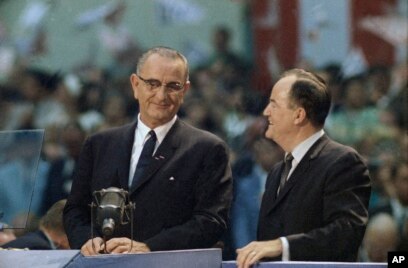
November 5, 1968: Eight years after losing one of the closest Presidential elections, former Vice President Richard Nixon wins one that's nearly as close. The Republican nominee wins 301 Electoral Votes, with 43.4 percent of the popular vote. With the incumbent, President Lyndon Johnson, having dropped out of the race, the Democratic Party nominated Vice President Hubert Humphrey, a former Senator from Minnesota, who won 191 Electoral Votes, with 42.7 percent of the vote.

Former Governor George Wallace of Alabama ran a 3rd-party candidacy based on racism, crime and anti-Communism, and won 5 States (Alabama, Arkansas, Georgia, Louisiana and Mississippi, plus 1 Electoral Vote in South Carolina) for 46 Electoral Votes, with 13.5 percent of the vote.

Nixon's popular vote advantage, not that it mattered, was just 512,000 votes. (He lost to John F. Kennedy by 118,000 votes in 1960.) Wallace did not win the following States, but almost certainly threw them from Humphrey to Nixon: Alaska, California, Delaware, Florida, Illinois, Kentucky, Missouri, New Jersey, North Carolina, Ohio, South Carolina, Tennessee and Wisconsin. That's 197 Electoral Votes. If Humphrey had gotten even 40 percent of those, 79, he would have won, 270-222-46.

The Republicans also gained 5 seats in the Senate -- but only 5 in the House. Among the new Senators elected were Republicans Bob Packwood of Oregon; and Democrats Thomas Eagleton of Missouri and Alan Cranston of California. Barry Goldwater of Arizona, who had lost his seat after being nominated for President and losing in 1964, won an open seat this time, and returned.

Despite rising to fame as an anti-Communist crusader in the late 1940s, Nixon was not the Republican nominee that the conservative movement wanted. Nor did he become the President that the movement wanted. They would have to wait.

But he certainly wasn't the President that some liberal activists, who thought of Humphrey as having sold them out with Johnson, and thus stayed home, helping to elect Nixon, wanted, either.

Johnson had stopped the bombing of North Vietnam on October 31. But the Paris Peace Talks stalled anyway. Nixon had a 30-point poll lead on Humphrey after the Conventions in August. In the last week, the polls showed a statistical dead heat. Someone wrote at the time that, if the election had been the next day, November 6, Humphrey would have won.

Think about what that would have meant. We don't know when he would have ended the Vietnam War, or how, but he wouldn't have kept it going for 4 more years, just so he could use it as an election issue again in 1972, like Nixon did. Certainly, there would have been no Cambodian Incursion in 1970, meaning no Kent State Massacre, and no "Killing Fields."

Humphrey certainly wouldn't have been as paranoid as Nixon, and wouldn't have had the war to be paranoid over. When the "Pentagon Papers" were published in 1971, Nixon started his "Plumbers" unit, to "stop leaks." That led directly to what was originally known as "the Watergate matter." Humphrey and his people wouldn't have committed any of the crimes that eventually fell under the umbrella term "Watergate."

The good things Nixon did? In 1970, he heavily increased spending on health care, and signed into law the creations of the Environmental Protection Agency (and the accompanying Clean Air Act and Clean Water Act), and the Occupational Safety & Health Administration (OSHA) -- both ideas proposed by Democratic Senators who ended up running for President in 1972 (Henry Jackson of Washington and George McGovern of South Dakota, respectively), but Nixon signed them into law, thus taking those accomplishments away. It was both good policy and good politics on his part. Surely, Humphrey would have had no trouble signing them into law as well.

Would Humphrey have made overtures to Red China, as Nixon did? I doubt it: "Only Nixon can go to China" has become a phrase meaning that only someone who was once so incredibly opposed to an issue could seriously tackle it. Nixon also "triangulated" China and the Soviet Union against each other, and got the Soviet Premier, Leonid Brezhnev, to sign the SALT treaty in 1972. Humphrey could have gotten an agreement with Brezhnev, but not with Mao Zedong. (Mao's fatal illness would also have been an obstacle to this: He died in 1976, in what would have been the last 4 months of Humphrey's 2nd term.)

Would Humphrey have been re-elected in 1972? His health hadn't yet become an issue, although he developed cancer in 1976, and chose not to make a 4th run for the Presidency, and died in 1978.

But a Humphrey Administration might have given Ronald Reagan, then Governor of California, an additional 4 years following his half-hearted attempt at the Republican nomination in 1968, to become the leader of the conservative movement (as actually happened after 1972, once Nixon couldn't run again). With California, much of the rest of the West, and the South (which had hated Humphrey since his 1948 election to the Senate because of his support of civil rights) in his pocket, and with the Democrats possibly "growing stale in power" after 12 years, maybe the slogan, already old when Reagan was elected in 1980, "It's time for a change," might well have worked in this alternate 1972.

But the problems Nixon faced in 1973 and 1974 before his forced resignation over Watergate were hard enough for an intelligent man like him. For Reagan, who was, to put it politely, not as smart as Nixon? (Or Humphrey, or LBJ, or RFK.) He would have botched the recession that began in late 1973.

And the Yom Kippur War? That was one of the moments between the 1962 Cuban Missile Crisis and the 1989 fall of the Berlin Wall that could have brought us into World War III. Nixon had Henry Kissinger as Secretary of State, with his "shuttle diplomacy." Reagan would have had... Who? Alexander Haig? That wouldn't have been good. George Schultz? That might have worked.

Presuming a Reagan elected in 1972 didn't get us into World War III, then, with his own scandals (just as he had in the 1980s), particularly with the recession raging, he wouldn't have been able to thread the needle, and he would have lost in 1976, especially if Jimmy Carter ran as a moral leader as he did in real life. Only this time, with the conservative movement completely discredited, Carter might have won in 1980 even with the Iran Hostage Crisis -- or, at the least, would not have lost nearly as badly.

Republican Presidents since might have included George H.W. Bush, but not George W., who went out of his way to be more like Reagan than his father. Bob Dole? John McCain? Mitt Romney? Maybe. Donald Trump? Not a chance: The American people would not have elected a celebrity again, especially one so dumb, he made Reagan look like Albert Einstein.

Democratic Presidents after Carter? Probably not Ted Kennedy. Bill Clinton? Maybe. Barack Obama? Maybe. Somebody else? Who knows.

The President in 2022? It would not be a Trump type. It would not be a paranoiac, alternately blustery and insecure, causing problems with both. But it wouldn't have been Joe Biden, either. The political setting that Trump built was probably a unique situation for Biden: As Marvel Comics' Dr. Strange might put it, the only scenario in which he wins.

The Nixon victory is where it all began. Donald Trump is not the betrayal of the Republican Party ideals set forth by Ronald Reagan in the late 1970s He is the culmination of the Republican Party ideals set forth by Richard Nixon in the late 1960s. Trump is not the cause, he is the effect.

Nixon won in 1968 because liberals, saddened over the assassination of Senator Robert F. Kennedy, disillusioned by the candidacy of Senator Eugene McCarthy, and angry over Humphrey's refusal to oppose LBJ on the Vietnam War sooner than his September 30 speech in Salt Lake City, mainly stayed home.

Humphrey remains the person born in South Dakota, ahead of George McGovern, and the person representing Minnesota in politics, ahead of Walter Mondale, who has come the closest to becoming President. A terminal at Minneapolis-Saint Paul International Airport, the Department of Health and Human Services Building in Washington, and a bridge in Florida are named for him.

So was the Hubert H. Humphrey Metrodome, the stadium in Minneapolis that served as home for MLB's Minnesota Twins, the NFL's Minnesota Vikings, and the football team at the University of Minnesota. Many baseball players complained about the white roof, which made a white baseball harder to see. Billy Martin, who managed the Twins, among other teams, and became a friend of Humphrey's may have been channeling his former teammate and coach Yogi Berra when he said, "It's a shame a great guy like HHH had to be named after it."

The University of Minnesota is also home to the Hubert H. Humphrey School of Public Affairs, but that's not the same thing as a Presidential Library.

This was the 1st time the left's refusal to vote for the most liberal candidate in the race doomed the Democratic Party, ending up with the candidate least like the President they'd hoped for. They have since done it once every generation. They didn't get Ted Kennedy or Jerry Brown in 1980, so they didn't vote for Jimmy Carter, and they got Ronald Reagan. They voted for Ralph Nader instead of Al Gore in 2000, and they got George W. Bush. They didn't get Bernie Sanders in 2016, so they didn't vote for Hillary Clinton, and they got Donald Trump. When will they ever learn? Hopefully, in 2020, they did, and will keep that knowledge in 2024.

The 1968 Presidential election is proof that every vote counts. As are those of 1980, 2000, 2016 and 2020. But 1968 is where the Trump phenomenon began, even if we didn't know it for years, even decades, to come. 1968: Remember, remember, that 5th of November.

*

November 5, 1968, like all modern U.S. Election Days, was a Tuesday. Actor Sam Rockwell was born.

The baseball season was over. Football was in midweek. And there were no games scheduled in the NHL. There were 3 pro basketball games played:

* The New York Knicks lost to the San Diego Rockets, 113-109 at the San Diego Sports Arena. Despite getting 26 points from Cazzie Russell, and scoring 39 points in the 4th quarter, the Knickerbockers couldn't overcome 28 points from Don Kojis. Future Knick, Laker and Heat coach Pat Riley scored 22 for the Rockets, who moved to Houston in 1971. The Arena still stands, under the name is now named the Pechanga Arena.

* The Los Angeles Lakers beat the Chicago Bulls, 112-109 in overtime at the Chicago Stadium. Elgin Baylor scored 31, and Wilt Chamberlain 24 with 21 rebounds.

* And in the ABA, the Oakland Oaks beat the Dallas Chaparrals, 135-116 at the Oakland Coliseum Arena. Rick Barry scored 30 for the Oaks, who went on to win the ABA Championship -- and then moved to become the Washington Capitals, and again in 1970 to become the Virginia Squires, and then folded with the ABA in 1976. The Chaps became the San Antonio Spurs in 1973, and entered the NBA when the ABA folded.

Wednesday, November 2, 2022

November 2, 1968: Madame Chennault & Nixon's Treason

Left to right: Richard Nixon, Anna Chennault and Henry Kissinger.
Photo taken in the Oval Office in 1971.
It should have been taken in federal court,
where they would not have been smiling.

November 2, 1968: It looks like President Lyndon Johnson's bombing halt in Vietnam, announced 2 days earlier, is going to give the election to Vice President Hubert Humphrey, the Democratic nominee. So former Vice President Richard Nixon, the Republican nominee, tells campaign aide H.R. Haldeman, who wrote it down, to "throw a monkey wrench into it."

So he calls Anna Chennault, an official of the anti-Communist "China Lobby," and the widow of Claire Chennault, beloved by the Nationalist Chinese for his role in the Army Air Force during World War II. And she calls called Bùi Diễm, the South Vietnamese Ambassador to the Paris Peace Talks, and tells him, "Hold on. We are going to win. Please tell your boss to hold on." In other words, you'll get a better deal from a President Nixon than you would from a President Humphrey.

The peace talks stalled. Humphrey's momentum slowed down. Three days later, Nixon won in a squeaker. Shortly thereafter, someone wrote that, if the polls had opened and closed 8 hours later, Humphrey would have won.

From 1969 onward, the official count of the U.S. service dead in Vietnam is 21,264 – 36 percent of all deaths. "Madame Chennault" and Richard Nixon can be blamed for this. But it goes beyond that: What Nixon, Haldeman, Madame Chennault, and anyone who assisted them in this endeavor did was treason. And yet, no one was ever prosecuted for it, despite the surviving evidence: The FBI's wiretap of her phone, Haldeman's written notes, and a mention of it on Nixon's Oval Office audiotapes, which did eventually bring him down -- over Watergate.

Madame Chennault, a.k.a. "The Steel Butterfly," died in 2018, at the age of 94. Bùi Diễm died in 2021, at 98.

*

November 2, 1968 was a Saturday. Among the college football games played that day were these:

* Number 1 Southern California beat Oregon, 20-13 at Autzen Stadium in Eugene, Oregon. USC got tied by Notre Dame in their regular-season finale, but still won the Pacific-Eight Conference title, setting up a 1 vs. 2 showdown in the Rose Bowl with...

* Ohio State, who went into November 2 at Number 2, and beat Number 16 Michigan State, 25-20 at Ohio Stadium in Columbus. The USC-ND tie vaulted Big Ten Conference Champion OSU to Number 1, and they beat USC in the Rose Bowl to win the National Championship.

* Number 3 Kansas beat Colorado, 27-14 at Memorial Stadium in Lawrence, Kansas. The next week, Kansas lost to Oklahoma, creating a tie for the Big Eight Conference title. Oklahoma had the head-to-head tiebreaker, and should have been the Big 8's representative in the Orange Bowl. But since Kansas finished 6th in the last poll after the regular season, and Oklahoma were 10th, the league selected Kansas instead.

* Number 4 Penn State beat Army, 28-24 at Beaver Stadium in State College, Pennsylvania. For the 1st time, a team coached by Joe Paterno (in his 3rd season in "Happy Valley") went undefeated during the regular season. They beat Kansas in the Orange Bowl. But except for that game, they hadn't beaten a single ranked opponent, so Ohio State, also with a perfect record but having beaten 4 ranked teams -- then Number 1 Purdue, Number 2 USC, Number 4 Michigan and Number 16 Michigan State -- were awarded the National Championship.

* Number 5 Tennessee beat UCLA, 42-18 at Neyland Stadium in Knoxville, Tennessee. The next week, Tennessee, which had already been tied by Georgia, lost to Auburn, costing them the Southeastern Conference title. They were still invited to the Cotton Bowl.

* Number 6 Purdue beat Illinois, 35-17 at Ross-Ade Stadium in West Lafayette, Indiana. Purdue had already ruined their chances by losing to Ohio State. Not that it was all their fault: At the time, the Big 10 had a rule that the Rose Bowl was the only bowl game a league team could go to. The Pac-8 also had that rule. Both leagues changed the rule for the 1975 season.

* Number 7 Georgia were held to a tie by Number 15 University of Houston, 10-10 at Sanford Stadium in Athens, Georgia. It was Georgia's 2nd tie of the season. They still ended up winning the SEC title.

* Number 8 University of California were held to a tie by the University of Washington, 7-7 at Husky Stadium in Seattle.

* Number 9 Michigan beat Northwestern, 35-0 at Dyche Stadium (now Ryan Field) in the Chicago suburb of Evanston, Illinois.

* Number 10 Missouri beat Oklahoma State, 42-7 at Faurot Field in Columbia, Missouri.

* Number 11 Texas beat Number 13 Southern Methodist (SMU), 38-7 at Memorial Stadium in Austin, Texas. This game settled the Southwest Conference title. Texas beat Tennessee in the Cotton Bowl.

* Number 12 Notre Dame beat Navy, 45-14 at John F. Kennedy Stadium in Philadelphia. Four weeks later, Navy returned to JFK Stadium, and lost to Army.

* Number 14 Louisiana State were upset by Mississippi, 27-24 at Tiger Stadium in Baton Rouge, Louisiana.

* Number 15 Arkansas beat Rice, 46-21 at Razorback Stadium in Fayetteville, Arkansas. Arkansas were invited to the Sugar Bowl, where they beat Georgia.

* Number 18 Florida State were upset by Virginia Tech, 40-22 at Doak Campbell Stadium in Tallahassee, Florida.

* Number 20 Florida were upset by Auburn, 24-13 at Florida Field in Gainesville.

* Wyoming beat Colorado State, 46-14 at Hughes Stadium in Fort Collins, Colorado. This was the 1st time that a trophy was awarded to the winner of this rivalry game, the Bronze Boot. Wyoming won the Western Athletic Conference title, but were not invited to a bowl game.

* And among New Jersey teams, Rutgers beat Delaware, 23-14 at the old Rutgers Stadium in Piscataway; and Princeton beat Brown, 50-7 at Brown Stadium in Providence, Rhode Island.

There were 4 games played in the NBA that day:

* The New York Knicks lost to the Detroit Pistons, 112-104 at Cobo Hall (now Huntington Place) in Detroit, despite 34 points and 26 rebounds from Willis Reed.

* The Cincinnati Royals beat the Philadelphia 76ers, 119-113 at The Spectrum in Philadelphia.

* The Milwaukee Bucks, in only the 8th game in franchise history, beat the San Francisco Warriors, 102-101 at the Milwaukee Arena. In 1974, it was renamed the Milwaukee Exposition, Convention Center and Arena, or "The MECCA." Since 2014, it has been named the UW-Panther Arena.

* And the Seattle SuperSonics beat the Chicago Bulls, 101-95 at the Seattle Center Coliseum.

There were 5 games played in the American Basketball Association:

* The New York Nets lost to the Minnesota Muskies, 130-114 at the Metropolitan Sports Center in the Minneapolis suburb of Bloomington, Minnesota.

* The Miami Floridians beat the Kentucky Colonels, 92-85 at Freedom Hall in Louisville.

* The Houston Mavericks beat the Indiana Pacers, 102-100 at the Indiana State Fair Coliseum (now the Corteva Coliseum) in Indianapolis.

* The Los Angeles Stars beat the New Orleans Buccaneers, 108-104 at the Los Angeles Memorial Sports Arena.

* And the Oakland Oaks beat the Denver Rockets, 120-106 at the Oakland Coliseum Arena.

There were 4 games played in the NHL:

* The Montreal Canadiens beat the Detroit Red Wings, 2-1 at the Montreal Forum.

* The Philadelphia Flyers beat the Toronto Maple Leafs, 3-2 at Maple Leaf Gardens in Toronto.

* The Minnesota North Stars beat the St. Louis Blues, 2-0 at the St. Louis Arena.

* The Los Angeles Kings beat the Pittsburgh Penguins, 3-2 at The Forum outside Los Angeles in Inglewood, California.

* And the New York Rangers, the Boston Bruins, the Chicago Black Hawks and the Oakland Seals were not scheduled.

Tuesday, October 4, 2022

October 4, 1968: Old Iron Pants

George Wallace (left) and Curtis LeMay

October 4, 1968: Former (and future) Governor George Wallace of Alabama, running for President on a 3rd-party ticket, selects his Vice Presidential nominee: Former Air Force General Curtis LeMay. This would prove to be a big mistake.

Born in 1906 in Columbus, Ohio, LeMay graduated from Ohio State University, and joined the U.S. Army Air Corps. Rising through the ranks, he was known for relentlessly training the men under his command, believing that they would only perform their duties properly in combat if they were second nature to them. The men called him "Old Iron Pants" and, for his smoking, "The Big Cigar." He didn't mind either nickname.

He determined that a difference in weather meant that the kind of bombing that was done to Nazi Germany wasn't working on Imperial Japan, and changed the tactics. He led Operation Meetinghouse, the B-29 firebombing of Tokyo, describing it as follows: "The U.S. had finally stopped swatting at flies and gone after the manure pile." (That was for his official report. I suspect that, privately, he used a word other than "manure.")

Upon hearing his announcement as Wallace's running mate, Robert McNamara, who had recently resigned as Secretary of Defense to become Chairman of the World Bank, released a statement, saying of LeMay, "He was the finest combat commander of any service I came across in war. But he was extraordinarily belligerent, many thought brutal."

The U.S. Air Force was separated from the Army in 1947. LeMay became a full 4-star General in 1951, during the Korean War, and retired in 1965, early in the Vietnam War. Early in 1968, conservatives in California wanted him to challenge Senator Thomas Kuchel in the Republican Primary, but he declined. Kuchel was subsequently beaten in the Primary by Max Rafferty, the State's Superintendent of Schools, who then lost the general election to Democrat Alan Cranston, formerly the State's Controller.

Initially, LeMay supported Nixon in the 1968 election. Wallace had served under LeMay in 1947, and asked him to be his running mate. Twice, LeMay turned him down. Wallace's history as a segregationist didn't faze LeMay: He simply wanted Nixon to win, and thought Wallace would pull votes from him.

Wallace also asked FBI Director J. Edgar Hoover, who shared his beliefs about Communists and civil rights. Hoover turned him down. He also asked former Governor John Connally of Texas, a conservative Democrat who would later switch to the Republican Party. Connally also turned him down. At this point, instead of realizing that he, himself, might be the problem, Wallace asked LeMay a 3rd time, and he accepted.

At a press conference in Pittsburgh on October 4, Wallace announced LeMay as his running mate. LeMay spoke for 7 minutes, and undid all the work Wallace had put in to build himself up over the last 4 years. He said, "We seem to have a phobia about nuclear weapons." He added:

I think there are many times when it would be most efficient to use nuclear weapons. However, the public opinion in this country and throughout the world throw up their hands in horror when you mention nuclear weapons, just because of the propaganda that's been fed to them. I don't believe the world would end if we exploded a nuclear weapon.

He also said, of the North Vietnamese, that American firepower could "bomb them back to the Stone Age." This was just 4 years after Senator Barry Goldwater of Arizona was nominated for President by the Republicans, and scared the voters by saying that the tactical use of nuclear weapons in Vietnam should be considered. And he was accused of racism, for voting against the Civil Rights Act of 1964. Voters thought him too extreme, and he got just 37 percent of the vote, the lowest total for a Republican nominee between 1936 and 1992.

Now, LeMay was making Wallace look like the "mad bomber" that Goldwater really wasn't, when Wallace was already the racist that Goldwater really wasn't. Just as Goldwater tried to qualify his remarks with, "I don't think we would ever use them," LeMay tried to backtrack a few days later, saying, "I never said we should bomb them back to the Stone Age. I said we had the capability to do it." It didn't help.

Many people who were supporting the populist, racist stances of Wallace were realizing that this ticket simply wasn't acceptable. The Democratic nominee, Vice President Hubert Humphrey, started calling Wallace and LeMay "the Bombsy Twins." (As opposed to literary figures the Bobbsey Twins.) Nixon said nothing: He knew, contrary to what LeMay suspected, that, as long as Wallace was in the race, he would take more votes from Humphrey than from Nixon.

On October 24, Wallace headlined the 1st political rally at the new Madison Square Garden in New York, which had replaced "The Old Garden" the preceding February 11. The Garden, hosting George Wallace? Anything for a buck, I suppose. There were protesters, but they should have ignored Wallace, to let his campaign die of silence, and then have gone after Richard Nixon. It might, almost literally, have made all the difference in the world.

On November 5, Nixon won 301 Electoral Votes, with 43.4 percent of the popular vote. Humphrey won 191 Electoral Votes, with 42.7 percent of the vote. Wallace won 5 States -- Alabama, Arkansas, Georgia, Louisiana and Mississippi, plus 1 Electoral Vote in South Carolina -- for 46 Electoral Votes, with 13.5 percent of the vote.

Wallace did not win the following States, but almost certainly threw them from Humphrey to Nixon: Alaska, California, Delaware, Florida, Illinois, Kentucky, Missouri, New Jersey, North Carolina, Ohio, South Carolina, Tennessee and Wisconsin. That's 197 Electoral Votes. If Humphrey had gotten even 40 percent of those, 79, he would have won, 270-222-46. 
LeMay probably didn't cost Wallace a single State. But did he, more than Wallace himself, throw any States from Humphrey to Nixon? Who knows.

LeMay never ran for office again, and died in 1990.

*

October 4, 1968 was a Friday. Baseball was between Games 2 and 3 of the World Series, which the Detroit Tigers would win in 7 games. And it was too early for the NBA, ABA and NHL seasons. But there was one score on this historic day, in college football: The University of Houston, then ranked Number 12 in the country, beat the University of Cincinnati, 71-33 at the Astrodome in Houston. Yes, that's in football, not basketball.

Sunday, August 28, 2022

August 28, 1968: Riot at the Democratic Convention

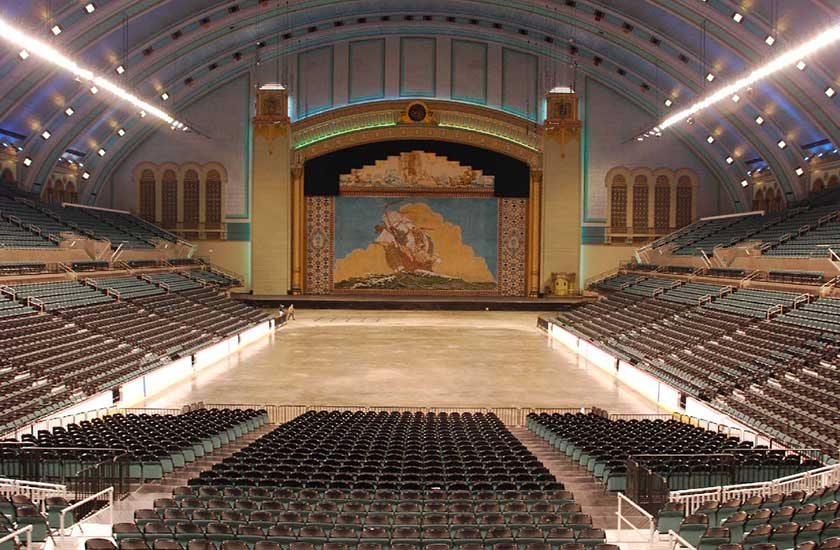
August 28, 1968: The Democratic National Convention is in progress, held at the International Amphitheatre, at 4200 South Halsted Street on the South Side of Chicago. Anger over the Party's role in the Vietnam War has led to the incumbent President, Lyndon B. Johnson, dropping out of the race for what would have amounted to a 2nd full term. At this point, LBJ couldn't even attend the Convention -- and a celebration planned for August 27, his 60th birthday, had to be canceled.

Given the way things were set up at the time, with Primaries not yet having the influence they would have -- the 1968 nomination process would lead the Democratic Party to change the process for 1972 and thereafter -- once LBJ dropped out, the nominee was always going to be the Vice President, Hubert Humphrey.

It was not going to be Senator Robert F. Kennedy of New York, brother of John F. Kennedy, the President whose assassination in 1963 led to the rise of LBJ from Vice President to President. RFK had won key Primaries, but Johnson, no longer a candidate but still the leader of the Party, controlled the Delegates. RFK was shot and killed mere minutes after claiming victory in the California Primary, but even if he had lived, the chances of his winning the nomination over Humphrey were not good.

It was not going to be Senator Eugene McCarthy of Wisconsin: He was a single-issue candidate, and once Bobby Kennedy got into the race, he became "the peace candidate," and McCarthy was finished.

With RFK dead, and McCarthy only running half-heartedly thereafter, there was no real challenge to Humphrey. And people who wanted the war over were furious. They demonstrated in Chicago's Grant Park, which the main hotel for Convention Delegates, the Conrad Hilton Hotel (now the Hilton Chicago), overlooked.

And, egged on by agitators Abbie Hoffman and Jerry Rubin -- who were more interested in making trouble than making peace -- the demonstrators challenged the Chicago Police. The Police charged, and there was a riot. It became known as "the New Battle of the Midway" and "the Melee on Michigan Avenue."

The cops wore short-sleeved blue shirts (understandable due to the heat) and blue helmets (understandable due to the need for protection). They swung their nightsticks freely, and even poked demonstrators in the stomach.

Borrowing a line from Bob Dylan's song "When the Ship Comes In," demonstrators chanted, "The whole world is watching! The whole world is watching! The whole world is watching!" And TV cameras were, indeed, getting the whole picture: The police were seen as the aggressors -- although half of the viewing audience thought them justified.

The Number 1 song in America was "People Got to Be Free" by The Rascals. But the people in power didn't seem to be listening.

Mayor Richard J. Daley, the Convention's host and the cops' boss, was as much a part of the Democratic Party establishment as anyone. The year before, he had been elected to a 4th term as Mayor of what was still the nation's 2nd-largest city. (It would be the early 1980s before its "white flight"-led population decline allowed Los Angeles to surpass it.) And, with RFK dead, he was probably now the most famous Irish, and the most famous Catholic, politician in America. He was 66 years old, and looked even older due to his receding hairline, heavy jowls and fat physique.
At a press conference to address the violence, he came up with one of the all-time great malaprops/Freudian slips: "Gentlemen, let's get something straight, for once and for all: The policeman is not there to create disorder. The policeman is there to preserve disorder."

When the nominating speeches were given for the candidates, Senator Abraham Ribicoff of Connecticut, who had previously been Secretary of Health, Education & Welfare under President John F. Kennedy, rose to nominate Senator George McGovern of South Dakota, in the faint hope of uniting RFK and McCarthy supporters behind a peace candidate.

He knew what was happening outside, and he knew that Daley knew what was happening outside. Being Jewish, Ribicoff decided to, as would be said in later years, "go there": He said, "With George McGovern as President, we wouldn't have Gestapo tactics in the streets of Chicago!"

Half the Amphitheatre cheered. The other half booed. A camera was put on Daley, and people who could read lips thought he yelled at Ribicoff: "You Jew fucker!" Congressman Dan Rostenkowski, a Daley ally, told an interviewer in 1998, on the 30th Anniversary, that Daley had actually called him, "You faker," explaining that "faker" was a frequent insult of Daley's.

Whatever Daley said, anti-Semitic or not, Ribicoff did not back down. He stared at Daley, nodded a couple of times, and said, "How hard it is, how hard it is to accept the truth!"
Neither man served in World War II: Daley was the Minority Leader of the Illinois State Senate, while Ribicoff was a judge in Hartford. Regardless, at that moment, Ribicoff was tougher than Daley.

Humphrey won the nomination easily. The next night, he addressed the violence and the anger, inside the hall and out, in his acceptance speech:

This moment, this moment is one of personal pride and gratification. Yet one cannot help but reflect the deep sadness that we feel over the troubles and the violence which have erupted, regrettably and tragically, in the streets of this great city, and for the personal injuries which have occurred.
Surely we have now learned the lesson that violence breeds counterviolence, and it cannot be condoned, whatever the source.
I know that every Delegate to this Convention shares tonight my sorrow and my distress over these incidents. And for just one moment, in sober reflection and serious purpose, may we just quietly and silently, each in our own way, pray for our country.
And may we just share for a moment a few of those immortal words of the prayer of St Francis of Assisi, words which I think may help heal the wounds, ease the pain and lift our hearts. Listen to this immortal saint:
"Where there is hatred, let me know love. Where there is injury, pardon. Where there is doubt, faith. Where there is despair, hope. Where there is darkness, light."
Those are the words of a saint. And may those of us of less purity listen to them well and may America tonight resolve that never, never again shall we see what we have seen.
My mother had recently turned 21, and so was voting for President for the first time. My father was voting for the second time. Mom saw this speech, and she told me years later that she thought Humphrey "was on the verge of a nervous breakdown."

In 2008, on the 40th Anniversary, C-SPAN showed the speech in its entirety, and I saw what she meant. "Nervous breakdown" was a bit of a stretch, but Humphrey seemed a beaten man, on the verge of tears, knowing that this nomination, which he had previously tried for halfheartedly at the 1956 Convention and in the 1960 Primaries, was a "poisoned chalice."

At the very least, Humphrey chose a nominee for Vice President who did him no harm, and may even have helped: Senator, and former Governor, Edmund S. Muskie of Maine. Certainly, he looked like a better choice for Vice President that the Republican nominee, Governor Spiro T. Agnew of Maryland.

Other conventions have had Delegates walking out thinking, "We've nominated the wrong guy." There was no right guy available to the Democrats in August 1968.

A week later, former Vice President Richard Nixon, already nominated for President by the Republican Party in Miami Beach on August 8, rode in an open car down Michigan Avenue, and was wildly cheered. Nixon may have been the only person who went to Chicago that Summer and got his reputation enhanced.

Republicans have long blamed Nixon's very close 1960 loss to John F. Kennedy on shenanigans by officials in Chicago. In 1968, events in Chicago made Nixon the 37th President of the United States.

Under Johnson, the U.S. Department of Justice made no effort to prosecute anyone for crimes committed at the Convention. When Nixon took office the following January 20, with his former campaign manager, John Mitchell, as the U.S. Attorney General, such efforts began. On March 20, eight demonstrators were indicted: Abbie Hoffman, Jerry Rubin, David Dellinger, Tom Hayden, Rennie Davis, John Froines, Lee Weiner, and Bobby Seale. Seale, a member of the Black Panther Party, eventually had his case separated, and the "Chicago Eight" became a "Chicago Seven."

On February 18, 1970, all defendants were acquitted on the charge of conspiracy, a charge that left Hoffman incredulous: "Conspiracy? We can't even agree on lunch!" On the charge of traveling across State Lines with intent to incite a riot, Froines and Weiner were acquitted, but the others were convicted. They were sentenced to 5 years in prison, but remained free upon appeal. On November 21, 1972, 2 weeks after Nixon was re-elected, the U.S. Court of Appeals threw out their convictions.

My parents each made lists of reasons to vote for Humphrey and reasons to vote for Nixon, and, for each of them, Nixon came out ahead. They both voted for Nixon. Mom told me she regretted it the instant she stepped out of the voting booth. Dad took a little longer to regret it. When the Democrats nominated McGovern to oppose Nixon in 1972, both parents voted for McGovern, for all the good it did.

As of August 28, 2022, my mother is still alive, and has never voted for a Republican for President again. My father died in 2014, and made one exception, for Ronald Reagan in 1984. He would not have voted for Trump.

*

August 28, 1968 was a Wednesday. Scottish actor Billy Boyd was born.

These Major League Baseball games were played that day:

* The New York Yankees were actually in Chicago that night, a mile and a half to the northeast, at Comiskey Park. They lost to the Chicago White Sox, 3-0. Rookie lefthander Jerry Nyman got his 1st major league victory, outpitching Mel Stottlemyre. The only Yankee hits were singles by Mickey Mantle, Horace Clarke, and 2 by catcher Frank Fernandez. Nyman would make his last big-league appearance just 2 years later, with a career record of 6-7.

* Back in the Big Apple, the New York Mets hosted a doubleheader against the Cincinnati Reds at Shea Stadium, and got swept, losing the 1st game 8-3, and losing the 2nd game 5-2. Pete Rose went 2-for-9 over the 2 games. Johnny Bench didn't play in the opener, and went 1-for-4 in the nightcap.

* The Atlanta Braves swept the Philadelphia Phillies in a doubleheader at Connie Mack Stadium in Philadelphia. The Braves won the 1st game 9-2, and the 2nd game 2-1. Hank Aaron went 5-for-8 with a home run and 2 RBIs on the day.

* The Washington Senators beat the Baltimore Orioles, 3-2 at Memorial Stadium in Baltimore. Frank Howard hit a home run for the Senators. For the Orioles, Frank Robinson went 1-for-4, and Brooks Robinson went 2-for-3 with a walk.

* The Oakland Athletics beat the Boston Red Sox, 5-3 at Fenway Park in Boston. Rookie Reggie Jackson went 1-for-5, and Carl Yastrzemski went 1-for-3 with a 2-run homer.

* The St. Louis Cardinals beat the Pittsburgh Pirates, 8-0 at Forbes Field in Pittsburgh. Bob Gibson pitched a 4-hit shutout, striking out 14. At the conclusion of this game, his ERA for the season was 1.03. Willie Stargell went 0-for-4, and Roberto Clemente did not play.

* The Cleveland Indians beat the Minnesota Twins, 3-2 at Cleveland Municipal Stadium. Rod Carew went 0-for-3, but got an RBI on a groundout. Harmon Killebrew did not play.

* The Detroit Tigers beat the California Angels, 6-1 at Tiger Stadium in Detroit. Denny McLain went the distance, and was now 26-5 with a month to go. His chances of winning 30 games in the season were now very good. Al Kaline did not play.

* In a doubleheader at Dodger Stadium in Los Angeles, the Los Angeles Dodgers lost the 1st game to the Chicago Cubs, 7-4, but won the 2nd game, 8-4. Ernie Banks went 2-for-9 with 2 RBIs.

* And the San Francisco Giants beat the Houston Astros, 4-3 at Candlestick Park in San Francisco. Willie McCovey hit a home run, and Willie Mays went 1-for-3 with an RBI.

Thursday, July 14, 2022

July 14, 1948: The Democrats Split Over Civil Rights

Mayor Hubert Humphrey of Minneapolis.
He was 37 years old.

July 14, 1948: The Democratic National Convention is being conducted at the Convention Hall of the Philadelphia Civic Center. It's not going well. Their nominee for President, the incumbent, Harry S Truman, is not popular, having had a very rough 1st term, which wasn't even intended as his: He became President when Franklin D. Roosevelt died on April 12, 1945.

The Republicans had a successful Convention, in the same building, nominating Governor Thomas E. Dewey of New York for President, and Governor Earl Warren of California for Vice President. What's more, the Democrats were divided between North and South, on the issue of civil rights: The Northern Delegates wanted to expand them, while the Southern Delegates, based on white supremacy, were determined that there would be no progress at all.

The Convention's Chairman was Senator Alben Barkley of Kentucky, the Senate Minority Leader, the Majority Leader from 1941 to 1946. The Republicans had proposed "to clean the cobwebs" from the federal government. Barkley invoked the Republicans' guilt over the Great Depression, telling the Convention, "I am not an expert on cobwebs. But if my memory does not betray me, when the Democratic Party took over, 16 years ago, even the spiders were so weak from starvation, they could not weave a cobweb in any department of the government in Washington!" 

But the Republicans had ridden to victory in the Congressional elections of 1946, reminding the American people of the regulations of FDR's New Deal, which Truman had kept in place, and summarized it in two words: "Had enough?" The answer seemed to be, "Yes." The Democrats' goal of more federal government action seemed to be out of step with what the country wanted. And civil rights? For most white Americans, this issue was not on the front burner, or even on the back burner.

But 2 Delegates proposed a strong civil rights plank for the Party's platform, including an endorsement of the pro-civil rights actions already taken by Truman. (Just 12 days after this, Truman ordered the racial desegregation of the U.S. armed forces.) They were Hubert Humphrey, the Mayor of Minneapolis, and Paul Douglas, a former member of the Chicago City Council. Both men were candidates for the U.S. Senate that year.

In a speech heard on nationwide radio -- and, for the 1st time, seen on nationwide television (the 1940 Conventions were televised, but not nationally) -- Humphrey made it a moral crusade, connecting it with the American Revolution and the spirit of 1776:

To those who say, my friends, to those who say that we are rushing this issue of civil rights, I say to them we are 172 years late! To those who say this civil rights program is an infringement on States' rights, I say this: the time has arrived in America for the Democratic Party to get out of the shadow of States' rights, and walk forthrightly into the bright sunshine of human rights!

The Northern Delegates erupted in cheers. The Southern Delegates were dead silent. The plank was voted on, and it passed, 651½–582½.

Of the 278 Southern Delegates, 35 walked out: All 22 from Mississippi, and 13 from Alabama. The remaining Southern Delegates gave their support to Senator Richard B. Russell Jr. of Georgia. It wasn't enough to prevent Truman's nomination on the 1st ballot: He won 926 delegates, Russell 266, with the other 42 votes scattered.

The bolted delegates and other Southerners then formed the States' Rights Democratic Party, a.k.a. the Dixiecrats, who nominated Governor Strom Thurmond of South Carolina for President, and Governor Fielding Wright of Mississippi for Vice President.

In addition to this challenge from the right, there was a challenge from the left: Henry Wallace, dumped as Vice President in favor of Truman at the 1944 Convention, formed a new party with an old name, the Progressive Party. The concern was not that Wallace would win any States, but that he would gain enough liberal votes, especially enough black votes, to cost Truman the City of New York, and thus the State of New York; Chicago, and thus Illinois; and Los Angeles, and thus California.

Nobody thought Truman could win. Thurmond, the last survivor of the 4 main candidates, admitted in a 1988 interview, "I thought Dewey would win." Unlike Wallace, Thurmond was under no illusions about his own victory: He wasn't on the ballot in any State outside the South, but he could cost Truman some Southern States, to the point where, even if he finished with more Electoral Votes than Dewey, he would fall short of the 267 necessary to become President, throwing the election into the House of Representatives, which was controlled by the Republicans, and would choose Dewey.

Nobody thought Truman could win, not even inside the Convention Hall. Nobody, that is, except Truman himself. He chose Barkley as his nominee for the vacant Vice Presidency, and told the Convention, and told the country, "Senator Barkley and I are going to win this election, and make the Republicans like it, and don't you forget it!" For the 1st time since it was gaveled into session, the Convention had a positive message, and it gave Truman a standing ovation.

Thurmond did cost Truman the States of South Carolina, Alabama, Mississippi and Louisiana, winning them himself. And Wallace did cost Truman every State in the Northeast except Massachusetts and Rhode Island, throwing them to Dewey.

But Truman won, and brought Democratic majorities to both houses of Congress, returning Rayburn to the Speakership, and making Scott Lucas of Illinois the Senate Majority Leader. Douglas was elected to Illinois' other Senate seat, and Humphrey was elected in Minnesota, beginning a career that would see him be elected Vice President, and run for the Presidency 3 times.

In 1953, Earl Warren, the Republican nominee for Vice President in 1948, was appointed to be Chief Justice of the U.S. Supreme Court. He would lead a branch of the civil rights revolution from the highest court of the land.

But the shift from the Republicans being "the Party of Lincoln" to the Democrats being "the Party of Civil Rights" was well underway. In 1964, President Lyndon B. Johnson signed a Civil Rights Act into law. Humphrey, then the Majority Whip, had gotten it pushed through the Senate. Strom Thurmond subsequently became the 1st major politician to switch from the Democratic Party to the Republican Party over the issue of race.

*

July 14, 1948 was a Wednesday. There were no scores on this historic day: The only sport in-season at the time was baseball, and it was the All-Star Break. The day before, the American League won the All-Star Game, beating the National League, 5-2 at Sportsman's Park in St. Louis.

Tuesday, May 10, 2022

May 10, 1960: JFK Wins the West Virginia Primary

FDR Jr. (left) and JFK

May 10, 1960: West Virginia holds its Presidential Primary election. The results surprise a lot of people.

Senator John F. Kennedy of Massachusetts knew that only one Roman Catholic before him had a serious shot at the Presidency, and he had lost badly: Governor Alfred E. Smith of New York, the Democratic Party's nominee in 1928. He and the people around him -- including his father, Joseph P. Kennedy -- thought maybe the nation was ready to accept a Catholic President.

"Old Joe" had been U.S. Ambassador to Britain going into the 1940 election, and thought he could be the 1st Catholic President. But President Franklin D. Roosevelt chose to run for a 3rd term, in the face of World War II raging through Europe and representing a threat to America; and Joe's response to that war made him look like a defeatist, and even, in the eyes of many people, favorable to the Nazis.

So Joe knew it wouldn't be him. He turned his attention to his eldest son, Joseph P. Kennedy Jr. Joe Sr. made a deal with FDR: He would resign as Ambassador and give a close-to-Election Day radio speech endorsing FDR, and FDR would support Joe Jr. for the office of Lieutenant Governor of Massachusetts in 1942.

But the attack on Pearl Harbor meant that Joe Jr. would enlist in the U.S. Navy, followed by his brothers John and Robert, and would be unavailable for public office for the duration of The War. Joe Jr. was killed in a plane accident in 1944, and Joe Sr. never forgave FDR for this.

Joe Sr. turned his attention to John, or "Jack." Jack followed the path that Joe Jr. would have followed had he survived: Elected to the U.S. House of Representatives in 1946, then to the U.S. Senate in 1952, then stand as a candidate for Vice President at the 1956 Democratic Convention.

JFK led on the 1st ballot, but didn't have a majority of the Delegates. He knew that if it wasn't going to happen then, it wasn't going to happen later: He would lose support. So he dropped out, and endorsed the 2nd-place candidate, Senator Estes Kefauver of Tennessee, who was nominated along with former Governor Adlai Stevenson of Illinois, who was again clobbered in November by Dwight D. Eisenhower.

JFK told a fundraising dinner that if it had been his brother Joe, he wouldn't have dropped out, he would have been nominated, and Stevenson's loss would have been blamed on Joe's religion. (It wouldn't have been: Stevenson's only chance was for Ike to drop out due to his health, or die, and run against Vice President Richard Nixon.)

But the Kennedys -- Jack as candidate, Bobby as campaign manager, and Old Joe as funder, with Jack telling people to make every cent count, because his father said, "I'll be damned if I'll pay for a landslide!" -- prepared for 1960. As the only New Englander in the race, nobody seriously challenged JFK in New Hampshire on March 8. But on April 5, JFK beat Senator Hubert Humphrey of neighboring Minnesota, 56 percent to 43 percent.

But Wisconsin's Democratic vote was overwhelmingly Catholic: Polish and German, and to a lesser extent Irish and Italian. The next Primary, on April 26, would also be in a heavily Catholic State: Pennsylvania. JFK won that, easily, too.

The true tests would be in 2 overwhelmingly Protestant States on May 10: West Virginia and Nebraska. If Kennedy could do well in those, maybe he would do well in the general election. Fortunately, JFK had a secret weapon: Franklin Delano Roosevelt Jr., the son of a President who, 15 years after his death, was still beloved in that State.

FDR Jr. had served New York's Hudson Valley in Congress from 1949 to 1955. But because he was born at the family’s vacation home at Campobello Island, New Brunswick, Canada, he could not become President of the United States like his father went on to do.

But, despite the rift between their fathers, FDR Jr. had no problem campaigning for JFK in West Virginia. Poor people -- mostly farmers and coal miners -- saw them together, and presumed that the younger Kennedy would govern like the elder Roosevelt.

Not all of them. At one point, in his Harvard accent, JFK asked in a speech, "What wrong with the American farmer?" It came out "fah-mah?" And someone yelled out, "He's stah-ving!" But someone else walked up to JFK, and said, "Somebody told me you've never worked a day in your life. Well, let me tell you something: You ain't missed much!" JFK won 60 percent of the vote, Humphrey just 39 percent.

JFK won the nomination, and the general election. In 1963, he appointed FDR Jr. to be Under Secretary of Commerce. In 1965, the new President Lyndon B. Johnson, appointed FDR Jr. to be the 1st Chairman of the Equal Employment Opportunity Commission. He resigned the next year, to run for Governor of New York. He won the Democratic nomination, but lost to another political scion, incumbent Nelson Rockefeller.

FDR Jr. died in 1988. His son, Franklin Delano Roosevelt III, is a retired economist and a professor at Sarah Lawrence College, and successfully led a drive to get a memorial to Eleanor Roosevelt in Riverside Park, not far from Grant's Tomb. He had 3 children, 1 son, but named him Nicholas rather than Franklin Delano Roosevelt IV. Through his mother, FDR III is also related to the du Pont family.

*

May 10, 1960 was a Tuesday. In Dublin, another famous Irishman was born: Paul David Hewson, later to become Bono, the lead singer of U2.

And these baseball games were played:

* The New York Yankees lost to the Cleveland Indians, 5-1 at Yankee Stadium. Yankee reliever Ryne Duren, knowing for being alternately very effective and very wild with a blazing fastball, was wild in the top of the 10th inning, allowing 4 runs, including a home run by Jimmy Piersall. The Yankee run came on a home run by Elston Howard. Mickey Mantle went 0-for-3 with 2 walks, Yogi Berra went 0-for-4, and Roger Maris went 0-for-3 with 1 walk.

* The Boston Red Sox beat the Chicago White Sox, 9-7 at Fenway Park in Boston. Ted Williams, in his final season, appeared as a pinch-hitter, and drew a walk.

* The Kansas City Athletics beat the Baltimore Orioles, 10-0 at Memorial Stadium in Baltimore. Brooks Robinson went 1-for-3. Dick Hall pitched a 6-hit shutout for the A's. The O's were impressed, and traded for him right before the next season started, and he helped their rise to contention, helping them win the 1966 World Series. 

* The Detroit Tigers beat the Washington Senators, 1-0 at Griffith Stadium in Washington. Don Mossi pitched a 3-hit shutout. Al Kaline went 0-for-4.

* The Pittsburgh Pirates beat the Los Angeles Dodgers, 3-2 at the Los Angeles Memorial Coliseum. Vernon Law outpitched Johnny Podres. Hal Smith and Bill Mazeroski hit home runs, a combination that would prove glorious for the Pirates on October 13. Roberto Clemente went 2-for-4. Duke Snider went 0-for-4.

* The San Francisco Giants beat the Philadelphia Phillies, 4-2 at Candlestick Park in San Francisco. Willie Mays went 0-for-4, but Willie Kirkland went 3-for-4 with an RBI.

* A cold snap and rain forced the Chicago Cubs to postpone an entire week's worth of games. On this day, they were scheduled to play the Cincinnati Reds at Wrigley Field in Chicago. The game was postponed to August 22, and the Cubs won, 6-3. Ernie Banks went 2-for-4. Frank Robinson went 2-for-3 with a solo home run and a walk.

* The Milwaukee Braves also postponed a few games due to rain and cold. But, on this day, they and the St. Louis Cardinals were not scheduled to play.

December 31, 1999 & January 1, 2000: The Millennium

December 31, 1999:  The Millennium arrives. The people of planet Earth survived. At a terrible cost. But we hadn't destroyed ourselves. ...