Showing posts with label mickey cochrane. Show all posts

Monday, December 12, 2022

December 12, 1933: The 2nd Athletics Fire Sale

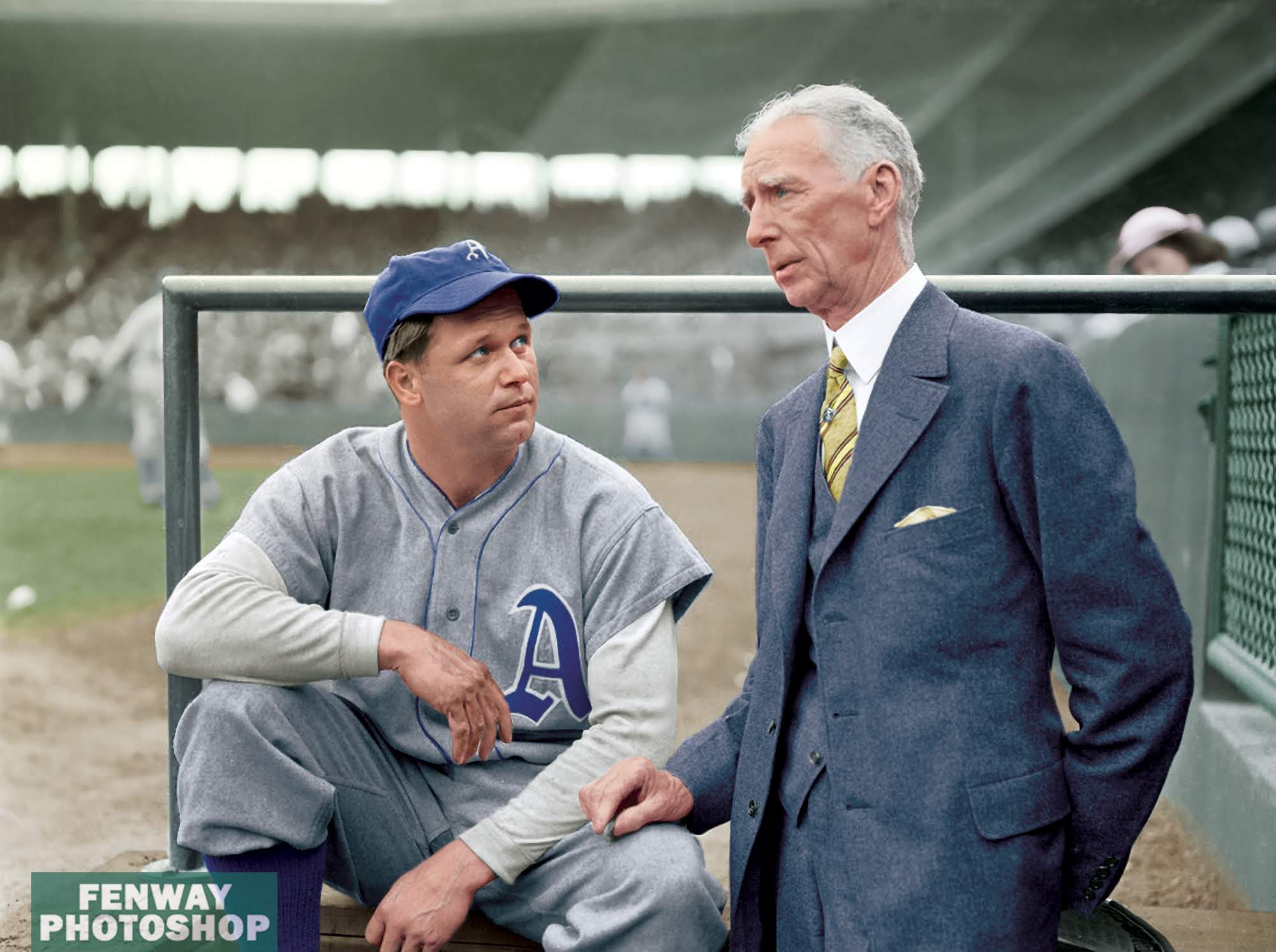
Jimmie Foxx (left) and Connie Mack

September 28, 1932: Connie Mack begins the breakup his of his Philadelphia Athletics. The 1st time he'd done so, in 1914-15, it was because he couldn't keep up with the salaries being offered by the Federal League teams. This time, it was personal.

In 1925, the A's went 88-64, and were only 8 1/2 games behind the 1st-place Washington Senators. But the rise of the "Murderers' Row" Yankees delayed Philadelphia's return to greatness. In 1929, they began a run of 3 seasons in which they won 313 games, and game within a Game 7 loss in 1931 of winning 3 straight World Series.

But Mack lost all of his non-baseball holdings in the stock market Crash of 1929. He couldn't fund the A's with any other income. So, after the 1932 season, despite a strong 94-60 record (but 13 games behind the Pennant-winning Yankees), he began to sell of his 2nd generation of stars.

On September 28, 1932, he sent left fielder Al Simmons, 3rd baseman Jimmy Dykes, and center fielder Mule Haas are all sold to the Chicago White Sox, for $100,000. Simmons would be elected to the Baseball Hall of Fame, and Dykes and Haas would have been perennial All-Stars had the All-Star Game been founded before 1933.

But the big day was December 12, 1933, when Mack made 3 separate moves:

* Pitchers Lefty Grove and Rube Walberg, and 2nd baseman Max Bishop, are traded to the Boston Red Sox for Bob Kline and Rabbit Warstler and $125,000. Along with Carl Hubbell, Grove was 1 of the 2 best lefthanded pitchers in the game, and would go to the Hall of Fame. Walberg was the 3rd starter on the A's, behind Grove and George Earnshaw, but would have been the ace on many teams.

Key to this deal was the fact that Tom Yawkey had recently turned 30 and come into his inheritance, and had bought the Red Sox, and could afford to spend whatever he wanted to build a championship team. He did try, but the Yankees' dynasty that was restarted in 1936 thwarted his early efforts.

Grove's 199 wins during the 1930s made him the winningest pitcher of the decade.

* Catcher Mickey Cochrane was traded to the Detroit Tigers for Johnny Pasek and $100,000. The Tigers subsequently named Cochrane player-manager, and won the next 2 American League Pennants.

* Finally, before the ink was dry on the previous 2 trades, Mack traded Pasek and Earnshaw to the White Sox for Charlie Berry and $100,000. So, in 1 day, Mack sold off his 3 best pitchers.

The A's went from 94-60 in 1932 to 79-72 in 1933, to 68-82 in 1934, to 58-91 in 1935. On December 10, 1935: 1st baseman Jimmie Foxx and pitcher Johnny Marcum were traded to the Red Sox for Gordon Rhodes, George Savino and $150,000. Foxx was the best righthanded slugger in the game, and would go to the Hall of Fame. Marcum was the Mackmen's best pitcher following the '33 fire sale, and Mack dumped him, anyway.

The A's never recovered, and the Mack family ended up selling the A's in 1954, to a buyer who moved them to Kansas City. They failed there as well, and Charlie Finley bought them in 1960, moving them to Oakland in 1968. After 5 straight AL Western Division titles, 1971-75, including 3 straight World Series wins, 1972-74, he broke them up, and the team crashed. New owner Walter Haas rebuilt them in the early 1980s, but the pitching collapsed, preventing a new dynasty. The A's rebuilt again, and won 3 straight Pennants, 1988-90, but after another Division title in 1992, were broken up again.

The pattern held: By 2000, the "Moneyball" regime built a team that reached the Playoffs 5 times in 7 years, but won no Pennants. They sold off, rebuilt, and made 3 straight Playoffs, 2012-14. They couldn't afford to keep it going, sold off, rebuilt, and made 3 straight Playoffs, 2018-20. They couldn't afford to keep it going, and sold off. In 2022, the A's lost 102 games, their most since the Finley fire sale bottomed out at 108 in 1979.

Rumors of the A's moving again have been renewed, since they haven't been able to get a deal to replace the Oakland Coliseum. If they do move, how long will it be before they win again? And, if so, how long before they have a 9th fire sale?

One thing is for sure: The A's are not moving back to Philadelphia, where the Phillies, having won the 2022 NL Pennant, are overwhelmingly popular. The city can certainly support one winning team, but not two teams. But, wherever they go, or if they stay, at some point, the A's will go back to their Philadelphia roots, and break it all down and start all over again.

In 1949, Ogden Nash, my grandmother's favorite poet, wrote "Line-Up for Yesterday" for Sport magazine, an alphabetical list of star players. For the letter Q, Nash had to cheat a little, and wrote:

Q is for Don Quixote
Cornelius Mack;
Neither Yankees nor years
Can halt his attack.

He also had to cheat a little for the letter X:

X is the first

of two x's in Foxx
Who was right behind Ruth
with his powerful soxx.

*

December 12, 1933 was a Tuesday. Baseball was out of season. The NBA hadn't been founded yet. The NFL was going to play its 1st official Championship Game the following Sunday, and the Chicago Bears won it, 23-21 over the New York Giants.

There were 4 games played in the NHL that night:

* The Toronto Maple Leafs beat the Boston Bruins, 4-1 at the Boston Garden. This was the game in which Eddie Shore hit Ace Bailey over the head with his stick, ending his career. I have a separate entry for that event.

* The New York Americans beat the New York Rangers, 3-0 at the old Madison Square Garden, which was still fairly new at the time. The company that ran the Garden owned the Rangers, and the Amerks were tenants, so any win the tenants had over the landlords was considered big.

* The Detroit Red Wings beat the Chicago Black Hawks, 4-1 at the Olympia Stadium in Detroit.

* And the Montreal Canadiens and the Ottawa Senators played to a 1-1 tie at the Ottawa Auditorium.

Friday, October 7, 2022

October 7, 1935: Detroit, City of Champions

Mickey Cochrane (left) and Joe Louis

October 7, 1935: Game 6 of the World Series is played at Navin Field in Detroit. The National League Champion Chicago Cubs had won Games 1 and 5, while the Detroit Tigers, having won their 2nd straight American League Pennant, had won Games 2, 3 and 4.

Pete Fox doubled home a run in the bottom of the 1st inning, to put the Tigers ahead. Billy Herman singled home a run to tie it in the top of the 3rd. Tiger pitcher Tommy Bridges helped his own cause with an RBI groundout in the 4th. Herman hit a home run in the 5th, putting the Cubs up, 3-2. In the 6th, Billy Rogell doubled, and was singled home by Marv Owen, tying the game.

With the game still tied 3-3 going into the top of the 9th, Cub 3rd baseman Stan Hack led off with a triple. Bridges struck out Billy Jurges. Cub manager Charlie Grimm let pitcher Larry French, who was sitting on a complete game, bat for himself.

This might not have been a terrible decision: He had singled in the 5th, and scored on Herman's homer. Although he batted just .141 in the regular season, he did have 5 RBIs, and all he had to do was get the ball out of the infield. But he grounded back to Bridges, who held Hack at 3rd, and threw French out. To this day, no pitcher has driven in the winning run in the 9th inning of a postseason-clinching game.

Bridges then got Augie Galan to fly to left. The Cubs had 3 chances to score Hack from 3rd, 2 of them without a hit, and failed. In the Cubs' 108-year World Series drought, this failure is not one of the more well-remembered. It should be.

With 1 out in the bottom of the 9th, Mickey Cochrane, the Tigers' manager and catcher, beat out an infield single to 2nd base. Charlie Gehringer grounded to 1st, allowing Gehringer to advance. And Goose Goslin singled to right, scoring Cochrane, to win 4-3, giving Detroit its 1st World Championship in any sport.

Together, Gehringer, Goslin, and slugging 1st baseman Hank Greenberg were known as the "G-Men," in reference to their initials, and also to the "Government Men," as agents of the newly-prominent FBI called themselves.

The World Series win was a long time in coming for Frank Navin, the Tigers' owner. He had been appointed the team's bookkeeper in 1902. The following year, with money supposedly won in a card game, he bought $5,000 worth of stock in the team, and made himself, effectively, the general manager, building a team that won the Pennant in 1907, 1908 and 1909 -- but lost the World Series each time.

Main owner Samuel Angus got tired of losing money, and told Navin to find a buyer. He found William H. Yawkey, and, together, they bought the Tigers from Angus. Yawkey became a silent partner, and let Navin run the team, until Yawkey died in 1919. He left his vast lumber-company fortune to his adopted son, Tom Yawkey, who later bought the Boston Red Sox.

In 1927, Navin sold Yawkey's interest in the team to automaker Walter Briggs. Navin built the Tigers into Pennant winners again in 1934, losing the Series to the St. Louis Cardinals. Their 1935 win was especially sweet to him: Of the AL's charter franchises, only the Tigers and the St. Louis Browns had never won a World Series. The Browns wouldn't until 1966, after having been the Baltimore Orioles since 1954.

On November 13, 1935, just 37 days after winning the title, Navin was riding a horse at the Detroit Riding and Hunt Club, and fell. It's not clear whether he would have lived if he hadn't fallen from the horse. He was dead at age 64.

Briggs bought out Navin's heirs, expanded Navin Field, and renamed it Briggs Stadium. Under his tenure, they won the Pennant in 1940 and the World Series in 1945. He died in 1952. His son, Walter "Spike" Briggs Jr., sold them to John Fetzer in 1956. In 1961, Fetzer renamed the ballpark Tiger Stadium, and oversaw their 1968 World Series win.

Their 1935 World Series win was followed on December 15 by the Detroit Lions winning the 1935 NFL Championship. And that was followed on April 11, 1936, by the Detroit Red Wings winning the Stanley Cup. So, in a span of a little more than 6 months, Detroit won the titles of all 3 major league sports at once.

The addition of the NBA in 1946, making 4 major league sports, might have made winning 3 of the 4 more likely, but it's still an incredibly rare achievement. The only other time it's happened was in New York: The Yankees won the World Series in October 1927, the Giants won the NFL Championship in December, and the Rangers won the Stanley Cup in April 1928.

(The Jets won on January 12, 1969, and the Mets on October 16, 1969; but by the time the Knicks won on May 8, 1970, the Jets had already been succeeded as World Champions. Still, 3 titles in 16 months is an extraordinary achievement.)

Baltimore almost did it in 1971, with the Colts winning the Super Bowl while the Orioles were titleholders, but the Bullets lost the NBA Finals. Boston almost did it in 2008: The Celtics won while the Red Sox were titleholders, but the Patriots lost the Super Bowl. Tampa Bay almost did it in 2020-21, as the Buccaneers and Lightning won, but the Rays lost the World Series. 

Pittsburgh has never done it. The Pirates and Steelers both went all the way in 1979, but the Penguins didn't cooperate. The Steelers and the Penguins did it in 2009, but not the Pirates. Philadelphia has never done it: The city reached all 4 finals between May 1980 and January 1981, but only the Phillies won. Chicago has never done it: The Bears won the title in December 1933 and the Black Hawks in April 1934, but neither the Cubs nor the White Sox could win the Pennant.

Los Angeles has never done it: For all the titles the Lakers have won, only 3 have come in years when another L.A.-area team has won: The Dodgers in 1988 and 2020, and the Angels in 2002. The San Francisco Bay Area has never done it. The Oakland Athletics won in October 1974, and the Golden State Warriors in May 1975, but the Raiders lost the AFC Championship Game in January 1975. Both the 49ers and the A's won in 1989, but the Golden State Warriors could not oblige. The San Francisco Giants won in October 2014, and the Warriors in June 2015, but both area NFL teams flopped.

The Red Wings added another Stanley Cup in April 1937. Two months later, the Alabama-born, Detroit-raised boxer Joe Louis won the Heavyweight Championship of the World. So Detroit became known as "The City of Champions," long before that tag was given to Pittsburgh in the late 1970s and Boston in the 2000s.

The last survivor of the 1935 Tigers was Elden Auker, a submarine-style pitcher, who lived until 2006, enabling him to write the last baseball memoir of the period, Sleeper Cars and Flannel Uniforms; and to give interviews to Major League Baseball Productions that were used for the 1999 Major League Baseball All-Century Team broadcast, The Sporting News' 100 Greatest Baseball Players special the same year, the 2001 special honoring the 100th Anniversary of the American League, and various YES Network Yankeeography installments.

UPDATE: The Cubs have a team Hall of Fame. Inducted from their 1935 Pennant winners have been catcher Charles "Gabby" Hartnett, 1st baseman Phil Cavarretta, 2nd baseman Billy Herman, 3rd baseman Stan Hack, right fielder Hazen "Kiki" Cuyler, pitcher Charlie Root, manager Charlie Grimm, team owner Philip K. Wrigley, executive Margaret Donahue, and public address announcer Pat Pieper.

The Tigers do not have a team Hall of Fame, but they honor their Hall of Fame players on the outfield wall at Comerica Park. From the 1934 Pennant winners and the 1935 World Champions, they honor 1st baseman Hank Greenberg, 2nd baseman Charlie Gehringer, left fielder Leon "Goose" Goslin, and catcher-manager Gordon "Mickey" Cochrane.

Along with 3rd baseman Billy Rogell, pitchers Tommy Bridges and Lynwood "Schoolboy" Rowe, team owners Frank Navin and Walter Briggs, scout Wish Egan, and broadcaster Edwin "Ty" Tyson, they are also in the Michigan Sports Hall of Fame.

*

October 7, 1935 was a Monday. It was the 1st Monday in October, the beginning of the annual session of the Supreme Court of the United States. They had just moved into their present building. I have a separate entry for that event.

But the World Series clincher was the only score on this historic day. The NBA hadn't been founded yet, the NHL season's start was a few days away, and the NFL did not play. There would be no Monday Night Football for another 35 years.

Wednesday, May 25, 2022

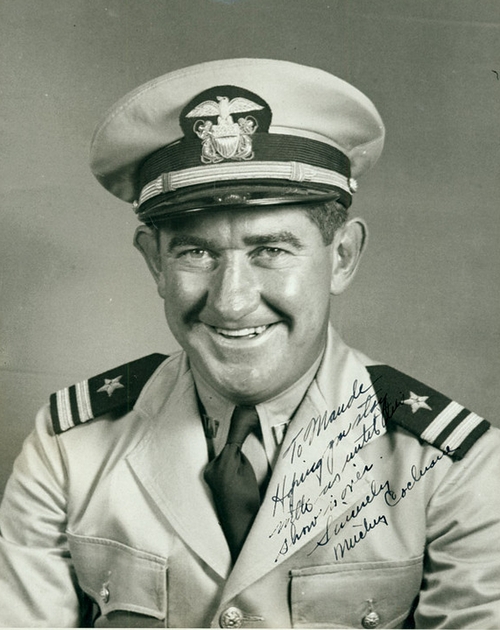
May 25, 1937: Mickey Cochrane Is Beaned

May 25, 1937: The New York Yankees beat the Detroit Tigers, 4-3 at Yankee Stadium. However, for once, a Yankee win is overshadowed: The playing career of Mickey Cochrane comes to an awful end.

Gordon Stanley Cochrane was born on April 6, 1903, in Bridgewater, outside Plymouth, Massachusetts. Because someone who thought he looked Irish (Cochrane is a common name in both Ireland and fellow Gaelic land Scotland), he was nicknamed Mickey.

He starred at Boston University as a catcher in baseball and a quarterback in football. He chose baseball, and by 1925 had debuted with the Philadelphia Athletics. He was part of a team that won 3 straight American League Pennants, in 1929, 1930 and 1931. They almost won 3 straight World Series, but the A's lost in 1931 in 7 games.

By that point, Cochrane was already considered one of the best catchers the game had ever seen. But after the 1933 season, needing money, A's owner-manager Connie Mack sold Cochrane to the Detroit Tigers. They named him player-manager, and he led them to the Pennant in 1934 and the World Series in 1935.

So well was Cochrane regarded that, in 1934, he won the AL's Most Valuable Player award, despite hitting only 2 home runs (though he did bat .320 with 75 RBIs), and despite the Yankees having both Lou Gehrig, who won the Triple Crown, and Lefty Gomez, who went 26-5.

On the morning of May 25, 1937, Cochrane was 34, and batting .306 for the season, .320 for his career. Nobody knew about OPS+ back then, but his, for his career, was 129. On-base percentage was known, but not widely; his .419 remains the highest ever for a catcher. By this point, he was already widely regarded as the best catcher ever. The Tigers fell a little short of the Yankees in 1936, but looked ready to challenge for the Pennant again in 1937.

Irving "Bump" Hadley was the starting pitcher for the Yankees, and Lynwood "Schoolboy" Rowe was pitching for the Tigers. Cochrane came to bat in the top of the 1st inning, and popped up to 1st base, where Gehrig caught the ball. In the bottom of the 1st, Bill Dickey, soon to approach Cochrane as the best catcher in the game in fans' minds, drove in Frank Crosetti with a sacrifice fly. In the top of the 3rd, Cochrane hit a home run to tie the game, 1-1.

It was still 1-1 when Cochrane came to bat again in the top of the 5th, with 2 out and Marv Owen on 1st. But Hadley threw inside, and hit Cochrane in the head. He was taken off the field on a stretcher, and taken to a hospital.
To make matters worse for the Tigers, Hadley was the Yankees' leadoff hitter in the bottom of the 5th, and singled. And Joe DiMaggio hit a home run to make it 3-1 Yankees. Tony Lazzeri hit a home run leading off the bottom of the 7th, to make it 4-1. Singles by Charlie Gehringer and Hank Greenberg got the Tigers to within 4-3 in the 9th, but they got no closer.

Cochrane was diagnosed with a fractured skull. The fact that Cochrane had homered off Hadley in his previous at-bat was suspicious. Hadley insisted that he hadn't beaned Cochrane on purpose, and he was not previously known as a pitcher who would do that. The nickname probably didn't help, making people think of a bump on Cochrane's head. (It came from "Bumps," as he contracted the mumps while in the minor leagues.) Cochrane and his teammates refused to blame Hadley for the incident.

Nevertheless, Cochrane's doctors warned him that continuing to play baseball might lead to further head injury. So he retired. Del Baker, who had previously filled in for him following a nervous breakdown in 1936, became the temporary manager again. After a poor 1st half of the 1938 season, Cochrane resigned, and Baker became the full-time manager, leading the Tigers to the American League Pennant in 1940 -- the only one between 1936 and 1943 that the Yankees didn't win.

Cochrane was too young to have served in World War I, and was too old to serve in combat in World War II. But, in spite of his head injury, he enlisted in the U.S. Navy, and was assigned to lead the physical training of recruits at Naval Station Great Lakes in Chicago. This station had its own baseball team, and Cochrane coached it. It included Bob Feller and Pee Wee Reese, and was nicknamed "the 17th major league team."
A cartoon appeared in The Sporting News, featuring Dickey, who had gone into the Navy after leading the Yankees to victory in the 1943 World Series: "Dickey means the two greatest catchers ever are wearing the Blues (Mickey Cochrane's the other), but if you want to see to it that the Axis does the catching in this war, BUY MORE WAR BONDS!"

Little did anyone know that Seaman Lawrence Berra (yes, Yogi) would not only serve in the Navy on D-Day -- the only major league ballplayer, past or future, to do so -- but surpass both of them as the greatest catcher of all time. Johnny Bench, since then the only other major contender for the title of "greatest catcher who ever lived," served in the U.S. Army Reserve during the Vietnam years.

After the war, Cochrane was discharged with the rank of Lieutenant Commander. He briefly worked as a coach with the Athletics, and then sold cars, but died as a result of smoking on June 28, 1962, only 59 years old. There's no way to know if his head injury hastened his death. (Hadley, also a Massachusetts native, from Lynn, died only a year later, and younger, 58, of heart trouble.)

Cochrane was elected to the Baseball Hall of Fame in 1947. The Philadelphia Athletics moved to Kansas City in 1955, and to Oakland in 1968.

In 1982, the Philadelphia Phillies named Cochrane to the Philadelphia Baseball Wall of Fame. Until 2018, the A's had no team Hall of Fame. In 2021, they elected all 10 of the members of the Baseball Hall of Fame who had spent significant time with the Philadelphia Athletics, including Cochrane. In 2000, the Tigers put his name on the wall at the new Comerica Park, although with the other Tigers in the Hall of Fame whose numbers they hadn't retired. The A's still haven't retired 2 for Cochrane, nor the Tigers 3 for him, although they did retire 3 for Alan Trammell. When Tiger Stadium stood, National Avenue, behind the 3rd base stands, was renamed Cochrane Avenue.

In 1999, The Sporting News ranked him 65th on their list of the 100 Greatest Baseball Players. Among catchers, he trailed Bench (16th), Negro Leagues legend John Gibson (18th), Berra (40th) and Roy Campanella (50th).

Coming in at 17th on that list was Mickey Mantle. Mantle's father, Elvin, known as "Mutt," was a baseball fanatic. Cochrane was his favorite player, and so he named his eldest son Mickey Mantle. Years later, Mantle found out Cochrane's real name was Gordon, and was glad his father named him Mickey instead.

*

May 25, 1937 was a Tuesday. These games were played in what we would later call Major League Baseball. In addition to Yankees vs. Tigers:

* The New York Giants beat the Cincinnati Reds, 9-3 at Crosley Field in Cincinnati. Mel Ott went 1-for-5.

* The Brooklyn Dodgers beat the Pittsburgh Pirates, 2-1 at Forbes Field in Pittsburgh.

* The Boston Red Sox beat the St. Louis Browns, 4-2 at Fenway Park in Boston. Jimmie Foxx went 0-for-3, but Lefty Grove pitched a complete-game win, anyway. Like Cochrane, Foxx and Grove had both been sold off by A's manager-owner Connie Mack, because he needed the money.

* The Cleveland Indians beat the Philadelphia Athletics, 4-2 at Shibe Park in Philadelphia.

* The Chicago White Sox beat the Washington Senators, 9-2 at Griffith Stadium in Washington.

* The Chicago Cubs beat the Philadelphia Phillies, 5-3 at Wrigley Field in Chicago.

* The Boston Bees -- as the Braves were known from 1936 to 1940 -- and the St. Louis Cardinals were supposed to play at Sportsman's Park in St. Louis, but the game was rained out, and rescheduled as part of a doubleheader. On June 20, the Cardinals swept that doubleheader, 6-2 in the 1st game and 9-1 in the 2nd game.

December 31, 1999 & January 1, 2000: The Millennium

December 31, 1999:  The Millennium arrives. The people of planet Earth survived. At a terrible cost. But we hadn't destroyed ourselves. ...