Showing posts with label reggie jackson. Show all posts

Tuesday, November 29, 2022

November 29, 1976: Reggie Jackson Brings His Star to New York

Left to right: Thurman Munson,
Reggie Jackson, Roy White

November 29, 1976: The New York Yankees sign the biggest available free agent, Reggie Jackson. The contract is for $2,960,000 over 5 years – $592,000 a year, or about $3.04 million in today's money.

This was the 1st off-season in which free agency was widespread. Charlie Finley, Reggie's boss with the Kansas City and Oakland Athletics from his 1966 signing (including his 1967 major league debut) until the previous April, was not going to sign him to a big contract. Finley wasn't going to sign anybody, because, as Reggie himself said in his memoir, "Lord, but the man was cheap."

Just before the start of the 1976 regular season, Finley had traded Reggie to the Baltimore Orioles. But their owner, Jerry Hoffberger, wasn't going to sing him, either.

Three team owners were willing to sign Reggie: Shipbuilding tycoon George Steinbrenner of the Yankees, McDonald's head honcho Ray Kroc of the San Diego Padres, and Seagram's whiskey baron Charles Bronfman of the Montreal Expos. Reggie thought about it, and decided that he didn't want to deal with the Canadian exchange rate -- or to learn French, and narrowed it down to the Yanks and Padres.

"George Steinbrenner hustled me," Reggie said at the press conference for his signing. He told George that Kroc was offering him more money to go to San Diego. George revealed that, whatever Kroc intended, the promise of more money was a half-truth: "Kroc is offering you more salary to go to San Diego." George reminded Reggie that New York was the media capital of the world, including the advertising capital of the world. Between salary, endorsements, and the glory that would come with winning with the New York Yankees, Reggie could get a lot more from George Steinbrenner than he ever could from Ray Kroc.

The press conference was held at the Versailles Terrace at the Americana Hotel. Reggie posed for pictures with George, with coaches Yogi Berra and Elston Howard, and with new teammates Thurman Munson and Roy White. One notable Yankee not there was manager Billy Martin. He didn't want Reggie, for reasons both professional (if misguided) and personal.

A 1974 Sports Illustrated cover had called Reggie, then the reigning Most Valuable Player of the American League and the World Series, a "Superduperstar." So he wasn't kidding when he told the New York media, "I didn't come to New York to be a star. I'm bringing my star with me."

A lot of people didn't like that. Munson was one of them: George had promised him he would be the highest-paid Yankee as long as he was on the team. George had already broken that promise once, 2 years earlier, when the chance to sign the best pitcher in baseball at the time, Reggie's former Oakland teammate Jim "Catfish" Hunter, came up. Thurman understood then. But breaking the promise again?

And a SPORT magazine article printed early in the 1977 season, with quotes -- or perhaps misquotes, or perhaps simply made-up quotes -- from Reggie about himself, and about Thurman, further drove a wedge between them. Things got ugly.

Two million, nine hundred and sixty thousand dollars? In Jerry Ford dollars? Bargain. Reggie defined an era in baseball, earning the nickname Mr. October. In 5 seasons, he got the Yankees to 4 postseasons, winning 3 Pennants and 2 World Series, and making them the biggest show in baseball.

Finley's other stars that he cheaply let get away?

* Kroc signed relief pitcher Rollie Fingers and 1st baseman Gene Tenace. He got no Playoff berths as a result, as the Dodgers were too strong. But at least he tried.

* Gene Autry, the entertainment legend who owned the team then known as the California Angels, signed A's left fielder Joe Rudi and designated hitter Don Baylor, along with former Oriole 2nd baseman Bobby Grich. He got 2 Division titles, but no Pennants.

* Allan "Bud" Selig, the used car dealer who owned the Milwaukee Brewers, signed 3rd baseman Sal Bando, and would later acquire Fingers in a trade. He won a Pennant, but no World Series.

* Brad Corbett, the oil executive who owned the Texas Rangers, signed shortstop Bert Campaneris, and made some other notable acquisitions. He got no Playoff berths as a result.

* And real estate tycoon Bob Lurie, who owned the San Francisco Giants, was the final landing spot for pitcher Vida Blue, after Finley had previously tried to sell Blue to the Yankees and trade him to the Cincinnati Reds. Both of those teams did better without the increasingly drug-addled Blue than the Giants did: They didn't make the Playoffs again until 1987.

Minnesota Twins owner Calvin Griffith, was not only nearly as cheap as Finley, but also blatantly racist. He refused to lift a finger to re-sign pitcher Bill Campbell. He went to the free-spending Boston Red Sox, who thought that having a lockdown reliever would have made the difference in the 1975 World Series against the Reds and the 1977 AL Eastern Division race against the Yankees. But the Yankees had also improved.

And pitcher Wayne Garland, who went 20-7 for the Orioles in 1976, was signed by the Cleveland Indians for $2.3 million over 10 years. But he wrecked his shoulder in Spring Training, and went 13-19 in 1977. He had won 40 games in the major leagues before his 27th birthday. He won 15 games after it.

*

November 29, 1976 was a Monday. Actors Chadwick Boseman and Anna Faris were born on this day.

Baseball was out of season. No games were played in the NBA, the NHL or the WHA. On ABC Monday Night Football, the San Francisco 49ers beat the Minnesota Vikings, 20-16 at Metropolitan Stadium in the Minneapolis suburb of Bloomington, Minnesota.

Friday, October 28, 2022

October 28, 1981: The Last Night of My Yankee Dynasty

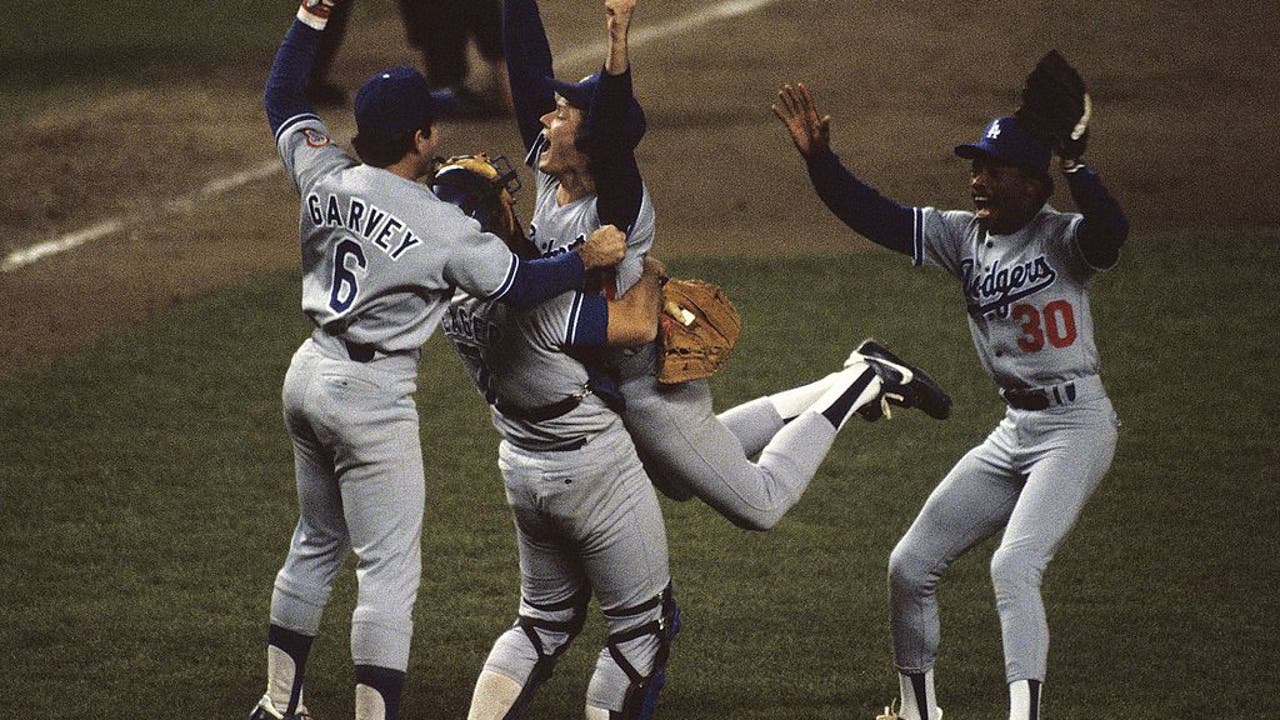
October 28, 1981: A dark day in my life. One might even say a blue day... Dodger Blue.

No two franchises have played each other in the World Series as often as the New York Yankees and the Dodgers. They played each other in 1941, 1947, 1949, 1952, 1953, 1955 and 1956, when the Dodgers were in Brooklyn. The Dodgers won in 1955, but the Yankees won all the rest.

After the 1957 season, the Dodgers moved to Los Angeles. They beat the Yankees in 1963. They didn't play each other again until 1977, and the Yankees won. The Yankees beat them again in 1978.

By this point, I was old enough to watch baseball on television, and these were the Yankees of Reggie Jackson, Thurman Munson, Catfish Hunter, Ron Guidry, Graig Nettles and Goose Gossage. And these were the Dodgers of Steve Garvey and Don Sutton, with a young Dusty Baker in left field. And while the Yankees had replaced their managers periodically -- Billy Martin managed the 1977 title, Bob Lemon the one in 1978 -- Tommy Lasorda had been their manager since late in 1976.

This Dodger team had also won the National League Pennant in 1974, while still managed by the man who'd led them since 1954, Walter Alston. They lost that World Series to the Oakland Athletics, then including Jackson, Hunter, and Ken Holtzman, who would also pitch for the Yankees in 1977, but was traded in 1978. The Yankees had also won the American League Pennant in 1976, losing the World Series to the Cincinnati Reds.

Pretty much everybody outside each team's market hated both teams. The Yankees were seen as New York gangsters, rough and nasty, ready to run over your grandmother if she got in their way; the Dodgers as L.A. nice guys, All-American Boys, a little too clean, too good to be true (which turned out to be the case). No longer the beloved underdogs, a.k.a. "Dem Bums," as they were in Brooklyn, the Los Angeles Dodgers were popular from the Pacific Ocean to Las Vegas, but not east of there.

But when they played each other in the World Series, even people who hated the Dodgers rooted for them, because they hated the Yankees more.

In 1978, the Dodgers had won the 1st 2 games of the Series in Los Angeles. Then the Yankees took the next 4, 3 at Yankee Stadium and Game 6 at Dodger Stadium, to win the title.

Both teams had done a little retooling. In 1979, neither made the Playoffs, and Munson, the Yankees' catcher and Captain, was killed in a plane crash. Hunter retired due to a shoulder injury. Roy White also retired. Sparky Lyle (a season earlier), Ed Figueroa, Mickey Rivers and Chris Chambliss were traded. Lemon, Oscar Gamble and Rudy May had left, and returned. Bobby Murcer, the popular center fielder traded after the 1974 season, had also returned. The Yankees signed pitcher Tommy John away from the Dodgers, and brought in Bob Watson, Jerry Mumphrey and Rick Cerone.

In 1980, the Yankees won the AL Eastern Division again, but lost the AL Championship Series to the Kansas City Royals, whom they had beaten in the ALCS in 1976, '77 and '78. The Dodgers finished in a tie with the Houston Astros for the NL Western Division title, but lost a Playoff game to the Astros.

The Dodgers traded Sutton, but benefited from the arrival in 1981 of Fernando Valenzuela, a chubby Mexican lefthander with a sensational screwball that allowed him to win his 1st 8 decisions. Even people who didn't like the Dodgers were gripped by "Fernandomania," and, for the first time, the huge Mexican-American community in Southern California found a reason to root for the Dodgers instead of a team from Mexico. Valenzuela finished 13-7, and was named the NL's Rookie of the Year, just as their reliever Steve Howe had been in 1980, and their starting pitcher Rick Sutcliffe in 1979.

The Yankees signed San Diego Padres star Dave Winfield to their 1st contract worth more than $1 million a year. Remembering how he wasn't exactly welcomed as the big free agent signing 4 years earlier, Reggie showed Dave the courtesy he'd wanted.

The strike that interrupted the 1981 season meant that a team had to finish 1st in either half of the season to qualify for the Playoffs. The Yankees won the AL East in the 1st half; beat the 2nd-half winners, the Milwaukee Brewers; and finally the A's for the Pennant. The Dodgers won the NL West in the 1st half, beat the Astros, and then beat the Montreal Expos for the Pennant.

*

October 20, 1981: Game 1 of the World Series at Yankee Stadium. A banner is hung from the upper deck: "DON'T THE DODGERS EVER LEARN"?
Not yet, they don't, as Watson's 1st-inning homer and the pitching of Guidry and Gossage shut the Bums down, 5-3.
October 21, 1981: The Yankees take a 2-0 lead, as John and Gossage combine on a 3-0 shutout. Watson has 2 hits and an RBI.
The Yankees are 2 wins away from their 23rd World Championship. No one can imagine it now, but the team will not win another competitive game until April 12, 1982 (the next season opened later than it should have, due to a late snowstorm postponing a week's worth of games), and it will take them 15 more years to get that 23rd title.
The Yankees also make a trade on this day, sending 22-year-old outfielder Willie McGee to the St. Louis Cardinals for pitcher Bob Sykes. It will be one of the worst trades in Yankee history, as Sykes, a native of nearby Neptune, New Jersey, is already damaged goods, and never appears in another big-league game, finished at 27. McGee helps the Cards win the next year’s World Series and 3 of the next 6 NL Pennants.
October 23, 1981Despite an uncharacteristically poor performance (9 hits‚ 7 walks), Valenzuela goes the distance in the Dodgers' 5-4 come-from-behind win in Game 3. The deciding run scores on a double play.
Yankee starter Dave Righetti lasts just 2 innings‚ walking 2 and allowing 5 hits‚ but it is reliever George Frazier who takes the loss. Ron Cey hits a 3-run homer for the Dodgers. Starters Valenzuela and Righetti are the 1st 2 Rookies of the Year, of any position, to oppose each other in the World Series since Willie Mays and Gil McDougald in 1951.
October 24, 1981: The Dodgers tie the World Series up at 2 games apiece, 8-7, thanks to some poor Yankee fielding. Jackson and Willie Randolph hit home runs for the Bronx Bombers -- Reggie's last in a Yankee uniform, as it turned out -- but Jay Johnstone, who'd helped the Yankees beat the Dodgers in the 1978 World Series, returns the favor for the Dodgers.

Johnstone would later write, in his memoir Temporary Insanity (a title based on his quirky personality), that George Steinbrenner stormed into the locker room and demanded that Ron Davis (Yankee reliever and future Met player Ike's father) tell him why he threw Johnstone a fastball.

October 25, 1981: The Dodgers win Game 5, as back-to-back homers by Pedro Guerrero and Steve Yeager off Guidry give the Dodgers their 3rd consecutive win, 2-1. Winfield singled in the 5th, but that turned out to be his only hit in the Series. Even then, he didn't score, as he was eliminated when Reggie grounded into a double play.
After this game, George said he'd scuffled with 2 Dodger fans in a hotel elevator, and that explained his fat lip and his broken hand.
*
October 28, 1981: Game 6 of the World Series is played at Yankee Stadium, having been postponed a day due to rain. John started for the Yankees, Burt Hooton for the Dodgers, and both of them got through the 2nd inning without allowing a run.

The Yankees, needing to win to force a Game 7, got on the board first: With 2 out in the bottom of the 3rd, Randolph hit a home run. They got 2 more men on, and that brought up Mr. October. But Reggie flied to left. The Dodgers tied it in the top of the 4th, on singles by Baker, Rick Monday and Yeager.

With 1 out in the bottom of the 4th, Nettles doubled, and Cerone struck out. Lasorda ordered the weak-hitting shortstop, Larry Milbourne, walked intentionally, to bring the pitcher's spot in the order up. Lemon gambled, and sent Bobby Murcer up to pinch-hit for a pitcher who'd allowed only 1 run in 4 innings. Having made his major league debut 16 years earlier, this was the biggest plate appearance that Murcer would ever have. He nearly hit it out to right field, but not quite long enough.

Lemon, himself a Hall of Fame pitcher and a pitching coach before becoming a manager, might have been justified in pinch-hitting for John. But he couldn't get the pitching right afterward. He sent Frazier out for the 5th, and he had nothing, allowing an RBI single by Cey and an RBI triple by Guerrero, giving the Dodgers a 4-1 lead.

It got worse in the 6th, as Davis walked Hooton, walked Davey Lopes, and allowed an RBI single to Bill Russell. Lemon replaced him with Rick Reuschel. When Lopes and Russell advanced on a double steal, Lemon ordered Garvey walked to set up the double play. It didn't work: Derrel Thomas hit a grounder to 3rd that got Lopes home. Baker reached on an error, and Guerrero singled home 2 runs. It was 8-1 Los Angeles.

Lou Piniella singled home a run in the bottom of the 6th, but that would be it for the Bronx Bombers, no further bombing. In the top of the 8th, Guerrero hit a home run. In the bottom of the 9th, Howe walked Randolph, struck Mumphrey out, and got Winfield to fly to left.

Mr. October came to bat as a Yankee one more time, and grounded to Lopes at 2nd. Lopes had driven the Yankees crazy in all 3 World Series. This time, he bobbled the ball, and Reggie reached base in Pinstripes one last time. It made no difference, as Watson made the last out, flying to Lee Lacy in center.

Dodgers 9, Yankees 2. The L.A. Bums had finally beaten the Yankees in the World Series. For the 1st time, the Series' Most Valuable Player award was split, awarded to 3 players: Guerrero, Cey and Yeager.

Winfield was just 1-for-21‚ while Frazier tied a Series record by losing 3 games. The record was set by the White Sox' Lefty Williams in 1919‚ but Williams‚ one of the 8 "Black Sox‚" was losing on purpose. Frazier was trying to win, and didn't.

The long-term effects on the Yankees were as follows:

* This was the last time that Reggie Jackson suited up as a player for the Yankees, and George Steinbrenner refused to exercise the option for a 6th year on his contract. Reggie happily accepted an offer from Gene Autry to return to the West Coast and play for the California Angels.

* Winfield's performance contrasted so much with Reggie's Mr. October persona that George eventually nicknamed him Mr. May, never gave him the respect he deserved, and ended up chasing Dave out of town – coincidentally, also to the Angels, although Reggie was retired by that point – and getting himself in trouble with how he did it.

While George gave Dave a "Day" after he was elected to the Hall of Fame, to this day, Dave's Number 31 has not been retired, along with those of his Yankee teammates Jackson (44), Ron Guidry (49) and, later, Don Mattingly (23), and his occasional manager Billy Martin (1). Nor has he gotten a Plaque in Monument Park like those 4, and also like teammates Randolph and Gossage.

* George went through various experiments in managers and styles of play (booming bats one year, speed the next, and so on) to get the Yankees back on top, but they wouldn't reach the World Series again for 15 years, giving the new ownership of the Mets the chance to become from 1984 to 1992 what they have not been since '92, New York's first team. (Despite their 2015 Pennant, they still aren't.)

Blowing that lead, to the evil O'Malley Bums and their fat hypocritical slob of a manager, Tommy Lasorda, losing the Series at home, and when I was just 11 going on 12...

More than any other Yankee defeat, this one sticks in my craw. As bad as the 2001 and 2003 World Series losses were (I don't really remember the 1976 sweep loss); or the 1980 and 2012 ALCS sweeps; or the 2010, 2017, 2019 and 2022 ALCS folds; or the ALDS losses of 1995, 1997, 2006, 2011, 2018 and 2020; or the 1985 and 1988 regular-season near-misses; or the complete bottle-jobs in the Wild Card Games of 2015 and 2021. Even the 2004 ALCS collapse doesn't bother me as much as the 1981 World Series.

And, unlike with the 2004 Red Sox and the 2017, '19 and '22 Astros, I can't even rationalize it away by saying the Dodgers cheated! That I know of. There are some people who have alleged that the mound at Dodger Stadium was actually less than 60 feet 6 inches from home plate in the Lasorda era, but I don't think this was ever seriously challenged.

In 1998, the Yankees celebrated the 20th Anniversary of the '77 and '78 World Champions by inviting the Dodgers of that period to Old-Timers' Day. The Old-Timers' Game usually goes 3 innings, but since it was tied, it went to a 4th inning, and Willie Randolph hit a home run off Tommy John to win it for the Yankees. So not only did John pitch on the losing side in all 3 of these Yankee-Dodger World Series, but he lost this Old-Timers' Game as well.

Among the interviews done on WPIX-Channel 11, Bobby Murcer, by then a broadcaster, and wearing a special hookup on his belt so he could announce a game he was playing in, talked to Lasorda. The man who liked to say, "I bleed Dodger Blue," and referred to God as "the Big Dodger in the Sky," talked about the '77 and '78 Series, but brought up '81, Murcer's only World Series in 17 seasons in the major leagues, 13 of them with the Yankees, and said, "We brought that World Championship trophy back to Los Angeles where it belongs!"

The fat bigoted slob forgot: Los Angeles isn't even where the Dodgers belong. Brooklyn is.

Buster Olney titled his book about the 2001 Yankees, with a focus on their loss to the Arizona Diamondbacks in Game 7 of the World Series, The Last Night of the Yankee Dynasty. Peter Golenbock, in Dynasty: The New York Yankees, 1949-1964; David Halberstam, in October 1964; and Philip Bashe, in Dog Days: The New York Yankees' Fall from Grace and Return to Glory, 1964-1976 have all written about how the Yankees' loss to the St. Louis Cardinals in Game 7 of the 1964 World Series was the last day of the old Yankee Dynasty.

October 28, 1981 was the last day of my Yankee Dynasty. That wasn't apparent at the time. But the team's collapse in 1982 made it clear.

The Yankees were now 8-3 in World Series against the Dodgers, 2-2 in their Los Angeles period. In the 41 years since, the teams have never played each other in another World Series. In Interleague Play, yes; in the World Series, no.

They've both made the Playoffs in 1995, 1996, 2004, 2006, 2009, 2015, 2017, 2018, 2019, 2020, 2021 and 2022. They've both reached their respective League Championship Series in 2009, 2017 and 2019. But, since 1981, they've never again met in the World Series.

And at the rate Brian Cashman is going, it looks like it won't happen again for years to come, through no fault of the Dodgers and their management.

UPDATE: They did face each other in the 2024 World Series. The Dodgers won in 5 games.

*

October 28, 1981 was a Wednesday. The baseball season was over. It was midweek for football. The NBA season started 2 days later. There were 7 games played that night in the NHL:

* The New York Rangers lost to the Edmonton Oilers, 5-3 at Madison Square Garden. The Broadway Blueshirts blew leads of 2-0 and 3-1, as Wayne Gretzky had 2 goals and 2 assists.

* The Buffalo Sabres beat the St. Louis Blues, 6-2 at the Buffalo Memorial Auditorium.

* The Toronto Maple Leafs beat the Pittsburgh Penguins, 5-3 at the Civic Arena in Pittsburgh.

* The Chicago Black Hawks beat the Winnipeg Jets, 7-6 at the Chicago Stadium.

* The Minnesota North Stars beat the Calgary Flames, 6-1 at the Metropolitan Sports Center in the Minneapolis suburb of Bloomington, Minnesota.

* The Quebec Nordiques beat the Colorado Rockies, 3-1 at the McNichols Arena in Denver. The Rockies became the New Jersey Devils the next season.

* And the Vancouver Canucks beat the Washington Capitals, 3-0 at the Pacific Coliseum in Vancouver.

Also, Milan Baroš, a Czech soccer player who helped Liverpool FC win the 2005 UEFA Champions League, was born on this day. 

Saturday, October 22, 2022

October 22, 1972: The "Hairs" Beat the "Squares"

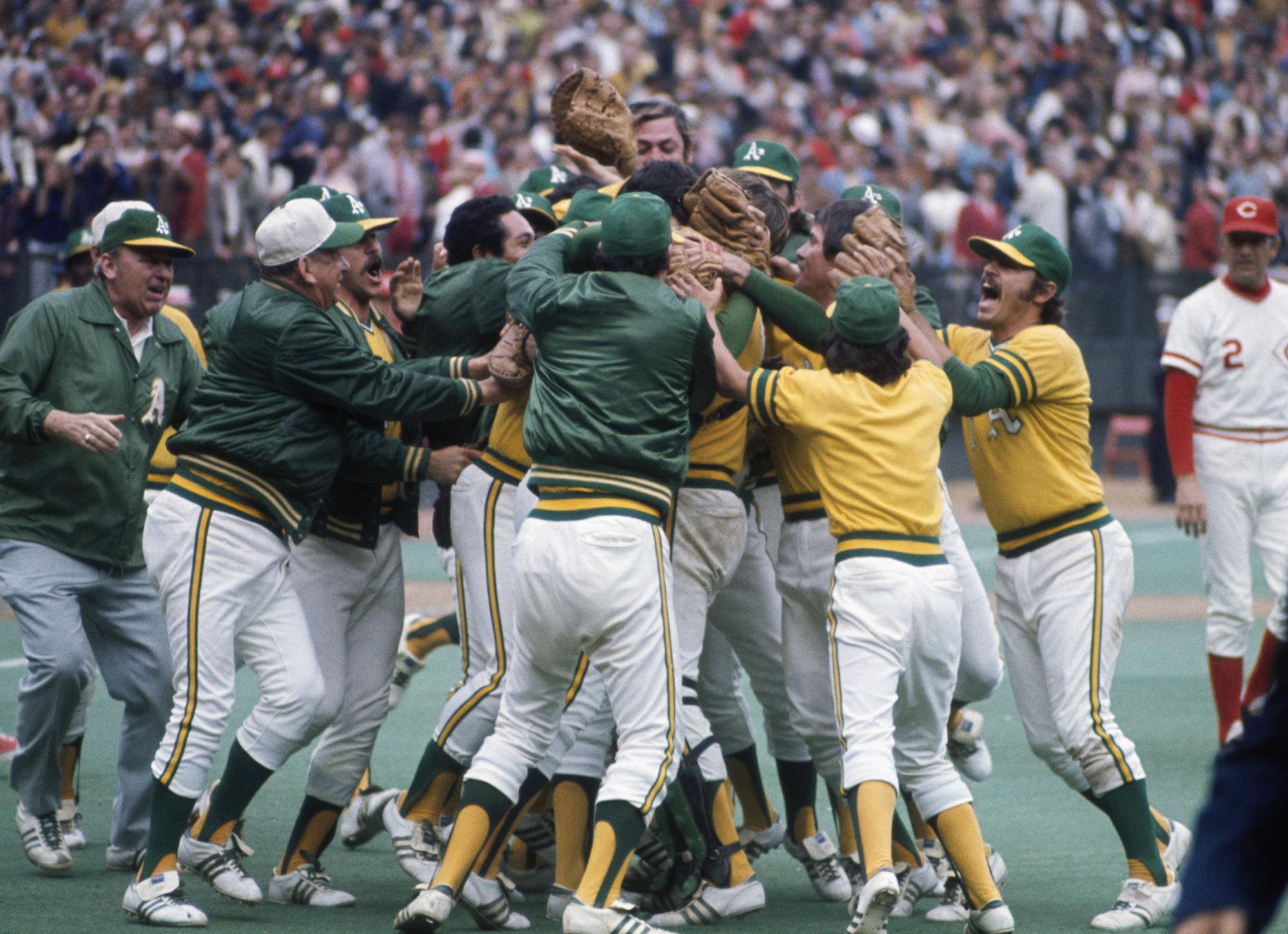
October 22, 1972: Game 7 of the World Series is played at Riverfront Stadium in Cincinnati. It is not just a baseball clash, but a culture clash.

The Cincinnati Reds, as their name implies, were dressed simply: White uniforms at home, gray ones on the road, and red lettering. Managed by George "Sparky" Anderson, with stars such as left fielder Pete Rose, catcher Johnny Bench, 1st baseman Tony Pérez and 2nd baseman Joe Morgan, and a bullpen led by Clay Carroll, whose 37 saves had just set a new major league record (which lasted all of 1 year), "The Big Red Machine" were dominant. They had won the National League Pennant in 1970, losing the World Series to the Cincinnati Reds. Now, they had won the Pennant again, and were ready to take the title.

The Reds were clean-cut, and clean-shaven. Nothing unusual about that in baseball at the time: The sport has often seemed to be 10 years behind the rest of the country. But until the 21st Century, the Reds had a rule banning facial hair. They were good, but not flashy. Appropriate for Cincinnati, one of the most conservative cities in the country. Good for southern Ohio and southern Indiana on one side of the Ohio River. Good for the actually-Southern State of Kentucky and the quasi-Southern State of West Virginia on the other side.

The Oakland Athletics -- "A's" for short -- were not designed to appeal to "Middle America." Insurance tycoon Charles Oscar Finley saw to that when he bought the team in 1960, while they were still in Kansas City, the major city closest to the geographic center of "the 48 Contiguous States." Finley changed the team's colors from their traditional red, white and blue to what he termed "Kelly Green, Wedding Gown White and Fort Knox Gold." After looking into the ideas of Louisville, Dallas and Denver, he moved them to Oakland in 1968.

By that point, he already had some of the players who would dominate the American League Western Division in the early days of Divisional Play. In Spring Training in 1972, with the rest of the world having gotten used to men letting their hair grow long, and growing facial hair, Finley saw his best player, slugging right fielder Reggie Jackson, grow a mustache.

Instead of fining him for not "looking like a big-league ballplayer," he used reverse psychology: He offered a $300 bonus to every player who grew a mustache by Opening Day. He figured, if everybody did it, it would no longer be an act of rebellion, and they'd stop. The move backfired, and Finley, famously cheap, had to pay nearly everybody on the team $300 -- about $2,100 in 2022 money -- at a time when the average salary was about $34,000 (or $238,000 today).

Most notable was the 19th-Century-style "handlebar" mustache worn by the Oakland relief ace, Rollie Fingers. He would end his career in 1986 with 341 saves, more than any pitcher to that point. Ironically, the reason he retired is that the only team willing to offer him a contract -- he was 39 years old at the time -- was the Reds, and they insisted that he shave off the mustache, which had become his trademark. He wouldn't do it, and hung up his cleats.

Both teams needed to go the full 5 games in their League Championship Series. The Reds trailed the Pittsburgh Pirates in the bottom of the 9th, but Bench hit a game-tying home run, kept it going, and then Bob Moose threw a wild pitch that scored George Foster with the Pennant-winning run. (This turned out to be the last game for Pirates' star Roberto Clemente.)

The A's played the Detroit Tigers, and won, but lost Jackson to a torn hamstring as he scored the winning run in Game 5. They would have to go into the franchise's 1st World Series in 41 years -- since 1931, when they were the Philadelphia Athletics -- without their best player.

In Game 1, at Riverfront, A's catcher Gene Tenace hit home runs in his 1st 2 World Series at-bats, which had never been done before. The A's won, 3-2. In Game 2, Joe Rudi hit a home run, and made a spectacular catch in left field off a drive by Denis Menke. Despite a Reds comeback in the 9th, the A's hung on to win, 2-1.

Just when it looked like the Reds would be utterly humiliated, they waited out a one-day rain delay, and won Game 3 at the Oakland Coliseum, 1-0. The only run came in the top of the 7th inning, when César Gerónimo singled Pérez home. The Reds won despite Bench getting fooled on a trick play in the 9th: After Bobby Tolan stole 2nd base on a pitch that made the count 3-and-2, manager Dick Williams went to the mound for conference. It then appeared that Williams had ordered Fingers to intentionally walk Bench. But after Tenace motioned for the outside ball 4, Fingers threw a strike on the outside corner, and Bench was out.

The Reds led Game 4, 2-1 with 1 out in the bottom of the 9th. But Gonzalo Márquez singled, Tenace did the same, Don Mincher added another that scored pinch-runner Allan Lewis, and Ángel Mangual singled Tenace home with the winning run, 3-2.

The A's looked to close it out in Game 5, at home. They led 3-1 after 2 innings, 4-2 after 4, and were still up 4-3 after 7, thanks to Tenace's 4th home run of the Series. That tied a Series record, which would be broken in 1977, by Reggie Jackson. But the Reds tied it in the 8th, and won it in the 9th, 5-4. The winning run was singled home by Rose, who had homered earlier.

Back in Cincinnati, the Reds won Game 6, 8-1, and tied the Series. Game 7 was Catfish Hunter against Jack Billingham. Tolan's error on a Mangual fly ball gave the A's a 1-0 lead in the 1st. The Reds tied it in the 5th on a sacrifice fly by Hal McRae. But in the 6th, Sparky Anderson replaced an exhausted Billingham with Pedro Borbón, who gave up RBI doubles to Tenace and Bando. The Reds scored a run in the 8th, but couldn't find a tying run, and the A's won, 3-2.

The A's had won their 1st World Championship in 42 years, since the 1930 Philadelphia team. Tenace‚ who had only 5 homers in the regular season, had 4 in the Series‚ and was named the Series' Most Valuable Player.

The Reds eventually won the World Series in 1975 and 1976, and won more games in the decade than the A's. They win 4 Pennants and 6 Division Titles in the decade, to the A's' 3 Pennants and 5 Division Titles. For these reasons, their surviving players are convinced that they, not the A's, were the team of the decade.

However, the A's won 3 World Series in a row, something not achieved by any other franchise in baseball history except for the New York Yankees. What's more, in the one head-to-head matchup between the A's and the Reds, the A's won, winning 3 of the 4 games in Cincinnati, including the clincher, and doing so without their best player, Reggie Jackson, who was injured in the American League Championship Series clincher. So there can be no doubt that the A's were the Team of the Seventies.

Besides, neither team was the one that won the most games in the decade: It was the Baltimore Orioles who did that, while winning 5 Division Titles and 3 Pennants, but only 1 World Series.

It would take until 1990 for the Reds to get revenge on the A's.

Having a fascinating (if occasionally controversial) history, even if you only count the Oakland years, the A's have had several books written about them, although they don't always put the team in a good light. The ones about the "Swingin' A's" of the 1970s invariably mention Finley's successes and excesses, including his cheapness and pettiness. And the players often don't come off much better in these books.

These books include Bruce Markusen's 2002 A Baseball Dynasty: Charlie Finley's Swingin' A's; Roger D. Launius and G. Michael Green's 2010 Charlie Finley: The Outrageous Story of Baseball's Super ShowmanFinley Ball: How Two Baseball Outsiders Turned the Oakland A's Into a Dynasty and Changed the Game Forever, by Nancy Finley, daughter of Charlie's cousin Carl, who was also involved with the team; and Jason Turbow's Dynastic, Bombastic, Fantastic: Reggie, Rollie, Catfish, and Charlie Finley's Swingin' A's.

In 2016, Ed Gruver published Hairs vs. Squares: The Mustache Gang, the Big Red Machine, and the Tumultuous Summer of '72, which culminates in the World Series between the A's and the Cincinnati Reds. Matthew Silverman wrote Swinging '73: Baseball's Wildest Season, and John Rosengren wrote Hammerin' Hank, George Almighty and the Say Hey Kid: The Year That Changed Baseball Forever, whose cover includes a photo of Reggie Jackson at Yankee Stadium -- the pre-renovation Stadium, and he's wearing an A's uniform.

*

October 22, 1972 was a Sunday. Gordon Banks crashed his Ford Consul into an Austin A60 van in Stoke-on-Trent, Staffordshire, England, and ended up in a ditch. He needed over 300 stitches on his face, and lost the sight in his right eye. The goalkeeper who had helped Stoke City win its 1st (and still only) major trophy the season before, the League Cup, and had backstopped the England team that won the 1966 World Cup, retires at the end of the season. He briefly came back to play in America for the Fort Lauderdale Strikers, but never played in Europe again.

Also on this day, Arthur Agee Jr. (no middle name) is born in Chicago. Along with William Gates, he was the focus of the documentary Hoop Dreams. He attended St. Joseph High School in the Chicago suburb of Westchester, Illinois, as had his hero, Detroit Pistons star Isiah Thomas. But it was too expensive for his parents, and he transferred to John Marshall High School in the city, winning the 1991 Public League Championship.

He played at Arkansas State, but never professionally. He now runs the Arthur Agee Role Model Foundation, "to help underprivileged kids to understand that their role models are not professional athletes, but their parents at home."

Gates -- no relation to legendary basketball coach William "Pop" Gates, and definitely not to Bill Gates -- stayed at St. Joseph, played at Marquette University in Milwaukee, also fell short of playing pro ball, and is now a minister outside San Antonio. His son, William Gates Jr., now plays basketball at Furman University in South Carolina. Neither man's hoop dream came true, but both are doing a lot of good now.

Being a Sunday, there were NFL games:

* The New York Giants beat the St. Louis Cardinals, 27-21 at Yankee Stadium.

* The New York Jets beat the Baltimore Colts, 24-20 at Shea Stadium. Yes, both New York teams were at home at the same time. (Both games were 1:00 starts.)

* The Washington Redskins beat their arch-rivals, the Dallas Cowboys, 24-20 at Robert F. Kennedy Memorial Stadium.

* The Miami Dolphins beat the Buffalo Bills, 24-23 at the Orange Bowl in Miami.

* The San Francisco 49ers and the New Orleans Saints played to a tie, 20-20 at Candlestick Park in San Francisco.

* The Cleveland Browns beat the Houston Oilers, 23-17 at the Astrodome in Houston.

* The Pittsburgh Steelers beat the New England Patriots, 33-3 at Three Rivers Stadium in Pittsburgh.

* The Detroit Lions beat the San Diego Chargers, 34-20 at Tiger Stadium in Detroit.

* The Atlanta Falcons beat the Green Bay Packers, 10-9 at Milwaukee County Stadium.

* The Philadelphia Eagles beat the Kansas City Chiefs, 21-20 at Arrowhead Stadium in Kansas City.

* The Los Angeles Rams beat the Cincinnati Bengals, 15-12 at the Los Angeles Memorial Coliseum. So, not a good day for Cincinnati sports. And the NBA's Cincinnati Royals couldn't help them, because they'd just moved, becoming the Kansas City-Omaha Kings.

* The Denver Broncos beat the Oakland Raiders, 30-23 at the Oakland Coliseum.

* And, the next night, on ABC Monday Night Football, the Chicago Bears beat the Minnesota Vikings, 13-10. Metropolitan Stadium in the Minneapolis suburb of Bloomington, Minnesota.

There were 3 games in the NBA:

* The Milwaukee Bucks beat the Cleveland Cavaliers, 104-84 at the Cleveland Arena.

* The Los Angeles Lakers beat the Chicago Bulls, 104-99 at The Forum outside Los Angeles in Inglewood, California. Jerry West scored 35 points.

* And the Seattle SuperSonics beat their arch-rivals, 120-119 in overtime at the Seattle Center Coliseum.

There was 1 game in the American Basketball Association: The New York Nets beat the Utah Stars, 119-116 at the Nassau Coliseum.

There were 5 games in the NHL:

* The New York Rangers and the Montreal Canadiens played to a tie, 1-1 at Madison Square Garden.

* The Vancouver Canucks beat the Boston Bruins, 5-4 at the Boston Garden.

* The Buffalo Sabres beat the Atlanta Flames, 7-2 at the Buffalo Memorial Auditorium.

* The Detroit Red Wings beat the Toronto Maple Leafs, 6-2 at the Olympia Stadium in Detroit.

* The Chicago Black Hawks beat the California Golden Seals, 4-2 at the Oakland Coliseum Arena.

* And the New York Islanders, the Philadelphia Flyers, the Pittsburgh Penguins, the Minnesota North Stars, the St. Louis Blues and the Los Angeles Kings were not scheduled.

And there were 4 games in the World Hockey Association:

* The New York Raiders lost to the Minnesota Fighting Saints, 5-4, as Madison Square Garden hosted both an NHL game and a WHA game on the same day.

* The Ottawa Nationals beat the Quebec Nordiques, 3-2 at the Colisée de Québec.

* The Winnipeg Jets beat the Philadelphia Blazers, 6-3 at the Winnipeg Arena.

* And the Chicago Cougars beat the Los Angeles, Sharks, 4-2 at the Los Angeles Sports Arena.

Tuesday, October 18, 2022

October 18, 1977: Reggie! Reggie! Reggie!

October 18, 1977: Number 44 made the New York Yankees Number 1 again.

The man that Sports Illustrated, in 1974, called a "Superduperstar" on its cover while he was playing for the Oakland Athletics becomes a legend in New York. He becomes "Mister October."

Reggie Jackson hits 3 home runs, the last a tremendous blast into the center field bleachers at the original Yankee Stadium, blacked out as a hitter's background, and Mike Torrez goes the distance. The Yankees beat the Los Angeles Dodgers, 8-4 at the original Yankee Stadium, and win Game 6 to take their 21st World Series -- but their 1st in 15 years.

I only saw the 1st 2 of Reggie's home runs. I was about to turn 8, and my parents figured the game was in the bag, and that I didn't need to stay up past 11 to see the last out, especially on a school night. (It was a Tuesday -- don't bet me. And you know what? The game ended at 10:53, so I didn't have to stay up past 11!) So I missed Reggie's mammoth 3rd blast. I have seen the clip a few times since. (Ya think, DiNozzo?)

As he had jokingly predicted, a candy bar was named after him. I loved the Reggie Bar. Oddly enough, it was peanuts and caramel, surrounded by chocolate -- pretty much the same combination as the Baby Ruth bar, which, as we now know, was named after the Bambino, the 1st man to hit 3 homers in a World Series game. That feat has since been matched by Albert Pujols (not a big surprise) and Pablo Sandoval (a very big surprise).

Because of what he was able to do, and where, and when, Reginald Martinez Jackson remains my favorite athlete of all time. Yeah, he's flawed -- so are we all, and so what?

Willie Randolph was the last active player for the 1977 and 1978 World Champion Yankees, playing in the major leagues until 1992.

*

October 18, 1977 was a Tuesday. It was midweek, so no football games were played. There were 5 games played on this opening night of the NBA season:

* The New York Knicks beat the Kansas City Kings, 120-113 at Madison Square Garden. Earl "the Pearl" Monroe led the Knickerbockers with 27 points.

* The New Jersey Nets lost to the Detroit Pistons, 110-93 at Cobo Hall in Detroit.

* The Chicago Bulls beat the Cleveland Cavaliers, 91-88 the Coliseum in the Cleveland suburb of Richfield, Ohio. Artis Gilmore scored 34 points for the Bulls.

* The Milwaukee Bucks beat the Los Angeles Lakers, 117-112 at the Milwaukee Exposition, Convention Center and Arena, or "The MECCA." Since 2014, it has been named the UW-Panther Arena. Kareem Abdul-Jabbar was injured, and only played 2 minutes against his former team. That enabled the Bucks to win behind 26 points from Brian Winters.

* And the Phoenix Suns beat the Golden State Warriors, 100-83 at the Arizona Veterans Memorial Coliseum in Phoenix.

There were 2 games played in the NHL:

* The New York Islanders played the Los Angeles Kings to a 0-0 tie at the Nassau Coliseum. For this one night, Glenn "Chico" Resch was as good as Billy Smith, good enough to be the equal of another Hall-of-Famer, the Kings' Rogie Vachon.

* And the Vancouver Canucks beat the Detroit Red Wings, 3-2 at the Pacific Coliseum in Vancouver.

And there were 2 games played in the World Hockey Association:

* The Quebec Nordiques beat the Cincinnati Stingers, 5-1 at the Colisee de Quebec.

* The New England Whalers and the Indianapolis Racers played to a 2-2 tie at the Market Square Arena in Indianapolis. 

Monday, October 17, 2022

October 17, 1978: Jackson vs. Welch, Part II

When you're Mr. October, you can drink a bottle of good champagne
and two cans of weak beer at the same time.

October 17, 1978: The New York Yankees complete their last of many comebacks in this amazing season, taking Game 6, 7-2 at Dodger Stadium, and winning their 22nd World Championship, their 2nd in a row, having taken the last 4 games after dropping the first 2.

Reggie Jackson has his chance for revenge over Dodger rookie Bob Welch for striking him out with the bases loaded to end Game 2, and his revenge goes to right field, halfway to the San Gabriel Mountains.

Both halves of the Yankee double-play combination, Bucky Dent and Brian Doyle (substituting for the injured Willie Randolph) collect 3 hits. Dent batted .417 for the Series and is named the Most Valuable Player, capping a month that began with his Playoff homer over Boston. Doyle bats .438, and, along with 3rd base wizard Graig Nettles and reliever Goose Gossage, also makes a pretty good case for Series MVP.

Jim "Catfish" Hunter, hurting and apparently finished earlier in the season, completes his late-season renaissance, starting and winning. The final out is Gossage popping up Ron Cey behind home plate, where Thurman Munson catches it. The Goose thus becomes the 1st pitcher to nail down the final out of a Division clincher, a Pennant clincher, and a World Series clincher in the same season.

This remains my favorite single-season sports team of all time, as it was the first baseball season I was really old enough to "get" what was happening. I was aware of the 1977 title, but I didn't really comprehend what the Yankees had to overcome to win it.

Unfortunately, as with the year before, my parents waited until the Yankees were winning, and then sent me to bed, so I didn't see it. Despite being a fan of the greatest franchise in the history of sports, I was almost 27 years old before I saw my favorite team win a World Series while it was actually happening. And I don't think it was until that 1996 Series that I got over that fact.

The next season, 1979, Munson was killed in a plane crash. The Yankees didn't win another World Series until said 1996 Series. That is not a coincidence.

UPDATE: Among the Yankees' many traditions is Monument Park at Yankee Stadium. From the 1976-81 team that won 4 American League Pennants, including 2 World Series, they have given a Monument to team owner George Steinbrenner; and Plaques to manager Billy Martin (who managed the 1977 title), coaches Lawrence "Yogi" Berra and Elston Howard; catcher Thurman Munson, 2nd baseman Willie Randolph, right fielder Reggie Jackson, pitchers Ron Guidry and Rich "Goose" Gossage (who arrived in 1978); public address announcer Bob Sheppard, and broadcaster Phil Rizzuto.

Bob Lemon, who managed the 1978 title, has not been honored. The Yankees have retired uniform numbers 1 for Martin, 8 for Berra, 10 for Rizzuto, 15 for Munson, 32 for Howard, 44 for Jackson and 49 for Guidry.

Despite being on the 1981 Pennant winners, and having been elected to the Hall of Fame, Dave Winfield has not been honored with a Plaque, or with the retirement of his Number 31. Despite having never played on a Pennant winner, and not having been elected to the Hall of Fame, 1980s 1st baseman Don Mattingly has been honored with a Plaque, and the retirement of his Number 23.

*

October 17, 1978 was a Tuesday. Football was in midweek. There were 7 games played in the NBA:

* The New York Knicks lost to the Seattle SuperSonics, 120-109 at Madison Square Garden.

* The New Jersey Nets lost to the Washington Bullets, 113-109 at the Capital Centre in the Washington suburb of Landover, Maryland.

* The New Orleans Jazz beat the Detroit Pistons, 114-109 at the Superdome in New Orleans. Pete Maravich scored 36 points.

* The Cleveland Cavaliers beat the Los Angeles Lakers, 113-111 at The Coliseum in the Cleveland suburb of Richfield, Ohio.

* The San Antonio Spurs beat the Phoenix Suns, 110-107 at the Arizona Veterans Memorial Coliseum. Larry Kenon scored 39 for the Spurs.

* The San Diego Clippers beat the Chicago Bulls, 99-94 at the San Diego Sports Arena (now the Pechanga Arena).

* And the Portland Trail Blazers beat the Kansas City Kings, 115-112 at the Portland Memorial Coliseum. Mychal Thompson scored 37 for the Blazers.

There were 3 games played in the NHL:

* The New York Islanders beat the Montreal Canadiens, 3-1 at the Nassau Coliseum. However, as it turned out, the Isles weren't quite ready to overtake the Habs as the best team in the NHL, and the Habs weren't yet willing to cede that title, either.

* The Atlanta Flames beat the Colorado Rockies, 8-2 at The Omni in Atlanta.

* And the St. Louis Blues beat the Vancouver Canucks, 8-6 at the St. Louis Arena -- or the Checkerdome, as it was then known, during the time that St. Louis-based Ralston-Purina, with its "Checkerboard Square" logo, owned the Blues. The Canucks blew a 3-0 lead, as Garry Unger and Wayne Babych each scored 2 goals.

And there were 2 games played in the World Hockey Association, early in what turned out to be its last season. The Quebec Nordiques and the Cincinnati Stingers played to a tie, 5-5 at the Colisée de Québec. And the New England Whalers beat the Edmonton Oilers, 2-1 at the Northlands Coliseum in Edmonton.

Friday, October 14, 2022

October 14, 1978: Reggie Jackson's "Sacrifice Thigh"

October 14, 1978: It's Game 4 of the World Series at Yankee Stadium, and there's another allegation of interference, 3 years to the day after the Ed Armbrister Game.
The New York Yankees trail the Los Angeles Dodgers, 3-1 with 1 out in the bottom of the 6th. The Dodgers are 11 outs away from taking a 3-games-to-1 lead in the Series. But Reggie Jackson singles home a run, and Thurman Munson takes 2nd base on the play. Then Lou Piniella comes to bat. Sweet Lou hits a low line drive toward shortstop Bill Russell.
The ball was very low. If it had been any higher, the umpires would probably have invoked the infield-fly rule, which would automatically have declared the batter, Piniella, out for the 2nd out of the inning, and forced Munson to stay at 2nd and Jackson at 1st. But there is no time for the IFR to be called, and Russell… drops the ball. Thurman sees this and heads for 3rd. Russell recovers the ball, and steps on 2nd to force out Reggie, who's stuck just off of 1st, seemingly frozen. Russell throws to 1st, and…
And the ball hits Reggie on the leg and caroms away into foul territory. Lou gets to 1st safely. Thurman rounds 3rd and scores. The Yanks now trail 3-2, with Lou on 1st and 2 outs.
Dodger manager Tommy Lasorda storms out of the dugout, and furiously argues with the umpires' crew chief, AL ump Marty Springstead, that Lou should be called out due to Reggie's "intentional interference."
Springstead decides that he cannot determine Reggie's intent, and he lets the result of the play stand. Lasorda would later say he was impressed with Reggie's presence of mind to attempt the "tactic," which becomes known as "the Sacrifice Thigh," but he still thought it was an illegal play.
The Yankees tie the game in the 8th when Munson doubles home Paul Blair. The score remains tied until the bottom of the 10th, when Piniella singles home Roy White with the winning run, tying the Series at 2 games apiece.
This game still ticks off Dodger fans, but so what? They're rooting for a team that belongs in Brooklyn.
Dodger fans claim they can see Reggie sticking his hip out to deflect the ball on the replay. They need to get their vision checked. Umpires from both Leagues determined that there was no intentional interference. So we can also rule out AL bias.
Russell dropped the ball. If he'd caught it, he could have stepped on 2nd and thrown Piniella out at 1st, and the inning would have been over before anybody had realized what happened.
The Dodgers were still winning. After the run scored, it was Dodgers 3, Yankees 2. What's more, the Dodgers were up 2 games to 1. The Dodger bullpen could have held that lead, and they would then have had 3 chances to get 1 win. Even after losing the game, the Series was still tied. They had 3 chances to get 2 wins, with Game 6 and, if necessary, Game 7 at Dodger Stadium. Instead, they blew a 2-0 lead in games. The Dodgers flat-out choked, and the Yankees happily took advantage of this.
You could also blame Lasorda for losing the Series, for losing his cool. I don't blame him for arguing the call, because a manager needs to stand up for his team when he believes they're being wronged. But, as they say in English soccer, he lost the plot, and his team followed his lead.
He wasn't the 1st manager to do this in a postseason game, and he certainly hasn't been the last: Witness Whitey Herzog of the St. Louis Cardinals in the 1985 World Series, Davey Johnson of the Baltimore Orioles in the 1996 AL Championship Series (also against the Yankees), and Mike Scioscia (a Lasorda disciple) of the Los Angeles Angels in the 2005 ALCS. And those are just examples from baseball in the last 40 years.
On top of everything else, the Yankees were simply better. They were the defending World Champions, having beaten the Dodgers the year before. They had won 100 games to the Dodgers' 97, and in a tougher Division, too. They had a better lineup, a better defense, a better starting rotation, a better bullpen, and a calmer manager in Bob Lemon.
Even if Reggie had been called out, and the inning ended, there's no guarantee that the Yankees still wouldn't have come from behind to win. This was a team that did what it had to do to win. The Dodgers wouldn't do that until 1981.
*
October 14, 1978 was a Saturday. Singer Usher Raymond IV, who uses only his first name, was born.
Among the college football games played that day were these:
* Number 1 Oklahoma beat Kansas, 17-16 at Memorial Stadium in Lawrence, Kansas.
* Number 2 Southern California were upset by Arizona State, 20-7 at Sun Devil Stadium in the Phoenix suburb of Tempe, Arizona. USC would still win the Pacific-10 Conference title, but this loss would cost them the National Championship.
* Number 3 Arkansas had the week off, but lost their next 2 games, away to Texas and away to Houston.
* Number 4 Penn State had the week off. They finished the regular season undefeated and ranked Number 1.
* Number 5 Michigan were upset by in-State rivals Michigan State, 24-15 at Michigan Stadium in Ann Arbor. Among the heroes for Michigan State that day was a receiver who would make his mark playing pro ball in Michigan -- not for the Lions, but the Tigers: Kirk Gibson.
The 2 schools finished in a tie for the Big Ten title. With the head-to-head tiebreaker, Michigan State should have gone to the Rose Bowl. However, they were on probation, so the bid went to Michigan, who lost to USC, on future Heisman Trophy winner Charles White's "phantom touchdown." (He fumbled the ball as he went over the goal line. This may have stuck in some poll voters' minds as a reason why they should vote for Alabama over USC.)
* Number 6 Texas A&M were upset by Number 17 Houston, 33-0 at the Astrodome in Houston. UH went on to win the Southwest Conference title.
* Number 7 Alabama beat Florida, 23-12 at Bryant-Denny Stadium in Tuscaloosa, Alabama. 'Bama rebounded from an earlier non-conference loss to USC, and went on to win the Southeastern Conference title. The Sugar Bowl would be a true National Championship game, as Number 2 Alabama beat Number 1 Penn State. That was the 1st college football game I can ever remember seeing on television.
* Number 8 Nebraska beat Kansas State, 48-14 at Memorial Stadium in Lincoln, Nebraska. Nebraska later beat Oklahoma, knocking them out of the Number 1 ranking. But Nebraska then lost to Missouri, forging a tie for the Big Eight Conference title. The head-to-head tiebreaker should have given the title, and the accompanying bid to the Orange Bowl, to Nebraska. But the Orange Bowl committee decided to invite both teams, setting up the 1st-ever bowl rematch of a regular-season game, and Oklahoma won it.
* Number 9 Pittsburgh were upset by Notre Dame, 26-17 at Notre Dame Stadium in South Bend, Indiana. With Joe Montana at quarterback, Notre Dame accepted a bid to the Cotton Bowl, and Montana led the first of his famed comebacks to beat Houston.
* Number 10 Maryland beat Syracuse, 24-9 at Archbold Stadium in Syracuse, New York.
* Number 11 Louisiana State were upset by Georgia, 24-17 at Tiger Stadium in Baton Rouge, Louisiana. 
* Number 13 Colorado were upset by Oklahoma State, 24-20 at Lewis Field (now Boone Pickens Stadium) in Stillwater, Oklahoma.
* Number 15 Florida State were upset by Mississippi State, 55-27 at Scott Field (now Davis-Wade Stadium) in Starkville, Mississippi.
* Number 16 Ohio State were upset by Purdue, 27-16 at Ross-Ade Stadium in West Lafayette, Indiana. Ohio State ended up going to the Gator Bowl, where they lost to Atlantic Coast Conference Champion Clemson, and head coach Woody Hayes punched a Clemson player, costing him his job after 28 seasons in Columbus.
* Number 18 Stanford were upset by Washington, 34-31 at the old Stanford Stadium in the San Francisco suburb of Palo Alto, California.
* Number 19 Missouri beat Number 20 Iowa State, 26-13 at Faurot Field in Columbia, Missouri. Missouri ended up beating LSU in the Liberty Bowl.
* Navy were the only service academy to win, beating Duke, 31-8 at Navy-Marine Corps Memorial Stadium in Annapolis, Maryland. Army lost to Holy Cross, 31-0 at Michie Stadium in West Point, New York. And Air Force lost to Colorado State, 31-13 at Falcon Stadium in Colorado Springs.
* As for New Jersey's teams, Rutgers beat Connecticut, 10-0 at Rutgers Stadium in Piscataway, New Jersey; while Princeton lost to Columbia, 14-10 at Baker Field in Manhattan.
There were 5 games played in the NBA:
* The New Jersey Nets beat the Los Angeles Lakers, 102-100 at the Rutgers Athletic Center (now the Jersey Mike's Arena) in Piscataway, New Jersey.
* The Houston Rockets beat the Boston Celtics, 114-108 at the Boston Garden. Calvin Murphy scored 35 points.
* The Atlanta Hawks beat the Detroit Pistons, 122-114 at The Omni in Atlanta.
* The San Antonio Spurs beat the Milwaukee Bucks, 153-111 at the HemisFair Arena in San Antonio. George Gervin led all scorers on the night with 37.
* And the Golden State Warriors beat the San Diego Clippers, 117-89 at the Oakland Coliseum Arena.
There were 7 games played in the NHL:
* The New York Islanders lost to the Toronto Maple Leafs, 10-7 at Maple Leaf Gardens in Toronto. Although a defenseman, Isles Captain Denis Potvin scored 3 goals, while Mike Bossy scored 2. For the Leafs, Darryl Sittler had a hat trick, and Dave "Tiger" Williams scored 2.
* The Montreal Canadiens beat the Colorado Rockies, 5-2 at the Montreal Forum.
* The Atlanta Flames beat the Washington Capitals, 6-3 at the Capital Centre in the Washington suburb of Landover, Maryland.
* The Boston Bruins and the Pittsburgh Penguins played to a tie, 4-4 at the Civic Arena in Pittsburgh.
* The Philadelphia Flyers beat the Detroit Red Wings, 3-1 at the Olympia Stadium in Detroit.
* The Buffalo Sabres beat the Minnesota North Stars, 5-2 at the Metropolitan Sports Center in the Minneapolis suburb of Bloomington, Minnesota.
* The Los Angeles Kings beat the St. Louis Blues, 6-2 at The Forum outside Los Angeles in Inglewood, California.
* And the New York Rangers, the Chicago Black Hawks and the Vancouver Canucks were not scheduled.
There was 1 game played in the World Hockey Association: The Winnipeg Jets beat the Indianapolis Racers 6-3 at the Market Square Arena in Indianapolis.
In New Jersey high school football, the school that would become my Alma Mater, East Brunswick, beat Woodbridge, 14-6 at Nicholas A. Priscoe Stadium in Woodbridge.
And in English soccer, Birmingham-area team Wolverhampton Wanderers, a.k.a. Wolves, beat North London's Arsenal, 1-0 at Molineux Stadium in Wolverhampton.

Tuesday, October 11, 2022

October 11, 1978: Jackson vs. Welch, Part I

October 11, 1978: Game 2 of the World Series is played at Dodger Stadium in Los Angeles. It is a rematch of the previous year's Series, in which the New York Yankees beat the Los Angeles Dodgers. This time, the Dodgers won Game 1, and were leading Game 2, 4-3 in the top of the 9th. But the Yankees mounted a rally, and with 1 out, Bucky Dent was on 2nd base, Paul Blair on 1st.

Dodger manager Tommy Lasorda brought rookie Bob Welch in to relieve Terry Forster, who had relieved Burt Hooton. He had the unenviable task of getting 2 outs before the Yankees scored, and the next 2 batters were Thurman Munson and Reggie Jackson. Yikes.

Welch had debuted on June 20, and Lasorda was impressed enough to use him in both the rotation and the bullpen. By the time the regular season was over, the nearly 22-year-old righthander had made 13 starts and 10 relief appearances, going 7-4 with a sizzling 2.02 ERA.

He got Munson to fly to right. Jackson, who earned his Mr. October nickname the year before by hitting 5 home runs off the Dodgers in the previous year's Series, including 3 in the clinching Game 6 (off Hooton, Elias Sosa and Charlie Hough), fought him hard, running the count full and fouling pitches off. Finally, on the 9th pitch of the at-bat, Reggie saw the runners break, and claiming to be distracted by it, swung and missed.

The Dodgers had a 2-games-to-none lead, and Bob Welch was a national hero to Yankee-haters.

If this had been a movie, the Dodgers would have gone on to win the World Series, and Welch would have become one of the greatest pitchers of his generation.

It wasn't a movie. The Yankees took the next 4 games. Once again, Reggie homered in a Game 6 to clinch, this time in L.A. -- off Welch, who was pitching in relief of Don Sutton. The Yankees won, 7-2.

Yankee Haters love to talk about what Welch did to Jackson in Game 2. They do not like to talk about what Jackson did to Welch in Game 6.

If you were taking over the script from here, you might have Welch so unsettled by this experience that he squanders his great chance at stardom, turning to alcohol and ruining his career and his life, before turning it around.

That's what happened: In 1979, he had a bad year on the mound, and a worse year off it. He claimed to have had alcohol-induced blackouts, and challenged opposing players to fights. After being confronted by his teammates and club officials, he spent 36 days at a treatment facility in Arizona.

Lasorda showed enough confidence in him and his recovery to move him into the starting rotation full-time in 1980. He rebounded to make the All-Star Game, playing it in his home park, Dodger Stadium. In 1981, he helped the Dodgers get back to the World Series; although he didn't pitch especially well in it, they finally beat the Yankees.

Shortly thereafter, he became perhaps the first prominent athlete to publish a memoir about substance abuse issues while still playing: Five O'Clock Comes Early, with New York Times sports columnist George Vescey. Even now, few athletes have written such a book while still playing. Another who did is Tony Adams, longtime Captain of London soccer team Arsenal, who published Addicted in 1998.

Welch won 16 games in 1982, 15 in '83 (an NL West-winning year for the Dodgers), went 14-4 in '85 (another Division title) and 15-9 with a League-leading 4 shutouts in '87. At age 32, he was, statistically speaking, having a pretty good career.

And yet, the Dodgers traded him. It was an awkward 3-team deal. Welch and Matt Young went to the Oakland Athletics. Jack Savage went to the Mets. The A's sent Alfredo Griffin and Jay Howell to the Dodgers, and Kevin Tapani and Wally Whitehurst to the Mets. The Mets traded away just one player, Jesse Orosco, to the Dodgers, not 14 months after Orosco got the last out in the 1986 World Series (still the Mets' last).

As you might guess, this was not such a good trade for the Mets: They really could have used Orosco on the mound, instead of a tiring Dwight Gooden, in the 9th inning of Game 4 of the 1988 NL Championship Series. Instead, the Dodgers, NL West Champs for the 7th time in 15 years, won on Mike Scioscia's home run, and won the Pennant. Griffin and Howell were big reasons why, so it was a good trade for the Dodgers.

It was a good trade for the A's, too, as Welch and Young solidified a pitching staff with Dave Stewart as the ace. The A's won 104 games and swept the Boston Red Sox in the American League Championship Series, taking their first Pennant in 14 years.

Welch was in his 3rd World Series, and were heavily favored to beat the Dodgers, who had one of the weakest-hitting teams ever to reach the Series, especially since their best hitter, Kirk Gibson, was hurt. But Gibson, in his only at-bat of the Series, took Dennis Eckersley deep to win Game 1, and the Dodgers won in 5 games.

The A's were not fazed by this, and won the whole thing in 1989, with Welch and Eckersley -- both recovering alcoholics who had big years with other teams in 1978 -- helping lead the way. As in 1988, Welch won 17. They won another Pennant in 1990, and Welch went 27-6 -- the most wins in a season since Steve Carlton won 27 in 1972. No other pitcher has even won 25 in a season since. He received the AL's Cy Young Award. But the A's got swept in the World Series by the Cincinnati Reds.

Perhaps the big season took a lot out of Welch: At 34, he went into decline. In 1994, having gone just 3-6 before the strike hit, he decided not to come back when it ended, and retired, shortly before turning 38.

His career record was 211-146, for a .591 winning percentage. He's not in the Hall of Fame, and never will be, but that .591 WP is higher than those of Hall-of-Fame starting pitchers Bob Gibson, Dazzy Vance, Hal Newhouser, Catfish Hunter, Rube Waddell, Steve Carlton, Jesse Haines, Waite Hoyt, Burleigh Grimes, Don Drysdale, Don Sutton, Fergie Jenkins, Early Wynn, Jim Bunning, Vic Willis, Robin Roberts, Phil Niekro, Bert Blyleven, Nolan Ryan, Jack Morris and John Smoltz.

In 2014, Welch died from an accidental fall at his home in Seal Beach, California. He was 57 years old.

*

October 11, 1978 was a Wednesday. Football was in midweek. The NBA and World Hockey Association seasons opened 2 days later. The NHL season opened that night, with these 6 games:

* The Montreal Canadiens beat the Minnesota North Stars, 5-2 at the Montreal Forum.

* The Toronto Maple Leafs beat the Pittsburgh Penguins, 3-2 at the Civic Arena in Pittsburgh.

* The St. Louis Blues beat the Detroit Red Wings, 5-4 at the Olympia Stadium in Detroit.

* The Atlanta Flames and the Chicago Black Hawks played to a tie, 4-4 at the Chicago Stadium.

* The Washington Capitals beat the Los Angeles Kings, 4-2 at The Forum outside Los Angeles in Inglewood, California.

* And the Vancouver Canucks beat the Colorado Rockies, 8-2 at the Pacific Coliseum in Denver.

December 31, 1999 & January 1, 2000: The Millennium

December 31, 1999:  The Millennium arrives. The people of planet Earth survived. At a terrible cost. But we hadn't destroyed ourselves. ...