Showing posts with label god. Show all posts

Friday, October 7, 2022

October 7, 1977: George Burns Plays God

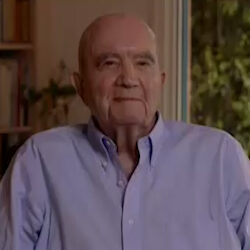
October 7, 1977: The film Oh, God! premieres. George Burns plays God. He was almost old enough.

He was born on January 20, 1896, in Manhattan, as Nathan Birnbaum. When he went into show business, he named himself after two different, but unrelated, star baseball players of his youth: George Burns.

In 1922, already known in vaudeville, he met comedian Gracie Allen, born on July 26, 1895 (yes, she was older) in San Francisco, as Gracie Ethel Cecile Rosalie Allen. They married in 1926, and developed a stage act where Burns played the "straight man," and Allen played a silly, addle-headed woman whose convoluted logic Burns was often ill-equipped to challenge. Burns once told an interviewer, "I would say, 'So, Gracie, how's your brother?' and let her talk for 15 minutes while I smoked a cigar." The act always ended the same way: George would say, "Say goodnight, Gracie," and Gracie would say, "Goodnight, Gracie."

The Burns and Allen Show debuted on radio in 1936; the series ran, moving back and forth between NBC and CBS, until 1950. After their radio show's cancellation, Burns and Allen reemerged on television with a CBS situation comedy, The George Burns and Gracie Allen Show, which ran from 1950 to 1958.

Officially, the show, still popular, ended because Gracie was tired of learning lines. The truth was worse: She had a bad heart, and she died on August 27, 1964, at the age of 69. George later told an interviewer, "I go to her grave, and I tell her my jokes. She doesn't laugh. She's heard them all before."

George continued as a comic actor, and did standup on variety shows like The Ed Sullivan Show and The Tonight Show Starring Johnny Carson. The death of his close friend and fellow comedian Jack Benny in 1974 devastated him. But in 1976, playwright Neil Simon cast George in the film version of his play The Sunshine Boys. At 80, George Burns became the oldest male actor to yet win an Academy Award for Best Picture. He told the media, "It just goes to show that if you stick around long enough, you become new again."

(In 2021, Anthony Hopkins won at age 83 for his role in The Father. The oldest actress is Jessica Tandy, who won in 1990, at 80. for Driving Miss Daisy. The youngest? In 2002, Adrien Brody won at 29 for The Pianist; and in 1987, Marlee Matlin won at 21 for Children of a Lesser God. Tatum O'Neal won at 10 in 1974, for Paper Moon, but she won for Best Supporting Actress, even though she was the female lead. In 1981, Timothy Hutton was 20 when he won Best Supporting Actor for Ordinary People.)

Before Betty White, George Burns was America's favorite elderly celebrity -- or, at least, America's favorite person famous for being old. George, how many of those cigars do you smoke a day? "About 20 a day." And how much do you drink? "I drink 6 martinis a day." And you date young women? "Yes." Why don't you date women your own age? "There aren't any." But couldn't fooling around with a woman that young prove fatal? "If she dies, she dies." What does your doctor say about all of this? "He's dead."

He also liked to say, "I never tell a joke older than I am. There aren't any." In 1977, just before the release of Oh, God!, Burns was the guest host on The Muppet Show. Gonzo the Great held a violin, and said, "It's my new act: Gonzo fiddles while George Burns!" It was a play on the old line -- not possible, because the violin didn't exist in ancient times -- "Nero fiddles while Rome burns." George heard Gonzo, and said, "Finally! A joke that's older than I am!"

In 1971, Avery Corman write a novel titled, Oh, God! Larry Gelbart wrote a screenplay based on it, to be directed by Carl Reiner. Both men had written for Sid Caesar's Your Show of Shows in the 1950s, as had Mel Brooks. They cast Burns as God. "I originally offered the part to Mel," Gelbart said, "but he didn't want the demotion."

The story centers on supermarket manager Jerry Landers, who is chosen by God to spread His message, despite the skepticism of the media, religious authorities, and his own wife. Instead of wearing a long white beard and a long white robe, as God is often depicted, Burns dressed like a Florida retiree, complete with a sailor cap and loafers. When Jerry asks Him to prove he's God, by doing a miracle, God says, "The last miracle I did was the 1969 Mets."

Singer John Denver was cast as Jerry. Burns said, "Denver brought in his fans, and they got me to bring in the young kids." Teri Garr played Jerry's wife.

The movie was a hit. Burns said, "They're doing a sequel. I'm playing God again. Why not? At my age, anything I do is a miracle." Oh, God! Book II came out in 1980, and Oh, God! You Devil in 1984. Both times, Burns was the only returning actor, and there was no connection between the stories.

In the 3rd film, set mostly in Las Vegas, Burns spent much more on-screen time as the Devil, using the name Harry O. Tophet -- the initials spelling "HOT," as seen on his license plate, and "Tophet" was a place where pre-Judaism Canaanites would sacrifice their children to the god Moloch. As with his version of God, he didn't use a traditional appearance: No horns, no tail, no mustache, no beard, not even exaggerated eyebrows. But he did wear a red sportsjacket, compared to the blue windbreaker he wore as God.

Spoiler Alert: In the true spirit of Las Vegas, when the old enemies finally face each other, God wins the hero's soul back by bluffing through a poker hand. The Devil says, "Why did I fold?" And God says, "I put the fear of Me into you."

How many actors have played both God and the Devil? In live-action, only George Burns, and he played both at the same time. When he was 87 years old.

(Max von Sydow played Jesus in The Greatest Story Ever Told in 1965, and the Devil, using the name Leeland Gaunt, in Needful Things in 1993. Willem Dafoe played Jesus in The Last Temptation of Christ in 1988, and the Devil in a 2013 Mercedes-Benz commercial.)

George Burns had a running gag: "I can't die. I'm booked." He wasn't kidding: Years in advance, he had the London Palladium rented out for his 100th birthday, January 20, 1996. But at the age of 98, he fell getting out of the bathtub, and broke his hip. That has been the beginning of the end for many old people, and it looked like he was going to will himself to live to be 100, just for the sake of reaching the milestone. He did, but it was Jerry Seinfeld who took the London Palladium gig. George Burns died on March 9, 1996, just 49 days after turning 100.

*

October 7, 1977 was a Friday. In baseball, Game 3 was played in each League Championship Series. Dennis Leonard, a Brooklyn native, goes the distance, and the Kansas City Royals beat the New York Yankees, 6-2 at Royals Stadium (renamed Kauffman Stadium in 1993). The Royals take a 2-1 lead in the series, and need just 1 more win for their 1st Pennant.

They will be disappointed. But perhaps not as badly as the Philadelphia Phillies. But in the top of the 9th, trailing 5-3 and down to their last out, the Los Angeles Dodgers benefit from a sickening turn of events, which leads to a 6-5 Dodger win, and they take the Pennant the next day. Philadelphia fans call it "Black Friday." I have a separate entry for this event.

Football was in midweek. And the 1977-78 NBA, NHL and World Hockey Association seasons hadn't started yet.

Sunday, July 3, 2022

July 3, 1905: France Finally Separates Church and State

Émile Loubet

July 3, 1905: The Chamber of Deputies, the lower house of France's national legislature, passes a bill for the separation of church and state, 341 to 233. It becomes law in the nation's Third Republic, and remains so into its Fifth Republic.

This is bigger than it might appear to a 21st Century audience. It is often presumed that the French Revolution of 1789 to 1795 fully overturned the established order, known as the Ancien RégimeCertainly, there was a desire to overturn the Roman Catholic Church, as much as there was to overturn the royal House of Bourbon. Writer and philosopher Denis Diderot, who died a few years before the Revolution, is credited with saying, "Man will never be free until the last king is strangled with the entrails of the last priest."

But the Revolution fell into the Reign of Terror, and ultimately failed. The stated ideals of Liberté, égalité, fraternité -- liberty, equality and brotherhood --  were tossed aside for the dictatorship, and then the empire, of Napoleon Bonaparte.

This was followed by a conservative retrenchment, a new monarchy that teamed up with the Church to reassert the old values and turn back a few attempted revolutions, including the June Rebellion of 1832, the centerpiece of Victor Hugo's 1862 novel Les Misérables. This was followed by the Second Empire, run by Napoleon's grandnephew, Emperor Napoleon III, before it fell in the Franco-Prussian War in 1870. The Third Republic was subsequently founded.

The Dreyfus Affair that began in 1894 uncovered a considerable amount of anti-Semitism in France, particularly among the nation's Catholics. Finally, in 1905, President Émile Loubet wanted full separation. His popularity, having grown through his settling of the Dreyfus Affair and his diplomacy in building the Triple Entente with Britain and Russia, helped to pass it.

And so, 116 years after 1789, when France had its Revolution, and America's Bill of Rights enshrined freedom of religion into the First Amendment to its federal Constitution, France also had an official separation of church and state -- something that Canada took until 1982, with its Charter of Rights and Freedoms, to have; and that Britain still does not have, as it is officially tied to the Church of England. France has been a largely secular nation ever since, though Catholicism remains the leading religion.

Speaking of Canada: It has been noted that, due to its separation from France proper, the Canadian Province of Quebec, formerly known as New France, faced a tighter grip from the Church than did the "mother country." It would take until the "Quiet Revolution" of the 1960s for that grip to be broken.

This is not to say that the Catholic Church said, "Oh well, we lost this one. Let's move on." Hardly. On February 11, 1906, Pope Pius X wrote a papal open letter titled Vehementer Nos, which is Latin for "We strongly." Given that the Pope is, technically, the Church's monarch, he was speaking for the Church and using "the Royal We."
Pope Pius X

He wrote, "Our soul is full of sorrowful solicitude and Our heart overflows with grief... How, indeed, could it be otherwise, immediately after the promulgation of that law which, by sundering violently the old ties that linked your nation with the Apostolic See, creates for the Catholic Church in France a situation unworthy of her and ever to be lamented?"

He said the new law "must be deplored by all the right-minded." Why? Because it was "disastrous to society as it is to religion." He called it a "great calamity." He wrote, "That the State must be separated from the Church is a thesis absolutely false, a most pernicious error." And why is that? Because it was "a great injustice to God."

God's thoughts on the matter were not recorded by the media that existed at the time.

*

July 3, 1905 was a Monday. Johnny Gibson was born. From my original hometown of Bloomfield, New Jersey, he was a runner who competed in the 1928 Olympics in Amsterdam, although he did not win a medal. He later served as the longtime track & field coach at Seton Hall University, and lived to be 101 years old.

These baseball games were played that day:

* The New York Highlanders beat the Philadelphia Athletics, 5-0 at Hilltop Park in Upper Manhattan. Al Orth, a pitcher known as "The Curveless Wonder," pitched a 4-hit shutout. Willie Keeler went 3-for-4 with an RBI for the Highlanders, who became the New York Yankees in 1913.

* The New York Giants beat the Philadelphia Phillies, 9-1 at National League Park (later renamed Baker Bowl) in Philadelphia.

* The Brooklyn Superbas beat the Boston Beaneaters, 2-1 at Washington Park in Brooklyn. The Superbas became the Brooklyn Dodgers in 1911, and the Boston team became the Braves in 1912.

* The Boston Americans, forerunners of the Red Sox, beat the Washington Senators, 6-2 at the Huntington Avenue Grounds in Boston.

* The Pittsburgh Pirates beat the Cincinnati Reds, 4-3 at Exposition Park in Pittsburgh. Honus Wagner went 2-for-3 with a walk and an RBI.

* And the Chicago White Sox, the Cleveland Naps (forerunners of the Indians and the Guardians), the Detroit Tigers, the St. Louis Browns, the Chicago Cubs and the St. Louis Cardinals were not scheduled.

Friday, April 8, 2022

April 8, 1966: Time Magazine's "Is God Dead?" Cover

April 8, 1966: Time magazine prints its most famous cover, asking a big question: "Is God Dead?"

Why did the question come up? The question was already steeped in German philosophy in the 19th Century. In 1797, German writer Jean Paul wrote Siebenkäs (Sevencheese), in which a character says, "'The Dead Christ Proclaims That There Is No God." Philipp Mainländer and George Hegel had also written on the subject. In 1862, French writer Victor Hugo had his character Gerard de Nerval say, "God is dead, perhaps" in Les Misérables.

In his 1882 book The Gay Science (sometimes translated as "The Joyful Science," it has nothing to do with homosexuality), Friedrich Nietzsche came right out and said it: "Gott ist tot." He said, "The belief in the Christian God has become unbelievable," adding that everything that was "built upon this faith, propped up by it, grown into it," including "the whole of European morality," is bound to "collapse." He repeated the line "God is dead" in his next and most-known book, Thus Spoke Zarathustra.

The World Wars of the 20th Century, in which both Germany as aggressor and the nations defending themselves used God as justification, would likely have convinced him that he was right, at least about the collapse part.

What's more, Nietzsche believed it was a good thing: He often wrote of an "overman" who was "beyond good and evil," superseding established concepts of what was moral and what was not. And that was part of the problem: After his death in 1900, this belief in an Übermensch was twisted into the official beliefs of the aggressors of the World Wars, Kaiser Wilhelm II and Chancellor Adolf Hitler.

It was an American of German descent, Otto Fuerbringer, who, as editor of Time, released that cover, the magazine's first without a photograph in its 43 years of publishing to that point. But the issue did not attempt to answer the question. In more recent terms, the cover was "clickbait."

The article accompanying the magazine cover, titled "Toward a Hidden God" and written by the magazine's religion editor, John T. Elson, mentioned the so-called "God Is Dead" movement only briefly in its introduction. In a footnote, it identified the leaders of the movement, and explained how those theologians had been trying to construct a theology without God.
Otto Fuerbringer

The article pointed out that, while this movement had roots in the philosophy of Nietzsche, it also drew on a broader range of thinkers, who had expressed concerns about the role of God in an increasingly secularized world. The immediate reality did not indicate a death of God, or a death of religion, and the article pointed out that the recent Second Vatican Council had done much to revitalize Christianity, and the Roman Catholic Church in particular.

The article cited a poll in which 97 percent of Americans declared a belief in God, but only 27 percent called themselves "deeply religious."

Time received around 3,500 letters to the editor, still the largest number of responses to any one story in the history of the magazine. In its issue of December 26, 1969, Time ran a follow-up cover story asking, "Is God Coming Back to Life"?

A month before the controversial cover, John Lennon of The Beatles gave an interview in which he said, "Christianity will go. It will vanish and shrink. I needn't argue about that; I'm right and I'll be proved right. We're more popular than Jesus now." When it was published in the American magazine Datebook on July 29, evangelical Americans lost their minds, and convinced radio stations to ban the Beatles, and even held record burnings, as if it was Nazi Germany. Lennon had to apologize.

On November 29, 1993, Time did a cover story on psychology, discussing how people were moving away from the teachings of Sigmund Freud. Freud had died in 1939, and was famously atheist: He wouldn't have said God was dead, he would have said God never existed in the first place. But the 1993 cover showed a painting of Freud, with his head coming apart like pieces of a puzzle, asking, "Is Freud Dead?"

And on April 3, 2017, with Donald Trump having become President, despite so many of his statements having been proven to be lies, Time printed this cover.
Trump was defeated in 2020, so the answer was, "No, but it sure was sick for a while." (UPDATE: Trump was returned to the Presidency in 2024, indicating that truth remains seriously ill.)

Otto Fuerbringer died in 2008; John T. Elson, the following year.

*

April 8, 1966 was a Friday -- indeed, it was Good Friday, the traditional date of the Crucifixion of Jesus, with Easter to follow on Sunday. Actresses Cynthia Nixon and Robin Wright were born on this day.

The baseball season started 3 days later. Football was out of season. The NBA Playoffs were in the Divisional Finals, but both were between games. The Boston Celtics beat the Philadelphia 76ers in 5 games, while the Los Angeles Lakers needed 7 games to beat the St. Louis Hawks. The Celtics then beat the Lakers in the Finals.

And the Stanley Cup Playoffs were underway, but both Semifinal series were between games. The Montreal Canadiens would sweep the Toronto Maple Leafs in 4 straight, while the Detroit Red Wings would need 6 games to finish off the Chicago Black Hawks, and then the Canadiens would beat the Wings for the Cup. So there were no scores on this historic day.

December 31, 1999 & January 1, 2000: The Millennium

December 31, 1999:  The Millennium arrives. The people of planet Earth survived. At a terrible cost. But we hadn't destroyed ourselves. ...