Showing posts with label lou brock. Show all posts

Saturday, October 15, 2022

October 15, 1964: The Last Day of the Old Yankee Dynasty

Bob Gibson pitching to Mickey Mantle, Sportsman's Park

October 15, 1964: Game 7 of the World Series is played at Sportsman's Park – or, as Cardinals owner and Anheuser-Busch beer baron August Anheuser Busch Jr., a.k.a. "Gussie" Busch, has renamed it, Busch Stadium. The Cardinals start Bob Gibson, loser of Game 2 but winner of Game 5, on 2 days' rest. The Yankees start rookie Mel Stottlemyre, who had defeated Gibson in Game 2.

Lou Brock's 5th-inning home run triggers a 3-run frame and a 6-0 lead for Gibson. Mickey Mantle‚ Clete Boyer‚ and Phil Linz homer for New York – for Mantle, the record 18th and final Series homer of his career – and the Yanks close to within 7-5 in the 9th. But it's not enough, as an exhausted Gibson finds enough gas in his tank to finish the job, and the Cards are the World Champions.

Both Boyers‚ Ken for the Cards and Clete for the Yankees‚ homer in their last Series appearance. While they had homered in back-to-back games, Clete in Game 3 and Ken a grand slam in Game 4, this remains the only time in Series history that 2 brothers have both homered in the same game.

The three games at Yankee Stadium had attendances of 67,101, 66,312 and 65,633. In contrast, of the four games at Busch Stadium, built in 1909, three had an official attendance of 30,805, while Game 7 had one of 30,346. Never again has a World Series been played in front of a crowd so low, or in a stadium with a seating capacity so low -- or in a stadium built before 1912. One of many turning points that this World Series represented: On May 8, 1966, the Cardinals left their old neighborhood ballpark, and moved into Busch Memorial Stadium, a concrete circle built downtown for as many events as possible. They would play the 1967, 1968, 1982, 1985, 1987 and 2004 World Series there, before moving next-door to a new Busch Stadium (no "Memorial").

Although the Yankees (27) and the Cardinals (11) have each won more World Series than any other team in their respective Leagues, they have never met in another, despite both making the Playoffs in 1996, 2000, 2002, 2004, 2005, 2006, 2011, 2012 and 2015. (Both teams came close to making the Playoffs in 1974, the Cards just missed in 1981, and the Yanks just missed in 1985.)

For each manager, it is his last game at the helm. Johnny Keane had nearly been fired by Cardinal management in mid-season, and their come-from-behind run to top the Philadelphia Phillies had saved his job. But he had had enough, and he resigns.

Yogi Berra, after helping the Yankees to 14 World Series as a player and now 1 as their manager, also coming from behind, to top the Chicago White Sox, thinks he's done a good job, and expects to be offered a new contract. Instead, he gets fired, and Yankee management hires… Johnny Keane.

This will turn out to be a massive mistake. While the Cardinals will hire their former star 2nd baseman Red Schoendienst, who will lead them to the 1967 World Championship and the 1968 Pennant, Keane, already in ill health, will be a terrible fit for the Yankees, getting fired early in 1966, and he dies in 1967.

Del Webb and Dan Topping, who had owned the Yankees since 1945, had just sold the Yankees to CBS – yes, the broadcast network – and had cared little for keeping the farm system stocked. As a result, there was very little talent left to call up to the majors when the Yanks' current stars got hurt or old, and it seemed like they all got hurt or old at once.

In the 44 seasons from 1921 to 1964, the Yanks won 29 Pennants and 20 World Series, but fell to 6th place in 1965, 10th and last in '66. Despite a 2nd-place finish in '70, they were well behind the World Series-winning Orioles. They didn't get into a race where they were still in it in August until '72, to the last weekend still in the race until '74 (by which time George Steinbrenner had bought the team from CBS), to the postseason until '76 and the World Championship until '77.

In 2008, Buster Olney published The Last Night of the Yankee Dynasty, about the one that began in 1996, and ended at what's now called Chase Field in Phoenix on November 4, 2001. But no baseball dynasty, indeed no sports dynasty, was as, well, dynastic as the 1949-64 Yankees. Peter Golenbock's Dynasty: The New York Yankees 1949-64 tells of how it was built, and how it began to fall apart; David Halberstam's October 1964 tells of how both the Yankees and the Cardinals got to this Game 7, and what happened thereafter; both books put the teams in the context of their times, at home and abroad.

There were a lot of big names on those teams -- including future National League President Bill White, and future broadcasting legends Tony Kubek, Mike Shannon, Bob Uecker and Tim McCarver. None of them had any inkling that this was anything other than the last day of a great season, that it was The Last Day of the Yankee Dynasty.

UPDATE: The Cardinals have a team Hall of Fame. From their 1964 World Champions, they have inducted team owner August "Gussie" Busch, coach Albert "Red" Schoendienst, scout George Kissell, scorekeeper Lou Adamie; 1st baseman Bill White, 3rd baseman Ken Boyer, left fielder Lou Brock, center fielder Curt Flood, right fielder Mike Shannon, 2nd baseman Julián Javier, catcher Tim McCarver, pitcher Bob Gibson, and broadcaster Jack Buck.

Through the 2025 season, manager Johnny Keane, general manager Vaughan "Bing" Devine, and broadcaster Harry Caray (a St. Louis native, once every bit as identified with the Cardinals as he now is with their arch-rivals, the Chicago Cubs) have not yet been inducted.

Busch, Schoendienst, Kissell, Adamie, Gibson, Brock and Flood were elected to the St. Louis Sports Hall of Fame. Busch, Schoendienst, Kissell, Adamie, Boyer, Brock, Shannon, Gibson, Buck, Devine, Caray, shortstop Dick Groat and right fielder Charlie James (a St. Louis native) were elected to the Missouri Sports Hall of Fame.

*

October 15, 1964 was a Thursday. This was the only baseball game on the day. Football was in midweek. And the NBA season didn't begin until the next day.

But there was 1 game played in the NHL: The Toronto Maple Leafs beat the Detroit Red Wings, 5-3 at the Olympia Stadium in Detroit.

Monday, August 29, 2022

August 29, 1977: Renée Richards Competes In Women's Singles

August 29, 1977: The U.S. Open tennis tournament gets underway, at the Forest Hills Stadium in Queens, New York City. It is the last time the venue will host the tournament, as the new National Tennis Center will open the next year, also in Queens, in Flushing-Meadow Corona Park.

Among the players competing in women's singles at this tournament is Renée Richards. A native of Forest Hills, she fought hard for the right to compete in women's singles.

Because she wasn't always Renée Richards. As we now understand things, she was always a she -- but, physically speaking, that was not always the case.

Richard Raskin was born on August 19, 1934 in New York City. At Horace Mann School, one of the country's leading prep schools, he was good enough as a baseball pitcher to be scouted by the New York Yankees. He was a wide receiver on the football team, and was also on the tennis and swim teams.

He went to Yale University, and was Captain of the men's tennis team. He was considered by some to be one of the best college tennis players in the country. He went to medical school, and became an eye doctor. He enlisted in the U.S. Navy, and won service championships in tennis.

But he was harboring a secret: Since college, he had been dressing as a woman. She had heard about what is now called gender-reassignment surgery, but was then called "a sex-change operation." She began receiving the hormone treatments that have become a precursor to such surgery, but chose not to go through with it at that time. In 1970, still Richard Raskind and officially male, he married model Barbara Mole, and fathered a son, Nicholas, in 1972.

But in 1975, they divorced. By that point, the transition process had begun. As Dr. Renée Richards, she set up an ophthalmology practice in the Los Angeles suburb of Newport Beach, California. She applied to play in women's singles at the 1976 U.S. Open, but refused to take the Barr body test for gender verification, and was denied admittance to the big Summer tournaments: Wimbledon, the U.S. Open, and the Italian Open.

She sued the U.S. Tennis Association (USTA) in New York State court, alleging gender discrimination under the New York Human Rights Law. As the case dragged on, she took the Barry body test, and the results were ambiguous. She was told she would have to take it again before being allowed to play, refused -- understandable, since she had given in to the demand to take it once -- and was denied admittance to the Open by the USTA.

On August 16, 1977 -- the day Elvis Presley died -- Judge Alfred M. Ascione found in Richards' favor. He ruled, "This person is now a female," and that requiring Richards to pass the Barr body test was "grossly unfair, discriminatory and inequitable, and a violation of her rights." He further ruled that the USTA practiced an intentional discrimination against Richards, and granted Richards an injunction against the USTA and the USOC, allowing her to play in the 1977 U.S. Open.

On August 29, she played in the 1st round, against British star Virginia Wade, and lost. However, she and her tennis partner, Betty Ann Stuart, reached the women's doubles Final, losing in straight sets to Martina Navratilova and Betty Stöve. She competed in the next 4 U.S. Opens, getting to the 3rd round in 1979. She never competed in any of the other majors. In 1979, competing in mixed doubles -- teams of one man and one woman, having already endured jokes about her having competed in "mixed singles" -- she reached the Semifinals.

After the 1981 U.S. Open, she moved her residence and her practice to New York. She wrote a memoir, Second Serve, which was made into a 1986 CBS TV-movie starring Vanessa Redgrave. In 2017, with "trans" people becoming more visible and vocal than ever, she sat for an interview with Katie Couric for the documentary Gender Revolution. As of August 29, 2022, Dr. Richards is retired from medical practice, and living in Carmel, in New York's Lower Hudson Valley.

*

August 29, 1977 was a Monday. A pair of baseball All-Stars, pitcher Roy Oswalt and outfielder Aaron Rowand, were born.

And these Major League Baseball games were played:

* The New York Yankees beat the Kansas City Royals, 5-3 at Yankee Stadium. Chris Chambliss hit a 3-run home run in the bottom of the 8th, providing the comeback win, and making Sparky Lyle a winning pitcher in relief of Catfish Hunter. Cliff Johnson also hit a home run. Reggie Jackson went 0-for-4. For the Royals, George Brett and Al Cowens hit home runs.

* The Montreal Expos beat the Cincinnati Reds, 7-2 at the Olympic Stadium in Montreal. Tony Pérez hit a home run against his former team, and Gary Carter added one. For the Reds, Johnny Bench hit a home run, but Pete Rose went 0-for-4.

* The Oakland Athletics beat the Boston Red Sox, 8-7 at Fenway Park in Boston. Bill Campbell, the reliever the Sox signed through free agency to compete with the Yankees, collapsed against the cash-stripped A's, allowing the tying run in the 8th and a home run to Mitchell Page to lose it in the 9th, wasting a 3-homer performance by Jim Rice. Carl Yastrzemski went 1-for-5 with an RBI.

* The Philadelphia Phillies beat the Atlanta Braves, 3-2 at Veterans Stadium in Philadelphia. Davey Johnson, later to manage several teams, won the game in the bottom of the 14th inning by drawing a bases-loaded walk against Steve Hargan, forcing Greg Luzinski home. Luzinski had also homered. Mike Schmidt went 1-for-4 with 2 walks.

* The Baltimore Orioles beat the California Angels, 6-1 at Memorial Stadium in Baltimore. Rudy May outpitched Nolan Ryan. Eddie Murray, about to be named American League Rookie of the Year, went 0-for-2, but drew a walk and had an RBI on a sacrifice fly.

* The Cleveland Indians beat the Chicago White Sox, 9-2 at Cleveland Municipal Stadium. Indians 2nd baseman Duane Kuiper hit a home run, the only one he would hit in 3,754 major league plate appearances over 12 seasons.

* The Minnesota Twins swept a doubleheader from the Toronto Blue Jays, 7-6 and 6-5 at Metropolitan Stadium in the Minneapolis suburb of Bloomington, Minnesota. Bob Gorinski won the opener with a sacrifice fly in the bottom of the 10th inning, scoring Larry Hisle.

* The San Diego Padres beat the St. Louis Cardinals, 4-3 at San Diego Stadium (later Jack Murphy Stadium). Mike Ivie hit a home run in the bottom of the 8th to help the Padres come from behind. Dave Winfield went 0-for-3. Lou Brock went 1-for 3 with a walk and a stolen base.

It was the 893rd steal of his career. At the time, this was thought to give him the all-time record, surpassing Ty Cobb. A later check of the records showed that stole 897, not 892; and that 1890s star Billy Hamilton had 914. Brock finished his career with 938, which was definitely a record, and remains so for the National League. However, Rickey Henderson went on to shatter all records, with 1,406.

* The Los Angeles Dodgers beat the Chicago Cubs, 4-1 at Dodger Stadium in Los Angeles.

* And the New York Mets, the Houston Astros, the Pittsburgh Pirates, the San Francisco Giants, the Detroit Tigers, the Milwaukee Brewers, the Seattle Mariners and the Texas Rangers were not scheduled.

Friday, June 17, 2022

June 17, 1962: The Marv Throneberry Game

June 17, 1962: The early days of the New York Mets are full of myths about their ineptitude, but this one actually happened.

It was the 1st game of a Sunday doubleheader, against the Chicago Cubs, at the Polo Grounds. The Cubs won, 8-7. Lou Brock, not yet a St. Louis Cardinal, not yet known as a base stealer, and never really known for his power, hits a home run in the 1st inning, into the center field bleachers at the Polo Grounds. Only 2 players had ever done that before: Joe Adcock, and, in a Negro League game, Luke Easter. Hank Aaron of the Milwaukee Braves went on to do it the very next day.

Earlier in that inning, Marv Throneberry made an error at 1st base for the Mets. In the bottom of the inning, it looked like he'd redeemed himself: He hit a long drive, deep into the right-center field power alley, and he slid into 3rd base with a 2-run triple.

But the Cubs appealed, saying he didn't touch 2nd base. And 2nd base umpire Stan Landes ruled "Marvelous Marv" was out. Met manager Casey Stengel stormed out of the dugout -- as much as any 72-year-old man can storm, I suppose -- and was ready to argue. But 1st base coach Cookie Lavagetto told him, "Don't bother, Casey. He didn't touch 1st, either."

And Casey yelled, "Well, I know he touched 3rd, because he's standing on it!"

Ernie Banks also hit a home run. Billy Williams' triple gave the Cubs an 8-5 lead in the top of the 9th. In the bottom of the 9th, the Mets got an RBI double from former Yankee Gene Woodling, and an RBI single from Frank Thomas. But Don Elston got a strikeout to end it. Who was the last batter? Of course: Marv Throneberry.

The Cubs won the 2nd game, too, 4-3 when Ron Santo hit a home run off Wilmer "Vinegar Bend" Mizell in the top of the 9th. Williams also homered in this game. Throneberry didn't do so badly at the plate: He went 1-for-3, and had an RBI on a sacrifice fly. But he did also make an error.

Marv, once one of the Yankees' top prospects, and recipient of a 1958 World Series ring, but stuck at 1st base behind Moose Skowron and Joe Pepitone, became the symbol of the '62 Mets' ineptitude. Jimmy Breslin, then a columnist for the New York Herald Tribune, wrote a book about the '62 Mets, titled after a quote of Stengel's: Can't Anybody Here Play This Game? In it, he wrote, "Having Marv Throneberry play for your team is like having Willie Sutton work for your bank."

(From 1920 to until his arrest 1952, Sutton was America's most successful bank robber. He denied saying he robbed banks "Because that's where the money is," but later said he wished he'd said it, because it was true.")

He had enough power to be described with the old baseball cliché "oafish clout," which enabled him to hit 16 home runs down the close right-field line at the Polo Grounds. But he was nearly as bad a fielder at 1st base as Dick Stuart, later to be known as "Dr. Strangeglove" but a better power hitter. Still, Met fans loved Marv.

Early in 1963, he got sent down to the Buffalo Bisons, and was released from the Met organization early in the 1964 season. He never played a home game at Shea Stadium. He went back home to Tennessee, went into business for himself, returned to fame by making commercials for Miller Lite beer, and lived until 1994.

The Mets finished the season 40-120. The "winning" percentage of .250 was the lowest in Major League Baseball since the 1935 Boston Braves went 38-115, for .248. The 120 losses were the most since the 1899 Cleveland Spiders set the all-time low point in baseball performance by going 20-134.

And it wasn't just Throneberry. Stengel could point to any number of bad performers, but, instead, blamed them collectively. "Come and see my amazing Mets," he would say: "I been in this game for 100 years, but they've shown me ways to lose I never seen before." In good times and bad, they have been "the Amazin' Mets" or simply "The Amazin's" ever since.

Throneberry made 17 errors in only 97 games. Supposedly, on his birthday, September 2, Stengel told him, "We was gonna give you a cake, but we was afraid you would drop it." Rod Kanehl, who played pretty much any position, but none of them well, made 32 errors in 112 games.

Charlie Neal, a decent 2nd baseman for the Dodgers after Jackie Robinson retired, made 28 errors in 135 games. Shortstop Elio Chacón made 22 errors in 113 games. Félix Mantilla, their most-used 3rd baseman but a 2nd baseman by trade, made 20 errors in 129 games. Frank Thomas -- not the later Chicago White Sox Hall-of-Famer -- a left fielder with "oafish clout," but so big, slow and clumsy he was known as "Big Donkey," made 14 errors, an alarming total for an outfielder.

Part of the problem was that, knowing they couldn't attract fans with winning baseball, they tried to attract fans with familiar names. So they got as many former Yankees, New York Giants and Brooklyn Dodgers as they could. Throneberry was not a memorable Yankee, but Woodling was. From the Dodgers, they got Duke Snider, Gil Hodges and pitcher Roger Craig.

Craig had helped the Dodgers win the World Series in Brooklyn in 1955 and in Los Angeles in 1959. He later became a renowned pitching coach, and managed the San Francisco Giants to the 1989 National League Pennant. But in 2 seasons with the Mets, he went 10-24 and 5-22, despite not pitching all that badly. During a mound conference, he told Stengel he was doing the best he could, and Stengel told him, "You could strike them out. Don't you know we can't catch grounders?"

Their best player was center fielder Richie Ashburn, then 35 years old, a legend for the Philadelphia Phillies. When he was told he was named the team's Most Valuable Player, he decided being MVP for "the worst team ever" meant it was time to retire, and he went back to Philadelphia, and spent the last 35 years of his life in the Phillies' broadcast booth.

Aside from Throneberry missing the bases, the biggest '62 Mets story involved Ashburn and Chacón. A Venezuelan shortstop who had helped the Cincinnati Reds win the Pennant the year before, he kept backing up to catch pop-ups for which Ashburn had moved up and yelled, "I got it!" -- the universal signal to your teammates that you are going to catch the ball.

Well, maybe not so universal. Joe Christopher, an outfielder who had played on the Pittsburgh Pirates when they won the 1960 World Series (as had Mizell), had played Winter ball in a Caribbean league, and knew some Spanish. He reminded Ashburn that Chacón's English was bad, and that he should yell, "I got it!" in Spanish, which is, "¡Yo la tengo!"

So Ashburn practiced saying it. The next game, there was a pop-up, midway between the infield and center field. Ashburn moved up. Chacón moved back. Ashburn yelled, "¡Yo la tengo!" And Chacón stopped. He understood. But Thomas, in left field, didn't understand, and crashed into Ashburn. After the play, Thomas asked Ashburn, "What the hell is a yellow tango?" (In 1984, a group of Met fans formed a band named Yo La Tengo.)

And yet, the '62 Mets attracted 922,530 fans to their home games, 6th out of 10 teams in the NL. And it was a different kind of fandom. The media called these young Met fans, some of them too young to have gone to Giant or Dodger games on their own, but now old enough to do so, "The New Breed." In The New Yorker magazine, Roger Angell described them as follows:

Everybody thinks New York only cares about champions, but we cared about the Mets. I remember going to some games in June that year, and they were getting walloped, they were getting horribly beaten. But the crowds came out to Polo Grounds in great numbers and people brought horns and blew these horns.

After awhile I realized that this was probably anti-matter to the Yankees who were across the river and had won for so long. Winning is not a whole lot of fun if it goes on. But the Mets were human and that horn I began to realize was blowing for me because there’s more Met than Yankee in all of us. What we experience day to day in our lives, there’s much more losing than winning, which is why we love the Mets.

The Mets lost 111 games in 1963. They lost 109 games in 1964, their 1st season in Shea Stadium. They lost 112 games in 1965, their last with Stengel as manager. Slowly, they got better. When they finally got into contention for the first time, in 1969, going all the way and winning the World Series, the words "Amazin' Mets" were no longer ironic, they were fitting. But, based on how bad they were earlier, they were called the "Miracle Mets."

How bad were they? On May 26, 1964, they beat the Cubs 19-1 at Wrigley Field. This was before the Internet, and, with Wrigley Field not having lights, it was a day game, and some fan decided he couldn't wait for his evening newspaper to come out. So he called the paper -- which paper it is depends on who's telling the story -- and asked how the Mets did today.

The man on the other line said, "They scored 19 runs."
The caller said, "Did they win?"

I've also heard the story another way: Someone in the city room of the Herald Tribune yelled out that the Mets scored 19 runs, and it was Breslin who yelled out, "Did they win?"

Whoever it was asking, he knew his team. Until they became Tom Seaver's team in 1969, the Mets were Marv Throneberry's team, even in 1968.

But their fans loved them, whether at the crumbling old Polo Grounds or the brand-new, yet airplane-ridden, Shea Stadium. As Rihanna would sing, nearly half a century later, "We found love in a hopeless place."

*

June 17, 1962 was a Sunday. These other games were played in baseball:

* The New York Yankees also got swept, by the Cleveland Indians at Cleveland Municipal Stadium. The Indians won the opener, 6-1. Dick Donovan outpitched Bill Stafford, and rookie Jim Bouton allowed a run in 2 innings. The Tribe won the nightcap, 6-3. Pedro Ramos won, Bouton's future Seattle Pilots roommate Gary "Ding Dong" Bell got the save, and Jim Coates got shelled in 2 innings. Whitey Ford actually pitched a perfect 7th inning in relief.

Over the 2 games, Yogi Berra went 2-for-7 with a home run and 2 RBIs, Roger Maris went 2-for-7 with a walk and was hit by a pitch, and Mickey Mantle, battling injury, only appeared in the 2nd game, as a pinch-hitter, and struck out.

* The Philadelphia Phillies beat the Cincinnati Reds, 7-2 at Connie Mack Stadium in Philadelphia. Frank Robinson went 1-for-3 with a walk.

* The Baltimore Orioles beat the Washington Senators, 4-3 at District of Columbia Stadium in Washington. (It was renamed Robert F. Kennedy Memorial Stadium in 1969.) Brooks Robinson went 1-for-5.

* The Pittsburgh Pirates beat the Milwaukee Braves, 7-3 at Forbes Field in Pittsburgh. Hank Aaron went 2-for-4. So did Roberto Clemente, and he also had an RBI. Harvey Haddix outpitched Warren Spahn.

* A doubleheader was split at Tiger Stadium in Detroit. The Detroit Tigers won the 1st game, 8-5. Purnal Goldy, playing in place of the injured Al Kaline, hit 2 home runs for the Tigers. The Boston Red Sox won the 2nd game, 5-0. Frank Malzone hit home runs in both games for the Red Sox. Carl Yastrzemski went 1-for-5 with 3 walks.

* The Los Angeles Angels swept a doubleheader from the Chicago White Sox at Comiskey Park in Chicago, 5-3 and 6-5.

* The Kansas City Athletics beat the Minnesota Twins, 10-6 at Kansas City Municipal Stadium. Harmon Killebrew hit a 2-run homer, but it wasn't enough.

* The Los Angeles Dodgers beat the Houston Colt .45s (who became the Astros in 1965), 6-2 at Dodger Stadium in Los Angeles.

* And the San Francisco Giants beat the St. Louis Cardinals, 6-3 at Candlestick Park in San Francisco. Stan Musial went 0-for-3. Willie Mays went 2-for-4 with 2 RBIs.

And the Final of the World Cup was held at the Estadio Nacional in Santiago, Chile. Defending Champion Brazil made it back-to-back World Cups, beating Czechoslovakia, 3-1. I have a separate entry for this event.

Wednesday, June 15, 2022

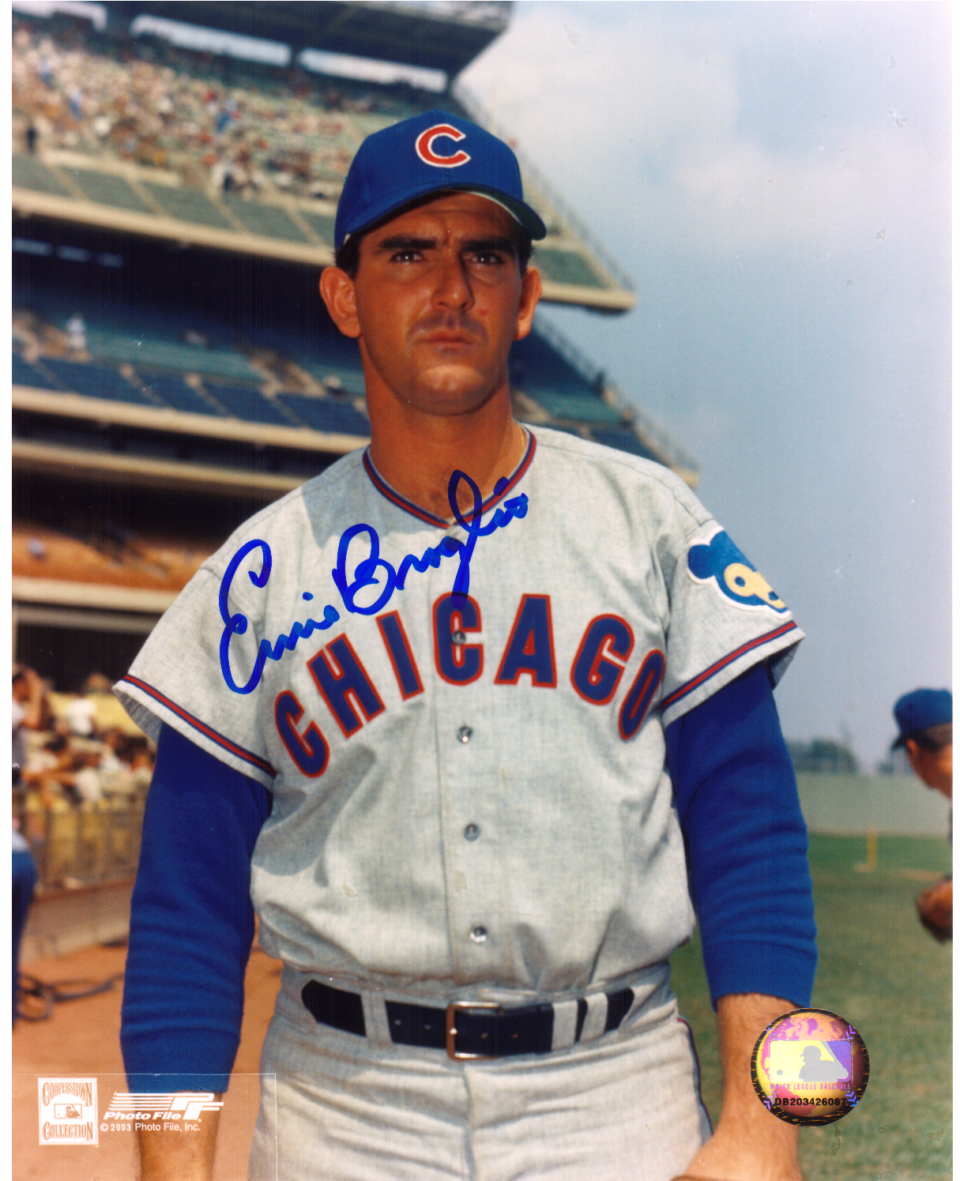
June 15, 1964: The Brock-Broglio Trade

June 15, 1964: The Chicago Cubs trade Lou Brock, Jack Spring and Paul Toth to the St. Louis Cardinals for Ernie Broglio, Bobby Shantz and Doug Clemens.

This has gone down as one of the most lopsided trades in baseball history. While Spring and Toth turned out to be all but meaningless to the Cards, the addition of Brock is widely credited as being the catalyst to their 1964 Pennant run, and to winning 3 of the next 5 National League Pennants. Brock went on to set records for stolen bases in a season and in a career, and still holds the NL records in each case. He also collected over 3,000 hits, and is in the Hall of Fame.

Clemens didn't do much for the Cubs. Nor did Shantz, once a very good pitcher, now at the end of a fine career. The key was Broglio, who went 4-7 for the Cubs the rest of the way in 1964, went 7-19 total after the trade, and was finished just 2 years later -- at which point Brock had 13 more seasons in him.

A typical dumb Cub trade, one that deserves to be remembered as one of the worst ever? Not so fast.

Jimmy Stewart -- no, not the It's a Wonderful Life actor -- a rookie 2nd baseman, was the Cubs' leadoff hitter in 1964. He stole 10 bases for the Cubs that year, and 13 the next, and had a good glove. The Cubs probably thought they had a 2nd baseman and leadoff man for the next 10 years, and that they didn't need a player like Brock.

By 1967, however, Stewart had proven to be an awful hitter, and was traded, with Glenn Beckert taking his place at 2nd base, and shortstop Don Kessinger his place at the top of the order. He did revive a bit later, and helped the Cincinnati Reds win the Pennant in 1970.

In 1962, Brock famously hit a ball into the center-field bleachers at the Polo Grounds in New York -- one of only 4 players ever to do so. But he wasn't really a power hitter, having hit 20 in 1,308 plate appearance for the Cubs before the trade.

Because of the wind blowing out at Wrigley Field, the Cubs have perennially been built around power hitters, and Brock simply wasn't looking like a power hitter hitter. Because of the wind blowing in at Wrigley half the time, this strategy wasn't especially smart, and they should instead have been built around pitching.

Brock ended up hitting 149 home runs in his career, peaking at 21 and only that once topping 16. Even so, the Cubs already had Ernie Banks, Billy Williams, Ron Santo and Billy Cowan in their lineup. Power was not a problem for them.

In contrast, for about 90 years now, the Cardinals have been built around pitching, defense, contact hitting and baserunning. Speed, speed and more speed was a Redbird hallmark at Sportsman's Park and Busch Memorial Stadium, long before Whitey Herzog came along.

True, the Cards have had some big boomers, such as Rogers Hornsby, Joe Medwick, Johnny Mize, Stan Musial, Roger Maris at the end of his career, Jack Clark, and more recently Albert Pujols and Matt Holliday.

But when you think of offensive players for the St. Louis Cardinals, you think of "Gashouse Gang" players like Pepper Martin, the scrappy, hard-charging "Wild Hoss of the Osage"; and guys who followed in that tradition. Guys like Enos Slaughter and Marty Marion.

At the time Brock arrived, they had Curt Flood, Julian Javier, and the veteran former MVP winner Dick Groat. As Groat faded, Bobby Tolan took his place on the basepaths (if not in his exact position). Later on, there were the Whitey Herzog speedsters, such as Ozzie Smith, Willie McGee and Vince Coleman.

An exception to this was their 1997-2001 interlude with Mark McGwire, and they paid for it by being a very mediocre ballclub, although they did reach the NL Championship Series in 2000, though this proves my point because McGwire was hurt a lot that season.

Lou Brock was not a good stylistic fit for the Cubs. He was an excellent one for the Cardinals.

Brock's only real position was left field, and the Cubs already had an All-Star, a future Hall-of-Famer, in left field: Billy Williams. A prospect is not going to force someone like that out. Perhaps, if Brock (or Williams) had been taught how to play center field, instead of having a parade of not very good players there, the Cubs might have put themselves in better position to win the 1969, 1970 and 1973 National League Eastern Division titles.

Indeed, one of the reasons cited for the Cubs' 1969 September Swoon was the defense of center fielder Don Young. Brock wasn't going to move the fine-fielding Curt Flood out of center field in downtown St. Louis, but he would have been a better choice for the North Side of Chicago than Young.

Broglio was 27 years old, almost 28, and had already won 70 games in the major leagues, against just 55 losses, all for the Cardinals. He led the NL with 21 wins against just 9 losses for a rather ordinary Card team in 1960, finishing 3rd in the voting for the Cy Young Award behind Vernon Law of the World Champion Pittsburgh Pirates and future Hall-of-Famer Warren Spahn of the Milwaukee Braves -- and remember, that was an award for the most valuable pitcher in both leagues at the time. The year before the trade, 1963, he went 18-8 for an improving Cardinal team.

True, he was just 3-5 at the time of the trade, but at the time, trading for him made sense: The Cubs needed to improve their pitching, and Broglio was a proven major league winner. So was Shantz, once a terrific starter, and one of the game's top relievers the preceding few years, although he was 38, and ended up retiring after the season.

Broglio didn't tell anyone at the time, but he was suffering from an injured elbow since the 2nd half of the 1963 season. He had to have his ulnar nerve reset after the 1964 season. If the Cubs had known about his injury, chances are, they wouldn't have traded for him.
"We didn't know a lot about Lou Brock. That shows you what ballplayers know," said Tim McCarver, who was the Cardinals' catcher throughout the 1960s. "But we all loved Ernie. How could you not? You couldn't not love him. We felt bad for Ernie, and were upset that he was leaving. We didn't want him to leave."

Wait a minute: Tim McCarver was one of the smartest guys in baseball (just ask him, he'll tell you) -- and he didn't know a lot about Lou Brock in June 1964? How could that be? Well, at the time, Brock didn't look like a future Hall-of-Famer: Career-wise, he had a .257 batting average, .306 on-base, .383 slugging, and 88 OPS+, 20 home runs, 50 stolen bases, and had not yet appeared in an All-Star Game or a World Series. He was 3 days away from turning 25, a point at which most guys who end up becoming baseball stars have already begun to show that they will do so.

But check out his numbers for his entire career: BA, .297; OBP, .347; SLG, .414; OPS+, 109; hits, 3,023; homers, 149; steals, 938, still a National League career record; All-Star appearances, 6; World Series appearances, 3.

Would Brock have had career stats like those if he'd stayed with the Cubs? There's no way to know. But then, there was no way to know that an additional 2,700 hits and nearly 900 stolen bases were coming after June 15, 1964.

In case you're wondering, although he was generally regarded as a good fielder, he never won a Gold Glove.

Why didn't the Cubs organization -- or, to be fair, the Cardinals' players -- see that coming? It was 1964. There was no ESPN to show you highlights of every game played on a given day. There was no Internet to give you freshly-updated stats within seconds. In those days, doing research on a baseball player consisted of doing 3 things: Reading The Sporting News, waiting for a player to appear on TV on The NBC Game of the Week, or getting off your ass and going to watch him play live. And even TSN didn't have the kind of specialized stats we have now, which might shed more light on what kind of player you had.

There was no way to tell that Lou Brock was going to become a Hall-of-Famer. And Ernie Broglio looked like a good acquisition. That he wasn't one wasn't his fault, and it wasn't really the Cubs' fault, either.

*

June 15, 1964 was a Monday. Friends actress Courteney Cox and Danish soccer star Michael Laudrup were born that day. And, by an interesting coincidence, so was August Anheuser Busch IV, grandson of Cardinals owner August Anheuser Busch Jr., a.k.a. Gussie Busch.

There were only 4 games were played in Major League Baseball that day:

* The Chicago White Sox beat the Baltimore Orioles, 9-1. Eddie Fisher (not the singer) won it, former Philadelphia Phillies legend Robin Roberts lost it. Brooks Robinson went 1-for-4.

* The Washington Senators beat the Los Angeles Angels, 3-2 at District of Columbia Stadium in Washington. (It was renamed Robert F. Kennedy Memorial Stadium in 1969.)

* The Houston Colt .45s beat the St. Louis Cardinals, 9-3 at Colt Stadium in Houston. Brock hadn't yet reached the Cards, although the man who did play left field for them that night, Bob Skinner, had an RBI single. (The Colts became the Houston Astros the next season.)

* And the San Francisco Giants beat the Cincinnati Reds, 6-5 at Candlestick Park in San Francisco. This was a wild one. The Reds led 3-0, before the Giants scored a run in the 7th and 3 in the 8th. The Reds tied the game in the top of the 9th. But... Cliché Alert: Walks can kill you, especially the leadoff variety. Bill Henry walked Willie McCovey and then Orlando Cepeda to start the bottom of the 9th, and then Jim Ray Hart singled McCovey home.

Willie Mays went 1-for-5 with an RBI. Frank Robinson went 1-for-4. Pete Rose only appeared as a pinch-runner.

Sunday, May 1, 2022

May 1, 1991: Nolan Ryan's Lightning Steals Rickey Henderson's Thunder

May 1, 1991: A new all-time record for stolen bases is set -- and it's not the biggest thing to happen in baseball on the day.

The Oakland Athletics defeat the New York Yankees, 7-4 at the Oakland Coliseum. For a few years now, A's manager Tony La Russa had been taking the "Captain Hook" approach of Sparky Anderson (then with the Detroit Tigers after leading the Cincinnati Reds to glory), replacing pitchers after the slightest slip. In this game, both teams used 5 pitchers.

La Russa started with Mike Moore, who was named the winning pitcher, and ended with Dennis Eckersley, whom La Russa turned from a seemingly washed-up former really good starter into a Hall of Fame closer. 

Yankee manager Carl "Stump" Merrill started Tim Leary, but he was knocked out of the box in the 4th inning. Leary had gone 9-19 the year before. This game dropped him to 2-1, and he would finish 4-10. He went 17-11 with the Los Angeles Dodgers in 1988, when they upset the A's to win the World Series. Other than that season, he went 61-94. He was not related to Dr. Timothy Leary, the psychologist who became the world's leading advocate for LSD; but you'd have to be on drugs to want him to pitch for your team.

Dave Henderson hit a home run for the A's, while Matt Nokes hit one for the Yankees. 3rd baseman Ernie Riles went 4-for-5 with a stolen base and 5 RBIs. He only had 27 other RBIs that season.

But the big story in this game was Rickey Henderson. (No relation to Dave.) He had set a still-standing record of 130 stolen bases in the 1982 season. The Yankees had traded for him in 1985, but, despite being one of baseball's greatest all-around talents -- of his 3,055 career hits, 297 of them were home runs, despite spending most of his career in the Oakland Coliseum, which was a pitcher's park, and Yankee Stadium, which was hard on righthanded hitters -- he never really fit in. They traded him back to the A's in 1989, and he helped them win the World Series, and a 3rd straight Pennant in 1990.

In the 3rd inning, he singled, and was singled over to 2nd base by Dave Henderson. He then stole 3rd base. It was the 939th stolen base of his career, breaking the record held by St. Louis Cardinals legend Lou Brock, who was on hand for the occasion.
A microphone was set up, and Henderson thanked, in turn, God, the Haas family (owners of the A's), the A's organization, the City of Oakland (where he grew up, although he was born in Chicago), the fans in the Coliseum, his mother, his friends, his loved ones, and former managers Tom Trebelhorn and Billy Martin (who had died in 1989).

Then he said, in words that another of his heroes, Muhammad Ali, might have appreciated, "Lou Brock was the symbol of great base stealing. But, today, I'm the greatest of all time. Thank you."

Brock took no offense, saying, "He spoke from his heart." But Henderson knew he had gone too far, later saying, "As soon as I said it, it ruined everything. Everybody thought it was the worst thing you could ever say. Those words haunt me to this day, and will continue to haunt me. They overshadow what I've accomplished in this game."

There is a difference between having a healthy ego, which is necessary to succeed in just about any endeavor, including professional sports; and having an excessive ego. Henderson certainly gave the impression of having the latter, not helping himself by being an illeist, a person who tended refer to himself in the third person, often calling himself "Rickey" instead of "I."

Henderson did go on to collect over 3,000 hits, become the major league's all-time leader in runs scored (2,295, a record he still holds) and walks (2,190), since surpassed by Barry Bonds, although he still holds the record for unintentional walks with 2,129). And he raised the record for career stolen bases to 1,406. To put that in perspective: As of May 1, 2022, the active leader is Elvis Andrus, with 318. Add his total to Brock's former record of 938, and that's 1,256 -- 150 short of Henderson's record.

*

Just a few hours later, Henderson's thunder was stolen by Nolan Ryan's lightning. At Arlington Stadium in the Dallas suburb of Arlington, Texas, Ryan pitched the 7th no-hitter of his career, against the Toronto Blue Jays. To this day, no other pitcher has more than 4. And, at age 44, he broke the record he set the year before, with his 6th, becoming the oldest pitcher ever to throw one.

The Rangers beat the Jays, 3-0. Ryan struck out 16 batters. He fell short of a perfect game, which none of his 7 no-hitters was, by walking 2 batters: Kelly Gruber in the 1st inning and Joe Carter in the 7th. The last out was a strikeout of Roberto Alomar. Rubén Sierra hit a home run for the Rangers.

His 6th no-hitter was pitched against the A's, at the Oakland Coliseum. The year before that, on August 22, 1989, at Arlington, Ryan had struck Henderson out for his 5,000th career strikeout. Like Henderson with stolen bases, and himself with no-hitters, he raised that record so high that it is incredibly unlikely that it will ever be broken: 5,714.

He finished his career with 324 wins, but also 297 losses, the most in the post-1920 Lively Ball Era. Ryan was a dominant pitcher, but, when he wasn't on his game, which was often, he was far from unhittable.

In 1999, Ryan was elected to the Baseball Hall of Fame on the first ballot. Henderson was still active, and therefore ineligible for the Hall. That same year, fan balloting named Ryan to the Major League Baseball All-Century Team, and did not name Henderson.

Henderson kept playing for as long as he thought he could, but probably should have retired after the 2001 season, shortly after getting his 3,000th hit and breaking the walks and runs records. He hung on for 2 more years at the major league level, and 2 more years in "independent" minor leagues. He did get elected to the Hall in his 1st year of eligibility, 2009.

*

May 1, 1991 was a Wednesday. These other MLB games were played that day:

* The New York Mets lost to the San Diego Padres, 8-7 at Shea Stadium. Fred McGriff went 3-for-5 with a home run and 3 RBIs. Tony Gwynn went 2-for-5. Bruce Hurst outpitched Frank Viola.

* The Montreal Expos beat the Los Angeles Dodgers, 9-3 at the Olympic Stadium in Montreal.

* The Philadelphia Phillies beat the San Francisco Giants, 4-1 at Veterans Stadium in Philadelphia.

* The Baltimore Orioles beat the Seattle Mariners, 2-1 at Camden Yards in Baltimore. Ken Griffey Jr. went 2-for-4 with an RBI. Cal Ripken Jr. went 0-for-3, but did draw a walk.

* The Pittsburgh Prates beat the Cincinnati Reds, 6-4 at Riverfront Stadium in Cincinnati. Bobby Bonilla and Jay Bell hit home runs for the Buccos, while Barry Bonds went 1-for-3 with a walk and 2 RBIs.

* The Chicago Cubs beat the Houston Astros, 11-8 at Wrigley Field in Chicago.

* The Milwaukee Brewers beat the Chicago White Sox, 10-9 at Milwaukee County Stadium. This one went 19 innings. The Brewers scored 5 runs in the 5th inning. Each team scored 3 runs in the 15th. Former Yankee 2nd baseman Willie Randolph singled home the winning run in the 19th. Robin Yount went 0-for-7, although he did draw 2 walks. Paul Molitor went 1-for-6 -- with 4 walks.

* The Minnesota Twins beat the Boston Red Sox, 1-0 at the Metrodome in Minneapolis. Scott Erickson pitched a 2-hit shutout. The only run came in the 8th inning, on a home run by Dan Gladden.

* The Atlanta Braves beat the St. Louis Cardinals, 5-4 at Busch Memorial Stadium in St. Louis. A David Justice groundout got the winning run home in the top of the 10th inning.

* The Detroit Tigers beat the Kansas City Royals, 6-4 at Royals Stadium (now Kauffman Stadium) in Kansas City. George Brett did not play.

* The Cleveland Indians beat the California Angels, 5-1 at Anaheim Stadium (now Angel Stadium of Anaheim).

Football was out of season. There were 2 games played in the NBA Playoffs. The Boston Celtics beat the Indiana Pacers, 112-105 at the Market Square Arena in Indianapolis. And the Golden State Warriors beat the San Antonio Spurs, 109-106 at the Oakland Coliseum Arena.

There was 1 game played in the Stanley Cup Playoffs: The Boston Bruins beat the Pittsburgh Penguins, 6-3 at the Boston Garden. But the Penguins went on to win the Stanley Cup.

Also, Marcus Stroman, an All-Star pitcher for the Blue Jays, was born on this day.

December 31, 1999 & January 1, 2000: The Millennium

December 31, 1999:  The Millennium arrives. The people of planet Earth survived. At a terrible cost. But we hadn't destroyed ourselves. ...