Showing posts with label beatles. Show all posts

Monday, December 12, 2022

December 12, 2012: The 12-12-12 Concert for Hurricane Sandy Relief

Billy Joel

December 12, 2012: When terrorists struck New York City on September 11, 2001, people from all over the world chipped in to help, and a tribute concert to the victims and the rescue workers was held at Madison Square Garden. When Hurricane Katrina wrecked New Orleans on August 29, 2005, a fundraising concert was held at The Garden. When Hurricane Sandy pounded New York and New Jersey on October 29, 2012, a fundraising concert at MSG was inevitable.

As with the Concert for New York City in 2001, there were non-singing celebrities on hand. Returning from that show were host Billy Crystal, Susan Sarandon, Adam Sandler, Paul Shaffer and Jimmy Fallon. Among the musical performers who had also been at the CFNYC were Paul McCartney, Mick Jagger and Keith Richards (who brought the rest of the current Rolling Stones lineup with them), The Who's Roger Daltrey and Pete Townsend, Billy Joel, Eric Clapton, Jon Bon Jovi, and Pearl Jam's Eddie Vedder.
"Sprung from cages on Highway 9":
Sayreville's Jon and Freehold's Bruce

Among those new to this show were Bruce Springsteen -- one of the few bills he's ever shared with Joel -- Roger Waters of Pink Floyd, Aerosmith, Alicia Keys, Chris Martin of Coldplay, and Kanye West in a rare moment of sane behavior; and nonmusical personalities Whoopi Goldberg, Kristen Stewart, Jon Stewart (no relation), Chelsea Clinton (but not Bill or Hillary, as in 2001), Stephen Colbert, Sean "Diddy" Combs, Olivia Wilde, James Gandolfini, Chris Rock, Seth Meyers, Blake Lively, Katie Holmes, Jason Sudeikis, and Quentin Tarantino and his Django Unchained stars Jamie Foxx and Christoph Waltz.

*

December 12, 2012 was a Wednesday. Baseball was out of season. Football was in midweek. There was only 1 game played in the NHL that night: The New Jersey Devils beat the Tampa Bay Lightning, 5-4 at the Tampa Bay Times Forum (now the Benchmark International Arena) in Tampa. The Devils blew a 2-0 lead, and then nearly blew a 5-2 lead, but hung on for the win.

In contrast, there were 13 NBA games, with all but 4 teams in the league playing. Given that Madison Square Garden was occupied, it isn't surprising that the New York Knicks were one of them, along with the Los Angeles Lakers, the Detroit Pistons and the Portland Trail Blazers. The teams that did play:

* The Brooklyn Nets beat the Toronto Raptors, 94-88 at the Air Canada Centre (now the Scotiabank Arena) in Toronto.

* The Boston Celtics beat the Dallas Mavericks, 117-115 in double overtime at the TD Garden.

* The Chicago Bulls beat the Philadelphia 76ers, 96-89 at the Wells Fargo Center in Philadelphia.

* The Los Angeles Clippers beat the Charlotte Bobcats, 100-94 at the Time Warner Cable Arena (now the Spectrum Center) in Charlotte. The following year, with the New Orleans Hornets, who used to be the Charlotte Hornets, gave up the name to become the New Orleans Pelicans, the Bobcats took on the Charlotte Hornets name.

* The Atlanta Hawks beat the Orlando Magic, 86-80 at the Amway Center in Orlando. (It's now named the Kia Center.)

* The Golden State Warriors beat the Miami Heat, 97-95 at the American Airlines Arena (now the Kaseya Center) in Miami.

* The Houston Rockets beat the Washington Wizards, 99-93 at the Toyota Center in Houston.

* The Oklahoma City Thunder beat the New Orleans Hornets, 92-88 at the Chesapeake Energy Arena (now the Paycom Center) in Oklahoma City. Kevin Durant led all scorers on the night with 35 points.

* The Indiana Pacers beat the Cleveland Cavaliers, 96-81 at the Bankers Life Fieldhouse (now the Gainbridge Fieldhouse) in Indianapolis.

* The Milwaukee Bucks beat the Sacramento Kings, 98-85 at the Bradley Center in Milwaukee.

* The Minnesota Timberwolves beat the Denver Nuggets, 108-105 at the Target Center in Minneapolis.

* The Utah Jazz beat the San Antonio Spurs, 99-96 at the Delta Center in Salt Lake City (then named the EnergySolutions Arena).

* And the Phoenix Suns beat the Memphis Grizzlies, 82-80 at the US Airways Center (now the Mortgage Matchup Center) in Phoenix.

Thursday, December 8, 2022

December 8, 1980: John Lennon is Killed

Howard Cosell and John Lennon, December 9, 1974.
Six years later, John would be dead.

December 8, 1980: The New England Patriots are playing the Miami Dolphins at the Orange Bowl in Miami, a game being broadcast on ABC Monday Night Football. As John Smith of the Patriots comes onto the field to attempt a last-play game-winning field goal, Howard Cosell gives an announcement about another Englishman named John:

Cosell: But it's suddenly been placed in total perspective for us. I'll finish this. They're in the hurry-up offense.

Frank Gifford: Third down, four. Foreman. (Chuck Foreman is stopped on a run.) It'll be fourth down. (Quarterback Matt) Cavanaugh will let it run down for one final attempt. He'll let the seconds tick off to give Miami no opportunity whatsoever. (Whistle blows.) Timeout is called with three seconds remaining. John Smith is on the line. And I don't care what's on the line, Howard: You have got to say what we know in the booth.

Cosell: Yes, we have to say it. Remember: This is just a football game, no matter who wins or loses. An unspeakable tragedy confirmed to us by ABC News in New York City: John Lennon, outside of his apartment building on the West Side of New York City -- the most famous, perhaps, of all of The Beatles -- shot twice in the back, rushed to Roosevelt Hospital, dead on arrival. Hard to go back to the game after that newsflash, which, in duty bound, we have to take. Frank?

Gifford: Indeed, it is.

Lennon had been shot at 10:50 PM, Eastern Standard Time. Cosell had read an initial report, before the full facts were known: Five shots had been fired, four of them hit Lennon, and, according to the doctors who tried in vain to save him, any one of the four that hit him, had it been the only one, would have done enough damage to kill him. He was pronounced dead at 11:15. He was 40 years old.

Cosell made the announcement a few minutes later. On December 9, 1974, Monday Night Football had broadcast a game between the Los Angeles Rams and the Washington Redskins at the Los Angeles Memorial Coliseum. The Redskins won, 23-17. Lennon had attended, and Cosell interviewed him at halftime.

Cosell was already 43 years old when The Beatles first arrived in America, and hardly in their target group, but his journalistic instincts kicked in, and, surprising those of us who knew him only as a blowhard who tried to convince people he knew more about things than he did, he handled it like a complete professional.

Lennon had been living in America for a little over 3 years, and knew who Cosell was, and said of American football, "It makes rock concerts look like tea parties." The interview went very well, and, off-camera, Cosell even introduced Lennon to another attendee, the outgoing Governor of California, Ronald Reagan. (I was sure I had seen video footage of Lennon and Reagan talking and laughing together that night, but I can't find a still photo of it anywhere.)

Now, 6 years earlier, almost to the day, Lennon was dead, and Reagan was the President-elect, having defeated incumbent President Jimmy Carter a month earlier. Less than 4 months later, Reagan would be shot as well, but would barely survive.

When Cosell spoke the words, "dead on arrival," the camera caught Smith looking right into it, and nodding, as if he had heard what Cosell had said. Of course, none of the players knew anything about it until the game was over. Smith missed his game-winning field goal. The game went to overtime, and Uwe von Schamann, born in West Berlin, Germany but raised in Fort Worth, Texas, won it for the Dolphins with a field goal, 16-13.

This being a Monday, the Pats-'Phins game was the only NFL game scheduled. This being December, no MLB games were scheduled. Only one game was played in the NBA: The Seattle SuperSonics beat the San Antonio Spurs, 104-99 at the Seattle Center Coliseum.

Only one game was played in the NHL: The Calgary Flames beat the Los Angeles Kings, 4-2 at the Forum in the Los Angeles suburb of Inglewood, California.

Monday, December 5, 2022

December 5, 1973: Paul McCartney Releases "Band On the Run"

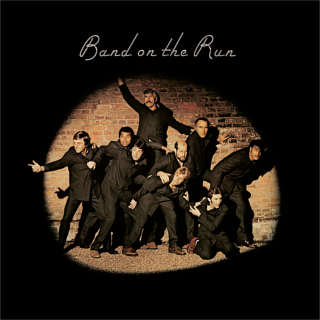
December 5, 1973: Band On the Run by Wings is released. It remains the best album led by any of the ex-Beatles.

The only constant members of Wings were Paul and Linda McCartney, and lead guitarist Denny Laine. Wings' rhythm guitarist? Paul. Wings' bass guitarist? Paul. Wings' piano player? Paul. Wings' drummer? Paul. Who played those instruments on tour? Nobody: Wings didn't tour in support of the album.

On the cover of the album are the McCartneys and Laine; plus singer Kenny Lynch, actors James Coburn and Christopher Lee, broadcasters Michael Parkinson and Clement Freud (grandson of Sigmund), and boxer John Conteh.

The 1st 2 tracks, the title track and "Jet" were big rockers and hits. They were followed by "Bluebird." Not one of Paul's better songs, not even as good as "Blackbird" on The Beatles (a.k.a. The White Album). Pablo Picasso had died earlier in the year, and Paul wrote a song titled "Picasso's Last Words (Drink to Me)."

The album was closed with "Nineteen Hundred and Eighty-Five." At first, it sounds post-apocalyptic, until you realize that it's a love song from Paul to Linda: "Oh, no one ever left alive in nineteen hundred and eighty-five, will ever do. She may be right, she may be fine. She may get love, but she won't get mine, 'cause I got you." Basically, it's a harder-rocking "When I'm 64." (Paul was 31 years old in 1973, 53 in 1985, and 64 in 2008.)

*

December 5, 1973 was a Wednesday. Baseball was out of season. Football was in midweek. There were 6 games played in the NBA:

* The New York Knicks lost to the Boston Celtics, 119-97 at the Boston Garden.

* The Cleveland Cavaliers beat the Philadelphia 76ers, 89-75 at The Spectrum in Philadelphia.

* The Buffalo Braves beat the Portland Trail Blazers, 114-110 at the Buffalo Memorial Auditorium. Bob McAdoo of the Braves led all scorers in both leagues with 37 points.

* The Houston Rockets beat the Capital Bullets, 119-99 at the Hofheinz Pavilion (now the Fertitta Center) in Houston. This was the Bullets' 1st season after moving down the Baltimore-Washington Parkway. The "Capital Bullets" name didn't catch on, so, the next season, they became the Washington Bullets; in 1997, the Washington Wizards.

* The Kansas City-Omaha Kings beat the Atlanta Hawks, 117-105, in 1 of 3 games the Kings played at the Omaha Civic Auditorium that season. Jimmy Walker, who had taken Providence College to the NCAA Final Four the season before, led the Kings with 29 points. He was not related to Jimmie Walker, soon to begin starring on Good Times. "Pistol" Pete Maravich scored 35 and "Super" Lou Hudson 32 in defeat for the Hawks.

* And the Phoenix Suns beat the Golden State Warriors, 103-97 at the Arizona Veterans Memorial Coliseum in Phoenix.

There were 2 games in the American Basketball Association. The New York Nets beat the Indiana Pacers, 108-103 at the Indiana State Fair Coliseum (now the Corteva Coliseum) in Indianapolis. Larry Kenon of the Nets scored 25 points. George McGinnis of the Pacers scored 19 points and grabbed 33 rebounds.

And the Denver Rockets beat the San Diego Conquistadors, 138-108 at the Denver Auditorium Arena.

There were 4 games in the NHL:

* The New York Rangers beat the St. Louis Blues, 5-1 at Madison Square Garden.

* The Chicago Black Hawks beat the Detroit Red Wings, 8-2 at the Olympia Stadium in Detroit.

* The Los Angeles Kings beat the Pittsburgh Penguins, 4-1 at The Forum outside Los Angeles in Inglewood, California.

* And the Atlanta Flames and the California Golden Seals played to a tie, 3-3 at the Oakland Coliseum Arena.

And there were 3 games in the World Hockey Association:

* The Jersey Knights lost to the Houston Aeros, 5-2 at the Sam Houston Coliseum in Houston.

* The Winnipeg Jets beat the Edmonton Oilers, 3-1 at the Winnipeg Arena.

* And the Toronto Toros beat the Vancouver Blazers, 3-1 at the Pacific Coliseum in Vancouver.

Monday, November 28, 2022

November 28, 1974: Elton John & John Lennon at The Garden On Thanksgiving

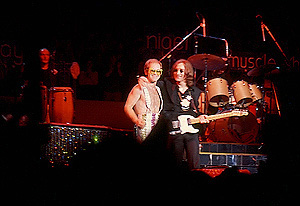
November 28, 1974: On Thanksgiving night, close to the height of his musical talent, fame and charisma, Elton John rocked Madison Square Garden in New York with considerable gusto. But that, by itself, wouldn't have put this concert on this blog.

At the end of the show, Elton brought on a special guest. He had made a bet with an old friend, former Beatle John Lennon, that if John's song "Whatever Gets You Through the Night," on which Elton had sung backup, hit Number 1 in the U.S., John would join him for this show. It did.

John kept his word, and the audience, totally unaware that he was coming, gave the building its greatest ovation ever, with the possible exception of the one when Willis Reed limped onto the court for the New York Knicks before Game 7 of the 1970 NBA Finals.

Together, the Walrus and the Rocket Man played 3 songs: "Whatever Gets You Through the Night," Elton's reworking of John's Beatle classic "Lucy in the Sky with Diamonds," and a song John introduced as being "by an old friend named Paul": "I Saw Her Standing There."

Those 3 songs -- possibly the inspiration for Lorne Michaels' never-accepted (except by George alone) invitation for the Beatles to reunite for 3 songs, getting paid $3,000, on Saturday Night Live in 1976 -- made this show a legend.

That, and the fact that it was John's last concert appearance of any kind. In 1982, referencing flower gardens and, perhaps, also Madison Square Garden, Elton had a hit with "Empty Garden (Hey, Hey, Johnny)":

And I've been knocking
but no one answers.
And I've been knocking
for most of the day.
Oh, and I've been calling:
Oh, hey, hey, Johnny
can you come out to play?

*

November 28, 1974, like all Thanksgiving Days, was a Thursday. The Dallas Cowboys beat their arch-rivals, the Washington Redskins, 24-23 at Texas Stadium in the Dallas suburb of Irving, Texas. This was the Clint Longley Game, and I have a separate entry for it.

And the Denver Broncos beat the Detroit Lions, 31-27. This was the Lions' last game at Tiger Stadium. They played their last 2 regular-season games on the road, did not make the Playoffs, and moved into the Silverdome in suburban Pontiac, Michigan the next season.

There was one college football game that day, and, at the time, it was a major rivalry. Penn State, then ranked Number 10 in the country beat the 18th-ranked University of Pittsburgh, 31-18 at Three Rivers Stadium in Pittsburgh. Since Pitt joined the Big East Conference in 1991, Penn State joined the Big Ten Conference in 1993, and especially since Pitt switched to the Atlantic Coast Conference in 2013, this rivalry has not been played annually anymore.

In recent times, to avoid losing television viewers to football, the NBA and the NHL usually don't play on Thanksgiving Day. However, there were 2 games in the NBA. The Cleveland Cavaliers beat the Philadelphia 76ers, 110-103 at The Coliseum in the Cleveland suburb of Richfield, Ohio. And the Portland Trail Blazers beat the Phoenix Suns, 88-85 at the Arizona Veterans Memorial Coliseum in Phoenix.

And 1 game was played in the American Basketball Association. The Kentucky Colonels beat the Virginia Squires, 108-95 at The Scope in Norfolk.

There was 1 game in the NHL, and Detroit was involved, but not at home. The Detroit Red Wings lost to the Buffalo Sabres, 5-2 at the Buffalo Memorial Auditorium. There were 4 games played in the World Hockey Association:

* The Vancouver Blazers beat the Toronto Toros, 6-2 at Maple Leaf Gardens in Toronto.

* The Quebec Nordiques beat the Indianapolis Racers, 7-5 at the new Market Square Arena in Indianapolis.

* The Houston Aeros beat the Edmonton Oilers, 2-0 at the Sam Houston Coliseum in Houston.

* And the Chicago Cougars beat the San Diego Mariners, 3-2 at the San Diego Sports Arena (now the Pechanga Arena).

Wednesday, November 9, 2022

November 9, 1967: Rolling Stone Magazine Debuts

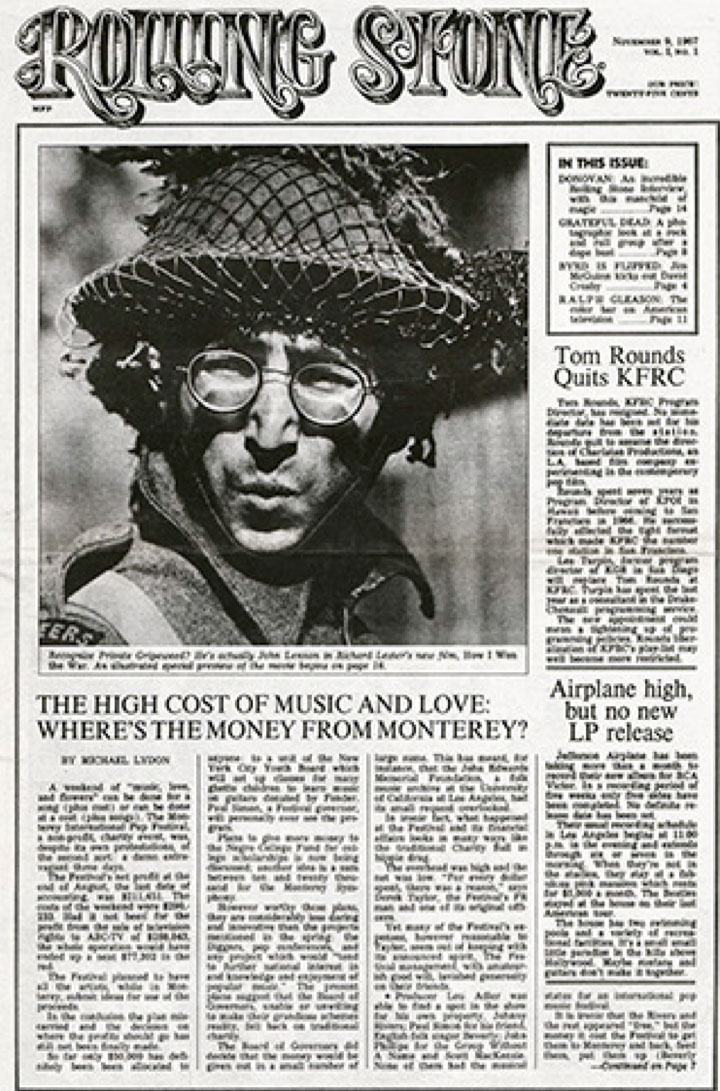
November 9, 1967: The 1st issue of Rolling Stone magazine hits newsstands. It was named not for the band The Rolling Stones, but for the 1965 Bob Dylan song "Like a Rolling Stone," itself named after a blues song by Muddy Waters, "Rollin' Stone," which is where the band got its name. As opposed to The New York Times' slogan of "All the News That's Fit to Print," the magazine's slogan is "All the News That Fits."

The magazine was founded in San Francisco, right after its "Summer of Love," by Jann S. Wenner, and has chronicled popular culture, especially rock and roll music, ever since. John Lennon of The Beatles, in a still photo from his appearance in the recent film How I Won the War, was on the 1st issue's cover.

The magazine would become known for its periodic "The Rolling Stone Interview," with personalities ranging from rock stars to politicians, including a notable one with Lennon in 1971, after The Beatles broke up; and in 1980, as he was making a comeback, but not printed until after he was murdered, with the famous cover of him naked, lying next to his wife Yoko Ono, who was fully dressed.

The magazine has also had pretensions to journalism, starting with the "gonzo journalism" of Dr. Hunter S. Thompson. In the 2000s, Matt Taibbi became one of the country's top left-of-center journalists, before people began to notice that his obsession with Senator Bernie Sanders, the Socialist from Vermont, began to show that he and other Sanders supporters had more in common with the political right than previously thought.

Collectively or separately, The Beatles -- Lennon, Paul McCartney, George Harrison and Ringo Starr -- lead all music acts with 30 cover appearances. Madonna has appeared on the cover more times than any other woman, 23.

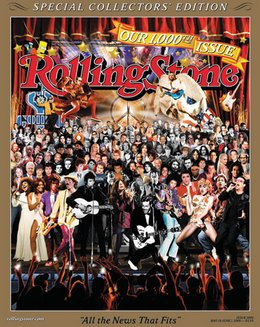
Its 1,000th issue, dated May 18, 2006, was something of a tribute to Sgt. Pepper's Lonely Hearts Club Band, the album The Beatles had released 5 months before the magazine debuted.

*

November 9, 1967 was a Thursday. Baseball season was over. Football was in midweek. There were 3 games played in the NBA:

* A doubleheader was played at the old Madison Square Garden. In the opener, the Detroit Pistons beat the expansion Seattle SuperSonics, 119-118. Dave Bing scored 39 points for the Pistons.

* In the nightcap, the New York Knicks beat the Cincinnati Royals, 123-106. Walt Bellamy scored 30 for the Knicks. For the Royals, Jerry Lucas had 41 points and 27 rebounds, while Oscar Robertson had 14 points.

* And the Boston Celtics beat the Chicago Bulls, 107-93 at the Chicago Stadium.

There were 2 games in the new American Basketball Association. The Pittsburgh Pipers beat the Minnesota Muskies, 97-86 at the Civil Arena in Pittsburgh. And the Oakland Oaks beat the Houston Mavericks, 99-98 at the Oakland Coliseum Arena.

And there were 2 games played in the NHL. The Detroit Red Wings beat the Pittsburgh Penguins, 5-1 at the Olympia Stadium in Detroit. And the Los Angeles Kings beat the Toronto Maple Leafs, 4-1 at the Los Angeles Memorial Sports Arena.

Tuesday, October 25, 2022

October 25, 1988: The Traveling Wilburys

Left to right: Bob Dylan, Jeff Lynne,
Tom Petty, Roy Orbison and George Harrison.
Or: Lucky, Otis, Charlie T. Jr., Lefty and Nelson.

October 25, 1988: The album Traveling Wilburys, Vol. 1 is released. You've heard of rock and roll "supergroups"? This was the most super group of them all.

Former Beatle George Harrison made a comeback with his 1987 album Cloud Nine, produced by Electric Light Orchestra leader Jeff Lynne, who also played several instruments on it. Among the other guest musicians: Former Beatle Ringo Star and Jim Keltner on drums, Eric Clapton on guitar, and Elton John and Gary Wright on piano.

During the recording of the album, there were some mistakes caused by faulty equipment. George said to Jeff, "We'll bury 'em in the mix." For the rest of the sessions, any mistake became known as a "We'll bury," or "Wilbury."

For a follow-up album, George got an idea to get some friends together and have some fun. For a name, George suggested "the Trembling Wilburys." Jeff suggested "Traveling Wilburys," and George agreed that this one was better.

George had worked with Bob Dylan before, and wanted him for the new group. Jeff wanted Roy Orbison. And Jeff had already agreed to collaborate with Tom Petty on an album that became Full Moon Fever. Petty and his band, The Heartbreakers, had backed Bob on a European tour.

Aside from being rock and roll legends, they shared a common love of the founding rock of the 1950s, and of the Monty Python comedy troupe, which led to them asking Michael Palin to write the album's liner notes. So they got together, and picked out names:

* Roy Orbison, then 51 years old: Lefty Wilbury.
* Bob Dylan, 47: Lucky Wilbury.
* George Harrison, 45: Nelson Wilbury.
* Jeff Lynne, 40: Otis Wilbury.
* Tom Petty, 37: Charlie T. Wilbury Jr.

The "real names" of Lefty and Lucky have never been divulged; maybe those were the real names. And it was never explained why the youngest son, rather than the oldest, had the father's name. An interviewer asked them, in character, if Charlie T. Sr. was also an itinerant musician, and Roy said, "The way I remember it, Daddy was a preacher." Keltner became the drummer, a.k.a. Buster Sidebury, a play on the term "sideman."

The lead song, "Handle With Care," became the lead single. George sang the 1st 2 verses, Roy a bridge, Bob and Tom a 2nd bridge, George the 3rd and 4th verses, then Roy again, then Roy joined Bob and Tom, and then they all sang the last verse, with George on the lead. There was no fancy production for the video: Just the five of them standing around a microphone and singing -- in black and white, just as an all-star concert headlined by Roy the year before was, released as the film Roy Orbison & Friends: A Black and White Night.

"Not Alone Anymore" was designed to sound like one of Roy's early 1960s heartbreak classics. "Heading for the Light" could have been mistaken for one of George's late Beatle or early solo efforts. Bob's song "Tweeter and the Monkey Man" reminded everyone of just how much he influenced Bruce Springsteen, especially since the song drops more New Jersey references than even a typical Bruce song. And the last song was, fittingly, titled "End of the Line."

"Handle With Care" only reached Number 44 on Billboard magazine's Hot 100, and no other single even got that close. But the album reached Number 3 on Billboard's album chart, and sold 2 million copies in the 1st 6 months. And "Handle With Care" did reach Number 3 in Australia and Number 21 in Britain. The critics loved the album, too.

By that point, Jeff had produced Roy's next album, Mystery Girl, with Tom also playing and singing on it. And Jeff had also produced Tom's next album, Full Moon Fever, with George, Roy, Jim, and one of Tom's favorite performers of all time, Del Shannon, also appearing on it. The video for its big single, "I Won't Back Down," included George, Ringo, and Jeff.

And then, on December 6, 1988, at the age of 52, Roy Orbison died of a heart attack. The world was stunned. He was at the peak of his fame. He was not known to be in ill health. But he had publicly confided to Johnny Cash, a close friend, that he'd been having chest pains, and was working like crazy in those last few weeks.

They had to film the video for "End of the Line" without him. They did it on a moving train. George, Bob, Jeff and Tom sat around playing their guitars. Jim sat at a drum kit. And when they got to the 3rd verse, which was Roy's verse, the camera focused on a rocking chair, rocking, with a guitar in it, with a shot of a photo of Roy on a shelf in the boxcar in the middle of it. It gets me every time.

In 1990, without replacing Roy, the 4 surviving Wilburys released their 2nd album, titled Traveling Wilburys Vol. 3. Not 2, 3. It included Shannon's biggest hit, "Runaway." There had been a rumor that Del was going to replace Roy, but it never happened. And then, the next year, Shannon died, too.

There were no more Wilbury albums. In 1992, Columbia Records celebrated 30 years of Dylan recording with them with an all-star concert at Madison Square Garden in New York, and Harrison, Lynne, Petty and Keltner were included. Harrison introduced Bob: "Some of you may call him Bobby, some of you may call him Zimmy, I call him Lucky."

Harrison died in 2001, Petty in 2017. As of October 25, 2022, Dylan, Lynne, and Keltner are still alive.

There couldn't be a Traveling Wilburys now, or ever again. Seriously, who would it be? Dylan won the Nobel Prize for Literature, so a substitute could be the 1st personality outside of classical and jazz to win the Pulitzer Prize for Music: Kendrick Lamar. Since Lynne was the producer, the Wilbury reboot could have Timbaland.

It couldn't be Justin Timberlake or Harry Styles, because they were the "Paul McCartney" of *NSYNC and One Direction, respectively. So... let me see if I can remember any of the other names of the boys in One Direction... Niall Horan. But who's the Petty equivalent, the great band frontman? Maybe Danny Reynolds of Imagine Dragons. And the Orbison equivalent? Forget it: As Springsteen taught us, "Everybody knows that nobody sings like Roy Orbison."

Maybe we'll have to settle for the quartet that revived Patti LaBelle's "Lady Marmalade" in 2001: Christina Aguilera, Lil' Kim, Mya and Pink.

*

October 25, 1988 was a Tuesday. Baseball season ended 5 days earlier, with the Los Angeles Dodgers beating the Oakland Athletics in the World Series. Football was in midweek. The NBA season didn't begin for another 10 days. But there were 7 NHL games played:

* The New York Islanders lost to the Toronto Maple Leafs, 4-3 at the Nassau Coliseum.

* The New Jersey Devils lost to the Buffalo Sabres, 7-4 at the Brendan Byrne Arena at the Meadowlands.

* The Chicago Blackhawks beat the Quebec Nordiques, 7-4 at the Colisée de Québec.

* In an "Original Six" matchup, the Montreal Canadiens and the Boston Bruins played to a tie, 1-1 at the Boston Garden.

* The Pittsburgh Penguins beat the Calgary Flames, 6-1 at the Civic Arena in Pittsburgh. Mario Lemieux, Randy Cunneyworth and Phil Bourque each scored 2 goals.

* The Edmonton Oilers faced the Los Angeles Kings for the 2nd time since the Oilers traded Wayne Gretzky to the Kings. On October 19, at the Northlands Coliseum in Edmonton, the Oilers won, 8-6, a game filled with both goals and penalties. For the Kings, Gretzky had 2 assists, and Bernie Nicholls had 2 goals and 2 assists. For the Oilers, Mark Messier had 2 goals.

On this night, at The Forum, outside Los Angeles in Inglewood, California, the Oilers won again, 5-4. Again, lots of goals and lots of penalties. This time, though, all 9 goals were scored by different players, while Gretzky was limited to 2 assists.

* And the Washington Capitals beat the Vancouver Canucks, 4-3 at the Pacific Coliseum in Vancouver. Mike Ridley scored the winning goal with 2:05 left in overtime.

Friday, October 21, 2022

October 21, 1969: Jack Kerouac Is Dead, Paul McCartney Is Not

October 21, 1969: Jack Kerouac dies in St. Petersburg, Florida. The novelist and poet whose works led the Beat Generation writing genre had been a football and track star at Lowell High School in Massachusetts, but injuries and squabbles with coach Lou Little ended his football scholarship at Columbia.
By the mid-Sixties, his fellow Beat writer and close friend Allen Ginsberg noticed that he no longer looked like the handsome young athlete he had been when they met in 1944, or even the mature (physically if not emotionally) writer who became famous with the publication of On the Road in 1957. Rather, Allen though that Jack now looked like his father Leo, the result of 25 years of massive drinking. That drinking burned an ulcer in his esophagus, and that's what killed him.
As a guest on William F. Buckley's Firing Line, 1968.
These two images are only about 10 years apart.

(In contrast, Ginsberg, who rather enjoyed various mind-altering drugs, but wasn't a serious boozer, lived to be 70, before he was claimed by brain cancer on April 5, 1997; and the other member of the Beats' Big Three, William S. Burroughs, who abused himself in countless ways, turned out to be the last survivor, outliving Ginsberg by 4 months, dying of a heart attack at 83 on August 2, 1997.)
The Beatnik copycats of the late 1950s and the Hippies of the 1960s missed the point of the Beats. They were essentially embracing a lifestyle that the Beats themselves had realized was pointless. Even their escapes provided only short-term respite from American life.

And while Ginsberg accepted the copycats, and the subsequent Hippies, as kindred spirits, Kerouac sure didn't. As he got older, his innate Catholicism and conservatism kicked in, and he treated the copycats as poseurs. He lived long enough to see the rise of the Hippies, and he was as repulsed by them as any Catholic (or Protestant) conservative. By the time he died due to the excesses of his drinking at the end of the 1960s, Kerouac was only 47 years old, but he was in full "Get off my lawn, you filthy kids!" mode.

Kerouac and the early Beats loved jazz, especially bebop, whose 2 main leaders were saxophonist Charlie "Bird" Parker and trumpeter John "Dizzy" Gillespie. Parker died in 1955, on March 12, Kerouac's birthday, which crushed Jack. Jack himself then died on an October 21, which was Gillespie's birthday.
*
Also on this day, the "Paul Is Dead" rumor reaches New York. A disc jockey at the University of Michigan's radio station had put together a few "clues," from Beatles album covers and in song lyrics, that suggested that Paul McCartney had been killed in a car crash in 1966, and replaced with a lookalike. It certainly explained why the Beatles weren't touring anymore.
On this night, Roby Yonge was the overnight host on New York's biggest radio station, WABC, 770 on the AM dial. It called itself "W-A-Beatle-C" in those heady "British Invasion" days of 1964 and '65. Yonge had already been told that his contract would not be renewed. This is a fact that a lot of people forget. In other words, he really had nothing to lose, and, perhaps, had something to gain.
Roby Yonge

Yonge mentioned the rumor, and the clues, and continued talking about it for an hour and a half. The ABC switchboard lit up like Times Square, and program director Rick Sklar, who had built the most successful station in the history of music radio, was awakened by phone. He got the station's regular newsman, Les Marshak, to go in and tell Roby he was relieved. Marshak ran the rest of the show, and told the listeners that the rumor about Paul being dead was not true.
Oddly, on WABC's sister station, WABC-FM -- 95.5, which became WPLJ in 1971 -- Bob Lewis, a.k.a. "Bob-a-Loo," a former WABC-AM jock, did a full "Paul Is Dead" show on November 14. Since Sklar had no authority over him anymore, he was not fired.
Another part of the story that people get wrong is saying that Yonge never worked in New York again, that Sklar blackballed him, and that Yonge had to flee to his native Florida. In truth, he was hired at WCBS-FM, not yet "New York's Oldies Station" (it became that in 1972), and worked there for a while before heading to Miami, where he worked at various stations until his death from a heart attack in 1997. He was only 54. In Miami, Roby Yonge is a legend. In New York's he's a different kind of "legend."
The clues as to Paul being dead are too many to list here, and some make more sense than others. A few came from the Abbey Road cover. On the crosswalk, going right to left, and thus front to back from their own perspective, John Lennon is first, dressed all in white, and he -- with irony already in place, and even more so retroactively -- is either the minister at the funeral, or God Himself. Next is Ringo Starr, dressed in black, and he's the undertaker. Next is Paul, and while the others have their left leg forward -- almost certainly a coincidence -- Paul's right leg is forward. He's out of step with the others, "because he's dead." And he's barefoot: In some cultures, the dead are buried barefoot. And last is George Harrison, dressed in denim, because he's the gravedigger.
Parked behind George was a Volkswagen Beetle (not "Beatle") with a license plate that included "28IF," meaning Paul would have been 28 years old if he had lived. Except he was 27. In 1993, Paul re-created that cover for a live album, titled Paul Is Live. He had a Beetle parked in the exact same spot, with a license plate reading "51IS," which did match his age at the time.
On the 1989 tour for his album Flowers in the Dirt, Paul was asked during a press conference about how his next show was in Detroit, where the rumor started, and how it had been 20 years since. As each of the Beatles had done at various points in their careers, he found the right thing to say: "'Paul is dead.' I didn't believe that one for a minute."
As rock historian Dave Marsh pointed out, this stuff was a whole lot funnier before John Lennon was killed. Since he wrote that, we've also seen the deaths of Linda McCartney, George Harrison, John's 1st wife Cynthia Lennon, Ringo's 1st wife Maureen Starkey, and many other people connected with The Beatles in various ways.
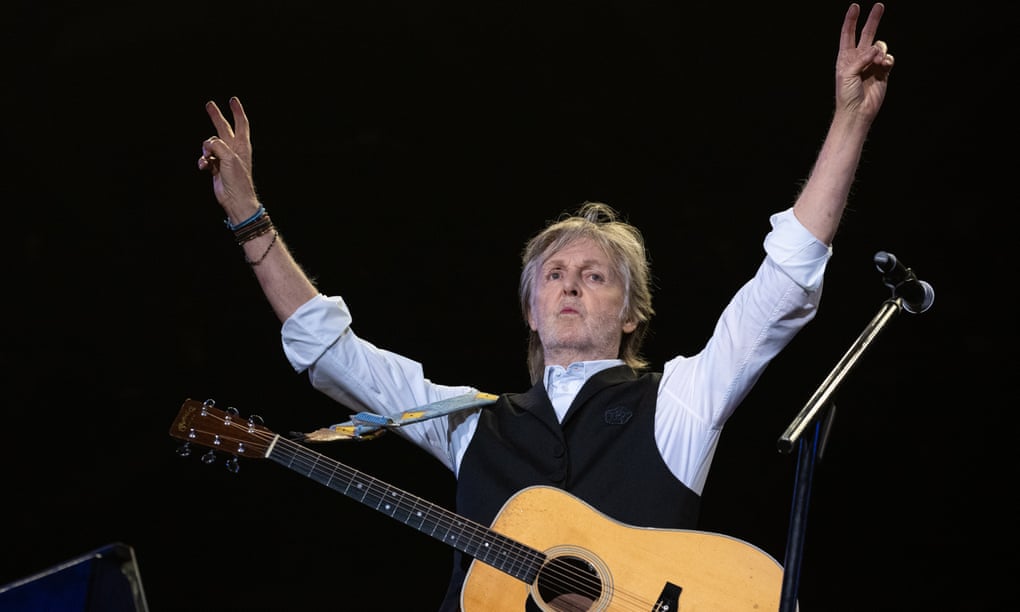
Pictured: Paul McCartney, alive, at the 2022 Glastonbury Festival
Paul McCartney turned 80 on June 20, 2022, and was in mid-tour at the time. Ringo Starr turned 82 on July 7, 2022, and is also still performing.
*
October 21, 1969 was a Tuesday. Baseball season had ended 5 days earlier, when the New York Mets completed their "Miracle" World Series win over the Baltimore Orioles. Football was in midweek. There were 3 NBA games played:

* The New York Knicks beat the Phoenix Suns, 140-116 at the new Madison Square Garden. Walt Frazier led the World Champions-to-be with 28 points.

* The Los Angeles Lakers beat the Baltimore Bullets, 142-137 in overtime at the Baltimore Civic Center (now the CFG Bank Arena). Jerry West scored 39, Wilt Chamberlain 38, and Kevin Loughery of the Bullets 35.

* And the Detroit Pistons beat the Boston Celtics, 98-97 at Cobo Hall (now Huntington Place) in Detroit.

There were 3 games played in the American Basketball Association:

* The Kentucky Colonels beat the Washington Capitols, 127-115 at the Louisville Convention Center (now named the Louisville Gardens).

* The Los Angeles Stars beat the New Orleans Buccaneers, 119-99 at the New Orleans Municipal Auditorium.

* And the Dallas Chaparrals beat the Denver Rockets, 120-108 at the Moody Coliseum in Dallas. The Rockets were renamed the Denver Nuggets in 1974.

There was 1 NHL game played that day: The Oakland Seals beat the Pittsburgh Penguins, 4-3 at the Oakland Coliseum Arena.

Sunday, October 16, 2022

October 16, 1992: The Bob Dylan Tribute Concert at The Garden

Left to right: Ron Wood, George Harrison,
Johnny Cash, Roger McGuinn, Bob Dylan

October 16, 1992: "Bob Dylan: The 30th Anniversary Concert Celebration" is held at Madison Square Garden in New York. Or, as one of the performers, Neil Young, put it, "This one's for you, Bob. Thanks for having Bobfest!" Actually, it was Columbia Records, Dylan's label the whole way, that put the show on.

And what a show it was. It may have been the greatest array of musical talent ever brought together for one show in one building. (Live Aid was 1 show, but in 2 stadiums on 2 continents, and I'm not sure it was a better show, anyway.) The house band consisted of Booker T. & the M.G.'s, with Jim Keltner and World's Most Dangerous Band member Anton Fig filling in for the late Al Jackson Jr. on drums, plus G.E. Smith of the Saturday Night Live Band. Kris Kristofferson, himself one of America's greatest songwriters, was master of ceremonies, and sang "I'll Be Your Baby Tonight."

John Mellencamp kicked it off with perhaps Dylan's greatest song, "Like a Rolling Stone." He also sang "Leopard-Skin Pillbox Hat."

One by one, some serious legends came, each playing a Dylan song or two:

* Stevie Wonder, singing the gospel-inflected version of "Blowin' in the Wind" that he hit with in 1966.

* Lou Reed, "Foot of Pride."

* June Carter and Johnny Cash, "It Ain't Me Babe."

* Willie Nelson, "What Was It You Wanted?"

* Johnny Winter, whose version of "Highway 61" was particularly blistering.

* Ron Wood of the Rolling Stones, "Seven Days."

* Richie Havens, whose acoustic version of "Just Like a Woman" was epic.

* The Clancy Brothers, Greenwich Village folkie contemporaries of Dylan's, singing "When the Ship Comes In" with an Irish brogue.

* Neil Young, who blitzed through "Just Like Tom Thumb's Blues," and made absolutely nobody miss Jimi Hendrix with "All Along the Watchtower."

* Chrissie Hynde of the Pretenders, "I Shall Be Released."

* Eric Clapton, who did "Love Minus Zero"/"No Limit," then totally tore the place up with a bluesy rendition of "Don't Think Twice, It's All Right."

* The O'Jays, "Emotionally Yours."

* The Band, "When I Paint My Masterpiece."

* George Harrison of the Beatles, "If Not For You" and "Absolutely Sweet Marie."

* Tom Petty & the Heartbreakers, "License to Kill" and "Rainy Day Women #12 and 35" (a.k.a. "Everybody Must Get Stoned").

* And Roger McGuinn of the Byrds, "Mr. Tambourine Man."

The younger generation got in on the act, too: Pearl Jam's Eddie Vedder and Mike McCready, with "Masters of War"; Tracy Chapman with "The Times, They Are A-Changin'," and a performance of "You Ain't Going Nowhere" by Mary Chapin Carpenter, Shawn Colvin, and Johnny's daughter (and June's stepdaughter) Roseanne Cash.

Said younger generation included a performer who became the focus of the show's one moment of controversy: Mere days after singing Bob Marley's "War" and tearing up a picture of Pope John Paul II on SNL, Sinéad O'Connor tried to sing Dylan's "I Believe in You," but got booed off the stage.

Kristofferson, perhaps anticipating such a reaction, tried to introduce her by saying that, like Dylan, she stood for freedom, including freedom of speech. It was to no avail: Harder than Dylan was at Newport in 1965, she got booed. She walked off and cried on Kristofferson's shoulder, and a microphone picked up him saying to her, "Don't let the bastards get you down."

George Harrison introduced Bob, and the big question everybody had was, "What's Bob going to do?" Not because so many of his great songs had already been done, but because a Bob Dylan show is like a box of chocolates: You never know what you're going to get. Was he going to walk on, wave, and then just walk off? Was he going to say something controversial? Was he not going to be understandable as he sang?

There was no issue with him: He sang, "It's Alright, Ma (I'm Only Bleeding)," he was totally understandable, and he was on his game. In turn, the 6 verses of "My Back Pages" were sung by McGuinn, Petty, Young, Clapton, Dylan and Harrison. Bob closed with "Knockin' on Heaven's Door" and "Girl from the North Country."

I still have most of this concert from the WNEW-FM broadcast. To me, it sounds better than any other recording of it.

*

October 16, 1992 was a Friday. Baseball star Bryce Harper was born on this day.

There was high school football, including a game by my alma mater: East Brunswick, in Middlesex County, New Jersey, beat Monroe, 28-8 at Jay Doyle Field in East Brunswick.

It was too early for the NBA. The American League Championship Series had wrapped up 2 days earlier, with the Toronto Blue Jays beating the Oakland Athletics in 6 games. The National League Championship Series had also wrapped up 2 days earlier, with the Atlanta Braves beating the Pittsburgh Pirates in 7 games. The World Series began the next day, and the Jays won it in 6 games.

There were 3 NHL games played that night. Obviously, not at The Garden. In fact, none of the New York Tri-State Area teams were involved:

* The Washington Capitals beat the expansion Ottawa Senators, 5-1 at the Capital Centre in the Washington suburb of Landover, Maryland.

* The Buffalo Sabres beat the expansion Tampa Bay Lightning, 5-4 at the Buffalo Memorial Auditorium. Bob Sweeney scored the winner, halfway through the overtime.

* And the Vancouver Canucks beat the Winnipeg Jets, 6-2 at the Winnipeg Arena. 

Tuesday, October 11, 2022

October 11, 1971: John Lennon Releases "Imagine"

October 11, 1971: John Lennon releases his song "Imagine." It becomes one of the most beloved songs in the world, and remains the most popular song written by any of the men who were in The Beatles.

It was the title track to an album he released on September 9. The album also included songs he wrote to his wife, Yoko Ono, such as "Jealous Guy" and "Oh Yoko!" It also included a swipe at the previous most important person in his life, former Beatle Paul McCartney, attacking him for what John would later call "silly love songs," and for the business disputes between them: "How Do You Sleep?" And it includes "Gimme Some Truth," which is self-explanatory.

The following year, John released a promotional film based on the album -- they weren't called "music videos" yet -- including a performance of "Imagine," filmed at his home at Tittenhurst Park, near Ascot, Berkshire, England, a town known for its horse-racing track. The film shows Yoko slowly opening the windows of the room as John plays, and letting more light in. John had originally recorded the song there on May 27, 1971. He co-produced the song with Phil Spector, who added an orchestra.

(This was before a Los Angeles recording session at which Spector pulled a gun on Lennon, and Lennon actually dared him to pull the trigger. Not used to people standing up to him, Spector put the gun down.)

People who claim to be Christians have hated John for this song ever since. They haven't listened to the lyrics. He didn't say there is no Heaven, no Hell, no religion; he asked the listener to imagine that there wasn't. It's actually an implication that those things do exist.

Of course, asking people to imagine there's no countries might feel like an attack on people's patriotism. And asking people to imagine there's no possessions seems like an attack on capitalism. And they take those things personally.

In contrast, in 1970, for his solo album John Lennon/Plastic Ono Band, John recorded a song titled "God," in which he rattled off things and people he said he didn't believe in: Magic, the I-Ching, the Bible, tarot cards, Adolf Hitler, Jesus, John F. Kennedy, Buddha, mantras, Gita, yoga, kings, Elvis, Zimmerman (meaning Bob Dylan), and, finally, The Beatles. He said, "I just believe in me. Yoko and me. And that's reality."

Talk about a concurrence of events: The day after Imagine was released, October 12, 1971, the musical Jesus Christ Superstar opened on Broadway.

A few weeks later, on November 24, John and Yoko released "Happy Xmas (War Is Over)," with backing from the Plastic Ono Band and the Harlem Community Choir. They also rented Times Square billboards with the messages "Happy Xmas from John & Yoko" and "War is over (if you want it)."
Eight years later, on November 16, 1979, Paul released "Wonderful Christmastime." How is it that John, who dared to "Imagine there's no heaven... and no religion, too" wrote such a fantastic Christmas song? While his former musical partner, Paul, one of the world's greatest songwriters and one of its greatest sentimentalists, facing that most sentimental of holidays, wrote such a weak one?

*

October 11, 1971 was a Monday. In America, it was Columbus Day.

Game 2 of the World Series, delayed a day by rain, was played at Memorial Stadium in Baltimore. The Baltimore Orioles beat the Pittsburgh Pirates, 11-3. The Pirates would win the Series in 7 games.

The NHL season was underway, but no games were scheduled. The NBA season began the following night. The American Basketball Association's season began the night after that.

On ABC Monday Night Football, The Dallas Cowboys beat the New York Giants, 20-13. It was the last game the Cowboys played at their original home field, the Cotton Bowl. After losing away to the New Orleans Saints the next week, the week after that, they opened their new Texas Stadium in suburban Irving, with a win over the New England Patriots.

Sunday, September 11, 2022

September 11, 1964: The Beatles Take a Stand For Civil Rights

Left to right: Paul McCartney, George Harrison,
Ringo Starr, John Lennon

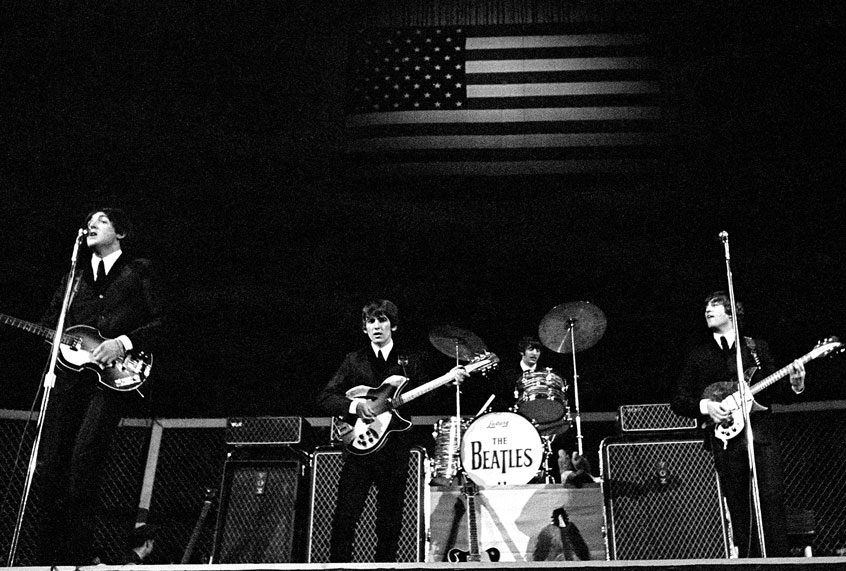
September 11, 1964: The Beatles play the Gator Bowl in Jacksonville, Florida. Playing outdoor professional sports stadiums was unusual for rock and roll acts at the time, because they usually couldn't fill them. Nevertheless, on this tour, The Beatles played the 32,000-seat Empire Stadium in Vancouver on August 22, the 62,000-seat Gator Bowl on September 11, and the 26,000-seat City Park Stadium (now Tad Gormley Stadium) in New Orleans on September 16.

The Jacksonville concert almost didn't happen, because the Fab Four found out that the audience was to be segregated. Apparently, no one in North Florida got the message: The Civil Rights Act of 1964 had been passed. John Lennon told them, point-blank, "We never play to segregated audiences, and we aren't going to start now. I'd sooner lose our appearance money." They did end up playing to a desegregated audience, of 23,000.

Things were further complicated by Hurricane Dora having hit the area the day before. It was still windy enough that Ringo Starr's drums had to be nailed to the stage.

None of the original 1927 stadium remains. The west upper deck, built as part of a 1982 expansion, was the only thing left standing after its 1995 conversion to bring in the expansion Jacksonville Jaguars. The new stadium is now named EverBank Field.

UPDATE: The stadium began another renovation in 2025, one which forced the Jaguars to move their home games to Orlando for the 2026 season.

*

September 11, 1964 was a Friday. Baseball star Ellis Burks was born. And these baseball games were played:

* The New York Yankees lost to the Minnesota Twins, 5-3 at Yankee Stadium. Jim Perry outpitched Jim Bouton. Jimmie Hall and Don Mincher hit home runs. Harmon Killebrew went 1-for-4. Joe Pepitone hit one out for the Yankees. Mickey Mantle went 1-for-3 with a walk. Roger Maris went 0-for-4.

* The New York Mets beat the Los Angeles Dodgers, 4-2 at Dodger Stadium in Los Angeles. Tracy Stallard outpitched Larry Miller. Chris Cannizzaro went 3-for-4 with an RBI.

* The Boston Red Sox beat the Los Angeles Angels, 3-0 at Fenway Park in Boston. Bill Monbouquette pitched a 5-hit shutout, outpitching Dean Chance, who won the Cy Young Award that season. Rookie Tony Conigliaro went 3-for-4. Carl Yastrzemski did not play.

* A doubleheader was split at Memorial Stadium in Baltimore. The Baltimore Orioles won the opener, 5-2. The Kansas City Athletics won the nightcap, 8-0. John "Blue Moon" Odom pitched a 2-hit shutout, although he walked 6 batters. Over the 2 games, Brooks Robinson went 4-for-7 with a walk and an RBI.

* The Chicago White Sox beat the Cleveland Indians, 7-3 at Cleveland Municipal Stadium.

* The Detroit Tigers beat the Washington Senators, 5-4 at Tiger Stadium in Detroit. Al Kaline went 1-for-4 with an RBI.

* The St. Louis Cardinals beat their arch-rivals, the Chicago Cubs, 5-0 at Wrigley Field in Chicago. Bob Gibson pitched a 2-hit shutout, to outpitch Ernie Broglio. Lou Brock, whom the Cubs traded to get Broglio, went 3-for-5 with a stolen base and 2 RBIs. Ken Boyer went 2-for-4 with a home run and 2 RBIs. Ernie Banks went 0-for-2 with a walk.

* The Milwaukee Braves beat the Cincinnati Reds, 1-0 at Milwaukee County Stadium. Denny Lemaster allowed only 1 hit, a single by Leo Cárdenas. Jim Maloney allowed only 2 hits. Felipe Alou drove in the only run of the game, Gene Oliver, with a sacrifice fly in the bottom of the 8th. Frank Robinson went 0-for-3. Hank Aaron did not play.

* The Pittsburgh Pirates beat the Houston Colt .45s, 3-0 at Colt Stadium in Houston. Vernon Law pitched a 2-hit shutout. Roberto Clemente went 2-for-4. The Colts moved into the Astrodome the next season, and were renamed the Houston Astros.

* And the Philadelphia Phillies beat the San Francisco Giants, 1-0 at Candlestick Park in San Francisco. Dennis Bennett pitched a 6-hit shutout, outpitching Juan Marichal. The only run scored in the top of the 5th, when Rubén Amaro Sr. doubled Tony Taylor home. Willie Mays went 0-for-4. Willie McCovey appeared as a pinch-hitter, and did not reach base.

Sunday, September 4, 2022

September 4, 1962: The Beatles' 1st Recording Session

September 4, 1962: The Beatles have their 1st recording session with EMI-Parlophone Records. No one could yet foresee that the band would be so successful, they would pretty much own what was once Electrical & Mechanical Industries, and it would be renamed Apple Records.

To set the scene: For less than a year, the band from Liverpool, England had been managed by Brian Epstein, who took them out of their black leather jackets and pants, and put them in business suits, but encouraged their continued efforts to write their own songs with nice harmonies.

He had gotten them signed to EMI, on the provision that rhythm guitarist John Lennon, bass guitarist Paul McCartney and lead guitarist George Harrison fire drummer Pete Best, and replace him with Richard Starkey, a.k.a. Ringo Starr, a drummer from another Liverpool band, with whom they were already familiar and liked.

Now, they were at EMI's Abbey Road Studios in London, ready to record professionally for the first time. And what would become famous as their "quirky Liverpool sense of humor" was already apparent. Producer George Martin, who would become integral in their success, told them, "Let me know if there's anything you don't like." And Harrison said, "Well, for starters, I don't like your tie."

The band rehearsed 6 songs. One was "Please Please Me," which would become their 2nd single and their 1st really big hit. One was "How Do You Do It?" which Mitch Murray had written for Adam Faith, one of the earliest British rock stars. Martin insisted that this be the band's 1st single. They recorded it, but it wasn't very good. John sang lead, and it's clear that none of them had their hearts in it. The song would be recorded the next year as the 1st single by another Liverpool band, Gerry & The Pacemakers, and there version was a lot better.

Martin wanted them to play a pre-written song: "It wasn't a question of what they could do, as they hadn't written anything great at that time. But what impressed me most was their personalities. Sparks flew off them when you talked to them."

But he let them record 2 songs that they had written. One was "Love Me Do." In later interviews, John said that it was mostly Paul's composition, saying, "Maybe I helped out in the middle." But Paul, for once deflecting some credit, said it was a 50-50 writing effort, as a lot of their early songs were. The other was "P.S. I Love You," which, clearly, was all Paul. Paul sang lead on both.

Martin agreed to let them record "Love Me Do" because he liked the harmonica that John played on it. Although Martin was used to recording jazz, he said John's harmonica part on a version of the song they had previously recorded with Best on drums reminded him of blues records he liked by Sonny Terry and Brownie McGhee. So it was recorded, the 1st session with what would become the familiar lineup: "John, Paul, George and Ringo."

And Martin didn't like it. He had them come back in a week later, on September 11, 1962, and record it again. This time, a session drummer, Andy White, was brought in to play drums, and Ringo was relegated to playing the tambourine.

The version with Ringo on drums was released as the single -- and proved Martin's point. It only reached Number 17 on the British music charts. The version with White on drums was put on the group's 1st album, titled Please Please Me, after the 2nd single which was released around the same time. This would be the version released as the U.S. version of the single. The way to tell the difference is that the one where Ringo plays drums has no tambourine on it. I have to admit: The White version is better. Even the vocals are better on it.

By the time that album was recorded, in a single all-day session on February 11, 1963, Ringo had been with the band a bit longer, and was more integrated into them, and they sounded better together. "Please Please Me" was their 1st U.K. Number 1, and even Mimi Smith, John's hyper-critical aunt, who practically raised him, and told them "Love Me Do" was no good, said she liked it. The rest is history. 

Andy White, a Scotsman, was 32 years old at the time, 10 years older than Ringo, the oldest Beatle. He was the drummer every British producer wanted, a Scottish version of New York's Buddy Saltzman, New Orleans' Earl Palmer and Los Angeles' Hal Blaine. He would end up drumming on some of the biggest soloists' hits to come off the Sceptered Isle in the Swinging Sixties, including "It's Not Unusual" by Tom Jones and Lulu's version of The Isley Brothers' "Shout."

Despite his name, he had nothing to do with The Beatles, the 1968 production nicknamed "The White Album" for its all-white cover. In the 1980s, he moved to New Jersey, taught drumming, and lived until 2015, at the age of 85.

*

September 4, 1962 was a Tuesday. It was a few days before the NFL and AFL seasons would begin, and several weeks before the starts of the NBA and NHL seasons. These Major League Baseball games were played that day:

* The New York Yankees lost to the Los Angeles Angels, 7-6 at the old Yankee Stadium. Mickey Mantle did not play. Clete Boyer hit a home run, but Whitey Ford ran out of gas in the 7th inning, and the Angels scored 6 runs, including a home run by Lee Thomas. The Yankees tied it 6-6 in the 8th, but a single by future Angels, Milwaukee Brewers and Montreal Expos manager Robert "Buck" Rodgers off Bud Daley won it for the Halos in the 9th.

* The New York Mets lost to the Pittsburgh Pirates, 5-1 at Forbes Field in Pittsburgh. The expansion Mets went 40-120 that year, the most losses in any season in the 20th Century. There would be only 14 days in 1962 that the Mets won and the Yankees lost, and this was not one of them.

* The Kansas City Athletics beat the Boston Red Sox, 7-2 at Fenway Park in Boston.

* The Chicago White Sox beat the Cleveland Indians, 3-2 at Comiskey Park in Chicago. Dick Donovan, on the staff of Chicago's 1959 Pennant-winning "Go-Go White Sox," pitched all 13 innings for the Indians. This was a mistake by manager Al Lopez, as Al Smith singled home the winning run off him.

* The Cincinnati Reds beat the Milwaukee, Braves, 9-6 at Milwaukee County Stadium. Warren Spahn didn't have it that day. Eddie Mathews hit 2 home runs, and Hank Aaron hit a double, but it wasn't enough.

* The St. Louis Cardinals beat the Chicago Cubs, 7-1 at the original Busch Stadium, formerly Sportsman's Park, in St. Louis. Stan Musial hit a home run.

* The Houston Colt .45s beat the Philadelphia Phillies, 4-1 at Colt Stadium in Houston. In 1965, the Colts would move into the Astrodome, and change their name to the Houston Astros.

* The Baltimore Orioles were supposed to host the Detroit Tigers at Memorial Stadium, but the game was rained out. It was played the next day, as part of a doubleheader. The Tigers won both games, taking the 1st 5-2, and the 2nd 6-0, as Hank Aguirre pitched a 5-hit shutout.

* The Minnesota Twins and the Washington Senators were also rained out that day -- not surprising, as Washington and Baltimore are so close, although the Yankees' game with the Angels in New York was played as scheduled. This game was also rescheduled as part of a doubleheader the next day. The Twins won the opener 9-7, on a Vic Power double in the 11th inning. The Senators won the 2nd game 3-0, as Claude Osteen pitched a 3-hit shutout.

* And the Los Angeles Dodgers beat the San Francisco Giants, 5-4 at Dodger Stadium in Los Angeles. Tom Haller and Jose Pagan hit home runs in defeat. Willie Mays went 0-for-3. This win put the Dodgers 3 1/2 games ahead of the Giants with 23 games left to play (24 for the Giants). But they would finish tied for the Pennant, and, as in 1951 on the other coast, the Giants would win the Playoff. Also as in 1951, the Giants would lose the World Series to the Yankees.

Tuesday, August 30, 2022

August 30, 1972: John Lennon Performs the One to One Concert

August 30, 1972: The "One To One Concert" is held at Madison Square Garden in Midtown Manhattan. It is a benefit for developmentally disabled children. The headliners are John Lennon and Yoko Ono.

The former Beatle was asked to do it by journalist Geraldo Rivera, as a benefit for the children at Willowbrook State School on Staten Island in New York City. Rivera, in his first big scoop as a journalist, had exposed abuses of the children there. Lennon had seen Rivera's report on WABC-Channel 7, and contacted him about the story. Rivera asked him to do a benefit concert, he agreed, and Rivera introduced him.

There were actually 2 concerts at The Garden that day, an afternoon show and an evening show. Among the other performers were Stevie Wonder, Roberta Flack and the doo-wop tribute group Sha Na Na.

The concerts were filmed and recorded, and later served as the basis for the live album Live in New York City, released in 1986. Backed by the band Elephant's Memory, John sang mostly his solo material, plus a cover of "Hound Dog," which Elvis Presley had sung there a few weeks earlier, and exactly one Beatle song: "Come Together."

Of his own material, he sang, "New York City," "It's So Hard," "Well Well Well," "Instant Karma," "Mother," "Cold Turkey" and "Power to the People." Yoko sang "Sisters, O Sisters" and "Born in a Prison. Together, John and Yoko sang "Woman Is the (N-word) of the World" and "Imagine," and closed the show with "Give Peace a Chance." The Vietnam War was still going on.

These turned out to be Lennon's only full-length concerts after leaving The Beatles, and the evening show was his last full concert anywhere. Two years later, he returned to The Garden to play 3 songs with Elton John. But that would be it, for the worst of reasons.

When Elton wrote a tribute song, it was titled "Empty Garden (Hey, Hey, Johnny)."

A few years ago, somebody took footage of John singing "Come Together" at the One To One Concert, and matched it up with George Harrison and Ringo Starr from the Concert for Bangladesh in 1971, and Paul McCartney from the Wings Over America tour in 1976, all at Madison Square Garden, so it looked like they were all together again. But that video no longer seems to be on YouTube.

*

August 30, 1972 was a Wednesday. American actress Cameron Diaz and Czech soccer player Pavel NedvÄ›d were born on this day.

These Major League Baseball games were played that day:

* The New York Yankees beat the Texas Rangers, 3-1 at Yankee Stadium. Rob Gardner was the winning pitcher, and helped his own cause with an RBI single in the bottom of the 2nd inning, something that American League pitchers can only do for another month, as the designated hitter was coming in.

* The New York Mets lost to the Cincinnati Reds, 4-2 at Riverfront Stadium in Cincinnati. Don Gullett outpitched Jon Matlack. Willie Mays appeared as a pinch-hitter, and did not reach base. Pete Rose went 1-for-3 and was hit with a pitch. Johnny Bench went 0-for-2 with 2 walks. Joe Morgan went 0-for-4.

* The Boston Red Sox beat the Chicago White Sox, 4-2 at Fenway Park in Boston. Carl Yastrzemski went 0-for-4.

* The Montreal Expos beat the Atlanta Braves, 3-2 at Atlanta Stadium (later Atlanta-Fulton County Stadium). Ernie McAnally came into the game 2-14, but outpitched Phil Niekro. Hank Aaron appeared as a pinch-hitter, and drew a walk.

* The Pittsburgh Pirates beat the San Diego Padres, 11-0 at Three Rivers Stadium in Pittsburgh. Willie Stargell hit a home run. Roberto Clemente went 2-for-5 with an RBI.

* The Chicago Cubs beat the Los Angeles Dodgers, 9-8 at Wrigley Field in Chicago. Jim Hickman won the game with a home run in the bottom of the 11th inning.

* The Kansas City Royals beat the Milwaukee Brewers, 6-2 at Milwaukee County Stadium.

* The Minnesota Twins beat the Baltimore Orioles, 7-1 at Metropolitan Stadium in the Minneapolis suburb of Bloomington, Minnesota. Harmon Killebrew went 1-for-3. Rod Carew went 3-for-4 with 2 RBIs. Brooks Robinson went 1-for-4.

* The San Francisco Giants beat the St. Louis Cardinals, 3-2 at Busch Memorial Stadium in St. Louis.

* The Houston Astros beat the Philadelphia Phillies, 5-3 at the Astrodome in Houston.

* The California Angels beat the Detroit Tigers, 4-1 at Anaheim Stadium (now Angel Stadium of Anaheim). Al Kaline appeared as a pinch-hitter, and did not reach base.

* And the Oakland Athletics beat the Cleveland Indians, 2-0 at the Oakland Coliseum. John "Blue Moon" Odom went 7 1/3 innings, with with Darold Knowles and Rollie Fingers finishing off a 7-hit shutout, beating Gaylord Perry. Mike Epstein, who apparently didn't mind being called "Superjew" but was traded away after the season because he couldn't get along with his teammates, hit a home run. Reggie Jackson went 1-for-4.

December 31, 1999 & January 1, 2000: The Millennium

December 31, 1999:  The Millennium arrives. The people of planet Earth survived. At a terrible cost. But we hadn't destroyed ourselves. ...