Showing posts with label indiana. Show all posts

Wednesday, December 14, 2022

December 14, 1920: George Gipp Dies

December 14, 1920: George Gipp dies of pneumonia, possibly related to a streptococcus infection, at St. Joseph's Hospital in South Bend, Indiana, seat of the University of Notre Dame, where he was a student. He was 25 years old.

He was born on February 18, 1895, 13 days after Babe Ruth, and 16 days after George Halas, in Laurium, on the Upper Peninsula of Michigan. He went to Notre Dame hoping to play baseball. But their head coach, Knute Rockne, thought he would be a good back, both offensive and defensive, in football. Gipp had never played the sport before, but tried it anyway.

Rockne proved to be right: Gipp was named an All-American for the 1920 football season, as Notre Dame went undefeated, 9-0:

* October 2: Beat Kalamazoo College at home, 39-0. (They are now in NCAA Division III.)
* October 9: Beat Western State at home, 42-0. (Also based in Kalamazoo, they are now named Western Michigan University.)
* October 16: Beat Nebraska in Lincoln, 16-7.
* October 23: Beat Valparaiso at home, 28-3. (Valparaiso is based in the Indiana town of the same name.)
* October 30: Beat Army at West Point, 27-17.
* November 6: Beat Purdue at home, 28-0.
* November 13: Beat Indiana at Washington Park in Indianapolis, 13-10.
* November 20: Beat Northwestern in Evanston, 33-7.
* November 25, Thanksgiving Day: Beat Michigan Agricultural in East Lansing, 25-0. (Now known as Michigan State.)

Notre Dame outscored its opponents 251-44, for an average of 29-5. And Gipp was a major reason why, on both sides of the ball. There were no official National Championships in those days, but, retroactively, some sources have listed Notre Dame as such. (Other sources awarded it to Harvard or the University of California.) 

So how did he get sick? Most likely, he was giving punting lessons in cold weather. Being in northeastern Indiana, the cold weather is the reason that the Notre Dame-USC game is played in October when it's the Fighting Irish's turn to host it, and on Thanksgiving Saturday when it's USC's turn to host in Los Angeles.

The more popular version, but the less likely one, is that Gipp, a known carouser, returned to campus after curfew one night, and found his residence hall locked. He went to Washington Hall, the campus' theatre building, because he knew the back door was often unlocked, and spent many post-curfew nights in the hall. This time, the door was locked, so he slept outside, and that's how he got pneumonia.

This story is believable because Gipp was a carouser. He was a gambler, a womanizer, and a drunkard. He was a cardplayer and a pool hustler. He would bet on anything. He even bet on his own team, just like Pete Rose would decades later. He also tended to not show up for classes (mandatory) or Mass (equally mandatory for a Catholic school in those days).

And the University, including Rockne himself, covered up for him. Under modern NCAA rules, Gipp might have singlehandedly gotten Notre Dame put on probation.

At any rate, there were no antibiotics available then. Had there been, he could have recovered quickly, spent a nice Christmas at home on the U.P., and played in the early National Football League and become a star, making bundles of money. He, rather than Red Grange of Illinois and the Chicago Bears a few years later, could have become the NFL's 1st real star. (Or maybe its 2nd, after Jim Thorpe, who was already playing for the Canton Bulldogs.) Alas, in those pre-antibiotic days, you really could die from something as simple as "strep throat."

He was buried in Lake View Cemetery, outside Calumet, Michigan. Laurium put up a monument to him.

On November 10, 1928, Notre Dame played Army at Yankee Stadium. A crowd of 78,188 saw the Cadets lead the Fighting Irish 6-0 at halftime. It wasn't that surprising: Army was undefeated, 6-0, while Notre Dame was only 4-2.

In his halftime pep talk, instead of discussing strategy, Rockne told his players, who would have been in junior high school in 1920, about George Gipp. As Rockne told it, he went to see Gipp on his deathbed, and Gipp told him: 

I've got to go, Rock. It's all right. I'm not afraid. Some time, Rock, when the team is up against it, when things are wrong, and the breaks are beating the boys, ask them to go in there with all they've got, and win just one for the Gipper. I don't know where I'll be then, Rock. But I'll know about it, and I'll be happy.

Having told the 1928 players that story, Rockne concluded by saying, "Gentlemen, this is that game." And the players left the locker room in tears, and came from behind, and beat Army 12-6.

That's the story. But it makes no sense. First of all, why choose this game? Because it was in New York? Because it was against Army? Certainly, Rockne didn't need to be afraid of losing his job: He was already an icon in South Bend.

Second of all, they were only down by 6 points. Maybe if they needed a much bigger effort, to overcome a 2-touchdown deficit, such a speech might be warranted.

Third of all, like I said, those players were just kids when Gipp died. They never saw him play. It's not like there was television back then. The newsreels probably never showed Gipp. For all they knew, Rockne could have been lying, and Gipp could have walked into the room at that moment, and they wouldn't have recognized him. (Another coach, Edward "Slip" Madigan of St. Mary's in the San Francisco Bay Area, allegedly once tearfully told his players about his sick son, and said to win the game for him, when the son walked in, just fine.) Gipp's legend shouldn't have had any effect on the 1928 Fighting Irish.

And fourth of all, if the locker room speech did happen, Rockne probably made it up. As one sportswriter put it, decades later, If Gipp said anything to Rockne as he was dying on December 14, 1920, it was probably more along the lines of, "Put a hundred bucks on the 4 horse in tomorrow's 7th race at Arlington for me."

Rockne was killed in a plane crash near Bazaar, Kansas on March 31, 1931. So, whatever the truth of the final meeting between Gipp and Rockne was, it died with Rockne.

On October 4, 1940, the film Knute Rockne, All-American premiered. Pat O'Brien played the coach. Ronald Reagan, who had played guard at Eureka College in Illinois, now an NCAA Division III school, played Gipp, and played the speech scene straight.
Reagan as Gipp

As Reagan went into politics in the 1960s, and was elected President in 1980, he often played up his connection to Notre Dame. At the 1988 Republican Convention, at the Superdome in New Orleans, knowing he couldn't run for a 3rd term, he told the new nominee, his Vice President, George H.W. Bush (who played baseball at Yale), "Go out there, and win one for the Gipper!" Meaning himself. Bush did win the election.

As Reagan fell victim to Alzheimer's disease, and could no longer make public appearances, campaign signs reading, "WIN ONE FOR THE GIPPER" appeared at rallies for Bob Dole in 1996 and George W. Bush in 2000. Reagan died in 2004, and during Bush's re-election campaign, there were more "Gipper" signs than ever before. They still come up, every 4 years: For John McCain in 2008, for Mitt Romney in 2012, and for Donald Trump in 2016 and 2020.

Reagan's political career was built on many, many lies. The "Win one for the Gipper" story was the first. If the truth about Gipp had been widely known in 1966, when Reagan was making his 1st run for public office, for Governor of California, he might never have won an election. After all, the other movie people tended to remember him for was Bedtime for Bonzo, where he worked with a chimpanzee.

George Gipp was a real person, and he really was a great football player. But the thing everybody remembers about him almost certainly isn't true. But, like Reagan's campaign promises, Rockne's Gipper speech was a fraud -- or, as the actual Irish would say, it was blarney -- that worked very well.

*

December 14, 1920 was a Tuesday. There were no scores on this historic day: The college football season was over except for the Rose Bowl, baseball was out of season, the NBA hadn't been founded yet, and while the NHL season was underway, no games were scheduled.

But there was one notable sporting event that day. Jack Dempsey defended the Heavyweight Championship of the World, knocking Bill Brennan out in the 12th round, at the 2nd Madison Square Garden, the one that stood off the actual Madison Square, at 26th Street and 5th Avenue, from 1890 to 1925. It was his only fight at any building with the name Madison Square Garden.

Thursday, November 24, 2022

November 25, 1885: Vice President Thomas Hendricks Dies

November 25, 1885: Thomas Andrews Hendricks, Vice President of the United States, dies in Indianapolis. He was 66 years old.

He was born on September 7, 1819, in Fultonham, Ohio. The family moved to Indiana at the urging of an uncle, William Hendricks, who served that State in both houses of Congress, and eventually as Governor. His father, John Hendricks, became a success in farming, then in running a general store, and moved into politics, where his support for President Andrew Jackson earned him a political appointment. Young Thomas got to meet nearly every prominent Democrat in Indiana at the family home in Shelbyville.

He married Eliza Morgan, the daughter of a judge, and they had a son named Morgan, who died at age 3. He was elected to the General Assembly in 1847, to the U.S. House of Representatives in 1850, was appointed Commissioner of the U.S. General Land Office by President Franklin Pierce in 1855, and was elected to the U.S. Senate in 1862.

Three times, he ran for Governor, and lost twice, going back to the practice of law in the State capital of Indianapolis, before finally being elected in a squeaker in 1872. He did well enough there that he was nominated for Vice President on the ticket of Governor Samuel J. Tilden of New York. Although they got the most popular votes and the most Electoral Votes, they didn't not get the required majority of the latter, and a Commission to settle the issue did so in favor of the Republican nominee, Governor Rutherford B. Hayes of Ohio.

He fell into ill health, but this was not widely known, and, in 1884, he was again nominated as the 2nd half of a ticket whose 1st half was the Governor of New York, in this case Grover Cleveland.

His father-in-law, Judge Morgan, had lived outside Cincinnati, in North Bend, Ohio, next-door to President William Henry Harrison, the hero of the Battle of Tippecanoe. Running on the Whig Party ticket in 1840, with John Tyler, there came the 1st rhyming slogan in Presidential history: "Tippecanoe and Tyler, too!"

In 1844, the Whigs had, "Hurrah! Hurrah! The Country's risin', for Henry Clay and Frelinghuysen!" In 1876, the Republicans had "Hayes the True and Wheeler, too!" In 1884, the Democrats may have tried too hard, with:

We'll shout for our man and his important appendix!
We'll whoop 'er up lively for Cleveland and Hendricks!

(There haven't been too many rhyming Presidential slogans since. In 1936, the Republicans had "Off the rocks with Landon and Knox," and lost 46 out of 48 States. In 1952 and 1956, instead of trying to rhyme something with "Eisenhower and Nixon," the Republicans simply used Dwight D. Eisenhower's nickname: "I like Ike." In 1960, the Democrats had "All the way with JFK" and "K-E-Double-N-E-D-Y, Jack's the nation's favorite guy," and followed it in 1964 with "All the way with LBJ.")

The 1884 election between Cleveland and the Republican nominee, former Secretary of State James G. Blaine, was nasty by the standards of the time -- although Donald Trump might have called it "low-energy." The Cleveland-Hendricks ticket won in a very close race. Taking office on March 4, 1885, the 2 men maintained a strong working relationship. Hendricks spoke highly of Cleveland's character, and described him as "courteous and affable."

But Hendricks' poor health caught up with him. In November, he went home to Indianapolis. On the morning of November 24, he complained about feeling ill. He suffered a heart attack the next day, and was dead. 

There being no Constitutional mechanism for filling a vacancy in the Vice Presidency at the time, the office remained vacant until the following Inauguration Day, March 4, 1889, when Levi P. Morton took the office, on a ticket with Benjamin Harrison (William Henry's grandson), who had defeated Cleveland and his new running mate, Allen Thurman.

And with Congress not convening until December, the office of the next man in line for the Presidency, after Cleveland, the President Pro Tempore of the Senate, was vacant as well. This was the 7th time in 44 years that the Vice Presidency had become vacant, and it was decided to do something about it.

Congress convened on December 7, 1885, and John Sherman of Ohio, brother of General William Tecumseh Sherman, was sworn in as President Pro Tempore of the Senate. A new Presidential Succession Act was passed on January 19, 1886. From then onward, the net man in line was the Secretary of State, Thomas F. Bayard. Since it was believed that the office of Secretary of State would always be filled, the issue was thought settled. But it was adjusted by a new Presidential Succession Act in 1947, putting the Speaker of the House and then President Pro Tempore of the Senate between the Vice President and the Cabinet.

Hendricks was buried in Crown Point Cemetery in Indianapolis. Harrison would also be buried there, as would Theodore Roosevelt's Vice President, Charles W. Fairbanks; Woodrow Wilson's Vice President, Thomas R. Marshall; authors James Whitcomb Riley and Booth Tarkington; bank robber John Dillinger, pharmaceutical magnate Eli Lilly; and Indianapolis Colts owner Bob Irsay.

Eliza Hendricks lived on until 1903.

*

November 25, 1885 was a Wednesday. There were no scores on this historic day: No college football games were scheduled, baseball was out of season, hockey was in its infancy, and basketball hadn't yet been invented. 

Monday, November 14, 2022

November 14, 1986: “Hoosiers” Premieres

November 14, 1986: Hoosiers premieres. It tells the story of the basketball team at Hickory High School in rural Indiana, and its improbable run to the State Championship in 1952, led by coach Norman Dale, played by Gene Hackman.

Māris Valainis, a real-life former Indiana high school basketball star of Lithuanian descent, plays the star player, Jimmy Chitwood. Barbara Hershey, Dennis Hopper, and Sheb Wooley -- famous for his 1958 novelty song "The Purple People Eater" -- also star.

It becomes an inspirational movie to sports underdogs everywhere. It was based on a true story – sort of. March 13, 1954: Milan High School (pronounced MYE-lan, not Mih-LAHN like the Italian city), enrollment 161, defeated Muncie Central High School, enrollment over 1,600, 32-30 -- no shot cloick to win the title. But Milan had reached the State Semifinal in 1953, so, while it was an upset, it wasn't a gigantic upset. Maybe a 10-to-1 shot, but not a 1,000-to-1 shot. Think of it like if Gonzaga beat Duke in the NCAA Tournament Final.

Or if Butler University, of Indianapolis, beat Duke. The Final was filmed where the actual Finals were held at the time, the Butler Fieldhouse. Built in 1928, in 1966 it was named for Tony Hinkle, Butler's basketball coach from 1926 to 1970, its football coach from 1935 to 1969, its baseball coach from 1921 to 1970, and its athletic director from 1926 to 1970 -- in each case, except for during World War II.

*

November 14, 1986 was a Friday. Baseball was out of season. Football was in midweek. There were 6 games in the NBA:

* The New York Knicks lost to the Milwaukee Bucks, 106-103 at the Milwaukee Exposition and Convention Center Arena, a.k.a. The MECCA. (It's now the UW-Milwaukee Panther Arena.)

* The Boston Celtics beat the Chicago Bulls, 110-98 at the Chicago Stadium. Michael Jordan scored 48 points.

* The Atlanta Hawks beat the Detroit Pistons, 105-100 at the Silverdome in the Detroit suburb of Pontiac, Michigan.

* The Denver Nuggets beat the Dallas Mavericks, 142-138 at the McNichols Arena in Denver.

* The Phoenix Suns beat the Philadelphia 76ers, 127-97 at the Arizona Veterans Memorial Coliseum in Phoenix.

* And the Portland Trail Blazers beat the Los Angeles Clippers, 119-109 at the Portland Memorial Coliseum.

There were 4 games played in the NHL:

* The New York Rangers beat the Philadelphia flyers, 2-1 at Madison Square Garden.

* The New Jersey Devils beat the Pittsburgh Penguins, 5-4 at the Brendan Byrne Arena at the Meadowlands.

* The Quebec Nordiques beat the Washington Capitals, 4-1 at the Capital Centre in the Washington suburb of Landover, Maryland.

* And the Winnipeg Jets beat the Vancouver Canucks, 3-2 at the Pacific Coliseum in Vancouver.

And in New Jersey high school football, for the last time while I was a student there, East Brunswick High School played, beating Sayreville, 33-6 at Jay Doyle Field in East Brunswick. We missed the Central Jersey Group IV Playoffs, but backed into the Greater Middlesex Conference Red Division title when another school lost on Thanksgiving Day.

Tuesday, November 8, 2022

November 8, 1975: The Rudy Ruettiger Game

The real thing, not Sean Astin

November 8, 1975: Notre Dame beats Georgia Tech, 24-3 at Notre Dame Stadium in South Bend, Indiana. By the Fighting Irish's standards, it was an unremarkable game in an unremarkable season, going 8-3 with no invitation to a bowl game, and with the 2 guys who would become their biggest stars, quarterback Joe Montana and linebacker Bob Golic, both being freshmen and backups.

But in this last home game for several seniors, head coach Dan Devine, who took over this season from the retiring Ara Parseghian, decided -- on his own, not persuaded to do so like the movie said -- to have 5-foot-6-inch, 165-pound defensive end Daniel Eugene "Rudy" Ruettiger, who hadn't played a down in 4 years and wouldn't get another chance, dress in his Number 45 uniform for the game.

Devine sends Ruettiger in for Notre Dame's final defensive series, and he is in for 3 plays: A kickoff, an incomplete pass by Tech quarterback Rudy Allen (whose name actually was Rudolph), and a sack of Allen by Ruettiger.

And thus did the story of the 1993 film Rudy, starring Sean Astin, end. At least they got that part right. It's not the most ridiculous movie ever made about Notre Dame football, but it is about the school's most ridiculous player.

What happened to Rudy after his sack? He set up a successful maintenance company, and also sold real estate. In 1986, he moved back to South Bend, and decided to sell his story to be made into a film. He had a cameo as a fan, sitting behind Ned Beatty, who was playing his father. He said the movie was 92 percent true.

After the movie, became a motivational speaker, and ran Rudy Beverage, Inc. In 2011, he was charged with securities fraud in connection with that company. He settled, and paid $383,000 in fines. In 2017, this famous former member of the football team at America's best-known Catholic university converted to the Church of Jesus Christ of Latter-day Saints, a.k.a. the Mormons.
Maybe Meat Loaf should have played middle-aged Rudy.

As of November 8, 2022, he is still alive.

*

November 8, 1975 was a Saturday. The baseball season was over. The NFL played the next day. But, in addition to Notre Dame vs. Georgia Tech, these notable college games were played:

* Number 1 Oklahoma were upset by Kansas, 23-3 at Owen Field in Norman, Oklahoma. This ended a 28-game winning streak for the Sooners, and a 37-game unbeaten streak. They won the Big Eight Conference title anyway.

* Number 2 Ohio State beat Illinois, 40-3 at Memorial Stadium in Champaign, Illinois. The Buckeyes moved up to Number 1, and won the Big Ten title.

* Number 5 Alabama beat Louisiana State, 23-10 at Tiger Stadium in Baton Rouge, Louisiana. The Crimson Tide won the Southeastern Conference.

* Number 8 Penn State lost to North Carolina State, 15-14 at Beaver Stadium in State College, Pennsylvania. N.C. State was then coached by Lou Holtz in his 1st big head coaching job. Penn State was still invited to the Sugar Bowl, where they were beaten by Alabama.

* UCLA, then unranked, beat Oregon, 50-17 at Autzen Stadium in Eugene, Oregon. They won the league then known as the Pac-8, and then, in the last game coached at that school with Dick Vermeil as head coach, beat Ohio State in the Rose Bowl. They ended the season ranked Number 5.

* Arkansas, then unranked, beat Rice, 20-16 at Rice Stadium in Houston. They went on to win the Southwest Conference and the Cotton Bowl, finishing ranked Number 6.

* Rutgers beat Lafayette, 48-6 at Rutgers Stadium in Piscataway, New Jersey. The Scarlet Knights finished 9-2, but were not invited to a bowl game.

There were 6 games played in the NBA that day:

* The Milwaukee Bucks beat the Washington Bullets, 99-95 in double overtime, at the Capital Centre in the Washington suburb of Landover, Maryland.

* The Buffalo Braves beat the Phoenix Suns, 110-105 at the Buffalo Memorial Auditorium. Bob McAdoo scored 37 points.

* The Atlanta Hawks beat the Seattle SuperSonics, 107-94 at The Omni in Atlanta.

* The Houston Rockets beat the Cleveland Cavaliers, 116-112. It is the 1st game ever played at their new arena, The Summit. It will be their home until the Toyota Center opens in 2003, including back-to-back NBA Championships in 1994 and 1995. The Summit was renovated, and became the Central Campus of the Lakewood Church, run by televangelist Joel Osteen.

* The Boston Celtics beat the Detroit Pistons, 118-104 at Cobo Hall in Detroit. (It's now named the TCF Center.)

* And the Golden State Warriors beat the Los Angeles Lakers, 114-106 at the Oakland Coliseum Arena.

There were 2 games played in the American Basketball Association, which had recently begun its 9th and, as it turned out, last season:

* The Denver Nuggets beat the New York Nets, 128-121 at the new McNichols Arena in Denver. Julius "Dr. J" Erving scored 35 in a losing effort. This turned out to be a preview of the last ABA Finals, which the Nets won.

* And the San Antonio Spurs beat the San Diego Sails, 99-76 at the HemisFair Arena in San Antonio.

There were 6 games played in the NHL:

* The New York Rangers lost to the Los Angeles Kings, 3-1 at The Forum outside Los Angeles in Inglewood, California.

* The New York Islanders beat the Philadelphia Flyers, 4-3 at The Spectrum in Philadelphia.

* The Montreal Canadiens beat the Detroit Red Wings, 5-0 at the Montreal Forum.

* The Chicago Black Hawks beat the Pittsburgh Penguins, 7-5 at the Civic Arena in Pittsburgh.

* The Toronto Maple Leafs and the St. Louis Blues played to a tie, 3-3 at the Checkerdome in St. Louis. (The St. Louis Arena had that name from 1973 to 1980, while St. Louis-based Ralston Purina, with its Checkerboard Square logo, owned the Blues.

* And the Vancouver Canucks beat the Boston Bruins, 4-2 at the Pacific Coliseum in Vancouver.

And there were 4 games played in the World Hockey Association:

* The Quebec Nordiques beat the Indianapolis Racers, 3-2 in overtime at the Colisee de Quebec.

* The Phoenix Roadrunners beat the New England Whalers, 3-2 at the Hartford Civic Center. (It's now named the PeoplesBank Arena.)

* The Cincinnati Stingers beat the San Diego Mariners, 7-4 at the new Riverfront Coliseum in Cincinnati. (It's now named the Heritage Bank Center.)

* And the Minnesota Fighting Saints beat the Toronto Toros, 4-3 at the St. Paul Civic Center.

Also, the football team at what would become my high school, East Brunswick in Middlesex County, New Jersey, beat Perth Amboy, 28-0 at Jay Doyle Field in East Brunswick.

The English soccer team I would one day support, Arsenal, weren't so lucky: They lost to Derby County, 1-0 at Highbury in North London.

Also, actress Tara Reid was born. 

Friday, October 7, 2022

October 7, 1914: A Pennant For Indianapolis

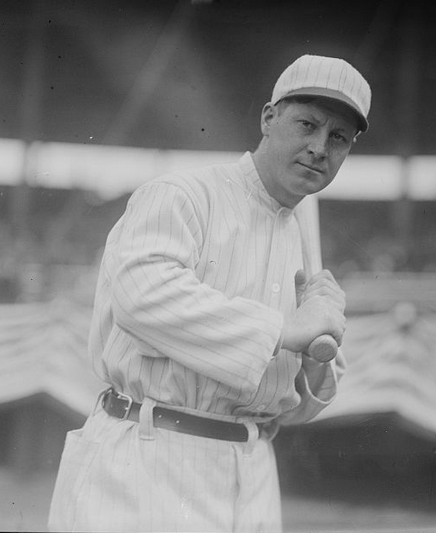
Benny Kauff

October 7, 1914: The Indianapolis Hoosiers defeat the St. Louis Terriers, 4-0 at Federal League Park in Indianapolis, and win the 1st Federal League Pennant. They finish a game and a half ahead of the Chicago Whales, and 4 1/2 ahead of the Baltimore Terrapins.

The Hoosiers, managed by Bill Phillips, had a future Hall-of-Famer, Indiana native Edd Roush, but he was still a rookie, and was not yet a starting player, let alone the great center fielder he would become. The outfielders they did have all batted at least .300: Al Scheer, Vin Campbell and Benny Kauff. 2nd baseman Frank LaPorte also did, and led the team with 107 RBIs. Kauff batted .370, with 95 RBIs. And Bill McKechnie, later to be a Pennant-winning manager, played 3rd base and batted .304. Cy Falkenberg was their ace, going 25-16 with a 2.22 ERA, and pitched a 3-hit shutout in the Pennant clincher.

However, their 4-2 win over the Terriers the next day will turn out to be the last Major League Baseball game ever played in the State of Indiana to this day -- if, that is, you consider the FL to have been a "major league." (MLB did not then, but it does now.) Financial losses lead them to be moved to Harrison, New Jersey, where they will become the Newark Peppers.

An Indiana-based team, the Fort Wayne Kekiongas, was a member of the 1st professional baseball league, the National Association, but only in its 1st season, 1871. Teams named the Indianapolis Hoosiers played in the American Association in 1884, and in the National League from 1887 to 1889.

But, despite Indianapolis being one of the 3 largest cities in the Midwest -- and, eventually, surpassing Detroit to become the 2nd-largest behind Chicago -- it's never had a major league team again after 1914. The Indianapolis Indians of the Class AAA version of the American Association won Pennants in 1920, 1908, 1917, 1928, 1949, 1956, 1963, 1982, 1986, 1987, 1988, 1989 and 1994. They moved to the International League, and won the Pennant in 2000, giving them 14 Pennants.

*

October 7, 1914 was a Wednesday. Elsewhere in the Federal League, the Baltimore Terrapins swept the Pittsburgh Rebels, 5-3 and 4-3 at Terrapin Park in Baltimore (later renamed Oriole Park); and the Brooklyn Tip-Tops beat the Buffalo Blues at Federal League Park in Buffalo.

No games were played in the National League. In the American League, at Fenway Park, the Washington Senators and the Boston Red Sox wound up the season in a meaningless game. Washington manager Clark Griffith, age 45, made his final mound appearance‚ while Boston's star center fielder Tris Speaker does the only pitching of his career‚ giving up a run in an inning. Babe Ruth‚ in relief of starter Hugh Bedient‚ pitches 3 innings for Boston. The Senators win, 11-4.

And the Philadelphia Athletics beat the New York Yankees, 10-0 at Shibe Park in Philadelphia. The A's had won their 4th Pennant in the last 5 years, while the Yankees were 30 games behind them. Oddly, Connie Mack used 4 pitchers to complete a 4-hit shutout: Rube Bressler for 3 innings; and, for 2 each, Bullet Joe Bush, Bob Shawkey and Herb Pennock. Those last 3 would all eventually pitch for the Yankees, and help them win Pennants.

Tuesday, October 4, 2022

October 4, 1930: Notre Dame Stadium Opens

October 4, 1930: Notre Dame Stadium, the house that Knute Rockne built, opens on the school's campus in South Bend, Indiana, 95 miles east of Chicago, 142 miles north of Indianapolis, and 206 miles west of Detroit. The 1st game is against Southern Methodist University of Dallas. Final score: Catholics 20, Protestants 14.
Notre Dame went undefeated that season, 10-0, and aside from SMU, only Army seriously challenged them, losing 7-6 in front of 110,000 at Soldier Field in Chicago. Years later, Notre Dame was retroactively recognized as National Champions for the 1930 season.
The season finale, a 27-0 win over USC at the Los Angeles Coliseum on December 6, would turn out to be the last game Rockne ever coached, as he was killed in a plane crash in Kansas on March 31, 1931.
Having previously played at Cartier Field since 1900, Notre Dame Stadium originally seated 59,075, which was big for the time. In 1996, that was still its capacity, making it one of the smaller stadiums among the powers of college football. After that season, it was expanded to its current 80,795, and it also received its first permanent lighting.
The expansion raised the height of the stadium, and partially (but not entirely) blocked the view of the Hesburgh Library, built as Memorial Library in 1963, and named for Father Theodore Hesburgh, president of the University from 1952 to 1987. The side facing the stadium is covered with a mural by Millard Sheets, titled Word of Life. It depicts Jesus surrounded by several saints. Since Jesus has his hands raised, and faces the stadium, the figure is known as "Touchdown Jesus."
Since opening Notre Dame Stadium, the Fighting Irish have won 9 National Championships: In 1930, under Rockne; in 1943, 1946, 1947 and 1949, under Frank Leahy; in 1966 and 1973, under Ara Parseghian; in 1977, under Dan Devine; and in 1988, under Lou Holtz.

The field has always been natural grass, and the end zones have never been decorated with anything but thin chalk slashes. The Stadium has hosted 2 games with the unofficial "Game of the Century" distinctions: Notre Dame's tie with Michigan State in 1966, and their win over Florida State in 1993.

They've had 7 Heisman Trophy winners: Quarterback Angelo Bertelli in 1943, quarterback Johnny Lujack in 1947, end Leon Hart in 1949, running back Johnny Lattner in 1953, quarterback Paul Hornung in 1956, quarterback John Huarte in 1964, and receiver Tim Brown in 1987. And 10 of their 1930-onward players have been elected to the Pro Football Hall of Fame: Hornung, Brown, end Wayne Millner, end George Connor, defensive end Alan Page, linebacker Nick Buoniconti, tight end Dave Casper, quarterback Joe Montana, defensive tackle Bryant Young and running back Jerome Bettis.

The stadium never hosted a concert until 2018, with Garth Brooks as the headliner. In January 2019, it hosted 2 outdoor hockey games: The NHL Winter Classic, with the Chicago Blackhawks, as the home team, losing 4-2 to the Boston Bruins; and then, 4 days later, Notre Dame's hockey team losing by the same score to one of their traditional rivals, the University of Michigan, the school that pioneered outdoor hockey.

*

October 4, 1930 was a Saturday. These other notable college football games were played on this day:

* Army beat Furman, 54-0 at Michie Stadium in West Point, New York.

* Navy beat William & Mary, 19-6 at Thompson Stadium in Annapolis, Maryland.

* New York University (NYU) beat West Virginia Wesleyan at Yankee Stadium.

* Columbia beat Union College, 25-0 at Baker Field (now Wien Stadium) in Upper Manhattan.

* Rutgers beat George Washington University, 20-6 at Neilson Field in New Brunswick, New Jersey.

* Princeton beat Amherst, 23-0 at Palmer Stadium in Princeton, New Jersey.

* In a rivalry later known as the Backyard Brawl, the University of Pittsburgh beat West Virginia, 16-0 at the old Mountaineer Field in Morgantown, West Virginia.

* Alabama beat Mississippi, 64-0 at Denny Stadium (later Bryant-Denny Stadium) in Tuscaloosa, Alabama.

* And Michigan and Michigan State played to a tie, 0-0 at Michigan Stadium in Ann Arbor.

Game 3 of the World Series was played. The St. Louis Cardinals beat the Philadelphia Athletics, 5-0 at Sportsman's Park in St. Louis. Bill Hallahan pitched a 7-hit shutout, and Taylor Douthit hit a home run. But the A's went on to win the World Series in 6 days.

Also on this day, Bill Wade, quarterback of the 1963 NFL Champion Chicago Bears, was born. So was Roz Wyman, whose vote on the Los Angeles Board of Supervisors made the difference in giving the land at Chavez Ravine to Walter O'Malley, owner of the Brooklyn Dodgers, so he could build a stadium there, moving the Dodgers to the Los Angeles Memorial Coliseum in the interim.

Wednesday, July 27, 2022

July 27, 1964: The Galimore-Farrington Crash

July 27, 1964: A car crash in Rensselaer, Indiana, near the Chicago Bears' training camp, kills 2 of their players: Running back Willie Galimore and tight end Bo Farrington. It had been 7 months since they had helped the Bears win the NFL Championship. Now, a new season would be draped in tragedy.

Both players were black, and had gone to "historically black" colleges. Willie Lee Galimore was born on March 30, 1935 in St. Augustine, Florida. He went to Florida A&M, playing for head coach Jake Gaither, a man who said of players, "I like 'em ag-ile, mob-ile and host-ile." He saw a lot of progress in his lifetime, but it came at a price: In the 1980s, Bobby Bowden built an integrated power at Florida State, which, like A&M, is in Tallahassee. Before he died in 1994, Gaither said, "Today, if they're agile, mobile and hostile, they go to Florida State."

Galimore was drafted by the Bears in the 5th round of the 1956 NFL Draft. He's been called "probably the last great find before NFL scouting became sophisticated." Doug Atkins, the great Bear defensive end who had to face him in practice, and Chuck Bednarik, the legendary Philadelphia Eagles linebacker, both called him one of the best runners they ever faced.

It was said that he could run from side to side as fast as most men could run in a straight line. His running style has been compared to that of later stars Billy Sims, a Heisman Trophy winner whose pro career was cut short by injury, and Terrell Davis, a Hall-of-Famer.

John R. Farrington was born on January 18, 1936, outside Houston in Missouri City, Texas. I can't find a reference to what the R stands for, or how he got the nickname Bo. He played at Prairie View A&M, in the Houston area. The Bears drafted him in the 16th round in 1960. By 1961, he was a starter, catching a 98-yard touchdown pass from Bill Wade that season. In 4 seasons, he had played 45 games, starting 28 of them, catching 55 passes for 881 yards and 7 touchdowns.
In the 1963 NFL Championship Game, on a frozen surface at Wrigley Field in Chicago, the New York Giants' vaunted defense held Galimore to only 12 yards on 7 rushes, and Farrington caught no passes. But their own defense was even stronger, and the Bears won, 14-10. It was the franchise's only title between the seasons of 1946 and 1985.

The St. Augustine movement, a wing of the Civil Rights Movement, brought Galimore back to his Florida hometown, and he became the 1st black person to register as a guest at the previously all-white Ponce de Leon Motor Lodge. His activism there is celebrated with a historical marker outside the house where he grew up, a community center with his name on it, and a mural painted by schoolchildren.

Then he went to Bears training camp, at St. Joseph's College in Rensselaer, Indiana, 85 miles southeast of Chicago. On July 27, 1964, he gave Farrington a ride back to their hotel in his Volkswagen. He was unable to negotiate a curve, and flipped over, killing both of them. Galimore was 29 years old, Farrington 28.

Having lost Galimore after the 1964 Draft, the Bears had trouble replacing him for that season. So, in the 1965 Draft, they chose Gale Sayers of Kansas. As great (if brief, due to injuries) a career as Sayers had, the Bears would not have drafted him if Galimore had been alive and well.

Farrington wore Number 84, and that number is still available for Chicago Bear players. But the Bears did retire Galimore's Number 28.

Ron Galimore, Willie's son, was named the 1st black member of the U.S. Olympic gymnastics team. Unfortunately, that was in 1980, when the U.S. boycotted the Games in Moscow. He served as Chief Operating Officer of USA Gymnastics from 2011 to 2018.

*

July 27, 1964 was a Monday. Only 2 were played in Major League Baseball that day. The New York Yankees beat the Los Angeles Angels, 3-0 at Dodger Stadium in Los Angeles, where the Angels groundshared with the Dodgers from 1962 to 1965. Ralph Terry pitched a 7-hit shutout, Roger Maris hit a home run, and Mickey Mantle went 0-for-4.

And the Cincinnati Reds beat the Milwaukee Braves, 11-2 at Milwaukee County Stadium. Deron Johnson and Marty Keough homered for the Reds, Frank Robinson went 1-for-5 with an RBI, and Pete Rose did not get into the game. For the Braves, Denis Menke hit a home run, Hank Aaron went 0-for-3 with a walk, and Joe Torre did the same.

Thursday, July 21, 2022

July 21, 1961: The Unsinkable Gus Grissom

July 21, 1961: Project Mercury launches America's 2nd manned space mission, a capsule called Liberty Bell 7. Aboard is Lieutenant Colonel Gus Grissom of the U.S. Air Force.

Born in 1926 in Indiana, he was an aviation cadet in World War II and a fighter pilot in the Korean War. He was chosen as one of America's original astronauts, "The Mercury Seven," all of whom -- except for Donald "Deke" Slayton, who was initially grounded for a medical reason -- would fly aboard Mercury capsules with the number 7 on their missions.

Some people at NASA weren't happy that Grissom went by his nickname, Gus. But his real first name was Virgil, and that seemed a big too nerdy. So they asked him what his middle name was. It was Ivan. That wasn't going to work at the height of the Cold War. So they allowed Virgil Ivan Grissom to be listed as "Gus Grissom."

Like his only American predecessor, Alan Shepard aboard Freedom 7, Grissom's flight was only meant to be suborbital: Up, then down, taking about 15 minutes. The flight went as expected until just after splashdown in the Atlantic Ocean, when the hatch cover, designed to release explosively in the event of an emergency, accidentally blew. Grissom was at risk of drowning, but was recovered safely via a U.S. Navy helicopter. The spacecraft sank into the Atlantic and was not recovered until 1999.

Before airplane flights that crossed the "Karman Line" were retroactively listed as "spaceflights," Grissom was the 1st American astronaut to be given a 2nd spaceflight. It was aboard Gemini 3, the 1st manned flight of Project Gemini, so named because it would have 2 men aboard.

On March 23, 1965, Grissom and John Young made 3 orbits of the Earth aboard a capsule that was nicknamed Molly Brown, after the heroic socialite who saved some of the Titanic's passengers in 1912, and lived to be called "The Unsinkable Molly Brown." The idea was, this capsule wouldn't sink after splashdown, and it didn't. The mission was a complete success. (In another odd connection with Grissom, "Molly" was a nickname: Her real name was Margaret.)

Grissom was meant to fly a 3rd time, aboard the 1st Apollo mission. But in 1967, he, Ed White and Roger Chaffee were killed during an engine test for Apollo 1. It was the world's 1st space program tragedy. Grissom was 40 years old, and died not by water, as had once been feared, but by fire.

In the 1983 film The Right Stuff, he was played by Fred Ward.

*

July 21, 1961 was a Friday. These baseball games were played:

* The New York Yankees beat the Boston Red Sox, 11-8 at Fenway Park in Boston. The Yankees scored 5 runs in the top of the 9th inning to win it, including a grand slam by Johnny Blanchard, making Luis Arroyo a winning pitcher in relief of Whitey Ford. Ford went 25-4 that season, winning the Cy Young Award, but, on this day, allowing 7 runs in 4 innings, this may have been his worst start of the season.

Roger Maris hit his 36th home run of the season, Mickey Mantle his 37th, and Yogi Berra his 12th. Blanchard's slam was his 10th homer. Maris would end the season with 61, Mantle with 54, Berra with 22 and Blanchard with 21.

* The Philadelphia Phillies beat the Chicago Cubs, 4-3 at Connie Mack Stadium in Philadelphia. Tony González hit a home run to win it in the bottom of the 10th inning. Ernie Banks did not play for the Cubs, but Billy Williams hit a home run.

* The Milwaukee Braves beat the Pittsburgh Pirates, 5-3 at Forbes Field in Pittsburgh. Hank Aaron hit 2 home runs. Roberto Clemente went 1-for-5.

* The Minnesota Twins beat the Cleveland Indians, 4-3 at Metropolitan Stadium in the Minneapolis suburb of Bloomington, Minnesota. Harmon Killebrew went 1-for-4.

* The St. Louis Cardinals beat the Los Angeles Dodgers, 10-1 at the 1st Busch Stadium (formerly the last Sportsman's Park) in St. Louis.

* The Kansas City Athletics beat the Detroit Tigers, 3-2 at Kansas City Municipal Stadium. Al Kaline went 1-for-4.

* The Los Angeles Angels beat the Washington Senators, 16-5 at the Los Angeles version of Wrigley Field.

* The Baltimore Orioles and the Chicago White Sox were rained out at Comiskey Park in Chicago. The game was made up as part of a doubleheader the next day. The White Sox swept, 7-4 and 11-4. Brooks Robinson went 2-for-5 in each game.

* And the Cincinnati Reds and the San Francisco Giants were rained out at Crosley Field in Cincinnati. The game was made up as part of a doubleheader on August 22. The Giants swept, 12-2 and 5-3. Over the 2 games, Willie Mays went 6-for-10 with a home run and 4 RBIs, and Willie McCovey went 5-for-10 with 2 home runs and 3 RBIs. Frank Robinson went 0-for-3 with a walk in the opener, and appeared only as a pinch-hitter in the nightcap, not reaching base.

Sunday, June 26, 2022

June 26, 1977: Elvis Presley's Last Concert

June 26, 1977: Elvis Presley completes his tour at Market Square Arena in Indianapolis, home of the NBA's Indiana Pacers and the WHA's Indianapolis Racers.

The tour had been rough. His shows at the Omaha Civic Auditorium in Nebraska on June 19 and the Rapid City Convention Center in South Dakota on June 21 were videotaped for a CBS special, which the network intended to air in December. But the June 19 footage had technical issues, and, above and beyond that, Elvis looked awful. The footage was said to be "unusable." The June 21 footage was clear, but Elvis still looked like a mess, way overweight, and sweating too much under the hot stage lights.

The footage that CBS got has never been released to the public, except in "bootleg" footage. In their 1982 book Elvis: The Illustrated Record, Roy Carr and Mick Farren wrote, "Had it been shown during his lifetime, it would have caused more irrevocable damage to what was left of his career than almost a decade of starring in third-rate movies." The network decided they would have to try again on his next tour, to begin in mid-August.

On June 25, in Cincinnati, for the next-to-last show of the tour, he got arguably the worst reviews in his career, save for early on when middle-aged critics weren't willing to accept any rock and roll, especially from its "King." Typical of this was from Ken Williams in the Journal News, a newspaper in the Cincinnati suburbs. I have not changed a word, nor the spelling, nor the punctuation:

There comes a time when a performer should retire for the sake of his fans as well as for himself. I'm sad to say Elvis Presley has reached that time. Reports of recent Elvis concerts have been disheartening indicating that the King of Rock 'n' Roll is dead. Apparently the reports are founded upon truth, and the King confirmed the suspicions with his listless, lifeless performance Saturday night at Cincinnati Riverfront Coliseum before another sellout crowd.

It is obvious the fans still love Elvis, as they still pack arenas to see their idol. They come to see the legend, but only find the remains It is a most sad occasion for many, including myself. Gone from his performance is the magic price generated by one of the world's ultimate legends; gone is the energy and vitality of a healthy Elvis; gone is the beauty of the voice that charmed millions.

In last week's AWAY, magazine, Rolling Stone reporter Charles M. Young spoke of Elvis' disaster in Baltimore. I feared the worst for Cincinnati and the fears became a nightmare for me. I don't take pleasure in destroying legends.

On this night, in Indianapolis, the show began at 8:30 -- half an hour later that usual. As usual, there was a warmup comedian, in this case Jack Kahane; orchestra leader Joe Guercio put the orchestra through a few songs; and Elvis' backup singers, the soul group The Sweet Inspirations, including Cissy Houston (Whitney's mother), sang a few songs.
Market Square Arena

At 10:00, Richard Strauss' Also Sprach Zarathustra was cued up, and then the band went into the familiar opening vamp, and The King took the stage. He seemed to have lost weight, and definitely had more energy. As usual, the show began with his take on the blues standard "C.C. Rider," and included songs from throughout his career, including the early stuff and more recent recordings like "Moody Blue" and "Fairy Tale."

After 1 hour and 20 minutes, he closed his show, as usual, with his 1961 hit "Can't Help Falling In Love," written by George David Weiss (who also wrote "The Lion Sleeps Tonight"). He walked offstage, his "Memphis Mafia" bodyguards escorted him outside to a waiting limousine, and, as he was driven out, an announcer said, as was customary, to discourage people from waiting for an encore, "Ladies and gentlemen, Elvis has left the building."

The reviews were noticeably better. He flew back to his hometown of Memphis, where another tour was planned, to start in Portland, Maine on August 17. That tour would not take place.

Market Square Arena opened on September 15, 1974, with a concert by Glen Campbell. It hosted Wayne Gretzky's 1st professional hockey game in 1978, and Michael Jordan's return from exile in 1995. It closed on October 22, 1999, with a preseason game won by the Pacers over the Utah Jazz. The last concert was 5 days earlier, with ZZ Top as the headliner, and the surviving members of Lynyrd Skynyrd as the opening act.

On July 8, 2001, with the Pacers having moved into a new arena, currently named the Gainbridge Fieldhouse, and the Racers long defunct, Market Square Arena was demolished. When the implosion was done, an announcer told the gathered crowd, "Ladies and gentlemen, Elvis has left the building."

In 2017, Cummins, a vehicle components company, opened their Global Distribution Headquarters on the southern half of the site. A 28-story apartment building, with a Whole Foods store on the ground floor, opened on the northern half the next year. A plaque commemorating Elvis' last concert is also on the site.

*

June 26, 1977 was a Sunday. These Major League Baseball games were played:

* The New York Yankees beat their arch-rivals, the Boston Red Sox, 5-4 at Yankee Stadium. Don Gullett and Reggie Cleveland started, but neither figured in the decision. Gullett took a 4-1 lead into the 9th, but blew it, and had to be bailed out by Sparky Lyle.

Reggie Jackson, whose 11th-inning single had beaten the Sox 2 nights earlier, had already fallen victim to one of manager Billy Martin's moronic replacements of him with Paul Blair for defensive purposes -- this was 8 days after the shouting match in the Fenway Park dugout -- and Reggie would have been the 5th man up in the bottom of the 9th.

This time, though, it worked: With 1 out, Roy White drew a walk. Thurman Munson singled. Chris Chambliss was intentionally walked to load the bases, to set Blair up for the double play. But Martin's move paid off, as Blair singled White home, to complete a 3-game sweep of the Sox. Carl Yastrzemski went 0-for-4.

* The New York Mets lost to the Chicago Cubs, 5-2 at Wrigley Field in Chicago. Mike Krukow outpitched Jon Matlack. Bobby Murcer and Steve Ontiveros hit home runs for the Cubs. Bud Harrelson went 3-for-4 with an RBI.

* The Toronto Blue Jays beat the Baltimore Orioles, 2-0 at Memorial Stadium in Baltimore. Pete Vuckovich, not yet the ace of the Brewers, pitched a 6-hit, 1-walk, 12-strikeout shutout, to outpitch Jim Palmer. Rookie Eddie Murray got 2 of those 4 hits.

* A doubleheader was split at Three Rivers Stadium in Pittsburgh. The Pittsburgh Pirates won the opener, 7-4. Willie Stargell did not play. The Montreal Expos won the nightcap, 6-3. Stargell went 0-for-3 with a walk.

* The Atlanta Braves beat the San Diego Padres, 8-5 at Atlanta-Fulton County Stadium. Phil Niekro was the winning pitcher. Willie Montañez, Darrel Chaney and Jeff Burroughs hit home runs. Dave Winfield went 1-for-4 for the Padres.

* A doubleheader was split at Riverfront Stadium in Cincinnati. The Cincinnati Reds won the opener, 5-4. Fred Norman outpitched Rick Rhoden. The Los Angeles Dodgers won the nightcap, 9-3. Doug Rau went the distance for the win, while Paul Moskau didn't get out of the 1st inning.

Over the 2 games, Pete Rose went 1-for-7 with 2 walks, while Johnny Bench went 0-for-3 with a walk and then sat out the 2nd game.

* A doubleheader was split at Tiger Stadium in Detroit. The Cleveland Indians won the 1st game, 6-2. The Detroit Tigers won the 2nd game, 3-2.

* The Milwaukee Brewers beat the Seattle Mariners, 8-6 at Milwaukee County Stadium. Robin Yount went 2-for-4 with a walk.

* The Minnesota Twins beat the Chicago White Sox, 19-12 at Metropolitan Stadium in the Minneapolis suburb of Bloomington, Minnesota. Yes, that's an American League Western Division game, not an NFC Central Division game, although the Vikings also played at The Met before moving with the Twins to the Metrodome in 1982.

The Twins scored 6 runs in the bottom of the 2nd, knocking Steve Stone out of the box, but the Pale Hose came right back with 6 in the top of the 3rd, knocking Bill Butler out. Tom Johnson ended up the winning pitcher.

Rod Carew, in the middle of his Most Valuable Player season, went 4-for-5 with a home run, a walk, and 6 RBIs. He ended the day batting .403. Glenn Adams went 4-for-5 with a home run (a grand slam) and 8 RBIs.

The South Side Hit Men got homers from Lamar Johnson, Eric Soderholm, Jim Essian and Chet Lemon. Brian Downing did not hit a home run, but went 4-for-4 with an RBI.

* The Philadelphia Phillies beat the St. Louis Cardinals, 2-0 at Busch Memorial Stadium. Jim Kaat allowed 9 hits, but no walks, in 8 innings, and Gene Garber finished a 10-hit shutout. The Phils' runs came on solo home runs by Mike Schmidt (no surprise) and Garry Maddox (a bit of a surprise, since he was a contact hitter and better known for his defense).

* The California Angels swept a doubleheader from the Texas Rangers, each game ending 4-3 in the Halos' favor. Ron Jackson singled Gil Flores home in the bottom of the 11th inning to win the 1st game.

* The San Francisco Giants beat the Houston Astros, 2-0 at the Astrodome in Houston. Ed Halicki pitched a 6-hit shutout, and helped his own cause by going 2-for-3 with an RBI, to outpitch Ken Forsch.

* And a doubleheader was split at the Oakland Coliseum. The Oakland Athletics won the 1st game, 7-3. The Kansas City Royals won the 2nd game, 9-3. Over the 2 games, George Brett went 3-for-9 with a walk.

Tuesday, June 21, 2022

May 30, 1964: The Day the Indy 500 Was Stopped

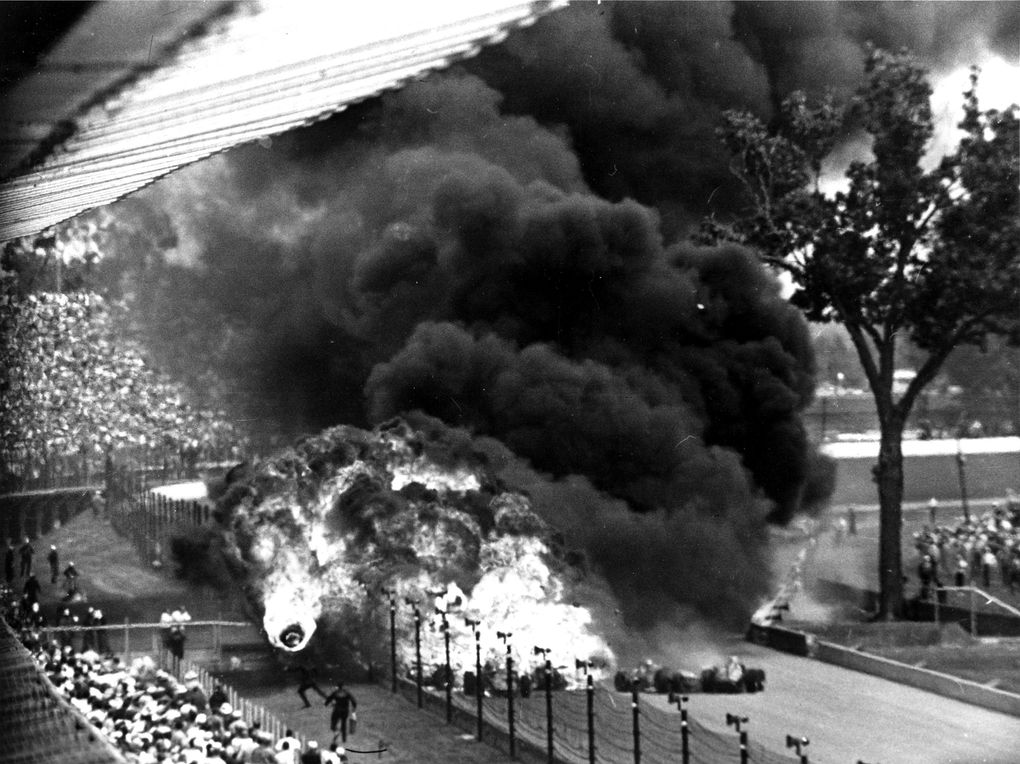
May 30, 1964: Dave MacDonald crashes in the 2nd lap of the Indianapolis 500, and his car explodes. Unable to see because of the smoke and flames, Eddie Sachs crashes into him, causing another explosion.

(I had resisted adding auto racing events to this feature, because I don't like the event, and consider it to not be a sport. I finally changed my mind, given how many people are interested.)

Sachs died instantly; he had just turned 37. Known as the Clown Prince of Racing, he wasn't very successful, but his personality made him popular. He was known for saying, "If you can't win, be spectacular." That's how he lived, and that's how he died. MacDonald died at the hospital 2 hours later; he was 27. Unlike Sachs, who never won a race, he won 47 and was in the top 3 in nearly 70 others.

This was the first time in its 53-year history that the Indy 500 was stopped outright, for any reason other than rain. Once the wrecks were cleared, the race resumed, and A.J. Foyt won it. Among the safety measures put in place before the next year was a different type of fuel, and cars with rear engines instead of front.

There have been 15 drivers killed during the 500 -- thankfully, none since 1973. Two former winners have been killed in subsequent races: 1938 winner Floyd Roberts in 1939, and 1953 winner Bill Vukovich in 1955.

After Chuck Rodee was killed in time trials for the race in 1966, the great Los Angeles Times sports columnist Jim Murray, remembering MacDonald and Sachs 2 years earlier, labeled the race "The Run for the Lilies," and titled a prerace column "Gentlemen, Start Your Coffins."

*

May 30, 1964 was a Saturday. Two very different kinds of American singers were born: Country music legend Wynonna Judd, and Rage Against the Machine frontman Tom Morello.

These baseball games were played:

* The New York Yankees beat the Kansas City Athletics, 9-1 at Kansas City Municipal Stadium. Whitey Ford outpitched Moe Drabowsky. Mickey Mantle did not play. Clete Boyer hit a home run. Roger Maris went 0-for-3 with a walk.

* The New York Mets beat the San Francisco Giants, 6-2 at the new Shea Stadium. Jack Fisher went the distance for the win. Ron Herbel only lasted 4 inning as the starter, followed by 2 innings of a not-yet-great -- not-yet-spitballing? -- Gaylord Perry. Charley Smith hit a home run for the Mets. Willie Mays went 2-for-4. Duke Snider, running out the string with the Giants of all teams, went 0-for-4. Willie McCovey did not play.

* The Philadelphia Phillies beat the Houston Colt .45s, 5-1 at Connie Mack Stadium in Philadelphia. Chris Short went the distance for the win. Wes Covington hit a home run. The next year, the Colts moved into the Astrodome, and changed their name to the Houston Astros.

* The Cleveland Indians beat the Washington Senators, 10-2 at District of Columbia Stadium (later Robert F. Kennedy Stadium) in Washington.

* The Los Angeles Dodgers beat the Pittsburgh Pirates, 10-3 at Forbes Field in Pittsburgh. Don Drysdale went the distance for the win, while Pirate starter Vernon Law didn't get a single out. Maury Wills, known for his speed instead of his power, went 3-for-4 with a home run, a walk, 3 stolen bases and 2 RBIs. Roberto Clemente and Willie Stargell each went 2-for-4.

* The Chicago White Sox beat the Detroit Tigers, 10-4 at Tiger Stadium in Detroit. Al Kaline went 0-for-4.

* The Chicago Cubs swept a doubleheader from the Milwaukee Braves, 4-2 and 2-0 at Wrigley Field in Chicago. Ernie Banks and Hank Aaron each hit a home run in the opener, with 43-year-old Warren Spahn pitching an inning of relief. In the nightcap, Sterling Slaughter pitched 7 innings of 3-hit shutout ball, and Lindy McDaniel pitched 2 perfect innings of relief.

* The Minnesota Twins beat the Boston Red Sox, 7-3 at Metropolitan Stadium in the Minneapolis suburb of Bloomington, Minnesota. Harmon Killebrew went 1-for-4 with an RBI. Tony Oliva and Bob Allison hit home runs. Carl Yastrzemski went 0-for-3 with a walk.

* The St. Louis Cardinals beat the Cincinnati Reds, 7-1 at the 1st Busch Stadium (which used to be the last Sportsman's Park) in St. Louis. Frank Robinson went 1-for-4. Pete Rose went 1-for-3 with a walk.

* And the Baltimore Orioles beat the Los Angeles Angels, 6-0 at Dodger Stadium in Los Angeles, where the Angels were groundsharing until their Anaheim stadium could be built. Milt Pappas pitched a 4-hit shutout. Jackie Brandt went 2-for-4 with a home run, a walk, and 2 RBIs. Sam Bowens went 4-for-5 with an RBI. Brooks Robinson went 1-for-4 with an RBI.

Monday, May 30, 2022

May 30, 1911: The 1st Indianapolis 500

May 30, 1911: The 1st Indianapolis 500-Mile Race is held. It is won by Ray Harroun, a 32-year-old Pennsylvanian.

(I had resisted adding auto racing events to this feature, because I don't like the event, and consider it to not be a sport. I finally changed my mind, given how many people are interested.)

The Indianapolis Motor Speedway was built in 1909, about 6 miles west of downtown Indianapolis, by Carl G. Fisher, who got rich in the automotive and real estate businesses. He combined the two with what is often said to be the 1st automobile dealership in America.

With a permanent capacity of 257,325 seats, it is the largest structure in the world built for the purpose of sports. (The largest stadium currently in use for sports other than auto or horse racing is the Narendra Modi Stadium, a 132,000-seat cricket facility in Ahmedabad, India.)
The oval track is 2.5 miles in length, and before it was asphalt, the track was brick, giving the track the nickname "The Old Brickyard." Today, 3 feet of original bricks remain exposed at the start-finish line. In addition to the "Indy 500," the Speedway is home to the Brickyard 400, and also hosted the United States Grand Prix and the Indianapolis Motorcycle Grand Prix. A major renovation was completed in 1992.

A tech facility was built over the finish line, among its purposes to aid in determining photo finishes. Because of its resemblance to the tiered towers of Japan, it is known as the Pagoda. The current version was erected in 2000.
The 1909 Bricks and the 2000 Pagoda

Why 500 miles? The math worked out: 2.5 miles times 200 laps, a nice round number, equals 500 miles, also a nice round number. Someone pointed out that this was the estimated distance a race car could, with refills of gasoline, run before dark descended on the track. In other words, if the Speedway had lights, they could have run a 24-hour race, as was already being done in places around the world, most notably in Le Mans, France. 

At the inaugural race, Harroun's use of what would now be called a rear-view mirror, rather than the riding mechanic specified in the rules, created controversy, but was ultimately allowed. Harroun went on to win at an average speed of 74.602 miles per hour. His historic Firestone-shod yellow #32 Marmon "Wasp" is on display at the Indianapolis Motor Speedway Hall of Fame Museum.
In 1927, Eddie Rickenbacker, a successful racer and a hero pilot of World War I, bought the Speedway from Fisher. He operated it through the 1941 racing season, then shut it down, to preserve gasoline for the World War II effort. Upon the war's end in 1945, he sold the Speedway to Tony Hulman, who restarted the 500 in 1946, and sold it to television as an annual Memorial Day Weekend spectacle. He died in 1977. Since 2019, the Speedway has been owned by the biggest man in auto racing, Roger Penske.

Just as "My Old Kentucky Home" is sung before every Kentucky Derby near the beginning of May, so, too, is "Back Home Again in Indiana" sung before this race, near the end of May. From 1972 to 2014, it was sung by entertainer Jim Nabors, known for his high-pitched Alabama drawl, but also having a deep operatic singing voice that shocked people with his ability.

The race begins with the words, "Gentlemen, start your engines!" Starting in 1955, it was always a member of the Hulman family saying it, until 2020, when Penske himself took over the duties. In 1977, Janet Guthrie became the 1st woman to qualify for the race. Not wanting to change the classic phrase, Tony Hulman, in what turned out to be his last race as owner, said, "In company with the first lady ever to qualify at Indianapolis, gentlemen, start your engines!" It became, "Lady (or Ladies) and gentlemen, start your engines!" Penske has made it, "Drivers, start your engines!" Danica Patrick has the best finish in the race by a woman, 3rd in 2009.

Because of the South's love of auto racing, the Atlanta-based comedian Jeff Foxworthy has included as part of his act, "If you think the last four words of the National Anthem are, 'Gentlemen, start your engines!' you might be a redneck!"

Sadly, there was a fatal crash in the 1st 500. With Harroun the only driver with a rear-view mirror, every other car was a two-seater, with a driver and a "riding mechanic." Sam Dickson, riding with Arthur Greiner, was killed on the 12th lap when one of the car's wheels came off and the car crashed. Greiner sustained only minor injuries, but survivor's guilt led to a mental breakdown, and he died in a sanitarium in 1917.

In 1919, Arthur Thurman and Louis LeCocq became the 1st 2 drivers killed in the race, followed by Bill Spence in 1929, Mark Billman and Lester Spangler in 1933, Clay Weatherly in 1935, Floyd Roberts (the defending Champion) in 1939, Shorty Cantlon in 1947, Carl Scarborough in 1953, Bill Vukovich (the defending Champion) in 1955, Pat O'Connor in 1958, Dave MacDonald and Eddie Sachs as a result of a crash between them in 1964, and David "Swede" Savage in 1973, for a total of 14. In addition, 9 drivers have been killed in qualifying runs, and 20 drivers have been killed in practice runs at the Speedway.

Between racing and qualifying, Jim Murray, the great sports columnist for the Los Angeles Times, claimed to have lost 3 friends at the Speedway. As the Kentucky Derby is "The Run for the Roses," Murray named the 500 "The Run for the Lilies," in honor of the flowers traditionally associated with funerals. He would end his annual column about the race, "Gentlemen, start your coffins."

Immediately after taking the checkered flag, the race winner drives to Victory Lane. The celebration to honor the winner begins with the car being wheeled onto a black and white checkered periphery. Since 1936, the driver is presented with one of the largest trophies in sports, the Borg-Warner Trophy. A floral wreath, containing 33 lilies to commemorate the 33 drivers of the field, is placed around the winner's neck. Since 1956, the winner is presented a bottle of milk for refreshment, sponsored by the American Dairy Association. 

In 1913, Jules Goux of France became the 1st non-American winner. Four drivers have won it 4 times: A.J. Foyt, whose last win was in 1977; Al Unser, in 1987; Rick Mears, in 1991; and Brazilian driver Hélio Castroneves, in 2021. Still active, Castroneves could become the 1st driver to win it 5 times.

Foyt remains the only driver to have won the Indianapolis 500, the Daytona 500, the 24 Hours of Le Mans and the 24 Hours of Daytona.

In 1961, the TV show I've Got a Secret -- which, like the similar game show To Tell the Truth, would be almost impossible with today's social media -- honored the race's 50th Anniversary, by bringing both inaugural winner Harroun and then-reigning champion A.J. Foyt on as guests.

Carl Fisher died in 1939, Ray Harroun in 1968, Eddie Rickenbacker in 1973.

*

May 30, 1911 was a Tuesday. Until 1970, Memorial Day was always celebrated on May 30. In 1971, it was moved to the last Monday in May.

Since this was Memorial Day, baseball was full of doubleheaders:

* The New York Highlanders were swept by the Philadelphia Athletics, 3-0 and 8-5 at Shibe Park in Philadelphia. Harry Krause pitched a 6-hit shutout in the opener. Over the 2 games, Eddie Collins was 1-for-7 with 2 walks and an RBI. The Highlanders became the New York Yankees in 1913.

* The New York Giants swept the Brooklyn Superbas, 4-1 and 3-0 at the Polo Grounds. Rube Marquard won the opener. In the nightcap, Arthur "Bugs" Raymond had to leave the game in the 5th inning, and Arthur Ames pitched the rest of the way, completing a 4-hit shutout. The Superbas became the Brooklyn Dodgers in 1911.

* The Philadelphia Phillies swept the Boston Rustlers, 3-0 and 11-4 at the South End Grounds in Boston. The 1st game went 10 innings, and Earl Moore pitched a 3-hit shutout. William Hepburn Russell had bought the Boston franchise of the National League from the Dovey family, and changed its name from the Doves to the Rustlers. But he died a few weeks after the 1911 season ended. He was involved in New York's Tammany Hall political machine, and one of his friends in that machine, James Gaffney, bought the team. In connection with their namesake being a Native American chief, a Tammany officer was called a "Brave," and so, Gaffney renamed the team the Boston Braves.

* The Boston Red Sox swept the Washington Senators, 6-5 and 5-4 at Griffith Stadium in Washington. The 1st game went 10 innings. Smoky Joe Wood outpitched Walter Johnson in the 2nd game. The following season, they would have one of the most famous pitchers' duels of all time. Tris Speaker went 2-for-8 with 3 walks. Wid Conroy went 5-for-9 with an RBI for the Senators.

* In the only single game of the day, the Pittsburgh Pirates beat the Chicago Cubs, 4-1 at Forbes Field in Pittsburgh. Honus Wagner went 2-for-4 with an RBI.

* The Detroit Tigers swept the Cleveland Naps, 3-2 and 6-5 at League Park in Cleveland. The 1st game went 10 innings. Over the 2 games, Ty Cobb went 2-for-8 with a walk; Sam Crawford went 5-for-9 with an RBI; and "Shoeless" Joe Jackson went 2-for-7 with a walk. Napoleon "Nap" Lajoie, the manager and 2nd baseman for whom the Cleveland team was named, did not put himself into either game. The Naps became the Cleveland Indians in 1915, and the Cleveland Guardians in 2022.

* There was a split at Comiskey Park in Chicago. The St. Louis Browns won the 1st game, 4-1. The Chicago White Sox won the 2nd game, 2-0, when Irv Young (no relation to Cy) pitched a 2-hit shutout.

* And there was a split at Robison Field in St. Louis. The St. Louis Cardinals won the 1st game, 4-2. The Cincinnati Reds won the 2nd game, 6-2.

December 31, 1999 & January 1, 2000: The Millennium

December 31, 1999:  The Millennium arrives. The people of planet Earth survived. At a terrible cost. But we hadn't destroyed ourselves. ...