Showing posts with label sandy koufax. Show all posts

Friday, November 18, 2022

November 18, 1966: Sandy Koufax Retires

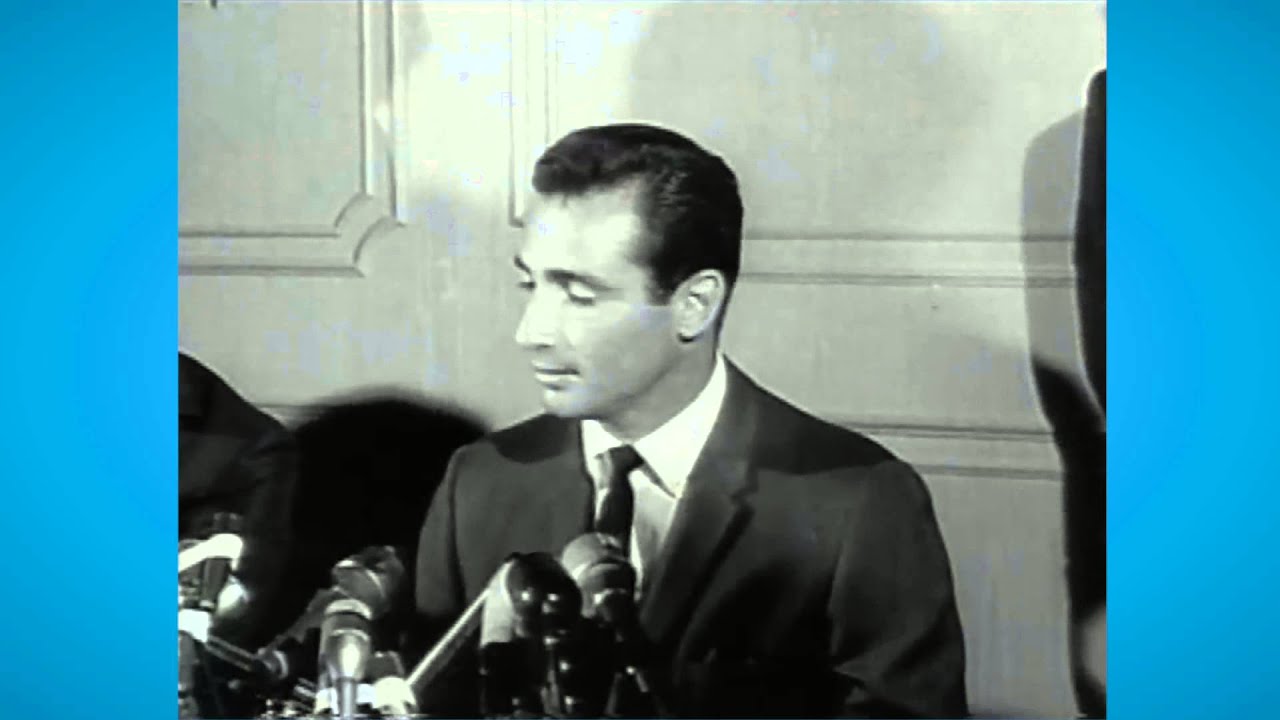
November 18, 1966: Sandy Koufax, superstar pitcher for the Los Angeles Dodgers, announces his retirement from Major League Baseball, in a press conference at the Beverly Wilshire Hotel in the Los Angeles suburb of Beverly Hills, California. He is a few weeks short of his 31st birthday.

This is the most stunning retirement in the history of professional sports, even more so than Jim Brown's retirement from the NFL 4 months earlier, before turning 30.

It was stunning because Koufax had just completed a season in which he went 27-9, with a 1.73 ERA. He led the Dodgers to a Pennant, and had just won the Cy Young Award. For the past 6 seasons, after finding his control after a difficult start to his career, he had 129 wins, 35 of them by shutout, 4 of them by no-hitter, 1 of those by perfect game, and 1,713 strikeouts, winning 3 Cy Young Awards -- at a time when the Award was given to the best pitcher in both Leagues.

Counting 1959, before he found his control, he had helped the Dodgers win 4 Pennants and 3 World Series, being named the Most Valuable Player in 2 of them. In 1963, he was named the MVP of the National League in the regular season and of the World Series, the 1st time that feat had ever been pulled off. It has since been matched only by Willie Stargell in 1979 and Mike Schmidt in 1980. It's also been done in the American League by Frank Robinson in 1966 and Reggie Jackson in 1973. So, a total of 5 times since the establishment of the World Series MVP in 1955.

But he had pitched 1,192 2/3rds innings in the last 4 seasons, and that was despite missing the last 7 weeks of the 1964 season with the 1st diagnosed instance of arthritis in his elbow. All that pitching was taking a toll on his arm. His arthritis had been caused by a circulatory problem that threatened further use of the arm.

When he pitched a complete-game 2-hit shutout against the Minnesota Twins in Game 7 of the 1965 World Series, he did it throwing only fastballs. It hurt too much to throw a curve. (In other words, all those Twins hitters, including 500 Home Run Club member Harmon Killebrew and 2-time batting champion Tony Oliva, knew exactly what was coming, every time, and it didn't help.)

In Spring Training of 1966, Koufax told San Diego sportswriter Phil Collier that the upcoming season would be his last. He told Collier that if he kept the secret until right before the official announcement, he could have the scoop. Collier kept the secret, and Koufax kept his part of the bargain.

At the press conference announcing his retirement, a reporter asked, "The question is, 'Why?', Sandy." His answer:

The question is, "Why?" I don't know if cortisone is good for you or not. But, uh, to take a shot every other ballgame is, uh, more than I wanted to do, and to walk around with a constant upset stomach because of the pills, and to be high half the time during the ballgame because you're taking painkillers. I don't want to -- I don't want to have to do that.

He was asked about the loss of income. Before the season, he had held out for $125,000 (about $1.15 million in 2022 money). His response:

Well, the loss of income. Uh, let's put it this way: If there were a man who did not have use of one of his arms, and you told him it would cost a lot of money, and he could buy back that use, he'd give 'em every dime he had, I believe. That's my feeling. And, in a sense, maybe, this is what I'm doing. I don't know.

You know, I got a lot of years to live after baseball, and just, I would like to live them with complete use of my body. I don't regret one minute of the last twelve years, but I think I would regret one year that was too many.

In 1972, in his 1st year of eligibility, Koufax was elected to the Baseball Hall of Fame. At 36, he was the youngest person ever elected to it, and remains so. This broke, by a few weeks, the record set in 1939 when the writers voted in Lou Gehrig in a special election, because they knew he was dying.

For comparison's sake: In pro football, is is Gale Sayers, who was 34, having retired due to injuries to both knees; in basketball, it is Ed Macauley, who was 32, having retired because he didn't think he could be a player and a coach at the same time; and in hockey, it is Bobby Orr, who was 31, had injuries to both knees like Sayers, and had the usual waiting period waived for him, due to his big impact on the sport in his comparatively short career.

Just before the 1993-94 season began, Michael Jordan, then 30, considered the best player in the NBA, and one of its best players ever, announced his retirement. It remains the only retirement announcement more shocking than Koufax's. However, Jordan wasn't injured, the Basketball Hall of Fame did not waive its waiting period to elect him, and, by late in the 1994-95 season, he was ready, willing and able to return. Koufax never did.

As of November 18, 2022, Sandy Koufax is 86 years old, and in good health. His left arm has held up enough to allow him to pitch in old-timers games in his 40s and 50s, and to throw out the occasional ceremonial first ball in the Dodgers' World Series appearances in 2017 and 2018. (He did not attend in 2020, due to COVID restrictions.)

Because of the combination of his greatness, his status as a Jewish baseball player who refused to pitch in a World Series game because it fell on Yom Kippur, his early retirement, which keeps us guessing as to what he could have done if not for his injury, and his guarding of his privacy to the point where he doesn't make many public appearances, he is one of the few living baseball players who can genuinely be said to have a "mystique."

Built in 1928, the Beverly Wilshire Hotel, where the press conference was held, opened at the intersection of Wilshire Boulevard and Rodeo Drive. Elvis Presley often stayed there while filming movies, and John Lennon lived there during his 1973-74 separation from Yoko Ono, which he called his "Lost Weekend." It's been a filming location for several movies and TV shows.

*

November 18, 1966 was a Friday. Baseball season was over. No games were scheduled in the NFL, the AFL or the NHL. There were 2 college football games played. The University of Miami beat Iowa, 44-0 at the Orange Bowl in Miami. And Long Beach State (California State University at Long Beach) beat the University of the Pacific, 34-14 at Veterans Memorial Stadium in Long Beach, California, outside Los Angeles.

And there were 3 games played in the NBA:

* Two of them were a doubleheader at the Boston Garden. In the 1st game, the Philadelphia 76ers beat the Chicago Bulls, 145-120.

* In the 2nd game, the Boston Celtics beat the Baltimore Bullets, 143-119.

* And the Detroit Pistons beat the Los Angeles Lakers, 121-118 at Cobo Hall (now Huntington Place) in Detroit.

Monday, October 24, 2022

October 24, 1999: The Major League Baseball All-Century Team

Top row, left to right: Johnny Bench, Willie Mays, Stan Musial.
Middle row: Mike Schmidt, Brooks Robinson,
Ken Griffey Jr., Sandy Koufax and Nolan Ryan.
Bottom row: Bob Gibson, Yogi Berra, Cal Ripken, Warren Spahn,
then-Commissioner Bud Selig, Roger Clemens and Hank Aaron.

October 24, 1999: The New York Yankees beat the Atlanta Braves, 7-2 at Turner Field (now Center Parc Stadium), behind the pitching of David Cone and 3 hits from Bernie Williams, and take a 2 games to 0 lead in the World Series.

Before the game, the winners in the fan balloting for the Major League Baseball All-Century Team were introduced. With some older players overlooked by young fans, some "wild cards" were added by a "select panel."

Pitchers
* Cy Young, born in 1867, pitched for several teams from 1890 to 1911. He died in 1955.
Christy Mathewson, born in 1880, New York Giants, 1900-16. He died in 1925, and was added by the panel.
Walter Johnson, born in 1887, Washington Senators, 1907-27. He died in 1946.
Robert "Lefty" Grove, born in 1900, Philadelphia Athletics and Boston Red Sox, 1925-41. He died in 1975, and was added by the panel.
* Warren Spahn, born in 1921, Boston/Milwaukee Braves, 1942-65. He was added by the panel. He was on hand for the ceremony, and threw out the ceremonial first ball before Game 1, even though he never pitched for the Braves in Atlanta. He died in 2003.
* Sandy Koufax, born in 1935, Brooklyn/Los Angeles Dodgers, 1955-66. He was on hand, making a rare public appearance, and joked that Spahn had to be added to the All-Century Team, "because he pitched for most of the century." As of October 24, 2022, he is still alive.
* Bob Gibson, born in 1935, St. Louis Cardinals, 1959-75. He was on hand for the ceremony, and died in 2020.
* Nolan Ryan, born in 1947, and pitched his best years with the California Angels and Houston Astros, pitching overall 1966-93. He was on hand, and is still alive.
* Roger Clemens, born in 1963, pitched his best years with the Boston Red Sox, was then still active with the Yankees, and would start and win Game 4. His career lasted 1986-2007. He was on hand, and is still alive.

Catchers
* Lawrence "Yogi" Berra, born in 1925, Yankees, 1946-63. He was on hand, and died 2015.
* Johnny Bench, born in 1947, Cincinnati Reds, 1967-83. He was on hand, and is still alive.

1st Basemen
* Lou Gehrig, born in 1903, Yankees, 1923-39. He died in 1941.
* Mark McGwire, born in 1963, Oakland Athletics and St. Louis Cardinals, 1986-2001. He was on hand, and then still active. He is still alive.

2nd Basemen
* Rogers Hornsby, born in 1896, best years with the St. Louis Cardinals, 1917-37. He died 1963.
* Jackie Robinson, born in 1919, Brooklyn Dodgers, 1947-56. He died in 1972. Joe Morgan, one of the finalists on the ballot, was part of the NBC broadcasting crew for this Series, and said that if he were one of the 2nd basemen chosen, and Robinson was not, he would forfeit his place to Robinson. Morgan finished 3rd in the 2B voting, so it wasn't necessary.

Shortstops
* John "Honus" Wagner, born in 1874, Pittsburgh Pirates, 1897-1917. He died in 1955, and was added by the panel.
* Ernie Banks, born in 1931, Chicago Cubs, 1953-71. He was on hand, and died in 2015.
* Cal Ripken Jr., born in 1960, Baltimore Orioles, 1981-2001. He was then still active, was on hand, and is still alive.

3rd Basemen
* Brooks Robinson, born in 1937, Baltimore Orioles, 1955-77. He was on hand, and is still alive.
* Mike Schmidt, born in 1948, Philadelphia Phillies, 1972-89. He was on hand, and is still alive.

Outfielders
* Ty Cobb, born in 1886, Detroit Tigers, 1905-28. He died 1961.
* Babe Ruth, born in 1895, Yankees, 1914-35. He died in 1948.
* Joe DiMaggio, born in 1914, Yankees, 1936-51. He had died earlier in 1999.

* Ted Williams, born in 1918, Boston Red Sox, 1939-60. He was on hand despite already being ill, and it turned out to be his last appearance in a big-league ballpark, following his emotional appearance at that season's All-Star Game at Fenway Park in Boston, his former home field. As he did on that occasion, he tipped his cap to the fans. He died in 2002.
* Stan Musial, born in 1920, St. Louis Cardinals, 1941-63. He was added by the panel. He was on hand, and died in 2013.
* Mickey Mantle, born in 1931, Yankees, 1951-68. He died in 1995.
* Willie Mays, born in 1931, New York/San Francisco Giants, 1951-73. He was on hand, and is still alive.
* Hank Aaron, born in 1934, Milwaukee/Atlanta Braves, 1954-76. He was on hand, and threw out the first ball that night. He died in 2021.
* Pete Rose, born in 1941, Cincinnati Reds and Philadelphia Phillies, 1963-86. He is probably better known as a 3rd baseman or a 1st baseman. Despite having been permanently banned from baseball, for betting on baseball games while a manager, he was permitted to attend, and did. He is still alive.
* Ken Griffey Jr., born 1969, Seattle Mariners and Cincinnati Reds, 1989-2010. He was still active, was on hand, and is still alive.

With the steroid accusations against Clemens and McGwire, the ban on Rose, and the "kid vote" for Griffey in mind, the next-highest vote getters at the positions in question were Greg Maddux (who was on hand as an active Brave) for Clemens' spot, Jimmie Foxx (who died in 1967) for McGwire's, and Roberto Clemente (who died in 1972) for Griffey's and Shoeless Joe Jackson (who died in 1951) for, with some irony, Rose's. So if Jackson, also banned permanently for gambling-related offenses, is also removed, the next-highest outfielder was Reggie Jackson (who was on hand, being a Yankee front-office man).

*

October 24, 1999 was a Sunday. These NFL games were played that day:

* The New York Giants beat the New Orleans Saints, 31-3 at Giants Stadium in the Meadowlands.

* The New York Jets lost to the Oakland Raiders, 24-23 at the Oakland Coliseum (then named the Network Associates Coliseum).

* The New England Patriots beat the Denver Broncos, 24-23 at Foxboro Stadium in the Boston suburb of Foxborough, Massachusetts.

* The Detroit Lions beat the Carolina Panthers, 24-9 at Ericsson Stadium (now Bank of America Stadium) in Charlotte.

* The Tampa Bay Buccaneers beat the Chicago Bears, 6-3 at Raymond James Stadium in Tampa.

* The Miami Dolphins beat the Philadelphia Eagles, 16-13 at Pro Player Stadium (now Hard Rock Stadium) in Miami Gardens, Florida.

* The Indianapolis Colts beat the Cincinnati Bengals, 31-10 at the RCA Dome in Indianapolis.

* The Minnesota Vikings beat the San Francisco 49ers, 40-16 at the Metrodome in Minneapolis.

* The St. Louis Rams beat the Cleveland Browns, 34-3 at the TWA Dome (now the Dome at America's Center) in St. Louis.

* The Dallas Cowboys beat their arch-rivals, the Washington Redskins, 38-20 at Texas Stadium in the Dallas suburb of Irving, Texas.

* The Green Bay Packers beat the San Diego Chargers, 31-3 at Qualcomm Stadium in San Diego.

* The Seattle Seahawks beat the Buffalo Bills, 26-16 at the Kingdome in Seattle.

* The preceding Thursday, the Kansas City Chiefs beat the Baltimore Ravens, 35-8 at PSINet Stadium (now M&T Bank Stadium) in Baltimore.

* The next night, on ABC Monday Night Football, the Pittsburgh Steelers beat the Atlanta Falcons, 13-9 at Three Rivers Stadium in Pittsburgh.

* And the Arizona Cardinals, the Jacksonville Jaguars and the Tennessee Titans all had a bye week.

The NBA season started 9 days later. There were 4 games in the NHL:

* The New York Rangers lost to the Vancouver Canucks, 3-0 at Madison Square Garden.

* The Philadelphia Flyers beat the Florida Panthers, 2-0 at the First Union Center (now the Xfinity Mobile Arena) in Philadelphia.

* The Boston Bruins beat the Mighty Ducks of Anaheim, 3-2 at the Arrowhead Pond of Anaheim (now the Honda Center).

* And the Los Angeles Kings beat the San Jose Sharks, 4-3 at the brand-new Staples Center (now the Crypto.com Arena) in Los Angeles.

Friday, October 14, 2022

October 14, 1965: The Gutsiest Game 7

October 14, 1965: Game 7 of the World Series, at Metropolitan Stadium in the Minneapolis suburb of Bloomington. So far, every game in this Series has been won by the home team.

The Minnesota Twins stunned Los Angeles Dodger pitchers Don Drysdale in Game 1 and Sandy Koufax in Game 2 in Minnesota. But the Dodgers came back in Los Angeles, winning Game 3 behind Claude Osteen, Game 4 behind Drysdale, and Game 5 behind Koufax. Back in Minnesota, the Twins took Game 6 thanks to a shutout and a home run by Jim "Mudcat" Grant.

Now, he was working on 2 days rest‚ and throwing only fastballs so that his great curveball doesn’t hurt his aching elbow as much as it hurts the Minnesota batters, fighting both the pain and the home-team trend. He was facing Jim Kaat, who beat him in Game 2, before Koufax beat him in Game 5.

With 2 outs in the bottom of the 1st inning, Koufax walked American League batting champion Tony Oliva and dangerous slugger Harmon Killebrew, but struck Earl Battey out to end the inning. In the top of the 3rd, Kaat gave up a lead off double to John Roseboro and a walk to Koufax himself, but worked out of the jam.

Kaat had a no-windup delivery, so he was less prone to fatigue than most pitchers. But he began the top of the 4th by allowing a home run to Lou Johnson, a double to Ron Fairly, and a single to Wes Parker, giving the Dodgers a 2-0 lead. That was enough for Twins manager Sam Mele, who relieved Kaat with Al Worthington, who ended the threat.

Ordinarily, for Koufax, a 2-0 lead meant "game over." But the pain. No curveballs. Just fastballs. The Twins knew what was coming, and still, they had trouble with it. With 1 out in the bottom of the 5th, Frank Quilici hit a double to left. Pinch-hitting for Worthington, Rich Rollins worked Koufax for a walk, and the tying runs were on. But he got 2 groundouts to get out of it.

Mele had to trust his bullpen, and brought Johnny Klippstein in to pitch. Dodger manager Walter Alston decided that Koufax, in his condition, was still better than anyone in his bullpen. He was right, as Koufax got through the 6th, 7th and 8th innings without allowing another baserunner. The Dodgers were 3 outs away from the World Championship.

But to get those last 3 outs, he would have to face Oliva, Killebrew and Battey. If any of them got on, hard-hitting Bob Allison would come up as no worse than the tying run. He got Oliva to ground to 3rd, but Killebrew singled to left. He caught Battey looking. Allison worked him for a 2-ball, 2-strike count. With his 123rd pitch of the game, all of them fastballs, Koufax struck him out swinging.

He had allowed 3 hits and 3 walks, striking out 10. With only a fastball. On the road. Against a team that had won 102 games and scored an average of 4.78 runs per game. In a game that meant everything. Sports Illustrated named him their Sportsman of the Year.

Koufax had refused to pitch in Game 1, because he was Jewish and the game fell on Yom Kippur. The Dodgers lost. And then he lost Game 2, forcing him to pitch on short rest in Game 5 and on shorter rest in Game 7. If the Dodgers had lost the World Series, Koufax would have essentially sacrificed a World Series win for the sake of his religious beliefs.

Maybe his place in the pantheon of sports actually be higher if that had happened -- higher, that is, outside of Los Angeles and Southern California. Would he still have been so admired in the L.A. market? There's no way to know if Dodger fans, already spoiled, would have forgiven him.

They were already spoiled, because this was the Dodgers’ 4th World Championship, their 3rd since moving to Los Angeles, and their 2nd in 3 years. In each of the last 2, Koufax was named the Series' Most Valuable Player. Certainly, this time, he was its most courageous.

Among the players of his generation, Koufax is one of a few that was not only an all-time great, but had a genuine mystique that raised him even higher in the memories of baseball fans, including those who, like me, were too young to ever see him pitch. Those few also include Mickey Mantle, Willie Mays, Hank Aaron, Bob Gibson, Brooks Robinson, Frank Robinson and Roberto Clemente. If you want to extend it by a few years, you can add Carl Yastrzemski and maybe Pete Rose.

But because of the Los Angeles media, and the religious factor, Koufax occupies a truly rare place in the sports fan mind.

It had been a big year for the State of Minnesota, the "Twin Cities" metropolitan area of Minneapolis and St. Paul, and Metropolitan Stadium in particular. On July 13, it hosted baseball's All-Star Game, and a very entertaining one at that. On August 21, it hosted The Beatles. All Spring and Summer long, it hosted a Pennant-winning team for the 1st time. And on October 6, 7, 13 and 14, it hosted the World Series, one that was full of drama and glory on both sides. A nice year. But, for Minnesotans, it fell one win short.

One more note: The basketball team at the University of California at Los Angeles (UCLA) had won the NCAA Tournament earlier in this year. This Dodger World Series win allowed Los Angeles to follow New York (in 1950, CCNY and the Yankees) and Chicago (in 1963, Loyola and the Bears) as the 3rd city to win the NCAA Tournament and a major league sports championship in the same year.

In 1972, the Los Angeles Lakers would win the NBA Championship, with UCLA winning yet another National Championship. L.A. remains the only city to do it twice, let alone in 2 different sports. New York in 1950 and Los Angeles in 1965 remain the only cities to win both the NCAA Tournament and the World Series in the same calendar year.

*

October 14, 1965 was a Thursday. Football was in midweek. The NBA season started the next day. And the NHL season started 9 days later. So there were no other scores on this historic day.

Thursday, October 6, 2022

October 6, 1966: The Smoggy Sendoff of Sandy Koufax

Sandy Koufax (left) and Jim Palmer

October 6, 1966: Game 2 of the World Series. Los Angeles Dodger outfielder Willie Davis, having trouble seeing a white baseball against the smog-gray Los Angeles sky, commits 3 errors in 1 inning, enabling the Baltimore Orioles to win 6-0, and take both World Series games at Dodger Stadium, and head back to Memorial Stadium with a 2-0 lead.
Jim Palmer, days short of his 21st birthday, outduels Sandy Koufax, who struggles with the Oriole bats, Davis' fielding, and the pain in his elbow.
Koufax has told only a few people yet, but he's already decided that this is his last major league game. He is not yet 31. This could be called a "generational hinge" game. To put it another way: Koufax had won 169 games, including 4 in the World Series, but would never win another; Palmer, if you count this game, had won 21, and 255 more would follow.
To this day, the Orioles have never won a Pennant without Palmer on their staff. But they won 6 with him, including the 1966, 1970 and 1983 World Series. He is the only pitcher to win a World Series game in 3 different decades. His 186 wins during the 1970s made him the winningest pitcher of the decade. By a weird coincidence, the scout who discovered him was Hal Newhouser, whose 170 wins during the 1940s made him the winningest pitcher of that decade.
Many American cities have had, and some still have, smog issues, due to topography. New York's used to be bad, up until the 1970s, when the effects of the environmental movement helped. Denver's is bad, because of the Rocky Mountains.
But Los Angeles is widely known for smog, because it's the American city most identified with driving as opposed to public transportation, and all that car exhaust flies east with the prevailing wind in the Northern Hemisphere, and runs smack into the San Gabriel Mountains, trapping it. To make matters worse, the city gets an average of only an inch and a quarter of rain per month.
On July 26, 1943, the smog in L.A. was so bad! (How bad was it?) It was so bad, people began calling the police, thinking that the Japanese were conducting chemical warfare as part of their effort in World War II. The Japanese military never developed anything like that, but America didn't know that at the time, and it had only been 25 years since World War I and Imperial Germany's use of poison gas..
On October 21, 1954, the smog in L.A. was so bad, the City actually closed its public schools for several days.
On October 16, 10 days after this World Series game, comedian Allan Sherman appeared on The Ed Sullivan Show. Sherman, a Chicago native famed as a game show producer and a song parodist -- the "Weird Al" Yankovic of his time, many of his rewrites reflecting his Jewish heritage -- mentioned that he once lived in the L.A. suburb of Van Nuys, and sang this, to the tune of "Smoke Gets In Your Eyes": 
They ask me through the years
why I shed these tears.
I, of course, replies:
When you live in Van Nuys
smog gets in your eyes.

I thought I'd play it wise
so I closed my eyes.
Then, what do you suppose?
When both my eyes I close
smog got in my nose.

I went to price
an anti-smog device
to fit behind my car.
But, all too quick
the smog became so thick
I could not find my car.

Ten thousand cars provide
carbon monoxide.
If they’d all drive a horse
there’d be no smog, of course…
But there’d be something worse!

In 1971, on Rowan & Martin's Laugh-In, taped outside Los Angeles in what they mockingly called "Beautiful Downtown Burbank," co-host Dan Rowan saiid this as part of his regular "News of the Future" sketch: "Los Angeles, two years from now: Race relations were solved in Los Angeles, when the smog became so thick, nobody could tell what anybody's color was!" (That didn't happen in 1973, but the city did elect its 1st black Mayor that year, Tom Bradley.)
The founding of the Environmental Protection Agency, and the passage of the Clean Air Act, both in 1970, helped. So did an additional Clean Air Act in 1990. L.A.'s last Stage 1 Smog Alert was in 1974; its last Stage 2 Smog Alert, in 1988. Then again, the American Lung Association still ranked L.A. as the nation's most-polluted city as recently as 2013.
*
October 6, 1966 was a Thursday. Also on this day, LSD was declared illegal throughout the United States. And Irish soccer star Niall Quinn was born.
Football was in midweek. The NBA season wouldn't start for another  9 days; the NHL season, for another 13. Therefore, there were no other scores on this historic day.

October 6, 1965: The Moors Murders

October 6, 1965: Ian Brady is arrested in Hyde, outside Manchester, England, for murder. Five days later, his girlfriend, Myra Hindley, is arrested for her role in what became known as "The Moors Murders."

Ian Brady was born in 1938 in Glasgow, Scotland. Like many killers, he got his start by torturing and killing animals. He became a thief and a smuggler, and began to study and admire Nazi Germany. Myra Hindley was born in 1942 in Gorton, on the south side of Manchester. She grew up in poverty with an alcoholic, abusive father. That meanness was passed down to her. She took judo lessons, and her grip was so strong that classmates didn't want to train with her.

Both of them got jobs at Millwards Merchandising in Gorton, and they started dating in 1961. Brady got Hindley interested in the Nazi books he liked, and also books by the Marquis de Sade and Friedrich Nietzsche. She took on the appearance of an Aryan ideal, bleaching her hair blonde. Of him, she said, "Within months he had convinced me that there was no God at all: he could have told me that the earth was flat, the moon was made of green cheese and the sun rose in the west, I would have believed him, such was his power of persuasion."

Another book Brady persuaded Hindley to read was Compulsion, Meyer Levin's novel bases on the Leopold and Loeb murder of 1924, and he began to speak of what Leopold and Loeb intended, committing a "perfect murder." They moved in together, with Hindley's grandmother in Hyde, east of Manchester. On July 12, 1963, in Gorton, they killed 16-year-old Pauline Reade, a former classmate of Hindley's sister. On November 23, they kidnapped 12-year-old John Kilbride in Ashton-under-Lyne, northeast of Manchester, and killed and buried him on Saddleworth Moor, further northeast, where they'd previously buried Reade.

Keith Bennett, 12, was last seen on June 16, 1964, in Longsight, also on the south side of Manchester. On December 26, 1964, they kidnapped 10-year-old Lesley Ann Downey (not to be confused with actress Lesley-Anne Down, who was the same age but living in London at the time) at Ancoats, in Central Manchester, took her back to the Hyde house, and recorded the sick things they did to her. Hindley later claimed to have started to run a bath for the victim, and returned to find that Brady had strangled her. She, too, was buried in Saddleworth Moor.

On October 6, 1965, Brady picked 17-year-old Edward Evans at Manchester Central rail station, and drove him to the Hyde house. He fought back, causing Brady to sprain his ankle, rendering him unable to dispose of the body after the killing. They had enlisted Dave Smith, Hindley's brother-in-law, for help, but upon seeing the aftermath, he left, and called the police. Brady was immediately arrested. Over the next 5 days, the evidence that the police uncovered proved that Hindley was also involved, and she was arrested, too.

The bodies of Kilbride and Downey were quickly found. Reade's body was found in 1987. Brady eventually confessed to Bennett's murder, but his body has never been found. As a result, Brady was indicted for the murders of Downey, Kilbride and Evans; while Hindley was indicted for those of Downey and Evans, and harboring Brady in the knowledge that he had murdered Kilbride. They were convicted on May 6, 1966.

Hindley was taken to HM Prison Holloway, in North London. She continued to write letters to Brady until 1971. Despite claims to have found religion and reformed, she was continually denied parole, and, a chain-smoker, died in 2002, at the age of 60.

Brady was taken to HM Prison Durham, in the city of the same name, in the North-East of England. In 1985, he was diagnosed as a psychopath, and moved to the high-security Ashworth Hospital in Merseyside. He died in 2017, at 79, as the longest-serving prisoner in England and Wales, 51 years.

He had outlived not just Hindley, but most of the other major British criminals of the 1960s: Reginald and Ronald Kray, all of the Cambridge Five, and all of the participants in the 1963 "Great Train Robbery" except Robert Welch. He also outlived his betrayer, David Smith, who died in 2012.

*

October 6, 1965 was a Wednesday. Football was in midweek. The NBA season wouldn't start for another 9 days, and the NHL season for another 17. The only score on this historic day was Game 1 of the World Series. I have a separate entry for that event, because it was the Yom Kippur on which Sandy Koufax refused to pitch, and the Los Angeles Dodgers lost to the Minnesota Twins, 8-2 at Metropolitan Stadium in the Minneapolis suburb of Bloomington, Minnesota.

October 6, 1965: Sandy Koufax Does Not Pitch On Yom Kippur

October 6, 1965: Game 1 of the World Series at Metropolitan Stadium in the Minneapolis suburb of Bloomington, Minnesota, the 1st World Series game ever played in that State. The Minnesota Twins are hosting the Los Angeles Dodgers, whose ace is Sandy Koufax.
That season, Koufax had gone 26-8, with a 2.08 ERA, 27 complete games, 8 shutouts, a perfect game against the Chicago Cubs, a WHIP of 0.855, and 382 strikeouts, a new single-season record. (That record still stands for National League pitchers, and for lefthanded pitchers in either League.)
But Koufax, being Jewish, does not pitch today, because it is Yom Kippur, the Day of Atonement, the holiest day on the Jewish calendar. So he is pushed back to Game 2, and Don Drysdale is started today. No problem, right? Big D is also a future Hall-of-Famer, right?
Not today: Don Mincher and Zoilo Versalles -- who hit only 2 homers in the regular season, but was named the American League's Most Valuable Player for his contact hitting, speed and defense -- hit home runs off Drysdale. When manager Walter Alston comes to take him out in the 3rd inning, Drysdale says to him, "I bet you wish I was Jewish, too!"
Jim "Mudcat" Grant allows only 1 hit, a home run by Ron Fairly, and the Twins, in the 1st World Series game in their history (unless you count their Washington Senators days, in which case it's their 1st in 32 years), win 8-2.
To make matters worse for the Dodgers, Koufax loses Game 2 as well. The Dodgers will come back, though, and win the Series in 7 games. The Twins will not get this close to a World Championship again for another 22 years.
I wonder: If the Dodgers had lost the World Series, Koufax would have essentially sacrificed a World Series win for the sake of his religious beliefs. Would his place in the pantheon of sports actually be higher if that had happened?
In 1934, baseball's 1st Jewish star, Hank Greenberg, refused to play a regular-season game because it fell on Yom Kippur, and his team, the Detroit Tigers, were in a very tough AL Pennant race. They won the game and the Pennant, anyway, so he was hailed as a hero. So was Koufax.
On September 26, 2001, following the example of Greenberg and Koufax, Dodger right fielder Shawn Green sat out a game that fell on Yom Kippur – and also donated his day's pay of $75,000 to a charity for 9/11 survivors. The Dodgers lost the game to their arch-rivals, the San Francisco Giants, 6-4 at Dodger Stadium. It had little effect on the Playoff race: Neither team made it.
*
October 6, 1965 was a Wednesday. This was also the day that Ian Brady and Myra Hindley were arrested for "The Moors Murders." I have a separate entry for that event.
Football was in midweek. The NBA season wouldn't start for another 9 days, and the NHL season for another 17. So there were no other scores on this historic day.

October 6, 1963: Barbra Streisand Appears On "The Judy Garland Show"

October 6, 1963: Barbra Streisand, just 22 years old but coming off her debut album, appears on The Judy Garland Show on CBS. Although Judy was, by no means, ready to pack it in at age 41, even she could see that this was a "passing of the torch" (or, at least, of the torch song) moment for people who loved popular music but hated rock and roll.

CBS had taken a chance on the temperamental, hard-drinking, pill-popping legend, airing her variety show on Sunday nights after The Ed Sullivan Show, starting on September 29, 1963. The episode with Streisand was taped on October 4.

Judy told Barbara, "You're so good that I... I hate you!" Barbara responded, "That's so sweet of you. Thank you. You know, you're so great, I've been hating you for years. In fact, it's my ambition to be great enough to be hated by as many singers as you." They both laughed, and said they really loved each other. But Barbara added, "But don't stop hating me, because I need the confidence!" (She wasn't kidding: Throughout her career, Barbra has struggled with stage fright.)

Together, they sang Barbra's slown-down version of "Happy Days Are Here Again," "Hooray for Love," and "Get Happy," a tune associated with Garland since her 1950 film Summer Stock. Later, Broadway legend Ethel Merman came on, and the 3 of them sang Ethel's song "There's No Business Like Show Business."

Also appearing on that episode were comedian Jerry Van Dyke, brother of Dick Van Dyke; and the Smothers Brothers, who would later get their own variety series on CBS, and have their own battles with the establishment.

Garland's unreliability, and her clashes with both producers and network brass, led to the show's cancellation after just 1 season of 26 episodes, the last airing on March 29, 1964, just 7 weeks after Ed Sullivan hosted The Beatles for the 1st time.

No one knew it yet, but, in 1976, Streisand would remake one of Garland's biggest films, itself a remake: A Star Is Born.

*

October 6, 1963 was a Sunday. The Los Angeles Dodgers completed a 4-game sweep of the New York Yankees, 2-1 at Dodger Stadium in Los Angeles. As with Game 1, 4 days earlier, Sandy Koufax outpitched Whitey Ford.

These games were played in the NFL:

* The New York Giants beat the Washington Redskins, 24-14 at District of Columbia Stadium (later Robert F. Kennedy Stadium) in Washington.

* The Philadelphia Eagles beat the Dallas Cowboys, 24-21 at Franklin Field in Philadelphia.

* The Detroit Lions beat the San Francisco 49ers, 26-3 at Tiger Stadium in Detroit.

* The Chicago Bears beat the Baltimore Colts, 10-3 at Wrigley Field in Chicago.

* The Green Bay Packers beat the Los Angeles Rams, 42-10 at City Stadium (later renamed Lambeau Field) in Green Bay, Wisconsin.

* The football version of the St. Louis Cardinals beat the Minnesota Vikings, 56-14 at Metropolitan Stadium in the Minneapolis suburb of Bloomington, Minnesota.

* The day before, the Cleveland Browns beat their arch-rivals, the Pittsburgh Steelers, 35-23 at Cleveland Municipal Stadium. (Scheduling it for the Saturday made no sense, since Ohio State was also playing that day, and beat Indiana, 21-0 at Memorial Stadium in Bloomington, Indiana.)

And in the American Football League:

* The Kansas City Chiefs beat the Houston Oilers, 28-7 at Kansas City Municipal Stadium.

* The Denver Broncos beat the San Diego Chargers, 50-34 at Bears Stadium (later renamed Mile High Stadium) in Denver.

* The day before, the New York Jets beat the team that would one day become their arch-rivals, then known as the Boston Patriots, 31-24 at the Polo Grounds. The Jets would play 4 more games at the old Harlem Horseshoe before closing it out, and moved the Shea Stadium in Queens, which they would share with the Mets for 20 seasons.

* Also the day before, the Buffalo Bills beat the Oakland Raiders, 12-0 at War Memorial Stadium in Buffalo.

Sunday, October 2, 2022

October 2, 1963: Sandy Koufax Conquers the Yankees

October 2, 1963: Game 1 of the World Series. Ten years to the day after Carl Erskine struck out 14 Yankees for the Brooklyn edition of the Dodgers, Sandy Koufax fanned 15 of them for the Los Angeles version, stunning opposing pitcher Whitey Ford and 69,000 fans at Yankee Stadium.

Unlike other sports, especially college football, baseball has never had a media establishment that previews games as "The Game of the Century." After all, if a Series goes to 7 games, then, theoretically, the aces could face each other 3 times. In spite of Ford then being the defining pitcher in World Series history, and Koufax being the biggest pitching star of the season, and the hype for Game 1 being strong, this Series didn't go 7. Besides, while Koufax had become a star, he hadn't yet become a legend. It was this game that made him one.

After the 1962 season, knowing that they had Joe Pepitone coming up to play 1st base, the Yankees traded Bill "Moose" Skowron, who had helped them win 7 Pennants and 4 World Series, to the Dodgers for pitcher Stan Williams. Moose made them pay for that in this game, singling home the Dodgers' 1st run in the 2nd inning. This was followed by a single by Dick Tracewski and a home run by John Roseboro. The Dodgers were up 4-0, and the game was effectively over.

Koufax allowed 6 hits and 3 walks, but was completely dominant. He had a perfect game until the 5th inning, when Elston Howard singled. Perhaps the most surprising thing about this game is that Koufax didn't pitch a shutout: Tom Tresh hit a 2-run home run in the 8th, but that's all the Yankees got, losing 5-2.

After the game, in which he did not play, leading up to his retirement as a player and his subsequent hiring to replace Ralph Houk as the Yankees' manager, Yogi Berra said, "I understand how he won 25 games. What I don't understand is how he lost 5."

Koufax was already known to be a great pitcher. But, in those days, the way baseball was covered in the media, sometimes a player needed the spotlight of the World Series to show how great he was. Now, the whole country saw how great Sandy Koufax was.

This game would be referenced in the 1975 film version of One Flew Over the Cuckoo's Nest, in which the head nurse, Mildred Ratched (Louise Fletcher), won't let the inmates watch it on television, so Randle McMurphy (Jack Nicholson) points them to the unplugged TV, and provides an imaginary broadcast for them. This deviates from the novel by Ken Kesey, because it was published in 1962, before the game in question.

October 2, 1963 was a Wednesday. It was the only baseball game played. Football was in midweek. And the 1963-64 basketball and hockey seasons hadn't started yet. So there were no other scores on this historic day.

Maria Ressa, Philippine journalist, and co-winner of the 2021 Nobel Peace Prize along with Russian journalist Dmitry Muratov, was born on this day.

Friday, September 9, 2022

September 9, 1965: Sandy Koufax's Perfect Game

September 9, 1965: The Los Angeles Dodgers host the Chicago Cubs at Dodger Stadium in Los Angeles. In the 1st 152 seasons of what we now call Major League Baseball, no game has ever had fewer hits, both teams combined.

Sandy Koufax started for the Dodgers. He had pitched a no-hitter in each of the last 3 seasons: 1962, 1963 and 1964. He was pitching as well as anybody ever had in the history of baseball.

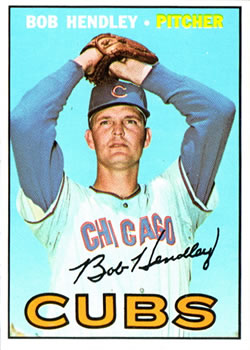
Bob Hendley started for the Cubs. He was not a particularly well-known pitcher. On this night, he pitched the game of his life. Unfortunately for him, it was only the 2nd-best pitched game... in that game.
Neither pitcher allowed a single baserunner until the bottom of the 5th. Cliché Alert: Walks can kill you, especially the leadoff variety. So can errors. Hendley walked Lou Johnson to start the inning. Ron Fairly sacrificed Johnson over to 2nd base. Johnson tried to steal 3rd base. Cub catcher Chris Krug made a bad throw, allowing Johnson to score. Johnson would also get a hit, the Dodgers' only hit: A "Texas Leaguer" double to right field with 2 out in the 7th, but would be stranded.

The Dodgers had 1 run, without a hit contributing to it. That was all Koufax needed: One run. He went to a 3-balls, 2-strikes count on Ernie Banks in the top of the 5th, but struck him out. He went to another full count on Billy Williams in the 7th, but got him to fly out. He struck out the side in the 8th: Ron Santo, Banks, and Byron Browne.

He went into the 9th inning without having allowed a baserunner. Krug led off. He got to a 2-and-2 count, before Koufax struck him out swinging. Joey Amalfitano came up. Koufax struck him out on 3 pitches, the last a swing and a miss.

Cub manager Lou Klein sent Harvey Kuenn up to bad for Hendley, who had pitched 8 innings, allowing 1 run, 1 hit, and 1 walk, striking out 3. Ordinarily, even in that pitching-friendly era of baseball, it would have been enough to win. Not on this night.

Kuenn was 34 years old, and nearing the end of the line. But he was a .303 lifetime hitter, the 1953 American League Rookie of the Year, the 1959 AL batting champion with a .353 average, a 4-time AL leader in hits, a 3-time AL leader in doubles, an All-Star in 8 seasons (including 2 in which there were 2 All-Star Games, so he's sometimes listed as a 10-time All-Star), and, while not really a power hitter, topping off at 12 home runs in 1956, he was certainly capable of driving in runs, topping off at 88 RBIs that same year. He had spent most of his career with the Detroit Tigers, but had helped the San Francisco Giants win the 1962 NL Pennant.

No less than Casey Stengel had said that Kuenn was "one of the most dangerous hitters in baseball. The guy can hurt you a million ways. He has no weakness at the plate that I have ever noticed." However, he was now batting just .217. He had previously made the last out in Koufax's 2nd no-hitter, over the Giants in 1963.

There is no surviving film or videotape of this game, just a recording of Vin Scully's broadcast on radio station KFI, 640 on the AM dial: "It is 9:46 PM. Two and two to Harvey Kuenn. One strike away. Sandy into his windup. Here's the pitch: Swung on and missed, a perfect game!" (Note: That's 9:46 PM Pacific Time, so it was 12:46 AM Eastern Time on September 10.)

The perfect game was also his 4th no-hitter, breaking the record of 3, which had been shared by Larry Corcoran, Cy Young and Bob Feller. Young's 2nd no-hitter was a perfect game.

Koufax threw 113 pitches, 79 of them for strikes. He struck out 14 batters. Home plate umpire Ed Vargo didn't have the chance to make bad calls. His single-game strikeout peak was 18, having done it in 1959 (before he found his control) and 1962. The 14 from this game would be part of a total of 382, a major league record at the time. Nolan Ryan would raise the record to 383 in 1973, a year in which he pitched 2 no-hitters. Koufax's 382 remains a National League record, and a major league record for lefthanded pitchers.

Koufax's 4 no-hitters would be a record until Ryan pitched a 5th in 1981, eventually reaching 7 -- although none of those was a perfect game. In a weird twist of events, Jeff Torborg caught Koufax's last no-hitter, and also caught Ryan's 1st in 1973. That made him the 2nd catcher to catch no-hitters in both leagues, following Gus Triandos. They have since been joined by Darrell Porter, Ron Hassey and Drew Butera.

Torborg also caught Bill Singer's no-hitter for the Dodgers, in 1970, so he was the 1st catcher to catch 3 no-hitters. Jason Varitek now holds the record, with 4.

The Dodgers went on to win the World Series. Koufax would be the story of that Series, in more ways than one.

Harvey Kuenn would go on to manage the Milwaukee Brewers to their 1st Pennant, in 1982. He died in 1988. Ed Vargo died in 2008. Lou Johnson, who got the Dodgers' only hit, died in 2020. Vin Scully died on August 2, 2022. As of September 9, 2022, Sandy Koufax, Jeff Torborg and Bob Hendley are still alive.

UPDATE: Torborg died in 2025.

*

September 9, 1965 was a Thursday. Future basketball star Dan Majerle was born. Hurricane Betsy hit the Gulf of Mexico region, killing 81 people. This was also the day that both the U.S. Department of Housing and Urban Development and Gatorade made their debuts. I have separate entries for those events.

There were only 4 other major league games that night:

* The New York Mets lost to the Cincinnati Reds, 3-2 at Crosley Field in Cincinnati. Rookie Tug McGraw, not yet converted into a reliever, started for the Mets, and allowed 2 runs over 7 innings. The Mets tied the game in the 8th, but Tony Pérez won it with a home run off Gordie Richardson in the bottom of the 9th. Frank Robinson -- as it turned out, in his last month with the Reds -- went 0-for-3 with a walk.

* The Minnesota Twins beat the Chicago White Sox, 10-4 at Comiskey Park in Chicago. Jim Kaat outpitched Joe Horlen. Harmon Killebrew did not play. The Twins were about to win Minnesota's 1st major league Pennant, the franchise's 1st since 1933, when they were the Washington Senators. But they would lose the World Series to the Dodgers.

* The California Angels beat the Kansas City Athletics, 7-2 at Kansas City Municipal Stadium.

* And the San Francisco Giants beat the Houston Astros, 4-0 at Candlestick Park in San Francisco. Juan Marichal, having returned from his suspension after hitting John Roseboro with his bat on August 22, pitched a 4-hit shutout. Tom Haller hit a home run. Willie Mays went 0-for-3.

Monday, August 22, 2022

August 22, 1965: The Marichal-Roseboro Incident

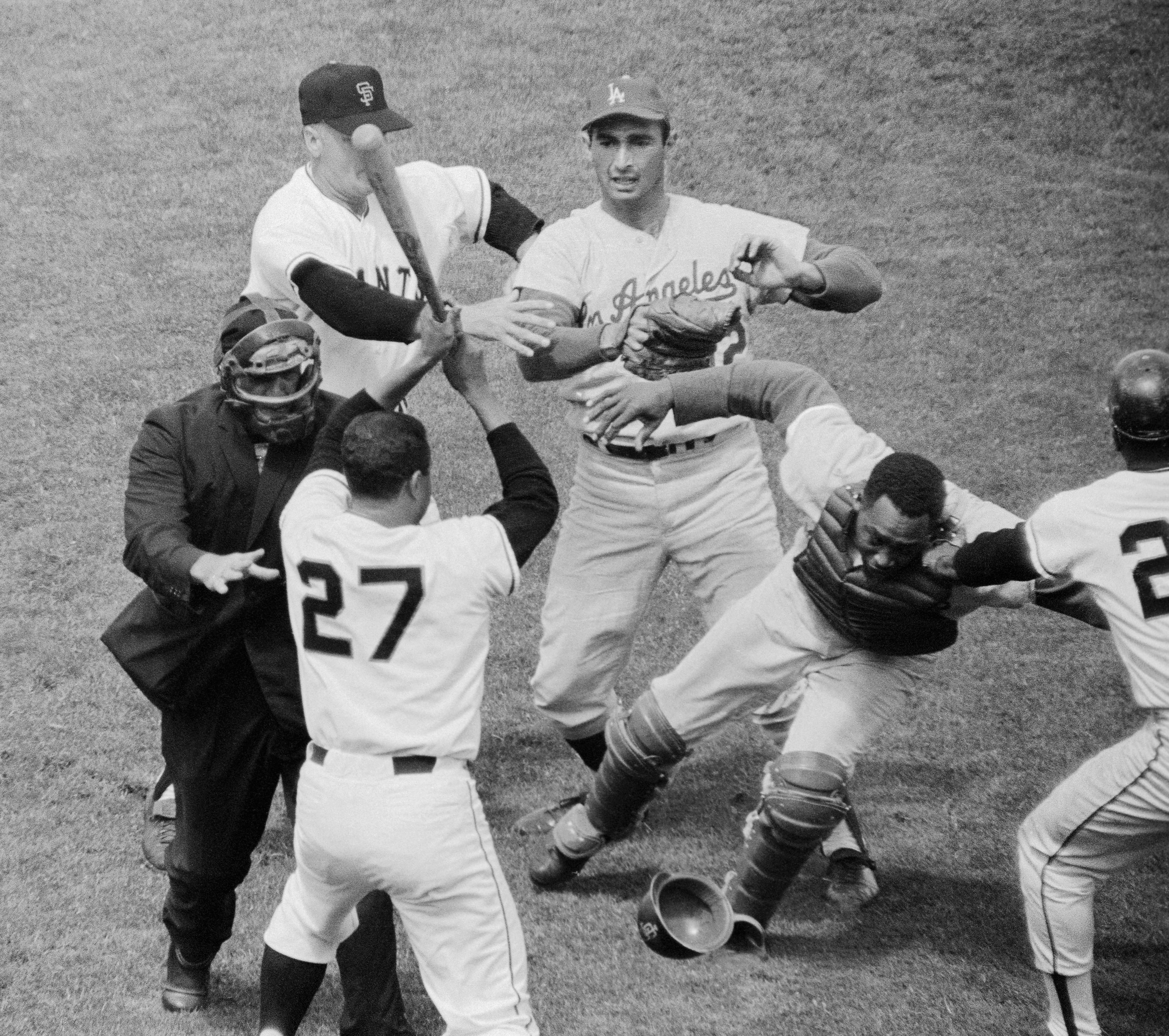
August 22, 1965: The ugliest moment in the nasty rivalry between the Dodgers and the Giants occurs at Candlestick Park in San Francisco. As bad as it was when it was the Brooklyn Dodgers and the New York Giants from 1889 to 1957, nothing like this ever happened then. Nor has it happened between the Los Angeles Dodgers and the San Francisco Giants since.

The key figures were Dodger catcher John Roseboro and Giant pitcher Juan Marichal. It was all the more shocking because both men were normally even-tempered and seemed to avoid controversy.

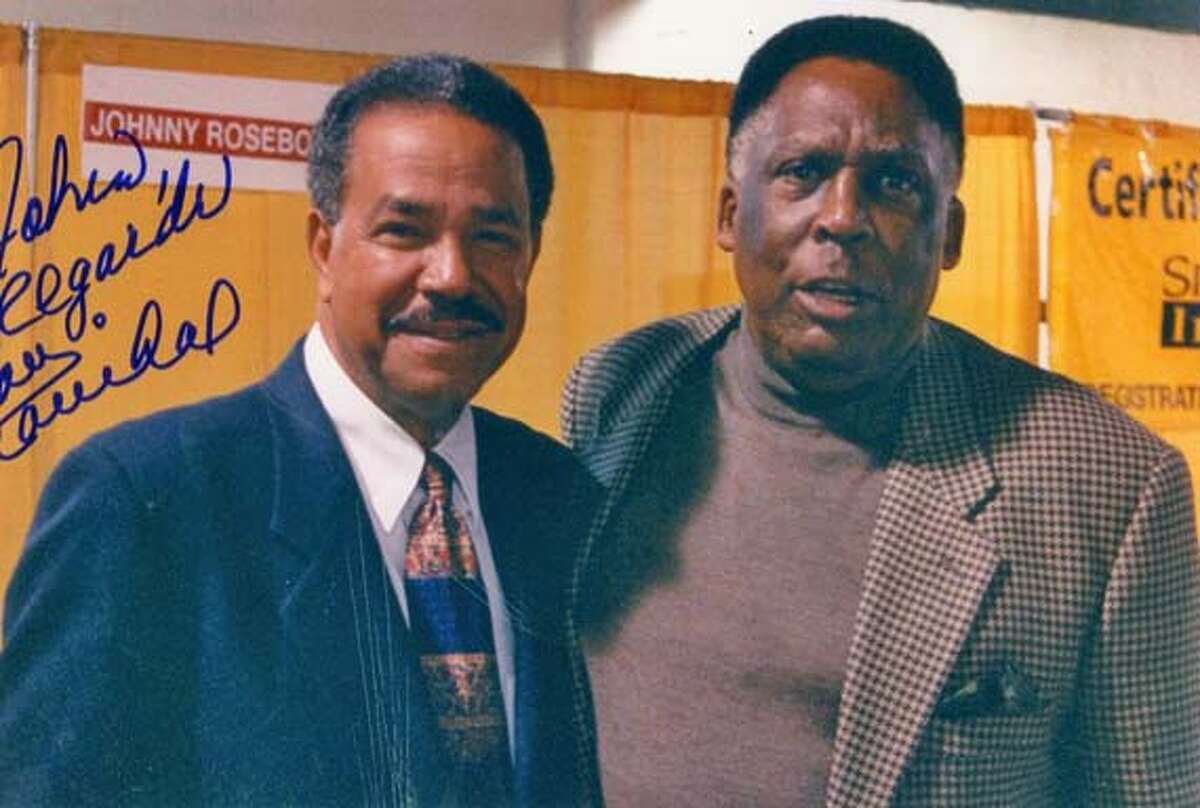
Roseboro was 32 years old, a native of Ashland, Ohio, had succeeded Roy Campanella as the Dodgers' starting catcher in 1958, their 1st season in Los Angeles. By this point, he had won a Gold Glove, made 5 All-Star Games, and helped the Dodgers win the 1959 and 1963 World Series.

But all was not well. A few days earlier, Watts, a neighborhood on the south side of Los Angeles, had broken out in a race riot. Roseboro lived a short distance from the worst of it, and was deeply troubled by it.

Marichal was 27, his age matching his uniform number. A native of the Dominican Republic, he had appeared in 4 All-Star Games, including being named the Most Valuable Payer in the Game played the previous month, had helped the Giants win the 1962 National League Pennant, and had pitched a no-hitter in 1963. Along with the Dodgers' Sandy Koufax and the St. Louis Cardinals' Bob Gibson, he was 1 of the 3 best pitchers in the game.

But all was not well. His country was locked in a civil war, which would be ended with the intervention of American troops and the scheduling of free elections. From his apartment in San Francisco, Marichal and his wife Alma were concerned for the safety of the family they had left behind.

So Roseboro at home, and Marichal abroad, had conflict weighing heavily on their minds as their teams took the field at Candlestick Park on August 22. At the start of the day's games, the Dodgers led the NL by half a game over the Milwaukee Braves, a game and a half over the Giants, and 2 1/2 over the Cincinnati Reds. It was a 4-way race, and still within striking distance, making it possibly a 6-team race, were the Philadelphia Phillies, 6 back; and the Pittsburgh Pirates, 8 1/2.

The opposing pitchers were Marichal and Koufax. The aces. And it was the rivalry in the NL, maybe in all of baseball. So a full house of 42,807 was on hand.

(The rivalry between the New York Yankees and the Boston Red Sox had gone dormant in 1952, when the Sox' Ted Williams went into the Korean War, and it had not yet recovered. Even a brawl at Yankee Stadium in 1967 didn't really revive it. The revival would take a brawl at Fenway Park in 1973.)

The game began with Maury Willis, the Dodgers' speed-demon shortstop, bunting for a hit. Marichal thought bunting was a cheap way to get on base. When Wills came up in the 2nd inning, Marichal threw a knockdown pitch that sent Wills sprawling. Two at-bats earlier, Roseboro had singled home Wes Parker to give the Dodgers a 2-0 lead.

In the bottom of the 2nd, Willie Mays led off, and Koufax threw a pitch over Mays' head. Neither Marichal nor Koufax was known for intentionally throwing at batters, but the messages had been sent and received. Cap Peterson hit a home run to close the Giants to within 2-1. That should have been the end of it.

It wasn't. In the top of the 3rd, Ron Fairly came up, having doubled Wills home in the 1st. Marichal nearly hit Fairly, and he hit the deck. Home plate umpire Shag Crawford had seen enough: He warned both dugouts that any further retaliations would result in ejections. That should have been the end of it.

It wasn't. Marichal led off the bottom of the 3rd. He took Koufax' 1st 2 pitches. After the 2nd pitch, Roseboro threw the ball back, close to Marichal's head. Marichal claimed the pitch actually hit his ear. Roseboro later admitted it, saying it was retaliation from Marichal throwing at Wills, and that he had done it before.

Marichal, whose English was heavily accented but very good, turned around and yelled at Roseboro. Roseboro rose from his crouch and clenched the fist of his ungloved right hand.

When Marichal eventually told his side of the story, he said that he was afraid Roseboro was about to hit him. He raised his bat and hit Roseboro over the head. He swung repeatedly, hitting Roseboro at least twice on his no-longer-helmeted head, opening a 2-inch gash that left blood on his face, needing 14 stitches.

Both dugouts emptied. Each team's best player, Mays and Koufax, tried to act as peacemaker. It took 14 minutes before the game could be restarted. Marichal, naturally, was thrown out of the game. Bob Schroder was sent up to pinch-hit. Jeff Torborg replaced Roseboro as Dodger catcher. Koufax got Schroder and Tito Fuentes out. But he later admitted that he was unsettled by the incident, and he walked Jim Davenport and Willie McCovey, and Mays hit a home run, giving the Giants a 4-2 lead.

Ron Herbel replaced Marichal on the mound, and pitched into the 9th inning. He ran out of gas, and Giant manager Herman Franks had to bring in Masanori Murakami, who would be baseball's only Asian pitcher until 1994. He nailed down the save. Giants 4, Dodgers 3.

NL President Warren Giles find Marichal $1,750, then a League record. (It's equivalent to $16,500 today.) That doesn't seem like much, but he also suspended Marichal for 8 games -- which turned out to be 2 starts. Those starts turned out to be the 1st game of a doubleheader in Pittsburgh on August 26, which Herbel started, and the Giants lost to the Pirates, 8-0; and in New York on August 29, with Bobby Bolin starting, and the Giants beat the Mets, 8-3.

Now, there's no guarantee that Marichal would have won that game on August 26. The Pirates had 4 hitters batting at least .288, led by Roberto Clemente at .340. And they beat Gaylord Perry in the 2nd game of that doubleheader, 6-5.

But when the season ended, the Dodgers had won the Pennant by 2 games over the Giants. Had Marichal been available for both games, and won both? The Dodgers would have won the Pennant by 1 game. So, in the end, it didn't make a difference.

Or... did it? Giles also suspended Marichal for the remaining 2 games between the teams, at Dodger Stadium on September 6 and 7. But, no, that didn't make a difference, either, because he wouldn't have appeared in them, anyway: He won the last game before that, away to the Chicago Cubs; and the Giants won both of those games at Chavez Ravine.

The Giants went 26-16 after August 22, including a 14-game winning streak that put them in 1st place by 4 1/2 games. But a 3-7 run that began on September 21 doomed them. Marichal was 19-9 when the clubbing occurred; he went 3-4 the rest of the way (although he did also have a save). Maybe he was unduly affected by what he did, but it looks like his team was not.

The Dodgers won the World Series in 1965. Marichal didn't face the Dodgers again until a Spring Training game on April 3, 1966 -- and Roseboro hit a home run off him. The Dodgers won the Pennant again in 1966, but lost the World Series. Neither team reached the postseason again until the Giants won the NL Western Division in 1971.

In 1975, running out the string, Marichal was signed by the Dodgers. Los Angeles fans revolted -- but Roseboro, who retired after the 1970 season, spoke up on his behalf, saying he'd forgiven Marichal, and asked the Dodger fans to do the same. He pitched only 2 games for the Dodgers, and was released, retiring with a career record of 243-142. He was the all-time winningest Hispanic pitcher until surpassed by Dennis Martínez (245-193), and later by Bartolo Colón (247-188).

He became eligible for the Baseball Hall of Fame in 1981, but didn't make it. Nor did he make it in the election of 1982. It was widely speculated that the main reason for members of the Baseball Writers Association of America not voting for him was his clubbing of Roseboro. Roseboro made a public statement supporting Marichal's election, and he was elected in 1983. This built a friendship that lasted until Roseboro's death in 2002. Marichal served as an honorary pallbearer at his funeral.
As of August 22, 2022, Marichal is still alive.

*

August 22, 1965 was a Sunday. These other baseball games were played that day:

* The New York Mets swept a doubleheader from the St. Louis Cardinals at Shea Stadium, 7-5 and 4-2. Jim Hickman homered in the opener. In the nightcap rookie Tug McGraw went the distance for his 1st major league win. However, he would become better known as a reliever.

* The Detroit Tigers beat the Boston Red Sox, 2-1 at Fenway Park in Boston, in a game called due to rain in the top of the 6th inning. Carl Yastrzemski went 1-for-2 for the Red Sox, and Al Kaline did not play for the Tigers.

* The Philadelphia Phillies beat the Cincinnati Reds, 6-5 at Connie Mack Stadium in Philadelphia. For the Reds, Frank Robinson went 0-for-4, and Pete Rose went 1-for-4.

* The Cleveland Indians beat the Washington Senators, 8-5 at District of Columbia Stadium in Washington. (It was renamed Robert F. Kennedy Stadium in 1969.) Fred Whitfield hit a sacrifice fly to put the Tribe ahead in the top of the 10th inning.

* The Pittsburgh Pirates beat the Milwaukee Braves, 5-4 at Forbes Field in Pittsburgh. Bill Virdon walked with the bases loaded to win the game in the bottom of the 11th inning. Roberto Clemente went 1-for-5, Willie Stargell went 3-for-5, and Hank Aaron went 1-for-5 with 2 RBIs (but not a home run).

* The Chicago Cubs beat the Houston Astros, 3-1 at Wrigley Field in Chicago. Ernie Banks went 1-for-4, and Ron Santo and Billy Williams hit home runs.

* The Chicago White Sox swept a doubleheader from the Kansas City Athletics at Kansas City Municipal Stadium, 8-3 and 2-1.

* The California Angels beat the Minnesota Twins, 4-1 at Dodger Stadium in Los Angeles, which the Angels rented from 1962 to 1965.

* And the New York Yankees and the Baltimore Orioles were rained out at Memorial Stadium in Baltimore. The game was made up as part of a doubleheader on September 7, and the Orioles swept, 4-2 and 9-5. Over the 2 games, Brooks Robinson went 3-for-10 with an RBI. Mickey Mantle went 0-for-3 with a walk in the 1st game, left due to an injury, and did not play in the 2nd game. 

Sunday, July 24, 2022

July 24, 1965: Bob Uecker Homers Off Sandy Koufax

July 24, 1965: The low point in the sensational baseball career of Sandy Koufax takes place. He gives up a home run to Bob Uecker.

Uecker was, by his own admission, a bad ballplayer. How bad was he? His lifetime batting average was .200, and he was lucky to get it. This was only his 2nd home run of the season, and he finished with 14 in his career.

He was the 1st native of Milwaukee, or even of Wisconsin, to play for a Milwaukee team in the major leagues, playing 46 games for the Braves in 1962 and '63, mostly as backup to catcher Joe Torre. In 1964 and '65, he backed up Tim McCarver on the St. Louis Cardinals, but his 40 games in the '64 season did earn him a World Series ring.

In 1966, the Cardinals traded him to the Philadelphia Phillies. In 1967, the Phils traded him to the Braves, who had since moved to Atlanta. They released him after the season, and he'd played all of 297 games in the major leagues. Of course, that's 297 more than most of us reading this post, including its author, will ever play.

In the broadcasting career he later developed with the Braves' replacement, the Milwaukee Brewers, he used self-deprecating humor to describe his playing days: "I got pulled over by the police. They fined me $400: $100 for drunk driving, and $300 for being with the Phillies."

Jokes like these led to appearances on The Tonight Show Starring Johnny Carson, appearances in Miller Lite beer commercials, a book deal that led to the memoir Catcher in the Wry, a starring role on the 1980s ABC sitcom Mr. Belvedere, and the role of the hard-drinking Cleveland Indians broadcaster Harry Doyle in the Major League movies. (The 1st movie was filmed in Milwaukee because it was easier to get filming dates at County Stadium than at Cleveland's Municipal Stadium, and thus they had access to Bob.)

Bob was given the Ford Frick Award, the Baseball Hall of Fame's award for broadcasters, making him, technically, a Hall-of-Famer in spite of his weak playing career. He was only the 2nd player-turned-broadcaster so honored. The 1st was another weak-hitting ex-catcher-turned-TV personality, Joe Garagiola.

Indeed, most of the players who went into broadcasting and have won the award haven't been star players: Uecker, Garagiola, Jerry Coleman, Tony Kubek, Tim McCarver and Jack Graney. Ken Harrelson, a 1968 All-Star, is, thus far, the only real exception. And none is as beloved as "Uke," the man many people call "Mr. Baseball."
Oh, the game in which Koufax gave up the home run to Uecker? The Cardinals won it, 3-2 at Dodger Stadium in Los Angeles. It wasn't Koufax's fault: He pitched 9 innings, allowing just 2 runs. But the Cards' Ray Sadecki was equal to the task, and the game went to extra innings. The Cards won it in the 10th inning, when Dodger center fielder Willie Davis mishandled a fly ball by the Dick Groat, allowing Lou Brock to score.

As for the other pitchers who gave up home runs to Uecker: In 1962, Diomedes Olivo of the Pittsburgh Pirates; In 1963, none; in 1964, Denny Lemaster of the Braves; in 1965, Gaylord Perry of the San Francisco Giants; in 1966, Fergie Jenkins and Ken Holtzman of the Chicago Cubs on back-to-back days, Dick Ellsworth of the Cubs, Dave Eilers and Rob Gardner of the New York Mets, and 2 off Sadecki, by then with the Giants; and in 1967, Ron Herbel of the Giants, Hal Woodeshick of the Cardinals, and Wade Blasingame of the Houston Astros.

Like Koufax, Perry and Jenkins are in the Hall of Fame. Holtzman and Sadecki were All-Stars. So it wasn't that shameful.

*

July 24, 1965 was a Saturday. These other baseball games were played that day:

* The New York Yankees lost to the Cleveland Indians, 3-0 at Cleveland Municipal Stadium. Sam McDowell pitched a 5-hit shutout, striking out 10. Leon Wagner hit a home run. Mickey Mantle went 0-for-4, supplying 3 of the strikeouts. Roger Maris was injured, and did not play.

* The New York Mets lost to the Philadelphia Phillies, 5-1 at Shea Stadium. Jim Bunning went the distance, striking out 12, and was supported by home runs from Wes Covington and Dick "Dr. Strangeglove" Stuart.

This turned out to be the last game managed by Casey Stengel. I have a separate entry for this event. The next day was to be Old-Timers Day at Shea Stadium, and he partied with some old friends at Toots Shor's famed restaurant in Manhattan, fell, and broke his hip. Wes Westrum was named interim manager until August 30, when Casey realized that his recovery would not allow him to continue, and he retired.

* The Boston Red Sox beat the California Angels, 8-5 at Fenway Park in Boston. Carl Yastrzemski went 1-for-4, and future Seattle Pilot Jim Gosger hit a home run. "Yeah, surrre." Yeah, sure: He hit it in the 7th inning, off Jim Sukla.

* The Baltimore Orioles beat the Minnesota Twins, 3-1 at Memorial Stadium in Baltimore. Boog Powell hit a home run. Brooks Robinson went 0-for-2 with a walk. Harmon Killebrew went 0-for-3 with a walk.

* The Washington Senators beat the Kansas City Athletics, 9-2 at District of Columbia Stadium (later Robert F. Kennedy Stadium) in Washington. Doc Lock hit 2 home runs.

* The Detroit Tigers beat the Chicago White Sox, 7-4 at Tiger Stadium in Detroit. Al Kaline, Norm Cash and Bill Freehan all homered for the Tigers.

* The Pittsburgh Pirates beat the Chicago Cubs, 8-5 at Wrigley Field in Chicago. Roberto Clemente and Bill Virdon homered for the Pirates, Ron Santo and Billy Williams for the Cubs. Ernie Banks went 0-for-4, and Willie Stargell went 0-for-5.

* A doubleheader was split at the Astrodome in Houston. The Houston Astros won the opener, 4-2. The Cincinnati Reds won the nightcap, 2-0, as Joe Nuxhall, once the youngest player ever to enter an MLB game but now in his final season, allowed just 1 hit and 2 walks, striking out 11. Over the 2 games, Frank Robinson went 3-for-7 with an RBI, Pete Rose went 3-for-8 with 2 RBIs, and Joe Morgan went 1-for-7 with a walk and an RBI -- for the Astros.

* And the San Francisco Giants beat the Milwaukee Braves, 4-2 at Candlestick Park in San Francisco. Willie Mays went 0-for-3, but Tom Haller hit a home run. Hank Aaron went 0-for-4, but Mack Jones hit a home run.

December 31, 1999 & January 1, 2000: The Millennium

December 31, 1999:  The Millennium arrives. The people of planet Earth survived. At a terrible cost. But we hadn't destroyed ourselves. ...