Showing posts with label elvis presley. Show all posts

Wednesday, December 21, 2022

December 21, 1970: President Richard Nixon Meets Elvis Presley

December 21, 1970: The President of the United States meets the King of Rock and Roll. It doesn't go quite the way the fans of either would have imagined.

Richard Nixon, who had been Vice President when rock and roll debuted in the mid-1950s, had been elected in 1968 by, essentially, running as "the adult in the room," against youth culture and its running wild in the streets, promoting rock music and civil rights and opposing the Vietnam War.

In contrast, Elvis Presley, who became a star in the South in 1954 and nationally in 1956, was seen as a disruptive figure, pitting teenagers against their parents and other authority figures. And he had made a big comeback with a TV special in 1968 and a Las Vegas residency in 1969.

What people tended to overlook was that Elvis had accepted being drafted into the U.S. Army in 1958 (between the Korean and Vietnam Wars), had served without controversy, and was discharged with the rank of Sergeant, and remained proud of his service, entirely in peacetime though it was.

Furthermore, while he had recorded and had hits with "If I Can Dream" and "In the Ghetto" in 1969, and appeared to be without either racial or religious prejudice, he was not a flaming liberal. He was a man of his time when it came to relating to women. More to the point of this post, he was disturbed by the rise in illegal drug use, including by major rock performers, despite his own rising use of prescription drugs.

*

Let's take a step back, to April 24, 1970. Nixon's daughter, Tricia -- who, the following year, would marry lawyer Edward Cox at the White House -- hosted a White House tea party for her fellow alumnae of Finch College, a since-closed all-women's school in New York City. One of the invitees was Grace Wing. (She was of Scandinavian descent, not Chinese.)

That was her maiden name. Legally, she was using the married name Grace Slick. Professionally, she was using the name Grace Slick, as lead singer of The Jefferson Airplane, which was led by guitarist Paul Kantner, who whom she was in a relationship. (Their daughter, actress China Wing Kantner, was born almost exactly 9 months later.)

Grace knew she would never have been invited under her married/show biz name. She decided to take advantage of this by bringing Abbie Hoffman, leader of the Yippies and the recently-acquitted "Chicago Seven" defendant. Together, they intended to spike President Nixon's tea with LSD.

But White House security knew it was an "all ladies" event, and, even before they realized who he was, they told Abbie they wouldn't let him in. So Grace didn't go in, either. What could have been an epic event was thwarted.

*

Elvis had landed in Washington on the morning of December 21, 1970, fresh off a red-eye flight from Los Angeles, on which he had penned a letter to the President on 6 pages of American Airlines stationery. This is what he wrote, without my having changed any spelling or grammar:

Dear Mr. President.

First, I would like to introduce myself. I am Elvis Presley and admire you and have great respect for your office. I talked to Vice President Agnew in Palm Springs three weeks ago and expressed my concern for our country. The drug culture, the hippie elements, the SDS, Black Panthers, etc. do not consider me as their enemy or as they call it the establishment. I call it America and I love it. Sir, I can and will be of any service that I can to help the country out. I have no concern or motives other than helping the country out.

So I wish not to be given a title or an appointed position. I can and will do more good if I were made a Federal Agent at Large and I will help out by doing it my way through my communications with people of all ages. First and foremost, I am an entertainer, but all I need is the Federal credentials. I am on this plane with Senator George Murphy and we have been discussing the problems that our country is faced with.

Sir, I am staying at the Washington Hotel, Room 505-506-507. I have two men who work with me by the name of Jerry Schilling and Sonny West. I am registered under the name of Jon Burrows. I will be here for as long as long as it takes to get the credentials of a Federal Agent. I have done an in-depth study of drug abuse and Communist brainwashing techniques and I am right in the middle of the whole thing where I can and will do the most good.

I am Glad to help just so long as it is kept very private. You can have your staff or whomever call me anytime today, tonight, or tomorrow. I was nominated this coming year one of America's Ten Most Outstanding Young Men. That will be in January 18 in my home town of Memphis, Tennessee. I am sending you the short autobiography about myself so you can better understand this approach. I would love to meet you just to say hello if you're not too busy.

Respectfully,
Elvis Presley

P. S. I believe that you, Sir, were one of the Top Ten Outstanding Men of America also.
I have a personal gift for you which I would like to present to you and you can accept it or I will keep it for you until you can take it.

On the 6th and last page, he included his private telephone numbers, and those of his manager, "Colonel" Tom Parker, at his homes in Memphis, Beverly Hills and Palm Springs, and at his hotel in Washington.

Once they landed, the King directed his limo to Pennsylvania Avenue. He jumped out to hand the note to Secret Service guards, who didn’t immediately recognize him, despite his high-collared topcoat and cane.

What Elvis really wanted was a special badge from the Bureau of Narcotics and Dangerous Drugs -- not so much as to be a real federal agent, but to add to his personal collection of police badges.

Jerry Schilling, a close friend of Elvis' who joined the visit to Washington, later described the King's penchant for flashy signals of authority in a conversation with the Nixon Presidential Library: "It was kind of a James Bond thing to him as well, but with a lot of respect for it."

Dwight Chapin, then a Deputy Assistant to the President, ended up arranging the meeting. He said, “This was a very humorous situation among us. Everybody thought we were joking."

Another Deputy Assistant, Egil "Bud" Krogh, went to the hotel to meet Elvis. "There was an interrogation," Schilling said. "That's a tough word, but, you know, 'Why do you want to meet the President? What do you want to talk about?' And it was a real nice, serious conversation between Bud and Elvis."

And so, Elvis, in purple velvet pants and a matching cape blazer, was led into the Oval Office, and shook hands with the President. It's the most requested photograph from the U.S. National Archives, an item more coveted than copies of the Constitution.

Krogh, the sole staffer who witnessed the Elvis-Nixon exchange in the Oval Office, with Schilling and Sonny West also in the room, later wrote meeting notes that sketched out the conversation: After the legendary photo-op, Elvis told the President that he was on his side, and he wanted to help reach young people to discourage drug use.

He also added a dig at The Beatles, who had broken up 8 months earlier, but whom Elvis told Nixon had promoted "anti-American spirit," much to Nixon's surprise. While Nixon would later try to get John Lennon deported, he had not, as yet, made any negative public statement against the group, or any member thereof, or, indeed, against any musical performer.

At first, Nixon was annoyed by what he saw as a public-relations stunt. But over the course of the meeting, he found that they had much in common: They were both "self-made men," who came from humble beginnings, and worked hard for their success, and both felt under-appreciated by an American culture they no longer understood, and had appeared to have passed them by. (It wasn't brought up, but another thing they had in common was being major "mama's boys.")

As for the gift, it was a gun. Yes, Elvis brought a gun into the White House. It was a Colt .45 pistol made for the U.S. Army during World War II, in what Nixon called a "handsome wooden chest" in the thank-you note he sent, dated on December 31. Elvis and Dick parted on good terms.

And the badge that Elvis so badly wanted? It came in the mail a few days later. This was one occasion on which Richard Nixon kept his word.
Despite the fame of both men, the meeting was not reported in the media at the time, and went unnoticed for more than a year until Jack Anderson's nationally syndicated newspaper column of January 27, 1972.

The revelation of the meeting shocked pretty much everybody. Nixon's supporters couldn't believe that Elvis the Pelvis was allowed in. Elvis' supporters figured he was too liberal to meet with the much-despised Tricky Dick. For Nixon-haters, it got worse: At the 1972 Republican Convention, Nixon was seen on TV getting hugged by Sammy Davis Jr., and applauded by Frank Sinatra, who had publicly supported Democratic Presidential nominees from Franklin Roosevelt in 1940 to Hubert Humphrey in 1968, especially John F. Kennedy against Nixon in 1960.

Dwight Chapin was convicted of perjury for lying to a grand jury over the Watergate case, and served 8 months in federal prison.

The meeting has been the subject of 2 movies. In 1997, Elvis Meets Nixon starred Rick Peters, Bob Gunton, Alyson Court as Priscilla Presley, Denny Doherty of The Mamas & The Papas as Elvis' father Vernon, and Richard Beymer (Tony in the film version of West Side Story) as White House Chief of Staff Bob Haldeman. In 2016, Elvis & Nixon starred Michael Shannon, Kevin Spacey, Tate Donovan as Haldeman, and Johnny Knoxville as West. No one in Elvis' family appears as a character.

Elvis died in 1977, his heart weakened by his prescription drug use. Senator George Murphy died in 1992, Nixon in 1994, Bud Krogh in 2020, and Sonny West in 2022. As of December 21, 2022, Dwight Chapin and Jerry Schilling are still alive.

*

December 21, 1970 was a Wednesday. Baseball was out of season. Football was in midweek. There were no games scheduled in the NHL.

There was 1 game in the NBA: The Milwaukee Bucks beat the Los Angeles Lakers, 113-88 at the Milwaukee Arena. In 1974, it was renamed the Milwaukee Exposition, Convention Center and Arena, or "The MECCA." Since 2014, it has been named the UW-Panther Arena. Lew Alcindor scored 37 points and grabbed 16 rebounds. He went on to lead the Bucks to the NBA Championship that season. After another year, he changed his name to Kareem Abdul-Jabbar. In 1975, he was traded to the Lakers, and would lead them to 6 titles.

There were 2 games played in the American Basketball Association, and they were a doubleheader at the Indiana State Fairgrounds Coliseum (now the Corteva Coliseum) in Indianapolis. The Miami Floridians beat the Kentucky Colonels, 125-119. Dan Issel scored 37 in defeat for the Colonels. And the Indiana Pacers beat the Pittsburgh Condors, 144-115. Bill Netolicky scored 36 for the Pacers.

Saturday, December 3, 2022

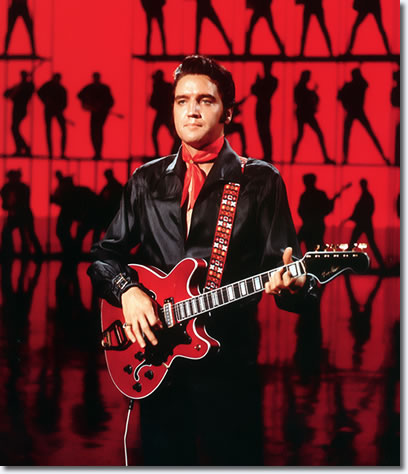
December 3, 1968: Elvis Presley's Comeback Special

December 3, 1968: NBC airs the special Singer Presents ... Elvis. It becomes known to Elvis' fans as "The '68 Comeback Special."

Elvis Presley became a regional star in 1954, and a national superstar in 1956. After 2 years in the U.S. Army, he returned in 1960, and made his 1st comeback, a very successful one.

But by 1962, a pattern was set: No live performances, and 2 or 3 movies a year. Elvis films followed a standard formula of a poor boy looking to make good, doing so, singing, and getting the girl. They were cheap to make, with Elvis' paycheck usually being the most expensive part. With Elvis' fanbase, so enough of his fans would come to see them that they were guaranteed to make enough of a profit to justify the next one. Therefore, the films didn't have to be good. Some were, but most weren't.

By 1967, Elvis had grown stale. And popular music had changed tremendously, thanks to The Beatles, Bob Dylan, and everybody they influenced. He was still The King, but there had been a coup: Rock and roll was now a republic.

In October 1967, Elvis' manager, "Colonel" Tom Parker, talked NBC into doing a Christmas special with Elvis. (This was around the time the word "special" began to be used to describe such out-of-the-ordinary programs. Previously, such a program would be called a "spectacular.") NBC talked Singer sewing machines into sponsoring it. Elvis hated the idea.

NBC hired Bob Finkel to produce the special. He had another idea: One Christmas song, and enough material for a soundtrack album, including new songs and Elvis' greatest hits. This idea appealed to Elvis, and the Colonel was talked into it.

Finkel hired Steve Binder, NBC's rock and roll guy. He had directed The T.A.M.I. Show in 1964, and the variety series Hullabaloo in 1965 and '66. He was already signed to direct a special for British singer Petula Clark, which would air on April 8, 1968. Binder believed he could reintroduce Elvis to fans who were too young to remember his first burst of success in 1956, and were too young to appreciate his first comeback in 1960. Binder set out to remind everyone of the old question: "Who's king around here, anyway?"

(I first heard that question in a 1980 ad for Pepto-Bismol, with an actor playing King Henry VIII. I had presumed that the question had been borrowed from an old movie or TV show. But I can't trace it back any further than the commercial in question.)

They taped at NBC's studio in the Los Angeles suburb of Burbank, California on June 27 and 29, 1968. There was a segment of Elvis singing new songs, like "Guitar Man" by Jerry Reed, later to be known for singing songs like "When You're Hot, You're Hot" and playing Cledus Snow in the Smokey and the Bandit movies. There was a segment of Elvis singing gospel songs, like "Saved," which Jerry Lieber and Mike Stoller, who had written several of his hits, had written for LaVern Baker. He sang the Christmas song with which he is most identified, "Blue Christmas."

But the key segment was on a square stage, surrounded by about 100 fans, reunited with his old band. Well, two of them: Bass fiddle player Bill Black had died in 1965, but lead guitarist Scotty Moore and drummer D.J. Fontana were there.

And, wearing a black leather suit, he sang songs from the first segment of his career, 1954 to 1961. "Heartbreak Hotel." "Hound Dog." "All Shook Up." "Jailhouse Rock." "Love Me Tender." "Are You Lonesome Tonight?" And he had those teenagers eating out of the palm of his hand, kids who were toddlers when those songs were new.

At one point, he sang "Can't Help Falling In Love," from his 1961 film Blue Hawaii. It's almost as if you can hear the transition from "The Memphis Flash" to "The King of Las Vegas."

The closing song was "If I Can Dream," written by Walter Earl Brown. Wearing a white suit with a long double-breasted jacket indigenous to the late 1960s, Elvis knocked out a spectacular performance that showed that, in spite of having run in place throughout (Cliché Alert) the turbulent Sixties, he could be in tune with the times.

The song was recorded on June 23, 1968. It had been 18 days since Robert F. Kennedy was assassinated a few miles away, at the Ambassador Hotel in Los Angeles; 70 days since the assassination of Dr. Martin Luther King Jr. in Elvis' hometown of Memphis; with riots at Columbia University in New York and the streets of Paris in between those assassinations; and the Vietnam War continuing with no end in sight.

By the time the special aired on December 3, things had gotten no better: It had been 98 days since the riot at the Democratic National Convention in Chicago; 48 days since the black-gloved salute of Tommie Smith and John Carlos at the Olympics in Mexico City; and 28 days since Richard Nixon and George Wallace, racists both, had, between them, won 57 percent of the popular vote in a Presidential election. And still, the war had no end in sight.

The world needed that song at that time. It's needed the song many times since.

Certainly, Elvis needed the boost the special gave him. It turned out to be the most-watched program of the entire 1968-69 television season. The month after it aired, in January 1969, an inspired Elvis recorded a back-to-his-roots album in Memphis -- at the same time, as it turned out, that The Beatles were trying and not exactly succeeding in doing the same thing with what became Let It Be. These Memphis sessions would produce hits like Mark James' "Suspicious Minds" and Mac Davis' "In the Ghetto."

And he went back to live performing, starting the following July at the International Hotel in Las Vegas -- later the Las Vegas Hilton and now the Westgate Las Vegas. Maybe he was a figurehead now, but the King was back on the throne.

*

December 3, 1968 was a Tuesday. Actor Brendan Fraser and singer Montell Jordan were born.

Baseball was out of season. Football was in midweek. And no games were scheduled for the NHL. But there were 6 games played in the NBA:

* The New York Knicks beat the Atlanta Hawks, 126-93 at the new Madison Square Garden.

* The Cincinnati Royals beat the Baltimore Bullets, 129-127 at the Baltimore Civic Center (now named the CFG Bank Arena). Oscar Robertson scored 38 points for the Royals.

* The San Diego Rockets beat the Chicago Bulls, 108-103 at the Chicago Stadium. The Rockets moved to Houston in 1971.

* The Boston Celtics beat the Milwaukee Bucks, 137-115 at the Milwaukee Arena. In 1974, it was renamed the Milwaukee Exposition, Convention Center and Arena, or "The MECCA." Since 2014, it has been named the UW-Panther Arena. John Havlicek led all pro basketball players on the night with 41 points.

* The Los Angeles Lakers beat the Phoenix Suns, 122-108 at The Forum outside Los Angeles in Inglewood, California. Wilt Chamberlain scored 35 pounds and grabbed 25 rebounds.

* And the San Francisco Warriors beat the Seattle SuperSonics, 127-122 at the Cow Palace outside San Francisco in Daly City, California.

There were 3 games played in the American Basketball Association:

* The New York Nets lost to the Denver Rockets, 127-108 at the Auditorium Arena in Denver. Larry Jones scored 37 for Denver. In 1974, to avoid confusion with the Houston team, the Denver Rockets adopted the name of the 1st NBA team in Denver, the Nuggets.

* The Minnesota Pipers beat the New Orleans Buccaneers, 116-94 at the Metropolitan Sports Center in the Minneapolis suburb of Bloomington, Minnesota.

* And the Oakland Oaks beat the Dallas Chaparrals, 135-109 at the Oakland Coliseum Arena. 

Saturday, November 26, 2022

November 27, 1896: Richard Strauss Premieres "Also Sprach Zarathustra"

November 27, 1896: Composer Richard Strauss premieres his "tone poem" Also sprach Zarathustra, inspired by Friedrich Nietzsche's 1883 novel of the same title, translated into English as Thus Spoke Zarathustra.

Born in Munich in 1864, Strauss was not related to the composing Strauss family of Vienna, Austria. He had previously composed tone poems about Don Juan and Macbeth, and would later do so for Don Quixote. He lived until 1949, and Also sprach Zarathustra remains easily his most familiar composition.

Strauss conducted the premiere himself, at the Saalbau der Museums-Gesellschaft in Frankfurt, Germany. A typical performance lasts 33 minutes. Its opening fanfare, titled "Sunrise," was used by director Stanley Kubrick as the theme song for the 1968 film 2001: A Space Odyssey.

That use led Elvis Presley to use it as the opening theme for his concerts from the start of his Las Vegas run in 1969 until his death in 1977. I'm guessing that Elvis wasn't aware of Nietzsche's statement in the novel, "God is dead," it, or else he probably would not have used the fanfare.

By the time Strauss' composition premiered, Nietzsche was too ill to attend, and no recording of it was made until 1935, when Serge Koussevitzky conducted the Boston Symphony Orchestra in it. So it is likely that Nietzsche never expressed an opinion on it.

The Saalbau der Museums-Gesellschaft, site of the premiere, opened in 1861, and was destroyed by Allied bombing in 1944.

*

November 27, 1896 was a Friday. There were no scores on this historic day: Baseball was out of season, there were college football games played the day before (Thanksgiving) but not the day after, professional hockey did not yet exist, and basketball was still a brand-new sport.

Friday, October 28, 2022

October 28, 1956: Elvis Presley Gets the Polio Vaccine

October 28, 1956: Millions of young people's fears over getting the recently-approved polio vaccine are wiped out: Their hero got it, on the biggest show on TV.

Ed Sullivan initially said he wouldn't put Elvis Presley on The Ed Sullivan Show, because of his sexually suggestive onstage moves. But after Ed's competitor, Steve Allen, did, and got huge ratings, Ed could no longer ignore the appeal. As the title of one of his greatest hits albums said, Fifty Million Elvis Fans Can't Be Wrong.

Ed would end up putting Elvis on his show 3 times. It was only on the 3rd one, on January 6, 1957, that he was famously shown only from the waist up. I have a separate entry for that post.

The polio virus had been ravaging America for years, and approximately 60,000 children were infected annually. In 1955, hope famously arrived in the form of Jonas Salk's vaccine. But despite the literally crippling effects of the virus, and the promising results of the vaccination, many Americans simply weren't getting vaccinated. In fact, when Elvis first appeared on The Ed Sullivan Show, immunization levels among American teens were at an abysmal 0.6 percent.

You might think that the threats of death and paralysis would be enough to motivate people to get vaccinated. Yet, convincing people to get a vaccine is a challenging endeavor, as the 2020-21 COVID pandemic would later prove. Intuitively, it seems like it would be wise to have doctors and other health officials communicate the need to receive the vaccine. Or, failing that, we might just need to give people more information about the effectiveness of the vaccine itself.

Those aren't winning strategies today, and they weren't back in 1956. What did prove successful was Elvis getting the vaccine in front of millions. In fact, after he publicly did so, vaccination rates among American youth skyrocketed to 80 percent after just six months. Kids all over America were answering the vaccine with impressions of Elvis: "Well, uh, uh-huh!"

Contracting poliomyelitis as an adult, like Franklin Roosevelt did before becoming President, had been rare. But so many kids got it that it became known as "infantile paralysis." John F. Collins got it in 1955, just as the vaccine was first being released to the public, during a campaign for City Council in Boston. Having to use a wheelchair didn't stop him from being elected Mayor in 1959 and 1963.

Prominent Canadian politicians Paul Martin Sr. and Paul Martin Jr. got it separately, and survived it, the latter serving as Prime Minister from 2003 to 2006. His predecessor, Jean Chrétien (1993-2003), has physical challenges that suggest he may also be a polio survivor, although he has never claimed to be one, attributing them instead to Bell's palsy.

Jerome Felder, a polio survivor, wrote songs under the name Doc Pomus, including several of Elvis' hits. Bill Cullen, who, between serving as host and panelist, appeared on more TV game shows than anybody, was a polio survivor. Like Elvis in his 3rd Sullivan appearance, he was usually only shown from the waist up, because he was self-conscious about his limp. Wilma Rudolph recovered from childhood polio to win 3 Gold Medals in sprinting at the 1960 Olympics in Rome.

In a weird coincidence, Donald Sutherland, who played Hawkeye Pierce in the film version of M*A*S*H, and Alan Alda, who played the character on TV, were both polio survivors. Alda became a close friend of violinist Itzhak Perlman, who contracted the disease at age 4, and, through his television appearances, is, as of October 28, 2022, the living celebrity most visibly affected by the nearly-eradicated disease.

Other celebrities, alive as of the abovementioned date, who survived polio as children include singers Joni Mitchell, Judy Collins, Donovan and Neil Young; actors Mia Farrow, Joe Bob Briggs, director Francis Ford Coppola and one of his Godfather actors, Gianni Russo; Senate Majority Leader Mitch McConnell; Olympic figure skating Gold Medalist Tenley Albright, golfer Jack Nicklaus, and Heisman Trophy winner and U.S. Army General Pete Dawkins.

*

October 28, 1956 was a Sunday. Mahmoud Ahmadinejad, the infamously unstable President of Iran from 2005 to 2013, was born on this day.

These NFL games were played:

* The New York Giants beat their arch-rivals, the Philadelphia Eagles, 20-3 at Yankee Stadium.

* The Baltimore Colts beat the Green Bay Packers, 28-21 at Memorial Stadium in Baltimore.

* The Pittsburgh Steelers beat their arch-rivals, the Cleveland Browns, 24-16 at Cleveland Municipal Stadium.

* The Washington Redskins beat the Chicago Cardinals, 17-14 at Comiskey Park in Chicago.

* The Detroit Lions beat the Los Angeles Rams, 16-7 at the Los Angeles Memorial Coliseum.

* And the Chicago Bears beat the San Francisco 49ers, 38-21 at Kezar Stadium in San Francisco.

Baseball season had ended 18 days earlier, when the New York Yankees beat the Brooklyn Dodgers in Game 7 to win the World Series. There were 2 games played in the NBA. The Syracuse Nationals beat their arch-rivals, the Rochester Royals, 91-75 at the Onondaga County War Memorial (now the Upstate Medical University Arena) in Syracuse, New York. And the Fort Wayne Pistons beat the Minneapolis Lakers, 94-88 at the Allen County War Memorial Coliseum in Fort Wayne, Indiana.

And there were 2 games scheduled in the NHL. The New York Rangers and the Toronto Maple Leafs played to a tie, 1-1 at the old Madison Square Garden. And the Detroit Red Wings beat the Montreal Canadiens, 4-1 at the Olympia Stadium in Detroit. The Boston Bruins and the Chicago Black Hawks were not scheduled.

Saturday, August 27, 2022

August 27, 1965: Elvis Presley Meets The Beatles

The only known photograph connected to the meeting

August 27, 1965: The 2nd great summit of rock and roll occurs, exactly 365 days after the 1st, on August 28, 1964: The Beatles met Bob Dylan. It went great.

This 2nd one was The Beatles meeting the King of Rock and Roll, Elvis Presley. It didn't go nearly as well.

The Beatles were huge fans of Elvis, and considered him an inspiration for their career. However, Elvis was initially reluctant to meet them. Both record labels and managers from both sides pushed for the meeting to happen, knowing how iconic it would be.

It took place at Elvis' villa on Perugia Way, in the Bel-Air section of Los Angeles. When the Beatles arrived, they were excited, but also intimidated. Elvis welcomed them with a relaxed attitude, sitting on a couch and playing an electric bass. However, the first moment was a bit tense: No one knew exactly what to say.

Breaking the ice, Elvis said, "If you guys are just going to sit there and stare at me, I’m going to bed!" This joke put everyone at ease, and kicked off the conversation.

The evening soon turned into an informal and fun moment. It is said that Elvis and the Beatles played together in an improvised jam session, although no official recording or photograph of the meeting was ever released. Among the songs played were probably some of Elvis' hits and a few classic rock and roll tracks that both sides knew well.

John Lennon was particularly fascinated by Elvis, and bombarded him with questions about his career and movies. However, Lennon didn't hide his disappointment with the musical direction Elvis had taken in the 1960s, preferring the early rock and roll style from his beginnings.

Paul McCartney was the most diplomatic, and showed enthusiasm for everything. He must have realized that, here, he could not be the control freak.

George Harrison was intrigued by the fact that Elvis had multiple televisions to watch different channels at the same time. Elvis had heard that President Lyndon Johnson had 3 TV sets installed in the Oval Office, so he could watch the evening news on ABC, CBS and NBC at the same time, and he wanted a similar setup. He had it at Graceland, too.

Ringo Starr spent most of the time playing with Elvis' pets, especially his dogs.

The Beatles were struck by Elvis' charismatic presence, while Elvis was impressed by the group's humility and liveliness. However, there was a subtle note of rivalry: Although Elvis respected the Beatles, he feared their popularity might overshadow his own.

The meeting ended on friendly terms, but there were no further contacts between Elvis and the Beatles. Nevertheless, they continued to influence each other: The Beatles always kept their admiration for Elvis alive, while when Elvis returned to live performing in 1969, he included "Yesterday" and "Hey Jude" in his repertoire.

In 1970, the Beatles broke up. And Elvis... well, he didn't quite rat them out, but he sent a letter to President Richard Nixon, telling him that he was concerned about the rise of drug culture in America, and partially blaming the Beatles. That set up an even more famous meeting, at the White House, between the King and Tricky Dick.

*

August 27, 1965 was a Friday. Australian-born soccer manager Ange Postecoglou was born. And these baseball games were played:

* The New York Yankees lost to the Kansas City Athletics, 1-0 at Kansas City Municipal Stadium. Whitey Ford and John O'Donoghue were both pitching shutouts until the bottom of the 9th, when Dick Green singled José Tartabull home. Mickey Mantle went 1-for-3 with a walk.

* The New York Mets lost to the San Francisco Giants, 9-2 at Shea Stadium. Willie McCovey hit 2 home runs, and Willie Mays hit one, the 469th home run of his career. Warren Spahn, formerly of the Boston and Milwaukee Braves, was the winning pitcher. He had been with the Mets earlier in the season. It was his 2nd win of the season, and the 362nd game he won. There would be one more, and then he finally hung up his spikes.

* The Los Angeles Dodgers beat the Philadelphia Phillies, 9-8 at Connie Mack Stadium in Philadelphia. Don Drysdale was the winning pitcher. The Phils had the tying run on 1st in the bottom of the 9th,but couldn't get him home.

* The Washington Senators beat the Baltimore Orioles, 2-1 at District of Columbia Stadium in Washington. (D.C. Stadium was renamed Robert F. Kennedy Stadium in 1969.) Jim King singled Ken Hamlin home with the winning run in the bottom of the 10th inning. Brooks Robinson went 2-for-5.

* The Pittsburgh Pirates beat the Houston Astros, 10-9 at Forbes Field in Pittsburgh. Andre Rogers singled Al McBean home, off future Baltimore star Mike Cuellar, in the bottom of the 11th inning. McBean was also the winning pitcher, having gone 2 innings. Pirate starter Vernon Law, the 1960 Cy Young Award winner, only went 4. Roberto Clemente and Willie Stargell each went 1-for-4.

* The St. Louis Cardinals beat the Cincinnati Reds, 6-5 at Crosley Field in Cincinnati. Ken Boyer doubled Lou Brock home with what turned out to be the winning run in the top of the 14th inning. Boyer went 3-for-7 with 2 RBIs. So did the Reds' Frank Robinson. Pete Rose went 1-for-7.

* A doubleheader was split at Comiskey Park in Chicago. The Chicago White Sox won the opener, 3-2. The Boston Red Sox won the nightcap, 6-1. Over the 2 games, Carl Yastrzemski went 4-for-7.

* The Chicago Cubs beat the Milwaukee Braves, 5-3 at Milwaukee County Stadium. Ernie Banks went 0-for-4, but Billy Williams hit a home run. For the Braves, Hank Aaron went 0-for-4, but home runs were hit by Felipe Alou and Mack Jones.

* The Minnesota Twins beat the Cleveland Indians, 7-0 at Metropolitan Stadium in the Minneapolis suburb of Bloomington, Minnesota. Jim "Mudcat" Grant pitched a 2-hit shutout. Harmon Killebrew did not play.

* And the California Angels beat the Detroit Tigers, 3-2 at Dodger Stadium in Los Angeles, where the Angels groundshared until their Anaheim stadium was ready the next Spring. Al Kaline did not play.

Tuesday, August 16, 2022

August 16, 1977: Elvis Presley Dies

August 16, 1977: Elvis Presley dies at his home, Graceland, on the south side of Memphis, Tennessee. He had a massive heart attack, brought on by years of a rotten diet and massive prescription drug use. The man known as the King of Rock and Roll was only 42 years old.

Graceland Farms was owned by Stephen Toof, who ran a commercial printing firm. He named it for his daughter, Grace. She inherited the property from him in 1894, and after her death, it went to her niece, Ruth Moore. Her husband, Thomas Moore, built a mansion on the site in 1939.

Elvis bought it in 1957, after seeing the house he'd bought for himself and his parents in a nice section of Memphis besieged by fans. The house on the Graceland property was well back of U.S. Route 51, providing protection from the public. The address was 3764 Bellevue Boulevard, in the Whitehaven section of Memphis, and it's actually closer to the Mississippi State Line (4 miles) than it is to downtown (7 miles). In 1972, while Elvis was still alive, the City renamed the road Elvis Presley Boulevard.

Elvis had begun taking amphetamines while serving in the U.S. Army in 1958. This led to sleeping pills to counter the effects, and later diet pills in a vain attempt to control his weight.

He concluded a tour at the Market Square Arena in Indianapolis on June 26, and was preparing to fly out of Memphis on August 16, to start a new tour the next night. As rich as he seemed, as it turned out, he needed the money. Elvis had a huge entourage, including family members such as his father; and his manager, "Colonel" Tom Parker, was taking far too much of his earnings.

Divorced from his only wife, formerly Priscilla Beaulieu, he was now dating actress Ginger Alden, who was living with him at Graceland. At the peak of his fame, at a shade over 6 feet, he weighed about 170 pounds. Now, he was more than twice that.

That afternoon, he was in the master bedroom with Ginger, and he told her, "Precious, I'm going to go into the bathroom, and read." A few minutes later, Ginger heard a sound come from the bathroom. Elvis had fallen off the toilet, his various maladies and prescriptions having combined to give him a heart attack. He was taken to Baptist Memorial Hospital, and was pronounced dead at 3:30 PM Central Time (4:30 Eastern).

Under Priscilla's leadership, Colonel Parker lost control of Elvis' estate, and it made more money in the 1st 3 years after his death than he made in the 42 years that he was alive. Graceland is not just the most-visited former private home in America: It has become a theme park, with the house and the Meditation Gardens -- final resting place of Elvis and various relatives -- and a hotel on the east side of Elvis Presley Boulevard, and various Elvis-related items on the west side, including restaurants named for his parents: Vernon's Smokehouse and Gladys' Diner. There's also an Elvis-themed Automobile Museum, and "Elvis Presley's Memphis," an exhibit about the city during his lifetime.

*

August 16, 1977 was a Tuesday. Football, basketball and hockey were out of season. There were Major League Baseball games were played on that day, including the New York Yankees playing the Chicago White Sox at Yankee Stadium.

When ESPN made its miniseries about the 1977 Yankees, The Bronx Is Burning, it included this exchange, between Mather Zickel, playing Lou Piniella, and Leonard Robinson, playing Mickey Rivers -- keeping in mind, this was 3 years before John Lennon was shot and killed in New York:

Lou: Presley's dead!
Mickey: Who?
Lou: Elvis Presley! I just heard it on the radio.
Mickey: Somebody shot him?
Lou: No, nobody shot him!
Mickey: Well, what, then? Heart attack? 'Cause, I heard, for a superstar, he had a pretty poor diet.
Lou: No, they're saying, drugs, or something.
Mickey: Well, that just goes to show you.
Lou: Goes to show you what?
Mickey: Well, hell if I know, but it must go to show you something!

And then the Yankees took the field, and played what may have been their craziest game of the year. They led 2-0 after 2 innings, saw the ChiSox tie it in the 4th, took a 4-2 lead in the 5th, saw the ChiSox tie it in the top of the 7th, took a 5-4 lead in the bottom of the 7th, extended it to 9-4 in the 8th, and then the ChiSox exploded for 6 runs in the top of the 9th to make it 10-9. Future Yankee Jim Spencer had hit 2 home runs for the Pale Hose, while Roy White had hit one for the Pinstripes.

Cliché Alert: Walks can kill you, especially the leadoff variety. Thurman Munson led off the bottom of the 9th with a walk. Piniella hadn't started the game, but manager Billy Martin put him in as a pinch-runner for Reggie Jackson, who had gone 1-for-3, and kept him in right field for Reggie. Lou bunted Thurman over. This turned out to be unnecessary, as the next batter, Chris Chambliss, hit a walkoff home run.

The day Elvis died was the day that the Baby Boomers realized that they weren't kids anymore. The day Yankee legend Mickey Mantle died, 18 years later to the week, was the day the Baby Boomers had to accept that they were now old.

As for the other games played that day:

* The New York Mets beat the St. Louis Cardinals, 5-1, at Busch Memorial Stadium in St. Louis. Of the 4 players the Mets had gotten in the Tom Seaver trade on June 15, Steve Henderson and Doug Flynn each had 3 hits, and Pat Zachry went the distance for the win, while Dan Norman did not play. For the Cards, Lou Brock went 0-for-4.

* The Philadelphia Phillies beat the Montreal Expos 7-5 at the Olympic Stadium in Montreal. The Phils scored 5 runs in the top of the 8th to win it. Mike Schmidt went 2-for-4 with an RBI.

* The Boston Red Sox beat the Kansas City Royals, 5-3 at Fenway Park in Boston. George Brett did not play. Butch Hobson hit a home run, and Carl Yastrzemski went 0-for-3 with a walk.

* The Baltimore Orioles beat the Minnesota Twins, 6-5 at Memorial Stadium in Baltimore. Lee May hit a home run for the O's, and Doug DeCinces singled home eventual Rookie of the Year Eddie Murray in the bottom of the 13th inning.

* The Houston Astros beat the Atlanta Braves 4-1 at Atlanta-Fulton County Stadium.

* The California Angels 7 beat the Toronto Blue Jays, 7-2 at Exhibition Stadium in Toronto.

* The Oakland Athletics beat the Cleveland Indians 7-3 at Cleveland Municipal Stadium.

* The Cincinnati Reds beat the San Diego Padres 5-1 at Riverfront Stadium in Cincinnati. The aforementioned Tom Seaver went the distance for the win, and the Reds got home runs from Pete Rose and Dan Driessen. Rose and Johnny Bench each went 1-for-4.

* The Seattle Mariners beat the Detroit Tigers, 3-2 at Tiger Stadium in Detroit.

* The Chicago Cubs beat the Pittsburgh Pirates, 6-5 at Wrigley Field in Chicago. Bill Robinson hit 2 home runs for the Pirates. Willie Stargell did not play. Gene Clines singled home the winning run in the bottom of the 15th inning.

* The Texas Rangers beat the Milwaukee Brewer,s 11-3 at Milwaukee County Stadium.

* And the Los Angeles Dodgers beat their arch-rivals, the San Francisco Giants, 3-2 at Dodger Stadium in Los Angeles.

Sunday, July 31, 2022

July 31, 1969: Elvis Takes Vegas

July 31, 1969: Elvis Presley takes the stage again. It had been a while. And he had returned to the scene of a "crime."

No, I don't mean that the Las Vegas hotel where he was performing was owned by the Mob. Whether that was true or not is, for the purpose of this post, irrelevant.

Elvis' first concert stand in Las Vegas was an unmitigated failure. On April 23, 1956, still early in his career, he began a 3-week stand at the Frontier Hotel. He did 2 shows a night, at 8:00 PM and 12:00 Midnight. Putting aside his already-present nicknames of "Elvis the Pelvis" and "the Memphis Flash" -- "The King of Rock and Roll" would come later in the year -- and with Nevada's nearby atomic tests in mind, he was billed as "The Atomic-Powered Singer."
He was just 3 months past his 21st birthday, barely old enough to be allowed onto the casino floor. And most of his fans ranged from only a little older to considerably younger. They literally weren't allowed to see him, by law, no matter what their parents said. And grownups, stuck in their Sinatra-era preferences, weren't prepared to like him. Throw in the ticket prices for Las Vegas shows -- which, then as now, were exorbitant -- and attendances were not good.

So, on May 7, after 2 weeks, the Frontier's management decided to cut their losses: They paid Elvis for the full 3 weeks, and sent him home.

When he got back to Memphis, he saw his former Sun Records labelmate, Carl Perkins, then riding high with "Blue Suede Shoes." (His version was already coming down the charts before Elvis' version started going up.) In an interview a few years before his own death in 1998, Perkins recalled Elvis saying, "Someday, I'm going to be the highest-paid guy, ever, on that Strip." And, in the present, Perkins said, "I have had so much respect for him: He did that very thing."

He did pretty well everywhere else in 1956 and 1957. Then he got drafted. In 1958 and 1959, he played no shows, not even for his fellow troops. He didn't ask the U.S. Army, and they didn't ask him. On March 26, 1960, right after he was discharged, he did a TV special with Frank Sinatra in Miami. On February 25, 1961, he did 2 shows in his hometown. And on March 25, 1961, he did a veterans' benefit at Pearl Harbor in Hawaii.

That was it, for 7 years: It was movies, some good, mostly bad. By 1968, with the culture, and rock and roll itself, having changed tremendously, he was seen as a relic. So a comeback was arranged. On June 27 and 29, 1968, he taped 2 performances for a TV special at NBC's Burbank studio, the same one at which his new favorite TV show, Rowan & Martin's Laugh-In, was taped. (He really wanted to make a guest appearance on that show. His manager, Colonel Tom Parker, wouldn't let him.)

The shows in June were successful. The special, airing on December 3, was a smash. He wanted to strike while the iron was hot. He went back to Memphis and recorded an album titled From Elvis In Memphis, which was released on June 17, 1969.

The King of Rock and Roll went back to his country roots, recording Eddy Arnold's "I'll Hold You in My Heart (Till I Can Hold You In My Arms)," Hank Snow's "I'm Movin' On," Johnny Tillotson's "It Keeps Right On A-Hurtin'," Glen Campbell's "Gentle On My Mind," and Mac Davis' "In the Ghetto."

But he also jumps back into the rhythm and blues pool, singing Chuck Jackson's "Any Day Now," written by Burt Bacharach; and Jerry Butler's "Only the Strong Survive," written by Kenny Gamble & Leon Huff. And, let's face it: While Davis was a country singer, "In the Ghetto" is R&B.

(The word "ghetto" was first used to describe the Jewish section of Rome during the Middle Ages. As late as World War II, it meant "Jewish" as much as anything else, from the Warsaw Ghetto Uprising to Brooklyn-born boxer Ruby Goldstein, known as "The Jewel of the Ghetto." While American ghettoes are still stereotypically black, the Hispanics have barrios; in England, "council estates" with people of all races; in France, "banlieues" with people of former colonies in Africa and the Caribbean; in Brazil, the "favelas.")

Mark James' "Suspicious Minds" was also recorded at this time, but was held back from the album, for overdubbing, and was put on his next album, From Memphis to Vegas / From Vegas to Memphis, released on October 14.

With this fantastic new material, under his belt, Elvis wanted to hit the stage again. Particularly, in Vegas. In 1969, while the International Hotel was still under construction -- it became the Las Vegas Hilton and, since 2015, has been named the Westgate Las Vegas Resort & Casino -- Elvis signed a contract to receive the highest performance fee in Vegas history. His record would be broken by Liberace, and later by the man known as "Mr. Las Vegas," Wayne Newton. As of July 31, 2022, Rod Stewart holds the record.

And there was a tremendous difference from 1956. By 1969 (when the photo at the top was taken), he was 34, and his original fans were well into adulthood. And lots of older people had heard their favorite singers praise him, and had seen him serve in the Army without public complaint. As a result of these factors, they had changed their minds about him, hence the "blue-haired ladies" jokes about his audience. Until he died on August 16, 1977, Elvis never played to an unsold seat in any Nevada casino -- not in Las Vegas, not in Reno, not in Lake Tahoe.
Today, Vegas casinos provide big sums to plenty of entertainers in residence. Newton is still alive and performing, Celine Dion was said to have owned the town for a while, Britney Spears had a standing Vegas show, and even younger stars like Lady Gaga and Bruno Mars have conquered the Strip. The image of Vegas as Sinatra's town still has some hold, but now, Frank is considered the 1st in a long line of stars to make Vegas their own -- and not the biggest one. That's Elvis.
The Westgate today, behind the Vegas monorail

A statue of Elvis now stands in the lobby of the Westgate, after previously being outside it. He also has statues in Memphis, and outside the arena where he gave his Aloha from Hawaii via Satellite concert in 1973. Sinatra, rightly, has a statue in his hometown of Hoboken, New Jersey. As yet, he does not have one in Vegas. Nor does Liberace. Nor does Newton.
There is only one King.

*

July 31, 1969 was a Thursday. These games were played in Major League Baseball:

* The New York Yankees lost to the Oakland Athletics, 3-2 at the Oakland Coliseum. The Yankees led 2-1 going to the bottom of the 8th, thanks to solo home runs by Bobby Murcer and Roy White. But Mel Stottlemyre ran out of gas, allowing a run in the 8th, and then, in the bottom of the 9th, 3 straight singles, to Rick Monday, Dick Green and Larry Haney to give the A's the win. Reggie Jackson went 0-for-2, but did draw 2 walks -- for the A's. The Yankee years would come later.

* The New York Mets lost to the Houston Astros, 2-0 at Shea Stadium. Tom Griffin pitched 8 innings of 4-hit shutout ball, and Fred Gladding pitched a perfect 9th inning. Jimmy Wynn hit a home run off Tom Seaver. As their unofficial fight song, quoted by Jim Bouton in his book Ball Four, went, "It makes a fellow proud to be an Astro."

* A doubleheader was split at Connie Mack Stadium in Philadelphia. The Atlanta Braves won the opener, 4-2. Hank Aaron went 2-for-4 with a solo homer, then was given the nightcap off. The Philadelphia Phillies won it, 9-0. Rick Wise pitched a 5-hit shutout.

* The Pittsburgh Pirates beat the Los Angeles Dodgers, 2-1 at Forbes Field in Pittsburgh. Al Oliver singled Matty Alou home with the winning run in the bottom of the 15th inning. Roberto Clemente went 4-for-6. Oliver and Freddie Patek each got 3 hits for the Pirates. Willie Stargell only appeared as a pinch-hitter, and did not reach base. The entire Dodger team only got 6 hits in 15 innings.

* The Cincinnati Reds beat the Montreal Expos, 6-1 at Crosley Field in Cincinnati. Pete Rose went 2-for-5, and Johnny Bench hit a home run.

* The Cleveland Indians beat the Chicago White Sox, 3-2 at Cleveland Municipal Stadium. Chuck Hinton singled home the winning run in the 10th inning.

* The Chicago Cubs beat the San Francisco Giants, 12-2 at Wrigley Field in Chicago. Ernie Banks, Randy Hundley and Billy Williams hit home runs. Fergie Jenkins went the distance. Willie Mays did not play.

* The Minnesota Twins beat the Detroit Tigers, 5-3 at Metropolitan Stadium in the Minneapolis suburb of Bloomington, Minnesota. Harmon Killebrew and Rod Carew each went 1-for-4, and Killebrew added an RBI. Al Kaline went 0-for-4.

* The Baltimore Orioles beat the Kansas City Royals, 3-1 at Kansas City Municipal Stadium. Brooks Robinson went 1-for-4, and Frank Robinson went 0-for-3 with a walk.

* The Boston Red Sox beat the California Angels, 9-1 at Anaheim Stadium (now Angel Stadium of Anaheim). Carl Yastrzemski went 1-for-5 with an RBI. Mike Andrews went 3-for-5 with a homer and 3 RBIs.

* And the Washington Senators beat the Seattle Pilots, 7-6 at Sick's Stadium in Seattle. Bouton spent most of the season with the Pilots before being traded to the Astros on August 24. This game was tied 1-1 after 6 innings, the Pilot run coming on a homer by Jim Pagliaroni. 

Fred Talbot was the starting and losing pitcher for the Pilots, going 6 1/3rd innings. But the Senators scored 5 in the top of the 7th. After John O'Donoghue faced 2 batters in the 7th, and couldn't get anybody out, manager Joe Schultz used his mentality and woke up to reality, bringing in Bouton and his "Super Knuck." He gave up an RBI single to Frank Howard. At 6-foot-7 and 280 pounds, Howard was the biggest and perhaps strongest slugger in the game, so Bouton may have gotten off lucky. Then he threw a knuckleball that Pagliaroni, the catcher, couldn't handle, a run scored, and it was charged as a passed ball to Pagliaroni. But then Bouton struck Mike Epstein out, and got Bernie Allen to ground to 2nd to end the threat.

The Pilots got 2 back in the bottom of the 7th. Howard homered in the top of the 9th to make it 7-3, Washington D.C. over Washington State. And it was just like the bedraggled Pilots to have a bottom-of-the-9th comeback that came just short. Batting against Darold Knowles, Tommy Harper led off by flying to center. Ron Clark drew a walk. Wayne Comer singled. Tommy Davis doubled Clark home to make it 7-4. Greg Goosen drew a walk. Pagliaroni popped up to short. Jerry McNertney singled home Comer and Davis to make it 7-6. But Knowles struck John Gelnar out to end it.

Also on this day, Italian soccer player and manager Antonio Conte was born.

Tuesday, July 5, 2022

July 5, 1954: Elvis Presley's 1st Recording Session

July 5, 1954: Elvis Presley makes his 1st professional recording, a cover of "That's All Right" by Arthur "Big Boy" Crudup.

At the time, Elvis was a 19-year-old kid with a high school education, driving a truck for Crown Electric Company of Memphis, Tennessee, where he and his family, previously from Tupelo, Mississippi, had lived since he was 13.

He wanted to be a singer. He admired gospel singers, both white and black. He admired rural singers, both white men singing "country and western music" and black men singing "the blues." He admired pop singers, in particular Dean Martin, one of the biggest stars in America in 1954.

Elvis wasn't especially ambitious -- not yet, anyway. He just wanted to make enough money to get himself and his parents, Vernon and Gladys, out of poverty. He had been born in what was known as a "shotgun shack," and now they were living in what we in the Northeast would charitably call "garden apartments," but, though all-white, as Tennessee was very much racially segregated, it was definitely a ghetto.

So Elvis did have an ambition, if not an especially big one. What he needed was someone to recognize his talent.

*

In 1950, Sam Phillips opened the Memphis Recording Service, at 706 Union Avenue. It was a studio, not a company producing records. In 1951, he produced "Rocket 88," credited to Jackie Brenston and His Delta Cats. This was an all-black band playing what was then being called "race music," but would soon be called "rhythm and blues," or "R&B." (In contrast, people began calling "Country and Western" music "C&W.")

In fact, the band was actually Ike Turner and His Kings of Rhythm, for whom Brenston was the lead singer. Yes, that Ike Turner, the one who later discovered, trained, renamed, married and abused Tina.

There is dispute as to what was "the first rock and roll record." "Rocket 88" is a frequently-named contender, and it was soon recorded by a white band, The Saddlemen, and became a minor hit. The leader and lead singer of The Saddlemen was Bill Haley, who named his next band The Comets, and helped move the music that Cleveland disc jockey Alan Freed had named "rock and roll" forward tremendously.

The Brenston version of "Rocket 88" made Phillips enough money to found a record label for his studio, Sun Records. Some of the biggest names in Memphis, already a great music city, black and white alike, came to him to record. Sam didn't care: The only color he cared about was green. Money.

Sam was ambitious. He said, "If I can find me a white boy who can sing like a black man, I could make a billion dollars." He really did say, "billion," with a B. To put that in perspective: With inflation factored in, $1 billion in 1954 would be worth about $10.9 billion in 2022. We're not quite talking Bill Gates money, but we are talking money that, to that point, very few Americans had reached. The Rockefellers. The Fords. The Mellons. Maybe a few other families.
And Sam was careful in his terminology. Not because he was tired of hearing grown men called "boy" because they were black (although that may also have been true), but because he thought it would be easier to sell records made by a white teenager who had the voice and feeling -- it would later be called "soul" -- of a mature black man.

So Sam had an especially big ambition. What he needed was someone to fulfill it.

*

This is not 1954. Most of you have heard of Elvis Presley. Some of you, but far fewer, have heard of Sam Phillips. That is unfortunate, given the jumpstart Sam gave to rock and roll. Even fewer of you have heard of Arthur "Big Boy" Crudup. And that is a tragedy.

Crudup was born in Mississippi in 1905. By 1939, he was barely getting by as a street singer, when he was discovered. Over the 1940s, he had a few hits with his blues songs. One, recorded in 1946, was "That’s All Right." This song became popular in the South, with both black bluesmen and white country singers. In 1954, it became the 1st song professionally recorded by Elvis. Elvis later recorded another of Crudup' songs at Sun Records, "My Baby Left Me."
By the time Elvis started recording, Crudup had stopped, because he wasn’t getting his royalties: "I realized I was making everybody rich, and here I was, poor.” He died in 1974, at 68, having won a case in court, but getting very little of what he was now legally owed. Today, when he is remembered at all, it is for writing Elvis’ first song.

*

On July 18, 1953, Elvis went to the Memphis Recording Service, because he wanted to hear how he sounded. This was the equivalent of making an audition tape. He paid $3.98, about $43.57 in today's money. About half a day's pay. This allowed him to record a two-sided record.

One side was "My Happiness." Written in 1933, it didn't become a hit until 1948, when Ella Fitzgerald recorded it. It became a hit again in 1958, for Connie Francis.

The other side was "That's When Your Heartaches Begin." Written in 1937, it became a hit in 1941, when it was recorded by the all-black vocal group The Ink Spots. After becoming famous, Elvis would record a much more professional version, which in 1957 became the B-side to "All Shook Up."

So Elvis recorded these 2 songs. Nothing happened: Sam didn't notice either recording. On January 4, 1954, Elvis went back to Sun, and recorded a 2nd acetate: Hy Heath's "I'll Never Stand in Your Way" and Fred Rose's "It Wouldn't Be the Same Without You." Still, nothing happened. At some point, Elvis made another recording, a 1918 song by Nora Bayes titled "Without You." (Not to be confused with "It Wouldn't Be the Same Without You," or with the later Harry Nilsson song titled "Without You.")

On May 26, Sam heard that record, and bought it for a quarter -- with inflation, probably the best $2.72 anybody's ever spent. But the name of the singer wasn't on it. He took it back to Sun, and played it for his assistant, Marion Keisker. She recognized the voice as "the young truck driver." They checked their records (books, not platters), and found Elvis. Marion called him, and said Sam wanted him to come down.

On the 4th of July, Sam took Elvis to the home of Winfield Scott "Scotty" Moore, a local guitarist, and, backed by Moore and standup bass fiddle player Bill Black, auditioned him. Neither Scotty nor Bill was especially impressed with Elvis, but they agreed to meet at the Sun studio the next day, to see what they could do.

The first song they tried was "I Love You Because," written in 1949 by country singer Leon Payne, and a hit for pop singer Eddie Fisher in 1952. They weren't impressed. They tried a few other country songs, but nothing worked. So they took a break.

Elvis and Bill stayed in the room, while Sam and Scotty went into another room to smoke and talk. Bored, Bill started playing around with his bass. Elvis started mimicking it on his guitar. Apparently, it reminded him of "That's All Right," because that's what he started singing. Sam heard it: Here was a white kid singing a black man's song, and it felt real, not faked. A tribute, not a mockery.

Sam had found his white boy. Scotty went back in, and a proper recording of the song was made. They also recorded "Blue Moon of Kentucky" by Bill Monroe, the fiddler (violinist) who invented bluegrass music.

Three days later, Sam took the record to Dewey Phillips (no relation), a disc jockey at WHBQ in Memphis. (It was at 560 on the AM dial. It's now an all-sports station.) Dewey played it. Within a week, Sun had 6,000 advance orders for "That's All Right." It was released on July 19.

Elvis started playing live dates with Scotty and Bill, each of them getting 25 percent of his earnings. Sun would release 5 double-sided singles for Elvis in 1954 and 1955, and his touring from Florida to Texas, especially on the live radio broadcast Louisiana Hayride out of Shreveport, made him one of the biggest draws in the South. He was billed as "The Memphis Flash." People listening to his records and his radio shows couldn't see him jiggling around onstage, but they loved his voice and his personality.

But by November 1955, Sam needed money. He wasn't making the billion dollars. So he sold Elvis' contract to RCA Victor Records for $40,000 -- about $436,000 in today's money. On January 10, 1956, in Nashville, Tennessee, Elvis, Scotty, Bill, additional guitarist Chet Atkins, drummer D.J. Fontana, and pianist Floyd Cramer recorded Elvis' 1st RCA single, "Heartbreak Hotel." It was released nationally 17 days later. When Billboard magazine released its April 21 issue, it listed "Heartbreak Hotel" as the Number 1 song in the country.

Sam no longer had Elvis, and he didn't have the billion dollars. What he did have was the $40,000, enough to record some new performers he wanted to try. These included Carl Perkins, Jerry Lee Lewis, Roy Orbison and Johnny Cash.

Sam never did make his billion dollars, but he made a few million. He actually made more money investing in a new company that had been started in Memphis: The Holiday Inn hotel chain. He was the 1st non-performer inducted into the Rock and Roll Hall of Fame in 1986, happily capitalized off his connection to Elvis, and lived until 2003. He was 80 years old.

Marion Keisker left Memphis in 1957, and enlisted in the U.S. Air Force. She became an information officer, and rose to the rank of Captain. Discharged in 1969, she joined the National Organization for Women. She died in 1989, at 72.

Elvis continued to sing "That's All Right" in his concerts up until his death in 1977. Bill Black died of cancer in 1965. Chet Atkins lived until 2001. Scotty Moore and D.J. Fontana joined Elvis for his 1968 NBC "Comeback Special." Moore lived until 2016, Fontana until 2018.

*

July 5, 1954 was a Monday. This was a big day in rock and roll for another reason. The man believed to be the coiner of the very phrase "rock and roll," disc jockey Alan Freed, had left Cleveland, and, on this night, played his 1st show in New York, on 1010 AM, WINS. From this day onward, thanks in large part to Alan Freed, Sam Phillips and Elvis Presley, the world would never be the same.
Alan Freed

It was the off-season for the NFL, the NBA and the NHL. But a lot of Major League Baseball games were played. Apparently, it wasn't enough that the day before was the 4th of July: Because it was now a common thing to give people the day off on July 5 when the 4th fell on a Saturday, the 5th also saw some doubleheaders. In fact, every matchup on this day was a twinbill:

* The New York Yankees swept the Philadelphia Athletics at Connie Mack Stadium in Philadelphia. The Yankees won the opener 7-4. Harry Byrd, ironically a former A's pitcher, was the winning pitcher. Joe Collins and Mickey Mantle hit back-to-back home runs in the top of the 8th inning.

The Yankees won the nightcap 11-2. Confusingly, the Yankees used pitchers named Tom Morgan (for 6 1/3rd innings) and Tom Gorman. Known as the Plowboy, Morgan had his best season in 1954, going 11-5 with a save. He helped the Yankees win 3 World Series. Irv Noren went 3-for-4 in this game, with 2 homers and 5 RBIs.

After the season, the Mack family sold the A's, and they were moved to Kansas City.

* The New York Giants swept the Philadelphia Phillies at the Polo Grounds. The Giants won the 1st game 10-0. Johnny Antonelli pitched a 3-hit shutout. Davey Williams and Dusty Rhodes hit home runs.

The Jints won the 2nd game 4-3. Ruben Gomez was shaky, and Leo Durocher took him out in the 2nd inning. Hoyt Wilhelm, the knuckleballer who eventually became the 1st relief pitcher elected to the Hall of Fame, ended up as the winning pitcher. Rhodes homered again, and another homer was hit by Willie Mays, who ended up as the biggest reason the Giants went on to win the World Series.

* The Brooklyn Dodgers swept the Pittsburgh Pirates at Forbes Field in Pittsburgh. The Brooks won the opener 8-6. Russ Meyer, "the Mad Monk," was a shaky starter. Ben Wade was even worse, but ended up as the winning pitcher. Vern Law, eventually to be a Cy Young Award winner for the Bucs, was knocked out of the box in the 1st inning. The game wasn't won until the top of the 9th inning, when Walt "Moose" Moryn and Edwin "Duke" Snider hit back-to-back home runs.

Dem Bums won the nightcap 7-2. Billy Loes went the distance, with 11 strikeouts against only 1 walk. Jim "Junior" Gilliam hit a home run. Jackie Robinson drove in a run with a sacrifice fly.

* There was a split at Griffith Stadium in Washington. The Boston Red Sox won the 1st game 14-0. Willard Nixon pitched a 6-hit shutout. Jackie Jensen and Ted Lepcio hit home runs. The Washington Senators won the 2nd game 7-1. Ted Williams got 2 hits in the 1st game, but none in the 2nd game.

* There was a split at Briggs Stadium in Detroit. (It was renamed Tiger Stadium in 1961.) The Cleveland Indians won the 1st game 13-6. The Detroit Tigers won the 2nd game 1-0. Cleveland's Don Mossi and Detroit's George Zuverink both went the distance, 11 innings, ending when Mossi was taken deep by Harvey Kuenn.

* The Cincinnati Reds swept the Chicago Cubs at Crosley Field in Cincinnati. The Reds won the 1st game 6-5. Randy Jackson hit 2 home runs for the Cubs, but Ted Kluszewski had 3 hits including a home run. The game went 10 innings, and an RBI single by Bobby Adams won it. Cincy won the 2nd game 8-7.

* The Chicago White Sox swept the Baltimore Orioles at Comiskey Park in Chicago. The Pale Hose won the 1st game 3-0, as Billy Pierce pitched a 4-hit shutout. The O's pitcher also went the distance. His name was Don Larsen. The ChiSox won the 2nd game 2-1.

* And the Milwaukee Braves swept the St. Louis Cardinals at the original Busch Stadium in St. Louis. (It had been named Sportsman's Park until the year before.) The Braves won the opener 8-6, and the nightcap 10-4. Eddie Mathews hit 2 home runs in the 1st game. Between the 2 games, the Braves' rookie left fielder, Hank Aaron, went 3-for-10 with 2 RBIs, but no home runs.

December 31, 1999 & January 1, 2000: The Millennium

December 31, 1999:  The Millennium arrives. The people of planet Earth survived. At a terrible cost. But we hadn't destroyed ourselves. ...