Showing posts with label kenesaw mountain landis. Show all posts

Wednesday, November 23, 2022

November 23, 1943: Baseball Bans an Owner

November 23, 1943: Kenesaw Mountain Landis, the Commissioner of Baseball, does something shocking: He bans a team owner for life.

William Drought Cox was born on November 8, 1909 in Manhattan. A Yale University graduate who built a fortune as a lumber broker, in 1941 he was President of the 3rd American Football League, and the owner of its New York Americans. Under the rules of that league, that was legal. But the manpower drain of World War II killed the league.

In 1943, he bought the bankrupt Philadelphia Phillies. At age 33, he was the youngest owner in Major League Baseball. He was a hands-on owner, who invested in the team's farm system, brought in a Yale classmate who was a conditioning coach, and, by July 25, they were 39-50, having won just 3 fewer games than they had won all through 1942. And their per-game attendance had doubled.

But manager Bucky Harris, once the "Boy Wonder" manager of the 1924 World Champion Washington Senators, chafed against his methods. On July 27, Cox fired Harris. On July 28, Harris dropped a bomb: He revealed that Cox had placed bets on the Phillies. To win. That detail didn't matter. Cox freely admitted it. That didn't matter, either. On November 23, having completed his investigation, Commissioner Landis banned Cox for life -- the only owner ever to receive this penalty and have it stand.

The Phillies went 25-40 the rest of the way, under manager Fred Fitzsimmons, a former All-Star pitcher, finishing 64-90, in 7th place, 41 games out of 1st.

Shortly after Cox was banned, the Phillies were taken over by the National League, and sold to Bob Carpenter, who owned them for the next 38 years. He continued the Cox innovations, but not the Cox gambling. As a member of the wealthy Carpenter and du Pont families, he didn't need the money.

The Phillies won the Pennant in 1950, but never came close again, and fell apart by the end of the decade. In 1972, Carpenter turned the operation of the Phillies over to his son Ruly, who thus followed in Cox' footsteps as the youngest operator of an MLB team and as a rebuilder, reaching the Playoffs by 1976, and winning the World Series in 1980.

Cox lived long enough to see these events. In 1960, he created the International Soccer League. In 1967, he founded the National Professional Soccer League. The next year, it was merged with another league to become the North American Soccer League. Cox then left sports for other business interests, and lived until March 28, 1989.

Since Cox, only 2 men have been permanently banned from baseball: George Steinbrenner, who applied for reinstatement after 2 years, and got it; and Pete Rose, who applied for reinstatement and has never had his appeal heard. 

UPDATE: Rose died in 2024, and was reinstated in 2025. That same year, I learned something about Cox that I wish I hadn't. In his book FDR, Dewey, and the Election of 1944, David M. Jordan, who has also written books about the Phillies, wrote that Cox had written a letter to Governor Thomas E. Dewey of New York, congratulating him on receiving the Republican nomination for President. Cox told him, "Your election in November is the only means of correcting the fabulous mistakes of the past twelve years."

Jordan's narrative didn't say what Cox thought those "fabulous mistakes" were, or even if Cox himself listed any of them. And, to be fair, Jordan's book did treat both campaigns fairly, pointing out both the strengths and the foibles of both candidates, and of the people around them.

But it's easy to see the appeal of Dewey to a man like Cox. Cox was a New Yorker by birth, Dewey one by adoption. (He grew up on a farm in Michigan.) They had both achieved big things at an early age. (Cox was 7 years younger.) And Cox was a man who got rich in spite of the Great Depression, so he felt no debt to the incumbent Democratic President, Franklin D. Roosevelt, and wanted to keep his money without government interference.

Given how bad the Phillies were at the time he bought then, though, he probably didn't resent Roosevelt for drafting some of his players. On the other hand, the war effort probably increased the need for Cox's lumber, so he should have thanked FDR for that.

*

November 23, 1943 was a Tuesday. Baseball was out of season. Football was in midweek. The NBA hadn't been founded yet. There was 1 game in the NHL: The Boston Bruins beat the Toronto Maple Leafs, 8-5 at the Boston Garden. Former Leafs star Harvey "Busher" Jackson scored 2 goals against his former team.

Saturday, November 12, 2022

November 12, 1920: Baseball's 1st Commissioner

November 12, 1920: The team owners in what would later be named Major League Baseball elect Kenesaw Mountain Landis as the 1st Commissioner of Baseball. They give him ultimate power: His word was law.

The other owners never challenged him, the way they sometimes tried to bully later Commissioners, reminding them that they appointed the Commissioner, and they could remove him if he didn't do their bidding. But they trusted Landis -- or, perhaps, feared him.

He was born on November 20, 1866 in Millville, Ohio, outside Cincinnati, and grows up in Logansport, Indiana. His father had been wounded in 1864, at the Civil War's Battle of Kennesaw Mountain in Georgia, and named his son for the site, dropping the extra N.

Being a Union family from Ohio, the Landis family, including "Kenny," was Republican. Two of his brothers, Charles and Frederick, were elected to adjoining Districts in Congress. Kenny worked on the family farm, went to law school, was admitted to the Illinois bar, and opened a practice in Chicago, with college friend Frank Lowden, who was later elected Governor of Illinois.

He then worked as personal secretary to Secretary of State Walter Gresham, which lasted 2 years before Gresham died. Landis returned to Chicago, married, and had 3 children. One, Reed, became a flying ace in World War I, and a lifelong U.S. Army officer.

In 1905, President Theodore Roosevelt offered Lowden a federal judgeship. He turned it down, and recommended Landis for it. TR offered it, and Landis accepted it. For the rest of his life, he was widely known as "Judge Landis," which he seemed to relish, rather than by his full name, or "Commissioner Landis," or "K.M. Landis," or, God forbid, "Kenny Landis."

TR didn't make many bad choices. This was one. Landis had practiced corporate law, and was pro-business and anti-worker in his rulings. He had more of his decisions overturned on appeal than any other federal Judge in his time. He was much more conservative than TR, more in line with his predecessor as President, William McKinley; or his successor, William Howard Taft. With his white hair and long face, he was sometimes said to look like "an Old Testament prophet," even though he was only 54 years old at the time of his appointment. He looked like a man who could lay down the law.

And, as Commissioner, he did. At the time of his appointment, thought necessary since the existing National Commission had proven too ineffective, the Black Sox Scandal was going on. On July 28, 1921, a Chicago jury acquitted the 8 indicted players -- "Shoeless" Joe Jackson, Arnold "Chick" Gandil, Oscar "Happy" Felsch, Eddie Cicotte, Claude "Lefty" Williams, Charles "Swede" Risberg, Fred McMullin and George "Buck" Weaver, the last of these not involved in the conspiracy but suspended because he knew about it and didn't report it -- of conspiracy to defraud, because there wasn't enough evidence for a conviction. This was because there simply wasn't a law covering what those 8 players did in "throwing" the 1919 World Series.

Someone concerned with strict adherence to the law should have known that; and, surely, Landis did know it. But someone concerned with strict adherence to the law should also have respected that fact. Landis did not: On August 2, 1921, he banned them all from participation in the sport, at either the major league or the minor league level -- permanently. He refused to hear any appeal. None of them ever took him to court over it, probably because any federal court would never have overturned a Republican who had been a federal Judge.

In 1922, he showed baseball's best player, Babe Ruth, that he was not bigger than the game, by fining him and suspending him for the 1st one-quarter of the season, for taking part in a "barnstorming tour" after the previous postseason. There was a rule that a player who had played in the World Series could not then go on such a tour. Ruth argued that the rule was stupid. He was right, and the owners soon repealed it. But they did so quietly, so as to not undermine Landis much. Landis showed Ruth -- and, by extension, every other player in baseball, and everyone who was even interested in baseball -- just who was in charge.

He attended every World Series game from 1921 to 1943, and often threw out the ceremonial first ball. Whenever there was a controversy, he was on the scene to make a ruling on the spot. The most notable example of this came in Game 7 of the 1934 World Series. Joe Medwick of the St. Louis Cardinals had kicked 3rd baseman Marv Owen of the Detroit Tigers, and a fight broke out. (The result of the game was not in doubt: The Cardinals then led, 9-0, and would win, 11-0.)

When Medwick went back out to his position in left field, the Detroit fans began throwing things at him. Landis asked the umpires to call Medwick over, as well as the opposing managers, both player-managers wearing Number 3: Cardinal shortstop Frankie Frisch and Tiger catcher Mickey Cochrane. When Medwick confessed to kicking Owen, Landis removed him from the game, not for disciplinary reasons, he said, but "for his own safety." It was probably a good idea, if not, as the legal saying goes, the truth, the whole truth, and nothing but the truth.

Landis still held the post when America entered World War II. He remembered how the 1918 season had been cut short, under similar conditions. He wondered if baseball should continue while America's young men were fighting and dying overseas.

Landis knew that Franklin Delano Roosevelt, the President of the United States, and thus Commander-in-Chief of all U.S. armed forces, was a baseball fan, enough of one to have thrown out the ceremonial first ball at all 9 Washington Senators Opening Days since he took office. With the ratification of the 22nd Amendment limiting a President to 2 terms, that record is now, barring that Amendment's repeal, unbreakable.

But Landis also knew that one word from the President could put baseball on hold "for the duration." So, on January 14, 1942, Landis wrote to FDR, asking him what to do. He said, "If you believe we ought to close down for the duration of the war, we are ready to do so immediately. If you feel we ought to continue, we would be delighted to do so. We await your order." FDR wrote back, with what became known as "the Green Light Letter": Baseball would continue, with some improvisation, for 4 wartime seasons.

In 1943, Landis found out that William D. Cox, owner of the Philadelphia Phillies, had bet on games, and banned him permanently. The team was then bought by Robert Carpenter, whose family would own them until 1981. Legend has it that, in between, Bill Veeck had offered to buy the Phillies, but had let it slip that he would stock them with black players, and that Landis denied him the chance on that basis. Veeck himself told the story, but beyond his word, there's never been any evidence for it.

Landis always insisted that there was no rule prohibiting black players in major league baseball, or even minor league baseball. But, privately, he said he would never allow it.

He died of heart trouble on November 25, 1944, 5 days after his 78th birthday. The next year, Branch Rickey, president and part-owner of the Brooklyn Dodgers, knew the path was now clear for him to sign a black player, and he chose Jackie Robinson. Had Landis lived longer, there is no way in that time that Robinson, or any other black man, would ever have played in the major leagues.

In 1945, Landis was posthumously elected to the Baseball Hall of Fame; and the Leagues' Most Valuable Player awards were named for him. His name was removed from the MVP awards in 2020, in reflection of his racism.

*

November 12, 1920 was a Friday. Baseball was out of season. Football was in midweek. Professional basketball barely existed. And the NHL season started on December 22. So there were no scores on this historic day.

Sunday, October 9, 2022

October 9, 1934: The Joe Medwick Game

The offending play. Number 25 is Cardinal coach Mike González,
one of the earliest Cuban players in the major leagues.

October 9, 1934: Before the proceedings began, Cardinal pitcher Jay "Dizzy" Dean said of himself and his brother and teammate, Paul "Daffy" Dean, "Me an' Paul are gonna win this here World Series." Diz was right: All 4 St. Louis wins had one of the Dean brothers as the winning pitcher. Today, the Cards pound the Detroit Tigers in Game 7, 11-0 at Navin Field, the ballpark that would be enclosed and renamed Briggs Stadium in 1938, and renamed again as Tiger Stadium in 1961.

That would have been stunning enough to make this game legend. But it's a legend for a darker reason. In the bottom of the 6th, Cardinal slugger Joe Medwick slides hard into 3rd base, and is tagged hard by the Tigers' Marv Owen. Medwick then kicks Owen, and the newsreel clearly shows it. A fight results, and when Medwick goes out to left field for the bottom of the 6th, Tiger fans start throwing things at him. Wadded-up programs. Hot dogs. Pieces of fruit. This goes on for minute after minute.

Finally, the Commissioner of Baseball, Kenesaw Mountain Landis, as always in attendance at World Series games, asks the umpires to call Medwick over, as well as the opposing managers, both player-managers wearing Number 3: Cardinal shortstop Frankie Frisch and Tiger catcher Mickey Cochrane. Landis, a former federal Judge, asks Medwick if he kicked Owen. Medwick confesses. Landis removes him from the game, not for disciplinary reasons, he says, but "for his own safety." It was probably a good idea, if not the truth, the whole truth, and nothing but the truth.

Afterward, Medwick, no dummy, said, "I understood why they threw all that food at me. What I don't understand is why they brought it to the ballpark in the first place." It was the left-field bleacher section at Navin Field, later replaced by the double-decked stands that formed the Tiger Stadium that my generation knew. Those seats were the last to be sold, and fans had lined up all morning, and had brought their breakfast and lunch to eat while they were waiting. Clearly, some of them hadn't yet eaten their lunches. (I guess they didn't sell food in that bleacher section.)

In the ensuing off-season, Cardinal general manager Branch Rickey refused to give Medwick, his best hitter, a raise. Medwick tells the press, "Mr. Rickey thinks I can live for a year on the food that the Detroit fans threw at me."

Joe Medwick was a graduate of Carteret High School, Class of 1929, a 3-sport star. In 1937, he won the Triple Crown, leading the National League in batting average, home runs and runs batted in. He remains the last NL player to do so. He was probably on his way to both 3,000 hits and 500 home runs before a beaning in 1940 curtailed his career. He was nicknamed "Ducky" for the way he walked, and "Muscles" because he was so strong (How strong was he?), nobody dared to call him "Ducky" to his face.

A Middlesex County Park, stretching through Carteret and the Avenel section of Woodbridge, is named in his honor. He is 1 of 6 people who grew up in New Jersey who have been elected to the Baseball Hall of Fame, 1 of 4 born in the State, and the only one from Central Jersey, let alone from Middlesex County.
The others are Newark native Billy Hamilton, Salem native Goose Goslin, raised-in-East Orange Monte Irvin, and raised-in-Paterson Larry Doby, and born-in-Pequannock but grew up in Kalamazoo, Michigan Derek Jeter. Millville native Mike Trout has a legitimate shot at joining them.

The familiar nickname "The Gashouse Gang" would not be applied to the Cardinals until the next season. It's not clear who coined the phrase, but someone said that, with their filthy uniforms due to their roughhouse style of play, they looked like "a gang from the Gas House District." In New York, that area was on the East River, between the Lower East Side and the Gramercy Park area. In 1945, it was all demolished to make way for the housing projects Stuyvesant Town and Peter Cooper Village.

Medwick died in 1975, Owen in 1991. Pitcher Clarence Heise was the last survivor of the Gashouse Gang, living until 1999.

UPDATE: The Cardinals have a team Hall of Fame. From their 1934 World Champions, they have inducted team owner Sam Breadon, general manager Branch Rickey, 2nd baseman and manager Frankie Frisch, left fielder Joe Medwick and pitchers Jesse Haines and Jay "Dizzy" Dean. Johnny Mize was inducted, but he arrived after the 1934 title but left before the 1942 title.

Rickey, Frisch, Medwick and Dean were elected to the Missouri Sports Hall of Fame. Frisch, Medwick and Dean were elected to the St. Louis Sports Hall of Fame.

*

October 9, 1934 was a Tuesday. Football was in midweek. Hockey was out of season. And the NBA hadn't been founded yet. So there were no other scores on this historic day.

Friday, July 29, 2022

July 29, 1938: The Jake Powell Controversy

Jake Powell, claiming to be an off-season police officer, said he used a nightstick on blacks.
July 29, 1938: A baseball player seals his doom as a member of the New York Yankees, and ruins his life, all because he decided that racism was funny.

It isn't.

Alvin Jacob Powell was born on July 15, 1908, just outside Washington, D.C. in Silver Spring, Maryland. Maryland is a "Border State," meaning that it borders the South, so that, while it remained in the Union during the American Civil War, it had a lot of characteristics of Southern States, including, into the 1960s, racial segregation in many things.

He briefly reached the major leagues with the Washington Senators in 1930, and got there to stay in 1934. In 1935, he hit .312 and had 98 runs batted in. But by the next year, the Senators wanted to trade him. He was unpopular with his teammates, and he deliberately collided with Detroit Tigers 1st baseman Hank Greenberg, who was Jewish, breaking Greenberg's wrist and ending his 1936 season after 12 games. That may have cost the Tigers a 3rd straight American League Pennant.

But it got worse: Powell's creditors had threatened to sue the Senators to settle his gambling debts. Baseball has always been skittish about the possibility of its players gambling, and it had been only 16 years since the Black Sox Scandal broke.

So on June 14, 1936, the Senators traded Powell to the Yankees, for their left fielder, Ben Chapman. He'd been a good hitter, had led the American League in stolen bases, and helped the Yankees win the 1932 World Series. It was not widely known at the time that Chapman was also a bigot, but he made that absolutely clear in 1947, as manager of the Philadelphia Phillies, with his ugly taunting of Jackie Robinson of the Brooklyn Dodgers.

Powell batted .302 for the Yankees the rest of the way, and helped the Yankees win the World Series in 1936 and 1937. But he angered Yankee Fans with his non-game actions: Seeing fans at Yankee Stadium wearing yarmulkes, indicating that they were Jewish, he yelled anti-Semitic slurs, and even gave Nazi salutes.

He was not hitting as well in 1938, as the Yankees went on a Western roadtrip. On July 29, before a game between the Yankees and the Chicago White Sox at Comiskey Park, Powell was interviewed by White Sox announcer Bob Elson, live on radio station WGN. Elson asked Powell, a Yankees outfielder, what he did during the off-season. Powell replied that he was a policeman in Dayton, Ohio. When Elson asked him how he stayed in shape, Powell said, "By cracking (N-word)s over the head with my blackjack."

It wasn't just a disgustingly racist remark: It was a lie. Powell had never worked in law enforcement, in any capacity, in any place, and never would.

Not knowing about this, Yankee manager Joe McCarthy saw no issue with playing Powell in the game. He went 1-for-3 with a walk. So did Lou Gehrig. Joe DiMaggio 2-for-4 with a walk. In the top of the 9th inning, Myril Hoag singled home 2 runs. Luke Sewell doubled home 1 run in the bottom of the 9th, but it wasn't enough, as the Yankees held on for a 4-3 win. Lefty Gomez outpitched Thornton Lee.

It was a good game, but it got lost in the shadows over the controversy that developed over Powell's comment. WGN's switchboard lit up like Times Square. Calls were made to the Commissioner of Baseball, Kenesaw Mountain Landis, whose office was in Chicago, where he'd been a federal Judge. (Hence, he was usually called "Judge Landis," not "Commissioner Landis," and he liked that.) Before the next day's game, a delegation of black leaders presented a petition to umpires demanding that Powell be barred from baseball for life.

Landis was a racist, too. He always insisted that there was nothing that officially barred black men from playing in the major leagues, or the minor leagues, over which he also had control. But since 1887, the team owners had maintained a so-called "gentlemen's agreement" that none would be allowed to do so. And, on those rare occasions where an attempt was made, Landis squashed it.

But Landis knew that if he ignored this controversy, it would get bigger and bigger. He had to nip it in the bud, for the good of the game. He suspended Powell for 10 days -- that's days, not games. The Sporting News, the publication known as "The Bible of Baseball," reported that it was the 1st time that a major league player had been suspended for a bigoted remark. In addition, Yankee general manager Ed Barrow ordered him to walk through Harlem and apologize to people on the street. He did.

Even after his suspension ended, Powell was not returned to the starting lineup by McCarthy until August 16. He only appeared in 8 of the Yankees' last 67 games, and 3 of those were in doubleheaders, as McCarthy began to use Hoag as the team's starting left fielder. He appeared in only 1 game of the World Series sweep of the Chicago Cubs, as a late-inning defensive replacement, without coming to bat. He was used in only 31 games in 1939, and was not put on the World Series roster. He was used in only 12 games in 1940, and was finally released.

He spent the 1941 and 1942 seasons in the minor leagues, before the manpower drain of World War II led the Senators to bring him back. In the middle of the 1945 season, they traded him to the Phillies -- managed by Chapman. If Chapman appreciated Powell's hustle -- or his bigotry -- it didn't help him stay in the major leagues. He was released after the season, and never played another major league game. His lifetime batting average was .271.

He sat out the 1946 and 1947 seasons. In 1948, he played for the Gainesville G-Men of the Florida State League, but, 40 years old, batted just .228. Whether he was willing to admit it or not, he was done. We don't know if he was willing to admit it because, on November 4, having gone from suburban Silver Spring, Maryland into Washington, D.C., he was arrested, for writing checks on a false back account. Taken to a police station, he grabbed a cop's gun, and shot and killed himself.

"He died in Washington, D.C.," Powell's obituary in The Dayton Daily News read, "not as a cop as he often dreamed of being, but as a man arrested on a bad-check charge, the last of a series of his madcap adventures."

*

July 29, 1938 was a Friday. Peter Jennings, longtime anchor of ABC World News Tonight, was born on this day.

These other baseball games were played:

* The New York Giants beat the Cincinnati Reds, 5-4 at the Polo Grounds. Mel Ott and Bob Seeds hit home runs.

* The Brooklyn Dodgers lost to the Pittsburgh Pirates, 7-6 at Ebbets Field. Cookie Lavagetto hit a 3-run home run for Dem Bums, and the brothers Paul and Lloyd Waner went 0-for-8 between them. But the Bucs still beat the Brooks.

* The Boston Bees beat the St. Louis Cardinals, 2-1 at National League Park in Boston. This was during the rebranding of the Boston team of the NL, after a terrible 1935 season. But it never caught on, and, in 1941, the names were changed back: The team to the Boston Braves, and the ballpark to Braves Field.

* The Philadelphia Phillies beat the Chicago Cubs, 5-4 at Shibe Park in Philadelphia. Cub shortstop Billy Jurges mishandled Chuck Klein's grounder in the bottom of the 12th inning, giving the Phils the win.

* The Cleveland Indians beat the Washington Senators, 12-4 at League Park in Cleveland.

* The Detroit Tigers beat the Philadelphia Athletics, 9-2 at Briggs Stadium (later Tiger Stadium) in Detroit. Hank Greenberg went 3-for-4 with 2 home runs and 4 RBIs. He would finish the season with 58 home runs. At the time, this was tied with Jimmie Foxx of the 1932 Philadelphia Athletics for the most home runs in a season by anyone other than Babe Ruth.

* And the Boston Red Sox and the St. Louis Browns were supposed to play each other at Sportsman's Park in St. Louis, but the game was moved to the following Sunday, July 31, probably to give the cash-poor Browns a big Sunday doubleheader attendance. It didn't work: Only 5,779 fans came out to see the twinbill.

The Browns did, however, win both games, taking the opener, 7-6; and were leading the nightcap, 10-2 after 7 innings, when it was called due to darkness. Over the 2 games, Foxx, now with the Red Sox, went 3-for-5, with a home run, 3 walks, and an RBI. He would hit 50 home runs, and was still 8 behind Greenberg.

Sunday, June 12, 2022

June 12, 1939: The Baseball Hall of Fame Opens

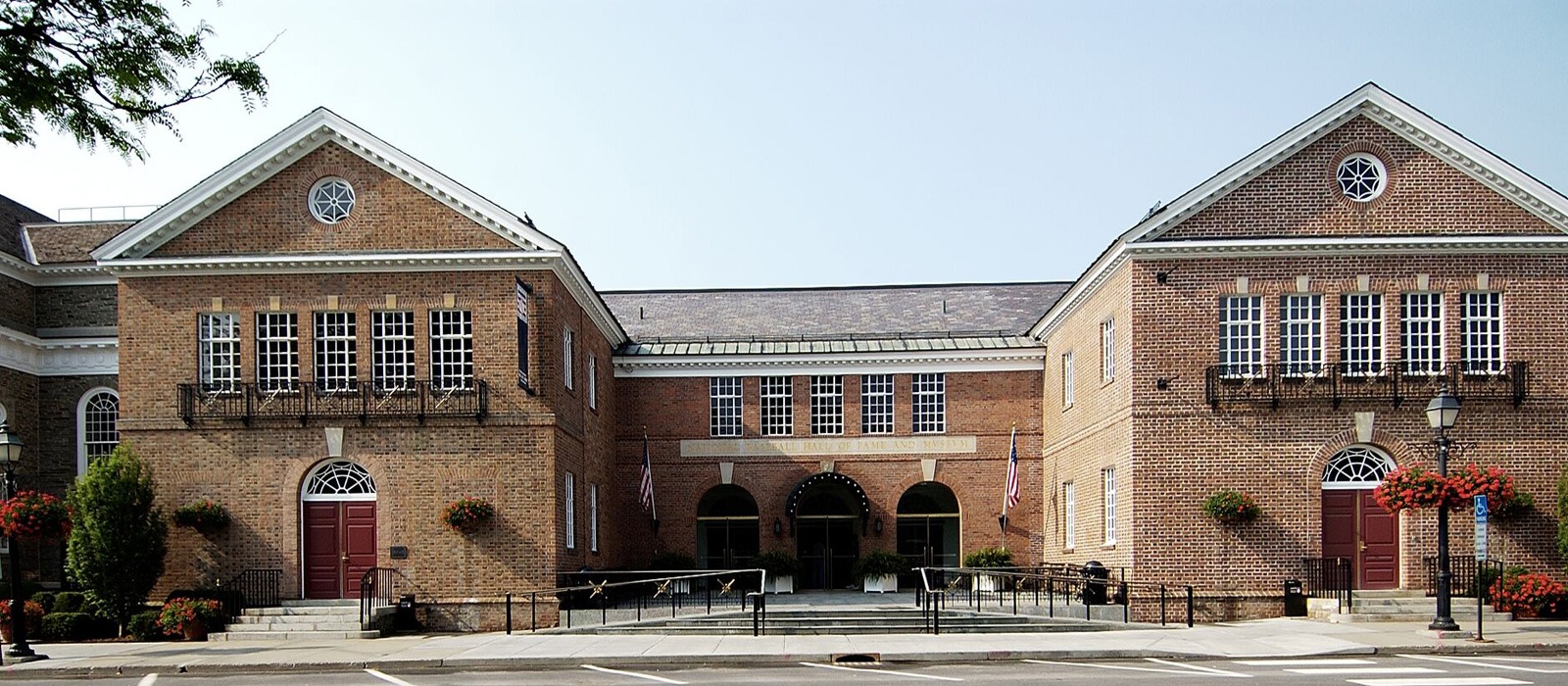
June 12, 1939: The National Baseball Hall of Fame and Museum opens, at 25 Main Street in Cooperstown, Otsego County, in Central New York. It was the official 100th Anniversary of baseball being invented in that town by Abner Doubleday.

Of course, just as most people already knew the world was round long before Christopher Columbus was born, most people already knew that Doubleday, a hero of the American Civil War, who did come from Cooperstown, didn't have a damn thing to do with baseball. The real reason the Hall, and its accompanying museum, were established there is that the Clark family, the unofficial powers-that-be (and still do) in Cooperstown, wanted a tourist attraction during, and that would outlast, the Great Depression. Mission accomplished.

The opening ceremony is presided over by the Commissioner of Baseball, Kenesaw Mountain Landis. It is broadcast nationwide on NBC radio.

In each of the past 4 years, there had been elections for the Hall of Fame. These were the inductees thus far:

* 1936: Ty Cobb, Babe Ruth, Honus Wagner, Christy Mathewson and Walter Johnson. "The First Five," or "The First Class," whose plaques are located in an X pattern, with leading vote-getting Cobb's in the middle, at the center of the back wall of the Hall's Gallery.
Top left: Christy Mathewson. Top right: Honus Wagner.
Center: Ty Cobb.
Bottom left: Babe Ruth. Bottom right: Walter Johnson.

* 1937: Players George Wright, Cy Young, Nap Lajoie and Tris Speaker; managers Connie Mack and John McGraw; and the 1st President of each major league, the National League's Morgan Bulkeley and the American League's Ban Johnson.

* 1938: One player, Grover Cleveland Alexander; and pioneers Alexander Cartwright and Henry Chadwick.

* 1939: Players Candy Cummings, Al Spalding, Cap Anson, Buck Ewing, Charles "Old Hoss" Radbourn, Willie Keeler, Eddie Collins and George Sisler; and executive Charles Comiskey. (Due to the unusual circumstances of his retirement, Lou Gehrig would be elected later in the year, after the Hall's opening.)

So there were 5 inaugural electees, and 25 inaugural inductees. Of these, 11 were still alive: Mack was 76 years old, Young 72, Wagner 65, Lajoie 64, Alexander and Collins 52, Johnson and Speaker 51, Sisler 46, and Ruth 44.

And of those 11 men, 10 posed for a commemorative photograph. Legend has it that Cobb arrived late, in order to spite someone, probably Landis. He was late, arriving a few minutes after the photo was taken, but it was due to circumstances beyond his control: He lived in California, and, transportation links being what they were at the time, he just plain didn't make it.
Top row, left to right: Honus Wagner, Grover Cleveland Alexander,
Tris Speaker, Nap Lajoie, George Sisler and Walter Johnson.
Bottom row, left to right: Eddie Collins, Babe Ruth, Connie Mack and Cy Young.
No, I don't know why the Babe has no tie and has his
collar sticking out over his lapels, like he's in the 1970s.

Sisler is probably the least well-remembered player of these 10, partly because he fell just short of 3,000 hits for his career; and partly because he played most of his career for a team that no longer exists in that form: The St. Louis Browns became the Baltimore Orioles in 1954.

Uniform numbers have only been worn since 1929, so most of the original 25 honorees are not honored with the retirement of their uniform number, because the number, let alone the honor, wasn't available. Wagner wore one as a coach, and was so honored; Johnson wore one as a manager, and Speaker and Collins wore them as coaches, but were not so honored.

Cobb, Johnson, Mack and Sisler are honored with statues at the current ballparks in their cities. Ruth is honored with one at the ballpark in his hometown. Young is honored with one at the site of one of his home ballparks. And Mathewson is honored with the renaming of his school's football stadium for him. (In college, he excelled at that sport as well.) Comiskey was once, but is no longer, honored with the naming of the ballpark he built for him.

In 1949, Ogden Nash, my grandmother's favorite poet, wrote "Line-Up for Yesterday" for Sport magazine, an alphabetical list of star players. For the letter Z, instead of citing a single player, since none with a last name starting with Z has been elected to the Hall of Fame, he wrote:

Z is for Zenith
The summit of fame.
These men are up there.
These men are the game.

For the letter I, he cheated a little:

I is for Me,
Not a hard-hitting man,
But an outstanding all-time
Incurable fan.

*

June 12, 1939 was a Monday. There were no scores on that historic day: MLB got the day off so the ceremony could be the focus, it was the off-season for the NFL and the NHL, and the NBA hadn't been founded yet.

Thursday, January 27, 2022

January 27, 1927: Cobb and Speaker Are Cleared

Ty Cobb (left) and Tris Speaker, 1927

January 27, 1927: Two of baseball's greatest players ever are cleared of wrongdoing, in what could have become the greatest scandal in the game's history -- worse than the Black Sox Scandal of a few years earlier, and worse than the Pete Rose gambling scandal of 1989.

Let's take a step back: On November 3, 1926, two of the top baseball players of the last decade -- in the case of one, of the last 2 decades -- resign as player-managers. George Sisler, arguably the greatest 1st baseman who has ever lived to this point, resigns as manager of the St. Louis Browns, but will remain a player. Dan Howley is named his replacement.

On the same day, Ty Cobb resigns as manager of the Detroit Tigers, and announces his retirement from playing baseball. Soon after, a 3rd legend retires as a player-manager, Tris Speaker of the Cleveland Indians.

Cobb still holds the all-time record for highest lifetime batting average, at .366. He had 4,189 hits, which was a record until 1985. A re-check of the records in 1981 forced corrections, as one of his games had previously been counted twice, giving a .367 average and 4,191 hits. However, Pete Rose was still celebrated as breaking the hits record with his 4,192, not his 4,190th. Cobb also stole 892 bases, which was considered a record until broken by Lou Brock in 1977.

Cobb was not, however, celebrated for his defense. He wasn't a liability in center field, but he wasn't great out there, either. Tris Speaker was, considered the best at playing the position until Joe DiMaggio came along. And he was also a great hitter, batting .344 lifetime, collecting 3,514 hits, including 792 doubles, which is still the all-time record. (Before the 1981 revision, he was listed at .345, 3,515 and 793.)

Sisler, known as "Gorgeous George" and "the Sizzler," batted .340 for his career, but just 2,812 hits, albeit 257 of them in the 1920 season, a record until Ichiro Suzuki got 262 in 2004. For his leaving of his managerial post, whom everything seems to have been above-board.
George Sisler

But with Cobb, "the Georgia Peach," and Speaker, "the Grey Eagle," it soon came out that they were coerced into retirement, because of allegations of game-fixing brought about by Hubert "Dutch" Leonard, a former pitcher managed by Cobb.

Not to be confused with the later pitcher Emil Leonard, also nicknamed "Dutch," Hubert, also nicknamed "Hub" (but pronounced "Hyoob"), was a lefthander who, with the Boston Red Sox in 1914, had an earned run average of 0.96. This was long listed in major league records as 1.01, but later revised and corrected. But even at 1.01, it was the lowest ERA for a single full season in major league history, and remains so. The closest anyone has come since is Bob Gibson, with 1.12 for the 1968 St. Louis Cardinals.
Dutch Leonard

Leonard helped the Red Sox win the 1915 and 1916 World Series, and pitched 2 no-hitters. However, he was hurt midway through the 1918 season, and did not pitch in that year's World Series. The Sox traded him to the Yankees, who soon traded him to the Tigers, with whom he played, alongside Cobb and, from 1921 onward, under him.

They already didn't like each other: In 1914, Leonard had hit Cobb in the ribs with a pitch. In his next-at-bat, Cobb dragged a bunt, and Leonard raced him to 1st base, where Cobb spiked him. They openly feuded, with Leonard once calling Cobb a "horse's ass" in front of the other players. Finally, on September 14, 1925, with permission from team owner Frank Navin, Cobb put Leonard on waivers. No team picked him up. He was only 33 years old, with a decent career record of 139-113, but his career was over.

Leonard claimed proof of Cobb and Speaker attempting to fix a game in 1919, so that the Tigers would finish 3rd and qualify for additional postseason money, existed in letters written to him by Cobb and Smoky Joe Wood, the former ace pitcher and hero of the 1912 season before injury wrecked his career, who'd been Speaker's teammate on the Boston Red Sox and again with the Indians.

Commissioner Kenesaw Mountain Landis held a secret hearing with Cobb, Speaker and Wood. A second secret meeting among the American League directors led to the unpublicized resignations of their managerial posts by Cobb and Speaker. Rumors of the scandal led Judge Landis to hold additional hearings, in which Leonard, interestingly, refused to participate.

Was he bought off? Or intimidated into silence? Maybe he had been lying all along, and he realized that Landis, a former federal judge, would see through him. It's also worth noting that Leonard waited an entire year to make his accusation.

Cobb and Wood admitted to writing the letters, but claimed that a horse-racing bet was involved, nothing to do with baseball, and that Leonard's accusations were in retaliation for Cobb's having released him. Speaker denied any wrongdoing.

And so, on January 27, 1927, Judge Landis cleared Cobb and Speaker of any wrongdoing, because of Leonard's refusal to appear at the hearings. Landis allowed both Cobb and Speaker to return to their original teams, but each team let them know that they were free agents, and could sign with any club they wanted.

Speaker signed with the Washington Senators for 1927, and Cobb with the Philadelphia Athletics. Speaker then joined Cobb in Philadelphia for the 1928 season, the last in the majors for each of them. (Sisler played on until 1930.) Cobb said he had come back only to seek vindication, and to say that he left baseball on his own terms.

Cobb's replacement as Tiger manager was George Moriarty, a former Tiger infielder who was, until then, an American League umpire. He remains the only man to hold the positions of player, umpire, scout and manager in Major League Baseball. He will also become the grandfather of Michael Moriarty, who becomes an actor, best known for playing a baseball player in the film Bang the Drum Slowly. Speaker's successor in Cleveland is Jack McCallister, and having succeeded Speaker is about the only noteworthy thing about him.

Leonard became a successful fruit farmer and winemaker in California, living until 1952. Speaker died in 1958, Cobb in 1961, and Sisler (remember, he was never accused) in 1973. Smoky Joe Wood, the other man involved in the alleged conspiracy, lived all the way until 1985.

*

January 27, 1927 was a Thursday. Baseball and football were out of season. Professional basketball was still very minor-league. But there were 4 games in the NHL:

* The New York Rangers beat the Montreal Canadiens, 3-2 at the Montreal Forum.

* The Ottawa Senators beat the Detroit Cougars, 3-1 at the Ottawa Auditorium. The Cougars became the Detroit Falcons in 1930, and the Detroit Red Wings in 1932.

* The Montreal Maroons beat the Toronto Maple Leafs, 5-3 at Maple Leaf Gardens in Toronto.

* And the Pittsburgh Pirates beat the Chicago Black Hawks, 4-2 at the Duquesne Gardens in Pittsburgh. The Pirates were done in by the Depression, first moving in 1930, becoming the Philadelphia Quakers, and then going out of business after one season.

Saturday, January 15, 2022

January 15, 1942: FDR's "Green Light Letter" Saves Baseball

January 15, 1942: Baseball gets official permission to be played in the upcoming season. This was not a given.

In 1918, with World War I in progress, Secretary of War Newton Baker issued "the work or fight order," meaning that men with jobs deemed "non-essential" had to, by July 1, either enlist in the U.S. armed forces or take a war-related job, or risk being drafted.

He granted an extension to September 2 for players in Major League Baseball. In August, the 16 team owners decided to end the regular season on September 2. In recognition of this, Baker granted a further extension, allowing for the World Series to be played.

At the time, no one knew when professional baseball would ever be played again. Fortunately, America's entry into the war made all the difference, and the Armistice was signed on November 11. This was too late for England to restart its Football League, meaning that they didn't play again until September 1919. But it allowed MLB to have a full 1919 season.

There was, as yet, no NFL or professional basketball league. However, despite being nearly fully made up of Canadians, who were in the war as early as August 1914, the NHL played full seasons throughout the war: 1914-15, 1915-16, 1916-17, 1917-18 and 1918-19. Canadian football, however, did shut down for the duration.

When Pearl Harbor was bombed on December 7, 1941, the baseball season was a little over 4 months away. In 1920, the office of the Commissioner of Baseball had been established, and Kenesaw Mountain Landis, a former federal Judge, was appointed to it. He was given ultimate power by the team owners: His word was law. The other owners never challenged him, the way they sometimes tried to bully later Commissioners, reminding them that they appointed the Commissioner, and they could remove him if he didn't do their bidding. But they trusted Landis -- or, perhaps, feared him.

Landis still held the post when America entered World War II, 20 years later. He remembered how the 1918 season had been cut short, under similar conditions. He wondered if baseball should continue while America's young men were fighting and dying overseas.

Landis knew that Franklin Delano Roosevelt, the President of the United States, and thus Commander-in-Chief of all U.S. armed forces, was a baseball fan, enough of one to have thrown out the ceremonial first ball at all 9 Washington Senators Opening Days since he took office. With the ratification of the 22nd Amendment limiting a President to 2 terms, that record is now, barring that Amendment's repeal, unbreakable.

But he also knew that one word from the President could put baseball on hold "for the duration." So, on January 14, 1942, Landis wrote to FDR, asking him what do do. He said, "If you believe we ought to close down for the duration of the war, we are ready to do so immediately. “If you feel we ought to continue, we would be delighted to do so. We await your order."

FDR was given Landis' letter the next day. He answered immediately. I have not changed the text, either the spelling, the grammar, or the fact that FDR seriously underestimated the amount of time an MLB game would end up taking in the early 21st Century:

My dear Judge:

Thank you for yours of January fourteenth. As you will, of course, realize the final decision about the baseball season must rest with you and the Baseball club owners -- so what I am about to say is solely a personal and not an official point of view.

I honestly feel that it would be best for the country to keep baseball going. There will be fewer people unemployed and everybody will work longer hours and harder than ever before.

And that means that they ought to have a chance for recreation and for taking their minds off their work even more than before.

Baseball provides a recreation which does not last over two hours or two hours and a half, and which can be got for very little cost. And, incidentally, I hope that night games can be extended because it gives an opportunity to the day shift to see a game occasionally.

As to the players themselves, I know you agree with me that individual players who are of active military or naval age should go, without question, into the services. Even if the actual quality of the teams is lowered by the greater use of older players, this will not dampen the popularity of the sport. Of course, if any individual has some particular aptitude in a trade or profession, he ought to serve the Government. That, however, is a matter which I know you can handle with complete justice.

Here is another way of looking at it -- if 300 teams use 5,000 or 6,000 players, these players are a definite recreational asset to at least 20,000,000 of the fellow citizens -- and that in my judgment is thoroughly worthwhile.

With every best wish,

Very sincerely yours,
(Signature: Franklin D. Roosevelt)

Landis received the President's letter, and told the nation's sportswriters that baseball would continue: "We'll play as long as we can put nine men on the field." FDR's letter became known as "The Green Light Letter": In traffic lights, red means, "Stop," and green means, "Go."

Many players enlisted, or were drafted. Hall-of-Famers like Joe DiMaggio, Ted Williams, Bob Feller and Hank Greenberg lost 3 or 4 prime seasons to service. But Feller insisted that his service meant more to him than baseball. He also gave the lie to all those athletes and coaches who compared the two: "Anybody who says that sports is war has never been in a war." And Warren Spahn, who reached the major leagues as a pitcher in 1942, but didn't win a game before going into the Army, received a Bronze Star for his service at the Battle of the Bulge, and insisted his service matured him into the pitcher who, despite being 25 years old when he got his 1st major league win, ended up winning 363 games, more than any other pitcher in the post-1920 Lively Ball Era.

Starting in 1943, Spring Training was limited to the Northeast and the Midwest due to wartime travel restrictions. In 1945, despite V-E Day having come on May 8, the All-Star Game was canceled. V-J Day came on August 14, and baseball was back to normal for 1946.

Although FDR let baseball continue, he did not throw out the ceremonial first ball on any more Opening Days, thinking the President shouldn't do so while the war was on. Vice President Henry Wallace did it in 1942 and 1944. Paul McNutt, a former Governor of Indiana who FDR had appointed the nation's "Manpower Commissioner," did it for Opening Day 1943. The 1945 opener came a few days after FDR's death, and the Speaker of the House of Representatives, Sam Rayburn of Texas, did the honors.

*

January 15, 1942 was a Thursday. This was also the day that the Truman Committee, chaired by future President Harry Truman, investigating fraud in the War Department, issued its report. I have a separate entry for that event.

Baseball, of course, was out of season. So was football. And the NBA hadn't been founded yet. There were 2 games played in the NHL. The Brooklyn Americans, soon to fold, lost to the Chicago Black Hawks, 7-4 at Madison Square Garden. And the Toronto Maple Leafs beat the Montreal Canadiens, 3-2 in overtime at Maple Leaf Gardens.

December 31, 1999 & January 1, 2000: The Millennium

December 31, 1999:  The Millennium arrives. The people of planet Earth survived. At a terrible cost. But we hadn't destroyed ourselves. ...