Showing posts with label batman. Show all posts

Saturday, December 10, 2022

December 10, 2019: "Crisis On Infinite Earths" Occurs On The CW

Left to right: David Harewood as J'onn J'onzz, the Martin Manhunter;
Ruby Rose as Kate Kane, Batwoman;
Caity Lotz as Sara Lance, the White Canary,
Melissa Benoist as Kara Zor-El/Kara Danvers, Supergirl;
Grant Gustin as Barry Allen, the Flash,
Cress Williams as Jefferson Pierce, Black Lightning;
and Tyler Hoechlin as Kal-El/Clark Kent, Superman.

December 10, 2019: Crisis On Infinite Earths occurs on television.

The CW Network, which had been airing the "Arrowverse" series of superhero TV shows since 2012, has its biggest event ever, an adaptation of the 1985 DC Comics series Crisis On Infinite Earths, which consolidated "Earth-One," "Earth-Two," and all the other Earths that had appeared in their stories onto a single Earth.

The TV version did the same. It was a "crossover" between 5 shows, bringing back many actors who had previously played DC superheroes in movies and on TV shows:

* Part 1: Supergirl, airing on December 8. Mar Novu, the Monitor, warns that the Anti-Monitor (both characters played by LaMonica Garrett), is using antimatter waves to destroy the Earth in "parallel universes." He warns that seven "Paragons" must be found, who can save the "Multiverse."

Guest stars include Burt Ward, the Dick Grayson/Robin of the 1966-68 ABC Batman series, said to live, naturally, on Earth-66; and Robert Wuhl, one of the stars of the 1989 Batman film, said to live on Earth-89. Both were shown only briefly. Neither of the Batmen then knew were: 1966's Adam West had died in 2017, and 1989's Michael Keaton was unavailable. He has since filmed a return to the role for the film The Flash, which has been delayed to 2023.

Supergirl (Melissa Benoist), known on her homeworld of Krypton as Kara Zor-El and on Earth-38 as journalist Kara Danvers, is found to be the Paragon of Hope. J'onn J'onzz (David Harewood), known as the Martian Manhunter, is the Paragon of Honor. Barry Allen (Grant Gustin), known as The Flash on Earth-1, is the Paragon of Love.

In this episode, Oliver Queen of Earth-1 (Stephen Amell), known as the Green Arrow, sacrifices his life to evacuate people from the doomed Earth-38. A former girlfriend of his, Sara Lance (Caity Lotz), known as the White Canary, and leader of the time-traveling team known as the Legends of Tomorrow, is found to be the Paragon of Destiny.

(For those of you familiar with the comic books but not the shows, Sarah is a character created for Arrow. There have been characters on the show called the Black Canary, who, in the comics, is Dinah Lance, and eventually marries Queen. On the show, his wife was Felicity Smoak; in the comics, Felicity is more identified with the hero Firestorm, who existed on the shows but had no connection to her.)

* Part 2: Batwoman, airing on December 9. It is believed that another Paragon is a version of Batman. For legal reasons, in DC-themed productions outside the DC Extended Universe, Batman can be mentioned, the Batsuit can be shown, and Bruce Wayne can be portrayed out of costume, but Bruce cannot be shown wearing the Batsuit.

Batwoman is Kate Kane (Ruby Rose), Bruce's cousin, who, on Earth-1, took up "the mantle of the Bat" after Bruce disappeared. The show didn't definitively say what happened to Batman, or any version of Robin, or Commissioner Jim Gordon, or his daughter, Barbara Gordon, a.k.a. Batgirl. It did mention that Alfred Pennyworth, Bruce's butler and closest ally in Bat-operating, is alive, but has moved back to London.

Kevin Conroy, who had long voiced Batman in the DC Animated Universe, finally portrays a live-action version of Bruce. But his Earth-99 Bruce is based on the 1986 comic miniseries The Dark Knight Returns, except he took it a step further: He used Kryptonite to not just defeat Superman in a fight, but kill him.

And when Kate and Kara find this out, they confront Bruce. Bruce uses the same Kryptonite in an attempt to kill Kara. (According to comic book canon, this should not work: It has been established that Kryptonite only affects Kryptonians from its own universe, not any other. This carries over into Marvel Comics: Each set of Infinity Stones can only work in its own universe.) Kate defends her, and Bruce, weakened from his decades of combat, loses the fight, and falls onto his Batcomputer, his exoskeleton combining with the computer circuits to electrocute him.

Upon returning to the orbiting Waverider, Kara repeats what she told Kate: "This guy's not a paragon of anything." The Monitor now understands his mistake: No version of Bruce is the Paragon of Courage: Kate is.

This episode also features the Earth-38 versions of Clark Kent (Tyler Hoechlin), known as Superman; and his wife, Lois Lane (Elizabeth "Bitsie" Tulloch), both reporters for the Metropolis Daily Planet; and the Earth-1 Flash's wife, Iris West Allen (Candice Patton), also a journalist, in the Allens' hometown of Central City. (Apparently, there were no Kryptonians on the Arrowverse's Earth-1.) Clark, Lois and Iris go off to search alternate Earths to find another version of Superman, who would be the Paragon of Truth.

But the Earth-38 Lex Luthor (Jon Cryer), Superman's arch-enemy, now has the means to kill not just the Superman he knows, but all Supermen on all Earths. And every time Clark, Lois and Iris get to a new Earth, they're too late to save that Earth's Superman. When they get to Earth-75, the Kents even see a TV screen showing Hoechlin and Tulloch copying the scene, complete with Superman's cape hanging like a flag from a steel pole, from the 1992 comic issue The Death of Superman. (Which turned out to be temporary.)

Finally, they get to another Clark Kent in time, on Earth-167. This one is played by Tom Welling, who played Clark in the 2001-11 WB/CW series Smallville. But they can't recruit him, because Luthor arrives and sends them away.

Turns out, Luthor can't kill this Superman: In this universe, unlike the one that is home to Hoechlin's and Tulloch's counterparts and their infant son Jon, this Superman had to give up his powers to have children with Lois (Erica Durance also reprising her role in Smallville), and Kryptonite has no effect on humans, which this Clark now is. (That's not quite true: In the comics, prolonged exposure to Kryptonite, which is radioactive, can cause cancer.) Clark is still stronger than Lex, though, and manages to deck him, before he escapes to another Earth.

On Earth-96, the main Clark and Lois, and Iris, find a Clark. This one is played by Brandon Routh, who played Clark/Superman in the 2006 film Superman Returns, and this episode makes canon what that movie had implied: He is the same Superman played by Christopher Reeve in 4 movies from 1978 to 1987.

(How the 2006 film, which definitively displays dates from that year, can take place only 5 years after Superman II, released in 1981, with the scenery definitely showing a late Disco Period aesthetic, is never explained. Nor is the fact that Superman III, released in 1983, definitively states that their Clark and Lana Lang graduated from Smallville High in 1965.)

But he's also based on the 1996 comic miniseries Kingdom Come, in which Superman lost all the people who mattered to him, including his Lois. There's also an element from the 2013 video game Injustice: Gods Amongst Us, in that the attack was launched by Batman's arch-nemesis, the Joker (who couldn't be named, again for legal reasons, but the reference was clear.) Unlike in Injustice, this Superman didn't take over the world to rid it of crime, but retained his humanity, proving himself to be a paragon (Upper- or lower-case). And he agrees to help.

Luthor intervenes, and turns him against Hoechlin's character, deciding that it would be more fun to watch Superman kill Superman. Iris knocks Luthor out, and Lois reminds the older Superman of all that he stood for, which snaps him out of it. It may be Lois Lane's finest moment, in any medium. He drops a reference to the Clark Kent vs. Superman fight in Superman III: "This is the second time I've gone nuts and fought myself."

* Part 3: The Flash, airing on December 10. Jefferson Pierce (Cress Williams), known as Black Lightning, is brought into the story, having been saved from the destruction of Earth-4. So is the title character from the 1990-91 CBS series The Flash (John Wesley Shipp). This version of Barry Allen, from Earth-90, much as the comics' Earth-One version did in 1985, sacrifices himself, telling the younger one of Earth-1, "The prophecy said the Flash had to die. It didn't say which one."

(Shipp has also played that Barry's father, Henry Allen; and Jay Garrick, another alternate-Earth Flash, reflective of the original DC Flash, the Earth-Two or "Golden Age" Flash.)

The 7th and last Paragon is identified: Dr. Ryan Choi, a scientist on Earth-1, is the Paragon of Humanity. In the comics, Choi takes over for Dr. Ray Palmer as The Atom. At this point in the Arrowverse, Palmer, of Earth-1, is still The Atom -- and is also played by Routh, causing some confusion within the show, when people who know Ray see the older Superman, especially when the two men are together. Supergirl even tells him he's "looking jacked," while Superman tells him, "That's your cousin, sort of."

But all is lost: The heroes can't stop the antimatter wave from destroying the last Earth, and the Waverider. Just before that can happen, Harrison Wells (Tom Cavanaugh), a member of the Earth-1 Flash's tech team, and temporarily granted powers, transports the Paragons to the Vanishing Point, which exists outside time and space, where the Anti-Monitor can't reach them, buying them time to come up with a last-ditch plan.

In Part 2, Conroy's Bruce Wayne said there was no hope. But in Part 3, Routh's Superman said, "Even in the darkest times, hope cuts through. Hope is the light that lifts us out of the darkness." Something that DCEU director Zack Snyder, based on the films he's made, cannot possibly understand. Hoechlin's Superman backs this up: Just as the antimatter wave hits the Waverider, he nods to everyone, giving them his quiet confidence that, somehow, in a way that even he cannot yet imagine, everything is going to be okay.

But for the Paragons, who now appear to be the only 7 living things in the entire Multiverse, it's not okay. And, just when you think things literally can't get any worse, Routh's Superman fades away -- replaced by Luthor and his Book of Destiny. Talk about a cliffhanger: Part 4 won't air for another month. Those of us watching it first-run had to go through the rest of the holiday season, including Christmas and New Year's Eve and Day, before finding out what happens.

* Part 4: Arrow, airing on January 14, 2020. There is hope. Oliver Queen comes back, as The Spectre. He shows the Paragons how to build their power. In the process, the Flash meets another Flash, the one played by Ezra Miller in the DCEU, the 1st indication that the Arrowverse acknowledges the DCEU's existence, and vice versa.

Oliver takes the Paragons to "the Dawn of Time" to battle the Anti-Monitor. He tells them, "I'll light the spark, you fan the flames." While they -- 6 heroes and Luthor, who wants to restart the universe so he can rule it -- fight the Anti-Monitor's "parademons," Oliver, as The Spectre, fights the Anti-Monitor himself.

He delivers a variation of his old line to use on criminals in Star City: "You have failed this city!" He tells the Anti-Monitor, "You have failed this universe!" He looks up into the sky, and beams shoot out of his eyes, breaking through the cloud cover. The Anti-Monitor and his parademons disappear, and a new universe is created, at the cost of Oliver's life. (One more episode of Arrow aired, closing the 1st Arrowverse show after 8 seasons, showing Oliver's funeral, and his place in the afterlife.)

* Part 5: DC's Legends of Tomorrow, also airing on January 14. If you've never seen LoT, let me put it this way: It was the silliest show on television, but that made it fun.

Kara wakes up, and the month they spent at Vanishing Point has, well, vanished. It's January 14, 2020, and Earth is back to normal, with no one acting as if anything had ever been wrong. It's as if the Crisis had never happened. At least they got to celebrate Christmas and New Year's.

But then Kara sees that Luthor has been awarded the Nobel Peace Prize. Everybody, even her adoptive sister Alex Danvers (Chyler Leigh), thinks Luthor is a wonderful guy. Luthor had used his place as "the Paragon of Truth" to change people's perception of him.

And then the Flash shows up, and he and Supergirl each wonder, "What are you doing on my Earth?" Each had assumed that Oliver's act had restored all the Earths. But this is not the case. An old man walks up to them and asks them for their autographs, and he explains that they've always existed on the same Earth. He's played by Marv Wolfman, who, 35 years earlier, had written the original Crisis miniseries. (It was drawn by George Pérez, who was also, referenced, as the site of the final battle was said to be Perez Landing. He died on May 6, 2022, at which point Marv Wolfman was still alive.)

J'onn J'onzz uses his psionic abilities to show every superhero who wasn't a paragon what had happened, because they're still needed: The Anti-Monitor was returning for a rematch. At S.T.A.R. Labs in Central City, the home base for Team Flash, Harrison Wells, Ray Palmer and Ryan Choi design a "shrink bomb," based on Palmer's Atom technology, to send the Anti-Monitor to "the microverse," where he can do no harm to the larger multiverse. But the fight starts, and it looks like they won't have time to finish it.

Fortunately, The Flash is the fastest man alive, and a certified scientific genius in his own right. He runs to S.T.A.R. Labs, and is shown the blueprints and the parts for the bomb. He puts it together in 5 seconds. Ray puts on his Atom suit and flies back with him.

In the 1985 comic miniseries, Supergirl was one of the characters who sacrificed their lives to stop the Anti-Monitor. Just as it looks like Kara is in the process of doing it, Ray arrives, gives her the bomb, and says, "Throw it like a girl!" She does, and it hits the Anti-Monitor point-blank, and he and his parademons are now gone -- apparently forever.

The miniseries concludes with Barry using an old S.T.A.R. Labs building as the headquarters for a new team, the Justice League. There is a round table, as in King Arthur's Camelot (and in the DCEU's version of Wayne Manor at the end of the Justice League film). Oliver's costume is set up in a glass case, fronted by an eternal flame, as at President John F. Kennedy's grave, lit by Kara's heat vision. And a seat at the table is kept empty in Oliver's memory.

The 7 founding members are Superman, Supergirl, Batwoman, the Flash, the Martian Manhunter, Black Lightning and the White Canary. Clark, Kara, Kate, Barry, J'onn, Jefferson and Sara. Five of the seven Paragons, all but Ryan and the older Superman, with this Earth's Superman in his place.

A postscript showed that, contrary to what these heroes believe at this point, there are other Earths, including Earth-96, the one on which Routh's Superman lived. He's shown recreating the flying-over-Earth scene at the end of every Superman movie between 1978 and 2006, showing that he's still alive -- but also that the background of his S-crest, black in honor of those he lost, is now yellow again, suggesting that everyone he lost has been restored.

But no mention was made of Earth-66, on which Adam West's Batman and Burt Ward's Robin lived -- Ward wasn't shown in this sequence as he was in the earlier one, and, as I said, West was already dead. 

And nowhere in the miniseries was any mention made of the Earth on which Lynda Carter's Wonder Woman lived in her 1975-79 series (1975-77 on ABC, 1977-79 on CBS). Carter has appeared in the Arrowverse, but not as Princess Diana/Diana Prince/Wonder Woman. I'd like to believe that Ward's Dick Grayson and Carter's Diana Prince are alive and well. (A non-canon comic book series would combine the stories, titled Batman '66 Meets Wonder Woman '77, suggesting that, in her World War II adventures, Wonder Woman met Bruce as a boy, before his parents were killed.)

In the Arrowverse, hints have been dropped at the existence of Wonder Woman, Aquaman, and the Green Lantern Corps, but none of them have ever appeared. Hawkman and Hawkwoman have, but, unlike in the comics, were not shown with this Justice League.

But while this version of Crisis On Infinite Earths was far from perfect, it was a true gift to so many fans of the DC superheroes, myself included. Something that Snyder and the people working with him refuse to accept.

In hindsight, it is interesting that the greatest crisis in each brand's live-action history was set in 2019: For Marvel, "The Snap" by Thanos in the film Avengers: Infinity War, on May 31 in their continuity, though the film was released on April 27, 2018; and for DC, the titular event in their miniseries Crisis On Infinite Earths, on December 10, the day it aired on The CW Network. And, in both cases, the man who was then President in real life, Donald Trump, couldn't save anyone.

In "The Marvel Cinematic Universe," the heroes had to restore half the life in the universe, and they did. In the Arrowverse, the heroes had to restore all the life in all the universes, and they had to do it without a Superman, a Batman or a Wonder Woman. And they did.

DC > Marvel. All day. Any day.

One last note: Whatever the real reason was, Ruby Rose left Batwoman after one season. A new character, Ryan Wilder, played by Javicia Leslie, was given "the mantle of the Bat," and became the new Batwoman. The character of Kate Kane was recast with Wallis Day, and she appeared only briefly, letting Wilder continue as Batman until the show's cancellation.

*

December 10, 2019 was a Tuesday. On our Earth, where a three-game losing streak is considered a "crisis," there were 4 games played in the NBA:

* The New York Knicks lost to the Portland Trail Blazers, 115-87 at the Moda Center in Portland. Damian Lillard scored 31 points for the Blazers.

* The Philadelphia 76ers beat the Denver Nuggets, 97-92 at the Wells Fargo Center (now the Xfinity Mobile Arena) in Philadelphia.

* The Charlotte Hornets beat the Washington Wizards, 114-107 at the Spectrum Center in Charlotte. Dāvis Bertāns scored 32 for the Wizards, but Devonte' Graham scored 29 for the Hornets.

* And the Miami Heat beat the Atlanta Hawks, 135-121 in overtime at the American Airlines Arena (now the Kaseya Center) in Miami. Kendrick Nunn scored 36 for the Heat, Duncan Robinson 34, and Bam Adebayo 30.

There were 12 games played in the NHL:

* The New Jersey Devils lost to the Dallas Stars, 2-0 at the American Airlines Center in Dallas.

* The New York Rangers lost to the Los Angeles Kings, 3-1 at the Staples Center (now the Crypto.com Arena) in Los Angeles.

* The Tampa Bay Lightning beat their arch-rivals, the Florida Panthers, 2-1 at the BB&T Center (now the Amerant Bank Arena) in the Miami suburb of Sunrise, Florida.

* The Nashville Predators beat the San Jose Sharks, 3-1 at the Bridgestone Arena in Nashville.

* The Buffalo Sabres beat the St. Louis Blues, 5-2 at the KeyBank Center in Buffalo.

* The Montreal Canadiens beat the Pittsburgh Penguins, 4-1 at the PPG Paints Arena in Pittsburgh.

* The Anaheim Ducks beat the Minnesota Wild, 3-2 in a shootout at the Xcel Energy Center in St. Paul.

* The Winnipeg Jets beat the Detroit Red Wings, 5-1 at the Canada Life Centre in Winnipeg.

* The Calgary Flames beat the Arizona Coyotes, 5-2 at the Gila River Arena (now the Desert Diamond Arena) in the Phoenix suburb of Glendale, Arizona.

* The Vegas Golden Knights beat the Chicago Blackhawks, 5-1 at the T-Mobile Arena outside Las Vegas in Paradise, Nevada.

* The Carolina Hurricanes beat the Edmonton Oilers, 6-3 at Rogers Place in Edmonton.

* And the Toronto Maple Leafs beat the Vancouver Canucks, 4-1 at Rogers Arena in Vancouver.

Thursday, December 1, 2022

December 1, 1986: "The Dark Knight Returns" is Published

December 1, 1986: Batman: The Dark Knight Returns #4 is released by DC Comics, written by Frank Miller, drawn by Klaus Janson, and colored by Lynn Varley. It concludes Miller's story of Bruce Wayne coming out of retirement, as his hometown of Gotham City has fallen apart without him to watch over it as the Caped Crusader. As far as I know, this is the first publication to call Batman "the Dark Knight."

DKR (for short) #1, titled "The Dark Knight Returns," tells of Bruce realizing that he has to get back out there, despite being 55 years old and having no Robin: He and his original Dynamic Duo partner, Dick Grayson, are estranged; and Dick's replacement, Jason Todd, had been killed in action some time before, implied to be the reason Bruce hung up the cowl. (Note: This story was published 2 years before DC showed Jason being killed by the Joker in the storyline Batman: A Death in the Family.)

Batman manages to foil a terrorist plot by Harvey Dent, the former District Attorney known as Two-Face: Although his disfigurement has been cured and his face restored, Harvey has totally given in to the bad side of his personality.

DKR #2, "The Dark Knight Triumphant," shows Batman taking on the Mutants, the gang that has taken control of the streets of Gotham, but he's too old, and their gigantic leader kicks his ass. (Note: This story was published 7 years before DC introduced the huge villain Bane, who wore Batman down physically and psychologically, before breaking his back in the storyline Batman: Knightfall.)

He is saved by Carrie Kelley, a 13-year-old girl who idolizes him, and has taken to fighting crime wearing a copy of a Robin costume. Avoiding the Mutants' notice, she drags him back to the Batmobile, and, with a now-elderly butler Alfred Pennyworth guiding her over the phone, gets Bruce back to the Batcave. Bruce recovers, goes out, and wins a rematch. (Batman fans like to say, "Batman always wins." He loses occasionally, but always seems to win the rematches.) Now, predictably, "The Mutants" are "The Sons of the Batman."

DKR #3, "Hunt the Dark Knight," shows that it's now the world that's falling apart. In a story that resembles the Cuban Missile Crisis, the Caribbean island of Corto Maltese is a flashpoint in the Cold War. (Remember: Despite Batman being old, the story is set in what was then the present day, so the Soviet Union is still a threat.) And the President, a thinly-veiled caricature of the real-life President at the time, Ronald Reagan (he keeps a jar of mints on his desk instead of jelly beans), is in over his head.

Fortunately, the U.S. government has an ace in the hole, to protect their interests. At some point in the past, something like the later Marvel Comics' "Superhero Registration Act" had been passed, ordering all costumed crimefighters to either work for the government, retire, or be considered outlaws. Most retired. Only one chose to work for the government: Superman. Batman doesn't like this.

But Batman has a bigger problem: The Joker has broken out of Arkham Asylum, and the final battle he had long feared -- and the Joker seemed to want -- has come: Kill or be killed. Batman breaks the Joker's neck, leaving him paralyzed, but alive. The Joker expresses his disappointment, and twists his head to finish the job, making it look like Batman actually did it. And now, he's on the run.

DKR #4 is titled "The Dark Knight Falls." Miller had said that every hero's journey has an ending, using the examples of medieval figures King Arthur and Beowulf sacrificing themselves in a final battle, and wrote this chapter as a "last Batman story." The police, no longer under the command of the retired Commissioner Jim Gordon, and the federal government both want Batman in custody, and the feds are ready to send Superman after him.

But the Cold War turns hot, and a nuclear missile heads toward America. Superman stops it, but is seriously weakened. Still, the electromagnetic pulse set off by the explosion knocks out America's electricity, and Batman takes Carrie/Robin and the Sons of the Batman to the Wayne Manor stables, and the horses become the new Batmobiles as Bruce leads them in settling things down in Gotham.

The final showdown takes place in Crime Alley, where Batman's parents had been gunned down 46 years earlier. (Bruce's age when Thomas and Martha had been killed had been hinted at before, but, while this story is not canon in the main DC storyline, his age at the time is given in this story as 9.) Bruce has decided to die where "Batman was born." He stands in an armored version of his Batsuit, and attacks Superman with high-voltage electricity. Even against a weakened Superman, this doesn't work, and Superman smashes his helmet, and another punch breaks 3 of his ribs.

Correctly guessing this, Batman is properly prepared. He cheats. He has Green Arrow fire an arrow at Superman. It explodes, spraying him with Kryptonite dust. And Batman beats Superman to a pulp. And he says, "I want you to remember, Clark. In all the years to come, in your most private moments, I want you to remember, my hand, at your throat. I want you to remember the one man who beat you."
And then Batman has a heart attack and drops dead. This follows the destruction of Wayne Manor, meant to cover up all his secrets (which doesn't work, as Bruce is exposed as Batman anyway), and the death of Alfred from a stroke, as his boss dies. Alfred's last thought: "Of course, how utterly proper."

Batman wins. Some victory, huh?

As Clark Kent, still with a bruised face, Superman attends the funeral of Bruce Wayne. The body had been claimed by "his one living relative, a cousin." Selina Kyle, the former Catwoman, accuses Clark of killing Bruce, and has to be restrained by Gordon. (Apparently, both Jim and Selina already knew Clark's secret identity, as well as Bruce's.)

Clark starts to walk away, but then, his super-hearing picks up a heartbeat. He turns, and comes face-to-face with the cousin. No, not Kate Kane, a.k.a. Batwoman. (That character wouldn't debut for another 20 years.) But it is a young woman with red hair, wrapped in black. It's no cousin: It's Carrie. He winks at her, to let her know that he knows, and that he's okay with it. We can't tell, but maybe Carrie is smiling under her veil. 

(The wink may also be a nod to a story that had been published earlier in the year: Whatever Happened to the Man of Tomorrow?, the farewell to the pre-Crisis On Infinite Earths Earth-1 Superman, set 10 years after Superman's alleged death, with him having a new identity, married to Lois Lane, and having a son who shows a sign of having superpowers.)

And the last scene is in the Batcave, or what's left of it: Bruce, very much alive, with Carrie by his side, discussing strategy for rebuilding and protecting Gotham with the Sons of the Batman. After a few mentions throughout the story of "This would be a good death... ," he says, "This will be a good life. Good enough."

In other words, after making a big deal of wanting Batman to have a final battle and die, Miller copped out, and kept Batman alive.

And the story has since been ruined by sequels, each installment more ridiculous than the last, betraying the sensibility of this story.

*

DKR is an "Elseworlds" story, taking place outside the official DC Comics canon, although the Elseworlds imprint wouldn't debut until 1989, with Batman: Gotham By Gaslight, showing Batman in 1889, taking on, while being accused of being, Jack the Ripper.

DKR was the story that Batman fans had waited their whole lives for: The story that made Batman, not Superman, the Number 1 superhero. The story that showed that "Batman always wins." The story that proved that Batman could even beat Superman. That Batman was better than Superman, because Superman is a "boy scout" (to use the old insult against him). That Superman, as Batman puts it in this story, "always said yes to anybody with a badge or a flag." That Batman was the ultimate badass.

Let's get something straight: Batman can't beat Superman. There is no way in hell that it could ever happen.

Batfans who want their guy to beat Superman always cite the fight scene at the end of DKR. And, I have to admit, the Superman in that story (not the one we know, as things have changed tremendously from canon) is a bit of a jerk, who deserved to be taught a lesson.

But here's how that scene would have played out, if Frank Miller understood Superman:

* Batman fires a laser cannon at Superman. Superman is knocked back, but gets up, and says, "Bruce, is that the best you can do?"

* Batman zaps Superman with millions of volts of electricity. (Ripped off from an early Fantastic Four story where The Thing did it to The Hulk, after The Hulk shoved him down a manhole.) Superman is surprised, but says, "Seriously? I just survived a nuke, Bruce."


* Green Arrow launches his arrow. Superman's super-hearing picks up the sound. His telescopic vision sees the arrow, and his X-ray vision sees what's inside. He can do this faster than a speeding bullet, let alone a speeding arrow, because his senses have the same super-speed as the rest of him. He gets out of the way, the arrow lands harmlessly, and he blows the Kryptonite dust out of the way.

* Batman is screwed. His ace in the hole is completely wasted, and he has no weapons left except his mind and his hand-to-hand combat abilities. Both of which are completely wasted on a Kryptonian.


Batfans believe "Batman always wins." Why? Because he's smarter, and "Because he's the goddamn Batman, that's why."

Except Batman isn't smarter than Superman. The yellow Sun of the Earth, compared with the red sun of Krypton, makes Superman's brain a supercomputer, the likes of which no Batman or Batcomputer can match.

You want to know what would happen if they tried to solve the same crime? Batman would sit on a rooftop, waiting for the bad guys to show up. Except they wouldn't, because Superman has used his super-senses to track them down, and has already taken them to jail.

You want to know what would happen if they played each other in chess? I asked my father this question, not long before he died. He was a comic book fan going back to his youth in the 1950s, had 2 science degrees from the school now known as the New Jersey Institute of Technology, and (unlike myself, to whom he never seemed to be able to pass on this part of his knowledge) was a decent chess player.

Dad reminded me of Superman's Sun-aided brain, and his super-speed. He said that Batman would be ready to pull all kinds of maneuvers, except that, in the time it took Batman to set up the board, Superman could have read a dozen books on chess strategy, and would know every move that Batman could make.

It's no contest. And even if Batman were smarter than Superman, which he isn't, he still wouldn't win a fight. A big part of Batman's schtick is sneaking up on his opponents. You can't sneak up on someone with super-speed. Or super-hearing, for that matter. And Batman's martial arts expertise is useless against Superman's quickness, and his invulnerability.

Trying to attack Superman from a distance wouldn't help. What's Batman going to do, throw a Batarang at Superman? His speed would allow him to see it, and, whether laced with Kryptonite or anything else, he'd use his heat vision to melt it, or his super breath to freeze it.

And let's be very clear about this: Kryptonite is not an ace in the hole. Superman sometimes faces a guy named Kryptonite Man, and another guy named Metallo, who has a human brain but a robot body powered by Kryptonite. Superman fights these guys, and he still finds a way to win.

And Kryptonite doesn't kill a Kryptonian instantly. It hurts him. It weakens him. But even if Superman had just 1 percent of his strength left, in spite of the pain he would be in, he would still be far stronger than an average human, and Batman would still be pathetically overmatched.

So any Kryptonite that Batman might have only has the power that the writers give it, so it's not a guaranteed knockout. The "ace" can be a higher card than a king, but it could be no better than a one, like every other attack Batman could use.

DKR has been adapted for an animated film. Elements of it were used for the 2012 film The Dark Knight Rises (although no other superhero appeared in it), the 2016 film Batman v. Superman: Dawn of Justice, and The CW's TV adaptation of Crisis On Infinite Earths, showing an alternate Earth where Batman took it one step further, and killed Superman, using the "badge or a flag" line to explain it to Supergirl and Batwoman.

*

December 1, 1986 was a Monday. Baseball was out of season. There were no NBA games played that day. Two games were played in the NHL, both in Quebec. The Washington Capitals beat the Montreal Canadiens, 2-1 at the Montreal Forum. Alan Haworth scored the winning goal, 1:48 into overtime. And the Quebec Nordiques beat the Hartford Whalers, 4-1 at the Colisée de Québec.

And on ABC Monday Night Football, the New York Giants beat the San Francisco 49ers, 21-17 at Candlestick Park in San Francisco. Also in football, DeSean Jackson was born on this day.

Saturday, November 26, 2022

November 27, 1920: "The Mark of Zorro" Premieres

November 27, 1920: The film The Mark of Zorro premieres, introducing a legend. Douglas Fairbanks, the leading film star of the time, starred, and wrote the script with Eugene Miller. Fred Niblo directed.

Zorro had first appeared the year before, in the novel The Curse of Capistrano by Johnston McCulley. He wasn't the 1st costumed superhero with a secret identity: Baroness Emma Orczy had created Sir Percy Blakeney, the Scarlet Pimpernel, in 1903. But many of the tropes of later superhero stories began with Zorro, the word being Spanish for "fox":

* The civilian identity being that of a rich man, motivated by the unfairness of his peers toward the poor: Don Diego de la Vega is a ranchero in California, in the early 19th Century, while it was still part of Mexico, and Mexico part of the Spanish Empire. (The Scarlet Pimpernel was trying to save his fellow aristocrats in the French Revolution. It was the Revolutionaries who were fighting for the poor, and got grossly carried away.)

* The masked, costumed identity being that of a dashing crusader in dark clothing, the better to pull off his activities at night; but, in his civilian life, appearing to be a mild-mannered playboy, inspiring Batman, the Green Hornet, the Green Arrow, Iron Man, and a few others. While Clark Kent was not similarly rich (although paid well enough as a reporter to afford an apartment in Metropolis without a roommate), he, too, took on "mild-mannered" status, often seeming to run from danger, so he could hide and change into his Superman costume.

* The older butler, Bernardo, aiding him in his activities, inspiring Batman's Alfred Pennyworth. (The Green Hornet's Kato doesn't quite fit, as he was about the same age as his boss, and an action hero in his own right.) Bernardo was played by Native American actor Tote Du Crow.

* The base of operations being underneath the mansion, inspiring Batman's Batcave and a few others.

* The sweet ride, a black horse named Tornado, inspiring the Batmobile, the Green Hornet's Black Beauty, and the Pontiac Trans Ams that featured in Smokey and the Bandit and Knight Rider.

* The "love triangle" between the female lead and the two personalities, the superhero and the secret identity, inspiring many examples, most notably Lois Lane, Clark Kent and Superman. Here, the female lead is Lolita Pulido, played by Marguerite De La Motte.

* The man in power who should be on the side of justice, but uses his position for his own evil ends, in this case Governor Alvarado, played by George Periolat.

* The rotten henchman to the man in power, in this case, Captain Juan Ramon -- who has designs on both his boss' job and the hero's intended -- played by Robert McKim. Here, the rotten henchman has his own rotten henchman, Sergeant Pedro Gonzales, played by Noah Beery Sr. His son, Noah Beery Jr., made his film debut, as a boy watching Zorro fight.

* And although his main weapon is a sword, Zorro also uses a whip, inspiring Western film star Lash LaRue and Indiana Jones.

But what Zorro became best known for was his swordfighting skill, which would end in victory, and then, he would use the tip of his sword to carve the letter Z on the shirt -- and, in one case, the seat of the pants -- of his cornered foe. In the original novel, it was done on the face, but this was deemed too gruesome for the film-viewing public. Doing it on the rear end was considered funny.

Fairbanks became known for his "swashbuckling" roles, such as Zorro, d'Artagnan (in The Three Musketeers in 1921 and The Iron Mask in 1928), Robin Hood (on whom Zorro was partly based, in the film of that title in 1922), The Thief of Baghdad (in the film of that title in 1924), The Black Pirate (in the film of that title in 1926, note that his costume was black, not that he was playing an African or an African-American), and Don Juan (in The Private Life of Don Juan, 1934).

He married 3 times, the 2nd time to actress Mary Pickford, the leading female film star of the 1910s. Together, along with actor Charlie Chaplin and director D.W. Griffith, they founded the film studio United Artists. He died of a heart attack in 1939, only 56 years old. His last words were, "I've never felt better." His son from his 1st marriage, Douglas Fairbanks Jr., also became a legendary actor.

Robert McKim died in 1927, of a stroke, only 40 years old. Tote Du Crow also died in 1927, albeit considerably older, 69. George Periolat died in 1940. Noah Beery Sr. died in 1946. Marguerite De La Motte died in 1950, also too young and from a stroke, at 47.

In 1919, Fairbanks and Pickford built one of the most famous houses in America, at 1143 Summit Drive in Beverly Hills, naming it Pickfair. A magazine of the era called it "a gathering place only slightly less important than the White House... and much more fun."

After their 1936 divorce, she married actor Buddy Rogers (they adopted 2 children, the only ones she would have), and they lived there until her death in 1979. Rogers moved out of Pickfair and sold it to Los Angeles Lakers owner Jerry Buss. In 1988, Buss sold it to actress Pia Zadora. She demolished it in 1990, claiming termites had rendered it uninhabitable, but in 2012, she claimed the real reason was that she was spooked by a ghost living there, and that she now regrets it.

*

In 1940, The Mark of Zorro was remade as a talkie, with Tyrone Power. Zorro creator Johnston McCulley lived until 1958, and had been able to consult with the Walt Disney Company on their 1957-59 ABC TV series starring Guy Williams. The film was remade again in 1974, in color, with Frank Langella.
Guy Williams

In 1981, Zorro, the Gay Blade featured George Hamilton as twin sons of the original Zorro, one of them, as the title suggests, gay, and he has to fill in for his brother after an injury. This was followed in 1983, by the CBS series Zorro and Son, with Henry Darrow as an aging Zorro who trains his son, played by Paul Regina, to take his place. It was a sitcom, and lasted only 5 episodes. Duncan Regehr starred in a syndicated TV series from 1990 to 1993.

In 1998, The Mask of Zorro was released. Welsh actor Anthony Hopkins plays an already-aging original Zorro, whose dream of Mexico's independence from Spain is achieved in 1821, but at a painful price: The outgoing Spanish governor burns his villa to the ground, killing his wife, arrests him, imprisons him for 20 years, and raises his infant daughter as his own.

When Don Diego is released in 1841, he meets a bandit, Alejandro Murrieta -- a character named for a real-life California bandit of that period, who partly inspired the character of Zorro. This is less a Batman and Robin situation than a "Batman Beyond" situation, as Hopkins trains Alejandro, played by Spanish actor Antonio Banderas, to be the new Zorro.

Eventually, the two men lead Don Diego's daughter Elena, played by Welsh actress Catherine Zeta-Jones -- the Spanish-accented role leading many to pronounce her name "ZAY-tah" instead of the correct "ZEE-tah" -- see who her real father is, and what her adoptive father is. Fortunately, her swordfighting skills are also excellent -- taught to her by her adoptive father. Don Diego dies in the final battle, but, with Alejandro and Elena fighting together, good triumphs over evil.

A sequel was made in 2005, The Legend of Zorro, set at the dawn of California's Statehood in 1850, with Alejandro and Elena married with a young son, and Alejandro finding it harder to keep his secret as Zorro. The franchise ended there, after only 2 films. NBC, CBS, ABC and Amazon Prime have all announced attempts at a new TV series -- the character is now in the public domain -- with such names as Robert Rodriguez, Sofia Vergara and Wilmer Valderrama as executive producers. But, as of November 27, 2022, none have made it to filming.

The homages to Zorro have been many. Cartoon character Quick Draw McGraw, a horse who usually dressed as a cowboy, sometimes assumed the identity of El Kabong, his weapon being a guitar which, when used to club someone over the head, made the sound that led to his identity.

V in the 1982 graphic novel V for Vendetta wore black, including a cape like Zorro's, the Guy Fawkes mask gave him a mustache similar to Zorro's, and while he used daggers instead of swords, he did tend to carve the letter V when he had the chance. The 2005 film version shows him wearing a lower, flatter hat than the Puritan-era hat supposedly worn by Fawkes, making it look similar to Zorro's.

There have even been female versions. Linda Stirling starred in the 1944 serial The Black Whip. And in 2000, the syndicated series Queen of Swords starred Tessie Santiago as Maria Teresa Alvarado, whose father, a California Don, was murdered by the evil Spanish governor's American henchman, and comes back from Spain to avenge him.

While the villains remained male in Queen of Swords, everything else was a gender-bend: Bernardo became Marta (a gypsy with fortune-telling powers, hence the tarot-themed titles of the series and the character), and the would-be romantic lead a man, Robert Helm, a British doctor. I say, "would-be," because the series proved too expensive to renew for a 2nd season, and so nothing happened between Tessa and Robert.

Comic book writer Bob Kane made no bones about the fact that his most famous creation, Batman, was based on Zorro. He even had it included in the character's origin story: The movie that Bruce Wayne's parents took him to see before they were killed was a Zorro film.

Which one depends on who's telling the story. Usually, it's the 1940 Tyrone Power Mark of Zorro, as part of a nostalgia film festival. The 2016 film Batman v. Superman: Dawn of Justice and the 2019 film Joker both set the Waynes' murder in 1981, so it's Zorro: The Gay Blade. I suppose that, if the Robert Pattinson Batman films ever show a flashback to the murder, it'll have to be the 1998 Mask of Zorro.

The connection goes even deeper than that, although this part of it is almost certainly a coincidence: Robert Lowery, who played Rodrigo in the Tyrone Power version, went on to star in the 1949 serial Batman and Robin (with Johnny Duncan as the Boy Wonder).

*

November 27, 1920 was a Saturday. Baseball season was over. The NHL season didn't begin for another 25 days. And professional basketball was in its early stages. But there were 5 college football games played that day:

* The Army-Navy Game was played at the Polo Grounds in New York, and Navy won, 7-0.

* The University of Alabama beat Case School of Applied Science, 40-0 at Van Horn Field in Cleveland. This might have been the first time a school from a former Confederate State beat a school from a Union State on "Yankee soil." (If you know of an earlier one, let me know. That event, whenever it actually happened, is worthy of its own entry.) In 1947, CSAS became the Case Institute of Technology. In 1967, it merged with Western Reserve University, becoming Case Western Reserve. It now competes in NCAA Division III.

* Baylor University and Southern Methodist University (SMU) played to a tie, 0-0 at Armstrong Field in Dallas.

* Dartmouth went all the way across the country, and beat the University of Washington, 28-7. This was the 1st game ever played at the original version of Husky Stadium in Seattle. All but the north stand was demolished in 2012 and replaced with a new structure for the 2013 season.

* And Oregon Agricultural College beat the Multnomah Athletic Club, 10-7 at Multnomah Field in Portland, Oregon. In 1926, Multnomah Field was replaced with Multnomah Stadium, now named Providence Park, home of soccer's Portland Timbers and Portland Thorns. OAC became Oregon State Agricultural College in 1927, Oregon State College in 1937, and Oregon State University in 1961. The Multnomah Athletic Club is still in operation, but no longer sponsors a football team.

Actually, this was Thanksgiving weekend, and so the bulk of the collegiate gridiron action happened 2 days earlier. This included intra-State rivalries like Penn State and Pittsburgh playing to a 0-0 tie, Texas beating Texas A&M, Colorado Agricultural (now Colorado State) beating the University of Denver, Maryland beating Johns Hopkins, South Carolina beating The Citadel, Utah State beating Utah, and Virginia Military Institute (VMI) beating Virginia Tech. It also included Missouri beating arch-rival Kansas, Tennessee beating Kentucky, Notre Dame beating Michigan State, and Rutgers losing away to the University of Detroit, 27-0.

Tuesday, October 18, 2022

October 18, 1988: "Batman: A Death in the Family"

The graphic novel, collecting all 4 issues

October 18, 1988: DC Comics publishes Batman: A Death in the Family, a sharp turn in the story of the Caped Crusader.

Batman had been introduced in Detective Comics #27 in 1939. Robin had been introduced in Detective Comics #38 in 1940, to give Batman a sidekick and to increase his appeal to children, as "the Boy Wonder."

The original Robin was Dick Grayson. His origin story has remained the same: A child acrobat, he and his parents were a circus act, The Flying Graysons. When the owner of the circus wouldn't pay protection money to Anthony Zucco, a Gotham City mobster, Zucco had his boys sabotage the act, so that his parents, who performed without a safety net, fell to their deaths. (The 1995 film Batman Forever matched this story, but made Two-Face the mobster who did it, made Dick considerably older, and added an older brother to the doomed family act.)

Gotham millionaire (eventually, adjusted to be a billionaire) Bruce Wayne saw the fatal fall, and found Dick, whose age at the time has varied, depending on who's telling the story. Usually, he's 12, although sometimes as young as 8, about the age that Bruce was when his parents were shot and killed in front of him. (Chris O'Donnell was 24 when he played Dick in Batman Forever.)

Bruce seeks Dick out, and learns that Dick wants to go to the police. Bruce tells him that he can't do that, since Zucco has some cops on his payroll, and tells him there's another way. Bruce reveals his identity as Batman, and trains Dick to use his acrobatic abilities in fighting crime, teaching him everything he knows. Soon, Dick is ready to go out fighting crime with Batman, as Robin, and, together, they take Zucco down.

Robin became a key part of the Batman mythos, with Burt Ward playing him alongside Adam West in the 1966-68 Batman TV series. (Ward was 20 when the show began, not very convincing as a 15-year-old. We know he was 15 because, during the course of the show, he turned 16 and got his driver's license.) By the 1970s, though, Dick began to be drawn as fully grown, and was being called not the Boy Wonder, but the Teen Wonder.

He went off to college, and founded the Teen Titans, with other heroes' sidekicks: Wonder Girl (Donna Troy), Kid Flash (Wally West), Aqualad (Prince Garth of Shayeris) and Green Arrow's Speedy (Roy Harper), before some original, never-sidekick characters were added, including Cyborg (Victor Stone), Raven (Rachel Roth), Beast Boy (Garfield Logan) and Starfire (Princess Koriand'r of Tamaran, who uses the identity of Kory Anders on Earth, and, along with Batgirl, has been a love interest of Grayson's).

Leading the Titans made Dick unavailable to Batman, so the decision was made to create a new Robin. In 1983, Dick put aside the Robin name and costume, and became Nightwing; while Jason Todd was introduced as the 2nd Robin. His origin was the same as Dick's: The son of murdered circus acrobats, taken in by Bruce and trained as Robin.

After Crisis On Infinite Earths in 1985-86, among the changes were why Dick left Bruce and formed the Titans, and Jason's origin. In this new version, Dick had been shot by the Joker, Batman's arch-enemy, leading the Joker to think he'd killed Robin, delighting him. Dick survived, but the incident created a rift between him and Bruce, and so Dick left Gotham City behind: He formed the Titans as Nightwing, and was never Robin with them.

Every year, on June 26, the anniversary of his parents' murder, Batman lays flowers at the location, known before as Park Row, and ever since as Crime Alley. In Batman #408, in 1987, he returns from this ritual to find the Batmobile's tires stolen. Somebody's got guts.

That somebody turns out to be 12-year-old Jason. His mother is out of the picture, and his father is missing, believed murdered by the supervillain for whom he was a henchman: Harvey Dent, the former District Attorney who got half his face burned by acid, becoming Two-Face. Bruce trains Jason to become the new Robin, and they capture Dent. (Of course, none of Batman's villains stay in Blackgate Prison, or Arkham Asylum, for long.)

Comic readers didn't like Jason, possibly out of loyalty to Dick. So, in 1988, the writers came up with the story "A Death in the Family," a 4-issue series. In Batman #426, after his rebellious nature results in a mistake, Bruce suspends Jason from costumed duty. After this, Jason finds his birth certificate, and discovers his mother's identity. She's Dr. Sheila Haywood, working with a Doctors Without Borders-like organization in the Middle East, and Jason goes there.

In Batman #427, Bruce tracks him down, and, too late, discovers that Sheila is mixed up with the Joker. The Joker finds Jason, in his Robin costume. (At the time, it was presumed that the Joker did not know Batman's true identity. He has since found out.) He savagely beats Jason with a crowbar, and leaves him and his mother to die in a building he has set to blow up. Batman gets there too late: The explosion occurs.

The last page read, "Robin will die because the Joker wants revenge. But you can prevent it with a phone call." Two 1-900 numbers were shown, one to vote that Jason lives, one to vote that Jason dies. That's right: DC was willing to let its readers decide, with both versions of the story ready to go to print. For 35 hours, on September 15 and 16, 1988, voters could call 1-900-720-2660 to let Jason live, or 1-900-720-2666 to let Jason die. Presumably, if they had voted to let Jason live, the "death in the family" would have been his mother.
The vote was incredibly close, a margin of 72 votes: 5,343 to 5,271. But there was a majority, 50.3 percent, voting to let Jason die. And so, early in Batman #428, Batman found Sheila, heard her implicate the Joker with her dying words, and then found Jason: "I'm too late. He's already cold to the touch. He's gone."

It got worse. When Batman returned to America, he was met by Superman, who told him that Iran had appointed a new Ambassador to the United Nations. It was the Joker, who now had diplomatic immunity, and thus couldn't be prosecuted for Jason's murder.

And this led to the climax, in Batman #429: The Joker addressed the United Nations General Assembly, with Bruce in attendance, the Batsuit under his suit, and Superman watching to act in case he tried something. He did, releasing a gas containing his "Joker venom" (called "Smilex" in the next year's Batman film) into the hall. Superman, invulnerable as always, used his super-breath to inhale all the gas, and Batman used the confusion to change into his costume without anyone seeing.

The Joker tried to escape in a helicopter, but Batman jumped onto it as well. One of the henchmen opened fire, missing Batman, but shooting the Joker and the pilot. Batman jumped into the East River, and the copter crashed into it. As Superman fished him out, Batman yelled, "Find his body!" And the text closed with him saying, "But I know they won't. That's how things always end with the Joker and me: Unresolved." (Sure enough, while it took him a while to recover from the shooting, the Joker did come back.)

Noteworthy in the story is the scene of Jason's funeral: The only guests were Bruce, his butler Alfred Pennyworth, Gotham City Police Commissioner Jim Gordon -- whether he knows that Bruce is Batman is often debated, but not confirmed in canon -- and Gordon's daughter Barbara. Barbara had been Batgirl, and knew the secret identities of Bruce, Dick and Jason, and had even dated Dick.

But in March 1988, DC had published a graphic novel, Batman: The Killing Joke, written by Alan Moore, creator of the landmark graphic novels V for Vendetta and Watchmen. Not only does it provide a detailed origin story for the Joker, an expansion of one that had been told before, but it shows the Joker shooting Barbara, paralyzing her -- not because he knows she's Batgirl and that's his way of getting to Batman (he doesn't know), but because that's his way of getting to the Commissioner, Batman's best-known public ally, and that's his way of getting to Batman. And Barbara is in a wheelchair at Jason's funeral.

Over the next year, the next multi-part Batman adventure was A Lonely Place of Dying, which shows teenager Tim Drake, who saw the deaths of the Flying Graysons when he was a boy, deduced everybody's secret identities, turned to Dick to help him intervene with Bruce, and convince him that Batman needs a Robin, to temper his rages and make him a better crimefighter. Reluctantly, Bruce sees the light, and Tim becomes the 3rd Robin. Also that year, Barbara became Oracle, a computer wizard who aided the Bat-Family, and sometimes also the Justice League.

As time went on, and the DC Universe was re-written, readers saw a 4th Robin, Stephanie Brown, formerly a vigilante named Spoiler, who became Tim's girlfriend, then was fired by Bruce, then was presumed dead, but turned out not to be. And there was a 5th Robin, Damian Wayne: Bruce's previously-unknown son with Talia al-Ghul, daughter of supervillain Ra's al-Ghul.

Then came Jason's resurrection as a result of the Infinite Crisis story, and his adoption of the Joker's former identity of the Red Hood, becoming first the kind of crime boss he used to fight, then a vigilante; and the restoration of Barbara's ability to walk, and the resumption of her career as Batgirl, even though there was already another Batgirl, Cassandra Cain, daughter of mercenary and occasional Batman adversary Lady Shiva; and a Batwoman, Kate Kane, Bruce's cousin. And Stephanie also became a Batgirl.

Confused? Well, this kind of confusion is one of the reasons I stopped reading comic books: Not that I had grown up (though I was in my late 20s when I gave it up), but too many changes to the continuity I thought I knew. It was just too hard for me to keep track of it anymore.

*

October 18, 1988 was a Tuesday. This was also the day the sitcom Roseanne premiered. I have a separate entry for that event.

Game 3 of the World Series was played at the Oakland Coliseum, and the Oakland Athletics beat the Los Angeles Dodgers, 2-1. Mark McGwire won it with a home run in the bottom of the 9th.

Three nights earlier, Kirk Gibson of the Dodgers had won Game 1 with a bottom-of-the-9th home run off Dennis Eckersley, who then coined the term "walkoff home run." McGwire's blast made the 1988 World Series the 1st, and it remains the only World Series to have 2 games end with a walkoff home run. But Game 3 would be the only game the A's would win: The next night, the Dodgers won Game 4; and the night after that, they won Game 5 to take the Series.

Football was in midweek. The NBA season started 17 days later. There were 3 games played in the NHL:

* The New York Islanders beat the Vancouver Canucks, 3-2 at the Nassau Coliseum.

* The Pittsburgh Penguins beat their arch-rivals, the Philadelphia Flyers, 4-2 at the Civic Arena in Pittsburgh.

* And, in an "Original Six" matchup, the Detroit Red Wings beat their arch-rivals, the Chicago Blackhawks, 4-3 at the Joe Louis Arena in Detroit. Steve Yzerman scored the winning goal with 1 second left in overtime. Had he been just 1 second later with his shot, the game would have gone into the books as a tie, as the NHL did not institute the shootout until 2005.

Thursday, September 8, 2022

September 8, 1973: "Super Friends" Premieres

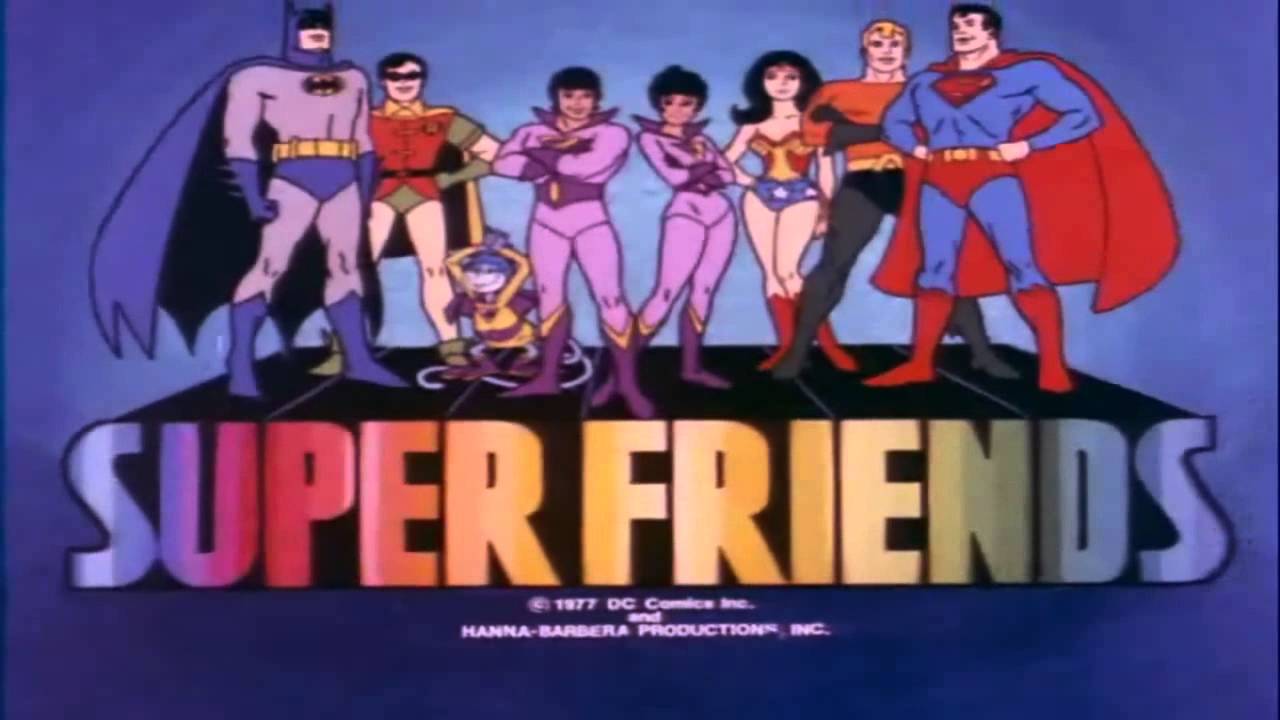
Left to right: Wonder Dog, Aquaman, Robin, Batman,
Superman, Wonder Woman, Wendy and Marvin.
Note the early '70s bell-bottom pants on both teenagers.

September 8, 1973: Super Friends premieres on ABC, based on the superheroes of DC Comics. Produced by Hanna-Barbera Productions, it runs in one form or another until 1986. The animation was crude by today's standards, but, as a kid, I didn't care.

The original series, narrated by Ted Knight, a.k.a. Ted Baxter of The Mary Tyler Moore Show -- "Later, at the Hall of Justice... " -- was kid-centric. Wendy Harris (voiced by Sherry Alberoni) and Marvin White (Frank Welker) were ordinary teenagers, who had no powers, but considered themselves superheroes, or at least detectives, in training.

They had a dog named Wonder Dog (also voiced by Welker, who specialized in voicing cartoon dogs), whose only special abilities were a higher intelligence than most dogs and, sort of, the ability to talk. They were taken in by the Super Friends, who can be recognized as a subset of the Justice League.

It's understandable that the show used Superman (Danny Dark), Batman (Olan Soule), Robin (Casey Kasem) and Wonder Woman (Shannon Farnon). After all, Kal-El/Clark Kent, Bruce Wayne and Princess Diana of Themiscyra/Diana Prince are what are now called "the DC Trinity"; and, as the original Robin, Dick Grayson was Batman's sidekick. It had only been 5 years since the Adam West Batman series had gone off the air, and this version of the Dynamic Duo was more like West and Burt Ward than like later "Dark Knights" and their "Boy Wonders."

Less obvious as a choice to round out the main superhero cast was Aquaman (Norman Alden). For those of you who only know later versions, showing him with long hair and looking more like Marvel Comics' Thor -- or in the darker-skinned, dark-haired, long-haired, tattooed version played by Jason Momoa in the DC Extended Universe movies -- his appearance as a very pale white man with short but curly hair might make him seem like an anachronism.

There were occasional visits from other superheroes. Knight also voiced The Flash. Alden also voiced Green Arrow and Plastic Man. But each of these characters appeared in only one episode. In flashback sequences, we saw Superman's Kryptonian parents, Jor-El (Kasem) and Lara (Farnon); and his earthly parents, Jonathan Kent (Soule) and Martha Kent (Farnon again).

In later versions, Dark would also play Batman's ally, Gotham City Police Commissioner James Gordon. Farnon would also play Wonder Woman's mother, Queen Hippolyta; Superman's girlfriend and Daily Planet co-worker, Lois Lane; and, from Greek mythology, goddess of love Aphrodite and monster Medusa.

Super Friends taught me to read closing credits. I noticed that Robin sounded an awful lot like Shaggy from Scooby-Doo, Where Are You? So I looked at the credits of both shows, and wrote them down, and found two names in common: Kasem and Welker. When I found out from other shows that Welker was also the voices of Fred from Scooby, Astro from The Jetsons, Dynomutt the Dog Wonder (with Laugh-In's Gary Owens as the Batman-like Blue Falcon) and the title character in Jabberjaw, that narrowed him down to Marvin and Wonder Dog, and showed me that Kasem was Robin.

In the 1976-77 TV season, ABC's The Krofft Supershow had a segment titled Electra Woman and Dyna Girl, played by soap opera star Deidre Hall and car pitchwoman (as "Mean Mary Jean") Judy Strangis, respectively. This show copied Wonder Woman by having female superheroes, copied Batman by having an older hero and a younger sidekick with a corny catchphrase ("Electra-Wow!"), and copied Superman by making them reporters in civilian life. And Alden, the voice of Aquaman, played Frank Heflin, who was less their version of Batman and Robin's butler/all-around tech whiz Alfred than he was Oscar Goldman to their Six Million Dollar Man and Bionic Woman.

Only one season of 16 episodes of Super Friends was made, although they continued to be shown in reruns. But the ABC success of Lynda Carter's Wonder Woman series and Electra Woman and Dyna Girl, and The Shazam/Isis Hour on CBS, gave ABC and Hanna-Barbera the idea to try again.

In 1977, they brought us The All-New Super Friends Hour. Noting that the core audience was a little older, Wendy, Marvin and Wonder Dog were phased out. Phased in were the Wonder Twins. They were teenagers, from the planet Exor, and they were obviously geared toward not just older kids and teenagers, but Trekkies, because they looked like Vulcans: Vaguely Asian faces, the same hairstyles, and pointed ears.
Left to right: Batman, Robin, Gleek, Zan,
Jayna, Wonder Woman, Aquaman, Superman

Unlike Wendy, Marvin and Wonder Dog, Zan (Michael Bell) and Jayna (Liberty Williams) had powers. Not a mind-meld or a nerve pinch like Vulcans. When they touched their hands, and said, "Wonder Twin powers, activate!" Jayna could say, "Shape of... " any animal, and transform into that animal. Zan could say, "Form of... " any version of water, from ice to boiling water to fog to a solid wall of liquid water.

Suddenly, Aquaman's sea-based powers didn't seem so silly: Zan was mainly comic relief. But if that wasn't enough, they had a pet monkey named Gleek (also voiced by Bell), with a rubber tail that could be used as a weapon and, if he spun it in the air like a helicopter's rotor, he could use to fly.

It still wasn't a full Justice League of America, but there were, again, cameos from other heroes, usually one guest appearance per episode. Barney Phillips took over as The Flash (the Barry Allen version). Michael Rye voiced Green Lantern (the Hal Jordan version). Jack Angel voiced Hawkman, and Farnon voiced Hawkgirl (never "Hawkwoman"). Wally Burr voiced The Atom.

Then there were the heroes created just for this series, having never before appeared in comic books. This was an attempt to appear diverse, or, as we would now say, multicultural. But the characters, all too often, seemed like stereotypes anyway.

While there were black superheroes before this, including DC's electric-powered Black Lightning and the John Stewart version of Green Lantern, they didn't use any of them for Super Friends. They wanted to use Black Lightning, but there was a legal wrinkle that prevented them from doing so. So, they created Black Vulcan (Buster Jones). No, it wasn't a black version of Star Trek's Mr. Spock: Basically, he was Black Lightning, with electric powers and a somewhat different black-and-gold costume. That and the name allowed them to meet the legal requirements. (The original Vulcan was the Roman name for the god of fire, known as Hephaestus to the ancient Greeks.)

The Asian hero was Samurai (also Jack Angel), who had wind-based powers, similar to the DC character Red Tornado. And there was a Native American hero, Apache Chief (also Michael Rye). He could grow to enormous size, which also gave him super strength and near-invulnerability. But their costumes were little better than how John Wayne would have imagined their peoples.
Clockwise from top: Superman, Hawkman, Samurai, Green Lantern,
Robin, Batman, Wonder Woman, Aquaman, Flash,
Jayna, Zan, Gleek, Black Vulcan and Apache Chief.
The Hall of Justice was based on Union Terminal in Cincinnati,
hometown of the owners of Hanna-Barbera Productions,
Taft Broadcasting (and related to President William Howard Taft).

For the 1978-79 season, Challenge of the Superfriends (one word) was made. Now, the denizens of the Hall of Justice are a full 11-member Justice League of America (JLA): Superman, Batman, Robin, Wonder Woman, Aquaman, Flash, Green Lantern, Hawkman, Black Vulcan, Samurai and Apache Chief. (But no Green Arrow, Plastic Man, Hawkgirl or Wonder Twins. By this point, Plastic Man had gotten his own show.)

And now, they had regular enemies, with a headquarters looking like Star Wars character Darth Vader's helmet (come on, let's call a spade a spade) rising out of a swamp: The Legion of Doom. Its members:

* Lex Luthor (Stanley Jones), arch-enemy of Superman. (In this series, Jones also did the voices of Superman's fathers, Jor-El and Jonathan Kent. What Sigmund Freud would have thought of that, I have no idea.)

* Bizarro (Bill Callaway), imperfect duplicate of Superman.

* Brainiac (Ted Cassidy, formerly Lurch on The Addams Family and the narrator of the opening sequence to CBS' The Incredible Hulk), robotic enemy of Superman. (Cassidy died of heart trouble during the season, only 46 years old.)

* Mr. Mxyzptlk (another Frank Welker role), magical enemy of Superman.

* Solomon Grundy (Jimmy Weldon), an incredibly strong and durable zombielike creature that debuted in the 1940s an enemy of the "Golden Age" Green Lantern, Alan Scott, but later became an enemy of Superman and, occasionally, other heroes.

* The Toyman (another Frank Welker role), enemy of Superman, but hardly on the same level as the preceding.

* The Riddler (Michael Bell, also Zan and Gleek), enemy of Batman. (The Riddler was chosen because they couldn't get the legal rights to use the Joker or the Penguin. It's just as well: The Riddler is smarter than either one.)

* The Scarecrow (Don Messick), enemy of Batman. (Messick was also the original voice of Scooby-Doo.)

* The Cheetah (Marlene Aragon), catlike arch-enemy of Wonder Woman.

* Black Manta (also Ted Cassidy), arch-enemy of Aquaman.

* Sinestro (also Don Messick), arch-enemy of Green Lantern.

* Gorilla Grodd (Stanley Ralph Ross), a member of The Flash's "Rogues Gallery." (Ross had been a writer on the 1966-68 Batman series, and a co-creator of the 1975-79 Wonder Woman series.)

* Captain Cold (Dick Ryal), also a Flash enemy. (Cold's sometimes partner, at the other extreme of temperature, Heat Wave, never appeared. Nor did the Flash's true nemesis, Professor Zoom, a.k.a. the Reverse-Flash. In a flashback sequence, Ryal also voiced Abin Sur, the dying Green Lantern who gave his power ring to Hal Jordan.)

* The Pied Piper (Bob Hastings), also a Flash enemy.

* Giganta (Ruth Forman), a giantess created for the series. Being a woman, she would seem to be an opponent for Wonder Woman. However, an episode explained that she got her powers at the same time, and from the same source, that Apache Chief got his, making for a dual origin story.

New versions of the series would continue until 1986, by which point I was too old to watch. But there would be live-action versions to come, with Superman getting 4 movies and 2 TV shows (Superboy and Lois & Clark: The New Adventures of Superman, plus a Supergirl movie), Batman getting 4 movies, and The Flash getting a single-season TV series on CBS. There would be the NBC special Legends of the Superheroes in 1979, which had the first live-action versions of The Flash, Green Lantern, The Atom and Hawkman. However, a typically small TV special-effects budget rendered it ridiculous.

Superman: The Movie came out in late 1978, and when Lois Lane (Margot Kidder) meets Superman (Christopher Reeve) for the first time, she asks him, "Who are you?" Not yet having been named Superman (in this version, it was Lois who gave him the name in her article), he says simply, "A friend." It may not have been intentional, but, in hindsight, it seems like an "Easter Egg" for Super Friends fans like me.

In 1992, Batman: The Animated Series would launch "The DC Animated Universe," which ran until 2006. Among the other series included in it were Superman: The Animated Series, The New Batman Adventures, Batman Beyond (set in a future with an elderly Bruce Wayne training a teenager, Terry McGinnis, to be a new, updated Batman, rather than the latest in a long line of Robins), Justice League and Justice League Unlimited. These shows were definitely meant for older kids, who would understand the dark themes of the Batman mythos, not little kids.

A 1997 Justice League of America movie would have only second-tier heroes, including the first live-action version of J'onn J'onzz, the Martian Manhunter, because getting the legal rights to use Superman, Batman and Wonder Woman would have been prohibitively expensive. Between 2005 and 2010, The CW's Superman prequel series Smallville would feature the first live-action versions of Aquaman, Green Arrow, and the Wonder Twins, plus new versions of some other heroes.

And, in 2020, in the last episode of The CW's Crisis On Infinite Earths, a Justice League consisting of Superman (Tyler Hoechlin), Supergirl (Melissa Benoist), Batwoman (Ruby Rose), The Flash (Grant Gustin), the White Canary (Caity Lotz), the Martian Manhunter (Dorian Harewood) and Black Lightning (Cress Williams) gathered for the first time, with an empty seat at the table in memory of Green Arrow (Stephen Amell), who had sacrificed his life to restart the multiverse.

Their building looked like the Hall of Justice. And at the end, while the old Super Friends theme played, the camera panned up to an open cage marked "GLEEK." I have to say, despite having just turned 50, I got a kick out of that.

*

September 8, 1973 was a Saturday. These games were played in Major League Baseball:

* The New York Yankees beat the Milwaukee Brewers, 15-1 at the original Yankee Stadium, in its last month before closing for a 2-season renovation. George "Doc" Medich went the distance for the win. Graig Nettles hit a home run (not a big surprise), as did Fred "Chicken" Stanley (a huge surprise).

* The New York Mets lost to the Montreal Expos, 3-1 at Jarry Park in Montreal. Steve Rogers -- no, not Captain America -- outpitched Tom Seaver.

* The Detroit Tigers beat the Boston Red Sox, 6-1 at Fenway Park in Boston. Al Kaline did not play. He was better off than Carl Yastrzemski, who went 0-for-5.

* The Pittsburgh Pirates beat the Philadelphia Phillies, 5-3 at Veterans Stadium in Philadelphia. Willie Stargell went 3-for-3 with an RBI. Rookie Mike Schmidt went 2-for-3 with a walk and an RBI.

* The Atlanta Braves beat the Cincinnati Reds, 3-2 at Atlanta Stadium (later Atlanta-Fulton County Stadium). Hank Aaron hit the 709th home run of his career. Dusty Baker and Davey Johnson, both now better known for being managers, also homered for the Braves. For the Reds, Joe Morgan hit a home run, but Pete Rose and Johnny Bench each went 0-for-3 with a walk.

* The Baltimore Orioles beat the Cleveland Indians, 6-1 at Cleveland Municipal Stadium. Brooks Robinson went 3-for-4 with a solo homer. Jim Palmer went the distance for the win.

* The Chicago Cubs beat the St. Louis Cardinals, 3-1 at Wrigley Field in Chicago. Ron Santo homered for the Cubs. Lou Brock went 1-for-3 with a walk and 2 stolen bases.

* The Minnesota Twins beat the Chicago White Sox, 6-2 at Metropolitan Stadium in the Minneapolis suburb of Bloomington, Minnesota. Neither Harmon Killebrew nor Rod Carew played for the Twins in this game.

* The California Angels swept a doubleheader from the Kansas City Royals at Royals Stadium (now Kauffman Stadium) in Kansas City, 9-6 and 4-3. Frank Robinson went 1-for-10 with an RBI for the Angels. George Brett, who had made his major league debut a month earlier, did not appear in the opener, and only appeared in the nightcap as a pinch-runner and a defensive replacement, never coming to bat.

* The Texas Rangers beat the Oakland Athletics, 4-3 at Arlington Stadium in the Dallas suburb of Arlington, Texas. Reggie Jackson went 0-for-1, then left the game due to an injury.

* The San Diego Padres beat their arch-rivals, the Los Angeles Dodgers, 9-6 at Dodger Stadium in Los Angeles. Jerry Morales doubled home the winning run in the top of the 11th inning.

* And the Houston Astros beat the San Francisco Giants, 9-7 at Candlestick Park in San Francisco.

Since it was Saturday, there was college football. However, most teams, including Number 1 USC, Number 2 Ohio State, Number 3 Texas, Number 5 Michigan, Number 6 Alabama, Number 7 Penn State and unranked Navy, opened the next week. Number 8 Notre Dame, unranked Army, and, locally, Rutgers opened the week after that; and Princeton and Columbia the week after that.

The only game this week involving a Top 5 team also happened to involve another Top 10 team: Number 4 Nebraska beat Number 10 UCLA, 40-13 at Memorial Stadium in Lincoln, Nebraska. It was the Cornhuskers' 1st game under head coach Tom Osborne.

Also, Arsenal lost 2-0 at home at Highbury to Leicester City. 

Monday, September 5, 2022

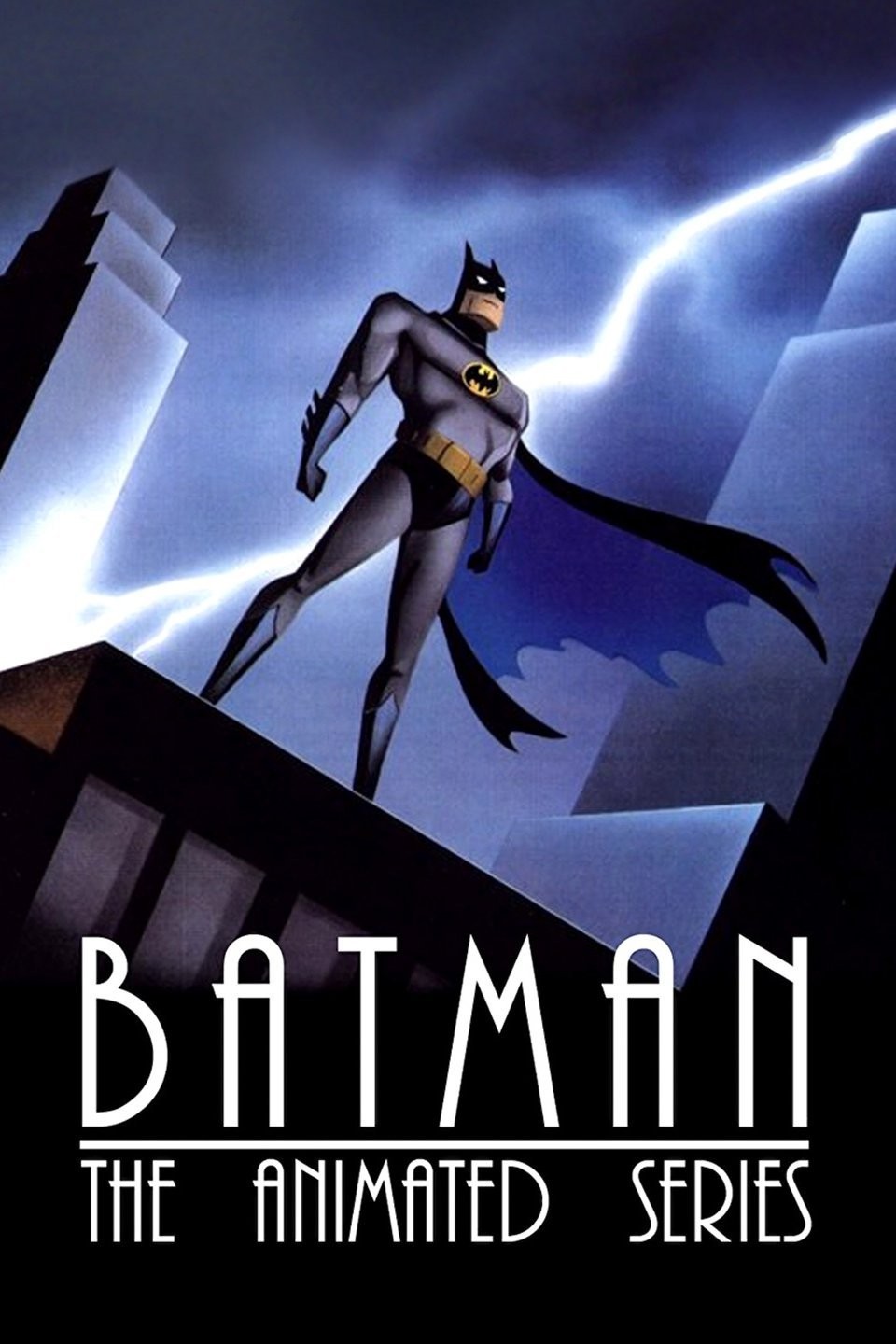
September 5, 1992: “Batman: The Animated Series” Premieres

September 5, 1992: Batman: The Animated Series premieres on Fox, thus beginning the DC Animated Universe. It remains a more popular realm than either DC Comics' or Marvel Comics' cinematic universes.

Kevin Conroy voiced the Caped Crusader. Loren Lester was Robin. Efrem Zimbalist Jr. played Alfred. Bob Hastings played Commissioner James Gordon. Melissa Gilbert played Gordon's daughter, Barbara, who became Batgirl.

Villains? Mark Hamill, best known for playing Luke Skywalker in the Star Wars saga, turned to the Dark Side to play The Joker. Arleen Sorkin was Harley Quinn, a character created for the series, but proving so popular that she was later worked into DC's comic continuity.
Kevin Conroy (left) and Mark Hamill

Diminutive songwriter Paul Williams was The Penguin. John Glover, who later played Lionel Luthor on the Superman-themed TV series Smallville, was The Riddler. Richard Moll, better known for playing bailiff Bull Shannon on Night Court, was Two-Face. Michael Ansara was Mr. Freeze. And, straddling the lines between good and evil, Adrienne Barbeau was Catwoman.

Adam West, who played Batman in live action from 1966 to 1968, made a guest appearance as the voice of a character created for this series, the Gray Ghost, a TV character who played a part in inspiring the young Bruce Wayne.

This series began The DC Animated Universe. For two of its creators, Bruce Timm and Paul Dini, it would be nicknamed the Timmverse and the Diniverse. It would eventually include:

* Batman: The Animated Series, 1992-95.
* Superman: The Animates Series, starring Tim Daly, 1996-2000.
* The New Batman Adventures, 1997-99.
* Batman Beyond, 1999-2001.
* Static Shock, 2000-04.
* The Zeta Project, 2001-02.
* Justice League/Justice League Unlimited, 2001-06.

It would also include some animated films set in the same universe, starting with Batman: Mask of the Phantasm, in 1993.

*

September 5, 1992 was a Saturday. These Major League Baseball games were played:

* The New York Yankees lost to the Texas Rangers, 7-3 at Yankee Stadium. Roger Pavlik outpitched Sam Militello, a highly-rated prospect whose injuries and wildness prevented him from realizing his early promise. Don Mattingly went 1-for-4.

* The New York Mets lost to the Cincinnati Reds, 6-5 at Riverfront Stadium in Cincinnati. Eddie Murray went 2-for-3 with a walk for the Mets.

* The Houston Astros beat the Montreal Expos, 5-2 at the Olympic Stadium in Montreal.

* The Atlanta Braves beat the Philadelphia Phillies, 6-5 Atlanta-Fulton County Stadium.

* The Toronto Blue Jays beat the Minnesota Twins, 7-3 at the Rogers Centre in Toronto.

* The Pittsburgh Pirates beat the Los Angeles Dodgers, 6-1 at Three Rivers Stadium in Pittsburgh.

* The Cleveland Indians beat the Seattle Mariners, 5-4 at Cleveland Municipal Stadium. Ken Griffey Jr. and Dave Valle hit home runs for the M's.

* The Milwaukee Brewers beat the Detroit Tigers, 10-3 at Tiger Stadium in Detroit.

* The San Diego Padres beat the Chicago Cubs, 5-3 at Wrigley Field in Chicago. Tony Gwynn went 1-for-4 with a walk.

* The St. Louis Cardinals beat the San Francisco Giants, 4-0 at Busch Memorial Stadium in St. Louis. Rheal Cormier (6 over 7 2/3rds innings) and Todd Worrell (1 the rest of the way) combined on a 7-hit shutout.

* The Chicago White Sox beat the Kansas City Royals, 12-6 at Royals Stadium (later Kauffman Stadium) in Kansas City. George Brett went 1-for-2 with 2 walks.

* The Baltimore Orioles beat the California Angels, 4-1 at Anaheim Stadium (later Angel Stadium of Anaheim).

* The Boston Red Sox beat the Oakland Athletics, 7-3 at the Oakland Coliseum. Rickey Henderson went 1-for-3 with a walk and an RBI.

Among the college football games played that day were these:

* Number 1 Miami beat Number 23 Iowa, 24-7 at Kinnick Stadium in Iowa City, Iowa. Miami won the Big East Conference title.

* Number 2 Washington beat Arizona State, 31-7 at Sun Devil Stadium (now Mountain America Stadium) on the Phoenix suburb of Tempe, Arizona. Washington went on to win the Pac-10 Conference title.

* Number 3 Notre Dame beat Northwestern, 42-7 at Dyche Stadium in the Chicago suburb of Evanston, Illinois.

* Number 4 Florida State beat Duke, 48-21 at Doak Campbell Stadium in Tallahassee, Florida. Florida State won the Atlantic Coast Conference title, and beat Big Eight Conference Champions Nebraska in the Orange Bowl.

* Number 5 Michigan began their season the next week, with a 17-17 tie against Notre Dame in South Bend, Indiana. Michigan won the Big 10 title, and beat Washington in the Rose Bowl.

* Number 6 Florida opened their season the next week. They lost the Southeastern Conference Championship Game to Alabama, and beat North Carolina State in the Gator Bowl.

* Number 7 Texas A&M beat Louisiana State (LSU), 31-22 at Tiger Stadium in Baton Rouge, Louisiana. A&M won the Southwest Conference title, and were undefeated with a shot at the National Championship going into the Cotton Bowl, if the Orange Bowl turned out to be a dud. But they lost to Notre Dame, to end their longshot chance.

* Number 8 Penn State beat the University of Cincinnati, 24-20 at Nippert Stadium in Cincinnati.

* Number 9 Alabama beat Vanderbilt, 25-8 at Bryant-Denny Stadium in Tuscaloosa, Alabama. 'Bama won the Southeastern Conference title, and beat Miami in the Sugar Bowl for the National Championship.

* Number 10 Syracuse beat East Carolina, 42-21 at Ficklen Memorial Stadium (now Dowdy-Ficklen Stadium) in Greenville, North Carolina.

* Rivalry: Number 12 Colorado beat Colorado State, 37-17 at Folsom Field in Boulder, Colorado. Colorado went to the Fiesta Bowl, where they lost to Syracuse.

* Rivalry: Number 25 Virginia beat Maryland, 28-15 at Scott Stadium in Charlottesville, Virginia.

* Among the service academies, Army and Navy each began their season the next week; while Air Force beat Rice University, 30-21 at Falcon Stadium in Colorado Springs, Colorado.

* And New Jersey's team, Rutgers, lost to Boston College, 37-20 at Alumni Stadium in the Boston suburb of Chestnut Hill, Massachusetts. At the end of the season, Rutgers was 7-4, but was not invited to a bowl game. Rubbing salt in their wounds was BC's quarterback, a New Jersey native, Glenn Foley of Cherry Hill High School East, who told a reporter, "The only bowl Rutgers is going to is the one I just got off of," meaning the toilet.

December 31, 1999 & January 1, 2000: The Millennium

December 31, 1999:  The Millennium arrives. The people of planet Earth survived. At a terrible cost. But we hadn't destroyed ourselves. ...