Showing posts with label monday night football. Show all posts

Sunday, December 25, 2022

December 25, 1989: Romania Overthrows the Ceaușescus

December 25, 1989: The last domino to fall in this year of revolution in Eastern Europe is Romania. Unlike every other country that overthrew its Communist regime, however, it was not peaceful, and it certainly was not a "bloodless coup." It was closer to the French Revolution of 100 years earlier than to what had happened earlier in the year in Poland, Hungary, Czechoslovakia and East Germany.

Nicolae Ceaușescu was born on January 26, 1918 in Scornicești, Romania, a country then in World War I on the side of the Allies, since it was allied with Russia, which had recently fallen to the Bolsheviks, but had not yet dropped out of the war. It remained a monarchy until World War II, when the right-leaning government allied with the Nazis against the Communist Soviet Union. The Soviets invaded on September 12, 1944, and a "Republic" was proclaimed on December 30, 1947.

Ceaușescu served in the war, and had been a prisoner of the Nazis. In the Republic, he was elected to the Great National Assembly, and became a full member of the Politburo in 1954. He was an ally of Gheorghe Gheorghiu-Dej, who became General Secretary of the Communist Party in 1955, effectively the nation's dictator.

When Gheorghiu-Dej died on March 19, 1965, his successor was not obvious, but Ceaușescu used this to his advantage, since he was liked by Gheorghiu-Dej's other allies and not strenuously opposed by any of them. After 3 days, he emerged as the new leader.

Like Josip Broz Tito of Yugoslavia, both Gheorghiu-Dej and Ceaușescu were "Home Communists," espousing far-left policies domestically, but not actively influencing nearby countries. In 1968, he condemned the Soviet Union's invasion of Czechoslovakia. That caught the attention of Richard Nixon, soon to be elected President of the United States.

On August 2, 1969, Nixon visited Romania, the 1st visit by a President to a Communist country, other than Franklin Roosevelt's meeting with Winston Churchill and Joseph Stalin at the Yalta Conference in 1945. In 1973, Ceaușescu and his wife Elena returned the favor, by visiting America, and meeting with Nixon again.
Left to right: Nicolae and Elena Ceaușescu, Pat and Richard Nixon

But by that point, Ceaușescu had changed, and the West hadn't noticed. In 1971, he visited China, North Vietnam and North Korea. On July 6, 1971, he delivered a speech before the executive committee of the Romanian Communist Party. This quasi-Maoist speech became known as the July Theses, and he announced a crackdown on culture he considered anti-patriotic.

Slowly, but surely, the people began to resist. A coup failed in 1984, and another, which became known as the Brașov Rebellion, failed in 1987. On November 20, 1989, as the Communist Parties of Eastern Europe were falling all around him, Ceaușescu was re-elected, and made a speech denouncing these revolutions.

Revolution broke out in Timișoara, the largest city in the west of the country. Copying the freedom fighters of 1956 in neighboring Hungary, demonstrators cut the Communist symbols out of their national flags, and carried the "liberated" flags through the streets. They were fired upon, and many died, but it didn't stop them.

Ceaușescu left for a state visit to Iran on December 18. Hearing that things had gotten worse in his absence, he figured he'd better get back, or he might be thrown out of power before he could. He returned on the 20th, and, on the 21st, delivered a speech from the balcony of the former Royal Palace in Bucharest, at this time the headquarters of the Central Committee of the Communist Party.

He denounces the demonstrators of Timișoara as "fascist agitators." Just 8 minutes into the speech, many in the crowd of 100,000 began booing him, and chanting, "Timișoara!" His wife, Elena, herself now unpopular, yelled, "Quiet!" They booed her, too: She had become known as "The Ogeress." The first couple had to be taken back inside, for fear of something happening to them.

It did. Hearing on December 22 that Defense Minister Vasile Milea had committed suicide rather than be taken by revolutionaries, the Ceaușescus escaped by helicopter. The Army, which had abandoned him, forced the helicopter down in Târgoviște.

On Christmas Day, December 25, 1989, the Ceaușescus were tried before a court convened in a small room on orders of the National Salvation Front, Romania's provisional government. They faced charges including illegal gathering of wealth and genocide -- this following reports that, under Ceaușescu's orders, the Army had killed 46,000 people in the last week. He denied the court's authority to try him, but they were both found guilty and sentenced to death.

They demanded to be allowed to die together. The soldiers agreed to this, but not to their refusal to be tied up. A committed Communist to the end, Nicolae Ceaușescu's last words were a singing of "The Internationale." They were executed by a firing squad. Nicolae was 71 years old, Elena 73.

The Ceaușescus' dead bodies were displayed on national television, and the images were shown around the world. They had received the same level of mercy that they had given. At least their corpses were not hung upside-down in a public square like Benito Mussolini and his mistress Clara Petacci in Milan in 1945.
But Italy's leading newspaper, the Evening Courier,
had no problem putting the dictator's dead body
on its front page.

They had 3 children. Their elder son, Valentin, became a physicist. Their daughter, known to the country as "Comrade Zoia," became a mathematician. Neither was involved in politics. Their younger son, Nicu, was groomed as his father's heir apparent in government, and was already a county leader by 1987. He was known to be an alcoholic and a rapist -- a sadist like his friend, the heir apparent in Iraq, Uday Hussein -- and was imprisoned after the Revolution. He was released in 1992, for health reasons, and his drinking caught up with him in 1996. He was only 45.  

*

December 25, 1989 was a Monday. This was also the day that former baseball manager Billy Martin was killed in a truck crash. I have a separate entry for this event.

Baseball was out of season. There was 1 college football bowl game that day. Number 22 Michigan State beat Number 25 Hawaii, 33-13, in the Aloha Bowl, on Hawaii's home field, Aloha Stadium in Honolulu.

On ABC Monday Night Football, the Minnesota Vikings beat the Cincinnati Bengals, 29-21 at the Metrodome in Minneapolis.

The NHL does not schedule games for Christmas Day. The NBA does, and there was 1: The Atlanta Hawks beat the Cleveland Cavaliers, 115-104 at The Omni in Atlanta.

Saturday, December 17, 2022

December 17, 1984: Brigham Young University, National Champions

Robbie Bosco

December 17, 1984: The football team at Brigham Young University defeats the University of Michigan, 24-17 in the Holiday Bowl at Jack Murphy Stadium in San Diego -- a game that, under the rules of the time, BYU were locked into as Champions of the Western Athletic Conference.

This was not a particularly strong Michigan team, going in at just 6-5, and probably getting the bowl bid solely because of their history. Nevertheless, the Cougars of coach LaVell Edwards and quarterback Robbie Bosco beat them, leading a 4th-quarter comeback down 17-10 and throwing the winning touchdown pass with 1:23 left, and finished an undefeated 13-0 season.

No other team finished the season undefeated. The University of Washington finished 11-1, beating Oklahoma in the Orange Bowl. But their 1 loss, to USC (the University of Southern California), cost them the Pacific-10 Conference title, and if you're not Conference Champions, you shouldn't be crowned National Champions -- a principle that should have been held once the Bowl Championship Series (BCS) and later the Playoffs finally did come, but didn't.

Oklahoma, who won the Big 8 Conference, had been Number 2, but this loss eliminated them. Florida had been Number 3, and won the Southeastern Conference title, but were on probation, and were ineligible for a bowl game, costing them the National Championship.

Put it all together, and, voting on January 2, 1985, the Associated Press (AP) in their poll of college football writers, and United Press International (UPI) in their poll of college football coaches both gave BYU got a very dubious national title.

BYU had some unfair advantages. Being in the WAC, they had a rather weak schedule. The only ranked team they beat all season was the University of Pittsburgh, then Number 3, 20-14 in their season opener. They only beat Hawaii 18-13. They only beat Wyoming 41-38. They only beat the Air Force Academy 30-25. Their season was similar to that of the 1972 Miami Dolphins: They rarely looked like a great team, but they went undefeated, and won the Super Bowl.

Another unfair advantage BYU had was missions. As a school run by the Church of Jesus Christ of Latter-Day Saints, a.k.a. the Mormons, and named for the man who led the early Church to Salt Lake City -- the University is in Provo, 50 miles to the south -- they send their men on missions, and even "redshirt" their good players, so that their seniors are 23, 24 or 25 years old, playing opponents between 18 and 22 years old.

Then as now, the NCAA usually grants a player 5 years to complete 4 years of eligibility, but allows exceptions for injuries, military service, and, yes, religious missions -- something the 1st Amendment to the Constitution, with its freedom of religion, requires them to allow. Yet other schools famous for being run by religious institutions, such as Catholic schools like Notre Dame and Boston College, don't require missions. Nor do the Protestant schools in Texas that play major college football: Southern Methodist (SMU) in Dallas, Texas Christian (TCU, Disciples of Christ) in Fort Worth, or Baylor (Baptist) in Waco.

The Mormons do require missions, but will grant exceptions in some cases, including that of the man who was their quarterback the 4 previous seasons, and their most famous player ever, who just so happened to be the great-great-great-grandson of the school's namesake: Steve Young. That was seen as a bit hypocritical, because they were viewed as wanted to raise their profile, as well as raise money, off Steve's pro career.

Built in 1964, BYU's Cougar Stadium was renamed for coach Edwards following his retirement after the 2000 season. Under him, they won 19 Conference Championships -- the 1st 18 in the WAC, the last in the new Mountain West Conference -- in a span of 26 seasons. They became known for "mad bomber" quarterbacks, such as Virgil Carter, Gary Sheide, Gifford Nielsen, Marc Wilson, Jim McMahon, Young and Bosco; and, after Bosco, Ty Detmer, John Walsh. (Detmer's brother Koy starred at the University of Colorado.)
LaVell Edwards

Despite finishing 3rd in the Heisman Trophy voting in both 1984 and 1985, and winning a National Championship, Bosco never played a down in the NFL, the USFL or the CFL. Since 1989, he has been employed by BYU. Apparently, they take care of their own. Edwards died in 2016.

*

December 17, 1984 was a Monday. On ABC Monday Night Football, the Miami Dolphins beat the Dallas Cowboys, 28-21 at the Orange Bowl in Miami.

Baseball was out of season. No games were played in the NBA. Two were played in the NHL. The St. Louis Blues beat the Toronto Maple Leafs, 3-2 at Maple Leaf Gardens in Toronto. And the New Jersey Devils beat the Edmonton Oilers, 5-2 at the Brendan Byrne Arena in the Meadowlands. It had been 7 months since the Oilers, led by Wayne Gretzky, had won their 1st Stanley Cup; and 13 months since Gretzky had called the Devils "a Mickey Mouse organization" following a 13-4 Oilers win over them in Edmonton. Well, Wayne, how did they look after this?

Sunday, December 11, 2022

December 11, 1978: The Lufthansa Heist

December 11, 1978: The largest robbery on American soil to that point is committed at John F. Kennedy International Airport in Queens, New York City. 

Members of the Lucchese crime family robbed Lufthansa Cargo Building 261, belonging to Lufthansa, the largest airline in Germany, taking $5 million in cash and $875,000 worth of jewelry. The $5,875,000 heist would be worth about $26.4 million in 2022 money. The story was told in the film Goodfellas, but, with most of the names changed, the story is true.

Organized crime in New York is led by the so-called Five Families: Lucchese, Gambino, Genovese, Colombo and Bonanno. Jimmy "the Gent" Burke was a Lucchese associate, but, being of Irish descent, he could never be a "soldier," or a "made man," in the "family." But, as the top hijacker of trucks and their cargo in New York in the 1960s and '70s, he sure made them a lot of money. He had previously done so at JFK Airport, at the Air France terminal on April 7, 1967, netting $420,000 worth of cash and cargo (about $3.7 million today).

Having succeeded in the Lufthansa heist, Burke was paranoid about it. He was afraid that, if his guys spent too much of the loot too soon, it would attract the attention of the Federal Bureau of Investigation. (As the crime was on the grounds of an airport, it was in the FBI's jurisdiction, not the New York Police Department's.)

But it was 2 weeks before Christmas, and, in anticipation of getting their share of the loot, some of the guys in Burke's crew began spending like crazy, especially on their wives and/or mistresses. One of them bought a brand-new top-of-the-line Cadillac, which, parked in front of a known Lucchese Family hideout in Queens, might as well have been spray-painted with the words "UNMARKED MOB CAR." And some of them were getting antsy, and demanded their share before Burke was ready to give the shares out.

So all through 1979, members of Burke's crew started dying. The guy who bought the car, and his wife, were found shot to death inside the car. One member of the crew, Henry Hill, got busted for cocaine trafficking in 1980, and it may have saved his life, because Jimmy had told him to go down to Florida to perform a contract killing. That made Henry suspicious, because Jimmy had never asked him to do a "hit" before. He was sure that if he went down, he would never come back up alive. So he made preparations to go into hiding, but the Feds got him first.

The first time Henry got arrested, as a teenager, he kept his mouth shut, earning the respect of Burke, Burke's boss Paul Vario, and everybody else who called Vario his boss. This time, with a wife and 2 kids to think about, he spilled his guts.

Ironically, most of the guys he ratted on were charged with things other than the Lufthansa heist. Burke, the mastermind, was charged for his role in the 1978-79 Boston College basketball point-shaving scandal. While serving time for that, he was convicted of a murder, and that had nothing to do with the Lufthansa heist or its aftermath, either. He was doomed to die in prison, and did, in 1996. So did Paul Vario, in 1988.

Hill was involved in the planning of the Lufthansa heist, but did not actually participate in it, only finding out it was successful by listening to the radio the next morning. (He did participate in the Air France robbery at JFK in 1967.)

He and his family went into the FBI's Witness Protection Program, going from the life of a millionaire gangster to, as he put it, "living like a schnook." Nicholas Pileggi wrote the book Wiseguy based on Hill's story, and quoted Hill, half-Italian and half-Irish (and thus also ineligible to be a made man, as you have to be full Italian, preferably full Sicilian but that's negotiable), as having to endure indignities like ordering spaghetti marinara and getting egg noodles with ketchup.

In 1990, Martin Scorsese released the film Goodfellas, based on Pileggi's book. The two of them wrote the screenplay together, and it has been hailed as one of the best movies ever made, not just one of the best gangster movies. Hill was played by Ray Liotta. Hill and his wife Karen, played by Lorraine Bracco, were the only people whose names weren't changed for the movie. (Although the guy who bought the Cadillac, and paid for it with his life and his wife's? He was played by a guy named Johnny Williams, and his nickname was Johnny Roastbeef. Scorcese liked the nickname so much, he named the character "Johnny Roastbeef," too.) As of December 11, 2022, Williams is still alive.

Jimmy Burke, who was still alive but in prison when the movie came out, became Jimmy Conway, and was played by Robert De Niro. Vario became Paul Cicero, and was played by Paul Sorvino. Tommy DeSimone, involved in both heists, became Tommy DeVito, and was played by Joe Pesci. In real life, DeSimone was not funny. In fact, Pesci may have toned the character down.

The real Hill couldn't stay out of trouble, and was busted for drugs again, and served time, and was kicked out of the Witness Protection Program. Karen divorced him, and she and their kids were allowed to stay in the Program.

Henry Hill was a schnook. Still, the Mob never did kill him. He did that to himself: He may have gotten off drugs, but he continued to drink like there was no tomorrow, and died in 2012, a day after his 69th birthday.

The money and the jewels from the Lufthansa heist have never been found.

One more thing: That great single-shot sequence of Henry and Karen going through the kitchen to the main room of New York's legendary Copacabana Club, to the tune of "Then He Kissed Me" by The Crystals? Well, the Copa has since been moved to new addresses, but is still in business. The original building, at 10 East 60th Street, is still there, and Scorcese had the interior made up to look like it did in 1963 when that song came out.

And I wish somebody had done a similar filming sequence at the old Yankee Stadium, from Subway tunnel to gate to seat, before it was torn down.

*

December 11, 1978 was a Monday. It was the off-season for baseball, and there were no games played that night in the NBA, the NHL or the WHA. But, that night, on ABC's Monday Night Football, the Cincinnati Bengals beat the Los Angeles Rams, 20-19 at the Los Angeles Memorial Coliseum.

Saturday, December 10, 2022

December 10, 1984: The Mets Trade for Gary Carter

December 10, 1984: Having made some awful trades in their history, both before and after this day, the New York Mets make perhaps the best trade in their history.

It was nearly a reverse of their 1977 trade, sending their signature player, pitcher Tom Seaver, to the Cincinnati Reds for 4 players. This one sent 4 players to the Montreal Expos: 3rd baseman Hubie Brooks, catcher Mike Fitzgerald, outfielder Herm Winningham, and pitcher Floyd Youmans.

Brooks was popular among Met fans, and would continue to hit well in Montreal, making 2 All-Star Games. The other players were journeymen at best, basically designed to flesh the trade out, so it looked like the Expos were getting some talent beyond Brooks for Carter.

Carter, whose big smile and infectious enthusiasm got him nicknamed "The Kid" -- and whose propensity for self-promotion had gotten him the nickname "Camera Carter" -- was already considered Johnny Bench's successor as the best catcher in the National League, and only Carlton Fisk was an American League rival to the title of the best catcher in all of Major League Baseball.

The Mets had won the World Series in 1969, and the National League Pennant in 1973. As recently as 1976, they had finished a decent 3rd in the NL Eastern Division. Then they collapsed, due to mismanagement. They were sold in 1980, to Nelson Doubleday and Fred Wilpon, and the rebuilding began.

In 1983, Darryl Strawberry was Rookie of the Year, and they traded for Keith Hernandez. In 1984, they hired Davey Johnson as manager, and they benefited from several young players coming into their own, including Brooks, none more so than pitcher Dwight Gooden. They finished 2nd, and the acquisition of Carter was a huge upgrade at a key position.

On Opening Day of the 1985 season, one day after his 31st birthday, Carter hit a home run -- off Neil Allen, 1 of the 2 pitchers the Mets had traded to get Hernandez -- in the bottom of the 10th inning to give the Mets a 6-5 win over the St. Louis Cardinals, before 46,781 rapturous fans at Shea Stadium. The love affair between the Met fans and the best catcher the franchise has ever had began.

As with Reggie Jackson, across town on the Yankees a few years earlier, he was in New York for only 5 seasons, but no one can say they were dull years. Most significantly, it was Carter's single that kept the Mets alive in the bottom of the 10th inning of Game 6 of the 1986 World Series, leading to their 2nd title.

Gary Carter died in 2012. The Mets knew he was ill, and that he had already been elected to the Baseball Hall of Fame. They elected him to their team Hall of Fame. But they have never retired his Number 8. They gave it to Dave Gallagher in 1992, Carlos Baerga in 1997, and Desi Relaford in 2001, but no player since Relaford left that season. But it has not been officially retired.

*

December 10, 1984 was a Monday. Baseball was out of season. On ABC Monday Night Football, the Los Angeles Raiders beat the Detroit Lions, 24-3 at the Silverdome in the Detroit suburb of Pontiac, Michigan.

There was 1 game played in the NBA: The Atlanta Hawks beat the Indiana Pacers, 104-98 at the Market Square Arena in Indianapolis.

And there were 2 games in the NHL. The New York Rangers beat the Los Angeles Kings, 4-2 at Madison Square Garden. And the Detroit Red Wings beat the Minnesota North Stars, 4-3 at the Metropolitan Sports Center in the Minneapolis suburb of Bloomington, Minnesota.

Thursday, December 8, 2022

December 8, 1980: John Lennon is Killed

Howard Cosell and John Lennon, December 9, 1974.
Six years later, John would be dead.

December 8, 1980: The New England Patriots are playing the Miami Dolphins at the Orange Bowl in Miami, a game being broadcast on ABC Monday Night Football. As John Smith of the Patriots comes onto the field to attempt a last-play game-winning field goal, Howard Cosell gives an announcement about another Englishman named John:

Cosell: But it's suddenly been placed in total perspective for us. I'll finish this. They're in the hurry-up offense.

Frank Gifford: Third down, four. Foreman. (Chuck Foreman is stopped on a run.) It'll be fourth down. (Quarterback Matt) Cavanaugh will let it run down for one final attempt. He'll let the seconds tick off to give Miami no opportunity whatsoever. (Whistle blows.) Timeout is called with three seconds remaining. John Smith is on the line. And I don't care what's on the line, Howard: You have got to say what we know in the booth.

Cosell: Yes, we have to say it. Remember: This is just a football game, no matter who wins or loses. An unspeakable tragedy confirmed to us by ABC News in New York City: John Lennon, outside of his apartment building on the West Side of New York City -- the most famous, perhaps, of all of The Beatles -- shot twice in the back, rushed to Roosevelt Hospital, dead on arrival. Hard to go back to the game after that newsflash, which, in duty bound, we have to take. Frank?

Gifford: Indeed, it is.

Lennon had been shot at 10:50 PM, Eastern Standard Time. Cosell had read an initial report, before the full facts were known: Five shots had been fired, four of them hit Lennon, and, according to the doctors who tried in vain to save him, any one of the four that hit him, had it been the only one, would have done enough damage to kill him. He was pronounced dead at 11:15. He was 40 years old.

Cosell made the announcement a few minutes later. On December 9, 1974, Monday Night Football had broadcast a game between the Los Angeles Rams and the Washington Redskins at the Los Angeles Memorial Coliseum. The Redskins won, 23-17. Lennon had attended, and Cosell interviewed him at halftime.

Cosell was already 43 years old when The Beatles first arrived in America, and hardly in their target group, but his journalistic instincts kicked in, and, surprising those of us who knew him only as a blowhard who tried to convince people he knew more about things than he did, he handled it like a complete professional.

Lennon had been living in America for a little over 3 years, and knew who Cosell was, and said of American football, "It makes rock concerts look like tea parties." The interview went very well, and, off-camera, Cosell even introduced Lennon to another attendee, the outgoing Governor of California, Ronald Reagan. (I was sure I had seen video footage of Lennon and Reagan talking and laughing together that night, but I can't find a still photo of it anywhere.)

Now, 6 years earlier, almost to the day, Lennon was dead, and Reagan was the President-elect, having defeated incumbent President Jimmy Carter a month earlier. Less than 4 months later, Reagan would be shot as well, but would barely survive.

When Cosell spoke the words, "dead on arrival," the camera caught Smith looking right into it, and nodding, as if he had heard what Cosell had said. Of course, none of the players knew anything about it until the game was over. Smith missed his game-winning field goal. The game went to overtime, and Uwe von Schamann, born in West Berlin, Germany but raised in Fort Worth, Texas, won it for the Dolphins with a field goal, 16-13.

This being a Monday, the Pats-'Phins game was the only NFL game scheduled. This being December, no MLB games were scheduled. Only one game was played in the NBA: The Seattle SuperSonics beat the San Antonio Spurs, 104-99 at the Seattle Center Coliseum.

Only one game was played in the NHL: The Calgary Flames beat the Los Angeles Kings, 4-2 at the Forum in the Los Angeles suburb of Inglewood, California.

Wednesday, December 7, 2022

December 7, 1970: The Kneefall In Warsaw

December 7, 1970: The Chancellor of the Federal Republic of Germany makes a deeply symbolic apology to Poland, a nation that Germany so deeply hurt in World War II.

Herbert Ernst Karl Frahm was born in 1913 in the German Empire. His family survived World War I, and he joined a socialist party as a teenager. To cover his tracks as the Nazi Party took control of Germany, he adopted the pseudonym "Willy Brandt." He escaped the Nazis in 1940, reaching neutral Sweden, and remained there for the duration of World War II, returning in 1946, and adopting "Willy Brandt" as his legal name in 1948.

In 1949, the Allied occupation forces began to draw back. The American, British and French sectors were united as the Federal Republic of Germany, a.k.a. West Germany. The Soviet sector became the German Democratic Republic, known in the West as East Germany. That same year, Brandt was elected to the FRG's national legislature, the Bundestag.

In 1957, he was elected Mayor of West Berlin, and was at the side of President John F. Kennedy at City Hall on June 26, 1963, when Kennedy gave the speech where he declared, "All free men, wherever they may live, are citizens of Berlin. Therefore, as a free man, I take pride in the words, 'Ich bin ein Berliner.'"

In 1965, Brandt ran for Chancellor, but lost. But the victorious government fell apart the following year, and Brandt resigned as Mayor to accept the post of Foreign Minister. In 1969, he ran for Chancellor again, and won.
Brandt wanted to normalize relations between his side of Germany and Eastern Europe, a policy he called Ostpolitik. On August 12, 1970, 25 years after the end of World War II, he signed the Treaty of Moscow with the Soviet Union.

And on December 7, he visited Warsaw, the capital of Poland. He signed the Treaty of Warsaw, and laid a wreath at a monument to the Warsaw Ghetto Uprising. Then he got down on his knees, and knelt there for about 30 seconds.

It became known as Der Kniefall von Warschau (The Kneefall in Warsaw). Brandt later said that he believed, at that moment, "Just laying the wreath is not enough." He added, "At the abyss of German history, and under the weight of millions of murdered people, I did what people do when language fails."

Der Spiegel (The Mirror), Germany's leading news magazine, took a poll: 48 percent thought the gesture was excessive, 41 percent said it was appropriate, and 11 percent had no opinion. But the international reaction was highly supportive. Time magazine named Brandt its Man of the Year. The Nobel Peace Prize for 1970 had already been awarded, to American food scientist Norman Borlaug. But Brandt was awarded it in 1971. And in 1972, Brandt's Social Democratic Party won its biggest election victory ever, to this day.

Brandt had to resign in 1974, when it was revealed that one of his aides had been compromised by East Germany. He lived until 1992, long enough to see the Berlin Wall fall and Germany reunited.

On December 6, 2000, just short of the 30th Anniversary of the event, a monument to Brandt was unveiled near the monument to the Warsaw Ghetto Uprising.

*

December 7, 1970 was a Monday. This was the 1st NFL season of ABC Monday Night Football, and, on that night, the Cleveland Browns beat the Houston Oilers, 21-10 at the Astrodome.

There was 1 NBA game played. The Cincinnati Royals beat the San Francisco Warriors, 124-113. This game was played on neutral ground, at the Civic Auditorium in Omaha, Nebraska. The Royals' organization must have had their interest piqued, because, 2 seasons later, they moved, and became the Kansas City-Omaha Kings, playing most of their home games at the Kansas City Municipal Auditorium, but a few at the Civic Auditorium. This arrangement held for 3 seasons, and then they played only in Kansas City from 1975 to 1985, before moving to Sacramento.

There were no games played in the American Basketball Association. There were 5 played in the NHL:

* The New York Rangers beat the expansion Vancouver Canucks, 4-1 at Madison Square Garden.

* The expansion Buffalo Sabres beat the Minnesota North Stars, 1-0 at the Buffalo Memorial Auditorium.

* The Boston Bruins beat the Pittsburgh Penguins, 6-3.

* The St. Louis Blues beat the Detroit Red Wings, 4-2 at the Olympia Stadium in Detroit.

* The Chicago Black Hawks beat the Toronto Maple Leafs, 6-2 at the Chicago Stadium.

* And the Montreal Canadiens, the Philadelphia Flyers, the Los Angeles Kings and the California Golden Seals were not scheduled. 

Sunday, December 4, 2022

December 3, 1984: "Do They Know It's Christmas?" Is Released

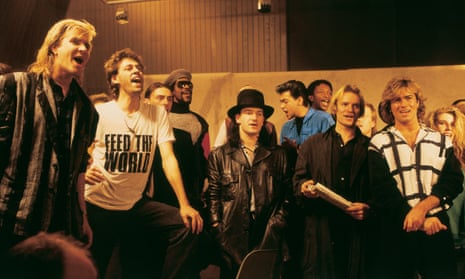
December 3, 1984: "Band Aid," a group of British and Irish singers, led by Boomtown Rats lead singer Bob Geldof, releases its hunger-relief single "Do They Know It's Christmas?"

Robert Frederick Zenon Geldof was born on October 5, 1951 in Dún Laoghaire, outside Dublin. In that city, in 1975, he formed The Boomtown Rats, a punk band which, aside from Bob's role in "Band Aid," is best known for their 1979 hit "I Don't Like Mondays."

The BBC, the British Broadcasting Corporation, played a major role in capturing the poverty and famine affecting people in the East African nation of Ethiopia citizens in 1984, and thereby influenced Geldof to take action. BBC presenter Paula Yates, then Geldof's girlfriend and eventually his wife (and then ex-wife), is considered to have been the brains behind the original Band Aid. It was she who became the driving force that inspired (and helped) Geldof to rally the most famous pop stars of the 1980s to raise money for famine relief.

"Do They Know It's Christmas?" was written by Geldof and James "Midge" Ure, the lead singer of Ultravox. The answer to the question was, "Not necessarily." Ethiopia then had a Communist government, which banned all religious holidays. Before that, the country's people were largely Orthodox Catholic, thus celebrating Christmas 2 weeks later than most Christians, on January 7. There is also the Rastafarian tradition, which holds that Ethiopians are one of the lost tribes of Israel, that their since-deposed monarchy was descended from the affair of King Solomon and the Queen of Sheba, and that the the Queen took the Ark of the Covenant to the Ethiopian city of Axum.

The song was recorded on November 25, 1984 at Sarm West Studios in Notting Hill, West London. The performers were:

* From The Boomtown Rats, Irish: Bob Geldof, Pete Briquette, Simon Crowe, Johnny Fingers.

* From Ultravox, English: Midge Ure and Christopher "Chris Cross" Allen.

* From The Police, English: Gordon "Sting" Sumner -- but not Andy Summers or Stewart Copeland.

* From The Jam and Style Council, English: Paul Weller.

* From Duran Duran, English: Simon Le Bon, Nick Rhodes, Andy Taylor, John Taylor and Roger Taylor. (Although he is also a drummer, Roger is not to be confused with Queen drummer Roger Taylor.)

* From Culture Club, English: George "Boy George" O'Dowd and Jon Moss -- but not Roy Hay or Mikey Craig.

* From Wham!, English: George Michael -- but not Andrew Ridgeley.

* From U2, Irish: Paul "Bono" Hewson and Adam Clayton -- but not Dave "The Edge" Evans or Larry Mullen. Bono didn't want to sing the iconic line, "Well, tonight, thank God it's them, instead of you!" but Geldof talked him into it.

* From Spandau Ballet, English: Twin brothers Gary Kemp and Martin Kemp, Tony Hadley, John Keeble and Steve Norman.

* From Status Quo, English: Rick Parfitt and Francis Rossi -- but not Alan Lancaster, Andy Bown, John Coghlan or Pete Kircher.

* From Bananarama, English: Sara Dallin, Siobhan Fahey and Keren Woodward. (Fahey is Irish, while Dallin and Woodward are English-born-and-raised but of Irish descent.)

* From Heaven 17, English: Glenn Gregory and Martyn Ware -- but not Ian Craig Marsh. (Ware and Marsh had also been in Human League.)

* From The Q-Tips: Paul Young.

* Phil Collins, English -- but not any of his former bandmates in Genesis: Peter Gabriel, Tony Banks or Mike Rutherford.

* Peter Robinson, an English singer who, despite being born male, recorded under the name "Marilyn." (Barely more than a one-hit wonder in Britain, he's never had a hit in America.)

* From Kool & the Gang, American: Robert "Kool" Bell, James "J.T." Taylor and Dennis "Dee Tee" Thomas.

* And from Shalamar, American: Jody Watley.

The song hit Number 1 in Britain, Ireland, Canada, Australia, New Zealand, Belgium, the Netherlands, Norway, Sweden, Denmark, West Germany, Austria and Switzerland. In America, it only reached Number 13, probably because many of the acts were not yet known there.

The song raised £8 million for Ethiopia within a year, far exceeding Geldof's hopes. With inflation, that's about £23 million, or about $32 million. It inspired an American effort, "USA for Africa," and its song "We Are the World."

In spite of the fundraising of both songs, much of the money was converted not into food for the starving, but into guns and other amenities for the ruling party. In the end, Ethiopia, which had 40 million people before the famine started, lost 1.2 million people to death by starvation, and 400,000 people fled the country. The Communist regime collapsed in 1991, but the country has been in civil war on and off ever since.

Paula Yates died of an accidental drug overdose in 2000. Rick Parfitt died in 2016. George Michael died on Christmas Day in 2016. Dee Tee Thomas died in 2021. (UPDATE: Chris Cross of Ultravox died in 2024.)

*

December 3, 1984 was a Monday. On ABC Monday Night Football, the San Diego Chargers beat the Chicago Bears, 20-7 at Jack Murphy Stadium in San Diego.

Baseball was out of season. There was 1 game in the NBA: The Seattle SuperSonics beat the Phoenix Suns, 108-96 at the Seattle Center Coliseum.

There were 4 games in the NHL:

* The New York Rangers lost to the Philadelphia Flyers, 6-2 at Madison Square Garden.

* The New York Islanders beat the Vancouver Canucks, 5-4 at the Pacific Coliseum in Vancouver.

* The Montreal Canadiens beat the Hartford Whalers, 9-3 at the Montreal Forum.

* And the Boston Bruins and the Quebec Nordiques played to a tie, 3-3 at the Colisée de Québec.

Saturday, December 3, 2022

December 3, 1979: The Riverfront Coliseum Disaster

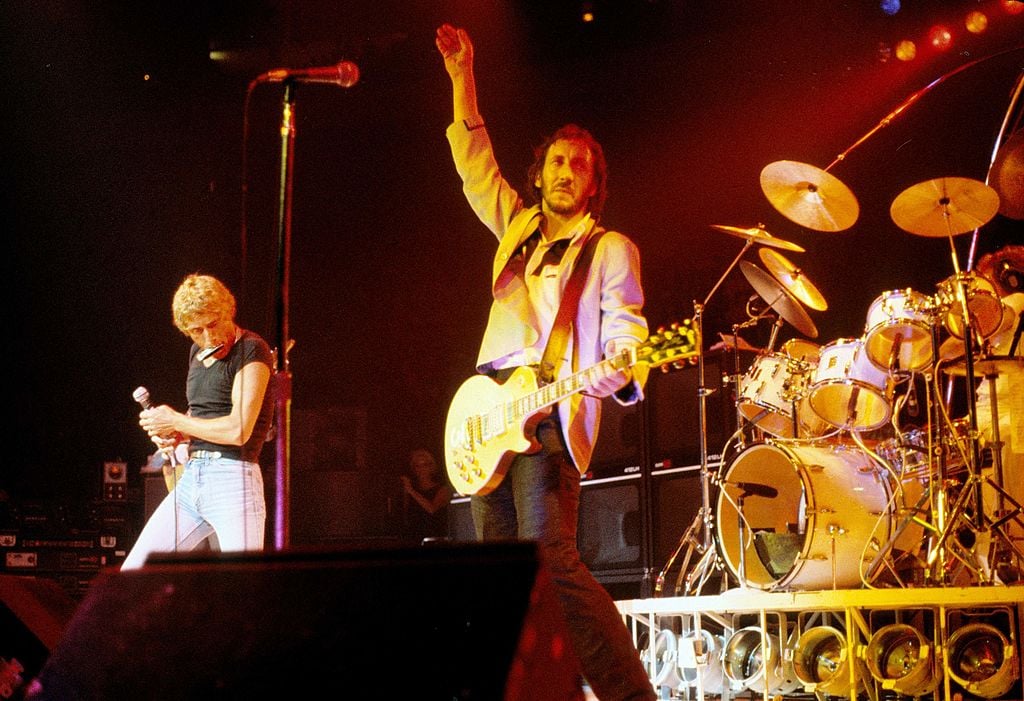
December 3, 1979: Disaster strikes a concert by The Who at the Riverfront Coliseum in Cincinnati.

From 1964 to 1978, The Who were Roger Daltrey on lead vocals, Pete Townshend on lead guitar and doing most of the songwriting, John Entwistle on bass guitar, and Keith Moon on drums. On September 7, 1978, Moon's substance abuse reached its inevitable conclusion, and he died. He was replaced on drums by Kenney Jones, formerly of another renowned British rock band, The Faces.

Officially, The Who were recognized by The Guinness Book of World Records as the loudest musical act of all time. Unofficially, many people considered them the best rock band in the world, especially in the early 1970s, when Moon was still mostly functional and possibly the greatest drummer rock and roll has ever known, Townshend was writing some of his best work, The Beatles had broken up, The Rolling Stones were believing their hype a little too much, and Led Zeppelin were still a bit too far out there for mainstream American audiences.

The Who were among the first acts to destroy their instruments at the end of a performance, which sometimes looked like a riot onstage. But there had never been a riot at any of their shows.

They had played the Monterey Pop Festival outside San Francisco in 1967, and Woodstock outside New York City in 1969. They hadn't invented the concept of, well, the concept album. Nor had they invented the concept of the "rock opera." But they had written the 1st truly successful opera to incorporate rock and roll music, Tommy, in 1969. And they had played it at the Metropolitan Opera House at New York's Lincoln Center in 1970. So they were immensely talented and widely respected: They had beaten both rock's best and rock's haters at their respective own games.

Their 1979 tour was their 1st without Moon. Jones was healthier, smarter, and very good. But a lot of the camaraderie had been lost with Moon. Still, they were giving it their best, and had already had a sellout stand at Madison Square Garden.

The Riverfront Coliseum had been built in 1975, on the Ohio River, nearly adjacent to Riverfront Stadium, home of baseball's Cincinnati Reds and football's Cincinnati Bengals. The Cincinnati Stingers of the World Hockey Association had played at the Coliseum, but stopped when the league folded and they weren't invited into the National Hockey League. The Coliseum was hosting selected basketball games of the University of Cincinnati, and the Cincinnati Kids of the Major Indoor Soccer League. And it hosted rock concerts.
The Riverfront Coliseum, now named
the Heritage Bank Center

The Who were scheduled to play there on December 3, 1979. At 5:00 PM, a crowd had formed outside the gate for General Admission seating. At 7:15, 45 minutes before the curtain was due to go up, someone thought they'd heard The Who playing. It could have been a sound check. Or, it could have been a section of a documentary film about them that had recently been released, The Kids Are Alright. Whatever it was, some fans were sure that the band was already playing their show.

And the crowd outside the gate surged, and pushed toward the doors. This caused some people to get trampled. Many were crushed against each other and asphyxiated. It was a situation similar to the one that would happen at Hillsborough Stadium in Sheffield, England before an FA Cup soccer game 10 years later. There were 11 deaths, and 26 other injuries.

The promoters and the arena operators, desperate to keep the money they were going to make, decided not to tell the band members what had happened. Roger, Pete, John and Kenney played their regular show, not knowing. Only afterward were they told.

This was before the age of social media. News of the similar event that took place at the Astroworld complex in Houston in 2021 swept across the world in minutes. But in 1979, that kind of mechanism for delivering information through mass communication simply wasn't there. Many people didn't even read about it in the newspaper the next morning.

It was only when they saw the network evening news on December 4 that they realized the magnitude of what had happened. The band looked very bad for playing after the tragedy, but that wasn't their fault: They didn't know there was a tragedy. Indeed, of the 18,348 paying ticketholders on the night, most of them weren't in the crowd crush, and they didn't know until the next day, either.

The Who continued their tour. On December 4, at the Buffalo Memorial Auditorium, Daltrey told the crowd, "We lost a lot of family last night. This show's for them."

The families of the victims filed a class-action lawsuit against the band; the promoters, Electric Factory Concerts; and the City of Cincinnati, operators of the arena. The case was eventually settled out of court, with each of the families of the deceased receiving around $150,000 -- about $604,000 in 2022 money.

The City banned "unassigned festival seating" on December 27. This was reflected in an episode of the CBS sitcom WKRP in Cincinnati, set at a radio station that had, in that fictional version of the world, promoted the concert. The episode, "In Concert," aired on February 4, 1980.

The Who announced their farewell tour in 1982. But in 1989, they went back on tour, this time with Zak Starkey, son of Beatles drummer Ringo Starr, on drums. In 2001, with the lineup of Daltrey, Townshend, Entwistle and Starkey, the played The Concert for New York City at Madison Square Garden. It was Entwistle's last performance: He died in his hotel room in Las Vegas, just before their 1st show of a planned 2002 tour. Daltrey and Townshend are still alive, and have occasionally reunited with other musicians making up "The Who."

The Riverfront Coliseum still stands, although it's gone through some name changes. In 1997, it became The Crown; in 1999, the Firstar Center; in 2002, the U.S. Bank Arena; and in 2019, the Heritage Bank Center. It has hosted minor-league hockey, mostly the Cincinnati Cyclones of the ECHL; college and minor-league basketball, indoor soccer, arena football -- and, of course, concerts.

*

December 3, 1979 was a Monday. On ABC Monday Night Football, the Oakland Raiders beat the New Orleans Saints, 42-35 at the Superdome in New Orleans.

There was 1 game played in the NBA that night: The Milwaukee Bucks beat the Utah Jazz, 96-89 at the Salt Palace in Salt Lake City. This was the Jazz' 1st season in Utah, after 5 weak seasons in New Orleans, where their name made a lot more sense.

And there was 1 game played in the NHL, a rematch of the previous season's Stanley Cup Finals: The New York Rangers and the defending Champion Montreal Canadiens played to a 3-3 tie at Madison Square Garden. The Rangers took a 1-0 lead on a goal by Warren Miller, and a 2-1 lead on a goal by Phil Esposito. But Larry Robinson canceled out the Miller goal, and Guy Lafleur and Pierre Larouche gave the Habs a 3-2 lead. But Esposito scored again with 13:37 left in regulation, and it ended 3-3.

And actress Tiffany Haddish was born on this day.

December 3, 1973: The 1st Close-Up Pictures of the Planet Jupiter

December 3, 1973: The probe Pioneer 10 sends photographs of Jupiter, the largest planet in the solar system, back to Earth. These were the first close-up pictures of any of the system's 4 outer "gas giants."

Pioneer 10 was launched from Cape Canaveral, Florida on March 2, 1972, and was intended for a flyby only of Jupiter, no other planets. It was followed a year later by Pioneer 11, which was designed for flybys (flybies? flysby?) of both Jupiter and Saturn, becoming the 1st probe to take close-up photos of the latter.

On the suggestion of astronomer Carl Sagan, each of them carried a 6-by-9-inch gold-anodized aluminum plaque, in case either of them is ever found by intelligent life-forms from another planetary system. The plaques feature the nude figures of a human male and female, along with several symbols that are designed to provide information about the origin of the spacecraft. The plaque is attached to the antenna support struts, where it would be shielded from interstellar dust.
On June 13, 1983, Pioneer 10 crossed the orbit of Neptune, making it the 1st human-made object to leave the Solar System. On April 27, 2002, NASA had its last successful reception of telemetry from Pioneer 10, from a distance of 80.22 AU -- an "astronomical unit" being the distance between the Earth and the Sun, about 93 million miles, so 80.22 AU is about 1.16 billion miles from Earth. A last signal, too weak to learn anything from it, was received on January 23, 2003.

*

December 3, 1973 was a Monday. Actress Holly Marie Combs was born.

Baseball was out of season. There were no games scheduled in the NBA, the ABA, the NHL or the WHA. There was one score on this historic day: On ABC Monday Night Football, the Miami Dolphins beat the Pittsburgh Steelers, 30-26 at the Orange Bowl in Miami.

Friday, December 2, 2022

December 2, 1985: The Chicago Bears' Monday Night Stumble

December 2, 1985: The Miami Dolphins defeat the Chicago Bears, 38-24 at the Orange Bowl. This turns out to be the only game the Bears lose all season long, the one bump on their "Super Bowl Shuffle."

Jim McMahon, the Bears' usual starting quarterback, was injured, and had to be replaced by Steve Fuller, previously the starting quarterback for the Kansas City Chiefs. Until now, that hadn't been a problem.

But Fuller was held to 11 completions in 21 passes for 169 yards, a touchdown and 2 interceptions by the Dolphins' defense, know as the Killer B's for their players with names starting with B: Bob Baumhower, Bob Brudzinski, Doug Betters, Kim Bokamper, and the brothers Glenn and Kyle Blackwood.

Bears coach Mike Ditka, hoping to bring McMahon back the next week, sent him in to save the game, and he couldn't, going 3-for-6 for 42 yards and an interception. Walter Payton rushed for 121 yards, but the rest of the Bears combined ran for only 46.

In contrast, Dan Marino, who so often failed in the postseason, came through for the Dolphins, going 14-for-27 for 270 yards, 3 touchdowns and an interception. His "Mark II" receivers came through for him: Mark Duper had 107 receiving yards, and Mark Clayton had 88.

Revisionist history now says that this loss shook Da Bears out of their complacency, and allowed them to focus on the main thing, winning the Super Bowl, rather than concentrating on going undefeated.

The Dolphins took special pride in ruining the Bears' unbeaten season, as the 1972 Dolphins were then, and still are now, the only team in the NFL's 106-season history to go unbeaten and untied in the regular season and then win the league championship. Then again, neither the Dolphins nor the Bears have won the title since the 1985 season. Indeed, the Dolphins, defending AFC Champions at the time, haven't even been to the Super Bowl since; the Bears, only once.

It remains the most-watched game in Monday Night Football history. Which must have really burned up Howard Cosell: The biggest audience in MNF history, and they weren't listening to him. The announcers were Frank Gifford, Joe Namath and... O.J. Simpson. (If you're not old enough to remember before June 1994 when he was charged with murder, let me tell you: This man was beloved in America.)

*

December 2, 1985 was, as stated, a Monday. So this was the only football game on the day. Baseball was out of season. There was 1 game in the NBA: The Utah Jazz beat the Golden State Warriors, 103-100 at the Salt Palace in Salt Lake City, Utah.

And there were 2 games in the NHL. The New York Rangers got embarrassed by the Pittsburgh Penguins, 6-0 at Madison Square Garden. At least when the Vancouver Canucks got beat 7-0 by the Montreal Canadiens, they could console themselves with the fact that they were on the road, at the Montreal Forum; and, later, also with the fact that the Canadiens went on to win the 1986 Stanley Cup.

Thursday, December 1, 2022

December 1, 1986: "The Dark Knight Returns" is Published

December 1, 1986: Batman: The Dark Knight Returns #4 is released by DC Comics, written by Frank Miller, drawn by Klaus Janson, and colored by Lynn Varley. It concludes Miller's story of Bruce Wayne coming out of retirement, as his hometown of Gotham City has fallen apart without him to watch over it as the Caped Crusader. As far as I know, this is the first publication to call Batman "the Dark Knight."

DKR (for short) #1, titled "The Dark Knight Returns," tells of Bruce realizing that he has to get back out there, despite being 55 years old and having no Robin: He and his original Dynamic Duo partner, Dick Grayson, are estranged; and Dick's replacement, Jason Todd, had been killed in action some time before, implied to be the reason Bruce hung up the cowl. (Note: This story was published 2 years before DC showed Jason being killed by the Joker in the storyline Batman: A Death in the Family.)

Batman manages to foil a terrorist plot by Harvey Dent, the former District Attorney known as Two-Face: Although his disfigurement has been cured and his face restored, Harvey has totally given in to the bad side of his personality.

DKR #2, "The Dark Knight Triumphant," shows Batman taking on the Mutants, the gang that has taken control of the streets of Gotham, but he's too old, and their gigantic leader kicks his ass. (Note: This story was published 7 years before DC introduced the huge villain Bane, who wore Batman down physically and psychologically, before breaking his back in the storyline Batman: Knightfall.)

He is saved by Carrie Kelley, a 13-year-old girl who idolizes him, and has taken to fighting crime wearing a copy of a Robin costume. Avoiding the Mutants' notice, she drags him back to the Batmobile, and, with a now-elderly butler Alfred Pennyworth guiding her over the phone, gets Bruce back to the Batcave. Bruce recovers, goes out, and wins a rematch. (Batman fans like to say, "Batman always wins." He loses occasionally, but always seems to win the rematches.) Now, predictably, "The Mutants" are "The Sons of the Batman."

DKR #3, "Hunt the Dark Knight," shows that it's now the world that's falling apart. In a story that resembles the Cuban Missile Crisis, the Caribbean island of Corto Maltese is a flashpoint in the Cold War. (Remember: Despite Batman being old, the story is set in what was then the present day, so the Soviet Union is still a threat.) And the President, a thinly-veiled caricature of the real-life President at the time, Ronald Reagan (he keeps a jar of mints on his desk instead of jelly beans), is in over his head.

Fortunately, the U.S. government has an ace in the hole, to protect their interests. At some point in the past, something like the later Marvel Comics' "Superhero Registration Act" had been passed, ordering all costumed crimefighters to either work for the government, retire, or be considered outlaws. Most retired. Only one chose to work for the government: Superman. Batman doesn't like this.

But Batman has a bigger problem: The Joker has broken out of Arkham Asylum, and the final battle he had long feared -- and the Joker seemed to want -- has come: Kill or be killed. Batman breaks the Joker's neck, leaving him paralyzed, but alive. The Joker expresses his disappointment, and twists his head to finish the job, making it look like Batman actually did it. And now, he's on the run.

DKR #4 is titled "The Dark Knight Falls." Miller had said that every hero's journey has an ending, using the examples of medieval figures King Arthur and Beowulf sacrificing themselves in a final battle, and wrote this chapter as a "last Batman story." The police, no longer under the command of the retired Commissioner Jim Gordon, and the federal government both want Batman in custody, and the feds are ready to send Superman after him.

But the Cold War turns hot, and a nuclear missile heads toward America. Superman stops it, but is seriously weakened. Still, the electromagnetic pulse set off by the explosion knocks out America's electricity, and Batman takes Carrie/Robin and the Sons of the Batman to the Wayne Manor stables, and the horses become the new Batmobiles as Bruce leads them in settling things down in Gotham.

The final showdown takes place in Crime Alley, where Batman's parents had been gunned down 46 years earlier. (Bruce's age when Thomas and Martha had been killed had been hinted at before, but, while this story is not canon in the main DC storyline, his age at the time is given in this story as 9.) Bruce has decided to die where "Batman was born." He stands in an armored version of his Batsuit, and attacks Superman with high-voltage electricity. Even against a weakened Superman, this doesn't work, and Superman smashes his helmet, and another punch breaks 3 of his ribs.

Correctly guessing this, Batman is properly prepared. He cheats. He has Green Arrow fire an arrow at Superman. It explodes, spraying him with Kryptonite dust. And Batman beats Superman to a pulp. And he says, "I want you to remember, Clark. In all the years to come, in your most private moments, I want you to remember, my hand, at your throat. I want you to remember the one man who beat you."
And then Batman has a heart attack and drops dead. This follows the destruction of Wayne Manor, meant to cover up all his secrets (which doesn't work, as Bruce is exposed as Batman anyway), and the death of Alfred from a stroke, as his boss dies. Alfred's last thought: "Of course, how utterly proper."

Batman wins. Some victory, huh?

As Clark Kent, still with a bruised face, Superman attends the funeral of Bruce Wayne. The body had been claimed by "his one living relative, a cousin." Selina Kyle, the former Catwoman, accuses Clark of killing Bruce, and has to be restrained by Gordon. (Apparently, both Jim and Selina already knew Clark's secret identity, as well as Bruce's.)

Clark starts to walk away, but then, his super-hearing picks up a heartbeat. He turns, and comes face-to-face with the cousin. No, not Kate Kane, a.k.a. Batwoman. (That character wouldn't debut for another 20 years.) But it is a young woman with red hair, wrapped in black. It's no cousin: It's Carrie. He winks at her, to let her know that he knows, and that he's okay with it. We can't tell, but maybe Carrie is smiling under her veil. 

(The wink may also be a nod to a story that had been published earlier in the year: Whatever Happened to the Man of Tomorrow?, the farewell to the pre-Crisis On Infinite Earths Earth-1 Superman, set 10 years after Superman's alleged death, with him having a new identity, married to Lois Lane, and having a son who shows a sign of having superpowers.)

And the last scene is in the Batcave, or what's left of it: Bruce, very much alive, with Carrie by his side, discussing strategy for rebuilding and protecting Gotham with the Sons of the Batman. After a few mentions throughout the story of "This would be a good death... ," he says, "This will be a good life. Good enough."

In other words, after making a big deal of wanting Batman to have a final battle and die, Miller copped out, and kept Batman alive.

And the story has since been ruined by sequels, each installment more ridiculous than the last, betraying the sensibility of this story.

*

DKR is an "Elseworlds" story, taking place outside the official DC Comics canon, although the Elseworlds imprint wouldn't debut until 1989, with Batman: Gotham By Gaslight, showing Batman in 1889, taking on, while being accused of being, Jack the Ripper.

DKR was the story that Batman fans had waited their whole lives for: The story that made Batman, not Superman, the Number 1 superhero. The story that showed that "Batman always wins." The story that proved that Batman could even beat Superman. That Batman was better than Superman, because Superman is a "boy scout" (to use the old insult against him). That Superman, as Batman puts it in this story, "always said yes to anybody with a badge or a flag." That Batman was the ultimate badass.

Let's get something straight: Batman can't beat Superman. There is no way in hell that it could ever happen.

Batfans who want their guy to beat Superman always cite the fight scene at the end of DKR. And, I have to admit, the Superman in that story (not the one we know, as things have changed tremendously from canon) is a bit of a jerk, who deserved to be taught a lesson.

But here's how that scene would have played out, if Frank Miller understood Superman:

* Batman fires a laser cannon at Superman. Superman is knocked back, but gets up, and says, "Bruce, is that the best you can do?"

* Batman zaps Superman with millions of volts of electricity. (Ripped off from an early Fantastic Four story where The Thing did it to The Hulk, after The Hulk shoved him down a manhole.) Superman is surprised, but says, "Seriously? I just survived a nuke, Bruce."


* Green Arrow launches his arrow. Superman's super-hearing picks up the sound. His telescopic vision sees the arrow, and his X-ray vision sees what's inside. He can do this faster than a speeding bullet, let alone a speeding arrow, because his senses have the same super-speed as the rest of him. He gets out of the way, the arrow lands harmlessly, and he blows the Kryptonite dust out of the way.

* Batman is screwed. His ace in the hole is completely wasted, and he has no weapons left except his mind and his hand-to-hand combat abilities. Both of which are completely wasted on a Kryptonian.


Batfans believe "Batman always wins." Why? Because he's smarter, and "Because he's the goddamn Batman, that's why."

Except Batman isn't smarter than Superman. The yellow Sun of the Earth, compared with the red sun of Krypton, makes Superman's brain a supercomputer, the likes of which no Batman or Batcomputer can match.

You want to know what would happen if they tried to solve the same crime? Batman would sit on a rooftop, waiting for the bad guys to show up. Except they wouldn't, because Superman has used his super-senses to track them down, and has already taken them to jail.

You want to know what would happen if they played each other in chess? I asked my father this question, not long before he died. He was a comic book fan going back to his youth in the 1950s, had 2 science degrees from the school now known as the New Jersey Institute of Technology, and (unlike myself, to whom he never seemed to be able to pass on this part of his knowledge) was a decent chess player.

Dad reminded me of Superman's Sun-aided brain, and his super-speed. He said that Batman would be ready to pull all kinds of maneuvers, except that, in the time it took Batman to set up the board, Superman could have read a dozen books on chess strategy, and would know every move that Batman could make.

It's no contest. And even if Batman were smarter than Superman, which he isn't, he still wouldn't win a fight. A big part of Batman's schtick is sneaking up on his opponents. You can't sneak up on someone with super-speed. Or super-hearing, for that matter. And Batman's martial arts expertise is useless against Superman's quickness, and his invulnerability.

Trying to attack Superman from a distance wouldn't help. What's Batman going to do, throw a Batarang at Superman? His speed would allow him to see it, and, whether laced with Kryptonite or anything else, he'd use his heat vision to melt it, or his super breath to freeze it.

And let's be very clear about this: Kryptonite is not an ace in the hole. Superman sometimes faces a guy named Kryptonite Man, and another guy named Metallo, who has a human brain but a robot body powered by Kryptonite. Superman fights these guys, and he still finds a way to win.

And Kryptonite doesn't kill a Kryptonian instantly. It hurts him. It weakens him. But even if Superman had just 1 percent of his strength left, in spite of the pain he would be in, he would still be far stronger than an average human, and Batman would still be pathetically overmatched.

So any Kryptonite that Batman might have only has the power that the writers give it, so it's not a guaranteed knockout. The "ace" can be a higher card than a king, but it could be no better than a one, like every other attack Batman could use.

DKR has been adapted for an animated film. Elements of it were used for the 2012 film The Dark Knight Rises (although no other superhero appeared in it), the 2016 film Batman v. Superman: Dawn of Justice, and The CW's TV adaptation of Crisis On Infinite Earths, showing an alternate Earth where Batman took it one step further, and killed Superman, using the "badge or a flag" line to explain it to Supergirl and Batwoman.

*

December 1, 1986 was a Monday. Baseball was out of season. There were no NBA games played that day. Two games were played in the NHL, both in Quebec. The Washington Capitals beat the Montreal Canadiens, 2-1 at the Montreal Forum. Alan Haworth scored the winning goal, 1:48 into overtime. And the Quebec Nordiques beat the Hartford Whalers, 4-1 at the Colisée de Québec.

And on ABC Monday Night Football, the New York Giants beat the San Francisco 49ers, 21-17 at Candlestick Park in San Francisco. Also in football, DeSean Jackson was born on this day.

Tuesday, November 29, 2022

November 29, 1976: Reggie Jackson Brings His Star to New York

Left to right: Thurman Munson,
Reggie Jackson, Roy White

November 29, 1976: The New York Yankees sign the biggest available free agent, Reggie Jackson. The contract is for $2,960,000 over 5 years – $592,000 a year, or about $3.04 million in today's money.

This was the 1st off-season in which free agency was widespread. Charlie Finley, Reggie's boss with the Kansas City and Oakland Athletics from his 1966 signing (including his 1967 major league debut) until the previous April, was not going to sign him to a big contract. Finley wasn't going to sign anybody, because, as Reggie himself said in his memoir, "Lord, but the man was cheap."

Just before the start of the 1976 regular season, Finley had traded Reggie to the Baltimore Orioles. But their owner, Jerry Hoffberger, wasn't going to sing him, either.

Three team owners were willing to sign Reggie: Shipbuilding tycoon George Steinbrenner of the Yankees, McDonald's head honcho Ray Kroc of the San Diego Padres, and Seagram's whiskey baron Charles Bronfman of the Montreal Expos. Reggie thought about it, and decided that he didn't want to deal with the Canadian exchange rate -- or to learn French, and narrowed it down to the Yanks and Padres.

"George Steinbrenner hustled me," Reggie said at the press conference for his signing. He told George that Kroc was offering him more money to go to San Diego. George revealed that, whatever Kroc intended, the promise of more money was a half-truth: "Kroc is offering you more salary to go to San Diego." George reminded Reggie that New York was the media capital of the world, including the advertising capital of the world. Between salary, endorsements, and the glory that would come with winning with the New York Yankees, Reggie could get a lot more from George Steinbrenner than he ever could from Ray Kroc.

The press conference was held at the Versailles Terrace at the Americana Hotel. Reggie posed for pictures with George, with coaches Yogi Berra and Elston Howard, and with new teammates Thurman Munson and Roy White. One notable Yankee not there was manager Billy Martin. He didn't want Reggie, for reasons both professional (if misguided) and personal.

A 1974 Sports Illustrated cover had called Reggie, then the reigning Most Valuable Player of the American League and the World Series, a "Superduperstar." So he wasn't kidding when he told the New York media, "I didn't come to New York to be a star. I'm bringing my star with me."

A lot of people didn't like that. Munson was one of them: George had promised him he would be the highest-paid Yankee as long as he was on the team. George had already broken that promise once, 2 years earlier, when the chance to sign the best pitcher in baseball at the time, Reggie's former Oakland teammate Jim "Catfish" Hunter, came up. Thurman understood then. But breaking the promise again?

And a SPORT magazine article printed early in the 1977 season, with quotes -- or perhaps misquotes, or perhaps simply made-up quotes -- from Reggie about himself, and about Thurman, further drove a wedge between them. Things got ugly.

Two million, nine hundred and sixty thousand dollars? In Jerry Ford dollars? Bargain. Reggie defined an era in baseball, earning the nickname Mr. October. In 5 seasons, he got the Yankees to 4 postseasons, winning 3 Pennants and 2 World Series, and making them the biggest show in baseball.

Finley's other stars that he cheaply let get away?

* Kroc signed relief pitcher Rollie Fingers and 1st baseman Gene Tenace. He got no Playoff berths as a result, as the Dodgers were too strong. But at least he tried.

* Gene Autry, the entertainment legend who owned the team then known as the California Angels, signed A's left fielder Joe Rudi and designated hitter Don Baylor, along with former Oriole 2nd baseman Bobby Grich. He got 2 Division titles, but no Pennants.

* Allan "Bud" Selig, the used car dealer who owned the Milwaukee Brewers, signed 3rd baseman Sal Bando, and would later acquire Fingers in a trade. He won a Pennant, but no World Series.

* Brad Corbett, the oil executive who owned the Texas Rangers, signed shortstop Bert Campaneris, and made some other notable acquisitions. He got no Playoff berths as a result.

* And real estate tycoon Bob Lurie, who owned the San Francisco Giants, was the final landing spot for pitcher Vida Blue, after Finley had previously tried to sell Blue to the Yankees and trade him to the Cincinnati Reds. Both of those teams did better without the increasingly drug-addled Blue than the Giants did: They didn't make the Playoffs again until 1987.

Minnesota Twins owner Calvin Griffith, was not only nearly as cheap as Finley, but also blatantly racist. He refused to lift a finger to re-sign pitcher Bill Campbell. He went to the free-spending Boston Red Sox, who thought that having a lockdown reliever would have made the difference in the 1975 World Series against the Reds and the 1977 AL Eastern Division race against the Yankees. But the Yankees had also improved.

And pitcher Wayne Garland, who went 20-7 for the Orioles in 1976, was signed by the Cleveland Indians for $2.3 million over 10 years. But he wrecked his shoulder in Spring Training, and went 13-19 in 1977. He had won 40 games in the major leagues before his 27th birthday. He won 15 games after it.

*

November 29, 1976 was a Monday. Actors Chadwick Boseman and Anna Faris were born on this day.

Baseball was out of season. No games were played in the NBA, the NHL or the WHA. On ABC Monday Night Football, the San Francisco 49ers beat the Minnesota Vikings, 20-16 at Metropolitan Stadium in the Minneapolis suburb of Bloomington, Minnesota.

December 31, 1999 & January 1, 2000: The Millennium

December 31, 1999:  The Millennium arrives. The people of planet Earth survived. At a terrible cost. But we hadn't destroyed ourselves. ...