Showing posts with label 1970. Show all posts

Wednesday, December 21, 2022

December 21, 1970: President Richard Nixon Meets Elvis Presley

December 21, 1970: The President of the United States meets the King of Rock and Roll. It doesn't go quite the way the fans of either would have imagined.

Richard Nixon, who had been Vice President when rock and roll debuted in the mid-1950s, had been elected in 1968 by, essentially, running as "the adult in the room," against youth culture and its running wild in the streets, promoting rock music and civil rights and opposing the Vietnam War.

In contrast, Elvis Presley, who became a star in the South in 1954 and nationally in 1956, was seen as a disruptive figure, pitting teenagers against their parents and other authority figures. And he had made a big comeback with a TV special in 1968 and a Las Vegas residency in 1969.

What people tended to overlook was that Elvis had accepted being drafted into the U.S. Army in 1958 (between the Korean and Vietnam Wars), had served without controversy, and was discharged with the rank of Sergeant, and remained proud of his service, entirely in peacetime though it was.

Furthermore, while he had recorded and had hits with "If I Can Dream" and "In the Ghetto" in 1969, and appeared to be without either racial or religious prejudice, he was not a flaming liberal. He was a man of his time when it came to relating to women. More to the point of this post, he was disturbed by the rise in illegal drug use, including by major rock performers, despite his own rising use of prescription drugs.

*

Let's take a step back, to April 24, 1970. Nixon's daughter, Tricia -- who, the following year, would marry lawyer Edward Cox at the White House -- hosted a White House tea party for her fellow alumnae of Finch College, a since-closed all-women's school in New York City. One of the invitees was Grace Wing. (She was of Scandinavian descent, not Chinese.)

That was her maiden name. Legally, she was using the married name Grace Slick. Professionally, she was using the name Grace Slick, as lead singer of The Jefferson Airplane, which was led by guitarist Paul Kantner, who whom she was in a relationship. (Their daughter, actress China Wing Kantner, was born almost exactly 9 months later.)

Grace knew she would never have been invited under her married/show biz name. She decided to take advantage of this by bringing Abbie Hoffman, leader of the Yippies and the recently-acquitted "Chicago Seven" defendant. Together, they intended to spike President Nixon's tea with LSD.

But White House security knew it was an "all ladies" event, and, even before they realized who he was, they told Abbie they wouldn't let him in. So Grace didn't go in, either. What could have been an epic event was thwarted.

*

Elvis had landed in Washington on the morning of December 21, 1970, fresh off a red-eye flight from Los Angeles, on which he had penned a letter to the President on 6 pages of American Airlines stationery. This is what he wrote, without my having changed any spelling or grammar:

Dear Mr. President.

First, I would like to introduce myself. I am Elvis Presley and admire you and have great respect for your office. I talked to Vice President Agnew in Palm Springs three weeks ago and expressed my concern for our country. The drug culture, the hippie elements, the SDS, Black Panthers, etc. do not consider me as their enemy or as they call it the establishment. I call it America and I love it. Sir, I can and will be of any service that I can to help the country out. I have no concern or motives other than helping the country out.

So I wish not to be given a title or an appointed position. I can and will do more good if I were made a Federal Agent at Large and I will help out by doing it my way through my communications with people of all ages. First and foremost, I am an entertainer, but all I need is the Federal credentials. I am on this plane with Senator George Murphy and we have been discussing the problems that our country is faced with.

Sir, I am staying at the Washington Hotel, Room 505-506-507. I have two men who work with me by the name of Jerry Schilling and Sonny West. I am registered under the name of Jon Burrows. I will be here for as long as long as it takes to get the credentials of a Federal Agent. I have done an in-depth study of drug abuse and Communist brainwashing techniques and I am right in the middle of the whole thing where I can and will do the most good.

I am Glad to help just so long as it is kept very private. You can have your staff or whomever call me anytime today, tonight, or tomorrow. I was nominated this coming year one of America's Ten Most Outstanding Young Men. That will be in January 18 in my home town of Memphis, Tennessee. I am sending you the short autobiography about myself so you can better understand this approach. I would love to meet you just to say hello if you're not too busy.

Respectfully,
Elvis Presley

P. S. I believe that you, Sir, were one of the Top Ten Outstanding Men of America also.
I have a personal gift for you which I would like to present to you and you can accept it or I will keep it for you until you can take it.

On the 6th and last page, he included his private telephone numbers, and those of his manager, "Colonel" Tom Parker, at his homes in Memphis, Beverly Hills and Palm Springs, and at his hotel in Washington.

Once they landed, the King directed his limo to Pennsylvania Avenue. He jumped out to hand the note to Secret Service guards, who didn’t immediately recognize him, despite his high-collared topcoat and cane.

What Elvis really wanted was a special badge from the Bureau of Narcotics and Dangerous Drugs -- not so much as to be a real federal agent, but to add to his personal collection of police badges.

Jerry Schilling, a close friend of Elvis' who joined the visit to Washington, later described the King's penchant for flashy signals of authority in a conversation with the Nixon Presidential Library: "It was kind of a James Bond thing to him as well, but with a lot of respect for it."

Dwight Chapin, then a Deputy Assistant to the President, ended up arranging the meeting. He said, “This was a very humorous situation among us. Everybody thought we were joking."

Another Deputy Assistant, Egil "Bud" Krogh, went to the hotel to meet Elvis. "There was an interrogation," Schilling said. "That's a tough word, but, you know, 'Why do you want to meet the President? What do you want to talk about?' And it was a real nice, serious conversation between Bud and Elvis."

And so, Elvis, in purple velvet pants and a matching cape blazer, was led into the Oval Office, and shook hands with the President. It's the most requested photograph from the U.S. National Archives, an item more coveted than copies of the Constitution.

Krogh, the sole staffer who witnessed the Elvis-Nixon exchange in the Oval Office, with Schilling and Sonny West also in the room, later wrote meeting notes that sketched out the conversation: After the legendary photo-op, Elvis told the President that he was on his side, and he wanted to help reach young people to discourage drug use.

He also added a dig at The Beatles, who had broken up 8 months earlier, but whom Elvis told Nixon had promoted "anti-American spirit," much to Nixon's surprise. While Nixon would later try to get John Lennon deported, he had not, as yet, made any negative public statement against the group, or any member thereof, or, indeed, against any musical performer.

At first, Nixon was annoyed by what he saw as a public-relations stunt. But over the course of the meeting, he found that they had much in common: They were both "self-made men," who came from humble beginnings, and worked hard for their success, and both felt under-appreciated by an American culture they no longer understood, and had appeared to have passed them by. (It wasn't brought up, but another thing they had in common was being major "mama's boys.")

As for the gift, it was a gun. Yes, Elvis brought a gun into the White House. It was a Colt .45 pistol made for the U.S. Army during World War II, in what Nixon called a "handsome wooden chest" in the thank-you note he sent, dated on December 31. Elvis and Dick parted on good terms.

And the badge that Elvis so badly wanted? It came in the mail a few days later. This was one occasion on which Richard Nixon kept his word.
Despite the fame of both men, the meeting was not reported in the media at the time, and went unnoticed for more than a year until Jack Anderson's nationally syndicated newspaper column of January 27, 1972.

The revelation of the meeting shocked pretty much everybody. Nixon's supporters couldn't believe that Elvis the Pelvis was allowed in. Elvis' supporters figured he was too liberal to meet with the much-despised Tricky Dick. For Nixon-haters, it got worse: At the 1972 Republican Convention, Nixon was seen on TV getting hugged by Sammy Davis Jr., and applauded by Frank Sinatra, who had publicly supported Democratic Presidential nominees from Franklin Roosevelt in 1940 to Hubert Humphrey in 1968, especially John F. Kennedy against Nixon in 1960.

Dwight Chapin was convicted of perjury for lying to a grand jury over the Watergate case, and served 8 months in federal prison.

The meeting has been the subject of 2 movies. In 1997, Elvis Meets Nixon starred Rick Peters, Bob Gunton, Alyson Court as Priscilla Presley, Denny Doherty of The Mamas & The Papas as Elvis' father Vernon, and Richard Beymer (Tony in the film version of West Side Story) as White House Chief of Staff Bob Haldeman. In 2016, Elvis & Nixon starred Michael Shannon, Kevin Spacey, Tate Donovan as Haldeman, and Johnny Knoxville as West. No one in Elvis' family appears as a character.

Elvis died in 1977, his heart weakened by his prescription drug use. Senator George Murphy died in 1992, Nixon in 1994, Bud Krogh in 2020, and Sonny West in 2022. As of December 21, 2022, Dwight Chapin and Jerry Schilling are still alive.

*

December 21, 1970 was a Wednesday. Baseball was out of season. Football was in midweek. There were no games scheduled in the NHL.

There was 1 game in the NBA: The Milwaukee Bucks beat the Los Angeles Lakers, 113-88 at the Milwaukee Arena. In 1974, it was renamed the Milwaukee Exposition, Convention Center and Arena, or "The MECCA." Since 2014, it has been named the UW-Panther Arena. Lew Alcindor scored 37 points and grabbed 16 rebounds. He went on to lead the Bucks to the NBA Championship that season. After another year, he changed his name to Kareem Abdul-Jabbar. In 1975, he was traded to the Lakers, and would lead them to 6 titles.

There were 2 games played in the American Basketball Association, and they were a doubleheader at the Indiana State Fairgrounds Coliseum (now the Corteva Coliseum) in Indianapolis. The Miami Floridians beat the Kentucky Colonels, 125-119. Dan Issel scored 37 in defeat for the Colonels. And the Indiana Pacers beat the Pittsburgh Condors, 144-115. Bill Netolicky scored 36 for the Pacers.

Friday, December 16, 2022

December 16, 1970: "Love Story" Premieres

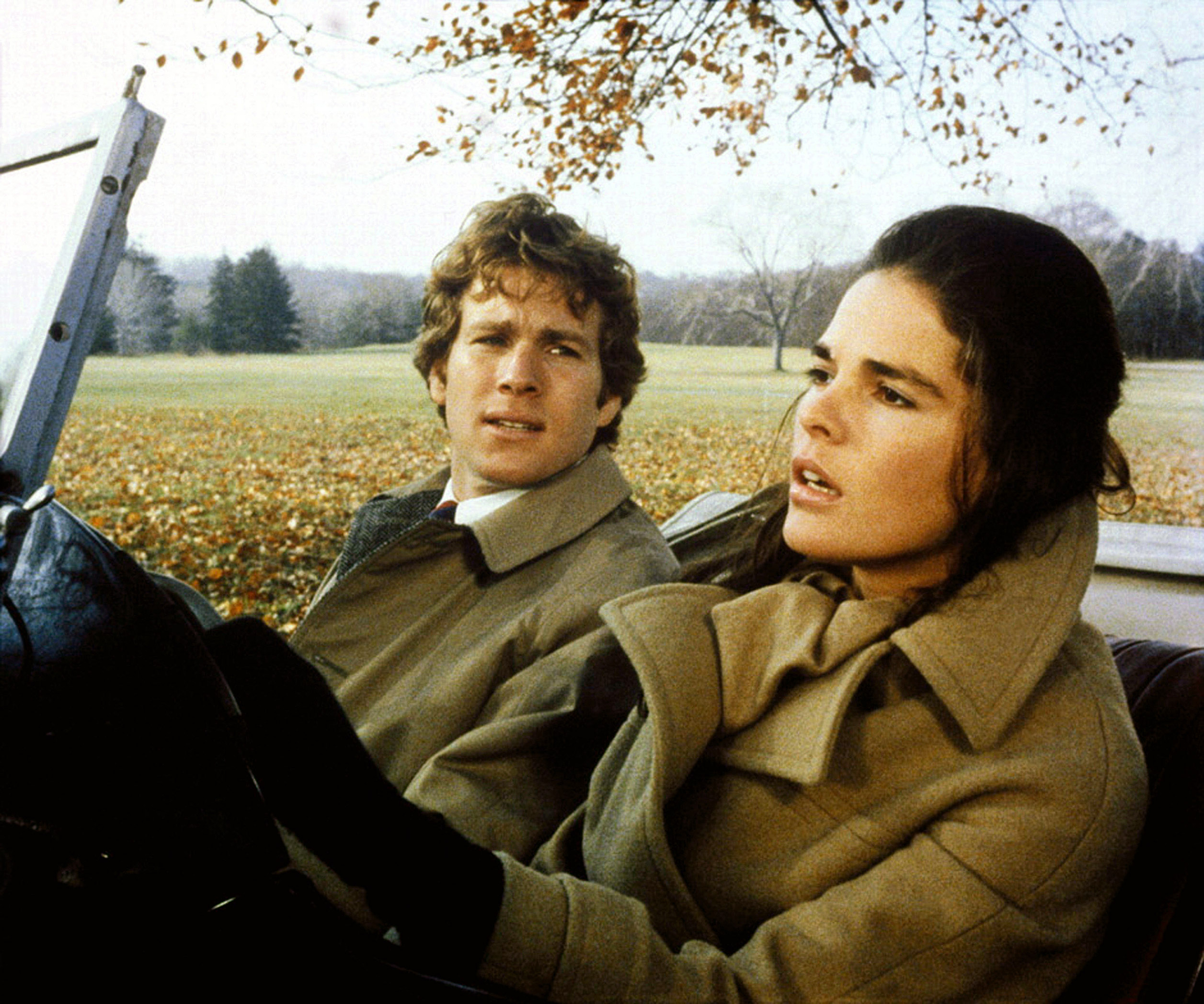
December 16, 1970: The film Love Story premieres, based on the novel of that year by Erich Segal, and directed by Arthur Hiller. It becomes one of the most popular films of its time.

Oliver Barrett IV (played by Ryan O'Neal), heir of an American upper-class East Coast family, attends Harvard University, where he plays hockey. He meets Jennifer Cavilleri (Ali McGraw), a quick-witted, working-class student of classical music at adjoining Radcliffe College. At the time, Radcliffe was considered the women's version of Harvard. The schools did not merge until 1977.

Oliver and Jenny fall in love, despite their differences. She accepts his marriage proposal, but his parents are judgmental and unimpressed. Oliver's father (Ray Milland) says he will cut him off financially if he marries Jenny, but after graduation, they marry.

Jenny works as a teacher, but without his father's financial support, the couple struggles to pay Oliver's way through Harvard Law School. Oliver graduates third in his class, and takes a position at a respectable New York City law firm. Jenny undergoes blood tests, to determine why she hasn't yet conceived a child. Oliver is told the reason: She is terminally ill.

Oliver attempts to continue as normal without telling Jenny of her condition, but she confronts her doctor and finds out the truth. Oliver buys tickets to Paris, which she has always wanted to visit, but she declines to go, wanting only to spend time with him. Oliver seeks money from his estranged father to pay for Jenny's cancer therapy. His father asks if he has "gotten a girl in trouble." Oliver says yes, and his father writes a check.

Jenny makes funeral arrangements with her father from her hospital bed. She tells Oliver to not blame himself, insisting that he never held her back from music, and it was worth it for the love they shared. Jenny's last wish is for Oliver to embrace her tightly as she dies.

A grief-stricken Oliver leaves the hospital and he sees his father outside, who has rushed to New York City from Massachusetts to offer his help after learning about Jenny's condition. Oliver tells him, "Jenny's dead," and his father says "I'm sorry," to which Oliver responds with something that Jenny had once told him: "Love means never having to say you're sorry."

The film split public opinion. Roger Ebert of the Chicago Sun-Times gave it 4 stars, and called it "infinitely better than the book." Charles Champlin of the Los Angeles Times wrote, "It's the telling that matters: the surfaces and the textures and the charm of the actors. And it is hard to see how these quantities could have been significantly improved upon in Love Story."

But Gene Siskel of the Chicago Tribune, who would later pair with Ebert to review films on the nationally-syndicated TV show At the Movies with Siskel & Ebert, wrote, "Seeing the characters in the movie... makes us want to know something about them. We get precious little, and love by fiat doesn't work well in film."

Vincent Canby of The New York Times hated it: "The only really depressing thing about Love Story is the thought of all the terrible imitations that will inevitably follow it." Judith Crist of New York magazine, which permitted its writers to use profanity, called it "Camille with bullshit."

Despite these criticisms, the film was nominated for 7 Academy Awards, including Best Picture, Best Director for Hiller, Best Actor for O'Neal, Best Actress for McGraw, Best Supporting Actor for John Marley (for playing Jenny's father, Phil Cavilleri), and Best Screenplay for Segal. But it only won 1, Best Original Score, for Francis Lai.

It launched O'Neal and McGraw to stardom, and helped set the template for what became known as the "chick flick": A movie that women would love, and men would endure to make their women happy. Andy Williams had a hit with "(Where Do I Begin?) Love Story," the film's main song.

In 1971, as a result of the film, Jennifer became the most popular baby girl's name in America. It would hold this position for 14 years. In the 1973-74 TV season, NBC broadcast Love Story, an anthology series. Aside from having the same title, and using the same theme song, it had no connection to the film.

In 1977, Segal wrote a sequel, Oliver's Story. It was filmed in 1978. O'Neal and Ray Milland reprised their roles. Ed Binns replaced Marley as Phil. Oliver tries to lose himself in his work, until he finds love again, with Marcie Bonwit (Candice Bergen), the heir to the Bonwit Teller department store fortune. It doesn't work out, but he does finally reconcile with his father. Suffering from comparisons to the original, Oliver's Story did poorly with both critics and audiences.

Marley died in 1984, Milland in 1986, Binns in 1990, Segal in 2010, Hiller in 2016. As of December 16, 2022, O'Neal and McGraw are still alive. (UPDATE: O'Neal died on December 8, 2023.)

*

December 16, 1970 was a Wednesday. Baseball was out of season. Football was in midweek. There were 4 games played in the NBA:

* The New York Knicks beat the Cleveland Cavaliers, 108-84 at the Cleveland Arena.

* The Atlanta Hawks beat the San Diego Rockets, 128-117 at the Alexander Memorial Coliseum (now the McCamish Pavilion) in Atlanta.

* The Los Angeles Lakers beat the Cincinnati Royals, 118-102 at the Cincinnati Gardens. Wilt Chamberlain scored 35 points and grabbed 18 rebounds.

* And the San Francisco Warriors beat the Seattle SuperSonics, 108-91 at the Civic Auditorium (now the Bill Graham Auditorium) in San Francisco.

There were 2 games played in the American Basketball Association. The Kentucky Colonels beat their arch-rivals, the Indiana Pacers, 125-110 at Freedom Hall in Louisville. And the Utah Stars beat the Memphis Pros, 145-101 at the Salt Palace in Salt Lake City.

And there were 6 games in the NHL:

* The New York Rangers beat the Buffalo Sabres, 4-0 at Madison Square Garden.

* The Boston Bruins beat the Los Angeles Kings, 6-4 at the Boston Garden.

* The Toronto Maple Leafs beat the Pittsburgh Penguins, 4-2 at the Civic Arena in Pittsburgh.

* The Chicago Black Hawks beat the St. Louis Blues, 8-3 at the Chicago Stadium. Stan Mikita scored 4 goals, and the brothers Bobby and Dennis Hull each scored a goal.

* The Montreal Canadiens and the Minnesota North Stars played to a tie, 1-1 at the Metropolitan Sports Center in the Minneapolis suburb of Bloomington, Minnesota.

* The California Golden Seals beat the Detroit Red Wings, 4-2 at the Oakland Coliseum Arena.

* And the Philadelphia Flyers and the Vancouver Canucks were not scheduled.

Thursday, December 15, 2022

December 15, 1970: The 1st Probe to Land on the Planet Venus

December 15, 1970: Venera 7 lands on the surface of the planet Venus, the closest planet to Earth. The Soviet probe is the 1st man-made object from Earth to land on the surface of any of the solar system's other planets.

The Soviet space program launched it from the Baikonur Cosmodrome in Kazakhstan on August 17, 1970. The lander was designed to be able to survive pressure of up to 18 megapascals (2,600 psi) and temperatures of 1,076° Fahrenheit. This was significantly greater than what was expected to be encountered, but significant uncertainties as to the surface temperatures and pressure of Venus resulted in the designers' opting for a large margin of error.

The probe appeared to go silent on impact, but recording tapes kept rolling. A few weeks later, upon a review of the tapes by the radio astronomer Oleg Rzhiga, another 23 minutes of very weak signals were found on them. The spacecraft had landed on Venus, and probably bounced onto its side, leaving the medium gain antenna aimed incorrectly for proper signal transmission to Earth.

The probe transmitted information to Earth for 53 minutes, which included about 20 minutes from the surface. It was found that the temperature at the surface of Venus was 475° Celsius. Using the temperature, and models of the atmosphere, a pressure of 9.0 MPa (1,300 psi) was calculated.

In those 53 minutes, the probe still managed to provide information about the surface of Venus, which could not be seen through a thick veil of atmosphere. The spacecraft confirmed that humans cannot survive on the surface of Venus. It excluded the possibility that there is any liquid water on the planet.

So Venera 7 didn't manage to do its job for long, but it did enough of its job to justify later Soviet missions. Venera 8 landed on March 27, 1972, and is considered the 1st fully successful landing of an Earth probe on another planet. It would be followed by Venera 9 and 10 in 1975, Venera 11 and 12 in 1978, Venera 13 and 14 in 1981, Venera 15 and 16 in 1983, and Vega 1 and 2 in 1984.

It would take until February 5, 1974, with the American probe Mariner 10, for the 1st close-up photographs of Venus to be sent back to Earth. Even more detailed photos were sent back by the American probe Pioneer Venus in 1979.

*

December 15, 1970 was a Tuesday. Baseball was out of season. Football was in midweek. There were 6 games played in the NBA:

* The New York Knicks beat the Cleveland Cavaliers, 110-92 at Madison Square Garden.

* The Philadelphia 76ers beat the San Diego Rockets, 122-98 at The Spectrum in Philadelphia.

* The Buffalo Braves beat the Los Angeles Lakers, 113-111 in overtime at the Buffalo Memorial Auditorium.

* The Chicago Bulls beat the Baltimore Bullets, 115-97 at the Chicago Stadium. Bob Love scored 37 points.

* The San Francisco Warriors beat the Phoenix Suns, 129-123 at the Arizona Veterans Memorial Coliseum in Phoenix.

* And the Detroit Pistons beat the Portland Trail Blazers, 111-103 at the Portland Memorial Coliseum.

There were 2 games in the American Basketball Association. The Memphis Pros beat the Texas Chaparrals, 146-141 at the Mid-South Coliseum in Memphis. And the Denver Rockets beat the Carolina Cougars, 126-116 at the Auditorium Arena in Denver.

And there were 2 games in the NHL. The St. Louis Blues beat the Minnesota North Stars, 2-1 at the St. Louis Arena. And the Vancouver Canucks beat the Philadelphia Flyers, 3-2 at the Pacific Coliseum in Vancouver.

Wednesday, December 7, 2022

December 7, 1970: The Kneefall In Warsaw

December 7, 1970: The Chancellor of the Federal Republic of Germany makes a deeply symbolic apology to Poland, a nation that Germany so deeply hurt in World War II.

Herbert Ernst Karl Frahm was born in 1913 in the German Empire. His family survived World War I, and he joined a socialist party as a teenager. To cover his tracks as the Nazi Party took control of Germany, he adopted the pseudonym "Willy Brandt." He escaped the Nazis in 1940, reaching neutral Sweden, and remained there for the duration of World War II, returning in 1946, and adopting "Willy Brandt" as his legal name in 1948.

In 1949, the Allied occupation forces began to draw back. The American, British and French sectors were united as the Federal Republic of Germany, a.k.a. West Germany. The Soviet sector became the German Democratic Republic, known in the West as East Germany. That same year, Brandt was elected to the FRG's national legislature, the Bundestag.

In 1957, he was elected Mayor of West Berlin, and was at the side of President John F. Kennedy at City Hall on June 26, 1963, when Kennedy gave the speech where he declared, "All free men, wherever they may live, are citizens of Berlin. Therefore, as a free man, I take pride in the words, 'Ich bin ein Berliner.'"

In 1965, Brandt ran for Chancellor, but lost. But the victorious government fell apart the following year, and Brandt resigned as Mayor to accept the post of Foreign Minister. In 1969, he ran for Chancellor again, and won.
Brandt wanted to normalize relations between his side of Germany and Eastern Europe, a policy he called Ostpolitik. On August 12, 1970, 25 years after the end of World War II, he signed the Treaty of Moscow with the Soviet Union.

And on December 7, he visited Warsaw, the capital of Poland. He signed the Treaty of Warsaw, and laid a wreath at a monument to the Warsaw Ghetto Uprising. Then he got down on his knees, and knelt there for about 30 seconds.

It became known as Der Kniefall von Warschau (The Kneefall in Warsaw). Brandt later said that he believed, at that moment, "Just laying the wreath is not enough." He added, "At the abyss of German history, and under the weight of millions of murdered people, I did what people do when language fails."

Der Spiegel (The Mirror), Germany's leading news magazine, took a poll: 48 percent thought the gesture was excessive, 41 percent said it was appropriate, and 11 percent had no opinion. But the international reaction was highly supportive. Time magazine named Brandt its Man of the Year. The Nobel Peace Prize for 1970 had already been awarded, to American food scientist Norman Borlaug. But Brandt was awarded it in 1971. And in 1972, Brandt's Social Democratic Party won its biggest election victory ever, to this day.

Brandt had to resign in 1974, when it was revealed that one of his aides had been compromised by East Germany. He lived until 1992, long enough to see the Berlin Wall fall and Germany reunited.

On December 6, 2000, just short of the 30th Anniversary of the event, a monument to Brandt was unveiled near the monument to the Warsaw Ghetto Uprising.

*

December 7, 1970 was a Monday. This was the 1st NFL season of ABC Monday Night Football, and, on that night, the Cleveland Browns beat the Houston Oilers, 21-10 at the Astrodome.

There was 1 NBA game played. The Cincinnati Royals beat the San Francisco Warriors, 124-113. This game was played on neutral ground, at the Civic Auditorium in Omaha, Nebraska. The Royals' organization must have had their interest piqued, because, 2 seasons later, they moved, and became the Kansas City-Omaha Kings, playing most of their home games at the Kansas City Municipal Auditorium, but a few at the Civic Auditorium. This arrangement held for 3 seasons, and then they played only in Kansas City from 1975 to 1985, before moving to Sacramento.

There were no games played in the American Basketball Association. There were 5 played in the NHL:

* The New York Rangers beat the expansion Vancouver Canucks, 4-1 at Madison Square Garden.

* The expansion Buffalo Sabres beat the Minnesota North Stars, 1-0 at the Buffalo Memorial Auditorium.

* The Boston Bruins beat the Pittsburgh Penguins, 6-3.

* The St. Louis Blues beat the Detroit Red Wings, 4-2 at the Olympia Stadium in Detroit.

* The Chicago Black Hawks beat the Toronto Maple Leafs, 6-2 at the Chicago Stadium.

* And the Montreal Canadiens, the Philadelphia Flyers, the Los Angeles Kings and the California Golden Seals were not scheduled. 

Friday, December 2, 2022

December 2, 1970: The Environmental Protection Agency Begins Operation

December 2, 1970: The Environmental Protection Agency begins operation. For over half a century, it has -- when the federal government has cared enough to properly fund it -- improved America's land, air and water. And we really needed it.

From the beginning of the Industrial Revolution, pollution had been as American as doctoring the baseball, uninspected hot dogs, crabapple pie and a Chevrolet without seat belts. The occasional minor effort had been made before 1970, 2 notable examples being Franklin Roosevelt's Civilian Conservation Corps in the 1930s, and Lady Bird Johnson's urging of her husband Lyndon to get Congress to pass the Highway Beautification Act to clean up America's roads (including reducing the number of eyesore billboards).

The 1962 publication of Silent Spring by Rachel Carson led to President John F. Kennedy putting some of her recommendations in motion. By the late 1960s, environmental activism had become serious. President Richard Nixon figured that out: Signing the EPA into law was not just good policy, it was good politics. He knew that some of the men running against him in 1972 would have run on the environmental issue, and he took it off the table.

Sadly, Carson did not live to see this. Her investigations into pesticides led to her exposure to them, and she was already ill with cancer when the book was published. She was unable to attend most of the ceremonies for the awards she received. 

*

December 2, 1970 was a Wednesday. Baseball was out of season, and football was in midweek. There were 4 games played in the NBA:

* The New York Knicks lost to the Detroit Pistons, 101-82 at Cobo Hall in Detroit. The arena still stands, and is now named the TCF Center.

* The Boston Celtics beat the Los Angeles Lakers, 114-111 at the Boston Garden. The Celtics overcame 29 points by Wilt Chamberlain.

* The Seattle SuperSonics beat the Cincinnati Royals, 119-111 at the Cincinnati Gardens.

* And the Phoenix Suns beat the Atlanta Hawks, 126-112 at the Arizona Veterans Memorial Coliseum in Phoenix. Connie Hawkins scored 32 for the Suns.

There were 3 games played in the American Basketball Association:

* The Kentucky Colonels beat the Pittsburgh Condors, 139-127 at Freedom Hall in Louisville.

* The Memphis Pros beat the Indiana Pacers, 106-100 at the Indiana State Fairgrounds Coliseum in Indianapolis. It still stands, under the name of the Corteva Coliseum.

* And the Utah Stars beat the Virginia Squires, 122-115 at the Salt Palace in Salt Lake City. Zelmo Beaty scored 35 for the Stars, who went on to win the ABA Championship in that 1970-71 season.

And there were 5 games in the NHL:

* The New York Rangers beat the St. Louis Blues, 4-2 at Madison Square Garden.

* The Montreal Canadiens and the Pittsburgh Penguins played to a tie, 3-3 at the Civic Arena in Pittsburgh.

* The Toronto Maple Leafs beat the Los Angeles Kings, 7-0 at Maple Leaf Gardens in Toronto.

* The Chicago Black Hawks beat the Boston Bruins, 4-3 at the Chicago Stadium.

* The Minnesota North Stars beat the California Golden Seals, 3-2 at the Metropolitan Sports Center in the Minneapolis suburb of Bloomington, Minnesota.

* And the Detroit Red Wings, the Philadelphia Flyers, and the 2 new expansion teams, the Buffalo Sabres and the Vancouver Canucks, were not scheduled.

Also, Arsenal beat K.S. Beveren of Belgium, 4-0 at the Arsenal Stadium, a.k.a. Highbury, in North London, in the 1st leg of the 3rd Round of the Inter-Cities Fairs Cup, the tournament now known as the UEFA Europa League. Arsenal advanced to the Quarterfinals, but got no further. Still, the 1970-71 season would be the 1st time that they won the League title and the FA Cup in the same season, "doing The Double."

Sunday, November 20, 2022

November 20, 1970: "Wall Street Week with Louis Rukeyser" Premieres

November 20, 1970: Wall Street Week with Louis Rukeyser premieres on PBS, broadcast from the studios of Maryland Public Television, led by WMPB-Channel 22, in the Baltimore suburb of Owings Mills.

Louis Richard Rukeyser was born on January 30, 1933 in Manhattan, and grew up in nearby New Rochelle, New York. His father, Merryle Rukeyser, was a financial journalist. At Princeton University, he wrote his senior thesis on Senator Joseph McCarthy, and his roommate was Wayne Rogers, who later starred on M*A*S*H. When Rogers became a high-powered investor after leaving acting, he was a frequent guest on Rukeyser's programs.

Rukeyser became a political and foreign correspondent for The Baltimore Sun, and became well-known enough in Baltimore for its PBS station to ask him to host a TV show about how international markets affected the American economy. The show, airing every Friday night at the close of a business week, was a hit, and became one nationally when PBS proper picked it up.

He took pride in creating the first television show which focused on the American stock markets, using a combination of erudition, plainspokenness, and panache to make the arcane workings of the stock market and the economy better known to the public. Like fellow PBS stars Fred Rogers and Julia Child, and later Carl Sagan, Bob Ross and Bob Vila, Rukeyser explained difficult things in a way that the average viewer could understand, without treating them like a child (or, in Mr. Rogers' case, he was talking to children, but treated them as though their feelings mattered.)

If he spoke well of a company on his Friday night broadcast, and it did well in trading the following Monday, it was said to benefit from "The Rukeyser Effect." Although an ardent capitalist, he was not a stereotypically stodgy old-time Wall Street conservative, reveling in humor. For example: In answering a letter on investing in a hairpiece manufacturer, he said, "If your money seems to be hair today and gone tomorrow, we'll try to make it grow back by giving the bald facts on how to get your investments toupee."

People magazine named him "the only sex symbol of the dismal science." (Historian Thomas Carlyle had labeled economics "the dismal science" in an 1849 essay.) In 1987, Jon Lovitz impersonated him on Saturday Night Live. In 1989, Wall Street Week was mentioned on an episode of the sitcom Family Ties; while Rukeyser himself was mentioned on a 1995 episode of Seinfeld.

By the 1990s, Wall Street Week faced increasing competition from rivals like CNBCIn 2002, acknowledging the fact that he was 69 years old -- but ignoring the fact that he was as popular as ever -- PBS executives wanted to replace him with a younger host to help boost ratings, offering him a 5-minute segment on a newly retooled version of the show, but he turned it down, with a rather pointed farewell on March 22, 2002.

Sensing a golden opportunity, CNBC offered him a new show, which was named Louis Rukeyser's Wall Street -- unless his PBS show, he now had top billing over Wall Street itself. But it didn't last long, as his health began to fail, and his absences and need for substitute hosts became more frequent. His last installment aired on December 31, 2004, and he died on May 2, 2006, at the age of 73.

His brother, William S. Rukeyser, was the founding managing editor of Money magazine in 1972, and the managing editor of Fortune, the financial magazine of Time, Inc.

PBS kept his old show going, under the name Wall Street Week with Fortune, going until June 24, 2005, hosted by Geoff Colvin and Karen Gibbs. It returned in 2015, on Fox Business Network, as simply Wall Street Week. Since 2020, it has been broadcast by Bloomberg Television, and hosted by David Westin.

*

November 20, 1970 was a Friday. Actress Sabrina Lloyd was born.

Baseball was out of season. There was 1 college football game played that night, and it was an upset: Number 14 San Diego State lost to Long Beach State, 27-11 at Anaheim Stadium. The school known then as "California State College, Long Beach," and renamed "California State University, Long Beach" in 1972, usually played its games at Veterans Memorial Stadium, but with Aztecs fans coming up from San Diego, they were able to sell 39,000 tickets at what's now named Angel Stadium of Anaheim.

There were 6 games in the NBA:

* The Boston Celtics beat the Cleveland Cavaliers, 116-112 at the Boston Garden.

* The Detroit Pistons beat the Philadelphia 76ers, 120-112 at The Spectrum in Philadelphia.

* The Baltimore Bullets beat the Phoenix Suns, 121-110 at the Baltimore Civic Center (now the CFG Bank Arena).

* The Milwaukee Bucks beat the Los Angeles Lakers, 117-100 at The Forum outside Los Angeles in Inglewood, California.

* The San Diego Rockets beat the Seattle SuperSonics, 121-106 at the San Diego Sports Arena (now the Pechanga Arena).

* And the San Francisco Warriors beat the Buffalo Braves, 123-108 at the Cow Palace outside San Francisco in Daly City, California.

There were 4 games in the American Basketball Association:

* The New York Nets lost to the Denver Rockets, 121-103 at the Denver Auditorium Arena.

* The Kentucky Colonels beat the Carolina Cougars, 100-98 at the Greensboro Coliseum in Greensboro, North Carolina.

* The Virginia Squires beat the Pittsburgh Condors, 151-113 at the Civic Arena in Pittsburgh. Charlie Scott of the Squires led all scorers on the night with 41 points.

* And the Texas Chaparrals beat the Indiana Pacers, 140-126 at the Moody Coliseum in the Dallas suburb of University Park, Texas.

There was 1 game in the NHL: The Vancouver Canucks beat the Los Angeles Kings, 7-1 at the Pacific Coliseum in Denver. The Canucks got 7 goals from 7 different players, the 1st from Pat Quinn, who went on to coach them to their 1st Stanley Cup Finals in 1982.

Monday, November 14, 2022

November 14, 1970: They Were Marshall

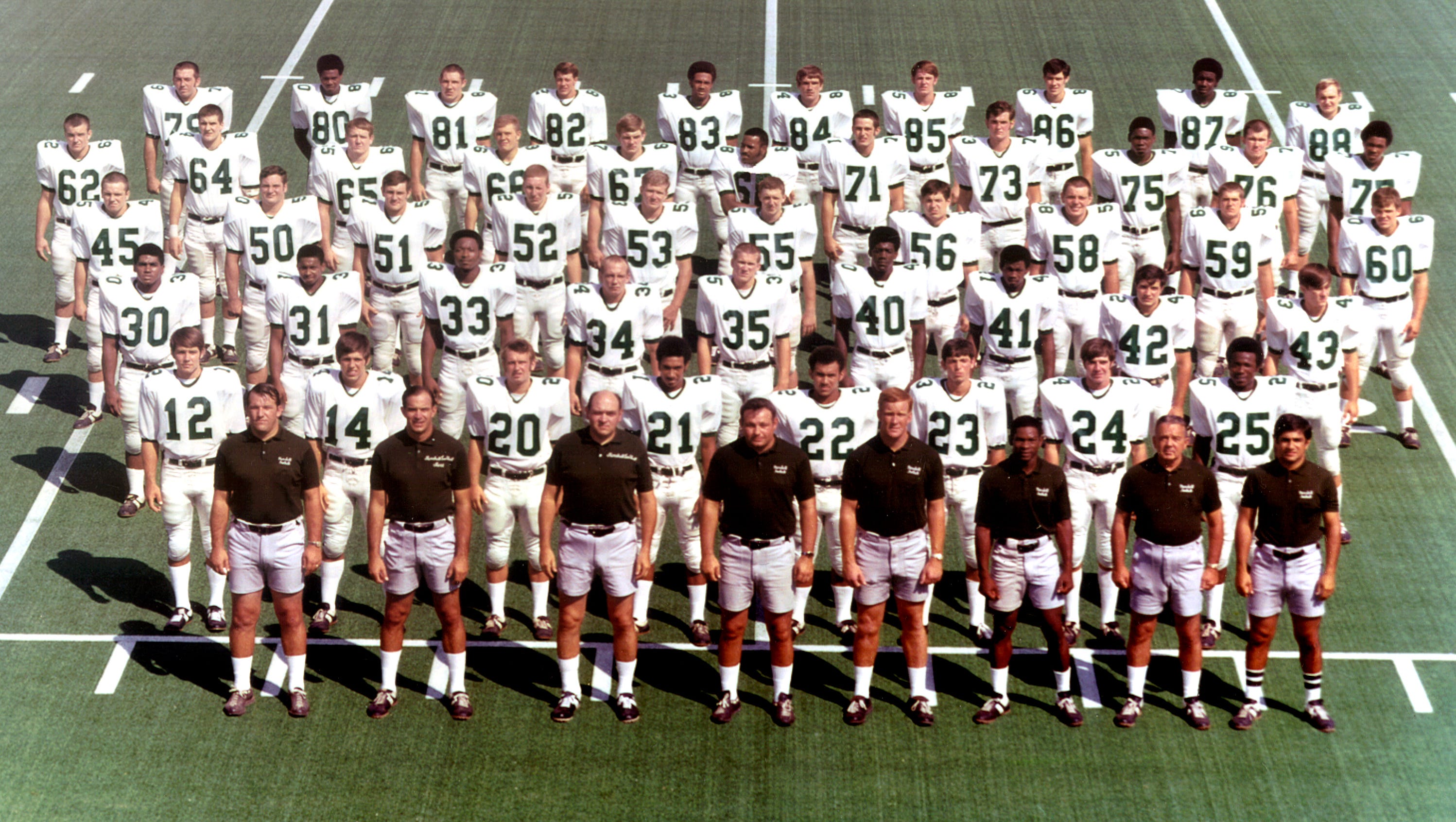
November 14, 1970: Southern Airways Flight 932, a DC-9, crashes outside Huntington, West Virginia, near the campus of Marshall University. All 75 people on board are killed, including 37 players on the Marshall football team, and 8 members of the coaching staff, including head coach Rick Tolley. At 30 years old, he wasn't much older than his players.
 
It had been just 43 days since the Wichita State University football team was nearly wiped out by a plane crash, with 31 dead. The Marshall crash remains the worst sports-related tragedy in American history.

Thankfully, we have been spared the kind of disasters seen in international soccer, such as the one that would happen a few weeks later, on January 2, 1971, at Ibrox Stadium in Glasgow, Scotland: 66 people died in a crush of fans between host Rangers and their arch-rivals, Celtic.

Marshall University was founded in 1837, and named for John Marshall, who had recently died after a long tenure as Chief Justice of the United States. It is located in Huntington, West Virginia, on a bank of the Ohio River, near a 3-way State border with Chesapeake, Ohio and Ashland, Kentucky. They began playing football in 1895, 4 years after West Virginia University, in Morgantown at the other end of the State. 

The Thundering Herd were returning from Greenville, North Carolina, where they'd lost 17-14 to East Carolina University. Their one remaining game, away to Ohio University (not Ohio State), was canceled, and they finished 3-6. The Ohio Bobcats were usually considered their main rivals, and "the Battle for the Bell" was always the last game of the season -- until now.

The Herd had beaten Morehead State of Morehead, Kentucky; Xavier University of Cincinnati; and Kent State near Cleveland, a school which had its own tragedy the preceding May 4, the shooting of 13 students, 4 of them fatally, by Ohio National Guardsmen during a protest against the Vietnam War.

Marshall had lost to the University of Toledo, Miami University of Ohio, the University of Louisville, Western Michigan, Bowling Green of Ohio and, mere hours before their deaths, East Carolina.

*

Jack Lengyel, 36, had been the head coach at the College of Wooster outside Cleveland for the preceding 5 seasons. He was hired to rebuild the Marshall team. There were 9 players on the 1970 team who did not board the ill-fated flight. They would form the core of the team that Marshall attempted to field for 1971.

The NCAA granted waivers for "fifth-year seniors" who had not yet gradated, and for freshmen, then prohibited to play varsity sports, a restriction that the NCAA would universally lift the next year. The team was filled out with 35 walk-ons. One was Blake Smith, who had never even attended a football game. He became the placekicker.

President Richard Nixon, a football fan, wrote the team a letter, including these words: "Friends across the land will be rooting for you, but whatever the season brings, you have already won your greatest victory by putting the 1971 varsity on the field." Lengyel read the letter to the team at the start of the 1st day of practice.

September 18, 1971: Marshall played its 1st game since the crash. They traveled to Morehead State, and lost, 29-6 at Jayne Stadium. Although this game was a 4-touchdown loss, the Morehead fans gave the Herd's one touchdown a standing ovation.

September 25, 1971: Marshall won. They hosted Xavier University of Cincinnati at Fairfield Stadium in Huntington, and won, 15-13.

They next lost to Miami in Oxford, Northern Illinois in DeKalb, the University of Dayton at home, and Western Michigan in Kalamazoo. But on October 30, they won again, 12-10 at home to Bowling Green. They then traveled to Kent and lost to Kent State, lost at home to Toledo, and lost at home to Ohio, 30-0.

They went 2-8, never scored more than 18 points in any game, gave up 66 points to Miami and 43 to Toledo, and were shut out in 5 of their last 6 games. But, in spite of losing nearly everybody from the season before, and not to graduation, they ended up winning only one fewer game than they had in 1970.

In 2006, the film We Are Marshall was released, starring Matthew McConaughey as Lengyel, who is still alive, at age 87.

Lengyel continued to coach the team until 1974. Marshall continued to struggle, but began to turn it around in the mid-1980s, making the Playoffs in Division I-AA (now known as the Football Championship Subdivision, of FCS).

They advanced to the Championship Game in 1987, but lost 43-42 to Northeast Louisiana. They made the Quarterfinals in 1988; built a new stadium in 1990, the 38,227-seat Joan C. Edwards Stadium, with the playing surface named James F. Edwards Field for her husband, also a major donor to the school; got back to the Final in 1991, but lost 25-17 to Youngstown State of Ohio; and finally took home the prize in 1992, winning a rematch with Youngstown, 31-28.

They returned to the Final in 1993, but Youngstown took the rubber match, 17-5. Marshall reached the Semifinal in 1994, and the Final again in 1995, losing 22-20 to Montana. They beat Montana in a Final rematch in 1996, 49-29, for their 2nd National Championship.

Formerly members of the Mid-American Conference and the Southern Conference, in 2005 they joined Conference USA. They've won Conference Championships in 1925, 1928, 1931, 1937, 1988, 1994, 1996, 1997, 1998, 1999, 2000, 2002 and 2014; and Division titles short of the Conference title in 2001 and 2013.

Due to changing conference affiliations, their rivalry with Ohio isn't played every year, although it was played last year, and were scheduled to play this year before the COVID-19 epidemic canceled all non-conference games. They will next play in 2025. Ohio leads "The Battle for the Bell," 33-21-6.

After playing each other in 1911, 1914, 1915 and 1923, the 2 biggest football-playing schools in the Mountaineer State, WVU and Marshall, didn't play each other again until 1997, and then not again until 2006 -- again, mainly due to conference affiliation. They then played "The Friends of Coal Bowl" every year from 2006 until 2012. They've played each other 12 times, and West Virginia have won them all.

Marshall's other major rivalry, if it can be called a "rivalry" at all, is with East Carolina, the team their 1970 team was returning from when it perished. They didn't play each other again until 1978, then not again until 2001. But they played every year from 2005 to 2013, before conference affiliations split them up. East Carolina leads the rivalry, 10-5. A moment of silence is held before every game between the teams.

On November 14, 2020, the 50th Anniversary of the crash, Marshall beat Middle Tennessee State, 42-14 at Joan Edwards Stadium, making them 8-0 on the season. But they lost their last 3 games: To Rice, to Alabama-Birmingham in the Conference USA Championship Game, and to the University of Buffalo in the Camellia Bowl in Montgomery, Alabama on Christmas Day, finishing 7-3 and as C-USA East Division Champions.

*

November 14, 1970 was a Saturday. Some other college football games of note on the day:

* Number 1 Notre Dame beat Georgia Tech, 10-7 at Notre Dame Stadium in South Bend, Indiana.

* Number 2 Texas beat Texas Christian (TCU), 58-0 at Amon G. Carter Stadium in Fort Worth. This big road win, combined with the Fighting Irish' struggle at home, pushed the Longhorns to Number 1.

* Number 3 Ohio State beat Purdue, 10-7 at Ross-Ade Stadium in West Lafayette, Indiana.

* Number 4 Nebraska beat Kansas State, 51-13 at Memorial Stadium in Lincoln, Nebraska.

* Number 5 Michigan beat Iowa, 55-0 at Michigan Stadium in Ann Arbor.

* Rutgers beat Holy Cross, 37-7 at Rutgers Stadium in Piscataway, New Jersey.

* And Princeton lost to Yale, 27-22 at the Yale Bowl in New Haven, Connecticut.

In high school football, my alma mater, East Brunswick, beat New Brunswick, 18-10 at what would be named Jay Doyle Field in East Brunswick. A win over Sayreville the next week clinched a Conference Championship.

There were 6 games played in the NBA that day:

* The New York Knicks beat the Philadelphia 76ers, 126-94 at Madison Square Garden.

* The Baltimore Bullets beat the Boston Celtics, 122-101 at the Baltimore Civic Center (now the CFG Bank Arena).

* The Milwaukee Bucks beat the expansion Buffalo Braves, 116-107 at the Buffalo Memorial Auditorium.

* The Chicago Bulls beat the Atlanta Hawks, 120-116 at the Alexander Memorial Coliseum in Atlanta. Bob Love of the Bulls scored 39 points to lead all scorers on the day.

* The San Diego Rockets beat the Detroit Pistons, 112-101 at the San Diego Sports Arena (now the Pechanga Arena).

* And the other 2 expansion teams played each other: The Portland Trail Blazers beat the Cleveland Cavaliers, 126-116 at the Portland Memorial Coliseum.

There were 4 games played in the ABA:

* The Virginia Squires beat the Miami Floridians, 119-97 at The Scope in Norfolk.

* The Indiana Pacers beat the Carolina Cougars, 128-119 at the Greensboro Coliseum.

* The Kentucky Colonels beat the Texas Chaparrals, 149-132 at Freedom Hall in Louisville Dan Issel had 37 points and 24 rebounds. 

* And the Utah Stars beat the Pittsburgh Condors, 106-102 at the Salt Palace in Salt Lake City.

And there were 5 games played in the NHL:

* The New York Rangers lost to the Chicago Black Hawks, 2-1 at the Chicago Stadium.

* The Pittsburgh Penguins beat the California Golden Seals, 6-1 at the Civic Arena in Pittsburgh.

* The Toronto Maple Leafs beat the Boston Bruins, 3-2 at Maple Leaf Gardens in Toronto. 

* The Montreal Canadiens and the St. Louis Blues played to a tie, 1-1 at the St. Louis Arena.

* The expansion Vancouver Canucks and the Minnesota North Stars played to a tie, 3-3 at the Metropolitan Sports Center in the Minneapolis suburb of Bloomington, Minnesota.

* The Detroit Red Wings, the Los Angeles Kings, the Philadelphia Flyers, and the other expansion team, the Buffalo Sabres, were not scheduled.

Wednesday, November 9, 2022

November 9, 1970: Eric Clapton Releases "Layla"

Eric Clapton (left) and Duane Allman

November 9, 1970: Derek and the Dominos release Layla and Other Love Songs, their only album. The only song you need to know is the title track, which Eric Clapton wrote for the woman he loved – Pattie Boyd, a.k.a. the current Mrs. George Harrison. She left George for Eric, but they ended up divorced, too. Despite this, Eric and George remained friends until George's death.

All members of the Dominos had recently worked with "Delaney & Bonnie and Friends." Delaney Bramlett and Bonnie Bramlett had briefly led a rock group, which included Clapton, guitarist Duane Allman of The Allman Brothers Band, keyboard player Bobby Whitlock, bass guitarist Carl Radle, and drummer Jim Gordon.

Clapton and Gordon wrote "Layla," which is, essentially, 2 songs. At the 3-minute, 11-second mark of the song, following 45 seconds of Clapton wordlessly crying through his guitar, a 4-minute movement begins, with Gordon on piano, and, as one rock historian put it, Clapton and Allman chasing each other into the heavens on their guitars.

Pattie Boyd later said of Clapton and the song, "I think that he was amazingly raw at the time... He's such an incredible musician that he's able to put his emotions into music in such a way that the audience can feel it instinctively. It goes right through you."

In 1990, Martin Scorcese used the guitar outro to show the murderous aftermath of the Lufthansa heist in his film Goodfellas. In 1992, for his appearance on MTV Unplugged, Clapton played a stripped-down version of "Layla," which made the song a hit all over again.

Allman, who had that long guitar duet with Clapton to close "Layla," was killed in a motorcycle wreck in 1971. Radle died from drug-induced kidney trouble in 1980. Gordon is an even more tragic story: In 1983, he murdered his mother, and was diagnosed with schizophrenia. Nevertheless, he was convicted, and, as of November 9, 2022, remains in prison at California Medical Facility in Vacaville. Clapton and Whitlock are still alive. (UPDATE: Gordon died in prison in 2023.)

*

November 9, 1970 was a Monday. Two notable music personalities were born on the day: Susan Tedeschi, who would marry Allman Brothers drummer Butch Trucks and tour alternately with him and the band; and Brad Jordan, the Geto Boys rapper known as Scarface. Hockey player Bill Guerin and professional wrestler Chris Jericho were also born.

Baseball was out of season. On ABC Monday Night Football, the Baltimore Colts beat the Green Bay Packers, 13-10 at Milwaukee County Stadium. This was the 1st season for the show, this meant that County Stadium hosted a Monday night game before Lambeau Field in Green Bay did.

There were no games in the NBA or the NHL, but there were 2 in the American Basketball Association. The Indiana Pacers beat the Kentucky Colonels, 130-112 at the Indiana State Fair Coliseum (now the Corteva Coliseum) in Indianapolis. And the team then known as the Memphis Pros beat the team then known as the Texas Chaparrals, 105-91 at the Mid-South Coliseum in Memphis.

Tuesday, November 8, 2022

November 8, 1970: Sixty-Three Yards

November 8, 1970: The New Orleans Saints are playing the Detroit Lions at Tulane Stadium, and trail 17-16 with time for one more play.

The early Saints were terrible: They had debuted in 1967, and were 13-34-2 in their brief history, including 1-5-1 that season. Tom Fears, the Hall of Fame receiver for the Los Angeles Rams who had been named their 1st head coach, had just been fired, and this was their 1st game under J.D. Roberts, who finished out that season and lasted just 2 more.

At this point, the NFL had the goalposts on the goal line. And the record for the longest field goal was 56 yards, by Bert Rechichar of the Baltimore Colts in 1953. In the 17 years since, no one had even attempted a field goal longer than that. It was the kind of stunt that could only be done at the end of the 1st half or the end of the game, for fear of giving the opposition great field position.

The Saints were on their own 44-yard line. Their quarterback was Billy Kilmer. Two years later, Kilmer would take the Washington Redskins to the NFC Championship and Super Bowl VII. But, at this point, he was best remembered as a single-wing quarterback at UCLA, and not a great passer. The idea of Kilmer flinging the ball 55 yards for a touchdown did not fill Roberts with confidence.

But they had a placekicker named Tom Dempsey. Despite being born with no right hand and half of a right foot, requiring him to wear a special shoe, he had kicked a 55-yarder the year before. He thought he could make it from 62 yards, and convinced Roberts to let him try a field goal from a distance far beyond that from which anyone had yet had the guts to try. Not even in the freewheeling, recently wrapped-up AFL.

This was in New Orleans, a city below sea level. It was on real grass, not artificial turf, and this was the middle of the season, so the field was in bad shape. (Tulane Stadium would get artificial turf the next season.) There was no kicking tee: In the NFL, that's only legal for kickoffs. There was game-winning pressure. Years later, a scientist hired by ESPN determined that the flat front of Dempsey's half-shoe may actually have made the kick less likely to be good. His only advantage was a slight wind behind him.

What's more, he decided he'd actually have a better chance if the placement were an additional yard back, 8 yards instead of the legally-mandated minimum of 7, making the kick 63 yards.

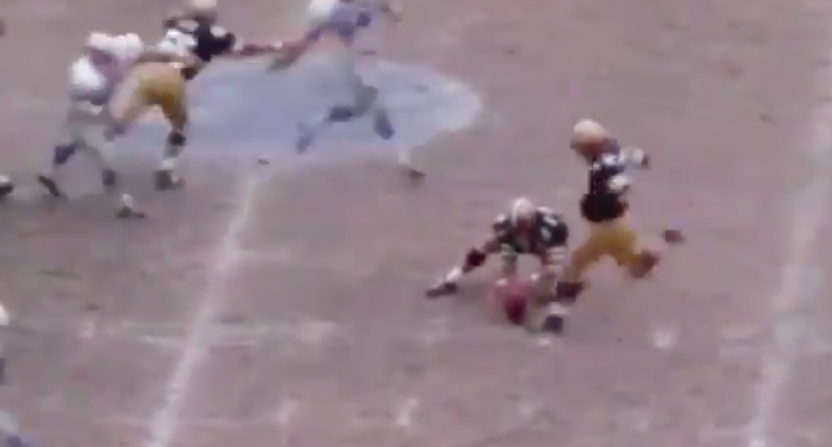
Dempsey faced the enclosed north end of Tulane Stadium's semicircle. Jackie Burkett snapped the ball, and it was low. Holder Joe Scarpati had trouble with it, but set it down properly. Dempsey sent the ball straight on, and it flew, and flew, and flew...

And it perfectly split the uprights, good by a full 3 yards. Final score: Saints 19, Lions 17.

There is surviving videotape of the kick, but it's in bad shapeYou're better off looking at NFL Films' version. Unfortunately, both are from the press box on the west side of the stadium, so the view is sideways. There appears to be no surviving footage that shows the kick straight-on, either from the front or the rear.

"I was more concerned about kicking it straight, because I felt I could handle the distance," Dempsey said. "I hit it sweet."
The stunning kick was the highlight of not just the Saints' season -- they wouldn't win another game, finishing 2-11-1 -- but, arguably, their entire history, until their Super Bowl season of 2009-10.

The next season, 1971, Dempsey was traded to the Philadelphia Eagles, and he led the NFL in field goal percentage, 70.4 percent, kicking a 54-yarder. He spent 4 seasons with them, the 1st 3 with those awful white helmets with green wings, before they went back to the traditional white (or silver) wings with green helmets for 1974. He spent the 1975 and 1976 seasons with the Los Angeles Rams, 1977 with the Houston Oilers, and 1978 and 1979 with the Buffalo Bills, before retiring.

In 1974, the NFL moved the goal posts from the goal line to the end line, at the back of the end zone. From that point onward, a 63-yard field goal would be made not at your own 37, but your own 47. In 1977, the NFL added the "Tom Dempsey Rule": "Any shoe that is worn by a player with an artificial limb on his kicking leg must have a kicking surface that conforms to that of a normal kicking shoe." Dempsey was still active, so he was "grandfathered in," and allowed to continue using his flat-fronted shoe.

He finished his career making 252 out of 282 extra points, or 89.4 percent; and 159 of 258 field goals, or 61.6 percent. (Maybe 63 would have been appropriate, but he wasn't quite that good.) He tried 39 field goals from 50 yards or longer, and made 12 of them, an astounding percentage for the time.

He was elected to the Saints' team Hall of Fame. He has never been elected to the Pro Football Hall of Fame in Canton, Ohio -- only 2 pure kickers, as opposed to pre-1970 kickers who also played other positions, have been: Jan Stenerud, and another Saint, Morten Andersen -- but the shoe he wore for the record-setting kick is on display there.

Dempsey's record stood alone until October 25, 1998, when Jason Elam of the Denver Broncos tied it. It was tied again on September 12, 2011, by Sebastian Janikowski of the Oakland Raiders. Both of these kicks came in the mile-high air of Denver. On September 28, 2008, at the end of a 1st half, Janikowski was sent in for the most ridiculous field goal attempt ever: 76 yards, on grass, into the wind, at the Oakland Coliseum, just 43 feet above sea level. It was 18 yards short (58 yards), and wide right.

On September 9, 2012, David Akers, then with the San Francisco 49ers, hit a 63-yarder against the Green Bay Packers. Green Bay is 581 feet above sea level.

On December 8, 2013, 43 years after Dempsey set the record, Matt Prater of the Broncos broke it, kicking a 64-yard field goal to end a half against the Tennessee Titans. This, too, was in Denver. I remind you that Dempsey kicked his 63-yarder below sea level.

On October 7, 2018, in Charlotte, North Carolina, 761 feet above sea level, Graham Gano did something no kicker had done since Dempsey: Kick a game-winning field goal 63 yards or more. He did so to give the Carolina Panthers a 33-31 win against the New York Giants. Afterward, he told the media that he always wanted to kick one that far to win a game, just like Dempsey had. Dempsey heard about it, and sent him an autographed kicking tee.

Following his career, Dempsey returned to New Orleans, worked as a salesman for an oil company, and then Saints owner Tom Benson, who owned a string of car dealerships, hired him to run one.

In 2013, he revealed he was suffering from dementia. He was eventually taken to a senior residence in New Orleans, and he was 1 of 15 residents who tested positive for the coronavirus. He died on April 4, 2020, at the age of 73.

On September 26, 2021, Justin Tucker of the Baltimore Ravens, at Ford Field in Detroit, 656 feet above sea level, kicked a 66-yard field goal, for a new record. It was well above sea level, on turf, indoors. But, like Dempsey, it was a game-winner. Also like Dempsey, it gave his team a 19-17 win over the Lions.

Before kicking tees were outlawed by the NCAA, 3 college players had kicked 67-yard field goals. The national high school record is 69 yards.

*

November 8, 1970 was a Sunday. These other NFL games were played on that historic day:

* The New York Giants beat the Dallas Cowboys, 23-20 at Yankee Stadium.

* The New York Jets lost to the Pittsburgh Steelers, 21-17 at Three Rivers Stadium in Pittsburgh.

* The Philadelphia Eagles beat the Miami Dolphins, 24-17 at Franklin Field in Philadelphia.

* The Minnesota Vikings beat the Washington Redskins, 19-10 at Robert F. Kennedy Stadium in Washington.

* The Cincinnati Bengals beat the Buffalo Bills, 43-14 at War Memorial Stadium in Buffalo.

* The San Francisco 49ers beat the Chicago Bears, 37-16 at Wrigley Field in Chicago.

* The football version of the St. Louis Cardinals beat the Boston Patriots, 31-0 at Busch Memorial Stadium in St. Louis.

* The Kansas City Chiefs beat the Houston Oilers, 24-9 at Kansas City Municipal Stadium.

* The San Diego Chargers beat the Denver Broncos, 24-21 at San Diego Stadium.

* The Atlanta Falcons and the Los Angeles Rams played to a tie 10-10 at the Los Angeles Coliseum.

* And the Oakland Raiders beat the Cleveland Browns, 23-20 at the Oakland Coliseum.

* The next day, on Monday Night Football, the Baltimore Colts beat the Green Bay Packers, 13-10 at Lambeau Field in Green Bay.

There were 4 games played that day in the NBA:

* The New York Knicks beat the expansion Portland Trail Blazers, 125-113 at the Portland Memorial Coliseum. Jim Barnett scored 40 points for the Blazers, but Captain Willis Reed had 28 points and 26 rebounds for the defending NBA Champion Knickerbockers.

* The Seattle SuperSonics beat the expansion Cleveland Cavaliers, 111-105 at the Cleveland Arena.

* The Milwaukee Bucks beat the Phoenix Suns, 125-105 at the Milwaukee Arena. In 1974, it was renamed the Milwaukee Exposition, Convention Center and Arena, or "The MECCA." Since 2014, it has been named the UW-Panther Arena.

* And the Los Angeles Lakers beat the Baltimore Bullets, 124-105 at The Forum outside Los Angeles in Inglewood, California. Jerry West scored 41 points. Wilt Chamberlain scored 20 and had 24 rebounds.

There were 4 games played in the American Basketball Association:

* The New York Nets beat the Denver Rockets, 114-104 at the Island Garden in Hempstead. The Rockets became the Denver Nuggets in 1974.

* The Memphis Pros beat the Pittsburgh Condors, 105-96 at the Civic Arena in Pittsburgh.

* The Carolina Cougars beat the Miami Floridians, 122-115 at the Miami Beach Convention Center.

* The Utah Stars beat the Indiana Pacers, 111-103 at the Indiana State Fair Coliseum (now the Corteva Coliseum). The Stars ended up dethroning the Pacers as ABA Champions that season.

And there were 4 games played in the NHL:

* The Boston Bruins beat the Montreal Canadiens, 6-1 at the Boston Garden.

* The Philadelphia Flyers beat the expansion Buffalo Sabres, 3-1 at the Buffalo Memorial Auditorium.

* The Pittsburgh Penguins and the Detroit Red Wings played to a tie, 3-3 at the Olympia Stadium in Detroit.

* And the Minnesota North Stars and the Chicago Black Hawks played to a tie, 3-3 at the Chicago Stadium.

December 31, 1999 & January 1, 2000: The Millennium

December 31, 1999:  The Millennium arrives. The people of planet Earth survived. At a terrible cost. But we hadn't destroyed ourselves. ...