Showing posts with label subway. Show all posts

Thursday, December 22, 2022

December 22, 1984: The Subway Vigilante

December 22, 1984: Bernhard Goetz shoots 4 men on a New York Subway train, and becomes known as "The Subway Vigilante."

In the 1960s, '70s and '80s, crime had escalated in American cities due to rising poverty and drug use, and New York City seemed to be its symbolic capital. And with personnel cutbacks in police departments due to budget shortfalls, it seemed like no one was doing anything about it.

In New York, Subway stations and trains were seen as particularly bad. The graffiti that stained the stations and the trains didn't help. I grew up in Central Jersey, a 45-minute bus ride from Midtown Manhattan.

When my mother let me go into The City, it was always with her, and we always took taxicabs. Never mind that taxis were dangerous, because the drivers tended to be maniacs, and we once got into 3 accidents in a single ride: She said the Subway was unsafe. (Disclaimer: Her father had driven a taxi in The City, so she may have been biased.) Only once before I turned 15 did she let me go to a Yankee game via the Subway, and she went with me, hating every minute of both the ride up and the ride back.

Goetz was born in Queens, and grew up Upstate before being sent to boarding school in Switzerland. He came back for college, and became an electrical engineer. In 1981, he was attacked by 3 young black men in the Canal Street subway station, injuring and robbing him. The attackers were caught, but never served time. This angered him, and he applied for a permit to carry a concealed weapon. He chose a 5-shot .38-caliber revolver.

He was setting himself up to be life imitating art. In the 1974 film Death Wish, Charles Bronson played Paul Kersey, a man whose wife was killed and his daughter raped during a home invasion and robbery, and took to shooting criminals. He ended up shooting and killing 2 would-be muggers on a AA Train. Of course, in order to avoid the charge of racism, white actors were cast as the muggers.

(The AA was relabeled the K in 1985, and discontinued in 1988. Someone once asked me what would have happened if Kersey had met the titular gang from the 1979 film The Warriors on the Subway. The answer is obvious: Nothing would have happened. The Warriors, too, only wanted to get home safely, and would not have disturbed Kersey. So he would have left them alone, too.)

On December 22, 1984, 4 African-Americans from The Bronx boarded a downtown Number 2 Train. James Ramseur was 18 years old. The other 3 were all 19: Barry Allen (definitely not to be confused with the comic book character of the same name, the superhero known as The Flash), Troy Canty and Darrell Cabey. They told the police they were on their way to rob a video arcade in Manhattan.

When the train got to 14th Street and 7th Avenue, it was about 1:30 in the afternoon. Goetz, then 37 years old, boarded, and sat across from the 4 teenagers. They surrounded him, to prevent anyone from interfering, and Canty said, "Give me five dollars." He later told the police it was an attempt at panhandling, not a mugging. None of them had pulled any kind of weapon.

Goetz did, and fired it. He ended up wounding all four. Cabey was paralyzed, while the others' wounds were not nearly as serious.

Goetz got off the train, went home, gathered some belongings, and fled the city. He rented a car, and drove 185 miles to Bennington, Vermont, destroying the evidence: He burned his recognizable blue jacket, and dismantled the gun, scattering the pieces in the woods.

For a few days, the shooter's identity was unknown. But people praised him for standing up to criminals and taking action against them. Christmas came and went, and his identity was still unknown.

But on December 26, someone called the New York Police Department's anonymous tip line, and mentioned Goetz' name and his previous mugging. On December 29, the police got a warrant and searched his apartment. On December 31, New Year's Eve, having heard of these developments, Goetz knew the game was up. He drove to Concord, New Hampshire, and turned himself in to the police there. By the time the ball dropped in Times Square at 12:00 Midnight, the world knew his name.

He told the Concord police that New York City was "lawless," and that the criminal justice system was "a joke," "a sham," and "a disgrace." On January 3, 1985, he was extradited to Manhattan.

It was between Ronald Reagan's re-election as President and his Inauguration for a 2nd term. It was the time of action films starring Sylvester Stallone, Arnold Schwarzenegger, Chuck Norris, and the aforementioned Charles Bronson. Except this was real, and Bernhard Goetz became a folk hero for the time, at least among right-wingers, angry at crime and bigoted toward black people in general. For liberals, he was no hero, but they had to admit that there had to be a better way to fight crime than what was being done.

Goetz would end up convicted of "criminal possession of a weapon in the third degree," but acquitted of the attempted murder and first-degree assault charges, due to his claims of self-defense. He was sentenced to 1 year in jail, 1 year of psychiatric treatment, 5 years of probation, 200 hours of community service, and a $5,000 fine (about $14,000 in 2022 money). He ended up serving 8 months.

A civil trial found that Goetz had "acted recklessly and had deliberately inflicted emotional distress on" the paralyzed Cabey. Cabey was awarded $43 million (about $121 million today) -- $18 million for "pain and suffering," and $25 million in "punitive damages." Goetz soon declared bankruptcy. In a 2004 interview with Fox News host Nancy Grace, he admitted -- bragged? -- that he hadn't paid a penny.

Crime peaked in New York in 1990, then finally began to go down a little bit. In 1994, President Bill Clinton signed the Violent Crime Control and Law Enforcement Act, a bill sponsored in the Senate by Joe Biden of Delaware, later to be President himself; and in the House by Chuck Schumer of New York and Richard Durbin of Illinois, both later to be elected to the Senate. Its provisions, including the hiring of new police officers, changes in tactics, and tougher penalties for crimes led to a huge dropoff in crime, especially in New York.

During the 1996 World Series, just 2 years later, the NYPD revealed that, despite being in the South Bronx, which had been one of the most crime-ridden neighborhoods in America, 96 percent of the crime within a block of Yankee Stadium was ticket scalping, a nonviolent offense. In 2006, New York ranked 194th out of 210 American cities with at least 100,000 people in terms of violent crime. By 2014, crime rates were comparable to those of the early 1960s, before the big wave began.

In 1986, James Ramseur was convicted of rape and robbery, served 14 years in prison, and died in 2011 of a drug overdose. He was 45 years old. Darryl Cabey remains paralyzed and brain-damaged, supposedly with the cognitive ability of an 8-year-old. Barry Allen also went to prison for an unrelated robbery, serving 4 years. Troy Canty went to drug rehab and got clean. I can find no reference as to what Allen and Canty are doing now. The 3 survivors are all 57 years old.

Goetz is 75. In 2013, he was arrested for selling marijuana, but the charges were dismissed the next year. He has became a vegetarian activist. In 2019, he publicly announced that he would no longer do interviews.

Also in 2019, the film Joker premiered. Director Todd Phillips delivered a variation on the story of the comic book villain, traditionally the nemesis of Batman. Setting it in 1981 in fictional Gotham City, he included a scene reminiscent of the Goetz case, and also of the Subway shooting scene in Death Wish.

Not counting individuals implied as being part of a group, like the Beatles and the performers at Woodstock, "Bernie" Goetz is 1 of 4 people mentioned in Billy Joel's 1989 song "We Didn't Start the Fire" who are still alive at the end of 2022. The others are Brigitte Bardot, Chubby Checker and Bob Dylan. Goetz is easily the youngest of them, and is likely to be the last survivor.

I'm hoping he turns out not to be. He was no hero.

*

December 22, 1984 was a Saturday. It was the off-season for Major League Baseball. An NFL Playoff game was played that day: The Seattle Seahawks beat the Los Angeles Raiders, 13-7 at the Kingdome in Seattle.

Three college football bowl games were played that day:

* Florida Citrus Bowl, at the Citrus Bowl (now Camping World Stadium) in Orlando: Georgia and Florida State played to a 17-17 tie.

* Sun Bowl, at the Sun Bowl in El Paso, Texas: Maryland 28, Tennessee 27.

* Cherry Bowl, at the Silverdome in the Detroit suburb of Pontiac, Michigan: Army 10, Michigan State 6.

There were 9 NBA games played that day. The New York Knicks were not involved in any of them, but the New York Tri-State Area's other team was:

* The New Jersey Nets lost to the Philadelphia 76ers, 107-93 at The Spectrum in Philadelphia. Moses Malone led all scorers with 26 points, Andrew Toney scored 25, former Net Julius "Dr. J" Erving scored 20, and Otis Birdsong scored 24 in defeat.

* The Atlanta Hawks beat the Washington Bullets, 119-101 at The Omni in Atlanta. Dominique Wilkins, "The Human Highlight Film," scored 31 points.

* The Cleveland Cavaliers beat the Indiana Pacers, 106-103 at the Market Square Arena in Indianapolis. Phil Hubbard scored 30 for the Cavs.

* The Chicago Bulls beat the Boston Celtics, 110-85 at the Chicago Stadium. Danny Ainge led the defending NBA Champions with 16 points, and Larry Bird only scored 10. Leading all scorers in the game, with 32 points, was a Bulls rookie named Michael Jordan.

* The Milwaukee Bucks beat the San Antonio Spurs, 101-90 at the Milwaukee Exposition, Convention Center and Arena, or "The MECCA." Since 2014, it has been named the UW-Panther Arena.

* The Kansas City Kings beat the Detroit Pistons, 129-123 at the Kemper Arena in Kansas City. (It's now named the Hy-Vee Arena.) This would be the Kings' last season in Kansas City, as they soon moved to Sacramento. Mike Woodson, the future Knicks coach, scored 31 for them in this game.

* The Houston Rockets beat the Denver Nuggets, 125-107 at The Summit in Houston. (It's now the Lakewood Church Central Campus, the "megachurch" of televangelist Joel Osteen.) 

* The Dallas Mavericks beat the Utah Jazz, 113-96 at the Salt Palace in Salt Lake City.

* And the Phoenix Suns beat the Portland Trail Blazers, 110-108 at the Arizona Veterans Memorial Coliseum in Phoenix.

There were 9 NHL games that day, and all 3 of the New York Tri-State Area's teams were in action, 2 of them against each other:

* The New York Rangers beat the New Jersey Devils, 5-3 at the Brendan Byrne Arena. Pierre Larouche scored 2 goals for the Broadway Blueshirts. The Devils' scorers were Captain Mel Bridgman, Dave Pichette and Doug Sulliman.

* The New York Islanders beat the Pittsburgh Penguins, 5-2 at the Nassau Coliseum.

* The Washington Capitals beat the St. Louis Blues, 7-5 at the Capital Centre in the Washington suburb of Landover, Maryland.

* The Quebec Nordiques beat the Buffalo Sabres, 3-1 at the Colisee de Quebec.

* The Montreal Canadiens beat the Hartford Whalers, 10-5 at the Montreal Forum.

* In an "Original Six" matchup broadcast live on CBC's Hockey Night In Canada, the Toronto Maple Leafs beat the Boston Bruins, 6-4 at Maple Leaf Gardens in Toronto.

* The Minnesota North Stars beat the Detroit Red Wings, 5-4 at the Joe Louis Arena in Detroit.

* The Winnipeg Jets beat the Los Angeles Kings, 6-2 at the Winnipeg Arena.

* And in the HNIC nightcap, in the Battle of Alberta, the defending, and soon to be again, Stanley Cup Champions, the Edmonton Oilers, clobbered the Calgary Flames, 7-1.

Also, Arsenal drew with Watford, 1-1 at Highbury in North London.

Wednesday, November 9, 2022

November 9, 1965: The Night the Lights Went Out

November 9, 1965: It was "The Night the Lights Went Out." At 5:27 PM, just as the Tuesday night rush hour was getting rough, a blackout hit the Northeastern United States, hitting New York City especially hard. Over 30 million people were without power.

Given the time of year, it was already dark out. Traffic lights went out. People got stuck in elevators. People got stuck in the City's Subway system.

The Consolidated Edison Company, a.k.a. Con Ed, managed to spare Staten Island and parts of Brooklyn from the blackout when they disconnected their Arthur Kill Generation Station, on Staten Island, from the grid. Some parts of New Jersey, powered by Public Service Electric & Gas, a.k.a. PSE&G, were not affected, allowing the City's newspapers to use the printing presses of the Newark Evening News to print their next day's editions, such as they were: Even The New York Times only printed 10 pages.

The New York Police Department later said that the City had the fewest reported crimes of any night since records began to be kept, breaking the record of February 9, 1964, the night The Beatles made their 1st appearance on The Ed Sullivan Show. This would end up in sharp contrast to the next major blackout, in 1977, when rioting developed, and it was the most arrests the NYPD ever made in 1 night.

Power was restored before the morning rush hour. Ever since, while there were also blackouts in New York in 1961, 1963, 1967, 1977 (as mentioned), and in 2003, people old enough to remember it mean November 9, 1965 when they asked, "Where were you when the lights went out?" (UPDATE: There was a brief blackout in 2023 as well.)

And there is no truth to the (pardon my choice of words) urban legend: There were no more babies born in New York in early August 1966, 9 months later, than there were in early August 1965 or in early August 1967.

*

As I said, November 9, 1965 was a Tuesday. The baseball season was over, as the Los Angeles Dodgers had won the World Series 26 days earlier, beating the Minnesota Twins in the World Series. Both the NFL and the AFL were in midweek.

It was early in the NBA and NHL seasons. However, because of the blackout, for only the 2nd time in their history, the New York Knicks had to postpone a game. The 1st was on November 22, 1963, the night of the day that President John F. Kennedy was assassinated.

The New York Rangers were not affected by the blackout, as they were not scheduled. None of the NHL's 6 teams were. But there were 3 games played in the NBA that night -- 2 of them, surprisingly, in the Northeast:

* The Boston Celtics beat the Baltimore Bullets, 130-116, at the Rhode Island Auditorium in Providence.

* The Philadelphia 76ers beat the Los Angeles Lakers, 118-110 at the Philadelphia Civic Center's Convention Hall. Wilt Chamberlain scored 39 points, and Hal Greer scored 32. In a losing effort, Jerry West scored 32.

* And the San Francisco Warriors beat the Detroit Pistons, 107-102 at the Cow Palace in the San Francisco suburb of Daly City, California. Nate Thurmond scored 18 points, and grabbed 42 rebounds.

Tuesday, November 1, 2022

November 1, 1918: Disaster at Malbone Street

November 1, 1918: The worst rapid transit accident in American history occurs at 6:42 PM, under the intersection of Malbone Street and Flatbush Avenue in Brooklyn, not far from Ebbets Field. A total of 93 deaths are ascribed to the Malbone Street Wreck.

Conditions were ripe for a wreck. That morning, the Brotherhood of Locomotive Engineers (BLE) had gone on strike. Short of motormen, a crew dispatcher named Edward Luciano was sent by the Brooklyn Rapid Transit Company (BRT) to drive a train on the Brighton Beach Line.

His only experience in moving trains had been in a train yard. At the time, a motorman was supposed to receive 60 hours of training. Under these emergency conditions, how many hours was Luciano given? Only 2.

What's more, the Spanish Flu epidemic was raging. Luciano had caught it, but recovered. Three of his daughters did not. That morning, he buried the second of them.

The train he was driving consisted of 3 motor cars and 2 trailer cars, all made mostly of wood. He had to take it into a single-track tunnel, newly opened. It had a sharp reverse curve, designed to take Coney Island-bound trains around a new mainline, which was under construction. Before that, trains entered Prospect Park station through an older, straighter tunnel.

That reverse curve had a speed limit of 6 miles per hour. Luciano was going at least 30 MPH when he entered it, and had already overshot some stations. The trailing truck of the 1st car derailed, and the 2 cars behind it left the tracks completely, tearing off their roofs and their left-hand sides. The 1st and 4th cars only took minor damage, the 5th none at all. Luciano himself was not injured. But the people in the 2nd and 3rd cars never had a chance.

Mayor John Hylan had Luciano and BRT officials indicted for manslaughter. On the witness stand, Luciano said the train did not respond properly to his control. The BRT's report contradicted this, showing that the brakes were in good shape, and no attempt was made to slow the train.

The BRT was held liable for damages in the deaths of the passengers, but no one was convicted. Luciano quit his job, and became an architect, living until 1985. When interviewed by The New York Times for a 100th Anniversary article, his granddaughter, then 67 years old, said she never knew her grandfather had ever driven a train.

So deep was the name "Malbone Street" embedded in the minds of New Yorkers, the street's name was changed: It became Empire Boulevard. A small street named Malbone Street remains, between New York Avenue and Clove Road, 7 blocks east of the site in Crown Heights.

Today, the tunnel is part of the Franklin Avenue Shuttle, an "S" train that connects the stations at Prospect Park in Flatbush (the B and Q lines) with Franklin Avenue in Bedford-Stuyvesant (the A and C lines). In 1974, there was another accident at the site: A switching mistake led to a derailment. No one was injured, though.

This disaster occurred just 4 months after the worst rail disaster in American history, the Dutchman's Curve wreck in Nashville on July 9, which killed 101.

Here are all the other fatal incidents in the history of the New York City rail system:

* September 11, 1905: The Ninth Avenue Elevated Line has a train derail at the intersection of 9th Avenue and 50th Street, where the building we now know as "the old Madison Square Garden" would be built 20 years later. Deaths: 13. The motorman was blamed, and served time for manslaughter. This was the 1st New York disaster to occur on a September 11.

* August 24, 1928: An express train derails at the Times Square station on the IRT Broadway-Seventh Avenue Line now the 1 Train. Deaths: 18. The towerman was blamed for letting the train through when he shouldn't have, and served time for manslaughter.

* August 27, 1938: A pair of IRT Seventh Avenue Line trains collide at the 116th Street station. Deaths: 2. I can't find any record of determination of culpability.

* September 26, 1957: An empty IRT train crashes into another empty train at the 230th Street station of the Broadway-Seventh Avenue Line in The Bronx. The motorman was the only death. This was 2 days after the last game at Ebbets Field, and 3 days before the last Giants game at the Polo Grounds.

* May 20, 1970: A Brooklyn-bound GG train (pronounced "Double-G," and it would be a G today) crashes into another just west of Roosevelt Avenue in Queens. Deaths: 2. There was plenty of blame to go around, but no one was convicted of any crime. This was 2 weeks after the Knicks won their 1st NBA Championship.

* August 1, 1970: A fire breaks out in a tunnel near Bowling Green in Lower Manhattan, on the 4 and 5 Train lines. A woman went back onto a train to retrieve her purse, but died of smoke inhalation.

* August 28, 1973: A concrete chunk falls from a ceiling duct in the Steinway tunnel near 1st Avenue, and crashes through the 1st car of a Queens-bound 7 train, killing a man. Over 1,000 passengers are stuck on the train, where the temperature reached 115 degrees. Given that heat, it's a wonder no one else died.

* July 3, 1981: The motorman is killed and 135 passengers were injured when an IRT train crashes into a stopped train in a Brooklyn tunnel.

* April 25, 1986: A motorman trying to turn an empty F train around near 179th Street station in Jamaica, Queens suffers a heart attack and dies, causing his train to derail. He was the only fatality, but, for him, it gave a whole new meaning to "the end of the line."

* August 28, 1991: A 4 Lexington Avenue Express derails entering 14th Street-Union Square. Deaths: 5. The motorman was drunk, and served time for manslaughter.

* June 5, 1995: A J train crashed into a stopped M train on the Williamsburg Bridge. Only the J train's motorman was killed. The crash was blamed on his fatigue.

* April 24, 2007: A 3 train hits a track worker setting up flagging lanterns, killing him. Just 5 days later...

* April 29, 2007: A Queens-bound G train hits 2 track workers at the Hoyt-Schermerhorn Street station in downtown Brooklyn. One of them was killed, while the other was seriously injured, but recovered.

So, in the 118-year history of the New York Subway system, there have been 141 deaths, with 93 of them coming in 1 crash. Since 1938, there have been 17; since 1973, 10; since 2007, none.

As far as I can tell, no Subway passengers were killed as a result of damage done by the terrorist attack on September 11, 2001, but it took 7 years to reopen the Cortland Street station on the 1 train. And, as far as I can tell, no Subway passengers were killed as a result of damage done when Hurricane Sandy struck on October 29, 2012, but repair work to several stations and the 14th Street tunnel under the East River took years.

*

November 1, 1918 was a Friday. Baseball season was over. There was no NFL, and college games were not played on Fridays. There was hardly any professional basketball. And the NHL season wouldn't begin for another month. So there were no scores on this historic day.

Friday, October 28, 2022

October 28, 1995: The World's Worst Subway Disaster

October 28, 1995: A fire breaks out in the Baku Metro, the subway system in Baku, the capital city of Azerbaijan. It is the deadliest subway fire in human history.

The Metro opened in 1967, while Azerbaijan was the Azerbaijan Soviet Socialist Republic. Independence was declared on October 18, 1991. With an energy-based economy, they have been one of the better-off former Soviet "republics." Baku is home to about 2.6 million people, and in cities of that size, an urban rapid transit rail system is vital, especially in old cities in Europe and Asia.

The Ulduz and Nariman Narimanov Metro stations serve the northern part of Baku. The tunnel between them was equipped with a controllable ventilation system, but had a relatively narrow cross-section: 18 feet high, and 16 feet wide.

The fire, caused by an electrical fault, occurred on a Saturday night at about 6:00 PM. The malfunction stopped the train about 200 meters from Ulduz station. When the train stopped, the tunnel became filled with smoke. The driver reported the incident, and demanded that the power be cut. However, lethal emissions of carbon monoxide from the burning synthetic materials in the cars quickly affected the passengers.

Because of difficulties opening the doors in one of the cars, the passengers were forced to evacuate through another car. Some 15 minutes after the fire started, the ventilation system was switched to exhaust mode and much of the smoke was drawn in the direction of evacuation. Several people were electrocuted while trying to grasp cables in order to escape the blazing train.

The death toll was officially listed at 289, easily surpassing the 1918 Malbone Street Wreck in Brooklyn as the worst subway disaster ever. The majority of those killed, including 28 children, were found inside the train, most of them either crushed or trampled to death.

The country's Supreme Court convicted the train operator of criminal negligence, sentencing him to 15 years in prison; and the station traffic controller of the same charge, sentencing him to 10 years.

*

October 28, 1995 was a Saturday. This was also the day that the Atlanta Braves won their 1st World Series. I have a separate entry for that event.

In college football, Number 1 Florida State were idle. They would lose their next game, away to the University of Virginia, and fall from the top spot.

These were among the games played that day:

* Number 2 Nebraska beat Number 7 Colorado, 44-21 at Folsom Field in Boulder, Colorado. Nebraska went on to win the last Big Eight Conference title, before the Big 8 took on half the Southwest Conference and became the Big Twelve. Colorado accepted a bid from the Cotton Bowl.

* Number 3 Florida beat Georgia, 52-17 at Sanford Stadium in Athens, Georgia. They were played a home-and-home series on campus, because the old Gator Bowl, the neutral-site game where the game was usually played, had been torn down to make way for the new Jacksonville Municipal Stadium (now EverBank Stadium. Florida went on to win the Southeastern Conference title. They turned down the accompanying automatic bid to the Sugar Bowl, to set up a Number 1 vs. Number 2 battle for an undisputed National Championship in the Fiesta Bowl. Nebraska beat them for that title.

* Number 4 Ohio State beat Number 25 Iowa, 56-25 at Ohio Stadium in Columbus.

* Number 5 Tennessee beat South Carolina, 56-21 at Neyland Stadium in Knoxville, Tennessee.

* Rivalry: Number 6 Kansas were upset by Number 14 Kansas State, 41-7 at KSU Stadium (now Bill Snyder Family Football Stadium) in Manhattan, Kansas.

* Rivalry: Number 8 Northwestern beat Illinois, 17-14 at Memorial Stadium in Champaign, Illinois. Northwestern won the Big Ten Conference title for the 1st time since 1936, and went to the Rose Bowl for the 1st time since the 1948 season.

* Rivalry: Number 9 Michigan won the Little Brown Jug by beating Minnesota, 52-17 at Michigan Stadium in Ann Arbor.

* Number 10 Oregon were upset by Arizona State, 35-24 at Autzen Stadium in Eugene, Oregon. Oregon accepted a bid from the Cotton Bowl, where they lost to Colorado.

* Number 11 Auburn were upset by Arkansas, 30-28 at Razorback Stadium in Fayetteville, Arkansas.

* Number 12 Notre Dame beat Boston College, 20-10 at Notre Dame Stadium in South Bend, Indiana. Notre Dame accepted a bid to the the Orange Bowl, where they played Florida State, which won the Atlantic Coast Conference title. Florida State won.

* Number 13 Southern California (USC) and Number 17 Washington played to a tie, 21-21 at Husky Stadium in Seattle. USC went on to win the Pacific-Ten Conference title, and beat Northwestern in the Rose Bowl.

* Number 14 University of Texas had the week off. They went on to win the last Southwest Conference title, and turned down the accompanying automatic bid to the Cotton Bowl to play in the more prestigious Sugar Bowl.

The deals had already been made: At the conclusion of the 1995-96 schoolyear, Texas, Texas A&M, Texas Tech and Baylor left the SWC, and joined the Big Eight, making it the Big Twelve Conference. The remaining SWC teams, joined other leagues: The 2 Dallas-area schools, Southern Methodist University (SMU) of Dallas and Texas Christian University (TCU) of Fort Worth; and the 2 Houston schools, Rice University and the University of Houston.

* Number 16 Penn State beat Indiana, 45-21 at Beaver Stadium in State College, Pennsylvania.

* Virginia Tech, as yet unranked, beat West Virginia, 27-0 at Mountaineer Field (now Milan Puskar Stadium) in Morgantown, West Virginia. Tech went on to win the Big East Conference title, and advanced to the Sugar Bowl, where they beat Texas.

* Rivalry: The University of Nevada beat the University of Nevada-Las Vegas (UNLV), 55-32 at Mackay Stadium in Reno, Nevada.

* Among the service academies, Army beat Colgate, 56-14 at Michie Stadium in West Point, New York; Air Force beat Fresno State, 31-20 at Bulldog Stadium (now Valley Children's Stadium) in Fresno, California; and Navy had the week off.

* And in New Jersey, Rutgers beat the University of Pittsburgh, 42-14 at the new Rutgers Stadium (now SHI Stadium) in Piscataway.

The NBA season started 6 days later. There were 9 games played in the NHL:

* The New York Islanders and the Philadelphia Flyers played to a tie, 5-5 at the Nassau Coliseum.

* The New Jersey Devils lost to the Pittsburgh Penguins, 5-3 at the Brendan Byrne Arena at the Meadowlands.

* In an "Original Six" matchup, the Montreal Canadiens beat the Chicago Blackhawks, 5-3 at the Montreal Forum.

* In an all-New England matchup, the Boston Bruins beat the Hartford Whalers, 3-0 at the FleetCenter (now the TD Garden) in Boston.

* The Washington Capitals beat the Tampa Bay Lightning, 4-2 at the ThunderDome (now Tropicana Field) in St. Petersburg, Florida.

* The Florida Panthers beat the Ottawa Senators, 4-1 at the Ottawa Civic Centre (now the TD Place Arena).

* The Toronto Maple Leafs and the Los Angeles Kings played to a tie, 2-2 at Maple Leaf Gardens in Toronto.

* The Dallas Stars beat the San Jose Sharks, 4-3 at the San Jose Arena (now the SAP Center).

* And the Winnipeg Jets beat the Vancouver Canucks, 4-1 at General Motors Place (now the Rogers Arena) in Vancouver. 

Wednesday, October 26, 2022

October 27, 1904: The New York Subway Opens

October 27, 1904: The 1st Subway line opens in New York. It runs from City Hall to Grand Central Station (roughly today's 4, 5 and 6 Trains), then turns onto 42nd Street (today's S, or Times Square-Grand Central Shuttle), then up Broadway to 207th Street (today's 1 Train) before making one final curve into the Bronx to Bailey Street (this part is part of today's A Train). The fare is 5 cents -- $1.52 in today's money.
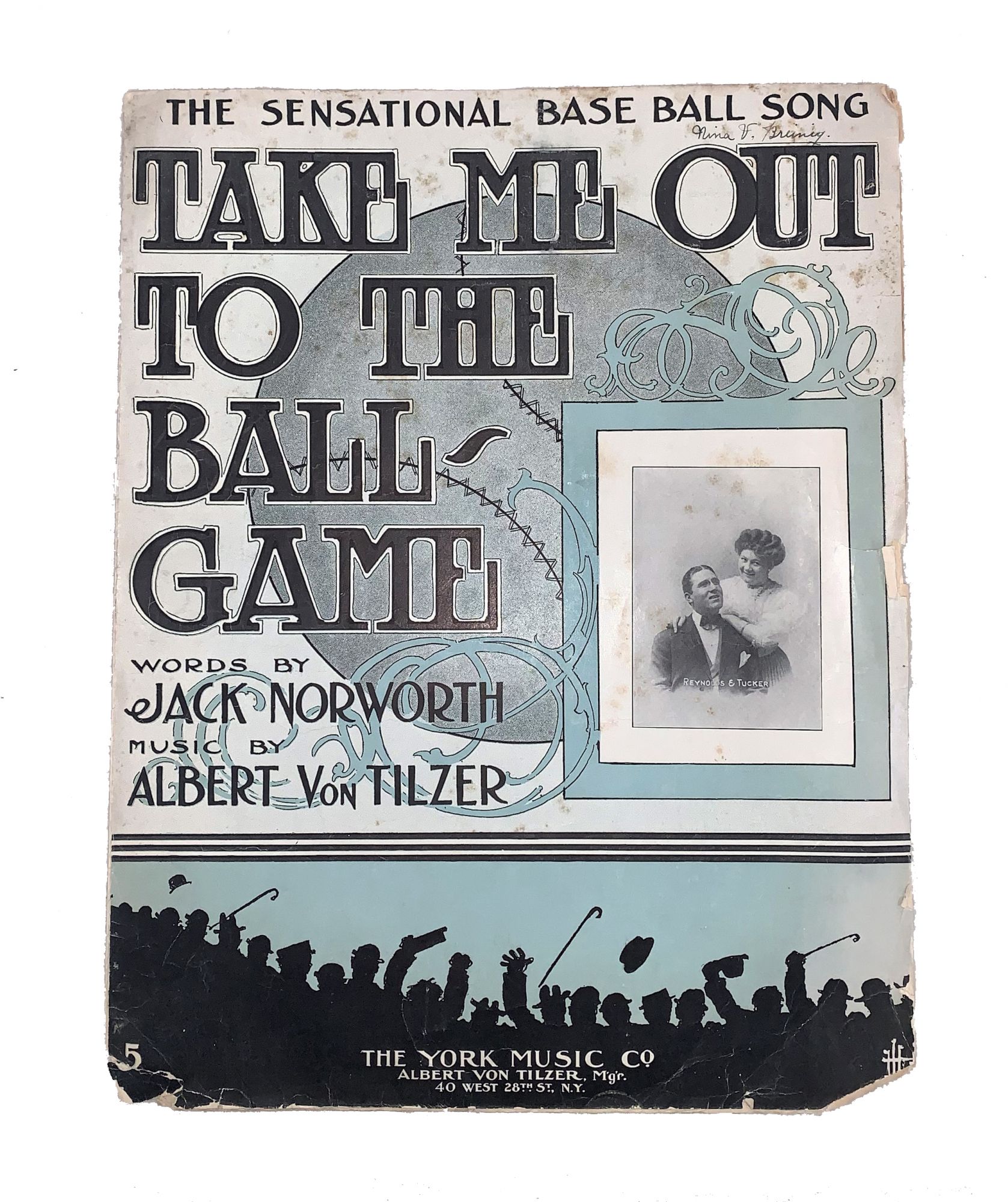
The Polo Grounds of the time, and its 1911 successor, were served by the 155th Street station that opened on this day. It was supposedly on this line in 1908 that Jack Norworth, a songwriter, saw a sign saying, "Baseball To-Day, Polo Grounds," inspiring him to write the lyrics to "Take Me Out to the Ballgame."
It would be 1918 before "34th St.-Penn Station" opened to service the 1910-built Pennsylvania Station, and thus to the successor station and the "new" Madison Square Garden built on the site. The 34th Street station on the 8th Avenue side of Penn Station opened in 1932, as did the 42nd Street station that serves the Port Authority Bus Terminal that opened in 1950, and the 50th Street station that served the old Garden from 1932 until its closing in 1968.
The current 4 Train station at 161st Street and River Avenue opened in 1917, and began serving Yankee Stadium at its opening in 1923. The D Train station there opened in 1933, probably to coincide with the opening of the nearby Bronx County Courthouse. The Prospect Park station now used by the Q Train became part of the City Subway in 1920, and was used to get to games at Ebbets Field.
The station now served by the 7 Train opened in 1939 for the 1939-40 New York World's Fair, well predating the 1964-65 World’s Fair and the opening of Shea Stadium and the National Tennis Center. It was named "Willets Point Blvd." from 1939 to 1964 and "Willets Point-Shea Stadium" from 1964 to 2008, and has been renamed "Mets-Willets Point," as the MTA did not want to use the name "Citi Field" due to CitiGroup's role in the 2008 financial crisis.
*
October 27, 1904 was a Thursday. Poet Dylan Thomas was born in Swansea, Wales. He would die in New York in 1953.

There were no scores on this historic day: The baseball season was over, professional football was in its infancy, it was a Thursday so there were no college football games, and there was no professional basketball or professional hockey.

Monday, October 24, 2022

October 24, 1908: "Take Me Out to the Ballgame" Is Introduced

October 24, 1908: Baseball's anthem, "Take Me Out to the Ballgame," is introduced by singer Bill Murray -- no relation to the later actor who got his start on Saturday Night Live. At the time the song was written by composer Albert Von Tilzer and lyricist Jack Norworth (words), neither had ever seen a game. But Norworth had seen an advertising sign on the new (opened 1904) New York Subway:
BASE BALL
TO-DAY
POLO GROUNDS

And he was inspired to write a song about an Irish girl -- apparently his favorite subject, as so many of his songs had an Irish theme, not surprising for New York City at that time:

Katie Casey was baseball mad.
Had the fever and had it bad.

Just to root for her hometown crew
every sou, Katie blew.

On a Saturday, her young beau
called to see if she'd like to go
to see a show
but Miss Kate said no,
I'll tell you what you can do:

Take me out to the ballgame.
Take me out with the crowd.

Buy me some peanuts and Cracker Jack.
I don't care if I never get back.
Let me root, root, root for the home team.
If they don't win, it's a shame.
For it's one, two, three strikes, you're out
at the old ballgame.

Katie Casey saw all the games.
Knew all the players by their first names.
Told the umpire he was wrong,
all along, good and strong.

When the score was just two to two,
Katie Casey, she had the clue.

Just to cheer up the boys she knew,
She made the gang sing this song.


Take me out to the ballgame.
Take me out with the crowd.

Buy me some peanuts and Cracker Jack.
I don't care if I never get back.
Let me root, root, root for the home team.
If they don't win, it's a shame.
For it's one, two, three strikes, you're out
at the old ballgame.

A "sou" is a penny. Sometimes that archaic lyric is changed to "Every cent, Katie spent."
Norworth probably named her after the title character in the most famous baseball poem, "Casey at the Bat," written in 1888 and thus still relatively new. In 1927, Norworth rewrote the song, and the girl subject became Nellie Kelly -- a better rhyme, and still Irish. But most people don't even know there are verses: They only sing the chorus.
Edward Meeker made the first recording, but Murray appears to have been the first to sing it live. Murray had also recorded "Tessie," which became a ballpark chant for Boston Red Sox fans in 1903. Ironically, Murray was a fan of the New York Highlanders, the team that would become the Yankees. In an even greater irony, Von Tilzer didn't see a live major league game until 1928, and Norworth didn't until 1940.

It apparently took until 1934 for the song to be played at a major league game. In 1976, Chicago White Sox owner Bill Veeck noticed that, while organist Nancy Faust was playing it during the 7th Inning Stretch, broadcaster Harry Caray was leaning out of the press box, and inviting fans to sing the song with him. So Veeck piped Harry and the fans into the public-address system at Comiskey Park, and a tradition was born.

Harry took it with him across town to Wrigley Field, and, with the Cubs' partnership with cable-TV "superstation" WGN, made the singing of that song at that stage of the game a national phenomenon. (And probably saved Wrigley for at least 2 more generations.)

Unfortunately, Harry always got the words wrong, and, to this day, the celebrities the Cubs have brought on to sing it in Harry's place since his death in 1998 -- including that other Bill Murray, a noted Cub fan -- have repeated his mistakes: They sing, "Take me out to the crowd," and, "I don't care if I ever get back."

In 1994, I heard it played at Mercer County Waterfront Park (now Arm & Hammer Park), home of the Trenton Thunder of the Class AA Eastern League. The Thunder didn't do too well in that 1st season of professional baseball in New Jersey in the modern era, and it inspired me to sing, "I don't think this team's gonna come back, for it's root, root, root for the home team, if they don't win, it's the same."

*

October 24, 1908 was a Saturday. The only games played on this day were in college football. Some of them:

* The Carlisle Indian School, outside Harrisburg, Pennsylvania, made an early inroads into public consciousness, achieving a 6-6 tie with the University of Pennsylvania at the original Franklin Field. A freshman named Jim Thorpe scored Carlisle's touchdown, but also missed 3 field goals, any one of which could have won the game. Both teams had come into the game unbeaten: Carlisle at 5-0, Penn at 7-0.

* Another matchup of unbeatens took place at Worden Field, on the campus of the U.S. Naval Academy in Annapolis, Maryland. Navy played Harvard University, and this one also ended in a 6-6 tie.

* Yale University beat Washington and Jefferson University, 38-0 at Yale Field in New Haven, Connecticut.

* The University of Pittsburgh beat Bucknell University, 22-0 at Exposition Park in Pittsburgh, home of the Pittsburgh Pirates -- until the following June 30, when Forbes Field opened.

* Michigan beat Ohio State, 10-6 at Ohio Field in Columbus.

* Georgia Tech beat Alabama, 11-6 at Ponce de Leon Park in Atlanta, home of minor-league baseball's Atlanta Crackers.

* In New York City, Fordham and New York University were idle.

* In New Jersey, Rutgers lost to Haverford College, 9-5 in the Philadelphia suburb of Haverford, Pennsylvania. Princeton played the next day, held to a 0-0 tie by Syracuse at University Field in Princeton.

In that other kind of football, Woolwich Arsenal beat Manchester-area team Bury, 4-0 at the Manor Ground in Plumstead, Kent, now part of Southeast London.

Wednesday, August 31, 2022

September 1, 1897: Boston Opens America's 1st Subway

September 1, 1897: The Tremont Street Subway opens in Boston. It is the 1st subway system in America.

This original line consisted of a main line under Tremont Street that terminated at Park Street in downtown Boston, and two forks to the south. One of these was the Pheasant Street Incline, heading to Pheasant Street in the South End, and remained in operation until 1961.

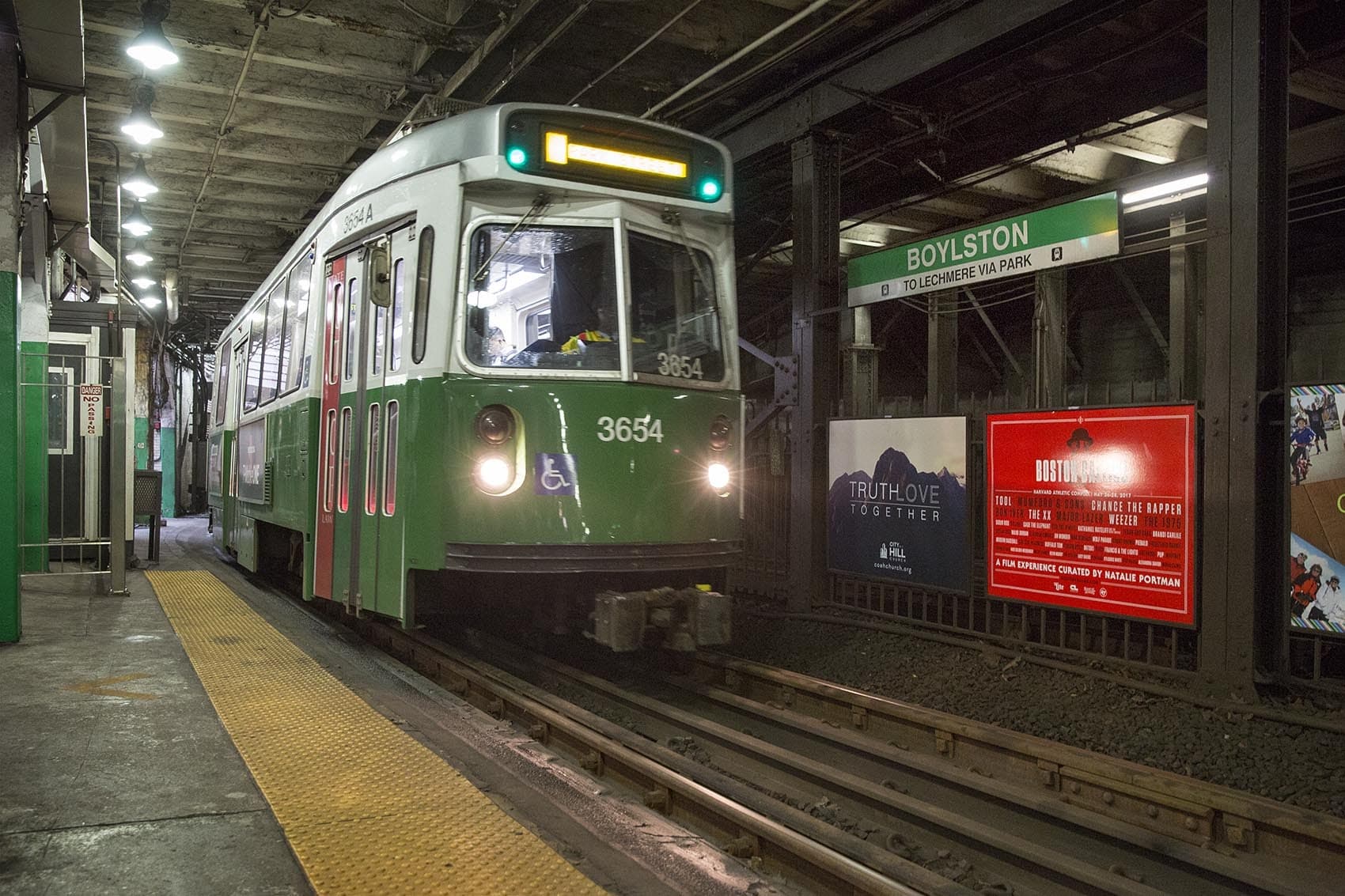
The other remains in operation today, veering westward along Boylston Street, and eventually extended to lines labeled B, C, D and E, serving as the Green Line when the system was rebranded from the Metropolitan Transit Authority (MTA) to the Massachusetts Bay Transportation Authority (MBTA, or just "T") in 1964.

In the opposite direction, the line headed for Scollay Square, North Station, Science Park, and over the Charles River into Cambridge, at Lechmere. This line is currently being extended to Medford and Tufts University, and the MBTA is hoping to open it next May.

There are 2 well-known songs about the Boston subway system, though each mentions a station whose name has since been changed. In 1948, a song was written protesting the exit fare then considered necessary to raise the overall fare from 10 to 15 cents, titled "M.T.A.," sometimes mistitled "Charlie on the M.T.A." In the 4th of the 5 verses:

Charlie's wife goes down
to the Scollay Square station
every day at a quarter past two
and through the open window
she hands Charlie a sandwich
as the train comes rumbling through!

My mother always wondered why Mrs. Charlie didn't just include the extra nickel in the brown bag with the sandwich. It was a protest: Charlie thought no one should have to pay the extra nickel, and his wife was down with it.

In 1944, Tom Lehrer, then a student at Harvard University, not yet the great musical satirist of the 1950s and '60s, wrote a song about commuting from the Harvard campus to downtown, to the tune of "M-O-T-H-E-R, A Word That Means the World to Me":

H is for my alma mater, Harvard.C is Central, next stop on the line.K is for the cozy Kendall station.C is Charles that overlooks the brine.P is Park Str- Pahk Street, busy Boston center.W is Washington, you see.
Put them all together, they spell: "HCKC-PW!"Which is just about what Boston means to me!

"HCKC-PW" was supposed to sound like spitting. This line became the MBTA Red Line. Scollay Square was renamed Government Center in 1963. In 1987, Washington station was renamed Downtown Crossing.

Chicago's elevated line, or "L," actually predates the Boston subway by 5 years, but the city didn't get its 1st underground subway line until the State Street line opened on October 17, 1943.

For each city in Major League Baseball with a subway system, here are the opening dates:

1. June 6, 1892, Chicago.
2. September 1, 1897, Boston.
3. October 27, 1904, New York.
4. March 4, 1907, Philadelphia.
5. December 17, 1913, Cleveland.
6. March 30, 1954, Toronto.
--. October 14, 1966, Montreal.
7. September 11, 1972, San Francisco.
8. March 27, 1976, Washington.
9. June 30, 1979, Atlanta.
10. July 26, 1981, San Diego.
11. November 21, 1983, Baltimore.
12. April 15, 1984, Pittsburgh.
13. May 20, 1984, Miami.
14. July 31, 1987, Detroit.
15. July 14, 1990, Los Angeles.
16. July 31, 1993, St. Louis.
17. June 14, 1996, Dallas.
18. January 1, 2004, Houston.
19. June 26, 2004, Minneapolis.
20. December 27, 2008, Phoenix.
21. July 18, 2009, Seattle.
22. April 22, 2016, Denver.
23. May 6, 2016, Kansas City.
24. September 9, 2016, Cincinnati.
25. November 2, 2018, Milwaukee.
26. Never, Tampa Bay. Neither Tampa nor St. Petersburg has any.

San Francisco had cable cars going back to 1878, and streetcars in 1948, before the opening of BART in 1972. In the cases of San Diego, St. Louis, Dallas, Houston, Minneapolis, Phoenix, Seattle, Kansas City, Cincinnati and Milwaukee, the service in question is street-level light rail. And Miami's, Detroit's and Seattle's are above-ground monorails. Those cities have never had subway systems. Cincinnati started to build one, but abandoned the project in 1928.

*

September 1, 1897 was a Wednesday. Basketball was a new invention. Professional hockey did not exist. Professional football barely did. But all 12 teams in baseball's National League were in action:

* The Boston Beaneaters beat the Chicago Colts, 7-4 at the South End Grounds in Boston. The Beaneaters, the forerunners of the Braves, were in a torrid struggle for the Pennant with the Baltimore Orioles. In fact, from 1891 to 1898, one or the other won the Pennant every year. The former Chicago White Stockings were then known as the Colts because they had so many young players. They became the Cubs in 1903.

* The Baltimore Orioles beat the St. Louis Browns, 11-5 at Oriole Park in Baltimore. These Orioles went out of business after the 1899 season. These Browns became the Cardinals soon thereafter. A series of teams in Baltimore took on the Orioles name, and in 1902, an American League team took on the St. Louis Browns name. In 1954, this team moved, becoming the Baltimore Orioles.

* The New York Giants beat the Cincinnati Reds, 8-7 at the Polo Grounds.

* The Brooklyn Bridegrooms beat the Cleveland Spiders, 5-1 at Eastern Park in Brooklyn. They were called the Bridegrooms because, a few years earlier, several of their players got married in the off-season. By 1911, they were the Dodgers. The Spiders folded after the 1899 season.

* The Philadelphia Phillies beat the Louisville Colonels, 7-6 at Huntingdon Avenue Grounds (later renamed Baker Bowl) in Philadelphia. The Colonels folded after the 1899 season.

* And the Washington Senators beat the Pittsburgh Pirates, 5-1 at Boundary Park in Washington. These Senators folded after the 1899 season.

Wednesday, August 10, 2022

August 10, 1903: The Couronnes Disaster

August 10, 1903: A fire breaks out on the Métro, the subway system in Paris, France. Because most of the deaths occurred at the Couronnes station, it becomes known as the Couronnes Disaster.

And it happened at the end of what Americans would come to call "rush hour." The first sign of trouble was at 6:53 PM, when double train 43 completed the climb to Boulevard Barbès station with heavy smoke pouring from one of the motors on its front car, car M202.

The train's passengers were evacuated onto the platform, and its "contact shoes" were lifted from the electrified third rail, to cut off the power, whereupon the burning subsided. But with the station full of annoyed passengers, the staff now focused their attention on restoring service. That meant moving the train, and there was no siding before the line descended back into the tunnel.

The fatal decision was made to lower the shoes and move it under its own power, when in fact the motor had not simply overheated, but had a short circuit. Train 43 left the station at 7:05 p.m. amid a cloud of black smoke, but before it had passed two stations, the fire on car M202 had reignited with greater intensity.

Unaware of the severity of the situation, the driver kept the train moving until it was back in the tunnel, and only then stopped for help at the first station (Combat, now Colonel Fabien). Again, the shoes were lifted and the burning stopped; again power was reapplied, and the fire restarted. This time, the wooden paddles used to lift the shoes were consumed.

A third car was added to the back of the train, to get more passengers out. At 7:32, the triple train began moving slowly forward, with the short circuit on the front car M202 still live and feeding the fire. The fire grew out of control and the crew fled for their lives. Power was cut at the nearest substation, but since the line was not divided into electrically isolated sections, the shorted motor was still receiving power from other substations.

At about 8:00, the fire destroyed the one circuit supplying the station lighting. Couronnes station was plunged into darkness just as a dense, choking cloud of smoke emerged from the tunnel leading to Ménilmontant. In less than a minute, the station had become a death trap. Disoriented by the smoke and far from the exit, many people wandered the wrong way until they succumbed to asphyxia.

In all, 84 people were killed: 75 at Couronnes, 7 at Ménilmontant, and 2 two who tried to escape through the tunnel. It remains the deadliest subway train disaster in European history. Among the whole world, it has been exceeded only by the 1918 Malbone Street Wreck in Brooklyn and the 1995 Baku Metro fire in Azerbaijan.

*

August 10, 1903 was a Monday. There were 5 baseball games played:

* The New York Highlanders, forerunners of the Yankees, beat the Washington Senators, 6-1 at Hilltop Park in Upper Manhattan. Jack Chesbro was the winning pitcher, and helped his own cause with a home run. Willie Keeler went 4-for-5, while Jimmy Williams went 3-for-4 with 3 RBIs.

* The New York Giants beat their arch-rivals, the Brooklyn Superbas, forerunners of the Dodgers, 3-1 at Washington Park in Brooklyn. Christy Mathewson was the winning pitcher.

* The Boston Red Stockings, forerunners of the Red Sox, beat the Philadelphia Athletics, 7-2 at the Huntington Avenue Grounds in Boston. Cy Young outpitched Eddie Plank. Between them, those 2 men ended up winning 837 major league games.

* The Cleveland Naps beat the Chicago White Sox, 10-2 at League Park in Cleveland. The Cleveland team was named for its manager and 2nd baseman, Napoleon "Nap" Lajoie. They became the Cleveland Indians in 1915, and the Cleveland Guardians in 2022. Lajoie went 1-for-4 on this day.

* And the Pittsburgh Pirates beat the St. Louis Cardinals, 7-4 at Exposition Park in Pittsburgh. Honus Wagner, by most observers' estimation the greatest player in the game at the time, went 3-for-4 with an RBI.

Monday, July 18, 2022

July 19, 1900: The Paris Métro Opens

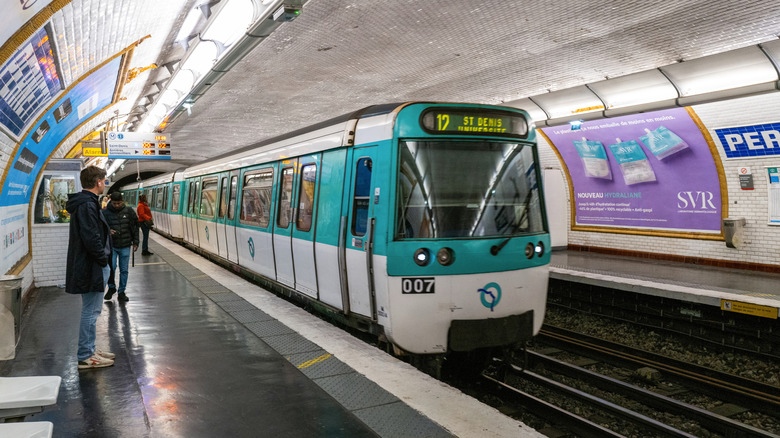
July 19, 1900: The Métropolitain de Paris opens, as the French capital's rapid transit system. Its opening is part of the Exposition Universelle. But, as with the Eiffel Tower in 1889, it not only survived the World's Fair for which it was built, it is still in operation today.

Operated by the Régie autonome des transports parisiens (RATP), and known as the Métro for short, it is known for its uniform architecture, and its historical entrances, influenced by the Art Noveau movement. There are 16 lines, running through 321 stations. It is the 2nd-most-used subway system in Europe -- or 1st, if you don't count Russia, and therefore Moscow.

The Place du Châtelet, bordering the 1st and 4th arrondisements, stands as the system's centerpoint. Oddly, the Eiffel Tower, the city's most popular landmark, is about a 10-minute walk from the nearest station.  

*

July 19, 1900 was a Thursday. The only professional sport in business at the time was baseball, and these 4 games were played in the National League:

* The New York Giants beat the St. Louis Cardinals, 8-3 at the 1891-1911 version of the Polo Grounds. Win Mercer outpitched Cy Young.

* The Brooklyn Superbas, forerunners of the Dodgers, beat the Cincinnati Reds, 12-8 at the 2nd Washington Park in Brooklyn.

* The Boston Beaneaters beat the Chicago Orphans, 5-1 at the 3rd South End Grounds in Boston. The Chicago team, formerly known as the White Stockings and, for their youth, as the Colts, had long been led by 1st baseman and manager Adrian Constantine Anson. He was known as "Cap," for "Captain," until he got older, and became known as "Pop." He retired after the 1897 season, and the team became known as the "Orphans," because "they missed their Pop." They were renamed the Chicago Cubs in 1903. The Beaneaters went through a few name changed before becoming the Boston Braves in 1912.

* And the Philadelphia Phillies beat the Pittsburgh Pirates, 4-3 at National League Park (later renamed Baker Bowl) in Philadelphia.

Saturday, July 2, 2022

July 2, 1953: New York Introduces the Subway Token

July 2, 1953: New York's Metropolitan Transportation Authority (MTA) introduces the Subway token, to get around the fact that the Subway's fare has been raised from 10 to 15 cents. It had previously been raised from its original 1904 fare of 5 cents to 10 in 1948.

Also in 1948, Boston raised its Subway fare from 10 to 15 cents. But since fareboxes couldn't accommodate more than one coin, an "exit fare" was introduced to get out of the system. This led to "MTA," a folk song lampooning their Metropolitan Transit Authority, in which the hero, Charlie, refuses to pay the exit fare, and can't get out of the system: "He's the man who never returned." (In 1964, the MTA became the MBTA, the Massachusetts Bay Transportation Authority, which also oversees commuter rail and Boston into and out of Boston, and they standardized the system, including the elimination of the exit fare.)

But the token was one coin, that could be worth whatever the MTA wanted it to be. And so it remained, with various increases: 20 cents on January 1, 1966; 30 cents on January 4, 1970; 35 cents on January 1, 1972; 50 cents on September 1, 1975; 60 cents on June 28, 1980; 75 cents on July 3, 1981; 90 cents on January 2, 1984; $1.00 on January 1, 1986; $1.15 on January 1, 1990; $1.25 on January 1, 1992.

The MetroCard was introduced in 1993, to enhance the technology of the transit system and eliminate the burden of carrying and collecting tokens. The MTA discontinued the use of tokens in the subway on May 3, 2003, and on buses on December 31, 2003.

This annoyed me, because tokens worked. Every time. MetroCards frequently don't work. They can get bent, becoming useless, and wasting however much money is on them, ruining their one true advantage, which is that you can put whatever you can afford on them. And they can expire.

Speaking of which: The MetroCard is expected to be phased out by April 2024. It will be replaced by OMNY, a contactless payment system where riders pay for their fare by waving or tapping credit or debit bank cards, smartphones, or MTA-issued smart cards.

At any rate, or so to speak, the New York Subway fare became $1.50 on November 12, 1995; $2.00 on May 4, 2003; $2.25 on June 28, 2009; $2.50 on March 3, 2013; and has been $2.75 on March 22, 2015, although you have to spend an additional $1.00 fee to get a new card.

In 2020, Philadelphia became the last city in America to switch their subway system from tokens to cards.

*

July 2, 1953 was a Thursday. There were 4 games were played that day in what would eventually be called Major League Baseball:

* The New York Yankees beat the Boston Red Sox, 5-3 at Fenway Park in Boston. Johnny Mize, in the final season of a Hall of Fame career, doubled home the winning run in the top of the 10th inning. Vic Raschi went the distance for the win. Mickey Mantle did not play. Don Bollweg, playing 1st base for the Yankees on this day, went 3-for-4 with a 3-run home run. Ted Williams was serving in the Korean War, and unavailable for the Red Sox.

* The Brooklyn Dodgers beat the Philadelphia Phillies, 8-0 at Ebbets Field. Carl Erskine pitched a 7-hit shutout, supported by home runs from Gil Hodges (no surprise) and Pee Wee Reese (big surprise). Jackie Robinson went 1-for-4 with a walk and 3 RBIs.

* The Detroit Tigers beat the Cleveland Indians, 4-2 at Briggs Stadium in Detroit (renamed Tiger Stadium in 1961).

* And the Cincinnati Reds beat the Milwaukee Braves, 3-1 at Milwaukee County Stadium.

Sunday, June 5, 2022

June 6, 1892: Chicago's "L" Begins Service

June 6, 1892: The Chicago and South Side Rapid Transit Railroad begins service, with a steam locomotive pulling 4 wooden coaches, carrying 25 people, departing from the 39th Street Station, and going to the Congress Street Terminal. This was the beginning of Chicago's elevated rail service, or "The L." The tracks in question are now part of the Chicago Transit Authority's Green Line.

In 1895, the L opened its "Loop": An elevated rectangle bounded by Lake Street on the north, Wabash Street Street on the east, Van Buren Street on the south, and Wells Street on the west. The term "The Loop" has come to become synonymous with downtown Chicago.

The city got its first underground line in 1943, with the State Street Subway. In 1947, the Chicago Transit Authority was formed, and it took control of the city's elevated, subway, streetcar and bus systems. In 1997, the city switched from tokens to farecards.

In 1900, the Addison Street Station was built. In 1914, the ballpark that would become Wrigley Field, home of the Chicago Cubs baseball team, was built a block away. In 1969, a line was built on the median of the Dan Ryan Expressway to the South Side, providing service at 35th Street for Comiskey Park, home of the Chicago White Sox baseball team, and its successor, Guaranteed Rate Field. Today, both Addison and Sox-35th stations are on the CTA's Red Line.

In contrast, neither Soldier Field, home of the NFL's Chicago Bears and MLS' Chicago Fire, nor the United Center, home of the NBA's Chicago Bulls and the NHL's Chicago Blackhawks, is within a 15-minute walk of an L or subway station, although the former is served by Metra commuter rail and both can be reached by CTA buses.

Today, the system runs this far from the Loop: North, 14 miles to Linden; south, 12 miles to 95th Street/Dan Ryan; and west, 16 miles to O'Hare International Airport. To the east, they are limited by Lake Michigan.
On the Blue Line, O'Hare is a 48-minute ride from downtown, making it faster than New York's Subway goes to John F. Kennedy International Airport. (Their Subway doesn't even go to the other 2 major airports in the area: La Guardia is only accessible by bus, and for Newark, a rider would have to switch to New Jersey Transit commuter rail at Penn Station.) Midway International Airport is even closer, 39 minutes on the Orange Line.

*

June 6, 1892 was a Monday. The only professional sports league in operation in North America at the time was baseball's National League, and these games were played that day:

* The New York Giants beat the Louisville Colonels, 4-3 at the Polo Grounds. That structure burned down in 1911, and the most familiar version of the Polo Grounds was built on the site.

* The Brooklyn Bridegrooms beat the Cleveland Spiders, 5-3 at Washington Park in Brooklyn.

* The Boston Beaneaters beat the Pittsburgh Pirates, 17-4 at the 2nd version of the South End Grounds in Boston. That structure burned down in 1894, and the 3rd and final version of the South End Grounds was built on the site.

* The Philadelphia Phillies beat the St. Louis Browns, 15-7 at the Philadelphia Base Ball Grounds. That structure also burned down in 1894, and what became Baker Bowl was built on the site.

* The Baltimore Orioles beat the Chicago Colts, 23-1 at Union Park in Baltimore.

* And the Cincinnati Reds beat the Washington Senators, 7-4 at Boundary Field in Washington. Lihe the Polo Grounds, that structure burned down in 1911, and what became Griffith Stadium was built on the site.

The Browns became the St. Louis Cardinals in 1900. The Colts became the Chicago Cubs in 1903. The Grooms, so named because several players got married during the 1887-88 off-season, became the Superbas in 1899 and the Dodgers in 1911. The Beaneaters went through a few name changes before settling on the Braves in 1912.

The Colonels, the Spiders, the Orioles and the Senators were contracted out of the National League after the 1899 season. That contraction made the American League possible in 1891, and it would have teams that had names formerly known to the National League: The Baltimore Orioles, the Boston Red Sox, the Chicago White Sox, the St. Louis Browns, and the Washington Senators.

Sunday, March 27, 2022

March 27, 1976: Washington, D.C. Finally Gets a Subway

March 27, 1976: The Washington Metropolitan Area Transit Authority (WMATA) opens the District of Columbia's 1st subway system, known as the Metro. Its "M" signs point the way to entrances.

Actually, D.C.'s 1st subway line was built in 1909, linking the U.S. Capitol Building to what's now named the Russell Senate Office Building. Added to this were one in 1960 for what became the Dirksen Senate Office building, one for the Rayburn House Office Building in 1965, and one for the Hart Senate Office Building in 1982.

Like Montreal's system, the Washington Metro's trains have rubber tires, making it much quieter than the other systems in the Northeast: New York, Philadelphia and Boston (and, later, Baltimore). And its arched stations are considerably more artistic than those cities' older stations.

Unlike the systems in New York and Philadelphia, but like Boston's and Baltimore's, Washington's leaves its main city -- Washington, District of Columbia. Unlike any of them, it actually crosses State Lines, going into the suburbs of Maryland and Virginia. (New York has the PATH system, and Philadelphia has the PATCO Speedline, both of which go into New Jersey, but neither is part of the city's official subway system.)

One of the main reasons baseball's Washington Senators failed -- twice -- was low attendance. In 1960, when the "Old Senators" moved to become the Minnesota Twins, there was no subway line to Griffith Stadium. The Shaw-Howard University station on the Green Line opened in 1991, far too late to save that team. In 1971, when the "New Senators" moved to become the Texas Rangers, there was no subway line to Robert F. Kennedy Stadium. The Stadium-Armory station opened in 1977, serving RFK on the Blue, Orange and Silver Lines. The system also has Red and Yellow Lines.

Washington was the 1st city in the country to use a fare-card admission system, never using tokens. Eventually, the rest of the country caught up with them.

*

March 27, 1976 was a Saturday. Future basketball star Danny Fortson was born.

Baseball was in Spring Training. Football was out of season. There were 7 games in the NBA:

* The New York Knicks beat their arch-rivals, the Boston Celtics, 105-103 at Madison Square Garden. Earl "the Pearl" Monroe scored 35 points.

* The Washington Bullets beat the Chicago Bulls, 99-84 at the Capital Centre in the Washington suburb of Landover, Maryland. The Metro wouldn't open a Landover station until 1978.

* The Cleveland Cavaliers beat the Milwaukee Bucks, 103-99 at The Coliseum in the Cleveland suburb of Richfield, Ohio.

* The Detroit Pistons beat the Portland Trail Blazers, 112-94 at Cobo Hall (now Huntington Place) in Detroit.

* The Houston Rockets beat the Philadelphia 76ers, 109-95 at The Summit in Houston. It's now the Central Campus of televangelist Joel Osteen's Lakewood Church.


* The Phoenix Suns beat the Kansas City Kings, 117-100 at the Arizona Veterans Memorial Coliseum in Phoenix.

* And the Golden State Warriors beat their arch-rivals, the Los Angeles Lakers, 113-97 at the Oakland Coliseum Arena.

The American Basketball Association was in what turned out to be its final season. There were 2 games. The Denver Nuggets beat the Virginia Squires, 124-123 in overtime at The Scope in Norfolk. David Thompson scored 36 for the Nuggets. And the San Antonio Spurs beat the Kentucky Colonels, 108-90 at the HemisFair Arena in San Antonio.

There were 7 games in the NHL:

* The New York Rangers beat the Chicago Black Hawks, 6-5 at the Chicago Stadium.

* The Montreal Canadiens beat the Kansas City Scouts, 8-2 at the Montreal Forum.

* The Boston Bruins and the Philadelphia Flyers played to a tie, 4-4 at the Boston Garden.

* The Buffalo Sabres beat their rivals, the Toronto Maple Leafs, 4-2 at Maple Leaf Gardens in Toronto.

* The Detroit Red Wings beat the Atlanta Flames, 8-0 at the Olympia Stadium in Detroit.

* The St. Louis Blues beat the Minnesota North Stars, 6-3 at the St. Louis Arena.

* The Los Angeles Kings beat the Vancouver Canucks, 7-3 at The Forum outside Los Angeles in Inglewood, California.

* And the New York Islanders, the Pittsburgh Penguins, the California Golden Seals and the Washington Capitals were not scheduled.

There were 2 games in the World Hockey Association. The Quebec Nordiques beat the Calgary Cowboys, 6-4 at the Colisée de Québec. And the Phoenix Roadrunners beat the San Diego Mariners, 5-2 at the San Diego Sports Arena (now the Pechanga Arena).

And in English soccer, the North London team I would one day support, Arsenal, traveled to Yorkshire, and lost to Leeds United, 3-0 at Elland Road in Leeds.

Sunday, March 20, 2022

March 20, 1995: The Tokyo Metro Gas Attack

March 20, 1995: The subway system in Tokyo, the capital of Japan, is hit with a terrorist attack that leaves 14 people dead, and over 1,000 people hospitalized.

The Tokyo Metro opened in 1927, and remained in operation throughout World War II and the postwar reorganization of the country. It carries about 7 million people per day. In 2022, a 24-hour ticket costs 800 yen, or about $6.71. Which means if you ride it to and from work every day, and no other rides, that's about $3.36 per ride, making it more expensive that New York's Subway; but if you need 4 trips per day, that's about $1.68 per ride, making it cheaper than New York.

The attack took place at 7:00 AM local time. The weapon was Sarin, ordinarily a colorless, odorless liquid; but, in this case, in a gaseous form. Exposure is lethal even at very low concentrations, where death can occur within 1 to 10 minutes after direct inhalation of a lethal dose, due to suffocation from respiratory paralysis, unless antidotes are quickly administered. People who absorb a non-lethal dose, but do not receive immediate medical treatment, may suffer permanent neurological damage.

The attack was launched by Aum Shinrikyo, founded by Shoko Asahara. A nearly blind man who was convicted of practicing pharmacy without a license, and founded Aum Shinrikyo in 1984, at age 29. It was a doomsday cult, containing elements of Hinduism, the Chinese form of Buddhism, and evangelical Christianity.

Like David Koresh, leader of the Branch Davidian cult that was taken down by the American federal government in 1993, Asahara told his cult members that he was the Second Coming of Jesus Christ. He gave them conspiracy theories about rival Japanese religions, the Jews, the Freemasons, the British Royal Family, and, for some reason, the Dutch. He believed that the world could only be saved after a nuclear war -- a sickening statement for someone from the only country on whom nuclear weapons had ever been used in warfare.

On May 16, 1995, Asahara was arrested, but due to technicalities, it took 7 years for his trial to begin. He was convicted, sentenced to death, and finally hanged on July 6, 2018, 23 years after the attack.

In 2007, without him, Aum Shinrikyo split into 2 separate cults, named Aleph and Hikari no Wa. Both have been designated as terrorist groups by NATO, the European Union, and Russia.

*

March 20, 1995 was a Monday. Baseball was in Spring Training. Football was out of season. There were 4 games played in the NBA that night:

* The Atlanta Hawks beat the Los Angeles Clippers, 106-102 at The Omni in Atlanta.

* The Dallas Mavericks beat the Cleveland Cavaliers, 102-100 in double overtime at the Gund Arena in Cleveland. (It's now named the Rocket Arena.)

* The San Antonio Spurs beat the Seattle SuperSonics, 104-96 at the Alamodome in San Antonio.

* And the Sacramento Kings beat the Denver Nuggets, 91-89 at the ARCO Arena in Sacramento. (It's now named the Sleep Train Arena.)

And there were 5 games played in the NHL:

* The Quebec Nordiques beat the Florida Panthers, 5-4 at Colisée de Québec. Owen Nolan scored the winning goal with 2:27 left in overtime.

* The Washington Capitals beat the Hartford Whalers, 5-0 at the Hartford Civic Center. (It's now named the PeoplesBank Arena.)

* The Philadelphia Flyers beat the Montreal Canadiens, 8-4 at The Spectrum in Philadelphia. Eric Lindros had a hat trick.

* In "The Battle of Alberta," the Edmonton Oilers beat the Calgary Flames, 5-2 at the Northlands Coliseum in Edmonton.

* And the Los Angeles Kings beat the St. Louis Blues, 5-3 at The Forum outside Los Angeles in Inglewood, California.

December 31, 1999 & January 1, 2000: The Millennium

December 31, 1999:  The Millennium arrives. The people of planet Earth survived. At a terrible cost. But we hadn't destroyed ourselves. ...