Showing posts with label robert f. kennedy. Show all posts

Sunday, December 18, 2022

December 18, 1974: "The Missiles of October" Premieres On ABC

William Devane as JFK

December 18, 1974: The TV-movie The Missiles of October airs on ABC. William Devane plays President John F. Kennedy, and Martin Sheen plays his brother, Attorney General Robert F. Kennedy. The film is based on Thirteen Days: A Memoir of the Cuban Missile Crisis, written by RFK but not published until 1969, after his assassination.

The film also stars Howard Da Silva as Soviet Premier Nikita Khrushchev, and Ralph Bellamy as U.N. Ambassador Adlai Stevenson.

In 1979, Sheen starred in Blind Ambition, based on the memoir of John Dean, counselor to President Richard Nixon and defendant/informant in the Watergate case. In 1983, he starred in the NBC miniseries Kennedy, making him, as far as I know, to this day, the only actor ever to play both Jack and Bobby Kennedy. That same year, in The Dead Zone, he played a Senate candidate who, in a vision of the future by Johnny Smith (Christopher Walken), becomes a President who starts World War III.

In 2003, playing fictional President Jed Bartlet on The West Wing, Sheen was reunited with Devane, who played Secretary of State Lewis Berryhill. In 2007, he provided the voice of George Washington for the documentary Searching for George Washington.

Devane has also played fictional Presidents on Stargate SG-1 and 24, and in The Dark Knight Rises. In 1991, in the NBC film A Woman Named Jackie, he played Jack Bouvier, father of Jacqueline Kennedy.

Bellamy had played Franklin D. Roosevelt in Sunrise at Campobello in 1960, telling of FDR's initial struggle with polio before becoming President. He played FDR as President in the 1984 ABC miniseries The Winds of War and its 1988 sequel War and Remembrance, based on the World War II novels of Herman Wouk.

Da Silva, the original Jud Fry in Oklahoma! in 1943, played Benjamin Franklin in the 1969 Broadway musical 1776 and its 1972 film version. And he played FDR in the 1977 film The Private Files of J. Edgar Hoover.

In 2000, a theatrical release about the Crisis was released, taking the Thirteen Days name from RFK's book, but based on another book about the Crisis, based on information declassified long after The Missiles of October aired.

*

December 18, 1974 was a Wednesday. Pro Bowl linebacker Peter Boulware was born.

Baseball was out of season. Football was in midweek. There were 3 games in the NBA:

* The Boston Celtics beat the Philadelphia 76ers, 131-99 at The Spectrum in Philadelphia.

* The Washington Bullets beat the New Orleans Jazz, 113-90 at the Capital Centre in the Washington suburb of Landover, Maryland.

* And the Seattle SuperSonics beat the Detroit Pistons, 100-97 at Cobo Hall (now Huntington Place) in Detroit. Fred Brown scored 34 for the Sonics.

There were 4 games in the American Basketball Association:

* The Virginia Squires beat the Memphis Sounds, 112-86 at the Mid-South Coliseum in Memphis.

* The Indiana Pacers beat the San Antonio Spurs, 128-122 at the Market Square Arena in Indianapolis. George McGinnis led all scorers on the night with 45.

* The Kentucky Colonels beat the Spirits of St. Louis, 110-94 at the St. Louis Arena. Artis Gilmore scored 36 for the Colonels.

* And the San Diego Conquistadors beat the Utah Stars, 113-99 at the San Diego Sports Arena (now the Pechanga Arena).

There were 6 games in the NHL:

* The New York Rangers beat the Minnesota North Stars, 7-0 at Madison Square Garden. Former Boston Bruins star Derek Sanders scored 3 goals and had an assist for the Rangers.

* The New York Islanders lost to the Buffalo Sabres, 3-2 at the Buffalo Memorial Auditorium.

* The Toronto Maple Leafs beat the Pittsburgh Penguins, 6-4 at Maple Leaf Gardens in Toronto.

* The Chicago Black Hawks beat their arch-rivals, the Detroit Red Wings, 7-5 at the Chicago Stadium.

* The Los Angeles Kings beat the Kansas City Scouts, 6-0 at the Kemper Arena (now the Hy-Vee Arena) in Kansas City.

* And the Montreal Canadiens beat the California Golden Seals, 4-3 at the Oakland Coliseum Arena.

And there were 2 games in the World Hockey Association. The Quebec Nordiques beat the Winnipeg Jets, 5-1 at the Colisée de Québec. And the Phoenix Roadrunners beat the Vancouver Blazers, 5-3 at the Arizona Veterans Memorial Coliseum.

Wednesday, October 26, 2022

October 26, 1960: The Kennedys Save Dr. King -- and Their Own Election

October 26, 1960: There are 13 days left before the Presidential election. Martin Luther King Jr. is arrested for protesting at a whites-only snack bar in his hometown of Atlanta.

Terrified that he might be beaten, or even killed, while in a Southern jail, his wife, Coretta Scott King, calls the campaign of the Republican nominee for President, Vice President Richard Nixon, for help. She gets none.

So she calls the campaign of the Democratic nominee for President, Senator John F. Kennedy of Massachusetts. Whoever she reached got word to JFK. He calls his brother and campaign manager, Robert F. Kennedy, and asks him to see what he can do. RFK calls Governor Ernest Vandiver of Georgia. Together, they work on Oscar Mitchell, the judge who had ordered MLK's arrest. He is released.

Prior to this, the King family (not to be confused with the soon-to-be-popular white singing family of the same name) were Republicans, because the Republican Party was the party of Abraham Lincoln; while, being Southern blacks, they knew the Democratic Party not as the party of Franklin D. Roosevelt, but as the party of slavery and segregation.

After this, MLK's father, Dr. Martin Luther King Sr., told people, "If I had a million votes, I would give them to Jack Kennedy."

For all we know, the Kennedy brothers' action to free MLK may just have swayed 1 million black votes to JFK, who had not previously been seen as noticeably friendly to civil rights. On Election Day, November 8, JFK won New Jersey (with Newark) by 22,000 votes, Missouri (with St. Louis and Kansas City) by 10,000, and Illinois (with Chicago) by 9,000.

Had Nixon won those States, Nixon would have won the Electoral Vote, even if he had still lost the popular vote, and would have won the election. So if you're a Republican, and are looking for a reason why Nixon lost, don't look at Mayor Richard J. Daley and any shenanigans he might have pulled in Chicago: Look at Nixon himself. He could have saved Dr. King, and, in so doing, saved his campaign. He chose not to. JFK chose to help himself by helping Dr. King.

*

October 26, 1960 was a Wednesday. Baseball season ended 13 days earlier, with Bill Mazeroski's home run in the bottom of the 9th inning of Game 7 giving the Pittsburgh Pirates the World Series over the New York Yankees. Football was in midweek.

There was 1 game played in the NBA: The Detroit Pistons beat the Cincinnati Royals, 131-117 at Cobo Hall (now Huntington Place) in Detroit. For the Pistons, Gene Shue (later to coach the Washington Bullets to the 1978 NBA Championship) scored 30 points, and Bailey Howell scored 23. For the Royals, Jack Twyman scored 33, and Oscar Robertson scored 25.

And there was 1 game in the NHL: The New York Rangers beat the Detroit Red Wings, 4-3 at the old Madison Square Garden. Andy Hebenton scored 2 goals for the Broadway Blueshirts.

Saturday, October 22, 2022

October 22, 1962: "The First Family" Is Recorded Amid the Cuban Missile Crisis

October 22, 1962: Eight days after finding out that the Soviet Union has set up missiles in Cuba, which could reach the United States, and debating what to do about it, President John F. Kennedy addresses the nation from the Oval Office at the White House.

Obviously, JFK couldn't simply do nothing, and let the missiles stay there. It would have been nuclear extortion on America and its allies. He also knew that standard diplomacy, trying to get the Soviets to remove the missiles that way, or to convince Castro to refuse them, wouldn't work.

Most of the President's military advisors had recommended a first strike on Cuba -- not nuclear, but with conventional weapons, meaning planes and bombs. This would be followed by a land invasion.

JFK knew that this would be considered an act of war, not just on Cuba, but on Cuba's ally, the Soviet Union, and might lead to that country launching its missiles on the West, including any missiles that the hypothetical bombing raid failed to take out. If ever there was a President who, as Donald Trump once suggested he did, "knew more than the Generals do," it was Kennedy.

Secretary of Defense Robert McNamara suggested a naval blockade, preventing any more Soviet supplies from arriving in Cuba by sea -- including aircraft carriers whose planes could enforce the blockade by air.

But this, too, was problematic: According to international law, a blockade is an act of war. Admiral George Anderson, Chief of Naval Operations, told JFK to, instead, call it a "quarantine." JFK's Attorney General, his brother, Robert F. Kennedy, told him that this would provide legal justification, under the Rio Treaty, effectively establishing the Organization of American States (OAS) as a NATO for the Western Hemisphere, and also backing up the Monroe Doctrine, prohibiting European interference in the Hemisphere. And so, JFK announced the "quarantine."

For the next week, the world was terrified that this is it: World War III is coming, and, as JFK had said before, "The living would envy the dead."

And while this speech was being broadcast, among the few people not seeing it were in Fine Recording Studio in Manhattan, watching the recording of the comedy album The First Family, a parody of the Kennedy family. Presidents had been portrayed before, and comedians had made jokes about incumbent Presidents. But comedian Vaughn Meader, a fellow New Englander (from Waterville, Maine) had already made a name for himself impersonating JFK, including the accent, the phrasing and the gestures.
Unlike some later Presidential parodies, this was mostly in good fun, riffing on various facets of Kennedy life: JFK's comparative youth and inexperience, his reliance on his brother Bobby's counsel and their father Joe's money, his bad back and the rocking chair he used instead of a stiffer chair, his affinity for cigars, Jackie's redecoration of the White House, the raising of daughter Caroline and baby John Jr., and the family's love of sports, including football and water-skiing.

Naomi Brossart played Jackie. She was a model, and this album was her recording debut. Canadian actress Norma McMillan, an experienced cartoon voice actress, and older than either Meader or Brossart, ironically provided the voices of both Caroline and "John-John."

Also among the cast were Earle Doud and Bob Booker, who co-produced the album; and Chuck McCann, a comedian known for his commercials ("Hi, guy!" for Right Guard antiperspirant, and he was the voice of Sonny the Cuckoo Bird who went "cuckoo for Cocoa Puffs" cereal). McCann also starred in a kids' science-fiction comedy, Far Out Space Nuts, with a post-Gilligan's Island John Denver. That show, too, was produced by Earle Doud, for the Krofft Superstars, as was another McCann vehicle, Magic Mongo. Also for Sid & Marty Krofft, Doud created and produced Wonderbug.

Meader later said, "A lot of people don't know this, but we recorded The First Family on the night of October 22, 1962, the same night as John F. Kennedy's Cuban Missile Crisis Speech. The audience was in the studio and had no idea of the drama that was taking place. But the cast had heard the speech and our throats almost dropped to our toes, because if the audience had heard the Cuban Missile Speech, we would not have received the reaction we did."

"Mr. President, we recently learned that you sent an agent into Cuba.
Did he return with any useful information?"
"Well, I didn't send him for information. I sent him for cigars!"

Cadence Records almost cancelled the distribution of the record, assuming America would be going to war. But the crisis was resolved on October 28, so the album was released a few days later. It rode JFK's post-crisis popularity to became the fastest-selling record in American history, until The Beatles came along a year later, and in 1963 it won the Grammy Award for Album of the Year. Since the music business is a copycat's business, Jewish comedians Buck Henry, Joan Rivers and George Segal recorded The Other Family, imagining the Khrushchevs at home.


On November 22, 1963, JFK was assassinated. The night before, Meader had done a show in character in Milwaukee. Right after the news of the assassination hit the media, he hailed a taxi to take him to the airport. The driver recognized him, and said, "Did you hear about Kennedy in Dallas?" Since Meader hadn't heard, he presumed this was the setup for a joke, and said, "No, how does it go?" The driver told him, and turned on the radio so Meader could hear.


That night, a far more controversial comedian, Lenny Bruce, was due to go onstage at a nightclub in New York's Greenwich Village. He wondered if it were possible to be funny that night. He wondered if anybody would even show up. He decided to go out, and there were 12 people in the audience. He sat on a stool for a moment, and then, his usual bad taste kicked in, and he said, "Boy, is Vaughn Meader fucked!" And the 12 people laughed like crazy. Bruce walked offstage, knowing it wouldn't get any better than that, and collected his pay from a satisfied club owner.


Sadly, Bruce was right: Nobody wanted to hear from Meader anymore. He couldn't do JFK material anymore, but anything else he tried reminded people of the sadness of those 4 days in November. He went back to Maine, and ran a bar.


Earle Doud, who produced the original album, tried again, with Welcome to the LBJ Ranch and Lyndon Johnson's Lonely Hearts Club Band. But instead of impressionists, they did it as a "cut-in" album, in the style of Dickie Goodman's "Flying Saucer" records: They would ask a question, and then use a recording of LBJ, a figure in his Administration, or another politician, the result intending to be funny. It didn't work.


David Frye was an amazing impressionist, who managed to not only sound like, but use his facial expressions to even look like, not just LBJ, but also Robert Kennedy, Richard Nixon, Nelson Rockefeller, and even William F. Buckley. Sometimes, he would play talk show host David Susskind, interviewing each of them. He recorded the albums I Am the President and Radio Free Nixon.


Of course, once Nixon's own recordings were released, the paradigm was changed: Since the world had heard just how mean a President of the United States could be, it was okay to really skewer him in comedy routines.


Meader had a brief revival in 1981, with The First Family Rides Again! But Doud made him just a supporting player on that album: Rich Little provided the voice of Ronald Reagan. Meader died in 2004, at the age of 68. Norma MacMillan died in 2001, Chuck McCann in 2018. As of October 22, 2022, Earle Doud, Bob Booker and Naomi Brossart are still alive.


*


October 22, 1962 was a Monday. Actor Bob Odenkirk was born.

The baseball season ended 6 days earlier, with the New York Yankees winning Game 7 of the World Series over the San Francisco Giants. Football was in midweek: There wouldn't be Monday Night Football until 1970. The NBA and NHL seasons were underway, but no games were scheduled for either. So there were no scores on this historic day.

Saturday, October 1, 2022

October 1, 1962: James Meredith & JFK Integrate "Ole Miss"

October 1, 1962: James Meredith registers as a full-time student at the University of Mississippi. This is a very big deal, since he is the 1st black student at "Ole Miss."

Governor Ross Barnett had ordered the Mississippi National Guard to prevent this, and pro-segregation demonstrators were ready to beat or even kill Meredith if he tried.

Two days earlier, Ole Miss played the University of Kentucky at Memorial Stadium in Jackson, and won 14-0. Confederate flags were everywhere in the stands. At halftime, a gigantic Confederate flag was unveiled on the field. Fans chanted, "We want Ross!" Barnett went down to the field, took a microphone, and said, "I love Mississippi! I love her people! Our customs! I love and respect our heritage!" And he got a standing ovation.

President John F. Kennedy, on the insistence of his brother, Attorney General Robert F. Kennedy, federalized the Guard, and ordered them instead to protect Meredith and allow him to enroll. The racists rioted, and threw things at the Guardsmen, who fired back. Two men were killed. But the law prohibiting racial discrimination in enrollment at State-sponsored schools was upheld. On October 1, Meredith walked into the Lyceum, and became a student at the University of Mississippi.

Meredith, whose college credits from the all-black Jackson State University in Mississippi were carried over, received his degree from Ole Miss 10 months later.

The following Spring, the basketball team at Mississippi State University, who had won the Southeastern Conference Championship, was placed in the NCAA Tournament, to play Loyola University of Chicago, an integrated team. Barnett called the State Police, and told them to set up roadblocks to prevent the MSU Bulldogs from leaving the State to play that integrated team.

It didn't work: They snuck out of the State. And got to McGaw Hall, on the campus of Northwestern University in Evanston, Illinois, outside Chicago. And played Loyola. And lost the game. But they won a moral victory. Loyola became the 1st team with more black than white starters to win the National Championship.

At the time, State law prohibited Mississippi's Governors from succeeding themselves, so Barnett had to sit out the 1963 election. He ran again in 1967, and finished a distant 4th in the Democratic Primary, the 1st gubernatorial election in the State following the Voting Rights Act of 1965. He never won another office, and died in 1987 -- absolutely unrepentant, unlike such other civil rights opponents as George Wallace of Alabama, Strom Thurmond of South Carolina, Robert Byrd of West Virginia and Albert Gore Sr. of Tennessee.

Today, Meredith is 89, and has spent most of the 60 years since as a Republican. Ole Miss has honored him with a statue, and, like its rival Mississippi State, goes out of its way to recognize its role in civil rights, first as an opponent, then as a supporter.
Ole Miss still calls its teams the Rebels, but Confederate paraphernalia is no longer allowed on campus, and the "Colonel Reb" mascot has been retired.

This was also the day that Johnny Carson debuted as host of The Tonight Show. I have a separate entry for that.

*

October 1, 1962 was a Monday. Actor Esai Morales was born.

It was the day of Game 1 of the National League Playoff, 11 years after the Giants and Dodgers did it in New York. Now, they do it in California, and Billy Pierce pitches a 3-hit shutout. He hardly needs to, as 2 homers by Willie Mays, and 1 each by Orlando Cepeda and Jim Davenport, give the San Francisco Giants an 8-0 win over the Los Angeles Dodgers at Candlestick Park.

Saturday, July 30, 2022

July 30, 1975: The Disappearance of Jimmy Hoffa

July 30, 1975: Jimmy Hoffa goes to a meeting. Nobody knows the result of this meeting, because nobody ever saw Hoffa again. Anybody who did see him after this meeting hasn't been talking.

James Riddle Hoffa was born on February 14, 1913 in Brazil, Indiana, outside Terre Haute. Controversial Bishop James Pike was born the exact same day, and he would also disappear, although he was found -- dead. New York Yankees broadcaster Mel Allen was born the same day. So was Ohio State football coach Woody Hayes.

Hoffa was 7 when his father died, and at 11, his mother moved him to Detroit, where he lived for the rest of his life. He dropped out of school to go to work at age 14. Because of the abuses he sustained on his job, he was drawn to union activity. By 1932, he was a member of the International Brotherhood of Teamsters, which then represented truck drivers and chauffeurs, although it now represents a diverse group of blue-collar and professional workers.

Hoffa proved to be an organizing genius: In his rise through the Teamsters, they grew from 75,000 members in 1933 to 420,000 in 1939, actually growing despite the manpower drain of World War II (for which Hoffa's leadership role within the union got him a draft deferment), and topping 1 million in 1951. By 1952, Hoffa was the union's national vice president, and was elected president in 1957.

By this point, the actions of the Teamsters had attracted some inconvenient attention. The U.S. Senate's Select Committee on Improper Activities in Labor or Management Field, chaired by John McClellan of Arkansas (and thus remembered as "the McClellan Committee"), called Hoffa's predecessor, Dave Beck, to Capitol Hill to testify on organized crime's influence on the union. He invoked his right against self-incrimination under the 5th Amendment to the Constitution of the United States 140 times, and was subsequently indicted and convicted of embezzlement. (He served 2 1/2 years in prison, and died in 1993, at age 99.) That allowed Hoffa to rise to the union's presidency sooner than would have been expected.

One of the members of the McClellan Committee was John F. Kennedy of Massachusetts. The legal counsel for the Committee was Kennedy's brother, Robert F. Kennedy. Bobby had discovered several financial irregularities, including the misappropriation of $9.5 million in union funds -- just under $100 million in 2022 money.

The exchange between Robert Kennedy and Hoffa was so intense, it inspired Bobby's 1st book, titled The Enemy Within. I found the book once, and couldn't believe that the man who wrote it was the same man who ran for President in 1968 on a message of peace and brotherhood. This Robert Kennedy was incredibly belligerent, and he didn't seem to have a nice thing to say about anybody. It later inspired a 1983 TV-movie, titled Blood Feud, starring Robert Blake as Hoffa and Cotter Smith as Bobby.

Hoffa was indicted for bribery over this. He was acquitted, but the controversy led the AFL-CIO to expel the Teamsters from its ranks. This didn't stop Hoffa: He managed to bring airline workers and transport workers (bus drivers and subway motormen) under the Teamsters' umbrella.

John F. Kennedy was elected President in 1960, and appointed Bobby as his Attorney General. (A law has since been passed prohibiting nepotism by a President.) Bobby wanted Hoffa imprisoned, very badly, and failed in his 1st attempt, being acquitted of conspiracy in 1962. In May 1963, Bobby got Hoffa indicted for jury tampering. On November 22, 1963, before the case could go to trial, President Kennedy was assassinated. According to the TV-movie, Hoffa hated Bobby so much that, when he was told, "Kennedy's been shot!" he asked, "Which Kennedy?"

Hoffa was convicted on March 6, 1964, and sentenced to 13 years. After 3 years of appealing, he went to prison on March 6, 1967. On December 23, 1971, President Richard Nixon -- perhaps to spite the Kennedys, and the memories of Jack and Bobby -- commuted Hoffa's sentence to time served, and he was free.

But there was a catch: As part of the deal, he was forbidden to "engage in the direct or indirect management of any labor organization." He couldn't stay away, and in 1973, he sued to invalidate the restriction, but lost his case.

He also found that he had lost support in the union, even in his native Detroit, where Anthony Provenzano, a caporegime in New York's Genovese crime family, had become the power behind the throne, along with the brothers Anthony and Vito Giacalone, major figures in the "Detroit Partnership," as the local Mafia were known. By 1975, the back-and-forth between Hoffa and the mobsters was nasty enough that Hoffa's son, James P. Hoffa, said, "I was increasingly afraid that the Mob would do something about it."

They did: They set up an alleged peace meeting between Tony Giacalone and Hoffa, for July 30, at 2:00 PM, at Machus' Red Fox restaurant in suburban Bloomfield Township, Michigan. Between 2:15 and 2:30, Hoffa's wife, Josephine, received a phone call from him, made from a payphone in front of Damman Hardware, behind the Red Fox, telling her that Tony hadn't shown up, and that he'd been stood up. He said he'd be home at 4:00 to grill some steaks for dinner.

Two men later admitted that they saw Hoffa, shook his hand and talked to him, and walked away without harming him. Another witness said he saw Hoffa in the back of a maroon car, either a Lincoln or a Mercury, with 3 other people, around 2:45 or 2:50, but, at the time, with no indication that he was in any kind of trouble. Hoffa was never reported as having been seen again. He was 62 years old.

The FBI investigated, but found through their wiretaps that mobsters were unwilling to talk about Hoffa's disappearance. Theories about it abound, but pretty much all of them end with Hoffa being killed, rather than running off with money (or perhaps another woman) and living to a ripe old age.

One of the theories is that, after being murdered by mobsters, Hoffa was buried in an oil drum underneath the end zone at Giants Stadium, then under construction in the Meadowlands in East Rutherford, New Jersey. When the stadium was demolished, no oil drums were found. So, whatever happened to Hoffa, this wasn't it.

Spoiler alerts for films based on Hoffa. In 1978, Sylvester Stallone starred in F.I.S.T., in which he played Johnny Kovak, head of the Federation of Inter-State Truckers. At the end of the movie, he is shot by the Mob. The aforementioned Blood Feud, with Robert Blake, ends with the notation that Hoffa disappeared, but offers no explanation for it. In the 1992 film Hoffa, he is played by Jack Nicholson, and is shot in his car along with another man.

In the 2019 film The Irishman, the real-life hitman Frank Sheeran, played by Robert De Niro, claims that, as a friend of Hoffa's, he was the only man the Mob trusted to pull the trigger on Hoffa, played by Al Pacino. In this film, Hoffa is told that the meeting was moved to a house where Provenzano was waiting for them. This matches the story that Hoffa was seen in the back seat of a car with no apparent trouble. When he got there, Sheeran shot him, and worked with other men to have Hoffa cremated, which would explain why no trace of his body has ever been found. If this story is true, then Sheeran never paid for his crime, avoiding prison until his death in 2003, age 83.

The building that housed Machus' Red Fox, at 6676 Telegraph Road, a.k.a. U.S. Route 24, 22 miles northwest of downtown Detroit, still stands, and is still a restaurant, an Italian steakhouse named Andiamo.

James P. Hoffa, whose wedding reception -- before his father's disappearance -- was held at the Red Fox, was elected to his father's old job of President of the Teamsters in 1998, and was continually re-elected until leaving office on March 21, 2022, at age 81.

*

July 30, 1975 was a Wednesday. These games were played in Major League Baseball that day:

* The Detroit Tigers, whose home of Tiger Stadium was 21 miles southeast of the Red Fox, were not at home that day. They played the New York Yankees at Shea Stadium, where the Yankees were playing home games while the original Yankee Stadium was being renovated. Given that the MLB schedule was set before the end of the previous regular season, it was almost certainly just a coincidence that the team from Hoffa's hometown was playing in the city where the order to kill Hoffa was most likely given.

The Yankees won, 2-1, Rudy May allowing just 3 hits, while Mickey Lolich allowed 5, both men going the distance. Ironically, the Tigers' run was driven in by a former Yankee player and future Yankee coach, manager and general manager: Gene Michael, on a sacrifice fly in the 5th inning. But the Yankees took the lead in the 6th thanks to doubles by Bobby Bonds and Roy White, and a single by Thurman Munson.

* The New York Mets lost to the St. Louis Cardinals, 5-2 at Busch Memorial Stadium in St. Louis. Lou Brock did not enter the game. For the Mets, Joe Torre went 2-for-5 with an RBI against his former team.

* The Milwaukee Brewers beat the Boston Red Sox, 6-2 at Fenway Park in Boston. Hank Aaron and Robin Yount both went 1-for-4, but the Brewers' only home run was hit by Sixto Lezcano. Carl Yastrzemski went 0-for-4. Fred Lynn got 3 hits, but the rest of the Red Sox combined hit only 3, including a home run by Dwight Evans.

* The Cleveland Indians beat the Baltimore Orioles, 3-1 at Memorial Stadium in Baltimore. Manager Frank Robinson, not yet retired as a player, did not put himself into the game against his former team. John Ellis and Charlie Spikes hit home runs for the Tribe. For the O's, Ken Singleton homered, but Brooks Robinson went 0-for-3.

* The Pittsburgh Pirates beat the Philadelphia Phillies, 8-1 at Three Rivers Stadium in Pittsburgh. Willie Stargell went 2-for-5 with an RBI, and the Pirates got homers from Manny Sanguillen and Al Oliver, both off Steve Carlton. Mike Schmidt went 0-for-3, Dick Allen went 1-for-4, and the Phils' only run came on a homer by Ollie Brown.

* The Cincinnati Reds beat the San Francisco Giants, 6-1 at Riverfront Stadium in Cincinnati. Pete Rose went 2-for-4. Johnny Bench went 3-for-3 with a walk and 2 RBIs. Joe Morgan went 1-for-3 with a walk.

* The Los Angeles Dodgers beat the Atlanta Braves, 8-2 at Atlanta-Fulton County Stadium.

* The Montreal Expos beat the Chicago Cubs, 6-1 at Wrigley Field in Chicago.

* The Kansas City Royals beat the Minnesota Twins, 6-4 at Metropolitan Stadium in the Minneapolis suburb of Bloomington, Minnesota. Harmon Killebrew, running out the string with the Royals, went 0-for-3 against his former team, although he did draw a walk. George Brett went 3-for-4 with an RBI. Rod Carew went 2-for-5.

* The Houston Astros beat the San Diego Padres, 8-4 at the Astrodome in Houston. Willie McCovey and Dave Winfield each went 1-for-4, and McCovey also had an RBI.

* The California Angels beat the Chicago White Sox, 5-4 at Anaheim Stadium (now Angel Stadium of Anaheim).

* And the Oakland Athletics beat the Texas Rangers, 1-0 at the Oakland Coliseum. Ken Holtzman came within 2 outs of a 5-hit shutout, but manager Alvin Dark brought in Rollie Fingers for 1 out and Paul Lindblad for the other, all to outpitch Ferguson Jenkins. Reggie Jackson went 0-for-3, and the only A's run came from an unlikely source, a home run by Bert Campaneris.

Monday, July 18, 2022

July 18, 1969: The Chappaquiddick Crash

July 18, 1969: A tragic accident ends a life, and possibly prevents a Presidency.

Mary Jo Kopechne worked for Senator Robert F. Kennedy of New York, including on his campaign for President in 1968. She was devastated by his assassination on the night of his win in the California Primary, but returned to politics, working on campaigns in late 1968 and early 1969.

RFK's brother, Senator Edward M. "Ted" Kennedy of Massachusetts, was every bit as close to Bobby as Bobby was to their older brother, President John F. Kennedy, who was assassinated in 1963. Bobby's wife, Ethel, said of him in the days after the assassination, "You couldn't reach him. The wound was too deep." So it was true for Ted after Bobby was killed. At one point, he drove all the way from the compound of family homes at Hyannis Port, on Massachusetts' Cape Cod, to his apartment in Washington, D.C., only to drive all the way back, because he couldn't yet face public life again.

By the following Summer, he had recovered enough that he decided to honor Bobby's campaign workers, by holding a party at a house, owned by his friend Sidney K. Lawrence, a lawyer for the Massachusetts Department of Labor, on Chappaquiddick Island, a small island just off the larger island of Martha's Vineyard, off the coast of Cape Cod.

Mary Jo, 8 days short of her 29th birthday, and not yet married, was one of the invitees. She was staying at the Katama Shores Motor Inn, about 2 miles south of the ferry between the Vineyard and Chappaquiddick. At about 11:15 PM, she asked the Senator to give her a ride back to her hotel. This required making the last ferry of the night, at 12:00 Midnight.

They got into Ted's 1967 Oldsmobile Delmont 88, and he drove north on Chappaquiddick Road. What he should have done was turn left at the first crossroads. This would have sent him west on a road also labeled Chappaquiddick Road, and taken him to the ferry slip at Chappaquiddick Point. Had he done this, Mary Jo would have made the ferry with plenty of time to spare.

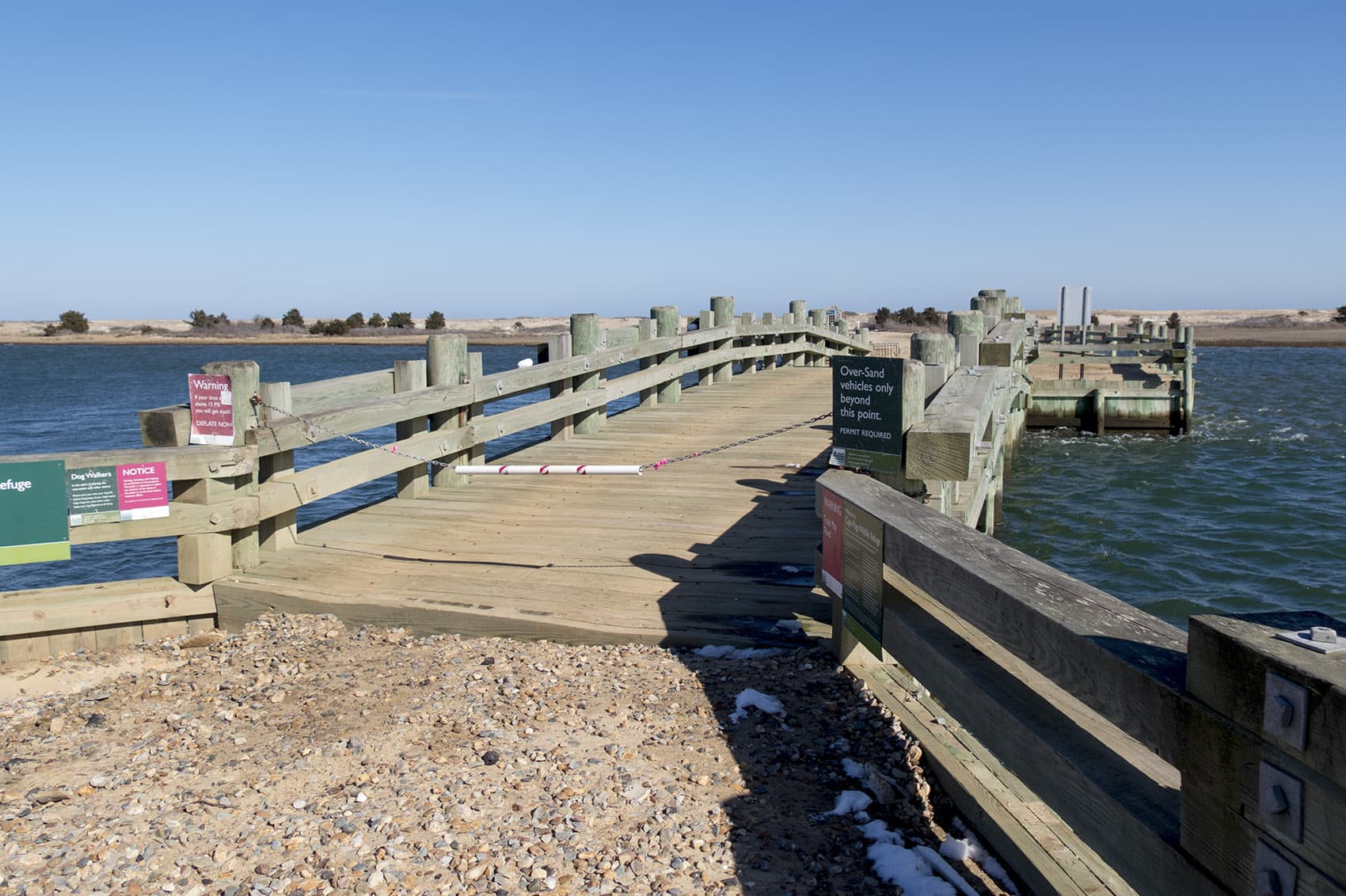
Instead, he turned right, onto Dike Road, a dirt road. (Going straight ahead would have put him on a dead-end street labeled Willett Lane.) He approached the Dike Bridge. The entire island is only about 3 miles wide. And the Dike Bridge only connects to a narrow sandbar. Even if Ted had negotiated it correctly, he might have crashed into a fence on East Beach, possibly through it into Nantucket Sound.

But there was no lighting on the bridge. And it was wooden, single-lane, with no guardrails, and at an angle from the road. By his own testimony, by the time Ted realized what he was driving onto and hit the brakes, it was too late: The car went off the bridge into a water channel.
Investigators on the bridge. Note the narrowness,
and the lack of guardrails.

Ted had survived a plane crash in 1964, though his back was badly injured. This time, he was able to get out of the car and get on land. But Mary Jo was not. He later claimed to have dived in 7 or 8 times to try to rescue her, but was unable to; and that he then stayed at the scene for 15 minutes before walking the mile or so back to the house, bypassing houses that could have been approached for help.

When he got there, he talked to his cousin, Joe Gargan, and Gargan's college friend Paul Markham. Both men had served as U.S. Attorney for Massachusetts, and had planned on competing with Ted in a boat race the next morning -- hence, Ted's choice of date for the party, as he would be there for both events. Both men told Ted he had to report the accident immediately. He talked them into driving back to the site of the crash to see if they could rescue Mary Jo themselves. This would likely have been useless, as the car would already have been filled with water. They went back, and were unable to get her out.

Again, they told Ted to report the accident. Still, he didn't. Why not? There are 3 theories, running from most to least likely:

1. He sustained a concussion in the crash, and wasn't thinking straight.
2. He was thinking that maybe the police would think Mary Jo was driving, and alone in the car, and that, when they asked Ted about it, he could simply say he lent her the car. So, instead of being impaired, he was a coward.
3. President Richard Nixon, paranoid as ever, always suspicious of the Kennedy family, wanted to eliminate the biggest threat to his re-election in 1972: Ted, who was very popular, more because of his martyred brothers than in his own right; and that he had people "take care of the situation," making it look like Ted had committed a crime. This was before it was widely known just how dirty "Tricky Dick" and his "dirty tricks" could truly be, so any claim that Ted could make about it would be completely implausible, and he dare not try it, and so he'd have to take the fall.

The car was found at 8:00 AM on July 19. The medical examiner, Dr. Robert Nevin, said there was no sign of foul play, and the cause of death was accidental drowning. He said that Mary Jo's blood-alcohol content was 0.09 percent -- just below the legal limit for driving.

The car's registration was found, and it was discovered to be Ted's car. The police found him, and there was no further escape: He gave a statement, admitting he was the driver.

To the end of his life, Ted insisted that he had not been drinking that night, that the crash was a complete accident, and that there was no relationship between him and Mary Jo, not even a professional one as there was between her and Bobby.

Enemies of the Kennedy family, and conservatives inclined to believe them, have spread rumors to the contrary: That Ted was drunk; or that he made a pass at her, and that's why he made the wrong turn or why he crashed; or that he had gotten her pregnant, and killed her to cover it up. Given Ted's history of drinking, and his history of womanizing and that of other members of the family, these rumors, while having absolutely no evidence to them whatsoever, were plausible.

On July 20, 2 days after the crash, Neil Armstrong became the 1st human being to walk on the Moon, fulfilling the goal made 8 years earlier by Ted's brother, JFK. But the President making the congratulatory phone call from the White House to Mission Control in Houston to the Moon was Richard Nixon.

And if Ted was paralyzed by indecision, considering maintaining his viability for the 1972 Presidential election, Nixon, too, was obsessed over it. One of his speechwriters, Patrick J. Buchanan -- himself later to be a candidate for President -- met with Nixon late that night, after that phone call, and wanted to know the President's thoughts about it. Nixon knew that Buchanan was perhaps the most partisan of his staff, and, as Buchanan recalled after Nixon's death in 1994, the first thing Nixon said to him after he sat down was, "You think this guy's gonna get away with this, Teddy?"

On July 22, 4 days after the crash, wearing a suit but also a cervical collar, Ted, along with his wife Joan, attended Mary Jo's funeral in Plymouth, Pennsylvania. Mary Jo's parents never forgave him, but neither did they tell him to stay away from the funeral.

On July 25, 7 days after the crash, Ted reported to Edgartown District Court on Martha's Vineyard, and pleaded guilty to a charge of leaving the scene of an accident that had caused bodily injury. Judge James Boyle sentenced him to the minimum sentence for the crime, 2 months in prison, but suspended the sentence: It would appear on the record, but he wouldn't actually have to serve it. Boyle told the witnesses in his courtroom, "He has already been, and will continue to be, punished far beyond anything this court can impose."

That night, at 7:30 PM Eastern Time, having bought half an hour of national network TV time, Ted read a statement to the country, written by Ted Sorensen, who had written speeches for both of his brothers. He stuck by his story, adding that he engaged in no "immoral conduct." However, he said, "I regard as indefensible the fact that I did not report the accident to the police immediately."

Finally, he addressed the voters of his home State, as he had to face re-election to the Senate in 1970, before considering whether to run for President in 1972:

It has been seven years since my first election to the Senate. You and I share many memories. Some of them have been glorious. Some have been very sad. The opportunity to work with you and serve Massachusetts has made my life worthwhile.

And so I ask you tonight, the people of Massachusetts, to think this through with me. In facing this decision, I seek your advice and opinion. In making it, I seek your prayers -- for this is a decision that I will have finally to make on my own.

While much of the country felt that Ted had not been sufficiently punished for what he did, the phone calls, telegrams and mail that came in from Massachusetts was overwhelmingly supportive. In the 1970 election for U.S. Senator from Massachusetts, Ted was opposed by Josiah Spaulding, a businessman who had served 2 years as Chairman of the Massachusetts Republican Party. Ted won 62 percent of the vote, Spaulding 37 percent.

But there was no way Ted could run for President in 1972. It was too soon. And his friend and colleague, Senator George McGovern of South Dakota, was nominated, and got clobbered. Going into the 1976 race, with no other obvious candidate, the nomination -- if not the general election -- was probably Ted's for the asking, but he wouldn't run. Jimmy Carter, a former Governor of Georgia, won.

In 1979, with millions of people, including Democrats, unhappy with Carter's leadership, Ted made his 1st run for President. But before he made his official announcement, he was interviewed by Roger Mudd for the news program CBS Reports. Mudd asked him the obvious question: "Why do you want to be President?"

When Jack made his announcement in 1960, he had a great short answer: "The Presidency is the center of action." When Bobby made his announcement in 1968, he had a longer, but no less telling, answer: "I run to seek new policies, because I believe our country is on a perilous course, and I feel obliged to do all that I can." Ted's answer was long, rambling, and not the least bit definitive. He made himself look like the only reason he was running was because he felt he had to live up to his brothers' legacy.

What's more, Mudd asked him about the Chappaquiddick crash. At various times in his life, Ted answered that question with sadness and remorse. This time, he gave an answer so soft it was barely even human. He sounded not the least bit sympathetic to the memory of Mary Jo Kopechne. Anybody who was still doubtful about him because of the crash now, at the very least, their doubts deepened.

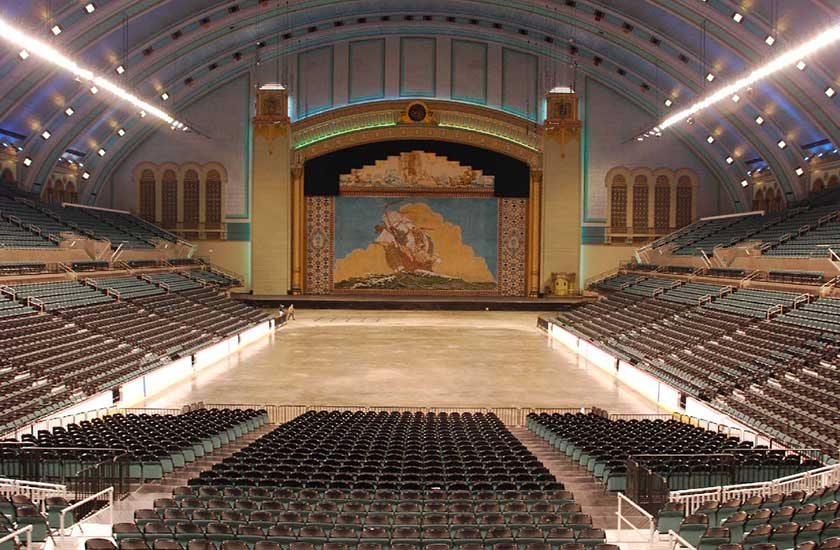
By and large, Democrats stuck with Carter. At the 1980 Democratic Convention at Madison Square Garden in New York, Ted gave a much better speech than Carter. It wasn't the first time, nor was it the last, that Convention attendees saw a defeated candidate give a better speech than the nominee, leaving them thinking they'd nominated the wrong guy. Carter lost badly to former Governor Ronald Reagan of California.

Ted's personal life was in shambles. He had divorced Joan, and his drinking was getting worse. His kids urged him not to run in 1984, because, since the nomination would again be open, it would be his for the asking, thus he'd have to face the hard questions all the way until November 6, and he couldn't beat Reagan, and it would be the end of the Kennedy political story.

He didn't run, and never did again. Various family members have since run for office, including both of Ted's sons: Patrick was elected to the Rhode Island legislature and then to Congress; and, after Ted's death, Ted Jr. served a term on Connecticut's State Senate. Ted remarried, got his life under control, and was still re-elected to the Senate every 6 years, and still spoke at the Democratic Convention every 4 years, until his death in 2009.

If Ted Kennedy had become President? On the one hand, there might have been universal health coverage by the end of his term(s), and possibly an earlier end to the Cold War. Depending on when he was elected... 

* In 1972? Watergate wouldn't have mattered much, since Nixon would already have been gone.

* In 1976? He would have been in office in 1979, and he probably wouldn't have blundered into the Iran Hostage Crisis the way Carter did.

* In 1980? The Reagan tax cuts, the decapitation of the American labor movement, and the Iran-Contra scandal wouldn't have happened. He might have put the 1st woman on the U.S. Supreme Court, as Reagan did, but he wouldn't have put Anthony Kennedy (no relation) there, and he certainly wouldn't have promoted Nixon appointee William Rehnquist from Associate Justice to Chief Justice.

* Possibly in 1984 (if re-elected in 1988)? Definitely in 1988? He wouldn't have put Clarence Thomas on the Supreme Court.

On the other hand, we might have had our 1st President to have the First Lady leave him while in office, and we might have had our 1st genuine active alcoholic as President since Franklin Pierce left in 1857. (Andrew Johnson and Ulysses S. Grant were known for their drinking, but weren't regularly drunk as President. Warren Harding and Franklin Roosevelt liked their cocktails, Lyndon Johnson loved beer and bourbon, and George W. Bush was a recovering alcoholic, but they weren't active alcoholics in the White House. Nixon? Toward the end, it seemed like it, but we can't be sure.)

And if the Republicans gained control of Congress at any time while he was in office, he might have gotten impeached for something far short of what Donald Trump did.

But Ted Kennedy never got close to the Presidency. And the crash haunted him to the end. So did the rumors, and the sick jokes. The year before, when Nixon ran against Vice President Hubert Humphrey, Nixon's reputation for dishonesty led to a joke comparing him to a profession with the same reputation: "Would you buy a used car from this man?" Republicans now repeated the question, and said, "Yes, but I wouldn't let Teddy Kennedy drive it." Gun-rights advocates would say, "Ted Kennedy's car has killed more people than my gun." (Then you're not a very good shot, are you?)

National Lampoon magazine, based at Harvard University, alma mater to all the Kennedy brothers and their father, published a picture of a Volkswagen Beetle bobbing in water, mimicking a magazine print ad, saying, "If Ted Kennedy drove a Volkswagen, he'd be President today." Somebody at the magazine should have done some fact-checking: Mary Jo's own car was a Volkswagen Beetle. But it wasn't the Kopechnes, or the Kennedys, who sued the Lampoon: It was Volkswagen, for copyright infringement. The case was settled out of court.

In 2018, running for re-election to the Senate from Texas, Ted Cruz pointed out that his Democratic opponent, Beto O'Rourke, had Representative Joseph P. Kennedy III, Bobby's grandson, campaigning with him, even driving him, and Cruz said, "It may be the first time in history anyone's ever asked a Kennedy to drive."

(For the record, Joe's father, Joseph P. Kennedy II, was also involved in a bad crash, in 1973. While his injuries were minor, his female passenger was paralyzed. But Joe II still went on to serve 10 years in Congress; Joe III, whose driving record is clean, served 8.)

The Dike Bridge eventually got guardrails, warning signs that motor vehicles are prohibited, and a small plaque memorializing Mary Jo. Joseph P. Kennedy Sr. died 4 months after the crash, believing that his last chance to see one of his sons become President had disappeared. Sidney Lawrence, owner of the house that hosted the party, died of cancer in 1970, just over a year after the crash.
Joe Gargan, the cousin and lawyer that Ted asked to help him after the crash, published an unflattering book about it in 1988, and was cut off by the main branch of the Kennedy family. He died in 2017. Paul Markham, the other man Ted contacted that night, died in 2019.

In 2017, shortly before Gargan's death, the film Chappaquiddick premiered, starring Jason Clarke as Ted, and Kate Mara as Mary Jo. It took a lot of liberties with the story, including having old Joe Kennedy, played by Bruce Dern, lead the damage control, when he was in no condition to do anything about it accept lament it.

*

July 18, 1969 was a Friday. These games were played in Major League Baseball that day:

* The New York Yankees beat the Washington Senators, 5-0 at Yankee Stadium. Fritz Peterson pitched a 6-hit shutout, and was backed by a home run from Frank Fernandez.

* The New York Mets beat the Montreal Expos, 5-2 at Jarry Park in Montreal. Art Shamsky and Jerry Grote hit home runs in support of Jerry Koosman.

* The Boston Red Sox beat the Baltimore Orioles, 6-1 at Fenway Park in Boston. Carl Yastrzemski went 0-for-4 for the Sox, but Mike Andrews hit a home run. For the O's, Brooks Robinson went 1-for-4, and Frank Robinson went 0-for-4.

* The Chicago Cubs beat the Philadelphia Phillies, 9-5 at Connie Mack Stadium in Philadelphia. Ernie Banks, Jim Hickman and Randy Hundley hit home runs.

* The Pittsburgh Pirates beat the St. Louis Cardinals, 4-1 at Forbes Field in Pittsburgh. Roberto Clemente hit a 3-run home run off Bob Gibson, in support of Dock Ellis. Willie Stargell, Lou Brock and Joe Torre each went 1-for-4, and Torre added an RBI.

* The Houston Astros beat the Cincinnati Reds, 7-4 at Crosley Field in Cincinnati. For the Reds, Tony Pérez and Lee May hit home runs, Pete Rose went 1-for-4, and Johnny Bench went 0-for-2 with 2 walks.

* The Detroit Tigers beat the Cleveland Indians, 4-0 at Cleveland Municipal Stadium. Denny McLain pitched a 7-hit shutout. Bill Freehan and Willie Horton hit home runs. Al Kaline was injured, and did not play.

* The Atlanta Braves swept a doubleheader from the San Diego Padres, 6-2 and 6-3 at Atlanta Stadium (later Atlanta-Fulton County Stadium). Hank Aaron went 1-for-4 in the opener, and had the nightcap off.

* The Chicago White Sox beat the Kansas City Royals, 6-1 at Comiskey Park in Chicago.

* The Oakland Athletics beat the California Angels, 6-3 at Anaheim Stadium (now Angel Stadium of Anaheim). Reggie Jackson went 1-for-4, and Rick Monday hit a home run.

* The Los Angeles Dodgers beat their arch-rivals, the San Francisco Giants, 3-2 at Candlestick Park in San Francisco. Manny Mota went 3-for-4, Wes Parker went 2-for-4 with 2 RBIs, and Maury Wills went 2-for-4 with an RBI. Willie Mays only appeared as a pinch-hitter, and did not reach base.

* Hold on to your hats, Ball Four fans: The Seattle Pilots swept a doubleheader. And it was against, as Pilot pitcher Jim Bouton put it, "The Fat Kid and his wrecking crew." The Pilots beat the Minnesota Twins, 2-1 and 3-2 at Sick's Stadium in Seattle. Bouton did not enter either game.

"Tennis Ball Head" himself, Steve Hovley, had probably his best day in the major leagues. He drove in the winning run in the 1st game, by drawing a bases-loaded walk against Ron Perranoski in the bottom of the 9th. Diego Seguí went the distance for the win. In the 2nd game, Hovley hit a 2-run homer off Dave Boswell, in support of Fred Talbot. Bouton quoted Pilot pitcher John Gelnar as saying, "You know, one good thing about having Hovley up there, he's too goony to be scared.

Tommy Davis had 2 hits in each game. Over the 2 games, "The Fat Kid," Harmon Killebrew, went 2-for-6 with 2 walks. Rod Carew went 5-for-9. Bouton quoted Pilot catcher Jerry McNertney as saying of Carew, "He can't miss. If I were him I'd go looking for wallets."

Saturday, June 11, 2022

June 11, 1963: George Wallace Is Removed from the Schoolhouse Door

June 11, 1963: Everyone remembers that George Wallace "stood in the schoolhouse door." What everyone should remember is that he was removed from that door.

On January 14, 1963, Wallace was sworn in as Governor of Alabama for the 1st time -- of what would be 4. Alabama's Governors are sworn in while standing on a star on the floor of the front of the State House in Montgomery. That star marks the spot where Jefferson Davis stood as he was sworn in as President of the Confederate States of America on February 22, 1862. And in his Inaugural Address, Wallace promised, "And I say to you: Segregation now, segregation tomorrow, and segregation forever!"

On June 11, Wallace stood in the doorway of Foster Auditorium, then both the main indoor athletic facility and the registration building for the University of Alabama, in Tuscaloosa. The purpose was to deny the registration of the school's 1st black students. Two were making the attempt: James Hood and Vivian Malone. He said, as Governor, he had to "denounce and forbid this unwarranted and illegal action by the central government!"

It was not illegal: The Supreme Court had ruled segregation illegal in 1954, so Wallace was the one breaking the law. And it was not unwarranted.

President John F. Kennedy knew beforehand that Wallace was going to do this, and wanted his Attorney General, also his brother, Robert F. Kennedy, to do something about it. So RFK sent his Deputy, Nicholas Katzenbach, and federal marshals to Tuscaloosa. Katzenbach showed Wallace a federal warrant for his arrest, and, with all the gentility of a graduate of Philips Exeter Academy and Princeton University, essentially told him, "Get your sorry scrawny ass out of that door, or you will be handcuffed and arrested, and exposed as a federal criminal on national television."

Everybody remembers Wallace's Stand In the Schoolhouse Door. Most people forget that he backed down, because he didn't want to go to jail. Martin Luther King Jr. was willing to go to jail to challenge a law he believed was unjust. George Corley Wallace was not: He decided that looking weak was better than looking like a criminal, and he backed down. But he was still a hero to America's bigots.

Nevertheless, accompanied by Katzenbach and the marshals, Malone walked in, and became the 1st black person to register as a student at the University of Alabama. Hood followed. 

Vivian Malone graduated from 'Bama in 1965. She worked in the U.S. Department of Justice, the Veterans' Administration, and the Environmental Protection Agency. She married a doctor, and had a son and a daughter. In 1996, having founded an award named for his late wife, the Lurleen B. Wallace Award of Courage, George Wallace personally chose Vivian Malone Jones as the 1st recipient.

Hood left 'Bama after only 2 months. He went to Detroit's Wayne State University, and received degrees from there and Michigan State, and taught at a college in Wisconsin, before returning to 'Bama for his Ph.D.

The desegregation of the University of Alabama's in-State rival, Auburn University, was considerably less dramatic, as Harold A. Franklin was the 1st black student admitted, in 1964. Franklin didn't complete his degree at Auburn, either, transferring to the University of Denver, and getting a Ph.D. He taught at historically black colleges and universities (HBCUs), including Alabama State and the Tuskegee Institute.

Wallace died in 1998, Malone Jones in 2005, Katzenbach in 2012, Hood in 2013, Franklin in 2021.

Foster Auditorium opened in 1939, named for Richard Clarke Foster, the University President who got it built. Seating 3,800, it was home to Alabama basketball from 1939 to 1968. It remains home to the university's volleyball teams.
The movie Forrest Gump shows a fictionalized version of the events, with Malone dropping a book on her way in, and Gump, an Alabama football player who wandered onto the scene, picking it up and handing it to her. Winston Groom, who wrote the novel on which the movie is based, died in 2020. If Gump were a real person, he would probably have been born the same year as Groom, 1943; so, if he were still alive, he would be 79 years old as of June 11, 2022.

*

June 11, 1963 was a Tuesday. This was also the day that Thích Quảng Đức, a Buddhist monk, committed suicide by burning himself to death in Saigon, in protest of South Vietnam's Catholic-dominated government oppressing the country's majority-Buddhist population. I have a separate entry for that event.

These baseball games were played on that day:

* The New York Yankees and the Washington Senators were not scheduled to play.

* The New York Mets lost to the Cincinnati Reds, 8-3 at the Polo Grounds. Frank Robinson went 0-for-5, but Vada Pinson and Tommy Harper hit home runs.

* The Philadelphia Phillies beat the Milwaukee Braves, 8-7 at Connie Mack Stadium in Philadelphia. Hank Aaron went 2-for-4 with an RBI. Clay Dalrymple singled home the winning run in the bottom of the 10th inning.

* The Cleveland Indians beat the Baltimore Orioles, 9-5 at Memorial Stadium in Baltimore. Jim "Mudcat" Grant outpitched Robin Roberts. Brooks Robinson went 0-for-4.

* The St. Louis Cardinals beat the Pittsburgh Pirates, 3-1 at Forbes Field in Pittsburgh. Bob Gibson won the game, and Roberto Clemente went 1-for-3 with a walk.

* The Boston Red Sox beat the Detroit Tigers, 7-3 at Tiger Stadium in Detroit. Carl Yastrzemski went 1-for-4 with 3 walks. Al Kaline went 2-for-5. Tiger reliever Terry Fox -- no relation to the later Canadian runner and anti-cancer activist -- collapsed in the top of the 15th inning, including giving up home runs to Frank Malzone and Dick Stuart.

* The Minnesota Twins beat the Chicago White Sox, 8-6 at Comiskey Park in Chicago. Harmon Killebrew went 2-for-3 with 2 walks and an RBI.

* The Kansas City Athletics beat the Los Angeles Angels, 5-2 at Kansas City Municipal Stadium.

* The Houston Colt .45s beat the Chicago Cubs, 6-2 at Colt Stadium in Houston. The Colts became the Houston Astros in 1965. Ernie Banks went 3-for-5 with an RBI. Bob Aspromonte won the game with a home run in the bottom of the 10th inning.

* And the San Francisco Giants beat their arch-rivals, the Los Angeles Dodgers, 3-0 at Dodger Stadium in Los Angeles. Juan Marichal pitched a 7-hit shutout, to outduel Don Drysdale. Willie Mays went 0-for-3, but Willie McCovey hit a home run.

Monday, June 6, 2022

June 6, 1968: Robert F. Kennedy Dies

June 6, 1968: Senator Robert F. Kennedy of New York dies at Good Samaritan Hospital in Los Angeles, about a full day after he was shot in the head following a speech where he claimed victory in the California Primary.

I had considered doing this for June 5, because it was after midnight, Pacific Time, on June 4 that he was shot, and people went through the entire day knowing that he was going to die, but hadn't yet. But it was after midnight, local time, on the 5th that he died, so I'm using the 6th.

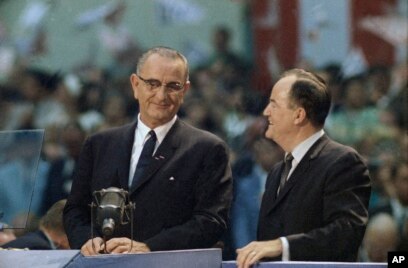
The California Primary was on June 4, and, having already lost the Oregon Primary to Senator Eugene McCarthy of Wisconsin, he had to win this one, or he would be damaged goods, and have no chance at the Democratic nomination for President. Even with a win, it would have been an uphill struggle: A majority of the Delegates to the 1968 Democratic Convention in Chicago were unpledged, and, while President Lyndon B. Johnson was out of the race, he still controlled the Democratic Party, and his hatred of RFK had never faded, and he would have done whatever he could to make sure those unpledged Delegates went to his chosen candidate, Vice President Hubert Humphrey, who hadn't entered any Primaries.

The vote in California was close: Kennedy won 46 percent, McCarthy 42. At 12:02 AM, Pacific Time, on June 5, he addressed his supporters at the Ambassador Hotel in Los Angeles. With him was his wife, Ethel, then pregnant with their 11 child, their daughter Rory.

Also with him were writer George Plimpton, New York Daily News columnists and fellow Irish Catholics Jimmy Breslin and Pete Hamill, and 2 legendary athletes: Rafer Johnson, the UCLA graduate who'd won the Olympic decathlon in 1960, 2 months before RFK's brother John F. Kennedy was elected President; and Rosey Grier, the recently retired All-Pro defensive tackle for the Los Angeles Rams. Both were friends, and unofficial bodyguards. In his victory speech, Bobby paid tribute to another supporter, Los Angeles Dodgers pitcher Don Drysdale, who had just broken the record for most consecutive scoreless innings pitched.

Bobby closed by saying, "My thanks to all of you, and now, it's on to Chicago, and let's win there!" He gave the crowd a thumbs-up gesture, then switched to a V-for-Victory -- or a Peace Sign, depending on your point of view -- and said, "Thank you very much."
He walked off the stage, and through the kitchen, intending to reach a service entrance, where a car was going to take him to an airport. He shook hands with several kitchen workers, most of them immigrants, all of them poor, and certainly in what would now be called Bobby's "target audience." The last one he reached was Juan Romero, a 17-year-old busboy from Mexico. It was 12:15 AM -- 3:15 Eastern Time.

The official story is that Sirhan Bishara Sirhan, a 24-year-old native of Jerusalem, shot him 3 times, once in the head and twice in the back, with a 4th bullet passing through his jacket. Five other people at the event were also shot, all of whom recovered: Paul Schrade, an official with the United Automobile Workers union; William Weisel, an ABC-TV unit manager; Ira Goldstein, a reporter with the Continental News Service; Elizabeth Evans, a friend of Kennedy campaign aide Pierre Salinger, who had been JFK's White House Press Secretary; and Irwin Stroll, a teenage Kennedy volunteer.

In 1989, Sirhan told British journalist David Frost, "My only connection with Robert Kennedy was his sole support of Israel, and his deliberate attempt to send those 50 bombers to Israel, to obviously do harm to the Palestinians." The assassination was not in reference to the kind of causes with which most people associated Bobby: Poverty, civil rights, the Cold War, and, earlier in his career, the fight against organized crime.
(That fight was intense, and, from Congressional hearings in 1957, began a feud between Bobby and Teamsters Union President Jimmy Hoffa. They hated each other so much that, in a 1983 TV miniseries titled Blood Feud, Robert Blake, playing Hoffa, is told on November 22, 1963, "Kennedy's been shot!" and responds with, "Which Kennedy?" Cotter Smith played Bobby. By the time Bobby was assassinated, Hoffa was in prison, and had nothing to do with it.)

As with the assassinations of JFK and, 2 months earlier, Martin Luther King, there are conspiracy theories. There are those who believe that Sirhan was not the shooter, or that there was a 2nd shooter. Their most common statement is that Sirhan could not have gotten close enough to cause RFK's wounds.

As Bobby lay wounded, he asked, "Is it bad?" Romero cradled his head and placed a rosary in his hand. "He seemed to need it more than me," Romero told an interviewer years later. Bobby asked him, "Is everybody OK?"; Romero responded, "Yes, everybody's OK." Kennedy then turned away and said, "Everything's going to be OK." When the stretcher arrived, he said, "Please don't. Don't lift me." He lost consciousness before he could be loaded into the ambulance.

He was taken to Good Samaritan Hospital, and the bullet fragments were removed in surgery. But the damage was too extensive: He hung on for a full day, dying at 1:44 AM on June 6. He was 42 years old. Campaign spokesman Frank Mankiewicz told the country at 2:00 AM, 5:00 Eastern.

Bobby's funeral was held at St. Patrick's Cathedral in New York. In the hours before, several friends took turns at vigil at his coffin, including singers Andy Williams and Bobby Darin. His brother, Senator Ted Kennedy of Massachusetts, every bit as devastated as Bobby was when Jack was killed, delivered the eulogy, concluding with words of George Bernard Shaw that Bobby often quoted:

My brother need not be idealized or enlarged in death beyond what he was in life; to be remembered simply as a good and decent man, who saw wrong and tried to right it, saw suffering and tried to heal it, saw war and tried to stop it...

As he said many times, in many parts of this nation, to those he touched, and who sought to touch him: "Some men see things as they are, and say, 'Why?' I dream things that never were, and say, 'Why not?'"

His coffin was taken to Penn Station, and a funeral train carried him down the former Pennsylvania Railroad, through New Jersey, Pennsylvania, Delaware and Maryland. He was laid to rest under a small white cross at Arlington National Cemetery, a few yards away from JFK.

The Number 1 song in America was "Mrs. Robinson" by Paul Simon and Art Garfunkel. The 3rd verse became retroactively painful:

Sitting on a sofa on a Sunday afternoon.
Going to the candidates' debate.
Laugh about it, shout about it
when you've got to choose.
Any way you look at it, you lose.

In 1974, Martin Sheen played RFK in the TV-movie The Missiles of October. In 1983, he played JFK in the TV miniseries Kennedy. As far as I know, he is the only actor to have played both brothers. In 2005, his son, Emilio Estevez -- half-Irish and half-Spanish, as Martin's birth name is Ramón Antonio Gerardo Estévez -- directed the film Bobby, about the events of the assassination. Martin had a small role. The filming was one of the last events at the Ambassador Hotel, which was demolished in 2008. In 2010, a group of buildings opened, operated by the Los Angeles Unified School District, under the umbrella name The Robert F. Kennedy Community Schools.

Juan Romero died in 2018, shortly after the 50th Anniversary of the assassination. As of June 6, 2022, Ethel Kennedy is still alive. So is Sirhan Sirhan, incarcerated at the Richard J. Donovan Correctional Facility, a California State Prison outside San Diego.

My father was 17 when he shook hands with a Kennedy: In 1960, in a campaign motorcade up Broad Street in Newark, New Jersey, John F. Kennedy reached out and shook his hand. To the end of his life, he remained a Kennedy Democrat. But he once told me that Bobby might have been a bigger loss.

The assassinations of John and Robert Kennedy were mentioned as part of the actions claimed by the Devil, played by Mick Jagger, in The Rolling Stones' 1968 song "Sympathy for the Devil."

UPDATE: Ethel Kennedy died on October 10, 2024. She was 96 years old. After the 2024 election, Donald Trump appointed Robert F. Kennedy Jr. to be Secretary of Health and Human Services. Several surviving members of the Kennedy family, including 5 of his 6 surviving siblings, denounced his policies as dangerous for Americans' health.

*

June 6, 1968 was a Thursday. Since Bobby wasn't the President, unlike his brother John on November 22, 1963, no sporting events were canceled or postponed. Some Major League Baseball games scheduled for June 8 were postponed, since that was the day announced for his funeral.

It was the off-season for the NFL. The NBA and NHL had already finished their seasons and had recently crowned their champions. As was usually the case in those days, it was the Boston Celtics in the former and the Montreal Canadiens in the latter. The rival American Basketball Association had just completed their 1st season, and their Champions were the Pittsburgh Pipers.

Of the 20 teams then in MLB, 18 played their games on that Thursday:

* The New York Yankees lost to the Minnesota Twins, 2-0 at the old Yankee Stadium. Dave Boswell and Al Worthington combined on a 9-hit shutout. Fred Talbot fell to 0-7 on the season for the Yankees, and would finish 1-8. That's one of the reasons they traded him the next year to the expansion Seattle Pilots, leading to his becoming famous by being frequently mentioned Ball Four, written by another castoff Yankee pitcher, Jim Bouton.

* The New York Mets beat the Chicago Cubs, 5-3 at Wrigley Field in Chicago.

* The Detroit Tigers, on their way to winning the World Series, beat the Boston Red Sox, 5-3 at Fenway Park in Boston.

* The California Angels beat the Baltimore Orioles, 8-6 at Memorial Stadium in Baltimore.

* The Washington Senators beat the Oakland Athletics, 4-3 at District of Columbia Stadium in Washington. A year later, it would be renamed Robert F. Kennedy Memorial Stadium.

* The Cleveland Indians beat the Chicago White Sox, 2-1 at Cleveland Municipal Stadium. Vic Davalillo singled home the winning run in the 11th inning, making a winning pitcher out of Billy Rohr, for whom he was pinch-hitting. It was the 3rd and last career win for Rohr, whose 1st was for the Red Sox against the Yankees a year earlier, coming within 1 strike of a no-hitter.

* The defending World Champion St. Louis Cardinals beat the Houston Astros, 4-0 at the Astrodome. Bob Gibson allowed just 3 hits in a shutout, lowering his ERA on the season to 1.52. It would get lower.

* The Los Angeles Dodgers beat the Pittsburgh Pirates, 4-2 at Dodger Stadium in Los Angeles. Future Hall-of-Famer Don Sutton got the win.

* The San Francisco Giants beat the Philadelphia Phillies, 7-2 at Candlestick Park. Hall-of-Famer Juan Marichal advanced to 10-2 on the season. He would finish 26-5.

* The only teams not playing on the day were the Atlanta Braves and the Cincinnati Reds. Neither were scheduled, so it wasn't because of Bobby's death.

December 31, 1999 & January 1, 2000: The Millennium

December 31, 1999:  The Millennium arrives. The people of planet Earth survived. At a terrible cost. But we hadn't destroyed ourselves. ...