Showing posts with label pennsylvania. Show all posts

Wednesday, December 21, 2022

December 21, 1947: A Pennsylvania Playoff in the NFL

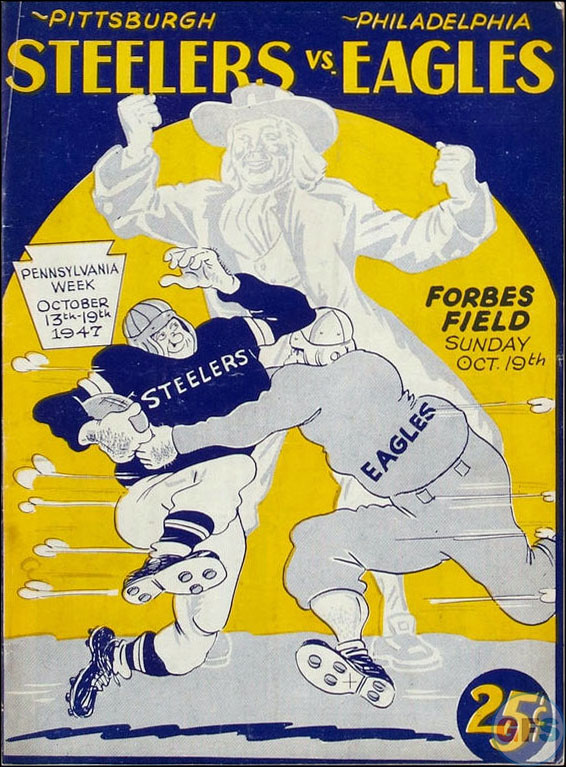
Program from a game between the teams,
earlier in the season

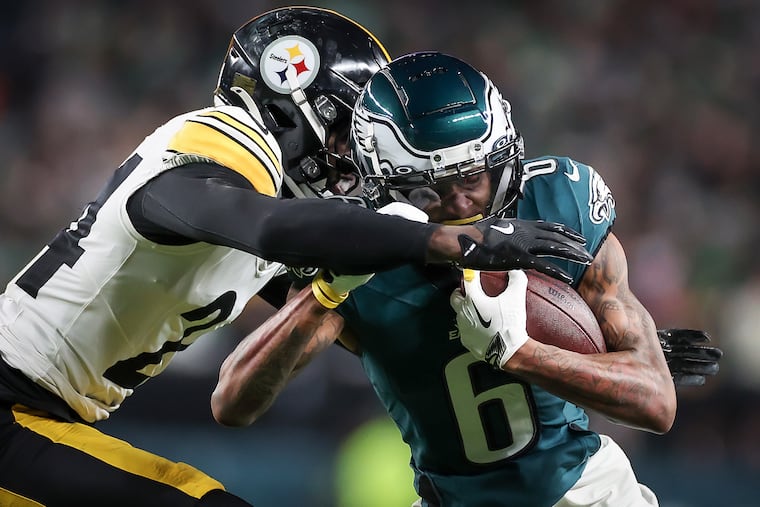
December 21, 1947: For the 1st time, an NFL team from Philadelphia plays a Playoff game. For the 1st time, an NFL team from Pittsburgh plays a Playoff game. And they play it against each other.

Both the Philadelphia Eagles and the Pittsburgh Steelers had been founded in 1933, in anticipation of the Pennsylvania legislature legalizing the playing of professional sports on Sunday within the State. It did so, making both teams viable. (The Philadelphia-based Frankford Yellow Jackets, forced to compete with high school and college teams for Saturday viewing, folded in 1931.)

In 1947, the Eagles and the Steelers both finished at 8-4, to tie for 1st place in the NFL Eastern Division. There was no tiebreaker: If either team had swept the other in the regular season, this Playoff game would still have to be played. For the record, though: On October 19, at Forbes Field in Pittsburgh, the Steelers won, 35-24; then, on November 30, at Shibe Park in Philadelphia, the Eagles won, 21-0. Point spread, or "aggregate" as they would say in English soccer, didn't matter, either, so the fact that the Eagles would have won overall, 45-35, was meaningless.

The Playoff was played at Forbes Field. Having the home-field advantage did the Steelers no good: The Eagles won, 21-0, scoring a touchdown in each of the 1st 3 quarters. Tommy Thompson threw a 15-yard touchdown pass to Steve Van Buren, then he threw a 28-yard pass to Jack Ferrante (Number 83 in the photo above), and finally Bosh Pritchard returned a punt 79 yards for a touchdown.

Winning the game didn't do the Eagles much good: In their 1st NFL Championship game, a week later, coach Earle "Greasy" Neale's team lost to the Chicago Cardinals, 28-21. They reversed that result in 1948, and won another title in 1949.

The Steelers were coached by a dying man: Dr. John "Jock" Sutherland, a dentist, had a brain tumor, and died the following April. The team never recovered. It would be 1972 before they made the Playoffs again. By that point, realignment had put them in the AFC Central Division, and now the AFC North; while the Eagles were put in the NFC East, where they remain. They have never faced each other in the postseason again, and can only do so in the Super Bowl. Although they have been to 12 Super Bowls between them, they have never played each other in one.

So while Penn State vs. the University of Pittsburgh remains a big rivalry in college football, Philadelphia vs. Pittsburgh is big in the NHL, less so in baseball, and barely even exists in the NFL.

*

December 21, 1947 was a Sunday. No other football games were played. Baseball was out of season. No NHL games were scheduled. There was 1 game played in the league that would become the NBA: The Chicago Stags beat the Baltimore Bullets, 93-83 at the Chicago Stadium.

Sunday, December 18, 2022

December 19, 1907: The Darr Mine Disaster

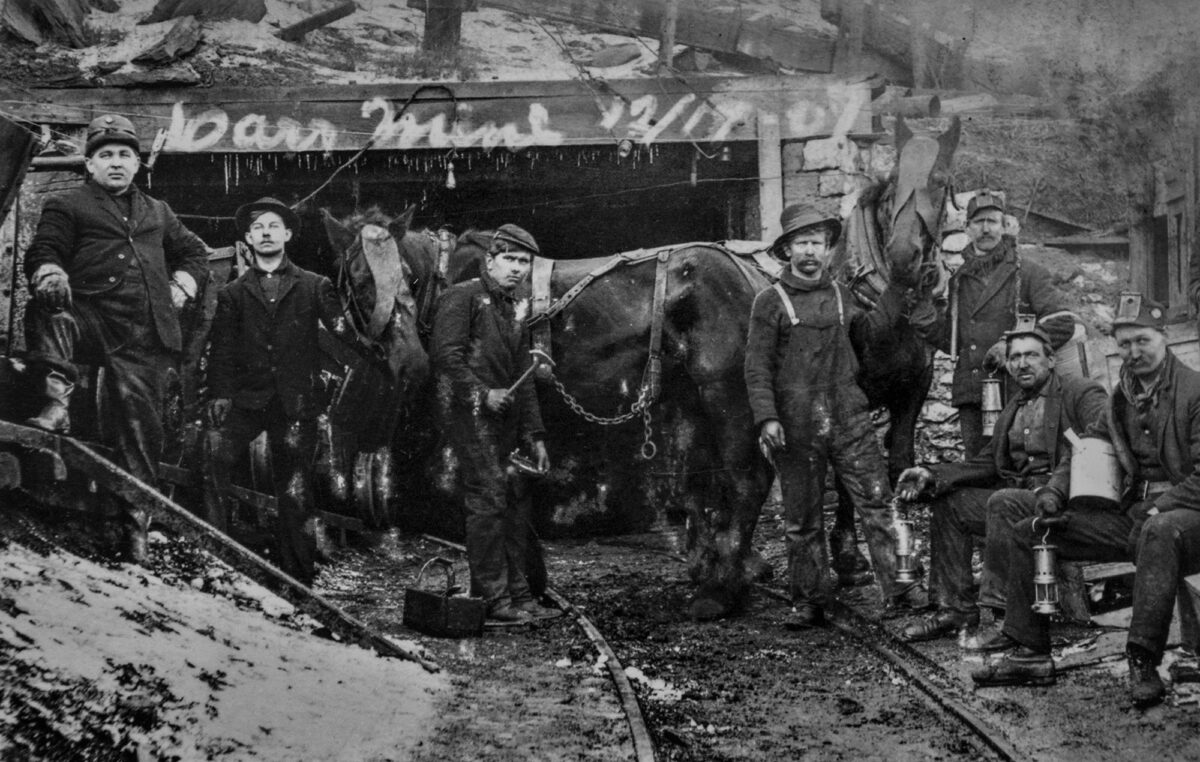
December 19, 1907: The Darr Mine Disaster occurs in Rostraver Township, Pennsylvania, outside Pittsburgh. With 239 deaths, it remains the worst coal mining disaster in the history of America's foremost coal mining State.

The mine was operated by the Pittsburgh Coal Company. It was located on the west side of the Youghlogheny River, and along the route of the Pittsburgh and Lake Erie Railroad. Most of the miners and other mine laborers lived in the nearby community of Jacobs Creek, and took a "sky ferry" (aerial tramway) across the river to the mine entrance.

Many of the workers were immigrants from central Europe, particularly from the eastern part of what was then the Austro-Hungarian Empire: Hungarians, Slovaks and Rusyns. Others were Germans, Poles and Italians.

An inquiry carried out after the disaster determined that the blast was the result of miners carrying open lamps in an area cordoned off the previous day by the fire boss. The Pittsburgh Coal Company was not held responsible, but did abandon the use of open lamps after the disaster.

The Darr Mine blast was the 4th major mine disaster in December 1907, which would become the deadliest mine fatality month in U.S. history. It followed the Yolande mine explosion in Alabama on December 16, the Monongah Mining disaster in West Virginia that killed 362 on December 6, and the Naomi Mine explosion in Pennsylvania that killed 35 people on December 1.

The Darr Mine was abandoned, and is now overgrown with forest.

*

December 19, 1907 was a Thursday. Baseball was out of season. Football season had just ended. And professional basketball and hockey barely existed. So there were no scores on this historic day.

Tuesday, December 6, 2022

December 6, 1962: The Robena Coal Mine Explosion

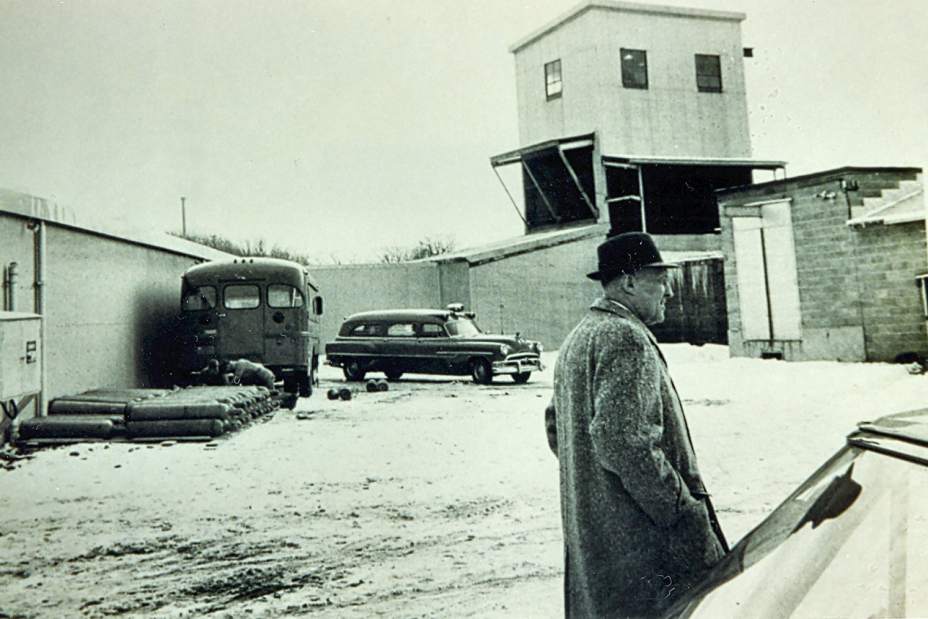
December 6, 1962: An explosion at the United States Steel Corporation's Robena #3 mine near Carmichaels, in the southwestern corner of Pennsylvania, kills 37 coal miners, most of them suffocating from carbon monoxide gas.

A snowstorm raged through Carmichaels that day. While the snow fell, two explosions ripped through Frosty Run shaft. The first blast occurred around 1:05 PM, the second about 20 minutes later.

According to a December 7 article from the Daily Courier of Connellsville, "Workers in the corrugated structure got their first indication that something was wrong at 1 p.m. EST Thursday when the ventilator fan at the Frosty Run shaft stopped operating. Shortly after that miners came rushing out of the shaft." 

Miners from as far away as two miles from the blast site said, "they heard a 'thud,' some felt a rush of air. Some said the blast waves knocked their helmets off their heads." 

Some of the escaped miners would join the rescue teams that began to arrive on scene in hopes of rescuing the 37 trapped within the mine. Hope remained that the miners survived the explosions, although the odds were against them, and no communication had been heard since the explosion. Two of the miners trapped below were "crack rescue men," and hopes were that they would find an escape route.

Recovery operations began soon after the second explosion. Emergency equipment and supplies began to arrive, but with difficulty due to the heavy snow and strong winds. Many roads closed that night due to increasingly bad weather. 

*

December 6, 1962 was a Thursday. Actress Janine Turner was born. And Bob Dylan recorded “Oxford Town,” “I Shall Be Free,” and “A Hard Rain’s A-Gonna Fall.”

Baseball was out of season. Football was in midweek. There were 2 games played in the NBA. The New York Knicks beat the Cincinnati Royals, 99-96 at the Cincinnati Gardens. And the Chicago Zephyrs beat the St. Louis Hawks, 106-93 at the Chicago Coliseum.

And there was 1 game played in the NBA: The Detroit Red Wings beat the Boston Bruins, 5-3 at the Olympia Stadium in Detroit.

Thursday, December 1, 2022

December 1, 1907: The Naomi Mine Explosion

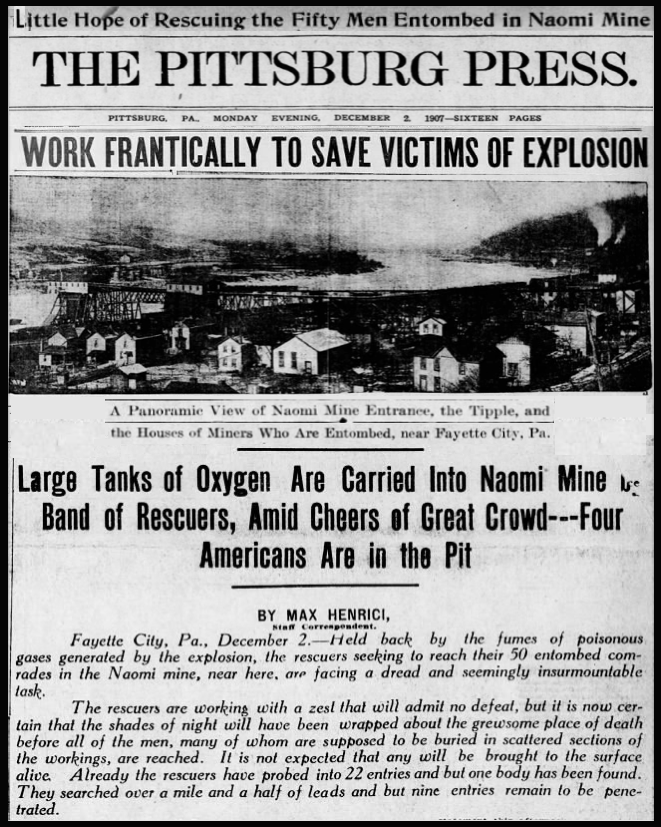
December 1, 1907: The Naomi Mine explosion kills 35 people outside Fayette City, in the southwest corner of Pennsylvania.

The Naomi Mine was operated by Hillman Coal and Coke Company, on the Monongahela River. The mine was built to exploit the Pittsburgh coal seam, which was positioned at a depth of 160 feet below the surface of the mine. Coal was hauled out of the mine with carts that were equipped with electric motors. From 1870, the earliest year records were kept, to December 1, 1907, a total of 63 men were killed in the Naomi Mine.
The explosion happened at about 7:15 on a Sunday night. Inadequate ventilation allowed pockets of explosive gas to accumulate in the interior of the mine. The gas was most likely ignited by an open light or electric arc, both of which would have been present at the time.
Several miners who lost their jobs in the closing of the Naomi Mine would soon find work in the Darr Mine located in nearby Westmoreland County. Just 18 days later, many of these displaced miners would be killed in the deadliest coal mining disaster in Pennsylvania history.
The Naomi Mine blast was the 1st of 4 major mine disasters in December 1907, which would become the deadliest mine fatality month in U.S. history. It was followed by the Monongah Mining disaster in West Virginia that killed 362 on December 6, the Yolande mine explosion in Alabama on December 16, and the Darr Mine explosion in Pennsylvania that killed 239 people on December 19.
*
December 1, 1907 was a Sunday. Baseball season was over. Professional football, basketball and hockey barely existed. And college football's regular season was over. So there were no scores on this historic day.

Sunday, November 27, 2022

November 28, 1908: The Marianna Mine Disaster

November 28, 1908: An an explosion occurs in the Marianna Mine, which kills 154 men and leaves only 1 survivor.

Marianna, about 40 miles south of Pittsburgh, was built as a mining town for the Pittsburgh Buffalo Company in 1907, and was incorporated in 1910. At the time of its construction, the Marianna Mine was among the most modern and well equipped in the world. The town's brick homes were designed to offer indoor bathrooms, fenced yards and other amenities making living conditions very attractive for the time.

The explosion occurred at 10:55 AM. Although the mine was quickly refurbished by the Pittsburgh Buffalo Company, the colliery's fortunes flagged. This was one of several disasters, including a few in 1908 alone, that catalyzed public advocacy for mine safety, leading to the establishment of the U.S. Bureau of Mines in 1910. USBM research on safer blasting material and the prevention of mine gas and dust explosions resulted in reduced occurrence of mine disasters.

By 1914, the mine was sold to the Union Coal and Coke Company, and later to Bethlehem Steel, which continued to extract coal until 1988, when the main conveyor caught fire. The fire was extinguished, but the mine closed anyway.

*

November 28, 1908 was a Saturday. This was Thanksgiving Weekend, and most of the major rivalry games were played 2 days before, on Thanksgiving Day itself. Only 2 games of note were played on this day. Army beat Navy, 6-4 at Franklin Field in Philadelphia; and the University of Denver beat Colorado College, 6-4 at Washburn Field in Colorado Springs. Remember: At the time, a touchdown was worth 5 points, to be followed by an attempt at an extra point; and a field goal was worth 4 points.

Friday, November 11, 2022

November 11, 1900: The Hershey Bar Is Introduced

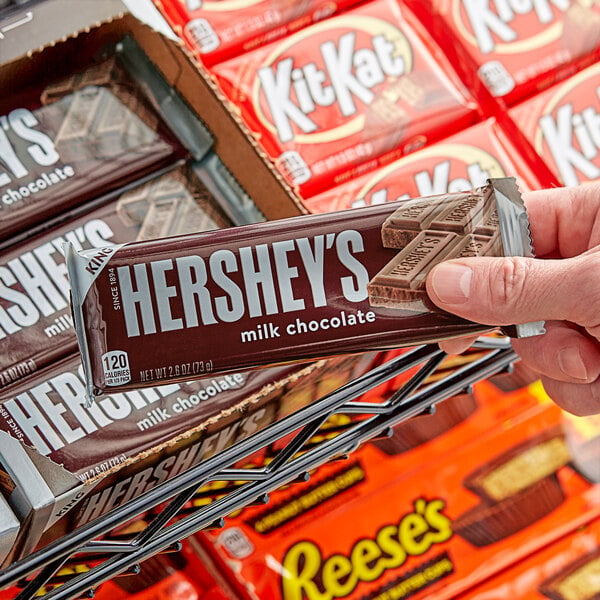
November 11, 1900: The Hershey Milk Chocolate Bar -- or, just "The Hershey Bar" for short -- is first sold. Milton Hershey had been making caramel candy, but saw a chocolate-manufacturing machine at the World's Columbia Exposition in Chicago in 1893, started selling chocolate novelties, sold off his caramel company in 1899, and used the profits to invest in the machines to make the Hersey Bar.

It became the most popular candy in the history of the world. It even replaced money among soldiers in World War II. Milton Hershey lived just long enough to see that happen, dying on October 13, 1945, at 88, in the town he founded: Hershey, Pennsylvania, just north of his hometown of Derry, 16 miles east of Harrisburg, and nearly 100 miles west of Philadelphia.

Little tear-shaped candies known as "Hershey's Kisses" debuted in 1907. A bar with almonds was added in 1908, and a "Special Dark" bar made from dark chocolate in 1939.

Hershey introduced Mr. Goodbar in 1925, Hershey's Syrup in 1926, semisweet chocolate chips in 1928, the Krackel bar in 1938. In 1923, Harry Burnett Reese founded a candy company nearby, including Reese's Peanut Butter Cups. In 1963, Hershey bought Reese's out. In 1969, the Peanut Butter Cups became Hershey's best-selling item, and it remains so today. That same year, Hershey bought the rights to make and sell Kit Kat and Rolo.

In 1977, Hershey bought Y&S Candies, makers of Twizzlers. From 1986 to 2001, Hershey owned Luden's cough drops. In 1988, Hershey's made a deal with British candy company Cadbury, to sell their products in the U.S. This meant that they also owned Peter Paul, makers of Almond Joy and Mounds. In 2004, Hershey bought Mauna Loa Macadamia Nuts.

Milton opened Hersheypark, an amusement park, in 1906, and it has grown and expanded since then. An arena was built on the grounds in 1936, and in 1962, it was the site of the game where Wilt Chamberlain scored 100 points for the Philadelphia Warriors against the New York Knicks. It still stands, under the name of the Hersheypark Arena. It was long the home of the Hershey Bears of the American Hockey League, until 2002, when a new arena was built adjacent, now named the Giant Center after a supermarket chain.

*

November 11, 1900 was a Sunday. Baseball was out of season. Basketball barely existed. Hockey was still all-amateur. And no college football games were played. Therefore, there were no scores on this historic day.

Monday, November 7, 2022

November 7, 1933: Pennsylvania Legalizes Sunday Sports

November 7, 1933: The Pennsylvania legislature votes to repeal the law banning the playing of professional sports on Sunday. Governor Gifford Pinchot signs the bill into law.

Pinchot was a Republican. He was elected in 1922, but the State Constitution then forbid Governors from serving consecutive terms, so he couldn't run again in 1926. He ran again in 1930, and won, but couldn't run again in 1934. A new Constitution, in 1968, made Governors eligible for 2 consecutive terms, but not 3. It's possible that Pinchot would have lost in the Democratic landslide of 1934, anyway.

For centuries, Christians followed the Commandment of "Remember the Sabbath Day, and keep it holy," defining it as 12:00 AM to 11:59 PM on Sunday, and not doing any work on the day. Of course, there would always be people who tried to get around this. But when professional sports became viable, some people of faith fought to get laws passed banning it on Sundays. They also tried to get laws passed banning other things on Sundays, like shopping. They called themselves "Sabbatarians."

Baseball was the first sport in America to really go professional. And when the National League was founded in 1876, the team owners chose not to challenge the laws: They refused to schedule games on Sundays. But this meant that that, since most people worked a six-day week, and permanent lights at a ballpark were not yet practical, thus making night games any day of the week possible, there would be no day on which the average working man could go to a baseball game.

In 1882, the American Association was founded, and they chose to play on Sunday -- where it was legal. Some teams got around this by playing games outside the city limits, or in neighboring States. A Boston team might play in neighboring Providence, Rhode Island; a Pittsburgh team might play in Wheeling, West Virginia: and a Detroit team might play in Toledo, Ohio.

The AA folded in 1891, but the American League, founded in 1901, adopted this "play on Sunday where and when you can" philosophy. The 1903 National Agreement between the NL and the AL allowed the NL to play on Sunday, where and when legal.

By that point, Saturday had become a non-mandatory workday for many people, allowing big crowds on the day; and professional football had become viable. The National Football League was founded in 1920, and began playing on Sunday because they didn't want to compete with college football, which played on Saturday.

It took until 1929 for Massachusetts to legalize Sunday sports. Right on time: The Great Depression came, and the Boston Red Sox, the Boston Braves, and anyone thinking of funding an NFL team in Boston needed those big crowds badly. (Of course, the big crowds still didn't come for George Preston Marshall's Boston Redskins, so he moved them to Washington in 1937.) Even so, for the 1929 season, the Red Sox made a deal with the Braves to play Sunday home games at Braves Field, because Fenway Park was "too close to a church." People really thought about such ridiculous things at the time.

In 1931, the NFL's Philadelphia team, the Frankford Yellow Jackets, folded. Their Frankford Stadium in Northeast Philadelphia had burned down, and they had trouble securing a new home field, since they couldn't play on Sunday, and most football stadiums of any size in the city had a college team playing there on Saturday afternoons.

In 1933, the rights to a Philly NFL team were bought by Bert Bell (later to be the Commissioner of the NFL) and Lud Wray, and they founded the Philadelphia Eagles. The same year, Art Rooney founded a football team named the Pittsburgh Pirates, which he would rename the Pittsburgh Steelers in 1940. Together, Bell and Rooney lobbied the Pennsylvania legislature to make Sunday sports legal, and they succeeded, making the long-term success of their teams possible.

The Pirates/Steelers debuted on September 20, at home at Forbes Field, and lost to the New York Giants, 23-2. The Eagles debuted on October 15, also against the Giants, and they were nearly strangled in their crib, losing 56-0 at the Polo Grounds. Three days later, playing their 1st home game, at Baker Bowl, home of the Phillies in North Philadelphia, they lost 25-0 to the Portsmouth Spartans, the team that would become the Detroit Lions the next season. 

Angelo Cataldi of Philadelphia sports-talk radio station WIP says of the city, "This place is wired for football." That's a little misleading: Philadelphia is a basketball city, but Pennsylvania is a football State. As political consultant James Carville, a graduate of Louisiana State University, said after getting Bob Casey Sr. elected Governor in 1986, "Pennsylvania is Philadelphia and Pittsburgh, with Alabama in between." He wasn't kidding: In neighboring New Jersey, we call the rural portions of the State "Pennsyltucky." The State is absolutely nuts about football.

In hindsight, legalizing Sunday sports was inevitable. Now, it is impossible to imagine an Autumn Sunday without a big percentage of the State's people in Eagles green and white, and another in Steelers black and gold.

*

November 7, 1933 was a Tuesday. Baseball season was over. Football was in midweek. The NBA hadn't been founded yet. And the NHL season started 2 days later. So there were no scores on this historic day, despite it being a day that made some scores possible.

November 7, 1925: The Rutgers Chanticleer

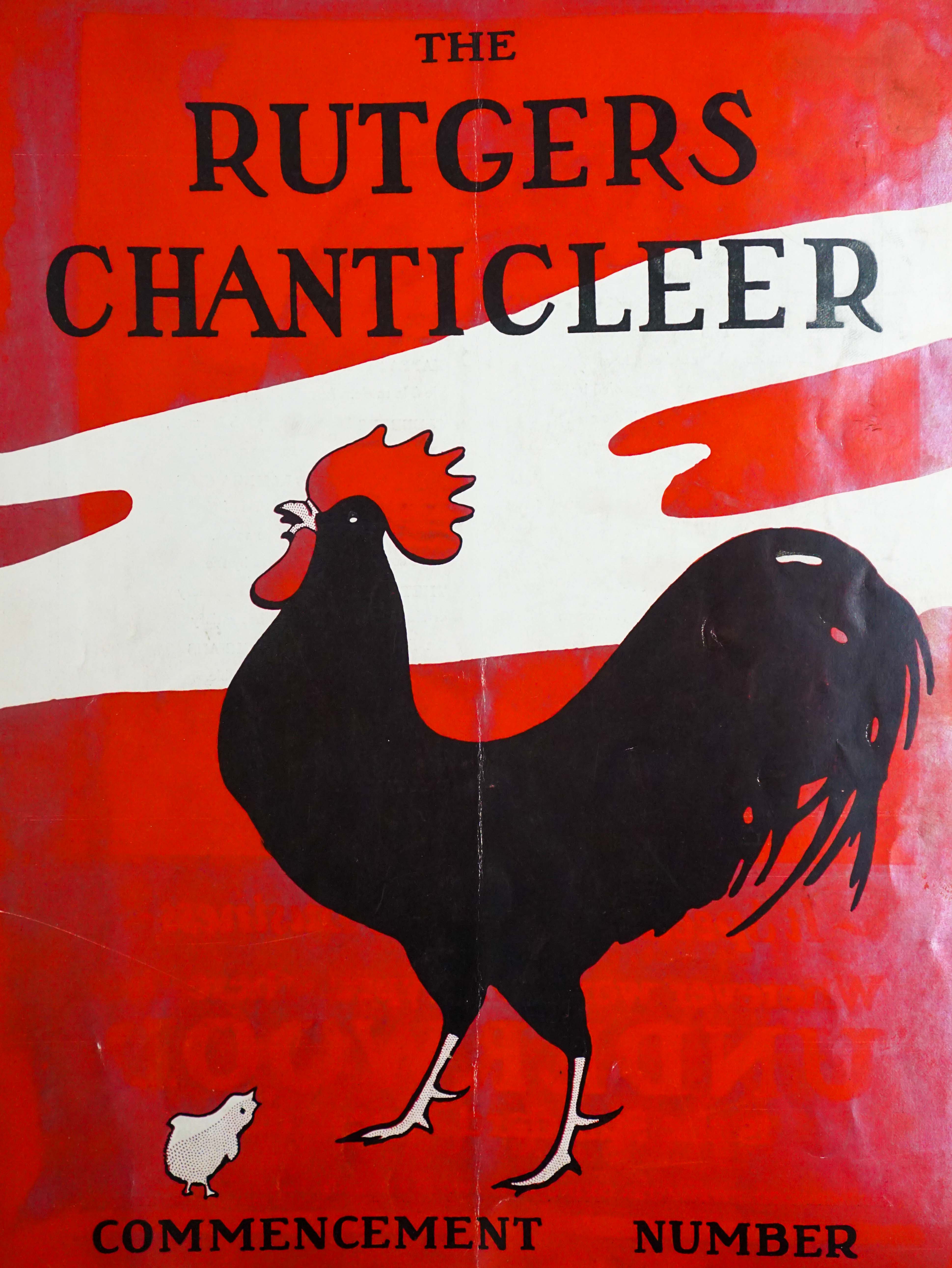
November 7, 1925: Rutgers College, the New Brunswick, New Jersey-based "colonial college," whose teams had previously been called the Queensmen, after their school's original 1766-1825 name, Queen's College, takes on a new name: The Chanticleers. A chanticleer is a fighting rooster, roughly equivalent to the University of South Carolina's Gamecocks. Another school in South Carolina, Coastal Carolina University, a former junior college founded in 1954, uses "Chanticleers."

The change didn't work: They traveled to March Field in Easton, Pennsylvania, where Lafayette College was also introducing a new mascot, the Leopards, and Lafayette won, 34-0.

In 1946, a New Brunswick radio station was founded, at 1450 on the AM dial, and committed to broadcasting Rutgers games. It took its call letters from "Chanticleer": WCTC.

In 1955, the mascot was changed to the Scarlet Knights, after a campus-wide election. Head football coach Harvey Harman supported the change, saying, "You can call it the Chanticleer, you can call it a fighting cock, you can call it any damn thing you want. But everybody knows it's a chicken."

In Middlesex, north of London, fans of the soccer team Tottenham Hotspur Football Club, whose symbol was a cockerel, were unaware of the change, and had no comment.

In 2021, WCTC was bought by Fox, and is now "Fox Sports New Jersey," but it kept the call letters, a vestige of the Chanticleer name.

*

November 7, 1925 was a Saturday. Among the other noteworthy college football games that day were these:

* Army beat Davis & Elkins, 14-6 at Michie Stadium in West Point, New York.

* Fordham beat Holy Cross, 17-0 at the Polo Grounds.

* Columbia and New York University (NYU) played to a tie, 6-6 at Columbia's Baker Field in Upper Manhattan.

* City College of New York beat Manhattan College, 13-10 at CCNY's Lewisohn Stadium in Upper Manhattan.

* Princeton beat Harvard, 36-0 at Palmer Stadium in Princeton, New Jersey.

* Navy beat Western Maryland, 27-0 at Farragut Field in Annapolis, Maryland.

* Alabama beat Kentucky, 31-0 at Rickwood Field in Birmingham, Alabama. 'Bama won the Southern Conference, a precursor to the Southeastern Conference, and finished the season undefeated.

* Texas Christian University beat Texas A&M, 3-0 at Clark Field in Fort Worth, Texas. TCU won the Southwest Conference.

* Notre Dame and Penn State played to a tie, 0-0 at New Beaver Field in State College, Pennsylvania.

* Northwestern upset Michigan, 3-2 at Municipal Grant Park Stadium in Chicago, the building that would soon be renamed Soldier Field. This was the only game Michigan lost all season, and they still won the Big Ten Conference title, and were recognized by one of the determining bodies as the National Champions.

* In what then amounted to a rivalry game, the University of Illinois beat the University of Chicago, 13-6 at Memorial Stadium in Champaign, Illinois.

* Missouri beat Washington University, 14-0 at Francis Field in St. Louis. Mizzou won the Missouri Valley Conference, a precursor to the league eventually known as the Big Eight Conference.

* The University of Washington beat Stanford, 13-0 at University of Washington Stadium, later renamed Husky Stadium, in Seattle. Washington won the Pacific Coast Conference, a precursor to the league eventually known as the Pacific-12 Conference. They were invited to the Rose Bowl, where they were beaten by Alabama, which led to most organizations that chose the National Champion to recognize 'Bama as such.

One game was played in the NFL, due to Pennsylvania's ban on playing professional sports on Sundays, which remained in effect until 1933: The Frankford Yellow Jackets beat the Akron Pros, 17-7 at Frankford Stadium in Northeast Philadelphia.

Thursday, October 27, 2022

October 27, 1948: The Donora Smog

October 27, 1948: The zinc works in Donora, Pennsylvania, about 30 miles south of Pittsburgh, combine with the rest of the pollution in the area to form a smog so thick and noxious that it ends up killing about 70 people.
The zinc works had 10 smelters. There was also a steel mill that used the zinc to galvanize its products. While the zinc works provided thousands of residents with good-paying jobs, there was a major downside. Workers were paid a full day's wage for just a few hours of work, because too much exposure to the zinc could make them ill. The layman's term was "the zinc shakes."
The plant also continuously released billowing emissions into the local sky, laden with a soup of pollutants that included hydrogen fluoride, carbon monoxide, nitrogen dioxide, multiple sulfur compounds, and heavy metals within fine particulate matter.
In the last week of October 1948, the Monongahela-Ohio valley experienced an unusually severe temperature inversion, a weather phenomenon that in Donora trapped smoke from the plants at ground level.
President Harry S Truman ordered the creation of a government committee to study the air pollution problem. It was the start of a research effort that ultimately led to passage of the Clean Air Acts of 1963 and 1970.
The Donora zinc works was closed in 1957, not so much because of the backlash -- they settled a lawsuit for $200,000, not much when divided among the victims' families -- but because advancing technology made the plant obsolete. The steel mill closed 10 years later, and the town never recovered. But the town still proudly claims, "Clean Air Started Here."
One of the people killed was Lukasz Musial, age 58. His son, Stan Musial of the St. Louis Cardinals, has just put together one of the greatest offensive seasons in baseball history, batting .376, hitting a career-high 39 home runs, with 131 RBIs, and an OPS+ of 200 -- meaning that he was 100 percent better at producing runs than the average hitter was that season. He was awarded his 3rd National League Most Valuable Player award.
In Donora, Stan had a black friend, George Kenneth Griffey, a.k.a. Buddy Griffey, whose son Ken would become a major league star. Ken's son, Ken Griffey Jr., became, like Stan, a Hall-of-Famer whose birthday was November 21. And Junior's son, George Kenneth Griffey III, a.k.a. Trey Griffey, was a wide receiver for the University of Arizona, although he never played in the NFL.
Although Stan never lived in Donora after making it to the major leagues, he frequently visited, supported local charities, and gave free meals at his St. Louis restaurant to anyone with a valid Pennsylvania ID proving they were from Donora.
*
October 27, 1948 was a Wednesday. Telma Hopkins was born. She and Joyce Vincent Wilson formed singer Tony Orlando's backing duo, Dawn. Telma went on to become one of the stars of the ABC sitcom Family Matters.
Baseball season had ended 16 days earlier, with the Cleveland Indians beating the Boston Braves in the World Series. Football was in midweek. Basketball season started 5 days later.
There were 2 games played in the NHL. The New York Rangers lost to the Detroit Red Wings, 3-2 at the old Madison Square Garden. And the Toronto Maple Leafs beat the Montreal Canadiens, 3-2 at Maple Leaf Gardens in Toronto. The Boston Bruins and the Chicago Black Hawks were not scheduled.

Sunday, October 23, 2022

October 23, 1983: The Death of Jessica Savitch

October 23, 1983: NBC journalist Jessica Savitch is killed in a car crash. She was only 36 years old.

Jessica Beth Savitch was born on February 1, 1947 in Wilmington, Delaware, and grew up in Margate City, New Jersey, outside Atlantic City. There was a radio station in nearby Pleasantville, and she became South Jersey's 1st female rock and roll disc jockey. After graduating from Ithaca College, she got a job at a station in nearby Rochester, New York, calling herself "Honeybee."

In 1969, she was hired as an administrative assistant at New York radio station WCBS, who wouldn't hire her as a reporter, because she had no experience at that. So she used their facilities to make audition tapes. She was hired as the 1st female reporter at Houston station KHOU-Channel 11, and went on to become their weekend anchor, making her the 1st female news anchor in the South.

In 1972, she went back to her home region, as reporter and weekend anchor at KYW-Channel 3 in Philadelphia, then an NBC affiliate (now CBS). She became noon and weeknight anchor as well, to the point that women in Philadelphia copied her hairstyle.

In 1976, the power cut out during the 1st Presidential debate between Gerald Ford and Jimmy Carter, held in Philadelphia. Savitch was on-site, and helped fill the dead air while the power was restored. That impressed the NBC brass, and, the next year, they offered her a post as Washington, D.C. correspondent for The NBC Nightly News.

They were especially impressed by her improvised delivery on the story of the Jonestown Massacre in 1978, a story for which they didn't have a prepared script, and with footage she hadn't yet seen. In 1980, she became the program's weekend anchor, and delivered the nightly 8:58 and 9:58 PM newsbreaks, NBC News Digest. In 1982, a TV Guide poll named her the 4th-most-trusted news anchor in the country.

She married twice, the 1st marriage ending in divorce, the 2nd ending when her husband, suffering from depression and drug issues, took his own life. She had no children. On October 3, 1983, during a News Digest segment, she ad-libbed her report and seemed to be slurring her words. And yet, in the later News Digest, she was fine. People began to wonder if she was drunk, or using drugs. She explained the problem the first time around as being with her Teleprompter.

Twenty days later, on October 23, she had dinner at Chez Odette (now the River House at Odette's), a restaurant in New Hope, Bucks County, Pennsylvania. The town is on the Delaware River, across from Lambertville, Hunterdon County, New Jersey, 73 miles southwest of Midtown Manhattan, and 33 miles northeast of Center City Philadelphia. With her was a new boyfriend, Martin Fischbein, vice president of the New York Post.

Fischbein began to drive home in the rain, and the car fell into the adjoining Pennsylvania Canal, sinking into the mud, which prevented their escape. Fischbein, Savitch and her dog all died. An autopsy reported no drugs in either passenger's system, and while both had alcohol in their blood, it was only enough to amount to one glass of wine for each. Still, between the wine and the rain, it was enough to impair Fischbein, and kill him and Savitch.

In 1988, Gwenda Blair published Almost Golden: Jessica Savitch and the Selling of Television News, which put Savitch's life in the larger context of her industry. People who knew Savitch ripped it for its many inaccuracies. Nevertheless, in 1995, it was made into a movie, starring Sela Ward -- a brunette playing blonde.

In 1988, Alanna Nash published Golden Girl: The Story of Jessica Savitch, which was also heavily criticized for inaccuracies. As a result, the film it was adapted into, Up Close and Personal, starring Michelle Pfeiffer and Robert Redford, was changed to a totally fictional story, very loosely based on Savitch's career.

*

October 23, 1983 was a Sunday. This was the same day that a suicide bomber killed 241 U.S. troops at the U.S. Embassy in Beirut, Lebanon. I have a separate entry for that event.

The baseball season had ended a week before, when the Baltimore Orioles beat the Philadelphia Phillies to win the World Series. The NBA season began 5 days later. The NHL season had gotten underway, and 4 games were played that day:

* The New York Rangers beat the New York Islanders, 6-5 at Madison Square Garden. Peter Sundstrom scored the winning goal, 1 minute and 13 seconds into overtime.

* The Philadelphia Flyers beat the Toronto Maple Leafs, 8-5 at The Spectrum in Philadelphia.

* The Buffalo Sabres beat the Winnipeg Jets, 5-2 at the Buffalo Memorial Auditorium.

* And the Chicago Blackhawks beat the Calgary Flames, 7-4 at Chicago Stadium.

And there was a full slate of NFL games:

* The New York Jets lost to the Atlanta Falcons, 27-21 at Shea Stadium. This would be their last season at Shea, or in New York City, for that matter. They moved to the Meadowlands the next season.

* The Chicago Bears beat the Philadelphia Eagles, 7-6 at Veterans Stadium in Philadelphia.

* The Miami Dolphins beat the Baltimore Colts, 21-7 at Memorial Stadium in Baltimore. This would be the Colts' last season in Baltimore. They moved to Indianapolis the next season.

* The Washington Redskins beat the Detroit Lions, 38-17 at Robert F. Kennedy Stadium in Washington.

* The New Orleans Saints beat the Tampa Bay Buccaneers, 24-21 at Tampa Stadium.

* The New England Patriots beat the Buffalo Bills, 31-0 at Rich Stadium (later Ralph Wilson Stadium) in the Buffalo suburb of Orchard Park, New York.

* The Cincinnati Bengals beat the Cleveland Browns, 28-21 at Riverfront Stadium in Cincinnati.

* The Minnesota Vikings beat the Green Bay Packers, 20-17 in overtime at Lambeau Field in Green Bay.

* The Los Angeles Raiders beat the Dallas Cowboys, 40-38 at Texas Stadium in the Dallas suburb of Irving.

* The Kansas City Chiefs beat the Houston Oilers, 13-10 in overtime at the Astrodome in Houston.

* The Denver Broncos beat the San Diego Chargers, 14-6 at Mile High Stadium in Denver.

* The San Francisco 49ers beat the Los Angeles Rams, 45-35 at Anaheim Stadium.

* And the Pittsburgh Steelers beat the Seattle Seahawks, 27-21 at the Kingdome in Seattle.

* The next night, on Monday Night Football, the New York Giants and the St. Louis Cardinals played to a 20-20 tie at Busch Memorial Stadium in St. Louis.  

Saturday, October 15, 2022

October 15, 1933: The Philadelphia Eagles Debut

Advertisement for the 1st game.
The player is a drawing, not any specific player.

October 15, 1933: The Philadelphia Eagles play their 1st regular-season NFL game. It doesn't go so well: They lose to the New York Giants at the Polo Grounds, 56-0.
Playing again 3 days later, which was probably not a good idea, they played their 1st home game, at Baker Bowl, home of baseball's Phillies. They lost to the Portsmouth Spartans, 25-0. The paid attendance was listed as 1,750 -- another reason why playing on a Wednesday afternoon was not a good idea. (Baker Bowl didn't have lights. Few American stadiums did in 1933.)
Wisely, they took 11 days off before playing again. At least they scored: They lost away to the Green Bay Packers, 35-9. Finally, on November 5, they beat the football version of the Cincinnati Reds, 6-0 at Redland Field. (That ballpark was renamed Crosley Field the next season, and the football Reds only played one more season.) The Eagles finished 3-5-1: 2-0 against the Reds, 1-5-1 against everybody else.
The birth of the Eagles was made possible by Pennsylvania finally dropping its law banning sporting events on Sunday. Due to their proximity, Eagles vs. Giants will, eventually, become one of the NFL's best rivalries.
The team chose the name "Eagles" to match the Blue Eagle, the symbol of the New Deal's NRA, the National Recovery Administration. (Not to be confused with the National Rifle Administration.) The Supreme Court ruled that unconstitutional in 1935, but the team's name has stayed to this day. Its blue and gold colors stayed through the 1940 season, after which they switched to green and white, which they still use, with some black and silver thrown in.
UPDATE: Through the 2025 season, from their founding era, from the 1st season of 1933 until the last pre-playoff season of 1946, the Eagles have elected founding owner Bert Bell and end Bill Hewitt to their team Hall of Fame. Bell has also been elected to the Philadelphia Sports Hall of Fame.
*
October 15, 1933 was a Sunday. Baseball season ended 8 days earlier, when the baseball version of the New York Giants beat the Washington Senators in the World Series. The NBA hadn't been founded yet. The NHL season didn't start until November 9.

These other NFL games were played that day:

* The NFL version of the Brooklyn Dodgers beat the NFL version of the Cincinnati Reds, 27-0 at Ebbets Field.

* The Portsmouth Spartans beat the Boston Redskins, 13-0 at Fenway Park in Boston. The Spartans became the Detroit Lions the next year, and the Redskins moved to Washington in 1937, becoming the Washington Commanders in 2022.

* The Chicago Bears beat the Chicago Cardinals, 12-9 at Wrigley Field in Chicago.

* The Green Bay Packers beat the NFL version of the Pittsburgh Pirates, 47-0 at City Stadium in Green Bay, Wisconsin. The Pirates became the Steelers in 1940.

Saturday, October 1, 2022

October 1, 1940: The Pennsylvania Turnpike Opens

October 1, 1940: The 1st section of America's 1st true superhighway, the Pennsylvania Turnpike, opens between Irwin and Carlisle. It was extended to Philadelphia and Pittsburgh in 1950, to the New Jersey and Ohio Turnpikes in 1954, and the Northeast Extension to Scranton opened in 1957.
Today, it runs 360 miles, using what is now Interstates 70, 76 and 276 (going west to east). It costs $86.50 to drive its entire length using cash, but only about half that, $42.80, using E-Z Pass.
Since the 1950s, it has been used by travelers to get to the games of the Philadelphia and Pittsburgh sports teams, although the main Penn State campus is considerably north of it. Interstate 99 connects the campus with the Turnpike's Exit 146 in Bedford, 77 miles away; and with Exit 161 on Interstate 80, 13 miles away.
Unlike its stepbrother in New Jersey, the Pennsylvania Turnpike isn't a pop culture touchstone, although Billy Joel mentioned it in his song "You're My Home," and the road was used as a backdrop in the 2009 film The Road.
*
October 1, 1940 was a Tuesday. There were no scores on this historic day. Baseball was between the regular season and the World Series, which started the next day, and would be won in 7 games by the Cincinnati Reds over the Detroit Tigers. Football was in midweek. The NBA hadn't been founded yet. And it was too soon for the NHL.

Tuesday, September 20, 2022

September 20, 1933: The Pittsburgh Steelers Debut

September 20, 1933: The Pittsburgh Pirates, an expansion team in the NFL, named for the city's baseball team, plays its 1st game. They lose to another team named after a baseball team, the New York Giants, 23-2 at Forbes Field in Pittsburgh.

They were supposed to debut the preceding week, on September 13, against yet another NFL team named after a baseball team, the Cincinnati Reds. But it was postponed due to rain.

These games were set for Wednesdays. Why not Sundays? Playing professional sporting events on Sundays was illegal in the Commonwealth of Pennsylvania. But Art Rooney founded the team, as did Bert Bell and Lud Wray across the State with the Philadelphia Eagles, that year in anticipation of a bill going through the legislature in Harrisburg, to legalize pro sports on Sundays. It did pass, ensuring that the Eagles and the team that, from 1940 onward, would be known as the Pittsburgh Steelers would have a fair chance to succeed.

Or else they would have had to do what the Eagles, and before them in Philadelphia the Frankford Yellow Jackets, then had to do for home games: Play them on Saturdays, competing with college and high school football.
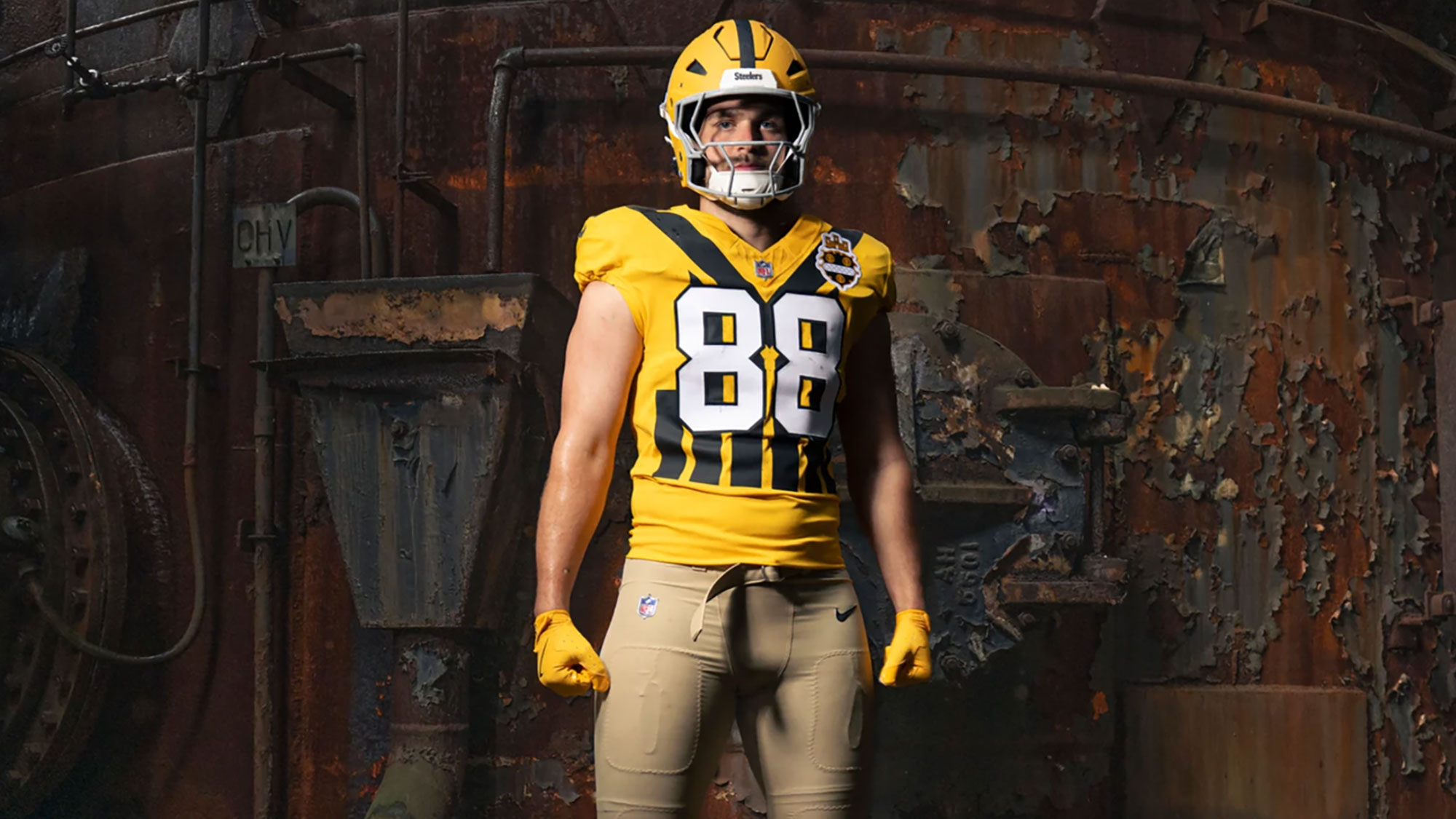
Pat Freiermuth wearing a modernized copy of the 1933 Pirates' uniform

Under head coach Forrest Douds, the Pirates got their 1st win the next week, on September 27, 14-13 over the Chicago Cardinals at Forbes Field. They finished 3-6-2. It would take until 1942 for them to have a winning record, until 1947 for them to make the Playoffs, until 1972 for them to win a Playoff game, and until the 1974 season for them to win a championship.

It would take until the aforementioned 1972 season for the Steelers to truly catch on as an institution of Pittsburgh culture. But, having finally done so, they have never let go.

UPDATE: The Steelers have a team hall of fame, calling it the Pittsburgh Steelers Hall of Honor. From their founding period, they have inducted team founder Art Rooney, guard Walt Kiesling, and running back Johnny "Blood" McNally.

From the 1940s, they have inducted Rooney, Kiesling as head coach, running back "Bullet" Bill Dudley, and tight end Elbie Nickel. From the 1950s, they have inducted Rooney, Kiesling, Nickel, running back Ray Mathews, defensive tackle Ernie Stautner, and cornerback Jack Butler.

From the 1960s, they have inducted Rooney, Stautner, quarterback Bobby Layne, running backs John Henry Johnson and Dick Hoak, receiver Buddy Dial, center Ray Mansfield, guard Sam Davis and linebacker Andy Russell.

*

September 20, 1933 was, as I said, a Wednesday. This was the only NFL game played that day. These 4 baseball games were played:

* The New York Yankees beat the Chicago White Sox, 5-3 at Yankee Stadium. Danny MacFayden went the distance for the win, while future Hall-of-Famer Urban "Red" Faber only lasted 4 innings for the Pale Hose. Tony Lazzeri hit a home run. Lou Gehrig went 0-for-4, and Babe Ruth did not play. For the White Sox, Ralph "Red" Kress hit a home run, while Luke Appling went 1-for-3 with a walk.

* The Brooklyn Dodgers lost to the Pittsburgh Pirates, 3-0 at Forbes Field in Pittsburgh. Bill Swift -- no relation to the later Seattle and San Francisco pitcher of the same name -- pitched a 4-hit shutout, outpitching Walter "Boom-Boom" Beck. Swift later made it up to the Dodgers by helping them win the 1941 National League Pennant. In a weird coincidence, Beck would end his career with the Pirates.

Harold "Pie" Traynor went 4-for-4 with an RBI. But Paul Waner went 0-for-4, and his brother Lloyd Waner did not play.

* The Philadelphia Athletics beat the Detroit Tigers, 2-1 at Shibe Park in Philadelphia. Lefty Grove outpitched Carl Fischer for his 23rd win of the season. Mickey Cochrane went 2-for-4. Jimmie Foxx went 0-for-3 with a walk. In the off-season, A's manager-treasurer-part-owner Connie Mack would sell Cochrane to the Tigers, and Grove to the Boston Red Sox. Two years after that, he would sell Foxx to the Red Sox.

* And the Washington Senators beat the St. Louis Browns, 13-5 at Griffith Stadium in Washington. Henry "Heinie" Manush and Dave Harris each had 3 RBIs.

Saturday, September 17, 2022

September 17, 1960: Beaver Stadium Opens

A "White Out Game"

September 17, 1960: Beaver Stadium opens on the campus of the Pennsylvania State University in State College, 192 miles from Center City Philadelphia, 88 miles from the State Capitol in Harrisburg, and 137 miles from Downtown Pittsburgh. Ranked Number 19 in the nation at the time, Penn State beat Boston University, 20-0.

For anybody who grew up from the late 1960s into the early 21st Century, it's hard to imagine anybody but Joe Paterno coaching the Nittany Lions. But, at this point, he was still an assistant coach under Charles "Rip" Engle, who led them from 1950 to 1965, after which point Paterno coached them until the scandal that brought him down in 2011, followed by his death from cancer early in 2012.

From their debut in 1887 until 1891, Penn State played football on the lawn in front of their administration building, "Old Main." From 1892 to 1908, they played at Beaver Field, named for James A. Beaver, who was Governor of Pennsylvania from 1887 to 1891, and then president of the University's Board of Trustees. It stood between present-day Osmond and Frear Laboratories.

In 1909, New Beaver Field, seating 30,000, was built on the original site of the Nittany Lion Inn (the current version dates to 1931), where the current stadium's parking deck now stands. Penn State had some success there, but not like what was to come under Paterno.

They outgrew the stadium in the 1950s, and Beaver Stadium was built, with an initial capacity of 69,000. With a current official capacity of 106,572, it is the 2nd-largest stadium in North America, behind the University of Michigan's Michigan Stadium. Its record crowd is 110,889, on September 29, 2018, for what turned out to be a 27-26 loss to Ohio State. (UPDATE: That record was broken on November 2, 2024, with 111,030 coming to see another loss to Ohio State, 20-13.)

The stadium is known for its "S-Zone," where students are all given white and blue shirts, supplied by the Pennsylvania State University Lion Ambassadors, to create an "S" for "State"; and "White Out" games, where everybody wears white shirts.

Opening the same day as Beaver Stadium was University Stadium, on the campus of the University of New Mexico, in Albuquerque. UNM played the University of Mexico, known to Mexican soccer fans as "Pumas" for their wild feline mascot. The visitors did not adjust well to the American version of football, as the host Lobos beat them, 77-6.

*

September 17, 1960 was a Saturday. Baseball pitcher John Franco was born. So was Kevin Clash, the puppeteer who originally operated Elmo on Sesame Street.

These other notable college football games were played:

* Number 1 Syracuse, the defending National Champions, opened their season the following week. So did Number 5 Illinois, Number 8 Michigan State, Number 9 Clemson, Number 10 Oklahoma, and unranked Notre Dame. So did New Jersey's teams, Rutgers and Princeton, against each other, in a 13-8 Rutgers win in Princeton.

* Number 2 Mississippi, a.k.a. Ole Miss, beat the University of Houston, 42-0 at Rice Stadium in Houston.

* Number 3 Washington beat the University of the Pacific, 55-6 at Husky Stadium in Seattle.

* Number 4 Texas were upset by Nebraska, 14-13 at Memorial Stadium in Austin, Texas.

* The night before, Number 6 University of Southern California (USC) were upset by Oregon State, 14-0 at the Los Angeles Memorial Coliseum.

* Number 7 University of Pittsburgh were upset by the University of California at Los Angeles (UCLA), 8-7 at the L.A. Coliseum.

* Number 11 Texas Christian University (TCU) were upset by Kansas, 21-7 at Memorial Stadium in Lawrence, Kansas.

* Number 13 Georgia were upset by Alabama, 21-6 at Legion Field in Birmingham, Alabama.

* Among the service academies, Army beat the University of Buffalo, 37-0 at Michie Stadium in West Point, New York; Navy beat Boston College, 22-7 at Alumni Stadium in the Boston suburb of Chestnut Hill, Massachusetts; and Air Force opened their season the next week.

One game was played in the brand-new American Football League: The Boston Patriots beat the New York Titans, 28-24 at the Polo Grounds. Those teams would become known as the New England Patriots and the New York Jets, respectively.

These baseball games were played:

* The New York Yankees beat the Baltimore Orioles, 5-3 at Yankee Stadium. Bob Turley started, but Jim Coates ended up as the winning pitcher. Mickey Mantle and Yogi Berra hit home runs. Roger Maris went 0-for-4. Brooks Robinson went 1-for-4 with an RBI.

* The Boston Red Sox beat the Washington Senators, 2-1 at Griffith Stadium in Washington. Ted Williams hit his 520th career home run. At the time, this was 3rd in baseball history behind Babe Ruth and Jimmie Foxx. He would hit 1 more. Harmon Killebrew went 1-for-3 with a walk. At the time, he had 82 career home runs. He would hit 491 more.

* The Kansas City Athletics beat the Cleveland Indians, 8-5 at Cleveland Municipal Stadium. Ken Hamlin's home run was the 1st of 3 runs the A's scored in the top of the 10th inning.

* The Chicago White Sox beat the Detroit Tigers, 8-4 at Briggs Stadium in Detroit. The ballpark was renamed Tiger Stadium the next season. Al Kaline went 2-for-4 with an RBI.

* The Chicago Cubs beat the Los Angeles Dodgers, 7-3 at Wrigley Field in Chicago. Don Cardwell was the winning pitcher. The Cubs scored 5 runs in the bottom of the 8th, 2 off Sandy Koufax, 3 off Larry Sherry. Earlier, Ernie Banks hit a home run off Koufax. The next year, in Spring Training, Sherry would tell Koufax to stop trying to strike everybody out. It was among the greatest advice in baseball history.

* The Philadelphia Phillies beat the Milwaukee Braves, 5-2 at Milwaukee County Stadium. Tony Curry hit a bases-loaded double in the top of the 10th inning. Hank Aaron went 2-for-4. Eddie Mathews went 1-for-5 with an RBI.

* The St. Louis Cardinals beat the San Francisco Giants, 4-1 at the 1st Busch Stadium (formerly the last Sportsman's Park) in St. Louis. Stan Musial did not play. Willie Mays went 0-for-4, but had an RBI on a groundout. Willie McCovey appeared as a pinch-hitter, but did not reach base.

* With some irony, the major league team the closest to Penn State, the Pittsburgh Pirates, were rained out of their game with the Cincinnati Reds, although it was at Crosley Field in Cincinnati. It was made up as part of a doubleheader the next day. The Pirates swept, 5-3 and 1-0.

Vernon Law won his 20th game of the season in the opener, on his way to the Cy Young Award, then given to the best pitcher in both Leagues. Dick Stuart and Don Hoak hit home runs. In the nightcap, Wilmer "Vinegar Bend" Mizell pitched a 3-hit shutout, outpitching Bob Purkey. The only run came in the top of the 7th inning, when Dick Schofield doubled Hoak home. Over the 2 games, Roberto Clemente went 1-for-8 with a walk.

And in English soccer, Arsenal defeated North-East team Newcastle United, 5-0 at the Arsenal Stadium, a.k.a. Highbury, in North London. David Herd scored 3 goals.

Saturday, July 16, 2022

July 16, 1970: Three Rivers Stadium Opens In Pittsburgh

July 16, 1970: Three Rivers Stadium opens in Pittsburgh. It replaces Forbes Field, which had been home to baseball's Pittsburgh Pirates since 1909. In their last games there, on June 28, the Pirates had swept a doubleheader from the Chicago Cubs, 3-2 and 4-1.

Classrooms for the University of Pittsburgh were built on the site of Forbes Field. Unlike some other teams, the Pirates did not move home plate to their new home. It is encased under glass in Posvar Hall -- but not quite in its exact location. That turned out to be where a women's bathroom was built. Some of Forbes' brick outfield wall was left standing, and a brick path marks the rest, including a plaque where Bill Mazeroski's home run ball cleared the fence to win the 1960 World Series.

The Cincinnati Reds spoil the opening party at Three Rivers, beating the Pirates 3-2. Dock Ellis runs out of gas in the 9th inning, and gives up a single to Tony Pérez, a walk to Johnny Bench, and a single to Lee May. Earlier in the game, Pérez had hit the 1st home run in the new stadium, and Willie Stargell hit the 1st home run for the home team.

The NFL's Pittsburgh Steelers also moved in. Their regular-season debut there was no better: On September 20, 1970, they lost to the Houston Oilers, 19-7.

Three Rivers -- named for the spot where the Allegheny River and the Monongahela River combine to form the Ohio River -- was an artificially-turfed multipurpose stadium, not very good for either baseball or football.

It hosted 28 postseason baseball games, including games of the 1971 and 1979 World Series, both of which the Pirates won; and 18 NFL Playoff games, including 9 AFC Championship Games and the 1972 AFC Divisional Playoff that featured the Terry Bradshaw to Franco Harris pass known as the "Immaculate Reception," a game that launched the Steelers' 1970s dynasty that saw them win play in 4 Super Bowls, and win them all.

Oddly, while Stargell hit the longest home runs ever at Veterans Stadium in Philadelphia, the Olympic Stadium in Montreal, and, through the 2021 season, Dodger Stadium in Los Angeles, he did not hit the longest at Three Rivers. Given that he had crossed Pennsylvania to hit the longest at The Vet, it was somewhat appropriate that a Philadelphia Phillies slugger had gone in the opposite direction to hit the longest homer at Three Rivers: Greg Luzinski.

The Pittsburgh Maulers of the United States Football League (USFL) played 1 season, 1984, and their home games were at Three Rivers. It also served as a home field for Duquesne University in 1971, and the University of Pittsburgh for scattered games, and all their home games in the 2000 season, from the demolition of Pitt Stadium (where the Steelers had played from 1964 to 1969) until the opening of Heinz Field/Acrisure Stadium.

The stadium fulfilled its purpose: It saved the Pirates and Steelers from having to move. But it was a bad design, and both teams moved to new stadiums after their 2000 season, one on either side of Three Rivers. The Pirates' finale was on October 1, 2000. As with the Forbes Field finale, it was against the Cubs. Unlike that 1970 contest, the Cubs won, 10-9. The Steelers' finale was on December 16, 2000, and they beat the Washington Redskins, 24-3.

Three Rivers Stadium, age 30, was demolished on February 11, 2001. This time, the Pirates did move home plate from the old stadium to the new one, so they're presumably using the same plate that they were using in the Summer of 1970.

The Pirates opened PNC Park on April 9, 2001. As with the Three Rivers opener, Cincinnati spoiled the occasion, 8-2. Pitt played the 1st regular-season football game at Heinz Field on September 1, 2001, beating East Tennessee State, 31-0. The Steelers played their 1st regular-season game there on October 7, 2001, beating the Cincinnati Bengals, 16-7. Heinz Field was renamed Acrisure Stadium in 2022.

*

July 16, 1970 was a Thursday. These other Major League Baseball games were played that day:

* The New York Yankees split a doubleheader with the Oakland Athletics at Yankee Stadium. The A's won the opener, 8-2. Chuck Dobson outpitched Fritz Peterson. Frank Fernández hit a home run for the A's, and Curt Blefary hit one for the Yankees. The Yanks won the nightcap, 4-1. Stan Bahnsen outpitched Diego Seguí. Pete Ward went 2-for-3 with 3 RBIs for the Yanks. Over the 2 games, future Yankee Reggie Jackson went 1-for-5 with 2 walks and 3 RBIs.

* The New York Mets lost to the Los Angeles Dodgers, 3-1 at Dodger Stadium in Los Angeles. Bill Singer outpitched Jim McAndrew.

* The Boston Red Sox beat the Milwaukee Brewers, 6-5 at Fenway Park in Boston. George Scott scored Carl Yastrzemski with a sacrifice fly to win the game in the bottom of the 10th inning. Yaz had gone 2-for-5. Billy Conigliaro hit 2 home runs, and his brother Tony got a hit, but the love affair between Red Sox fans and the Congiliaros was, to put it in Friends-speak, on a break.

* The Baltimore Orioles beat the Minnesota Twins, 5-1 at Memorial Stadium in Baltimore. Frank Robinson went 1-for-4. Brooks Robinson went 0-for-3 with a walk. Harmon Killebrew hit a home run. Rod Carew did not play.

* The California Angels beat the Washington Senators, 3-2 at Robert F. Kennedy Stadium in Washington.

* The Detroit Tigers beat the Chicago White Sox, 11-6 at Comiskey Park in Chicago. Al Kaline went 2-for-4 with a walk.

* The Atlanta Braves beat the St. Louis Cardinals, 7-3 at Busch Memorial Stadium in St. Louis. Pat Jarvis outpitched Steve Carlton. Hank Aaron went 1-for-4 with a walk. Lou Brock went 2-for-4 with a walk.

* The Cleveland Indians beat the Kansas City Royals, 6-0 at Kansas City Municipal Stadium. Rich Hand pitched a 4-hit shutout.

* The Houston Astros beat the Chicago Cubs, 2-1 at the Astrodome in Houston. Don Wilson outpitched Ken Holtzman. Ernie Banks did not play.

* The Philadelphia Phillies beat the San Diego Padres, 10-7 at San Diego Stadium (later renamed Jack Murphy Stadium and Qualcomm Stadium).

* And the Montreal Expos and the San Francisco Giants were not scheduled. The All-Star Game had been played 2 days earlier, and these 2 teams got an extra day of the All-Star Break.

Wednesday, July 13, 2022

July 13, 2024: The 1st (Apparent) Attempted Assassination of Donald Trump

NOTE: While these entries are dated 2022, I decided to backdate the posting dates of events from 2023 onward to the same date in 2022.

July 13, 2024: An attempt is made to assassinate Donald Trump during a campaign rally in Pennsylvania. He is slightly wounded, and survives.

Having secured the Republican nomination for President for the 3rd straight election, and constantly needing the personal validation that comes from being wildly cheered at campaign rallies, Trump went to the Butler Farm Show Grounds in Butler, Pennsylvania, about 35 miles north of downtown Pittsburgh, as Pennsylvania, particularly Pittsburgh and its suburbs, were key to his 2016 "victory" -- and key to his 2020 defeat.

Trump began his speech at 6:05 PM. At 6:11, shots were fired. He reached up and grabbed his right ear, stood still for a second, then ducked behind his podium, where he couldn't be seen. No blood had yet been seen on him.

His Secret Service detail rushed onto the stage. A few seconds later, they picked him up. There was blood on his right ear, and two streams of blood across the right side of his face. According to Trump, the agents "hit me so hard that my shoes fell off, and my shoes are tight." He asked the Secret Service agents to let him get his shoes.

In other words, his thought at that moment wasn't for the safety of others, or even his own pain from having been wounded. It was to get his shoes, so he could walk off the stage under his own power. That is not the thought of a man who has just been shot.

They also offered to put him on a stretcher, but he declined. As he was walked off stage, Trump told the Secret Service agents to wait, and then raised his fist, pumped it at the crowd, and mouthed the words, "Fight! Fight! Fight!" The crowd responded with cheers and chants of "USA! USA! USA!" This was not the action of a man who has just been shot.
As Trump was taken to Butler Memorial Hospital, it was discovered that 3 other people had been shot. One died: Corey Comperatore, 50, an engineer and former chief of the fire company in Buffalo Township. Two other male audience members were shot and critically injured. One was discharged from the hospital on July 24, the other on July 26.

The next day, the FBI identified the shooter as 20-year-old Thomas Matthew Crooks of Bethel Park, Pennsylvania, about an hour's drive from the rally venue. They stated that he appeared to have acted alone, used a rifle that had been legally bought by his father in 2013 and sold to the son in October 2023, had no criminal record, and there had been "no indication of any mental health issues" regarding Crooks. It was also revealed that Crooks was... a registered member of the Republican Party.

That day, July 14, Trump was back at his main residence, Mar-a-Lago in Palm Beach, Florida. It was a Sunday, but he did not go to church to thank God for sparing his life. Nor did he visit the families of any of the other victims, to console them. Instead, he spent the day playing golf -- with no bandage on his ear.

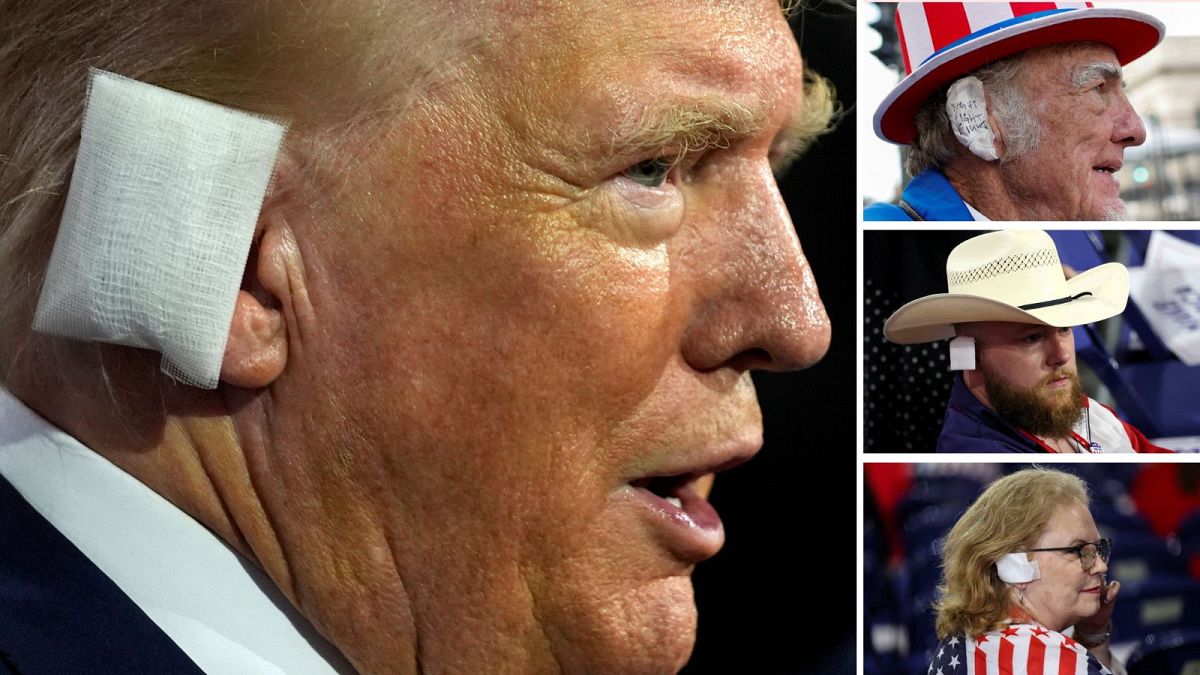
The next day, July 15, he appeared in public with a bandage on his ear. The Republican National Convention began on July 16, at the Fiserv Forum in Milwaukee, and many delegates wore matching bandages on their ears in tribute to the man who "took a bullet for our country."
The following week, there was no more bandage on Trump's ear, and no scar on his ear, either. It's as if nothing had ever happened.
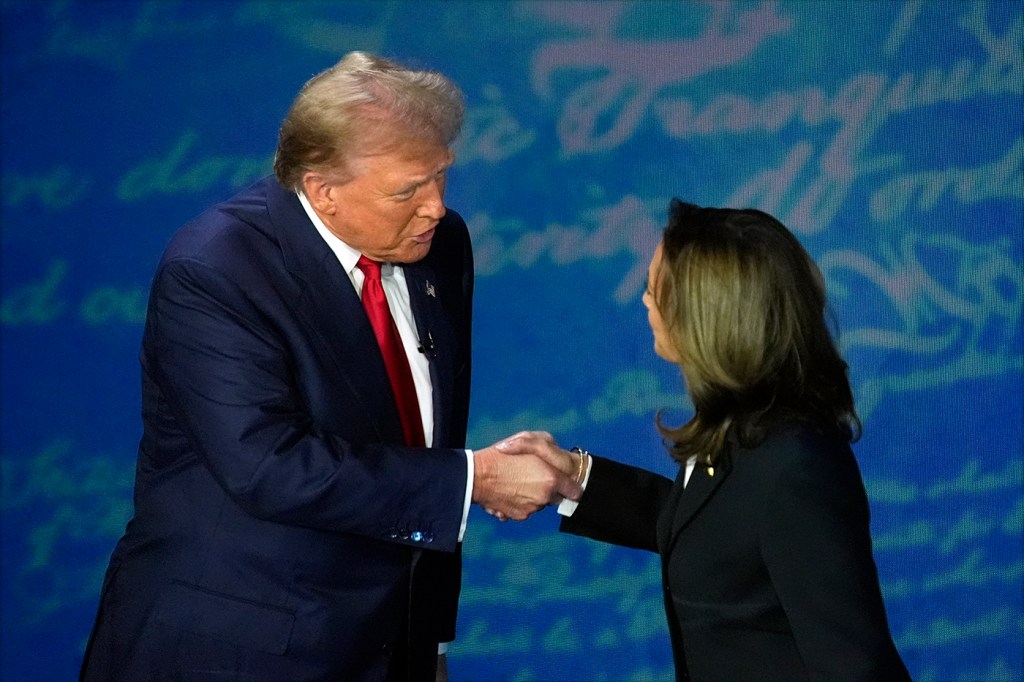
Trump at his debate with Kamala Harris.
No bandage. Not even a scar.

The firefighter's uniform of Corey Comperatore was put on stage at the Republican Convention. But a photograph of his dead body was never shown to the public. Nor was his funeral. Nor were the body, nor the funeral, of Crooks. It's as if both of them just disappeared into the ether.

Immediately, speculation arose that the whole thing was staged, because Trump was desperate to get back into the Presidency, because he was desperate to avoid prison, and because he wanted the power back, to get revenge on all his enemies. It was all or nothing. What better way to win votes than through sympathy? What better way to gain sympathy than to survive an assassination attempt? It worked for Ronald Reagan. It also showed he was tougher than John F. Kennedy, who didn't survive his.

But would a member of the Republican Party really risk his own life to pretend to end Trump's? Would anybody really die for Donald Trump? I doubt it: A conservative's biggest drive, even more than for money and power, is self-preservation.

But would anyone "die" for Donald Trump? Yes. There could well be a private version of the Witness Protection Program, funded by pro-Trump billionaires, where people could go after such an event, and they would be given new identities, and placed where no one would think to look for them. After all, we never saw the dead bodies of either the shooter or the victims. For all we know, they could be alive and well, in such a program.

Meanwhile, when Trump was "hit," the side of him that got hit was turned away from us. We saw no blood when he went down, only when he was pulled back up. At which point, he acted like he was in no pain at all. No bullet caused that blood: Any bullet that would have hit him would have caused more damage. He literally walked off the stage. The evidence that the whole thing was faked is strong.

If the official story is true, then Crooks used the favorite gun of the gun lobby, the favorite gun of mass shooters: The AR-15. This is what a bullet from an AR-15 looks like:
That's .223 inches in diameter, roughly equivalent to one fired from a .22-caliber pistol, but, with rifling. The rifle gives it better accuracy, making it a better weapon from distance. You've heard what they say about the comic book superhero Superman: "Faster than a speeding bullet!" An AR-15 bullet travels at an average speed of 2,250 miles per hour. That's approximately 3 times the speed of sound: Mach 3.

If a bullet that size, at that speed, had hit Trump in the ear, it would have torn a hole in his head as badly as the 6.5 millimeter (.256 inch) bullet from Lee Harvey Oswald's rifle did to JFK in 1963. Trump would have been dead for sure. To borrow Clint Eastwood's line from Dirty Harry, it would have blown his head clean off.

It has been suggested that the bullet actually hit a teleprompter, shattering it, and that Trump's ear was cut by a flying piece of that. Or, maybe while Trump was behind the podium, hidden from view, someone, perhaps himself, smeared the blood on him. Maybe, just maybe, the whole thing was staged.

Now, I'm not saying that this is what did happen. But it's Donald Trump: It could have happened, because it's exactly the kind of thing that he would do. This conspiracy theory may be wrong... but it's completely plausible, and it's not crazy.

Or even weird.

On September 15, 2024, at Trump International Golf Club West in West Palm Beach, Florida, near his Mar-a-Lago residence, there was a 2nd apparent assassination attempt on Trump. It was also unsuccessful, with the would-be gunman not getting a shot off at him. It came days after he was embarrassed during a Presidential debate, both by Vice President Kamala Harris and himself. He needed to stop the mockery. Was this attempt staged (too)?

*

July 13, 2024 was a Saturday. These Major League Baseball games were played:

* The New York Yankees beat the Baltimore Orioles, 6-1 at Camden Yards in Baltimore. Luis Gil was the winning pitcher. Aaron Judge, Juan Soto and Austin Wells hit home runs.

* The New York Mets beat the Colorado Rockies, 7-3 at Citi Field.

* The Boston Red Sox beat the Kansas City Royals, 5-0 at Fenway Park in Boston. Kutter Crawford pitched 7 innings of 3-hit shutout ball, and Zack Kelly completed a 5-hit shutout.

* The Philadelphia Phillies beat a former Philadelphia team, the Oakland Athletics, 11-5 at Citizens Bank Park in Philadelphia.

* The Cleveland Guardians beat the Tampa Bays, 4-2 at Tropicana Field in St. Petersburg, Florida.

* The Cincinnati Reds beat the Miami Marlins, 10-6 at Great American Ball Park in Cincinnati.

* The Detroit Tigers beat the Los Angeles Dodgers, 11-9 at Comerica Park in Detroit. Gio Urshela hit a game-winning home run in the bottom of the 10th inning.

* The Pittsburgh Pirates beat the Chicago White Sox, 6-2 at Guaranteed Rate Field (now Rate Field) in Chicago.

* The Washington Nationals beat the Milwaukee Brewers, 6-5 at American Family Field in Milwaukee.

* The St. Louis Cardinals sweep a doubleheader from their arch-rivals, the Chicago Cubs, 11-3 and 5-4 at Busch Stadium in St. Louis.

* The Texas Rangers beat their in-State rivals, the Houston Astros, 2-1 at Minute Maid Park (now Daikin Park) in Houston. Nathaniel Lowe singled Josh Smith home in the top of the 10th inning.

* The Arizona Diamondbacks beat the Toronto Blue Jays, 12-1 at Chase Field in Phoenix.

* The San Diego Padres beat the Atlanta Braves, 4-0 at Petco Park in San Diego. Dylan Cease allowed 1 hit and 3 walks, striking out 11, over 6 innings. Three relievers completed a 5-hit shutout.

* The Los Angeles Angels beat the Seattle Mariners, 2-1 at Angel Stadium of Anaheim.

* And the Minnesota Twins beat the San Francisco Giants, 4-2 at Oracle Park in San Francisco.
December 31, 1999 & January 1, 2000: The Millennium

December 31, 1999:  The Millennium arrives. The people of planet Earth survived. At a terrible cost. But we hadn't destroyed ourselves. ...