Showing posts with label university of pittsburgh. Show all posts

Saturday, November 26, 2022

November 26, 1982: Dan Marino's College Failure

November 26, 1982: Number 2 Penn State beat Number 5 University of Pittsburgh, 19-10 at Beaver Stadium in State College, Pennsylvania. This was a big moment for Penn State, as it set them up to win their 1st National Championship, after controversial denials of such in the seasons of 1968, 1969, 1973, 1977 and 1978.

It was a bad moment for "Pitt," because it meant that the man often regarded as their greatest player ever, quarterback Dan Marino, would finish his career without a major championship. Both schools were then independents, and thus had no Conference Championship to win. It was possible for them to win the National Championship, but now, Dan Marino would not win one.

Under head coach Johnny Majors, with Heisman Trophy winner Tony Dorsett running the ball, Pitt went undefeated and won the National Championship in 1976. Then Majors took the job at his alma mater, the University of Tennessee, and was replaced by his defensive coordinator, Jackie Sherrill.

There are 2 games Pitt fans demand a win from every year, their 2 closest rivals: Penn State, 136 miles to the northeast; and West Virginia, 77 miles to the south. The Pitt-West Virginia rivalry is known as "The Backyard Brawl," and, while Western Pennsylvania can be very rural, Pitt fans view it as a city vs. country matchup.

In 1979, with Marino, from Pittsburgh's Central Catholic High School, as a freshman who became the starter midway through the season, Pitt went 11-1, losing only an early-season game away to North Carolina, 17-7. They beat West Virginia away, 24-17. Three weeks later, ranked Number 11, they beat Number 20 Penn State, 29-14. On Christmas Day, they beat Arizona in the Fiesta Bowl, and finished the season ranked Number 6. Had they beaten North Carolina, they would have been 11-0, and likely would have been paired up with undefeated and Number 1 Alabama in the Sugar Bowl, for a National Championship decider. Instead, Alabama beat Arkansas to win it.

In 1980, Sports Illustrated made Pitt their preseason Number 1, putting defensive end Hugh Green on the cover. With Marino starting all the way as a sophomore, Pitt again went 11-1, their only defeat away to then-Number 11 Florida State, 36-22, as coach Bobby Bowden was rebuilding their long-moribund program. He had wanted to beat Pitt, because his previous job was at West Virginia. He remarked, "In Morgantown, the bumper stickers read, 'BEAT PITT.' In Tallahassee, they read, 'BEAT ANYBODY.'" The Seminoles were beginning to beat anybody.

The week after losing to Florida State, Pitt beat West Virginia at home, 42-14. The day after Thanksgiving, back up to Number 4, they went to Number 5 Penn State, and beat them, 14-9. They were invited to the Gator Bowl, and beat South Carolina. Had they beaten Florida State and remained undefeated, they likely would have been paired with Number 1 Georgia in the Sugar Bowl -- the same matchup that won them the title in 1976 -- for a National Championship game. Instead, Georgia beat Notre Dame to win it. Regardless, Marino was now 15-1 as a starter, and, in 2 years, Pitt were 22-2.

In 1981, with Marino a junior, and the most highly-regarded quarterback in the country, Pitt beat West Virginia in Morgantown, 17-0, and after beating Boston College away on Halloween, rose to Number 1. They went into the Penn State game undefeated, and had it at home, but were slaughtered, 48-14.

This time, they were invited to play Georgia in the Sugar Bowl, and beat them, 24-20, but finished 11-1, and ranked Number 4 in the AP writers' poll and Number 2 in the UPI coaches poll. Had they beaten Penn State, there might have been a split poll, as Clemson beat Nebraska in the Orange Bowl. Marino was now 26-2 as a starter, and, in 3 years, Pitt were 33-3. This was one of the best 3-year stretches in college football history, but they hadn't won the National Championship.

In 1982, with Marino as senior, and Sherrill having been lured away to Texas A&M and replaced by Serafino "Foge" Fazio, Pitt were the consensus preseason Number 1. Penn State started out Number 8. The 2 Keystone State teams were on a collision course.

Pitt began the season at the Steelers' Three Rivers Stadium, beating Number 5 North Carolina, 7-6 in a game nationally televised on CBS. They beat Florida State and Number 19 Illinois away, then West Virginia (16-13) and Temple at home, Syracuse away and the University of Louisville at home, the last of these by a whopping 63-14 score. They had now won 40 of their last 43 games.

But on November 6, Number 1 Pitt lost at home to Notre Dame, 31-16. They beat Army away and Rutgers at home, and up next was Penn State on the day after Thanksgiving, on ABC.

Penn State's 1st 4 games were at home. They beat Temple, Maryland, Rutgers, and, on a controversial play, then-Number 2 Nebraska. On October 9, they went to Birmingham, and were throttled by Number 4 Alabama, 42-21. They picked themselves up, and beat Syracuse at home, West Virginia and Boston College away, North Carolina State at home, and Number 13 Notre Dame away.

Both teams went into the big game 9-1, with at least a theoretical shot at the National Championship: Penn State were then Number 2, while Pitt were Number 5. A crowd of 85,722 filed into Beaver Stadium for a 12:30 PM kickoff on ABC. Pitt led 7-3 at the half, but Penn State scored a touchdown and a field goal in the 3rd quarter, and 2 more field goals to Pitt's 1 in the 4th quarter. Penn State won, 19-10, ending the National Championship dream of the University of Pittsburgh and quarterback Dan Marino.

In 4 seasons, Pitt ended up 42-6, with Marino going 35-5 as a starting college quarterback. Pitt has never been so good again, finishing Number 7 in 1989, Number 9 in 2003, and Number 8 in 2009. Sherrill won 3 Southwest Conference titles at Texas A&M, but never got higher in a final poll with them than Number 6.

Marino was drafted by the Miami Dolphins. In his 2nd season, 1984, he set several single-season passing records, and led the Dolphins to the AFC Championship. But they were embarrassed in Super Bowl XIX by the San Francisco 49ers. Marino played another 15 NFL seasons, but only reached 2 more AFC Championship Games, losing both. He is one of the greatest passers in the history of football, but, both in college and in the NFL, despite being surrounded by talented players, he failed to win a championship.

Penn State finally got that elusive National Championship by beating Georgia in the Sugar Bowl. They won another in 1986.

In 1991, Pitt joined the Big East Conference, as that league began playing football. In 1993, Penn State joined the Big Ten Conference. In 2013, with the Big East breaking up, Pitt joined Boston College, Syracuse and the University of Miami in moving to the Atlantic Coast Conference.

Penn State won the Big 10 and the Rose Bowl in 1994, but, as in 1968, '69 and '73, they were denied the National Championship despite being undefeated. They won the Big 10 again in 2005 and 2008. Pitt tied for the Big East title in 2004, and won the ACC title in 2021.

Because of the conference shifts, Pitt and Penn State did not play each other from 1993 to 1996, did play each other from 1997 to 2000, did not from 2001 to 2015, and did from 2016 to 2019. As of November 26, 2022, they have not played since September 14, 2019; and Penn State leads the all-time series, 53-43-4.

*

November 26, 1982 was a Friday: As I said, the day after Thanksgiving. Baseball was out of season. The NFL was in midweek. There was another college football game that day, also a major rivalry, and also a clash between highly-ranked teams: Number 3 Nebraska beat Number 11 Oklahoma at Memorial Stadium in Lincoln, Nebraska.

Nebraska clinched the Big Eight Conference title. Penn State went to the Sugar Bowl in New Orleans, which became a de facto National Championship game, because they were playing the Southeastern Conference Champions, Number 1 Georgia. Nebraska went to the Orange Bowl in Miami, and played Number 13 Louisiana State University.

The games were being played at the same time, the Orange Bowl on NBC and the Sugar Bowl on ABC, and Nebraska's only hope of winning the National Championship was to blow LSU out, and hope that Penn State beat previously undefeated Georgia in a dull game. Instead, it was a very good game, although for those of us who don't like Penn State, it was a bad result: The Nittany Lions won, 27-23. And the Tigers held the Cornhuskers to another classic, with Nebraska winning, 21-20. So Penn State got the National Championship.

Pitt lost the Cotton Bowl to Southern Methodist University, 7-3, and finished Number 10. SMU, led by running back Eric Dickerson, had gone 11-0-1, and claimed the National Championship, but both the AP and UPI gave it to 11-1 Penn State.

There were 8 games in the NBA:

* The New Jersey Nets lost to the Phoenix Suns, 110-99 at the Arizona Veterans Memorial Coliseum.

* The Boston Celtics beat the Utah Jazz, 137-103 at the Boston Garden.

* The Philadelphia 76ers beat the Cleveland Cavaliers, 120-102 at The Coliseum in the Cleveland suburb of Richfield, Ohio.

* The Detroit Pistons beat the Portland Trail Blazers, 132-118 in overtime at the Silverdome in the Detroit suburb of Pontiac, Michigan.

* The Washington Bullets beat the Indiana Pacers, 87-85 at the Market Square Arena in Indianapolis.

* The San Antonio Spurs beat the Chicago Bulls, 122-120 at the HemisFair Arena in San Antonio. George Gervin led all scorers on the day with 44 points.

* The Los Angeles Lakers beat the San Diego Clippers, 117-115 at the San Diego Sports Arena (now the Pechanga Arena). Magic Johnson scored 32 points.

* And the Seattle SuperSonics beat the Denver Nuggets, 127-106 at the Seattle Center Coliseum.

And there were 6 games in the NHL:

* The New Jersey Devils and the Vancouver Canucks played to a tie, 4-4 at the Pacific Coliseum in Vancouver.

* The Chicago Black Hawks beat the Hartford Whalers, 4-3 at the Hartford Civic Center (now the PeoplesBank Arena).

* The Washington Capitals beat the Toronto Maple Leafs, 5-3 at the Capital Centre in the Washington suburb of Landcover, Maryland.

* The Buffalo Sabres beat the St. Louis Blues, 8-6 at the Buffalo Memorial Auditorium.

* The Pittsburgh Penguins and the Minnesota North Stars played to a tie, 6-6 at the Metropolitan Sports Center in the Minneapolis suburb of Bloomington, Minnesota.

* And the Edmonton Oilers beat the Winnipeg Jets, 6-5 at the Winnipeg Arena. 

Sunday, October 16, 2022

October 16, 1937: The Seven Blocks of Granite

The 1937 Fordham offense.
Back row, left to right: Joe Granski, Dom Principe, Steve Kazlo.
Middle: Angelo Fortunato.
Front, left to right: Johnny Druze, Al Babartsky, Vince Lombardi,
Alex Wojciechowicz, Mike Kochel, Ed Franco, Harry Jacunski.

October 16, 1937: Fordham University and the University of Pittsburgh play to a scoreless tie in front of 52,000 fans at the Polo Grounds, where Fordham played home games that were too big for their on-campus stadium in The Bronx.

Pitt were coached by Dr. John "Jock" Sutherland. He was a Scottish immigrant, hence "Jock"; and a licensed dentist, hence he was usually called "Doctor Jock." On the field, the Panthers were led by two-way back Marshall "Biggie" Goldberg, later a star for the Chicago Cardinals.

Fordham were coached by Jim Crowley, who had been one of the Four Horsemen of Notre Dame in 1924, and were led by the most famous offensive line in college football history, "The Seven Blocks of Granite." (The Four Horsemen's line had been called the Seven Mules.)

This line featured 2 future Pro Football Hall-of-Famers. Center Alex Wojciechowicz would star in the NFL for the Detroit Lions and the Philadelphia Eagles, but it was one of the guards who would make a bigger impact, though not as a player: Vince Lombardi. A 3rd future Hall-of-Famer, future Giants owner Wellington Mara, was then a student at Fordham.

The Blocks were: Center, Wojciechowicz; guards, Lombardi and Mike Kochel; tackles, Al Babartsky and Ed Franco; and ends, Leo Paquin, replaced in 1937 by Harry Jacunski, and Johnny Druze. Druze lived until 2005, and was the last survivor.
Monument to the Seven Blocks of Granite,
on the Fordham campus

Both teams finished the season undefeated, Pitt ranked Number 1 in the country, Fordham Number 3. Neither team accepted a bowl bid, though it should be kept in mind that the bowls were still, for the most part, a new idea. The Rose Bowl had been played since 1902, and continuously since 1916; however, the Orange Bowl and the Sugar Bowl only started in 1935, and the Cotton Bowl in 1937.

This was the 3rd season in a row that these teams played each other at the Polo Grounds, and it was the 3rd time in a row that the game ended 0-0. The teams would face each other again in Pittsburgh on October 29, 1938. Fordham weren't so lucky this time: Pitt beat them, 24-13. It was the only game Fordham lost all season. From 1935 to 1938, Fordham went 24-3-7, while Pitt went 32-4-4.

*

October 16, 1937 was a Saturday. Baseball season had ended 6 days earlier, also at the Polo Grounds, with the New York Yankees beating the New York Giants in Game 5 to clinch the World Series. The NHL season wouldn't start for another 19 days. There was a professional basketball league at this time, the National Basketball League, but results of individual games are not readily available.

But there were other college football games that day, including the following:

* Alabama beat Tennessee, 14-7 at Shields-Watkins Field (now Neyland Stadium) in Knoxville, Tennessee.

* The University of California beat the College of the Pacific, 20-0 at California Memorial Stadium in the San Francisco suburb of Berkeley. Cal finished Number 2 in the national rankings, between Pitt and Fordham, and beat Alabama in the Rose Bowl.

As for Pacific: From 1933 to 1946, the Stockton, California-based school was coached by "The Grand Old Man of Football," Amos Alonzo Stagg, now 75 years old. For 41 seasons before coming to Stockton, he had coached at the University of Chicago. He last coached at Stockton College in 1958, at the age of 96, and lived to be 103. The school's name was changed to the University of the Pacific in 1961, but it dropped its football program in 1995.

* Auburn beat Mississippi State, 33-7 at Legion Field in Birmingham, Alabama.

* Michigan State beat Missouri, 2-0 at Memorial Stadium (now Faurot Field) in Columbia, Missouri. Auburn beat Michigan State in the Orange Bowl.

* Louisiana State beat Mississippi, 13-0 at Tiger Stadium in Baton Rouge, Louisiana.

* Rice University and the University of Tulsa played to a tie, 0-0 at Rice Field in Houston.

* Colorado beat Brigham Young University, 14-0 at Colorado Stadium (now Folsom Field) in the Denver suburb of Boulder, Colorado. They were led by running back Byron White, so fast he was nicknamed "Whizzer."

Rice beat Colorado in the Cotton Bowl. In 1939, the NCAA held its 1st basketball tournament, and Colorado were 1 of the last 4 teams in it. Whizzer White played on this team as well. Through the 2022 NCAA Tournament, he is the only person ever to play in both a bowl game and what we now call the Final Four. He played 3 seasons in the NFL. He served in U.S. Naval Intelligence in World War II, and was awarded 2 Bronze Stars. As if that wasn't enough, he went into law, then into politics. From 1962 to 1993, he was a Justice of the Supreme Court of the United States.

* Texas Tech beat Arizona, 20-0 at Tech Field in Lubbock.

* West Virginia beat Xavier, 13-7 at Corcoran Stadium, Xavier's home field, in Cincinnati. West Virginia went on to beat Texas Tech in the Sun Bowl in El Paso, Texas.

* Oklahoma and Nebraska, eventually to be arch-rivals, played to a 0-0 tie at Memorial Stadium in Lincoln, Nebraska.

* Washington and Washington State, arch-rivals, played to a 7-7 tie at Rogers Field in Pullman, Washington. The rivalry's trophy, the Apple Cup, would not be introduced until 1963.

* Army lost to Yale, 15-7 at Michie Stadium in West Point, New York. Navy played Harvard to a 0-0 tie, at Thompson Stadium in Annapolis, Maryland.

* Carnegie Tech, whose campus was pretty much next-door to Pitt's, beat Notre Dame, 9-7 at Pitt's facility, named Pitt Stadium. In 1967, Carnegie Institute of Technology merged with the nearby Mellon Institute of Industrial Research, to form Carnegie-Mellon University. They now compete in NCAA Division III. Also in Pittsburgh, Duquesne University now competes in NCAA Division I FCS (formerly known as Division I-AA).

* Among New York City teams other than Fordham, Columbia beat Penn, 26-6 at Baker Field in Manhattan. New York University beat St. John's -- not the University in Queens, but the College in Annapolis, Maryland -- 59-0 at Ohio Field in The Bronx. I can't find a reference to when St. John's dropped football, but NYU did so after the 1952 season.

City College of New York beat Susquehanna University, 8-6 in Selinsgrove, Pennsylvania. CCNY dropped football after the 1950 season, while Susquehanna now competes in NCAA Division III.

Manhattan College lost to Villanova, 20-0 at Ebbets Field in Brooklyn. So you have a school named Manhattan, whose campus is in The Bronx, and playing football in Brooklyn. After the 1942 season, the manpower drain of World War II led Manhattan to suspend its program, and it has never been restarted.

* Among New Jersey teams, Princeton beat the University of Chicago, 16-7 at Stagg Field in Chicago. And Rutgers beat Springfield College, 26-0 at Pratt Field in Springfield, Massachusetts. Springfield, formerly the Springfield YMCA, birthplace of basketball, now competes in NCAA Division III.

* The day after these games, Santa Clara University beat the University of Portland, 27-0 at Kezar Stadium in San Francisco. Santa Clara went on to beat LSU in the Sugar Bowl. Portland shut down their football program after the 1949 season, and should not be confused with Portland State University, who compete in NCAA Division I FCS. Santa Clara eventually dropped to NCAA Division II, and shut their program down after the 1992 season.

Saturday, July 16, 2022

July 16, 1970: Three Rivers Stadium Opens In Pittsburgh

July 16, 1970: Three Rivers Stadium opens in Pittsburgh. It replaces Forbes Field, which had been home to baseball's Pittsburgh Pirates since 1909. In their last games there, on June 28, the Pirates had swept a doubleheader from the Chicago Cubs, 3-2 and 4-1.

Classrooms for the University of Pittsburgh were built on the site of Forbes Field. Unlike some other teams, the Pirates did not move home plate to their new home. It is encased under glass in Posvar Hall -- but not quite in its exact location. That turned out to be where a women's bathroom was built. Some of Forbes' brick outfield wall was left standing, and a brick path marks the rest, including a plaque where Bill Mazeroski's home run ball cleared the fence to win the 1960 World Series.

The Cincinnati Reds spoil the opening party at Three Rivers, beating the Pirates 3-2. Dock Ellis runs out of gas in the 9th inning, and gives up a single to Tony Pérez, a walk to Johnny Bench, and a single to Lee May. Earlier in the game, Pérez had hit the 1st home run in the new stadium, and Willie Stargell hit the 1st home run for the home team.

The NFL's Pittsburgh Steelers also moved in. Their regular-season debut there was no better: On September 20, 1970, they lost to the Houston Oilers, 19-7.

Three Rivers -- named for the spot where the Allegheny River and the Monongahela River combine to form the Ohio River -- was an artificially-turfed multipurpose stadium, not very good for either baseball or football.

It hosted 28 postseason baseball games, including games of the 1971 and 1979 World Series, both of which the Pirates won; and 18 NFL Playoff games, including 9 AFC Championship Games and the 1972 AFC Divisional Playoff that featured the Terry Bradshaw to Franco Harris pass known as the "Immaculate Reception," a game that launched the Steelers' 1970s dynasty that saw them win play in 4 Super Bowls, and win them all.

Oddly, while Stargell hit the longest home runs ever at Veterans Stadium in Philadelphia, the Olympic Stadium in Montreal, and, through the 2021 season, Dodger Stadium in Los Angeles, he did not hit the longest at Three Rivers. Given that he had crossed Pennsylvania to hit the longest at The Vet, it was somewhat appropriate that a Philadelphia Phillies slugger had gone in the opposite direction to hit the longest homer at Three Rivers: Greg Luzinski.

The Pittsburgh Maulers of the United States Football League (USFL) played 1 season, 1984, and their home games were at Three Rivers. It also served as a home field for Duquesne University in 1971, and the University of Pittsburgh for scattered games, and all their home games in the 2000 season, from the demolition of Pitt Stadium (where the Steelers had played from 1964 to 1969) until the opening of Heinz Field/Acrisure Stadium.

The stadium fulfilled its purpose: It saved the Pirates and Steelers from having to move. But it was a bad design, and both teams moved to new stadiums after their 2000 season, one on either side of Three Rivers. The Pirates' finale was on October 1, 2000. As with the Forbes Field finale, it was against the Cubs. Unlike that 1970 contest, the Cubs won, 10-9. The Steelers' finale was on December 16, 2000, and they beat the Washington Redskins, 24-3.

Three Rivers Stadium, age 30, was demolished on February 11, 2001. This time, the Pirates did move home plate from the old stadium to the new one, so they're presumably using the same plate that they were using in the Summer of 1970.

The Pirates opened PNC Park on April 9, 2001. As with the Three Rivers opener, Cincinnati spoiled the occasion, 8-2. Pitt played the 1st regular-season football game at Heinz Field on September 1, 2001, beating East Tennessee State, 31-0. The Steelers played their 1st regular-season game there on October 7, 2001, beating the Cincinnati Bengals, 16-7. Heinz Field was renamed Acrisure Stadium in 2022.

*

July 16, 1970 was a Thursday. These other Major League Baseball games were played that day:

* The New York Yankees split a doubleheader with the Oakland Athletics at Yankee Stadium. The A's won the opener, 8-2. Chuck Dobson outpitched Fritz Peterson. Frank Fernández hit a home run for the A's, and Curt Blefary hit one for the Yankees. The Yanks won the nightcap, 4-1. Stan Bahnsen outpitched Diego Seguí. Pete Ward went 2-for-3 with 3 RBIs for the Yanks. Over the 2 games, future Yankee Reggie Jackson went 1-for-5 with 2 walks and 3 RBIs.

* The New York Mets lost to the Los Angeles Dodgers, 3-1 at Dodger Stadium in Los Angeles. Bill Singer outpitched Jim McAndrew.

* The Boston Red Sox beat the Milwaukee Brewers, 6-5 at Fenway Park in Boston. George Scott scored Carl Yastrzemski with a sacrifice fly to win the game in the bottom of the 10th inning. Yaz had gone 2-for-5. Billy Conigliaro hit 2 home runs, and his brother Tony got a hit, but the love affair between Red Sox fans and the Congiliaros was, to put it in Friends-speak, on a break.

* The Baltimore Orioles beat the Minnesota Twins, 5-1 at Memorial Stadium in Baltimore. Frank Robinson went 1-for-4. Brooks Robinson went 0-for-3 with a walk. Harmon Killebrew hit a home run. Rod Carew did not play.

* The California Angels beat the Washington Senators, 3-2 at Robert F. Kennedy Stadium in Washington.

* The Detroit Tigers beat the Chicago White Sox, 11-6 at Comiskey Park in Chicago. Al Kaline went 2-for-4 with a walk.

* The Atlanta Braves beat the St. Louis Cardinals, 7-3 at Busch Memorial Stadium in St. Louis. Pat Jarvis outpitched Steve Carlton. Hank Aaron went 1-for-4 with a walk. Lou Brock went 2-for-4 with a walk.

* The Cleveland Indians beat the Kansas City Royals, 6-0 at Kansas City Municipal Stadium. Rich Hand pitched a 4-hit shutout.

* The Houston Astros beat the Chicago Cubs, 2-1 at the Astrodome in Houston. Don Wilson outpitched Ken Holtzman. Ernie Banks did not play.

* The Philadelphia Phillies beat the San Diego Padres, 10-7 at San Diego Stadium (later renamed Jack Murphy Stadium and Qualcomm Stadium).

* And the Montreal Expos and the San Francisco Giants were not scheduled. The All-Star Game had been played 2 days earlier, and these 2 teams got an extra day of the All-Star Break.

Tuesday, April 12, 2022

April 12, 1955: The Salk Polio Vaccine Is Announced

April 12, 1955: Dr. Jonas Salk announces that the vaccine he had been testing against polio is effective and safe.

The announcement was made at the University of Pittsburgh Medical Center, on the 10th Anniversary of the death of Franklin Delano Roosevelt, who had been stricken with polio as a seemingly rising politician, recovered, and got himself elected President, and led the fight against polio, among the other fights he led. I can't prove that the announcement was made on that day for that reason, but it worked out poetically.

People have asked, "Could Franklin Roosevelt be elected President today? After all, he was in a wheelchair." The answer is, "Today, he wouldn't have been in a wheelchair, because, as a child born after 1955, he would have been vaccinated against polio."

As late as 1952, at which point Salk had begun testing his vaccine, polio outbreaks terrified people. Over 58,000 people were stricken with it, and 3,145 people died from it, with thousands of others paralyzed. My mother remembered growing up a block away from a public pool in Tompkins Square Park, on Manhattan's Lower East Side, and her mother wouldn't let her swim in it, because polio was often absorbed from water. Even jumping in puddles was forbidden by many mothers.

Salk pressed on, until he was sure his vaccine was effective and safe. He was told that if he patented it, it would make him $1 billion. He made it free to the world. "Could you patent the Sun?" he asked.

The vaccine got, for want of a better choice of words, a booster shot on October 28, 1956. Elvis Presley, the biggest music star in America, is photographed getting the polio vaccine. That led millions of teenagers to get it.

*

April 12, 1955 was a Tuesday. Football was out of season. The NBA season had ended 2 days earlier, when the Syracuse Nationals beat the Fort Wayne Pistons in Game 7 of the NBA Finals. Game 6 of the Stanley Cup Finals was played at the Montreal Forum that night, and the Montreal Canadiens beat the Detroit Red Wings, 6-3. But the Wings would win the Cup in Game 7 in Detroit, 2 nights later.

The baseball season had just begun, and 5 games were played:

* The Boston Red Sox beat the Baltimore Orioles, 7-1 at Memorial Stadium in Baltimore. Ted Williams did not play that day.

* The Cleveland Indians beat the Chicago White Sox, 5-1 at Cleveland Municipal Stadium.

* The Chicago Cubs beat the St. Louis Cardinals, 14-4 at Wrigley Field in Chicago. For the Cubs, Randy Jackson hit a home run, and Ernie Banks went 2-for-4 with an RBI. For the Cards, Ken Boyer hit a home run, and Stan Musial went 2-for-4 with an RBI.

* The Milwaukee Braves beat the Cincinnati Redlegs, 4-2 at Milwaukee County Stadium. It was the 2nd of 5 seasons when, in the wake of anti-Communist hysteria, the Cincinnati team was known as the Redlegs, not the Reds. Warren Spahn was the winning pitcher, future World Series-winning manager Chuck Tanner hit a home run on the 1st pitch he ever sees in the major leagues, and Hank Aaron went 1-for-4, the hit an RBI triple.

* And the Kansas City Athletics beat the Detroit Tigers, 6-2 at Kansas City Municipal Stadium. It was the 1st home game for the A's after moving from Philadelphia. Former President Harry S Truman, from nearby Independence, Missouri, throws out the ceremonial first ball. For the Tigers, Al Kaline went 2-for-4, and Red Wilson hits the ballpark's 1st major league home run. For the A's, Bill Wilson hits a home run, and Alex Kellner is the winning pitcher.

The next day, April 13:

* The New York Yankees and the Washington Senators opened the season at Yankee Stadium. The Yankees won, 19-1.

* The New York Giants and the Philadelphia Phillies opened the season at Connie Mack Stadium in Philadelphia. The Phillies won, 4-2.

* The Brooklyn Dodgers and the Pittsburgh Pirates opened the season at Ebbets Field. The Dodgers won, 6-1. Nobody knew it yet, but the "Next Year" that their fans had long waited for had finally come.

Monday, April 11, 2022

April 11, 1948: Dr. Jock Sutherland Dies

April 11, 1948: Jock Sutherland dies in Pittsburgh. He was only 59 years old. He had more to do.

John Bain Sutherland was born on March 11, 1889 in Copuar Angus, Perth and Kinross, Scotland. Scots, especially if their name is John, are called "Jocks," an accent-oriented variation of "Jack," so it has nothing to do with sports. He came to America as a boy, and, instead of soccer, the game his country calls "football," he played American-style football.

Sutherland decided, unlike Casey Stengel, that he would be both a dentist and an athlete, hence he was usually called "Doctor Jock Sutherland." Along with Wild West gunfighter John Henry "Doc" Holliday (but not Stengel, who never actually qualified for the profession), he might be the most famous dentist in American history.

He played on the undefeated 1917 football team at the University of Pittsburgh, played briefly with the professional Massillon Tigers, coached at Lehigh University, and went back to Pitt, leading them to National Championships in 1929, 1931, 1934, 1936 and 1937 -- going undefeated in the last of these seasons, led by two-way back Marshall "Biggie" Goldberg, later to star with the NFL's Chicago Cardinals.

Sutherland moved on to the pros, leading the Brooklyn Dodgers to a 2nd-place finish in the NFL's Eastern Division in 1941. Like the baseball team for which they were named, the football Dodgers played at Ebbets Field, and their players and fans took great joy in beating their sport's New York Giants.

Although the Giants won the NFL East in 1941, the Dodgers won both games between them that season -- including the one played at the Polo Grounds on December 7, 1941, which was interrupted by several announcements in the second half of military personnel being told by the public-address announcer to report to their bases, where they would soon find out that the Japanese had attacked Pearl Harbor.

Sutherland did not serve in World War I, even though he was draft-eligible. But he volunteered for World War II, rising to the rank of Lieutenant Commander in the U.S. Navy. When the war ended, he returned to Pittsburgh as head coach of the Steelers. In 1947, he led them to a tie for the title of the NFL East, and thus the franchise's 1st Playoff berth (though the NFL does not officially recognize the game that followed as a "playoff game").

The Steelers lost to the cross-State Philadelphia Eagles, and would not play in the postseason again until 1972. A major reason why is that this was the last football game that Dr. Jock Sutherland ever saw. He died of a brain tumor 4 months later.

We'll never know if Sutherland would have turned the Steelers into an NFL power, but over the next 10 years, they would have the following quarterbacks in their training camps: Johnny Unitas, Len Dawson and Jack Kemp. I find it hard to believe that Sutherland, assuming he lived and Art Rooney kept him (I don't see why not, Art was a man renowned for his loyalty), wouldn't have kept at least one of those future legends, changing the history of football in untold ways.

*

April 11, 1948 was a Sunday. The baseball season started 8 days later. Football was out of season. The Finals of the Basketball Association of America, the league that would become the NBA for the 1949-50 season were underway. The Baltimore Bullets would defeat the defending Champion Philadelphia Warriors.

And Game 2 was played in the Stanley Cup Finals. The Toronto Maple Leafs beat the Detroit Red Wings, 4-2 at Maple Leaf Gardens in Toronto. Max Bentley scored 2 goals. The Leafs completed the sweep 4 days later.

Sunday, January 2, 2022

January 2, 1956: The 1st Integrated Bowl Game In the South

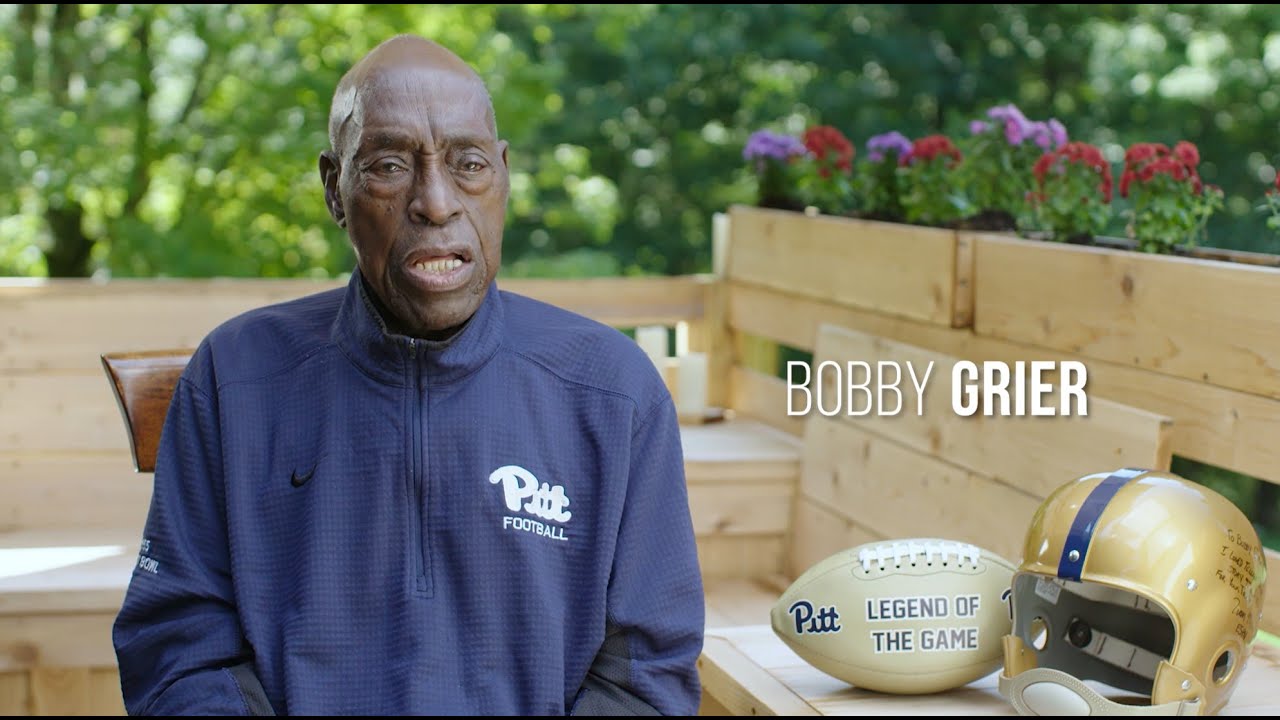
Bobby Grier

January 2, 1956: The college football season comes to an end, with the traditional New Year's Day bowl games, pushed back a day because January 1 was a Sunday.

This Monday saw the playing of the Sugar Bowl, at Tulane Stadium in New Orleans. The Georgia Institute of Technology, a.k.a. Georgia Tech, entered the game at 8-1-1, having lost to Auburn and been tied by Tennessee; however, they had beaten the University of Miami, Florida and Duke, each of them ranked at the time. Tech came in ranked Number 7.

However, they were only 3rd in the Southeastern Conference. Mississippi, instead of accepting the usual invitation given by the Sugar Bowl to the SEC Champions, instead accepted an invitation to play in the Cotton Bowl. "Ole Miss" and Tech did not play each other that season. Auburn, who finished 2nd, were not invited by the Sugar Bowl, and ended up losing the Gator Bowl to the 5th-place team in the SEC, Vanderbilt. (Tennessee finished 4th.) So the Sugar Bowl invited Georgia Tech.

Their opponents were the University of Pittsburgh. An Independent, Pitt were only 7-3, losing to Oklahoma, Navy and Miami. However, they had beaten ranked teams Duke and West Virginia, and teams from other regions, Nebraska and the University of California. They came into the game ranked Number 11.

Pitt's best player was Bobby Grier, a fullback and a linebacker, as most college football teams were still sending players to play what was known as "single-platoon football," the same players playing on both offense and defense. Grier, a native of the football-mad town of Massillon, Ohio, was black.

Segregationists didn't want Grier to play in the Sugar Bowl. Governor Marvin Griffin of Georgia sent a telegram to Tech's Board of Regents, in an attempt to pressure the school's president, Blake Van Leer, to pull the team out of the game. Van Leer was already catching heat for pushing through a vote to allow women in Georgia Tech.

But Van Leer, who had held the office since 1944, refused to be bullied by the ignorant redneck Governor: He told a meeting of the Faculty Senate, "Either we're going to the Sugar Bowl, or you can find yourself another damn president of Georgia Tech." The Senate gave him a standing ovation.

This was one month after Rosa Parks refused to stand up on a bus in Montgomery, Alabama, with the bus boycott ongoing; 4 months after the murder of 14-year-old Emmett Till in Money, Mississippi; and a year and a half after the U.S. Supreme Court struck down public school segregation in the case of Brown v. Board of Education of Topeka, Kansas.
Grier, supported by his white teammates 

As it turned out, there was no law that could prevent Grier from playing in the game, and, for the 1st time, a bowl game in the South had a black player in it.

Georgia Tech won the game, 7–0. The margin of victory mostly resulted from a disputed pass interference penalty, in the 1st quarter. It was called on Grier, giving Georgia Tech a 1st and goal on the Pitt 1-yard line. The Yellow Jackets scored the game's only touchdown on the next play. Photographic evidence later strongly indicated the referee's call was incorrect.

The irony of the bad call is that it was made by referee Rusty Coles, who was from the Pittsburgh area, and who had no objective in making the wrong call, but simply made a mistake, which he admitted after seeing the game films.

Grier finished the game as its leading rusher with 51 yards. After the game, he protested the pass interference call, but praised the Georgia Tech players, saying, "They were good sportsmen, perhaps the best I've played against all season. They played hard, but clean. It was a good game. But believe me. I didn't push that man."

As it turned out, the State of Georgia needed to find a new president of Georgia Tech, anyway: Blake Van Leer died of a heart attack on January 24, 1956, just 22 days after the game. Edwin D. Harrison was named the new president. In 1960, he oversaw a vote by an overwhelming majority of Tech students to endorse the integration of qualified applicants, regardless of race.

Bobby Grier did not play professional football. Instead, he enlisted in the U.S. Air Force, and later served as an administrator at a community college in the Pittsburgh area. As of January 2, 2022, he is still alive.
UPDATE: Later in 2022, Grier was elected to the Pitt Athletics Hall of Fame. He died in 2024.

*

January 2, 1956 was, as I said, a Monday. These other bowl games were played that day:

* Oklahoma beat Maryland, 20-6, in the Orange Bowl, at Burdine Stadium in Miami. In 1959, the stadium was renamed the Orange Bowl. This was, effectively, the National Championship Game: Oklahoma, in the middle of their 47-game winning streak, still a college football record, were ranked Number 1, and had won the Big Seven Conference title; while Maryland were ranked Number 3, and had won the Atlantic Coast Conference title.

Oklahoma were favored by 7 points. If Maryland had pulled the upset, it's likely that they would have been awarded the National Championship, regardless of whether Number 2 Michigan State won the Rose Bowl. At the very least, there could have been a split in the polls. But Oklahoma won, making the Rose Bowl academic.

* Michigan State did their part, beating the University of California at Los Angeles, 17-14, in the Rose Bowl, in the stadium of the same name in the Los Angeles suburb of Pasadena, California. Michigan State were ranked Number 2, and Champions of the Big Ten Conference. UCLA were ranked Number 4, and Champions of the Pacific Coast Conference. But Oklahoma's 2-touchdown win put the National Championship out of reach for Michigan State.

* Mississippi beat Texas Christian University, 14-13, in the Cotton Bowl, in the stadium of the same name in Dallas. As previously stated, Ole Miss were the SEC Champions, and went into the game ranked Number 10. TCU were the Champions of the Southwest Conference, and were ranked Number 6.

* Wyoming beat Texas Tech, 21-14 in the Sun Bowl, at Kidd Field in El Paso, Texas. Wyoming finished 4th in the Skyline Conference, while Texas Tech were the Champions of the Border Conference.

* Juniata College and Missouri Valley College played to a tie, 6-6 in the Tangerine Bowl, in the stadium of the same name in Orlando, Florida. The Tangerine Bowl game was a showcase for what were then called "small college" teams. Both the game and the stadium would become bigger, and become known as the Citrus Bowl.

Juniata, of Huntingdon, Pennsylvania, then an Independent, now competes in NCAA Division III. Missouri Valley, of Marshall, Missouri, were the Champions of the Missouri College Athletic Union, and now compete in the NAIA -- for all intents and purposes, NCAA Division IV.

December 31, 1999 & January 1, 2000: The Millennium

December 31, 1999:  The Millennium arrives. The people of planet Earth survived. At a terrible cost. But we hadn't destroyed ourselves. ...