Showing posts with label strike of '81. Show all posts

Tuesday, August 9, 2022

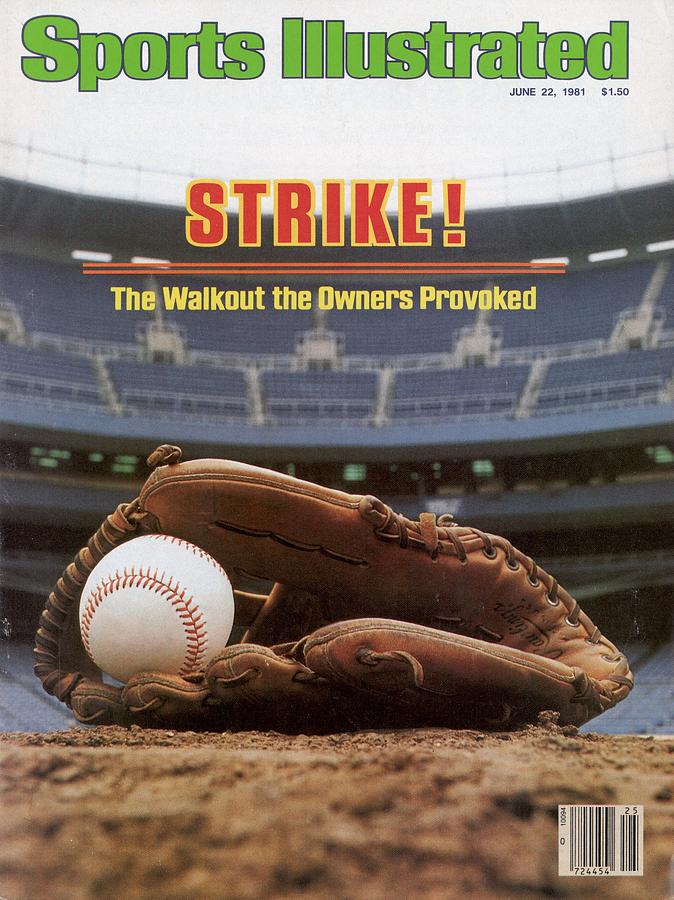
August 9, 1981: The Strike of '81 Ends

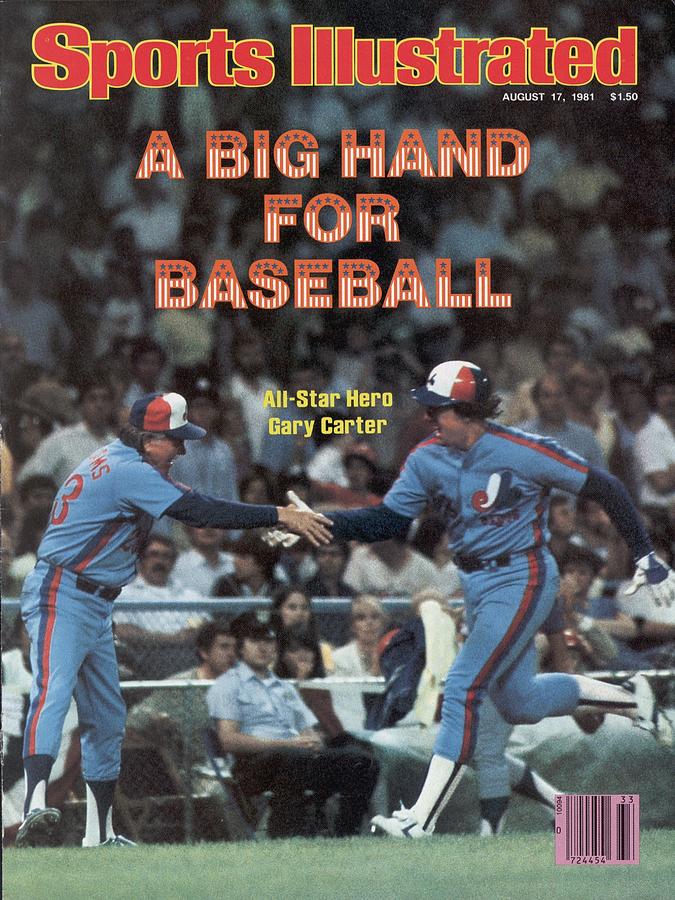
One exasperated reader wrote to SI with this killjoy question:
"'A big hand for baseball'? Whatever the hell for?"

August 9, 1981: The Major League Baseball strike comes to a symbolic end with the staging of the All-Star Game at Cleveland Municipal Stadium.

On June 12, Marvin Miller, Director of the Players' Association since 1966, announced that negotiations with Commissioner Bowie Kuhn and the 26 team owners had failed: "We have accomplished nothing. The strike is on."

The owners, angry that free agency had been ordered at all in 1975, demanded compensation: A player signed as a free agent by a team should mean that the signing team should give a player not on a protected list to the team losing the preceding player. The MLBPA said no, because that would undermine the value of free agency.
Marvin Miller

So the strike was on, and the middle one-third of the 1981 season's regular-season games were canceled. On July 31, the players and the owners reached a compromise, negotiated in part by Raymond J. Donovan, Secretary of Labor under President Ronald Reagan. Teams that lost a "premium" free agent could be compensated by drawing from a pool of players left unprotected from all of the clubs, rather than just the signing club. The players agreed to restricting free agency to players with 6 or more years of major league service, instead of the previous 5.

It was a minor victory for the owners, and there would be strikes again in 1985 and 1994, and lockouts in 1990 and the 2021-22 off-season. But, this time, baseball would resume, with the All-Star Game, originally scheduled for Cleveland on Tuesday night, July 14, moved to Sunday night, August 9, with regular-season games starting the next day.

The crowd of 72,086 was, and remains, an All-Star Game record. With his spectacular start to the season, Fernando Valenzuela of the Los Angeles Dodgers was a natural selection for the National League's starting pitcher. Jack Morris of the Detroit Tigers was chosen for the American League.

New York Yankees on the AL All-Star Team were Reggie Jackson, Willie Randolph, Bucky Dent, Ron Davis, Goose Gossage, and free agent bonanza Dave Winfield. The only New York Met selected for the NL All-Star Team was outfielder Joel Youngblood, although Randolph, Tom Seaver of the Cincinnati Reds, Nolan Ryan of the Houston Astros, Eddie Murray and Ken Singleton of the Baltimore Orioles, Gary Carter of the Montreal Expos, and George Foster of the Cincinnati Reds were selected, and each of those would play for the Mets at some point in their careers.

Singleton hit a home run off Seaver in the bottom of the 2nd, but Carter homered in the 5th, and Dave Parker of the Pittsburgh Pirates did so in the 6th to give the NL the lead. The AL took a 4-2 lead in the bottom of the 6th, but Carter went deep again in the 7th, this time off Davis. And Mike Schmidt of the Philadelphia Phillies homered off Rollie Fingers of the Milwaukee Brewers in the 8th, to give the NL a 5-4 win. Vida Blue, then with the San Francisco Giants, was the winning pitcher. Bruce Sutter of the St. Louis Cardinals got the save, and Fingers was the losing pitcher.

There was one other score on this historic day, in the Canadian Football League: The Vancouver-based B.C. Lions beat the Hamilton Tiger-Cats, 28-24 at Ivor Wynne Stadium in Hamilton, Ontario.

Friday, August 5, 2022

August 5, 1981: President Reagan Fires the Air Traffic Controllers

August 5, 1981: President Ronald Reagan fires the air-traffic controllers. After 50 years, the right wing began to get its revenge on the working man. And woman.

The Professional Air Traffic Controllers Organization (PATCO) had gone on strike 2 days earlier. The union's demand was for each employee to have a $10,000 annual wage increase, a 32-hour workweek (a 4-day week and an 8-hour day, combined), and increased benefits.

But, as employees of the Federal Aviation Administration (FAA), they were employees of the federal government. Reagan, citing the law that prohibited federal government employees from striking, ordered them to return to work before 11:00 AM Eastern Time on August 5, or they would be fired.

Of the 16,395 Americans who guided airplane takeoffs and landings, 4,199 stayed on the job. The FAA  responded by using a central control station to send clearances to the nation's airports, which operated at 50 percent capacity.

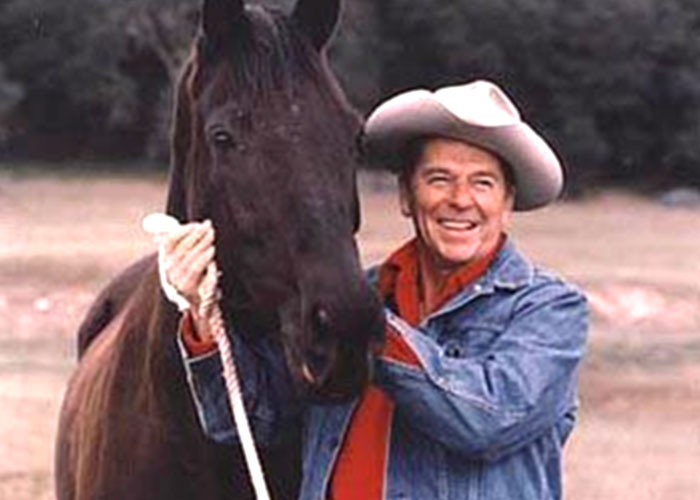
Less than 900 of the controllers obeyed Reagan's order and returned to work. And so, he fired the rest. It was a message from the old actor, who had played a few cowboys, to organized labor: You've had things your way since the New Deal of Franklin Roosevelt, and, well, there's a new sheriff in town, and this town ain't big enough for the both of us.
"Well... "

American organized labor has never recovered from the Reagan Years. Unions no longer seemed strong enough, or brave enough, to protect its workers from being laid off, or getting their hours or benefits cut. Meanwhile, thanks to the tax cut that Reagan signed into law 8 days later, the richest Americans got richer than ever before.

Shortly after the strike, Johnny Carson brought Betty White onto The Tonight Show, and they did a sketch where they played Tarzan and Jane. Betty said, "Tarzan, you're late!" And Johnny said, "Not Tarzan fault! Vine controllers strike!"

Just 5 months later, on January 13, 1982, Air Florida Flight 90, at the beginning of a flight from Washington National Airport to Tampa, crashes into the 14th Street Bridge, over an icy Potomac River. There were 78 people killed.

It was in a snowstorm, in the middle of one of the Northeast's worst cold snaps in recent memory, and the plane was not sufficiently de-iced. So it was due to pilot error. That Reagan had fired the air-traffic controllers, and that they had been replaced by less-experienced people, had nothing to do with it.

Nevertheless, Reagan had fired the air-traffic controllers. And National Airport was the airport closest to the White House. Did the public turn on Reagan for this?

No. Many people turned on him because his stupid tax cut had made the national economy significantly worse. But it was understood that his firing of the air-traffic controllers had nothing to do with the Air Florida crash.

Still, it was in very bad taste for a Republican-controlled Congress, in 1998, to rename the facility Ronald Reagan Washington National Airport. But when have Congressional Republicans ever been accused of doing something in good taste?

Historian Henry Graff once compared the luck that Reagan had to that of his predecessor, Jimmy Carter: He said of the firing of the air-traffic controllers, "If Carter had done it, there would have been a crash the next week."

In the 2020s, with a labor-friendly President in Joe Biden, the tide is turning. The conservatives only call it "class warfare" when the liberals fight back.

UPDATE: But when Donald Trump got back into office after the 2024 election, and he let Elon Musk's falsely-named Department of Government Efficiency (DOGE) run wild, air-traffic controllers were among the first jobs it cut back on. This time, there were plane crashes that could legitimately be blamed on it.

*

August 5, 1981 was a Wednesday. Baseball All-Star Carl Crawford was born on this day.

The only sport in season at the time was baseball, and the Major League Baseball players were, like the air-traffic controllers, on strike. So there were no scores on this historic day. But neither Reagan nor Commissioner Bowie Kuhn had the power to fire the players. To the contrary: Reagan asked his Secretary of Labor, Raymond J. Donovan, to help settle the strike. It resulted in a minor victory for the team owners, but one that the players could live with. And so the baseball strike had been settled by this point, with the games resuming on August 9,

Reagan did not ask Donovan to intervene in the PATCO strike.

Monday, August 1, 2022

August 1, 1981: MTV Goes On the Air

August 1, 1981: MTV, standing for "Music Television," goes on the air. The world would never be the same -- and not in a good way. The 1st video was the appropriately, if not quite correctly, titled 1979 hit by The Buggles, "Video Killed the Radio Star."
The Buggles: Geoff Downes (left) and Trevor Horn

Trevor Horn, from County Durham in England's North-East, produced the song, and sang lead and played bass guitar. He has been called "The Man Who Invented the Eighties." Geoff Downes, from Stockport in Greater Manchester, played keyboards. He had previously been in the band Yes, and would soon be in the band Asia with Yes bandmate Steve Howe.

Dave Birch, from somewhere in England, played lead guitar. Paul Robinson, from Rotherham, Yorkshire, played drums. Debi Doss, an American from St. Louis, and Linda Jardim, from somewhere in England, sang the unforgettable chorus. Jardim died in 2015. As of August 1, 2022, the rest are still alive.

There were music videos before MTV debuted. Sometimes, they were called "promotional films," and The Beatles seemed to specialize in them. Before that, in the 1940s, they were called "soundies," and would be shown with movie theaters' newsreels or in jukeboxes containing small film projectors.

But MTV, whether knowingly or not, promoted Marshall McLuhan's idea that "The medium is the message." Suddenly, the visual meant more than anything else. Never mind whether the lyrics, the voices, or the playing of the instruments sounded good: Did the performance look good? (Most of the time, my answer was, "Not to me, but it sure did to a bunch of people with no taste.")

The original commercial showed various performers telling America to demand its MTV, by yelling, "I want my MTV!" (Shades of the 1976 film Network, and, "I'm as mad as hell, and I'm not going to take this anymore!") They included The Police, Pat Benatar, and Pete Townshend of The Who, all of them talented enough to know better, but they took the money, anyway.

By 1983, the performers doing the commercials were adding the tagline, "Too much is never enough." These included people who should have known better, including Mick Jagger of The Rolling Stones (who, clearly, believed it) and David Bowie.

Oddly, some already-established performers -- including Bowie, Elton John, Michael Jackson, Billy Joel and Bruce Springsteen -- didn't need videos to become famous and respected, yet ended up making great videos. Even the sappiest of disco performers didn't need videos: They just needed to go on American Bandstand, The Midnight Special, Soul Train or Dance Fever, and do their stuff.

Disco sucked, and polluted the airwaves in the Seventies, but it was better than the synthesizer-driven, wouldn't-be-on-the-radio-if-not-for-MTV crap of the Eighties. Duran Duran was crap, but teenage girls loved the way they looked, and so they became huge.
If you'd never heard of these guys, and had to guess
how they sounded, your guess might well be, 
"Like a bunch of twats." And you would be right.

If Bruce Springsteen looked like Jon Bon Jovi, he would have been as big as Elvis Presley; if Bon Jovi looked like Springsteen, we'd have never heard of him. The distance between them is a lot more than the 14 miles of U.S. Route 9 between Springsteen's Freehold and Bon Jovi's Sayreville.

Or, to put it another way: Susan Boyle is 3 years younger than Madonna. If Susan looked like Madonna, she might have become famous at the same time; but if Madonna looked like Susan, she would never have become famous.

Think about it. Doris Day had a hit record in 1942, when she was 20. Teresa Brewer had a hit record in 1950, at 19. Connie Francis had a hit record in 1958, at 19. Lesley Gore had a hit record in 1963, at 16. All of these women, at those respective times, were attractive, but they didn't need to play off that, because they had talent.

Madonna's 1st hit came in 1982, when she was 24. Why not sooner? Was it because she was not attractive enough? No, it was because MTV allowed her to overcome her comparatively lower level of singing and writing talent.
She could stare, she could dance, she could writhe.
But she couldn't sing or write a song worth a damn.
But it was the Eighties, so no one cared.

At first, it seemed like MTV wouldn't play videos by black performers. Then came Jackson's album Thriller, and it was off to the races.

In 1984, they began issuing the MTV Video Music Awards, or VMAs, with the "Moon Man" trophy that evoked their original commercials that seemed to pay tribute to Neil Armstrong -- certainly not to Louis Armstrong.

But by the dawn of the 21st Century, MTV began airing, for want of a better choice of words, original programming. This included The Osbournes, with Ozzy, Sharon, and their kids Kelly and Jack. (Their older daughter Aimee, and Ozzy's children from his 1st marriage, declined to participate.) While it never happened, probably because Kelly and Jack would have known, they could easily have staged a scene in which Kelly or Jack asked Ozzy, "Dad, what does 'MTV' stand for?" The answer, of course, is "Money."

One more note: I mentioned the film Network. Paddy Chayefsky, who wrote that film's screenplay, and also the author of the novels that became the films Marty and Altered States, died of cancer, only 58 years old -- on August 1, 1981, the day that MTV debuted. What a twist of fate that was!

*

August 1, 1981 was a Saturday. The NFL wouldn't start its preseason games for another 4 days. The new NBA and NHL seasons were way off. And baseball was still in its strike. So there were no scores on this dubiously historic day.

Sunday, July 31, 2022

July 31, 1981: Journey Release "Escape"

July 31, 1981: The rock band Journey release their album Escape. It turns out to be their biggest hit, with their signature song, "Don't Stop Believin'," and what a 2003 VH1 special called the top "power ballad" of all time, "Open Arms."

The cover lists the title as "E5C4P3," as it it's a personalized license plate, and someone already had the California plate reading "ESCAPE." It's an early example of what the Internet would come to call "Leetspeak."
Left to right: Jonathan Cain, Ross Valory,
Neal Schon, Steve Perry, Steve Smith.

Journey were a "supergroup," consisting of musicians who had already starred with previous groups:

* Steve Perry, lead singer, formerly of Ice and Alien Project.
* Neal Schon, lead guitar, formerly of Santana, later of Bad English and Hardline.
* Ross Valory, bass guitar, formerly of The Steve Miller Band and Frumious Bandersnatch
* Jonathan Cain, keyboards, formerly of The Babys, later of Bad English.
Steve Smith, drums, formerly of Focus.

In 1983, Bally Midway released a video game based on the album, with Atari licensed to produce a home version. The premise was that each of the 5 members at the time had to get past various obstacles, in the fashion of games like Breakout, to reach their instruments: Perry his microphone, Schon his guitar, Valory his bass, Cain his keyboard, and Smith his drum kit. Once reaching the instrument, the performer would use it as a weapon to blast himself to safety.

If all 5 were successful, the band would reunited for a concert, and the player would then use the joystick to operate a fat security guard, in order to block fans from rushing the stage. Once that failed, the fans would then carry the bandmembers off, and it would start all over again, on a more difficult level.

As of July 31, 2022, all 5 members are still alive. Cain is married to sketchy "prosperity gospel" televangelist Paula White. He and Schon formed Bad English with John Waite of The Babys. Valory has begun recording with Neal's son, Miles Schon, playing guitar.

For years, on "Don't Stop Believin'," I thought Perry was singing "Streetlife people, living with profound emotion." Was I ever disappointed when I found out it was "living just to find emotion." Far be it from me to tell him how to write songs, but I still like my version better. Finding emotion is easy. "Profound Emotion" sounds like the title of an epic album.

Of course, there is no "South Detroit." That would be Windsor, Ontario, Canada. But Perry, a native of central California's San Joaquin Valley, just liked the sound of it.

*

July 31, 1981 was a Thursday. English soccer player Titus Bramble was born.

The only major league sport in season at the time was baseball, and the Strike of '81 was on. So there were no scores on this historic day.

Friday, July 29, 2022

July 29, 1981: Prince Charles Marries Lady Diana Spencer

"The happy couple"

July 29, 1981: Charles, Prince of Wales, and heir to the British throne, marries Lady Diana Spencer at St. Paul's Cathedral in London.

There is an awkward moment during the vows. As Robert Runcie, then the Archbishop of Canterbury, asked her to repeat her intended's full name, "Charles Philip Arthur George," she mixed it up: "Philip Charles Arthur George." She gave an uneasy smile that the entire world, or at least that portion of it watching on television, could see.

Despite the age difference -- Charles was 32 years old, and Diana, then a teacher in what Americans would call elementary school, only 19 -- the marriage was sanctioned by Charles' mother, Queen Elizabeth II, head of state for the United Kingdom of Great Britain and Northern Ireland, and thus the head of the Church of England. The Archbishop of Canterbury is the highest-ranking official in that church, but the British monarch remains his boss. (Since 2013, Justin Welby has held that title.)

The marriage would produce 2 sons: William Arthur Philip Louis, now Duke of Cambridge and 2nd in line to the throne after his father; and Henry Charles Albert David, a.k.a. Prince Harry, now Duke of Sussex, currently 6th in line after Charles, William, and William's 3 children.

But in 1992, after accusations of infidelity on both sides, Charles and Diana separated. The "fairy tale" was over. They divorced in 1996. In 1997, Diana was killed in a car crash in Paris.

In 2005, Charles married Camilla Parker-Bowles, who had been his mistress, and, before meeting Diana and her own 1st marriage, his first love. At long last, he had married his one true love. But he paid a price for it. The royal family as a whole paid a price for it. And Diana paid the biggest price of all -- even before that price came to include her life.

In 1986, Charles' brother, Prince Andrew, Duke of York, married Sarah Ferguson. That marriage didn't last, either, although Andrew and "Fergie" seem to have remained friendly since. And she goofed the name, too: When the Archbishop read off Andrew's name during the vows, he said it very carefully, so she wouldn't goof it: "Andrew -- Albert -- Christian -- Edward"; but she stumbled: "Andrew Albert Christian... Christian Edward."

When the youngest brother, Prince Edward, now Earl of Wessex, married Sophie Rhys-Jones in 1999, she got the full name right: Edward Antony Richard Louis. As of July 29, 2022, they are still married. Is that the key? Perhaps not: Charles' younger sister was the 1st of the Queen's 4 children to marry, and her husband, Army Captain Mark Phillips, got her name right: Anne Elizabeth Alice Louise. But they divorced.

UPDATE: Queen Elizabeth II died on September 8, 2022. On May 6, 2023, King Charles III and Queen Camilla were crowned at Westminster Abbey. Had Charles and Diana worked things out, she would have been Queen Diana, age 61.

William received all the titles formerly held by his father, including Prince of Wales. Edward got the title formerly held by his father, Prince Philip: Duke of Edinburgh. Anne got no new titles, but, as she and Charles are close, she was moved up into the main level of advisors to the monarch. Andrew, for reasons I won't get into here, not only got no new title, but was frozen out by his brother.

*

July 29, 1981 was a Wednesday. It was during baseball's Strike of '81, and during the off-seasons for the NFL, the NBA and the NHL. So there were no games on this historic day.

Saturday, July 9, 2022

July 9, 1981: "Donkey Kong" Premieres, Introducing the "Mario" Franchise

The original game

July 9, 1981: Video game maker Nintendo releases the arcade game Donkey Kong. Nobody knew it at the time, but they had just launched the Mario franchise.

In the original game, Mario must climb up a building under construction to rescue a woman named Pauline, who has been kidnapped by a giant gorilla, similar to King Kong. Known as Donkey Kong, he hurls obstructions in Mario's path. Shigeru Miyamoto, who designed the original game, used "donkey" as a synonym for "stubborn."

This game was followed the next year by Donkey Kong Jr., in which the script is flipped: Mario has imprisoned Donkey Kong, and his son, an ape wearing a diaper like a baby, must rescue him.

In 1983, Mario Bros. (abbreviation for "brothers") debuted. Now, Mario has a younger brother, named Luigi. Both are plumbers with stereotypical Italian mustaches, and the only apparent difference between them is that Mario wears red, while Luigi wears green. This was the 1st in a series of games, both in arcades and for home video game systems, where they battled a dragon named Bowzer to rescue a woman named Princess Peach. Neither Donkey Kong, Sr. or Jr., appeared. There were television shows, and a live-action movie that got badly panned.

The Mario franchise was so successful, it allowed Nintendo to pretty much knock the original participants out of the home video game business: Atari, Magnavox, Mattel, and Coleco. When the dust had settled, there were pretty much only 2 such companies: Nintendo and Xbox.

In a 2012 episode of the YouTube series Epic Rap Battles of History, "Epic" Lloyd Ahlquist played Mario, and "Nice" Peter Shukoff played Luigi, against YouTube personalities Rhett McLaughlin and Charles Lincoln "Link" Neal played Wilbur and Orville Wright, respectively.

*

July 9, 1981 was a Thursday. The only major league sport in season at the time was baseball, and the Strike of '81 was on. So there were no scores on this historic day.

Sunday, June 12, 2022

June 12, 1981: The Strike of '81 Begins

June 12, 1981: The Major League Baseball Players Association goes on strike. They had done so before, in 1972, leading to the cancellation of, depending on the team, 6 to 9 games. This time, there would be more.

Marvin Miller, Director of the Players' Association since 1966, announced that negotiations with Commissioner Bowie Kuhn and the 26 team owners had failed: "We have accomplished nothing. The strike is on."

The owners, angry that free agency had been ordered at all in 1975, demanded compensation: A player signed as a free agent by a team should mean that the signing team should give a player not on a protected list to the team losing the preceding player. The MLBPA said no, because that would undermine the value of free agency.
Marvin Miller

So the strike was on. A Summer without baseball might have been the worst thing that could have happened to me, age 11. I was more worried during the Strike of '81 that baseball as I knew it would never return than I was during the Strike of '94, which was both longer and nastier.

On July 31, the players and the owners reached a compromise, negotiated in part by Raymond J. Donovan, Secretary of Labor under President Ronald Reagan. Teams that lost a "premium" free agent could be compensated by drawing from a pool of players left unprotected from all of the clubs, rather than just the signing club. The players agreed to restricting free agency to players with 6 or more years of major league service, instead of the previous 5.

It was a minor victory for the owners, and there would be strikes again in 1985 and 1994. But baseball would resume, with the All-Star Game, originally scheduled for Cleveland Municipal Stadium on Tuesday night, July 14, moved to Sunday night, August 9, with the National League winning, 5-4. Regular-season games restarted the next day.

Since every MLB team stopped on June 12, and no other sports were running at the time -- the NBA season ended on May 14, and the NHL season on May 21, and the NFL season didn't start until September 6 -- there were no scores on that historic day.

But there was a major sporting event: Larry Holmes successfully defended the Heavyweight Championship of the World, defeating former Champion Leon Spinks, by a technical knockout in the 3rd round, at a venue named for another former Champion, the Joe Louis Arena in Detroit.

This was also the day that the film Raiders of the Lost Ark premiered. I have a separate entry for that.

And Brazilian supermodel Adriana Lima was born.

June 12, 1981: "Raiders of the Lost Ark" Introduces Indiana Jones

June 12, 1981: Raiders of the Lost Ark premieres, introducing the character of Indiana Jones.

The film is a collaboration of what were then the 2 biggest names in moviemaking: Steven Spielberg, director of Jaws and Close Encounters of the Third Kind, directed; while George Lucas, producer and writer of the Star Wars films, produced. Spielberg told Lucas of his vision of making a film that captured the fun and suspense of the "cliffhanger"-driven film serials of the 1930s and '40s, with a "pulp fiction" style hero.

At first, we only know his "trade name": Indiana Jones. The details of his life came out in later movies and TV shows based on the character. Dr. Henry Walton Jones Jr. is born on July 1, 1899 in Princeton, New Jersey, where his father was teaching archaeology. In spite of his conflict with his father, Henry, who nicknamed himself "Indiana" after his childhood dog, went into the same line of work. (Lucas' full name is George Walton Lucas Jr.)

The 1992-93 ABC series The Young Indiana Jones Chronicles focused on 2 periods in his early life: A tour his father, and his mother, Anna, took him on at age 10 in 1909, when he was played by Corey Carrier; and his activities in World War I and its aftermath, when he was played by Sean Patrick Flanery. (That's how he spells his surname, with 1 N.) The stories are narrated by a 93-year-old Indy, played by George Hall, wearing an patch over his right eye.

(That show's status as canon has since been called into question, as it mentions Indy having a daughter named Sophie, who appears to have been born after Mutt, but before Indy finally married Marion. It's not clear who her mother is, but it's certainly not Marion. According to non-canon books about Indy, he was briefly married in 1925-26 to Scottish archaeologist Deirdre Campbell, but they had no children.)

A scene at the start of Indiana Jones and the Last Crusade, taking place in 1912 Utah, provides something of an origin story, as it tells of how 13-year-old Indy, played by 18-year-old River Phoenix, got his fedora hat, his whip. the scar on his chin, and his fear of snakes.

In 1925, Jones began teaching archaeology at Marshall College, in Bedford, Connecticut. (Neither the school nor the town actually exist. It should not be confused with Marshall University in Huntington, West Virginia. Scenes for Marshall College were filmed in Connecticut, at Yale University in New Haven.) There, he met professor Abner Ravenwood, who became his mentor; and Abner's daughter, Marion, who became his girlfriend -- at age 15. It wasn't shame on his part that ended the relationship, it was the nature of his work, causing him to leave her behind.

The 2nd film in the series, Indiana Jones and the Temple of Doom, takes place in 1935, and shows Indy, played by Harrison Ford, fighting gangsters in China, and then a cult in India. This film had some hard-to-watch scenes, and was one of the reasons the Motion Picture Association of America created the PG-13 rating in 1984, for films that were too rough for a PG but not violent or sexy enough for an R.

The 1st film in the series, from the viewer's perspective, was released in 1981, under the title of Raiders of the Lost Ark. At the time, there was no indication that it would be a series. It has never officially been renamed Indiana Jones and the Raiders of the Lost Ark. Most Indy fans tend to call it simply Raiders, anyway.

Prior to Temple of Doom, a prequel-as-next-movie was rare. So the 1st movie in the series from the viewer's perspective is the 2nd from Indy's. It's 1936, Nazi Germany is starting to flex its international muscle, and the U.S. Army asks Indy, with his historical and archaeological expertise, to find something before the Nazis can: The Ark of the Covenant, the vessel in which the ancient Israelites stored the tablets with the original inscription of the Ten Commandments, supposedly written by God Himself.

Despite their hatred of all things Jewish, the Nazis believe that possession of the Ark will give them power that will make them unstoppable. So you can see why the Army would want an American to stop them.

In order to find the Ark, he needs certain things that only Dr. Ravenwood had. Since he's dead now, he has to reunite with Marion (Karen Allen). She's not happy to see him, but when the Nazis come for her and the clues to the Ark's location, she has little choice but to join forces with Indy, who is also aided by Egyptian excavator Sallah Mohammed Faisel el-Kahir (John Rhys-Davies).

Indy has to battle Nazi agents, led by the black-coated, bespectacled Arnold Toht (Ronald Lacey) and their lead archaeologist, French mercenary René Belloq (Paul Freeman). At one point, he is faced with a Nazi-allied Egyptian swordsman (Terry Richards), flashing a scimitar like a great martial artist. Indy calmly pulls his gun and shoots him dead. (The scene was changed because Ford was battling the flu, and didn't feel like swordfighting.)

Ultimately, while Indy finds the Ark, the Nazis take it. They restrain him and Marion at the testing site as Belloq ceremonially opens the Ark, but finds only sand inside. At Indy's insistence, he and Marion close their eyes to avoid looking at the opened Ark, as it releases spirits, flames, and bolts of energy that kill Belloq, Toht, and the assembled Nazis before sealing itself shut. They open their eyes to find the area cleared of bodies and their bindings removed.

Back in Washington, the federal government rewards Indy for securing the Ark, and tell him that it has been moved to an undisclosed location for "top men" to study. In a large warehouse, the Ark is crated up and stored among countless other crates. (In the 4th film, this warehouse is revealed to be part of Area 51 in Nevada.)

The film was a runaway success, and inspired 2 more films before the decade was out: The aforementioned Indiana Jones and the Temple of Doom in 1984, and Indiana Jones and the Last Crusade in 1989. The "present" scenes of the latter are in 1938, as Indy is asked by the government to beat the Nazis to another artifact, this time the Holy Grail, the cup Jesus used at the Last Supper. Indy calls upon Sallah and his estranged father (Sean Connery) for help. One thing leads to another, and Indy goes to Berlin, puts on a Nazi uniform, and comes face-to-face with Adolf Hitler. Who gives him an autograph. (It's a long story.)

Indiana Jones became a legend, with several ripoffs and/or homages, including Lara Croft in the Tomb Raider video games and films, and Tia Carrere's Dr. Sydney Fox in the 1999-2002 TV series Relic Hunter. In a 1992 episode of Seinfeld, George shows up wearing a fedora, and Jerry addresses him as "Indiana."

In a 2013 episode of The Big Bang Theory, Amy says she has never seen Raiders, so Sheldon shows it to her, and she points out that if Indy hadn't gotten involved, the Ark would still have killed the Nazis, and Indy would have saved a lot of time, money and physical effort.

And in 2022, the YouTube series Epic Rap Battles of History featured series regular "Nice Peter" Shukoff as Indy, battling Lara Croft, played by Croix Provence. Her Lara correctly pointed out that much of Indy's image was based on Secret of the Incas, a 1954 adventure film starring Charlton Heston. The 1885 H. Rider Haggard novel King Solomon's Mines, with its adventurer Allan Quatermain, were filmed in 1937 with Cedric Hardwicke and 1950 with Stewart Granger, and were also an inspiration for Indy.

Years went by without an Indiana Jones IV, and people were beginning to wonder if there would ever be one. But with Ford committed to Star Wars sequels, Tom Cruise signing a deal for a Top Gun sequel as he approached age 60, and Sylvester Stallone returning to play both Rocky Balboa and John Rambo at an age when he should have hung up both his boxing gloves and his bandana, an Indy 4 was inevitable.

Indiana Jones and the Kingdom of the Crystal Skull is set in 1957, and references are made to the adventures of "Colonel Jones" in World War II, leading to fans' suggestions that such a story might have made for a better film. This time, with the Nazis in the rearview mirror, it's the Soviet Union that is the artifact-chasing enemy, led by Colonel Doctor Irina Spalko (Cate Blanchett).

After losing his first tussle with Spalko, and subsequently surviving a nuclear bomb test (if you haven't seen the film, don't ask), Indy goes home, and is found by Mutt Williams (Shia LaBeouf), a motorcycle-riding "greaser" like Marlon Brando in the 1953 film The Wild One. Mutt says that his mother has been kidnapped by the Soviets -- and his mother turns out to be Marion Ravenwood. When they find her, she tells Indy that Mutt is also his son: His birth name was Henry Walton Jones III. Although father and son don't get along, in order to save both parents, Mutt ends up managing to get Indy to conquer his longstanding fear of snakes.

That is the film's highlight, along with a moment when Ford channels his other legendary character, Star Wars' Han Solo, and says, "I've got a bad feeling about this!" Even the long-delayed wedding of Indy and Marion at the end seems anticlimactic. As for the resolution of the plot... don't ask. But in spite of the silliness of the story, and some mixed reviews, it became the 2nd-highest-grossing film of 2008.

If Indiana Jones, the character, were real, he would be 123 years old in 2022, which would be astronomically unlikely. Then again, he did drink from the Grail back in 1938... But then, he still lost an eye and began using a cane sometime between 1957 and 1992... Unless we want to toss The Young Indiana Jones Chronicles from canon... 

UPDATE: A 5th film, Indiana Jones and the Dial of Destiny, set in 1969 (meaning the 80-year-old Ford is playing a 70-year-old action hero), premiered on June 30, 2023. It began with a sequence set in 1944, with a computer-aided "de-aged" Ford once again battling Nazis, and backing up the suggestion that there was a better film to be made about "Colonel Jones" than Crystal Skull turned out to be.

But when it gets to the "present" sequence, in the Summer of 1969, we find out that Mutt was killed while serving in Vietnam, and this led to Marion filing for divorce from Indy. Retired from teaching, and with nothing left to do except drink, he is found by the daughter of the now-dead associate from the 1944 adventure. She snaps him out of it long enough to race neo-Nazis, led by the villain of the opening sequence, to finding the Dial of Archimedes, which, despite being invented in 212 BC, can act as a time machine.

As with the Ark, the Nazis get it away from Indy. As with the Ark, he warns them that it won't work the way they hope it will. As with the Ark, they don't listen to him, and use it anyway. As with the Ark, Indy turns out to be right.

They get back to 1969, and Indy and Marion reconcile. Rhys-Davies, Welsh, returns as Salah, now a cabdriver in New York, but at least actual Egyptian actors were cast as his children and grandchildren. 

Despite the recent Academy Award for Best Supporting Actor won by his portrayer, Ke Huy Quan, no mention is made of Short Round, who would be 46 by 1969. Nor is Indy's TV daughter Sophie mentioned. And he still doesn't have the eye patch. This last (?) movie leaves us with so many questions, but at least Indy and Marion are happy together.

A 2022 episode of the YouTube series Epic Rap Battles of History featured "Nice" Peter Shukoff playing Indy, and rapper Croix Provence playing Lara Croft from the Tomb Raider video game and film franchise.

June 12, 1981 was also the premiere date for Mel Brooks' History of the World, Part I; and the original version of Clash of the Titans, the last of the classic stop-motion special effects films of the great Ray Harryhausen.

*

June 12, 1981 was a Friday. This was also the day that Major League Baseball's Strike of '81 started. I have a separate entry for that. Since every MLB team stopped on June 12, and no other sports were running at the time -- the NBA season ended on May 14, and the NHL season on May 21, and the NFL season didn't start until September 6 -- there were no scores on that historic day.

But there was a major sporting event: Larry Holmes successfully defended the Heavyweight Championship of the World, defeating former Champion Leon Spinks, by a technical knockout in the 3rd round, at a venue named for another former Champion, the Joe Louis Arena in Detroit.

And Brazilian supermodel Adriana Lima was born.
December 31, 1999 & January 1, 2000: The Millennium

December 31, 1999:  The Millennium arrives. The people of planet Earth survived. At a terrible cost. But we hadn't destroyed ourselves. ...