Showing posts with label mars. Show all posts

Wednesday, September 28, 2022

September 29, 1918: Gustav Holst's "The Planets" Premieres

September 29, 1918: The Planets premieres at the Queen's Hall in London. Conducted by Adrian Boult, it is a series of 7 movements, designed to capture the spirit of the mythological inspiration of the 7 planets then known to be in the solar system, excluding, of course, Earth. (Pluto was not discovered until 1930.)

The composer was Gustav Holst. In spite of his German-sounding name, and World War I still going on, he was born and raised in England, in Cheltenham, Gloucestershire, in the West Country. His ancestry was German and Swedish, and he marked the 4th generation of his family to be a classical musician. He was 44 years old at the time of the premiere of The Planets, which had worked on since 1914.

In an early sketch for the suite, Holst listed Mercury as "no. 1", which Greene suggests raises the possibility that the composer's first idea was simply to depict the planets in the obvious order, from nearest the sun to the farthest: Mercury, Venus, (Earth,) Mars, Jupiter, Saturn, Uranus, Neptune.

But music historian Richard Greene wrote, "However, opening with the more disturbing character of Mars allows a more dramatic and compelling working out of the musical material." Especially since "The Great War" was still on, with no one yet knowing that the Armistice was coming in just 43 days. The movements are as follows, with the planets given names from Roman mythology:

1. Mars, the Bringer of War. In Greek mythology, the god of war is Ares. This movement usually runs about 7 minutes.

2. Venus, the Bringer of Peace. The Romans called the goddess of love Venus, while the Greeks called her Aphrodite. But in terms of the actual planets, Venus has a much more violent atmosphere than Mars. About 8 minutes.

3. Mercury, the Winged Messenger. Noted for his speed, the Greeks called the messenger of the gods Hermes. This is the shortest movement, usually coming in at under 4 minutes.

4. Jupiter, the Bringer of Jollity. Alliteration aside, this title was a bad choice by Holst: If he wanted a joyful movement for his piece, he should have chosen a planet and god other than the king of the gods, known as Zeus to the Greeks, who is usually depicted as a vain and angry god, one very easily angered. He has been called "the goddiest god ever to god."

As perhaps the most complicated movement, depending on the recording, it has the most varied performance time, running anywhere from 7 to 8 minutes.

5. Saturn, the Bringer of Old Age. Saturn was the father of Jupiter, known by the Greeks as Chronus, from which we get words relating to time: Chronal, chronological, chronic. It also takes the most time of any of the movements, sometimes running over 9 minutes.

6. Uranus, the Magician. The one planet whose name is taken from the Greeks, in Roman mythology, he is Caelus, god of the sky, sometimes said to be the father of the titans, including Saturn, and thus a progenitor of the gods. It runs about 6 minutes.

7. Neptune, the Mystic. Another odd title: The god of the sea, known as Poseidon to the Greeks, is associated with power, but not, then as now, with magic. It runs about 7 minutes.

In 2000, the English composer Colin Matthews, seeking to complete the solar system, wrote a new movement, "Pluto, the the Renewer." Unfortunately, in 2006, Pluto was downgraded to a "dwarf planet."

Pluto is the god of the underworld, known as Hades to the Greeks. They called his realm Tartarus, although, somewhere down the line, the realm itself became known as Hades, and the overseer became identified with the Biblical Devil Lucifer/Satan, and his realm with Hell. But the mythologies do not always depict Hades/Pluto as evil. Dark, yes; evil, not always. The Pluto version is also the god of wealth, leading to a government dominated by rich people being called a plutocracy.

Holst died in 1934. Boult, eventually knighted, lived until 1983. Imogen Holst, Gustav's daughter and biographer, and a composer in her own right, died the next year. So, while all of them lived to know of the discovery of Pluto, none of them lived to see a tribute to it added to The Planets. Imogen was his only child, and had no children herself, so his direct line died with her.

Opened in 1893, the Queen's Hall, named for Queen Victoria, became the home of the London Philharmonic Orchestra and the BBC Symphony Orchestra in the 1930s. The Nazis destroyed it during the Blitz in 1941. It was never rebuilt: Both orchestras moved into the Royal Albert Hall, and the London Philharmonic moved into the Royal Festival Hall in 1951.

*

September 29, 1918 was a Sunday. Professional basketball barely existed. Professional hockey did, but it was too early for the season to start. Professional football was, at this point, very minor-league. And the baseball season was cut short due to World War I, with the Boston Red Sox winning the World Series on September 11, beating the Chicago Cubs. So there were no scores on this historic day.

Thursday, July 14, 2022

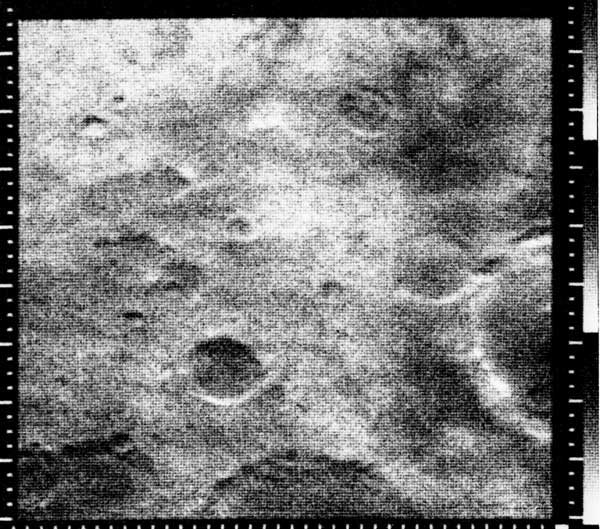
July 14, 1965: The 1st Close-Up Pictures of the Planet Mars

July 14, 1965: Mariner 4 takes the 1st close-up pictures of Mars, the planet in the solar system most like the Earth.
Mariner 4 was launched at Cape Canaveral on November 28, 1964. It captured the 1st images of another planet ever returned from deep space. Their depiction of a cratered, dead planet largely changed the scientific community's view of life on Mars: While many had hoped to find it, the photos returned by Mariner 4 all but wiped out the possibility. Later missions, including the Viking landers of the mid-1970s, pretty much ruled it out.
Despite most American TV shows that had not already done so
switching to color for the 1965-66 TV season,
NASA wouldn't spring for all-color photos.

Other mission objectives were to perform field and particle measurements in interplanetary space in the vicinity of Mars, and to provide experience in and knowledge of the engineering capabilities for interplanetary flights of long duration. Initially expected to remain in space for eight months, Mariner 4's mission lasted about 3 years in solar orbit. On December 21, 1967, with NASA having gotten all it asked for from it, communications with Mariner 4 were terminated.

Mariner 3 was launched on November 5, 1964, but it failed to operate. Mariners 6 and 7 were launched in 1969, and returned new photos and information from Mars. Mariner 8 failed at launch on May 9, 1971. Mariner 9 became the 1st Earth probe to orbit Mars, on October 27, 1972.

Mariners 1, 2 and 5 went to Venus, but only Mariner 5 accomplished its mission: Not to return photographs, but to measure magnetic fields and various emissions of the Venusian atmosphere. Mariner 10, the last mission of the project, went to Venus in 1974, and got the 1st detailed photos of that planet. It then went on to do the same with Mercury.

*

July 14, 1965 was a Wednesday. Adlai Stevenson, U.S. Ambassador to the United Nations, former Governor of Illinois, and the Democratic Party's 1952 and 1956 nominee for President, died on this day.

There were 3 baseball games played:

* A doubleheader was split at Wrigley Field in Chicago. The Chicago Cubs won the opener, 5-2. The Milwaukee Braves won the nightcap, 6-3. Over the 2 games, Ernie Banks went 3-for-5 with 3 walks, and Hank Aaron went 0-for-6, but did have an RBI on a sacrifice fly in the 1st game, and drew a walk in the 2nd game. Also in the 2nd game, Gene Oliver hit 2 home runs for the Braves.

* And the Chicago White Sox beat the Cleveland Indians, 12-10 at Cleveland Municipal Stadium. The Indians led 8-6 after 8 innings. In the 9th, the White Sox scored 3, and the Indians 1 to send it to extra innings. This was repeated in the 12th: The White Sox scored 3 runs, the Indians only 1.

Wednesday, June 1, 2022

June 1, 1961: "Stranger In a Strange Land" Is Published

June 1, 1961: Stranger In a Strange Land is published. The author is Robert A. Heinlein, who took the title from Moses' declaration in the Bible's Book of Exodus, Chapter 2, Verse 22.

Robert Anson Heinlein was born on July 7, 1907 outside Kansas City in Butler, Missouri. He graduated from the U.S. Naval Academy, but ill health led to a medical discharge from the Navy. During World War II, by which point he was already a published science fiction writer, he was an aeronautical engineer for the Navy.

Stranger In a Strange Land is set in an indeterminate future. An American spacecraft, the Envoy, is launched toward the planet Mars, but all contact is soon lost. Following a nuclear World War III, Earth is ruled by the World Federation of Free Nations, which, 25 years after the Envoy was lost, sends another craft to Mars. They find the earlier craft, and a single survivor, a 20-year-old man born on the ship, named Valentine Michael Smith. He has been raised by the Martians, who order him to go back with the Earth crew.

On Earth, Smith demonstrates psychic abilities and superhuman intelligence, coupled with a childlike naïveté. The World Federation is dominated by an organized religion, and Smith understands the concept of God only as "one who groks," meaning understands and empathizes with others. He says this includes every extant organism. That leads him to express the Martian concept of life as the phrase "Thou art God," although he knows that to be a bad translation.

Many other human concepts such as war, clothing, and jealousy are strange to him, and the idea of an afterlife is a fact that he takes for granted, because Martian society is directed by "Old Ones", the spirits of Martians who have "discorporated." (Heinlein may have, ahem, borrowed the concept of "the Old Ones" from another sci-fi writer, H.P. Lovecraft.)

Smith becomes a celebrity, and is feted by the Earth's elite. He investigates many religions, including the Fosterite Church of the New Revelation, a populist megachurch in which freedom of sexuality, gambling, alcohol consumption, and similar activities are allowed and even encouraged, and considered "sinning" only when they are not under church auspices. The church owns many politicians, and uses violence against those who oppose it.

Smith starts a Martian-influenced "Church of All Worlds," whose members learn the Martian language, and thus acquire the ability to truly "grok" the nature of reality, granting them psychokinesis. The established Fosterite Church can't handle this, and raises a mob that assassinates Smith. This does not stop him, as, like Jesus over 2,000 years earlier, he appears to his followers, and to his opponents, converting them.

The novel has never been filmed. Billy Joel mentioned it in his 1989 song "We Didn't Start the Fire." Songs with the title "Stranger in a Strange Land" have been released by The Byrds in 1965, Leon Russell in 1971, U2 in 1981, Eddie Money and Iron Maiden in 1986, Ace Frehley of Kiss in 1987, Barbra Streisand in 2005, and, perhaps appropriately, 30 Seconds to Mars in 2009.

Heinlein wrote extensively about space travel and time travel, including the novels Starship Troopers, Time Enough for Love, and The Moon Is a Harsh Mistress. The first of these has been criticized as a hard right-wing screed, and he was, indeed, an ardent anti-Communist, who volunteered for the 1964 Presidential campaign of Senator Barry Goldwater of Arizona, who was nominated by the Republican Party as the beginning of what became known as the conservative movement.

However, he was equally ardent in anti-racism: Even as the "space marines" in Starship Troopers are bigoted toward the invading "bugs," their units are racially and ethnically diverse, and are even gender-integrated (resulting in the controversial shower scene, with Dina Meyer among the male actors, in the 1997 film version).

And many of his books have a heavy libertarian bent, resulting in, shall we say, some unusual sex practices. He was quoted as coming up with the pun, "It is better to copulate than never." His views on Communism made him popular with the Right in the 1960s, but his views on sex, race and religion made him even more popular with the Left, which may have left each side puzzled.

Literary critic William Patterson, said that the best way to gain an understanding of Heinlein is as a "full-service iconoclast, the unique individual who decides that things do not have to be, and won't continue, as they are." Or, as libertarian journalist Bran Doherty put it in a 2007 article on the Centennial of Heinlein's birth:

Heinlein's novels and short stories reflected the rough-hewn anti-government but pro-defense message associated with Goldwater and the conservative movement he sparked. At the same time, his writings exuded the communal desire to live in blissful togetherness, ignoring the repressive sexual and religious mores of bourgeois America. With a libertarian vision that appealed to individualists of both the left and the right, Heinlein not only set the template for the American 1960s but helped create the looser, hipper, more pluralist world of the decades since.

Heinlein himself said, in a 1952 interview with CBS journalist Edward R. Murrow, "I believe in my fellow citizens. Our headlines are splashed with crime. Yet for every criminal, there are ten thousand honest, decent, kindly men. If it were not so, no child would live to grow up. Business could not go on from day to day. Decency is not news. It is buried in the obituaries, but it is a force stronger than crime."

Although he wrote books about the aptly-named immortal character Lazarus Long, and also about cryogenics to keep people alive long after they would have died, Heinlein died of emphysema at his home in Carmel-by-the-Sea, California, on May 8, 1988. He was 81.

*

June 1, 1961 was a Thursday. Hockey Hall-of-Famer Paul Coffey was born. And these baseball games were played:

* The New York Yankees lost to the Boston Red Sox, 7-5 at Fenway Park in Boston. Rookie Carl Yastrzemski hit his 4th career home run. There would be 448 more. Bill "Moose" Skowron hit 2 homers for the Yankees. Mickey Mantle and Yogi Berra each went 2-for-5, and Roger Maris went 0-for-4 with a walk.

* The Chicago Cubs beat the Philadelphia Phillies, 10-3 at Connie Mack Stadium in Philadelphia. Ernie Banks went 1-for-4 with a walk and an RBI.

* In a battle of expansion teams, the "new" Washington Senators beat the Los Angeles Angels, 3-2 at Griffith Stadium in Washington.

* The Pittsburgh Pirates led the Milwaukee Braves, 8-2 at Forbes Field in Pittsburgh, when the game was called due to rain after 7 innings, giving the Pirates the win. The Pirates got 2 home runs from Smoky Burgess and 1 from Dick Groat, while Roberto Clemente went 1-for-4. Hank Aaron went 1-for-3.

* The Kansas City Athletics and the Detroit Tigers were tied 4-4 after 8 innings at Tiger Stadium in Detroit, when the game was called due to rain. Al Kaline went 2-for-4. The game was replayed as part of a doubleheader on July 16. The Tigers swept, 11-1 and 8-3.

* The St. Louis Cardinals beat the San Francisco Giants, 7-6 at Candlestick Park in San Francisco. Stan Musial went 1-for-3 with a walk and an RBI. Willie Mays went 1-for-4 with a walk and an RBI.

* And the Baltimore Orioles, the Chicago White Sox, the Cleveland Indians, the Minnesota Twins, the Cincinnati Reds and the Los Angeles Dodgers were not scheduled.

December 31, 1999 & January 1, 2000: The Millennium

December 31, 1999:  The Millennium arrives. The people of planet Earth survived. At a terrible cost. But we hadn't destroyed ourselves. ...