Showing posts with label lone ranger. Show all posts

Thursday, September 15, 2022

September 15, 1949: “The Lone Ranger” Comes to TV

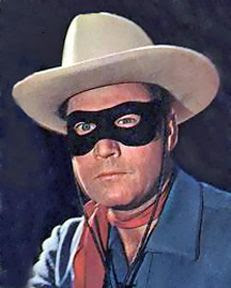
Clayton Moore

September 15, 1949: The Lone Ranger debuts on ABC. It runs for 8 seasons, the last of which is in color. John Hart (1917-2009) played the Ranger in seasons 3 and 4, and played himself in costume in an episode of Happy Days. Clayton Moore (1914-1999) played him in the other seasons.

Harold Jay Smith (1912-1980), grandson of a Canadian Mohawk chief, who acted under the name Jay Silverheels, played Tonto. "Tonto" means "wild one" in the language of the Potawatomi tribe. But in Spanish, Portuguese and Italian, it means "stupid," so he became "Toro," or "bull," in versions for the countries of those languages.

Tonto called the Lone Ranger "Kemosabe," another Potawatomi word, derived from "gimoozaabi," which means "he/she looks out in secret." It has been occasionally translated as "trusty scout" or "faithful friend." The word was suggested by the characters' co-creator, James Jewell, whose father-in-law owned a summer camp with that name. The Ranger's horse was named Silver, and Tonto's was named Scout.

Jewell was a director at Detroit radio station WXYZ, on which the Lone Ranger debuted in 1933. The character was John Reid, the only survivor of 6 Texas Rangers who were ambushed. The leader was his brother, Dan Reid.

In 1936, WXYZ created another crimefighter, the Green Hornet, a.k.a. Britt Reid, the son of Dan, and the beneficiary of the silver mine that not only named his uncle's horse, but funded the Daily Sentinel newspaper that Britt ran. In the 1966 TV version, Britt was the grandson of the Lone Ranger's brother.

The disastrous 1981 movie The Legend of the Lone Ranger starred Klinton Spilsbury as the Ranger and Michael Horse as Tonto. The 2013 version had Armie Hammer as the Ranger and Johnny Depp as Tonto, proving 2 things: Disney should never reboot another classic character, and it was possible to make a character more of a racist stereotype in the 2010s than it was in the 1950s.

The TV show's theme song is the overture to Gioachino Rossini's 1829 opera William Tell. Comedian Orson Bean once said, "An intellectual is someone who can hear The William Tell Overture without thinking of the Lone Ranger." Ironically, there are no horses in the Rossini opera.

*

September 15, 1949 was a Thursday. There was only one score on this historic day, but it was a significant one in baseball: The Cleveland Indians beat the New York Yankees, 10-6 at Yankee Stadium. Bob Lemon outpitched former teammate Allie Reynolds. Larry Doby hit a home run for the Tribe, while Yogi Berra and Cliff Mapes hit them for the Yanks. Joe DiMaggio went 2-for-4 with an RBI.

The Yankees had led the American League for most of the way, but their many injuries were catching up with them. They would end up blowing a 12-game lead over the Boston Red Sox, and would have to sweep the Sox in the last 2 games of the regular season to win the Pennant. They did.

Monday, January 31, 2022

January 31, 1936: "The Green Hornet" Debuts

Gordon Jones in the 1940 serial

January 31, 1936: The Green Hornet debuts on Detroit radio station WXYZ, 1270 on the AM dial, created by station owner George W. Trendle and writer Fran Striker.

The Green Hornet was Britt Reid, the wealthy publisher of a newspaper, The Daily Sentinel, who saw a crime wave in his city, and decided that what was needed was "a modern-day Robin Hood," so he took on the masked persona and pretended to be a competing gangster, muscling in on bad guys' territory, and setting them up to be captured by the cops.

He was assisted by Kato, an Asian mechanical genius, who designed and built the character's knockout-gas gun, and turned Britt's car into the souped-up "Black Beauty." Originally, Kato was said to be Japanese. But by the time of the 1st film serial in 1940, the Japanese were committing war crimes against China, so the character was rewritten as Korean. Although a capable fighter, his only use of martial arts, in either of the film serials, was the occasional judo chop.

On radio, the Hornet was played by Al Hodge from 1936 to 1945. He would later star as the early science fiction TV hero Captain Video. Bob Hall took over the role in 1945, and Jack McCarthy was the last in the role, from 1947 to 1952. Kato was played by Raymond Toyo, and later by Rollon Parker. For the entire run, it was directed by James Jewell, and his sister, Leonore Jewell Allman, played Lenore Case, Britt's secretary, who occasionally had to be rescued by the Green Hornet, and finally discovered his secret identity in 1948.

In 1947, Britt revealed his identity to the Daily Sentinel's actual owner, his father, Dan Reid Jr. The father had his own revelation, that Britt was not the first fighter for justice in the family: Dan is the son of Dan Reid, a Texas Ranger who was martyred, and whose brother fought criminals in the Wild West as the Lone Ranger. The Reid family fortune came from the silver mine that also supplied the Ranger's bullets.

The radio show could legally do this, because Trendle and Striker had created the Lone Ranger 3 years earlier, and his show was still running, with WXYZ as its flagship station. Every subsequent version of the Hornet has added a generation, but he's still descended from the Lone Ranger's martyred brother.

Two film serials were produced: The Green Hornet in 1940, with Gordon Jones in the title role; and The Green Hornet Strikes Again! in 1941, with Warren Hull starring. Both were directed by Ford Beebe. In both versions, Kato was played by Keye Luke, who had already become famous playing Lee Chan, the "number one son" in the Charlie Chan films.

Anne Nagel played Lenore Case, who supported the Hornet; and Wade Boteler played Mike Axford, the paper's leading reporter, who opposed the Hornet, seeing only the criminal side of him, not the "Robin Hood" side. Neither discovered his true identity over the length of the serials.

In 1966, William Dozier, creator and producer of the Batman TV series, wanted to try another superhero show. For his version of The Green Hornet, he cast former Surfside Six star Van Williams as Reid, who was made a rich man of his time: A swinging playboy who, in addition to his newspaper, also ran a TV station, known as Daily Sentinel TV. It used the initials DSTV, so that it couldn't be pinned down to a single city, and thus not have to start with a W (indicating that it was in the Eastern U.S.) or a K (the West). Nor was a channel number ever mentioned.

Hong Kong-based actor and martial arts expert Bruce Lee was cast as Kato -- allegedly, because he was the only Asian-American actor that Dozier could find who could properly pronounce the name "Britt Reid." The character was every bit the genius as before, adding to the hero's arsenal a "Hornet Sting": A device that looked like a walking stick, and used sound waves as a weapon.
Van Williams (left) and Bruce Lee.
Kato never got a "superhero name."

To match Lee, his ethnicity was changed to Chinese, and one episode, "The Praying Mantis," included the Hornet and Kato taking on the unnamed city's Chinese gangs, or "tongs," as a friend of Kato's was the son of a tong leader who was trying to take his group legitimate, and their rivals didn't want them to "go straight."

Aside from Kato, 2 characters knew Britt's secret identity from the beginning. Wende Wagner played Lenore Case, or "Casey." And while Batman had the city's police commissioner as his establishment ally (but not knowing his secret identity), Dozier didn't want the Hornet's ally to have the exact same job, so Walter Brooke was cast as the District Attorney, Frank Scanlon, who did know.

Lloyd Gough played Mike Axford, the Daily Sentinel’s crime reporter, said to be an old friend of Britt's father, the Sentinel's previous publisher. Gough played down Axford's previously-established stereotypical Irish accent and well-meaning bumbling, but kept the character's clueless hatred of the Hornet, and the pride of an aging crimebuster who occasionally got in over his head while pursuing a story, and had to be reluctantly (on his part) rescued by the Hornet.

A key difference this time is that Britt's father, seen only in a portrait in his office, is dead. The episode "The Frog Is a Deadly Weapon" mentions that he had been framed for murder, though it is left ambiguous as to whether he was convicted and died in prison, or acquitted and then the stress of the experience killed him. What is clear is that he was set up by a gangster that the elder Reid was pursuing, Glenn Connors, played by Victor Jory. Finally given the chance to do so, the Hornet defeated him in the episode.

Unlike with Batman, Dozier did not narrate the show, but he did narrate its opening, which sounds like a holdover from the days of radio:

Another challenge for the Green Hornet, his aide Kato, and their rolling arsenal, the Black Beauty. On police records a wanted criminal, the Green Hornet is really Britt Reid, owner-publisher of the Daily Sentinel. His dual identity is known only to his secretary, and to the District Attorney. And now, to protect the rights and lives of decent citizens, rides The Green Hornet!

Just as The Lone Ranger kept Giacomo Rossini's William Tell Overture as its theme song when making the transition from radio to TV, The Green Hornet had a familiar classical piece as a theme: Flight of the Bumblebee, composed in 1900 by Nikolai Rimsky-Korsakov, played by the great jazz trumpeter Al Hirt, while Lionel Newman conducted the orchestra in an arrangement by Billy May, who was responsible for the arrangements in some of Frank Sinatra's best work.

Van Williams said he wouldn't have done the series if it was going to be as campy as Batman. At first, it wasn't. But the ratings were never good. A crossover with Batman, "A Piece of the Action" and "Batman's Satisfaction," aired, establishing that Bruce Wayne and Britt Reid were rivals.

A fight between Batman and the Green Hornet, and between Robin and Kato, ended in a draw as the police came in. Lee insisted: He was willing to lose a fight to Batman, since it was his show; but his pride was such that he refused to lose a fight to Robin, a character then seen widely as a joke. (This was long before, in the comics, Dick Grayson, the original Robin, became Nightwing and the leader of the Teen Titans, and became regarded as a character who, while keeping his sense of humor and sunny attitude, could be taken much more seriously.)

The crossover didn't help the ratings, and the show was canceled after 1 season. Lee wrote Dozier a letter thanking him for "my start in show business."

The Green Hornet appeared in a few comic books, including one showing the nephew of the '66 Britt Reid and the niece of the '66 Kato fighting crime together, with Diana Reid, daughter of Britt and Casey (and thus the 1st cousin of this younger Britt), filling in for the deceased Scanlon as D.A.

In 2010, Seth Rogen made a Green Hornet film, playing the starring role as a ridiculous playboy who, unlike previous editions of the character, was a wasted disappointment to his father, but nevertheless enlists the help of Kato, played by Jay Chou, to avenge him after his murder by a Russian gangster, played by Christoph Waltz with his usual bad-guy scenery-chewing. Cameron Diaz played Lenore Case. Michel Gondry directed. The film flopped: It infuriated the character's existing fans (myself included), and didn't add many new ones. 

Also in 2010, filmmaker Kevin Smith, long with an interest in superheroes and comic books, began writing a series for the Green Hornet, which still runs, set in the present day, with a female Kato. In July 2020, he announced plans to develop a Green Hornet animated TV series, based on his series. As of January 31, 2022, a new film project, separate from Smith's idea, is also planned.

In 1978, WXYZ, the station where the Green Hornet and the Lone Ranger debuted, switched from music to talk. In 1984, the call letters were changed from the alphabetical closure WXYZ to WXYT, the "T" standing for "Talk." In 2000, it switched to sports/talk, and was rebranded as "The Bet Detroit" in 2021.

Wade Boteler died in 1943, Fran Striker in 1962, Gordon Jones in 1963, Anne Nagel in 1966, Rollon Parker in 1968, George Trendle in 1972, Bruce Lee in 1973, Warren Hull in 1974, James Jewell in 1975, Ford Beebe in 1978, Al Hodge in 1979, Lloyd Gough in 1984, Walter Brooke in 1986, Bob Hall and Leonore Allman in 1989, Keye Luke and William Dozier in 1991, Jack McCarthy in 1996, Wende Wagner in 1997, Al Hirt in 1999, Raymond Toyo in 2000, and Van Williams in 2016.

(UPDATE: On June 23, 2022, it was announced that Leigh Whannell, the Australian filmmaker who co-created the Saw franchise, would direct the reboot. On April 7, 2023, it was reported that Chris Pine would play the Hornet, but this was not confirmed. As of January 31, 2026, the 90th anniversary of the premiere of the radio series, both the film reboot and the animated TV series remain in limbo.)

*

January 31, 1936 was a Friday. Baseball and football were out of season. The NBA hadn't been founded yet. And there were no games scheduled in the NHL. So there were no scores on this historic day.

January 31, 1933: "The Lone Ranger" Debuts

Clayton Moore, in the 1949-57 TV series

January 31, 1933: Detroit radio station WXYZ, 1270 on the AM dial, debuts a new program, The Lone Ranger, created by station owner George W. Trendle and writer Fran Striker. A legend is born.

While details differ across the various versions, the basic story of the Lone Ranger's origin is consistent in most versions of the franchise. He is the sole survivor of a group of 6 ambushed Texas Rangers, sometime after the American Civil War. The Rangers, led by Captain Dan Reid, pursue a band of outlaws led by Bartholomew "Butch" Cavendish, but are betrayed by a civilian guide who was secretly working with Cavendish, and who led the unsuspecting Rangers into an ambush at a canyon known as Bryant's Gap.

Later, a Native American named Tonto discovers one of the Rangers, Captain Reid's younger brother, John Reid, barely alive, and he nurses the man to health. In some versions, Tonto recognizes the lone survivor as the man who had saved his life when they both were children. According to the television series, Tonto gave Reid a ring and the name "Kemo Sabe," which he said means "trusty scout." (In some versions, it means "trusted friend.")

John tells Tonto that he intends to hunt down Cavendish and his men, and to bring them to justice. To conceal his identity, and honor his fallen brother, Reid fashions a black domino mask using cloth from his late brother's vest. To aid in the deception, Tonto digs a sixth grave and places at its head a cross bearing John Reid's name, so that Cavendish and his gang will believe that all the Rangers had been killed. In many versions, Reid continues fighting for justice as the Lone Ranger even after the Cavendish gang is captured.

Trendle and Striker drew up guidelines for the Lone Ranger, including a strict moral code:

  • He was never seen without his mask or some sort of disguise.
  • He was never captured or held for any length of time by lawmen, avoiding his being unmasked.
  • He always used perfect grammar and precise speech, devoid of slang and colloquialisms -- not only making him different from many other Western characters, before and after, but also making him understandable in all regions of the country, once the show got nationally syndicated.
  • Whenever he was forced to use guns, he never shot to kill, but instead tried to disarm his opponent as painlessly as possible.
  • He was never put in a hopeless situation; for example, he was never seen escaping from a barrage of gunfire merely by fleeing toward the horizon.
  • He rarely referred to himself as "the Lone Ranger." If someone's suspicions were aroused, either he would present one of his silver bullets to confirm his identity, or someone else would attest on his behalf; the latter happened at the end of most episodes when someone would ask, "Who was that masked man?" as the Lone Ranger departed. His decision to adopt the moniker of Lone Ranger was inspired by Tonto: Following the ambush at Bryant's Gap, Tonto observed him to be the only Ranger left. In other words, he was the "lone" Ranger.
  • Though the Lone Ranger offered his aid to individuals or small groups facing powerful adversaries, the ultimate objective of his story always implied that their benefit was only a byproduct of the development of the West or the country.
  • Adversaries were rarely other than American, to avoid criticism from minority groups, with some exceptions. He sometimes battled foreign agents, though their nation of origin was generally not named. An exception was his having helped the Mexican statesman Benito Juárez against French troops of Emperor Maximilian, as occurred in the radio episodes "Supplies for Juarez" (September 18, 1939), "Hunted by Legionnaires" (September 20, 1939), and "Lafitte's Reinforcements" (September 22, 1939).
  • The names of unsympathetic characters were carefully chosen, so that they never consisted of two names if it could be avoided. More often than not, a single nickname or surname was selected.
  • The Lone Ranger never drank or smoked, and saloon scenes were usually shown as cafes, with waiters and food instead of bartenders and liquor.
  • Criminals were never shown in enviable positions of wealth or power, and they were never successful or glamorous.

The original radio series was directed by John Jewell, who came up with the names "Tonto" and "Kemosabe." Although clearly highly intelligent, Tonto spoke in broken English, to emphasize that he had learned it as a second language. Unfortunately, this perpetuated the stereotype of "Indians" speaking in such form: If he had the infamous Star Wars line, it would have been "Me have bad feeling about this, Kemosabe." In the local Native American language, "Tonto" meant "wild one." But because it means "stupid" in Spanish, the character was renamed "Toro," for "Bull," in the media of Spanish-speaking countries.

The Lone Ranger's horse was white, and named Silver, and when he rode away at the end of each episode, he would yell, "Hi-yo, Silver, away!" Tonto rode a paint horse named Scout, and would yell, "Get 'em up, Scout!"

George Seaton was the first voice of the Lone Ranger, until Earle Graser took over on May 16, 1933. On April 8, 1941, he was killed in a car accident. Brace Beemer took over until the end of the radio show in 1954. Tonto was played by John Todd.

From the beginning of the radio series, the Lone Ranger's theme has been "March of the Swiss Soldiers," the 4th and final part of the Overture to Giacomo Rossini's 1829 opera William Tell.

Republic Pictures released 2 film serials: The Lone Ranger in 1938, starring Lee Powell; and The Lone Ranger Rides Again, starring Robert Livingston. Both times, Tonto was played by Victor Daniels, under the name Chief Thunder-Cloud.

The best-known version of the character was on a TV series that ran from 1949 to 1957, and was the 1st hit show for the new ABC television network. The opening sequence featured the William Tell Overture, and announcer Fred Foy saying:

The Lone Ranger! A fiery horse with the speed of light, a cloud of dust, a hearty "Hi-yo, Silver!" The Lone Ranger! With his faithful Indian companion, Tonto, the daring and resourceful masked rider of the Plains led the fight for law and order in the early West. Return with us, now, to those thrilling days of yesteryear! The Lone Ranger rides again!

Clayton Moore starred in the 1949-50 and 1950-51 seasons, before being fired in a salary dispute with George Trendle, who still had the rights to the character. John Hart replaced Moore in the 1952-53 season. Trendle sold the rights in 1954, and Moore was immediately rehired for the 1954-55 season. The series did not run in 1955-56, but was brought back for one more season in 1956-57. Throughout the series, Tonto was played by Jay Silverheels, a Mohawk actor from Canada.

For the rest of their lives, both Moore and Hart made public appearances as the Lone Ranger. On a 1982 episode of Happy Days, Hart played himself, in costume, because the Lone Ranger was the hero of the character of Arthur "The Fonz" Fonzarelli. The Ranger gave the Fonz a silver bullet.

The TV show had such an effect that reviving the character has proven problematic. In 1961, CBS produced a pilot, Return of the Lone Ranger, starring Tex Hill, but it wasn't picked up. In 1981, The Legend of the Lone Ranger starred Klinton Spilsbury. Tonto was played by Native actor Michael Horse, and Butch Cavendish by Christopher Lloyd. "Wild West" figures Wild Bill Hickok, Buffalo Bill Cody and George Armstrong Custer were depicted, and Jason Robards played President Ulysses S. Grant. The film was a massive flop, Spilsbury was particularly roasted by the critics, and he never appeared in another film.

In 2013, The Walt Disney Company tried again, with Armie Hammer as the Lone Ranger (wearing a white hat as always, but otherwise wearing black instead of his traditional powder blue), Johnny Depp as a supposedly more accurate-looking (but ultimately ridiculous-looking) Tonto, and William Fichtner as Cavendish. It was another flop. In a sick irony, Fichtner's version of Cavendish is said to be a cannibal; while, in 2021, Hammer was accused of abusing women, including the claim that he wanted to eat them.

George Seaton, as said, died in 1941, Victor Daniels in 1955, John Todd in 1957, Fran Striker in 1962, Brace Beemer in 1965, George Trendle in 1972, George Seaton in 1979, Jay Silverheels in 1980, Clayton Moore in 1999, John Hart in 2009, Fred Foy in 2010, and Tex Hill in 2014. As of January 31, 2022, Klinton Spilsbury, Michael Horse, Armie Hammer and Johnny Depp are still alive.

As a fan of hockey's New Jersey Devils, I have noted that their arch-rivals, the New York Rangers, whom Devils (and New York Islanders) fans like to say "suck," wear blue shirts, although a deeper blue than that worn by the Lone Ranger. Noting also that baseball's Texas Rangers and Scottish soccer's Rangers Football Club also wear blue shirts -- and that they also have an unfortunate string of bigotry in their fan bases -- I like to say, "The only Ranger in a blue shirt who doesn't suck is the Lone Ranger."

In 1936, WXYZ introduced another hero, set in the present day: The Green Hornet. The identity was adopted by newspaper publisher Britt Reid, son of Dan Reid Jr., grandson of Dan Reid, and thus the grandnephew of the Lone Ranger. This fact was not revealed until a 1947 episode of the radio series, when Britt reveals his dual identity to his father, who explains that he's not the first costumed crimefighter in the family. Every subsequent version of the Hornet has added a generation, but he's still descended from the Lone Ranger's martyred brother.

In 1935, WXYZ moved from Mutual Broadcasting to the NBC Blue Network. In 1946, NBC Blue separated from NBC, and became the American Broadcasting Company, or ABC. In the 1950s, "Wixy" became Detroit's Top 40 radio station. In 1967, losing its audience to WKNR, and to CKLW across the river in Windsor, Ontario, Canada, it switched to an adult contemporary format. WXYZ switched to talk radio in 1978. Since 1984, the station has used the call letters WXYT. In 2000, it switched to sports talk.

Writing in the Denver Post in 1962, Jack Guin wrote, "An intellectual is a man who can listen to the William Tell Overture without thinking of the Lone Ranger." Less intellectual even than that is a joke:

Q: Where does the Lone Ranger take his garbage?
A: To the dump, to the dump, to the dump, dump, dump!

*

January 31, 1933 was a Tuesday. Hockey Hall-of-Famer Camille Henry of the New York Rangers was born on this day.

Baseball and football were out of season. The NBA hadn't been founded yet. But there were 4 games played in the NHL:

* The New York Rangers lost to the Detroit Red Wings, 2-1 at the old Madison Square Garden.

* The New York Americans lost to the Toronto Maple Leafs, 7-1 at Maple Leaf Gardens in Toronto.

* The Montreal Canadiens beat the Ottawa Senators, 3-1 at the Montreal Forum.

* The Chicago Black Hawks beat the Boston Bruins, 5-1 at the Boston Garden.

* The Montreal Maroons were the only team not scheduled.

December 31, 1999 & January 1, 2000: The Millennium

December 31, 1999:  The Millennium arrives. The people of planet Earth survived. At a terrible cost. But we hadn't destroyed ourselves. ...