Showing posts with label bob fosse. Show all posts

Sunday, November 20, 2022

November 20, 1966: "Cabaret" Premieres

November 20, 1966: The musical Cabaret premieres, at the Broadhurst Theatre in Manhattan. It is based on John Van Druten's 1951 play I Am a Camera, which was based on Christopher Isherwood's 1939 novel Goodbye to Berlin.

The book is written by Joe Masteroff, the music by John Kander, and the lyrics by Fred Ebb. It's set in 1930 Berlin, as the Weimar Republic is tottering, and the Nazis are on the rise. Jill Haworth stars as singer Sally Bowles, Joel Grey as the Master of Ceremonies at the Kit Kat Club where she performs, Bert Convy as Clifford Bradshaw, and Fräulein Schneider is played by Lotte Lenya, who had fled the Nazis with her then-husband, Kurt Weill. It won the Tony Award for Best Musical. 

The story was filmed in 1972. Grey reprised his role, but was the only castmember to do so. Bob Fosse, Broadway's top choreographer, directed the film version, despite having nothing to do with the stage version, and didn't want anyone who did. The film's producers insisted on Grey, and they squabbled throughout. Fosse ended up cutting big pieces out of Grey's numbers. Grey objected to the producers, and they restored the scenes.

One of Grey's objections was that Fosse was too demanding, that he wanted the musicians and dancers to be perfect. The point was that the performers at the Kit Kat Club weren't perfect. They were just barely good enough for Berlin, and would never be good enough for Paris, London, or, God forbid, Broadway or Hollywood.

Grey said he had based his character on the emcee at a real Berlin nightclub (one who would have been a young man at the time in question), who wore loads of makeup to hide the fact that he was now old, hanging on to the last job he would ever have. The implication is that Sally is doomed to the same fate: She's not going to be a big music star. For her, as for the Emcee, this is as good as it is ever going to get. In other words, the movie is a tragedy on two levels: The rise of the Nazis, and the broken dreams of those with more desire than talent. (On the latter, I can relate.)

For the film, Sally was switched from British to American, and played by Liza Minnelli, Fräulein Schneider was played by Elisabeth Neumann-Viertel, and Clifford was renamed Brian Roberts, made British instead of American, and played by Michael York.

The film was nominated for 10 Oscars, and won 8, including Best Actress for Minnelli, Best Supporting Actor for Grey, and Best Director for Fosse -- but not Best Picture, which went to a very different kind of period piece, The Godfather.

It's worth noting that the musical premiered only 21 years, and the film 27 years, after the end of World War II. The men who fought in it, and the women who (at least temporarily) lost men who fought in it, were now in middle age, and were not yet old. Nor were many of the people who suffered living under Nazi rule. So this story, based on real events, was still fresh. For that reason, this was one of the most affecting musicals in Broadway history.

The Broadhurst Theatre still stands, at 235 West 44th Street. Among the other shows to have their debuts there have been The Petrified Forest (1935, launching Humphrey Bogart to stardom), The Streets of Paris (1939, introducing Carmen Miranda to America), Keep Off the Grass (1940, starring Jimmy Durante and, in his Broadway debut, Jackie Gleason), Auntie Mame (1956), The World of Suzie Wong (1958, starring France Nuyen and William Shatner, 10 years before they shared a Star Trek episode together), Fiorello! (1959, with Tom Bosley playing Mayor La Guardia), Oh, What a Lovely War! (1964), Play It Again, Sam (1969, written by and starring Woody Allen, 3 years before his film version), The Sunshine Boys (1972), Dancin' (1978), Amadeus (1980), The Tap Dance Kid (1983, making a star of Alfonso Ribeiro), and Broadway Bound (1986). It is currently showing Jagged Little Pill, based on the music of Alanis Morissette.

*

November 20, 1966 was a Sunday. These NFL games were played that day:

* The New York Giants lost to the Atlanta Falcons, 27-16 at Yankee Stadium. The Falcons were an expansion team, and this was the 1st game they ever won.

* The Dallas Cowboys beat the Pittsburgh Steelers, 20-7 at Pitt Stadium in Pittsburgh.

* The Cleveland Browns beat the Washington Redskins, 14-3 at Cleveland Municipal Stadium.

* The Detroit Tigers beat the Baltimore Colts, 20-14 at Tiger Stadium in Detroit.

* The Green Bay Packers beat their arch-rivals, the Chicago Bears, 13-6 at Lambeau Field in Green Bay.

* The Los Angeles Rams beat the Minnesota Vikings, 21-6 at the Los Angeles Memorial Coliseum.

* And the Philadelphia Eagles beat the San Francisco 49ers, 35-34 at Kezar Stadium in San Francisco.

In the American Football League:

* The New York Jets beat the Miami Dolphins, 30-13. The Jets, not yet a good team but with a young Joe Namath at quarterback, and playing a 1st-year expansion team, nearly got a sellout: 58,664 fans came out to Shea Stadium. But the Giants, playing another 1st-year expansion team and on the way to their worst season ever, 1-12-1, still got more fans: 62,746.

* The Boston Patriots and the Kansas City Chiefs played to a tie, 27-27 at Kansas City Municipal Stadium.

* The Buffalo Bills beat the Houston Oilers, 42-20 at Rice Stadium in Houston.

* The Oakland Raiders beat the Denver Broncos, 17-3 at Bears Stadium in Denver. (It was renamed Mile High Stadium in 1968.)

* Since the AFL had an odd number of teams, each week, there was a team that had a bye, and, this time, it was the San Diego Chargers.

There was 1 NBA game played that day: The Cincinnati Royals beat the Baltimore Bullets, 125-123 at the Cincinnati Gardens. Oscar Robertson scored 40 for the Royals, and Don Ohl scored 39 for the Bullets.

And the entire NHL, all of the "Original Six," was in action. The New York Rangers lost to the Montreal Canadiens, 2-1 at the old Madison Square Garden. The Boston Bruins beat the Detroit Red Wings, 5-2 at the Boston Garden. And the Toronto Maple Leafs and the Chicago Black Hawks played to a tie, 2-2 at the Chicago Stadium. 

Friday, June 3, 2022

June 3, 1975: The Musical "Chicago" Opens

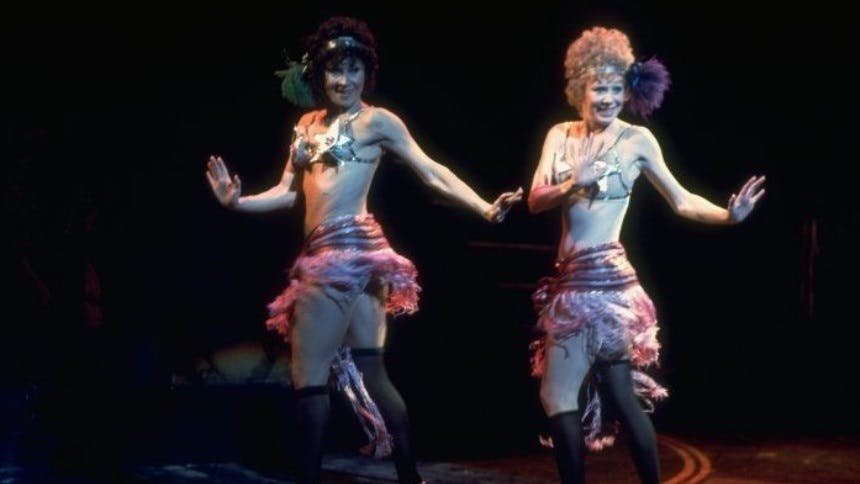
Chita Rivera (left) and Gwen Verdon

June 3, 1975: The musical Chicago opens at the 46th Street Theatre in Midtown Manhattan.

The background: In 1924, Beulah Annan, cheating on her husband, shot her boyfriend -- she claimed, in self-defense. She was acquitted, but died of tuberculosis in 1928. Also in 1924, Belva Gaertner shot and killed her boyfriend. Each of them was married to someone else. She was also acquitted, and lived on until 1965.

Both crimes, and both trials, occurred in Chicago, and Maurine Dallas Watkins covered both trials for the Chicago Tribune. The novelty of a female reporter covering the murder trials of women caught the public's attention. In 1926, Watkins wrote a play, titled Chicago, with Belva being renamed Velma Kelly and depicted as a successful showgirl, and Beulah being renamed Roxie Hart and depicted as wanting to be one. Watkins lived until 1969.

The play was successful. In 1927, Cecil B. DeMille produced a silent film version, starring Phyllis Haver as Roxie. That was successful, too. Even more successful was the 1942 film Roxie Hart, starring Ginger Rogers. It was successful because the Great Depression, and the start of World War II, had made stories set in the Roaring Twenties, not that long ago, charming period pieces.

This film is, so far, the only version of the story in which Roxie is actually innocent, mainly because of the Hays Code, as she had to be seen as a wronged heroine, not as villainess, however justified. But, for the plot, her innocence didn't matter. In 1924, the joke was that all-male juries would never convict a woman of murder, because that would mean the death penalty. But in the play, a woman who is actually innocent -- an immigrant, of course -- is convicted and hanged, making Roxie's case desperate.

In the 1960s, actress Gwen Verdon read the play, and asked her husband, actor-dancer-choreographer Bob Fosse, to turn it into a Broadway musical. Fosse approached Watkins to buy the rights, but she wouldn't sell. She died in 1969. Once her estate was settled, the rights were sold to the Fosses and producer Richard Fryer. John Kander and Fred Ebb wrote the songs.

On June 3, 1975, over half a century after the original case -- hence, the reference to "fifty years" in the song "Nowadays" -- it finally opened, with Verdon as Roxie and Chita Rivera as Velma. At 50 and 42, respectively, each was already way too old for the part. But, in spite of their ages, both were still so sexy that it didn't matter: The play was a hit.

Notable early in the show is "The Cell Block Tango," clearly a ripoff of the title song sequence of the Elvis Presley film Jailhouse Rock. Six women on "Murderesses' Row" tell their tales:

* Liz had a husband named Bernie. She hated the sound made when her husband would pop his bubble gum: "I took a shotgun from the wall and fired two warning shots -- into his head."

* Annie moved in with Ezekiel, who claimed to be single. "Single, my ass!" she says, after finding out he was a Mormon with 6 wives. So, she fixed him a drink: "You know, some guys just can't hold their arsenic."

* June was making dinner when she was accused by her husband Wilbur of screwing the milkman. Was she? She neither admits it nor denies it. She says, "And then, he ran into my knife. He ran into my knife ten times!"

* Katalin Helinszki, a Hungarian ballet dancer, known as "The Hunyak." (This, along with its variant "Hunyock," was a term for unskilled laborers from Eastern Europe, and is a slur that should not have been allowed by the time the musical was finally filmed in 2002.) She's actually innocent, but, because she's an immigrant who can't speak English -- limited to, when Roxie asks her, "Yeah, but did you do it?" the words, "Uh-uh: Not guilty!" -- she ends up convicted and hanged.

* Velma claims that she caught her husband having sex with her sister, who was also her stage partner. Unlike the other four guilty women, who confess to the audience if not to the court, she flat-out lies, and claims she doesn't remember doing it, that she blacked out: "I can't remember a thing. It was only later, when I was washing the blood off my hands, that I even knew they were dead."

* Mona married Alvin because he was "a sensitive guy, a painter." He said he wanted to "find himself." He ended up finding himself in lovers of both sexes. She says, "I guess you could say we broke up because of creative differences: He saw himself as alive, and I saw him dead!"

Both Velma and Roxie are defended by Billy Flynn, played by Jerry Orbach in the original musical. He plays them off each other, and they use each other for their own purposes as well. Spoiler Alert for an old story: Velma ends up cutting a deal with the State's Attorney, testifying against Roxie in exchange for a plea bargain and an early parole; and Billy finds out about it, and uses it to question the S.A.'s character, and Roxie is acquitted.

But right after she is let go, another murder is committed, spectacularly right outside the courthouse, with all the reporters and photographers a few feet away. And Roxie is no longer the star. It's just her, alone... and Amos. She'd rather be alone than be with him. He wouldn't. He's the real victim.

Time goes by, the stock market crashes, the Roaring Twenties become the Dirty Thirties, the Coolidge Prosperity becomes the Hoover Great Depression, and Velma and Roxie can't find work -- until they team up. Roxie hears Velma suggest this, and says, "There's just one problem: We hate each other!" Velma says, "There's one business where that's not a problem," meaning show business. After all, one murderess is a-dime-a-dozen, but two of them together is a hit!

As was the 1975 musical. It was nominated for 11 Tony Awards, including Best Musical, Fosse for directing and choreography; and Verdon, Rivera and Orbach, all for acting. Strangely, it won none of those 11 nominations: A Chorus Line had opened 2 months earlier, and took most of the big awards.

Chicago was revived in 1996. Ann Reinking, the dancer-actress that Fosse left Verdon for well before the '75 premiere, had succeeded Verdon as Roxie in that show, and not only reprised the role in '96, but choreographed it as well. She won the Tony for choreography, but not for acting. Bebe Neuwirth, best known for playing Dr Lilith Sternin-Crane on Cheers, played Velma; and James Naughton played Billy. Again, the female leads were too old for the parts -- Reinking was 44 and Neuwirth was 36 -- but it didn't seem to matter, as the show was a hit all over again. Still running as of June 3, 2002, it became the longest-running revival in Broadway history.

The play won the Tonys for Best Revival of a Musical, Walter Bobbie for Best Director, and Broadway legend Joel Grey won Best Actor for playing Roxie's beleaguered husband, Amos Hart. In the original, Amos was played by Barney Martin, by this point best known for playing Morty, Jerry's father, on Seinfeld.

Fosse had wanted to film Chicago, but his health failed, and he died in 1987. The Broadway revival also revived interest in a film version, but it seemed tricky, due to the vaudeville style of the musical seeming like it wouldn't translate well to the big screen. The word "unfilmable" began to be used.

Director Rob Marshall -- a choreographer like his sister, Kathleen Marshall, but no relation to directors and siblings Garry and Penny Marshall -- came up with the idea of filming the show scenes in bright lights, making them figments of Roxie's imagination; while filming the "real life" segments with a darker lens, letting both the character and the viewer know that this was real, and deadly serious.

It worked: Unlike most recent film musicals -- even A Chorus Line had bombed as a movie -- Chicago was a hit, and was nominated for 13 Academy Awards. At the 2003 "Oscar" ceremony, it won 6, including Best Picture, and Catherine Zeta-Jones won Best Supporting Actress for playing Velma. Zeta-Jones now had an Oscar, to go with the 2 her husband, Michael Douglas, had won, for Best Picture for producing One Flew Over the Cuckoo's Nest in 1976, and for Best Actor for Wall Street in 1998. At the time of the ceremony, she was 8 months pregnant with their daughter, Carys. They already had a son, Dylan.

Renée Zellweger was nominated for Best Actress for playing Roxie, Marshall for Best Director, and John C. Reilly for Best Supporting Actor as Amos. Queen Latifah, the rapper who starred in the 1990s Fox sitcom Living Single, was nominated for Best Supporting Actress, for playing Mama Morton, the prison matron, a role expanded for the film version. None of them won. Richard Gere played Billy Flynn, but was not nominated. Chita Rivera, the original musical's Velma, had a cameo. (At least this time, the leads were closer to the right age: Both Zeta-Jones and Zellweger were 33 during filming.)

As I said, Maurine Dallas Watkins died in 1969, and Bob Fosse in 1987. Gwen Verdon died in 2000, Fred Ebb and Jerry Orbach in 2004, Barney Martin in 2005, and Ann Reinking in 2020. As of June 3, 2002, John Kander, Chita Rivera, Joel Grey, Bebe Neuwirth, Rob Marshall, Renée Zellweger, Catherine Zeta-Jones, Queen Latifah, Richard Gere and John C. Reilly are still alive. (UPDATE: Chita Rivera died in 2024.)

The 46th Street Theatre, now the Richard Rodgers Theatre, still stands, at 226 West 46th Street.

*

June 3, 1975 was a Tuesday. These Major League Baseball games were played:

* The New York Yankees beat the Minnesota Twins, 5-4 at Metropolitan Stadium in the Minneapolis suburb of Bloomington, Minnesota. Pat Dobson outpitched Dave Goltz. Bobby Bonds, in his only season with the Yankees, hit a home run for them. He and Chris Chambliss each had 2 hits. Rod Carew went 3-for-3 with a solo home run and 2 walks.

* The New York Mets beat the Houston Astros, 4-3 at Shea Stadium. Tom Hall outpitched Ken Forsch. Dave Kingman hit a home run. Joe Torre went 1-for-3 with a walk.

* The Los Angeles Dodgers beat the Montreal Expos, 6-5 at Jarry Park in Montreal.

* The Boston Red Sox beat the Chicago White Sox, 4-0 at Fenway Park in Boston. Dick Pole -- I swear, that was his real name -- pitched a 3-hit shutout. Carl Yastrzemski went 0-for-3 with 2 walks. Rookie Jim Rice went 2-for-4 with a home run and 3 RBIs.

* The Philadelphia Phillies beat the San Diego Padres, 12-1 at Veterans Stadium in Philadelphia. Mike Schmidt hit 2 home runs and had 5 RBIs.

* The Baltimore Orioles beat the Texas Rangers, 6-3 at Memorial Stadium in Baltimore. Brooks Robinson went 1-for-4 with an RBI.

* The Cincinnati Reds beat the Pittsburgh Pirates, 8-4 at Three Rivers Stadium in Pittsburgh. Pete Rose went 1-for-4 with an RBI. Joe Morgan went 3-for-5 with 3 RBIs. Johnny Bench went 0-for-4 with a walk. Willie Stargell went 0-for-4.

* The Kansas City Royals beat the Cleveland Indians, 5-2 at Cleveland Municipal Stadium. Harmon Killebrew, the Minnesota Twins legend running out the string, went 1-for-3 with a walk. George Brett went 0-for-3 with a walk. Frank Robinson, now player-manager for the Indians, did not put himself in the game.

* The Chicago Cubs beat the San Francisco Giants, 6-5 at Wrigley Field in Chicago. Bill Madlock doubled Don Kessinger home with the winning run in the bottom of the 10th inning.

* The St. Louis Cardinals beat the Atlanta Braves, 4-2 at Busch Memorial Stadium in St. Louis. Lou Brock went 1-for-4 with 2 stolen bases.

* The Detroit Tigers beat the California Angels, 8-5 at Anaheim Stadium (now Angel Stadium of Anaheim). The Tigers scored 5 runs in the top of the 9th to win it. It was a rarity for them: They lost 102 games, their worst season between 1952 and 1996.

* And the Milwaukee Brewers beat the Oakland Athletics, 5-4 at the Oakland Coliseum. Hank Aaron went 1-for-3. George "Boomer" Scott hit a home run. Robin Yount went 0-for-5. Reggie Jackson, then wearing Number 9 for the A's, but would later honor Aaron by wearing Number 44 with the Yankees and the Angels, hit a home run.

Thursday, May 5, 2022

May 5, 1955: "Damn Yankees" Premieres On Broadway

Stephen Douglass and Gwen Verdon

May 5, 1955: The musical Damn Yankees premieres at the 46th Street Theatre in Midtown Manhattan. It is based on Douglass Wallop's 1954 novel The Year the Yankees Lost the Pennant -- ironically, published in the 1 season between 1949 and 1958 that the Yankees did lose the Pennant. And, of course, before Brian "We don't need no stinkin' Pennants" Cashman was born. Wallop and George Abbott combined to write the "book," Richard Adler the music, and Jerry Ross the lyrics.

It is a retelling of the legend of Faust, a German doctor who is highly successful, yet dissatisfied with his life, which leads him to make a deal with the Devil at a crossroads, exchanging his soul for unlimited knowledge and worldly pleasures. "Faust" and the adjective "Faustian" imply sacrificing spiritual values for power, knowledge, or material gain.

In 1592, Christopher Marlowe, a contemporary of William Shakespeare, wrote "The Tragical History of Doctor Faustus," although it was not staged until after his death. In his version, Faust dies without redemption, and his soul is damned. But in 1831, Johann Wolfgang von Goethe published Faust, and while the protagonist is shown to commit numerous sins and wicked acts, including the seduction of a pious girl who commits suicide, he is ultimately saved from damnation by the virtue of pure-hearted women.

Wallop's novel and the musical based on it are about Joe Boyd, played by Robert Shafer, a middle-aged real estate agent who roots for the Washington Senators, who have won just 1 World Series, in 1924, and haven't won an American League Pennant since 1933. In the story, it is 1958, and the New York Yankees have won the AL Pennant every year since 1949. Joe says that if the Senators just had a "long ball hitter," they could beat "those damn Yankees."

(Wallop couldn't have foreseen the Yankees' failure to win the Pennant in 1954, with the Cleveland Indians winning it. He also couldn't foresee the Senators getting that power hitter, Harmon Killebrew -- or the team moving in 1961, to become the Minnesota Twins, replaced by an expansion team just as bad, which also moved, becoming the Texas Rangers in 1972.) 

Suddenly, the smooth-talking Mr. Applegate appears, played by Ray Walston. He offers Joe the chance to become Joe Hardy" -- or, as a song says, "Shoeless Joe from Hannibal, Mo." (Missouri), the young slugger the Senators need. He accepts, even though he must leave his wife, Meg, played by Shannon Bolin. After his transformation into Hardy, the character was played by Stephen Douglass. However, his business sense makes him insist on an escape clause. The Senators' last game is on September 25, and if he plays in it, he is to stay as Joe Hardy forever. If not, he has until 9:00 the night before to walk away from the deal and return to his normal life.

At the ballpark, the hapless Senators, managed by Benny Van Buren, played by Russ Brown, vow to play their best despite their failings, singing "Heart" (as in, "You gotta have... "). Then, "Joe Hardy" is suddenly discovered, joins the team, and his hitting helps the team to move up in the standings.

But Joe misses his wife, Meg, and moves into her house as a boarder in his Joe Hardy persona. She doesn't recognize him, and they begin to bond, especially over her "lost" husband.

Fearful of losing his deal, Applegate calls Lola, "the best homewrecker on my staff," to seduce Joe and ensure he loses the bet. She was played by Gwen Verdon, and she and the show's choreographer, Bob Fosse, began a working relationship that lasted for the rest of his life, but also an affair that led to a marriage -- and a divorce, because he couldn't stay faithful.

Applegate introduces her as a sultry South American dancer, who sings "Whatever Lola Wants." (As in, "Lola gets." She should not be confused with the Lola that The Kinks sang about, or the one Barry Manilow sang about in "Copacabana.") But Joe's devotion to Meg proves too strong, even for her. Applegate fires her.

Applegate decides to switch tactics to ensure Joe's failure. He releases false information about Joe's true identity being "Shifty McCoy", an escaped criminal and con artist. When reporter Gloria Thorpe, played by Rae Allen, who had previously boosted Joe in the papers, discovers this information, she presses charges, and he is forced into court.

The Senators prepare for the final game against the Yankees, which will decide the Pennant. Joe's trial is held on September 24, the last day he can back out of his deal. As he technically does not exist, he cannot produce any kind of identification. The owner of the Senators, their coach, and even Lola (disguised as "Señora McCoy") testify, but their opinions carry no weight.

Gloria suggests that Applegate take the stand, but he is unable to take the oath since it requires him to tell the truth. Joe realizes that Applegate is simply stalling to keep him from meeting his 9:00 deadline. Applegate claims that Joe "just needs time to think" and sends him to where Lola is, where history's most famous lovers wait. Lola meets him there and realizes that he truly loves Meg. She helps him by sending him into the final game and delays Applegate by coercing him into a duet: "Two Lost Souls."

(In the book, Applegate has an ulterior motive, above and beyond wanting Joe Boyd's soul: He's a Yankee fan, and figures the Senators getting close but losing will lead more of their fans to him. This fandom is not mentioned in the show.)

When Applegate finally arrives at the game, it is 8:55, and Joe is at bat. As time runs out, Meg, her friends, and even Lola begin cheering for him. Applegate uses his powers to give Joe two strikes. The clock strikes 9:00, and Applegate claims victory, but at the last second, Joe cries, "Let me go!" The deal is broken, and he reverts to his old self ,but is still able to hit a home run, winning the pennant for the Senators.

Back at home, Joe rushes into Meg's arms. Applegate appears on the scene, claiming that Joe owes him his prize. Joe begs Meg to hold him and not let go. Applegate promises to make him young again, and even ensure a victory in the upcoming World Series. But his powers are useless against their true love, as Lola points out. Applegate and Lola return to where they came from, defeated, with Joe and Meg reunited.

The show was nominated for 9 Tony Awards, winning 6, including Best Musical, Best Leading Actor in a Musical for Walston, Best Featured Actor in a Musical for Brown, Best Leading Actress in a Musical for Verdon, and Best Choreography for Fosse.

Jean Stapleton, later to star on All in the Family, was also in the original Broadway cast. So was James Komack, then listed as "Jimmy Komack," as one of the Senators players. He went on to create the TV sitcoms Chico and the Man and Welcome Back, Kotter. Walston became more famous by starring in the title role of the sitcom My Favorite Martian, and for playing grumpy old men, a teacher in Fast Times at Ridgemont High and a judge on Picket Fences.

A film version premiered on September 26, 1958, directed by Abbott and Stanley Donen. Verdon, Walston, Shafer, Bolin, Allen, Brown, Stapleton and Komack all reprised their roles. But Douglass was replaced as Joe Hardy by singer-actor Tab Hunter, who, to be fair, did bear a little bit of a resemblance to Mickey Mantle.

Surprisingly, the Hays Code permitted a film to be released in America with the word "Damn" in the title. And with Gwen Verdon dancing around in little more than a corset. And with men dancing and doing chorus-girl kicks while wearing only towels. But Elvis Presley could only be shown on TV from the waist up... And it was not yet widely known that Tab Hunter was gay.

Ross died on November 11, 1955, just 6 months after the musical's premiere, only 29 years old, from a lung disease. Brown died in 1964, Shafer in 1981, Wallop in 1985, Fosse in 1987, Abbott in 1995 (at the age of 107), Komack in 1997, Verdon in 2000, Walston in 2001, Douglass in 2011, Adler in 2012, Stapleton in 2013, Bolin in 2016 (9 months short of turning 100), Hunter in 2018, Donen in 2019, and Allen in 2022.

The 46th Street Theatre, built in 1925 at 226 West 46th Street between 7th and 8th Avenues, was renamed the Richard Rodgers Theatre, and it still stands. It also hosted the original productions of Of Thee I Sing in 1932, Anything Goes in 1935, Hellzapoppin in 1938, DuBarry Was a Lady in 1939, Panama Hattie in 1940, Finian's Rainbow in 1947, Guys and Dolls in 1950, On Your Toes in 1954, How to Succeed in Business Without Really Trying in 1961, 1776 in 1969, Chicago (run by Fosse and starring Verdon) in 1975, The Best Little Whorehouse in Texas in 1978, Nine in 1982, Brighton Beach Memoirs in 1985, Fences in 1987, Lost in Yonkers in 1991, and Lin-Manuel Miranda's musicals In the Heights in 2008 and Hamilton in 2015.

Damn Yankees established the Yankees as traditional baseball-story villains: They would be the opponents in the last game in the 1989 film Major League, and a Little League team called the Yankees would be the arrogant opponents in the last game in the 1976 film The Bad News Bears.

In 2002, Boston Red Sox team president Larry Lucchino labeled the Yankees "the Evil Empire," trying to connect them with the Galactic Empire in the Star Wars story, forgetting that "an evil empire" is what President Ronald Reagan called the Soviet Union in 1983; and, as the American sports team most identified with unregulated capitalism, the Yankees were as close to an opposite of the U.S.S.R. as you could get.

In 2005, the Montreal Expos moved, becoming the Washington Nationals. In 2019, they won the World Series, the capital's 1st title in 95 years.

*

May 5, 1955 -- 5/5/55 -- was a Thursday. In real-life baseball, these 4 games were played:

* The New York Giants beat the Chicago Cubs, 6-3 at the Polo Grounds. Sal Maglie outpitched Harry Perkowski. Willie Mays went 0-for-4 with a walk. Ernie Banks also went 0-for-4.

* The Brooklyn Dodgers beat the St. Louis Cardinals, 4-3 at Ebbets Field. Tommy Lasorda -- yes, that one -- started, but only lasted 1 inning, despite allowing just 1 run. A sacrifice fly by Rube Walker got Duke Snider home with the winning run in the bottom of the 8th inning, to make a winning pitcher of Ed Roebuck. Clem Labine pitched 6 innings, and even hit a home run, but did not get the decision. Jackie Robinson went 0-for-3. Stan Musial went 1-for-4.

* The Pittsburgh Pirates beat the Milwaukee Braves, 9-4 at Forbes Field in Pittsburgh. Roberto Clemente went 2-for-2 with 2 walks and an RBI. Hank Aaron went 1-for-3 with a walk. Eddie Mathews went 1-for-5.

* And the Detroit Tigers beat the Boston Red Sox, 3-2 at Briggs Stadium (later renamed Tiger Stadium) in Detroit. Al Kaline went 2-for-5 with an RBI. Ted Williams did not play.

December 31, 1999 & January 1, 2000: The Millennium

December 31, 1999:  The Millennium arrives. The people of planet Earth survived. At a terrible cost. But we hadn't destroyed ourselves. ...