Showing posts with label los angeles. Show all posts

Friday, December 30, 2022

December 30, 1967: The Forum Opens In Inglewood

December 30, 1967: The Forum opens, outside Los Angeles in Inglewood, California. It becomes, and remains, the most famous indoor sports venue in the Western United States.

It was designed by architect Charles Luckman, and built on the site of a golf course, at Manchester Boulevard and Prairie Avenue, across Kelso Street from the Hollywood Park racetrack, 11 miles southwest of downtown Los Angeles.

It was built because Jack Kent Cooke, the Canadian media mogul who owned the NBA's Los Angeles Lakers, wanted to bring the NHL to Los Angeles. He had been told that there were more than 300,000 former Canadians living within a three-hour drive of Los Angeles. The Lakers had arrived in 1960, and had played at the Los Angeles Memorial Sports Arena, next-door to the Los Angeles Memorial Coliseum, whose Commission owned both buildings.

Dan Reeves, owner of the Rams, who played in the Coliseum, also owned the Western Hockey League's Los Angeles Blades, who played in the Sports Arena. The Coliseum Commission wanted to own L.A.'s NHL team, and told Cooke that, if he won the bid, his team wouldn't be allowed to play in the Sports Arena.

(This Dan Reeves was no relation to the man of the same name, then a running back for the Dallas Cowboys, who later became a successful NFL coach.)

So Cooke built The Forum, with $16 million his own money (about $140 million in 2022 dollars), and won the bid. The Kings debuted on October 14, at the Long Beach Convention Center, beating another expansion team, the Philadelphia Flyers, 4-2. The Kings played 11 home games at the Sports Arena, and 6 at Long Beach, before The Forum opened on December 30, with a 2-0 loss to the Philadelphia Flyers, a fellow expansion team. The Lakers played their 1st Forum game the next day, December 31, beating the San Diego Rockets, 147-118. (The Rockets moved to Houston in 1971.)

The Lakers did very well at The Forum. The Kings did not, and their attendance reflected this. About those 300,000 people, Cooke remarked, "Now I know why they left Canada: They hate hockey!" In 1979, Cooke sold the Forum, the Kings, and the Lakers to Dr. Jerry Buss (his doctorate was in chemistry) for a then-record $67.5 million (equivalent to $272 million in 2022). Half of the payment was in cash, and half was in real estate, with part of Buss's payment including the Chrysler Building in New York.

The Forum hosted 14 NBA Finals: 1968, 1969, 1970, 1972, 1973, 1980, 1982, 1983, 1984, 1985, 1987, 1988, 1989 and 1991, with the Lakers winning in 1972, 1980, 1982, 1985, 1987 and 1988; but only 1 Stanley Cup Finals, in 1993, with the Kings losing it. It never hosted an NCAA Final Four (the Sports Arena did so in 1968 and 1972), but it hosted the NBA All-Star Game in 1972 and 1983, the NHL All-Star Game in 1981, and the Olympic basketball games in 1984.
In addition to the Lakers and Kings, it hosted the Los Angeles Strings of World Team Tennis from 1975 to 1978, the indoor-season games of the Los Angeles Aztecs of the North American Soccer League in the 1979-80 season, and the Los Angeles Sparks of the WNBA from 1997 to 2000.

For sponsorship purposes, The Forum was known as the Great Western Forum from 1988 to 2003, The Forum presented by Chase from 2014 to 2022, and now as the Kia Forum.

In 1999, the Lakers, the Kings, the Sparks, and the NBA's Los Angeles Clippers all moved into the Staples Center, now named the Crypto.com Arena, in downtown Los Angeles. The last Kings game at The Forum was on April 18, 1999, a 3-2 loss to the St. Louis Blues. The last Lakers game was on May 23, 1999, a 118-107 loss to the San Antonio Spurs. Both teams played preseason exhibitions there before moving downtown.

Faithful Central Bible Church, with a congregation of over 12,000, purchased The Forum at the end of 2000, and began holding church services there on Sunday mornings. Unlike Houston's Lakewood Church, whose pastor, Dr. Joel Osteen, converted the Rockets' former arena, The Summit, into their church, Faithful Central representatives said that they never intended to convert the arena for religious purposes. In 2009, the church discontinued their regular use of the Forum for services.

The Forum was used for the 2002 film Like Mike and the 2009 film Hannah Montana: The Movie. In 2009, Michael Jackson rehearsed at The Forum for his upcoming concert tour, but died while those rehearsals were in progress.

In 2012, the Madison Square Garden Corporation bought The Forum, and renovated it until 2014. It began hosting award shows: The Nickelodeon Kids' Choice Awards in 2015, '16 and '18; the American Country Countdown Awards in 2016; the Teen Choice Awards in 2016 and '18; the MTV Video Music Awards in 2017; and the iHeartRadio Music Awards in 2016, '17 and '18.

In 2020, SoFi Stadium was built on the site of the demolished Hollywood Park; and Clippers owner Steve Ballmer bought The Forum, planning to built a new arena for his team nearby, the Intuit Dome. The Forum will remain standing through at least 2028, when Los Angeles hosts the Olympics again: The Forum is slated to host gymnastics.

*

December 30, 1967 was a Saturday. Baseball was out of season. Two college football bowl games were played that day: Penn State and Florida State played to a tie, 17-17, at the Gator Bowl in Jacksonville, Floirda; and the University of Texas at El Paso (UTEP), playing on its home field, beat Mississippi (Ole Miss), 14-7 in the Sun Bowl.

The next day, New Year's Eve, the pro football leagues' Championship Games were held. In the AFL, the Oakland Raiders beat the Houston Oilers, 40-7 at the Oakland Coliseum. And in a game so cold it became known as the Ice Bowl, the Green Bay Packers beat the Dallas Cowboys, 21-17 at Lambeau Field in Green Bay, Wisconsin.

The day after that, New Year's Day 1968, the major college bowls were played. Number 1 University of Southern California (USC) beat Indiana, 14-3 in the Rose Bowl in Pasadena, and clinched the National Championship. Number 3 Oklahoma beat Number 2 Tennessee, 26-24 in the Orange Bowl in Miami. Louisiana State University (LSU) beat Number 6 Wyoming, 20-13 in the Sugar Bowl in New Orleans. And Texas A&M beat Number 8 Alabama, 20-16 in the Cotton Bowl in Dallas.

There were 2 NBA games played on December 30, 1967. The Philadelphia 76ers beat the Detroit Pistons, 122-107 at Cobo Hall (now Huntington Place) in Detroit. Wilt Chamberlain scored 30 points and grabbed 18 rebounds. And the Los Angeles Lakers beat the St. Louis Hawks, 106-104 at the Kiel Auditorium in St. Louis. Jerry West scored 34 points.

There were 4 games played in the American Basketball Association, which was in its 1st season:

* The New Jersey Americans (who became the New York Nets the next season) beat the Oakland Oaks, 123-117 at the Oakland Coliseum Arena.

* The Indiana Pacers beat their rivals, the Kentucky Colonels, 124-80 at the Indiana State Fairgrounds Coliseum (now the Corteva Coliseum) in Indianapolis.

* The Minnesota Muskies beat the Dallas Chaparrals, 104-92 at the Metropolitan Sports Center in the Minneapolis suburb of Bloomington, Minnesota.

* And the Denver Rockets beat the Houston Mavericks, 96-80 at the Auditorium Arena in Denver.

And the entire newly-expanded NHL was in action. In addition to the Kings and the Flyers:

* The New York Rangers and the Chicago Black Hawks played to a tie, 3-3 at the old Madison Square Garden.

* The Montreal Canadiens beat the Oakland Seals, 2-0 at the Montreal Forum.

* The Toronto Maple Leafs beat the St. Louis Blues, 8-1 at Maple Leaf Gardens in Toronto.

* The Detroit Red Wings beat the Pittsburgh Penguins, 5-2 at the Civic Arena in Pittsburgh.

* And the Minnesota North Stars beat the Boston Bruins, 5-4 at the Met Center in Bloomington. Yes, it hosted an NHL game and an ABA game on the same day.

And in English soccer, a London derby was held at the Arsenal Stadium, a.k.a. Highbury, in North London. Arsenal and Chelsea played to a 1-1 draw.

December 30, 1940: Los Angeles' 1st Freeway Opens

December 30, 1940: The Arroyo Seco Parkway opens, along the seasonal river of the same name, running 8 miles northeast from downtown Los Angeles to Pasadena. It is the 1st of many freeways in the Los Angeles metropolitan area.

It became part of the historic U.S. Route 66, but is no longer designated as such. Rather, it is California Route 110. In 1954, it was renamed the Pasadena Freeway. In 2010, its original name was restored.

In the 1988 film Who Framed Roger Rabbit?, Judge Doom (played by Christopher Lloyd) lays out his plan for such a road: "Eight lanes of shimmering cement, running from here to Pasadena. Smooth, safe, fast. Traffic jams will be a thing of the past." (Yeah, surrre! He continued.) "I see a place where people get on and off the freeway, on and off, off and on, all day, all night! Soon, where Toontown once stood will be a string of gas stations, inexpensive motels, restaurants that serve rapidly prepared food, tire salons, automobile dealerships, and wonderful, wonderful billboards, reaching as far as the eye can see! My God, it'll be beautiful!"

In other words, he foresaw freeway exits, and the shopping centers that sprang up around them, serving as the new "downtown shopping districts" in what became suburban America after World War II. Except that the film took place in 1947, when said 8 lanes were already in place in real life. (But then, that entire film requires a major suspension of disbelief.)

Those 8 lanes would be the first of many, strangling Southern California in asphalt, and choking it in smog, because all those cars would be producing carbon dioxide, drifting east until the gas smacked into the San Gabriel Mountains, which would push it back, causing it, with nowhere else to go, to settle dangerously over what had become America's 3rd-largest city after World War II, and by 1970, the 2nd-largest.

Not until 1990 would Los Angeles open its 1st subway line.

*

December 30, 1940 was a Monday. TV sitcom writer, director and producer James Burrows was born.

Baseball and football were out of season. The NBA hadn't been founded yet. And no games were scheduled for the NHL. Therefore, there were no scores on this historic day.

Sunday, December 25, 2022

December 25, 1951: A Bloody Christmas for Civil Rights

Harriette (left) and Harry Moore

December 25, 1951: A bomb explodes at the home of Harry T. Moore, President of the Florida branch of the NAACP, in Mims, Florida, not far from Cape Canaveral.
Moore was born on February 18, 1905, in Houston, on the Florida Panhandle, about halfway between Tallahassee and Jacksonville. By the early 1930s, he was secretary for the Florida chapter of the NAACP. He worked on housing and education, investigated lynchings, and registered black voters. By 1950, 31 percent of eligible black people in Florida were registered to vote, more than in any other Southern State.
But on the night of December 25, 1951, a bomb exploded at his house in Mims. The local hospital in Titusville would not treat black people, Moore was taken to the nearest one that would, 30 miles away in Sanford, and he died en route. He was 46 years old. His wife, teacher Harriette Moore, died from her injuries 9 days later, on January 3, 1952, at the Sanford hospital. She was 49.
The FBI investigated the murder, but not with any enthusiasm, and no one was ever prosecuted for it. In 2006, a State investigation suggested the perpetrators were 4 members of the Ku Klux Klan, all of them dead by that point, so there was nothing that could be done.
Moore was the 1st NAACP member to be assassinated for civil rights activism, and he and Harriette were the only husband and wife killed for it. They are considered the first martyrs of the Civil Rights Movement. Much of the community of Mims is now part of Harry T. and Harriette V. Moore Memorial Park.
Also on this day, Los Angeles policemen attack 5 Mexican-American and 2 white young men, leading to their hospitalization. Although they all survived, it became known as "Bloody Christmas." While 8 police officers were indicted, none were imprisoned. The event would be fictionalized in the 1990 novel and 1997 film L.A. Confidential.
*
December 25, 1951 was a Tuesday. Four games were played in the NBA, including a doubleheader at Madison Square Garden. In the opener, the Syracuse Nationals beat the Milwaukee Hawks, 70-65. In the nightcap, the New York Knicks beat the Fort Wayne Pistons, 72-65.
Also, the Rochester Royals beat the Indianapolis Olympians, 87-78 at the Edgerton Park Arena. And the Minneapolis Lakers beat the Boston Celtics, 100-93 at the Minneapolis Auditorium.
Two games were played in the NHL. The New York Rangers lost to the Detroit Red Wings, 2-1 at the Olympia Stadium. And the Chicago Black Hawks beat the Boston Bruins, 6-2 at the Boston Garden.
And in English soccer, Arsenal F.C. hosted Hampshire team Portsmouth at Highbury in North London, and won 4-1 on goals by Lewis, Logie, Freddie Cox and Peter Goring.

Saturday, December 24, 2022

December 24, 1994: The Rams and Raiders Abandon Los Angeles

December 24, 1994: The Kansas City Chiefs defeat their arch-rivals, the Los Angeles Raiders, 19-9, before 64,130 fans -- a big crowd, but hardly a sellout at the 93,000 seat Los Angeles Memorial Coliseum.

The Coliseum had been the home of the Raiders since moving from Oakland before the 1982 season, and the home of the Los Angels Rams from 1946 to 1979. The Rams had moved 38 miles southeast to Anaheim Stadium (now Angel Stadium of Anaheim). On this same day, they played there, and lost to the Washington Redskins, 24-21. The crowd was 25,705, a pathetically small one for a stadium whose football capacity was 69,000.
Before the next season opened, the Los Angeles metropolitan area dropped from 2 NFL teams to none: Al Davis took the Raiders back to Oakland, and Rams owner Georgia Frontiere took the team to her hometown of St. Louis. The Rams' move also killed the famous Los Angeles-San Francisco rivalry with the 49ers, whose run of success the preceding few years hurt the Rams as much as anything: For about 15 years before it, the Rams had dominated the division that became the NFC West.

It took the Rams a while to get going in St. Louis, building "The Greatest Show on Turf," winning Super Bowl XXXIV, and losing Super Bowl XXXVI, before falling apart again. After the 2015 season, with Stan Kroenke having bought the team from Mrs. Frontiere's estate, the Rams moved back to Los Angeles, playing 4 seasons at the Coliseum before Kroenke's SoFi Stadium was built in Inglewood, on the site of the Hollywood Park racetrack, across from The Forum. The NBA's Los Angeles Clippers have begun building their new arena, the Intuit Dome, on the same campus.

The Raiders' return to Oakland was shaky. They fell victim to the Tuck Rule Game in the 2001 season, then won the 2002 AFC Championship, but lost Super Bowl XXXVII. Al Davis died in 2011, and his son Mark Davis inherited the team. He never liked Oakland, and tried to go back to Los Angeles, before making a deal to move to Las Vegas for the 2020 season.

With the Raiders having balked in their negotiations, it was the San Diego Chargers who moved for the 2017 season, spending 3 season at Dignity Health Sports Park in suburban Carson, California, before moving into SoFi as tenants of the Rams.

*

December 24, 1994 was a Saturday. No college football bowl games were played. Baseball was out of season. The NBA had no games scheduled. And the NHL team owners were locking out the players. So the only games played on the day were in the NFL.

At the time, the NFL preferred not to play games on Christmas Day, even when it fell on a Sunday. That changed the next year. This time, the only game played on Sunday, December 25 was the Miami Dolphins' 27-20 win over the Detroit Lions at Joe Robbie Stadium (now Hard Rock Stadium) in Miami Gardens, Florida, and that was in prime time. The next night, on ABC Monday Night Football, the Minnesota Vikings beat the San Francisco 49ers, 21-14 at the Metrodome in Minneapolis. The rest of the NFL slate, including the 2 L.A. farewells, was played on the afternoon of Saturday, December 24:

* The New York Giants beat the Dallas Cowboys, 15-10 at Giants Stadium in the Meadowlands.

* The Atlanta Falcons beat the Arizona Cardinals, 10-6 at the Georgia Dome in Atlanta.

* The Green Bay Packers beat the Tampa Bay Buccaneers, 34-19 at Tampa Stadium.

* The New Orleans Saints beat the Denver Broncos, 30-28 at the Superdome in New Orleans.

* The New York Jets lost to the Houston Oilers, 24-10 at the Astrodome in Houston.

* The Cleveland Browns beat the Seattle Seahawks, 35-9 at Cleveland Municipal Stadium.

* The Cincinnati Bengals beat the Philadelphia Eagles, 33-30 at Riverfront Stadium in Cincinnati.

* The Indianapolis Colts beat the Buffalo Bills, 10-9 at the RCA Dome in Indianapolis.

* The New England Patriots beat the Chicago Bears, 13-3 at Soldier Field in Chicago.

* And the San Diego Chargers beat the Pittsburgh Steelers, 37-34 at Jack Murphy Stadium in San Diego.

Friday, December 23, 2022

December 23, 1951: The 1st Title for Los Angeles

"Crazy Legs" (left) and "Deacon Dan"

December 23, 1951: The City of Los Angeles, and all of the State of California, gets its 1st World Championship in a major league sport.

It wasn't won by the Dodgers: They were 6 years away. It wasn't the Lakers, either: They were 9 years away.

In 1945, the Cleveland Rams won the NFL Championship. But they barely drew enough fans to fill the Cleveland Indians' 22,000-seat League Park. They got to host the NFL Championship Game, and they put it in the 86,000-seat Cleveland Municipal Stadium. But it was the coldest Championship Game in American football history, 8 degrees above zero Fahrenheit -- the 1967 "Ice Bowl" was an NFL Championship Game, but not a world championship -- and only 32,178 fans paid their way into the big stadium on the shore of Lake Erie.

Dan Reeves -- no relation to the later football coach of the same name -- lost $64,000 owning the Rams in the 1945 season. And, with the war over, a new league was being formed, the All-America Football Conference. And they would have a Cleveland team, soon to be named the Browns. Reeves knew that it would be folly to stay in Cleveland.

So he went to the previously untapped market of Los Angeles, and moved the Rams there. It worked: With quarterback Bob Waterfield winning games, the minds of male fans, and the hearts of female fans -- he was married to actress Jane Russell -- and an offense that included the 1st black players in the NFL in 12 years, Kenny Washington and Woody Strode, the Rams averaged 42,475 fans per game at the Los Angeles Memorial Coliseum.

It took the Rams until 1949 to reach the Championship Game again. In a rare Southern California rainstorm, they lost to the Philadelphia Eagles at the Coliseum. They got back to the title game in 1950, but had to go back where they came from, playing their replacements, the Cleveland Browns, at a once-again-frigid Municipal Stadium, and lost on a last-minute field goal by Lou Groza.

Washington bowed out due to injury, and Strode was making more money as an actor. But, under head coach Joe Stydahar, one of the Chicago Bears' 1940s "Monsters of the Midway," the Rams got better. They got a 2nd great quarterback, Norm Van Brocklin. Their running backs included 2 black stars, Paul "Tank" Younger and "Deacon" Dan Towler, a Heisman Trophy winner in Glenn Davis, and Verda Thomas Smith, known as "V.T." or "Vitamin" Smith. And in Tom Fears and Elroy "Crazy Legs" Hirsch, Waterfield and Van Brocklin had the 2 best receivers in the NFL.

They went 8-4. They scored 52 and 48 points in their 2 games against the New York Yanks (that's correct: Not "Yankees," and the team folded after the season), hung 45 on the Chicago Cardinals, 42 on the Bears, and another 42 on the Green Bay Packers. But a not-so-good defense meant that they lost regular-season games to the Browns, the Washington Redskins, the Detroit Lions, and the team that was now firmly established as their regional arch-rivals, the San Francisco 49ers.

But it was enough to win the NFL Western Division, by half a game over the 49ers and the Lions, both of whom went 7-4-1; and a full game over the Bears, who went 7-5. And, since it was an odd-numbered year, it was the Western Division Champion's turn to host the NFL Championship Game. It was their 3rd straight season making the Game, and, this time, the weather would not be a problem: It was a beautiful Sunday afternoon at the Coliseum, and 59,475 fans came out, the most that had yet seen an NFL Championship Game.

It should have been more: While it was the 1st one broadcast coast-to-coast, on the DuMont Network, it was blacked out in Southern California: If you lived there at the time, and you didn't buy a ticket, you had to listen on the radio.
The Los Angeles Memorial Coliseum, 1957.
That dark spot over the North stands is a Goodyear blimp.

It was a rematch with the Browns. Paul Brown's even more powerful offense, led by quarterback Otto Graham, had lost their season opener to the 49ers, but had won the next 11 straight, and were favored going in, even on the road.

But Groza missed a field goal on their opening drive, and Waterfield led the Rams down the field, resulting in a 1-yard touchdown run by Dick Hoerner early in the 2nd quarter. Groza kicked a 52-yard field goal, at the time the longest in NFL Championship Game history, and Waterfield threw 2 interceptions. Though leading, 7-3, Stydahar, replaced Waterfield with Van Brocklin. Before halftime, Graham threw a 17-yard touchdown pass to Dub Jones, and the Browns took a 10-7 lead.

In the 3rd quarter, Larry Brink hit Graham and forced a fumble. Andy Robustelli, later a Hall of Fame defensive end for the New York Giants, picked it up on the Browns' 24, and returned it to their 2 before being stopped. Towler ran the ball in, and it was 14-10 Los Angeles.

It was Graham's turn to throw 2 interceptions, and Waterfield kicked a field goal to make it 17-10. But Graham recovered, and led a 70-yard drive ending with Ken Carpenter's 5-yard touchdown run, tying the game at 17-17.

But the Rams struck right back, with Van Brocklin finding Fears, who hauled a pass in for a 73-yard touchdown. The Rams won, 24-17, and had their 1st title in Los Angeles. While the Los Angeles Angels and the Hollywood Stars had won Pennants, that was in the Pacific Coast League. Despite the PCL's pretensions, it was not major league. By this point, there was no longer any question that the NFL was, and the Rams were Champions.

The Browns returned to the NFL Championship Game in 1952, losing to the Lions; 1953, losing to the Lions; 1954, beating the Lions; and 1955, beating the Rams. Despite having some good teams over the years, the Rams didn't reach another NFL championship game, under any name, until the 1979 season, when they lost Super Bowl XIV to the Pittsburgh Steelers.

They moved to St. Louis for the 1995 season, and selfish choice by team ownership, and won Super Bowl XXXIV, beating the Tennessee Titans, in 2000; and lost Super Bowl XXXVI to the New England Patriots in 2002. Once the novelty of "The Greatest Show On Turf" wore off, and the team began to be broken up, they stopped drawing fans in St. Louis. A new owner moved them back to Los Angeles for the 2016 season.

UPDATE: The Rams reached Super Bowl LIII, losing to the Patriots; and Super Bowl LVI, beating the Cincinnati Bengals. That game the Rams 4 NFL Championships: 2 in Los Angeles, 1 in Cleveland, and 1 in St. Louis.

The Rams do not have a team Hall of Fame, but they have several members of the Pro Football Hall of Fame:

* From their 1951 NFL Champions: Founding owner Dan Reeves (no relation to the later Denver and Atlanta coach), head coach Joe Stydahar (elected mainly on the basis of his playing with the Chicago Bears), quarterback-defensive back-kicker Bob Waterfield, quarterback Norm Van Brocklin, receiver Elroy "Crazy Legs" Hirsch, and end Tom Fears.

* From later in the 1950s and in the 1960s: Reeves, head coach George Allen, running back Ollie Matson, defensive end David "Deacon" Jones, defensive tackle Merlin Olsen, and linebacker Les Richter. Jones, Olsen, defensive tackle Roosevelt "Rosey" Grier and defensive end Lamar Lundy formed the line known as "The Fearsome Foursome."

* From their 1979 NFC Championship: Guard Tom Mack, defensive end Jack Youngblood, and offensive tackle Jackie Slater.

* From their appearance in the 1985 NFC Championship Game: Slater, running back Eric Dickerson, and linebacker Kevin Greene. Slater and Greene would also play for the Rams in the 1989 NFC Championship Game.

* So far, no players from their Super Bowl LIII defeat have been honored -- and any players from their Super Bowl LVI win wouldn't be eligible yet, anyway.

The Rams have retired 8 uniform numbers: Waterfield's 7, Dickerson's 29, Olsen's 74, Jones' 75, Slater's 78, Youngblood's 85; and 2 players from their St. Louis era, the 28 of running back Marshall Faulk and the 80 of receiver Isaac Bruce.

*

December 23, 1951 was a Sunday. Baseball was out of season. There were 3 games played in the NBA:

* The New York Knicks beat the Syracuse Nationals, 75-72 at the Onondaga War Memorial (now the Upstate Medical University Arena) in Syracuse, New York.

* The Boston Celtics beat the Indianapolis Olympians, 91-88 in overtime at the Boston Garden.

* And the Fort Wayne Pistons beat the Minneapolis Lakers, 81-79 in the gymnasium at North Side High School in Fort Wayne, Indiana. Clearly, calling the NBA "major league" at this point was still a little premature.

Not so for the NHL, and its entire "Original Six" was in action:

* The New York Rangers beat the Chicago Black Hawks, 3-2 at the old Madison Square Garden.

* The Boston Bruins beat the Toronto Maple Leafs, 4-2 at the Boston Garden. Yes, it hosted the NBA and the NHL on the same day.

* And the Detroit Red Wings beat the Montreal Canadiens, 4-0 at the Olympia Stadium in Detroit.

Tuesday, December 20, 2022

December 20, 1973: Bobby Darin Dies

December 20, 1973: Singer Bobby Darin dies shortly after heart surgery at Cedars of Lebanon Hospital in Los Angeles.

As a young man, he told people that he would be a legend by age 25. To those close to him, he said he had to do that, because he didn't think he would live to be 30.

He was ahead of the game: His recording of "Mack the Knife" made him an all-time music legend when he was just 23. But he wasn't off by nearly enough in the other direction: He died at 37.

Walden Robert Cassotto was born on May 14, 1936 in Manhattan, and grew up in The Bronx. He grew up believing that his mother, Nina, was his sister; and that her parents, Polly and Sam -- a soldier in what would become the Genovese crime family and once close to boss Frank Costello -- were his parents.

In 1968, following the assassination of Senator Robert F. Kennedy, whom Bobby had gotten close to, he considered running for office himself. His mother knew that the media would investigate him, so she told him the truth before they did. Already very troubled by what was going on in the world, it devastated him. She never told him who his biological father was, but before she died in 1983, she told other relatives that she had a fling with Anthony Grillo, another associate of the Genovese family.

Bobby was brilliant -- and he knew it, and told anyone who would listen, which rubbed people the wrong way. He was a multi-talented musician, an expert guitarist, drummer, trumpeter, trombonist and harmonica player. And he was a great dancer.

He knew that if he went by "Bobby Cassotto," it would be tough for him to make it. One night, he was riding in a cab, past a Chinese restaurant named MANDARIN, with part of the sign's neon out, so that it read "DARIN." He liked the sound of "Bobby Darin," and kept it.

He got his musical start writing songs for Connie Francis. It's been suggested by people who knew both of them that each was the other's one true love. But Connie's manager wouldn't allow them to get married. And since that managers was her father, George Franconero, and he had a gun, and threatened Bobby with it when both singers were backstage before appearing on The Jackie Gleason Show in 1957, that was it.

In 1958, Bobby had his 1st big hit, with "Splish Splash." He followed it with rockers "Queen of the Hop" and "Dream Lover." He was young, handsome and talented, seemingly perfect for the rock and roll generation. But his heart was in the older music, in the style of Frank Sinatra. He used rock as a springboard for what he really wanted to do.

And one of those things was to sing show tunes. In 1959, he recorded "Mack the Knife," from The Threepenny Opera by Kurt Weill and Bertolt Brecht. He used the same not-quite-right lyrics used by Louis Armstrong in 1956, including mentioning Lotte Lenya, who was married to Weill and a star of the original version, but not one of the characters pursued by Macheath.

Bobby's recording of the song hit Number 1 in America on October 5, 1959, and stayed there for 9 weeks. It went on to become the biggest-selling record in New York City history, because it was something that teenagers and their parents could agree on.

He had several more hits, and began an acting career. He was nominated for an Academy Award for Best Supporting Actor for playing a soldier with post-traumatic stress disorder in Captain Newman, M.D. He married actress Sandra Dee, and they had a son, Dodd Darin.

But times changed, and he wasn't able to change with them. He and Sandra split up. He tried making new music, but had only one hit, with Tim Hardin's "If I Were a Carpenter." He stopped wearing a toupee, grew a mustache, and wore denim. People didn't want Bobby Darin anymore.

Or maybe they didn't want a Bobby Darin who looked like a hippie. In 1972, with the nostalgia wave for the 1950s underway, he went back to being the man people knew, wearing a tuxedo and a toupee, but not a mustache, and sang whatever he felt like, but in a show-tune style. NBC gave him a variety show that ran for 20 episodes, and he was a hit again. He also made an appearance on The Flip Wilson Show, playing the Devil opposite Wilson's Reverend Leroy.

But his health finally caught up with him. At the age of 8, he suffered from rheumatic fever, which weakened his heart, and led him to believe he wouldn't make to to age 30. By the time he did, he was already out of favor. In 1971, before full artificial hearts were invented, he had two artificial valves implanted.

Sometimes, during taping his show, he would be administered oxygen during commercial breaks, and afterward. Once, he had to be rushed to the hospital right after taping. On his last episode, on April 27, 1973, he could be seen shaking his hand, as if he was trying to get something off it. His condition had hurt his circulation, and he was trying to get it going again.

Later that year, after failing to take antibiotics to protect his heart before a dental visit, Darin developed sepsis, an overwhelming systemic infection, which further weakened his body, and affected one of his heart valves. On December 11, he checked himself into Cedars of Lebanon Hospital in Los Angeles, to repair his artificial heart valves. On the night of December 19, he went into surgery, and it lasted 6 hours. But he was too weak, and died early on the morning hours of December 20. He was 37 years old.

Darin's last wish in his will was that his body be donated to science for medical research, and his remains were transferred to the UCLA Medical Center shortly after his death. So there is no final resting place for Bobby Darin.

Had he survived the surgery, not only might have lived long enough to have better valves, or even a full artificial heart, but he would have fully benefited from the nostalgia for his era, and become a bigger star than ever. Instead, he was partly forgotten. The Rock and Roll Hall of Fame began inducting members in 1986, and, with their 25-year eligibility rule, he was already eligible. It took until 1990 for him to be elected, with Dodd Darin accepting his father's award.

It took until 2004 for a film to be made of his life, with Dodd and Kevin Spacey producing Beyond the Sea. Spacey played Bobby, even though he was already too old to play him at 37, much less at 20, and the film bombed. But Dodd, Sandra Dee (who was played by Kate Bosworth, and who lived just long enough to see the film's premiere) and Bobby's former manager, Steve Blauner (played by John Goodman), all praised Spacey's performance.

The closing graphics said, "Walden Robert Cassotto died on December 20, 1973. He was 37. Bobby Darin lives."
*
December 20, 1973 was a Thursday. Baseball was out of season. The NFL was between its regular season and its Playoffs. The American Basketball Association had no games scheduled, and the NBA had only 1: The Capital Bullets beat the Kansas City-Omaha Kings, 98-92 at the Kansas City Municipal Auditorium.
The Who beat the What? In their 1st season after moving to the Washington, D.C. market, 1973-74, the the Baltimore Bullets used the name "Capital Bullets." The became the Washington Bullets the next season, and the Washington Wizards in 1997.
The Cincinnati Royals moved in 1972, splitting their home schedule between the K.C. Municipal Auditorium and the Omaha Civic Auditorium in Nebraska, and were named the Kansas City-Omaha Kings. This remains the only team ever to play major league home games in Nebraska. In 1975, they began playing all their home games in Kansas City. In 1985, the Kansas City Kings moved to Sacramento.
There were no games scheduled by the World Hockey Association. There were 4 played in the NHL:
* In an "Original Six" matchup, the New York Rangers beat the Detroit Red Wings, 5-2 at Madison Square Garden.
* The Boston Bruins beat the Pittsburgh Penguins, 6-5 at the Boston Garden.
* The Philadelphia Flyers beat the Vancouver Canucks, 9-3 at The Spectrum in Philadelphia. Bobby Clarke, Ross Lonsberry and Bill Clement each scored 2 goals.
* And the Montreal Canadiens played the Buffalo Sabres to a tie, 2-2 at the Buffalo Memorial Auditorium.

Friday, December 16, 2022

December 16, 1951: "Dragnet" Premieres

December 16, 1951: Dragnet premieres on NBC-TV, after some success on their radio network since 1949. It set the standard for all police dramas to follow.

A "dragnet" is any system of coordinated measures for apprehending criminals or suspects; including road barricades and traffic stops, widespread DNA tests (not yet possible when the series aired), and general increased police alertness. The term derives from a fishing technique of dragging a fishing net across the sea bottom, or through a promising area of open water.

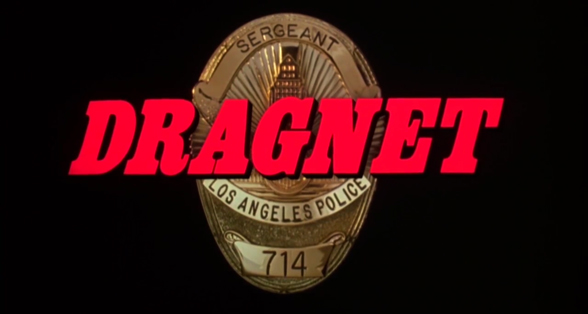
Jack Webb created the series, produced it through his Mark VII Productions, wrote some episodes, and starred as Detective Sergeant Joe Friday. The show would begin with Walter Schumann's composition, which became perhaps the most famous TV theme song of all time, with a photograph of Friday's badge, featuring the image of Los Angeles City Hall, and the number 714.

The common explanation for Friday's badge number is that Webb was a fan of baseball legend Babe Ruth, who hit 714 home runs. That had nothing to do with it. Another story was that Webb wanted 777, because 7 is considered a lucky number; but, for some reason or another, the LAPD wouldn't authorize that, but that they let him have 714, which was fine with Webb, since 14 is a multiple of 7. The real story is that there was a Sergeant Dan Cooke who helped Webb with material for the show, and he wore badge 714.

George Fenneman would begin each episode with this narration: "The story you are about to hear is true. The names have been changed, to protect the innocent." And Webb would begin to narrate, over a sweeping overhead shot of downtown: "This is the city: Los Angeles, California." He would set up the case with some mild exposition, and then say, "I was working the (day/night) shift out of (whatever the division was, which was unusual, as most detectives stay in one division). My partner is Frank Smith. My name's Friday. I carry a badge." And then the story would begin.

Friday's 1st partner, carried over from radio, was Sergeant Ben Romero, played by Barton Yarborough. But he died of a heart attack just 3 days after the pilot episode aired, and had completed only 1 other episode. For the rest of the 1951-52 TV season, Friday's partner was Sergeant Ed Jacobs, played by Barney Smith. Thereafter, Friday's partner was Sergeant Frank Smith, played first by Herb Ellis, then, for most of the show, by Ben Alexander.

Starting in Season 2, Olan Soule played Ray Pinker, the show's forensic scientist, a precursor to such roles on shows like Quincy and the CSI and NCIS franchises. Soule would go on to voice Batman in the 1970s Super Friends cartoons.

At the end of each show, "mug shots" would be shown, explaining the crimes with which the arrestees were charged, the verdicts in their trials, and, if convicted, their sentences. Their names were changed from the real stories, "to protect the innocent" -- not just the defendants, in case they were wrongly convicted, but their loved ones, who did not deserve to have viewers seek them out in anger.

The show ran 8 seasons, until August 23, 1959. It was the 1st police drama that real cops thought bore any resemblance to actual police work. There weren’t a lot of sensational car chases, and Webb had a rule that each cop could fire his gun a maximum of once per episode. Most of it was actual detective work: Interviewing complainants, suspects, and witnesses, and tracking down leads, before making the case. Friday frequently asked for "the facts," sometimes, "just the facts." He never once used the exact words so often attributed to him: "Just the facts, ma'am."

A Dragnet feature film, the first installment of the franchise in color, was released in 1954. In 1967, Webb, Mark VII and NBC relaunched the series in color. Alexander was on another police series on ABC, Felony Squad, and thus unavailable. So Harry Morgan, a veteran of the sitcoms December Bride and Pete and Gladys, and later the commanding officer Colonel Sherman T. Potter on M*A*S*H, became Friday's new partner, Bill Gannon.
The show took advantage of advances in technology, and took on the social issues of the late 1960s, including gangs, drugs, and teenage runaways coming to the Pacific Coast for the "Summer of Love" atmosphere. It ran for 3 seasons.

In 1968, Webb appeared on The Tonight Show Starring Johnny Carson, and parodied his show, telling of a theft at the Acme School Bell Company, whose boss Carson played. It became known as "The Copper Clapper Caper," and the ability of Webb and Carson to keep straight faces with all the alliteration made it one of the funniest bits in Tonight Show history. It is one of the few bits from Carson's New York years (1962-72) that has been preserved in color.

Webb died in 1982. The LAPD subsequently retired badge number 714. The badge and ID that Webb used as Friday were real LAPD equipment, and are on display at the city's police academy.

In 1987, a Dragnet film was released, with Dan Cooke as a technical advisor, but it was a comedy, almost a parody of the series. Morgan returned as Gannon, now a Captain. Dan Aykroyd played Sgt. Joe Friday, the nephew and namesake of the original. (The original Friday was famously a bachelor, the kind of man who was "married to his work," unlike Frank Smith, who frequently mentioned his own wife.) Tom Hanks played his unwanted new partner, Pep Streebeck, a slob -- an "Oscar Madison" to Joe's "Felix Unger." This dynamic would be reversed 2 years later, as Hanks played a neat-freak cop who had to take on a lovable but ill-behaved, messy dog in Turner & Hooch.

In 1989, The New Dragnet ran in syndication, but with entirely new characters. You might say the names had been changed, to protect the legendary. It didn't catch on, and was canceled less than a year after the pilot. In 2003, ABC paired with Dick Wolf, the producer of the Law & Order franchise, to create L.A. Dragnet, with Ed O'Neill as Joe Friday and Ethan Embry as Frank Smith. This didn't work, either, and after 22 episodes, albeit spread over almost 2 full years, it was canceled.

*

December 16, 1951 was a Sunday. Baseball was out of season. The NFL was in the final week of its regular season, and these games were played:

* The New York Giants beat the New York Yanks (not "Yankees"), 27-17 at Yankee Stadium.

* The Cleveland Browns beat the Philadelphia Eagles, 24-9 at Shibe Park in Philadelphia.

* The Pittsburgh Steelers beat the Washington Redskins, 20-10 at Griffith Stadium in Washington.

* The Chicago Cardinals beat their arch-rivals, the Chicago Bears, 24-14 at Comiskey Park in Chicago.

* The Los Angeles Rams beat the Green Bay Packers, 42-14 at the Los Angeles Memorial Coliseum.

* And the San Francisco 49ers beat the Detroit Lions, 21-17 at Kezar Stadium in San Francisco.

The following week, the Rams beat the Browns in the NFL Championship Game at the L.A. Coliseum, avenging their loss to the Browns in the previous year's title game.

There were 5 games played in the NBA that day:

* The New York Knicks beat the Fort Wayne Pistons, 80-71 at North Side High School in Fort Wayne, Indiana. Yes: Until the Allen County War Memorial Coliseum opened the following September 28, an NBA team was playing home games in a high school gymnasium. This was a long time ago.

* The Boston Celtics beat the Philadelphia Warriors, 92-90 in overtime at the Boston Garden.

* The Indianapolis Olympians beat the Syracuse Nationals, 96-92 at the Onondaga County War Memorial (now the Upstate Medical University Arena) in Syracuse, New York.

* The Rochester Royals beat the Baltimore Bullets, 99-95 at the Edgerton Park Arena in Rochester, New York.

* And the Minneapolis Lakers beat the Milwaukee Hawks, 99-52 at the Minneapolis Auditorium.

And the NHL's entire "Original Six" were in action:

* The New York Rangers lost to the Detroit Red Wings, 3-1 at the old Madison Square Garden.

* The Montreal Canadiens beat the Boston Bruins, 4-2 at the Boston Garden.

* And the Chicago Black Hawks beat the Toronto Maple Leafs, 4-3 at the Chicago Stadium.

Wednesday, December 14, 2022

December 14, 1963: The Baldwin Hills Dam Break

December 14, 1963: The Baldwin Hills Dam, in the Los Angeles suburb of Baldwin Hills, California, breaks, killing 5 people, destroying 277 homes, and causing a water shortage for 500,00 people. Extensive rescue efforts kept the death toll low.

The reservoir was constructed on a low hilltop between 1947 and 1951 by the Los Angeles Department of Water and Power, directly on an active fault line, which was subsidiary to the well-known nearby Newport-Inglewood Fault. The underlying geologic strata were considered unstable for a reservoir, and the design called for a compacted soil lining meant to prevent seepage into the foundation. The fault lines were considered during planning, but were deemed by some, although not all, of the engineers and geologists involved as not significant.

The break began with signs of lining failure, followed by increasingly serious leakage through the dam at its east abutment. After three hours, the dam breached, and it took only 77 minutes for all the water to pour out into Cloverdale Avenue, La Brea Avenue, La Cienega Boulevard and Jefferson Boulevard.

The former reservoir is now part of the Kenneth Hahn State Recreation Area. Hahn was a member of the Los Angeles City Council from 1947 to 1952, and a member of the Los Angeles County Board of Supervisors from then until 1992. In that time, he worked with Dr. Martin Luther King, Mayor Tom Bradley, and other civil rights leaders. He never ran for Mayor, but his son James was elected in 2001, but was defeated for re-election in 2005. Kenneth's daughter Janice served in Congress, and is now on the County Board of Supervisors herself.

*

December 14, 1963 was a Saturday. Actress Cynthia Gibb was born. And singer Dinah Washington died. And the Baldwin Hills Dam broke in Los Angeles, killing 5 people. I have separate entries for Washington's death and the dam break.

Baseball was out of season. There were no games played in the NFL. In the American Football League, the New York Jets lost to the Buffalo Bills, 19-10. This was the last event ever held at the Polo Grounds. I have a separate entry for that event as well.

Also in the AFL that day, the Kansas City Chiefs beat the Boston Patriots, 35-3 at Kansas City Municipal Stadium. In the National Football League, the Green Bay Packers beat the San Francisco 49ers, 21-17 at Kezar Stadium in San Francisco. The rest of both Leagues played the next day, Sunday.

It was the last weekend of the college football season before the bowl games, and only 2 games were played. The University of Houston beat the University of Louisville, 21-7 at Rice Stadium in Houston, where they were groundsharing with their crosstown rivals, Rice University.

And Number 9 Alabama, coached by Paul "Bear" Bryant and quarterbacked by Joe Namath, beat the University of Miami, 17-12 at the Orange Bowl stadium in Miami. 'Bama and the University of Mississippi, each of whom had faced an integration crisis over the last year and change, did not play each other in the regular season, but 'Bama's losses to Florida and arch-rival Auburn, along with Ole Miss' undefeated season, gave Ole Miss the Southeastern Conference Championship. But since 'Bama hadn't had their shot at Ole Miss, they were pitted against each other in the Sugar Bowl, which traditionally features the SEC Champion, and 'Bama won, 12-7.

There were 4 games played in the NBA that day:

* The New York Knicks lost to the Philadelphia 76ers, 123-119 at the old Madison Square Garden.

* The Cincinnati Royals beat the Boston Celtics, 108-105 at the Boston Garden.

* The St. Louis Hawks beat the Detroit Pistons, 104-92 at the Kiel Auditorium in St. Louis.

* And the Los Angeles Lakers beat the Baltimore Bullets, 113-108 at the Los Angeles Memorial Sports Arena. Jerry West led all scorers on the day with 38 points.

The NHL's entire "Original Six" was in action that day:

* The New York Rangers lost to the Toronto Maple Leafs, 5-3 at Maple Leaf Gardens in Toronto.

* The Montreal Canadiens beat the Boston Bruins, 3-1 at the Montreal Forum.

* And the Detroit Red Wings beat the Chicago Black Hawks, 5-4 at the Olympia Stadium in Detroit.

And in English soccer, Arsenal, the North London team that I would one day support, traveled to the Birmingham area, and played Wolverhampton Wanderers, a.k.a. Wolves, to a 2-2 draw.

Sunday, December 11, 2022

December 11, 1964: The Death of Sam Cooke

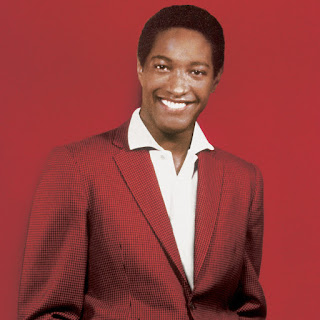
December 11, 1964: Sam Cooke dies under mysterious circumstances in Los Angeles.

Born on January 22, 1931 in Clarksdale, Mississippi, as Samuel Cook (no middle name), he was taken to Chicago by his family at age 2. He attended Wendell Phillips Academy, an all-black high school on the South Side, named for a well-known abolitionist. That school had already produced singers Nat "King" Cole and Dinah Washington, comedian George Kirby, Negro League star Ted "Double Duty" Radcliffe, and Pro Football Hall-of-Famer Buddy Young. Actress Marla Gibbs was a classmate of Sam's. The school would later produce jazz bandleader Herbie Hancock and football players Mike Pruitt and Chris Hinton.

In 1950, only 19 years old, Sam was good enough to be asked to replace R.H. Harris as lead singer of The Soul Stirrers, then the country's most popular black gospel group. He infuriated gospel fans by turning secular in 1957, adding an E to the end of his name, and had a Number 1 hit with "You Send Me."

The hits kept coming: "Only Sixteen" in 1959, "Wonderful World" and "Chain Gang" in 1960, "Cupid" in 1961, "Twistin' the Night Away" in 1962, "Another Saturday Night" in 1963, and "Good News" in 1964. Sam wrote, or co-wrote, all of these, some with his brother Charles Cook, with Robert "Bumps" Blackwell producing them. He also had hits with covers of the blues songs "Frankie and Johnny" and "Little Red Rooster."

His concerts became a sensation, including at the Copacabana in New York. Women threw themselves at him. He was married twice, raised his 1st wife's son, had 3 children with his 2nd wife, and is believed to have had 3 other children.

In 1963, he signed a contract with Allen Klein, who would later manage The Rolling Stones and mismanage The Beatles. Cooke had no problem with him, as he negotiated one of the best record-and-royalty deals any star, regardless of race, had ever gotten to that point.

That year, he heard Bob Dylan's song "Blowin' in the Wind," which had verses reflecting the civil rights and antiwar struggles. It stuck in his mind, and made him want to write a similar song. But he was afraid of losing the white fans he'd gained. So he compromised, recording "Blowin' in the Wind," and singing it at his shows. He didn't lose any fans.

On October 8, 1963, he made reservations for himself, his wife Barbara, his brother Charles, and his backing group at the Holiday Inn North in Shreveport, Louisiana, a segregated city. When they got there, the desk clerk, according to a contemporary report, "glanced nervously," and said there were no vacancies.

Sam had a fit. He demanded to see the manager, and refused to leave until he did. Barbara was scared, telling him, "They'll kill you!" He said, "They ain't gonna kill me, because I'm Sam Cooke." He must have forgotten that his fellow Phillips alumnus, Nat "King" Cole, an even bigger star, had been badly beaten onstage at a concert in Birmingham, Alabama in 1956. And that was with thousands of witnesses.

Finally, Sam was convinced to leave. He found a payphone, and called the all-black Castle Motel, and made a reservation there. The police had been tipped off: When the Cooke party got to the Castle, they were arrested for disturbing the peace. It took until 2019 for the City of Shreveport to offer an official apology to the Cooke family.

On January 30, 1964, Sam recorded a new song he'd written, "A Change Is Gonna Come." It had been 7 months since the assassination of Medgar Evers and the removal of George Wallace from the schoolhouse door, 5 months since the March On Washington that featured Martin Luther King's "I Have a Dream" speech, 4 months since the Birmingham church bombing, 3 months since the Shreveport arrest, 2 months since the assassination of John F. Kennedy, and 17 days since Dylan released his civil rights-heavy album The Times They Are A-Changin'. (It had also been 5 days since The Beatles hit Number 1 in America with "I Want to Hold Your Hand," but that had nothing to do with civil rights.)

Klein loved the song, and booked Sam on The Tonight Show Starring Johnny Carson for February 7. It was the 3rd time he'd appeared on the show. He sang "A Change Is Gonna Come." Johnny did not object. Nor did producer Fred de Cordova. Nor did NBC executives. Nor did NBC censors. Nor did NBC's sponsors. In fact, there was very little attention paid to it, mainly because this was the day The Beatles arrived in America, to perform on The Ed Sullivan Show 2 days later. (Sam had appeared on Sullivan, twice in 1957 after his initial burst of success, but hadn't done so since.)

On March 1, Sam's album Ain't That Good News was released, with "A Change Is Gonna Come" on it. But it wasn't yet released as a single. And he got nervous, not singing it in concert after The Tonight Show. On November 16, Sam recorded "Shake," a great dance number, and it was set to be released on December 22, with "A Change Is Gonna Come" as the B-side.

On December 10, 1964... We may never know the full facts. Sam was in Los Angeles, and had dinner with Al Schmitt and Schmitt's wife at Martoni's, an Italian restaurant popular with music industry people like Schmitt. They drank martinis, apparently to excess. They made plans to go to a nightclub named PJ's. The last time Schmitt saw Sam, he was at the bar at Martoni's, talking to a woman Schmitt didn't recognize.

Interviewed in 2020, Schmitt said that he and his wife went to PJ's, "But Sam never showed up. So I went home. I was told later he got there about 15 minutes later, just before closing time, and they wouldn't let him in. He was with this girl."

"This girl," apparently the same one Schmitt saw Sam talking to at the Martoni's bar, was Elisa Boyer, then 22. Sam took her to his cherry-red Ferrari, and drove her to South Central Los Angeles, to the Hacienda Motel, known to the Los Angeles Police Department as a hangout for men cheating on their wives. They checked in at 2:35 AM on December 11, signing the register as Mr. and Mrs. Sam Cooke.

Boyer told the police that Sam pinned her on the bed and began to tear off her clothes, intending to rape her. Then he went to the bathroom to take off his clothes. She then grabbed her clothes, and his as well. She found a phone booth and called the police, saying she'd been kidnapped.

The hotel's manager, Bertha Franklin, told the police that Sam, wearing the one piece of clothing he still had, a sport coat, came at her in a drunken rage, grabbed her, and asked, "Where's the girl?" She said she pushed Cooke away, grabbed a gun, and fired 3 shots. One missed, another went through Sam's heart, another through his lung. He yelled, "Lady, you shot me!" And he fell, dead, at age 33.

The LAPD, notorious for racism at the time (and for a long time after), ruled his death a justifiable homicide.

Nobody who knew Sam believed that. They knew he was a womanizer and, if not an out-and-out alcoholic, certainly a drinker. But he was not by nature a violent man. He was not known to go to "no-tell motels." His sister, Agnes Cooke-Hoskins, said, "My brother was first class all the way. He would not check into a $3-a-night motel. That wasn't his style."

And not only was the Hacienda a known hooker's hangout, but Franklin herself had a criminal record as a madam. The prevailing theory is that Boyer was a prostitute who decided to take Sam's money, and also his clothes so that he couldn't just run out after her.

What's more, at his funeral, singer Etta James noticed that he'd been beaten: "His hands were broken and crushed... They tried to cover it up with makeup, but I could see massive bruises on his head." These injuries were not mentioned in the autopsy report. Some people suspect that he was killed elsewhere, and dumped at the Hacienda, and that Boyer and Franklin were paid off to tell the story they told.

Sam had met Muhammad Ali, football star Jim Brown, and Nation of Islam spokesman Malcolm X at the Hampton House hotel in Miami after Ali won the Heavyweight Championship of the World 10 months earlier, beating Sonny Liston. Ali said, "If Cooke had been Frank Sinatra, the Beatles or Ricky Nelson, the FBI would be investigating."

His body was flown to his hometown in Chicago for one funeral, then back to Los Angeles for another. He was laid to rest at Forest Lawn Memorial Park Cemetery in the L.A. suburb of Glendale, California.

Bertha Franklin had to quit her job at the Hacienda. She died in 1966, at age 57, of a massive heart attack. The Hacienda still stands, under the name Polaris Motel, at 9137 South Figueroa Street, 4 miles (52 blocks) south of the Los Angeles Coliseum, and 7 miles (80 blocks) south of the Crypto.com Arena (formerly the Staples Center).

Sam's Ferrari from that night would figure in another rock star's death. Dennis Wilson, the drummer for the Beach Boys, bought it, and it was parked nearby when he drowned in Marina Del Rey in 1983, 19 years to the month later. In 2007, a Japanese collector bought the car.

On January 11, 1965, exactly 1 month after the murder, as "Shake" was becoming a Top 10 hit and "A Change Is Gonna Come" was struggling to reach the Top 40, Elisa Boyer was arrested for prostitution. Maybe somebody told her to "lay low," and she misunderstood. In 1979, she murdered her boyfriend, and was found guilty, and sentenced to 25 years to life in prison. As of December 11, 2022, at the age of 80, she is still incarcerated. Al Schmitt died in 2021.

In 1986, Sam Cooke was 1 of 10 charter acts inducted into the Rock and Roll Hall of Fame. Had he lived, he would have been 55. In 1989, The Soul Stirrers were elected to the Rock Hall in the "early influences" category, making Sam only the 2nd double inductee. (Clyde McPhatter had been elected as a soloist in 1987 and as one of The Drifters in 1988.)

Sam was played by Paul Mooney in The Buddy Holly Story in 1978, and Leslie Odom Jr. in One Night In Miami in 2020.

*

December 11, 1964 was a Friday. Baseball was out of season. Football was in midweek. And no NHL games were scheduled for that night.

But there were 2 games played in the NBA. The Boston Celtics beat the Philadelphia 76ers, 118-109 at the Philadelphia Civic Center's Convention Hall. And the Detroit Pistons beat the San Francisco Warriors, 104-100 at the Cow Palace, outside San Francisco in Daly City, California, despite 40 points from the Warriors' Wilt Chamberlain.

Thursday, December 8, 2022

December 8, 1976: The Eagles Release "Hotel California"

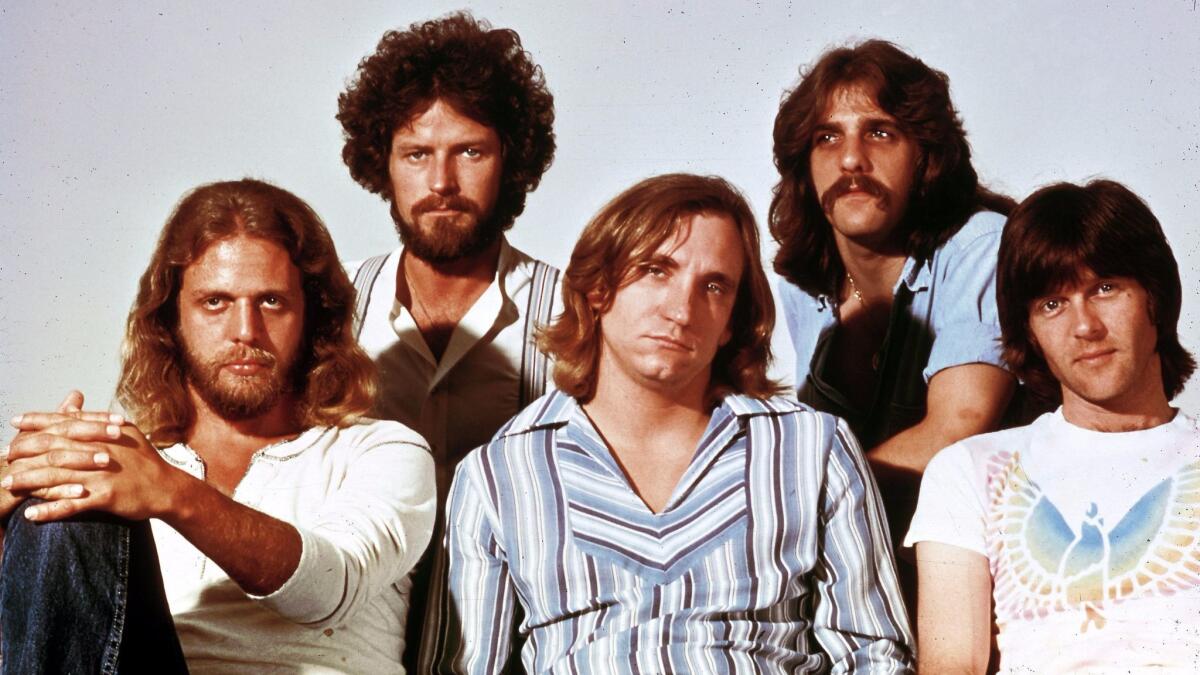
Left to right: Don Felder, Don Henley, 
Joe Walsh, Glenn Frey, Randy Meisner

December 8, 1976: Rock band The Eagles release their 5th album, Hotel California. It becomes not only their signature album, but perhaps the defining rock and roll album of the 1970s.

In an interview with a Dutch magazine, Don Henley, the group's drummer and, along with rhythm guitarist Glenn Frey, one of their 2 main songwriters, said:

This is a concept album, there's no way to hide it, but it's not set in the old West, the cowboy thing, you know. It's more urban this time...

It's our Bicentennial year, you know, the country is 200 years old, so we figured, since we are the Eagles, and the Eagle is our national symbol, that we were obliged to make some kind of a little Bicentennial statement, using California as a microcosm of the whole United States, or the whole world, if you will, and to try to wake people up and say, "We've been okay so far, for 200 years, but we're gonna have to change if we're gonna continue to be around."

In another interview, he said:

They're the same themes that run through all of our work: Loss of innocence, the cost of naiveté, the perils of fame, of excess; exploration of the dark underbelly of the American dream, idealism realized and idealism thwarted, illusion versus reality, the difficulties of balancing loving relationships and work, trying to square the conflicting relationship between business and art; the corruption in politics, the fading away of the Sixties dream of "peace, love and understanding."

The word, "California," carries with it all kinds of connotations, powerful imagery, mystique, etc., that fires the imaginations of people in all corners of the globe. There's a built-in mythology that comes with that word, an American cultural mythology that has been created by both the film and the music industry.

Bernie Leadon had been the group's lead guitarist and chief influencer in the style of country music, making The Eagles the leader of the "country rock" movement. But he left the group after their previous album, One of These Nights. He was replaced by Joe Walsh, formerly of The James Gang, and he teamed with guitarist Don Felder and bass guitarist Randy Meisner to take them in a more straight-ahead rock direction.

For the title track, Felder wrote the melody, and Henley wrote most of the lyrics, with help from Frey. The building on the front cover of the album is the Beverly Hills Hotel, its location in the ritziest suburb of Los Angeles being emblematic of wealth. The building on the back cover is the Lido Hotel, in seedier Huntington Park.

Neither building is meant to have satanic connections, and the mysterious shadowy figure looking out the window on the back cover is not meant to be the Devil. These misconceptions are not helped by the lyrics:

* "So I called up, the Captain, 'Please bring me my wine.' He said, 'We haven't had that spirit here since 1969.'" That's not a reference to the founding of the Church of Satan. It's a reference to the Altamont festival in the Bay Area city of Livermore, the intended "West Coast Woodstock," that ended in disaster, ending "the spirit of the Sixties."

* "And in the master's chambers, they gathered for the feast. They stab it with their steely knives, but they just can't kill the beast." "The master" is not explicitly said to be the Devil. And, in the Bible's book of Revelation, "the Beast" is a separate being from the Devil and the Antichrist.

* "You can check out anytime you like, but you can never leave." That sure sounds like Hell, but it's more a metaphor for the American, the Californian, the Los Angeleno lifestyle, where "Some dance to remember, some dance to forget."

Nevertheless, it's one of the greatest rock and roll recordings ever made. The 1st 52 seconds are Felder, Walsh and Frey warming up on guitar, before Henley begins to sing. The lyrics end at the 4:20 mark, and then Walsh and Felder spend the last 2 minutes and 11 seconds dueling on their guitars until they fade out.

"Life in the Fast Lane" was a metaphor for Frey's drug problem. "New Kid in Town" is about the nature of celebrity, as Frey reminds us, "They will never forget you 'til somebody new comes along." "The Last Resort" was about the spoiling of the American West: Henley closed with, "When you call a place 'Paradise,' kiss it goodbye."

Ironically, much of the album wasn't recorded in California. Producer Bill Szymczyk had developed a fear of earthquakes. So they compromised, recording some of it at the Record Plant in Los Angeles, and some at Criteria Studios in Miami. Also recording at Criteria, in a separate studio, was Ozzy Osbourne's band, Black Sabbath, which led to Szymczyk having to stop recording a few times, because Sabbath were just too loud.

"New Kid in Town" and the title track both hit Number 1 in 1977, while "Life in the Fast Lane" reached the Top 10. The album reached Number 1, and has sold over 32 million copies. After this album, Meisner, whose biggest contribution was writing and singing "Take It to the Limit," off One of These Nights, left the group -- the reason why is in dispute -- and was replaced on bass by Timothy B. Schmit. It was the 2nd time Schmit had replaced Meisner in a band, having previously done so in Poco. With Henley, Frey, Felder, Walsh and Schmit, The Eagles recorded The Long Run in 1979, and then broke up.

Henley, Frey and Walsh all had successful solo careers, but bad blood led Henley to say the group would reunite "when Hell freezes over." Well, in 1994, with their Long Run lineup, they reunited, and titled both their new album and their subsequent tour Hell Freezes Over. 

They began their shows with an acoustic version of "Hotel California." Walsh adopted, with some appropriateness given the State, a Spanish style for the long outro. Like the original version of Simon & Garfunkel's "The Sound of Silence," the acoustic version might be spookier than the electric version.

Meisner has only performed with the band once since leaving, at their 1998 induction into the Rock and Roll Hall of Fame. Leadon also appeared then, and rejoined them on tour from 2013 to 2015. Frey died in 2016, and his son Deacon Frey took his place in the band, before leaving for a solo career in 2022. Leadon appeared with Henley, Walsh and Schmit in a tribute to Glenn Frey at the 2016 Grammy Awards.

As of December 8, 2022: Szymczyk is 79; Meisner is 76; and Henley, Leadon, Walsh, Felder and Schmit are all 75. Scott Crago, since 1994 their touring drummer for songs where Henley sings out front, is 59.

UPDATE: Meisner died in 2023. And it took me until 2024 to think of this, but the 1970s were Schrödinger's Decade. There was too much overwrought music, and, at the same time, not enough of it.

*

December 8, 1976 was a Wednesday. English actor Dominic Monaghan was born.

Baseball was out of season. Football was in midweek. There were 8 games played in the NBA:

* The New York Knicks beat the New York Nets, 105-95 at the Nassau Coliseum. Earl "the Pearl" Monroe scored 37 for the Knickerbockers, and Lonnie Shelton scored 31. Nate "Tiny" Archibald had 27 to top the Nets, who, due to the entry fee into the NBA and the big territorial indemnification fee to the Knicks forcing them to sell Julius "Dr. J" Erving to the Philadelphia 76ers, went, practically overnight, from the last Champions of the ABA to the worst team in the NBA.

* The Boston Celtics beat the Portland Trail Blazers, 104-95 at the Boston Garden.

* The Philadelphia 76ers beat the Buffalo Braves, 123-102 at The Spectrum in Philadelphia. The aforementioned Julius Erving scored 20 points.

* The Seattle SuperSonics beat the Washington Bullets, 109-99 at the Capital Centre in the Washington suburb of Landover, Maryland.

* The Detroit Pistons beat the Chicago Bulls, 107-100 at Cobo Hall (now Huntington Place) in Detroit.

* The Indiana Pacers beat the Los Angeles Lakers, 111-98 at the Market Square Arena in Indianapolis.

* The Phoenix Suns beat the Houston Rockets, 116-96 at the Arizona Veterans Memorial Coliseum in Phoenix.

* The Atlanta Hawks beat the San Antonio Spurs, 117-106 at the HemisFair Arena in San Antonio. John Drew had 39 points.

There were 6 games played in the NHL:

* The New York Rangers and the St. Louis Blues played to a tie, 4-4 at Madison Square Garden.

* The Vancouver Canucks beat the Toronto Maple Leafs, 4-3 at Maple Leaf Gardens in Toronto.

* The Buffalo Sabres beat the Cleveland Barons, 5-1 at The Coliseum in the Cleveland suburb of Richfield, Ohio.

* The Montreal Canadiens beat the Chicago Black Hawks, 4-3 at the Chicago Stadium.

* The Atlanta Flames beat the Minnesota North Stars, 5-0 at the Metropolitan Sports Center in the Minneapolis suburb of Bloomington, Minnesota.

* The Colorado Rockies and the Los Angeles Kings played to a tie, 3-3 at The Forum outside Los Angeles in Inglewood, California.

* And the New York Islanders, the Boston Bruins, the Detroit Red Wings, the Philadelphia Flyers, the Pittsburgh Penguins and the Washington Capitals were not scheduled.

And there were 3 games played in the WHA:

* The New England Whalers beat the Houston Aeros, 5-1 at the Hartford Civic Center (now the PeoplesBank Arena).

* The San Diego Mariners beat the Cincinnati Stingers, 6-1 at the Riverfront Coliseum (now the Heritage Bank Center) in Cincinnati.

* And the Winnipeg Jets beat the Calgary Cowboys, 4-2 at the Stampede Corral in Calgary.

December 31, 1999 & January 1, 2000: The Millennium

December 31, 1999:  The Millennium arrives. The people of planet Earth survived. At a terrible cost. But we hadn't destroyed ourselves. ...