Showing posts with label qualcomm stadium. Show all posts

Thursday, October 20, 2022

October 20, 1998: Scott Brosius vs. Trevor Hoffman

October 20, 1998: Game 3 of the World Series, in front of 64,667 at Jack Murphy – excuse me, Qualcomm Stadium in San Diego. Having hosted Super Bowl XXXII in January, this becomes the 1st time the Super Bowl and the World Series have been played in the same stadium -- or even in the same metropolitan area -- in the same calendar year.

The Metrodome in Minneapolis hosted the World Series in October 1991, Super Bowl XXVI in January 1992, and the NCAA Final Four in April 1992. But no stadium has hosted a Super Bowl and a World Series in the same calendar year since. Detroit in 2006, Dallas in 2011 and Houston in 2017 have hosted both in the same metro area in the same calendar year, but not in the same stadium.

In the pre-Super Bowl era, World Series and NFL Championship Games had been played in the same city in the same calendar year as follows: New York in 1936 (including both at the Polo Grounds), 1938, 1956 (including both at the original Yankee Stadium) and 1962 (including both at Yankee Stadium); Detroit in 1935; and Cleveland in 1954 (including both at Cleveland Municipal Stadium).

The New York Yankees had beaten the San Diego Padres in the 1st 2 games of the Series, at Yankee Stadium. In Game 3 in San Diego, the Padres take a 3-0 lead on the Yankees, but 3rd baseman Scott Brosius, having the season of his life -- it was the only time in his 11-season major league career that he made the All-Star Game -- hits a home run to make it 3-2. In the top of the 8th, with the Yankees threatening with 2 men on, the Padres bring in their closer, Trevor Hoffman.
The Padre fans, believing him to be the world's greatest relief pitcher, wave their white towels and cheer wildly. The words, "TREVOR TIME" appear on the scoreboard. The public-address system blasts the song "Hell's Bells" by AC/DC.

Yankees owner George Steinbrenner, not familiar with the hard rock music of the 1970s and 1980s -- and also not familiar with the legally-forced change of name to the WWE -- tells the New York beat writers, "When they played that death march, it sounded like the WWF, when The Undertaker comes in. That's who I thought they were bringing in!"

Certainly, for NL batters that season, Hoffman might as well have been an undertaker. The whole production had become one of the most intimidating scenes in baseball.

But these are not NL batters, these are the New York Yankees, and they fear nobody. Brosius takes him over the center field wall for a 5-3 Yankee lead, soon to be a 5-4 Yankee victory. The actual best closer in the game, Mariano Rivera, finishes it off, and the Yankees wrapped up the Series with a sweep the next night.

Brosius played 4 seasons for the Yankees: 1998, 1999, 2000 and 2001. In each of those seasons, the Yankees won the Pennant. In each of the ensuing World Series, Brosius hit a home run. (In this case, 2 of them.) He took a ground ball at 3rd base for the last out of Game 4, and of the Series, as the Yankees finished off the sweep. But it had already been decided that he would be named the Series' Most Valuable Player.

Hoffman would become the major leagues' all-time saves leader with 601. Rivera would surpass him, and raise the record to 654. Both were elected to the Baseball Hall of Fame, and both had their numbers retired by their teams: Hoffman's 51 by the Padres, and Rivera's 42 for the Yankees. (Number 42 had already been retired for all of baseball for Jackie Robinson, but players then wearing it were allowed to continue wearing it. Rivera was the last one.)

The 1998 Yankees were the greatest team in baseball history. The case for them is not just the 114-48 regular-season record, or the 125-50 record counting the postseason. It's this: In 1998, the Texas Rangers had probably the best team in franchise history to that point. The Cleveland Indians had perhaps the best team franchise history to that point. The San Diego Padres had absolutely the best team in franchise history to that point. And the Yankees went into the postseason, and went 11-2 against those teams.

*

October 20, 1998 was a Tuesday. The NFL was in midweek. The NBA team owners had locked the players out, and the season probably wouldn't have started this soon, anyway. There were 4 games played in the NHL:

* The New York Rangers beat the Edmonton Oilers, 3-2 at Madison Square Garden.

* The Philadelphia Flyers beat the San Jose Sharks, 3-1 at the First Union Center (now the Xfinity Mobile Arena) in Philadelphia.

* The Carolina Hurricanes beat the Vancouver Canucks, 3-1 at the Greensboro Coliseum in Greensboro, North Carolina.

* And the Dallas Stars beat the Calgary Flames, 3-1 at the Reunion Arena in Dallas.

Friday, October 7, 2022

October 7, 2001: A Day of Records In Baseball

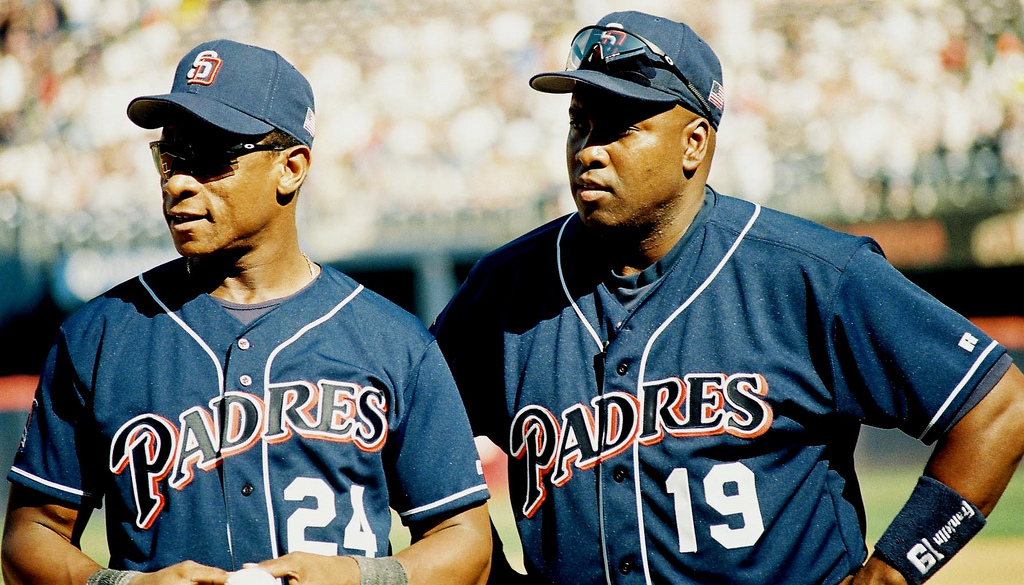
Rickey Henderson (left) and Tony Gwynn

October 7, 2001: On the last day of the regular season -- delayed a week, due to the 9/11 attacks -- the Colorado Rockies beat the San Diego Padres, 14-5 at Qualcomm Stadium in San Diego. Rickey Henderson, now with the Padres, bloops a double down the right-field line off John Thomson of the Colorado Rockies. It is the 3,000th hit of his career.

Tony Gwynn, who is playing in his last game, meets him at home plate, 2 members of the 3,000 Hit Club together. Gwynn retires with a .338 lifetime batting average, which remains the highest of any player who debuted after the 1939 season. (That was Ted Williams' rookie year, and he finished his career at .344.) It is also the highest of any black man, whether American or Hispanic.

Also on this day, Barry Bonds extends his major league record for home runs in season to 73*, as he drives a 3-and-2 1st-inning knuckleball off Los Angeles Dodger Dennis Springer over the right field fence at Pacific Bell Park (now named Oracle Park). The blast also secures two more major league records * for the San Francisco Giants' left fielder, as he surpasses Babe Ruth (1920, .847) with a .863* season slugging percentage, and bests Mark McGwire (1998, one homer every 7.27 AB *) by homering in every 6.52 at-bats *. The Giants beat the Dodgers, their arch-rivals, 2-1.

Indeed, it is a day of records. The Chicago Cubs lose to the Pittsburgh Pirates, 4–3 at Wrigley Field in Chicago. They become the 1st team in major league history to not allow an opposing pitcher to throw a complete game against them all season. Sammy Sosa closes out 2001 with his 64th * home run in his final at-bat of the game, and sets a new franchise record with 98 * extra base hits, one more than Hack Wilson had in 1930.

Sosa also finishes with another franchise record of 425 total bases (the 7th-best all-time total), 2 ahead of Wilson. His 160 RBI are the highest total in the NL since Wilson set the MLB record with 191 in 1930. Chuck Klein had 170 that year. Sosa's RBI total for the past 4 years also breaks Klein's 4-year mark set in 1929-32. To finish out the record day, 5 Cubs pitchers combine for 12 strikeouts as the staff sets a major league record with 1,246 strikeouts. The Yankees do the same, setting an AL mark with 1,266 strikeouts.

As for the guy with whom Sosa battled for the single-season home run record in 1998, Mark McGwire plays his last game. He pinch-hits for Jim Edmonds in the bottom of the 9th, and flies to center, as the St. Louis Cardinals lose 9-2 to the Houston Astros at Busch Stadium. He finishes with 583 home runs.

It hadn't been all that long since people were thinking he had a shot at breaking Hank Aaron's record of 755. But it would be Bonds that broke it. At 38, McGwire should have had something left. But he battled injury and batted just .187 that season. The steroids caught up to him.

*

October 7, 2001 was a Sunday. These other MLB games were played on this final day of the regular season:

* The New York Yankees beat the Tampa Bay Devil Rays, 1-0 at Tropicana Field in St. Petersburg, Florida. Mike Mussina (4 innings), Orlando "El Duque" Hernández (4 innings and the winning pitcher) and Mariano Rivera (1 inning) combined on a 2-hit shutout. The only run of the game came on a home run by... Clay Bellinger? The Yankees only got 3 hits of their own, the others being by Chuck Knoblauch and David Justice.

* The New York Mets lose to the Montreal Expos, 5-0 at Shea Stadium. Britt Reames (5 2/3rds innings), Scott Stewart (1 1/3rd) and Scott Strickland (2) limit the Mets to 3 hits.

* The Florida Marlins beat the Atlanta Braves, 4-2 at Turner Field (now Center Parc Stadium) in Atlanta.

* The Cleveland Indians beat the Toronto Blue Jays, 3-2 at the SkyDome (now the Rogers Centre) in Toronto.

* The Philadelphia Phillies beat the Cincinnati Reds, 4-1 at Cinergy Field (formerly Riverfront Stadium) in Cincinnati.

* The Kansas City Royals beat the Detroit Tigers, 10-4 at Comerica Park in Detroit.

* The Milwaukee Brewers beat the Arizona Diamondbacks, 15-5 at Miller Park (now American Family Field) in Milwaukee.

* The Minnesota Twins beat the Chicago White Sox, 8-5 at the Metrodome in Minneapolis.

* The Oakland Athletics beat the Anaheim Angels, 6-2 at Edison International Field (now Angel Stadium of Anaheim).

* And the Texas Rangers beat the Seattle Mariners, 4-3 at Safeco Field (now T-Mobile Park) in Seattle. The Mariners had won 116 games, setting a new American League record and tying the major league record of the 1906 Cubs. But they wouldn't even win the Pennant.

It was also an NFL Sunday:

* The New York Giants beat the Washington Redskins, 23-9 at Giants Stadium in the Meadowlands.

* The New York Jets beat the Buffalo Bills, 42-36 at Ralph Wilson Stadium (formerly Rich Stadium) in the Buffalo suburb of Orchard Park, New York.

* The Arizona Cardinals beat the Philadelphia Eagles, 21-20 at Veterans Stadium in Philadelphia.

* The Baltimore Ravens beat the Tennessee Titans, 26-7 at M&T Bank Stadium in Baltimore.

* The Chicago Bears beat the Atlanta Falcons, 31-3 at the Georgia Dome in Atlanta.

* The Tampa Bay Buccaneers beat the Green Bay Packers, 14-10 at Raymond James Stadium in Tampa.

* The Miami Dolphins beat the New England Patriots, 30-10 at Pro Player Stadium (now Hard Rock Stadium) in Miami Gardens, Florida.

* The New Orleans Saints beat the Minnesota Vikings, 28-15 at the Superdome in New Orleans.

* The Pittsburgh Steelers played their 1st game at Heinz Field, it having been postponed after the 9/11 attacks. They beat the Cincinnati Bengals 16-7. (In 2022, the stadium was renamed Acrisure Stadium.)

* The Cleveland Browns beat the San Diego Chargers, 20-16 at Cleveland Browns Stadium (now named Huntington Bank Field).

* The Denver Broncos beat the Kansas City Chiefs, at Invesco Field at Mile High (now Empower Field at Mile High) in Denver.

* The San Francisco 49ers beat the Carolina Panthers, 24-14 at Candlestick Park (then named 3Com Park at Candlestick Point) in San Francisco.

* The Seattle Seahawks beat the Jacksonville Jaguars, 24-15 the Husky Stadium in Seattle.

* The Oakland Raiders beat the Dallas Cowboys, 28-21 at the Oakland Coliseum (then named the Network Associates Coliseum).

* And the next night, on ABC Monday Night Football, the St. Louis Rams beat the Detroit Lions, 35-0 at the Silverdome in the Detroit suburb of Pontiac, Michigan.

Saturday, September 10, 2022

September 10, 1978: The Holy Roller Play

September 10, 1978: The San Diego Chargers host their arch-rivals, the Oakland Raiders, at San Diego Stadium. (Built in 1967, it was renamed Jack Murphy Stadium in 1981, Qualcomm Stadium in 1997, and SDCCU Stadium in 2017, before being demolished in 2020).

Coached by John Madden, the Raiders had won the Super Bowl 2 years earlier, and were still considered one of the best teams in the NFL. But the Chargers were a team on the rise, with head coach Don Coryell putting his "Air Coryell" attack into place, as quarterback Dan Fouts threw to receivers Charlie Joiner and John Jefferson, and tight end Kellen Winslow.

The Chargers led 20-14 as the clock wound down, and the Raiders launched a last drive. With 10 seconds left, they had the ball at the Chargers' 14-yard line. Raider quarterback Ken Stabler faded back, but was sacked by Woodrow Lowe. He fumbled the ball.

In so doing, the ball moved forward. Running back Pete Banaszak tried to pick the ball up on the 12, but fell. In so doing, he moved the ball further forward. Tight end Dave Casper also tried to grab the ball. He couldn't. He kicked the ball into the end zone. Finally, he fell on it, in the end zone. The play was ruled a touchdown for the Raiders.

On the film, Ted Giannoulas, in the original version of his San Diego Chicken costume, can be seen fainting at the seemingly unfair touchdown call. Madden ran onto the field, and asked Jerry Markbreit, one of the better referees in NFL history, if the touchdown was going to count. Markbreit said it did. Tie game. When Errol Mann kicked the extra point, the Raiders had won, 21-20.

The Chargers were shocked, and insisted that the call be overturned, because the Raiders had batted the ball forward. Except, at the time, there was no rule against that. One would be put in place the following season, making it illegal for the offensive team to advance a fumble, to prevent this from ever happening again. But that did the Chargers no good. It became known as "the Holy Roller Play."

The Chargers finished the season 9-7, and missed the Playoffs. Had they won the game, they would have been 10-6, and made the Playoffs.

Looking back on it for an NFL Films interview, Markbreit said, "To me, it was just a fumble that turned into a touchdown."

In 2008, in an NFL Films interview for the 30th Anniversary of the play, Stabler finally came clean, admitting that he threw the ball forward. Therefore, the correct ruling should have been an incomplete pass. The clock would have stopped, and there would have been time for one more play. Of course, with their luck, the Raiders would have scored a touchdown on that play.

Things like this, and the Jack Tatum hit on Darryl Stingley a month earlier, are why people hated the Raiders, back when they were good enough to be hated. Things like those are why nobody has any sympathy for the Raiders and their fans when they whine about the Immaculate Reception (for which they have absolutely no case) and the Tuck Rule Game (for which they have a damn good case).

*

September 10, 1978 was a Sunday. These other NFL games were played that day:

* The New York Giants lost to the Dallas Cowboys, 34-24 at Giants Stadium in the Meadowlands.

* The New York Jets beat the Buffalo Bills, 21-20 at Rich Stadium (later Ralph Wilson Stadium) in the Buffalo suburb of Orchard Park, New York.

* The Miami Dolphins beat the Baltimore Colts, 42-0 at Memorial Stadium in Baltimore.

* The Washington Redskins beat the Philadelphia Eagles, 35-30 at Robert F. Kennedy Stadium in Washington.

* The Detroit Lions beat the Tampa Bay Buccaneers, 15-7 at Tampa Stadium.

* The Pittsburgh Steelers beat the Seattle Seahawks, 21-10 at Three Rivers Stadium in Pittsburgh.

* The Cleveland Browns beat their in-State rivals, the Cincinnati Bengals, 13-10 at Cleveland Municipal Stadium. Don Cockroft kicked a 27-yard field goal to win it in overtime.

* The Green Bay Packers beat the New Orleans Saints, 28-17 at Milwaukee County Stadium.

* The New England Patriots beat the football version of the St. Louis Cardinals, 16-6 at Busch Memorial Stadium in St. Louis.

* The Houston Oilers beat the Kansas City Chiefs, 20-17 at Arrowhead Stadium in Kansas City.

* The Los Angeles Rams beat the Atlanta Falcons, 10-0 at the Los Angeles Memorial Coliseum.

* The Chicago Bears beat the San Francisco 49ers, 16-13 at Candlestick Park in San Francisco.

* And the next night, on ABC Monday Night Football, the Minnesota Vikings beat the Denver Broncos, 12-9 at Metropolitan Stadium in the Minneapolis suburb of Bloomington, Minnesota. Rick Danmeier kicked 4 field goals, including a 44-yarder for the win in overtime.

These games were played in Major League Baseball:

* The New York Yankees beat the Boston Red Sox, 7-4 at Fenway Park in Boston. This was the final game of the 4-game sweep known as "The Boston Massacre," as the Bronx Bombers outscored the BoSox 42-9. I have separate entries for all 4 of those games. After being 14 games behind the Red Sox on July 20, the Yankees had now tied them for 1st place in the American League Eastern Division.

The Yankees knocked Bobby Sprowl out of the box in the 1st inning. Ed Figueroa pitched well, and Goose Gossage stopped a Sox rally in the 9th. Reggie Jackson went 2-for-5 with 2 RBIs. Carl Yastrzemski, who had long been one of the great clutch hitters in baseball history, went 0-for-3 with a walk.

* The New York Mets beat the Pittsburgh Pirates, 11-9, completing a 4-game sweep at Shea Stadium. Dwight Bernard was the winning pitcher, in relief of Jerry Koosman. Willie Stargell had an RBI single as a pinch-hitter.

* The Chicago Cubs beat the Montreal Expos, 6-3 at the Olympic Stadium in Montreal.

* The St. Louis Cardinals beat the Philadelphia Phillies, 8-6 at Veterans Stadium in Philadelphia. Mike Schmidt went 1-for-4 with a walk. Ken Reitz tripled home the winning run in the top of the 10th inning.

* The Los Angeles Dodgers beat the Atlanta Braves, 11-5 at Atlanta-Fulton County Stadium.

* The Cincinnati Reds beat the San Francisco Giants, 8-1 at Riverfront Stadium in Cincinnati. Johnny Bench hit a home run. Pete Rose went 1-for-4.

* The Cleveland Indians beat the Detroit Tigers, 7-4 at Tiger Stadium in Detroit.

* The Chicago White Sox beat the Seattle Mariners, 2-1 at Comiskey Park in Chicago.

* The Minnesota Twins beat the Milwaukee Brewers, 3-1 at Metropolitan Stadium in the Minneapolis suburb of Bloomington, Minnesota. The Twins won in spite of Rod Carew going 0-for-4. They got a home run from Glenn Borgmann. Paul Molitor went 0-for-5. Robin Yount did not play.

* The California Angels beat the Kansas City Royals, 13-3 at Anaheim Stadium (now Angel Stadium of Anaheim). Carney Lansford went 4-for-5. Don Baylor went 2-for-5 with 5 RBIs, including a grand slam. Nolan Ryan went the distance, striking out 12. George Brett went 2-for-3.

* The Houston Astros beat the San Diego Padres, 3-2 at the Astrodome in Houston. Dave Winfield went 1-for-3 with a walk and an RBI.

* A doubleheader, forced by the previous day's rainout, was split at the Oakland Coliseum. The Texas Rangers won the opener, 8-3. The Oakland Athletics won the nightcap, 2-1.

* And the Baltimore Orioles and the Toronto Blue Jays were rained out at Exhibition Stadium in Toronto. The game was never made up.

Thursday, September 1, 2022

September 1, 2016: Colin Kaepernick Takes a Knee

September 1, 2016: The San Francisco 49ers beat the San Diego Chargers, 31-21 at Qualcomm Stadium in San Diego, in their last preseason game. Like any preseason game, the result doesn't matter. This time, it mattered less than ever.

Instead of standing while the National Anthem, "The Star-Spangled Banner," was played before the game, 49er quarterback Colin Kaepernick got down on one knee for the duration of the song.

He did this in protest of the many recent cases of police brutality. This earned him a bit of praise, and also a lot of nasty blowback from racists, who said he was "disgracing the Anthem" and "disgracing the American flag."

These people were not idiots: They were liars. It didn't have a damned thing to do with the flag. It has to do with white cops murdering unarmed black suspects who have been convicted of nothing, and knowing they will get away with it, because the men in power let them get away with it.

But they managed to redefine his protest, so that people didn't get the message that police brutality was a problem.

As a result, nothing changed. That was my only problem with the gesture: It didn't work. But he kept on doing it long after it became obvious that racist cops were still going to beat, and sometimes even murder, unarmed black people.

The people who attacked Kaepernick for his protest were not only disrespecting the 1st Amendment, one of the biggest things for which the flag stands. If they didn't respect his right, then the flag they claimed to love so much means nothing. By attacking Kaepernick for his protest, they were endorsing the cold-blooded murder of unarmed black people by white cops.

See? That's an extreme way to put it, but such a thing works both ways. If Kap is "un-American," then those people were racist. Or, they could have simply admitted that Kap has a point, and try to take that point away from him, by taking steps to solve the problem. That way, everybody would have won. Except the actual racists.

The 49ers went on to have a horrible season, 2-14. Statistically, Kaepernick wasn't much below what he had previously done, including taking the 49ers to Super Bowl XLVII in the 2012 season. In 2016, he completed 59.2 percent of his passes, for 2,241 yards, 16 touchdowns and only 4 interceptions. He also rushed for 468 yards. The position of quarterback was not the 49ers' problem.

Their defense was the problem: Following a 28-0 win over the Los Angeles Rams in their regular-season opener, they allowed the 6-10 Carolina Panthers to score 46, the 7-9 Buffalo Bills to score 45, the 7-9 New Orleans Saints and the Atlanta Falcons to each score 41, the Seattle Seahawks to score 37, the Tampa Bay Buccaneers to score 34, the Arizona Cardinals to score 33, the Miami Dolphins to score 31, and the New England Patriots to score 30.

Their only other win came near the end of the season, also over the 4-12 Rams, on Christmas Eve. Of their 14 losses, only 5 were within 7 points, so even if they'd won all of those, they still would have been 7-9 and missed the Playoffs. Head coach Chip Kelly and general manager Trent Baalke were both fired.

On New Year's Day, January 1, 2017, with Donald Trump, who called Kapernick "that son of a bitch" in a public speech, having ridden a wave of bigotry -- and Russian meddling -- to become President-elect, the 49ers lost their season finale to the Seahawks, 25-23. Kaepernick completed 17 out of 22 passes, for 215 yards, throwing a touchdown pass, and no interceptions. He was 29 years old, hardly old for a quarterback.

He has never thrown another professional pass, in any league on Earth. You see, in the NFL, you can do anything you want, as long as you don't embarrass your team or the League. Once you do that, they are done with you. And Kaepernick had embarrassed the National Football League. Other leagues, such as the Canadian Football League, didn't want him to do the same to theirs, so they didn't sign him, either.

He wasn't banned, he was -- pardon the choice of word, which originally had nothing to do with race -- blackballed. As Mike Lupica insinuated in his column in the New York Daily News, every single team organization in the NFL, some of whom desperately needed improvement at the position of quarterback, was sending a message: "We would rather go 0-16 for what would have been the rest of Colin Kapernick's career than have him play for our team."

A corollary to that message could have been, "We would rather have bigots pay for tickets, parking, food, souvenirs, etc. than take the money of Kaepernick's supporters." But even that didn't really enter into it. Every bigot is an asshole, but not every asshole is a bigot. For the team owners, this wasn't about money. If there is one thing that a rich person values more than money, it is control. And the NFL team owners could not control Colin Kaepernick.

UPDATE: On February 2, 2020, with Jimmy Garappolo as quarterback, the 49ers played in Super Bowl LIV, losing to the Kansas City Chiefs, 31-20. On January 20, 2023, the 49ers were in the NFC Championship Game, playing the Philadelphia Eagles at Lincoln Financial Field in Philadelphia. In the 2022 season opener, Trey Lance was their starting quarterback, but he got hurt on September 18. From then until December 4, it was Jimmy Garoppolo, but he was injured. From then onward, it was Brock Purdy, but he was injured early in that Championship Game. They had signed a previous quarterback, Josh Johnson, as an emergency backup after the December 4 game, and he stepped in for the NFC Championship, but left the game with a concussion in the 3rd quarter. Purdy was pressed back in for emergency duty, and threw 4 passes, completing them all, but for a total of 23 yards. The Niners lost, 31-7.

Colin Kaepernick was 35 years old. He should still have been their starter. If he had been, they might have won a 6th Super Bowl, and even a 7th.

*

September 1, 2016 was a Thursday. As I said, the NFL was still in preseason, so their scores on this historic day mean nothing. But there were 4 games played in Major League Baseball:

* The New York Mets lost to the Miami Marlins, 6-4 at Citi Field. The winning pitcher was José Miguel Ureña. The losing pitcher was Jacob deGrom, who gave up 3 runs on 6 hits and 4 walks in only 5 innings. Jay Bruce and Asdrúbal Cabrera hit home runs for the Metropolitans, but Christian Yelich went 3-for-4 with a home run and 4 RBIs for the Fish.

* The Atlanta Braves beat the San Diego Padres, 9-6 at Turner Field (now Center Parc Stadium) in Atlanta.

* The Chicago Cubs beat the San Francisco Giants, 5-4 at Wrigley Field in Chicago.

* And the Minnesota Twins beat the Chicago White Sox, 8-5 at Target Field in Minneapolis.

Tuesday, January 25, 2022

January 25, 1998: The Denver Broncos Finally Win a Super Bowl

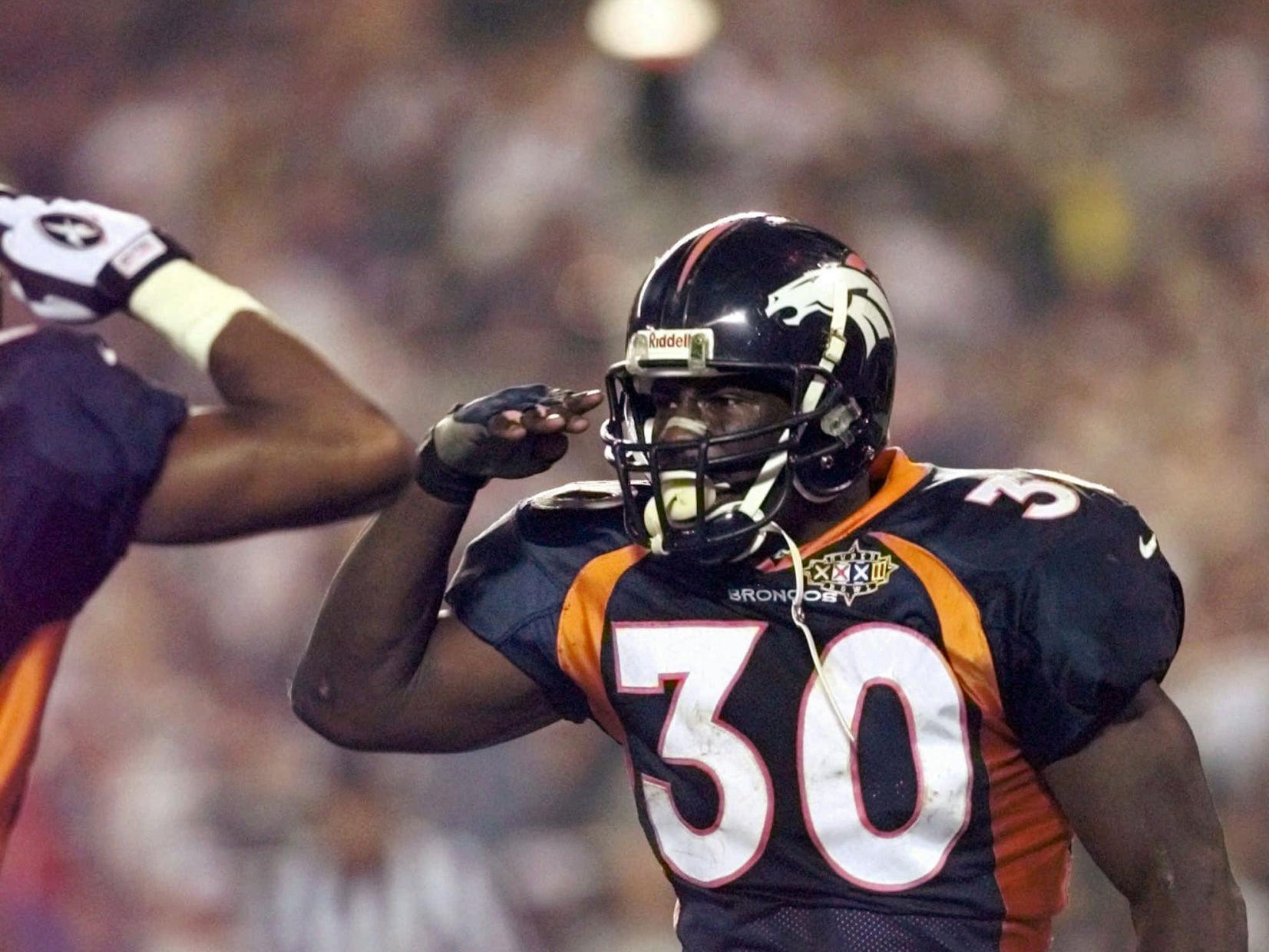
Terrell Davis and "The Mile High Salute"

January 25, 1998: Super Bowl XXXII is played, at what was then known as Qualcomm Stadium in San Diego.

The NFC Champions were the Green Bay Packers. They had won the Super Bowl the year before, taking their 12th World Championship, leading all NFL teams. With an offense led by future Hall-of-Fame quarterback Brett Favre, and a defense led by future Hall-of-Famer Reggie White, they looked primed to repeat. Especially since the NFC had won 13 straight Super Bowls, going back to Super Bowl XVIII, won by the then-Los Angeles Raiders.

Another good sign for the Packers is that the AFC Champions were the Denver Broncos. This was their 5th trip to the Super Bowl, and they had lost the 1st 4. They had lost Super Bowl XII to the Dallas Cowboys, despite having a great defense known as the Orange Crush. They lost Super Bowl XXI to the New York Giants, Super Bowl XXII to the Washington Redskins, and Super Bowl XXIV to the San Francisco 49ers, all with John Elway as their quarterback and Dan Reeves as their head coach.

They had always sold out Mile High Stadium since 1977, the season of "Broncomania" that ended with the Super Bowl XII defeat. They were, far and away, the most popular sports team in the Rocky Mountain region, even thought the recently arrived Colorado Avalanche had won the 1996 Stanley Cup, for the region's 1st title; and the Colorado Rockies had sold more tickets than any team in Major League Baseball since their 1993 expansion debut.

They had some dramatic victories over the years, including their defeats of the Oakland Raiders in the 1977 AFC Championship Game, and of the Cleveland Browns in back-to-back AFC title games for the 1986 and 1987 seasons. But they couldn't win the big one.

Starting in 1968, the Broncos had worn orange jerseys (hence the "Orange Crush" nickname), and bright blue helmets with an orange D, with a charging white horse inside it. It was a hard logo to draw, but the whole thing was among the most distinctive uniform designs in sports.
John Elway, 1987

For 1997, they scrapped that for a new design, with purple jerseys with a weird new number font, and purple helmets with a white horse's head. This, too, was distinctive. I didn't like the change in number font, but the helmet was much better.
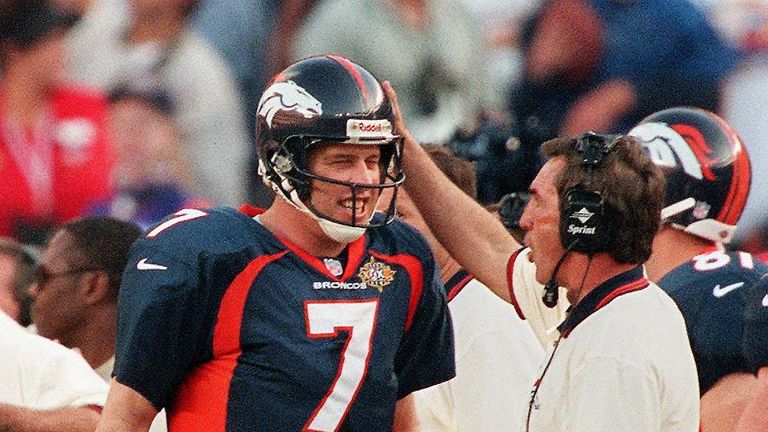
Elway and head coach Mike Shanahan, 1997

But new uniforms wouldn't be enough. The Cincinnati Bengals found that out in 1981, when they switched to their striped helmets, and made the Super Bowl, only to lose it.

But head coach Mike Shanahan had revamped the team after the Reeves years. He built a new defense, with end Neil Smith, linebacker Bill Romanowski, former San Francisco cornerback Tim McKyer, and a holdover from the previous Bronco Super Bowls, safety Steve Atwater, possibly the hardest hitter in the game at the time.

But Shanahan was an offense-first coach. He got Elway something he'd never had before: A star running back, to take some of the pressure off him. He was a University of Georgia graduate named Terrell Davis, and he was exactly what Elway needed to remove his name from consideration, alongside Y.A. Tittle, Dan Marino and Jim Kelly, for the title of "greatest quarterback to never win a World Championship."

The Broncos went 12-4 in 1997. All 4 losses were on the road: By 3 to the Oakland Raiders, 2 to the Kansas City Chiefs, 11 to the Pittsburgh Steelers, and 17 to the San Francisco 49ers. However, they did have a 2-3 stretch toward the end of the season, followed by a win over the San Diego Chargers in the regular-season finale.

The season before, they had an ignominious Playoff defeat at the hands of the Jacksonville Jaguars. This time, they not only avenged that defeat with a 42-17 win over the Jags at Mile High, but they also went on the road and avenged 2 of their regular-season defeats: They beat the Chiefs 14-10 at Arrowhead Stadium, and then, in the AFC Championship Game, went to Three Rivers Stadium, and beat the Steelers, 24-21.

The Broncos had shown character. Elway was much more mature, much more patient, and much less reliant on his cannon of an arm that he had been in the 1980s. If any AFC team could dethrone the Packers as Champions, it was the '97 Broncos.

UPDATE: The Broncos have a Ring of Fame. As of the 2025 NFL season, it includes:

* From their founding era, 1960 to 1976: Quarterbacks Frank Tripucka and Charley Johnson, running backs Gene Mingo and Floyd Little, end Lionel Taylor, defensive end Rich "Tombstone" Jackson, safety Austin "Goose" Gonsoulin, owner Gerald Phipps. Tripucka, Gonsoulin, Jackson, Taylor, Little, Phipps, founding owner Bob Howsam, and running back Bobby Anderson have also been elected to the Colorado Sports Hall of Fame.

* From their 1977 AFC Champions: Phipps, quarterback Craig Morton, receivers Haven Moses and Rick Upchurch, tight end Riley Odoms, defensive tackle Paul Smith, linebackers Randy Gradishar and Tom Jackson, cornerback Louis Wright, safeties Billy Thompson and Steve Foley, kicker Jim Turner, and head coach Robert "Red" Miller. Phipps, Morton, Moses, Upchurch, Gradishar, Wright, Thompson, Miller, running back Otis Armstrong and 1970s and '80s defensive coordinator Joe Collier have also been elected to the Colorado Sports Hall of Fame.

* From their 1986, 1987 and 1989 AFC Champions: Quarterback John Elway, linebacker Karl Mecklenburg, safety Dennis Smith, head coach Dan Reeves, and owner Pat Bowlen. Collier, Elway, Mecklenburg, Smith, Reeves and Bowlen have also been elected to the Colorado Sports Hall of Fame.

* From their Super Bowl XXXII and XXXIII winners: Elway, Bowlen, running back Terrell Davis, receiver Rod Smith, tight end Shannon Sharpe, center Tom Nalen, tackle Gary Zimmerman, linebacker Simon Fletcher, safety Steve Atwater, kicker Jason Elam, and head coach Mike Shanahan. Elway, Bowlen, Smith, Davis, Sharpe, Atwater, Elam, Shanahan, receiver Ed McCaffrey and defensive end Alfred Williams have also been elected to the Colorado Sports Hall of Fame.

* From the 2000s: Safety John Lynch. Lynch has not been elected to the Colorado Sports Hall of Fame, but tight end Daniel Graham has.

* From their 2013 AFC Champions who lost Super Bowl XLVIII: Elway (by then the general manager), Bowlen, receiver Demaryius Thomas and cornerback Champ Bailey.

* From their 2015 AFC Champions who won Super Bowl 50: Elway, Bowlen, Thomas, Bailey, and quarterback Peyton Manning. Elway, Bowlen, Bailey and Manning  have also been elected to the Colorado Sports Hall of Fame.

*

The Packers got the ball first, and scored on their opening drive, a 22-yard touchdown pass from Favre to Antonio Freeman. The Broncos immediately struck back, helped by a defensive holding penalty that nullified an Elway incompletion on 3rd down. Davis, a San Diego native playing in the stadium where he'd grown up rooting for the Chargers and baseball's San Diego Padres, scored from a yard out. This remains the only Super Bowl where both teams scored on their opening drives.

The Packers' next drive ended when Tyrone Braxton intercepted Favre in Green Bay territory. Elway took advantage, and scored himself on a 1-yard run. The Broncos had led 10-9 at the half in Super Bowl XXI, and 10-0 early in the 2nd quarter of Super Bowl XXII. Both of those games fell apart, as the opposition outscored them 30-10 and 42-0 the rest of the way. But, having watched those games, I sensed something was different this time.

David later claimed that he played the game with a migraine headache, to the point where, until he took some medication, he was blind. But the Broncos made their own breaks: When Atwater sacked Favre and forced a fumble that Smith recovered, Jason Elam kicked a 51-yard field goal, then the 2nd-longest in Super Bowl history, and it was 17-7 Denver.

Late in the half, the Packers began a drive from their own 5, and Favre ended it with a 6-yard pass to Mark Chmura. The Pack went into the locker room trailing 17-14, and felt like they had the momentum. Would this be another Bronco Super Bowl collapse?

Maybe: Davis fumbled on the opening drive of the 2nd half, and the Packers converted that into a game-tying field goal. But the Packers stalled, and Elway went to work. His drive included a 36-yard pass to Ed McCaffrey. On 3rd & 6 from the Packer 12, Elway ran for 8 yards, and was hit by the Packers' LeRoy Butler and Mike Prior, spinning him in midair. The play became known as "The Helicopter," and it showed that Elway, previously thought of as a privileged pretty boy who couldn't get the big joe done, had some toughness. Two plays later, Davis scored on another 1-yard run. It was 24-17 Denver.

Early in the 4th quarter, Favre threw another touchdown pass to Freeman, tying the game. It was still tied with 3:27 left in regulation, when the Broncos forced the Packers to punt and got the ball back at the Packer 49. On the next play, Darius Holland made what might be the biggest mistake in Packer history, a facemask penalty on Davis that cost Green Bay 15 yards.

With 1:47 left, the Broncos were at 2nd & goal on the Packer 1. With 2 time-outs left, Packer coach Mike Holmgren told his players to let the Packers score, to give the offense enough time. Davis became the 1st player (and remains the only one) to rush for 3 touchdowns in a single Super Bowl. It was Broncos 31, Packers 24.

After each touchdown, Davis found the nearest teammate, and gave him a military-style salute. It became known as "The Mile High Salute."

There was 1:45 to go, with the Packers having 2 time-outs left. Freeman returned Elam's kickoff to the 30. Favre threw a screen pass to Dorsey Levens, who got to the Bronco 48 with 1:30 left. But the next play was also a screen pass to Levens. He caught it, but was stopped for no gain, and the Packers had to burn a time-out.

The Packers reached the Bronco 31, with 37 seconds to go. A field goal would do them no good. It was 3rd & 6. Favre threw to Brooks, who was covered by Randy Hilliard. Atwater also went for the ball, and his hit knocked out Brooks, Hilliard, and himself. NFL rules say that if players on both teams are injured and need medical attention on the field in the last 2 minutes of a game, both teams are charged with a time-out.

So it was 4th & 6 at the Bronco 31. There were 32 seconds left, and no time-outs. Favre looked for Chmura, but John Mobley broke it up, and the Broncos took over on down. Elway knelt on the ball for the last play of his greatest victory. After going 0-3 with Elway as quarterback, and 0-4 overall, the Denver Broncos were World Champions for the 1st time.

This broke a 13-year winning streak for the NFC. And a 37-year streak of failure for the Broncos to win the big one. It was John Elway's moment. But it wouldn't have happened without Terrell Davis, who, along with Atwater, tight end Shannon Sharpe, offensive tackle Gary Zimmerman, and team owner Pat Bowlen (but, thus far, not Shanahan), would join him in the Pro Football Hall of Fame.

Nine months later, Qualcomm Stadium became the only stadium ever to host the Super Bowl and the World Series in the same calendar year, as the Yankees beat the San Diego Padres. With no more groundsharing between MLB and professional football teams, it will likely never happen again. In the pre-Super Bowl era, the only stadiums hosting the World Series and the NFL Championship Game in the same year were in New York: The Polo Grounds in 1936; and Yankee Stadium in 1956, 1958 and 1962.

The Broncos went 15-1 the next season, and beat the Atlanta Falcons in Super Bowl XXXIII. Elway then retired.

*

January 25, 1998 was a Sunday. Obviously, there were no other football games. Baseball was out of season. The NBA wasn't stupid: They knew that if they were going to get any TV viewers away from the Super Bowl pregame programming, they would need a showcase game. So they put the previous season's Finalists up against each other.

The Utah Jazz beat the Chicago Bulls, 101-94 at the United Center in Chicago. Karl Malone scored 35 points, proving that "The Mailman" could deliver on Sunday. Michael Jordan led the Bulls with 32. Nevertheless, as they did the previous season, the Bulls would beat the Jazz in the NBA Finals.

The NHL didn't take much of a chance, either, scheduling only 2 games. Both were satisfying for me, as New Jersey won, and Boston lost:

* The New Jersey Devils beat the Montreal Canadiens, 3-1 at the Molson Centre (now the Bell Center) in Montreal. The Devil goals came from Lyle Odelein, Bobby Holik and Brian Rolston.

* And the Washington Capitals beat the Boston Bruins, 4-1 at the MCI Center (now the Capital One Arena) in Washington.

Saturday, January 1, 2022

January 1, 2017: The End of the San Diego Chargers

January 1, 2017: The Kansas City Chiefs beat the San Diego Chargers, 37-27 at Qualcomm Stadium in San Diego. It is the last game for the Chargers, San Diego's 1st major league sports team.

After playing the 1st American Football League season, 1960, in Los Angeles, their owner, Barron Hilton, son of hotel magnate Conrad Hilton, and who had named the team after his credit card company, Carte Blanche, recognized that he was never going to take the market away from the NFL's Rams. So he moved them down the Coast to San Diego, where they reached the AFL Championship Game again in 1961, 1963, 1964 and 1965, winning in 1963.

In 1966, Hilton sold the team to car dealer Gene Klein. He presided over the team's aging and collapse, and its rebuild in the late 1970s, getting to the 1981 AFC Championship Game. He loved owning an NFL team, but he hated dealing with the business of pro football. In 1984, he got an offer of $48 million from real estate developer Alex Spanos. In his memoir, First Down and a Billion, he closed every chapter with the words, "Thank you, Alex." 

The Chargers won the AFC Championship in 1994, but lost Super Bowl XXIX. As Spanos' health declined, his son, Dean Spanos, gained control, and he wanted out of Qualcomm Stadium (known as San Diego Stadium from 1967 to 1981 and Jack Murphy Stadium from then until 1997). He kept threatening to move the team back to Los Angeles if he didn't get a new stadium. But the City of San Diego and the County of San Diego both refused to pay for it.

And so, having gotten permission from the other NFL team owners to make the move if he wanted to, the team's last game of the 2016 season seemed doomed to be the last home game for the San Diego Chargers.

They took a 5-10 record into Qualcomm Stadium for their season finale, against the Kansas City Chiefs. They led 10-3 early in the 2nd quarter, and were within 20-17 early in the 3rd. But their defense couldn't hold, and when Philip Rivers threw a 12-yard touchdown pass to Hunter Henry with 2:08 left, it was followed by an extra point from Josh Lambo, which served as the last scoring play in San Diego Charger history. The game ended, 37-27. to the Chiefs, who thus clinched the AFC Western Division title. Attendance in the 70,561-seat stadium: 54,915.
The opposing quarterbacks: Alex Smith of Kansas City,
and Philip Rivers of San Diego

Just 11 days later, on January 12, 2017, Dean Spanos made the move official. They spent 3 seasons at what's now named Dignity Health Sports Park in the Los Angeles suburb of Carson, California -- a 27,000-seat soccer-specific stadium, where the Chargers' new fans were usually outdrawn by fans of visiting teams, some of whom had moved to the L.A. area. The Rams, having played in St. Louis from 1995 to 2015, had beaten the Chargers to moving back by 1 year, gaining the upper hand in media coverage and fandom, costing the Chargers dearly. In 2020, both teams moved into SoFi Stadium in Inglewood.

San Diego had lost the NBA's Rockets in 1971, the ABA's Conquistadors in 1975, the WHA's Mariners in 1977, the NBA's Clippers in 1984, and now the NFL's Chargers in 2017. They had nearly lost MLB's Padres in 1974, and had local voters not approved a bond issue for Petco Park in 1998, the Padres would have moved. By Spring 2017, the Padres were the only major league sports team left in San Diego.

Some people in San Diego County stuck with the Chargers. Some switched to the Rams, as a major middle finger to Dean Spanos. Some gave up on football altogether.

*

January 1, 2017 was a Sunday. These other NFL games were played that day:

* The New York Giants beat the Washington Redskins, 19-10 at FedEx Field (now Northwest Stadium) in the Washington suburb of Landover, Maryland.

* The New York Jets beat the Buffalo Bills, 30-10 at MetLife Stadium at the Meadowlands.

* The Philadelphia Eagles beat the Dallas Cowboys, 27-13 at Lincoln Financial Field in Philadelphia.

* The Atlanta Falcons beat their arch-rivals, the New Orleans Saints, 38-32 at the Georgia Dome in Atlanta. This was the last regular-season game there. The Falcons won 2 Playoff games there that season, before losing Super Bowl LI, and moved into Mercedes-Benz Stadium the next season.

* The Tampa Bay Buccaneers beat the Carolina Panthers, 17-16 at Raymond James Stadium in Tampa.

* The New England Patriots beat the Miami Dolphins, 35-14 at Hard Rock Stadium in Miami Gardens, Florida.

* The Tennessee Titans, who used to be the Houston Oilers, beat their successors, the Houston Texans, 24-17 at Nissan Stadium in Nashville.

* The Pittsburgh Steelers beat their arch-rivals, the Cleveland Browns, 27-24 at Heinz Field (now Acrisure Stadium) in Pittsburgh.

* The Cincinnati Bengals beat the Baltimore Ravens, 27-10 at Paul Brown Stadium (now Paycor Stadium) in Cincinnati.

* The Green Bay Packers beat the Detroit Lions, 31-24 at Ford Field in Detroit.

* The Indianapolis Colts beat the Jacksonville Jaguars, 24-20 at Lucas Oil Stadium in Indianapolis.

* The Minnesota Vikings beat the Chicago Bears, 38-10 at U.S. Bank Stadium in Minneapolis.

* The Denver Broncos beat the Oakland Raiders, 24-6 at Empower Field at Mile High in Denver.

* The Arizona Cardinals beat the Los Angeles Rams, 44-6 at the Los Angeles Memorial Coliseum.

* And the Seattle Seahawks beat the San Francisco 49ers, 25-23 at Levi's Stadium in the San Francisco suburb of Santa Clara, California.

There was no Monday Night Football game that final week of the regular season. If it had been scheduled, it would have competed with the college bowl games. The NCAA usually doesn't let games, even bowl games, be played on Sundays, so the major bowls that would have been played on New Year's Day were moved around:

* December 30, Orange Bowl, Hard Rock Stadium, Miami Gardens, Florida: Number 11 Florida State 33, Number 6 Michigan 32.

* December 31, Peach Bowl, Georgia Dome, Atlanta, Playoff Semifinal: Number 1 Alabama 24, Number 4 Washington 7.

* December 31, Fiesta Bowl, University of Phoenix Stadium (now State Farm Stadium), Phoenix suburb of Glendale, Arizona, Playoff Semifinal: Number 2 Clemson 31, Number 3 Ohio State 0.

* January 2, Cotton Bowl, AT&T Stadium, Dallas suburb of Arlington, Texas: Number 8 Wisconsin 24, Number 15 Western Michigan 16. WMU became only the 2nd team from the Mid-American Conference in a traditional New Year's Day bowl game, following Northern Illinois in the 2013 Orange Bowl.

* January 2, Rose Bowl, Los Angeles suburb of Pasadena, California: Number 9 Southern California 52, Number 5 Penn State 49.

* January 2, Sugar Bowl, Superdome, New Orleans: Number 7 Oklahoma 35, Number 14 Auburn 19.

* January 9, National Championship, Raymond James Stadium, Tampa: Number 2 Clemson 35, Number 1 Alabama 31.

Baseball was out of season. There were 5 NBA games:

* The Atlanta Hawks beat the San Antonio Spurs, 114-112 in overtime at the Philips Arena (now the State Farm Arena) in Atlanta.

* The Detroit Pistons beat the Miami Heat, 107-98 at the American Airlines Arena (now the Kaseya Center) in Miami.

* The Indiana Pacers beat the Orlando Magic, 117-104 at the Bankers Life Fieldhouse (now the Gainbridge Fieldhouse) in Indianapolis.

* The Portland Trail Blazers beat the Minnesota Timberwolves, 95-89 at the Target Center in Minneapolis. CJ McCollum led all scorers on the day with 43 points.

* And the Toronto Raptors beat the Los Angeles Lakers, 123-114 at the Staples Center (now the Crypto.com Arena) in Los Angeles. Kyle Lowry scored 41.

There were 3 games in the NHL:

* The Washington Capitals beat the Ottawa Senators, 2-1 at the Verizon Center (now the Capital One Arena) in Washington.

* In the NHL Centennial Classic, kicking off the League's 100th Anniversary calendar year with an "Original Six" matchup, the Toronto Maple Leafs beat the Detroit Red Wings, 5-4, outdoors in front of 40,148 fans at BMO Field in Toronto. The Leafs led, 4-1 with 7:55 left in regulation, but the Wings died it with 2 seconds to go, on a goal by Anthony Mantha. But with 1:20 left in overtime, Auston Matthews scored the winning goal for the Leafs. I have a separate entry for this event. 

* And the Anaheim Ducks beat the Philadelphia Flyers, 4-3 in a shootout at the Honda Center in Anaheim.

The NHL Winter Classic, another game that usually gets played on New Year's Day, got moved back to January 2, due to January 1 being a Sunday. In that game, the St. Louis Blues beat their arch-rivals, the Chicago Blackhawks, 4-1 at Busch Stadium in St. Louis. 

And in English soccer, Arsenal beat South London team Crystal Palace, 2-0 at the Emirates Stadium in North London.

December 31, 1999 & January 1, 2000: The Millennium

December 31, 1999:  The Millennium arrives. The people of planet Earth survived. At a terrible cost. But we hadn't destroyed ourselves. ...