Showing posts with label utah jazz. Show all posts

Sunday, November 27, 2022

November 27, 1996: The Biggest Comeback In NBA History

November 27, 1996: A pair of arch-rivals play each other in the NBA. It turns out to be a historic game.

The Utah Jazz were hosting the Denver Nuggets, at the Delta Center in Salt Lake City, Utah. The Jazz came in having won 10 of their 1st 12 games of the season, but the Nugs were struggling, having lost 10 of their 1st 15. Nevertheless, the Nugs led 37-19 at the end of the 1st quarter. Late in the 2nd quarter, it was 70-34 Denver. The Jazz trailed by 36 points, before closing it to 70-36 at the half.

With 9 minutes left in the 3rd, the Nuggets still led 74-41. But the Jazz scored the next 16 points, to close to 74-57 with 4:25 left in the 3rd. By the end of the quarter, it was 85-72 Denver. Still a ways to go, but now, victory for Utah looked plausible.

Over the 1st 1:35 of the 4th quarter, the Jazz went on a 16-3 run to get within 2 points. With 4:41 left in regulation, Chris Morris hit a 3-point shot to tie the game at 91. With 3:02 to go, Jeff Hornacek made 2 free throws to give the Jazz their 1st lead, 95-94.

The Nuggets weren't done, and Bryant Stith hit a 3-pointer with 1 minute left to make it 101-100 Denver. But a Hornacek 3-pointer gave the Jazz the lead again, and they never gave it up. Final score: Jazz 107, Nuggets 103. It remains the biggest come-from-behind win, meaning also the biggest blown lead, in NBA history.

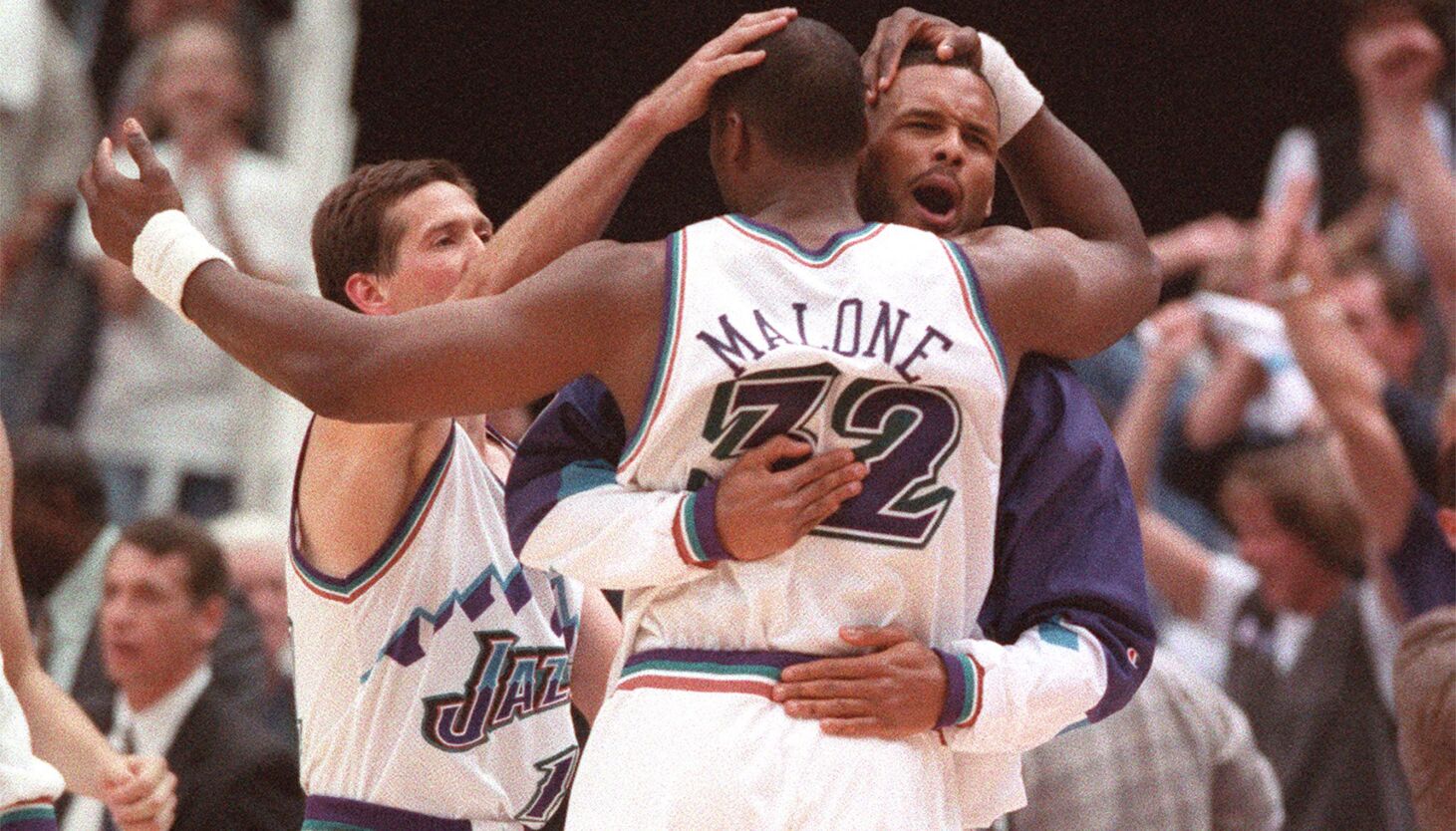
Stith scored 31 points for the Nuggets. Karl Malone had 31 points and 17 rebounds for the Jazz, Hornacek 29 points, John Stockton only 9 points but 10 assists.

The Nuggets finished the season 21-61, well out of the Playoffs. The Jazz went on to win the NBA Western Conference title, but lost the NBA Finals to the Chicago Bulls in 6 games.

*

November 27, 1996 was a Wednesday. There were 9 other games played in the NBA that night:

* The New Jersey Nets lost to the Phoenix Suns, 99-77 the America West Arena (now the Mortgage Matchup Center) in Phoenix.

* The Boston Celtics beat the Los Angeles Lakers, 110-94 at the FleetCenter (now the TD Garden) in Boston.

* The Orlando Magic beat the Atlanta Hawks, 79-75 at the Orlando Arena.

* The Toronto Raptors beat the Charlotte Hornets, 92-88 at the SkyDome (now the Rogers Centre) in Toronto.

* The Detroit Pistons beat the Vancouver Grizzlies, 87-78 at The Palace in the Detroit suburb of Auburn Hills, Michigan.

* The Milwaukee Bucks beat the Cleveland Cavaliers, 92-75 at the Bradley Center in Milwaukee.

* The Seattle SuperSonics beat the Minnesota Timberwolves, 106-98 at the Target Center in Minneapolis.

* The Portland Trail Blazers beat the San Antonio Spurs, 120-109 at the Alamodome in San Antonio.

* And the Miami Heat beat the Los Angeles Clippers, 98-82 at the Los Angeles Memorial Sports Arena.

Baseball was in the off-season. Football was in midweek. There were 11 games played in the NHL:

* The New York Rangers beat the Colorado Avalanche, 5-2 at the McNichols Arena in Denver.

* The New York Islanders beat the Philadelphia Flyers, 4-1 at the Nassau Coliseum.

* The New Jersey Devils beat the Dallas Stars, 3-2 at the Reunion Arena in Dallas.

* The Vancouver Canucks beat the Hartford Whalers, 6-3 at the Hartford Civic Center (now the PeoplesBank Arena).

* The Ottawa Senators beat the Washington Capitals, 2-1 at the US Airways Arena (formerly the Capital Centre) in the Washington suburb of Landover, Maryland.

* The Buffalo Sabres beat the Tampa Bay Lightning, 3-0 at the Ice Palace (now the Benchmark International Arena) in Tampa.

* The Montreal Canadiens and the Pittsburgh Penguins played to a tie, 2-2 at the Civic Arena in Pittsburgh.

* In an "Original Six" matchup, the Detroit Red Wings beat the Toronto Maple Leafs, 5-2 at the Joe Louis Arena in Detroit.

* The Los Angeles Kings beat the Edmonton Oilers, 5-1 at the Edmonton Coliseum (as the Northlands Coliseum was then known).

* The St. Louis Blues beat the Mighty Ducks of Anaheim, 3-2 at the Arrowhead Pond of Anaheim (now the Honda Center).

* The San Jose Sharks beat the Chicago Blackhawks, 3-2 at the San Jose Arena (now the SAP Center).

* And the Boston Bruins, the Calgary Flames, the Phoenix Coyotes were not scheduled.

Also, actress Hailey Bieber, daughter of actor Stephen Baldwin and wife of singer Justin Bieber, was born on this day.

Sunday, November 6, 2022

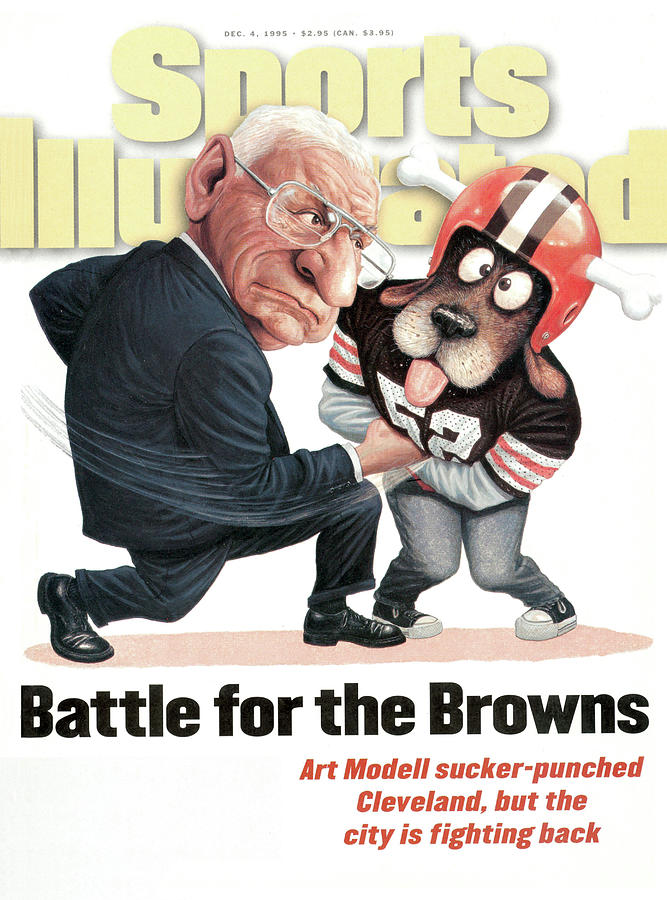
November 6, 1995: The Cleveland Browns Are Moved

November 6, 1995: Art Modell announces that he's moving the NFL's Cleveland Browns to Baltimore, where they later announced that they will become the Baltimore Ravens.

He does so because the City of Cleveland, the County of Cuyahoga and the State of Ohio refused to listen to his pleas to either build him a new stadium, or at least give him a better lease at the existing Cleveland Municipal Stadium.

Modell owned the Browns/Ravens franchise from 1961 to 2004, then maintaining a minority ownership until his death in 2012. His ownership produced 2 NFL Championships: In Cleveland in 1964, and in Baltimore in the 2000-01 season. The former title is the last World Championship won by a Cleveland-area football team, a drought now reaching 57 years; and was the last won by a Cleveland-based team in any sport until the 2016 Cavaliers, a drought that reached 52 years.

In between, the Browns had lots of close calls, losing the NFL Championship Game to the Baltimore Colts in 1968 and the Minnesota Vikings in 1969; losing a 1980-81 AFC Playoff Game at home that they probably should have won, to the Oakland Raiders; and the AFC Championship Games for the 1986, 1987 and 1989 seasons, all to the Denver Broncos, the 1st at home, and the 1st 2 in traumatic fashion: "The Drive" and "The Fumble."

The Browns and their fans also had to endure their last coach, Bill Belichick, prove, why, yes, he could coach, winning 6 Super Bowls with the New England Patriots... until it was revealed that he'd cheated, suggesting that the Cleveland Belichick may have been the real one, not the Foxborough Belichick.

Modell had been deeply involved in charities in Northern Ohio, and had struggled for years to get a new stadium for his team, or to at least get a better lease on Cleveland Municipal Stadium, which was right on Lake Erie and subject to nasty weather, and was then 64 years old and not in good shape. A mile inland and still susceptible to Great Lakes weather, but a bit less so, right next-door to each other, new buildings were built for baseball's Indians and basketball's Cavaliers.

The City, the County and the State were not willing to build, or to help him build, a new stadium for the Browns. The Maryland Stadium Authority, which had recently built Oriole Park at Camden Yards to prevent the Orioles from moving (most likely down the Parkway to Washington, D.C.), was willing to build a stadium at the Camden Yards site. It did: The facility now known as M&T Bank Stadium opened in 1998, after the Ravens spent 2 years at the old Memorial Stadium, and is generally regarded as one of the best stadiums in the NFL.

There were people to blame for the move, other than Modell. The local authorities could have listened to his calls to help with the stadium situation. Baltimore, which had its Colts taken from them by a greedy owner in 1984, should have known better: Yes, they had been shafted by the NFL expansion of 1993 (for the 1995 season), but stealing another city's team, when your own had been stolen just a few years earlier? That was not right.

And Modell's fellow NFL team owners, who normally roll over for each other, could have stood up and said, "Not this time: The history and the fan base of the Browns needs to be respected." But Art was too good a friend to most of them, and they were all too happy to allow the move.

And the owners did rule that, while the business that ran the team and all its contracts -- players, coaches, executives, etc. -- could be moved to Baltimore, an expansion franchise would be established in 1999, and it would carry the Cleveland Browns name, and that team's trademarks (including its uniforms) and history. Municipal Stadium would be torn down, and a new stadium built on the site.

The name of the stadium was established as Cleveland Browns Stadium, not a corporate name. Sadly, that ended in 2013, when it became FirstEnergy Stadium. And while there were 3 seasons without a team, and the team was horrible at first, it did make the Playoffs in 2002, year 4. Of course, they didn't make the Playoffs again until 2020, 18 years.

In 2005, ESPN used their series The Top 5 Reasons You Can't Blame... to explain why Modell should not be blamed for moving the team. Here were their reasons:

5. Bill Belichick. Suggesting that, if he'd coached the Browns better, Modell would have kept the team there.

4. Al Davis and Bob Irsay. Or, more accurately, The Other NFL Team Owners. Davis moved the Oakland Raiders to Los Angeles in 1982 and back to Oakland in 1995, just before Modell's move. And Irsay moved the Colts from Baltimore to Indianapolis in 1984. The NFL tried to stop Davis the first time, but not hard enough. They didn't lift a finger to stop Irsay, or Davis the second time (although that second time was righting a wrong). Since these moves had established the precedent, the NFL owners bear some responsibility for the Modell move.

3. The Cleveland Indians. Or, more accurately, The Government of the City of Cleveland. The Indians' new ballpark and their new success starting in 1994 turned Cleveland into a baseball town. Modell wondered why the far less successful team, which had nearly moved a few times due to desperate finances, and the even less successful basketball team, the Cleveland Cavaliers, both got new venues, while the Browns weren't getting one.

2. Modell's Finances. He was going broke.

1. Rock and Roll. Or, more accurate, the city's building of things like the Rock and Roll Hall of Fame, the Great Lakes Science Center, the International Women's Air & Space Museum -- all of these within a 10-minute walk of Municipal Stadium. As well as, as previously mentioned, Jacobs Field (now Progressive Field) and Gund Arena (now Rocket Arena).

Makes sense, doesn't it? There was a problem: That ESPN series ran with the intention of making sports fans see controversial actions and in-game blunders in a new light, but had the air of an exoneration project. And it shouldn't have been. It should have been like a trial, with a verdict at the end: Yes, you can still blame the person or franchise in question, at least first and foremost, while the others you blamed were secondary causes at best; or, no, you're right, we should let the accused off the hook.

Letting Modell off the hook for the Browns' move is wrong. The man was guilty as sin.

Belichick winning with the Browns wouldn't have mattered. That franchise took the place of the Cleveland Rams, who won the NFL Championship in 1945, and moved to Los Angeles the next season anyway. The Raiders won the Super Bowl in the 1980-81 season, but Davis moved the team a year later anyway.

This also holds for other sports: Walter O'Malley moved the Brooklyn Dodgers just 1 year after Walter Alston led them to a Pennant and 2 years after he led them to win the World Series. In 1968, former Knicks All-Star Richie Guerin coached the St. Louis Hawks to the NBA's regular-season Western Division title, but new owner Tom Cousins moved them to Atlanta anyway. In 1973, Gene Shue coached the Baltimore Bullets to an NBA Central Division title, just 2 years after coaching them into the NBA Finals, but owner Abe Pollin moved them to Washington anyway.

And earlier in 1995, Marc Crawford led the Quebec Nordiques to a regular-season division title, and Terry Simpson led the Winnipeg Jets to the Playoffs the next year. Yet both of those teams were moved.

As for Davis and Irsay, you'd think the NFL would have learned: Two wrongs -- or three -- don't make a right. And using the Indians as an excuse is weak: Like Baltimore itself, Cleveland is a football town first and a baseball town second.

Modell's finances? This excuse is a joke. The NFL has revenue sharing. It has better licensing than any of the other North American sports leagues. It has higher TV ratings than any of the other leagues. And it has better attendance than any of the other leagues: While Municipal Stadium held 85,703 for football at its peak, and still held over 80,000 at the time, it wasn't hitting that mark for every home game. But, despite going 5-11, the Browns were averaging 66,772 for their home games before the November 6 announcement. It all should have been enough to cover Modell's expenses.

And even if it wasn't, where were Modell's good friends to help him out with the stadium issue? A few NFL owners are also lawyers. At the very least, they all know great lawyers and great accountants. All Modell had to do was go up to Wellington Mara of the New York Giants, or Jerry Jones of the Dallas Cowboys, or even Dan Rooney of the Pittsburgh Steelers, the Browns' arch-rivals, and say, "Hey, old buddy, old pal, I could use some help here. Can you give me a hand?" As far as we know, he didn't do it.

Put these factors together, and you've got to come to an unpalatable conclusion: You've got to be a damn fool to lose money operating a National Football League team. And yet, we're supposed to believe that Art Modell was losing money operating a National Football League team.

And if the City, or the County, or the State had the money for those other building projects, how much harder would it have been to add one more? Remember, this was 1995, the Clinton years. The economy was booming. And after years of "Cleveland jokes," and "the Cleveland Comeback" being one of them, the comeback was real: The city was doing better than ever.

"I had no choice," Art Modell said about moving the Browns. That is complete and utter bullshit. He had a choice. Hell, the likeliest scenario that would have helped him is the one that sports team owners had already been using since at least O'Malley in the mid-1950s: "Build me a new stadium, or I'll move my team."

He never even seriously threatened to move before he actually announced that he was doing it. Unlike O'Malley, Davis, Irsay, and many others, he never put the gun to their head. But if he had, and they'd caved in, he would still have been more honorable than he was when he moved the team.

Like Davis, Irsay, O'Malley, Bob Short, Jeffrey Loria, Marcel Aubut, Peter Karmanos and Clayton Bennett, all the good Modell did -- including restoring the NFL to Baltimore, which was clearly going to happen anyway -- is secondary to his despicable act.

He had a choice. The people of Northern Ohio no longer have that particular knife in their back, but the wound is still bleeding.

UPDATE: FirstEnergy Stadium again became Cleveland Browns Stadium in 2023, then was renamed Huntington Bank Field in 2024. In 2025, Browns owner Jimmy Haslam managed to do what Modell couldn't do, and got the State of Ohio to build him a new stadium, in suburban Brook Park, adjacent to Hopkins International Airport. It will keep the Huntington Bank Field name, with the intent on opening in the 2029 season. The Browns will give the City money to tear down the current stadium and make infrastructure improvements around the airport.

Haslam made a deal to keep the Browns in the Cleveland metropolitan area, if not in the city, because he would have looked like a bit of a hypocrite if he hadn't: He had bought Major League Soccer's Columbus Crew to keep them from moving to Austin, Texas. His brother, Bill Haslam, owns the NHL's Nashville Predators.

*

November 6, 1995 was a Monday. The baseball season was over. But on ABC Monday Night Football, the Dallas Cowboys beat the Philadelphia Eagles, 34-12 at Texas Stadium in the Dallas suburb of Irving, Texas.

There were 2 games played in the NBA: The Orlando Magic beat the Washington Bullets, 105-95 at the Orlando Arena; and the Utah Jazz beat the Atlanta Hawks, 105-96 at the Delta Center in Salt Lake City.

And 1 game was played in the NHL: The New York Rangers beat the Calgary Flames, 4-2 at Madison Square Garden. Mark Messier scored a hat trick, including his 500th career goal, with Adam Graves getting the other Blueshirt goal. 

Wednesday, October 12, 2022

October 12, 1979: Magic, Larry & the 3-Pointer Debut

October 12, 1979: The much-hyped opponents from the previous March's collegiate National Championship game make their NBA debuts. Earvin "Magic" Johnson scores 26 points, and veteran Kareem Abdul-Jabbar scores 29, and the Los Angeles Lakers need them all to defeat the San Diego Clippers, 103-102 at the San Diego Sports Arena. (That building still stands, under the name Pechanga Arena.) The Lakers needed all those points because Lloyd Free, later to rename himself World B. Free, scores 46 for the Clippers.

Larry Bird has a quieter debut, scoring 14 points, but the Boston Celtics have an easier game, overcoming 31 points from Moses Malone and defeating the Houston Rockets 114-106 at the Boston Garden.

This is also the day the 3-point field goal finally enters regular-season NBA play, after having previously been used in the American Basketball League (1961-63) and the American Basketball Association (1967-76). The Celtics' Chris Ford is the 1st player to attempt one, and the 1st player to make one. Larry goes on to make the trey a major part of his arsenal, while Magic doesn't, proving that he didn't really need it.

Another debut on this day is that of the Utah Jazz, after 5 seasons without making the Playoffs as the far more sensibly-named New Orleans Jazz. They get pounded 101-85, by the Portland Trail Blazers at the Veterans Memorial Coliseum in Portland.

Coach Frank Layden will eventually right the ship in Salt Lake City, and make them a consistent Playoff team and a model franchise, though they've never won a title. 

He would also remark that the team, and the Minneapolis Lakers, had names that made sense in their original cities, but not anymore. He suggested that they switch names, as "Los Angeles Jazz" and "Utah Lakers" both made much more sense.

The arrivals of Magic and Larry are said to have "saved the NBA." This is nonsense. The league already had Kareem, and Julius "Dr. J" Erving, and Bill Walton, and plenty of other great players.

Times change. Today's kids only know Magic, and Michael Jordan, as team owners. They know Larry, and Jerry West, as team executives. They know Dr. J, and Walton, and Shaquille O'Neal, and Charles Barkley, and Walt Frazier as broadcasters. They know Patrick Ewing and Isiah Thomas as coaches. They know Kareem as something of a curmudgeon. And they have no idea that Wilt Chamberlain would have eaten LeBron James.
*

October 12, 1979 was a Friday. There were 6 other games in the NBA on this tipoff night:

* The New York Knicks lost to the Atlanta Hawks, 121-1014 at The Omni in Atlanta.

* The New Jersey Nets beat the Cleveland Cavaliers, 102-95 at the Rutgers Athletic Center (now the Jersey Mike's Arena) in Piscataway, New Jersey.

* The Philadelphia 76ers beat the Washington Bullets, 93-92 at the Capital Centre in the Washington suburb of Landover, Maryland.

* The Detroit Pistons beat the Indiana Pacers, 114-105 at the Silverdome in the Detroit suburb of Pontiac, Michigan.

* The Kansas City Kings beat the Milwaukee Bucks, 105-103 at the Kemper Arena (now the Hy-Vee Arena) in Kansas City.

* And the Phoenix Suns beat the Golden State Warriors, 97-89 at the Arizona Veterans Memorial Coliseum in Phoenix.

The NHL was also early in its season, but only had 1 game on this night: The Vancouver Canucks beat the Detroit Red Wings, 3-1 at the Pacific Coliseum in Vancouver.

And Game 3 of the World Series was played at Three Rivers Stadium in Pittsburgh. The Baltimore Orioles came from 3-0 down to beat the Pittsburgh Pirates, 8-4. Scott McGregor outpitched John Candelaria, and Benny Ayala hit a home run. But the Pirates would win the Series in 7 games.

Saturday, June 11, 2022

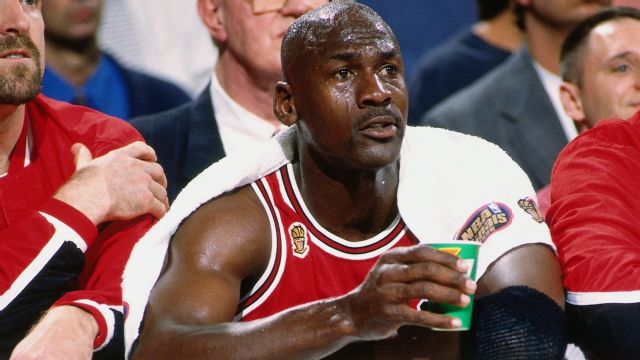
June 11, 1997: The Michael Jordan Flu Game

June 11, 1997: Michael Jordan had so many famous games that it's hard to say which one is his signature game. But it could be the Flu Game.

Jordan had led the Chicago Bulls to the NBA Championship in 1991, 1992 and 1993. Then, he was forced to chose to step aside for a while, because Commissioner David Stern found out about his gambling addiction, but didn't want to ban his big cash-cow player for life, so he talked him into "retiring" he was depressed over the recent murder of his father, James Jordan, and his heart wasn't in it anymore.

But late in the 1994-95 season, Stern decided that the Houston Rockets were boring champions, and the Orlando Magic were in too small a market to generate much revenue as the league's next signature team, even with commercial magnet Shaquille O'Neal, so he let Jordan return Jordan returned, and helped the Bulls win another title in 1996. In 1997, he got them back into the NBA Finals.

Their opponents were the Utah Jazz, who had been the New Orleans Jazz from their 1974 entry into the NBA until 1979. They'd had good teams for a while, led by guard John Stockton and forward Karl Malone. Interestingly, before Jordan, the Bulls' best player ever might have been Jerry Sloan, who was now head coach of the Jazz.

In Game 1, at the United Center in Chicago, the Jazz gave the Bulls all they could handle: The Bulls only won it 84-82. They were stronger in Game 2, winning 97-85. The series moved to Salt Lake City, to the Delta Center, which upheld its reputation as the loudest arena in the NBA. The Jazz took over, winning Game 3, 104-93 thanks to 37 points from Malone; and Game 4, 78-73. Bulls coach Phil Jackson chose to wear earplugs through Game 4, and many NBC viewers claimed they couldn't hear broadcaster Marv Albert at the end of the game, the Utah fans were yelling so loudly.

The Bulls didn't have to win Game 5 in Salt Lake City to successfully defend their title: They could have gone back to Chicago and taken Games 6 and 7. But it would have helped a lot if they could win Game 5 on Tuesday night.

But at 2:00 AM, 17 hours before tipoff, Jordan called Tim Grover, his personal trainer, to his hotel room. He was sweating profusely, and didn't even have the strength to sit up in bed. Although it was reported that he had influenza, and the game became known as "The Flu Game," in the 2020 ESPN miniseries The Last Dance, Jordan claimed it was actually food poisoning, from a pizza he'd ordered the night before. (This was 9 years before the Tottenham lasagne incident in English soccer. And who orders pizza in Utah? He should have had it flown in from Chicago with him.)

When the morning came, the Bulls' athletic trainers examined Jordan, and told him there was no way he could play. His ego now in as much pain as his stomach, he got as much rest as he could, left his hotel bed at 5:50 PM, and was suited up in time for the 7:00 tipoff.

He was going to have to play in a weakened condition. On the road. At altitude. (Salt Lake City is over 4,200 feet above sea level, compared to Chicago's approximately 600.) In front of the loudest crowd in the NBA.

Midway through the 2nd quarter, Jordan had been a nonfactor, and the Jazz took a 36-20 lead. But Jordan got it together, scored 17 points in the quarter, and at the half, the Jazz' lead was down to 53-49. Jordan took his only rest of the game in the 3rd quarter, and at its end, the Jazz led 77-69.

Playing on sheer force of will, Jordan scored 15 points in the 4th quarter. With 46 seconds left, he was fouled. He made the 1st free throw to tie the game 85-85, but missed the 2nd. Eventually, the ball got back to him, and he shot a 3-pointer to make it 88-85 with 25 seconds left. The Bulls hung on, winning 88-87.

Jordan played 44 of the game's 48 minutes, scoring 38 points, with 7 rebounds, 5 assists, 3 steals and a blocked shot. Most importantly, the Bulls now had a 3-games-to-2 lead. It was the 1st time the Jazz had lost at home in that year's Playoffs, having previously gone 10-0.

Two nights later, back in Chicago, still not fully recovered, Jordan scored 39, and the Bulls won, 90-86, taking their 5th title, all in the last 7 seasons. Steve Kerr scored the winning basket, and a Scottie Pippen steal in the final seconds sealed it. Jordan was named the Finals' Most Valuable Player, as he had on the 4 previous occasions.

The Bulls would beat the Jazz again the next season, leading to Jordan's 2nd retirement. The Bulls were then broken up, while the Jazz held their core together a while longer. Neither team has made the NBA Finals since.

If you believe that Michael Jordan is the greatest basketball player of all time, The Flu Game -- even though the flu is not what he had -- may well be your best argument. After all, Wilt Chamberlain may have scored 100 points in a game on no sleep, but it was hardly against a Finals-worthy opponent, and he wasn't sick.

*

June 11, 1997 was a Wednesday. Dieuson Octave, later to be the rapper known as Kodak Black, was born.

Football was out of season. The hockey season had ended 4 days earlier, when the Detroit Red Wings completed a 4-game Finals sweep of the Philadelphia Flyers, to win their 1st Stanley Cup in 42 years. And these Major League Baseball games were played:

* The New York Yankees beat the Chicago White Sox, 7-5 at Yankee Stadium. The Yankees trailed 5-0 after 5 innings, but scored 4 runs in the 6th inning and 3 in the 8th to win it. Derek Jeter went 0-for-4, but Cecil Fielder hit a home run, and Tino Martinez went 3-for-4 with an RBI, as Mike Stanton won in relief of Kenny Rogers.

* The New York Mets lost to the Chicago Cubs, 5-4 at Wrigley Field in Chicago. Scott Servais scored the winning run in the bottom of the 8th, when Greg McMichael uncorked a wild pitch. (Wild pitches and wine bottles are the only things that are ever "uncorked.")

* The Montreal Expos beat the Philadelphia Phillies, 4-3 at the Olympic Stadium in Montreal.

* The Boston Red Sox beat the Baltimore Orioles, 10-1 at Fenway Park in Boston.

* The Seattle Mariners beat the Toronto Blue Jays, 5-1 at the SkyDome in Toronto. (It was renamed the Rogers Centre in 2005.)

* The Cleveland Indians beat the Milwaukee Brewers, 4-3 at Jacobs Field in Cleveland. (It was renamed Progressive Field in 2007.) Omar Vizquel singled home the winning run in the bottom of the 11th inning.

* The Cincinnati Reds beat the Pittsburgh Pirates, 2-1 at Cinergy Field in Cincinnati. (It had been known as Riverfront Stadium from 1970 to 1995.)

* The Detroit Tigers beat the Oakland Athletics, 4-2 at Tiger Stadium in Detroit.

* The Texas Rangers beat the Minnesota Twins, 9-6 at the Metrodome in Minneapolis.

* The Kansas City Royals beat the Anaheim Angels, 6-1 at Kauffman Stadium in Kansas City.

* The Colorado Rockies beat the Atlanta Braves, 9-6 at Coors Field in Denver.

* The St. Louis Cardinals beat the San Diego Padres, 8-3 at Qualcomm Stadium in San Diego. (It had been San Diego Stadium from 1967 to 1980, and Jack Murphy Stadium from 1980 to 1996.)

* The Los Angeles Dodgers beat the Houston Astros, 10-5 at Dodger Stadium in Los Angeles.

* And the Florida Marlins beat the San Francisco Giants, 6-3 at Candlestick Park (then named 3Com Park at Candlestick Point) in San Francisco.

Sunday, May 29, 2022

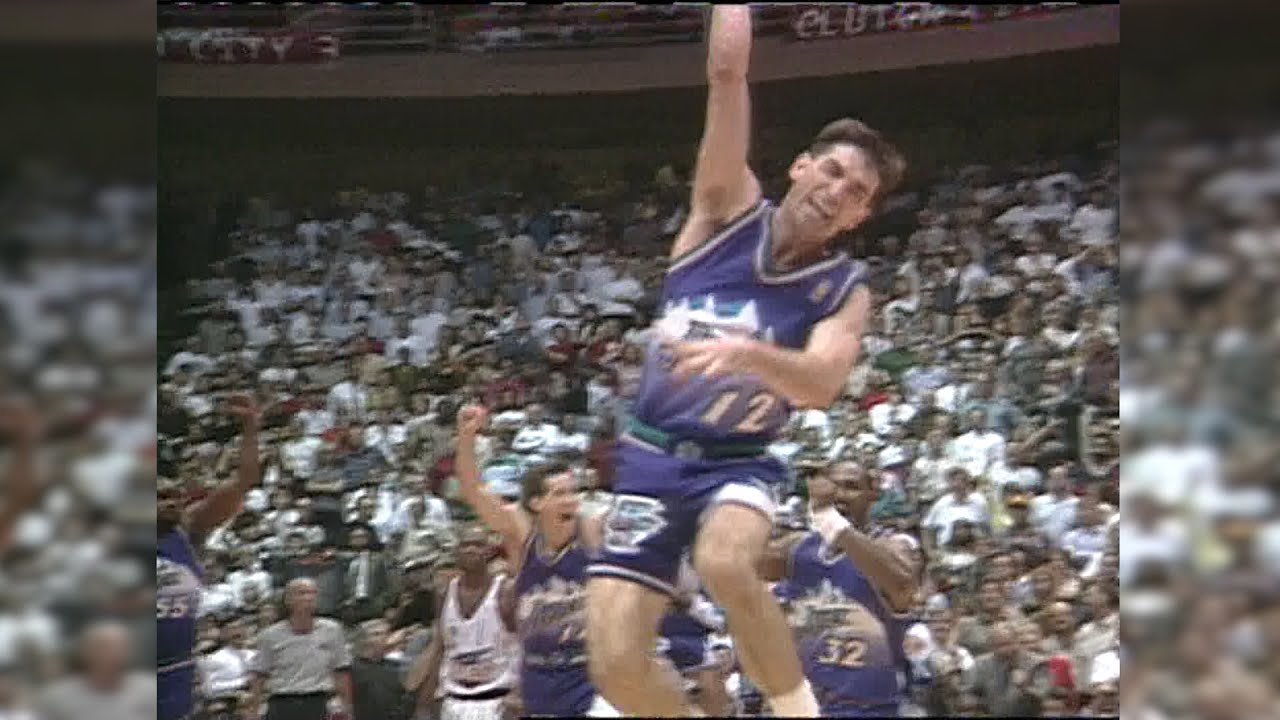
May 29, 1997: John Stockton's Jumper

May 29, 1997: John Stockton sends the Utah Jazz to the NBA Finals for the 1st time, with perhaps the greatest buzzer-beater in NBA history.

Despite all its growth, Salt Lake City only has a team in one of the "Big Four" North American major league sports. If you count soccer, they have teams in both men's and women's leagues. But no baseball, no football, no hockey. Just basketball.

The Utah Stars reached the ABA Finals in 1970, won the ABA Championship in 1971, and reached the Finals again in 1974. But their owners ran out of money early in the 1975-76 season, and after a failed merger with another team, the Spirits of St. Louis, failed, the league canceled the franchise. They never made it to the end of the season, when 4 of the 6 surviving teams were accepted into the NBA: The New York Nets, the Indiana Pacers, the San Antonio Spurs and the Denver Nuggets.

But the Salt Palace still stood, and fans were ready to accept an NBA team. In 1979, the New Orleans Jazz, unable to fill the massive Superdome, were moved to Salt Lake City. Everyone knew the name "Utah Jazz" made no sense. Frank Layden, their head coach from 1981 to 1988, suggested they trade names with Los Angeles: That city was the center of the West Coast jazz scene, and "Utah Lakers" would have made sense with the Great Salt Lake. But the NBA wouldn't allow it.

The Jazz made the Playoffs for the 1st time in 1984, the 1st of 20 straight qualifications. But there always seemed to be somebody in the way: The Lakers of Kareem Abdul-Jabbar and Magic Johnson, the Houston Rockets of Hakeem Olajuwon, the Portland Trail Blazers of Clyde Drexler, the Phoenix Suns of Charles Barkley.

The Jazz chose John Stockton, a guard from Gonzaga University in his hometown of Spokane, Washington, with their 1st pick in the 1984 NBA Draft. They chose Karl Malone, a forward from Summerfield, Louisiana and Louisiana Tech, with their 1st pick in the 1985 Draft.

They made the Jazz Playoff perennials, but a title proved elusive: They reached the Western Conference Finals in 1992, but lost to the Portland Trail Blazers; got there again in 1994, but lost to the Houston Rockets; and got there again in 1996, but lost to the Seattle SuperSonics.

In the 1996-97 season, Stockton and Malone were both named to the NBA's 50th Anniversary 50 Greatest Players, despite never having reached the NBA Finals -- yet. That season, Malone was named the NBA's Most Valuable Player. In 2021-22, they were again named to the NBA's 75th Anniversary 75 Greatest Players.

Under head coach Jerry Sloan, a former Chicago Bulls star, they again reached the Conference Finals, and again played the Rockets, looking for their 3rd Finals berth, and 3rd Championship, in 4 years. They were still led by Hakeem Olajuwon and Clyde Drexler, but now with Charles Barkley added. The Jazz won Games 1 and 2 in Salt Lake City, dropped Games 3 and 4 in Houston, with Eddie Johnson hitting a buzzer-beating 3-pointer to give the Rockets Game 4. The Jazz won Game 5 in Salt Lake.

Game 6 was played at The Summit in Houston. The game was tight throughout, with the Jazz leading 23-21 after the 1st quarter, the Rockets leading 49-43 at the half, and the Rockets leading 71-70 after 3 quarters. As the clock ran out in regulation, with the score tied, Stockton fired a 3-point shot, and it went in, giving the Jazz a 103-100 victory, and their 1st Finals berth. It is among the biggest "buzzer-beaters" in NBA history.

The Jazz went on to lose the NBA Finals to the Bulls, and did so again in 1998. They have not been back to the Finals since, although they usually make the Playoffs. The Rockets would not win another Playoff series until 2009, did not return to the Conference Finals until 2015, and, through the 2021-22 season, have not returned to the NBA Finals.

Stockton was named to 10 NBA All-Star Games, and became the NBA's all-time leader in assists and steals. Malone was named to 14 NBA All-Star Games.

UPDATE: In 2024, the NHL's Arizona Coyotes moved to Salt Lake City. For their 1st season, they were simply "Utah Hockey Club." For the next season, they became the Utah Mammoth. They share the Delta Center with the Jazz.

The Jazz do not have a team Hall of Fame. They have honored 11 men with banners, including 9 retired uniform numbers, 4 of them for men who never played for them: 1, for 1981-88 head coach Frank Layden; 9, for 1985-2009 team owner Larry Miller; 1,223, the number of his coaching wins, for 1988-2011 head coach Jerry Sloan; and a banner with a microphone on it for 1974-2009 broadcaster "Hot" Rod Hundley.

* From their time as the New Orleans Jazz, 1974-79: 7, for guard "Pistol" Pete Maravich.

* From after the move to Utah, but before their Finals appearances: 4, for forward Adrian Dantley; 35, for guard Darrell Griffith; and 53, for center Mark Eaton.

* From their 1997 and '98 NBA Finals appearances: 12, for guard John Stockton; 14, for guard Jeff Hornacek; and 32, for forward Karl Malone.

Miller, Layden, Sloan, Eaton, Stockton and Malone have also been elected to the Utah Sports Hall of Fame.

In addition, since Stockton and Malone were so linked, a statue of the two of them together stands outside the Delta Center.

*

May 29, 1997 was a Thursday. The NBA Eastern Conference Finals had wrapped up the night before, with the Chicago Bulls eliminating the Miami Heat in 5 games.

Football was out of season. The Stanley Cup Playoffs were between the Conference Finals and the Finals, and the Detroit Red Wings went on to sweep the Philadelphia Flyers.

And these Major League Baseball games were played:

* The New York Yankees beat the Toronto Blue Jays, 4-0 at the SkyDome (now the Rogers Centre) in Toronto. David Cone allowed 5 hits over 7 2/3rds innings, striking out 12, and Jeff Nelson completed the 5-hit shutout. Tino Martinez hit a home run. Derek Jeter went 2-for-4.

* The Chicago White Sox beat the Boston Red Sox, 5-2 at Fenway Park in Boston. The White Sox scored 4 runs in the top of the 11th, including a home run by Jorge Fábregas. The Red Sox could only pull 1 run back in the bottom of the 11th.

* The San Francisco Giants beat the Atlanta Braves, 4-2 at Turner Field (now Center Parc Stadium) in Atlanta. Shawn Estes outpitched John Smoltz. Barry Bonds went 0-for-3, but had an RBI on a sacrifice fly.

* The Colorado Rockies beat the Florida Marlins, 6-5 at Pro Player Stadium (now Hard Rock Stadium) in Miami Gardens, Florida.

* The Chicago Cubs beat the Cincinnati Reds, 2-1 at Wrigley Field in Chicago.

* The Milwaukee Brewers beat the Minnesota Twins, 7-4 at the Metrodome in Minneapolis. With MLB moving the Brewers to the National League the next season, this would be the last season for Wisconsin vs. Minnesota to be the kind of rivalry in baseball that it is in football (college and pro) and hockey (college).

* The St. Louis Cardinals beat the Los Angeles Dodgers, 4-2 at Busch Memorial Stadium in St. Louis.

* The Houston Astros beat the San Diego Padres, 10-6 at the Astrodome in Houston. Tony Gwynn went 2-for-4 with a walk.

* The Anaheim Angels beat the Oakland Athletics, 7-1 at the Oakland Coliseum.

* And the Texas Rangers beat the Seattle Mariners, 8-2 at the Kingdome in Seattle. Ken Griffey Jr. went 0-for-3 with a walk. Alex Rodriguez went 2-for-3 with a walk.

Friday, May 27, 2022

May 27, 1994: The Stéphane Matteau Game

May 27, 1994: What might have been the greatest game in NHL history is played. Great game. Horrible result. For me, anyway.

The New Jersey Devils began play in 1982, at the Meadowlands Sports Complex in East Rutherford, 7 miles west of Madison Square Garden, home of the New York Rangers. The Rangers and their fans still considered the New York Islanders, 25 miles to the east at the Nassau Coliseum, to be their arch-rivals. But Devils fans didn't care about that. In 1992, their team faced the Rangers in the Playoffs for the 1st time, but the Rangers won in 7 games.

Now, they would play each other again, for a trip to the Stanley Cup Finals. For the Devils, their 1st ever; for the Rangers, their 1st in 15 years. For the Devils, a chance at their 1st Cup in 12 seasons of trying; for the Rangers, their 1st in 54 years, an end to "The Curse of 1940."

Somebody noticed that the seating capacity for hockey games at the Brendan Byrne Arena, the Devils' home in the Meadowlands Complex, was 19,040. A coincidence. Not a coincidence were the chants Devils fans had picked up from Islanders fans: "Rangers suck!" and "Nine-teen-for-ty!"

The 1st 2 games were on May 15 and 17, at The Garden. In Game 1, the Rangers blew leads of 1-0, 2-1 and 3-2. Claude Lemieux scored with 43 seconds left in overtime, and Stéphane Richer scored at 15:23 of the 2nd overtime. New Jersey Devils 4, New York Rangers 3. It is one of the most shocking defeats in the Broadway Blues’ history. In Game 2, the Rangers beat the Devils, 4-0, to salvage a split.

Game 3 was played at the Meadowlands on May 19. It went to double overtime, and the Rangers won, 3-2, taking home-ice advantage back. The winning goal was scored by Stéphane Matteau. It was the biggest goal he has ever scored. For now.

Game 4 was played at the Meadowlands on May 21. Richer scored again. He scored 2 goals against them in the 1st live hockey game I ever saw. He hated the Rangers so much, he even scored against them on an episode of Seinfeld. This time, he scored the opener, launching the Devils to a 3-1 win. The series was tied.

Game 5 was played at The Garden on May 23. The Devils humiliated the Rangers in their own house, 4-1, and take a 3-2 lead in the series. The Rangers' "inevitable" Stanley Cup win had become very, very evitable.

On the morning of May 25, the day of Game 6, it looked like it would be the Devils moving on, and the Rangers not. All the Devils had to do is win that night, and they were in the Stanley Cup Finals. And the 1993-94 New York Rangers would go down as the most spectacularly failed team in the history of New York Tri-State Area sports.

Ranger Captain Mark Messier, the man acquired to end the Rangers' curse, was on the verge of becoming the biggest failure in the history of New York sports. But the day before, he gave the media a prediction of victory in Game 6, and it appeared on the back pages of the tabloids.

This was even bigger than Joe Namath's prediction of a Super Bowl win for the New York Jets 25 years earlier: He wasn't predicting a massive upset, he was predicting that a heavily favored team would get its act together. If the Rangers had lost this game – or won it, and then lost Game 7, or even if they'd won both and then lost the Finals, Messier would have gone from savior-in-waiting to a massive letdown, and Ranger fans would have turned on him.

At first, it looked like that would happen at the Meadowlands. The Devils took a 2-0 lead in the 1st period. But Alexei Kovalev scored for the Rangers, and then Messier put the team on his back, and scored the next 3. The Rangers had won, 4-2, and there would be a Game 7 at The Garden on May 27.

At 9:31 of the 2nd period, Brian Leetch scored. It remained 1-0 Rangers until the very end of regulation. With 7.7 seconds to go, Valeri Zelepukin scored for the Devils. The game went to overtime. It went to double overtime. Mike Richter had saved 31 of 32 shots. Martin Brodeur, in only his 2nd NHL season, a few days past his 22nd birthday, had saved 46 of 47.

At the 4:24 mark of the 2nd overtime, Stéphane Matteau skated around the net, and put the puck past Brodeur's left hand. Rangers 2, Devils 1. Pandemonium in The Garden. Howie Rose had the call on radio station WFAN:

Fetisov for the Devils plays it cross-ice, into the far corner. Matteau swoops in to intercept. Matteau behind the net, swings it in front, he scores! Matteau! Matteau! Matteau! Stéphane Matteau! And the Rangers have won more hill to climb, baby! But it's Mount Vancouver! The Rangers are headed to the Finals!

It became hockey's version of Russ Hodges' "The Giants win the Pennant!" after the Bobby Thomson home run gave the baseball version of the New York Giants the 1951 Pennant over their arch-rivals, the Brooklyn Dodgers, 43 years earlier.

Indeed, the similarities with the '51 Dodger-Giant Playoff were many. The established team had struggled to beat the upstarts, but had finally done it. It wasn't a superstar who had done the deed: Neither Thomson nor Matteau would ever be seriously considered for his sport's Hall of Fame. And the distance? Actually, it was 7 miles for Rangers vs. Devils, half that for Giants vs. Dodgers, even though, this time, there was a State Line involved.

It might have been the greatest game in hockey history. But, for me, it was a horrible result. After Matteau scored, I called my grandmother, who had been a Brooklyn Dodger fan, and told her I finally understood how she felt on October 3, 1951.

Oddly, although she had been alive for all 3 of the Rangers' Cup wins at that point, she never became a hockey fan until she was old, and living near the Jersey Shore, and she became a Devils fan, and got to enjoy 3 Stanley Cups. Because, instead of folding after taking such an emotional blow, the Devils sucked it up, and won the Cup the next season, with 2 more over the next decade.

The Rangers? Sam Rosen had the call of their Cup win, 18 days later, saying, "This one will last a lifetime!" As of May 27, 2022, it has been 82 years, 1 Cup. That one has lasted a lifetime.

And to think, if the Devils had scored in that overtime, the Rangers would still be under the Curse of 1940, and Mark Messier would have gone down as the biggest failure -- or, at least, the biggest letdown -- in the history of New York sports.

*

May 27, 1994 was a Friday. Football was out of season. There was 1 game in the NBA Playoffs, Game 3 of the Western Conference Finals: The Utah Jazz beat the Houston Rockets, 95-86 at the Delta Center in Salt Lake City.

And these Major League Baseball games were played:

* The New York Yankees beat the Kansas City Royals, 5-2 at Kauffman Stadium in Kansas City. Jimmy Key was the winning pitcher. Daryl Boston hit a home run. Yes, a man named Boston hit a home run for the Yankees. Don Mattingly went 0-for-4.

* The New York Mets beat the Cincinnati Reds, 10-2 at Shea Stadium. Pete Smith went the distance for the win. Luis Rivera and Todd Hundley hit home runs.

* The Montreal Expos beat the Colorado Rockies, 4-2 at the Olympic Stadium in Montreal.

* The Houston Astros beat the Philadelphia Phillies, 4-2 at Veterans Stadium in Philadelphia.

* The Atlanta Braves beat the Chicago Cubs, 7-2 at Atlanta-Fulton County Stadium.

* The California Angels beat the Toronto Blue Jays, 6-2 at the SkyDome (now the Rogers Centre) in Toronto.

* The Cleveland Indians beat the Oakland Athletics, 3-2 at Jacobs Field (now Progressive Field) in Cleveland. Rickey Henderson went 2-for-4.

* The Chicago White Sox beat the Baltimore Orioles, 3-0 at the new Comiskey Park (now Rate Field) in Chicago. Wilson Álvarez pitched a 6-hit shutout, outpitching Mike Mussina. Both pitchers went the distance. That was still a thing in 1994. Frank Thomas hit a home run. Cal Ripken went 0-for-4.

* The Milwaukee Brewers beat the Seattle Mariners, 5-2 at Milwaukee County Stadium. Ken Griffey Jr. went 1-for-4.

* The Minnesota Twins beat the Detroit Tigers, 5-2 at the Metrodome in Minneapolis.

* The Texas Rangers beat the Boston Red Sox, 4-3 at The Ballpark (now Choctaw Stadium) in the Dallas suburb of Arlington, Texas.

* The San Diego Padres beat the St. Louis Cardinals, 8-6 at Jack Murphy Stadium in San Diego.

* The Los Angeles Dodgers beat the Pittsburgh Pirates, 6-5 at Dodger Stadium in Los Angeles. The Bucs scored 4 runs in the top of the 9th to send the game to extra innings, and Jay Bell hit a home run in the top of the 10th inning. But in the bottom of the 10th, Tim Wallach was hit with a pitch, Eric Karros singled, Mitch Webster singled home the tying run, and Darren Dreifort -- a rookie pitcher in only his 2nd major league plate appearance -- pinch-hit a single to bring home the winning run.

* And the San Francisco Giants beat the Florida Marlins, 4-3 at Candlestick Park in San Francisco. Barry Bonds went 1-for-4.

Tuesday, January 25, 2022

January 25, 1998: The Denver Broncos Finally Win a Super Bowl

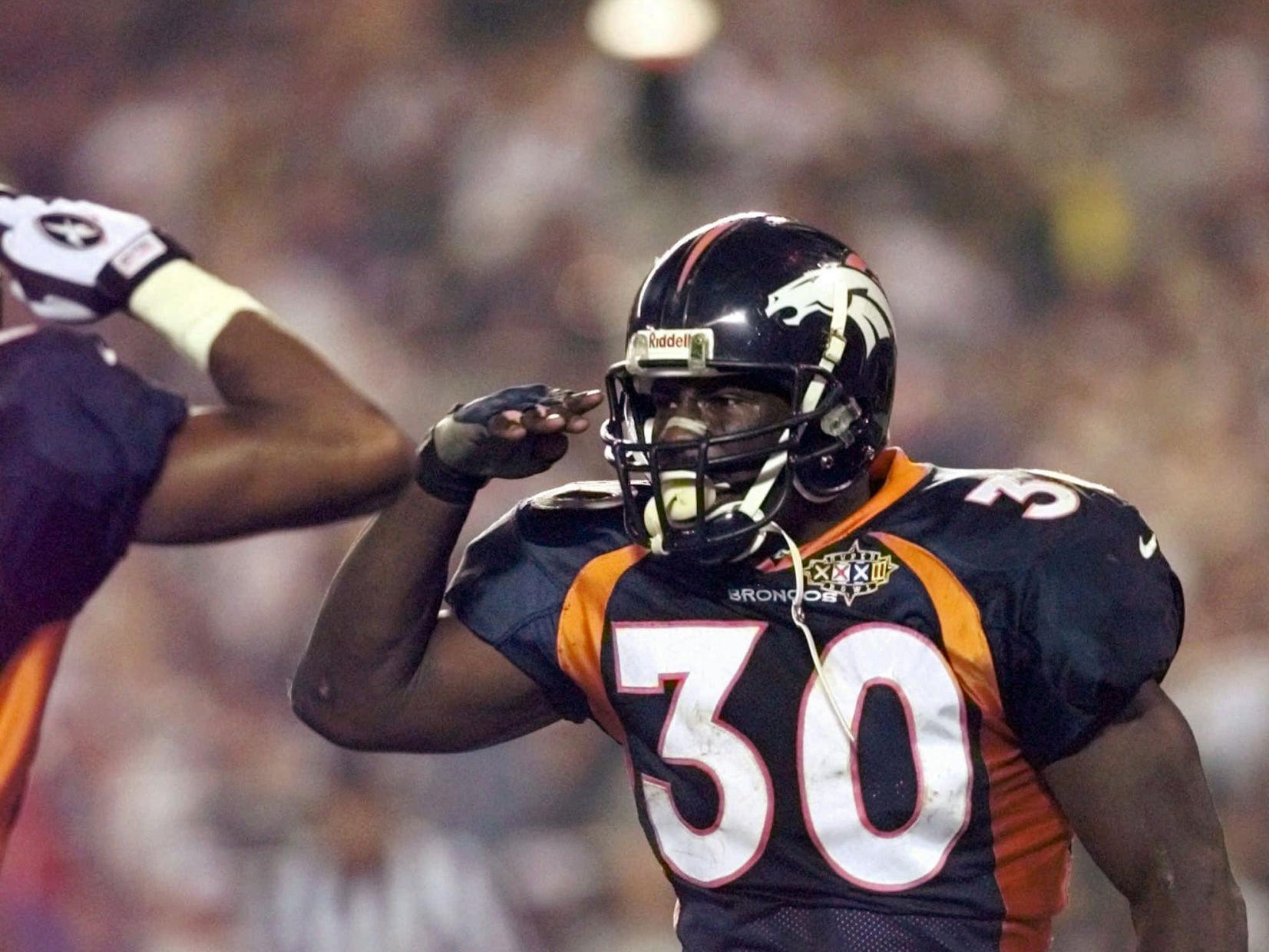
Terrell Davis and "The Mile High Salute"

January 25, 1998: Super Bowl XXXII is played, at what was then known as Qualcomm Stadium in San Diego.
The NFC Champions were the Green Bay Packers. They had won the Super Bowl the year before, taking their 12th World Championship, leading all NFL teams. With an offense led by future Hall-of-Fame quarterback Brett Favre, and a defense led by future Hall-of-Famer Reggie White, they looked primed to repeat. Especially since the NFC had won 13 straight Super Bowls, going back to Super Bowl XVIII, won by the then-Los Angeles Raiders.

Another good sign for the Packers is that the AFC Champions were the Denver Broncos. This was their 5th trip to the Super Bowl, and they had lost the 1st 4. They had lost Super Bowl XII to the Dallas Cowboys, despite having a great defense known as the Orange Crush. They lost Super Bowl XXI to the New York Giants, Super Bowl XXII to the Washington Redskins, and Super Bowl XXIV to the San Francisco 49ers, all with John Elway as their quarterback and Dan Reeves as their head coach.

They had always sold out Mile High Stadium since 1977, the season of "Broncomania" that ended with the Super Bowl XII defeat. They were, far and away, the most popular sports team in the Rocky Mountain region, even thought the recently arrived Colorado Avalanche had won the 1996 Stanley Cup, for the region's 1st title; and the Colorado Rockies had sold more tickets than any team in Major League Baseball since their 1993 expansion debut.

They had some dramatic victories over the years, including their defeats of the Oakland Raiders in the 1977 AFC Championship Game, and of the Cleveland Browns in back-to-back AFC title games for the 1986 and 1987 seasons. But they couldn't win the big one.

Starting in 1968, the Broncos had worn orange jerseys (hence the "Orange Crush" nickname), and bright blue helmets with an orange D, with a charging white horse inside it. It was a hard logo to draw, but the whole thing was among the most distinctive uniform designs in sports.
John Elway, 1987

For 1997, they scrapped that for a new design, with purple jerseys with a weird new number font, and purple helmets with a white horse's head. This, too, was distinctive. I didn't like the change in number font, but the helmet was much better.
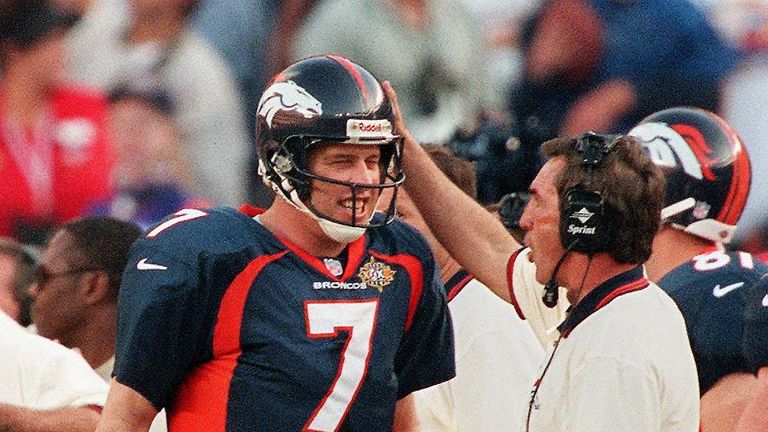
Elway and head coach Mike Shanahan, 1997

But new uniforms wouldn't be enough. The Cincinnati Bengals found that out in 1981, when they switched to their striped helmets, and made the Super Bowl, only to lose it.

But head coach Mike Shanahan had revamped the team after the Reeves years. He built a new defense, with end Neil Smith, linebacker Bill Romanowski, former San Francisco cornerback Tim McKyer, and a holdover from the previous Bronco Super Bowls, safety Steve Atwater, possibly the hardest hitter in the game at the time.

But Shanahan was an offense-first coach. He got Elway something he'd never had before: A star running back, to take some of the pressure off him. He was a University of Georgia graduate named Terrell Davis, and he was exactly what Elway needed to remove his name from consideration, alongside Y.A. Tittle, Dan Marino and Jim Kelly, for the title of "greatest quarterback to never win a World Championship."

The Broncos went 12-4 in 1997. All 4 losses were on the road: By 3 to the Oakland Raiders, 2 to the Kansas City Chiefs, 11 to the Pittsburgh Steelers, and 17 to the San Francisco 49ers. However, they did have a 2-3 stretch toward the end of the season, followed by a win over the San Diego Chargers in the regular-season finale.

The season before, they had an ignominious Playoff defeat at the hands of the Jacksonville Jaguars. This time, they not only avenged that defeat with a 42-17 win over the Jags at Mile High, but they also went on the road and avenged 2 of their regular-season defeats: They beat the Chiefs 14-10 at Arrowhead Stadium, and then, in the AFC Championship Game, went to Three Rivers Stadium, and beat the Steelers, 24-21.

The Broncos had shown character. Elway was much more mature, much more patient, and much less reliant on his cannon of an arm that he had been in the 1980s. If any AFC team could dethrone the Packers as Champions, it was the '97 Broncos.

UPDATE: The Broncos have a Ring of Fame. As of the 2025 NFL season, it includes:

* From their founding era, 1960 to 1976: Quarterbacks Frank Tripucka and Charley Johnson, running backs Gene Mingo and Floyd Little, end Lionel Taylor, defensive end Rich "Tombstone" Jackson, safety Austin "Goose" Gonsoulin, owner Gerald Phipps. Tripucka, Gonsoulin, Jackson, Taylor, Little, Phipps, founding owner Bob Howsam, and running back Bobby Anderson have also been elected to the Colorado Sports Hall of Fame.

* From their 1977 AFC Champions: Phipps, quarterback Craig Morton, receivers Haven Moses and Rick Upchurch, tight end Riley Odoms, defensive tackle Paul Smith, linebackers Randy Gradishar and Tom Jackson, cornerback Louis Wright, safeties Billy Thompson and Steve Foley, kicker Jim Turner, and head coach Robert "Red" Miller. Phipps, Morton, Moses, Upchurch, Gradishar, Wright, Thompson, Miller, running back Otis Armstrong and 1970s and '80s defensive coordinator Joe Collier have also been elected to the Colorado Sports Hall of Fame.

* From their 1986, 1987 and 1989 AFC Champions: Quarterback John Elway, linebacker Karl Mecklenburg, safety Dennis Smith, head coach Dan Reeves, and owner Pat Bowlen. Collier, Elway, Mecklenburg, Smith, Reeves and Bowlen have also been elected to the Colorado Sports Hall of Fame.

* From their Super Bowl XXXII and XXXIII winners: Elway, Bowlen, running back Terrell Davis, receiver Rod Smith, tight end Shannon Sharpe, center Tom Nalen, tackle Gary Zimmerman, linebacker Simon Fletcher, safety Steve Atwater, kicker Jason Elam, and head coach Mike Shanahan. Elway, Bowlen, Smith, Davis, Sharpe, Atwater, Elam, Shanahan, receiver Ed McCaffrey and defensive end Alfred Williams have also been elected to the Colorado Sports Hall of Fame.

* From the 2000s: Safety John Lynch. Lynch has not been elected to the Colorado Sports Hall of Fame, but tight end Daniel Graham has.

* From their 2013 AFC Champions who lost Super Bowl XLVIII: Elway (by then the general manager), Bowlen, receiver Demaryius Thomas and cornerback Champ Bailey.

* From their 2015 AFC Champions who won Super Bowl 50: Elway, Bowlen, Thomas, Bailey, and quarterback Peyton Manning. Elway, Bowlen, Bailey and Manning  have also been elected to the Colorado Sports Hall of Fame.

*

The Packers got the ball first, and scored on their opening drive, a 22-yard touchdown pass from Favre to Antonio Freeman. The Broncos immediately struck back, helped by a defensive holding penalty that nullified an Elway incompletion on 3rd down. Davis, a San Diego native playing in the stadium where he'd grown up rooting for the Chargers and baseball's San Diego Padres, scored from a yard out. This remains the only Super Bowl where both teams scored on their opening drives.

The Packers' next drive ended when Tyrone Braxton intercepted Favre in Green Bay territory. Elway took advantage, and scored himself on a 1-yard run. The Broncos had led 10-9 at the half in Super Bowl XXI, and 10-0 early in the 2nd quarter of Super Bowl XXII. Both of those games fell apart, as the opposition outscored them 30-10 and 42-0 the rest of the way. But, having watched those games, I sensed something was different this time.

David later claimed that he played the game with a migraine headache, to the point where, until he took some medication, he was blind. But the Broncos made their own breaks: When Atwater sacked Favre and forced a fumble that Smith recovered, Jason Elam kicked a 51-yard field goal, then the 2nd-longest in Super Bowl history, and it was 17-7 Denver.

Late in the half, the Packers began a drive from their own 5, and Favre ended it with a 6-yard pass to Mark Chmura. The Pack went into the locker room trailing 17-14, and felt like they had the momentum. Would this be another Bronco Super Bowl collapse?

Maybe: Davis fumbled on the opening drive of the 2nd half, and the Packers converted that into a game-tying field goal. But the Packers stalled, and Elway went to work. His drive included a 36-yard pass to Ed McCaffrey. On 3rd & 6 from the Packer 12, Elway ran for 8 yards, and was hit by the Packers' LeRoy Butler and Mike Prior, spinning him in midair. The play became known as "The Helicopter," and it showed that Elway, previously thought of as a privileged pretty boy who couldn't get the big joe done, had some toughness. Two plays later, Davis scored on another 1-yard run. It was 24-17 Denver.

Early in the 4th quarter, Favre threw another touchdown pass to Freeman, tying the game. It was still tied with 3:27 left in regulation, when the Broncos forced the Packers to punt and got the ball back at the Packer 49. On the next play, Darius Holland made what might be the biggest mistake in Packer history, a facemask penalty on Davis that cost Green Bay 15 yards.

With 1:47 left, the Broncos were at 2nd & goal on the Packer 1. With 2 time-outs left, Packer coach Mike Holmgren told his players to let the Packers score, to give the offense enough time. Davis became the 1st player (and remains the only one) to rush for 3 touchdowns in a single Super Bowl. It was Broncos 31, Packers 24.

After each touchdown, Davis found the nearest teammate, and gave him a military-style salute. It became known as "The Mile High Salute."

There was 1:45 to go, with the Packers having 2 time-outs left. Freeman returned Elam's kickoff to the 30. Favre threw a screen pass to Dorsey Levens, who got to the Bronco 48 with 1:30 left. But the next play was also a screen pass to Levens. He caught it, but was stopped for no gain, and the Packers had to burn a time-out.

The Packers reached the Bronco 31, with 37 seconds to go. A field goal would do them no good. It was 3rd & 6. Favre threw to Brooks, who was covered by Randy Hilliard. Atwater also went for the ball, and his hit knocked out Brooks, Hilliard, and himself. NFL rules say that if players on both teams are injured and need medical attention on the field in the last 2 minutes of a game, both teams are charged with a time-out.

So it was 4th & 6 at the Bronco 31. There were 32 seconds left, and no time-outs. Favre looked for Chmura, but John Mobley broke it up, and the Broncos took over on down. Elway knelt on the ball for the last play of his greatest victory. After going 0-3 with Elway as quarterback, and 0-4 overall, the Denver Broncos were World Champions for the 1st time.

This broke a 13-year winning streak for the NFC. And a 37-year streak of failure for the Broncos to win the big one. It was John Elway's moment. But it wouldn't have happened without Terrell Davis, who, along with Atwater, tight end Shannon Sharpe, offensive tackle Gary Zimmerman, and team owner Pat Bowlen (but, thus far, not Shanahan), would join him in the Pro Football Hall of Fame.

Nine months later, Qualcomm Stadium became the only stadium ever to host the Super Bowl and the World Series in the same calendar year, as the Yankees beat the San Diego Padres. With no more groundsharing between MLB and professional football teams, it will likely never happen again. In the pre-Super Bowl era, the only stadiums hosting the World Series and the NFL Championship Game in the same year were in New York: The Polo Grounds in 1936; and Yankee Stadium in 1956, 1958 and 1962.

The Broncos went 15-1 the next season, and beat the Atlanta Falcons in Super Bowl XXXIII. Elway then retired.

In 1999, The Sporting News released their list of the 100 Greatest Football Players. Elway was ranked 16th. In 2010, the NFL Network released their list of the 100 Greatest Players. Elway was ranked 23rd.


*


January 25, 1998 was a Sunday. Obviously, there were no other football games. Baseball was out of season. The NBA wasn't stupid: They knew that if they were going to get any TV viewers away from the Super Bowl pregame programming, they would need a showcase game. So they put the previous season's Finalists up against each other.

The Utah Jazz beat the Chicago Bulls, 101-94 at the United Center in Chicago. Karl Malone scored 35 points, proving that "The Mailman" could deliver on Sunday. Michael Jordan led the Bulls with 32. Nevertheless, as they did the previous season, the Bulls would beat the Jazz in the NBA Finals.

The NHL didn't take much of a chance, either, scheduling only 2 games. Both were satisfying for me, as New Jersey won, and Boston lost:

* The New Jersey Devils beat the Montreal Canadiens, 3-1 at the Molson Centre (now the Bell Center) in Montreal. The Devil goals came from Lyle Odelein, Bobby Holik and Brian Rolston.

* And the Washington Capitals beat the Boston Bruins, 4-1 at the MCI Center (now the Capital One Arena) in Washington.
Monday, January 3, 2022

January 4, 1896: Utah Is Admitted As the 45th State

January 4, 1896: Utah is admitted to the Union as the 45th State.

Utah was in the Rocky Mountains. It had been acquired as part of the Mexican Cessation of 1848, after the Mexican-American War. The year before, Brigham Young led the Church of Jesus Christ of Latter-Day Saints there. As a result, it has become known for being home to the Church, a.k.a. the Mormons.

The Mormons have led to Utah having traditionally conservative politics. The State's highest-ranking politician was George H. Dern, who was President Franklin D. Roosevelt's 1st Secretary of War. But the State hasn't voted for a Democratic nominee for President since 1964.

Salt Lake City is the State's capital, and easily its largest city, home to the NBA's Utah Jazz and Major League Soccer's Real Salt Lake. It is also home to the University of Utah. Utah State University is in Logan, and Brigham Young University is in Provo.

*

January 4, 1896 was a Saturday. Everett McKinley Dirksen was born. He became a longtime U.S. Senator from Illinois and Minority Leader from 1959 until his death in 1969.

Baseball was out of season. Football season had just ended. Basketball barely existed. There was 1 hockey game of note: The Ottawa Hockey Club, forerunners of the original Ottawa Senators, beat the Montreal Shamrocks, 2-1 at the Rideau Rink in Ottawa.

In English soccer, Woolwich Arsenal, which would evolve into the North London team I would one day support, beat Loughborough F.C., of Leicestershire in the West Midlands, 5-0 at the Manor Ground in Plumstead, then in Kent, now in South-East London.

December 31, 1999 & January 1, 2000: The Millennium

December 31, 1999:  The Millennium arrives. The people of planet Earth survived. At a terrible cost. But we hadn't destroyed ourselves. ...