Showing posts with label georgia tech yellow jackets. Show all posts

Sunday, December 25, 2022

December 25, 1991: Mikhail Gorbachev Resigns, the End of the Soviet Union

December 25, 1991: Mikhail Gorbachev resigns as President of the Soviet Union. The next day, the Supreme Soviet dissolved, its last act being to dissolve the Soviet Union itself after 74 years.
Gorbachev had been named President in 1985, after the death of Konstantin Chernenko, the last of the old-line Communists. Born in 1931, Gorbachev was the 1st Soviet leader who did not remember the Bolshevik Revolution of 1917. So he was uniquely poised to lead reforms, which he called "perestroika" (reconstruction) for domestic change, and "glasnost" (openness) for foreign relations.
That gave the West a chance to make peaceful overtures to a changing adversary. Britain's Prime Minister, Margaret Thatcher, said in an interview, "I like Mr. Gorbachev. We can do business together." The equally conservative American President, Ronald Reagan, met with him in 5 summits: In Geneva, Switzerland in 1985; in Reykjavik, Iceland in 1986; in Washington in 1987, signing the Intermediate-Range Nuclear Forces (INF) Treaty; in Moscow in the Summer of 1988; and in New York toward the end of the year, including President-elect George H.W. Bush.
In 1987, Time magazine named Gorbachev its Man of the Year, recognizing him as the person who had most affected the news during the calendar year. (Remember: It's not an "award" that a person "wins.") In 1989, suggesting that he deserved it again, and then som, Time named him Man of the Decade. In 1990, he was awarded the Nobel Peace Prize.
But the hardline Communists of Gorbachev's generation didn't like the changes he was making to what those of their forefathers had done. In August 1991, he was overthrown in a coup. But Boris Yeltsin, already President of the substate the Russian Federation, rallied the country, getting the Red Army on his side. With several of the Soviet "republics" having already declared their independence, the plotters could not expect help from elsewhere, and the coup collapsed. After 4 days, Gorbachev was back in power.
But he had very little support. The country had still rallied around Yeltsin, who was seen as even more of a reformer. Gorbachev become the opposite of "a man without a country": He was, in effect, a one-man country. On Christmas Day, he bowed to the inevitable, and resigned his office.
Gorbachev continued to advocate for social-democratic reform, was a critic of current Russian President Vladimir Putin, and died on August 30, 2022, at the age of 91.
The sad part is, the end of the Soviet Union was not the end of tyranny in its former lands. Putin ruled the Russian Federation with an iron fist from 2000 until 2008, when the country's Constitution term-limited him out. So his Prime Minister, Dmitry Medvedev, became President, while Putin became Prime Minister. Before Medvedev's term ran out in 2012, the Constitution was amended to allow Putin to return in 2012, and to have no limits.
Meanwhile, some of the other former Soviet "republics" had their own dictators: Saparmurat Niyazov, Turkmenistan, 1990-2006; Islam Karimov, Uzbekistan, 1991-2016; Nursultan Nazarbayev, Kazakhstan, 1991-2019; Alexander Lukashenko, Belarus, since 1994; Emomali Rahmon, Tajikistan, since 1994; and Ilham Aliyev, Azerbaijan, since 2003.
It's as if these countries decided, "We don't want to be a part of the Soviet Union, but we do like what the Soviets do, we just want to do it ourselves."

Following viewer demands for a battle with a Russian, a 2013 episode of the YouTube series Epic Rap Battles of History, featured a five-man "battle royale": "Nice" Peter Shukoff played Rasputin, Vladimir Lenin and Vladimir Putin; while "Epic" Lloyd Ahlquist played Joseph Stalin and Mikhail Gorbachev.

*
December 25, 1991 was a Wednesday. Baseball was in midseason. There was 1 college football game: Georgia Tech beat Stanford, 18-17, in the Aloha Bowl at Aloha Stadium in Honolulu, Hawaii.
The NHL, as usual, did not play on Christmas Day. The NBA usually does, and there were 2 games. The Chicago Bulls beat the Boston Celtics, 121-99 at the Chicago Stadium. Michael Jordan scored 14 points; on his own team, he was outscored by Scottie Pippen (27), B.J. Armstrong (18) and Horace Grant (17). But the Celtics were crumbling, and this would be the last season for Larry Bird.
And the Los Angeles Lakers went back to their 1st home in L.A., the Los Angeles Memorial Sports Arena, and beat the Los Angeles Clippers, 85-75.

Tuesday, November 8, 2022

November 8, 1975: The Rudy Ruettiger Game

The real thing, not Sean Astin

November 8, 1975: Notre Dame beats Georgia Tech, 24-3 at Notre Dame Stadium in South Bend, Indiana. By the Fighting Irish's standards, it was an unremarkable game in an unremarkable season, going 8-3 with no invitation to a bowl game, and with the 2 guys who would become their biggest stars, quarterback Joe Montana and linebacker Bob Golic, both being freshmen and backups.

But in this last home game for several seniors, head coach Dan Devine, who took over this season from the retiring Ara Parseghian, decided -- on his own, not persuaded to do so like the movie said -- to have 5-foot-6-inch, 165-pound defensive end Daniel Eugene "Rudy" Ruettiger, who hadn't played a down in 4 years and wouldn't get another chance, dress in his Number 45 uniform for the game.

Devine sends Ruettiger in for Notre Dame's final defensive series, and he is in for 3 plays: A kickoff, an incomplete pass by Tech quarterback Rudy Allen (whose name actually was Rudolph), and a sack of Allen by Ruettiger.

And thus did the story of the 1993 film Rudy, starring Sean Astin, end. At least they got that part right. It's not the most ridiculous movie ever made about Notre Dame football, but it is about the school's most ridiculous player.

What happened to Rudy after his sack? He set up a successful maintenance company, and also sold real estate. In 1986, he moved back to South Bend, and decided to sell his story to be made into a film. He had a cameo as a fan, sitting behind Ned Beatty, who was playing his father. He said the movie was 92 percent true.

After the movie, became a motivational speaker, and ran Rudy Beverage, Inc. In 2011, he was charged with securities fraud in connection with that company. He settled, and paid $383,000 in fines. In 2017, this famous former member of the football team at America's best-known Catholic university converted to the Church of Jesus Christ of Latter-day Saints, a.k.a. the Mormons.
Maybe Meat Loaf should have played middle-aged Rudy.

As of November 8, 2022, he is still alive.

*

November 8, 1975 was a Saturday. The baseball season was over. The NFL played the next day. But, in addition to Notre Dame vs. Georgia Tech, these notable college games were played:

* Number 1 Oklahoma were upset by Kansas, 23-3 at Owen Field in Norman, Oklahoma. This ended a 28-game winning streak for the Sooners, and a 37-game unbeaten streak. They won the Big Eight Conference title anyway.

* Number 2 Ohio State beat Illinois, 40-3 at Memorial Stadium in Champaign, Illinois. The Buckeyes moved up to Number 1, and won the Big Ten title.

* Number 5 Alabama beat Louisiana State, 23-10 at Tiger Stadium in Baton Rouge, Louisiana. The Crimson Tide won the Southeastern Conference.

* Number 8 Penn State lost to North Carolina State, 15-14 at Beaver Stadium in State College, Pennsylvania. N.C. State was then coached by Lou Holtz in his 1st big head coaching job. Penn State was still invited to the Sugar Bowl, where they were beaten by Alabama.

* UCLA, then unranked, beat Oregon, 50-17 at Autzen Stadium in Eugene, Oregon. They won the league then known as the Pac-8, and then, in the last game coached at that school with Dick Vermeil as head coach, beat Ohio State in the Rose Bowl. They ended the season ranked Number 5.

* Arkansas, then unranked, beat Rice, 20-16 at Rice Stadium in Houston. They went on to win the Southwest Conference and the Cotton Bowl, finishing ranked Number 6.

* Rutgers beat Lafayette, 48-6 at Rutgers Stadium in Piscataway, New Jersey. The Scarlet Knights finished 9-2, but were not invited to a bowl game.

There were 6 games played in the NBA that day:

* The Milwaukee Bucks beat the Washington Bullets, 99-95 in double overtime, at the Capital Centre in the Washington suburb of Landover, Maryland.

* The Buffalo Braves beat the Phoenix Suns, 110-105 at the Buffalo Memorial Auditorium. Bob McAdoo scored 37 points.

* The Atlanta Hawks beat the Seattle SuperSonics, 107-94 at The Omni in Atlanta.

* The Houston Rockets beat the Cleveland Cavaliers, 116-112. It is the 1st game ever played at their new arena, The Summit. It will be their home until the Toyota Center opens in 2003, including back-to-back NBA Championships in 1994 and 1995. The Summit was renovated, and became the Central Campus of the Lakewood Church, run by televangelist Joel Osteen.

* The Boston Celtics beat the Detroit Pistons, 118-104 at Cobo Hall in Detroit. (It's now named the TCF Center.)

* And the Golden State Warriors beat the Los Angeles Lakers, 114-106 at the Oakland Coliseum Arena.

There were 2 games played in the American Basketball Association, which had recently begun its 9th and, as it turned out, last season:

* The Denver Nuggets beat the New York Nets, 128-121 at the new McNichols Arena in Denver. Julius "Dr. J" Erving scored 35 in a losing effort. This turned out to be a preview of the last ABA Finals, which the Nets won.

* And the San Antonio Spurs beat the San Diego Sails, 99-76 at the HemisFair Arena in San Antonio.

There were 6 games played in the NHL:

* The New York Rangers lost to the Los Angeles Kings, 3-1 at The Forum outside Los Angeles in Inglewood, California.

* The New York Islanders beat the Philadelphia Flyers, 4-3 at The Spectrum in Philadelphia.

* The Montreal Canadiens beat the Detroit Red Wings, 5-0 at the Montreal Forum.

* The Chicago Black Hawks beat the Pittsburgh Penguins, 7-5 at the Civic Arena in Pittsburgh.

* The Toronto Maple Leafs and the St. Louis Blues played to a tie, 3-3 at the Checkerdome in St. Louis. (The St. Louis Arena had that name from 1973 to 1980, while St. Louis-based Ralston Purina, with its Checkerboard Square logo, owned the Blues.

* And the Vancouver Canucks beat the Boston Bruins, 4-2 at the Pacific Coliseum in Vancouver.

And there were 4 games played in the World Hockey Association:

* The Quebec Nordiques beat the Indianapolis Racers, 3-2 in overtime at the Colisee de Quebec.

* The Phoenix Roadrunners beat the New England Whalers, 3-2 at the Hartford Civic Center. (It's now named the PeoplesBank Arena.)

* The Cincinnati Stingers beat the San Diego Mariners, 7-4 at the new Riverfront Coliseum in Cincinnati. (It's now named the Heritage Bank Center.)

* And the Minnesota Fighting Saints beat the Toronto Toros, 4-3 at the St. Paul Civic Center.

Also, the football team at what would become my high school, East Brunswick in Middlesex County, New Jersey, beat Perth Amboy, 28-0 at Jay Doyle Field in East Brunswick.

The English soccer team I would one day support, Arsenal, weren't so lucky: They lost to Derby County, 1-0 at Highbury in North London.

Also, actress Tara Reid was born. 

Tuesday, October 11, 2022

October 12, 1913: The McGraw-Robinson Split

October 12, 1913: Following the World Series, which his New York Giants lost to the Philadelphia Athletics, John McGraw hosts a reunion for Hughie Jennings and the old National League version of the Baltimore Orioles, who won Pennants in 1894, 1895 and 1896, revolutionizing the game in the process.

After a night of heavy drinking‚ McGraw blames his longtime friend‚ Giants business partner, and former Oriole teammate Wilbert Robinson, perhaps baseball's 1st great pitching coach, for too many coaching mistakes in the 1913 Series. "Uncle Robbie" replies that McGraw made more mistakes than anybody. McGraw fires him. Eyewitnesses say Robbie doused McGraw with a glass of beer and left.

Six days later, Robbie will begin a legendary 18 years as manager of the crosstown Brooklyn franchise‚ replacing Bill Dahlen. The team will carry the nickname Robins‚ as well as Dodgers‚ during his tenure.

Robbie and Mac won't speak to each other for 17 years, and after winning 3 straight Pennants together, McGraw will win just 1 Pennant in the next 7 years, in 1917; while Robbie will win 2, in 1916 and 1920, the only Pennants the Brooklyn team will win between 1900 and 1941.

This is not the beginning of the rivalry between the Giants and the Dodgers, not by a long shot. That rivalry had its beginning in rivalries between clubs of New York (Manhattan) and Brooklyn when they were separate cities prior to 1898, even going back to the days of amateur baseball in the 1850s and '60s. And the rivalry between Manhattan and Brooklyn would have happened even if baseball had never been invented.

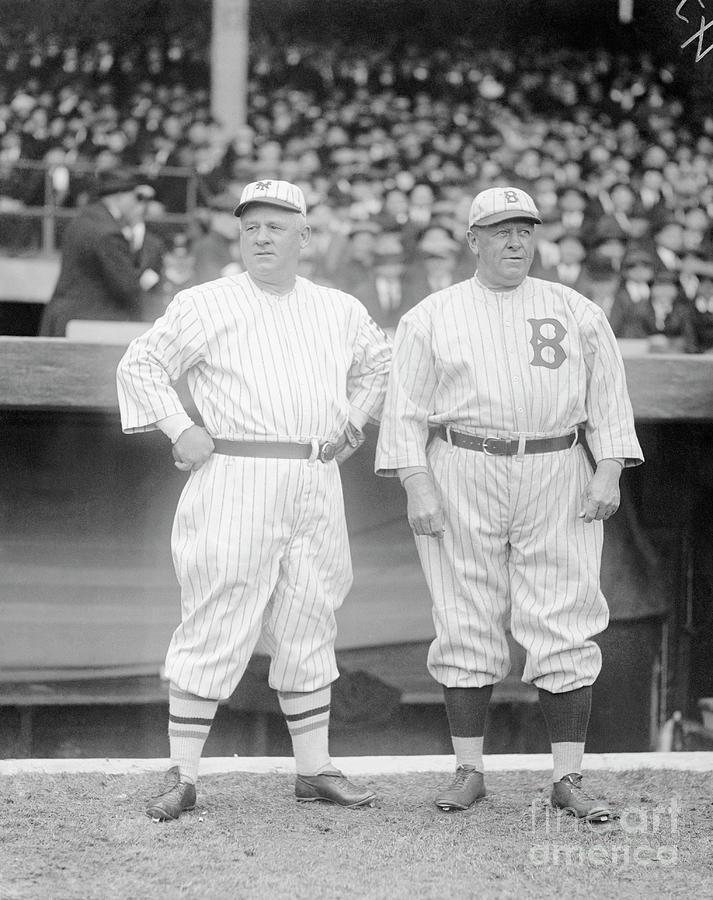
But the McGraw-Robinson bustup is the beginning of a rivalry that ruined one of baseball's great friendships, not resolved until both men were retired and near death, as seen in the photo above. Still, they both ended up in the Hall of Fame – neither lived to see the Hall's establishment, though – and are buried in the same Baltimore cemetery.

Somebody should write a book about it: We've seen books about the Giants, about the Dodgers, about the Dodger-Giant rivalry, about McGraw, and even about the old Orioles -- but the McGraw-Robinson relationship is a fascinating one. They're like the John Adams and Thomas Jefferson of baseball: Great friends in a great cause, then a nasty split and a nastier rivalry, and ultimately the relationship was repaired and the great friendship restored toward the end.

October 12, 1913 was a Sunday. Baseball season was over. Pro basketball and pro hockey barely existed, and, in those days, it was considered too early to start their seasons, anyway. Pro football existed, but only on a minor-league level.

But there was one score on this historic day: Despite it being a Sunday, a college football game was played. Georgia Tech beat the University of Chattanooga (now the University of Tennessee at Chattanooga), 71-6 at Chamberlain Field at Chattanooga, Tennessee.

Friday, October 7, 2022

October 7, 1916: Georgia Tech 222, Cumberland 0

John Heisman

October 7, 1916: Game 1 of the World Series, played at Braves Field in Boston. Since the Red Sox had lent the use of Fenway Park to the Braves in the 1914 World Series, since it had a larger capacity than the antiquated South End Grounds, the Braves, having now opened the larger Braves Field, let the Sox use it in the 1915, '16 and '18 World Series. Bill Carrigan becomes the 1st man to manage the Red Sox in back-to-back World Series, and he remains the only one. (Jimmy Collins was denied the chance to do so when the Giants wouldn’t play in one in 1904.)

Ernie Shore is in control until the 9th, but melts down, allowing 4 runs and loading the bases before Collins has to call on Carl Mays to bail him out. Mays does so, and the Sox have a hard-earned 6-5 win over the Brooklyn Robins. (The Dodgers were then named for their manager, Wilbert Robinson.)

But that's not the biggest sports story of the day. At Grant Field in Atlanta, Georgia Tech wins the biggest blowout in the history of college football, defeating Cumberland College, 222-0. No, that's not a typo: Tech won by a score of two hundred and twenty-two to zero.

John Heisman, for whom the national player of the year trophy would be named, was Tech's coach, and would lead them to the National Championship the next year. Cumberland, a small Presbyterian school in Lebanon, Tennessee, now in NCAA Division III, should never have been on a big school's schedule, but needed the money, and Tech was willing to pay them to come to Atlanta and play the big boys.

Why the big score? Indeed, why that many points? Because, earlier in the year, Cumberland had beaten Tech's baseball team, of which Heisman was also the coach, 22-0. In those days, sportswriters also tended to rank teams based on how many points they scored, which Heisman thought was ridiculous. He may have wanted to prove his point, as later sportscaster Warner Wolf tended to do when mocking gamblers and their obsession with point spreads. Had Warner been around in 1916, he would have said, "If you had Cumberland and 221 points, you lost!"

Also on this day, Lance Corporal Leigh Richmond Roose is killed at the Battle of the Somme in World War I. Dick Roose was a Welsh soccer player, a goalkeeper for several teams, including Stoke City, Everton, Sunderland, Celtic of Glasgow, Huddersfield Town, Aston Villa, and, in the 1911-12 season, Woolwich Arsenal, the team that would move to North London in 1913.

*

October 7, 1916 was a Saturday. Some other college football games of note that day:

* The University of Tennessee beat Maryville College, of Maryville, Tennessee, 32-0 at Waite Field in Knoxville, Tennessee. Like Georgia Tech, they would finish 8-0-1, and be declared Co-Champions of the Southern Intercollegiate Athletic Association, a precursor to the Southeastern Conference.

* Ohio State beat Ohio Wesleyan, 12-0 at Ohio Field in Columbus. A week later, they beat Oberlin College, 128-0. Georgia Tech fans must have thought, "Big deal."

* Oregon, probably the best team on the West Coast, beat cross-State opponents Willamette University, 97-0 at Kincaid Field in Eugene. Georgia Tech fans probably weren't impressed by this, either.

* Notre Dame beat Western Reserve, 48-0 at League Park in Cleveland.

* Army beat Washington & Lee, 14-7 on The Plain at West Point, New York.

* Navy beat Georgetown, 13-7 at Worden Field in Annapolis, Maryland.

* The University of Pittsburgh, along with Army probably the best team in the East, beat fellow Western Pennsylvanians Westminster College, 57-0 at Forbes Field in Pittsburgh.

* Tufts stunned Harvard, 7-3 at Harvard Stadium in Boston. That probably would have gotten a lot more notice if Georgia Tech had only won by 22 points, instead of by 222.

* Yale beat Virginia, 61-3 at the Yale Bowl in New Haven, Connecticut.

* Fordham beat Western Maryland, 20-0 at Fordham Field in The Bronx.

* New York University beat Rensselaer Polytechnic Institute -- NYU over RPI -- 22-0 at Ohio Field in The Bronx.

* Princeton beat North Carolina, 29-0 at Palmer Stadium in Princeton, New Jersey.

* And Rutgers beat Villanova, 33-0 at Neilson Field in New Brunswick, New Jersey.

Friday, September 9, 2022

September 9, 1972: The SEC's 1st Black Starting Quarterback

September 9, 1972: For the 1st time, a black man starts at quarterback for a Southeastern Conference team: Condredge Holloway of Tennessee, then ranked Number 15. For the 1st time, a college football game with both starting quarterbacks being black is nationally broadcast: It’s on ABC, and Eddie McAshan plays for unranked Georgia Tech, then an independent, now in the Atlanta Coast Conference. Tennessee wins, 34-3 at Grant Field in Atlanta.

Holloway had also been a high school baseball star in his native Huntsville, Alabama, and played baseball at Tennessee as well. He still holds the school record with a 27-game hitting streak.

He led Tennessee to win the 1972 Bluebonnet Bowl in Houston, lost the 1973 Gator Bowl in Jacksonville, and won the 1974 Liberty Bowl in Memphis. He never played in the NFL, but starred in the Canadian Football League, winning the 1976 Grey Cup with the Ottawa Rough Riders, and the 1983 Grey Cup with the Toronto Argonauts. Now 68, he owns a sports training company in Huntsville, and is an assistant athletic director at Tennessee.

McAshan played for the New England Patriots in 1973, backing up Jim Plunkett, and the Jacksonville Sharks of the World Football League in 1974. He went back to Tech, got his degree, and is now 71 and retired from a career in industrial management in his native Gainesville, Florida.

*

September 9, 1972 was a Saturday. This was also the day of the scandalous Olympic basketball Final in Munich. I have a separate entry for that event. Fat Albert and the Cosby Kids premiered on CBS on this day. And All-Star baseball pitcher Mike Hampton and Croatian actor Goran ViÅ¡njić, best known in America for his role as Dr. Luka Kovac on the TV show ER, were born.

These other notable college football games were played that day:

* Number 1 Nebraska were upset by UCLA, 20-17 at the Los Angeles Memorial Coliseum. Nebraska rebounded to share the Big Eight Conference title.

* Number 2 Colorado beat the University of California, 20-10 at Folsom Field in Boulder, Colorado. They went on to lose the Gator Bowl to Auburn.

* Number 3 Ohio State opened their season the following week. They went on to win the Big Ten
Conference, but lost to USC in the Rose Bowl, and that made USC the National Champions.

* Number 4 Arkansas were upset by Number 8 USC, 31-10 at War Memorial Stadium in Little Rock, Arkansas. USC went on to win the Pacific-8 Conference.

* Number 5 Penn State opened their season the following week.

* Number 6 Oklahoma opened their season the following week. They went on to beat Nebraska to win a share of the Big Eight Conference title, and the tiebreaker. They went on to face Penn State in the Sugar Bowl, and Oklahoma won.

* Number 7 Alabama beat Duke, 35-12 at Legion Field in Birmingham, Alabama. They went on to win the Southeastern Conference title.

* Number 9 University of Washington beat the University of the Pacific, 13-6 at Husky Stadium in Seattle.

* Number 10 Michigan opened their season the following week. They went undefeated until losing to Ohio State. Under the Big 10 rules of the time, only the league champion could go to a bowl game, so that was the end of their season.

* Number 13 Notre Dame opened their season 2 weeks later. They went on to lose to Nebraska in the Orange Bowl.

* Number 14 Texas opened their season 2 weeks later. They won the Southwest Conference, and beat Alabama in the Cotton Bowl.

* Among the service academies, Navy and Air Force started their seasons a week after this one, while Army started theirs the following week.

* So did Rutgers.

And these Major League Baseball games were played:

* The New York Yankees beat the Detroit Tigers, 3-1 at Tiger Stadium in Detroit. Rob Gardner outpitched Joe Coleman Jr. Bernie Allen hit a home run. Al Kaline went 0-for-4.

* The Baltimore Orioles swept a doubleheader from the Milwaukee Brewers, 2-1 and 8-0 at Memorial Stadium in Baltimore. Terry Crowley hit a home run in the bottom of the 9th to win the opener, off Jim Lonborg, to make a winning pitcher out of Eddie Watt in relief of Dave McNally. Doyle Alexander pitched a 2-hit shutout in the nightcap. Over the 2 games, Brooks Robinson went 1-for-8 with 2 RBIs.

* The Cleveland Indians beat the Boston Red Sox, 2-1 at Cleveland Municipal Stadium. Graig Nettles, in what turned out to be his last full month with Cleveland, hit a home run of Gary Peters, to win the game in the bottom of the 10th inning. Gaylord Perry went the distance, and gained his 20th win of the season.

At the time, the American League Eastern Division was really tight: The Red Sox led the Tigers by half a game, the Orioles by 1, and the Yankees by 2. Because of the strike canceling the 1st week of the season, whose games were never rescheduled, the Tigers ended up winning the Division by half a game over the Red Sox, with the O's 5 back and the Yanks 6 1/2.

* The New York Mets beat the St. Louis Cardinals, 3-1 at Shea Stadium. Gary Gentry outpitched Bob Gibson. Willie Mays was on the Mets' roster, but did not entre the game.

* The Pittsburgh Pirates beat the Montreal Expos, 8-3 at Jarry Park in Montreal. Roberto Clemente appeared only as a late defensive replacement. Willie Stargell went 2-for-4.

* The Chicago Cubs beat the Philadelphia Phillies, 7-4 at Veterans Stadium in Philadelphia. Three days later, Mike Schmidt made his major league debut with the Phillies.

* The Chicago White Sox beat the California Angels, 3-2 at Comiskey Park in Chicago.

* The Minnesota Twins beat the Kansas City Royals, 3-2 at Kansas City Municipal Stadium. Danny Thompson doubled Jim Nettles, Graig's brother, home with the winning run in the top of the 13th inning. Harmon Killebrew went 0-for-3, but had an RBI on a sacrifice fly. Rod Carew went 1-for-3.

* The Texas Rangers beat the Oakland Athletics, 3-2 at Arlington Stadium in the Dallas suburb of Arlington, Texas. Reggie Jackson went 0-for-2 with 2 walks.

* The Los Angeles Dodgers beat the Houston Astros, 4-0 at Dodger Stadium in Los Angeles. Claude Osteen pitched a 3-hit shutout, outpitching future Dodger Jerry Reuss.

* And the San Francisco Giants beat the Cincinnati Reds, 2-1 at Candlestick Park in San Francisco. Dave Kingman won the game with a 2-run home run in the bottom of the 9th. Pete Rose went 0-for-3 with a walk. Johnny Bench went 1-for-4.

Thursday, September 8, 2022

September 8, 1974: President Ford Pardons Former President Nixon

September 8, 1974: President Gerald R. Ford issues a pardon to his predecessor, former President Richard M. Nixon. Here is the complete text:

Richard Nixon became the thirty-seventh President of the United States on January 20, 1969 and was reelected in 1972 for a second term by the electors of forty-nine of the fifty states. His term in office continued until his resignation on August 9, 1974.

Pursuant to resolutions of the House of Representatives, its Committee on the Judiciary conducted an inquiry and investigation on the impeachment of the President extending over more than eight months. The hearings of the Committee and its deliberations, which received wide national publicity over television, radio, and in printed media, resulted in votes adverse to Richard Nixon on recommended Articles of Impeachment.

As a result of certain acts or omissions occurring before his resignation from the Office of President, Richard Nixon has become liable to possible indictment and trial for offenses against the United States. Whether or not he shall be so prosecuted depends on findings of the appropriate grand jury and on the discretion of the authorized prosecutor. Should an indictment ensue, the accused shall then be entitled to a fair trial by an impartial jury, as guaranteed to every individual by the Constitution.

It is believed that a trial of Richard Nixon, if it became necessary, could not fairly begin until a year or more has elapsed. In the meantime, the tranquility to which this nation has been restored by the events of recent weeks could be irreparably lost by the prospects of bringing to trial a former President of the United States. The prospects of such trial will cause prolonged and divisive debate over the propriety of exposing to further punishment and degradation a man who has already paid the unprecedented penalty of relinquishing the highest elective office of the United States.

Now, THEREFORE, I, GERALD R. FORD, President of the United States, pursuant to the pardon power conferred upon me by Article II, Section 2, of the Constitution, have granted and by these presents do grant a full, free, and absolute pardon unto Richard Nixon for all offenses against the United States which he, Richard Nixon, has committed or may have committed or taken part in during the period from January 20, 1969 through August 9,1974.

IN WITNESS WHEREOF, I have hereunto set my hand this eighth day of September, in the year of our Lord nineteen hundred and seventy-four, and of the Independence of the United States of America the one hundred and ninety-ninth.

Despite several major figures in his Administration -- including his Chief of Staff, H.R. Haldeman; his White House Council, John Dean; and the 1st 2 of his 4 Attorneys General, John Mitchell and Richard Kleindienst -- being convicted of felonies and sentenced to federal prison for their various offenses that fell under the umbrella term "Watergate," Nixon would not be charged with any crimes. Whatever he did, whether publicly known now or not, he got away with it.

The backlash against Ford was immediate, and fierce. He had near-universal respect in his 1st month on the job, and was seen as a healing figure. He thought that this pardon would help with the healing process. Instead, some people thought he should have let the legal system take its course with Nixon. Others thought he was in on it, having accepted the Presidency in return for the promise of a pardon. He lost the trust of millions of people, and that pardon was clearly one of the reasons that he was defeated in his bid for a term of his own in 1976.

The Constitution gives the President the power, and the right, to pardon people for violating federal law. The President can do it for any reason. Or for no reason. And if he has a reason, he doesn't have to publicly reveal it. But Ford did have a reason, and it was a justifiable one: Friendship. 

Ford and Nixon had served together in the U.S. House of Representatives in 1949 and 1950. Ford had been House Minority Leader from 1965 to 1973, when Nixon rewarded his loyalty by appointing him Vice President, and, professionally, they remained allies until August 9, 1974. They had helped each other. Their families were friends. Ford didn't want to see his friend suffer any further.

There was also the Nixon family to consider. Whatever Tricky Dick did, there was no reason to make his wife Pat, their daughters Tricia and Julie, and the rest suffer through a criminal trial.

In his first speech after taking office, Ford said, "My fellow Americans, our long national nightmare is over." He knew that extending the Watergate story would place an even greater strain on the country. He wanted it over. Which is totally understandable.

On top of that, accepting the pardon was, by definition, a confirmation of guilt. Nixon could have refused the pardon, thus maintaining his stance that he was innocent of any legal wrongdoing, and taken his chance as a private citizen with the criminal justice system. Instead, within an hour of its issuance, he publicly announced that he had accepted it. By doing so, Nixon essentially pled guilty.
He never served a minute in prison. But, through September 8, 2022, he is the only President ever officially remembered as a criminal. Not a "crook," the word he used to defend himself on November 17, 1973. (His 1st Vice President, Spiro Agnew, was a crook.) As an actual criminal.

I used to think that the pardon was the right thing to do. I no longer think that. I still understand and respect Ford's reasoning. But the actions of Donald Trump, from the 2016 election with its interference from Russia through his actions after leaving office, show him to have been an even worse criminal than Nixon.

And, in between Nixon and Trump, there was Ronald Reagan with a whole slew of crimes, including the Iran-Contra Affair; the allegations about Bill Clinton, from Whitewater to his relationship with Monica Lewinsky; and George W. Bush, whose Administration was the shadiest one to that point.

If Nixon had faced prosecution, and had been convicted, and had served time -- even if it was just "house arrest," being confined to his house in San Clemente, California, with only occasional visits from family, and no one else, for a few years -- the message would have been sent to every President, and every would-be President, thereafter: Do not do things like this, because you will get caught, and you will be punished.

Ford's pardon of Nixon sent the opposite message: As President, you are above the law. Or, as Nixon told David Frost in his 1977 interview, "Well, when the President does it, that means it is not illegal."

Yes. It is.

UPDATE: On May 31, 2024, Trump was convicted in federal court in New York, of 34 felony counts relating to fraud. On July 1, 2024, in a case literally titled Donald J. Trump v. the United States, the Justices of the Supreme Court of the United States, in a 6 to 3 party-line vote, ruled that the President of the United States has immunity for any criminal acts he commits in office. In other words, the highest court in the land sided not just with Donald Trump, but with Richard Nixon.

*

September 8, 1974 was a Sunday. This was also the day that Evel Knievel tried to jump the Snake River Canyon in a "sky-cycle." I have a separate entry for that event.

These Major League Baseball games were played that day:

* The New York Yankees lost to the Detroit Tigers, 11-3 at Shea Stadium, where they were played while the original Yankee Stadium was being renovated. Al Kaline, in his last few weeks as an active player, went 2-for-3 with a walk and 3 RBIs. He collected his 3,000th career hit 16 days later.

* The New York Mets beat the St. Louis Cardinals, 5-3 at Busch Memorial Stadium in St. Louis. Tom Seaver went the distance for the win. Lou Brock went 0-for-3, but was hit by a pitch and grounded into a force play, and stole 2nd base both times. That gave him 103 stolen bases for the season, 1 short of what was then the major league record set by Maury Willis in 1962. He would raise the record to 118.

* The Boston Red Sox beat the Milwaukee Brewers, 8-6 at Fenway Park in Boston. Carl Yastrzemski went 1-for-4. Rookie Robin Yount only appeared as a late defensive replacement.

* The Atlanta Braves beat the San Francisco Giants, 5-3 at Atlanta Stadium. (It was renamed Atlanta-Fulton County Stadium the next season.) Hank Aaron went 1-for-3 with a walk and an RBI.

* The Pittsburgh Pirates beat the Montreal Expos, 8-2 at Three Rivers Stadium in Pittsburgh. Willie Stargell went 2-for-4.

* The Cleveland Indians beat the Baltimore Orioles, 7-4 at Cleveland Municipal Stadium. Brooks Robinson went 0-for-4.

* The Los Angeles Dodgers beat the Cincinnati Reds, 7-4 at Riverfront Stadium in Cincinnati. Pete Rose, Tony Pérez and Dan Driessen hit home runs for the Reds, but it wasn't enough. Johnny Bench went 0-for-4.

* The Philadelphia Phillies beat the Chicago Cubs, 11-10 at Wrigley Field in Chicago. Willie Montañez went 3-for-5 with 4 RBIs. Mike Schmidt went 2-for-4 with a walk and 2 RBIs. Bob Boone went 2-for-5 with 3 RBIs. For the Cubs, Jerry Morales hit a grand slam.

* The Minnesota Twins beat the Kansas City Royals, 8-4 at Royals Stadium (later Kauffman Stadium) in Kansas City. Harmon Killebrew did not play. Rod Carew went 1-for-5. George Brett went 2-for-5 with an RBI.

* The Houston Astros beat the San Diego Padres, 3-2 at the Astrodome in Houston.

* The Chicago White Sox beat the California Angels, 1-0 at Anaheim Stadium (now Angel Stadium of Anaheim). Jim Kaat (6 2/3rds innings) and Terry Forster combined on a 7-hit shutout. Frank Robinson appeared as a pinch-hitter for the Angels, but did not reach base. Four days later, he was traded to Cleveland. After the season, he was named their player-manager, the 1st black manager in Major League Baseball.

* The Texas Rangers beat the Oakland Athletics, 5-1 at the Oakland Coliseum. Reggie Jackson went 1-for-4.

The NFL opened its season the following Sunday. One college football game was played: Notre Dame, then ranked Number 3 in the country, beat Georgia Tech, 31-7 at Grant Field in Atlanta.

Tuesday, June 14, 2022

June 14, 1953: The Atlantic Coast Conference Is Founded

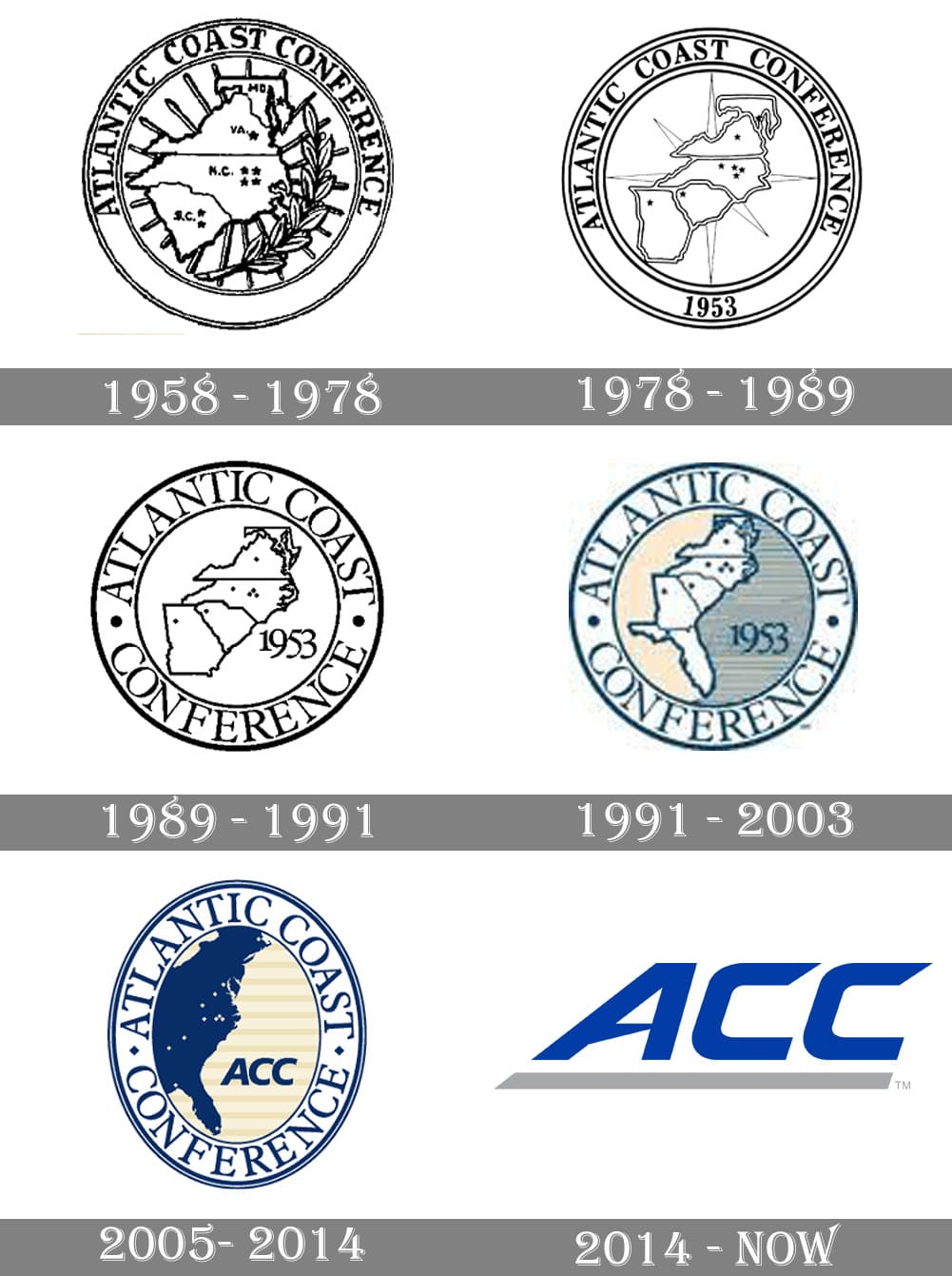
June 14, 1953: The Atlantic Coast Conference is founded. Although it's had its moments in other sports, the ACC is best known for basketball, where it is often regarded as the best college league.

Like the Southeastern Conference, founded 20 years earlier, the ACC was made up of members of the Southern Conference. That league had banned postseason appearances in 1951, and most of its schools didn't like it.

So these 7 broke away, and formed their own league: Clemson University, in Clemson, South Carolina; Duke University, in Durham, North Carolina; the University of Maryland, in College Park; the University of North Carolina, in Chapel Hill; North Carolina State University, in Raleigh; the University of South Carolina, in Columbia; and Wake Forest University, in Winston-Salem, South Carolina. Six months later, on December 4, the University of Virginia, in Charlottesville, was admitted as an 8th member.

The ACC first scheduled games against racially integrated teams, and then integrated their own schools and teams, years before the SEC did so. In 1960, the ACC implemented a minimum SAT score for incoming student-athletes of 750, the first conference to do so. This minimum was raised to 800 in 1964, but was ultimately struck down by a federal court in 1972.

In 1971, South Carolina left the ACC to become an independent, later joining the SEC. In 1979, former SEC member Georgia Institute of Technology, a.k.a. Georgia Tech, of Atlanta, joined for all sports except football, for which they joined in 1983. Florida State University, in Tallahassee, joined for all sports but football in 1991, and for football in 1992.

The ACC began raiding the Big East Conference early in the 21st Century: The University of Miami and Virginia Polytechnic Institute, a.k.a. Virginia Tech joined in 2004; Boston College of Chestnut Hill, Massachusetts, jumped in 2005; The University of Pittsburgh, in Pennsylvania, and Syracuse University, in New York, joined in 2013. Also in 2013, the University of Notre Dame, an independent, joined the ACC in all sports except football and hockey. (BC is the only ACC school with a hockey team.)

However, in 2012, Maryland announced it was leaving the ACC for the Big Ten Conference, effective 2014. Rutgers University, of New Brunswick, New Jersey, which would have seemed like a prime ACC target, left the Big East for the Big Ten on the same schedule.

And in 2023, effective with the 2024 Fall sports season, the ACC voted to admit 3 new members that are most definitely nowhere near the Atlantic Coast: The University of California, in Berkeley; their arch-rivals, Stanford University, of Palo Alto, California, also in the San Francisco Bay Area; and Southern Methodist University, a.k.a. SMU, of Dallas, Texas.

The major rivalries are intra-state: Virginia vs. Virginia Tech; The 3-way "neighborhood" rivalry of Duke, UNC and N.C. State; Clemson vs. South Carolina; and Miami vs. Florida. There are also notable interconference rivalries: Florida vs. Florida State, Florida vs. Miami, Georgia vs. Georgia Tech, Pittsburgh vs. Penn State, Pittsburgh vs. West Virginia, and, no longer intraconference, Maryland vs. Virginia.

Although there has been some great football played in the ACC, particularly since the joining of Miami and Florida State, who both became national powers in the 1980s, the league is known for its basketball teams.

The ACC Tournament, usually held in the Greensboro Coliseum in Greensboro, North Carolina, is the best conference tournament in the country. Duke vs. North Carolina is the basketball equivalent of football's Ohio State vs. Michigan or Alabama vs. Auburn. North Carolina have won 6 NCAA Tournaments, Duke 5, N.C. State 2; and 1 each by Syracuse, Maryland and Virginia. In women's hoops, South Carolina have won 2, and North Carolina and Maryland have each won 1. (UPDATE: In 2024, South Carolina won a 3rd.)

*

June 14, 1953 was a Sunday. In that era, baseball teams tended to play doubleheaders on the Sunday:

* The New York Yankees swept the Cleveland Indians, 6-2 and 3-0. Johnny Sain started the opener, but the Yankees trailed Bob Lemon and the Tribe 2-0 going into the 7th inning. They scored 1 run in the 7th, 3 in the 8th and 2 in the 9th to make a winning pitcher out of Bob Kuzava. Vic Raschi pitched a 3-hit shutout in the nightcap. Over the 2 games, Mickey Mantle went 2-for-9 with an RBI, and Yogi Berra went 2-for-9 with a home run and 6 RBIs.

* The New York Giants were swept by the St. Louis Cardinals, 1-0 and 9-4 at the Polo Grounds. Harvey Haddix pitched a 5-hit shutout in the 1st game, beating Sal Maglie. Wilmer "Vinegar Bend" Mizell won the 2nd game, beating Rubén Gómez. Stan Musial went 1-for-6 with 3 walks and an RBI. Willie Mays was unavailable to the Giants, still serving in the U.S. Army during the Korean War.

* The Brooklyn Dodgers beat the Chicago Cubs, 6-3 at Ebbets Field. They were leading the 2nd game, 6-2 going into the top of the 9th, but Ralph Kiner hit a grand slam home run off Carl Erskine. The game was stopped after the 9th, tied 6-6, due to the curfew then in place: No inning may start after 7:00 PM on a Sunday. Jackie Robinson went 4-for-8 with a walk and 3 RBIs.

* A doubleheader was split at Connie Mack Stadium in Philadelphia. The Cincinnati Reds won the 1st game, 2-1. The Philadelphia Phillies won the 2nd game, 4-1.

* The Milwaukee Braves swept the Pittsburgh Pirates, 7-3 and 8-0 at Forbes Field in Pittsburgh. Bob Buhl pitched a 2-hit shutout in the 2nd game.

* The Washington Senators beat the Detroit Tigers, 6-1 at Briggs Stadium (later Tiger Stadium) in Detroit.

* The Chicago White Sox swept the Boston Red Sox, 6-0 and 1-0 at Comiskey Park in Chicago. In the 1st game, Billy Pierce allows only a double to Del Wilber, a single to Jimmy Piersall, and a walk to Dick Gernert. Sandy Consuegra gave up 8 hits in the 2nd game, but kept the shutout. Ted Williams was unavailable to the Red Sox, still serving in the U.S. Marine Corps during the Korean War.

* The Philadelphia Athletics swept the St. Louis Browns, 4-1 and 3-1 at Busch Stadium (formerly Sportsman's Park) in St. Louis.

Sunday, January 2, 2022

January 2, 1956: The 1st Integrated Bowl Game In the South

Bobby Grier

January 2, 1956: The college football season comes to an end, with the traditional New Year's Day bowl games, pushed back a day because January 1 was a Sunday.

This Monday saw the playing of the Sugar Bowl, at Tulane Stadium in New Orleans. The Georgia Institute of Technology, a.k.a. Georgia Tech, entered the game at 8-1-1, having lost to Auburn and been tied by Tennessee; however, they had beaten the University of Miami, Florida and Duke, each of them ranked at the time. Tech came in ranked Number 7.

However, they were only 3rd in the Southeastern Conference. Mississippi, instead of accepting the usual invitation given by the Sugar Bowl to the SEC Champions, instead accepted an invitation to play in the Cotton Bowl. "Ole Miss" and Tech did not play each other that season. Auburn, who finished 2nd, were not invited by the Sugar Bowl, and ended up losing the Gator Bowl to the 5th-place team in the SEC, Vanderbilt. (Tennessee finished 4th.) So the Sugar Bowl invited Georgia Tech.

Their opponents were the University of Pittsburgh. An Independent, Pitt were only 7-3, losing to Oklahoma, Navy and Miami. However, they had beaten ranked teams Duke and West Virginia, and teams from other regions, Nebraska and the University of California. They came into the game ranked Number 11.

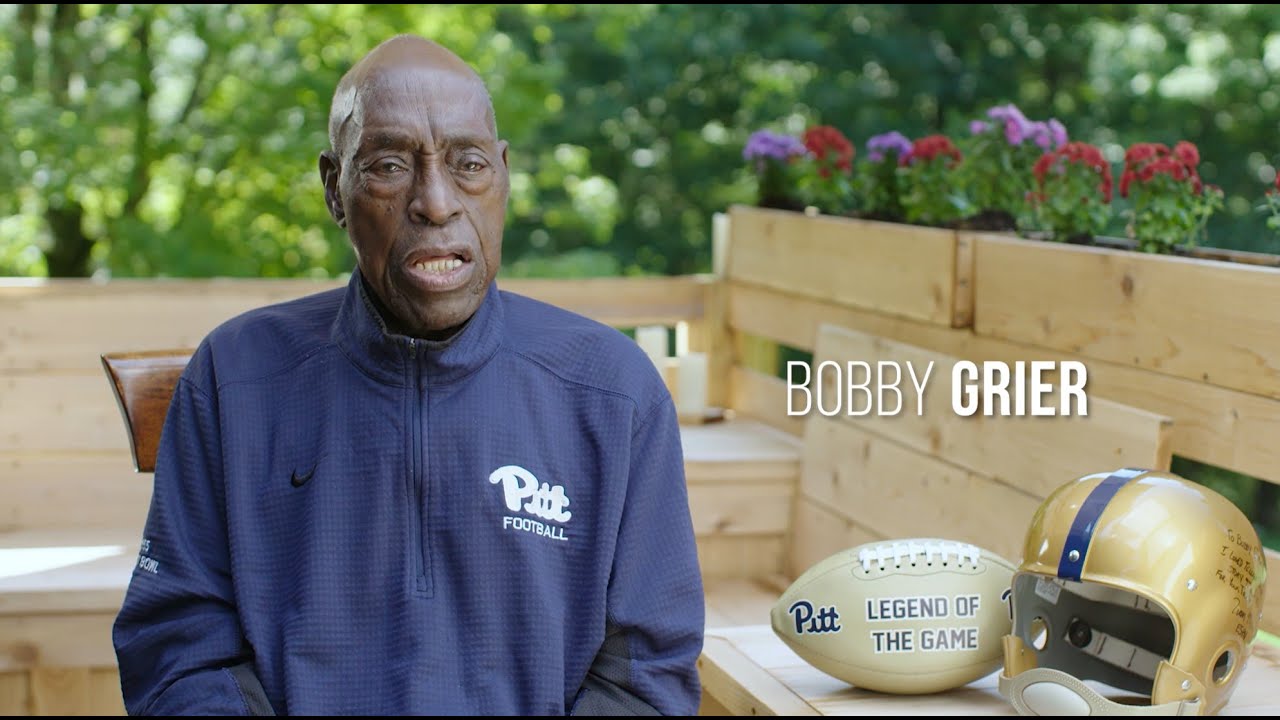
Pitt's best player was Bobby Grier, a fullback and a linebacker, as most college football teams were still sending players to play what was known as "single-platoon football," the same players playing on both offense and defense. Grier, a native of the football-mad town of Massillon, Ohio, was black.

Segregationists didn't want Grier to play in the Sugar Bowl. Governor Marvin Griffin of Georgia sent a telegram to Tech's Board of Regents, in an attempt to pressure the school's president, Blake Van Leer, to pull the team out of the game. Van Leer was already catching heat for pushing through a vote to allow women in Georgia Tech.

But Van Leer, who had held the office since 1944, refused to be bullied by the ignorant redneck Governor: He told a meeting of the Faculty Senate, "Either we're going to the Sugar Bowl, or you can find yourself another damn president of Georgia Tech." The Senate gave him a standing ovation.

This was one month after Rosa Parks refused to stand up on a bus in Montgomery, Alabama, with the bus boycott ongoing; 4 months after the murder of 14-year-old Emmett Till in Money, Mississippi; and a year and a half after the U.S. Supreme Court struck down public school segregation in the case of Brown v. Board of Education of Topeka, Kansas.
Grier, supported by his white teammates 

As it turned out, there was no law that could prevent Grier from playing in the game, and, for the 1st time, a bowl game in the South had a black player in it.

Georgia Tech won the game, 7–0. The margin of victory mostly resulted from a disputed pass interference penalty, in the 1st quarter. It was called on Grier, giving Georgia Tech a 1st and goal on the Pitt 1-yard line. The Yellow Jackets scored the game's only touchdown on the next play. Photographic evidence later strongly indicated the referee's call was incorrect.

The irony of the bad call is that it was made by referee Rusty Coles, who was from the Pittsburgh area, and who had no objective in making the wrong call, but simply made a mistake, which he admitted after seeing the game films.

Grier finished the game as its leading rusher with 51 yards. After the game, he protested the pass interference call, but praised the Georgia Tech players, saying, "They were good sportsmen, perhaps the best I've played against all season. They played hard, but clean. It was a good game. But believe me. I didn't push that man."

As it turned out, the State of Georgia needed to find a new president of Georgia Tech, anyway: Blake Van Leer died of a heart attack on January 24, 1956, just 22 days after the game. Edwin D. Harrison was named the new president. In 1960, he oversaw a vote by an overwhelming majority of Tech students to endorse the integration of qualified applicants, regardless of race.

Bobby Grier did not play professional football. Instead, he enlisted in the U.S. Air Force, and later served as an administrator at a community college in the Pittsburgh area. As of January 2, 2022, he is still alive.
UPDATE: Later in 2022, Grier was elected to the Pitt Athletics Hall of Fame. He died in 2024.

*

January 2, 1956 was, as I said, a Monday. These other bowl games were played that day:

* Oklahoma beat Maryland, 20-6, in the Orange Bowl, at Burdine Stadium in Miami. In 1959, the stadium was renamed the Orange Bowl. This was, effectively, the National Championship Game: Oklahoma, in the middle of their 47-game winning streak, still a college football record, were ranked Number 1, and had won the Big Seven Conference title; while Maryland were ranked Number 3, and had won the Atlantic Coast Conference title.

Oklahoma were favored by 7 points. If Maryland had pulled the upset, it's likely that they would have been awarded the National Championship, regardless of whether Number 2 Michigan State won the Rose Bowl. At the very least, there could have been a split in the polls. But Oklahoma won, making the Rose Bowl academic.

* Michigan State did their part, beating the University of California at Los Angeles, 17-14, in the Rose Bowl, in the stadium of the same name in the Los Angeles suburb of Pasadena, California. Michigan State were ranked Number 2, and Champions of the Big Ten Conference. UCLA were ranked Number 4, and Champions of the Pacific Coast Conference. But Oklahoma's 2-touchdown win put the National Championship out of reach for Michigan State.

* Mississippi beat Texas Christian University, 14-13, in the Cotton Bowl, in the stadium of the same name in Dallas. As previously stated, Ole Miss were the SEC Champions, and went into the game ranked Number 10. TCU were the Champions of the Southwest Conference, and were ranked Number 6.

* Wyoming beat Texas Tech, 21-14 in the Sun Bowl, at Kidd Field in El Paso, Texas. Wyoming finished 4th in the Skyline Conference, while Texas Tech were the Champions of the Border Conference.

* Juniata College and Missouri Valley College played to a tie, 6-6 in the Tangerine Bowl, in the stadium of the same name in Orlando, Florida. The Tangerine Bowl game was a showcase for what were then called "small college" teams. Both the game and the stadium would become bigger, and become known as the Citrus Bowl.

Juniata, of Huntingdon, Pennsylvania, then an Independent, now competes in NCAA Division III. Missouri Valley, of Marshall, Missouri, were the Champions of the Missouri College Athletic Union, and now compete in the NAIA -- for all intents and purposes, NCAA Division IV.

Saturday, January 1, 2022

January 1, 1955: Georgia Tech Complete the New Year's Day Circuit

Bobby Dodd

January 1, 1955: The Cotton Bowl Classic is held at the Cotton Bowl stadium in Dallas. The University of Arkansas, Champions of the Southwest Conference, take on the Georgia Institute of Technology, the 2nd-place team in the Southeastern Conference. (Georgia Tech left the SEC and became an independent in 1964, and joined the Atlantic Coast Conference in 1983. Arkansas joined the SEC in 1992.)

The Arkansas Razorbacks, coached by Bowden Wyatt, came into the game 8-2, and ranked Number 10 in the country. The Georgia Tech Yellow Jackets, coached by Bobby Dodd, were 7-3 and unranked, but were coming off a big win over arch-rival Georgia.

The game was scoreless until right before halftime, when Arkansas quarterback George Walker completed an 80-yard drive by scoring himself, but he missed the extra point. Georgia Tech dominated the 2nd half, holding the Razorbacks to only 8 yards rushing, and scoring touchdowns with Paul Rotenberry in the 3rd quarter and Wade Mitchell in the 4th. The Yellow Jackets won, 14-6.

By winning this game, Georgia Tech became the 1st school to win all 4 of the major New Year's Day bowl games. They had previously won the Rose Bowl in Pasadena, California in 1929; the Orange Bowl in Miami in 1940; and the Sugar Bowl in New Orleans in 1944.

There have since been 8 other schools to turn the trick: Alabama, completing the circuit with the 1962 Sugar Bowl; Georgia, with the 1967 Cotton Bowl; Notre Dame, with the 1975 Orange Bowl; Penn State, with the 1995 Rose Bowl; Ohio State, with the 1999 Sugar Bowl; Miami, with the 2002 Rose Bowl; Oklahoma, with the 2003 Rose Bowl; and Texas, with the 2005 Rose Bowl.

Prior to the start of major conference realignment in the 1990s, winning all 4 was really hard, because, from 1947 onward, the Rose Bowl had been between the Champions of the leagues now known as the Big Ten and the Pacific-Twelve.

Also, until 1975, the Big Ten and the league then known as the Pac-Eight had a rule that the Rose Bowl was the only bowl they would send a team to. And Notre Dame did not accept any bowl bids between their 1925 Rose Bowl win and their 1970 Cotton Bowl loss. Notre Dame have overcome this, but Ohio State are the only team that was in the Big Ten prior to Penn State's arrival in 1993 to overcome their league's issue.

A few schools have won 3 of the 4: Nebraska, Louisiana State, Auburn, Tennessee, Arkansas, Missouri and Florida State still need the Rose Bowl; USC and Wisconsin still need the Sugar Bowl; and Washington and Michigan still need the Cotton Bowl.

Once the Bowl Championship Series kicked in for the 1998 season, conference tie-ins were no longer written in stone, making cross-league bowls more common. You'll notice that Penn State, Miami, Oklahoma and Texas did it after the Big Ten Champion could have gone to a de facto National Championship Game in a year when it wasn't the Rose Bowl. Prior to the 1946 season's lock-in for the Big Ten, Penn State had played in the 1923 Rose Bowl, but lost to USC; while Miami, Oklahoma and Texas had never previously played in it.

The Fiesta Bowl, in the Phoenix suburbs, in Tempe from 1971 to 2006 and in Glendale ever since, became a New Year's Day bowl game in 1982. Notre Dame first won it on January 2, 1989, making them the 1st team to have won all 5. Penn State won it for the 1st time in 1982, so they completed all 5 in 1995. Ohio State won it in 1984, so they completed all 5 in 1999. Texas won it in 2009, and Oklahoma in 2011, completing all 5. So that's 5 schools that have won all 5 major New Year's Day bowl games.

Oklahoma (in 1976) and Penn State (in 1977 and 1980) had won the Fiesta Bowl before it was a New Year's Day game. Alabama, Georgia and Georgia Tech have never won it: Alabama have lost their only appearance, in 1991, while the 2 Georgia schools have never even been in it.

Since 1913, Georgia Tech have played their home games at Grant Field. In 1988, it was officially renamed Bobby Dodd Stadium at Historic Grant Field. Having been a star player at Tennessee, Dodd is one of the few men to have been elected to the College Football Hall of Fame as both a player and a coach.

*

January 1, 1955 was a Saturday. In the other New Year's Day bowl games:

* Number 1 Ohio State beat Number 17 University of Southern California, 20-7 in the Rose Bowl, in the stadium of the same name in the Los Angeles suburb of Pasadena, California. Ohio State had won the Big Ten. USC had finished 2nd in the Pacific Coast Conference, the forerunner of the Pac-12, but, like the Big Ten, the PCC had a rule that no team could represent it in the Rose Bowl in back-to-back years, so their intra-city arch-rivals, the University of California at Los Angeles, ranked Number 2 in the country, were out, and USC took their place. As a result, the polls ended up split on the National Championship, between Ohio State and UCLA.

* Number 5 Navy beat Number 6 Mississippi, 21-0 in the Sugar Bowl, at Tulane Stadium in New Orleans. "Ole Miss" had won the SEC title, beating Georgia Tech.

* Number 14 Duke beat Nebraska, 34-7 in the Orange Bowl, at Burdine Stadium in Miami. (The stadium was renamed the Orange Bowl in 1959.) Duke were the Champions of the ACC. Oklahoma had won the title in the league then known as the Big Seven Conference (Oklahoma State would soon join, to make it the Big Eight), but the league had a rule that no team could represent it in the Orange Bowl in back-to-back years, so 2nd-place Nebraska did, with poor results.

* Texas Western University beat Florida State, 47-20 in the Sun Bowl, at Kidd Field in El Paso, Texas -- TWU's home field. They were renamed the University of Texas at El Paso in 1967. Kidd Field still stands, but was replaced as their home field, and as the home of the Sun Bowl game, by the adjacent Sun Bowl stadium in 1963. Burt Reynolds was on FSU's roster, but was injured and didn't play in the Sun Bowl. His football career over, he turned to acting. His roommate was Lee Corso, who would later become a college coach and ESPN's top college football analyst.

There were 3 games played in the NBA:

* The New York Knicks beat the Milwaukee Hawks, 100-91 at the old Madison Square Garden.

* The Syracuse Nationals beat the Boston Celtics, 108-102 at the Onondaga War Memorial (now the Upstate Medical University Arena) in Syracuse, New York.

* And the Rochester Royals beat the Philadelphia Warriors, 96-92 at the Edgerton Park Arena in Rochester, New York.

The NHL's entire "Original Six" were in action:

* The New York Rangers lost to the Boston Bruins, 4-0 at the Boston Garden.

* The Montreal Canadiens beat the Detroit Red Wings, 4-1 at the Montreal Forum.

* And the Toronto Maple Leafs and the Chicago Black Hawks played to a tie, 2-2 at Maple Leaf Gardens in Toronto.

And in English football, Arsenal F.C. drew with Birmingham-area team West Bromwich Albion, 2-2 at the Arsenal Stadium, a.k.a. Highbury, in North London.

January 1, 1953: The Death of Hank Williams

January 1, 1953: Hank Williams dies from his excesses. The King of Country Music has thus occasionally been called "the first dead rock star."

Hiram Williams (no middle name) was born on September 17, 1923 in Mount Olive, Alabama. By 1937, he had dropped out of school to sing country songs on an Alabama radio station. At that time, he started calling himself Hank, because he thought, "It sounded more like a hillbilly and Western star than 'Hiram.'" World War II delayed his rise: A back injury gave him a medical deferment, but his entire band got drafted.

On April 21, 1947, 6 days after Jackie Robinson re-integrated baseball, Hank went into Castle Studio in Nashville, and recorded "Move It On Over." It was his 1st hit, and some historians have called it "the first rock and roll record." A much harder, louder version was done 30 years later by George Thorogood.

More hits followed. In 1948: "I Saw the Light" and "Mansion On the Hill." In 1949: "Lovesick Blues" and "I'm So Lonesome I Could Cry." In 1950: "I Just Don't Like This Kind of Living" and "Long Gone Lonesome Blues." In 1951: "Cold, Cold Heart," which would be covered by Tony Bennett and make both men big stars outside the South; "Hey, Good Lookin'"; and "(I Heard That) Lonesome Whistle."

And in 1952 alone: "Honky Tonk Blues," "Jambalaya (On the Bayou)," "Settin' the Woods On Fire," "You Win Again" and "I'll Never Get Out of This World Alive."

That last song was still Number 1 on the country charts as the calendar year came to a close. He was certainly acting as if he believed it. That back injury I mentioned? It kept bothering him, and, as we would say today, he self-medicated, becoming addicted to alcohol and painkilling pills. He missed so many scheduled shows at the Grand Ole Opry in Nashville that he was fired.

On New Year's Eve, December 31, 1952, Hank was scheduled to perform at the Municipal Auditorium in Charleston, West Virginia. He never showed up. This time, though, it wasn't his fault: The Nashville airport was closed due to an ice storm. He hired a college student, aptly named Charles Carr, to drive him, but by the time they reached Knoxville, Tennessee, it was clear that there was no chance they could make it in time, so Carr called the Auditorium and let them know.

So Hank, already drunk, and having taken a sedative and received an injection of morphine, told Carr to take him to the location of his next concert, a New Year's Day show in Canton, Ohio. When they crossed the State Line into Bristol, Virginia, shortly after midnight, making it January 1, 1953, Carr found an all-night restaurant, and asked Hank if he wanted to eat. He said he didn't. That would be the last anyone would hear from him.

Carr got food for himself, and got back in the car. He didn't check on Hank, so Hank may already have been dead. Carr started off again, and got to Oak Hill, West Virginia, to get gas. Only then did he realize that Hank was dead, and had been for long enough for rigor mortis to have set in. An autopsy at Oak Hill showed hemorrhages in his heart and neck. He was only 29 years old.

He was buried at the Oakwood Annex Cemetery in Montgomery, the capital of Alabama. Following his death, he had 3 straight Number 1 hits on the country chart: "Kaw-Liga," "Your Cheatin' Heart" and "Take These Chains from My Heart."

Hank's legacy is huge. Before Johnny Cash, Hank was the country singer, the personification of the music. Many is the singer who has asked, "Are you sure Ol' Hank done it this way?" His songs have been covered by innumerable singers. For example, B.J. Thomas' 1st hit was a 1965 cover of "I'm So Lonesome I Could Cry." Singers as disparate as Bronx doo-wopper Dion DiMucci and the blues-influenced Londoner Mick Jagger have cited Hank as an influence on their rock and roll songs.

And in The Doors' song "Five to One," Jim Morrison invoked the song that was topping the charts when Hank died: "Five to one, baby, one in five, no one here gets out alive."

And as long as we're talking legacy: On May 26, 1949, Hank's son was born in Shreveport, Louisiana: Randall Hank Williams, known professionally as Hank Williams Jr. My father, a big country music fan despite having lived his entire life in New Jersey, told me that Hank Williams' greatest contribution to country music was Hank Williams Jr.

On January 6, 1953, 5 days after Hank Sr. died, his daughter was born in Montgomery, with the name Antha Belle Jett. She became a country singer under the name Jett Williams. On December 12, 1972, in Nashville, Hank Jr. became the father of Shelton Hank Williams, who performs "psychobilly" or "cowpunk" music under the name Hank Williams III. On March 12, 1981, in Cullman, Alabama, Hank Jr. became the father of Holly Williams, also a country hitmaker. And in 1991, Hank III became the father of Coleman Williams, who calls himself simply "IV," the Roman numeral for 4, pronounced like "four."

*

January 1, 1953 was a Thursday. This was the birthdate of Gary Johnson, a former Governor of New Mexico, who left the Republican Party to run as the Libertarian Party's nominee for President in 2016, getting 3.3 percent of the popular vote.

Baseball was out of season. The NFL season had just wrapped up. But there were college football bowl games played that day:

* In the Sugar Bowl at Tulane Stadium in New Orleans, Number 2 Georgia Tech beat Number 7 Mississippi. Ever since, Tech have claimed the National Championship, because Number 1 Michigan State, also undefeated and untied, did not play in a bowl game.

It wasn't their fault: As part of their agreement to join the Big Ten Conference, MSU were ineligible to play in a bowl game that season. So the Associated Press (AP) named Michigan State the National Champions in their final poll of major college football writers. So did United Press (UP), who ran a poll of college football coaches. The International News Service (INS), run by the Hearst media chain, chose Georgia Tech. In 1958, UP merged with INS to form United Press International (UPI), and they continued to run the coaches' poll.

* In the Rose Bowl, in the Los Angeles suburb of Pasadena, California, Number 5 USC beat Number 11 Wisconsin.

* In the Cotton Bowl in Dallas, Number 8 Tennessee was upset by Number 10 Texas, 16-0.

* In the Orange Bowl in Miami, Number 9 Alabama walloped Number 14 Syracuse, 61-6. No, this was not a masterstroke by head coach Paul "Bear" Bryant: He was still coaching at the University of Kentucky at the time. Harold Drew was then coaching the Crimson Tide.

* And in the Gator Bowl, Number 12 Tulsa was upset by Number 15 Florida, 14-13.

So what happened to the teams ranked Numbers 3, 4 and 6? Number 3 was Notre Dame, and they didn't accept bowl bids in those days. Number 4 was Oklahoma, and I can find no reason why they weren't in a bowl game. There were times in the 1970s and '80s when they couldn't accept a bid because they were on probation, but that doesn't seem to have been the case this time. And Number 6 was UCLA, who lost their last game to USC, costing them the title of the league now known as the Pac-12, and its automatic bid to the Rose Bowl.

There were 4 games played in the NBA that day:

* The New York Knicks beat the Philadelphia Warriors, 108-82 at the Philadelphia Arena.

* The Syracuse Nationals beat the Fort Wayne Pistons, 92-78 at the Onondaga County War Memorial in Syracuse.

* The Boston Celtics beat the Rochester Royals, 83-81 in overtime at the Edgerton Park Arena in Rochester.

* And the Baltimore Bullets beat the Milwaukee Bucks, 83-81 in overtime at the Milwaukee Arena. In 1974, it was renamed the Milwaukee Exposition, Convention Center and Arena, or "The MECCA." Since 2014, it has been named the UW-Panther Arena.

And there were 2 games played in the NHL. The Boston Bruins beat the Toronto Maple Leafs, 5-1 at the Boston Garden. And the Montreal Canadiens and the Chicago Black Hawks played to a 2-2 tie at the Chicago Stadium. The New York Rangers and the Detroit Red Wings did not play.

January 1, 1929: The Wrong-Way Run of Roy Riegels

Roy Riegels, running the wrong way

January 1, 1929: The Rose Bowl game is played, at the stadium of the same name, in the Los Angeles suburb of Pasadena, California.

The host team was the University of California, the Golden Bears. They were 6-1-2, having blown the Pacific Coast Conference title by only playing the University of Southern California to a 0-0 tie, and USC played more games. But USC declined the invitation to the Rose Bowl, so Cal were invited in their place, and they accepted.

Their opponents were the Georgia Institute of Technology. At the time, Georgia Tech's teams were most commonly called the Golden Tornado. They were also, already, called the Ramblin' Wreck. But they have most commonly been called the Yellow Jackets.

Led by center and captain Peter Pund, They were 9-0, and their signature win was 13-0 over Notre Dame on October 20. Notre Dame coach Knute Rockne said, "I sat at Grant Field, and saw a magnificent Notre Dame team suddenly recoil before the furious pounding of one man: Peter Pund."

Rockne wasn't kidding about his team. Three weeks later, they beat Army at Yankee Stadium, after his "Win one for the Gipper" speech, and they won the National Championship in each of the next 2 seasons. But he wasn't kidding about Pund and Tech, either: They also beat Virginia Military Institute, Oglethorpe, Vanderbilt, Alabama, Auburn (51-0) and arch-rival Georgia at home; Tulane in New Orleans; and North Carolina at Chapel Hill.

So, despite the difficulties in traveling across the country in 1928, George Tech went into the Rose Bowl on New Year's Day 1929 as the favorite over Cal.

Midway through the 2nd quarter, with the game still scoreless, Tech running back John "Stumpy" Thomason fumbled on the Tech 30-yard line. Roy Riegels, both the offensive and defensive center for Cal in those single-platoon days, picked the fumble up, and, started running the wrong way.

He later explained: "I was running toward the sidelines when I picked up the ball. I started to turn to my left toward Tech's goal. Somebody shoved me, and I bounded right off into a tackler. In pivoting to get away from him, I completely lost my bearings."

Riegels was tackled by a teammate -- Benny Lom, his own roommate -- at the Cal 1-yard line. Cal coach Clarence "Nibs" Price decided to punt, but Tech tackle Vance Maree blocked it, sending it back through the end zone, for a safety. Georgia Tech led 2-0.
Vance Maree

Riegels was distraught. But Price reminded him that the game was only half-over. Inspired, Riegles blocked a Tech punt. In the 3rd quarter, Thomason scored a touchdown, and it was 8-0 Tech. The Golden Bears almost got out of it, with their captain, Irvine Phillips, scoring a touchdown. But 8-7 was as close as Cal got, and from New Year's Day 1929 onward, Roy was known as "Wrong Way Riegels."

Georgia Tech were awarded the National Championship, and got it on the basis of a safety. This game, and the 1905 "Game of the Century" in which the University of Chicago beat Michigan, 2-0, may well be the only times in the history of sports where the words "Defense wins championships" actually came true.

Price told the press, "It was an accident that might have happened to anyone." Pund said of Riegels, "He is the best center I have played against all year. He's a battler, and he never quit." Sure enough, Riegels was named Cal's captain the next season, helping them to a 7-1-1 record.

He graduated from Cal in 1931, with a degree in agriculture. He became a public school teacher, and coached football in high school, in junior college, and at Cal. He served in the U.S. Army Air Corps in World War II, and founded a successful chemical company. He died in 1993, at the age of 84. Vance Maree, performer of the most important blocked kick in the history of American football, was also a member of Georgia Tech's basketball and boxing teams. He lived until 1976.

*

January 1, 1929 was a Tuesday. There were no other bowl games until 1933, when the Orange Bowl began. The NBA wasn't founded until 1946. And baseball and pro football were in the off-season. But there were 5 games played in the NHL that day:

* The New York Rangers beat the Toronto Maple Leafs, 3-2 at the Mutual Street Arena in Toronto. Bill Cooke scored in the 2nd period. His brother Frederick "Bun" Cook scored in the 3rd. Art Smith closed the Leafs to 2-1. Bill Cook made it 3-1 with just 3 minutes left in regulation. Andy Blair made it 3-2 with 1:05 left, but the Leafs couldn't find the equalizer.

* The New York Americans and the Montreal Canadiens played to a tie, 1-1 at the old Madison Square Garden.

* The Boston Bruins beat the Ottawa Senators, 3-0 at the recently-opened Boston Garden.

* The Montreal Maroons beat the Pittsburgh Pirates, 4-2 at the Duquesne Gardens in Pittsburgh. The Pirates, named for the baseball team of the same name, became the Philadelphia Quakers in 1930, and went out of business a year later. The Maroons hung on until 1938.

* And the Detroit Cougars beat the Chicago Black Hawks, 2-1 at the Chicago Coliseum. The Cougars became the Detroit Falcons in 1930, and the Detroit Red Wings in 1932. The Black Hawks moved into the new Chicago Stadium 2 months later.

December 31, 1999 & January 1, 2000: The Millennium

December 31, 1999:  The Millennium arrives. The people of planet Earth survived. At a terrible cost. But we hadn't destroyed ourselves. ...