Showing posts with label queens. Show all posts

Thursday, December 29, 2022

December 29, 1975: The LaGuardia Airport Bombing

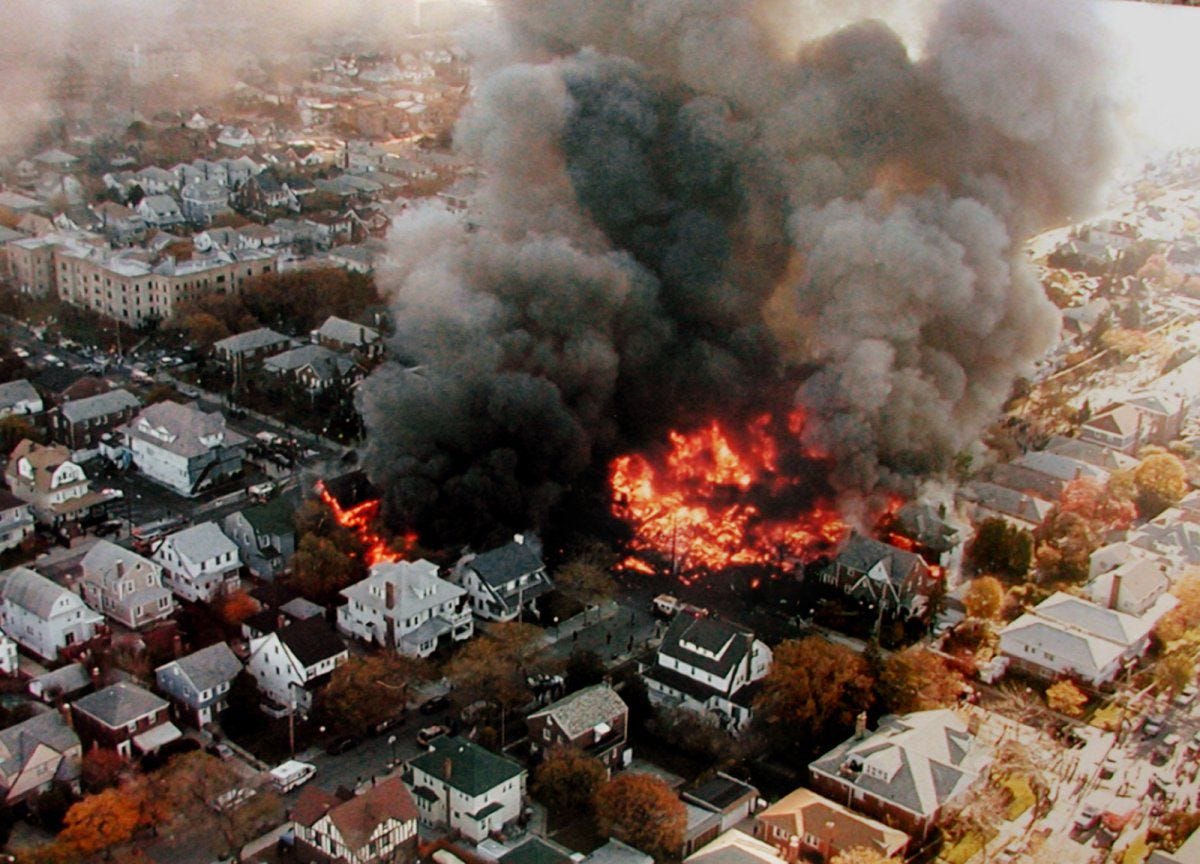
December 29, 1975: At 6:33 PM, during rush hour, a bomb explodes in a locker at the baggage reclaim terminal for Trans World Airlines (TWA) baggage at LaGuardia Airport in New York City. Contrary to the New York Daily News headline above, the death toll turned out to be 11, and the injuries numbered 74.

This bombing was the deadliest terrorist attack in New York City between the 1920 Wall Street bombing and the destruction of the World Trade Center in 2001.

The perpetrators were never officially identified or charged, although the most common consensus is that it was either anti-Yugoslavian Croats that were part of Otpor, meaning "Resistance"; or Yugoslavia's Communist Belgrade's own State Security Administration, the UDBA, working to malign Otpor through sabotage, which was a common strategy of theirs. Another suspect was the FALN, terrorists seeking independence for Puerto Rico.

Since Yugoslavia, though Communist, was opposed to the Soviet Union, and wasn't making efforts to expand its influence to neighboring nations, and Puerto Rico was still a sensitive issue, President Gerald Ford chose not to press the issue, and no arrests were made.

As of December 29, 2022, Puerto Rico is still a "freely associated state," but not a State, of the United States of America. Yugoslavia held together until 1991, before breaking up into a savage civil war. Mostly at peace since 1999, it is now 7 separate nations: In alphabetical order, Bosnia and Herzegovina (that's one country), Croatia, Kosovo, Montenegro, North Macedonia, Serbia (including the former Yugoslav capital of Belgrade), and Slovenia.

*

December 29, 1975 was a Monday. Baseball was out of season. The NFL was in the middle of its Playoffs. There was 1 college football bowl game: Maryland beat Florida, 13-0 in the Gator Bowl, at the stadium of the same name in Jacksonville, Florida.

There was 1 game played in the NBA: The New York Knicks beat the Chicago Bulls, 94-93 at the Chicago Stadium. Earl "the Pearl" Monroe scored 37 points. And there was 1 game played in the ABA: The New York Nets lost to the Kentucky Colonels, 110-102 at Freedom Hall in Louisville.

No games were scheduled for the World Hockey Association, but there were 3 games in the NHL:

* The Montreal Canadiens beat the Washington Capitals, 6-0 at the Capital Centre in the Washington suburb of Landover, Maryland.

* The Toronto Maple Leafs beat the Atlanta Flames, 6-2 at Maple Leaf Gardens in Toronto.

* The Minnesota North Stars beat the Los Angeles Kings, 2-1 at the Metropolitan Sports Center in the Minneapolis suburb of Bloomington, Minnesota.

Tuesday, December 13, 2022

December 14, 1894: The Consolidation of "Greater New York"

December 14, 1894: The New York State Board of Canvassers releases the official tally of the referendums on creating "The City of Greater New York." Most of the constituencies approved it.

Up to this point, the City of New York consisted of Manhattan Island and part of what became known as The Bronx. But Brooklyn was a separate city, and there were other separate cities around both, which is why the westernmost neighborhood in Queens is called Long Island City.

Queens County then consisted of Long Island City, and the Towns of Elmhurst, Flushing and Jamaica, and what are now called "The Rockaways," then part of the Town of Hempstead. Richmond County, making up the entirety of Staten Island, consisted of the Towns of Castleton, Middletown, Northfield, Southfield and Westfield.

The building of the Brooklyn Bridge in 1883, and the idea of building other bridges and a subway system connecting the two cities, replacing the old ferry boat system, helped put forward the idea of a single city that would be home to about 4 million people.

But Brooklyn, in particular, didn't want to do it: They liked their independence, and didn't want Manhattan telling them what to do. They'd already endured the heavy-handed control of the Manhattan-based Tammany Hall political machine dominating the State legislature, not to mention professional baseball teams calling themselves "New York" while playing at Brooklyn facilities such as the Union Grounds in Williamsburg and the Capitoline Grounds in Bedford-Stuyvesant. (Both had since been demolished.)

Nevertheless, the vote was taken, with a "Yes" vote meaning "For Consolidation," and a "No" vote meaning "Against Consolidation." Here were the results:

* Richmond County (Staten Island): 78.61 percent Yes. Over time, Staten Island would become the Borough the least satisfied with the setup, and has voted at least once to secede from the City, but this has not been permitted by the State government.
* Town of Pelham (in Bronx County): 62.13 percent Yes.
* Queens County: 61.93 percent Yes.
* New York County (Manhattan): 61.78 percent Yes.
* Town of East Chester (in Bronx County): 58.99 percent Yes. Eastchester (usually written as one word since then) has always been part of Bronx County, never Westchester County.
* Kings County (Brooklyn): 50.11 percent Yes. The winning margin was just 277 votes.
* Town of Westchester (in Westchester County): 50.04 percent No. The margin of victory was, literally, one single vote, 621 to 620.
* City of Mount Vernon (in Westchester County): 64.74 percent No. They remained separate, not joining Bronx County.

And so, on January 1, 1898, the Counties of New York, Bronx, Queens, Kings and Richmond became, respectively, the Boroughs of Manhattan, Bronx, Queens, Brooklyn and Staten Island; and, collectively, the City of New York. Westchester and Mount Vernon remained separate, and Mount Vernon became the seat of the new version of Westchester County.

The term "City of Greater New York" was never a legal or official designation; both the original Charter of 1898 and the newer one of 1938 use the name "City of New York." It is used today only to refer to the time period when the consolidation took place.

*

December 14, 1894 was a Friday. There were no scores on this historic day: Baseball was out of season, college football's regular season was over with only 4 postseason games (not yet called "bowl games") remaining to be played, hockey was all-amateur, and basketball was a new invention.

Sunday, December 11, 2022

December 11, 1978: The Lufthansa Heist

December 11, 1978: The largest robbery on American soil to that point is committed at John F. Kennedy International Airport in Queens, New York City. 

Members of the Lucchese crime family robbed Lufthansa Cargo Building 261, belonging to Lufthansa, the largest airline in Germany, taking $5 million in cash and $875,000 worth of jewelry. The $5,875,000 heist would be worth about $26.4 million in 2022 money. The story was told in the film Goodfellas, but, with most of the names changed, the story is true.

Organized crime in New York is led by the so-called Five Families: Lucchese, Gambino, Genovese, Colombo and Bonanno. Jimmy "the Gent" Burke was a Lucchese associate, but, being of Irish descent, he could never be a "soldier," or a "made man," in the "family." But, as the top hijacker of trucks and their cargo in New York in the 1960s and '70s, he sure made them a lot of money. He had previously done so at JFK Airport, at the Air France terminal on April 7, 1967, netting $420,000 worth of cash and cargo (about $3.7 million today).

Having succeeded in the Lufthansa heist, Burke was paranoid about it. He was afraid that, if his guys spent too much of the loot too soon, it would attract the attention of the Federal Bureau of Investigation. (As the crime was on the grounds of an airport, it was in the FBI's jurisdiction, not the New York Police Department's.)

But it was 2 weeks before Christmas, and, in anticipation of getting their share of the loot, some of the guys in Burke's crew began spending like crazy, especially on their wives and/or mistresses. One of them bought a brand-new top-of-the-line Cadillac, which, parked in front of a known Lucchese Family hideout in Queens, might as well have been spray-painted with the words "UNMARKED MOB CAR." And some of them were getting antsy, and demanded their share before Burke was ready to give the shares out.

So all through 1979, members of Burke's crew started dying. The guy who bought the car, and his wife, were found shot to death inside the car. One member of the crew, Henry Hill, got busted for cocaine trafficking in 1980, and it may have saved his life, because Jimmy had told him to go down to Florida to perform a contract killing. That made Henry suspicious, because Jimmy had never asked him to do a "hit" before. He was sure that if he went down, he would never come back up alive. So he made preparations to go into hiding, but the Feds got him first.

The first time Henry got arrested, as a teenager, he kept his mouth shut, earning the respect of Burke, Burke's boss Paul Vario, and everybody else who called Vario his boss. This time, with a wife and 2 kids to think about, he spilled his guts.

Ironically, most of the guys he ratted on were charged with things other than the Lufthansa heist. Burke, the mastermind, was charged for his role in the 1978-79 Boston College basketball point-shaving scandal. While serving time for that, he was convicted of a murder, and that had nothing to do with the Lufthansa heist or its aftermath, either. He was doomed to die in prison, and did, in 1996. So did Paul Vario, in 1988.

Hill was involved in the planning of the Lufthansa heist, but did not actually participate in it, only finding out it was successful by listening to the radio the next morning. (He did participate in the Air France robbery at JFK in 1967.)

He and his family went into the FBI's Witness Protection Program, going from the life of a millionaire gangster to, as he put it, "living like a schnook." Nicholas Pileggi wrote the book Wiseguy based on Hill's story, and quoted Hill, half-Italian and half-Irish (and thus also ineligible to be a made man, as you have to be full Italian, preferably full Sicilian but that's negotiable), as having to endure indignities like ordering spaghetti marinara and getting egg noodles with ketchup.

In 1990, Martin Scorsese released the film Goodfellas, based on Pileggi's book. The two of them wrote the screenplay together, and it has been hailed as one of the best movies ever made, not just one of the best gangster movies. Hill was played by Ray Liotta. Hill and his wife Karen, played by Lorraine Bracco, were the only people whose names weren't changed for the movie. (Although the guy who bought the Cadillac, and paid for it with his life and his wife's? He was played by a guy named Johnny Williams, and his nickname was Johnny Roastbeef. Scorcese liked the nickname so much, he named the character "Johnny Roastbeef," too.) As of December 11, 2022, Williams is still alive.

Jimmy Burke, who was still alive but in prison when the movie came out, became Jimmy Conway, and was played by Robert De Niro. Vario became Paul Cicero, and was played by Paul Sorvino. Tommy DeSimone, involved in both heists, became Tommy DeVito, and was played by Joe Pesci. In real life, DeSimone was not funny. In fact, Pesci may have toned the character down.

The real Hill couldn't stay out of trouble, and was busted for drugs again, and served time, and was kicked out of the Witness Protection Program. Karen divorced him, and she and their kids were allowed to stay in the Program.

Henry Hill was a schnook. Still, the Mob never did kill him. He did that to himself: He may have gotten off drugs, but he continued to drink like there was no tomorrow, and died in 2012, a day after his 69th birthday.

The money and the jewels from the Lufthansa heist have never been found.

One more thing: That great single-shot sequence of Henry and Karen going through the kitchen to the main room of New York's legendary Copacabana Club, to the tune of "Then He Kissed Me" by The Crystals? Well, the Copa has since been moved to new addresses, but is still in business. The original building, at 10 East 60th Street, is still there, and Scorcese had the interior made up to look like it did in 1963 when that song came out.

And I wish somebody had done a similar filming sequence at the old Yankee Stadium, from Subway tunnel to gate to seat, before it was torn down.

*

December 11, 1978 was a Monday. It was the off-season for baseball, and there were no games played that night in the NBA, the NHL or the WHA. But, that night, on ABC's Monday Night Football, the Cincinnati Bengals beat the Los Angeles Rams, 20-19 at the Los Angeles Memorial Coliseum.

Monday, November 28, 2022

November 28, 1964: The Shangri-Las Lead the Pack

Left to right: Betty Weiss, Mary Ann Ganser,
Marge Ganser and Mary Weiss

November 28, 1964: The Shangri-Las hit Number 1 with "Leader of the Pack," making it the most successful "teenage lament" song of all time. The group, out of Cambria Heights, Queens, New York City, was 2 pairs of sisters: Mary and Betty Weiss, and twins Marge and Mary Ann Ganser. Like The Four Seasons, they named themselves after a nearby restaurant.
 
Their 1st hit was "Remember (Walking in the Sand)." You've heard it appropriated for about a gazillion TikTok videos: "Oh no! Oh no! Oh no no no no no…" 
"Leader of the Pack" was the follow-up, and their biggest hit. They had a few other hits, some of them "teenage laments," but "Give Him a Great Big Kiss" was a happy tune, and you can almost hear them snapping their fingers, and their chewing gum.

Betty sang lead on "Leader of the Pack," but, only 18, she got pregnant, and had to leave the group in October 1964, just before the song hit Number 1 and they went on a promotional tour of Britain. So while the lead character is addressed as "Betty," it was Mary who sang lead on tour, and in all the surviving TV clips.
 
Betty rejoined the group in mid-1965, but each of the Ganser twins dropped out at various times, with one replacing the other. Since they were identical twins, most people couldn't tell the difference. Among the acts who opened for them were The Animals, The Young Rascals, Vanilla Fudge, and The Iguanas, whose lead singer became Iggy Pop.
 
They were the original "bad girls of rock and roll." Well, them and The Ronettes. Both groups tended to wear outfits that were too tight for the 1960s. A rumor got around that Mary packed a gun on tour and got busted for it. It worked in their favor, as they had to fend off fewer advances from rotten guys.
 
After the group broke up, Mary Ann Ganser died of a barbiturate overdose (often incorrectly listed as encephalitis) in 1970. She was only 22 years old. The other 3 all got married, moved to Long Island, and had a reunion tour in 1976.

I saw a trio calling themselves The Shangri-Las at an oldies show at Penn's Landing in Philadelphia in 1988, but I got close enough to the stage to see that all 3 singers were in their 30s, and no 2 of the 3 looked like sisters, much less twins. They were not the real thing. The 3 surviving members last performed together in 1989, at the Meadowlands, at a show hosted by legendary New York disc jockey Bruce "Cousin Brucie" Morrow.
 
Marge Ganser worked for the phone company until she was stricken with cancer, and died in 1998, at 50. Mary Weiss became an accountant, and Betty held several jobs. Both Weiss sisters are still alive, but only Mary remains on the oldies circuit.
 
The song was written by Jeff Barry and Ellie Greenwich, one of many hits songs they wrote while married to each other. In 1984, one of the first "jukebox musicals" on Broadway told Ellie's story, and it was titled Leader of the Pack. Ellie died in 2009. George "Shadow" Morton, who produced the song and wrote most of their other hits, died in 2013. As of November 28, 2022, Jeff Barry is still alive.

UPDATE: Mary Weiss died in 2024, leaving Betty as the last survivor.

*

November 28, 1964 was a Saturday. A pair of star athletes, baseball's John Burkett and basketball's Roy Tarpley, were born.

It was the end of college football rivalry week, including USC upsetting Number 1 Notre Dame, 20-17 at the Los Angeles Memorial Coliseum. I have a separate entry for that event. Among the other college football games played that day:

* Army beat Navy, 11-8 at John F. Kennedy Stadium in Philadelphia.

* Boston College beat Holy Cross, 10-8 at Alumni Stadium outside Boston in Chestnut Hill, Massachusetts.

* Georgia beat Georgia Tech, 7-0 at Sanford Stadium in Athens, Georgia.

* Florida beat Miami, 12-10 at Florida Field (now Ben Hill Griffin Stadium) in Gainesville, Florida.

* Vanderbilt beat Tennessee, 7-0 at Dudley Field (now FirstBank Stadium) in Nashville.

* Oklahoma beat Oklahoma State, 21-16 at Lewis Field (now Pickens Stadium) in Stillwater, Oklahoma.

* Texas Christian University (TCU) beat Southern Methodist University (SMU), 17-6 at the Cotton Bowl in Dallas.

* Arizona beat Arizona State, 30-6 at Arizona Stadium in Tucson.

Two days earlier, on Thanksgiving Day, Number 2 Alabama beat Auburn, 21-14 at Legion Field in Birmingham, Alabama, winning 'Bama the Southeastern Conference title; and Number 5 Texas beat Texas A&M, 26-7 at Memorial Stadium in Austin, Texas.

* Idle: Number 3 Arkansas, who had beaten Texas, and won the Southwest Conference title; Number 6 Michigan, who had won the Big Ten Conference title; Number 7 Nebraska, who, despite losing the week before to arch-rival Oklahoma, had won the Big Eight Conference title; Number 8 Louisiana State University (LSU); Number 9 Oregon State, who had won the title in the Athletic Association of Western Universities (AAWU), the league that became the Pacific-Eight (or Pac-8) the next year; Number 10 Ohio State, which had blown the Big 10 title by losing their finale to Michigan; and New Jersey teams Rutgers and Princeton.

And so, at a time when the National Championship was awarded by the Associated Press' sportswriters' poll after the regular season, with Notre Dame's loss, Alabama, coached by Bear Bryant and quarterbacked by Joe Namath, rose to Number 1.

But Texas beat Alabama in the Orange Bowl, and Arkansas beat Nebraska in the Cotton Bowl, to earn a share of the National Championship with Alabama. Michigan beat Oregon State in the Rose Bowl, and LSU beat Syracuse in the Sugar Bowl.

Both the NFL and the AFL played the next day, plus games 2 days earlier, on Thanksgiving. The CFL played its championship game, the Grey Cup, and the BC Lions beat the Hamilton Tiger-Cats, 34-24 at Exhibition Stadium in Toronto. It was the 1st Grey Cup for the Vancouver-based team. I have a separate entry for this event.

Baseball was out of season. There were 4 games in the NBA:

* The New York Knicks beat the St. Louis Hawks, 106-91 at the old Madison Square Garden.

* The Boston Celtics beat the Cincinnati Royals, 129-98 at the Boston Garden.

* The Philadelphia76ers beat the Detroit Pistons, 101-93 at Cobo Hall (now Huntington Place) in Detroit.

* And the San Francisco Warriors beat their arch-rivals, the Los Angeles Lakers, 109-106 at the Civic Auditorium in San Francisco. Just another day at the office for Wilt Chamberlain: 40 points and 30 rebounds, and blocked shots were not recorded. Jerry West led the Lakers with 33 points.

There were 2 games played in the NHL. The New York Rangers beat the Toronto Maple Leafs, 4-1 at Maple Leaf Gardens in Toronto. The Montreal Canadiens beat the Boston Bruins, 2-1 at the Montreal Forum. The Detroit Red Wings and the Chicago Black Hawks were not scheduled.

And in English soccer, Manchester United beat Arsenal, 3-2 at the Arsenal Stadium, a.k.a. Highbury, in North London.

Saturday, November 12, 2022

November 12, 2001: The Too-Soon Crash

November 12, 2001: American Airlines Flight 587, an Airbus A300, crashes in the Belle Harbor section of Queens, near its takeoff point at John F. Kennedy International Airport.

Coming just 2 months after the 9/11 attacks, everyone's first thought was that was more terrorism, but it was due to pilot error causing mechanical failure.

One of the victims, Hilda Yolanda Mayol, survived the 9/11 attacks, having escaped from the North Tower of the World Trade Center.

The plane was headed for Las Américas International Airport, which serves Santo Domingo, the capital of the Dominican Republic. Most of the people on board were Dominican-Americans on their way to visit family, or Dominican citizens returning home from so doing.

From the Dominican community in Washington Heights, in Upper Manhattan, to the Rockaways in Queens, where the plane went down, killing 260 on board and 5 on the ground, the tragedy hit home (literally) from one end of New York City to the other. It was an awful day, and, had it not been for the 9/11 attacks, it would have been the dominant story of the year in New York City.

Belkis Lora, a relative of a passenger on Flight 587, said, "Every Dominican in New York has either taken that flight or knows someone who has. It gets you there early. At home, there are songs about it."

Seth Kugel, writing for The New York Times, said, "For many Dominicans in New York, these journeys home are the defining metaphor of their complex push-pull relationship with their homeland; they embody, vividly and poignantly, the tug between their current lives and their former selves. That fact gave Monday's tragedy a particularly horrible resonance for New York's Dominicans."

He added, "Even before Monday's crash, Dominicans had developed a complex love-hate relationship with American Airlines, complaining about high prices and baggage restrictions even while favoring the carrier over other airlines that used to travel the same route."

David Rivas, a New York City travel agency owner, said, "For the Dominican to go to Santo Domingo during Christmas and Summer is like the Muslims going to Mecca."

As of November 12, 2022, it remains the 2nd-deadliest plane crash in American history. More people died on this plane than on any of the 4 planes hijacked 2 months earlier.

*

November 12, 2001 was a Monday. Baseball season had ended 8 days earlier, when the Arizona Diamondbacks beat the New York Yankees in the World Series.

On ABC Monday Night Football, the Baltimore Ravens beat the Tennessee Titans, 16-10 at Adelphia Coliseum (now Nissan Stadium) in Nashville.

There were 2 games played in the NBA. The Golden State Warriors beat the Memphis Grizzlies, 86-79 at the Pyramid Arena in Memphis. And the Utah Jazz beat the Orlando Magic, 105-98 at the Delta Center in Salt Lake City.

One game was played in the NHL: The Buffalo Sabres beat the Florida Panthers, 5-3 at the National Car Rental Center (now named the Amerant Bank Center) in the Miami suburb of Sunrise, Florida.

Sunday, October 16, 2022

October 16, 1973: Willie Mays Bows Out, Donald Trump Butts In

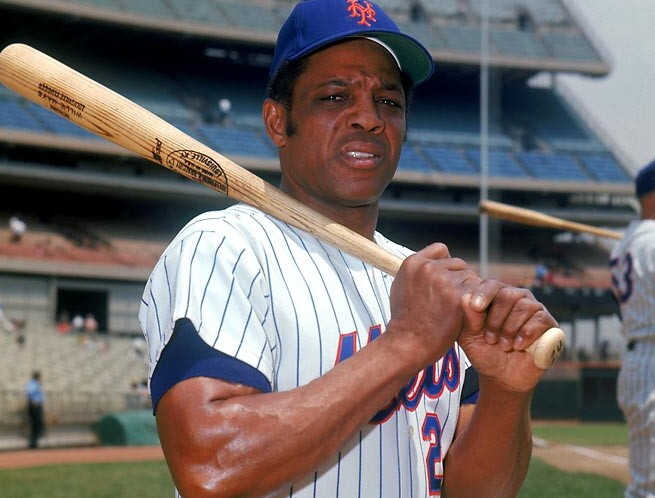
October 16, 1973: Two notable occurrences in New York City's Borough of Queens. One legend, who graced American sports for 23 years, bows out. Another legend, who has disgraced American life ever since, butts in.

The Oakland Athletics win Game 3 of the World Series, 3-2 in 11 innings over the New York Mets at Shea Stadium. Each team's ace starts: Jim "Catfish" Hunter for the A's, Tom Seaver for the Mets. Neither figured in the decision, although Seaver did strike out 12 batters while walking only 1 in 8 innings.

In the bottom of the 10th, Willie Mays pinch-hits for Mets relief pitcher Tug McGraw against Paul Lindblad, and grounds to short, where Bert Campaneris turns a force play. It is Mays' last major league appearance.

With 1 out in the top of the 11th, Mets reliever Harry Parker walked Ted Kubiak of nearby Highland Park, Middlesex County, New Jersey. Cliché Alert: Walks can kill you. Parker struck Ángel Mangual out, but catcher Jerry Grote couldn't handle it, and Kubiak reached 2nd base. Campaneris singled to center field, scoring Kubiak. Campaneris was out trying to stretch his hit into a double, but he got the winning RBI.

This put Lindblad into position to be the winning pitcher. The Mets did threaten in the bottom of the 11th: Wayne Garrett led off with a single to center, leading A's manager Dick Williams to bring in his bullpen ace, Rollie Fingers. Félix Millán bunted Garrett over to 2nd. With those 2 ordinary hitters out of the way, Fingers now had to face 2 men who are still among the best hitters in Met history. But he got Rusty Staub to fly to center, and Cleon Jones to ground to short, nailing down the Oakland win.

Afterward, in a private clubhouse meeting‚ Williams told his A's players that he will resign after the Series, win or lose. He has had it with the meddling of team owner Charlie Finley. Alvin Dark succeeded Williams.

Also on this day, Brian Cornelius Schottenheimer is born in Denver. At the time, his father, Marty Schottenheimer, was in his 1st coaching job, as linebackers coach with the Portland Storm of the World Football League.

Brian would grow up in the suburbs of Cleveland and Kansas City, while his father was head coach of the Browns and later the Chiefs. He got his 1st coaching job in 1997, assisting Dick Vermeil on the St. Louis Rams. Marty would put Brian on his staff in Kansas City in 1998, Washington in 2001, and San Diego from 2002 to 2005. He has also coached at Syracuse University, USC, the Jets, with the Rams again, the University of Georgia, and Indianapolis, but has yet to receive his 1st head coaching job. He is now the offensive coordinator for the Seattle Seahawks. (UPDATE: In 2025, he was named head coach of the Dallas Cowboys.)

Also on this day, David Gerald Unsworth is born in Chorley, Lancashire, England. A centreback, he played for Liverpool-based Everton, and helped them win the 1995 FA Cup. He was twice caretaker manager of Lancashire club Preston North End and once (so far) of Everton, and now manages Everton's reserves.

*

Also on this day, Donald Trump is mentioned in The New York Times for the 1st time. The story is of a lawsuit filed against the 27-year-old Trump, his father Fred, and their real estate company, by the U.S. Department of Justice, then (at least, for another 4 days) reporting to Attorney General Elliot Richardson, who reported to President Richard Nixon. The charge is housing discrimination in their Queens apartment complexes.
In his 1987 autobiography Trump: The Art of the Deal -- which was actually written by Tony Schwartz, then writing for GQ, and who now correctly calls Trump a "sociopath" -- Trump said, "The idea of settling drove me crazy... I'd rather fight than fold, because as soon as you fold once, you get the reputation of being a folder."
Nevertheless, on June 10, 1975, Fred (who had previously been arrested for attending a Ku Klux Klan demonstration in Queens in 1927) and Donald signed an agreement prohibiting them from "discriminating against any person in the terms, conditions, or privileges of sale or rental of a dwelling." The decree made it clear that the Trumps did not view the agreement as a surrender, saying the settlement was "in no way an admission" of a violation.

Nevertheless, Donald Trump officially became famous by being exposed as a bigot. And when you're officially too bigoted for Richard Nixon, that means that you've got a problem.

*

October 16, 1973 was a Tuesday. Football was in midweek. There were 2 games in the NBA. The New York Knicks beat the Buffalo Braves, 117-91 at Madison Square Garden. And the Philadelphia 76ers beat the Houston Rockets, 106-101 at the Hofheinz Pavilion (now the Fertitta Center) in Houston.

There was 1 game in the American Basketball Association: The San Antonio Spurs beat the Virginia Squires, 116-106 at the HemisFair Arena in San Antonio.

There were 2 games played in the NHL. The New York Islanders and the Los Angeles Kings played to a tie, 4-4 at the Nassau Coliseum. And the St. Louis Blues beat the Detroit Red Wings, 3-2 at the Olympia Stadium in Detroit.

And there was 1 game played in the World Hockey Association: The Toronto Toros beat the Los Angeles Sharks, 3-0 at the Los Angeles Memorial Sports Arena.

Sunday, October 9, 2022

October 10, 1908: The 1st Highway

October 10, 1908: The Long Island Motor Parkway opens. It is the world's 1st highway, the first road designed exclusively for automobile use, the first concrete highway in the United States, and the first to use overpasses and bridges to eliminate intersections.

It was funded by William Kissam Vanderbilt II, the great-grandson of ferry and railroad tycoon Cornelius Vanderbilt, and an auto racing enthusiast who created the Vanderbilt cup race in 1904.

The road was originally planned to stretch for 70 miles, in and out of New York City, as far as Riverhead, the seat of Suffolk County, and the point of division for the north and south forks of Long Island. Only 45 miles were constructed, and on October 10, 1908, a 10-mile-long section opened as far as modern Bethpage.

It hosted races in 1908 and on the full road in 1909 and 1910, but an accident in the 1910 Vanderbilt Cup, killing two riding mechanics, led the New York State legislature to ban racing except on race tracks, ending its career as a racing road.

By 1911, the road was extended as far east as Lake Ronkonkoma. Its western stretch was also extended from Great Neck, Nassau County to what is now the Fresh Meadows neighborhood of Queens.

Roadway design advances of the 1920s rendered the road obsolete less than 20 years after construction. At the same time, Robert Moses was planning the Northern State Parkway. In 1929, the owners and some Long Island officials proposed that New York State should buy the road, and integrate it into the state parkway system, despite its narrow roadway (varying from 16 to 22 feet wide) and steep bridges not meeting new standards. Moses opposed the idea, stating that the Long Island Motor Parkway had been "a white elephant for the last twenty years."

The completion of the Northern State Parkway signaled the end for the road. In 1937, the portion of the Long Island Motor Parkway in Suffolk County was donated to Suffolk County. In July 1938, the remainder of the parkway's land was given to Nassau County and the Long Island State Parks Commission.

Most of the road in Queens is a bicycle trail from Cunningham Park to Alley Pond Park. The Nassau County roadway has been redeveloped, or turned into a right of way for Long Island Power Authority (LIPA) transmission lines.
Pretty much all of what's left looks something like this. 

*

October 10, 1908 was a Saturday. Game 1 of the World Series was played at Bennett Park in Detroit. The Chicago Cubs led 5-1 going to the bottom of the 7th, the Detroit Tigers took a 6-5 lead into the 9th, then the Cubs scored 5 in the 9th to win, 10-6. Mordecai "Three-Finger" Brown was the winning pitcher. The Cubs won the Series in 5 games.

Professional basketball barely existed. It was too early for a new hockey season to begin. Among the college football games played that day were these:

* Army beat Trinity College of Hartford, Connecticut, 33-0 on The Plain at West Point, New York.

* The Carlisle Indian School beat Syracuse, 12-0 at Archbold Stadium in Syracuse, New York.

* Rutgers lost to Lehigh, 12-0 at Lehigh Field in Bethlehem, Pennsylvania.

* Princeton and Lafyette played to a tie, 0-0 at University Field in Princeton, New Jersey.

* The University of Pennsylvania beat Pennsylvania State University: Penn 6, Penn State 0 at the original Franklin Field in Philadelphia.

* Navy beat Dickinson College, 22-0 at Worden Field in Annapolis, Maryland. Like the Carlisle Indian School, Dickinson was based in Carlisle, Pennsylvania.

* In a Washington vs. Baltimore matchup, Georgetown beat Johns Hopkins, 22-4 at Georgetown Field in Washington.

* In what would later become a major rivalry, the University of Michigan and Michigan State Agricultural College played to a tie, 0-0 at College Field in East Lansing. MSAC became Michigan Agricultural College in 1909, Michigan State College in 1925, and Michigan State University in 1955.

* The University of Chicago beat Indiana, 29-6 at Stagg Field in Chicago.

* And in an intra-State rivalry, Kansas beat Kansas State, 12-6 at McCook Field in Lawrence, Kansas.

And in English soccer, South-East London team Woolwich Arsenal, later to be Arsenal F.C., the North London team I would one day support, beat Manchester City, 3-0 at the Manor Ground in Plumstead.

Saturday, September 24, 2022

September 24, 1938: Don Budge Wins the Grand Slam

September 24, 1938: Don Budge wins the men's singles title at tennis' U.S. Open, at the Forest Hills Stadium in Queens. This completes the sport's 1st-ever grand slam.

John Donald Budge was born on June 13, 1915 in Oakland, California. His father, John "Jack" Budge, was from Scotland, and played for the reserve team at Glasgow club Rangers before coming to America. Don didn't begin playing tennis until he was 13, urged to take it up by his brother Lloyd, who was on the team at the University of California in nearby Berkeley. Don would also play tennis at "Cal" (the school is usually called that for sports purposes, and "Berkeley" for everything else), but dropped out to play full-time. In 1937, he won both Wimbledon and the U.S. Open. In fact, at Wimbledon, he won tennis' version of the Triple Crown: His gender's singles and doubles, and mixed doubles.

At the time, the long distance between Australia and the other 3 "majors," and the lack of safe and fast air travel, meant that, for players from outside Australia and New Zealand who wanted to play in the Australian Open, they would have to take a long cruise ship ride. So many of them didn't try; likewise, many of the better Australian players didn't play in Wimbledon or the U.S. or French Opens.

But Budge went for what was the Australian Open, and won the men's singles title in Adelaide on January 31, 1938, defeating Australian player John Bromwich, 6-4, 6-2, 6-1. On June 11, he defeated Roderich Menzel of Czechoslovakia, 6-3, 6-2 and 6-4 to win the French Open. On July 2, in the "gentlemen's singles" Final at Wimbledon, he beat Englishman Henry "Bunny" Austin, 6-1, 6-0, 6-3. He won the Triple Crown at that meet, too.

Coming home, the American press began to compare the feat-in-the-making to the sweep of golf titles by Bobby Jones in 1930, winning the U.S. and British Opens, and the U.S. and British Amateurs, all in the same year: If Budge could win the U.S. Open, that would be considered the "Grand Slam."

In the Quarterfinal, he beat Australian Harry Hopman, 6-3, 6-1, 6-3. In the Semifinal, he beat American Sidney Wood, 6-3, 6-3, 6-3. Bromwich fell in the other Semifinal, to American Gene Mako. In the Final, on September 24, Mako did what no other player did in any of the majors: He made Budge lose a set. After Budge won the 1st set, 6-3, Mako won the 2nd set, 8-6. It may only have made Budge more determined, because he dominated the rest of the way, winning the 3rd set, 6-2; and the 4th set, 6-1. He also won another Triple Crown, to go with his Grand Slam.

After this achievement, he turned professional, making him ineligible for the traditional majors: They wouldn't permit professionals to compete until 1968. However, in 1939, he won the French Pro and the Wembley Pro. In 1940 and 1942, he won the U.S. Pro.

Sidney Wood, an American who won Wimbledon in 1931, claimed to have competed, in one format or another, "against virtually every top player in the world." He said ranking Budge as the greatest tennis player he ever saw was a "no-brainer," and that he was "recognized by his peers as the one player to have commanded not only every shot in the book for every surface, but also to have been blessed with the single most destructive tennis weapon ever -- a bludgeon backhand struck with a sixteen ounce 'Paul Bunyan' bat."

Budge retired from competition in 1961. In 1997, when the new Arthur Ashe Stadium opened as the centerpiece of the Billie Jean King National Tennis Center at Flushing Meadow-Corona Park in Queens, Budge was the earliest of the tennis champions invited to attend. He died on January 26, 2000, at the age of 84.

*

September 24, 1938 was a Saturday. In English soccer, North London team Arsenal hosted Birmingham team Aston Villa at the Arsenal Stadium, a.k.a. Highbury, and they played to a 0-0 draw.

These baseball games were played that day:

* The New York Yankees lost to the Boston Red Sox, 7-6 at Yankee Stadium. Red Ruffing ran out of gas in the 9th inning, and gave up a home run to Jimmie Foxx, the 48th of 50 he would hit that season. For the Yankees, Bill Dickey hit a home run, Lou Gehrig went 1-for-4 with an RBI, and Joe DiMaggio also went 1-for-4. The Yankees had already clinched the American League Pennant 2 days earlier.

* The New York Giants swept a doubleheader from the Boston Bees, 9-8 and 2-1 at National League Park in Boston. Those are the names the Boston team of the National League used from 1936 to 1940, but the change never caught on with the fans, and they went back to being the Boston Braves, playing at Braves Field. Over the 2 games, Mel Ott went 3-for-8 with 2 walks and 3 RBIs.

* The Brooklyn Dodgers beat the Philadelphia Phillies, 8-1 at Ebbets Field in Brooklyn.

* The Washington Senators beat the Philadelphia Athletics, 7-3 at Shibe Park in Philadelphia. Taffy Wright hit a 2-run triple, part of a 4-run top of the 10th inning.

* The Pittsburgh Pirates beat the Cincinnati Reds, 4-1 at Forbes Field in Pittsburgh. Paul Waner went 1-for-4, Lloyd Waner went 2-for-4, and each also drew a walk.

* The Detroit Tigers beat the Cleveland Indians, 7-6 at Briggs Stadium (later Tiger Stadium) in Detroit. The Tigers scored 6 runs in the bottom of the 7th to win it. Charlie Gehringer hit a home run. Hank Greenberg went 0-for-2 with 2 walks, feeding the myth that pitchers were walking him semi-intentionally because they didn't want to see a Jewish player break Babe Ruth's record of 60 home runs in a season. He had hit 2 the day before, to give him 56, but over the last 9 games of the season, had only 2 more homers, and 9 walks.

* The Chicago Cubs beat their arch-rivals, the St. Louis Cardinals, 9-3 at Wrigley Field in Chicago. The Cubs went on to win the National League Pennant, but were swept by the Yankees in the World Series.

* And a doubleheader was split at Sportsman's Park in St. Louis. The St. Louis Browns won the 1st game, 8-7. The Chicago White Sox won the 2nd game, 3-2.

Among the college football games played that day were these:

* Alabama beat the University of Southern California, 19-7 at the Los Angeles Memorial Coliseum. Early-season intersectional matchups like this would become common, but were not at this point. USC went on to win the Pacific Coast Conference.

* In another notable intersectional matchup, Minnesota beat the University of Washington, 15-0 at Memorial Stadium in Minneapolis. UW went 3-5-1. In contrast, Minnesota went 6-2, and won the Big Ten Conference title, but they didn't go to a bowl game, either: Not until the 1946 season would the Rose Bowl become a matchup between the Champions of the Big Ten and the league eventually known as the Pac-12.

* Duke beat Virginia Tech, 18-0 at World War Memorial Stadium in Greensboro, North Carolina. Duke went undefeated and won the Southern Conference title, before losing the Rose Bowl to USC.

* Tennessee beat Sewanee, 26-3 at Shields-Watkins Field (later renamed Neyland Stadium) in Knoxville, Tennessee. Tennessee, which won the Southeastern Conference title, and Oklahoma, who opened their season the following week, and won the Big Six Conference title both went undefeated, and faced each other in the Rose Bowl, where Tennessee won, and put in a claim for the National Championship.

* Texas Christian University beat Centenary College of Louisiana, 13-0 at TCU Stadium (later Amon G. Carter Stadium) in Fort Worth, Texas. This was nothing to sneeze at: Centenary went 7-3 the rest of the way. But TCU, with lefthanded quarterback Davey O'Brien winning the Heisman Trophy, went undefeated, and won the Southwest Conference title. They beat Carnegie Tech in the Sugar Bowl, to also lay a claim for the National Championship. Most sources chose TCU Number 1, and Tennessee Number 2. (Carnegie Tech, now Carnegie-Mellon University, opened their season the week after this date.)

* Army beat Wichita State, 32-0 at Michie Stadium in West Point, New York.

* Navy beat William & Mary, 26-0 at Thompson Stadium in Annapolis, Maryland.

* In a rivalry that would one day be known as the "Backyard Brawl," the University of Pittsburgh beat West Virginia, 19-0 at Pitt Stadium in Pittsburgh.

* The University of California beat fellow East Bay team Saint Mary's, 12-7 at Memorial Stadium, in Berkeley, California. Cal would lose only 1 game that season, but it was to USC, blowing their chance at league and national honors. St. Mary's were invited to the Cotton Bowl.

* Texas Tech beat Wyoming, 39-0 at Tech Field (now Jones AT&T Stadium -- not named for Jerry Jones) in Lubbock, Texas. Tech won the Border Conference and went undefeated, until losing the Cotton Bowl to St. Mary's.

* Notre Dame opened its season the next week, and went undefeated until losing their regular-season finale to USC.

* Columbia, Fordham, NYU, CCNY and Brooklyn College all opened their seasons the next week. The only New York City team playing that week was Manhattan College, and they lost to St. Bonaventure, 7-6 at Ebbets Field. So a school named for Manhattan, but located in The Bronx, played a "home game" in Brooklyn. That season, they also played 2 games at the Polo Grounds, and 3 games at Yankee Stadium.

* And Rutgers beat Marietta, 20-0 at Neilson Field in New Brunswick, New Jersey. New Jersey's other major school, Princeton, opened the next week. Rutgers opened the original Rutgers Stadium later in the year, beating Princeton. 

Monday, September 19, 2022

September 19, 1990: "Goodfellas" Premieres

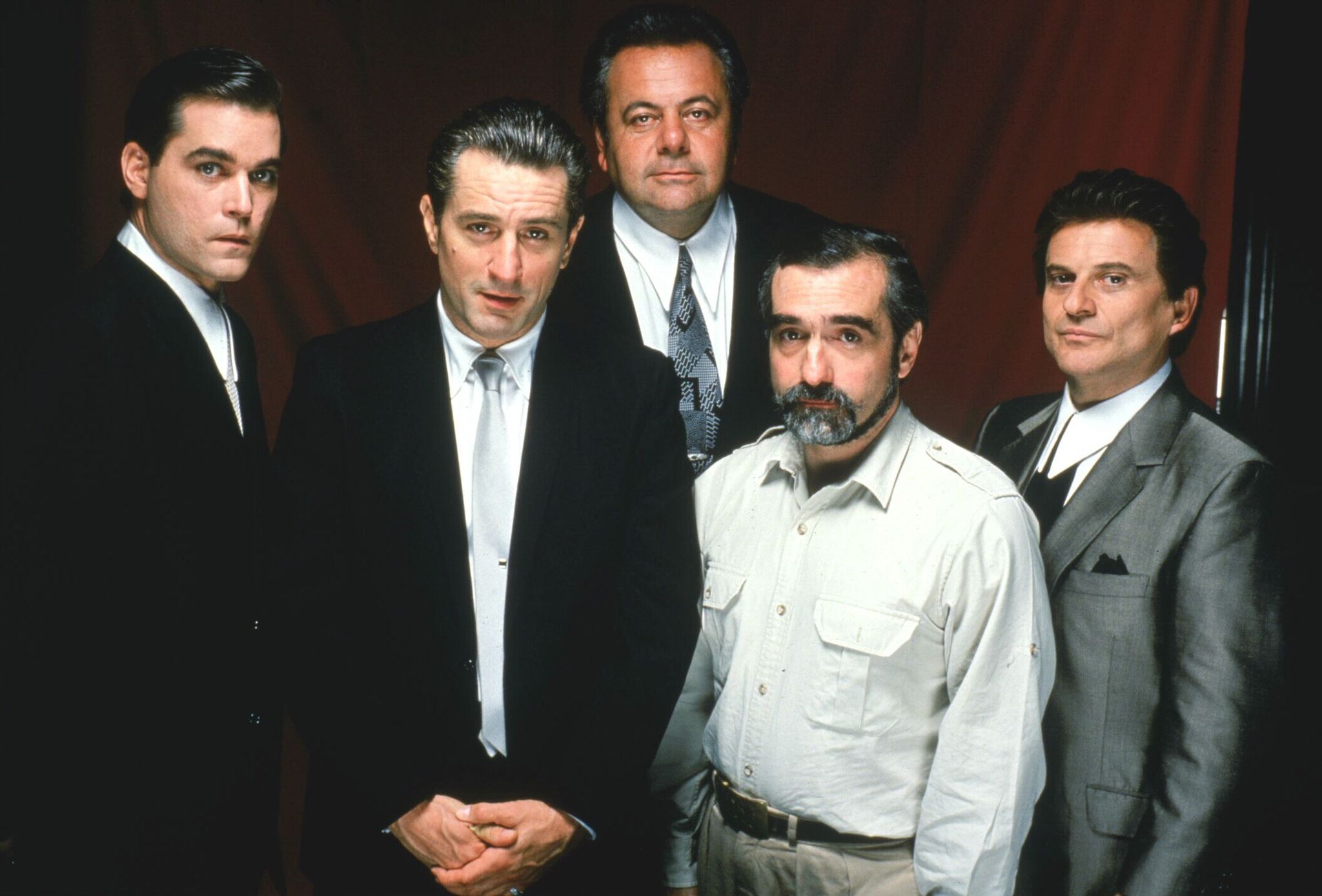
Left to right: Ray Liotta, Robert De Niro,
Paul Sorvino, Martin Scorcese and Joe Pesci

September 19, 1990: Goodfellas premieres, directed by Martin Scorcese, based on the book Wiseguy by Nicholas Pileggi. Along with Francis Ford Coppola's The Godfather, it is considered perhaps the greatest film ever made about organized crime.

Pileggi had collaborated with Henry Hill, an associate of the Lucchese crime family. He was played by Ray Liotta in the movie. Organized crime in New York is led by the so-called Five Families: Lucchese, Gambino, Genovese, Colombo and Bonanno.

(In case anyone affiliated with any of them is reading this, I did not list them in that order for any particular reason. I only listed the Lucchese family first because that's who Hill worked for. No slight was intended to any of the other families.)

Henry, who narrates the film, worked under Lucchese associate Jimmy "the Gent" Burke, whose name was changed to Jimmy Conway for the movie. He was played by Robert De Niro. As in real life, the half-Italian, but also half-Irish, Hill and the all-Irish Conway could never be a "soldier," or "made man," in the "family" -- only an "associate." But, as the top hijacker of trucks and their cargo in New York in the 1960s and '70s, Burke/Conway sure made them a lot of money, so they treated him well.

The first time Henry got arrested, as a teenager, he kept his mouth shut, earning the respect of Conway, Burke, Lucchese capo Paul Vario, and everybody else who called Vario his boss. For the movie, Vario's name was changed to Paul Cicero, and he was played by Paul Sorvino.

Lorraine Bracco plays Karen Friedman, Henry's girlfriend and eventual wife, who is seduced by Henry's free-spending lifestyle. This is emphasized by a great single-shot sequence of Henry and Karen going through the kitchen to the main room of New York's legendary Copacabana Club, to the tune of "Then He Kissed Me" by The Crystals.

In real life, the Copa has since been moved to new addresses, but is still in business. The original building, at 10 East 60th Street, is still there, and Scorcese had the interior made up to look like it did in 1963 when that song came out. I wish somebody had done a similar filming sequence at the old Yankee Stadium, from Subway tunnel to gate to seat, before it was torn down.

The film tells how, on April 7, 1967, a team led by Conway robbed the Air France terminal at John F. Kennedy International Airport in Queens, netting $420,000 worth of cash and cargo (about $3.7 million in 2022 money). This team included Hill and Tommy DeSimone, renamed Tommy DeVito for the movie. He was played by Joe Pesci, and the role, for which Pesci won the Academy Award for Best Supporting Actor, forever defined him as a Mobbed-up, foul-mouthed Italian lunatic who could be set off by anything, including references to his short stature, and even by a compliment: "I'm funny? Funny, how?"

This was demonstrated by recreating the events of June 11, 1970. Two weeks earlier, William Bentvena, a.k.a. Billy Batts -- his "Mob name" was not changed for the film, and his real name wasn't mentioned -- had just gotten out of prison on a drug trafficking charge. Conway (Burke) owned a Queens nightclub named Robert's Lounge, and threw a party for Batts. DeSimone was there, and Batts, a made man in the Gambino family, asked DeSimone if he still shined shoes, a reference to his being short.

On June 11, Batts was at The Suite, a Queens nightclub owned by Hill. DeSimone assaulted Batts, beating him until he was apparently dead. DeSimone, Hill and Conway put him in the trunk of Hill's car, drove him to a secluded spot in Upstate New York, made sure he was dead, and buried him there.

By 1973, Hill had a cocaine connection in Pittsburgh, and a cocaine addiction, and mistresses. He was arrested and sent to prison, but kept his connection going there. When he got out, Vario warned him to stay away from coke, either using, trafficking or dealing. But he was too weak to stay away.

Burke's gang planned to rob the Lufthansa Cargo Building at JFK Airport. Hill was part of the planning, but did not participate in the actual robbery. On the morning of December 11, 1978, while listening to the radio in the shower, he learns that they pulled it off overnight. The $5,875,000 heist, the largest ever on American soil to that point, would be worth about $26.4 million in 2022 money.

Having succeeded in the Lufthansa heist, Burke was paranoid about it. He was afraid that, if his guys spent too much of the loot too soon, it would attract the attention of the Federal Bureau of Investigation. (As the crime was on the grounds of an airport, it was in the FBI's jurisdiction, not the New York Police Department's.)

But it was 2 weeks before Christmas, and, in anticipation of getting their share of the loot, some of the guys in Burke's crew began spending like crazy, especially on their wives and/or mistresses. One of them bought a brand-new top-of-the-line pink Cadillac, which, parked in front of a known Lucchese Family hideout in Queens, might as well have been spray-painted with the words "UNMARKED MOB CAR." And some of them were getting antsy, and demanded their share before Burke was ready to give the shares out.

So all through 1979, members of Burke's crew started dying. The guy who bought the car, and his wife, were found shot to death inside the car. Scorcese showed these murders to the tune of the Jim Gordon piano and Eric Clapton & Duane Allman guitar outro from "Layla" by Derek and the Dominoes.

One murder that was not connected to this was that of Tommy DeVito. In real life, DeSimone was reported missing by his wife on January 14, 1979, a mere 34 days after the Lufthansa heist. The real Hill gave conflicting answers as to what happened to him, including that he was killed by Vario's son Peter, and that he was killed by the eventual boss of the Gambino Family, John Gotti. who had been a close friend of Batts'.

The film shows DeVito being convinced that he's going to be "made," which requires a ceremony attended by other made men. He's driven to a house, and when he walks into a room, he sees it's empty. For once, his bravado falls, because he knows it's a trap. He has just enough time to say, "Oh, no," before he's shot in the head.

This leads to a phone call to Conway, who, in his anger and his grief, destroys the phone booth. It also leads to the movie's most-remembered quote, from Hill: "It was revenge for Billy Batts, and a lot of other things. And there was nothing that we could do about it. Batts was a made man, and Tommy wasn't. And we had to sit still and take it. It was among the Italians. It was real greaseball shit. They even shot Tommy in the face, so his mother couldn't give him an open coffin at the funeral." (Tommy's mother had been played by Catherine Scorcese, the director's mother. She appeared in 16 films, all but 5 of them directed by her son.)

Hill got busted for cocaine trafficking in 1980, and it may have saved his life, because Burke had told him to go down to Florida to perform a contract killing. That made Hill suspicious, because Burke had never asked him to do a "hit" before. He was sure that if he went down to Florida, he would never come back up alive. So he made preparations to go into hiding, but the Feds got him first. This time, with a wife and 2 kids to think about, he spilled his guts.

Ironically, in real life, most of the guys he ratted on were charged with things other than the Lufthansa heist. Jimmy Burke, the mastermind, was charged for his role in the 1978-79 Boston College basketball point-shaving scandal. While serving time for that, he was convicted of a murder, and that had nothing to do with the Lufthansa heist or its aftermath, either. He was doomed to die in prison, and did, in 1996, although the movie, released in 1990, said that "Conway" was still in prison. Paul Vario also died in prison, in 1988.

The Hill family went into the FBI's Witness Protection Program, going from the life of a millionaire gangster to, as Hill put it, "living like a schnook." He mentioned one particular indignity: Going to a restaurant, ordering spaghetti marinara, and getting "egg noodles with ketchup." The song "My Way" is heard over the closing credits -- not the original version by Frank Sinatra, as you might expect, or the cover by Elvis Presley, but the cover by Sid Vicious of the Sex Pistols.

Goodfellas was nominated for 6 Oscars, but Pesci was its only winner. While The Godfather is praised for its fantasy treatment of organized crime in America, Goodfellas is said to show The Mob as it actually is: Murderous, psychopathic, greedy, valuing money over everything, including family and other loyalties. "The life" is no life at all. As the old radio show The Shadow put it, Crime does not pay.

After the movie came out, the real Hill couldn't stay out of trouble, and was busted for drugs again, and served time, and was kicked out of the Witness Protection Program. Karen divorced him, and she and their kids were allowed to stay in the Program.

Henry Hill was a schnook. Still, the Mob never did kill him. He did that to himself: He may have gotten off drugs, but he continued to drink like there was no tomorrow, and died in 2012, a day after his 69th birthday.

The money and the jewels from the Lufthansa heist have never been found.

In 1995, Scorcese released Casino. The similarities to Goodfellas were many. It was a period piece set in the 1970s and early '80s. De Niro and Pesci were in it. There was narration, alternating between De Niro and Pesci. There was a twisted romance, between characters played by De Niro and Sharon Stone. The reality of how rotten the Mob is was shown to be obvious. Pesci's character is a foul-mouthed asshole who can't control his temper, and ends up getting betrayed and killed (even though he's one of the narrators). There's a murder montage set to a classic rock song, in this case The Animals' version of "House of the Rising Sun."

And it ends with the main character telling what's happened to him since. At least De Niro's Ace Rothstein, based on the real-life Lefty Rosenthal, was no longer a marked man and was relatively well-off, if bored. It beat the way Hill ended up.

Casino was hailed as an excellent film, but it was so close in form to Goodfellas that the comparison did it no favors. And as we have seen, favors are important in Mob life. But, contrary to what The Godfather showed, honor is not. Scorcese has been honored, although it took until 2006, with The Departed, a Mob film set in Boston, for him to finally get an Academy Award for Best Director.

*

September 19, 1990 was a Wednesday. These Major League Baseball games were played that day:

* The New York Yankees lost to the Toronto Blue Jays, 7-6 at the SkyDome (now the Rogers Centre) in Toronto. The losing pitcher was Tim Leary, and the winning pitcher was future Yankee Jimmy Key. Junior Félix hit a home run for the Jays. Hensley Meulens and Jim Leyritz hit them for the Yankees.

* The Baltimore Orioles beat the Boston Red Sox, 8-4 at Memorial Stadium in Baltimore. Cal Ripken went 3-for-4. Wade Boggs, uncharacteristically, went 0-for-4, although he had an RBI on a sacrifice fly.

* The Atlanta Braves beat the San Francisco Giants, 5-1 at Atlanta-Fulton County Stadium.

* The Cleveland Indians beat the Milwaukee Brewers, 6-3 at Cleveland Municipal Stadium. Robin Yount went 0-for-3, but had an RBI on a fielder's choice. Paul Molitor went 1-for-4.

* The Pittsburgh Pirates beat the Chicago Cubs, 8-7 at Wrigley Field in Chicago. A skinny 26-year-old named Barry Bonds hit 2 home runs.

* The Minnesota Twins beat the Kansas City Royals, 1-0 at the Metrodome in Minneapolis. Shane Mack singled home the winning run in the bottom of the 11th inning. Mark Guthrie pitched 9 innings of shutout ball, and Gary Wayne finished an 8-hit, 11-inning shutout. George Brett went 2-for-5.

* The Philadelphia Phillies beat the St. Louis Cardinals, 8-4 at Busch Memorial Stadium in St. Louis.

* The Houston Astros beat the Cincinnati Reds, 5-2 at the Astrodome in Houston.

* The Detroit Tigers beat the California Angels, 12-5 at Anaheim Stadium (now Angel Stadium of Anaheim).

* The San Diego Padres beat their arch-rivals, the Los Angeles Dodgers, 9-4 at Dodger Stadium in Los Angeles. Yes, the Dodgers and the Angels were both at home on the same day. Tony Gwynn did not play for the Padres, but among those who did, Benito Santiago and former Yankee 3rd baseman Mike Pagliarulo hit home runs, Jack Clark went 1-for-3 with 2 walks, Roberto Alomar went 1-for-5, Joe Carter went 2-for-4 with a walk and 2 RBIs. Eddie Murray homered for the Dodgers.

* The Oakland Athletics beat the Chicago White Sox, 7-3 at the Oakland Coliseum. Rickey Henderson went 1-for-3 with 2 walks. Mark McGwire hit a home run.

* And the Texas Rangers beat the Seattle Mariners, 6-5 at the Kingdome in Seattle. 19-year-old Ken Griffey Jr. hit a home run off 43-year-old Nolan Ryan.

* And the New York Mets and the Montreal Expos were rained out at Shea Stadium. The game was made up as part of a doubleheader the next day. The Expos swept, 6-4 and 2-0. In the opener, the Mets blew a 4-2 lead when Frank Viola ran out of gas in the top of the 8th, and the Expos scored 4 runs. Earlier in the game, Tim Raines and Tim Wallach had hit home runs.

In the nightcap, Chris Nabholz pitched the game of his life, allowing just 1 hit, a single in the 6th by 2nd baseman Tommy Herr (a former St. Louis Cardinal that I had completely forgotten had ever played for the Mets).

Tuesday, September 13, 2022

September 13, 1970: The 1st New York City Marathon

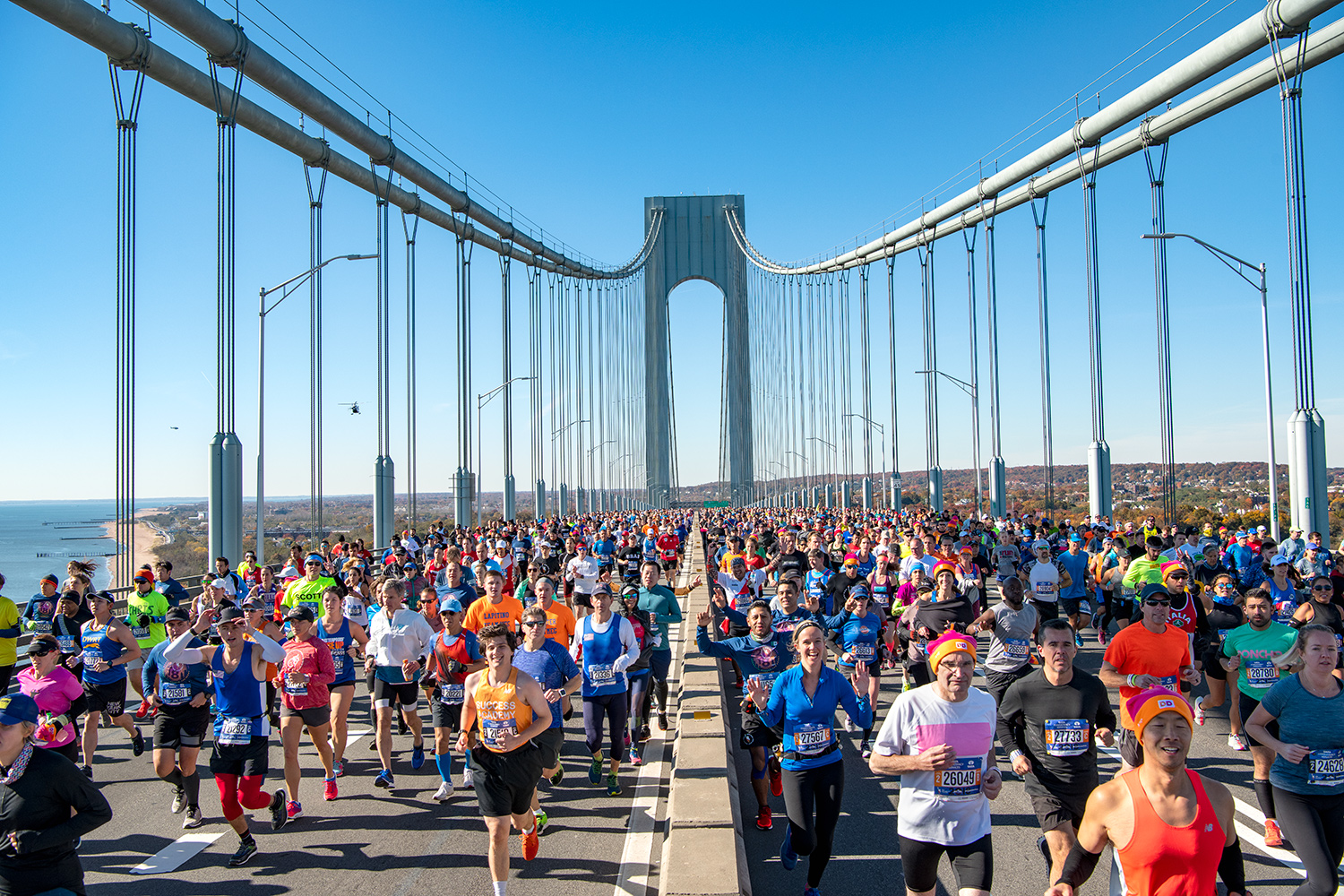
September 13, 1970: The 1st New York City Marathon is held, organized by the New York Road Runners Association. They ran a little over 8 laps around Central Park -- 2.6 miles north-to-south, 110th to 59th Street, and 0.6 miles east-to-west, 5th to 8th Avenue -- adding up to the standard marathon distance of 26 miles, 385 yards, or 26.2 miles.

There were 127 runners that started, and 55 that finished, including Gary Muhrcke, who finished in 2 hours, 31 minutes, 38 seconds. Not among the finishers was Nina Kuscsik, the only woman in the race.

In 1976, the race was expanded to include all 5 Boroughs. Starting at 10:10 AM on the 1st Sunday in November at the Staten Island end of the Verrazzano-Narrows Bridge, with up to 45,000 runners, the race goes up 4th Avenue and Bedford Avenue in Brooklyn. It crosses the Pulaski Bridge into Long Island City, Queens, which is roughly the halfway point.

It goes over the Queensborough Bridge into Manhattan, and goes up the Upper East Side on 1st Avenue. It goes over the Willis Avenue Bridge in The Bronx, then quickly turns around at East 138th Street, and goes back into Manhattan over the Madison Avenue Bridge. It then goes down 5thAvenue, and into Central Park at East 90th Street. It goes through the Park until 59th Street, turns there, and reaches Columbus Circle. Then it goes back into the Park, with the finish line opposite the famed restaurant Tavern on the Green at West 66th Street and Central Park West.

The current record holders are Geoffrey Mutai of Kenya, with the fastest men’s time of 2:05:06, in 2011; and Margaret Okayo, also of Kenya, in 2003, with the fastest women’s time of 2:22:31. The race had been run every year until 2012, when it was canceled in the aftermath of Hurricane Sandy. It was canceled again in 2020, due to the COVID-19 epidemic.

UPDATE: In 2023, Tamirat Tola of Ethiopia set a new record, with 2:04.58.

*

September 13, 1970 was a Sunday. The NFL season began the following weekend. These Major League Baseball games were played:

* The New York Yankees lost to the Cleveland Indians, 3-1 at Cleveland Municipal Stadium. Steve Hargan allowed to hits to Mel Stottlemyre's 5. Future Yankee Graig Nettles and Buddy Bradford hit home runs for the Tribe. The Yankees got only singles from Roy White and Danny Cater. Their run came on Horace Clarke reaching on an error, White's single, and an RBI groundout from Bobby Murcer.

* The New York Mets lost to the St. Louis Cardinals, 5-4 at Shea Stadium. Joe Torre hit a home run in the top of the 13th inning. Nolan Ryan, not yet a star, pitched the 5th inning for the Mets, allowing a run.

* The Montreal Expos beat the Philadelphia Phillies, Jarry Park in Montreal.

* The Baltimore Orioles beat the Boston Red Sox, 13-2 at Memorial Stadium in Baltimore. Frank Robinson did not play, but Brooks Robinson went 2-for-4 with a walk and 2 RBIs. Carl Yastrzemski hit a home run.

* The Washington Senators beat the Detroit Tigers, 10-0 at Tiger Stadium in Detroit. Joe Coleman Jr. pitched a 3-hit shutout. Rick Reichardt went 3-for-4 with a home run and 2 RBIs. Al Kaline went 0-for-4.

* The Chicago Cubs beat the Pittsburgh Pirates, 3-2 at Wrigley Field in Chicago. Ernie Banks went 1-for-3. Roberto Clemente did not play, but Willie Stargell went 1-for-4.

* The Chicago White Sox beat the Minnesota Twins, 8-7 at Metropolitan Stadium in the Minneapolis suburb of Bloomington, Minnesota. Harmon Killebrew went 0-for-3 with 2 walks. Rod Carew did not play.

* The Kansas City Royals swept a doubleheader from the Oakland Athletics at Kansas City Municipal Stadium. Both games went to extra innings, with a score of 8-7. In the 1st game, the A's scored a run in the top of the 11th, but Lou Piniella tripled home 2 runs in the bottom half.

In the 2nd game, the A's scored 7 runs in the 2nd inning, but the Royals tied the game in the 8th, and Ed Kirkpatrick singled Jackie Hernández home in the 12th. Over the 2 games, Reggie Jackson went 6-for-9 with a home run, 2 walks and 3 RBIs.

* The Houston Astros beat the Atlanta Braves, 10-6 at the Astrodome in Houston. Hank Aaron went 0-for-2 with a walk before being replaced.

* The San Diego Padres beat the Cincinnati Reds, 5-4 at San Diego Stadium (later renamed Jack Murphy Stadium and Qualcomm Stadium). Pete Rose with a home run. Johnny Bench went 0-for-3 with a walk.

* The California Angels beat the Milwaukee Brewers, 2-1 at Anaheim Stadium (now Angel Stadium of Anaheim).

* And the Los Angeles Dodgers beat their arch-rivals, the San Francisco Giants, 5-3 at Candlestick Park in San Francisco. The Dodgers scored 4 runs in the top of the 10th, including a home run by former Giants catcher Tom Haller. The Giants scored 2 in the bottom of the 10th, but it wasn't enough.

December 31, 1999 & January 1, 2000: The Millennium

December 31, 1999:  The Millennium arrives. The people of planet Earth survived. At a terrible cost. But we hadn't destroyed ourselves. ...