Showing posts with label los angeles coliseum. Show all posts

Monday, December 26, 2022

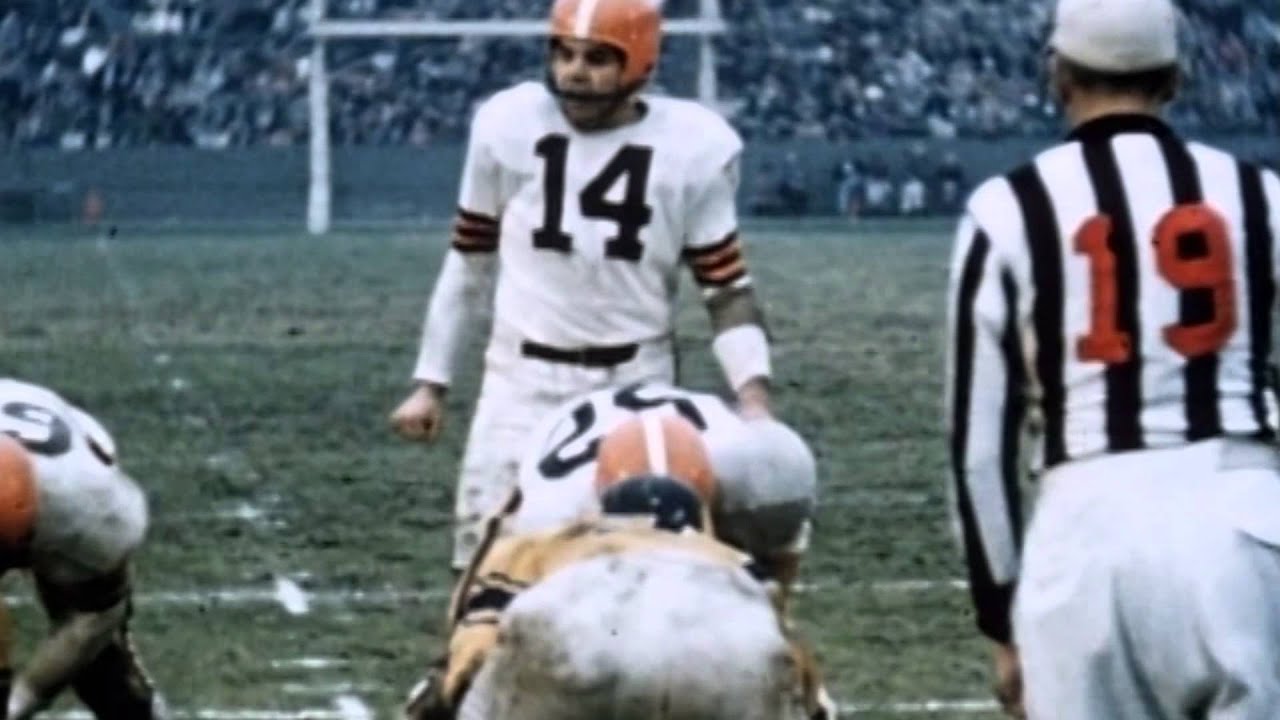
December 26, 1955: Otto Graham Goes Out a Winner

December 26, 1955: The NFL Championship Game is played at the Los Angeles Memorial Coliseum. It was moved up a day, because, that year, December 25 fell on a Sunday, and the NFL refused to play on Christmas Day until 1971.

The Cleveland Browns were playing in a league championship game for the 10th straight year: The 1st 4 in the All-America Football Conference (1946-49), winning all 4 of those; and the last 6 in the NFL, having beaten the Los Angeles Rams in 1950, lost to the Rams in 1951, lost to the Detroit Lions in 1952 and 1953, and beaten the Lions in 1954. Now, they were playing the Rams again.

Quarterback Otto Graham had been there for all of those games. Under head coach Paul Brown, an offensive genius, he had been, in terms of results, the most successful quarterback in pro football history. (Sure, Tom Brady later got teams into 10 championship games under the Super Bowl name, all within the NFL. But Graham did 10 in a row, and matched Brady with 7 wins. And Graham never had to cheat.)

Graham had retired after the 1954 Championship Game, but Brown talked him into returning for 1 more season. He led the Browns to a 9-2-1 record. They opened with a loss to the Washington Redskins, but shrugged it off to beat the San Francisco 49ers away, the Philadelphia Eagles at home, the Redskins away, the Green Bay Packers at home, the Chicago Cardinals away, and the New York Giants at home.

In addition to Graham, the Browns still had receiver Dante Lavelli, center Frank Gatski, tackle and placekicker Lou Groza, and defensive end Len Ford, who would all be elected to the Pro Football Hall of Fame. So would Brown. So would linebacker Chuck Noll, albeit as the later head coach of the Pittsburgh Steelers.

The Browns lost to the Eagles in Philadelphia, then beat the Steelers at home. They could only manage a tie with the Giants in New York, then won away to Pittsburgh, and closed by beating the Cardinals at home.

The Rams were coached by Sid Gillman, whose innovations in the passing game had begun to rival those of Paul Brown. They had finished 8-3-1, with 2 of their losses inflicted by the Chicago Bears. They still finished ahead of the Bears, who went 8-4.

The Rams still had several of the players who beat the Browns in the 1951 title game, including quarterback Norm Van Brocklin and his top 2 receivers, Tom Fears and Elroy "Crazy Legs" Hirsch, all of whom would be elected to the Pro Football Hall of Fame. So would Gillman, and linebacker Les Richter. Running back Paul "Tank" Younger and defensive tackle Gene "Big Daddy" Lipscomb have not yet been elected to the Hall, but should be.

And, this being an odd-numbered year, the Western Division winners would have the home-field advantage. And the Coliseum was the only stadium in the NFL that seated more than the Browns' Cleveland Municipal Stadium, so 87,695 fans came out, supporting the blue and gold, rather than the orange and white.

Groza kicked a 43-yard field goal to give the Browns a 3-0 lead at the end of the 1st quarter. The 2nd quarter featured several big plays, including Don Paul intercepting Van Brocklin, and returning it 65 yards for a touchdown, to make it 10-0 Browns; Van Brocklin throwing a 67-yard touchdown pass to Volney "Skeet" Quinlan, closing the Rams to within 10-7; and Graham throwing a 50-yard touchdown pass to Lavelli, giving the Browns a 17-7 halftime lead.

Graham himself ran the ball in for 2 touchdowns in the 3rd quarter, and the Browns led, 31-7. In the 4th quarter, Graham's last touchdown pass was 35 yards to Ray Renfro. Ron Waller scored from 4 yards out to give the Rams a consolation score, and the Browns won, 38-14.

It was the 7th league championship, the 3rd in the NFL, for Graham and Paul Brown. It would be the last. Graham retired again, and, this time, stuck with it. Brown led the Browns until 1962, before being fired by new owner Art Modell. He later founded the Cincinnati Bengals.

Gillman would further develop his passing ideas, and lea the San Diego Chargers to the 1963 AFL Championship. Bill Walsh, who served as an assistant on the Bengals under Brown, and also under on the Oakland Raiders under Al Davis, who had been an assistant on the Chargers under Gillman, would coach the San Francisco 49ers to 3 Super Bowl wins.

Under the new regime, the Browns won the Championship in 1964 -- and haven't reached a world championship game since. The Rams would fare little better, not reaching another until Super Bowl XIV in the 1979 season, and losing. They moved to St. Louis in 1995, won Super Bowl XXXIV in the 1999 season, lost Super Bowl XXXVI in the 2001 season, moved back to Los Angeles in 2016, and have lost Super Bowl LIII in the 2018 season and won Super Bowl LVI in the 2021 season.

Graham started his professional career wearing Number 60, from 1946 to 1951. From 1952 onward, he wore Number 14. The Browns retired that number, and also named him to their Ring of Honor. He was elected to the Pro Football Hall of Fame in its 3rd class, in 1965.

He later served as head coach and general manager of the Washington Redskins, and as head coach and athletic director at the U.S. Coast Guard Academy. In 1999, he was ranked 7th on The Sporting News' list of the 100 Greatest Football Players, trailing only Joe Montana and Johnny Unitas among quarterbacks. He died in 2003.

In 2010, the NFL Network ranked Graham 16th on its list of the 100 Greatest Players, among quarterbacks trailing only Montana, Unitas, Peyton Manning and the even earlier Sammy Baugh, but not yet Tom Brady. He was named to the NFL's 50th Anniversary Team in 1969, its 75th Anniversary Team in 1994, and its 100th Anniversary Team in 2019. Also in 2019, a statue of Graham was dedicated outside Huntington Bank Field in Cleveland.

*

December 26, 1955 was, as suggested, a Monday. Evan Bayh, who would follow his father Birch Bayh in being elected U.S. Senator from Indiana, was born on this day.

Baseball was out of season. No college football bowl games were played. There were no games scheduled in the NHL. There were 3 games played in the NBA:

* The New York Knicks beat the Philadelphia Warriors, 108-97 at the Philadelphia Civic Center.

* The Rochester Royals beat their arch-rivals, the Syracuse Nationals, 93-91 at the Rochester Community War Memorial (now the Blue Cross Arena) in Rochester, New York.

* And the Fort Wayne Pistons beat the St. Louis Hawks, 83-67 at the Allen County War Memorial Coliseum in Fort Wayne, Indiana.

In Britain, the day after Christmas is Boxing Day, and it's a day for major soccer matches. Arsenal and Birmingham-area team Wolverhampton Wanderers played to a draw, 3-3 at the Arsenal Stadium, a.k.a. Highbury, in North London.

Saturday, December 24, 2022

December 24, 1994: The Rams and Raiders Abandon Los Angeles

December 24, 1994: The Kansas City Chiefs defeat their arch-rivals, the Los Angeles Raiders, 19-9, before 64,130 fans -- a big crowd, but hardly a sellout at the 93,000 seat Los Angeles Memorial Coliseum.

The Coliseum had been the home of the Raiders since moving from Oakland before the 1982 season, and the home of the Los Angels Rams from 1946 to 1979. The Rams had moved 38 miles southeast to Anaheim Stadium (now Angel Stadium of Anaheim). On this same day, they played there, and lost to the Washington Redskins, 24-21. The crowd was 25,705, a pathetically small one for a stadium whose football capacity was 69,000.
Before the next season opened, the Los Angeles metropolitan area dropped from 2 NFL teams to none: Al Davis took the Raiders back to Oakland, and Rams owner Georgia Frontiere took the team to her hometown of St. Louis. The Rams' move also killed the famous Los Angeles-San Francisco rivalry with the 49ers, whose run of success the preceding few years hurt the Rams as much as anything: For about 15 years before it, the Rams had dominated the division that became the NFC West.

It took the Rams a while to get going in St. Louis, building "The Greatest Show on Turf," winning Super Bowl XXXIV, and losing Super Bowl XXXVI, before falling apart again. After the 2015 season, with Stan Kroenke having bought the team from Mrs. Frontiere's estate, the Rams moved back to Los Angeles, playing 4 seasons at the Coliseum before Kroenke's SoFi Stadium was built in Inglewood, on the site of the Hollywood Park racetrack, across from The Forum. The NBA's Los Angeles Clippers have begun building their new arena, the Intuit Dome, on the same campus.

The Raiders' return to Oakland was shaky. They fell victim to the Tuck Rule Game in the 2001 season, then won the 2002 AFC Championship, but lost Super Bowl XXXVII. Al Davis died in 2011, and his son Mark Davis inherited the team. He never liked Oakland, and tried to go back to Los Angeles, before making a deal to move to Las Vegas for the 2020 season.

With the Raiders having balked in their negotiations, it was the San Diego Chargers who moved for the 2017 season, spending 3 season at Dignity Health Sports Park in suburban Carson, California, before moving into SoFi as tenants of the Rams.

*

December 24, 1994 was a Saturday. No college football bowl games were played. Baseball was out of season. The NBA had no games scheduled. And the NHL team owners were locking out the players. So the only games played on the day were in the NFL.

At the time, the NFL preferred not to play games on Christmas Day, even when it fell on a Sunday. That changed the next year. This time, the only game played on Sunday, December 25 was the Miami Dolphins' 27-20 win over the Detroit Lions at Joe Robbie Stadium (now Hard Rock Stadium) in Miami Gardens, Florida, and that was in prime time. The next night, on ABC Monday Night Football, the Minnesota Vikings beat the San Francisco 49ers, 21-14 at the Metrodome in Minneapolis. The rest of the NFL slate, including the 2 L.A. farewells, was played on the afternoon of Saturday, December 24:

* The New York Giants beat the Dallas Cowboys, 15-10 at Giants Stadium in the Meadowlands.

* The Atlanta Falcons beat the Arizona Cardinals, 10-6 at the Georgia Dome in Atlanta.

* The Green Bay Packers beat the Tampa Bay Buccaneers, 34-19 at Tampa Stadium.

* The New Orleans Saints beat the Denver Broncos, 30-28 at the Superdome in New Orleans.

* The New York Jets lost to the Houston Oilers, 24-10 at the Astrodome in Houston.

* The Cleveland Browns beat the Seattle Seahawks, 35-9 at Cleveland Municipal Stadium.

* The Cincinnati Bengals beat the Philadelphia Eagles, 33-30 at Riverfront Stadium in Cincinnati.

* The Indianapolis Colts beat the Buffalo Bills, 10-9 at the RCA Dome in Indianapolis.

* The New England Patriots beat the Chicago Bears, 13-3 at Soldier Field in Chicago.

* And the San Diego Chargers beat the Pittsburgh Steelers, 37-34 at Jack Murphy Stadium in San Diego.

Wednesday, November 30, 2022

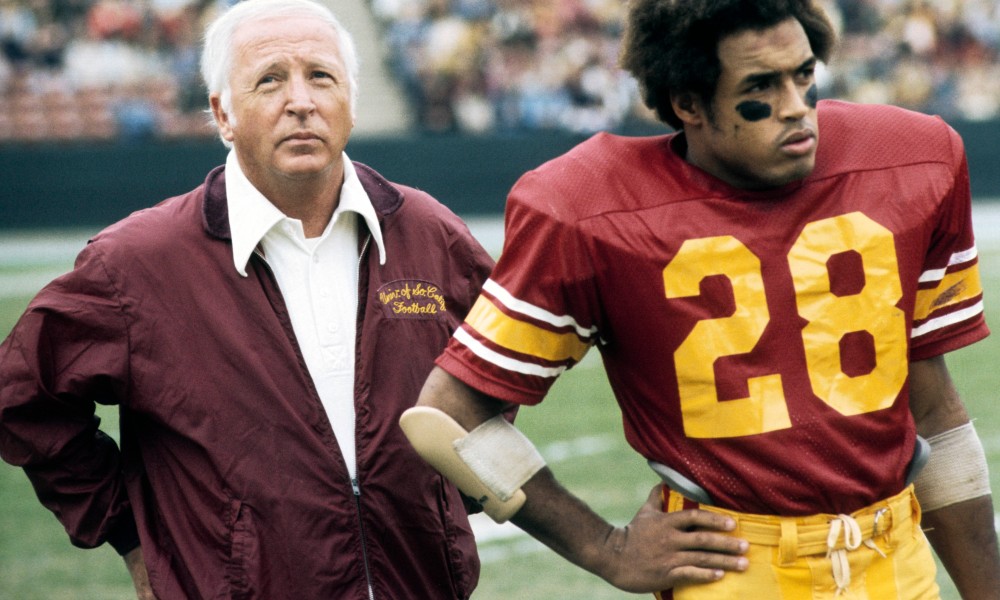
November 30, 1974: The Anthony Davis Game

November 30, 1974: The University of Southern California hosts the University of Notre Dame in football at the Los Angeles Memorial Coliseum.

USC vs. Notre Dame is the biggest inter-sectional rivalry in American college football, and has been since it was established in 1926. No other pair of traditional rivals has as many National Championships, or as many Heisman Trophy winners. Notre Dame has had more 1st-round picks in the NFL Draft than any other school, and USC is 2nd in that regard. And both teams' fans are regarded as insufferable by pretty much everyone who hasn't bought into the schools' respective myths.

In odd-numbered years, the game is played at Notre Dame Stadium in South Bend, Indiana, in mid-to-late October, when the leaves are changing. In even-numbered years, the game is played at the Los Angeles Memorial Coliseum, on the Saturday of Thanksgiving weekend, when it would be too cold to play it in the Midwest.

It had been 10 years since USC had upset Notre Dame to end their National Championship hopes. Since then, Ara Parseghian had led Notre Dame to the National Championship in 1966 and 1973, and John McKay had led USC to it in 1967 and 1972, and were both still in charge.

Notre Dame went into the game at 9-1. Their only loss had been at home to Purdue. Their only ranked opponent was Number 17 University of Pittsburgh, whom they beat at home. Nevertheless, being Notre Dame, they were still the media darlings, and were ranked Number 5.

USC came in at 8-1-1. They lost their opener away to Number 20 Arkansas. But they beat Pitt, who were then ranked Number 8, away. They were held to a tie by the University of California at home. The week before, they beat UCLA to clinch the Pacific-Eight Conference title, and were ranked Number 8 coming in. As usual, ABC broadcast the game nationally.

Notre Dame took a 24-0 lead in the 2nd quarter. In 2021, for a USC-themed website, Trojan linebacker Kevin Bruce wrote:

The entire game was the typical uber-physical and nasty play on the field. Lots of punching, poking, grabbing and chippy-yacking after most plays. It was only the vague deep-down stirring of playing disciplined football just in case we could claw our way back into this game that prevented a fullout bar fight on the field in the first, as had happened several times in the last few years.

USC scored a touchdown before the end of the half, but the extra point was blocked: 24-6. McKay told his team at intermission that they still had a very good chance to win if they just calmed down, focused on scoring on their opening drive of the 2nd half, and executed better on defense.

(McKay liked to use the word "execution." In 1976, he left USC to become the 1st coach of an NFL expansion team, the Tampa Bay Buccaneers. He went from 3 National Championships to an 0-26 start. When asked what he thought of his team's "execution," he said, "I'm for it.")

Bruce again:

I'm delighted to be able to tell you as an eyewitness and active participant what really happened on that magical day in November 1974. This was the day that Sports Illustrated called "17 minutes that shook LA." This was an earthquake that was very selective. Only Notre Dame was damaged by it, which I for one, think is a best practice. The only thing missing was Traveler stomping on that annoying little green leprechaun. 

In the 1961 Rose Parade in Pasadena, a USC events director saw Richard Saukko riding his white horse, Traveler. Saukko was talked into riding his horse around the Coliseum track at USC football games. The tradition has continued. The rider is often called Tommy Trojan, like the famous on-campus statue, but the character does not have an official name. The rider continues to ride a horse named Traveler around the field before every game, after every win, and following every touchdown, although the Coliseum's 1995 renovation has removed the track.

Notre Dame kicked off to start the 2nd half, and Anthony Davis returned the ball 102 yards for a touchdown. He scored twice more, as USC put up 49 points in 16 minutes and 31 seconds of game time, to win going away, 55-24.

Davis later said that, on his last run into the end zone, he saw a nun waving a crucifix at him, saying, "You must be the Devil! Nobody does that to Notre Dame!" Well, Anthony Davis did that to Notre Dame.
John McKay and Anthony Davis

Joe Jares, the Sports Illustrated writer quoted above by Bruce, said that the loss was "the worst disaster for the Irish since the potato famine." This was the final regular season game for Notre Dame's Hall of Fame head coach Ara Parseghian, who announced his retirement after the year. Parseghian was sick over what transpired and reportedly said "he was damn tired" of seeing Traveler running around the track every time USC scored.

USC fans call it "The Comeback." Notre Dame fans call it "That Game," or worse. USC had already clinched the title in the league then known as the Pacific-Eight Conference the week before, beating intra-city rival UCLA.

Davis finished 2nd in the Heisman Trophy voting, to Ohio State running back Archie Griffin. He played in 4 different professional football leagues: The World Football League (WFL), with the Southern California Sun in 1975; the Canadian Football League (CFL), with the Toronto Argonauts in 1976; the NFL, with McKay's Tampa Bay Buccaneers in 1977, the Houston Oilers in 1978, and the Los Angeles Rams, back at the Coliseum and again with Haden as quarterback, later in 1978; and the United States Football League (USFL), with the Los Angeles Express, again at the Coliseum, in 1983.

He later became a successful real estate developer, but, like so many other football players, his head-on collisions led to CTE and brain impairment. As of November 30, 2022, he is still alive.

*

November 30, 1974 was a Saturday. These other notable college football games were played that day:

* Rivalry: Number 1 Oklahoma beat Oklahoma State, 44-13 at Owen Field in Norman. The Sooners won the Big Eight Conference title, and were undefeated at 11-0. However, they were on probation, due to recruiting violations, and were not eligible for the UPI coaches' poll National Championship, or a bowl game appearance, or even a television appearance. Nevertheless, the AP sportswriters' poll awarded them their National Championship.

* Number 16 Baylor beat Rice, 24-3 at Baylor Stadium (later Floyd Casey Stadium) in Waco, Texas. Baylor clinched the Southwest Conference title.

* Rivalry: Navy beat Army, 19-0 at John F. Kennedy Stadium in Philadelphia.

* Rivalry: Boston College beat Holy Cross, 38-6 at Alumni Stadium outside Boston in Chestnut Hill, Massachusetts.

* Rivalry: Georgia Tech beat Georgia, 34-14 at Sanford Stadium in Athens.

* Rivalry: Florida beat Miami, 31-7 at Florida Field in Gainesville.

* Rivalry: Heavily favored Tennessee were held to a tie by Vanderbilt, 21-21 at Dudley Field (now FirstBank Stadium) in Nashville.

* Mississippi (Ole Miss) beat Tulane, 26-10 at Tulane Stadium in New Orleans. This was Tulane's last game at their old stadium. The following season, they moved into the Superdome.

* Louisiana State (LSU) beat Utah, 35-10 at Tiger Stadium in Baton Rouge, Louisiana. I have no idea why this one was set up: It sounds more like a bowl game.

* Rivalry: Arizona beat Arizona State, 10-0 at Arizona Stadium in Tucson.

* And Rutgers lost to Hawaii, 28-16 at Honolulu Stadium. Hawaii played 1 more game there, losing to Arizona State the next week, and opened the new Aloha Stadium the next season.

* The day before, Number 2 Alabama beat Number 7 Auburn, 17-13 at Legion Field in Birmingham. 'Bama won the Southeastern Conference title.

* Also the day before, Number 17 Texas upset Number 8 Texas A&M, 32-3 at Memorial Stadium in Austin.

* And the day before that, Thanksgiving, Number 10 Penn State beat Number 18 Pittsburgh, 31-10 at Three Rivers Stadium in Pittsburgh. Penn State went on to beat Baylor in the Cotton Bowl.

* Number 8 Nebraska were idle, having lost a game, and the Big 8 title, to Oklahoma the week before. They beat Florida in the Sugar Bowl.

* Number 3 Ohio State were idle, having beaten then-Number 2 Michigan for the Big Ten Conference title. USC, with Davis, went on to beat Ohio State, with Griffin, in the Rose Bowl. With Number 1 Oklahoma (through their own fault) and Number 5 Michigan (through a dumb Big 10 rule) both ineligible for a bowl, and Number 2 Alabama and Number 3 Ohio State both losing their bowl games, the latter to Number 5 Ohio State, UPI named USC its National Champion.

Notre Dame went on to beat Alabama in the Orange Bowl. It was Parseghian's last game: He retired, and joined ABC's broadcast crew. Dan Devine succeeded him as head coach. A year after that, McKay left for Tampa Bay, and was succeeded by John Robinson.

Baseball was out of season. There were 6 games in the NBA:

* The New York Knicks beat the Buffalo Braves, 118-111 at Madison Square Garden. Bob McAdoo scored 36 points and grabbed 18 rebounds in defeat for the Braves.

* The Washington Bullets beat the Seattle SuperSonics, 122-90 at the Capital Centre in the Washington suburb of Landover, Maryland.

* The Milwaukee Bucks beat their arch-rivals, the Chicago Bulls, 101-99 in double overtime at the Milwaukee Exposition, Convention Center and Arena, or "The MECCA." Since 2014, it has been named the UW-Panther Arena.

* The Phoenix Suns beat the Houston Rockets, 112-100 at the Arizona Veterans Memorial Coliseum in Phoenix.

* The Golden State Warriors beat their arch-rivals, the Los Angeles Lakers, 128-118 at the Oakland Coliseum Arena. Rick Barry scored 43 points.

* And the Portland Trail Blazers beat the New Orleans Jazz, 117-85 at the Portland Memorial Coliseum.

There were 4 games in the American Basketball Association:

* The Virginia Squires beat the Indiana Pacers, 121-120 at the Hampton Coliseum outside Norfolk in Hampton, Virginia. George McGinnis scored 38 in defeat for the Pacers.

* The Kentucky Colonels beat the San Diego Conquistadors, 109-100 at Freedom Hall in Louisville, Kentucky.

* The Utah Stars beat the San Antonio Spurs, 110-103 at the HemisFair Arena in San Antonio.

* And the Denver Nuggets beat the Spirits of St. Louis, 128-109 at the Denver Auditorium Arena.

There were 7 games in the NHL:

* The New York Islanders lost to the Vancouver Canucks, 3-0 at the Pacific Coliseum in Vancouver.

* The Montreal Canadiens beat the St. Louis Blues, 7-1 at the Montreal Forum.

* The Toronto Maple Leafs beat the Washington Capitals, 7-1 at Maple Leaf Gardens in Toronto.

* The Buffalo Sabres and the Pittsburgh Penguins played to a tie, 5-5 at the Civic Arena in Pittsburgh.

* The Minnesota North Stars beat the Chicago Black Hawks, 5-3 at the Metropolitan Sports Center in the Minneapolis suburb of Bloomington, Minnesota.

* The Detroit Red Wings beat the Kansas City Scouts, 1-0 at the Kemper Arena (now the Hy-Vee Arena) in Kansas City.

* The Los Angeles Kings beat the Boston Bruins, 2-0 at The Forum outside Los Angeles in Inglewood, California.

* And the New York Rangers, the Philadelphia Flyers, the California Golden Seals and the Atlanta Flames were not scheduled.

There were 2 games in the World Hockey Association. The Chicago Cougars beat the Minnesota Fighting Saints, 7-5 at the St. Paul Civic Center in St. Paul, Minnesota. And the Cleveland Crusaders beat the Houston Aeros, 5-4 at the Sam Houston Coliseum in Houston.

And in English soccer, Arsenal beat Yorkshire team Middlesbrough, 2-0 at the Arsenal Stadium, a.k.a. Highbury, in North London.

Monday, November 28, 2022

November 28, 1964: USC Upsets Notre Dame

November 28, 1964: As occasionally happens, the game between the University of Southern California and the University of Notre Dame becomes one of the most important games of the college football season.

USC vs. Notre Dame is the biggest inter-sectional rivalry in American college football, and has been since it was established in 1926. No other pair of traditional rivals has as many National Championships, or as many Heisman Trophy winners. Notre Dame has had more 1st-round picks in the NFL Draft than any other school, and USC is 2nd in that regard. And both teams' fans are regarded as insufferable by pretty much everyone who hasn't bought into the schools' respective myths.

In odd-numbered years, the game is played at Notre Dame Stadium in South Bend, Indiana, in mid-to-late October, when the leaves are changing. In even-numbered years, the game is played at the Los Angeles Memorial Coliseum, on the Saturday of Thanksgiving weekend, when it would be too cold to play it in the Midwest.

In 1964, the Fighting Irish had a new head coach, Ara Parseghian. He had played for Woody Hayes at Miami University of Ohio and Paul Brown with the Cleveland Browns; coached under Hayes at Miami; succeeded him at that job when Hayes was hired at Ohio State, then coached at Northwestern.

In that 1st season, he had quarterback John Huarte, who would win the Heisman Trophy; defensive tackle Alan Page, who would be elected to the Pro Football Hall of Fame; and linebacker Jim Lynch, whose Kansas City Chiefs would beat Page's Minnesota Vikings in Super Bowl IV, 5 years later.

They won their 1st 9 games, most of them easily, although one of them should have been an omen, a visit to the University of Pittsburgh where they came away with only a 17-15 win. And none of their opponents had been nationally ranked. Still, they went into the season finale at USC ranked Number 1.

John McKay was in his 5th season at USC, and had already won a National Championship in 1962. Despite having the next season's Heisman winner, running back Mike Garrett, the Trojans did not have a good season. While Notre Dame had beaten Michigan State, 34-7 at home, USC lost to them, 17-7 away. They also lost to Ohio State in Columbus and the University of Washington at home. That dropped them to 4-3.

Their next game was away to Stanford, whom Notre Dame had beaten at home, 28-6. But the Trojans got on their horses and beat Stanford, 15-10. After a week off, they played arch-rival UCLA, and won, 34-13. It may not have been clear that they were ready to face the Number 1 team in the country. Nevertheless, 83,840 fans plowed into the Los Angeles Memorial Coliseum to watch it.

Sure enough, Notre Dame led 17-0 at the half. But in the 3rd quarter, USC drove down the field, and Garrett scored on a 1-yard run to get on the board. With 4:45 left, Craig Fertig threw a 23-yard touchdown pass to Fred Hill, but the extra point was missed.

But their defense held the Irish, and, with 1:35 to go, Fertig threw a 15-yard pass to Rod Sherman, and USC led, 20-17. Their defense held again, and one of the biggest upsets in recent college football was complete.

Neither team went to a bowl game. Notre Dame bounced back, and won the National Championship in 1966; USC, the year after. McKay would lead USC to another in 1972, while Parseghian led Notre Dame to one the following year. Then came 1974, and another epic game between the teams.

*

November 28, 1964 was a Saturday. This was also the day that "Leader of the Pack" by The Shangri-Las hit Number 1. I have a separate entry for that event.

These other notable college football games were played:

* Rivalry: Army beat Navy, 11-8 at John F. Kennedy Stadium in Philadelphia.

* Rivalry: Boston College beat Holy Cross, 10-8 at Alumni Stadium outside Boston in Chestnut Hill, Massachusetts.

* Rivalry: Georgia beat Georgia Tech, 7-0 at Sanford Stadium in Athens, Georgia.

* Rivalry: Florida beat Miami, 12-10 at Florida Field (now Ben Hill Griffin Stadium) in Gainesville, Florida.

* Rivalry: Vanderbilt beat Tennessee, 7-0 at Dudley Field (now FirstBank Stadium) in Nashville.

* Rivalry: Oklahoma beat Oklahoma State, 21-16 at Lewis Field (now Pickens Stadium) in Stillwater, Oklahoma.

* Rivalry: Texas Christian University (TCU) beat Southern Methodist University (SMU), 17-6 at the Cotton Bowl in Dallas.

* Rivalry: Arizona beat Arizona State, 30-6 at Arizona Stadium in Tucson.

Two days earlier, on Thanksgiving Day:

* Rivalry: Number 2 Alabama beat Auburn, 21-14 at Legion Field in Birmingham, Alabama. 'Bama won the Southeastern Conference title. 

* Rivalry: Number 5 Texas beat Texas A&M, 26-7 at Memorial Stadium in Austin, Texas.

* Idle: Number 3 Arkansas, who had beaten Texas, and won the Southwest Conference title; Number 6 Michigan, who had won the Big Ten Conference title; Number 7 Nebraska, who, despite losing the week before to arch-rival Oklahoma, had won the Big Eight Conference title; Number 8 Louisiana State University (LSU); Number 9 Oregon State, who had won the title in the Athletic Association of Western Universities (AAWU), the league that became the Pacific-Eight (or Pac-8) the next year; Number 10 Ohio State, which had blown the Big 10 title by losing their finale to Michigan; and New Jersey teams Rutgers and Princeton.

And so, at a time when the National Championship was awarded by the Associated Press' sportswriters' poll after the regular season, with Notre Dame's loss, Alabama, coached by Bear Bryant and quarterbacked by Joe Namath, rose to Number 1.

But Texas beat Alabama in the Orange Bowl, and Arkansas beat Nebraska in the Cotton Bowl, to earn a share of the National Championship with Alabama. Michigan beat Oregon State in the Rose Bowl, and LSU beat Syracuse in the Sugar Bowl.

Both the NFL and the AFL played the next day, plus games 2 days earlier, on Thanksgiving. The CFL played its championship game, the Grey Cup, and the BC Lions beat the Hamilton Tiger-Cats, 34-24 at Exhibition Stadium in Toronto. It was the 1st Grey Cup for the Vancouver-based team. I have a separate entry for this event.

Baseball was out of season. There were 4 games in the NBA:

* The New York Knicks beat the St. Louis Hawks, 106-91 at the old Madison Square Garden.

* The Boston Celtics beat the Cincinnati Royals, 129-98 at the Boston Garden.

* The Philadelphia76ers beat the Detroit Pistons, 101-93 at Cobo Hall (now Huntington Place) in Detroit.

* And the San Francisco Warriors beat their arch-rivals, the Los Angeles Lakers, 109-106 at the Civic Auditorium in San Francisco. Just another day at the office for Wilt Chamberlain: 40 points and 30 rebounds.

There were 2 games played in the NHL. The New York Rangers beat the Toronto Maple Leafs, 4-1 at Maple Leaf Gardens in Toronto. The Montreal Canadiens beat the Boston Bruins, 2-1 at the Montreal Forum. The Detroit Red Wings and the Chicago Black Hawks were not scheduled.

And in English soccer, Manchester United beat Arsenal, 3-2 at the Arsenal Stadium, a.k.a. Highbury, in North London.

Thursday, October 6, 2022

October 6, 1923: A Big Day In College Football

Jack Trice

October 6, 1923: It's a big day in college football. The University of Minnesota hosts Iowa State University at Northrop Field in Minneapolis. Iowa State's lone black player, Jack Trice, gets hurt on the 2nd play of the game, breaking his collarbone. He insists he is all right, and stays in the game. But in the 3rd quarter, he tries to tackle a runner, falls, and 3 Minnesota players trample him. He is taken to a hospital, but doctors don't think his life is in danger, and he is released as fit to travel back to Iowa State's campus in Ames. But he has suffered internal bleeding, and dies 2 days later at age 21.

Trice was from the Cleveland area, and in 1979, 56 years after the fact, that city's major paper, The Plain Dealer, investigated his death. A surviving Iowa State teammate, Johnny Behm, said, "One person told me that nothing out of the ordinary happened. But another who saw it said it was murder."

In 1997, Iowa State's home field was named Jack Trice Stadium. It is the only stadium in the NCAA's Football Bowl Subdivision (FBS, formerly known as Division I-A) named for a black person. A statue of him stands outside.
Also on this day, 2 of the classic stadiums of the Big Ten Conference open. Memorial Stadium opens on the campus of the University of Illinois in Champaign. The Fighting Illini beat Nebraska 24-7, and, led by sophomore running back Harold "Red" Grange, go on to win the National Championship.

The stadium's dedication game wouldn't come until the next season, October 18, 1924, when Grange would put on a legendary show in a win over Michigan. The Chicago Bears played their home games at Memorial Stadium in 2002, while the original Soldier Field was torn down and the new one built in its place.
Also on this day, College Field opens on the campus of Michigan State College in East Lansing, but not with a game. The school would be renamed Michigan State University on its Centennial in 1955; the stadium, Macklin Field in 1935, Macklin Stadium in 1948, and Spartan Stadium in 1957. John Macklin was their football coach from 1911 to 1915.

It opened with 14,000 seats. By the time Clarence "Biggie" Munn was coaching the school's 1st great team in the early 1950s, it seated 51,000. When Hugh "Duffy" Daugherty coached its great team of the mid-1960s, it had peaked at 76,000. Today, it seats 75,005. It switched to artificial turf in 1969, and has kept it.
Also on this day, the Los Angeles Memorial Coliseum, which had opened on the preceding May 1, hosts a football game for the 1st time. The University of Southern California hosts Pomona College, and wins, 23-7.

The USC Trojans have used the Coliseum as their home field ever since. Their nearby rivals, the University of California at Los Angeles, played home games there from 1933 to 1981. The UCLA Bruins now play home games at the Rose Bowl in Pasadena, which, due to the Trojans' success, has often seemed like a secondary home field to them.
The Coliseum has also been the leading professional football venue in Southern California. In the NFL, the Los Angeles Rams played there from 1946 to 1979, and again from 2016 to 2019; the Los Angeles Raiders from 1982 to 1994; Super Bowl I in 1967 and Super Bowl VII in 1973; and the postseason Pro Bowl from 1951 to 1972, and again in 1979.

Other pro football teams using the Coliseum: The Los Angeles Dons of the All-America Football Conference from 1946 to 1949, the Los Angeles Chargers of the American Football League in 1960, the Los Angeles Express of the United States Football League from 1983 to 1985, and the Los Angeles Xtreme of the XFL in 2001.

It has hosted the U.S. national soccer team 20 times, starting in 1965; and Mexico's team 61 times. In 1967, the only season of play for the United Soccer Association, it hosted the Los Angeles Wolves, who won that league's title. It also hosted the city's entry in another league starting that season, the Los Angeles Toros of the National Professional Soccer League. After that year, the two leagues merged to form the North American Soccer League, whose Los Angeles Aztecs used the Coliseum as their home field in the 1977 and 1981 seasons.

The Los Angeles Dodgers used the Coliseum as their 1st home field after leaving Brooklyn, while waiting for Dodger Stadium to be built, from 1958 to 1961. Their home games in the 1959 World Series against the Chicago White Sox attracted over 92,000 fans, the highest-attended competitive games in Major League Baseball history. An all-time record crowd for baseball, 115,300, attended a preseason game between the Dodgers and the Boston Red Sox on March 29, 1958, honoring the Dodgers' 50h Anniversary in Los Angeles.

And, of course, the Coliseum was the main venue for the 1932 and 1984 Summer Olympic Games, and will be again in 2028. 

*

October 6, 1923 was a Saturday. These other noteworthy college football games were played:

* Army beat Florida, 20-0 on The Plain in West Point, New York.

* Navy beat Dickinson College, 13-7 at Worden Field in Annapolis, Maryland.

* Maryland beat Pennsylvania, 3-0 at Franklin Field in Philadelphia.

* Notre Dame beat Lombard, 14-0 at Cartier Field in South Bend, Indiana.

* The University of Washington beat Willamette, 54-0 at Husky Stadium in Seattle. They would play Navy in the Rose Bowl, and it would end in a 14-14 tie.

* And in New Jersey, Princeton beat Johns Hopkins, 16-7 at Palmer Stadium in Princeton; and Rutgers beat Villanova, 44-0 at Neilson Field in New Brunswick.

In a regular-season baseball game, Ernie Padgett of the Boston Braves, in only his 2nd major-league appearance, pulled off an unassisted triple play in a doubleheader sweep of the Philadelphia Phillies, at Braves Field in Boston. It is the 1st such play in National League history. The Braves won the opener, 5-4 in 14 innings; and won the nightcap, 4-1 in a game called after 5 innings due to darkness.

Born in Philadelphia in 1899, the infielder would only last 5 seasons in the majors, and died in 1957 in East Orange, Essex County, New Jersey.

* The Brooklyn Robins -- as the Dodgers were known during the managerial tenure of Wilbert Robinson, 1914 to 1931 -- beat their arch-rivals, the New York Giants, 4-3 at Ebbets Field. Jack Fournier's grounder into a fielder's choice got Gene Bailey home with the winning run in the bottom of the 10th inning.

* The New York Yankees beat the Philadelphia Athletics, 3-1 at Yankee Stadium. Babe Ruth went 3-for-4 with an RBI, but no home run.

* The Chicago White Sox swept a doubleheader from the Cleveland Indians, 6-3 and 7-6 at League Park in Cleveland.

* The Pittsburgh Pirates beat the Cincinnati Reds, 7-1 at Redland Field (later Crosley Field) in Cincinnati.

* The Detroit Tigers beat the St. Louis Browns, 12-3 at Navin Field (later Briggs Stadium and Tiger Stadium) in Detroit. Ty Cobb, by this point the player-manager of the Tigers, went 1-for-3 with 2 walks and 2 RBIs. George Sisler did not play for the Browns.

* And the St. Louis Cardinals beat the Chicago Cubs, 5-2 at Sportsman's Park in St. Louis.

Thursday, September 29, 2022

September 29, 1959: The 1st Western Pennant

September 29, 1959: Game 2 of the National League Playoff, at the Los Angeles Memorial Coliseum. Only 36,528 fans come out to the 93,000-seat bowl on the edge of South Central, by the campus of the University of Southern California. The Milwaukee Braves, winners of the last 2 Pennants, and the Los Angeles Dodgers finished in a tie, with the San Francisco Giants 3 games behind them. The Dodgers won Game 1, 3-2 in Milwaukee.

Like in 1946, but not in 1951, the Dodgers made sure the Playoff series didn't go to a Game 3. Unlike both of those times, it ended in their favor. They scored 3 runs in the bottom of the 9th to send the game to extra innings. With 2 outs in the 12th, 1st baseman Gil Hodges drew a walk, catcher Joe Pignatano singled, and right fielder Carl Furillo singled home Hodges with the Pennant-winning run, 6-5.

The Dodgers had won the 1st Pennant by any team west of St. Louis. The City of Milwaukee has had just 1 Pennant winner in the 63 years since, the 1982 Brewers; and the Braves wouldn't win another Pennant for 32 years, and by that point they were in their 26th season in Atlanta.

This '59 Pennant, and the subsequent World Series win, for the Los Angeles edition of the Dodgers must have felt like a gut-punch for the fans the team left behind in Brooklyn. Especially since some of their Brooklyn heroes were still there: Hodges, Furillo, center fielder Duke Snider, 2nd baseman Jim Gilliam, left fielder Sandy Amoros, and pitchers Carl Erskine, Clem Labine and Johnny Podres. Former Captain Harold "Pee Wee" Reese and former manager Charlie Dressen were on manager Walter Alston's coaching staff. (Sandy Koufax and Don Drysdale were already on the team before the move, but they hadn't yet become heroes when the team left Brooklyn.)

*

September 29, 1959 was a Tuesday. This was also the day the Long Island Expressway opened. I have a separate entry for this event. The LIE (the acronym is fitting) was designed to serve the massive growth of suburbs on Long Island that the post-World War II housing boom created. That boom was one of the factors in the Dodgers leaving Brooklyn.

Football was in midweek. And it was too soon for the NBA and NHL seasons. So there were no other scores on this historic day.

September 29, 1946: The Rams Debut & Desegregate the NFL

Kenny Washington

September 29, 1946: The Rams, who played in Cleveland from 1936 to 1945, play their 1st home game in Los Angeles, making them the city's 1st real major league sports team. (Previous pro football teams had "Los Angeles" as their name, but their leagues could hardly be called "major.") The defending NFL Champions lose to the Philadelphia Eagles, 25-14.

This game is even more significant than the city's debut on the major league stage, because it is the NFL debut for halfback Kenny Washington and end Woody Strode, both of whom had played for UCLA at the Rams' new home, the Los Angeles Memorial Coliseum. They became the 1st black players in the NFL in 13 years, ending the color bar.
Woody Strode

Marion Motley and Bill Willis of the Cleveland Browns were doing the same in the All-America Football Conference that Autumn, so pro football had "four Jackie Robinsons," a few months before baseball had one. (Robinson had also played football at UCLA, and ran in the same backfield as Washington in 1939 and '40. In between UCLA and the Rams, Washington had played for the Hollywood Bears of the Pacific Coast Professional Football League.)

Washington played 3 seasons in the NFL before knee injuries forced him to retire at age 30. He worked for the Los Angeles Police Department, and when the Dodgers moved to Los Angeles in 1958, he became a scout for them. His son Kenny Jr. played in their farm system. But Kenny Sr. battled ill health, and died in 1971, only 52 years old. He was elected to the College Football Hall of Fame, UCLA retired his Number 13, the Los Angeles Memorial Coliseum Commission inducted him into the stadium's Court of Honor.

Strode only played the one season with the Rams, then went to Canada, helping the Calgary Stampeders win their 1st Grey Cup in 1948. He became a professional wrestler and an actor, notable for his role as the Ethiopian gladiator Draba in the 1960 film Spartacus. He seemed to specialize in Westerns, and his last role, filmed just prior to his death in 1994, showed him as an old man watching Sharon Stone walk into town in The Quick and the Dead.

Motley and Willis, both Ohio natives, helped the Browns dominate the AAFC winning its title all 4 years, before coming into the NFL and winning their title in 1950, beating the Rams in a classic NFL Championship Game. (By that point, both Washington and Strode were out of football.) Motley, who had played at the University of Nevada, where his Number 41 was retired, remained with the Browns until 1953, and last played with the Pittsburgh Steelers in 1955. With the Browns, he wore 76 and then 36. He was frustrated by his attempts to gain a coaching job, and worked in various capacities.
Marion Motley

Willis had his Number 99 retired by Ohio State, whom he'd helped win the 1942 National Championship. He was elected to the College Football Hall of Fame. He also remained with the Browns through 1953, usually wearing Number 30. He worked with the City of Cleveland Department of Recreation.
Bill Willis

He and Motley were both elected to the Pro Football Hall of Fame. Paul Zimmerman, the Sports Illustrated pro football expert known as Dr. Z, called Motley the greatest player he'd ever seen. Motley died in 1999. Willis, the last survivor of the 4, lived until 2007.

Canadian professional football also integrated in 1946 -- but might have done so earlier. It has been suggested that Robert "Stonewall" Jackson, a player for the Regina Roughriders (now the Saskatchewan Roughriders) in 1930, was black. But he may have been passing as white.

The first player to be signed by a Canadian football team that knew he was black was Herb Trawick, with the 1946 Montreal Alouettes. He was a two-way lineman from Pittsburgh, who attended what's now named Kentucky State University, an HBCU in the State capital of Frankfort.
Herb Trawick

He played 12 seasons with the Als, made 7 CFL All-Star teams, helped them win the Grey Cup in 1949, had his Number 56 retired and was elected to the Canadian Football Hall of Fame. He lived until 1985.

*

September 29, 1946 was a Sunday. In the NFL, in addition to the Rams losing to the Eagles:

* The Washington Redskins and the Pittsburgh Steelers played to a tie, 14-14 at Griffith Stadium in Washington.

* The Chicago Bears beat the Green Bay Packers, 30-7 at Green Bay City Stadium, the predecessor to Lambeau Field.

(The following day, the Chicago Cardinals beat the Detroit Lions, 34-14 at Comiskey Park in Chicago. The day after that, the New York Giants beat a team named, believe it or not, the Boston Yanks, 17-0 at Braves Field in Boston.)

In baseball:

* The New York Yankees closed out a lackluster regular season with the sweep of a doubleheader from the Philadelphia Athletics, 6-0 and 2-1 at Shibe Park. Joe DiMaggio goes 1-for-7 across the 2 games.

These were the last games for Ed Barrow as general manager: Every bit as unhappy as recently resigned manager Joe McCarthy was with the new ownership of Del Webb, Dan Topping and Larry MacPhail, he resigned as GM on December 31.

Other MLB scores on this day:

* The Brooklyn Dodgers lose to the Boston Braves, 4-0 at Ebbets Field. Mort Cooper pitches a 4-hit shutout.

* The Chicago Cubs beat the St. Louis Cardinals, 8-3 at Sportsman's Park in St. Louis. This Cardinal loss, combined with the Dodgers' loss, forces the 1st-ever official Playoff for either major league's Pennant. The Cardinals will sweep the best-2-out-of-3 series.

* The New York Giants beat the Philadelphia Phillies, 3-1 at the Polo Grounds.

* The Washington Senators beat the Boston Red Sox, 7-0 at Fenway Park in Boston. Ray Scarborough allowed 7 hits, including a single by Ted Williams, but kept the shutout. Nevertheless, the Sox had run away with the American League Pennant, and faced the Cardinals in the World Series.

* The Cincinnati Reds swept a doubleheader from the Pittsburgh Pirates, at Crosley Field in Cincinnati. The Reds won the opener 1-0, as Johnny Vander Meer pitches a shutout, but, unlike those famed back-to-back games in 1938, it is not also a no-hitter: He allows 6 hits. The Reds won the nightcap 3-2.

* The Cleveland Indians beat the Detroit Tigers, 4-1 at Briggs Stadium in Detroit. (It was renamed Tiger Stadium in 1961.)

* And the St. Louis Browns beat the Chicago White Sox, 8-7 at Comiskey Park in Chicago.

Thursday, September 22, 2022

September 22, 1948: Horns On the Helmet

Fred Gehrke with an original Rams helmet

September 22, 1948: The Los Angeles Rams beat the Detroit Lions, 44-7 at the Los Angeles Memorial Coliseum. The Rams take the field wearing blue leather helmets with yellow ram horns. Tom Fears has an offensive touchdown, catching a pass from Bob Waterfield; and a "defensive touchdown," returning an interception for a touchdown.

Fred Gehrke was a back, both offensive and defensive, for the Rams. They were the 4th different professional football team he had played for in Los Angeles alone: He had also played for the Pacific Coast Professional Football League's Hollywood Bears in 1942 and Los Angeles Bulldogs in 1943, and the Los Angeles Wildcats of a failed American Football League in 1944.

Having suffered a knee injury at the University of Utah, he was classified 4-F, and was able to play through World War II, including helping the Rams, in their last season in Cleveland before moving to Los Angeles, win the 1945 NFL Championship.

He was also a graphic artist, and contributed to the war effort by designing planes for Northrop Grumman. During the team's 1948 preseason training camp, he presented his horned helmet design to Rams owner Dan Reeves. He liked the idea, and contacted the NFL to see if it was legal. Commissioner Bert Bell told him, "You're the owner. Do what you want." Reeves paid Gehrke a dollar a helmet to paint 75 helmets. Quarterback Waterfield, the team's highest-profile player, loved it, and that was that.

The Rams went 6-5-1 that season, then switched to a plastic helmet that incorporated Gehrke's design, and won the NFL Western Division title the next 3 years, winning the NFL Championship in 1951. By that point, Gehrke was no longer with the team. But their bright yellow jerseys and horned helmets made them the most distinctive team in the League.

It took some time for the rest of the NFL to catch up. In 1954, the Philadelphia Eagles put silver wings on their green helmets, and the Baltimore Colts put a pair of horseshoes on the back of their helmet. The following season, the Colts switched to a single horseshoe on each side.

In 1959, the Washington Redskins had a pair of feathers going up the back of their helmets, replacing it with an arrow on each side in 1964, an "R" monogram on a yellow helmet in 1971, and the more familiar Indian Head on a red helmet in 1972, finally replaced with a "W" for "Washington" when the "Redskins" name was dropped in 2020, eventually for "Commanders" in 2022. In 1960, the Dallas Cowboys debuted with stars on their helmets.

The 1961 season made the difference: The New York Giants adopted the lower-case "ny," the Chicago Bears took on the "wishbone C," the Green Bay Packers began using the "G" monogram, the San Francisco 49ers used the "SF" monogram, the Detroit Lions began using a charging lion, the football version of the St. Louis Cardinals took on the bird-head logo, and the Minnesota Vikings began play with the horned helmets that people incorrectly associate with the medieval Vikings.

In 1962, the Pittsburgh Steelers adopted the "Steelmark" logo, but put it only on the right side of their helmets, just in case it proved unpopular. It proved very popular, but, to this day, they still keep it only on the right side. The Cleveland Browns have never adopted a helmet logo, only briefly using uniform numbers on the side.

Gehrke later became the general manager of the Denver Broncos, building the team that won the 1977 AFC Championship. He died in 2002, at the age of 83.

*

September 22, 1948 was a Wednesday. The NFL would not play another Wednesday night regular-season game until 2012. And the rival All-American Football Conference also did not schedule any games for that day.

Basketball and hockey were out of season. These baseball games were played that day:

* The New York Yankees beat the Chicago White Sox, 7-2 at Comiskey Park in Chicago. Tommy Byrne went the distance for the win. Joe DiMaggio and Yogi Berra each went 1-for-5 with an RBI.

* The New York Giants were swept by the Chicago Cubs, 3-2 and 11-7 at the Polo Grounds.

* The Brooklyn Dodgers lost to the Pittsburgh Pirates, 5-1 at Ebbets Field. Jackie Robinson went 0-for-3, but drew a walk.

* The St. Louis Cardinals beat the Boston Braves, 8-2 at Braves Field in Boston. Stan Musial went 5-for-5 with a home run and 2 RBIs.

* The Cincinnati Reds beat the Philadelphia Phillies, 4-3 at Shibe Park in Philadelphia.

* The Cleveland Indians beat the Boston Red Sox, 5-2 at Cleveland Municipal Stadium. Bob Feller went the distance for the win. Ken Keltner went 3-for-4 with a home run and 2 RBIs. Ted Williams went 0-for-4. The Indians would beat the Red Sox in a 1-game Playoff for the American League Pennant 12 days later.

* The Detroit Tigers beat the Philadelphia Athletics, 5-1 at Briggs Stadium (later Tiger Stadium) in Detroit.

* And the Washington Senators beat the St. Louis Browns, 5-4 at Sportsman's Park in St. Louis. Cliché Alert: Walks can kill you. Three walks in the top of the 10th inning, including by Sherry Robertson to force Sammy Meeks home, gave the Senators the win.

Also, Mark Phillips, the British Army officer who was the 1st husband of Princess Anne, daughter of Queen Elizabeth II, was born on this day.


September 22, 1944: Disney's Dewey Rally at the L.A. Coliseum

Walt Disney

September 22, 1944: A rally for Governor Thomas E. Dewey of New York, the Republican Party's nominee for President, is held at the Los Angeles Memorial Coliseum. It is organized by Walt Disney, head of America's leading cartoon studio.

Disney had been a supporter of Franklin D. Roosevelt and the Democratic Party in the 1932 and 1936 elections. But in 1940, he became a Republican. In 1944, despite World War II being waged and America and its allies appearing to be doing well, Disney supported Dewey, contributing heavily to his campaign.
Disney was approached by film producer and director Cecil B. DeMille and actor Lionel Barrymore, both dedicated conservatives, to help them organize a rally for Dewey at the Coliseum, designed to make it look like Dewey was popular in Los Angeles, then the 5th-largest city in the country and easily the largest in the American West (with 1.5 million people, then trailing New York, Chicago, Philadelphia and Detroit), and in California overall, then the 5th-largest State and just ahead of Texas as the largest in the West (with 6.9 million, then trailing New York, Pennsylvania, Illinois and Ohio).

Disney agreed, and, with his contacts, he got some of the biggest names in Hollywood to agree to come. A crowd of 93,427 attended. Admission to the rally was free, but, in 2018, a ticket to it was auctioned off at $50.

The whole thing looked like a Hollywood premiere, with floodlights, a giant flag, the Olympic torch being lit, and big signs featuring the names of Dewey and his Vice Presidential nominee, Governor John Bricker of Ohio. (There was a rhyming slogan, which seems ridiculous in hindsight: "Win the war quicker with Dewey and Bricker.")
The spectators heard speeches by Dewey, and Disney; producer David O. Selznick; and these actors, in alphabetical order: Don Ameche, George Burns and his wife Gracie Allen, Gary Cooper, Irene Dunne, Clark Gable, Cary Grant, Fred MacMurray, Raymond Massey, Adolphe Menjou, Ray Milland, George Murphy, Mary Pickford, William Powell, Ginger Rogers and Barbara Stanwyck. Not speaking, but also attending, were directors Howard Hawks, Preston Sturges and King Vidor; and actors Wallace Beery, William Bendix, Janet Blair, Lillian Gish, Jeannette MacDonald and Joel McCrea.

Mary Pickford was a legend of the silent film era, but neither her ex-husband and partner in founding United Artists, Douglas Fairbanks, nor her stepson, Douglas Fairbanks Jr., was at this rally. Douglas Sr. had died in 1939, and Douglas Jr. remained a devoted Democrat throughout his long life. Lillian Gish was another silent film legend, as was her sister, Dorothy Gish, who was not at the rally, although she was also a Republican. (Lillian did admit to voting for FDR in 1936.)

George Murphy, better known as a dancer, was elected a U.S. Senator from California in 1964, but lost his bid for re-election in 1970. William Powell was famous for starring in the Thin Man movies with Myrna Loy, but Loy wasn't there: She was a Democrat. Ginger Rogers was famous for her dance routines with Fred Astaire, but Astaire wasn't there, although he was a lifelong Republican. Jeannette MacDonald was famous for her musical films with Nelson Eddy, but Eddy wasn't there, although he was a Republican.

Also notably not attending, despite being devout Republicans, were Bob Hope and Bing Crosby, who had already starred together in 3 "Road to... " movies since 1940, and would do 4 more.

It was not notable at the time, but is in hindsight, that Ronald Reagan was not there: While he had been appearing in movies since 1937, and was a genuine star from 1940 onward, he didn't being to turn from left to right until 1947, and didn’t switch his party registration from Democratic to Republican until 1962. He was in the U.S. Army Air Force at this point, but was based just outside Hollywood in Culver City, so if he had wanted to attend, he just would have needed to get a pass from his commanding officer.

People born after 1960, who know Reagan as a Republican icon and Hollywood as "liberal," would be shocked to know about this rally. In that year's campaign, FDR got huge crowds to see his motorcades, but in stadiums, he got no crowd bigger than the 40,000 who squeezed themselves into Fenway Park in Boston the weekend before the election.

Did the Coliseum rally for Dewey work? Not by a long shot: FDR won the election, taking 36 States for 432 Electoral Votes, to Dewey's 99 from 12 States. FDR got 55.9 percent of the popular vote nationally, 56.5 percent in the State of California, and 56.7 percent in the County of Los Angeles. Dewey won just 12 of the State's 58 Counties, including only 3 in the South: Orange, Riverside and Imperial. San Diego County, then as now home to a major naval base, has usually voted Republican. At the time, the sailors stationed there must have voted for their Commander-in-Chief.

I can find no reference to any supporter of FDR and the Democrats telling Walt Disney, or any of the people at the rally, "Stick to show business, leave politics out of it." When conservatives say that to liberals today, I remind them that nobody ever says, "Stick to (whatever you do), leave politics out of it" when they agree with your politics.

One more thing: At this point, the Republicans were getting most of the attention in the campaign. Rather than hitting the trail, FDR was staying close to home, and doing his job as head of government and commander-in-chief, and many Democratic activists were telling him to do something. They were not aware of the state of his health, and didn't seem to care that there was a war on.

The night after the Coliseum rally, he had a speech nationally broadcast from a union dinner in Washington, and showed Hollywood what a real showman was, invoking "my little dog, Fala!"

*

September 22, 1944 was a Friday. These baseball games were played that day:

* The New York Yankees beat the Cleveland Indians, 7-3 at Cleveland Municipal Stadium.

* The New York Giants lost to the Chicago Cubs, 8-1 at the Polo Grounds. Giant manager Mel Ott, still playing, did not put himself into the game.

* The Boston Braves beat the St. Louis Cardinals, 11-2 at Braves Field in Boston. Stan Musial went 1-for-4.

* The Detroit Tigers swept a doubleheader from the Boston Red Sox, 7-4 and 8-6 at Briggs Stadium in Detroit. (It was renamed Tiger Stadium in 1961.)

* The St. Louis Browns beat the Philadelphia Athletics, 4-2 at Sportsman's Park in St. Louis.

* The Chicago White Sox and the Washington Senators were rained out at Comiskey Park in Chicago. It was made up as part of a doubleheader 2 days later. The White Sox swept, 9-3 and 2-0, with future Yankee Eddie Lopat pitching a 6-hit shutout in the nightcap.

* And the game scheduled for this day between the Brooklyn Dodgers and the Pittsburgh Pirates at Ebbets Field was moved up, so that they played a doubleheader the day before. The Pirates swept, 10-4 and 14-6.

Thursday, August 11, 2022

August 11, 1984: Zola Budd vs. Mary Decker

Decker at center, Budd to the left

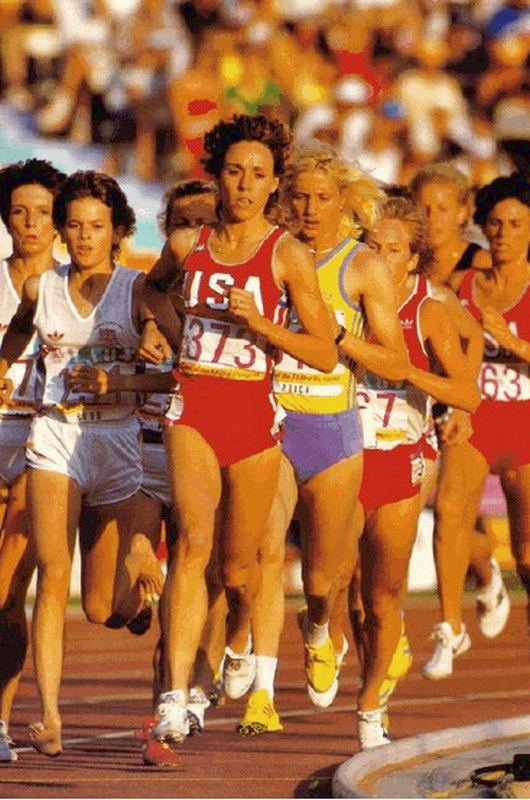
August 11, 1984: One of the most anticipated matchups of the 1984 Olympic Games takes place at the Los Angeles Memorial Coliseum. The result is one that no one could have anticipated.

Mary Decker, a 26-year-old native of the suburbs of L.A., had been one of the top middle-distance runners in the world, winning a Gold Medal in the 1979 Pan American Games. Unable to compete in the 1980 Olympics in Moscow because of the U.S. boycott, she just kept going.

At the 1983 World Championships of Track & Field, she won Gold in both the 1,500 meters and the 3,000 meters. Sports Illustrated named her its Sportswoman of the Year -- before the adoption of the title "Sportsperson," this meant that she was named ahead of all male athletes as well -- and, with the Olympics coming to America the next year, she was considered a favorite to win Gold.
And yet, there was an unexpected foreshadowing on that cover.
The Dreaded SI Cover Jinx?

Zola Budd was only 18. Early in 1984, she set the women's world record in the 5,000 meters. But it was not accepted as a world record by the IAAF, the world governing body for track & field, because she was from South Africa, which had been excluded from various sports competitions due to its apartheid government. And she would be excluded from the Olympics as well.

That wasn't Budd's fault, but, due to her grandfather being a British citizen, the International Olympic Committee's rules allowed her to apply for British citizenship and compete for Great Britain in Los Angeles. She did, and this angered many people.

It shouldn't have: She wasn't breaking any rules by doing this. Instead, she was a victim of the rules, who was now using the rules to allow herself to compete. Not to guarantee victory, but just to be allowed to compete. After all, she was, thus far, too young to have even voted in a South African election, so she had nothing to do with their evil racist government.

There was also an element of weirdness in that she competed barefoot. At the time, this was legal, but has since been banned. Imagine, in 1984, the year that Nike first began offering huge sneaker contracts, competing in the Olympic Games, and its preparatory events, without even wearing shoes! But she did, including setting an officially-recognized world record in the 2,000 meters. As the renowned British sportscaster David Coleman put it, "The message will now be flashed around the world: Zola Budd is no myth."

Decker and Budd were entered into one race together, the 3,000 meters. Decker had specialized in shorter distances, Budd in longer ones. Decker led early, but after the 1,500-meter mark, Budd took the lead. Running as a group was an unusual situation for both of them, as they were each used to running in front and well ahead of other competitors.

At 1,700 meters, the first collision occurred. Decker came into contact with one of Budd's legs, knocking Budd slightly off balance. However, both women maintained their close position. Five strides on, at the race time of 4:58, Budd and Decker again made contact, with Budd's left foot brushing Decker's thigh, causing Budd to lose her balance, and sending her into Decker's path.

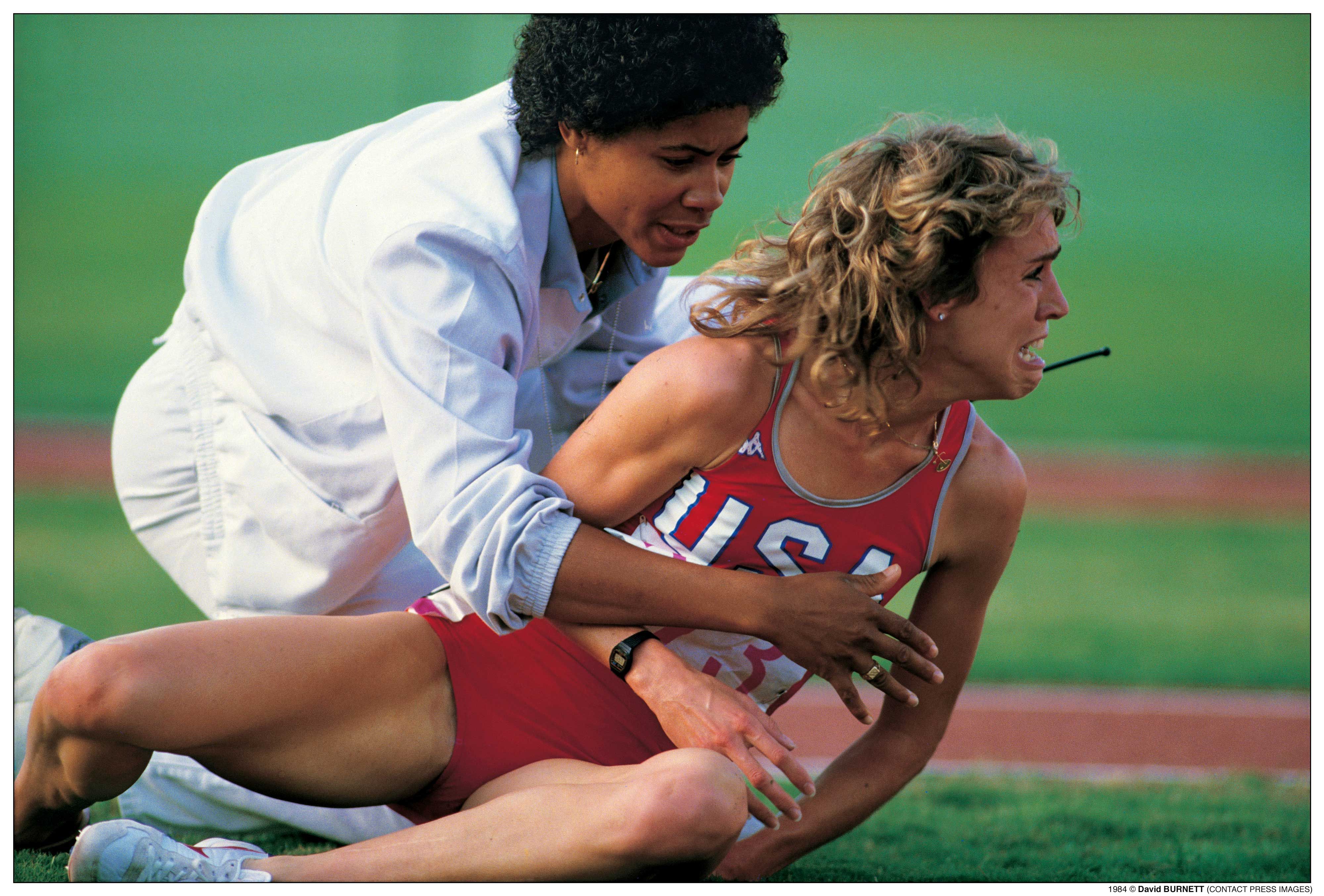
Decker's spiked running shoe came down hard into Budd's ankle, just above the heel, drawing blood. Videotapes later examined by Olympic officials showed Budd visibly in pain. However, she maintained equilibrium and kept stride.

Decker did not: She fell to the curb, injuring her hip. The fall ended her race, and she was carried off the track in tears by her boyfriend and later, husband, British discus thrower Richard Slaney.
Budd, deeply affected by the occurrence, continued to lead for a while, but faded, finishing 7th. Her finishing time of 8:48 was well outside her best of 8:37. The race was won by of Maricica Puică of Romania, who also won a Bronze Medal in the 1,500 meters. Wendy Sly of Britain won the Silver Medal, and Lynn Williams of Canada won the Bronze Medal.

Budd tried to apologize to Decker in the tunnel after the race, but Decker was upset, and replied, "Don’t bother!" She was now unable to compete in any other races.

Having married Slaney, Decker gave birth to a daughter in 1986, and missed the 1987 World Championships due to injury. She ran in the 1,500 and 3,000 meters in the 1988 Olympics in Seoul, Korea, but was past her prime, and wasn't close. She retired without ever winning an Olympic Medal.

Budd returned to South Africa in 1989, and, with its eligibility restored after the release of Nelson Mandela the next year, was able to represent her home country at the 1992 Olympics in Barcelona. (Unlike soccer, for most of FIFA's history, anyway, there is no rule against competing for 2 different countries in the Olympics.) But she never won an Olympic Medal, either. She married and had 3 children.

In 2016, Decker and Budd reunited, and collaborated on a documentary about the event, The Fall. "Looking back on it now, I see it as an unlucky accident," Decker said. She also apologized to Budd for shunning her in the tunnel and after the race, and in a separate interview she said, "I was hurting, both physically and emotionally."

Budd is now coaching at her local university, and still runs long distance. She and Decker got along well when making the documentary and, as well as still sharing a passion for running, they discovered their respective husbands share a birthday.

Budd (left) and Decker, 2016

"Looking back at both our lives," she said, "neither of us had a fair chance of achieving what we really wanted to. Both of us were victims of something that was beyond our control."

*

August 11, 1984 was a Saturday. This was also the day that President Ronald Reagan told a joke about starting a nuclear war with the Soviet Union. I have a separate entry for that event.

These Major League Baseball games were played that day:

* The New York Yankees beat the Cleveland Indians, 10-1 at Cleveland Municipal Stadium. Mike Pagliarulo and Don Mattingly hit home runs in support of Phil Niekro.

* The New York Mets beat the Pittsburgh Pirates, 3-1 at Shea Stadium. George Foster hit a home run, and Rookie of the Year-in-waiting Dwight Gooden struck out 10 batters.

* The Chicago Cubs beat the Montreal Expos, 2-1 at the Olympic Stadium in Montreal. Pete Rose was available for the Expos, but did not play. Five days later, he was traded to the Reds, and named their manager, and his chase for 4,192 career hits was back on.

* The Philadelphia Phillies beat the St. Louis Cardinals, 6-1 at Veterans Stadium in Philadelphia. Steve Carlton was the winning pitcher. Mike Schmidt was 0-for-3, but had an RBI on a sacrifice fly.

* The San Diego Padres beat the Atlanta Braves, 4-1 at Atlanta-Fulton County Stadium. Graig Nettles hit a home run, and Tony Gwynn went 1-for-4.

* The Toronto Blue Jays beat the Baltimore Orioles, 3-2 at Exhibition Stadium in Toronto. Eddie Murray went 2-for-3, and Cal Ripken went 3-for-4 with an RBI.

* The Houston Astros beat the Cincinnati Reds, 8-4 at Riverfront Stadium in Cincinnati. 

* The Milwaukee Brewers beat the Chicago White Sox, 10-5 at Comiskey Park in Chicago. Robin Yount went 1-for-4, and Paul Molitor was injured and did not play.

* The Detroit Tigers beat the Kansas City Royals, 9-5 at Royals Stadium (now Kauffman Stadium) in Kansas City. George Brett went 2-for-4 with a solo home run.

* The Boston Red Sox beat the Texas Rangers, 5-4 at Arlington Stadium in the Dallas suburb of Arlington, Texas. Wade Boggs went 2-for-5 with an RBI.

* The Oakland Athletics beat the California Angels, 3-2 at Anaheim Stadium (now Angel Stadium of Anaheim). An error by Daryl Sconiers on a Mike Davis grounder gave the A's the winning run in the top of the 10th inning. Neither Reggie Jackson nor Rod Carew entered the game for the Angels. Rickey Henderson went 3-for-6 for the A's.

* The Los Angeles Dodgers beat their arch-rivals, the San Francisco Giants, 4-2 at Candlestick Park in San Francisco.

* And the Seattle Mariners beat the Minnesota Twins, 5-4 at the Kingdome in Seattle. Al Cowens singled home the winning run in the bottom of the 10th.

One other item from baseball: Dominican slugger Melky Cabrera was born on this day. 

December 31, 1999 & January 1, 2000: The Millennium

December 31, 1999:  The Millennium arrives. The people of planet Earth survived. At a terrible cost. But we hadn't destroyed ourselves. ...