Showing posts with label paul mccartney. Show all posts

Monday, December 12, 2022

December 12, 2012: The 12-12-12 Concert for Hurricane Sandy Relief

Billy Joel

December 12, 2012: When terrorists struck New York City on September 11, 2001, people from all over the world chipped in to help, and a tribute concert to the victims and the rescue workers was held at Madison Square Garden. When Hurricane Katrina wrecked New Orleans on August 29, 2005, a fundraising concert was held at The Garden. When Hurricane Sandy pounded New York and New Jersey on October 29, 2012, a fundraising concert at MSG was inevitable.

As with the Concert for New York City in 2001, there were non-singing celebrities on hand. Returning from that show were host Billy Crystal, Susan Sarandon, Adam Sandler, Paul Shaffer and Jimmy Fallon. Among the musical performers who had also been at the CFNYC were Paul McCartney, Mick Jagger and Keith Richards (who brought the rest of the current Rolling Stones lineup with them), The Who's Roger Daltrey and Pete Townsend, Billy Joel, Eric Clapton, Jon Bon Jovi, and Pearl Jam's Eddie Vedder.
"Sprung from cages on Highway 9":
Sayreville's Jon and Freehold's Bruce

Among those new to this show were Bruce Springsteen -- one of the few bills he's ever shared with Joel -- Roger Waters of Pink Floyd, Aerosmith, Alicia Keys, Chris Martin of Coldplay, and Kanye West in a rare moment of sane behavior; and nonmusical personalities Whoopi Goldberg, Kristen Stewart, Jon Stewart (no relation), Chelsea Clinton (but not Bill or Hillary, as in 2001), Stephen Colbert, Sean "Diddy" Combs, Olivia Wilde, James Gandolfini, Chris Rock, Seth Meyers, Blake Lively, Katie Holmes, Jason Sudeikis, and Quentin Tarantino and his Django Unchained stars Jamie Foxx and Christoph Waltz.

*

December 12, 2012 was a Wednesday. Baseball was out of season. Football was in midweek. There was only 1 game played in the NHL that night: The New Jersey Devils beat the Tampa Bay Lightning, 5-4 at the Tampa Bay Times Forum (now the Benchmark International Arena) in Tampa. The Devils blew a 2-0 lead, and then nearly blew a 5-2 lead, but hung on for the win.

In contrast, there were 13 NBA games, with all but 4 teams in the league playing. Given that Madison Square Garden was occupied, it isn't surprising that the New York Knicks were one of them, along with the Los Angeles Lakers, the Detroit Pistons and the Portland Trail Blazers. The teams that did play:

* The Brooklyn Nets beat the Toronto Raptors, 94-88 at the Air Canada Centre (now the Scotiabank Arena) in Toronto.

* The Boston Celtics beat the Dallas Mavericks, 117-115 in double overtime at the TD Garden.

* The Chicago Bulls beat the Philadelphia 76ers, 96-89 at the Wells Fargo Center in Philadelphia.

* The Los Angeles Clippers beat the Charlotte Bobcats, 100-94 at the Time Warner Cable Arena (now the Spectrum Center) in Charlotte. The following year, with the New Orleans Hornets, who used to be the Charlotte Hornets, gave up the name to become the New Orleans Pelicans, the Bobcats took on the Charlotte Hornets name.

* The Atlanta Hawks beat the Orlando Magic, 86-80 at the Amway Center in Orlando. (It's now named the Kia Center.)

* The Golden State Warriors beat the Miami Heat, 97-95 at the American Airlines Arena (now the Kaseya Center) in Miami.

* The Houston Rockets beat the Washington Wizards, 99-93 at the Toyota Center in Houston.

* The Oklahoma City Thunder beat the New Orleans Hornets, 92-88 at the Chesapeake Energy Arena (now the Paycom Center) in Oklahoma City. Kevin Durant led all scorers on the night with 35 points.

* The Indiana Pacers beat the Cleveland Cavaliers, 96-81 at the Bankers Life Fieldhouse (now the Gainbridge Fieldhouse) in Indianapolis.

* The Milwaukee Bucks beat the Sacramento Kings, 98-85 at the Bradley Center in Milwaukee.

* The Minnesota Timberwolves beat the Denver Nuggets, 108-105 at the Target Center in Minneapolis.

* The Utah Jazz beat the San Antonio Spurs, 99-96 at the Delta Center in Salt Lake City (then named the EnergySolutions Arena).

* And the Phoenix Suns beat the Memphis Grizzlies, 82-80 at the US Airways Center (now the Mortgage Matchup Center) in Phoenix.

Monday, December 5, 2022

December 5, 1973: Paul McCartney Releases "Band On the Run"

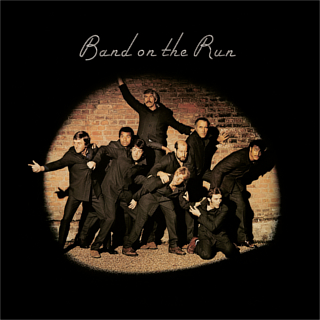
December 5, 1973: Band On the Run by Wings is released. It remains the best album led by any of the ex-Beatles.

The only constant members of Wings were Paul and Linda McCartney, and lead guitarist Denny Laine. Wings' rhythm guitarist? Paul. Wings' bass guitarist? Paul. Wings' piano player? Paul. Wings' drummer? Paul. Who played those instruments on tour? Nobody: Wings didn't tour in support of the album.

On the cover of the album are the McCartneys and Laine; plus singer Kenny Lynch, actors James Coburn and Christopher Lee, broadcasters Michael Parkinson and Clement Freud (grandson of Sigmund), and boxer John Conteh.

The 1st 2 tracks, the title track and "Jet" were big rockers and hits. They were followed by "Bluebird." Not one of Paul's better songs, not even as good as "Blackbird" on The Beatles (a.k.a. The White Album). Pablo Picasso had died earlier in the year, and Paul wrote a song titled "Picasso's Last Words (Drink to Me)."

The album was closed with "Nineteen Hundred and Eighty-Five." At first, it sounds post-apocalyptic, until you realize that it's a love song from Paul to Linda: "Oh, no one ever left alive in nineteen hundred and eighty-five, will ever do. She may be right, she may be fine. She may get love, but she won't get mine, 'cause I got you." Basically, it's a harder-rocking "When I'm 64." (Paul was 31 years old in 1973, 53 in 1985, and 64 in 2008.)

*

December 5, 1973 was a Wednesday. Baseball was out of season. Football was in midweek. There were 6 games played in the NBA:

* The New York Knicks lost to the Boston Celtics, 119-97 at the Boston Garden.

* The Cleveland Cavaliers beat the Philadelphia 76ers, 89-75 at The Spectrum in Philadelphia.

* The Buffalo Braves beat the Portland Trail Blazers, 114-110 at the Buffalo Memorial Auditorium. Bob McAdoo of the Braves led all scorers in both leagues with 37 points.

* The Houston Rockets beat the Capital Bullets, 119-99 at the Hofheinz Pavilion (now the Fertitta Center) in Houston. This was the Bullets' 1st season after moving down the Baltimore-Washington Parkway. The "Capital Bullets" name didn't catch on, so, the next season, they became the Washington Bullets; in 1997, the Washington Wizards.

* The Kansas City-Omaha Kings beat the Atlanta Hawks, 117-105, in 1 of 3 games the Kings played at the Omaha Civic Auditorium that season. Jimmy Walker, who had taken Providence College to the NCAA Final Four the season before, led the Kings with 29 points. He was not related to Jimmie Walker, soon to begin starring on Good Times. "Pistol" Pete Maravich scored 35 and "Super" Lou Hudson 32 in defeat for the Hawks.

* And the Phoenix Suns beat the Golden State Warriors, 103-97 at the Arizona Veterans Memorial Coliseum in Phoenix.

There were 2 games in the American Basketball Association. The New York Nets beat the Indiana Pacers, 108-103 at the Indiana State Fair Coliseum (now the Corteva Coliseum) in Indianapolis. Larry Kenon of the Nets scored 25 points. George McGinnis of the Pacers scored 19 points and grabbed 33 rebounds.

And the Denver Rockets beat the San Diego Conquistadors, 138-108 at the Denver Auditorium Arena.

There were 4 games in the NHL:

* The New York Rangers beat the St. Louis Blues, 5-1 at Madison Square Garden.

* The Chicago Black Hawks beat the Detroit Red Wings, 8-2 at the Olympia Stadium in Detroit.

* The Los Angeles Kings beat the Pittsburgh Penguins, 4-1 at The Forum outside Los Angeles in Inglewood, California.

* And the Atlanta Flames and the California Golden Seals played to a tie, 3-3 at the Oakland Coliseum Arena.

And there were 3 games in the World Hockey Association:

* The Jersey Knights lost to the Houston Aeros, 5-2 at the Sam Houston Coliseum in Houston.

* The Winnipeg Jets beat the Edmonton Oilers, 3-1 at the Winnipeg Arena.

* And the Toronto Toros beat the Vancouver Blazers, 3-1 at the Pacific Coliseum in Vancouver.

Saturday, December 3, 2022

December 3, 1965: The Greatest Day In British Rock

December 3, 1965: This might have been the greatest day in the history of British rock and roll.

The Beatles release their album Rubber Soul. Rock historian Dave Marsh said it proved they could have been stars even if they never released a single uptempo song.

John Lennon songs, listed in the order in which they appear on the album: "Norwegian Wood (This Bird Has Flown)," supposedly about an affair the married John had with British journalist Maureen Cleave, who soon did the interview in which John said, "We're more popular than Jesus now"; "Nowhere Man," which he later said was describing his own feelings of feeling "lost" at that point; "The Word"; "Girl," which upset some people with its reference to death; "In My Life," which might be my favorite Beatles song; "Wait"; and "Run for Your Life."

That last one starts by borrowing a line from an early Elvis Presley song, "Baby Let's Play House": "I'd rather see you dead, little girl, than to be with another man." John later regretted using that line, among the many things he came to regret, including his own history of domestic violence toward his 1st wife, Cynthia Twist, and some of the women he used to cheat on Cynthia.

Paul McCartney songs: "Drive My Car," inspiring many radio stations' traffic reports; "You Won't See Me"; "Michelle," which translates the words, "These are words that go together well" into French as "Sont des mots qui vont très bien ensemble"; and "I'm Looking Through You." This was much more a John album than a Paul album. Every remaining Beatle album, all 7 of them, would be more of a Paul albums, in some cases much more.

George Harrison songs: "Think for Yourself" and "If I Needed Someone." Having begun his study of Eastern music and philosophy, George also made "Norwegian Wood" the 1st recorded song outside India to have a sitar on it. Ringo Starr's obligatory one song on the album: "What Goes On," which he co-wrote with John and Paul.

On the exact same day, The Rolling Stones released December's Children (And Everybody's). It included the original Mick Jagger & Keith Richards-written "Get Off of My Cloud," which hit Number 1, and "As Tears Go By," which had already been a hit for Marianne Faithfull, soon to leave her husband and become Jagger's girlfriend.
It also included covers, of Sonny & Cher's "She Said Yeah," Chuck Berry's "Talkin' About You," Arthur Alexander's "You Better Move On," Muddy Waters' "Look What You've Done," Bobby Troup's "Route 66," and Hank Snow's "I'm Moving On."

And The Who released their debut album, My Generation. It included the title track, with its unforgettable line, "Hope I die before I get old." Songwriter and guitarist Pete Townshend explained that lead singer Roger Daltrey was stuttering because the character he was playing was high on amphetamines, the main drug of choice for English "mods." There was also the line, "Why don't you all just... f... f... f... fade away!" It was lost on American audiences: They only heard the stutter, because they were not yet familiar with the English expression, "Fuck off!"
The album also included "The Kids Are Alright," and covers of James Brown's "Please, Please, Please" and Bo Diddley's "I'm a Man."

While The Beatles were trying to move forward as songwriters and musicians, the Stones and The Who were embracing their roots as fans of American blues and rhythm & blues (R&B), or in the case of the Snow cover, country music -- exemplified by their album's cover photo being in black & white. The Who would come to call what they played "Maximum R&B," even though it sounded nothing like R&B as Americans understood the term.

Later British acts would follow in the footsteps of these 2 bands, with Led Zeppelin covering blues songs in such a way that they seemed to be among the inventors of what became known as "heavy metal."

John Mayall had formed a band known as the Bluesbreakers, whose members, at various times, included Eric Clapton and Jack Bruce of Cream; Mick Taylor, who would replace Brian Jones in the Stones, before being himself replaced by Faces guitarist Ron Wood; Peter Green, John McVie and Mick Fleetwood of Fleetwood Mac; and drummer Aynsley Dunbar of Frank Zappa's Mothers of Invention, Journey, and Jefferson Starship.

And there was a band named Bluesology, whose members included saxophonist Elton Dean, singer Long John Baldry, and a young pianist named Reginald Dwight, who took the names of each of the preceding, becoming Elton John.

*

December 3, 1965 was a Friday. Olympic figure skater Katarina Witt, arguably both the first and the last person from the nation known in the West as "East Germany" to be popular in the West, was born.

Baseball was out of season. Football was in midweek. And no games were scheduled for the NHL. There were 2 games in the NBA. The Philadelphia 76ers beat the Boston Celtics, 119-103 at the Boston Garden. Just another day at the office for Wilt Chamberlain: With Bill Russell guarding him, he scored 28 points and grabbed 30 rebounds. And the Cincinnati Royals beat the Los Angeles Lakers, 122-118 at the Los Angeles Memorial Sports Arena. Jerry West scored 51 points.

Monday, November 21, 2022

November 21, 1934: "Anything Goes" Premieres

November 21, 1934: The musical Anything Goes premieres at the Alvin Theatre in New York. Along with Kiss Me, Kate, Cole Porter called it "one of my two perfect musicals."

Cole Albert Porter was born on June 8, 1891 in Peru, Indiana, to a wealthy family. His mother, the daughter of a coal and lumber speculator who was believed to be the richest man in Indiana at the time, indulged his love of music. Together, they wrote his first operetta when he was only 10 years old.

He was valedictorian of his Massachusetts prep school, and his grandfather rewarded him with a trip to Europe and admission to Yale University, which made him a worldly young man. He joined the famed Whiffenpoofs a cappella singing group, and wrote "Bulldog," which is still Yale's fight song to this day.

His frequent trips to Manhattan on the New York, New Haven & Hartford Railroad (now the New Haven Line of Metro-North Commuter Railroad) indulged his love of musicals, but also indulged his love of nightlife, including gay liaisons.

To indulge his grandfather, he moved on to Harvard Law School, but the school's dean knew where his talent lay, and helped him switch to Harvard Music School. His mother was told, and supported it; his grandfather was not told. He staged musicals at Harvard, and by 1915, was staging them on Broadway.

He worked with the Duryea Relief organization during World War I, and hosted debauched parties in Paris. In 1918, he met Linda Lee Thomas, and their marriage gave both what they needed: She got security, and a man who adored her for her personality, if not lusting for her; he got the cover of a marriage to deflect public suspicion of what he really wanted in bed. The marriage lasted until her death in 1954.

His musicals were good enough to help him get by, if not to become famous, until 1928, when Paris became his 1st big hit show. His 1929 show Fifty Million Frenchmen included the song "You Do Something to Me," which truly launched him: Along with Irving Berlin, George & Ira Gershwin, Richard Rodgers & Lorenz Hart, and Johnny Mercer and his various collaborators, Cole Porter became one of the leaders of what became known as "The Great American Songbook." More than that, it kept him afloat during the Great Depression, when many writers, producers and theater owners went under.

In 1932, he staged a musical titled The Gay Divorce -- "gay" in its original sense of "happy," not as in "homosexual," no matter what the tendencies of Broadway in general and Porter in particular. It starred Fred Astaire, and it was his last show before he went to Hollywood, including the 1934 film version, The Gay Divorcee. It included "Night and Day," which remains Porter's best-known song.

In 1934, producer Vinton Freedley came up with a new approach to producing musicals. Instead of commissioning book, music and lyrics, and then casting the show, Freedley sought to create an ideal musical with stars and writers all engaged from the outset.

The stars he wanted were Ethel Merman, William Gaxton and comedian Victor Moore. He planned a story about a shipwreck and a desert island, and for the book he turned to P. G. Wodehouse and Guy Bolton. For the songs, he decided on Porter. By telling each of these that he had already signed the others -- in other words, lying to them -- Freedley gathered his ideal team together.

A drastic last-minute rewrite was necessitated by the Morro Castle fire off the coast of New Jersey in September, which dominated the news and made Bolton and Wodehouse's book seem tasteless. Nevertheless, the show, Anything Goes, was an immediate hit.

Its songs include the title number, "I Get a Kick Out of You," "All Through the Night" and, along with "Night and Day," probably the best-known Porter song, "You're the Top." (Often mis-listed and mis-sung as "You're the Tops.") It name-checks several current big names in the world: Mickey Mouse, Mahatma Gandhi (pronounced "GAN-dee," to rhyme with "Napoleon brandy"), Greta Garbo, Fred Astaire, Eugene O'Neill, Jimmy Durante, Irving Berlin, and "Mrs. Astor," although not specifying which one.

Anything Goes was filmed in 1936, with Merman, Bing Crosby and Ida Lupino. There was a remake in 1956, but with a seriously rewritten story, this time with Crosby and Mitzi Gaynor. Merman and Frank Sinatra starred in a made-for-TV version in 1954, for NBC's The Colgate Comedy Hour. A performance of a 2021 London revival, with Broadway (and TV show Younger) star Sutton Foster and British musical legend Robert Lindsay, was broadcast on PBS' Great Performances in 2022.

Anything Goes was the 1st of 5 Porter shows featuring Merman. He loved her loud, brassy voice, and wrote many numbers that displayed her strengths. Jubilee, written with Moss Hart in 1935, was not a major hit, but included the songs "Begin the Beguine" and "Just One of Those Things." He also wrote for movies, including "I've Got You Under My Skin" for Born to Dance in 1936, and "In the Still of the Night" for Rosalie in 1937. (This is not the doo-wop hit of The Five Satins in 1956, although Dion & the Belmonts had a hit with it in 1960.) He wrote "Don't Fence Me In" for a 1934 film musical that was never made, but it became a hit when Roy Rogers sang it in the 1944 film Hollywood Canteen.

On October 24, 1937, only 46 years old, Porter was riding a horse at Piping Rock Club in Locust Valley, Long Island, New York, when his horse rolled on him and crushed his legs, leaving him substantially crippled and in constant pain for the rest of his life. Though doctors told Porter's wife and mother that his right leg would have to be amputated, and possibly the left one as well, he refused to have the procedure. He remained in the hospital for seven months before being allowed to go home to his apartment at the Waldorf Towers.

He resumed work as soon as he could, finding it took his mind off his perpetual pain. In 1938, he staged Leave It to Me!, with Mary Martin singing "My Heart Belongs to Daddy." His 1939 show DuBarry Was a Lady starred Merman and Bert Lahr, but it was too risquĂ© for the censors, and some lines and songs had to be cut. "Friendship," one of Merman's best-known songs, was kept.

In 1940, Porter wrote Panama Hattie. Most of its songs have been forgotten, but it was his longest-running hit yet. It also led to one of the best jokes on The Muppet Show: In 1977, Merman guested, and, after she sang a medley of her hits, the camera panned to the box where the old hecklers Statler and Waldorf, both named for famous New York hotels, sat. Waldorf said, "I remember Ethel Merman in the opening of Panama Hattie!" Statler, apparently believing himself to be the younger of the two, told him, "You remember Teddy Roosevelt in the opening of the Panama Canal!" (In fact, while Roosevelt got the Canal built, it didn't open until 1914, when Woodrow Wilson was President.)

Composer biographies were common in 1940s films, even for still-living writers like Porter. In 1946, Cary Grant played Porter in Night and Day. Porter himself was at a commercial low point, but in 1948, he staged Kiss Me, Kate, a modernization of William Shakespeare's The Taming of the Shrew, which led to a rebound in his career. The following year, the Tony Awards debuted, and Kiss Me, Kate won the 1st-ever Tony for Best Musical.

After Porter resisted it for 20 years after the horseback accident, ulcers on his right leg finally forced its amputation in 1958. Broadway writer NoĂ«l Coward, a close friend, visited him, and saw how he was no longer in pain, and predicted that his musical output would get back to normal levels, and he would be a hit all over again.

Sadly, that turned out to be wishful thinking: He never wrote another song, and lived in seclusion until kidney failure ended his life on October 15, 1964 outside Los Angeles in Santa Monica, California. He was 73. Both the music industry, through rock and roll, and Broadway, with more sophisticated musicals like My Fair Lady and Fiddler On the Roof, had passed him by.

But not completely. The roster of singers who've recorded compilation albums of his songs is staggering: Ella Fitzgerald, Frank Sinatra, Rosemary Clooney, Anita O'Day, Julie London, Dionne Warwick, and, as recently as 2021, in his last album before being overtaken by Alzheimer's disease, Tony Bennett recorded Love for Sale, a series of Porter duets with Lady Gaga, born 22 years after Porter died.

In 1966, Frankie Valli & The Four Seasons had a Top 10 hit with "I've Got You Under My Skin." In a 1974 episode of M*A*S*H, set in 1951, "Trapper" John McIntire (played by Wayne Rogers) sang it during a surgery session. In a 1982 episode of the show, set in 1953, Hawkeye Pierce (played by Alan Alda), having lost a bet to Trapper's replacement, B.J. Hunnicutt (played by Mike Farrell), had to climb on top of a table in the mess tent, drop his pants (but not his underwear), and "sing 'You're the Tops' without your bottoms." Not long before her death in 1984, Merman recorded a new version of "Friendship" for Friendship brand margarine.

In 1989, interviewed for the CBS News show 48 Hours while on tour for his album Flowers In the Dirt, Paul McCartney, 47 years old and 19 years into his post-Beatles solo career, made no bones about his love for rock and roll, but also made the point that he didn't start out that way: He said, "I was out to be another Cole Porter. Still am, babe."

In 1990, noting that Porter was gay and that AIDS had devastated the gay community, including the gay overlap with the Broadway sub-community, the fundraising album Red Hot + Blue was recorded. It included David Byrne of Talking Heads on "Don't Fence Me In," Neneh Cherry on "I've Got You Under My Skin," and SinĂ©ad O'Connor on "You Do Something to Me."

The Alvin Theatre, where Anything Goes premiered, was at 250 West 52nd Street in Midtown Manhattan. In 1983, it was renamed the Neil Simon Theatre. It is still in operation. Oddly, no Broadway Theatre has yet been named for Cole Porter.

*

November 21, 1934 was a Wednesday. This was also the day that American newspapers broke the story of the "Business Plot," a proposed military coup that would be backed by some of America's richest men to depose President Franklin D. Roosevelt and install a fascist government, a plan torpedoed when their intended commander, Marine General Smedley Butler, blew the whistle on it in a Congressional committee hearing. I have a separate entry for that event.

This was also the day that the Yankees purchased the contract of Joe DiMaggio from the San Francisco Seals of the Pacific Coast League. I have a separate entry for that event.

Baseball was out of season. Football was in midweek. The NBA hadn't been founded yet. And while the NHL season began on November 8, there were no games scheduled for this day. So there were no scores.

Friday, October 21, 2022

October 21, 1969: Jack Kerouac Is Dead, Paul McCartney Is Not

October 21, 1969: Jack Kerouac dies in St. Petersburg, Florida. The novelist and poet whose works led the Beat Generation writing genre had been a football and track star at Lowell High School in Massachusetts, but injuries and squabbles with coach Lou Little ended his football scholarship at Columbia.
By the mid-Sixties, his fellow Beat writer and close friend Allen Ginsberg noticed that he no longer looked like the handsome young athlete he had been when they met in 1944, or even the mature (physically if not emotionally) writer who became famous with the publication of On the Road in 1957. Rather, Allen though that Jack now looked like his father Leo, the result of 25 years of massive drinking. That drinking burned an ulcer in his esophagus, and that's what killed him.
As a guest on William F. Buckley's Firing Line, 1968.
These two images are only about 10 years apart.

(In contrast, Ginsberg, who rather enjoyed various mind-altering drugs, but wasn't a serious boozer, lived to be 70, before he was claimed by brain cancer on April 5, 1997; and the other member of the Beats' Big Three, William S. Burroughs, who abused himself in countless ways, turned out to be the last survivor, outliving Ginsberg by 4 months, dying of a heart attack at 83 on August 2, 1997.)
The Beatnik copycats of the late 1950s and the Hippies of the 1960s missed the point of the Beats. They were essentially embracing a lifestyle that the Beats themselves had realized was pointless. Even their escapes provided only short-term respite from American life.

And while Ginsberg accepted the copycats, and the subsequent Hippies, as kindred spirits, Kerouac sure didn't. As he got older, his innate Catholicism and conservatism kicked in, and he treated the copycats as poseurs. He lived long enough to see the rise of the Hippies, and he was as repulsed by them as any Catholic (or Protestant) conservative. By the time he died due to the excesses of his drinking at the end of the 1960s, Kerouac was only 47 years old, but he was in full "Get off my lawn, you filthy kids!" mode.

Kerouac and the early Beats loved jazz, especially bebop, whose 2 main leaders were saxophonist Charlie "Bird" Parker and trumpeter John "Dizzy" Gillespie. Parker died in 1955, on March 12, Kerouac's birthday, which crushed Jack. Jack himself then died on an October 21, which was Gillespie's birthday.
*
Also on this day, the "Paul Is Dead" rumor reaches New York. A disc jockey at the University of Michigan's radio station had put together a few "clues," from Beatles album covers and in song lyrics, that suggested that Paul McCartney had been killed in a car crash in 1966, and replaced with a lookalike. It certainly explained why the Beatles weren't touring anymore.
On this night, Roby Yonge was the overnight host on New York's biggest radio station, WABC, 770 on the AM dial. It called itself "W-A-Beatle-C" in those heady "British Invasion" days of 1964 and '65. Yonge had already been told that his contract would not be renewed. This is a fact that a lot of people forget. In other words, he really had nothing to lose, and, perhaps, had something to gain.
Roby Yonge

Yonge mentioned the rumor, and the clues, and continued talking about it for an hour and a half. The ABC switchboard lit up like Times Square, and program director Rick Sklar, who had built the most successful station in the history of music radio, was awakened by phone. He got the station's regular newsman, Les Marshak, to go in and tell Roby he was relieved. Marshak ran the rest of the show, and told the listeners that the rumor about Paul being dead was not true.
Oddly, on WABC's sister station, WABC-FM -- 95.5, which became WPLJ in 1971 -- Bob Lewis, a.k.a. "Bob-a-Loo," a former WABC-AM jock, did a full "Paul Is Dead" show on November 14. Since Sklar had no authority over him anymore, he was not fired.
Another part of the story that people get wrong is saying that Yonge never worked in New York again, that Sklar blackballed him, and that Yonge had to flee to his native Florida. In truth, he was hired at WCBS-FM, not yet "New York's Oldies Station" (it became that in 1972), and worked there for a while before heading to Miami, where he worked at various stations until his death from a heart attack in 1997. He was only 54. In Miami, Roby Yonge is a legend. In New York's he's a different kind of "legend."
The clues as to Paul being dead are too many to list here, and some make more sense than others. A few came from the Abbey Road cover. On the crosswalk, going right to left, and thus front to back from their own perspective, John Lennon is first, dressed all in white, and he -- with irony already in place, and even more so retroactively -- is either the minister at the funeral, or God Himself. Next is Ringo Starr, dressed in black, and he's the undertaker. Next is Paul, and while the others have their left leg forward -- almost certainly a coincidence -- Paul's right leg is forward. He's out of step with the others, "because he's dead." And he's barefoot: In some cultures, the dead are buried barefoot. And last is George Harrison, dressed in denim, because he's the gravedigger.
Parked behind George was a Volkswagen Beetle (not "Beatle") with a license plate that included "28IF," meaning Paul would have been 28 years old if he had lived. Except he was 27. In 1993, Paul re-created that cover for a live album, titled Paul Is Live. He had a Beetle parked in the exact same spot, with a license plate reading "51IS," which did match his age at the time.
On the 1989 tour for his album Flowers in the Dirt, Paul was asked during a press conference about how his next show was in Detroit, where the rumor started, and how it had been 20 years since. As each of the Beatles had done at various points in their careers, he found the right thing to say: "'Paul is dead.' I didn't believe that one for a minute."
As rock historian Dave Marsh pointed out, this stuff was a whole lot funnier before John Lennon was killed. Since he wrote that, we've also seen the deaths of Linda McCartney, George Harrison, John's 1st wife Cynthia Lennon, Ringo's 1st wife Maureen Starkey, and many other people connected with The Beatles in various ways.
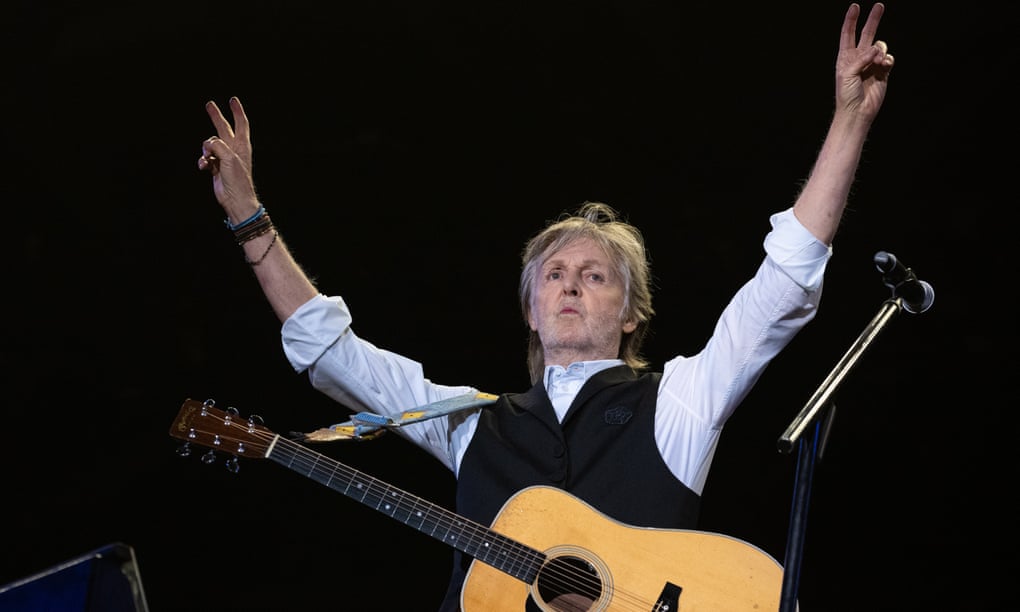
Pictured: Paul McCartney, alive, at the 2022 Glastonbury Festival
Paul McCartney turned 80 on June 20, 2022, and was in mid-tour at the time. Ringo Starr turned 82 on July 7, 2022, and is also still performing.
*
October 21, 1969 was a Tuesday. Baseball season had ended 5 days earlier, when the New York Mets completed their "Miracle" World Series win over the Baltimore Orioles. Football was in midweek. There were 3 NBA games played:

* The New York Knicks beat the Phoenix Suns, 140-116 at the new Madison Square Garden. Walt Frazier led the World Champions-to-be with 28 points.

* The Los Angeles Lakers beat the Baltimore Bullets, 142-137 in overtime at the Baltimore Civic Center (now the CFG Bank Arena). Jerry West scored 39, Wilt Chamberlain 38, and Kevin Loughery of the Bullets 35.

* And the Detroit Pistons beat the Boston Celtics, 98-97 at Cobo Hall (now Huntington Place) in Detroit.

There were 3 games played in the American Basketball Association:

* The Kentucky Colonels beat the Washington Capitols, 127-115 at the Louisville Convention Center (now named the Louisville Gardens).

* The Los Angeles Stars beat the New Orleans Buccaneers, 119-99 at the New Orleans Municipal Auditorium.

* And the Dallas Chaparrals beat the Denver Rockets, 120-108 at the Moody Coliseum in Dallas. The Rockets were renamed the Denver Nuggets in 1974.

There was 1 NHL game played that day: The Oakland Seals beat the Pittsburgh Penguins, 4-3 at the Oakland Coliseum Arena.

Sunday, September 4, 2022

September 4, 1962: The Beatles' 1st Recording Session

September 4, 1962: The Beatles have their 1st recording session with EMI-Parlophone Records. No one could yet foresee that the band would be so successful, they would pretty much own what was once Electrical & Mechanical Industries, and it would be renamed Apple Records.

To set the scene: For less than a year, the band from Liverpool, England had been managed by Brian Epstein, who took them out of their black leather jackets and pants, and put them in business suits, but encouraged their continued efforts to write their own songs with nice harmonies.

He had gotten them signed to EMI, on the provision that rhythm guitarist John Lennon, bass guitarist Paul McCartney and lead guitarist George Harrison fire drummer Pete Best, and replace him with Richard Starkey, a.k.a. Ringo Starr, a drummer from another Liverpool band, with whom they were already familiar and liked.

Now, they were at EMI's Abbey Road Studios in London, ready to record professionally for the first time. And what would become famous as their "quirky Liverpool sense of humor" was already apparent. Producer George Martin, who would become integral in their success, told them, "Let me know if there's anything you don't like." And Harrison said, "Well, for starters, I don't like your tie."

The band rehearsed 6 songs. One was "Please Please Me," which would become their 2nd single and their 1st really big hit. One was "How Do You Do It?" which Mitch Murray had written for Adam Faith, one of the earliest British rock stars. Martin insisted that this be the band's 1st single. They recorded it, but it wasn't very good. John sang lead, and it's clear that none of them had their hearts in it. The song would be recorded the next year as the 1st single by another Liverpool band, Gerry & The Pacemakers, and there version was a lot better.

Martin wanted them to play a pre-written song: "It wasn't a question of what they could do, as they hadn't written anything great at that time. But what impressed me most was their personalities. Sparks flew off them when you talked to them."

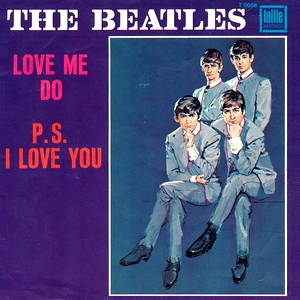
But he let them record 2 songs that they had written. One was "Love Me Do." In later interviews, John said that it was mostly Paul's composition, saying, "Maybe I helped out in the middle." But Paul, for once deflecting some credit, said it was a 50-50 writing effort, as a lot of their early songs were. The other was "P.S. I Love You," which, clearly, was all Paul. Paul sang lead on both.

Martin agreed to let them record "Love Me Do" because he liked the harmonica that John played on it. Although Martin was used to recording jazz, he said John's harmonica part on a version of the song they had previously recorded with Best on drums reminded him of blues records he liked by Sonny Terry and Brownie McGhee. So it was recorded, the 1st session with what would become the familiar lineup: "John, Paul, George and Ringo."

And Martin didn't like it. He had them come back in a week later, on September 11, 1962, and record it again. This time, a session drummer, Andy White, was brought in to play drums, and Ringo was relegated to playing the tambourine.

The version with Ringo on drums was released as the single -- and proved Martin's point. It only reached Number 17 on the British music charts. The version with White on drums was put on the group's 1st album, titled Please Please Me, after the 2nd single which was released around the same time. This would be the version released as the U.S. version of the single. The way to tell the difference is that the one where Ringo plays drums has no tambourine on it. I have to admit: The White version is better. Even the vocals are better on it.

By the time that album was recorded, in a single all-day session on February 11, 1963, Ringo had been with the band a bit longer, and was more integrated into them, and they sounded better together. "Please Please Me" was their 1st U.K. Number 1, and even Mimi Smith, John's hyper-critical aunt, who practically raised him, and told them "Love Me Do" was no good, said she liked it. The rest is history. 

Andy White, a Scotsman, was 32 years old at the time, 10 years older than Ringo, the oldest Beatle. He was the drummer every British producer wanted, a Scottish version of New York's Buddy Saltzman, New Orleans' Earl Palmer and Los Angeles' Hal Blaine. He would end up drumming on some of the biggest soloists' hits to come off the Sceptered Isle in the Swinging Sixties, including "It's Not Unusual" by Tom Jones and Lulu's version of The Isley Brothers' "Shout."

Despite his name, he had nothing to do with The Beatles, the 1968 production nicknamed "The White Album" for its all-white cover. In the 1980s, he moved to New Jersey, taught drumming, and lived until 2015, at the age of 85.

*

September 4, 1962 was a Tuesday. It was a few days before the NFL and AFL seasons would begin, and several weeks before the starts of the NBA and NHL seasons. These Major League Baseball games were played that day:

* The New York Yankees lost to the Los Angeles Angels, 7-6 at the old Yankee Stadium. Mickey Mantle did not play. Clete Boyer hit a home run, but Whitey Ford ran out of gas in the 7th inning, and the Angels scored 6 runs, including a home run by Lee Thomas. The Yankees tied it 6-6 in the 8th, but a single by future Angels, Milwaukee Brewers and Montreal Expos manager Robert "Buck" Rodgers off Bud Daley won it for the Halos in the 9th.

* The New York Mets lost to the Pittsburgh Pirates, 5-1 at Forbes Field in Pittsburgh. The expansion Mets went 40-120 that year, the most losses in any season in the 20th Century. There would be only 14 days in 1962 that the Mets won and the Yankees lost, and this was not one of them.

* The Kansas City Athletics beat the Boston Red Sox, 7-2 at Fenway Park in Boston.

* The Chicago White Sox beat the Cleveland Indians, 3-2 at Comiskey Park in Chicago. Dick Donovan, on the staff of Chicago's 1959 Pennant-winning "Go-Go White Sox," pitched all 13 innings for the Indians. This was a mistake by manager Al Lopez, as Al Smith singled home the winning run off him.

* The Cincinnati Reds beat the Milwaukee, Braves, 9-6 at Milwaukee County Stadium. Warren Spahn didn't have it that day. Eddie Mathews hit 2 home runs, and Hank Aaron hit a double, but it wasn't enough.

* The St. Louis Cardinals beat the Chicago Cubs, 7-1 at the original Busch Stadium, formerly Sportsman's Park, in St. Louis. Stan Musial hit a home run.

* The Houston Colt .45s beat the Philadelphia Phillies, 4-1 at Colt Stadium in Houston. In 1965, the Colts would move into the Astrodome, and change their name to the Houston Astros.

* The Baltimore Orioles were supposed to host the Detroit Tigers at Memorial Stadium, but the game was rained out. It was played the next day, as part of a doubleheader. The Tigers won both games, taking the 1st 5-2, and the 2nd 6-0, as Hank Aguirre pitched a 5-hit shutout.

* The Minnesota Twins and the Washington Senators were also rained out that day -- not surprising, as Washington and Baltimore are so close, although the Yankees' game with the Angels in New York was played as scheduled. This game was also rescheduled as part of a doubleheader the next day. The Twins won the opener 9-7, on a Vic Power double in the 11th inning. The Senators won the 2nd game 3-0, as Claude Osteen pitched a 3-hit shutout.

* And the Los Angeles Dodgers beat the San Francisco Giants, 5-4 at Dodger Stadium in Los Angeles. Tom Haller and Jose Pagan hit home runs in defeat. Willie Mays went 0-for-3. This win put the Dodgers 3 1/2 games ahead of the Giants with 23 games left to play (24 for the Giants). But they would finish tied for the Pennant, and, as in 1951 on the other coast, the Giants would win the Playoff. Also as in 1951, the Giants would lose the World Series to the Yankees.

Monday, August 29, 2022

August 29, 1966: The Beatles' Last Official Concert

August 29, 1966: The Beatles conclude their World Tour at Candlestick Park in San Francisco, home of Major League Baseball's San Francisco Giants. It turns out to be the last time all four of them would play together before a paying audience.

The tour had been tough. It had started in June 24, in Munich, West Germany, followed by shows the next night in Essen, then in Hamburg, where they had "grown up as a band" in 1960. They went to the Far East, doing 5 shows in 3 days at Nippon Budokan in Tokyo, which had become a shrine for the sport of sumo wrestling, and it led to objections that they were soiling an ancient art. The art may have been ancient, but the venue was less than 2 years old, having been built for the 1964 Olympics. As it turned out, it has become better-known for its rock concerts.

Then came 2 shows at Rizal Memorial Stadium in Manila on July 4. The night before, exhausted, the band had failed to show up for social engagement held by Imelda Marcos, wife of President Ferdinand Marcos. This led to a backlash from the President's supporters, and the group left the country under a cloud. It would be years before anybody realized how bad both halves of the Marcos couple were.

On July 29, while they were resting up for their upcoming U.S. tour, Datebook magazine published Maureen Cleave's interview with John Lennon, in which he said, "We're more popular than Jesus now." Within a week, as only Americans can do, Americans overreacted: Radio stations from coast to coast, North to South were banning Beatle records, and "Beatle bonfires" were being held.

On August 11, The Beatles arrived in Chicago, and, for the only time in his life, Lennon ate crow, and offered an apology. The tour began: August 12, 2 shows at the International Amphitheatre in Chicago; August 13, 2 shows at the Detroit Red Wings' Olympia Stadium; August 14, Cleveland Municipal Stadium, home of the Indians and the Browns; August 15, District of Columbia Stadium, then the home of the teams named the Washington Senators and the Washington Redskins, a stadium later renamed for Robert F. Kennedy; August 16, John F. Kennedy Stadium in Philadelphia; August 17, 2 shows at Maple Leaf Gardens in Toronto, the only building they played on all 3 of their North American tours; and August 18, Suffolk Downs, a horse-racing track in Boston.

Then came August 19, and 2 shows at the Mid-South Coliseum in Memphis. This was the Bible Belt, and lots of people were still pretty mad. The Ku Klux Klan had nailed a Beatles LP to a wooden cross and burned it. During the evening show, someone threw a firecracker onto the stage. No one was hit, but when it went off, lots of people thought it was a gunshot. All 3 of the others turned to John after the firecracker, to make sure he was all right. He was.

August 20 had been scheduled for Crosley Field, the ballpark of the Cincinnati Reds, but it rained. That gave the Fab Four a little rest, but it forced an unusual doubleheader: Two concerts in two cities in one day. They did an afternoon show at Crosley, then flew to St. Louis to play at the new Busch Memorial Stadium.

So many music historians have ripped Elvis Presley's manager, Tom Parker, for running his man ragged, and praised Beatles manager Brian Epstein for "taking care of" "the boys." With many things, he did. But he was every bit as determined to make as much money from his charges as he could as Parker was, and their 3 North American tours were always inches away from disaster. And, despite the aural damp squib that was their concert at Shea Stadium in New York the year before, people still hadn't yet figured out how to stage a rock concert in a baseball park or a football stadium.

And John kept talking. At a press conference in New York before their return to Shea on August 23, John he said the Vietnam War was "wrong." He was right, but America wasn't ready to hear that yet. The year before, they had filled all 55,000 available seats at the Flushing Meadow stadium. This time, "only" 40,000 showed up, with pickets both for and against them facing off against each other.

It was their most stressful tour ever, and George Harrison said he'd rather leave the band than ever go on another tour. They decided they wouldn't, and would be only a recording band from that point onward. George agreed to stay -- for now.

After Shea, it was off to the West coast. They did 2 shows at the Seattle Center Coliseum on August 25. After 2 days of rest, they played the 1st concert at Dodger Stadium in Los Angeles. The next concerts there wouldn't be until 1975, with 2 by Elton John; and the next ones until 1984, with The Jacksons' Victory Tour.

The last concert on the tour was at Candlestick Park in San Francisco on August 29. They were supported by The Ronettes, The Cyrkle, Bobby Hebb, and The Remains. (The Cyrkle were also managed by Epstein's company.) Attendance: 25,000, meaning about 17,000 empty seats. (In 1971, the NFL's San Francisco 49ers joined baseball's San Francisco Giants there, leading to an expansion to 69,000 seats.)

As usual, they roared through their set, unable to hear themselves over the all the screaming, playing 11 songs in 33 minutes:

1. John Lennon singing Chuck Berry's "Rock and Roll Music."
2. Paul McCartney singing his song "She's a Woman."
3. George Harrison singing his song "If I Needed Someone." (Every show would have a George song and a Ringo song, so "the other guys" wouldn't feel left out.)
4. Paul singing his song "Day Tripper."
5. John singing his song "Baby's In Black."
6. John singing his song "I Feel Fine."
7. Paul singing his song "Yesterday."
8. Ringo Starr singing Paul's song "I Wanna Be Your Man."
9. John singing his song "Nowhere Man."
10. Paul singing his song "Paperback Writer."
11. And the last song anybody would ever pay to hear The Beatles sing live, Paul singing Little Richard's song "Long Tall Sally."

Reviews of the concert were not good, with the San Francisco Chronicle headlining "Bedlam at the Ball Park." Ringo was 26 years old, John 25, Paul 24 and George 23, so age wasn't an issue. But they they were physically, mentally and emotionally wiped-out, and the sound system was insufficient, and the overall atmosphere wasn't what it had been, even a year earlier, when it could still be adequately described as "Beatlemania."

They had already released Rubber Soul, and had just released Revolver on August 5. They were weary. They were examining their feelings, and expressing them on their recordings. These were no longer "The Lovable Mop Tops" who had dazzled people on The Ed Sullivan Show: When John sang "Help!" the year before, he wasn't just singing a song as a character in a story, he was being himself.

 As I said, they were between 23 and 26 years old. A kid who was 13 when they first arrived at John F. Kennedy International Airport on February 7, 1964 would now be only 15. How many 15-year-olds were going to "get" the content of "Norwegian Wood," "She Said She Said" or "Tomorrow Never Knows"? Or even understand the grownup love stories of "Girl" and "For No One"?

A lot of people couldn't handle what the Liverpudlians were offering in 1966, and that was one reason NBC made the TV show The Monkees, to fill that void.

The gap would grow. The next time anyone saw The Beatles in public, they weren't wearing black suits. They were wearing the wild colors of Swinging London and San Francisco's Haight-Ashbury. They had mustaches. And they had recorded "Penny Lane" and "Strawberry Fields Forever," and released promotional films (what would later be called "music videos") for them, in which they looked... weird. "Tomorrow Never Knows," indeed.

While they'd decided not to tour again, even the four of them did not know that the Candlestick Park show would be their last paying concert together, ever. There would be the concert on the roof of the building where Apple Records was based, on January 30, 1969. And each of them would have notable solo gigs, with Paul and Ringo living and continuing to tour into the 2020s. But The Beatles would never have another official concert.

If, in the Summer of 1966, you had told people that the last official concert by The Beatles would be 11 years before the last one by Elvis Presley, few of them would have believed you. But it turned out to be true.

Built in 1960, Candlestick Park hosted its last event on August 14, 2014. It was a concert by 72-year-old former Beatle Paul McCartney. A crowd of 53,477 attended, and it got great reviews. The stadium's demolition began 3 months later.

*

August 29, 1966 was a Monday. These baseball games were played that day:

* The New York Yankees beat the Kansas City Athletics, 7-2 at Kansas City Municipal Stadium. Future Seattle Pilot Fred Talbot started, but didn't get out of the 3rd inning. The winning pitcher was another future Seattle Pilot, THE Dooley Womack. Lou Clinton hit a home run. Mickey Mantle went 2-for-4. Roger Maris drew a walk as a pinch-hitter, and scored a run.

* The New York Mets beat the Los Angeles Dodgers, 5-3 at Shea Stadium. Bob Shaw went the distance for the win, while Claude Osteen didn't get out of the 2nd inning. Former Cardinals MVP Ken Boyer went 3-for-5 with an RBI.

* The Philadelphia Phillies beat the San Francisco Giants, 5-1 at Connie Mack Stadium in Philadelphia. Jim Bunning went the distance for the win, while Ray Sadecki didn't get out of the 3rd inning. Johnny Callison went 3-for-4 with 2 RBIs. Willie Mays went 1-for-4 with an RBI.

* The Detroit Tigers beat the Baltimore Orioles, 6-3 at Memorial Stadium in Baltimore. Denny McLain outpitched Dave McNally. The Tigers got 2 home runs from Willie Horton, and 1 from Bill Freehan. Horton had 5 RBIs. Al Kaline went 2-for-5. Frank Robinson hit a home run for the O's, and Brooks Robinson went 1-for-5.

* The Chicago Cubs beat the Atlanta Braves, 4-2 at Atlanta Stadium (later renamed Atlanta-Fulton County Stadium). George Altman singled Ron Campbell and Adolfo Phillips home in the top of the 14th inning. Fergie Jenkins pitched into the 9th inning, but the winning pitcher, for the 286th and last time in his career, was Robin Roberts.

* The Houston Astros beat the Pittsburgh Pirates, 2-0 at Forbes Field in Pittsburgh. Mike Cuellar pitched a 5-hit shutout, striking out 12, to outpitch Bob Veale. Roberto Clemente went 0-for-4. Willie Stargell did not play.

* The Cincinnati Reds beat the St. Louis Cardinals, 2-0 at Crosley Field in Cincinnati. Deron Johnson hit 2 home runs. Pete Rose went 1-for-4.

* The Chicago White Sox beat the Cleveland Indians, 2-0 at Comiskey Park in Chicago. Tommy John pitched a 5-hit shutout. The Pale Hose's runs came on a home run by Tommie Agee. Neither John nor Agee would be remembered as White Sox, however.

* The Minnesota Twins beat the Washington Senators, 6-1 at Metropolitan Stadium in the Minneapolis suburb of Bloomington, Minnesota. Harmon Killebrew went 1-for-4.

* The Boston Red Sox beat the California Angels, 4-3 at Anaheim Stadium (now Angel Stadium of Anaheim). Carl Yastrzemski drew a walk as a pinch-hitter.

For the record, 11 stadiums that hosted Major League Baseball also hosted Beatle concerts:

1. Kansas City Municipal Stadium, home of the Athletics, later home of the Royals, September 17, 1964.
2. Shea Stadium, New York, home of the Mets, August 15, 1965 and August 23, 1966.
3. Atlanta-Fulton County Stadium, home of the Braves, August 18, 1965.
4. Comiskey Park, Chicago, home of the White Sox, August 20, 1965.
5. Metropolitan Stadium, Bloomington, home of the Minnesota Twins, August 21, 1965.
6. Cleveland Municipal Stadium, home of the Indians, August 14, 1966.
7. District of Columbia/Robert F. Kennedy Stadium, home of the Washington Senators, later home of the Washington Nationals, August 15, 1966.
8. Crosley Field, Cincinnati, home of the Reds, August 21, 1966.
9. Busch Memorial Stadium, St. Louis, home of the Cardinals, August 21, 1966.
10. Dodger Stadium, Los Angeles,  home of the Dodgers, August 28, 1966.
11. Candlestick Park, San Francisco, home of the Giants, August 29, 1966.

UPDATE: As of August 19, 2025, Paul McCartney was still alive, and had performed at least one concert, either as a Beatle or solo, at at least one home field of 26 out of the 30 current MLB teams. On October 11, he is scheduled to play Coors Field in Denver, home of the Colorado Rockies. If that concert goes off as planned, that will leave 3 teams: The Pittsburgh Pirates, the Arizona Diamondbacks, and the Tampa Bay Rays. Given the Rays' stadium situation, and Paul's current age of 83, the odds are against him getting all 30 done.

Sunday, August 28, 2022

August 28, 1964: Bob Dylan Meets The Beatles

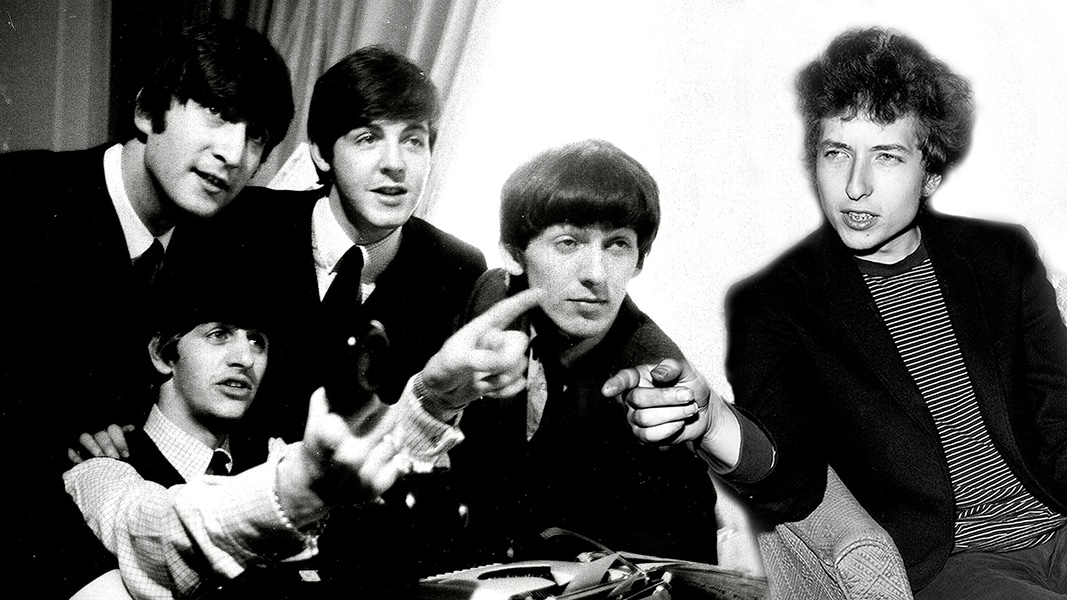
A simulation. There were no photographers at the meeting.

August 28, 1964: The 1st of the 2 great summits of rock and roll occurs: Bob Dylan meets The Beatles.

Dylan released his 3rd album, The Times They Are a-Changin', on February 10, 1964, the day after The Beatles made their 1st American TV appearance, on The Ed Sullivan Show. Among the songs they played was "I Want to Hold Your Hand," then the Number 1 song in America. The bridge goes as follows:

And when I touch you
I feel happy inside.
It's such a feeling that
my love, I can't hide, I can't hide, I can't hide!

But between the music and their Liverpudlian accents, Dylan thought they were singing, "I get high, I get high, I get high!" Dylan, a marijuana smoker, assumed that The Beatles were potheads, too.

In fact, the Fab Four did get high, many times -- but on amphetamines, pep pills. They used them to stay up all night when they were cutting their teeth in the clubs of the Reeperbahn in Hamburg, Germany before they made it big in their homeland. They had never smoked weed yet. It wasn't popular in Britain yet.

When The Beatles returned to America for their Summer 1964 tour, a meeting was set up between them and the leader of American music's protest movement. The band was staying in a 6th floor suite at the Hotel Delmonico, at 502 Park Avenue at 59th Street. Al Aronowitz, covering the tour for The Saturday Evening Post, was friendly with both the band and Dylan, and brought Dylan in.

Dylan brought joints in with him. He first offered one to Ringo Starr. According to one account, the drummer, "ignorant of dope etiquette, chugged through that first joint like a stevedore attacking his first Woodbine of the morning and collapsed in a giggling mess." Next was their manager, Brian Epstein, who was affected very quickly, saying, "I'm so high, I'm up on the ceiling."

Paul McCartney believed he'd attained true mental clarity for the first time in his life, and instructed Beatles roadie and major-domo Mal Evans to write down everything he said henceforth. Whatever John Lennon and George Harrison said or felt, it appears not to have been recorded.

At one point, the phone rang, and Dylan answered, "This is Beatlemania here!" They drank some wine, and got along great.

The 2nd great summit happened exactly 365 days later, on August 27, 1965: Elvis Presley met The Beatles. It didn't go nearly as well.

The effect that marijuana had on the music of Dylan, and on that of The Beatles, is debatable. The effect that the meeting had on each is undeniable. Dylan "went electric," and, within 2 years, produced 3 albums that are regarded as absolute classics: Bringing It All Back Home, Highway 61 Revisited (including "Like a Rolling Stone"), and Blonde On Blonde.

As for The Beatles, most of the effects of the meeting with Dylan were, by his own admission, on John. Without Dylan, he almost certainly would not have written "I'm a Loser," "I Don't Want to Spoil the Party," "Help!", "You've Got to Hide Your Love Away," "Nowhere Man," "Norwegian Wood," "She Said She Said" and "Tomorrow Never Knows" -- to say nothing of what he did from Sgt. Pepper onward.

In 1988, each in their 1st year of eligibility, Dylan and The Beatles were elected to the Rock and Roll Hall of Fame. That same year, George invited Bob to be in his "supergroup," The Traveling Wilburys, along with Roy Orbison, Tom Petty, and Jeff Lynne of Electric Light Orchestra. In 1992, at the Dylan tribute concert at Madison Square Garden, George sang "If Not For You," not one of Bob's better songs; and "Absolutely Sweet Marie," a good one that he probably wouldn't have written without The Beatles' influence.

Al Aronowitz lived until 2005. Built in 1929, the Delmonico was converted into apartments in 1974. In 2018, it was bought by the Trump Organization, and renamed Trump Park Avenue. Disgusting.

*

August 28, 1964 was a Friday. Golfer Lee Janzen was born. This was also the day the North Philadelphia race riot broke out. I have a separate entry for that event.

It was the off-season for the NFL, the AFL, the NBA and the NHL, but games were played in Major League Baseball:

* The New York Yankees lost to the Boston Red Sox, 5-3 at Yankee Stadium. Felix Mantilla, the former Milwaukee Brave and original Met, and Dick Stuart, the powerful slugger but awful-fielding 1st baseman known as "Dr. Strangeglove," both hit home runs off Al Downing. Joe Pepitone hit one for the Yankees, but Mickey Mantle went 0-for-4.

* The New York Mets beat the Chicago Cubs, 12-10 at Wrigley Field in Chicago.

* A doubleheader was split at Memorial Stadium in Baltimore. The Chicago White Sox won the 1st game, 2-1. The Baltimore Orioles won the 2nd game, 8-3.

* The Pittsburgh Pirates beat the Philadelphia Phillies, 4-2 at Forbes Field in Pittsburgh. The Phillies took a 2-0 lead in the top of the 8th, but blew it in the bottom of the 9th, thanks to Smoky Burgess' home run.

* The San Francisco Giants beat the Milwaukee Braves, 3-2 at Milwaukee County Stadium. Willie Mays went 1-for-2 with a 2-run home run, and Hank Aaron went 1-for-2 with 2 walks. Joe Torre hit a home run for the Braves.

* The Washington Senators beat the Minnesota Twins, 3-1 at Metropolitan Stadium in the Minneapolis suburb of Bloomington, Minnesota.

* The St. Louis Cardinals beat the Los Angeles Dodgers, 5-3 at the original Busch Stadium (formerly Sportsman's Park).

* The Cleveland Indians beat the Kansas City Athletics, 4-1 at Kansas City Municipal Stadium.

* The Detroit Tigers swept a doubleheader from the Los Angeles Angels at Dodger Stadium in Los Angeles, where the Angels played from 1962 to 1965 while waiting for their stadium in Anaheim to be built. The Tigers won the opener, 12-1; and the nightcap, 8-7.

* The Cincinnati Reds were supposed to host the Houston Colt .45s at Crosley Field in Cincinnati, but the game was rained out. They played a doubleheader the next day, and the Reds swept it. They won the 1st game, 2-1, on a walkoff single by Steve Boros in the 11th inning. They won the 2nd game, 8-7. The Colt .45s changed their name to the Astros the next season.  

Saturday, August 27, 2022

August 27, 1965: Elvis Presley Meets The Beatles

The only known photograph connected to the meeting

August 27, 1965: The 2nd great summit of rock and roll occurs, exactly 365 days after the 1st, on August 28, 1964: The Beatles met Bob Dylan. It went great.

This 2nd one was The Beatles meeting the King of Rock and Roll, Elvis Presley. It didn't go nearly as well.

The Beatles were huge fans of Elvis, and considered him an inspiration for their career. However, Elvis was initially reluctant to meet them. Both record labels and managers from both sides pushed for the meeting to happen, knowing how iconic it would be.

It took place at Elvis' villa on Perugia Way, in the Bel-Air section of Los Angeles. When the Beatles arrived, they were excited, but also intimidated. Elvis welcomed them with a relaxed attitude, sitting on a couch and playing an electric bass. However, the first moment was a bit tense: No one knew exactly what to say.

Breaking the ice, Elvis said, "If you guys are just going to sit there and stare at me, I’m going to bed!" This joke put everyone at ease, and kicked off the conversation.

The evening soon turned into an informal and fun moment. It is said that Elvis and the Beatles played together in an improvised jam session, although no official recording or photograph of the meeting was ever released. Among the songs played were probably some of Elvis' hits and a few classic rock and roll tracks that both sides knew well.

John Lennon was particularly fascinated by Elvis, and bombarded him with questions about his career and movies. However, Lennon didn't hide his disappointment with the musical direction Elvis had taken in the 1960s, preferring the early rock and roll style from his beginnings.

Paul McCartney was the most diplomatic, and showed enthusiasm for everything. He must have realized that, here, he could not be the control freak.

George Harrison was intrigued by the fact that Elvis had multiple televisions to watch different channels at the same time. Elvis had heard that President Lyndon Johnson had 3 TV sets installed in the Oval Office, so he could watch the evening news on ABC, CBS and NBC at the same time, and he wanted a similar setup. He had it at Graceland, too.

Ringo Starr spent most of the time playing with Elvis' pets, especially his dogs.

The Beatles were struck by Elvis' charismatic presence, while Elvis was impressed by the group's humility and liveliness. However, there was a subtle note of rivalry: Although Elvis respected the Beatles, he feared their popularity might overshadow his own.

The meeting ended on friendly terms, but there were no further contacts between Elvis and the Beatles. Nevertheless, they continued to influence each other: The Beatles always kept their admiration for Elvis alive, while when Elvis returned to live performing in 1969, he included "Yesterday" and "Hey Jude" in his repertoire.

In 1970, the Beatles broke up. And Elvis... well, he didn't quite rat them out, but he sent a letter to President Richard Nixon, telling him that he was concerned about the rise of drug culture in America, and partially blaming the Beatles. That set up an even more famous meeting, at the White House, between the King and Tricky Dick.

*

August 27, 1965 was a Friday. Australian-born soccer manager Ange Postecoglou was born. And these baseball games were played:

* The New York Yankees lost to the Kansas City Athletics, 1-0 at Kansas City Municipal Stadium. Whitey Ford and John O'Donoghue were both pitching shutouts until the bottom of the 9th, when Dick Green singled JosĂ© Tartabull home. Mickey Mantle went 1-for-3 with a walk.

* The New York Mets lost to the San Francisco Giants, 9-2 at Shea Stadium. Willie McCovey hit 2 home runs, and Willie Mays hit one, the 469th home run of his career. Warren Spahn, formerly of the Boston and Milwaukee Braves, was the winning pitcher. He had been with the Mets earlier in the season. It was his 2nd win of the season, and the 362nd game he won. There would be one more, and then he finally hung up his spikes.

* The Los Angeles Dodgers beat the Philadelphia Phillies, 9-8 at Connie Mack Stadium in Philadelphia. Don Drysdale was the winning pitcher. The Phils had the tying run on 1st in the bottom of the 9th,but couldn't get him home.

* The Washington Senators beat the Baltimore Orioles, 2-1 at District of Columbia Stadium in Washington. (D.C. Stadium was renamed Robert F. Kennedy Stadium in 1969.) Jim King singled Ken Hamlin home with the winning run in the bottom of the 10th inning. Brooks Robinson went 2-for-5.

* The Pittsburgh Pirates beat the Houston Astros, 10-9 at Forbes Field in Pittsburgh. Andre Rogers singled Al McBean home, off future Baltimore star Mike Cuellar, in the bottom of the 11th inning. McBean was also the winning pitcher, having gone 2 innings. Pirate starter Vernon Law, the 1960 Cy Young Award winner, only went 4. Roberto Clemente and Willie Stargell each went 1-for-4.

* The St. Louis Cardinals beat the Cincinnati Reds, 6-5 at Crosley Field in Cincinnati. Ken Boyer doubled Lou Brock home with what turned out to be the winning run in the top of the 14th inning. Boyer went 3-for-7 with 2 RBIs. So did the Reds' Frank Robinson. Pete Rose went 1-for-7.

* A doubleheader was split at Comiskey Park in Chicago. The Chicago White Sox won the opener, 3-2. The Boston Red Sox won the nightcap, 6-1. Over the 2 games, Carl Yastrzemski went 4-for-7.

* The Chicago Cubs beat the Milwaukee Braves, 5-3 at Milwaukee County Stadium. Ernie Banks went 0-for-4, but Billy Williams hit a home run. For the Braves, Hank Aaron went 0-for-4, but home runs were hit by Felipe Alou and Mack Jones.

* The Minnesota Twins beat the Cleveland Indians, 7-0 at Metropolitan Stadium in the Minneapolis suburb of Bloomington, Minnesota. Jim "Mudcat" Grant pitched a 2-hit shutout. Harmon Killebrew did not play.

* And the California Angels beat the Detroit Tigers, 3-2 at Dodger Stadium in Los Angeles, where the Angels groundshared until their Anaheim stadium was ready the next Spring. Al Kaline did not play.

December 31, 1999 & January 1, 2000: The Millennium

December 31, 1999:  The Millennium arrives. The people of planet Earth survived. At a terrible cost. But we hadn't destroyed ourselves. ...