Showing posts with label 1894. Show all posts

Sunday, December 25, 2022

December 25, 1894: The 1st Intersectional College Football Game

Walter Camp

December 25, 1894: In a manner of speaking, the 1st holiday-season college bowl game is played on this day. Certainly, it was the 1st college football game, ever, between teams from 2 different parts of the country. And it was the 2 men most responsible for the development of American football who set it up and opposed each other in it.

Walter Camp had been one of the 1st great college football players, at Yale University in the late 1870s. In 1888, he became Yale's head coach, and one of his players on that great team was Amos Alonzo Stagg. Between them, they invented pretty much every feature that turned American football from a game resembling soccer and rugby to the game that became so popular in the 20th Century.
Amos Alonzo Stagg

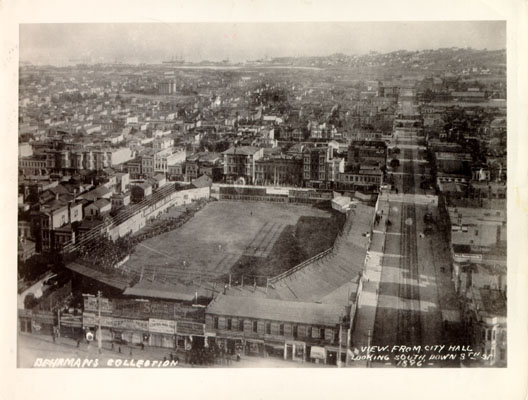
Both men went West to start college football programs, Stagg at the University of Chicago, Camp at the newly-founded Stanford University in the San Francisco Bay Area. They played at the Haight Street Grounds in San Francisco. Chicago beat Stanford 24-4.
The Haight Street Grounds stood from 1887 to 1895. It was actually not at Haight Street, but at the southeastern corner of Stanyan and Waller Streets, in the Haight-Ashbury district that would become the seat of the Hippie movement in the 1960s, at the southeastern corner of Golden Gate Park, about a block from where Kezar Stadium would later be built.

*

December 25, 1894 was a Tuesday. Baseball was out of season, hockey was all-amateur, basketball was a recent invention, and this was before college football was playing bowl games, let alone on Christmas Day.

But in England, soccer, or "football" as they call it, had a tradition: To keep traveling to a minimum, and thus families together, 2 nearby teams would play at one's home ground on Christmas Day, and at the other's on the next day, December 26, Boxing Day. This tradition began to die out in the 1950s, but Boxing Day games are still played.

On December 25, 1894, the London-based team which I would eventually support, then known as Woolwich Arsenal, played, but not against a nearby team: They hosted Burslem Port Vale, at the Manor Ground in Plumstead, Kent, later to be a part of Southeast London, and won, 7-0. Patrick O'Brien scored 3 goals -- not yet known as a "hat trick" in either ice hockey or association football.

Tuesday, December 13, 2022

December 14, 1894: The Consolidation of "Greater New York"

December 14, 1894: The New York State Board of Canvassers releases the official tally of the referendums on creating "The City of Greater New York." Most of the constituencies approved it.

Up to this point, the City of New York consisted of Manhattan Island and part of what became known as The Bronx. But Brooklyn was a separate city, and there were other separate cities around both, which is why the westernmost neighborhood in Queens is called Long Island City.

Queens County then consisted of Long Island City, and the Towns of Elmhurst, Flushing and Jamaica, and what are now called "The Rockaways," then part of the Town of Hempstead. Richmond County, making up the entirety of Staten Island, consisted of the Towns of Castleton, Middletown, Northfield, Southfield and Westfield.

The building of the Brooklyn Bridge in 1883, and the idea of building other bridges and a subway system connecting the two cities, replacing the old ferry boat system, helped put forward the idea of a single city that would be home to about 4 million people.

But Brooklyn, in particular, didn't want to do it: They liked their independence, and didn't want Manhattan telling them what to do. They'd already endured the heavy-handed control of the Manhattan-based Tammany Hall political machine dominating the State legislature, not to mention professional baseball teams calling themselves "New York" while playing at Brooklyn facilities such as the Union Grounds in Williamsburg and the Capitoline Grounds in Bedford-Stuyvesant. (Both had since been demolished.)

Nevertheless, the vote was taken, with a "Yes" vote meaning "For Consolidation," and a "No" vote meaning "Against Consolidation." Here were the results:

* Richmond County (Staten Island): 78.61 percent Yes. Over time, Staten Island would become the Borough the least satisfied with the setup, and has voted at least once to secede from the City, but this has not been permitted by the State government.
* Town of Pelham (in Bronx County): 62.13 percent Yes.
* Queens County: 61.93 percent Yes.
* New York County (Manhattan): 61.78 percent Yes.
* Town of East Chester (in Bronx County): 58.99 percent Yes. Eastchester (usually written as one word since then) has always been part of Bronx County, never Westchester County.
* Kings County (Brooklyn): 50.11 percent Yes. The winning margin was just 277 votes.
* Town of Westchester (in Westchester County): 50.04 percent No. The margin of victory was, literally, one single vote, 621 to 620.
* City of Mount Vernon (in Westchester County): 64.74 percent No. They remained separate, not joining Bronx County.

And so, on January 1, 1898, the Counties of New York, Bronx, Queens, Kings and Richmond became, respectively, the Boroughs of Manhattan, Bronx, Queens, Brooklyn and Staten Island; and, collectively, the City of New York. Westchester and Mount Vernon remained separate, and Mount Vernon became the seat of the new version of Westchester County.

The term "City of Greater New York" was never a legal or official designation; both the original Charter of 1898 and the newer one of 1938 use the name "City of New York." It is used today only to refer to the time period when the consolidation took place.

*

December 14, 1894 was a Friday. There were no scores on this historic day: Baseball was out of season, college football's regular season was over with only 4 postseason games (not yet called "bowl games") remaining to be played, hockey was all-amateur, and basketball was a new invention.

Tuesday, November 29, 2022

November 29, 1894: William Penn, On Top of the World

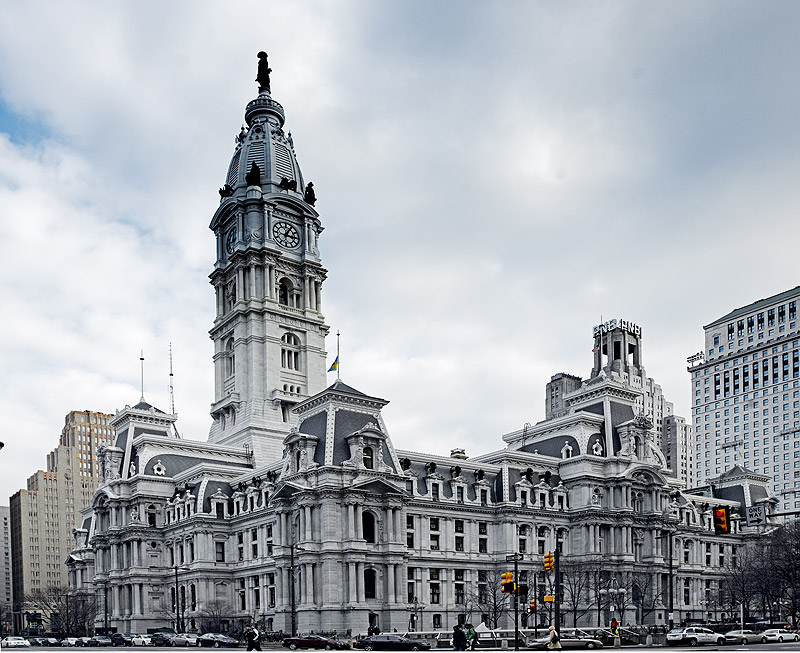
November 29, 1894: A 37-foot-high statue of William Penn, founder of the City of Philadelphia and the British Province that became the State of Pennsylvania (or, officially, "The Commonwealth of Pennsylvania"), is raised to the top of the City Hall that had been under construction in the French-inspired "Second Empire" style since 1871, and would continued to be worked on until being declared complete in 1901.

William Penn (1644-1718) was a writer, religious thinker, and influential Quaker from London, who founded the Province of Pennsylvania, receiving a charter from King Charles II on October 27, 1682. Penn was an advocate of democracy and religious freedom, known for his amicable relations and successful treaties with the Lenape tribe of Native Americans who had resided in present-day Pennsylvania prior to European settlements in the State.
The hat on Penn's statue is 548 feet above street level. This makes City Hall the tallest building in the world, surpassing the New York World Building in New York City, until the opening of the Singer Building in New York in 1908.
(Note: The Council on Tall Buildings and Urban Habitat (CTBUH) maintains a set of criteria for determining the height of tall buildings, and defines a "building" as "a structure that is designed for residential, business or manufacturing purposes" and that "has floors." Although the Eiffel Tower, which had opened in Paris in 1889, was considerably taller, less than half of it was habitable; therefore, while it was classified as the world's tallest structure, it was not a "building" at all.)

It remains the tallest City Hall in the country. Its location, at the junction of Broad Street and Market Street, at the center of Center City Philadelphia, makes it the transfer point for the City's 2 main Subway lines, the Broad Street Line (north-to-south) and the Market-Frankford Line (east-to-west). And, as the City of Philadelphia and the County of Philadelphia are contiguous, it also serves as the Philadelphia County Courthouse.

While many American cities embraced the concept of the skyscraper, a "gentlemen's agreement" forbade any structure from rising above the hat on the Penn statue. The idea was that Penn could look out over his city, in any direction, without his view being blocked. (The statue, of course, is in a fixed position, facing northeast.)

With that agreement in place, the World Series was won by the Philadelphia Athletics in 1910, 1911, 1913, 1929 and 1930, and the Philadelphia Phillies in 1980; the NFL Championship was won by the Frankford Yellow Jackets in 1926, and the Philadelphia Eagles in 1948, 1949 and 1960; the NBA Championship was won by the Philadelphia Warriors in 1947 and 1956, and the Philadelphia 76ers in 1967 and 1983; and the Stanley Cup was won by the Philadelphia Flyers in 1974 and 1975.

On May 27, 1987, One Liberty Place broke the gentleman's agreement, rising to 945 feet. For the first time, something in the city could "block Billy Penn's view." And, apparently, he didn't like this. Just 4 days after One Liberty Place opened, the Flyers lost Game 7 of the Stanley Cup Finals to the Edmonton Oilers.

In 1993, the Phillies lost the World Series. This included blowing a 14-9 lead in the 8th inning of Game 4, at home, before Joe Carter of the Toronto Blue Jays hit a Series-winning home run in Game 6. In 1995, the Flyers were tied 2-2 with the New Jersey Devils in the NHL Eastern Conference Finals, but lost Game 5 in the last minute of regulation, and then lost Game 6. In 1997, the Flyers were swept by the Detroit Red Wings in the Stanley Cup Finals. In 2000, the Flyers led the Devils 3-1 in the Eastern Conference Finals, and lost 3 straight, including losing Eric Lindros to a concussion. In 2001, the 76ers won the NBA Eastern Conference title, but lost the Finals to the Lakers. This remains their only Finals appearance since 1983.

In 2002, the Eagles lost the NFC Championship Game to the St. Louis Rams. In 2003, in their last game at Veterans Stadium, before moving into Lincoln Financial Field, the Eagles lost the NFC Championship Game to the Tampa Bay Buccaneers. Since entering the NFL in 1976, the Bucs had never won a Playoff game on the road, and had never won when the temperature was less than 32 degrees Fahrenheit. With this game, they had done both. If that could happen, and it could happen to the Eagles, then, it was reasoned, larger forces could be at work. This is when the idea of a "curse" began to be discussed. People looked to the last title won by a Philly team, and it was the 1983 76ers, so it had to be something after that.

Between that title and the rise of Liberty Place, the Flyers had lost the 1985 Stanley Cup Finals, but that was while Liberty Place was still under construction, so it's not counted. Nor was the death, early the next season, of Flyer goaltender Pelle Lindbergh, from drunk driving. There was the 76ers' 1986 Draft Day debacle, but that was also before Liberty Place was topped off. So a Curse of Howard Katz, or a Curse of Pelle Lindbergh, was possible. The city's media decided, instead, on Penn, for "blocking his view." (The fact that the two Liberty Place skyscrapers are behind his back, and weren't in his line of sight, seems not to have occurred to them.)

In 2004, the Eagles made it 3 straight NFC Championship Game losses, 2 straight at home, losing to the Carolina Panthers. That same year, it appeared that the curse even extended to horse racing. Smarty Jones, a horse bred and trained in suburban Chester County, Pennsylvania, won the Kentucky Derby and the Preakness Stakes, but fell short of the Triple Crown when he lost the Belmont Stakes by blowing a late lead. In 2005, finally winning an NFC Championship Game on their 4th straight try, the Eagles beat the Atlanta Falcons. But, despite threatening late, they could not beat the New England Patriots in Super Bowl XXXIX.

Someone must have decided that enough was enough. On June 18, 2007, ironworkers helped raise the final beam in the construction of the 974-foot Comcast Center. In addition to the Philadelphia tradition of finishing a building with an American flag and a small evergreen tree, they attached a statue of William Penn. Now, atop the new tallest building in town, his view was, again, unblocked.

Did it work? Not yet: Three months later, the Phillies came from 7 games back in the National League Eastern Division with 17 games to go, surged past the New York Mets, and won the Division title. But lost the NL Division Series to the Colorado Rockies -- the 1st postseason series win for the Rockies, who began play in 1993, the year of the Phillies' most recent Pennant.

But it all came together in 2008. The Phillies beat the Mets out for the Division again, beat the Milwaukee Brewers in the NLDS, and then beat the Los Angeles Dodgers in the NL Championship Series for their 1st Pennant in 15 years. It was on to the World Series, with a first: A father and son broadcasting for the opposing teams, Harry Kalas for the Phils, and Todd Kalas for the Tampa Bay Rays.

The Phillies won Game 1 in St. Petersburg, 3-2, before losing Game 2, 4-2. Coming home to Citizens Bank Park, they won Game 3, 5-4; and Game 4, 10-2. Game 5 began on Monday, October 27, but it rained throughout. The Phillies led 2-1 after 5 innings. Under normal conditions, games are considered to be official games after 5 innings, or 4 1/2 if the home team is leading at that point. However, both Rays and Phillies management knew before the first pitch that Commissioner Bud Selig, who was responsible for the scheduling of post-season games, would not allow a team to clinch the Series by winning a rain-shortened game.

The umpires let the game continue, and the Rays tied the game in the top of the 6th. When that half-inning ended, as Phils 2nd baseman Chase Utley remembered, "The infield was basically underwater." The umpires suspended the game. Rain continued to fall in Philadelphia on Tuesday, October 28, further postponing the game to Wednesday, October 29.

Game 5 was resumed in the bottom of the 6th, with the Philadelphia Phillies batting, and needing 1 run plus 9 outs to win the World Series. Geoff Jenkins doubled, was bunted to 3rd by Jimmy Rollins, and was driven in by a Jayson Werth single.

Rocco Baldelli tied the game with a home run in the 7th. Later in the inning, Utley took a grounder, faked a throw to 1stn base, then threw Jason Bartlett out at home for the 3rd out in a play later described as having saved the Series for the Phillies.

In the bottom of the 7th, Pat Burrell led off with a double. Eric Bruntlett, pinch-running for Burrell, scored on a single by Pedro Feliz to put the Phillies up by a run again, 4–3.

In the 2004 NLCS, pitching for the Houston Astros, Brad Lidge had given up a tremendous home run to Albert Pujols of the St. Louis Cardinals, to lose a game. It was said that he was never the same after that. That wasn't true: The Astros won the Pennant the next year. In 2008, Lidge was the Phillies' closer, and, going into Game 5, was 47-for-47 in save opportunities over the season. For fans still traumatized by the 1993 World Series, he was no Mitch Williams.

In the top of the 9th, Lidge gave up a single and a stolen base, but faced Eric Hinske with the chance to give the city its 1st World Series win since 1980, and its 1st World Championship in any sport since the 1983 76ers. Harry Kalas, the Hall of Fame voice of the Phils, had the call:

One strike away, nothing-and-two to Hinske. Fans on their feet. Brad Lidge stretches. The oh-two pitch: Swing and a miss! Struck him out! The Philadelphia Phillies are 2008 World Champions of baseball!

Brad Lidge does it again, and stays perfect for the 2008 season, 48-for-48 in save opportunities! And let the city celebrate! Don't let the 48-hour wait diminish the euphoria of this moment and celebration! Twenty-five years in this city that a team has enjoyed a World Championship, and the fans are ready to celebrate. What a night! Phils winning, 4–3, Brad Lidge gets the job done once again!

Harry would die early the next season. He deserved that title.

Three months later, the Eagles reached the NFC Championship Game, with a shot at Super Bowl XLIII, but lost to the Arizona Cardinals, a team that hadn't reached an NFL Championship Game, under any name, since 1948. That was embarrassing. 

The Phils won the Pennant again in 2009, but lost the World Series to the New York Yankees. They won the NL East again in 2010 and 2011, then fell apart for a few years. The Flyers reached the Stanley Cup Finals in 2010, but lost to the Chicago Blackhawks. It was beginning to look like the Phillies had broken a curse that had been put on them sometime after 1980, and the other teams in town were under seaprate curses. But in 2018, the Eagles broke a 57-year drought, beating the New England Patriots in Super Bowl LII.

Also in 2018, a new tallest building in the city opened: The Comcast Technology Center, at 1,121 feet, making it the tallest building in America not in either New York City or Chicago. As with its predecessor and sort-of namesake, a small statue of William Penn was put on top, just in case.

*

November 29, 1894, was a Thursday. Under the law of the time, being the last Thursday in November, it was Thanksgiving Day. Not until 1942 was it changed to the 4th Thursday in November, regardless of whether that was the last one. As a result of being Thanksgiving, before the era of professional football, the only sport played was college football, but there were 9 games, including 1 in Philadelphia:

* The University of Pennsylvania beat Harvard, 18-4 at the University Grounds in Philadelphia, 2 miles west of City Hall. Decades later, Penn would be retroactively awarded this season's National Championship.

* The Chicago Athletic Club beat Dartmouth, 4-0 at the Alumni Oval in Hanover, New Hampshire.

* Tufts beat Andover, 6-4 at Andover, Massachusetts.

* Brown beat MIT (Massachusetts Institute of Technology), 16-4 at Lincoln Field in Providence, Rhode Island.

* Cornell beat Lehigh, 10-6 at Percy Field in Ithaca, New York.

* Lafayette beat Bucknell, 44-0 at March Field in Easton, Pennsylvania.

* Purdue beat DePauw University (of Greencastle, Indiana, not DePaul of Chicago), 28-0 at the Fair Grounds in Indianapolis.

* Michigan beat the University of Chicago, 6-4 at Marshall Field in Chicago.

* And Illinois beat the Pastime Athletic Club of St. Louis, 10-0 at Sportsman's Park in St. Louis.

Monday, November 7, 2022

November 8, 1894: The Death of King Kelly

November 8, 1894: Michael Joseph Kelly, sometimes (erroneously) called baseball's 1st true superstar, dies in Boston, where he had been scheduled to appear in vaudeville. "King" Kelly had taken a ferry up from New York, and caught pneumonia. Had today's medicine been available then, he would have been fine. Instead, the pneumonia, and the toll of years of alcoholism, killed him at age 36.

The catcher had helped the Chicago White Stockings (Cubs) win National League Pennants in 1880, 1881, 1882, 1885 and 1886. After the 1886 season, he became the 1st player sold for $10,000 (about $308,000 in 2022 money), to the Boston Beaneaters, forerunners of the Braves. Although he didn't lead them to a Pennant, he became nearly as popular among Boston's Irish-Americans as the Heavyweight Champion of the World, John L. Sullivan.

He inspired a rule change: There was a game in Chicago in which he wasn't playing, and a ball was popped up. He ran onto the field, yelling, "Kelly now catching for Chicago!" so that the umpire could hear, and he caught the ball. Since there was no rule against it, the umpire had to rule the batter out. The following season, the rule was changed: No substitutions in mid-play, except for injury. (In other words, a player hit with a pitch and too injured to continue could have a substitute take the base to which he was entitled.)

He is believed to have invented the hook slide, making him the subject of the song "Slide, Kelly, Slide." There are those who believe he was the inspiration for the poem "Casey at the Bat," and he recited it in his vaudeville act, often getting the words wrong.

In 1888, he dictated Play Ball: Stories of the Ball Field to Boston baseball writer Jack Drohan, making him the 1st baseball player to "write an autobiography." Despite his reputation as a braggart and a drunk, research has shown that most of his stories have checked out, and the book is a godsend to people studying baseball in the 1880s.

In 1890, he was a willing participant in the Players' League revolt, and he led the PL's Boston Reds to the Pennant, his 6th league title. It would be his last, as age and his lifestyle caught up with him. He played his last major league game on September 2, 1893, and his last professional game in August 1894.

He might not have been finished, and if he'd taken care of himself, he certainly wouldn't have been. But then, if he had taken better care of himself, he wouldn't have been King Kelly. As great a player as he was, he wasn't very smart when it came to handling himself. He was thus a precursor to many players, including (in differing ways) Mickey Mantle and Manny Ramirez.

He was married, but his only child had died shortly after birth, earlier in 1894. The Baseball Hall of Fame was not established until 1936. When it elected him in 1945, there was no one available to accept his plaque. Had he taken better care of himself, he would then have been 87.

*

November 8, 1894 was a Thursday. The baseball season was over. Saturday had been standardized as the day for college football. And basketball and hockey were still all-amateur. So there were no scores on this historic day.

Wednesday, October 5, 2022

October 6, 1894: America's 1st Professional Soccer League

The 1894 Philadelphia Phillies... soccer team.

October 6, 1894: The American League of Professional Football, the 1st pro soccer league in the United States, begins play. The 1st game is played in Philadelphia, at the home of the Phillies, what would later be known as Baker Bowl. The New York World, Joseph Pulitzer's splashy, sometimes trashy, newspaper, prints this story: 

Philadelphia, Oct. 6 -- The championship season of American League Professional Football opened here this afternoon on the Philadelphia baseball grounds, with a game between Philadelphia and New York's clubs.

The visitors won by a score of 5 to 0. Two halves of 45 minutes were played.

After 40 minutes of play in the first half, Connolly of New York kicked the first goal.

In the second half, the home players did not back each other up properly, and New York had little trouble in making four more. Gavin scored two and Lupton scored two.

There was a good crowd present, and the liveliest interest was maintained. The New York XI showed excellent teamwork, and the coaching of their captain Trainor had a good effect.

The sporting public in this vicinity are not going to die of heart disease caused from over-enthusiasm for professional football.

Still, it seems to be gaining in popularity. It is an open question whether football can succeed baseball.

There were 6 teams in the ALPF, all named after the baseball teams in town. In alphabetical order: The Baltimore Orioles, the Boston Beaneaters, the Brooklyn Bridegrooms, the New York Giants, the Philadelphia Phillies and the Washington Senators.

Baltimore won their 1st 4 games by a combined margin of 24-3, but couldn't afford to stay in business, and had to fold. Since the standings were decided by points, 2 for a win and 1 for a tie, the standings were as follows: Brooklyn 10, Baltimore 8, Boston 8, New York 4, Philadelphia 4 and Washington 2. A dispute with a competing soccer authority and the depression of the 1890s combined to prevent a 2nd season in the Autumn of 1895.

New York and Philadelphia would become important cities in American professional soccer, and both would have teams in the American Soccer League, the original North American Soccer League, and, with the 2010 establishment of the Philadelphia Union, Major League Soccer. But Americans simply have never cared enough about soccer to put in on the same level as baseball. That would not be the case with the game we call "football."

*

October 6, 1894 was a Saturday. The baseball season was over. Hockey was all-amateur. And basketball had barely been invented. But there were college football games played. Among them were the following:

* Army beat Amherst, 18-0 on The Plain at West Point, New York.

* Harvard beat Andover, 46-0 at Soldiers' Field in Boston.

* Michigan were held to a 12-12 tie by the Michigan Military Academy, at Regents Field in Ann Arbor, Michigan.

* The University of Chicago beat nearby Northwestern, 46-0 at Marshall Field in Chicago.

* And in New Jersey, Rutgers beat Lafayette, 12-10 at Neilson Field in New Brunswick.

In England, there was professional soccer, including Woolwich Arsenal, which would one day move to North London and became the Arsenal team I support, beating Lincoln City, 4-1 at the Manor Ground in Plumstead, then in Kent, now in Southeast London.

Wednesday, September 28, 2022

September 29, 1894: A Baseball Revolution In Baltimore

September 29, 1894: The National League season ends, and the Baltimore Orioles have won their 1st Pennant, finishing 3 games ahead of the New York Giants, and 8 games over the 3-time defending Champions, the Boston Beaneaters (forerunners of the Atlanta Braves).
True, the Orioles have lost today, 5-4 to the Chicago Colts, the team that will one day be the Cubs, at West Side Park in Chicago. But their greatness was certified.
Every player in their starting lineup batted at least .300. They were masters of strategy, excellent bunters, base stealers and hit-and-run performers. On defense, they were pioneers by instituting the cutoff man and having the pitcher cover 1st base.
But they were also sneaky. Sometimes, if they thought the umpire wasn't looking, they would round 1st base, cut across the infield, and slide into 3rd base without even going near 2nd. It took a while for the umpires to catch on to this. But then, it took a while for them to catch on to the need for better umpiring at all: There wasn't even a 2nd umpire on the field until 1888. (It would take until 1926 for games to have 3 umps, and 1940 to have 4, with stadium organists teasing umpires by playing "Three Blind Mice.")
And they were dirty. They would slide spikes-high, and start fights over nothing, hoping the umpire would only see the retaliation, not the first punch, and throw the opponent out of the game.
These were the Boys of Baltimore, the Old Orioles:
1st Base: Dan Brouthers
2nd Base: Henry "Heinie" Reitz
Shortstop: Hugh Jennings
3rd Base: John McGraw
Left Field: Joe Kelley
Center Field: Steve Brodie
Right Field: Willie Keeler
Catcher: Wilbert Robinson

Their pitchers included John "Sadie" McMahon, Bill Hawke, Bill Hoffer, George Hemming, Arlie Pond and William "Kid" Gleason.

September 29, 1894 was a Saturday. In addition to the Orioles' loss to the Colts, these games were played:

* The New York Giants lost to the Cincinnati Reds, 7-6 at League Park in Cincinnati.

* The Brooklyn Bridegrooms (forerunners of the Dodgers) beat the Louisville Colonels, 11-4 at Eclipse Park in Louisville.

* The Boston Beaneaters beat the Pittsburgh Pirates, 6-5 at Exposition Park in Pittsburgh.

* The Cleveland Spiders beat the Philadelphia Phillies, 11-3 at League Park in Cleveland.

* And the St. Louis Browns (forerunners of the Cardinals) beat the Washington Senators (not the future American League team), 6-4 at Sportsman's Park in St. Louis.

The Boston Beaneaters were not be without laurels, though: Center fielder Hugh Duffy has one of the best seasons in baseball history, batting .440 (128 years later, this is still a single-season major league record), hitting 18 home runs, and 145 RBIs, leading the NL in all 3 categories, thus giving him the Triple Crown.

The Orioles won the Pennant again in 1895, and again in 1896. In 1897, they and the Beaneaters got into one of the best Pennant races the game had yet seen, and the Beaneaters won.

Then, the Orioles were broken up, and did not contend in 1898 or 1899. They were then 1 of the 4 teams contracted out of existence, along with Washington, Cleveland and Louisville. This made the American League possible.

Brouthers, Kelley and Keeler were elected to the Baseball Hall of Fame as players. Jennings, McGraw and Robinson could have been. Instead, they were elected as managers. Gleason was also a major league manager, and apparently more honest than some of his teammates: He was the manager of the 1919 American League Champion Chicago White Sox, and was not involved in the fix of that season's World Series.

Between them, Gleason, Jennings, McGraw and Robinson managed teams that won 16 Pennants. But of them, only McGraw won a World Series as a manager, 3 of them. He and Connie Mack would be the 1st 2 men elected to the Hall as managers.

There's one more field leader who should be mentioned. William Jones Clarke, known as "Boileryard" Clarke because he had a loud voice that could be heard all over the ballpark, was a reserve player, who later coached at Princeton University, whose baseball complex is now named Bill Clarke Field for him. He died on July 29, 1959, and was the last survivor of "the Old Orioles."

It would take until 1954 for Baltimore to return to the major leagues on more than an interim basis. In 1966, the American League's Orioles won their 1st Pennant, and their 1st World Championship. By then, the Old Orioles were so far back, they were a legend. There was no one left to even make them a memory.

Wednesday, August 31, 2022

September 1, 1894: The Great Hinckley Fire

September 1, 1894: The Great Hinckley Fire breaks out. Over the next 5 days, it burns over 250,000 acres of forest in eastern Minnesota, around the town of Hinckley. The official death toll was 418, and the actual toll was probably a bit higher.

It was the biggest wildfire in America since the one centered on Peshtigo, Wisconsin in 1871, the result of a very dry Summer. The Great Chicago Fire was on the same day as Peshtigo's.

The Summer of 1894 was also very dry, and especially hot. The fires' spread apparently was due to the then-common method of lumber harvesting, wherein trees were stripped of their branches in place; these branches littered the ground with flammable debris. Also contributing was a temperature inversion that trapped the gases from the fires. The scattered blazes united into a firestorm. The temperature rose to at least 2,000 °F. Barrels of nails melted into one mass, and in the yards of the Eastern Minnesota Railroad, the wheels of the cars fused with the rails. 

Some residents escaped by climbing into wells, ponds, or the Grindstone River. Others clambered aboard two crowded trains that pulled out of the threatened town minutes ahead of the fire.

*

September 1, 1894 was a Saturday. Baseball was then the only team sport in America that dared to be openly professional, and the 12-team National League was the only major league. These games were played on that day:

* The New York Giants split a doubleheader with the Cincinnati Reds at the Polo Grounds. The Reds won the opener, and the Giants won the nightcap. Each game ended 8-6.

* The Brooklyn Bridegrooms swept a doubleheader from the Louisville Colonels, 6-5 and 20-7 at Eastern Park in Brooklyn. Still using the name they got when several of their players got married before the 1887 season, the Grooms would officially be the Dodgers in 1911.

* The Chicago Colts beat the Boston Beaneaters, 17-7 at the South End Grounds in Boston. The Colts became the Cubs in 1903. The Beaneaters became the Braves in 1912.

* A doubleheader was split at the Philadelphia Base Ball Grounds. The St. Louis Browns beat the Philadelphia Phillies, 8-6 in the 1st game. The Phillies won the 2nd game, 19-9. The Browns became the St. Louis Cardinals in 1900.

* The Baltimore Orioles beat the Cleveland Spiders, 5-2 at Union Park in Baltimore.

* A doubleheader was split at Exposition Park in Pittsburgh. The Washington Senators won the 1st game, 11-4. The Pittsburgh Pirates was the 2nd game, 15-6.

Baltimore, Washington, Cleveland and Louisville would be contracted out of the NL after the 1899 season.

And in English soccer, Woolwich Arsenal, the team that would one day become Arsenal Football Club, the North London team I would support, lost to Lincoln City, 5-2 at the Manor Ground in Plumstead, now part of South-East London.

Friday, August 26, 2022

August 27, 1894: "The Sidewalks of New York" (East Side, West Side) Is Published

August 27, 1894: "Sidewalks of New York" is published, with lyrics by James W. Blake, and melody by Charles B. Lawlor. It becomes one of the most familiar songs about New York City.

The song is better known by its first line, "East Side, West Side":

East Side, West Side, all around the town
the tots sang "ring-around-rosie," "London Bridge is falling down."
Boys and girls together, me and Mamie O’Rourke
tripped the light fantastic on the sidewalks of New York

The song mentions a few neighborhood characters, but in the 4th and final verse, it's revealed as a lament for a lost youth. "Up in G" was an 1890s slang term meaning "doing well":

Things have changed since those times, some are up in "G."
Others they are wanderers, but they all feel just like me
They'd part with all they've got, could they once more walk
with their best girl and have a twirl on the sidewalks of New York.

Assemblyman, Governor and 1928 Democratic Presidential nominee Alfred E. Smith made "The Sidewalks of New York" his campaign theme song, usually singing just that verse, ignoring the other verses, including the sad 4th and final verse, and making it one of New York's great saloon singalongs. The song has also been rewritten for various causes, and for TV commercials, most notably for Hot Shoppes restaurants and Rheingold beer in he 1950s and '60s.

Lawlor died in 1925, Blake in 1935. Each man was 72 at the time of his death. "Sidewalks of New York" is the only song written by either man that is still widely remember.

It became the post parade (pre-race) song for the Belmont Stakes, the 3rd and final leg in thoroughbred horse racing's Triple Crown, as "My Old Kentucky Home" is for the Kentucky Derby and "Maryland, My Maryland" is for the Preakness Stakes.

In 1996, Belmont Park management, trying to appeal to a younger demographic, decided to alter tradition and changed the post parade song to "Theme from New York, New York" ("Start spreadin' the news... ")

There is speculation that a jinx has fallen over any horse attempting to win the Triple Crown of after having won the 1st 2 legs. Since 1996, 7 horses who won the Derby and the Preakness have failed to win the race since the song was changed, and 1 was scratched the morning of the race due to lameness.

It is said that the ghost of Mamie O'Rourke (a real person, a childhood friend of lyricist Blake) will never let another Triple Crown winner emerge unless and until "The Sidewalks of New York" is reinstated as the post parade song for The Belmont Stakes. However, this doesn't explain why 4 horses between 1979 to 1996 had already failed to win the Triple Crown after winning the 1st 2 legs. But after the wins of American Pharoah in 2015 and Justify in 2018, if such a curse existed, it's gone now.

*

August 27, 1894 was a Thursday. The only professional sports league in America at the time was baseball's National League, in which these 3 games were played:

* The Cincinnati Reds swept a doubleheader from the Philadelphia Phillies, 19-9 and 9-5. These games were played at the Philadelphia Base Ball Grounds. This was a temporary stadium built after the one of the same name burned down. It was replaced the next season, with the National League Park that would later be renamed Baker Bowl.

* And the Baltimore Orioles beat the Chicago Colts, 12-3 at Union Park in Baltimore. The Orioles were contracted out of the league after the 1899 season, while the Colts became the Cubs.

Thursday, July 21, 2022

July 22, 1894: The 1st Auto Race

Albert Lemaitre, furthest to the left

July 22, 1894: The Parisian magazine Le Petit Journal organized what is considered to be the world's first motoring competition, from Paris to Rouen.

Sporting events were a tried and tested form of publicity stunt and circulation booster. Pierre Giffard, the paper's editor, promoted it as a Concours des Voitures sans Chevaux (Competition for Horseless Carriages) that was "not dangerous, easy to drive, and cheap during the journey." Thus, it blurred the distinctions between a reliability trial, a general event, and a race. One hundred and two competitors paid a 10-franc entrance fee.

There were 69 cars starting the 50-kilometer (31-mile) selection event that would show which entrants would be allowed to start the main event, the 127-kilometer (79-mile) race from Paris to Rouen. The entrants ranged from serious manufacturers like Peugeot, Panhard, or De Dion to amateur owners. Only 25 were selected for the main race.

The race started from Porte Maillot, and went through the Bois de Boulogne. Count Jules-Albert de Dion was first into Rouen, after 6 hours and 48 minutes at an average speed of 19 kilometers (12 miles) per hour. He finished 3 minutes and 30 seconds ahead of Albert Lemaître of Peugeot. However, Lemaître was declared the official winner, as cars were judged on their speed, handling and safety characteristics. De Dion's steam car needed a stoker, which was forbidden.

Lemaître was then 30 years old. He continued to drive in events for Peugeot until 1900, when Mercedes-Benz hired him away. In 1906, he murdered his wife after she asked for a divorce. He was acquitted. Male privilege, I suppose. He died in 1912, and should not be confused with a Belgian painter of the same name (1886-1975).

*

July 22, 1894 was a Sunday. At the time, the only major professional team sport in America was baseball, and some States still did not permit games to be played on Sundays.

There were 2 National League games played on this day. The Cincinnati Reds beat the Louisville Colonels, 4-0 at Eclipse Park in Louisville. And the Chicago Colts beat their arch-rivals, the St. Louis Browns, 11-9 at an early version of Sportsman's Park in St. Louis. By 1903, these teams would be known as the Chicago Cubs and the St. Louis Cardinals, respectively.

Tuesday, July 19, 2022

July 20, 1894: The Pullman Strike Fails

July 20, 1894: The Pullman Strike fails, marking a turning point in American labor law.

There had been a nationwide railroad strike in 1877, and the Homestead Strike of 1892 affected the steel and coal industries. But there had never been a strike as big as this one, in any country, anywhere in the world.

George Pullman designed the Pullman sleeping car for railroads in 1862, and got rich. In 1880, he founded a "company town," Pullman, south of Chicago -- the city that poet Carl Sandburg would later call, among other things, "player with railroads and the nation's freight handler."

Pullman's workers lived in the town. The good: The homes were well-built, clean, and had modern amenities like electricity and indoor plumbing. There were good schools and retail stores. And Pullman showed as little race prejudice as American society would allow at the time: Although black men could only work as porters on the cars he built, they could live side-by-side with the white employees in the Town of Pullman.

The bad: Pullman paid his workers a pittance, probably figuring he could, seeing as how his employees had housing that they didn't have to pay rent on. The ugly: His employees were forbidden from leaving the town to shop elsewhere, and couldn't seek jobs elsewhere. If it was discovered that a Pullman employee had gotten a job at, say, Marshall Field's department store, that employee was evicted, and had to find new housing immediately.

The low wages were tolerable, until the Panic of 1893 sent America into the most devastating economic depression the country had yet known. Production was lost, because the railroads weren't buying as many train cars. So Pullman cut wages, but didn't cut the prices of goods at his town's stores.

Limiting employees to shopping only at stores that the company owned meant that, in some cases (not this one), they didn't get paid in money so much as in credit; and that, if they didn't produce enough, they were actually in debt to the store.

In 1947, country singer Merle Travis wrote "Sixteen Tons," imagining a coal miner who had to shovel eighteen tons a day to "break even" at the company store. With Tennessee Ernie Ford singing it in a basso profundo voice that made it a Number 1 hit in 1955, the chorus went:

You load sixteen tons, and what do you get?
Another day older and deeper in debt.
St. Peter, don't you call me, 'cause I can't go:
I owe my soul to the company store.

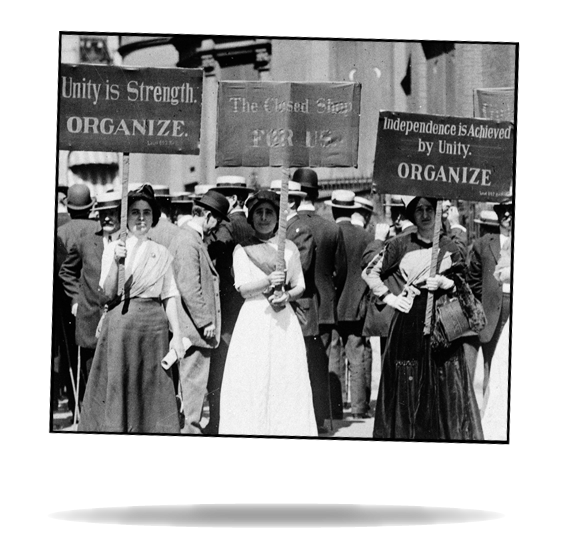
Eugene Debs, a young Chicago lawyer, led the American Railway Union (ARU), and led the Pullman workers on a strike that began on May 11, 1894, and a boycott that began on June 26: ARU members refused to run trains containing Pullman cars. By June 30, 125,000 workers on 29 railroads, all over the country, had walked off the job in "sympathy strikes."

Railroads hired strikebreakers, some of them black, in order to provoke the striking white workers. And the nation's newspapers, by and large run by conservative men, accused the strikers of Communism, anarchism, and anything else they could think of that sounded bad.

The U.S. Attorney General, Richard Olney, a former railroad attorney, told the President, Grover Cleveland, that he could intervene with federal troops, because the railroads being shut down meant that the mail wasn't getting through. Cleveland gave Olney the go-ahead to get a federal injunction barring union leaders from supporting the strike, and demanding that the strikers get back to work or be fired.

Debs told the workers to ignore it: "Strong men and broad minds only can resist the plutocracy and arrogant monopoly. Do not be frightened at troops, injunctions, or a subsidized press. Quit and remain firm. Commit no violence. The American Railway Union will protect all, whether member or not, when the strike is off."

Debs wanted to go further: He wanted a general strike, with every person in Chicago who belonged to any labor union to walk off the job. But Samuel Gompers, the head of the American Federation of Labor, the nation's largest labor-rights organization, opposed the move. Gompers had considerably more influence than Debs at this point, and Debs had to fold on this matter.

On July 7, strikers turned against Debs' demand for no violence, and set fire to boxcars. Pullman had asked for the Illinois National Guard, and got it, and the Guardsmen fired on the strikers. This would be the biggest act of violence during the strike, which would eventually claim the lives of 70 strikers.

With the papers drumming up further opposition to the strike, the public turned against it. An editorial in The New York Times called Debs "a lawbreaker at large, an enemy of the human race." The strike ended on July 20, and Debs was arrested. Despite a vigorous defense by Clarence Darrow, launching him on a career as the foremost American defense attorney of his time, Debs was found guilty of contempt of court for violating the injunction, and served 6 months in prison.

The strike did no good for anybody. With the depression started by the Panic of 1893 ongoing, President Cleveland's popularity dropped further. Because he was a Democrat, voters nationwide turned against his party, and the Republicans won the biggest landslide in Congressional election history in 1894. Cleveland stood no chance of winning another election in 1896, and didn't run. By the time he died in 1908, his historical reputation had improved somewhat.

Olney, however, has gone down in history as one of the least-regarded Attorneys General. In 1895, Cleveland appointed him U.S. Secretary of State, upon the death of that office's holder, Walter Gresham, and held that post through the end of the Cleveland Administration. He died in 1917.

Debs became a full-fledged Socialist, and would be nominated for President by the Socialist Party 5 times. In 1912, he got 6 percent of the popular vote, 918,000 in total, but only finished 4th In 1920, despite once again being in prison, he finished 3rd, getting 3.4 percent, 913,000. He died in 1926.

But no one's public position dropped more than that of George Pullman. Cleveland appointed a commission to investigate the strike and its surrounding events. It described Pullman's company town as "un-American," and condemned him for creating the economic hardships that led to the strike, and for his dictatorial refusal to negotiate.

The State of Illinois filed suit against Pullman the man, over Pullman the town. On October 19, 1897, with the case yet to go to trial, Pullman died of a heart attack. He was 66 years old. The following year, the Supreme Court of Illinois ruled that the Pullman Company had to divest its ownership of the town. It was annexed to the City of Chicago, and much of it is now preserved as a National Monument, honoring the rail industry and the American labor movement.

*

July 20, 1894 was a Friday. This was the birthdate of Wiley Rutledge, who served as an Associate Justice of the Supreme Court of the United States from 1943 until his death in 1949.

Baseball was then the only team sport in America that dared to be openly professional, and the 12-team National League was the only major league. These games were played on that day:

* The New York Giants lost to the Boston Beaneaters, 12-1 at the South End Grounds in Boston. This was the 1st game played at the 3rd South End Grounds, after the 2nd one had burned down on May 15. The Beaneaters became known as the Braves in 1912.

* The Brooklyn Bridegrooms beat the Philadelphia Phillies, 8-2 at Eastern Park in Brooklyn. Still using the name they got when several of their players got married before the 1887 season, the Grooms would officially be the Dodgers in 1911.

* The Baltimore Orioles beat the Washington Senators, 12-8 at Boundary Park in Washington. Griffith Stadium would be built on the site of Boundary Park in 1911. Both of these teams would be contracted out of the NL after the 1899 season.

* The Cincinnati Reds beat the Pittsburgh Pirates, 7-6 at League Park in Cincinnati. Crosley Field would be built on the site of League Park in 1912.

* The Louisville Colonels beat the Cleveland Spiders, 7-4 at Eclipse Park in Louisville. Both of these teams would also be contracted out of the NL after the 1899 season.

* The Chicago Colts, who would become the Cubs in 1903, and the St. Louis Browns, who would become the Cardinals in 1900, were not scheduled to play. The strike appears not to have affected any team's schedule, not even that of the one actually in Chicago. 

Wednesday, June 29, 2022

June 30, 1894: Tower Bridge Opens In London

June 30, 1894: Tower Bridge opens to traffic in London, its access ramp at the northeast corner of the Tower of London. Of course, this means foot, bicycle, horse-drawn wagon and horse-drawn carriage traffic. Not very many automobiles were on the streets of London at this point.

The bridge was constructed to give better access to the East End, which had expanded its commercial potential in the 19th century. The bridge was opened by the Prince and Princess of Wales, later King Edward VII and Queen Alexandra.

It should not be confused with London Bridge, the next bridge up the River Thames, 8/10ths of a mile to the west. Tower Bridge has become an icon, not just of London but of the United Kingdom itself, every bit as much as the Palace of Westminster, 3 miles up the Thames.

It became the logo of Thames Television, the franchise holder of network ITV from 1968 to 1992. In America, we would call it a network affiliate. Actually, Thames only broadcast from Monday morning to late Friday afternoon, at which point LWT, London Weekend Television, took over until the next Monday morning.

*

June 30, 1894 was a Saturday. These National League games were played that day:

* The Brooklyn Bridegrooms lost to the Pittsburgh Pirates, 10-6 at Exposition Park in Pittsburgh.

* The Baltimore Orioles beat the Cleveland Spiders, 5-3 at League Park in Cleveland.

* The Cincinnati Reds beat the Washington Senators, 12-0 at League Park in Cincinnati.

* The Philadelphia Phillies beat the Louisville Colonels, 13-6 at Eclipse Park in Louisville, Kentucky.

* The St. Louis Browns beat the Boston Beanaters, 10-9 at Sportsman's Park in St. Louis.

* And the New York Giants and the Chicago Colts were rained out at West Side Park in Chicago. The game was made up as part of a doubleheader on September 18. The Giants swept, 4-3 and 9-6.

The Brooklyn Bridegrooms became the Dodgers, the St. Louis Browns became the Cardinals, the Boston Beaneaters became the Braves, and the Chicago Colts became the Cubs. The Baltimore Orioles, the Cleveland Spiders, the Washington Senators and the Louisville Colonels were all contracted out of the NL after the 1899 seasons. But all except Louisville got teams in the American League in 1901, although that version of the Orioles failed. A new St. Louis Browns started in the AL in 1902, moving to Baltimore to become the current version of the Orioles in 1954.

Monday, June 27, 2022

June 28, 1894: Labor Day Is Declared a Federal Holiday

June 28, 1894: President Grover Cleveland signs a bill making Labor Day a federal holiday, on the 1st Monday in September.

Beginning in the late 19th century, as the trade union and labor movements grew, diverse groups of trade unionists chose a variety of days on which to celebrate labor. In the United States, a September holiday called Labor Day was first proposed in the early 1880s.

In 1887, Oregon became the 1st State to make Labor Day an official public holiday. By 1894, 30 States were already officially celebrating Labor Day. In that year, during the Pullman Strike, Congress passed a bill recognizing the 1st Monday of September as Labor Day, and making it an official federal holiday. Cleveland signed the bill into law.

But the law only made it a holiday for federal workers. As late as the 1930s, unions were encouraging workers to strike to make sure they got the day off. All U.S. States, the District of Columbia, and the U.S. Territories have subsequently made Labor Day a statutory holiday.

Labor Day is considered the unofficial end of Summer. Of the 7 percent of Americans who take two-week vacations, many take them during the 2 weeks ending with Labor Day weekend. Many fall activities, such as school and sports, particularly football, begin about this time.

Canada also celebrates Labor Day on the 1st Monday in September. While the U.S. traditionally had baseball doubleheaders on the day, the Canadian Football League plays major rivalries on the day, called "The Labor Day Classic."

*

June 28, 1894 was a Thursday. The only professional sports league in North America at the time was baseball's National League, and these games were played:

* The New York Giants beat the Chicago Colts, 6-5 at West Side Park in Chicago.

* The Brooklyn Bridegrooms beat the Pittsburgh Pirates, 11-7 at Exposition Park in Pittsburgh.

* The Cleveland Spiders beat the Baltimore Orioles, 18-11 at the 1891-1909 version of League Park in Cleveland.

* The Cincinnati Reds beat the Washington Senators, 5-4 at League Park in Cincinnati. Yes, both Ohio teams then played in stadiums named League Park.

* The Louisville Colonels beat the Philadelphia Phillies, 11-9 at the 1893-99 version of Eclipse Park in Louisville, Kentucky.

* And the Boston Beaneaters beat the St. Louis Browns, 12-11 at the version of Sportsman's Park in St. Louis that became Robison Field.

The Spiders, the Orioles, the Senators and the Colonels were tossed out of the League after the 1899 season. The Browns became the St. Louis Cardinals in 1900. The Colts became the Chicago Cubs in 1903. The Bridegrooms became the Brooklyn Superbas in 1899 and the Brooklyn Dodgers in 1911.

And the names Baltimore Orioles, St. Louis Browns and Washington Senators would be adopted by American League teams.

Thursday, June 23, 2022

June 24, 1894: The Assassination of Sadi Carnot

June 24, 1894: Sadi Carnot, the President of France, is assassinated in Lyon. He was 56 years old.

Marie François Sadi Carnot was born on August 11, 1837 in Limoges, New Aquitaine. His father, Hippolyte Carnot, was also a politician, and was a brother of the scientist now regarded as the father of thermodynamics, Nicolas Léonard Sadi Carnot, for whom he named his son.

Following the fall of France's Second Empire in 1870 and the Paris Commune the next year, he left his profession of civil engineering to enter public service in the Third Republic. By 1880, he was in the Cabinet, serving twice as Minister of Public Works, and in 1885 was named Minister of Finance. Scandal doomed the Presidency of Jules Grévy in 1887, and Carnot was seen as clean, and was thus an easy choice to be the new President.

For his 1st 2 years in office, Carnot and the nation were threatened by the popularity of Georges Ernest Boulanger, a would-be dictator nicknamed Général Revanche ("General Revenge"), whom many liberals feared would become the next Napleon Bonaparte, after Napoleon III had been overthrown as Emperor as a result of the Franco-Prussian War in 1870.

But he celebrated his January 1889 election as a deputy (equivalent to a U.S. Senator) for Paris by running off to see his mistress, Marguerite Brouzet, Vicomtesse de Bonnemains. His absence from the capital meant that his supporters couldn't rally around him, giving his opponents time to build a criminal case against him. On April 4, he was stripped of his immunity from prosecution, and was sentenced to deportation. He and the Vicomtesse fled to London, where she died of tuberculosis in his arms in 1891. Her remains were returned to France, and so did he. A few weeks later, he shot himself at her grave.

In 1889, Carnot presided over the 100th Anniversary celebrations for the French Revolution, including the Paris Exhibition, a world's fair, and the opening of what became its, and eventually, France's, best-known icon, the Eiffel Tower. The most troubling period of his tenure turned out to be the scandal over France's abandonment of building the Panama Canal in 1892 (resumed by the U.S. in 1904), but Carnot's personal integrity saved the government.

President Carnot was reaching the zenith of his popularity, when, on June 24, 1894, after delivering a public banquet speech at the Palais du Commerce in Lyon, in which he appeared to imply that he would not seek re-election, he was stabbed on the Rue de la République by an Italian anarchist named Sante Geronimo Caserio. Carnot was transported to the Préfecture du Rhône nearby, but died shortly after midnight on June 25.

The stabbing aroused widespread horror and grief, and the president was honoured with an elaborate funeral ceremony in the Panthéon on July 1, 1894, after which he was interred in the Panthéon's crypt, alongside other notable figures in French history, including Voltaire, Jean-Jacques Rousseau and Victor Hugo.

Among those buried there since 1894 are Louis Braille (his remains transferred from elsewhere), Alexandre Dumas père (ditto), Marie and Pierre Curie (ditto), Ã‰mile Zola, Josephine Baker, Jean Moulin and Jean Monnet.

Caserio called the assassination a political act, and was executed on August 16, 1894. Within 2 months, the Dreyfus Affair began, and France was thrown into turmoil. It can only be guessed how Carnot would have handled it, but on January 16, 1895, it brought down his successor, Jean Casimir-Perier.

*

June 24, 1894 was a Sunday. The only professional sports league then operating in North America was baseball's National League. But the Eastern teams were in States that still did not permit professional sports to be played on Sundays, so all 3 games played that day were in the Midwest:

* The Cincinnati Reds beat the Louisville Colonels, 7-5 at Eclipse Park in Louisville, Kentucky.

* The Baltimore Orioles beat the Chicago Colts, forerunners of the Cubs, 11-10 at the West Side Grounds in Chicago.

* And the St. Louis Browns, forerunners of the Cardinals, beat the Cleveland Spiders, 14-10 at the 1892-1898 version of Sportsman's Park in St. Louis.

December 31, 1999 & January 1, 2000: The Millennium

December 31, 1999:  The Millennium arrives. The people of planet Earth survived. At a terrible cost. But we hadn't destroyed ourselves. ...