June 12, 1981: Raiders of the Lost Ark premieres, introducing the character of Indiana Jones.
The film is a collaboration of what were then the 2 biggest names in moviemaking: Steven Spielberg, director of Jaws and Close Encounters of the Third Kind, directed; while George Lucas, producer and writer of the Star Wars films, produced. Spielberg told Lucas of his vision of making a film that captured the fun and suspense of the "cliffhanger"-driven film serials of the 1930s and '40s, with a "pulp fiction" style hero.
At first, we only know his "trade name": Indiana Jones. The details of his life came out in later movies and TV shows based on the character. Dr. Henry Walton Jones Jr. is born on July 1, 1899 in Princeton, New Jersey, where his father was teaching archaeology. In spite of his conflict with his father, Henry, who nicknamed himself "Indiana" after his childhood dog, went into the same line of work. (Lucas' full name is George Walton Lucas Jr.)
The 1992-93 ABC series The Young Indiana Jones Chronicles focused on 2 periods in his early life: A tour his father, and his mother, Anna, took him on at age 10 in 1909, when he was played by Corey Carrier; and his activities in World War I and its aftermath, when he was played by Sean Patrick Flanery. (That's how he spells his surname, with 1 N.) The stories are narrated by a 93-year-old Indy, played by George Hall, wearing an patch over his right eye.
(That show's status as canon has since been called into question, as it mentions Indy having a daughter named Sophie, who appears to have been born after Mutt, but before Indy finally married Marion. It's not clear who her mother is, but it's certainly not Marion. According to non-canon books about Indy, he was briefly married in 1925-26 to Scottish archaeologist Deirdre Campbell, but they had no children.)
A scene at the start of Indiana Jones and the Last Crusade, taking place in 1912 Utah, provides something of an origin story, as it tells of how 13-year-old Indy, played by 18-year-old River Phoenix, got his fedora hat, his whip. the scar on his chin, and his fear of snakes.
In 1925, Jones began teaching archaeology at Marshall College, in Bedford, Connecticut. (Neither the school nor the town actually exist. It should not be confused with Marshall University in Huntington, West Virginia. Scenes for Marshall College were filmed in Connecticut, at Yale University in New Haven.) There, he met professor Abner Ravenwood, who became his mentor; and Abner's daughter, Marion, who became his girlfriend -- at age 15. It wasn't shame on his part that ended the relationship, it was the nature of his work, causing him to leave her behind.
The 2nd film in the series, Indiana Jones and the Temple of Doom, takes place in 1935, and shows Indy, played by Harrison Ford, fighting gangsters in China, and then a cult in India. This film had some hard-to-watch scenes, and was one of the reasons the Motion Picture Association of America created the PG-13 rating in 1984, for films that were too rough for a PG but not violent or sexy enough for an R.
The 1st film in the series, from the viewer's perspective, was released in 1981, under the title of Raiders of the Lost Ark. At the time, there was no indication that it would be a series. It has never officially been renamed Indiana Jones and the Raiders of the Lost Ark. Most Indy fans tend to call it simply Raiders, anyway.
Prior to Temple of Doom, a prequel-as-next-movie was rare. So the 1st movie in the series from the viewer's perspective is the 2nd from Indy's. It's 1936, Nazi Germany is starting to flex its international muscle, and the U.S. Army asks Indy, with his historical and archaeological expertise, to find something before the Nazis can: The Ark of the Covenant, the vessel in which the ancient Israelites stored the tablets with the original inscription of the Ten Commandments, supposedly written by God Himself.
Despite their hatred of all things Jewish, the Nazis believe that possession of the Ark will give them power that will make them unstoppable. So you can see why the Army would want an American to stop them.
In order to find the Ark, he needs certain things that only Dr. Ravenwood had. Since he's dead now, he has to reunite with Marion (Karen Allen). She's not happy to see him, but when the Nazis come for her and the clues to the Ark's location, she has little choice but to join forces with Indy, who is also aided by Egyptian excavator Sallah Mohammed Faisel el-Kahir (John Rhys-Davies).
Indy has to battle Nazi agents, led by the black-coated, bespectacled Arnold Toht (Ronald Lacey) and their lead archaeologist, French mercenary René Belloq (Paul Freeman). At one point, he is faced with a Nazi-allied Egyptian swordsman (Terry Richards), flashing a scimitar like a great martial artist. Indy calmly pulls his gun and shoots him dead. (The scene was changed because Ford was battling the flu, and didn't feel like swordfighting.)
Ultimately, while Indy finds the Ark, the Nazis take it. They restrain him and Marion at the testing site as Belloq ceremonially opens the Ark, but finds only sand inside. At Indy's insistence, he and Marion close their eyes to avoid looking at the opened Ark, as it releases spirits, flames, and bolts of energy that kill Belloq, Toht, and the assembled Nazis before sealing itself shut. They open their eyes to find the area cleared of bodies and their bindings removed.
Back in Washington, the federal government rewards Indy for securing the Ark, and tell him that it has been moved to an undisclosed location for "top men" to study. In a large warehouse, the Ark is crated up and stored among countless other crates. (In the 4th film, this warehouse is revealed to be part of Area 51 in Nevada.)
The film was a runaway success, and inspired 2 more films before the decade was out: The aforementioned Indiana Jones and the Temple of Doom in 1984, and Indiana Jones and the Last Crusade in 1989. The "present" scenes of the latter are in 1938, as Indy is asked by the government to beat the Nazis to another artifact, this time the Holy Grail, the cup Jesus used at the Last Supper. Indy calls upon Sallah and his estranged father (Sean Connery) for help. One thing leads to another, and Indy goes to Berlin, puts on a Nazi uniform, and comes face-to-face with Adolf Hitler. Who gives him an autograph. (It's a long story.)
Indiana Jones became a legend, with several ripoffs and/or homages, including Lara Croft in the Tomb Raider video games and films, and Tia Carrere's Dr. Sydney Fox in the 1999-2002 TV series Relic Hunter. In a 1992 episode of Seinfeld, George shows up wearing a fedora, and Jerry addresses him as "Indiana."
In a 2013 episode of The Big Bang Theory, Amy says she has never seen Raiders, so Sheldon shows it to her, and she points out that if Indy hadn't gotten involved, the Ark would still have killed the Nazis, and Indy would have saved a lot of time, money and physical effort.
And in 2022, the YouTube series Epic Rap Battles of History featured series regular "Nice Peter" Shukoff as Indy, battling Lara Croft, played by Croix Provence. Her Lara correctly pointed out that much of Indy's image was based on Secret of the Incas, a 1954 adventure film starring Charlton Heston. The 1885 H. Rider Haggard novel King Solomon's Mines, with its adventurer Allan Quatermain, were filmed in 1937 with Cedric Hardwicke and 1950 with Stewart Granger, and were also an inspiration for Indy.
Years went by without an Indiana Jones IV, and people were beginning to wonder if there would ever be one. But with Ford committed to Star Wars sequels, Tom Cruise signing a deal for a Top Gun sequel as he approached age 60, and Sylvester Stallone returning to play both Rocky Balboa and John Rambo at an age when he should have hung up both his boxing gloves and his bandana, an Indy 4 was inevitable.
Indiana Jones and the Kingdom of the Crystal Skull is set in 1957, and references are made to the adventures of "Colonel Jones" in World War II, leading to fans' suggestions that such a story might have made for a better film. This time, with the Nazis in the rearview mirror, it's the Soviet Union that is the artifact-chasing enemy, led by Colonel Doctor Irina Spalko (Cate Blanchett).
After losing his first tussle with Spalko, and subsequently surviving a nuclear bomb test (if you haven't seen the film, don't ask), Indy goes home, and is found by Mutt Williams (Shia LaBeouf), a motorcycle-riding "greaser" like Marlon Brando in the 1953 film The Wild One. Mutt says that his mother has been kidnapped by the Soviets -- and his mother turns out to be Marion Ravenwood. When they find her, she tells Indy that Mutt is also his son: His birth name was Henry Walton Jones III. Although father and son don't get along, in order to save both parents, Mutt ends up managing to get Indy to conquer his longstanding fear of snakes.
That is the film's highlight, along with a moment when Ford channels his other legendary character, Star Wars' Han Solo, and says, "I've got a bad feeling about this!" Even the long-delayed wedding of Indy and Marion at the end seems anticlimactic. As for the resolution of the plot... don't ask. But in spite of the silliness of the story, and some mixed reviews, it became the 2nd-highest-grossing film of 2008.
If Indiana Jones, the character, were real, he would be 123 years old in 2022, which would be astronomically unlikely. Then again, he did drink from the Grail back in 1938... But then, he still lost an eye and began using a cane sometime between 1957 and 1992... Unless we want to toss The Young Indiana Jones Chronicles from canon...
UPDATE: A 5th film, Indiana Jones and the Dial of Destiny, set in 1969 (meaning the 80-year-old Ford is playing a 70-year-old action hero), premiered on June 30, 2023. It began with a sequence set in 1944, with a computer-aided "de-aged" Ford once again battling Nazis, and backing up the suggestion that there was a better film to be made about "Colonel Jones" than Crystal Skull turned out to be.
But when it gets to the "present" sequence, in the Summer of 1969, we find out that Mutt was killed while serving in Vietnam, and this led to Marion filing for divorce from Indy. Retired from teaching, and with nothing left to do except drink, he is found by the daughter of the now-dead associate from the 1944 adventure. She snaps him out of it long enough to race neo-Nazis, led by the villain of the opening sequence, to finding the Dial of Archimedes, which, despite being invented in 212 BC, can act as a time machine.
As with the Ark, the Nazis get it away from Indy. As with the Ark, he warns them that it won't work the way they hope it will. As with the Ark, they don't listen to him, and use it anyway. As with the Ark, Indy turns out to be right.
They get back to 1969, and Indy and Marion reconcile. Rhys-Davies, Welsh, returns as Salah, now a cabdriver in New York, but at least actual Egyptian actors were cast as his children and grandchildren.
Despite the recent Academy Award for Best Supporting Actor won by his portrayer, Ke Huy Quan, no mention is made of Short Round, who would be 46 by 1969. Nor is Indy's TV daughter Sophie mentioned. And he still doesn't have the eye patch. This last (?) movie leaves us with so many questions, but at least Indy and Marion are happy together.
A 2022 episode of the YouTube series Epic Rap Battles of History featured "Nice" Peter Shukoff playing Indy, and rapper Croix Provence playing Lara Croft from the Tomb Raider video game and film franchise.
June 12, 1981 was also the premiere date for Mel Brooks' History of the World, Part I; and the original version of Clash of the Titans, the last of the classic stop-motion special effects films of the great Ray Harryhausen.
*
June 12, 1981 was a Friday. This was also the day that Major League Baseball's Strike of '81 started. I have a separate entry for that. Since every MLB team stopped on June 12, and no other sports were running at the time -- the NBA season ended on May 14, and the NHL season on May 21, and the NFL season didn't start until September 6 -- there were no scores on that historic day.
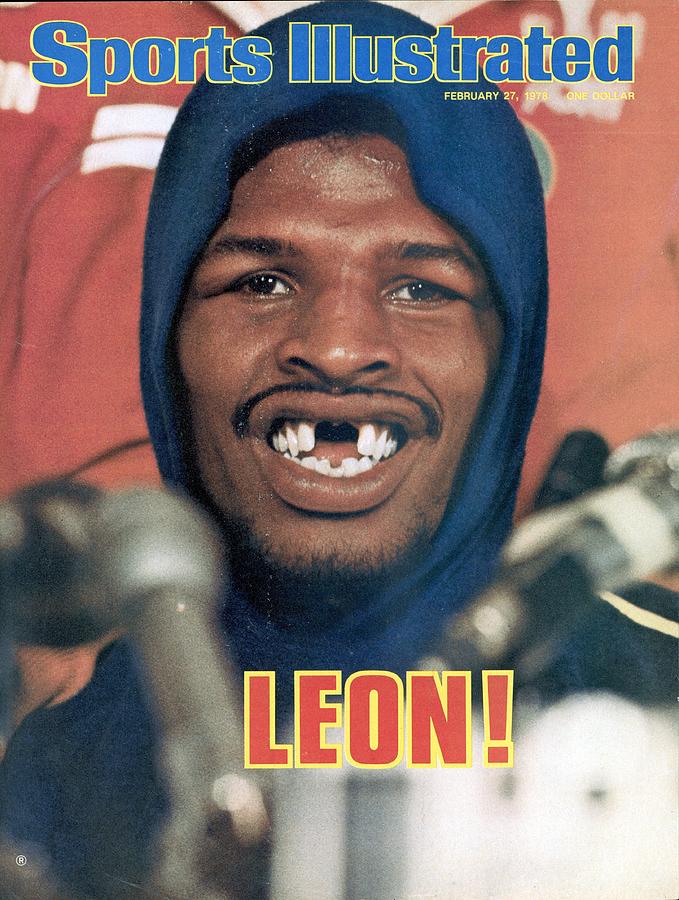
But there was a major sporting event: Larry Holmes successfully defended the Heavyweight Championship of the World, defeating former Champion Leon Spinks, by a technical knockout in the 3rd round, at a venue named for another former Champion, the Joe Louis Arena in Detroit.
And Brazilian supermodel Adriana Lima was born.