Showing posts with label boardwalk hall. Show all posts

Wednesday, December 28, 2022

December 28, 1929: The 1st NHL Game In New Jersey

Boardwalk Hall

When was the 1st National Hockey League game in New Jersey? It was the Devils' opener in 1982, right? Actually, it goes back a lot further than you might think.

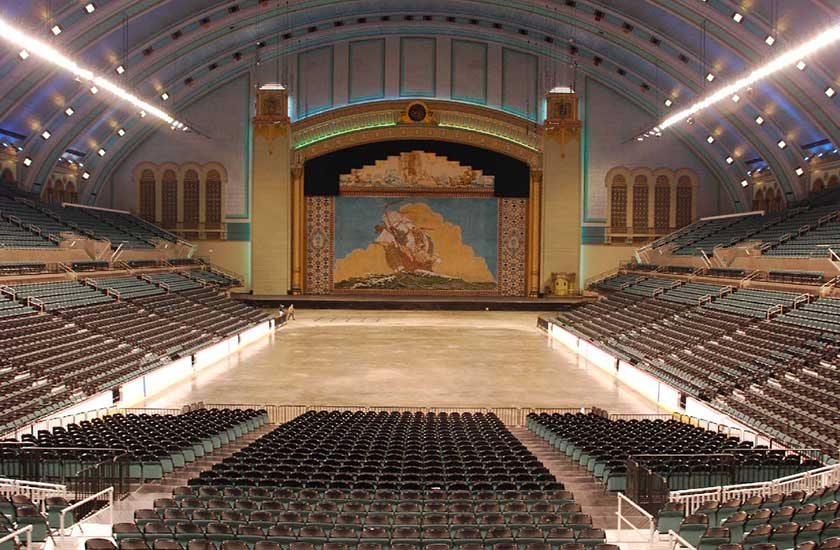
December 28, 1929: It was at the end of the Roaring Twenties, just 2 months after the stock market's Crash of 1929. No one had yet realized that the Great Depression had begun. The Shore resort of Atlantic City had just opened a new Convention Hall, a 17,000-seat amphitheater, with the round end of the horseshoe pointing to the beach and a stage at the inland end.

The New York Rangers had begun play in the 1926-27 season. In 1927-28, they won the Stanley Cup. In 1928-29, they reached the Stanley Cup Finals, but lost to the Boston Bruins. For reasons lost to time, they decided to play a "home game" of the 1929-30 season 120 miles away, at Convention Hall.

The Rangers were loaded, with a forward line of Frank Boucher centering the brothers Bill and Frederick "Bun" Cook. Their defense was led by Ivan Johnson, known as "Ching" because, in that much less politically correct era, some people, who clearly needed glasses, thought he looked Chinese. Their goalkeeper for this game, and for every game from 1928 to 1933, was John Ross Roach, picked up following a goalkeeping emergency that nearly cost them the '28 Cup.

The Ottawa Senators had won the Cup in 1920, '21, '23 and '27, but were now in decline. They were still led by forwards Frank Nighbor, Frank Finnigan, and the brothers Hector and Wally Kilrea. Their defense still had Frank "King" Clancy and Alex Smith, with Alex Connell in goal.

Boucher opened the scoring at 14:30 of the 1st period. Clancy tied the game at 5:11 of the 2nd. At 9:00, Paul Thompson, later to help the Chicago Black Hawks win the 1934 and '38 Stanley Cups, gave the Rangers the lead. With 2:24 left in regulation, Leroy Goldsworthy (no relation to 1970s hockey star Bill Goldsworthy) gave the Broadway Blueshirts an insurance goal. The Rangers won, 3-1.
Frank Boucher

Two more games would be played at Convention Hall that season. On January 25, 1930, the Chicago Black Hawks beat the Pittsburgh Pirates, 5-2. And on March 15, the Senators returned, and beat the New York Americans, 8-7. The next season, the hockey version of the Pirates became the Philadelphia Quakers, but went out of business after that one season. They played at the Philadelphia Arena, and did not play any games in Atlantic City.

The Rangers reached the Finals again in 1932, and won the Cup in 1933, before rebuilding, and reaching the Finals in 1937 and winning the Cup in 1940. World War II wrecked the franchise, and they have only won the Cup once since, in 1994. They're still better off than the Senators, who went out of business in 1934. A new Ottawa Senators franchise began in 1992, but has only reached the Finals once, in 2007.

Despite the World Hockey Association moving the New York Golden Blades (formerly the New York Raiders) to the Cherry Hill Arena in the Philadelphia suburbs, and renaming them the Jersey Knights, in the middle of the 1973-74 season, after which they folded, there would be no more NHL games in New Jersey for 52 years, until October 5, 1982, when the New Jersey Devils made their regular-season debut, tying the Pittsburgh Penguins, 3-3.

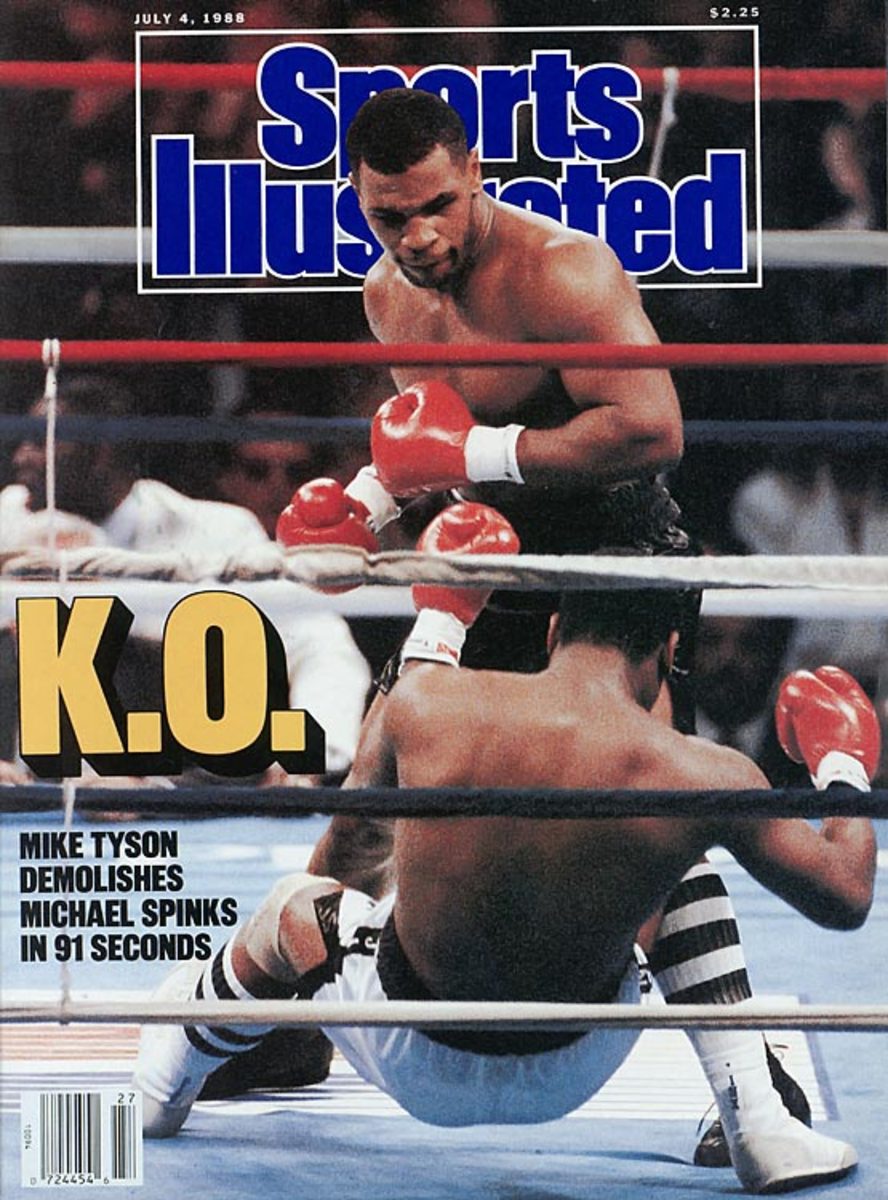
Convention Hall, renamed Boardwalk Hall in 2001, still stands. From 1940 to 1997, and again from 2013 to 2019, it hosted the Miss America Pageant. Within days in August 1964, it hosted both the Democratic National Convention and a concert by The Beatles. It hosted the Liberty Bowl football game in 1964, despite not quite being long enough for a standard football field. It's hosted many concerts, and some big prizefights, the most famous of them being Mike Tyson's 91-second knockout of Michael Spinks in 1988.

*

December 28, 1929 was a Saturday. One other NHL game was played that day: The Boston Bruins beat the Montreal Canadiens, 3-2 at the Montreal Forum. The Bruins had won the Stanley Cup the season before, but the Canadiens would win it this season.

Baseball was out of season. Football season had just ended. The NBA hadn't been founded yet.

One other sports note from this day: The English soccer team I have come to support, Arsenal F.C., went to Yorkshire, and lost to Leeds United, 2-0 at Elland Road. They went on to win their 1st major trophy that season, anyway, the 1930 FA Cup.

Monday, December 19, 2022

December 19, 1989: The Rolling Stones vs. Donald Trump

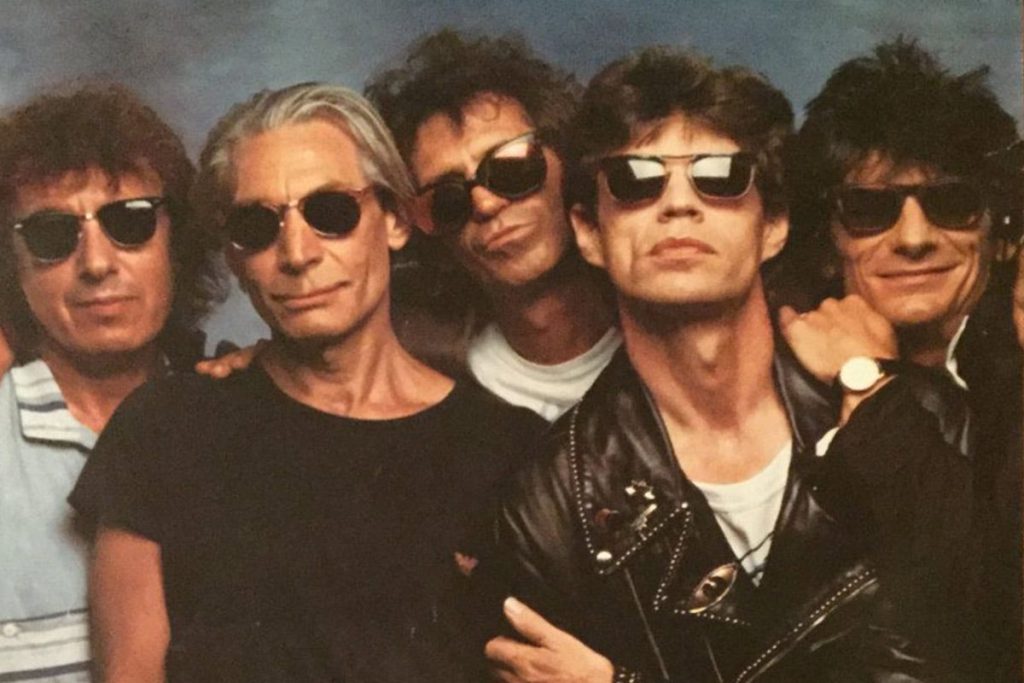
Left to right: Bill Wyman, Charlie Watts,
Keith Richards, Mick Jagger and Ron Wood

December 19, 1989: When The Rolling Stones have the moral high ground over you, that is not a good sign.

In 1985, lead singer Mick Jagger released his 1st solo album, She's the Boss. In 1987, he released Primitive Cool. Neither did well. In 1988, lead guitarist Keith Richards, who isn't even as good a singer as Mick (Mick is one of the greatest frontmen in rock history, but not a good singer), released his 1st solo album, Talk Is Cheap. It did do well, proving that Mick needed Keith a lot more than the other way around.

So, with the Stones' eligibility for the Rock and Roll Hall of Fame kicking in for 1989, and the band's reuniting for the certain induction ceremony, Mick ate crow, and got together with Keith to write new songs. The result was the album Steel Wheels, which produced "Mixed Emotions," which hit Number 5, and remains the last major hit for "The World's Greatest Rock and Roll Band."

And so, at the induction ceremony, the Stones announced the Steel Wheels Tour. Mick said, "You know, Americans are a funny people: First they arrest you, then they put you in a museum."

And so, for the last time with the lineup established in 1974, the Stones hit the road: Jagger, Richardson, rhythm guitarist Ron Wood, bass guitarist Bill Wyman, and drummer Charlie Watts. (Wyman left the group after the tour.) Chuck Leavell, formerly of The Allman Brothers Band, became their keyboard player and musical director in 1982. Bobby Keys became their touring saxophone player.

The tour hit mostly stadiums, including Shea Stadium in New York, Veterans Stadium in Philadelphia, the Los Angeles Coliseum, and the Oakland Coliseum to meet the San Francisco Bay Area market. Oddly, they didn't play in Chicago, the nation's 3rd-largest city. But they did play the top 3 cities in Canada: BC Place in Vancouver, the Olympic Stadium in Montreal, and Exhibition Stadium and later the newly-opened SkyDome (now named the Rogers Centre) in Toronto.

The oldest of the Stones was Wyman, 53; the youngest, Wood, 42. Already, jokes were being told about their age. Filling in for Johnny Carson on  The Tonight Show, Jay Leno, no spring chicken himself at 38, said, "You can tell which tour bus is the Stones': They leave their left blinker on." (Turn signal.)

The tour was scheduled to conclude on December 19, 1989, at Convention Hall (now named Boardwalk Hall) in Atlantic City, New Jersey. Producer Michael Cohl organized a pay-per-view broadcast of that concert. This event was expected to generate significant revenue. But it required a major financial backer.

New York real estate mogul Donald Trump agreed to shell out a huge sum. I used to think Trump was smart, because he put his 1st Atlantic City casino, Trump Plaza, between that city's two most famous buildings: Caesars Atlantic City (then as now, the best-known American casino-hotel outside Las Vegas) and Convention Hall. In the years to come, I came to the conclusion that, as they used to say on Match Game, Dumb Donald was so dumb (How dumb was he?), the idea had to be someone else's.
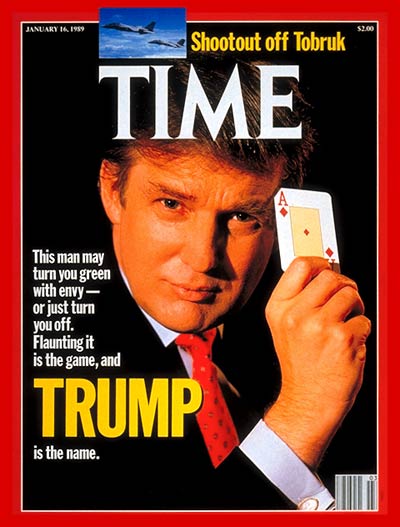
Time magazine, January 16, 1989

Trump's reputation for dishonesty in business -- as well as in his 1st marriage, to Ivana Zelníčková, which was then breaking up in the public eye -- was already well-known. And the Stones, with their history of drinking, drugs, debauchery, and leaving their native Britain to avoid high taxes, were reluctant to do business with him.

So Cohl contracted strict conditions: Trump was not allowed to publicly promote the show, he would not be allowed to attend the concert, and his name would not allowed to dominate the advertising.

When the band arrived at the Convention Hall, they were met with advertising posters that read, "Donald Trump presents The Rolling Stones." It seemed like shameless advertising at the band's expense, especially since the band's name was in small print.

An hour before the concert, the band was scheduled to broadcast live to major U.S. news channels. When producer Cohl entered the press room, he found Trump in the midst of his own press conference. Cohl asked Trump to leave, reminding him of his contract. Trump waved his arms at the crowd of American TV journalists who were actually waiting to hear The Rolling Stones, and replied, "But Michael, they begged me to come up here! They begged me!"

This was, like so many things Trump has said over the years, a flat-out lie. Upon learning of what was happening, Richards summoned Cohl to his dressing room. When Cohl arrived, Richards pulled out a knife, and jammed it into the table, yelling, "What the hell am I paying you for? Should I go and kick him out myself? It's him or us! If he doesn't leave, we're not going on stage!"

Cohl went to Trump, and gave him the band's demands. Trump went into his fake tough-guy act, saying the Stones weren't going anywhere, weren't leaving Atlantic City, and his security team would "beat the shit out of your whole band."

Did I mention that Dumb Donald was so dumb? Cohl called the tour's head of security. He immediately called out four dozen of the band's security men. They arrived with hockey sticks, screwdrivers, and tire irons. Trump and his entourage hurriedly left the building. I guess they forgot about what happened at Altamont, 20 years to the month earlier.

The concert went on, on time. The broadcast was perfect, and the Stones made all the money, just as planned.

In 2016, Donald Trump was "elected" President of the United States. Keith Richards said, "I warned America back in 1989!" Yes, he did.

*

December 19, 1989 was a Tuesday. Baseball was out of season. Football was in midweek. There were 10 games played in the NBA:

* The New York Knicks beat the Utah Jazz, 115-107 at Madison Square Garden. Patrick Ewing scored 41 points and grabbed 15 rebounds. The Stones played The Garden many times, the 1st being on November 27, 1969, a Thanksgiving Night. Although they toured the United States before the old Garden closed in 1968, they never played there.

* The New Jersey Nets beat the Miami Heat, 100-98 at the Miami Arena. The Stones never played there.

* The Washington Wizards beat the Minnesota Timberwolves, 112-99 at the Capital Centre in the Washington suburb of Landover, Maryland. The Stones played there several times, starting on their 1975 tour.

* The Charlotte Hornets beat the Dallas Mavericks, 102-97 at the Charlotte Coliseum. The Stones went on to play that arena on March 20, 1999. They played the previous building with the name, now named the Bojangles Coliseum, on November 15, 1965 and July 6, 1972.

* The Atlanta Hawks beat the Sacramento Kings, 115-112 at The Omni in Atlanta. The Stones played there on July 30, 1975.

* The Detroit Pistons beat the Seattle SuperSonics, 94-77 at The Palace in the Detroit suburb of Auburn Hills, Michigan. The Stones went on to play there on February 22, 1999.

* The Chicago Bulls beat the Los Angeles Lakers, 93-83 at the Chicago Stadium. Michael Jordan scored 37 points. The Stones played there on July 22, 23 and 24, 1975.

* The Boston Celtics beat the Milwaukee Bucks, 95-86 at the Bradley Center in Milwaukee. The Stones went on to play there on February 19, 1999 and September 8, 2005.

* The Los Angeles Clippers beat the Indiana Pacers, 128-102 at the Los Angeles Memorial Sports Arena. Ron Harper scored 39 for the Clips, and Chuck Person 42 for the Pacers. The Stones played the Sports Arena early in their career, on December 5, 1965.

* And the Portland Trail Blazers beat the Houston Rockets, 119-100 at the Portland Memorial Coliseum. The Stones played there on July 21, 1966.

And there were 6 games played in the NHL:

* The New York Islanders beat the New Jersey Devils, 5-4 at the Nassau Coliseum. Former New York Ranger Don Maloney won the game for the Islanders, scoring the winning goal with 1:42 left in overtime. The Stones have never played a concert at the Nassau Coliseum.

* The Washington Capitals beat the Philadelphia Flyers, 2-1 at The Spectrum in Philadelphia. The Stones played there a few times, including 2 shows on July 20, 1972, with Stevie Wonder as the opening act.

* The Hartford Whalers beat the Pittsburgh Penguins, 8-4 at the Civic Arena in Pittsburgh. The Stones played there several times, including on their early tours in 1965 and 1966.

* The Edmonton Oilers beat the Minnesota Twins, 5-0 at the Metropolitan Sports Center in the Minneapolis suburb of Bloomington, Minnesota. The Stones played there on June 18, 1972.

* The Los Angeles Kings beat the Winnipeg Jets, 9-5 at The Forum outside Los Angeles in Inglewood, California. The Stones played there many times, the first time on their 1969 tour.

* And the Calgary Flames beat the Vancouver Canucks, 2-1 at the Pacific Coliseum in Vancouver. The Stones opened their 1972 tour there on June 3.

Wednesday, December 7, 2022

December 7, 1974: New Jersey's 1st High School Football State Playoff

Sorry, Coach Jim Mora, but I'm about to talk about Playoffs!

December 7, 1974: The New Jersey State Interscholastic Athletic Association (NJSIAA), which still runs high school sports in the Garden State, holds its 1st football Playoffs.

The NJSIAA originally divided its public schools by geography. The Counties of Warren, Sussex, Passaic, Bergen and Hudson were placed in North Jersey Section 1. The Counties of Morris, Essex and Union were in North Jersey Section 2. The Counties of Hunterdon, Mercer, Somerset, Middlesex and Monmouth were in Central Jersey. The Counties of Ocean, Burlington, Camden, Gloucester, Salem, Cumberland, Atlantic and Cape May were in South Jersey.

Then, they were further divided by enrollment size, the smallest schools being placed in Group I, then Group II, then Group III, and the largest ones being put in Group IV. That way, a small school like Cedar Grove won't have to go into the same Playoff bracket as a big school like Paterson Eastside.

They divided the Parochial schools into North and South, and Group A and B. Eventually, for football only, they created a Group V for the very largest schools.

For 1974 only, they admitted only the top 2 teams in each section. How did they determine the top 2 teams? Not by best record, because that could have caused ties to argue about. So they set up what they called "power points." A team would earn 2 points for a win over a team, multiplied by that team's group classification. Then they earned "residual power points," gaining half-credit for every game that team won, up to and including the 8th week of the season.

Example: I went to East Brunswick High School, in Middlesex County. For football, they are in Group V; for all other sports, Group IV. Suppose "EB" starts the season by beating their neighboring arch-rival, Old Bridge. (That hasn't happened since 2010, so you're going to have to use your imagination here.) Old Bridge are also Group V. EB gets 10 power points for doing this. Now, suppose, over the next 7 weeks, EB goes 5-2, with 3 wins coming against Group V teams, and the other 2 against Group IV teams. That's 4 points for each win, meaning we now have a total of 56 points. And suppose, on the average, the 6 teams we beat go .500, or 4-4. That's another 23 points, for a total of 79 points.

Convoluted? Yes. Fairer than the previous system, where they simply gave the Championship to the team with the best record in the section in each group, and if that meant a tie and a Co-Championship, so be it? Yes.

The way the schedule worked out for 1974, the 1st game was on a shortened temporary field at the Convention Hall (now Boardwalk Hall) in Atlantic City, for the South Jersey Group IV title. It was a Jersey Shore suburban team over a hardscrabble city team: Brick Township 21, Camden 20.

And Brick fans have never let anybody forget that they won the 1st-ever State Playoff game. The Green Dragons are a lot like Notre Dame: They never lose, time just runs out on them, or the refs are against them.

Brick's head coach, Warren Wolf (1927-2019) was also the Mayor of Brick Township at the time -- a Republican. He became the winningest coach in the history of New Jersey High School football, including winning 21 State Championships, the 1st in Group II, the next 3 in Group III, and the rest in Group IV, all in South Jersey.

They began to win less often in 1981, as the Township built a 2nd high school, Brick Memorial. It took Memorial a few years to become even respectable, but, eventually, they became Playoff perennials as well.

For 1975, the NJSIAA expanded the Playoffs to include the top 4 teams in each section, with the 1st seed hosting the 4th, and the 2nd hosting the 3rd. In 1998, they expanded again, to include the top 8.

For the record: East Brunswick, which opened in 1958 and began playing varsity football in 1961. won Central Jersey Group IV Co-Championships under the old system in 1966 and 1972; and had some agonizing close calls -- shades of certain major league teams that eventually broke, or haven't yet broken, "curses" -- in the 1980s and '90s, before winning the title in 2004 and 2009.

*

December 7, 1974 was a Saturday. There was 1 game in college football on this day: Arizona State beat Hawaii, 26-3. This was the last game that Hawaii played at the old Honolulu Stadium, a minor-league baseball park that opened in 1926, and was in bad shape, to the point where it was known as "The Termite Palace." The next season, the Rainbow Warriors moved into the new Aloha Stadium.

There were 2 games in the NFL that day. The Minnesota Vikings beat the Atlanta Falcons, 23-10 at Metropolitan Stadium in the Minneapolis suburb of Bloomington, Minnesota. And the Dallas Cowboys beat the Cleveland Browns, 41-17 at Texas Stadium in the Dallas suburb of Irving, Texas.

Baseball was out of season. There were 5 games in the NBA:

* The New York Knicks beat the Portland Trail Blazers, 120-112 at Madison Square Garden. Geoff Petrie scored 37 points for the Blazers, and John Johnson scored 35. Walt Frazier led the Knicks with 24.

* The Philadelphia 76ers beat the Buffalo Braves, 116-112 at The Spectrum in Philadelphia. Bob McAdoo scored 34 for the Braves, who became the San Diego Clippers in 1978 and the Los Angeles Clippers in 1984.

* The Washington Bullets beat the Detroit Pistons, 94-89 at the Capital Centre in the Washington suburb of Landover, Maryland.

* The Phoenix Suns beat the Los Angeles Lakers, 92-88 at the Arizona Veterans Memorial Coliseum in Phoenix.

* The Golden State Warriors beat the Seattle SuperSonics, 132-96 at the Oakland Coliseum Arena.

There were 5 games in the American Basketball Association:

* The New York Nets beat the Virginia Squires, 103-86 at the Scope in Norfolk, Virginia.

* The Kentucky Colonels beat the Spirits of St. Louis, 119-107 at Freedom Hall in Louisville.

* The Indiana Pacers beat the San Diego Conquistadors, 126-113 at the Market Square Arena in Indianapolis. George McGinnis had 36 points and 21 rebounds.

* The Denver Nuggets beat the Memphis Sounds at the Denver Auditorium Arena. Stew Johnson scored 35 for the Sounds.

* And the Utah Stars beat the San Antonio Spurs, 111-107 at the Salt Palace in Salt Lake City, Utah.

There were 6 games in the NHL:

* In an "Original Six" matchup, the New York Rangers beat the Chicago Black Hawks, 7-4 at the Chicago Stadium.

* The New York Islanders beat the Kansas City Scouts, 4-1 at the Nassau Coliseum.

* The Montreal Canadiens beat the Pittsburgh Penguins, 5-2 at the Montreal Forum.

* In another "Original Six" matchup, the Detroit Red Wings and the Toronto Maple Leafs played to a tie, 3-3 at Maple Leaf Gardens in Toronto.

* The St. Louis Blues beat the Washington Capitals, 8-2 at the St. Louis Arena.

* And the Los Angeles Kings beat the Atlanta Flames, 6-2 at The Forum outside Los Angeles in Inglewood, California.

And there were 4 games in the World Hockey Association:

* The New England Whalers beat the Indianapolis Racers, 6-3 at the Eastern States Coliseum, a.k.a. The Big E, in West Springfield, Massachusetts.

* The Cleveland Crusaders beat the San Diego Mariners, 3-1 at The Coliseum in the Cleveland suburb of Richfield, Ohio.

* The Chicago Cougars beat the Toronto Toros, 9-3 at the International Amphitheatre in Chicago.

* And the Vancouver Blazers beat the Michigan Stags, 4-2 at the Pacific Coliseum in Vancouver.

And in English soccer, Arsenal, the North London team I would eventually support, lost to Carlisle United, 2-1 at Brunton Park in Carlisle, Cumbria.

Tuesday, August 30, 2022

August 30, 1964: The Beatles at the Jersey Shore

August 30, 1964: Three days after the Democratic National Convention concluded at Convention Hall in Atlantic City, New Jersey, The Beatles played the same venue. It ends an extraordinary week at the Jersey Shore.

The Beatles' opening acts were The Righteous Brothers, Jackie DeShannon, The Bill Black Combo and The Exciters. Ticket prices were $2.50, $3.50 and $5.50. (In 2022 money: $23.88, $33.44 and $52.55 -- by the standards of today's ticket prices, a bargain.)

The Righteous Brothers were a month away from recording the song that would make them legend, "You've Lost That Lovin' Feelin'." DeShannon was 7 months away from recording the song that would make her legend, "What the World Needs Now Is Love."

Bill Black had been Elvis Presley's bass fiddle player, but was suffering from a brain tumor, was too ill to tour with his Combo any longer, and died 14 months later, only 39 years old. The Exciters had already recorded the 2 songs that made them legend: "Tell Him," a Number 4 in 1963, and "Do Wah Diddy Diddy," which only reached Number 78 for them, but hit Number 1 for the British group Manfred Mann.

As usual, The Beatles rushed through their set, playing 10 songs in 31 minutes: Paul McCartney singing lead on his song "I Saw Her Standing There," John Lennon singing lead on the combined John and Paul song "I Want to Hold Your Hand," Paul singing his song "All My Loving," John and Paul singing their combined song "She Loves You," Paul singing Meredith Willson's "Till There Was You," George Harrison singing Chuck Berry's "Roll Over Beethoven," Paul singing his "Can't Buy Me Love," John singing his "This Boy," John singing The Isley Brothers' "Twist and Shout," and Paul singing Little Richard's "Long Tall Sally."
Left to right: Ringo Starr, Paul McCartney, George Harrison, John Lennon

The Beatles gave a concert in the State of New Jersey. To my dismay, Elvis Presley never did. Early in his career, venues the size of those he usually played, such as Symphony Hall in Newark and the War Memorial Auditorium in Trenton, weren't willing to host him. By the time he was playing Las Vegas and professional sports arenas in the last few years of his life, the only building in New Jersey big enough to hold him would have been the Convention Hall. The Rutgers Athletic Center in Piscataway opened a few weeks after he died; the Meadowlands Arena in East Rutherford, 4 years later.

Built in 1929, Convention Hall was renamed Boardwalk Hall in 2001, following a renovation.

*

August 30, 1964 was a Sunday. These baseball games were played:

* The New York Yankees beat the Boston Red Sox, 9-3 at Yankee Stadium. Rookie Mel Stottlemyre outpitched Bob Heffner, and helped his own cause by going 1-for-3. Johnny Blanchard and Héctor López hit home runs. Mickey Mantle went 1-for-3 with 2 RBIs. Roger Maris did not play.

* The New York Mets lost to the Chicago Cubs, 7-3 at Wrigley Field in Chicago. Larry Jackson outpitched Dennis Ribant. Billy Williams hit a home run. Ernie Banks went 1-for-3 with 2 RBIs.

* The Chicago White Sox beat the Baltimore Orioles, 3-0 at Memorial Stadium in Baltimore. Unusually for that era, it took 3 South Sider pitchers to pitch a 5-hit shutout: Joe Horlen, 4 hits over 7 innings; Gary Peters, a hit in the 8th; and Hoyt Wilhelm, none in the 9th. Robin Roberts, nearing the end of the line of a great career, was the losing pitcher. Former Yankee Bill "Moose" Skowron hit a home run. Brooks Robinson went 0-for-4.

* The Pittsburgh Pirates beat the Philadelphia Phillies, 10-2 at Forbes Field in Pittsburgh. Donn Clendenon hit a home run. Roberto Clemente went 2-for-5 with 2 RBIs. Willie Stargell did not play.

* A doubleheader was split at Crosley Field in Cincinnati. The Houston Colt .45s won the opener, 8-5. Pete Rose singled as a pinch-hitter. The Cincinnati Reds won the nightcap, 7-6. After going 0-for-4 in the opener, Vada Pinson went 3-for-5 with a home run and 2 RBIs. Rose did not play. Over the 2 games, Frank Robinson went 5-for-8 with 2 RBIs, including doubling Pinson home with the winning run in the nightcap. The Colt .45s became the Houston Astros the next season.

* A doubleheader was split at Milwaukee County Stadium. The San Francisco Giants beat the Milwaukee Braves in the 1st game, 13-10. Warren Spahn, 43 years old, pitched the last inning and 1/3rd, scoreless.

The Braves won the 2nd game, 7-4, scoring 4 runs in the bottom of the 8th. Willie McCovey only appeared as a pinch-hitter in each game, with an RBI single in the 1st game. 

Over the 2 games, for the Giants, Willie Mays went 0-for-4 with a walk. Orlando Cepeda went 3-for-8 with a walk and 3 RBIs. Hal Lanier went 4-for-8 with an RBI. Jim Ray Hart went 3-for-5 with home runs in both games, a walk, and 6 RBIs. And José Pagán went 1-for-6 with a walk and 3 RBIs.

For the Braves, Hank Aaron went 4-for-8 with a home run, 2 walks, and 5 RBIs. Eddie Mathews went 2-for-8 with a home run, 2 walks and 2 RBIs. Joe Torre went 4-for-8 with a walk and an RBI. Gene Oliver went 2-for-8 with a home run, a walk, and 4 RBIs. And Rico Carty went 6-for-8 with home runs in both games and 3 RBIs. Aaron's homer was the 385th of his career; Mathews', his 441st.

* The Minnesota Twins, who had been the old Washington Senators, beat the new Washington Senators, who eventually became the Texas Rangers, 5-4 at Metropolitan Stadium in the Minneapolis suburb of Bloomington, Minnesota. Don Mincher and Tony Oliva hit home runs, but Harmon Killebrew went 0-for-4.

* The St. Louis Cardinals beat the Los Angeles Dodgers, 5-1 at the 1st Busch Stadium (formerly the last Sportsman's Park) in St. Louis.

* A doubleheader was split at Kansas City Municipal Stadium. The Kansas City Athletics won the 1st game, 9-3. The Cleveland Indians won the 2nd game, 6-5.

* And the Los Angeles Angels beat the Detroit Tigers, 5-4 at Dodger Stadium in Los Angeles, where the Angels were groundsharing with the Dodgers while waiting for their stadium in Anaheim to be built. Al Kaline went 0-for-4 with a walk.

Saturday, August 27, 2022

August 27, 1964: The Democrats at the Jersey Shore

August 27, 1964: The Democratic National Convention concludes at Convention Hall in Atlantic City, New Jersey. It is part of an extraordinary week at the Jersey Shore.

President John F. Kennedy was supposed to be nominated for a second term. Instead, a memorial film was shown on the last night. Then his brother, Robert F. Kennedy, no longer Attorney General but running for U.S. Senator from New York, was introduced. The delegates and spectators give him a standing ovation that lasted 22 minutes. I don't know if that's a record, but it's longer than any that Ronald Reagan ever got at a Republican Convention.

The emotional highlight came 3 nights earlier, when a film was shown, a tribute to the President they had originally hoped to renominate there, John F. Kennedy. His brother, Attorney General Robert F. Kennedy – who would resign that office the next week, to run for the U.S. Senate from New York – received a 22-minute standing ovation before allowing him to speak.
He tried to get them to sit down. Finally, they did.

Speaking about his brother's vision for the country, RFK quoted from William Shakespeare's play Romeo and Juliet"When he shall die, take him and cut him out into the stars, and he shall make the face of heaven so fine that all the world will be in love with night and pay no worship to the garish sun."

The new President, Lyndon B. Johnson, who had first dismissed JFK and then come to admire him and fight for his legacy -- LBJ's slogan "LET US CONTINUE" was placed in a banner above the stage -- had feuded with RFK. Lyndon thought Bobby was a nasty little upstart who hadn't paid his dues. (JFK was 6-foot-1, RFK was 5 feet 9¾, and LBJ was 6 feet 3½.) Bobby thought Lyndon was a rural vulgarian. Both thought the other should never have been President. And at the 1960 Convention, Bobby tried to get Jack to retract his offer of the Vice Presidency to Lyndon, but Jack knew it was the right thing to do. Lyndon found out, and hated Bobby even more.
The stage, with photos of Franklin D. Roosevelt and Harry S Truman
flanking that of John F. Kennedy.
The photo of Johnson on the right was replaced
by one of Humphrey on the final night.

LBJ knew that he would have to not only battle the Republican nominee, who turned out to be Senator Barry Goldwater of Arizona, to be President in 1965, '66, '67 and '68; but also battle RFK to be seen as JFK's heir. One thing LBJ was absolutely determined to do was prevent any groundswell for RFK be named Vice President at the Convention. So he made a pre-emptive announcement that no member of the Cabinet would be considered for the office. Nobody in the White House press corps thought he was thinking of Secretary of State Dean Rusk, or Secretary of the Treasury C. Douglas Dillon, when he ruled out all Cabinet members.

Johnson chose Senator Hubert H. Humphrey of Minnesota, the Senate Majority Whip, who had played a key role in getting the Civil Rights Act of 1964 through the Senate. He was considered the leader of the Senate's liberals, to the point where, in his satirical song "Love Me, I'm a Liberal," folksinger Phil Ochs sang, "Oh, I cheered when Humphrey was chosen, my faith in the system restored." That nomination was approved on the last night of the Convention, before RFK's speech, thus preventing any last chance he had at the nomination. It did not defuse the feud between him and LBJ, though.
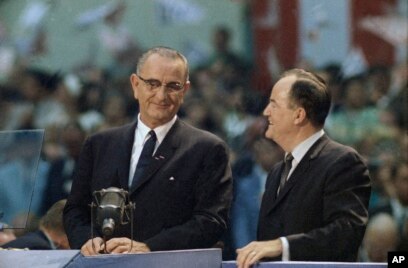
Johnson (left) and Humphrey

The Convention was disrupted by the Mississippi Freedom Democrats demanding to be seated, led by Fannie Lou Hamer, who had organized the voter-registration campaign known as Mississippi Freedom Summer. A "compromise" was reached, in which two of the Freedom Democrats would be seated. They didn't like it, but they accepted it as better than nothing. The segregationists treated even this crumb as a personal insult, and walked out, and the Freedom Democrats were awarded their seats.

The final night of the Convention was Johnson's 56th birthday. In his acceptance speech, he paid tribute to JFK (but not RFK), Humphrey, and former President Harry S Truman. He cited the Democratic Party's record over the last 3½ years, and his plans for the next 4½:

We are in the midst of the largest and the longest period of peacetime prosperity in our history. And almost every American listening to us tonight has seen the results in his own life.
But prosperity for most has not brought prosperity to all. And those who have received the bounty of this land, who sit tonight secure in affluence and safe in power, must not now turn from the needs of their neighbors.
Our Party and our nation will continue to extend the hand of compassion and the hand of affection and love to the old and the sick and the hungry. For who among us dares to betray the command: "Thou shalt open thine hand, unto thy brother, to thy poor, and to thy needy, in thy land." (Deuteronomy 15:11)
The needs that we seek to fill, the hopes that we seek to realize, are not our needs, our hopes alone. They are the needs and hopes of most of the people.
Most Americans want medical care for older citizens. And so do I.
Most Americans want fair and stable prices and decent incomes for our farmers. And so do I.
Most Americans want a decent home in a decent neighborhood for all. And so do I.
Most Americans want an education for every child to the limit of his ability. And so do I.
Most Americans want a job for every man who wants to work. And so do I.
Most Americans want victory in our war against poverty. And so do I.
Most Americans want continually expanding and growing prosperity. And so do I.
He did not mention either the Republican Party or Senator Goldwater, not even once. But he did say something that seemed to contradict Goldwater's bellicose rhetoric:

There is no place in today's world for weakness. But there is also no place in today's world for recklessness. We cannot act rashly with the nuclear weapons that could destroy us all. The only course is to press with all our mind and all our will to make sure, doubly sure, that these weapons are never really used at all...

Let no one tell you that he can hold back progress and at the same time keep the peace. This is a false and empty promise. To stand in the way of orderly progress is to encourage violence.

And I say tonight to those who wish us well, and to those who wish us ill, the growing forces in this country are the forces of common human decency, and not the forces of bigotry and fear and smear.

Our problems are many and are great. But our opportunities are even greater...

The Founding Fathers dreamed America before it was. The pioneers dreamed of great cities on the wilderness that they crossed.

Our tomorrow is on its way. It can be a shape of darkness or it can be a thing of beauty. The choice is ours, it is yours, for it will be the dream that we dare to dream.

I know what kind of a dream Franklin Delano Roosevelt and Harry S. Truman and John F. Kennedy would dream if they were here tonight! And I think that I know what kind of a dream you want to dream.

Tonight we of the Democratic Party confidently go before the people offering answers, not retreat; offering unity, not division; offering hope, not fear or smear.

We do offer the people a choice, a choice of continuing on the courageous and the compassionate course that has made this Nation the strongest and the freest and the most prosperous and the most peaceful nation in the history of mankind.

To those who have sought to divide us, they have only helped to unite us. To those who would provoke us, we have turned the other cheek.

So as we conclude our labors, let us tomorrow turn to our new task. Let us be on our way!


Three days later, on Sunday, August 30, 1964, The Beatles played at Convention Hall. Needless to say, it attracted a very different crowd.

The Convention was held in Atlantic City as part of New Jersey's Trecentenary, as it became an English-speaking place in 1664. There are still a few 1664-1964 historical markers around the State.

The Convention was also intended to boost Atlantic City's image as a premier travel destination. Instead, the DNC and the Beatles concert exposed the decline of the city. It faced criticism for poor quality hotels, and the streets and buildings were revealed as dirty.

In addition to the reportedly rude service visitors faced from hospitality service workers, the city's hotel facilities were baring visible signs of age and upkeep that was reflective of the decline in tourism that the city was experiencing. This left visitors with a less than stellar impression of the city. With no contested ballot to preoccupy their coverage, members of the news media spent time expressing their grievances about what they considered to be poor hospitality in Atlantic City.

The decrepitude of Atlantic City was particularly present in comparison to San Francisco, which had hosted the Republican Convention the month before. New Jersey made moves to try to improve the city's image, and this culminated with the 1976 ballot initiative that legalized casino gambling there. On May 26, 1978, Resorts International opened as the 1st hotel in America, outside the State of Nevada, with a legal gambling casino.

Did it work? Well, yes, and no. Tourism in Atlantic City, and residually elsewhere on the Jersey Shore -- people staying in other Shore towns for a weekend, or for an entire Summer, would make day-trips to A.C. -- soared. But the city itself remains run-down, long after the Convention, the Beatles, and the casino legalization. As the comedian Alan King said, "They spent $9 million on the hotel, and 11 bucks on the city!"

Built in 1929, Convention Hall was renamed Boardwalk Hall in 2001, following a renovation. It is next to Caesars Atlantic City at the intersection of Boardwalk and, ironically given the tumult earlier in the Convention, Mississippi Avenue. Across the Boardwalk is a memorial to JFK.
Like the now-demolished Convention Hall of the Philadelphia Civic Center, and the still-standing CFG Bank Arena (formerly the Baltimore Civic Center), it has a horseshoe of seats, 14,770 of them, with a stage at the open end. On the stage's curtain is a mural of an old sailing ship.
When it was new, the building hosted 3 neutral-site NHL games, and has hosted minor-league hockey and basketball, arena football, and college basketball tournaments, including the 2008 Atlantic 10 Conference Tournament Final, which I attended, and saw Temple beat fellow Philadelphia school St. Joseph's.

It even hosted college football bowl games on a shortened field, although only the 1964 Liberty Bowl, after moving out of Philadelphia and before moving to Memphis, was a major-college bowl game. From 1961 to 1973, it hosted the Boardwalk Bowl. From 1961 to 1967, it was between the U.S. Merchant Marine Academy at Kings Point, Long Island, New York and the Pennsylvania Military College, which became Widener University in 1972. In 1970, '71 and '72, the Hall hosted the Knute Rockne Bowl, the Eastern Semifinal in the NCAA Division II Playoffs.

*

August 27, 1964 was a Thursday. This was also the day the film Mary Poppins premiered. I have a separate entry for that event.

These 4 baseball games were played:

* The Detroit Tigers beat the Boston Red Sox, 5-4 at Fenway Park in Boston. Al Kaline went 0-for-2 with 2 walks. Carl Yastrzemski went 1-for-4 with an RBI.

* The Minnesota Twins beat the Chicago White Sox, 6-2 at Comiskey Park in Chicago. Harmon Killebrew went 0-for-4.

* The Milwaukee Braves beat the San Francisco Giants, 13-0 at Candlestick Park in San Francisco. Rico Carty and Lee Maye hit home runs. Hank Aaron did not hit a home run, but went 3-for-4 with 2 RBIs. And 2nd baseman Woody Woodward, later to become one of baseball's top executives, went 2-for-4 with 4 RBIs.

Hank Fischer went the distance on the shutout, allowing 3 hits. Willie Mays didn't get any of them. Nor did Willie McCovey. Nor did Orlando Cepeda. Hal Lanier got 2, and Jesús Alou got the other. In contrast, Giants starter Bobby Bolin didn't get out of the 1st inning.

* And the Los Angeles Angels beat the Kansas City Athletics, 7-1 at Kansas City Municipal Stadium. 

Monday, June 27, 2022

June 27, 1988: Mike Tyson Knocks Michael Spinks Out In 91 Seconds

June 27, 1988: A unification fight for the Heavyweight Championship of the World is held. The Kentucky Derby is often called "The Most Exciting Two Minutes In Sports." This fight could not be called that: It didn't make it to the 2-minute mark.

The 3 major organizations sanctioning boxing championships, then as now, were the World Boxing Association (WBA), the World Boxing Council (WBC), and the International Boxing Federation (IBF). All 3 of those belts were then held by Mike Tyson.

"Iron Mike" was 3 days short of his 22nd birthday, and, at 20, had broken the record of youngest Heavyweight Champion ever, taking the WBC title away from Trevor Berbick. In his next fight, he took the WBA title away from James "Bonecrusher" Smith. Finally, he took the IBF title away from Tony Tucker. He was 34-0, with 30 knockouts, 25 of them going 4 rounds or fewer, 21 going 2 rounds or fewer, and 15 of them in the 1st round.

Boxing hadn't seen a quick-knockout artist like him since Jack Dempsey in the early 1920s. Tyson patterned himself after Dempsey, wearing no socks under his boots, and no robe over his shoulders, just a towel. He called himself "The Baddest Man On the Planet," and it was hard to doubt him.

But there's a reason it was a fight for "the undisputed Heavyweight Championship of the World." Because the title was disputed. The reason there were 3 organizations to begin with is because of Muhammad Ali getting stripped of the title in 1967. Even after he got it back, these 3 governing bodies would recognize their own champions once he was, once again, no longer the champ.

And then there was The Ring magazine, known as "the Bible of Boxing," which recognized a "lineal champion," going all the way back to the last bare-knuckle Heavyweight Champion, John L. Sullivan in the 1880s.

Their champion was Michael Spinks. He and his brother Leon, who took the title away from Ali in 1978 (but not all the organizations thought that he, after only 8 pro fights, should have it) and then lost it back to Ali in his next fight, had both won Gold Medals at the 1976 Olympics in Montreal. Leon had gotten knocked out by Larry Holmes, who became Champion. From 1981 to 1985, Michael was the undisputed Light Heavyweight Champion. In 1985, Michael gave up those titles, moved up to Heavyweight, defeated Holmes to take the IBF title, and then won a rematch.

But he never held either the WBA or the WBC version of the Heavyweight Championship, and the IBF stripped him of their title in 1987, because he refused to fight their Number 1 contender, Tucker. They gave their title to Tucker, and then Tyson beat him.

So a unification fight was set for June 27, 1988, at Convention Hall in Atlantic City, New Jersey. (The building, opened in 1929 and famous as the site of the Miss America Pageant, is now known as Boardwalk Hall.) Spinks went into it at 31-0. This was only the 2nd time that 2 undefeated Heavyweight Champions had ever faced each other, the 1st time being Ali and Joe Frazier in the 1st of their 3 fights, in 1971.
Real estate developer Donald Trump had built his 1st casino-hotel, Trump Plaza, between Atlantic City's 2 most famous buildings: Convention Hall and Caesars Atlantic City. That made me think he was smart. As it turned out, he wasn't. But, through Trump Plaza, he got involved in the promotion of this fight, along with boxing's biggest promoter, Don King.

The Hall seats about 14,000 people, but, with Pay-Per-View, this fight became the highest-grossing in boxing history to that point: Over $70 million. Tyson went into the fight as a 4-1 favorite.

Spinks later admitted, "Fear was knocking at my door, big-time." That became clear quickly, as Tyson landed a left hook 7 seconds in, and Spinks began covering up. Spinks kept backing away. He landed only 2 punches. After 1 minute and 3 seconds, Spinks was dropped to a knee by a right to the body. It was only the 2nd time Spinks had been knocked down as a professional, following Dwight Muhammad Qawi, before Spinks came back and won the Light Heavyweight title from him.

Referee Frank Cappuccino counted to 4 before Spinks got up, and took the rest of the standing 8-count. Cappuccino, as the rules required, asked him if he could continue. Spinks should have said he couldn't. He said he could. He got close to Tyson. Tyson landed a quick left-right combination to Spinks' head, and he went down. He struggled to get up before the count of 10, and couldn't. In 1 minute and 31 seconds -- 91 seconds, or 1 second past the halfway mark of the 1st round -- the fight was over.

Tyson was now the undefeated, the undisputed, Heavyweight Champion of the World, truly the Baddest Man On the Planet. Aside from Spinks, there were some big losers: The promoters, including Trump, because the fight only lasted a minute and a half, costing them TV viewers for more than that.

But hindsight shows us that Tyson did have issues. His main trainer, Constantine "Cus" D'Amato, had died in 1985, before Tyson could become Champion. His secondary trainer, Jimmy Jacobs, had also died, of leukemia, 3 months before this fight. (D'Amato was 77; Jacobs, 58.) Tyson dedicated this fight to Jacobs' memory. And a dispute with Jacobs' successor, Kevin Rooney, led to Tyson firing him. Rooney later said that if Tyson hadn't fired him, Tyson would have retired undefeated.

And the undercard of this fight should be noted. Among the fighters winning were Carl "The Truth" Williams (over former Champion Berbick), Donovan "Razor" Ruddock, and a 28-year-old fighter from Columbus, Ohio, who rose to 27-4-1 on the night: James "Buster" Douglas.

On this night, if anyone guessed that Tyson would one day be beaten, half the people listening would have said he was crazy. But nobody could have imagined that Douglas would be the man to do it. And yet, as it turned out, that's what happened.

Spinks never fought again. As of 2022, he is 65 years old, and lives on a five-acre spread outside Wilmington, Delaware. He usually stays out of the public eye, but he has been known for visiting schools, carrying his Olympic Gold Medal and his four title belts, and he tells kids to pursue their dreams: "Most of the kids don't have a clue who I am, but they listen when they see all the gold."

*

June 27, 1988 was a Monday. These Major League Baseball games were played that night:

* The New York Yankees lost to the Detroit Tigers, 6-3 at Yankee Stadium. Jack Morris outpitched John Candelaria. Mike Pagliarulo hit a home run, Don Mattingly went 1-for-3 with a walk, and Rickey Henderson went 0-for-3 with a walk. For the Tigers, Luis Salazar went 3-for-5 with 3 RBIs.

* The New York Mets lost to the Pittsburgh Pirates, 2-1 at Three Rivers Stadium in Pittsburgh. Dwight Gooden was outpitched by Mike Dunne. (No, I don't remember him, either.) The Mets only got 5 hits, all singles, by Lenny Dykstra, Dave Magadan, Lee Mazzilli, Kevin McReynolds and Mackey Sasser.

* The Boston Red Sox beat the Cleveland Indians, 9-5 at Fenway Park in Boston. Wade Boggs went 1-for-3 with 2 walks.

* The Baltimore Orioles beat the Toronto Blue Jays, 6-2 at Memorial Stadium in Baltimore. Eddie Murray went 0-for-3 with a walk, and Cal Ripken went 1-for-3 with a walk and 2 RBIs.

* The San Francisco Giants beat the Atlanta Braves, 10-9 at Atlanta-Fulton County Stadium.

* The San Diego Padres beat the Cincinnati Reds, 9-2 at Riverfront Stadium in Cincinnati. Tony Gwynn went 1-for-5, his hit a 3-run homer.

* The Chicago Cubs beat the Philadelphia Phillies, 2-1 at Wrigley Field in Chicago. Mike Schmidt went 1-for-5.

* The Montreal Expos beat the St. Louis Cardinals, 6-3 at Busch Memorial Stadium. Each team got a home run in the 13th inning, the Expos from Tim Wallach, the Cardinals from Tom Brunansky. Cardinal pitcher Steve Peters collapsed in the top of the 14th, allowing a walk, a wild pitch, an intentional walk, and a home run by Hubie Brooks.

* The Kansas City Royals beat the Chicago White Sox, 2-1 at Royals Stadium in Kansas City. (It was renamed Kauffman Stadium in 1993.) George Brett went 2-for-3.

* The Los Angeles Dodgers beat the Houston Astros, 4-0 at the Astrodome in Houston. Shawn Hillegas allowed 2 hits over 6 innings, the 1st of 4 pitchers to toss a 5-hit shutout.

* The California Angels beat the Minnesota Twins, 16-7 at Anaheim Stadium. (It was renamed Edison International Field in 1997, and Angel Stadium of Anaheim in 2004.)

* The Oakland Athletics beat the Milwaukee Brewers, 5-4 at the Oakland Coliseum. Robin Yount went 1-for-5, and Paul Molitor was injured and did not play. Dave Henderson singled home the winning run in the bottom of the 14th inning.

* And the Seattle Mariners beat the Texas Rangers, 6-3 at the Kingdome in Seattle.

December 31, 1999 & January 1, 2000: The Millennium

December 31, 1999:  The Millennium arrives. The people of planet Earth survived. At a terrible cost. But we hadn't destroyed ourselves. ...