Showing posts with label marathon. Show all posts

Saturday, September 10, 2022

September 10, 1960: Abebe Bikila's Barefoot Marathon

September 10, 1960: The marathon is run at the Olympic Games in Rome, Italy. The winner ran the race barefoot.

It sounds made up. Or like one of those stories from the crazy marathon at the 1904 Olympics in St. Louis. But it really happened.

Abebe Bikila (Ah-BAY-bay Bih-KEE-lah) was born on August 7, 1932 in Jato, Ethiopia. Perhaps it was fate: That very day, the marathon was held at the Olympics in Los Angeles, won by Juan Carlos Zambana of Argentina.

He joined his country's Imperial Guard, which led to some confusion: Like the U.S. Secret Service, the Imperial Guard did more than provide physical protection for its country's head of state, in their case the Emperor of Ethiopia, Haile Selassie I. For the most part, it was an elite infantry division. For them, he was a courier, running 12 miles from the hills of Sululta to the capital of Addis Ababa and back, every day.

Two things began during this period: His family, as he entered into a marriage with Yewebdar Wolde-Giorgis, arranged by his mother, when he was 27 and his bride was just 15, although they remained married for the rest of his life; and his training for the Olympic marathon.

In spite of all his training, he didn't actually enter a marathon until July 1960, mere weeks before the Olympics, but he won 2 of them in Addis Ababa, the 2nd of them faster than the Olympic record set by Emil Zátopek of Czechoslovakia in 1952. In preparation for his big run in Rome, Bikila bought new running shoes, but they didn't fit well. He decided to run barefoot. (Baseball legend "Shoeless" Joe Jackson, so nicknamed for once playing in socks due to tight new spikes, had died in 1951, and was thus unavailable for comment.)

As set by the 1908 Olympics, a marathon is 26 miles, 385 yards, not the 25 or so that is the distance from Marathon to Athens in Greece. Usually, the last 385 yards are a lap around the track at the main stadium for the Games. This time, the finish line was at the Arch of Constantine, just outside the Colosseum. With the Mediterranean heat, the death of "the original Marathon runner," Pheidippides, in 490 BC, in mind, the race began in late afternoon, and ended at night.

Twice, the course took the runners past the Obelisk of Axum, built by the Ethiopian civilization of the 4th Century, around the time of Rome's Emperor Constantine. The Fascists stole it in 1937, during Italy's occupation of the country. It was not returned to Ethiopia until 2005.

The 2nd pass of the Obelisk was close to the finish line, and it was near it that Bikila passed the leader, Rhadi Ben Abdesselam of Morocco. He won in 2 hours, 15 minutes, 16.2 seconds, a new world's record. The 26.2 mile distance translates into the metric system as 40 kilometers. Bikila later said he could have run another 10 to 15 kilometers, or another 6 to 9 miles.

He got a parade through the streets of Addis Ababa, effectively his country's version of a ticker-tape parade. Haile Selassie awarded him the country's highest honor, the Star of Ethiopia medal, and gave him a new Volkswagen Beetle -- and a chaffeur, since, for all his running, he had never learned how to drive.

In 1961, he won marathon races in Athens; Osaka, Japan; and Košice, Czechoslovakia (now in Slovakia). In 1963, he came to America, and competed in the Boston Marathon -- and finished 5th. (Aurèle Vandendriessche of Belgium won it, and won it again in 1964.) But he won a marathon in Addis Ababa in 1964, and was ready to defend his title in the 1964 Olympics, in Tokyo.

The race was set for October 21 -- but had his appendix taken out on September 16. This time, he was wearing shoes, manufactured by Puma. He took the lead at the 9-mile mark, and won the race in 2 hours, 12 minutes, 11.2 seconds, a new Olympic record, although the world record was already lower. He was the 1st winner of 2 Olympic marathons. Through the return to Tokyo in 2021, there have been 2 more: Waldemar Cierpinski of East Germany in 1976 and 1980, and Eliud Kipchoge of Kenya in 2016 and 2020 (delayed to 2021 due to COVID).

On April 21, 1965, when the New York World's Fair opened for a 2nd season, Bikila was Ethiopia's official representative. (But there would be no New York City Marathon until 1971.) He entered the Olympic marathon again in 1968 in Mexico City, but had to drop out after 10 miles, due to an injury. Another Ethiopian, Mamo Wolde, won it. The Ethiopian Army promoted Bikila to the rank of Shambel, equivalent to Captain.

And he had learned how to drive. This proved tragic: On March 22, 1969, he lost control of his Beetle, and crashed, leaving him a quadriplegic. He received get-well cards from all over the world, and was visited by Queen Elizabet II of Britain. He regained the use of his arms, and, in 1970, through sheer determination, competed in archery and table tennis in games for the disabled in London and Norway. Also in Norway, he won a sled-dog race -- as a native of a tropical country where snow is rare.

He was named a special ambassador for the 1972 Olympics in Munich, and received a standing ovation at his introduction to the crowd. He presented the marathon's Gold Medal to the American winner, Frank Shorter.

But he never fully recovered from his injuries, and they led to a cerebral hemorrhage on October 25, 1973, ending his life at age 41. The Emperor ordered, and attended, a state funeral for him, complete with burial with full military honors. His tomb is topped with a bronze statue.

Haile Selassie was deposed in a military coup the following year, and was murdered under house arrest the year after that. Ethiopia was ruled by the Army until 1991, and remains one of the poorest countries on Earth. But Abebe Bikila inspired the long-distance running culture of East Africa, and the world's marathon races have been dominated by Ethiopians and Kenyans ever since.

*

September 10, 1960 was a Wednesday. These baseball games were played:

* The New York Yankees beat the Detroit Tigers, 5-1 at Briggs Stadium in Detroit. (The ballpark was renamed Tiger Stadium the next season.) Gil McDougald hit 2 home runs, and Mickey Mantle hit one. Bob Turley went the distance for the win.

* The Philadelphia Phillies beat the St. Louis Cardinals, 7-2 at Connie Mack Stadium in Philadelphia. Stan Musial entered the game as a pinch-hitter, and went 0-for-2.

* The Pittsburgh Pirates beat the Chicago Cubs, 4-1 at Forbes Field in Pittsburgh. Roberto Clemente went 0-for-3 with an RBI. Ernie Banks went 0-for-4.

* The Cleveland Indians beat the Washington Senators, 5-4 at Cleveland Municipal Stadium.

* The Chicago White Sox beat the Baltimore Orioles, 3-2 at Comiskey Park in Chicago. Jim Landis won the game with a home run in the bottom of the 11th inning. Brooks Robinson went 0-for-5.

* The Milwaukee Braves beat the Los Angeles Dodgers, 10-8 at Milwaukee County Stadium. Hank Aaron, Eddie Mathews and relief pitcher Carlton Willey hit home runs for the Braves. Duke Snider hit a home run as a pinch-hitter for the Dodgers.

* The Boston Red Sox beat the Kansas City Athletics, 7-4 at Kansas City Municipal Stadium. Ted Williams, in his last 16 days as an active player, went 2-for-4 with an RBI.

* And the Cincinnati Reds and the San Francisco Giants were rained out at Crosley Field in Cincinnati. The game was made up as part of a doubleheader the next day. The Reds won the opener, 2-1. The Giants won the nightcap, 3-2. Over the 2 games, Willie Mays went 3-for-9 with an RBI, but Frank Robinson didn't play in either game.

And in English soccer, the North London Derby was held. Tottenham Hotspur, on the way to their historic Football League and FA Cup "Double" achievement, beat Arsenal 3-2 at the Arsenal Stadium, a.k.a. Highbury.

Monday, August 29, 2022

August 30, 1904: 25 Miles of Insanity

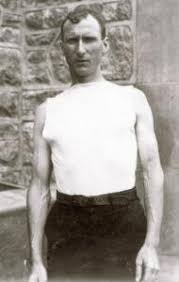
Thomas Hicks

August 30, 1904: Perhaps the craziest sporting event ever held on American soil takes place. No movie studio would buy a script containing this story. But it all happened.

The 1st modern Olympic Games, in Athens, Greece in 1896, were a smashing success. Not least because its signature event, the marathon race, was won by a Greek, Spyridon Louis, who became, and perhaps remains, his nation's greatest sporting hero.

The founder of the International Olympic Committee, Baron Pierre de Coubertin, wanted them held every 4 years, just like they were in ancient Greece. Understandable. And he wanted the next one to be in his hometown: Paris, France. Also understandable, given his role in their establishment, given France's status as one of the world's leading countries, and given Paris' status as one of the world's most beloved cities.

But the 1900 Olympics were practically a sideshow to the Exposition Universelle, a World's Fair. It was so haphazard that some competitors, upon receiving their medals, were unaware that the events they had just won were part of the Olympic Games. About the only thing that can be said in favor of the Games of the IInd Olympiad is that they were the 1st to include women.

Things got worse in 1904. America wanted to be the next host. But the city with the winning bid was St. Louis, Missouri. Not being a coastal city, and not being as large a city as Athens or Paris, it was hard to get to. Throw in various worldwide tensions, including the Russo-Japanese War, and only 62 out of the 651 athletes who competed were from outside North America. Only 15 countries sent athletes.

And, again, they were attached to a World's Fair: The Louisiana Purchase Exposition, celebrating the 100th Anniversary of the launch of the Lewis & Clark expedition. This Fair would popularize several foods we now take for granted, though none were actually invented there: The hamburger, the hot dog, peanut butter, iced tea, cotton candy, the waffle-style ice cream cone, and Dr. Pepper soda. The Fair would be the setting of the 1944 film Meet Me In St. Louis, starring Judy Garland and directed by Vincente Minnelli, who married shortly thereafter.

The 1904 Olympics were the 1st to feature boxing, freestyle wrestling, and the decathlon. Most events took place on the campus of Washington University, including on their Francis Field, which is still in use, although the current stadium on the site dates to 1984.
The Francis Field complex in recent years

George Eyser, born in Germany, but a naturalized American citizen living in St. Louis, had lost a leg in a railroad accident. Nevertheless, he competed in gymnastics, and won 3 Gold Medals, 2 Silvers and a Bronze. As he had 4 years earlier, Ray Ewry won all 3 standing jumps: High, long and triple. Only 2 athletes representing Great Britain won medals, and both were, rather inconveniently, from Ireland.

And then there was the marathon. The race had not yet been standardized at 26.2 miles. This one was 24.85 miles, in 90-degree heat, on unpaved roads that tended to kick up dust. It should never have been approved as the marathon course. The race began with 32 competitors from 6 countries: America, Canada, France, Greece, South Africa and Cuba.

The Canadian was Billy Sherring, of Hamilton, Ontario. He did not finish the race. Two years later, in the so-called Intercalated Games in Athens, he won the marathon, competing in a singlet with a large shamrock on it. It is said that this inspired the Athens-based soccer team Panathinaikos to adopt the shamrock as their logo, even though they have nothing to do with Ireland.

The South Africans were Len Taunyane and Jan Mashiani, the 1st 2 black Africans to compete in the Olympics. Aside from his participation in this race, little is known of Taunyane. It is not known when he was born. He participated in the Boer War, and was part of an exhibit on that war at the Fair. Having been a dispatch runner in the war, he decided he could run in the marathon. Despite the strict segregation of the State of Missouri, he was allowed to try.

But the organizers couldn't understand his thick accent, which made it hard for them to understand him even as he spelled his name. So he went into the books as "Len Tau," competing for the Zulu nation, because, as yet, there was no nation of South Africa. And he wasn't a member of the Zulu tribe: He was a Tswana. He ran barefoot, and at one point was chased off course by dogs. He still managed to finish 9th. He returned to his homeland, and, from there, history lost track of him: We don't know what he did after 1904, or when he died.

Even less is known of Mashiani, who finished 12th. Taunyane's part of the story would be distinctive enough. But it was far from the craziest part.

The Cuban was Félix de la Caridad Carvajal y Soto, known as Andarín Carvajal. He was a mailman, used to walking long distances. Once, he ran the entire length of the island on which Cuba lies. When he learned of the Olympics coming to America, he decided to run in the marathon.

He took a boat ride from Havana to New Orleans, and then lost all of his remaining money gambling. He had to walk and hitchhike the 683 miles up the Mississippi River to St. Louis. He showed up just in time to register, wearing street clothes, including long pants. A sympathetic official cut the pants so that they would feel more like shorts, and give him more ventilation.

Along the race course, he stopped several times to talk with spectators. He saw a car with a basket full of peaches, and swiped a few of them, to keep himself hydrated in the brutal St. Louis heat. The course included an apple tree, and he grabbed some apples. They turned out to be rotten, and he threw up. He stopped to take a nap. He got up, and resumed. So, what, it took him a week to finish the race? No: He finished 4th, in under 4 hours.

In 1907, he famously defeated American runner Henry W. Shelton in a 6-hour race. In 1909, a 6-laps-per-mile track was installed for a race around the Polo Grounds in New York, but he finished last. He lived until 1949.

You might think Carvajal's role was the craziest part of the event. But you would be thinking wrong.

Frederick Lorz was a 20-year-old bricklayer in New York. He competed in a long-distance race at Celtic Park in what's now Sunnyside, Queens, that was a precursor to the New York City Marathon. The 8 top finishers would be admitted to the Olympic marathon in St. Louis, all expenses paid. He was 1 of the 8, competing for the Mohawk Athletic Club.

He entered the race, but dropped out after 9 miles. His manager pulled up to him in a car -- still a novelty at that point -- and drove him 11 miles. Then he got back onto the course, ran into Francis Field, and broke the tape, purporting to be the winner. His time was 3 hours, 13 minutes even.

He was called out: No one had seen him at the halfway mark. He admitted his deception, and the Amateur Athletic Union banned him for life from all competitions they oversaw. After 1 year, the ban was lifted, and he won the 1905 Boston Marathon. He died in 1914, of pneumonia in those pre-antibiotic days, only 29 years old.

So that's the strangest part of this story, right? No, it's not.

Only 14 of the 32 runners who started finished. One who did not was William Garcia, a 27-year-old runner from Oakland, California. He got to the 19-mile mark before the St. Louis heat did him in. He fell, and coughed up blood. A bystander saw this, and got him medical attention. Garcia nearly became the 1st person to die as a result of competing in the Olympic Games.

(Aside from the Israeli athletes murdered by terrorists in Munich in 1972, only 1 athlete ever has: Nodar Kumaritashvili, a luger from the Republic of Georgia, who was killed in a practice run in Vancouver in 2010.)

Finally, we come to the strangest part. Thomas John Hicks was born in England in 1876. By August 30, 1904, he was a 28-year-old brass worker living outside Boston in Cambridge, Massachusetts. In 1904, he finished 2nd at the Boston Marathon. Four months later, he was ready to compete in the Olympic Marathon. Or so he thought.

Midway through the race, he was well behind the leaders. His assistants gave him 1/60th of a grain -- about 1 milligram -- of strychnine, and some brandy. Historically, small doses of strychnine were given to people to strengthen muscle contractions, to stimulate the heart, and to aid in bowel movements. In doses larger than that, it had been used as poison, as a murder weapon. It had also been used as a pesticide.

The 1st dose didn't help Hicks much. So he was given another dose. That did the trick: With Lorz having already been disqualified, Hicks crossed the finish line officially 1st, in 3 hours, 28 minutes and 53 seconds -- nearly 16 minutes after Lorz. Albert Corey of France finished 2nd, at 3:34:52. Arthur Newton of the U.S. was 3rd, and, as I said, Carvajal finished 4th, oddly, but legitimately.

The strychnine was, literally, a "performance-enhancing drug." At the time, though, it was legal. Eventually, it was banned. A good thing, too: Hicks collapsed at the finish line, and it is believed that a 3rd dose would have killed him. Instead, he moved to Canada, joined his brothers working in a mine near Winnipeg, and lived until 1952.

Thomas Hicks had won a race that can legitimately be called 25 miles of insanity.

*

August 30, 1904 was a Tuesday. A full slate of games, and then some, was played in what would later be called Major League Baseball:

* The New York Highlanders beat the Cleveland Naps, 1-0 at Hilltop Park in Manhattan. Al Orth, known as "The Curveless Wonder," outpitched future Hall-of-Famer Addie Joss, known as "The Human Hairpin" because of his pitching motion. Jimmy Williams singled home Norman "Kid" Elberfeld to win the game in the bottom of the 9th.

In 1913, the Highlanders renamed themselves the Yankees. Cleveland's 2nd baseman, manager and namesake was Napoleon "Nap" Lajoie, who went 0-for-4 in this game. After he left in 1914, the team was renamed the Cleveland Indians. In 2022, they renamed themselves again, the Cleveland Guardians.

* The New York Giants beat the Cincinnati Reds, 3-1 at the Palace of the Fans in Cincinnati. Crosley Field was built on the site in 1912. Christy Mathewson got the win over Frank "Noodles" Hahn, advancing to 28-9 on the season.

* The Brooklyn Superbas beat the Chicago Cubs, 8-4 at West Side Park in Chicago. The Superbas became the Dodgers in 1911.

* The Boston Americans beat the Detroit Tigers, 13-0 at the Huntington Avenue Grounds in Boston. Cy Young not only pitched a 6-hit shutout, but went 3-for-5, including a 2-RBI triple.

* The Chicago White Sox beat the Philadelphia Athletics, 3-0 at Columbia Park in Philadelphia. Roy Patterson pitched a 4-hit shutout.

* A doubleheader was split at League Park in Washington. The St. Louis Browns won the opener, 3-2. The Washington Senators won the nightcap, 4-1.

* The Boston Beaneaters beat the Pittsburgh Pirates, 4-1 at Exposition Park in Pittsburgh. Honus Wagner went 1-for-2 with a walk in a losing cause.

* And the Philadelphia Phillies beat the St. Louis Cardinals, 4-2 at Robison Field in St. Louis. 

Tuesday, August 9, 2022

August 9, 1936: His Name Was Sohn Kee-chung

August 9, 1936: The marathon race is held in the Olympics in Berlin, Nazi Germany. Officially, it was won by Kitei Son of Japan, a nation that would soon be an ally of the Nazis.

Unofficially, it was a much better story.

His real name was Sohn Kee-chung. He was born on August 29, 1912, in Sinŭiju, in what is now North Korea. Since 1910, however, Korea had been part of the Empire of Japan. And so, any athletes from Korea were forced to compete for Japan, under their flag, and with Japanese names.

Between 1933 and 1936, Sohn Kee-chung ran 12 marathons, finishing in the top 3 in each, and won 9. On November 3, 1935, in the Japanese capital of Tokyo, he set a world record with a time of 2 hours, 26 minutes and 42 seconds.

In the 1936 Olympics, Sohn tried to sign his name in its correct Korean form. But it was not his legal name, and so he was forced to write it in, and compete, as Kitei Son. Another Korean, Nam Sung-yong, entered the marathon, and had to compete under his legal Japanese name, Nan Shōryū. Sohn won the race in 2 hours, 29 minutes, 19.2 seconds, breaking the Olympic record. Nam finished 3rd, winning the Bronze Medal.

The International Olympic Committee, not recognizing Korea as a member, credited both medals to Japan's total. Sohn refused to acknowledge the Japanese national anthem while it was played at his award ceremony, and later told reporters that he was ashamed to run for Japan.

In 1945, Allied forces forced the surrender of Japan, and Korea was free. But, as part of the peace treaty, a line was drawn at the 38th parallel, and Communist forces had control over the northern part, including Sohn's hometown of Sinŭiju. The Korea War resulted, from 1950 to 1953, and the new border was a diagonal across the country, but roughly around the 38th parallel.

Sohn was named the team manager for Korea's national track & field team. In 1947, his trainee, Suh Yun-Bok, won the Boston Marathon, breaking the record that Sohn had set in Tokyo in 1935. For the Opening Ceremony for the 1948 Olympics in London, the entire Korean team chose Sohn to be their flag bearer. In 1950, another Sohn trainee, Ham Kee-Young, won the Boston Marathon.

In 1988, the Olympics were held in Seoul, the capital of the Republic of Korea (a.k.a. South Korea). The final runner in the Olympic torch relay, receiving perhaps the greatest ovation anyone has ever received in an Olympic ceremony, was 75-year-old Sohn Kee-chung. He attended the 1992 Olympics in Barcelona, Spain, and saw Hwang Young-Cho win the Olympic marathon.
Sohn died on November 15, 2002. Nam Sung-young, who had worked with him at the Korean Sporting Association, had died a year earlier. On December 9, 2011, the IOC recognized Korean nationality of Sohn and Nam, and all other Korean athletes under the Empire of Japan, in their official profiles.

*

August 9, 1936 was a Sunday. Legendary journalist Lincoln Steffens died.

And these baseball games were played that day:

* The New York Yankees swept a doubleheader from the Philadelphia Athletics, 7-6 and 3-0 at Yankee Stadium. In the opener, Jake Powell singled Bill Dickey home with the winning run in the bottom of the 10th inning. Dickey, Lou Gehrig and rookie Joe DiMaggio all hit home runs. Lefty Gomez started, and Johnny Murphy won in relief. In the nightcap, Gehrig's 3-run triple in the bottom of the 1st provided all the game's runs, and Monte Pearson pitched a 4-hit shutout.

Over the 2 games, Gehrig went 2-for-8 with a walk and 4 RBIs, DiMaggio went 3-for-9 with an RBI, and Dickey went 5-for-6 with 2 walks and an RBI.

* The New York Giants beat the Philadelphia Phillies, 6-2 at Baker Bowl in Philadelphia. Mel Ott went 2-for-3 with a walk and an RBI.

* The Brooklyn Dodgers swept a doubleheader from the Boston Bees, 4-0 ant 5-2 at National League Park in Boston. Fred Frankhouse, known as "Freddy Frankhouse with the roundhouse curve," pitched a 5-hit shutout in the 1st game.

This was the year after a 115-loss season that led the former Boston Braves to, as we would say today, "rebrand." It never caught on, and in 1941, the team went back to being the Boston Braves, and the ballpark went back to its former name of Braves Field.

* The Boston Red Sox beat the Washington Senators, 8-2 at Griffith Stadium in Washington. Jimmie Foxx went 2-for-4 with a walk and 3 RBIs.

* The Cleveland Indians swept a doubleheader from the Chicago White Sox, 9-1 and 5-2 at League Park in Cleveland.

* The St. Louis Browns beat the Detroit Tigers, 4-3 at Navin Field (later Briggs Stadium and Tiger Stadium) in Detroit.

* The Chicago Cubs swept a doubleheader from the Pittsburgh Pirates, 9-2 and 10-1 at Wrigley Field in Chicago. Over the 2 games, Billy Herman went 5-for-9 with a home run and 4 RBIs, Phil Cavarretta went 5-for-10 with an RBI, Ethan Allen went 5-for-8 with 2 walks and 3 RBIs, and Stan Hack went 4-for-8 with 2 walks and an RBI. For the Pirates, Paul Waner went 4-for-6 with a walk and an RBI, and Lloyd Waner went 2-for-9 with an RBI.

* And the Cincinnati Reds swept a doubleheader from the St. Louis Cardinals, 10-2 and 12-5 at Sportsman's Park in St. Louis.

Wednesday, July 27, 2022

July 27, 1952: Emil Zátopek Wins the Olympic Marathon

July 27, 1952: The Olympic Marathon is held in Helsinki, Finland. The winner is from a country controlled by Communism -- but he is hailed as a hero worldwide, anyway.

Emil Zátopek was born on September 19, 1922 in Kopřivnice, Czechoslovakia. "The Czech Locomotive" was a veteran of World War II, fighting the Nazis. Still in the Czech Army during the 1948 Olympics in London, he won the Gold Medal in the 10,000 meters, and the Silver Medal in the 5,000 meters.

The 1940 Olympics were supposed to be held in Helsinki, but, by September 1939, Finland was among the nations wrapped up in World War II, specifically the "Winter War" with the Soviet Union. With the war over, they were awarded the Olympics for 1952.

And in those Olympic Games, Emil Zátopek won Gold in both the 5,000 meters and the 10,000 meters. That had never been before, although it has since. He had never previously run a marathon, but he entered the Olympic marathon, and won it in record time: 2 hours, 23 minutes, 3.2 seconds. At those same Games, his wife, Dana Zátopková, who was born on the exact same day tha the was, won the Gold Medal in the javelin throw.

Dana did not compete in the 1956 Olympics in Melbourne, Australia. Emil did, attempting to repeat as marathon winner, which had never happened before (and wouldn't until 1960 and 1964). But an injury in training resulted in him coming back too soon, and he finished 6th. Dana returned in 1960, in Rome, and won the Silver Medal in the javelin.

The Zátopeks never had children. While Emil was a member of the Communist Party, it was basically a requirement, however reluctant, for any major athlete from a Warsaw Pact county. In 1968, supporting the party's democratic wing, he was expelled from the Party and stripped of his Army rank after the Prague Spring. He was only allowed to work menial jobs into his 50s.

The Velvet Revolution of 1989 freed the country, and Emil was officially "rehabilitated." He died on November 22, 2000, at the age of 78. In 2012, the International Association of Athletics Federations, the world's governing body for track & field, established its IAAF Hall of Fame, and Emil Zátopek was 1 of its 1st 12 inductees.

(Requirements: Athletes must have won at least 2 Gold Medals in "Athletics" -- their official name for track & field -- in the Summer Olympics or the World Championships, must have set at least one world record, and must be retired from competition for at least 10 years.)

Dana Zátopková died on March 13, 2020, at 97. She and her husband are buried in Rožnov pod Radhoštěm, in the Czech Republic.

*

July 27, 1952 was a Sunday. As was common in this era, baseball teams often played doubleheaders on Sundays. These games were played:

* The New York Yankees split with the Detroit Tigers at Briggs Stadium in Detroit. (The ballpark was renamed Tiger Stadium in 1961.) The Tigers won the opener, 8-3. Billy Hoeft outpitched Allie Reynolds. Johnny Groth's 3-run home run in the 5th inning was the key blow. Gil McDougald homered for the Yankees.

The Yankees won the nightcap, 6-0. Bill Miller pitched a 7-hit shutout. It was 1 of only 6 games he would win in the major leagues. Gene Woodling went 3-for-4 with an RBI. Over the 2 games, Mickey Mantle went 1-for-7 with a walk.

* The New York Giants lost to the Cincinnati Reds, 11-4 at the Polo Grounds. Willie Mays was serving in the Korean War, and unavailable for the Giants.

* The Brooklyn Dodgers lost to the St. Louis Cardinals, 4-3 at Ebbets Field. Red Schoendienst singled Tommy Glaviano home with the winning run in the top of the 9th inning. Gil Hodges hit a home run. Jackie Robinson drew a walk as a pinch-hitter. Stan Musial went 2-for-4 with a walk.

* The Boston Braves won the 1st game of a doubleheader against the Pittsburgh Pirates, 5-2 at Braves Field. The 2nd game was tied 3-3 after 11 innings, but, while the ballpark had lights, and Sunday sports were now legal in Massachusetts, they had a curfew, and the game was called.

* The Philadelphia Phillies swept the Chicago Cubs, 12-8 and 3-0 at Shibe Park in Philadelphia. (The ballpark was renamed Connie Mack Stadium the next season.) Karl Drews pitched a 6-hit shutout in the 2nd game.

* The Cleveland Indians swept the Washington Senators, 3-1 and 3-2 at Cleveland Municipal Stadium.

* The Philadelphia Athletics swept the Chicago White Sox, 3-1 and 9-3 at Comiskey Park in Chicago.

* There was a split at Sportsman's Park in St. Louis. The St. Louis Browns won the 1st game, 8-1. The Boston Red Sox won the 2nd game, 9-3. Ted Williams was serving in the Korean War, and unavailable for the Red Sox.

Saturday, July 23, 2022

July 24, 1908: Wild Finish at White City

Johnny Hayes

July 24, 1908: The marathon is held at the Olympic Games in London. It's not as crazy a story as the one 4 years earlier in St. Louis. That one was crazy from beginning to end. This one was crazy only at the end.

The marathon was established for the 1st modern Olympic Games, held in 1896 in Athens, Greece. It celebrated the Battle of Marathon, in 490 BC, when a united army from several Greek city-states defeated a larger force from the Persian Empire, ending that empire's best chance at conquering Greece.

Legend has it that a courier named Pheidippides ran from Marathon all the way back to Athens, and told the governing archons, "Joy, we win!" Or, depending on your translation, "Rejoice, we conquer!" And then he dropped dead. The exact date of the battle has been lost to history, but it's thought to have been in August or September, and Greece is in the Mediterranean. Whether or not Pheidippides was just a courier, or a soldier wearing armor for the entire hot run, depends on who's telling the story.

The distance from Marathon to Athens is about 25 miles, and a statue of Pheidippides now stands on the highway between the cities, at about the halfway mark.

For the 1908 Olympics in London, the race started at Windsor Castle, home of King Edward VII, and ended at the King's box at the White City Stadium, at Shepherd's Bush in West London. That distance was 26 miles, 385 yards, and that has been the official distance for marathon races ever since.
The White City Stadium. The original Wembley was 15 years away.

These days, several American cities have marathons, with the most famous being in Boston on the 3rd Monday in April, and in New York on the 1st Sunday in November.

The 1908 Olympic Marathon began with 73 runners, officially from 17 countries: 12 each from America, host Great Britain and Canada; 7 from Sweden; 5 each from the Netherlands and South Africa; 3 each from "Australasia" (a combined Australia and New Zealand team), Germany and Italy; 2 each from Austria (1 was actually Czech), Denmark and Greece; and 1 each from Belgium, Bohemia (now part of Czechia, then part of the Austrian Empire, but for some reason competing separately from Austria), Finland (then part of the Russian Empire but competing separately), Hungary (also part of the Austrian Empire but competing separately) and Russia.

One of the American runners was Fred Lorz, who cheated to win the 1904 Olympic Marathon in St. Louis, got caught, and was disqualified. This time, he neither finished nor attempted to fool people into thinking he had. Of the 73 runners, only 27 finished.

Thomas Jack of Britain led at the 4-mile and 5-mile marks, but did not finish the race. Frederick Lord -- not to be confused with Fred Lorz -- of Britain was the leader at mile markers 6 through 14, but tailed off, and finished 15th.

Charles Hefferon was born in Newbury, Berkshire, England and raised in Canada, then fought in the Boer War, and stayed in South Africa thereafter, and competed for South Africa. He led the race from miles 15 to 24. At each marker, word was relayed to the stadium, and announced over the loudspeaker. The pro-British crowd may not have known that Hefferon was born in England, but they knew that South Africa was part of the British Empire, and they cheered.

But just before getting to mile 24, Hefferon made a key mistake. A bystander offered him a drink, and he took it. It was champagne. It was nice and cool, but it gave him a cramp. He slowed down, and was overtaken by Dorando Pietri of Italy.

Pietri was a 22-year-old candymaker from Correggio, in Emilia-Romagna in northern Italy. Despite coming from a warm-weather country, he made the mistake of not getting hydrated enough. When he entered the stadium, needing only to complete a full lap, he ran the wrong way. Officials showed him which way to go, which was legal.

Then, with 75,000 fans looking on, he fell. If he had gotten up on his own, it would have been fine. But officials helped him up. That should have disqualified him immediately. In all, he fell 5 times, and was helped up all 5 times. Among the officials helping him was a physician, who also dabbled in writing: Dr. Sir Arthur Conan Doyle.
Dorando Pietri, helped by unwitting officials

Pietri -- usually identified by his first name, Dorando -- finished 1st, with a time of 2 hours, 54 minutes and 46 seconds. The last 350 meters required 10 minutes. He almost didn't finish 1st, anyway: Johnny Hayes, a 22-year-old New Yorker who worked in the sporting goods department at Bloomingdale's department store, finished in 2:55:18, only 32 seconds behind Pietri. Hefferon came in 3rd, a minute and 20 seconds behind Pietri.

The Italian and American flags were run up the poles, as was the Union Jack, standing in for a flag for South Africa. The public address announcer proclaimed, "The winner, Dorando of Italy! Second, Hayes of the United States! Third, Hefferon of South Africa!"

Hearing this, American officials went to the race's overseers, and pointed out that Pietri needed help to finish the race. Their claim was upheld, and Pietri was disqualified. Hayes was awarded the Gold Medal, Hefferon the Silver, and the Bronze went to American runner Joseph Forshaw.

Unlike Fred Lorz 4 years earlier, Pietri had not intentionally cheated. Although the world knew he hadn't won fairly, he gained a great deal of sympathy. Queen Alexandra, King Edward's wife, gave him a gold cup the next day. In a column for the Daily Mail, Conan Doyle wrote, "The Italian's great performance can never be effaced from our record of sport, be the decision of the judges what it may." He also proposed that the Mail raise money to buy him his own bakery back home. Conan Doyle himself contributed the 1st £5 pounds, and £300 was raised -- in today's money, about £32,000, or $43,200.

Pietri and Hayes turned professional, and competed against each other many times over the next few years. On November 25, 1908, and again on March 15, 1909, the 2nd Madison Square Garden hosted a race between them, and Pietri won both of them.

Pietri went back home, ran his bakery, and then ran a hotel with his brother. He died in 1942, at the age of 56. Hayes was promoted to the head of the sporting goods department at Bloomingdale's, coached U.S. runners at the 1912 Olympics in Stockholm, and became a phys ed teacher in Englewood, Bergen County, New Jersey, where he died in 1965, at 79.

In 1984, the Olympics held a women's marathon for the 1st time, in 86-degree heat in Los Angeles. American runner Joan Benoit Samuelson won it. But the indelible memory is that of Gabriela Andersen-Schiess of Switzerland. There were 5 official water stations along the route, but "Gaby" had missed the last one, and was severely dehydrated by the time she got onto the track at the Los Angeles Memorial Coliseum.

She appeared to be in no shape to continue. Her left arm hung immobile at her side. Her right leg was stiff. Medical personnel came over to help her. But she waved them away, her mind still clear enough to know that she would be disqualified if they did. Maybe she knew the story of Dorando Pietri. (Italy and Switzerland do border each other.) In any case, she wanted to be officially recorded as having properly finished the race.

It took her 5 minutes and 44 seconds to complete the 400-meter lap around the Coliseum. But she made it, fully legally, and got a standing ovation from a crowd of over 90,000. She finished 37th out of 44, with a time of 2 hours, 48 minutes and 42 seconds -- faster than either Johnny Hayes or Dorando Pietri ran the same distance, albeit not on the same course, 76 years earlier.

*

July 24, 1908 was a Friday. The day saw the playing of 4 games in what would later be called Major League Baseball:

* The New York Giants beat the Pittsburgh Pirates, 2-1 at the Polo Grounds.

* The Brooklyn Superbas (they became the Dodgers in 1911) lost to the Chicago Cubs, 2-1 in 11 innings at Washington Park in Brooklyn.

* The Cincinnati Reds beat the Boston Doves (they became the Braves in 1912), 3-2 at the South End Grounds in Boston.

* And the Detroit Tigers beat the Cleveland Naps (they became the Indians in 1915), 4-0 at League Park in Cleveland. 

Thursday, April 21, 2022

April 21, 1980: The Rosie Ruiz Story

April 21, 1980: The Boston Marathon is held. Bill Rodgers wins it for the 3rd time in a row, the 4th overall. (He would also win the New York City Marathon 4 times.) On the women's side, the winner is Rosie Ruiz.

Actually, no, it isn't: She got caught cheating. Imagine that, an athlete in Boston cheating. Anyway, the real winner was Jacqueline Gareau.
Jacqueline Gareau

Ruiz, a Cuban whose family brought her to Florida as a girl, had finished 11th in New York in 1979, qualifying her for the 1980 edition in Boston, but it turns out that she'd taken the Subway in that one, too, and she was stricken from their records.

When he and Ruiz were interviewed together after the race, Rodgers noticed that Ruiz could not recall many things that most runners know by heart, such as intervals and splits. Other observers noticed that Ruiz was not panting or coated in sweat. She later released stress-test results showing her resting heart rate as 76. Most female marathoners have a resting heart rate in the 50s or lower.

In addition, her time of 2:31:56 was an unusual improvement, more than 25 minutes ahead of her reported time in New York, 6 months earlier. When asked by a reporter why she did not seem fatigued after the grueling race, she said, "I got up with a lot of energy this morning."

Some female competitors thought it was odd that, when asked what she had noticed about the suburb of Wellesley while running through it, she did not mention the students of Wellesley College, who traditionally cheer loudly for the first female runners as they pass the campus.

Most seriously, no other runners could recall seeing her. Gareau was told that she was leading the race at the 18-mile mark, while Patti Lyons was told she was 2nd at the 17-mile mark. Ruiz could not have passed either of them without being seen. Several spotters at checkpoints throughout the course also did not remember seeing her in the first group of women. In addition, she did not appear in any pictures or video footage. Two Harvard students, John Faulkner and Sola Mahoney, recalled seeing Ruiz burst out of a crowd of spectators on Commonwealth Avenue, half a mile from the finish.

The evidence was reviewed, and Ruiz was disqualified, and banned from all future Boston Marathons. New York permanently banned her as well.

In 1982, she was sentenced to 7 days in jail and 5 years' probation -- not for her Boston Marathon fraud, which was apparently only a violation of a rule, not of any law; but for embezzling $60,000 from the real estate company for which she worked. In 1983, she was sentenced to 3 years' probation for her involvement in a Miami cocaine deal. She eventually found work for a medical laboratory company in West Palm Beach, and died on July 8, 2019, of cancer at 66.

As of April 21, 2022, Rodgers and Gareau are still alive.

*

April 21, 1980, like all Boston Marathon days, was a Monday. Dallas Cowboys quarterback turned broadcaster Tony Romo was born.

Football was out of season. The NBA Playoffs were between rounds. The Stanley Cup Playoffs were in progress, but no games were played. These games were played in Major League Baseball:

* The New York Yankees beat the Baltimore Orioles, 3-2 at Yankee Stadium. Graig Nettles hit a home run. Reggie Jackson went 0-for-3. Eddie Murray went 1-for-4 with an RBI. Tommy John outpitched Mike Flanagan, who edged John for the previous season's American League Cy Young Award. In 1979, John won 21 games, Flanagan 23; in 1980, John would win 22, Flanagan 16.

The Yanks (winners in 1976, 1977 and 1978) and the O's (winners in 1969, 1970, 1971, 1973, 1974 and 1979) battled it out for the title in the AL Eastern Division all season long, including a 3-game series in August at Yankee Stadium attended by 156,352 fans, which the O's swept; and, a week later, a 5-game series at Baltimore's Memorial Stadium attended by 253,636 fans, with the O's winning 3 out of 5. The Yankees ended up winning 103 games, the Orioles 100 -- and, with no Wild Card in those days, the O's became a rare 100-or-more-win team to not reach the postseason.

* The New York Mets beat the Philadelphia Phillies, 3-0 at Veterans Stadium in Philadelphia. Ray Burris (4 hits over 7 1/3rd innings) and Neil Allen combined on a 5-hit shutout, beating Steve Carlton. Pete Rose got 3 of those hits, and also drew a walk. Frank Taveras went 2-for-4 with an RBI.

* The Pittsburgh Pirates beat the Montreal Expos, 7-1 at the Olympic Stadium in Montreal. Willie Stargell did not play.

* The Boston Red Sox beat the Chicago White Sox, 9-8 at Fenway Park in Boston. Every year, on Marathon Day, a.k.a. Patriots Day, the 3rd Monday in April, the Red Sox play a home game at Fenway Park, starting at 11:05 AM, with the idea that fans would clear the area before the runners come down Boylston Street.

The Red Sox scored 3 runs in the bottom of the 8th, led by a double by Dwight Evans, to come from behind and win. Rick Burleson, Jim Rice and Carlton Fisk hit home runs for them. Wayne Nordhagen and Harold Baines hit them for the White Sox. Carl Yastrzemski did not play.

* The Milwaukee Brewers beat the Cleveland Indians, 7-5 at Milwaukee County Stadium. "Stormin'" Gorman Thomas hit a home run to win it in the 11th inning. Robin Yount went 2-for-5 with 2 RBI. Paul Molitor went 2-for-4 with 2 walks.

* The Toronto Blue Jays beat the Kansas City Royals, 7-1 at Royals Stadium (now Kauffman Stadium) in Kansas City. George Brett went 0-for-3 with a walk.

* The Texas Rangers beat the Detroit Tigers, 3-2 at Arlington Stadium in the Dallas suburb of Arlington, Texas.

* The Cincinnati Reds beat the Houston Astros, 6-5 at the Astrodome in Houston. Johnny Bench went 1-for-5.

* The Los Angeles Dodgers beat their arch-rivals, the San Francisco giants, 4-3 at Dodger Stadium in Los Angeles.

* The Oakland Athletics beat the Seattle Mariners, 4-2 at the Kingdome in Seattle. Rookie Rickey Henderson went 1-for-3 with 2 walks and a stolen base.

* And the Atlanta Braves, the Chicago Cubs, the St. Louis Cardinals and the San Diego Padres were not scheduled.

Monday, April 18, 2022

April 19, 1897: The 1st Boston Marathon

April 19, 1897: The 1st Boston Marathon is held. The winner is John McDermott, a 23-year-old New Yorker. 

This was in the wake of the most popular event of the 1st modern Olympic Games, held the year before in Athens, Greece. It celebrated the Battle of Marathon, in 490 BC, when a united army from several Greek city-states defeated a larger force from the Persian Empire, ending that empire's best chance at conquering Greece.

Legend has it that a courier named Pheidippides ran from Marathon all the way back to Athens, and told the governing archons, "Joy, we win!" Or, depending on your translation, "Rejoice, we conquer!" And then he dropped dead. The exact date of the battle has been lost to history, but it's thought to have been in August or September, and Greece is in the Mediterranean. Whether or not Pheidippides was just a courier, or a soldier wearing armor for the entire run, depends on who's telling the story.

The distance from Marathon to Athens is about 25 miles, and a statue of Pheidippides now stands on the highway between the cities, at about the halfway mark. At the 1908 Olympics in London, the race started at Windsor Castle, home of King Edward VII, and ended at the King's box at the Shepherd's Bush Stadium in West London. That distance was 26 miles, 385 yards, and that has been the official distance for marathon races ever since.

These days, several American cities have marathons, including New York, Philadelphia, Chicago and Los Angeles. But Boston was the 1st city to run one regularly. They hold it annually on the 3rd Monday in April, which is celebrated as Patriots Day in New England, to celebrate the Battle of Lexington and Concord on April 19, 1775.

(Don't ask me to do a "Scores On This Historic Day" post for that day. The British Army, having instituted martial law, had all the day's sporting events canceled.)

The course starts at the Town Common in the suburb of Hopkinton, and goes through the towns of Ashland, Framingham, Natick, Wellesley, Newton and Brookline, before finishing in front of the Boston Public Library at Copley Square.

The 4 "Newton Hills" begin at around 16 miles. The last of them is "Heartbreak Hill," between the 20-mile and 21-mile marks, near Boston College. At this point in a marathon, the additional elevation of 88 feet is enough to tire marathoners, and is the source of the expression "hitting the wall."

On Marathon Day, the Red Sox play a home game at Fenway Park, starting at 11:05 AM, with the idea that fans would clear the area before the runners come down Boylston Street.

Women began to be allowed to officially run in 1972. The 2013 Marathon was attacked by a pair of terrorist brothers. And COVID restrictions canceled the 2020 edition and postponed the 2021 edition to October. In non-COVID years, the Marathon attracts about 30,000 participants and 500,000 spectators.

*

April 19, 1897 was, as is tradition, a Monday. And the Boston team of the time, the Boston Beaneaters of the National League, that team that would become the Braves in 1912, played at home. They hosted the Philadelphia Phillies at the South End Grounds, the 3rd ballpark with that name. The Phillies won, 6-5. It was the opening game of a season that would see the Beaneaters win the Pennant anyway. No other games were played.

Friday, April 15, 2022

April 15, 2013: The Boston Marathon Bombing

April 15, 2013: Two explosions go off near the Back Bay finish line of the Boston Marathon, held annually on Patriot's Day, the 3rd Monday in April, in commemoration of the Battle of Lexington & Concord that began the War of the American Revolution, on April 19, 1775.

The time was 2:49 PM. The race, the 114th edition of it, was won by Lelisa Desisa of Ethiopia, in 2 hours, 10 minutes and 22 seconds; and, on the women's side, Rita Jeptoo of Kenya, in 2:26:25. Jeptoo had previously won in 2006, and would again in 2014, but was stripped of the 2014 title for doping. Desisa would win again in 2015.

The winners crossed the finish line about 3 hours before the bombing. Desisa donated his winner's medal to the City of Boston, as a tribute to the victims.

The final count was 3 dead, 264 others injured. The perpetrators were a pair of ethnic Chechen brothers who had fled Russia, Tamerlan and Dzhokhar Tsarnaev, Muslims angry at the continued U.S. military action in Afghanistan.

Krystle Campbell, a 29-year-old restaurant manager from nearby Medford, Massachusetts, was killed by the 1st bomb. The 2nd bomb killed Lü Lingzi, 23, a Chinese citizen and a graduate student at Boston University; and Martin Richard, 8, from the Dorchester neighborhood of Boston.

The brothers then claimed a 4th victim, killing Sean Collier, 27, a campus policeman at the Massachusetts Institute of Technology (MIT) across the Charles River in Cambridge, and stole a car. They got as far as Watertown, about 6 miles west of the bomb site, but the police caught up with them, and shot them both. Tamerlan, 26 years old, died at the scene. Dzhokhar, 19, got away, made it to a boat on a trailer, and was found by the police, barely alive.

He was tried and convicted, and sent to, and remains in, ADX Florence, the "supermax" federal prison in Colorado. Also there: "Unabomber" Theodore Kaczynski, 1993 World Trade Center bombing "mastermind" Ramzi Yousef, 1995 Oklahoma City bombing co-conspirator Terry Nichols, Olympic Park and abortion clinic bomber Eric Rudolph, "20th 9/11 hijacker" Zacarias Moussaoui, "shoe bomber" Richard Reid, and FBI/GRU double agent Robert Hanssen. No one has ever escaped from this prison. (UPDATE: Kaczynski has since died.)

*

Every year, on the 3rd Monday in April, New England, and in particular the State -- excuse me, the Commonwealth -- of Massachusetts, celebrates Patriot's Day. They commemorate the Battle of Lexington and Concord, the start of the War of the American Revolution. (Lexington Green is 14 miles northwest of Boston's Downtown Crossing.)

On this day, the nation's oldest long-distance race is conducted, the Boston Marathon. So as to avoid the combination of traffic that would be generated by a Red Sox home game and street closures for the Marathon, on Patriot's Day, the Red Sox play the Major League Baseball season's only morning game, at Fenway Park, an 11:05 AM start.

The Sox had completed their game before the bombing, and beat the Tampa Bay Rays, 3-2. Jarrod Saltalamacchia had hit a home run, but the Sox blew a 2-1 lead in the top of the 9th inning. In the bottom of the 9th, with 1 out, Dustin Pedroia drew a walk, and Mike Napoli doubled him home with the winning run.

The Red Sox would ride the slogan "Boston Strong" -- and the steroids of David Ortiz -- to win the World Series in 2013. This was 4 years after Ortiz had been exposed as a cheat, yet was continued to be allowed to play, and was even awarded the Series' Most Valuable Player award, as the Sox beat the St. Louis Cardinals in 6 games.
That night, I wrote this on Facebook:

Days like today, like 9/11, Newtown, Oklahoma City '95, the shuttle explosions, Jonestown... Days I'm not old enough to remember, Kent State, the assassinations of the 1960s, Pearl Harbor, the first time we saw pictures of the Nazi camps... Days like that far outnumber the civil rights gains, the Moon landings, the announcements of the great scientific discoveries.

And then you hear about the other side of those days. The people who ran into the fire. The ones who shielded the already shot, knowing they could be next. Today, it was people who had already run 26 miles, whose legs were exhausted, running to help people who lost legs.

Some people will ask, "Why did God let this happen?" The only answer I have is so that, once again, we could see that the worst in humanity has brought out the best in humanity.

*

April 15, 2013 was a Monday, often a travel day in baseball, so there was not a full slate of games to be played. Neither the New York Yankees nor the New York Mets were scheduled to play. But no games were canceled in light of the crime. Here are the scores of the other MLB games that were played:

* The Washington Nationals beat the Miami Marlins 10-3 at Marlins Park in Miami (which was just renamed LoanDepot Park).

* The Toronto Blue Jays beat the Chicago White Sox, 4-3 at the Rogers Centre in Toronto.

* The St. Louis Cardinals beat the Pittsburgh Pirates, 10-6 at PNC Park in Pittsburgh.

* The Cincinnati Reds beat the Philadelphia Phillies, 4-2 at Great American Ball Park in Cincinnati.

* The Minnesota Twins beat the Los Angeles Angels, 8-2 at Target Field in Minneapolis.

* The San Diego Padres beat the Los Angeles Dodgers, 6-3 at Dodger Stadium in Los Angeles.

* And the Oakland Athletics beat the Houston Astros, 11-2 at the Oakland Coliseum (then named the O.co Coliseum).

*

There were 11 games played in the NBA that day, as its regular season drew toward a close:

* The New York Knicks lost to the Charlotte Bobcats (soon to be renamed the Charlotte Hornets), 106-95 at the arena now named the Spectrum Center in Charlotte -- not to be confused with the former arena in Philadelphia, The Spectrum.

* The Brooklyn Nets beat the Washington Wizards, 106-101 at the Barclays Center in Brooklyn.

* The Miami Heat, defending NBA Champions, with LeBron James, defeated James' once-and-future team, the Cleveland Cavaliers, 96-95 at the arena now named the Rocket Arena, in Cleveland.

* The Detroit Pistons beat the Philadelphia 76ers, 109-101 at the Palace in the Detroit suburb of Auburn Hills, Michigan.

* The Denver Nuggets beat the Milwaukee Bucks, 112-111 at the Bradley Center in Milwaukee.

* The Utah Jazz beat the Minnesota Timberwolves, 96-80 at the Target Center in Minneapolis.

* The Chicago Bulls beat the Orlando Magic, 102-84 at the Amway Center in Orlando. (It's now named the Kia Center.)

* The Memphis Grizzlies beat the Dallas Mavericks, 103-97 at the American Airlines Center in Dallas.

* The Oklahoma City Thunder beat the Sacramento Kings, 104-95 at the Chesapeake Energy Arena in Oklahoma City.

* The Phoenix Suns beat the Houston Rockets, 119-112 at the Talking Stick Resort Arena (now the Mortgage Matchup Center) in Phoenix.

* And the Golden State Warriors beat the San Antonio Spurs, 116-106 at the Oracle Arena at the Oakland Coliseum complex.

*

The NHL was also nearing the end of its regular season, and 7 games were played:

* The New Jersey Devils lost to the Toronto Maple Leafs, 2-0 at what's now named the Scotiabank Arena in Toronto.

* The Philadelphia Flyers beat the Montreal Canadiens, 7-3 at the Bell Centre in Montreal.

* The Columbus Blue Jackets beat the Colorado Avalanche, 4-3 in overtime at the Nationwide Arena in Columbus.

* The Chicago Blackhawks beat the Dallas Stars, 5-2 at the United Center in Chicago.

* The Vancouver Canucks beat the Nashville Predators, 5-2 at the Bridgestone Arena in Nashville.

* The Minnesota Wild beat the Calgary Flames, 4-3 at the Saddledome in Calgary.

* And the San Jose Sharks beat the team then known as the Phoenix Coyotes, 4-0 at the Gila River Arena (now the Desert Diamond Arena) in the Phoenix suburb of Glendale, Arizona.

Neither the NBA's Boston Celtics nor the NHL's Boston Bruins were scheduled to play that day, either home or away. I suspect that, if they had been, their game(s) would have been postponed.

Saturday, April 9, 2022

April 10, 1896: The 1st Marathon Race

Spyridon Louis

April 10, 1896: The first marathon race is held, as part of the first modern Olympic Games, in Athens, Greece.

It celebrated the Battle of Marathon, on September 10, 490 BC, when a united army from several Greek city-states defeated a far larger force from the Persian Empire, ending that empire's best chance at conquering Greece.

Legend has it that a courier named Pheidippides ran from Marathon all the way back to Athens, and told the governing archons, "Joy, we win!" Or, depending on your translation, "Rejoice, we conquer!" And then he dropped dead. September 10 is at the end of Summer, and Greece is in the Mediterranean. Whether or not Pheidippides was just a courier, or a soldier wearing armor for the entire run, depends on who's telling the story.

The distance from Marathon to Athens is about 25 miles, and a statue of Pheidippides now stands on the highway between the cities, at about the halfway mark. At the 1908 Olympics in London, the race started at Windsor Castle, home of King Edward VII, and ended at the King's box at the Shepherd's Bush Stadium in West London. That distance was 26 miles, 385 yards, and that has been the official distance for marathon races ever since.

These days, several American cities have marathons, including New York, Philadelphia, Chicago and Los Angeles. But Boston was the 1st city to run one regularly, starting in 1897, about a year after the Athens Olympics. They hold it annually on the 3rd Monday in April, which is celebrated as Patriots Day in New England, to celebrate the Battle of Lexington and Concord on April 19, 1775.

The 1st modern Olympic Games, in Athens, Greece in 1896, were a smashing success. Not least because the marathon was won by a Greek, Spyridon Louis, who became, and perhaps remains, his nation's greatest sporting hero.

For much of the race, it was led by Edwin Flack, who had already won the 800 meters and the 1,500 meters. Word was telegraphed ahead to the Panathenaic Stadium in Athens that Flack led. But Louis took the lead, and this was announced to the stadium. A chant went up: "Hellene! Hellene!" (A Greek! A Greek!)

When Louis entered the stadium, he was joined for the final lap by Crown Prince Constantine and his brother Prince George. His winning name 2 hours, 58 minutes, 50 seconds. He was taken to meet the Princes' father, King George I, who enthusiastically shook his hand. For the rest of his life, he received gifts ranging from jewelry to livestock to a lifelong free shave at a barbershop. He lived until 1940. The stadium Athens built for the 2004 Olympics was named for him.
The 1896 stadium, an update of one that was built in 144 BC, still stands, and has been refurbished, and was used for the archery competitions when Athens hosted the Games again in 2004. It seats about 60,000.

*

April 10, 1896 was a Friday. There were no scores on this historic day: The baseball season didn't start for another 6 days, and there was no other professional team sport in America at that point.

December 31, 1999 & January 1, 2000: The Millennium

December 31, 1999:  The Millennium arrives. The people of planet Earth survived. At a terrible cost. But we hadn't destroyed ourselves. ...