Showing posts with label world's fair. Show all posts

Wednesday, August 31, 2022

August 31, 1934: The 1st Chicago College All-Star Game

August 31, 1934: The 1st Chicago Tribune Charities College All-Star Game is played at Soldier Field.

Like the Major League Baseball All-Star Game, first played the year before at Chicago's Comiskey Park, it was the idea of Chicago Tribune sports editor Arch Ward, in connection with the 1933-34 "Century of Progress" World's Fair. Unlike the All-Star Game, it was set for Chicago every year. In 1943 and 1944, it was held at Dyche Stadium (now Ryan Field), in nearby Evanston, Illinois, home field of Northwestern University. Other than those 2, it was always played at Soldier Field.

The format of "the Chicago College All-Star Game" was always the same: An all-star team of recently graduated college players would play the defending NFL Champions. In this case, the Chicago Bears, featuring Harold "Red" Grange, the template for all speedy halfbacks who followed him; and Bronislau "Bronko" Nagurski, the role model for all big, bruising fullbacks after him. Nevertheless, a crowd of 79,432 saw the All-Stars hold the defending Champions to a 0-0 draw.

The NFL Champions won 30 games, the College All-Stars 9, with 2 ties. The defending NFL Champions who fell to the College All-Stars: The 1937 and 1963 Green Bay Packers, the 1938 and 1943 Washington Redskins, the 1946 Los Angeles Rams, the 1947 Chicago Bears, the 1950 Philadelphia Eagles, the 1955 Cleveland Browns, and the 1958 Detroit Lions.

In 1974, a players' strike in the preseason canceled the game. In 1976, with the Pittsburgh Steelers leading 24-0 late in the 3rd quarter, a lightning storm halted play, and the game was never resumed. And by "never," I mean never: The Tribune announced it would no longer sponsor the game.

And no one seems to miss it. Certainly, the team owners were glad to no longer risk the players on whom they were spending increasing sums of money.

*

August 31, 1934 was a Friday. Only 4 major league baseball games were played:

* The New York Yankees beat the Washington Senators, 3-1 at Yankee Stadium. Red Ruffing outpitched Jack Russell, for whom the Phillies' 1955-2003 Spring Training stadium would be named. Babe Ruth went 1-for-2 with 2 walks. Lou Gehrig went 0-for-3 with a walk.

* The New York Giants beat their arch-rivals, the Brooklyn Dodgers, 2-1 at Ebbets Field. Fat Freddie Fitzsimmons outpitched Van Lingle Mungo. Mel Ott went 0-for-3 with a walk. Bill Terry, by now also the Giants' manager, went 1-for-4.

* The St. Louis Cardinals beat their arch-rivals, the Chicago Cubs, 3-1 at Wrigley Field in Chicago. Dizzy Dean outpitched Guy Bush. Gabby Hartnett hit a home run, but it was the only run that Ol' Diz gave up.

* And the St. Louis Browns beat the Chicago White Sox, 3-2 at Sportsman's Park in St. Louis. Ray Pepper brought home the winning run with a sacrifice fly in the bottom of the 11th inning.

Monday, August 29, 2022

August 30, 1904: 25 Miles of Insanity

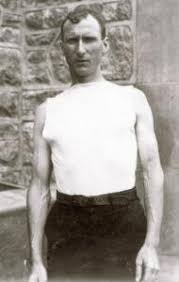
Thomas Hicks

August 30, 1904: Perhaps the craziest sporting event ever held on American soil takes place. No movie studio would buy a script containing this story. But it all happened.

The 1st modern Olympic Games, in Athens, Greece in 1896, were a smashing success. Not least because its signature event, the marathon race, was won by a Greek, Spyridon Louis, who became, and perhaps remains, his nation's greatest sporting hero.

The founder of the International Olympic Committee, Baron Pierre de Coubertin, wanted them held every 4 years, just like they were in ancient Greece. Understandable. And he wanted the next one to be in his hometown: Paris, France. Also understandable, given his role in their establishment, given France's status as one of the world's leading countries, and given Paris' status as one of the world's most beloved cities.

But the 1900 Olympics were practically a sideshow to the Exposition Universelle, a World's Fair. It was so haphazard that some competitors, upon receiving their medals, were unaware that the events they had just won were part of the Olympic Games. About the only thing that can be said in favor of the Games of the IInd Olympiad is that they were the 1st to include women.

Things got worse in 1904. America wanted to be the next host. But the city with the winning bid was St. Louis, Missouri. Not being a coastal city, and not being as large a city as Athens or Paris, it was hard to get to. Throw in various worldwide tensions, including the Russo-Japanese War, and only 62 out of the 651 athletes who competed were from outside North America. Only 15 countries sent athletes.

And, again, they were attached to a World's Fair: The Louisiana Purchase Exposition, celebrating the 100th Anniversary of the launch of the Lewis & Clark expedition. This Fair would popularize several foods we now take for granted, though none were actually invented there: The hamburger, the hot dog, peanut butter, iced tea, cotton candy, the waffle-style ice cream cone, and Dr. Pepper soda. The Fair would be the setting of the 1944 film Meet Me In St. Louis, starring Judy Garland and directed by Vincente Minnelli, who married shortly thereafter.

The 1904 Olympics were the 1st to feature boxing, freestyle wrestling, and the decathlon. Most events took place on the campus of Washington University, including on their Francis Field, which is still in use, although the current stadium on the site dates to 1984.

George Eyser, born in Germany, but a naturalized American citizen living in St. Louis, had lost a leg in a railroad accident. Nevertheless, he competed in gymnastics, and won 3 Gold Medals, 2 Silvers and a Bronze. As he had 4 years earlier, Ray Ewry won all 3 standing jumps: High, long and triple. Only 2 athletes representing Great Britain won medals, and both were, rather inconveniently, from Ireland.

And then there was the marathon. The race had not yet been standardized at 26.2 miles. This one was 24.85 miles, in 90-degree heat, on unpaved roads that tended to kick up dust. It should never have been approved as the marathon course. The race began with 32 competitors from 6 countries: America, Canada, France, Greece, South Africa and Cuba.

The Canadian was Billy Sherring, of Hamilton, Ontario. He did not finish the race. Two years later, in the so-called Intercalated Games in Athens, he won the marathon, competing in a singlet with a large shamrock on it. It is said that this inspired the Athens-based soccer team Panathinaikos to adopt the shamrock as their logo, even though they have nothing to do with Ireland.

The South Africans were Len Taunyane and Jan Mashiani, the 1st 2 black Africans to compete in the Olympics. Aside from his participation in this race, little is known of Taunyane. It is not known when he was born. He participated in the Boer War, and was part of an exhibit on that war at the Fair. Having been a dispatch runner in the war, he decided he could run in the marathon. Despite the strict segregation of the State of Missouri, he was allowed to try.

But the organizers couldn't understand his thick accent, which made it hard for them to understand him even as he spelled his name. So he went into the books as "Len Tau," competing for the Zulu nation, because, as yet, there was no nation of South Africa. And he wasn't a member of the Zulu tribe: He was a Tswana. He ran barefoot, and at one point was chased off course by dogs. He still managed to finish 9th. He returned to his homeland, and, from there, history lost track of him: We don't know what he did after 1904, or when he died.

Even less is known of Mashiani, who finished 12th. Taunyane's part of the story would be distinctive enough. But it was far from the craziest part.

The Cuban was Félix de la Caridad Carvajal y Soto, known as Andarín Carvajal. He was a mailman, used to walking long distances. Once, he ran the entire length of the island on which Cuba lies. When he learned of the Olympics coming to America, he decided to run in the marathon.

He took a boat ride from Havana to New Orleans, and then lost all of his remaining money gambling. He had to walk and hitchhike the 683 miles up the Mississippi River to St. Louis. He showed up just in time to register, wearing street clothes, including long pants. A sympathetic official cut the pants so that they would feel more like shorts, and give him more ventilation.

Along the race course, he stopped several times to talk with spectators. He saw a car with a basket full of peaches, and swiped a few of them, to keep himself hydrated in the brutal St. Louis heat. The course included an apple tree, and he grabbed some apples. They turned out to be rotten, and he threw up. He stopped to take a nap. He got up, and resumed. So, what, it took him a week to finish the race? No: He finished 4th, in under 4 hours.

In 1907, he famously defeated American runner Henry W. Shelton in a 6-hour race. In 1909, a 6-laps-per-mile track was installed for a race around the Polo Grounds in New York, but he finished last. He lived until 1949.

You might think Carvajal's role was the craziest part of the event. But you would be thinking wrong.

Frederick Lorz was a 20-year-old bricklayer in New York. He competed in a long-distance race at Celtic Park in what's now Sunnyside, Queens, that was a precursor to the New York City Marathon. The 8 top finishers would be admitted to the Olympic marathon in St. Louis, all expenses paid. He was 1 of the 8, competing for the Mohawk Athletic Club.

He entered the race, but dropped out after 9 miles. His manager pulled up to him in a car -- still a novelty at that point -- and drove him 11 miles. Then he got back onto the course, ran into Francis Field, and broke the tape, purporting to be the winner. His time was 3 hours, 13 minutes even.

He was called out: No one had seen him at the halfway mark. He admitted his deception, and the Amateur Athletic Union banned him for life from all competitions they oversaw. After 1 year, the ban was lifted, and he won the 1905 Boston Marathon. He died in 1914, of pneumonia in those pre-antibiotic days, only 29 years old.

So that's the strangest part of this story, right? No, it's not.

Only 14 of the 32 runners who started finished. One who did not was William Garcia, a 27-year-old runner from Oakland, California. He got to the 19-mile mark before the St. Louis heat did him in. He fell, and coughed up blood. A bystander saw this, and got him medical attention. Garcia nearly became the 1st person to die as a result of competing in the Olympic Games.

(Aside from the Israeli athletes murdered by terrorists in Munich in 1972, only 1 athlete ever has: Nodar Kumaritashvili, a luger from the Republic of Georgia, who was killed in a practice run in Vancouver in 2010.)

Finally, we come to the strangest part. Thomas John Hicks was born in England in 1876. By August 30, 1904, he was a 28-year-old brass worker living outside Boston in Cambridge, Massachusetts. In 1904, he finished 2nd at the Boston Marathon. Four months later, he was ready to compete in the Olympic Marathon. Or so he thought.

Midway through the race, he was well behind the leaders. His assistants gave him 1/60th of a grain -- about 1 milligram -- of strychnine, and some brandy. Historically, small doses of strychnine were given to people to strengthen muscle contractions, to stimulate the heart, and to aid in bowel movements. In doses larger than that, it had been used as poison, as a murder weapon. It had also been used as a pesticide.

The 1st dose didn't help Hicks much. So he was given another dose. That did the trick: With Lorz having already been disqualified, Hicks crossed the finish line officially 1st, in 3 hours, 28 minutes and 53 seconds -- nearly 16 minutes after Lorz. Albert Corey of France finished 2nd, at 3:34:52. Arthur Newton of the U.S. was 3rd, and, as I said, Carvajal finished 4th, oddly, but legitimately.

The strychnine was, literally, a "performance-enhancing drug." At the time, though, it was legal. Eventually, it was banned. A good thing, too: Hicks collapsed at the finish line, and it is believed that a 3rd dose would have killed him. Instead, he moved to Canada, joined his brothers working in a mine near Winnipeg, and lived until 1952.

Thomas Hicks had won a race that can legitimately be called 25 miles of insanity.

*

August 30, 1904 was a Tuesday. A full slate of games, and then some, was played in what would later be called Major League Baseball:

* The New York Highlanders beat the Cleveland Naps, 1-0 at Hilltop Park in Manhattan. Al Orth, known as "The Curveless Wonder," outpitched future Hall-of-Famer Addie Joss, known as "The Human Hairpin" because of his pitching motion. Jimmy Williams singled home Norman "Kid" Elberfeld to win the game in the bottom of the 9th.

In 1913, the Highlanders renamed themselves the Yankees. Cleveland's 2nd baseman, manager and namesake was Napoleon "Nap" Lajoie, who went 0-for-4 in this game. After he left in 1914, the team was renamed the Cleveland Indians. In 2022, they renamed themselves again, the Cleveland Guardians.

* The New York Giants beat the Cincinnati Reds, 3-1 at the Palace of the Fans in Cincinnati. Crosley Field was built on the site in 1912. Christy Mathewson got the win over Frank "Noodles" Hahn, advancing to 28-9 on the season.

* The Brooklyn Superbas beat the Chicago Cubs, 8-4 at West Side Park in Chicago. The Superbas became the Dodgers in 1911.

* The Boston Americans beat the Detroit Tigers, 13-0 at the Huntington Avenue Grounds in Boston. Cy Young not only pitched a 6-hit shutout, but went 3-for-5, including a 2-RBI triple.

* The Chicago White Sox beat the Philadelphia Athletics, 3-0 at Columbia Park in Philadelphia. Roy Patterson pitched a 4-hit shutout.

* A doubleheader was split at League Park in Washington. The St. Louis Browns won the opener, 3-2. The Washington Senators won the nightcap, 4-1.

* The Boston Beaneaters beat the Pittsburgh Pirates, 4-1 at Exposition Park in Pittsburgh. Honus Wagner went 1-for-2 with a walk in a losing cause.

* And the Philadelphia Phillies beat the St. Louis Cardinals, 4-2 at Robison Field in St. Louis. 

Friday, July 15, 2022

July 15, 1914: W.C. Handy Records "The Saint Louis Blues"

July 15, 1914: W.C. Handy Records "The Saint Louis Blues," a landmark in recording the blues, a uniquely American art form.

William Christopher Handy was born on November 16, 1873 in Florence, Alabama, in a log cabin built by his grandfather. His father and said grandfather were both ministers in the African Methodist Episcopal Church (AME). His father believed musical instruments were the tools of the Devil, but William learned to play the guitar and the cornet. 

In his autobiography, titled after a nickname he did not give himself, Father of the Blues, he cited as inspiration the "whippoorwills, bats and hoot owls and their outlandish noises," Cypress Creek washing on the fringes of the woodland, and "the music of every songbird and all the symphonies of their unpremeditated art." But he also cited his own people: "Southern Negroes sang about everything... They accompany themselves on anything from which they can extract a musical sound or rhythmical effect."

In 1893, a quartet he formed performed at the World's Columbia Exhibition, a World's Fair in Chicago. He eventually toured in Cuba, Mexico and Canada. In 1896, he married Elizabeth Price, and they had 6 children.

He is best known for 2 songs with "blues" and a city's name in the title. In 1909, he wrote "The Memphis Blues," which became the campaign song for the election of Mayor of Edward Crump, despite Crump being a white segregationist, and on his way to running the Democratic Party of Tennessee into corruption.

Sheet music for "The Memphis Blues" was published in 1912, and was said to be the inspiration for the invention of the Foxtrot by the married dancers Vernon and Irene Castle. Along with the Castles, Handy had become a national star.

In 1914, he wrote "The Saint Louis Blues" -- with "Saint" spelled out on the sheet music, not abbreviated as "St." He wrote:

The one-step and other dances had been done to the tempo of "Memphis Blues."... When "St Louis Blues" was written the tango was in vogue. I tricked the dancers by arranging a tango introduction, breaking abruptly into a low-down blues. My eyes swept the floor anxiously, then suddenly I saw lightning strike. The dancers seemed electrified. Something within them came suddenly to life. An instinct that wanted so much to live, to fling its arms to spread joy, took them by the heels.

He also wrote and recorded "Atlanta Blues," but it was not as big of a hit as his Memphis and St. Louis songs. In 1916, he had another Memphis-themed song, "Beale Street Blues," which was a hit. "Yellow Dog Blues," from 1912, was a big hit, and was even mentioned in Bobby Darin's 1958 hit song "Queen of the Hop."

He moved to New York, and was able to live off his music royalties, so that live performing was a pleasure, not a need. In 1929, an early sound film was titled St. Louis Blues. Handy produced it, but did not appear in it. Bessie Smith did, as "The Saint Louis Blues" was the song that introduced "The Empress of the Blues" to the world. It is believed to be her only film appearance.

In 1943, Handy fell off a Subway platform, and, although he was not hit by a train, he went blind as a result of the fall. His family moved him to nearby Yonkers, New York. In spite of his impairment, in 1949, he played "The Saint Louis Blues" on Toast of the Town, the show that became The Ed Sullivan Show.

He died on March 28, 1958, of bronchial pneumonia, at the age of 84, and was buried in Woodlawn Cemetery in New York, where Vernon Castle, Bert Williams and Florence Mills had been buried. They would eventually be joined by Irene Castle, Fritz Kreisler, Duke Ellington, Milt Jackson, Irving Berlin, Miles Davis, Lionel Hampton, Max Roach, Scott La Rock, Celia Cruz, Ornette Coleman, Coleman Hawkins and Diahann Carroll -- and that's just from the world of music.

Handy did not quite live to see the premiere of a film based on his life, St. Louis Blues, which came on April 10, 1958. He was played by Nat King Cole. Ella Fitzgerald played herself. The film also starred Eartha Kitt, Cab Calloway, Mahalia Jackson, Ruby Dee, Pearl Bailey, and, as Handy as a boy, future rock and roll star Billy Preston.

New York City renamed West 52nd Street between 6th and 7th Avenues "W.C. Handy Place." West 52nd had previously been nicknamed "Swing Street" for all the music clubs along it. Billy Joel titled a 1978 album 52nd Street in tribute.

In 1967, 2 major league sports teams were established, taking their names from African-American music: The St. Louis Blues of the National Hockey League, and the New Orleans Saints, from "When the Saints Go Marching In," of the National Football League.

*

July 15, 1914 was a Wednesday. There were 3 major leagues in baseball that year. In the American League:

* The New York Yankees split a doubleheader with the Chicago White Sox at the Polo Grounds. The ChiSox won the opener, 3-2. The Yankees were leading the nightcap, 2-1 after 8 innings, when the umpires called the game due to darkness.

* The Boston Red Sox beat the Cleveland Naps, 4-0 at Fenway Park in Boston. Hubert "Dutch" Leonard pitched a 7-hit shutout. In their last year with Napoleon "Nap" Lajoie as their 2nd baseman, best hitter, manager and namesake, the team that became the Indians the next season couldn't score, even with Lajoie himself singling as a pinch-hitter. Babe Ruth, who had made his major league debut with the Red Sox 4 days earlier, did not appear in this game. Nor did "Shoeless" Joe Jackson, then with Cleveland.

* The Washington Senators and the Detroit Tigers were tied, 3-3 at American League Park (later Griffith Stadium) in Washington, when the game was called due to darkness. Neither team's signature player, Walter Johnson of the Senators or Ty Cobb of the Tigers, appeared in this game.

* And the Philadelphia Athletics and the St. Louis Browns were rained out at Shibe Park in Philadelphia. The game was made up as part of a doubleheader on August 25. The A's swept, 9-0 and 1-0. Rube Bressler pitched a 3-hit shutout in the 1st game, and Herb Pennock pitched a 6-hit shutout in the 2nd game.

In the National League: 

* The New York Giants lost to the Chicago Cubs, 5-4 at the West Side Grounds in Chicago. The Cubs scored 3 runs in the bottom of the 9th to win it.

* The Cincinnati Reds beat the Philadelphia Phillies, 6-4 at Redland Field (later renamed Crosley Field) in Cincinnati.

* The Brooklyn Robins lost to the Pittsburgh Pirates, 4-3 at Forbes Field in Pittsburgh. This was the once-and-future Dodgers' 1st year with Wilbert Robinson as their manager, and they were named the Robins for him as long as he was with them, through the 1931 season, after which they became the Dodgers again. Zack Wheat went 0-for-3 for them. Honus Wagner went 0-for-4 for the Pirates.

* And the St. Louis Cardinals beat the Boston Braves, 5-3 at Robison Field in St. Louis.

And 1914 was the 1st of 2 seasons for the Federal League:

* The only team the FL had in New York City, the Brooklyn Tip-Tops, beat the Pittsburgh Rebels, 4-2 at Exposition Park, former home of the Pirates, which stood roughly where PNC Park does now. 

* The Indianapolis Hoosiers beat the Kansas City Packers, 5-3 at Gordon & Koppel Field in Kansas City. The Hoosiers went on to win the Pennant.

* The Buffalo Blues swept a doubleheader from the Baltimore Terrapins, 7-0 and 4-0 at at the International Fair Association Grounds in Buffalo. Earl Moore pitched a 4-hit shutout in the 1st game, and Fred Anderson pitched a 3-hit shutout in the 2nd game.

* The St. Louis Terriers beat the Chicago Whales, 2-0 at Weeghman Park in Chicago, the ballpark that would be adopted by the Cubs and eventually renamed Wrigley Field. Mordecai "Three-Finger" Brown, the former Cubs ace, returned to the city of his greatest deeds, and pitched a 4-hit shutout for the Terriers.

Wednesday, July 6, 2022

July 6, 1933: The 1st Major League Baseball All-Star Game

July 6, 1933: The first All-Star Game in what would later be called Major League Baseball is held, at Comiskey Park in Chicago, home of the White Sox.

There had been baseball games with "all-star teams" before, usually as benefits for indigent former players, or for the families of players who fell victim to untimely deaths. The most notable of these was in Cleveland in 1911, for the family of the late Indians pitcher Addie Joss. But this was the first one sanctioned by official baseball.

The idea came from Arch Ward, the sports editor of the Chicago Tribune. Chicago had been incorporated as a city in 1833, 100 years before, and was hosting the Century of Progress World's Fair on the South Side. Mayor Edward J. Kelly had talked to Ward about the Tribune sponsoring a sporting event in connection with the Fair.

Since the Tribune Company owned a vast media network, including radio station WGN (named for what the Tribune liked to call itself, "The World's Greatest Newspaper") and, at the time, the New York Daily News, Ward saw to it that the 55 newspapers the Company owned printed ballots for fans to use to select the players for what he called "The Game of the Century."

The players were chosen. And so, on July 6, at Comiskey Park (larger than Wrigley Field on the North Side, home of the Chicago Cubs), the game was played.

The managers were Connie Mack of the Philadelphia Athletics, already the winningest manager of all time, for the American League team; and, for the National League team, John McGraw, who had retired as manager of the New York Giants the previous season, due to ill health. (He died the following Winter.) In 1937, after the establishment of the Baseball Hall of Fame, they would become the 1st 2 managers elected to it.

The American League All-Stars wore their regular team uniforms: 

* From the New York Yankees: Right fielder Babe Ruth, 1st baseman Lou Gehrig, left fielder Ben Chapman, pitcher Lefty Gomez, all starters; catcher Bill Dickey, 2nd baseman Tony Lazzeri.

* From the host Chicago White Sox: Starting center fielder Al Simmons, starting 3rd baseman Jimmy Dykes.

* From the Boston Red Sox: Starting catcher Rick Ferrell.

* From the Cleveland Indians: Pitchers Wes Ferrell (Rick's brother) and Oral Hildebrand, and outfielder Earl Averill.

* From the Detroit Tigers: Starting 2nd baseman Charlie Gehringer.

* From the Philadelphia Athletics: Pitcher Robert "Lefty" Grove and 1st baseman Jimmie Foxx.

* From the St. Louis Browns: Outfielder Sam West.

* From the Washington Senators: Starting shortstop Joe Cronin and pitcher Alvin "General" Crowder.

The National League All-Stars wore special uniforms for the game, saying, "NATIONAL LEAGUE," which they haven't done since:

* From the New York Giants: Starting 1st baseman Bill Terry (also their manager), pitchers Carl Hubbell and Hal Schumacher, and outfielder Francis "Lefty" O'Doul.

* From the Brooklyn Dodgers: 2nd baseman Tony Cuccinello.

* From the Boston Braves: Starting center fielder Wally Berger.

* From the Chicago Cubs: Catcher Charles "Gabby" Hartnett, pitcher Lon Warneke, shortstop Woody English.

* From the Cincinnati Reds: Starting left fielder Charles "Chick" Hafey.

* From the Philadelphia Phillies: Starting right fielder Chuck Klein, starting shortstop Dick Bartell.

* From the Pittsburgh Pirates: 3rd baseman Hal "Pie" Traynor and outfielder Paul Waner. (Paul's brother, Lloyd Waner, did not make the game.)

* From the St. Louis Cardinals, all starters: Pitcher Bill Hallahan, catcher Jimmie Wilson, 2nd baseman Frankie Frisch and 3rd baseman John "Pepper" Martin.
The AL had 11 players go to the Hall of Fame: Ruth, Gehrig, Gomez, Dickey, Lazzeri, Simmons, Rick Ferrell, Gehringer, Grove, Foxx and Cronin. The NL had 8: Terry, Hubbell, Hartnett, Hafey, Klein, Traynor, Waner and Frisch. Total, 19.

The AL contributed umpires Bill Dinneen behind home plate and Bill McGowan at 2nd base; the NL, Bill Klem at 1st base and Cy Rigler at 3rd base. McGowan and Klem would be elected to the Hall of Fame.

A crowd of 47,595 paid to see the game. Graham McNamee and Hal Totten broadcast it on radio for NBC, and Pat Flanagan and Johnny O'Hara did so for CBS.

Top of the 1st inning: Martin grounded out to short. Frisch did the same. Klein lined out to short, so a busy inning for Cronin.

Bottom of the 1st: Chapman grounded to 3rd. Gehringer walked. Gehringer stole 2nd. Ruth was called out on strikes. Gehrig grounded out, 1st to pitcher.

Top of the 2nd: Hafey grounded to 2nd, and Gehringer, normally so sure a fielder that he was known as "The Mechanical Man," couldn't get a throw off in time, and Hafey had the game's 1st hit. Terry singled to left. Berger grounded to 3rd, and Dykes stepped on 3rd for the 1st out. He threw to 2nd, and Terry was out. But the triple play could not be completed. Bartell struck out swinging. Game still scoreless.

Bottom of the 2nd: Simmons flied to left. Dykes drew a walk. Cronin did the same. Ferrell flied to right. Gomez singles to center, scoring Dykes. This was a amazing, as Gomez was a notoriously poor hitter even by pitchers' standards. Late in life, he joked that he never broke a bat until he was 73 years old, and that was from backing the car out of the garage. Chapman grounded to short, causing a force play that eliminated Gomez at 2nd. AL 1, NL 0.

Top of the 3rd: Wilson grounded to 3rd. Hallahan flied to center. Martin popped to short.

Bottom of the 3rd: Gehringer walked. Ruth hit a home run, and it was fitting that he hit the 1st home run in All-Star Game history. Gehrig walked. Hallahan was removed, replaced by Warneke. Simmons grounded to short, for a double play. Dykes singled to left. Cronin flied to center. AL 3, NL 0.

Top of the 4th: Gomez out as pitcher, Crowder in. Frisch lined to center. Klein grounded to 1st, unassisted. Hafey hit a foul pop to 3rd.

Bottom of the 4th: Ferrell flied to right. Crowder grounded to 2nd. Chapman grounded to 3rd. AL 3, NL 0.

Top of the 5th: Terry grounded to 2nd. Berger grounded to short. Bartell hit a foul pop behind 1st, but Gehrig dropped it. Bartell hit another such pop, and, this time, Gehrig caught it.

Bottom of the 5th: Up until this point, American League baseballs were being used in the game. The switch was made to National League baseballs. Gehringer flied to center. Ruth singled to center. Gehrig struck out. Simmons singled to left. Dykes grounded to 2nd, for a force play that eliminated Simmons. AL 3, NL 0.

Top of the 6th: O'Doul batted for Wilson, and grounded to 2nd. Warneke tripled to right. Martin grounded to 3rd, and Warneke scored on the play. Frisch hit a home run. Klein singled. Hafey grounded to 3rd. AL 3, NL 2.

Bottom of the 6th: Hartnett now catching. Cronin singled to center. Ferrell bunted Cronin over to 2nd, 1st to 2nd. Averill batted for Crowder, and singled to center, scoring Cronin. Chapman bunted to 3rd and beat it out. Gehringer flied to right. AL 4, NL 2.

Top of the 7. Grove pitching. Terry singled to left. Berger grounded to short, forcing out Terry. Traynor batted for Bartell, and doubled to center. Hartnett struck out. English batted for Warneke, and flied to center. AL 4, NL 2.

Bottom of the 7th. English playing at short. Hubbell pitching. Gehrig walked. Simmons grounded to 3rd, for a force play that eliminated Gehrig. Dykes singled to left. Cronin hit a foul popup to 1st. Ferrell grounded to 2nd. AL 4, NL 2.

Top of the 8th: Martin was called out on strikes. Frisch beat out a grounder to 1st. Klein flied to center. Hafey hit one deep to right, but Ruth reached over the top of the wall to catch it. Had there been ESPN at the time, we would have spent the next 80 years talking about how Ruth was a great fielder, as well as the greatest hitter who ever lived.

Bottom of the 8th: Waner moved to right field. Grove grounded to 1st, unassisted. Chapman struck out. Gehringer lined to center. AL 4, NL 2.

Top of the 9th. Ruth came out of the game. Chapman moved to right. Simmons moved to left. West went to center. Terry grounded to 2nd. Berger lined to right. Cuccinello batted for Hubbell, and struck out swinging.

Ballgame over. The American League wins, 4-2. For the AL: 4 runs, 9 hits, 1 error, and 10 men left on base. For the NL: 2 runs, 8 hits, they played errorless baseball, and left 5 on base.

The game was such a success that Commissioner Kenesaw Mountain Landis decided to make it an annual event. Since the Fair was scheduled for a 2nd year in 1934, Ward came up with another idea: The Chicago College All-Star Game, in which the best college football players of the previous season would face the defending NFL Champions at Soldier Field in Chicago. Since the defending Champions were the Chicago Bears, it was relatively easy. That tradition ended in 1976, but "the Midsummer Classic" continues.

Woody English was the last surviving player from this game, living until 1997, 64 years later.

There are 4 6-pointed stars on Chicago's city flag, and 1 represents the Century of Progress Fair that inspired this All-Star Game. The others represent the founding of Fort Dearborn in 1803, the Great Fire of 1871, and the World's Columbian Exposition of 1893.
The top blue bar represents Lake Michigan and the North Branch of the Chicago River, and the bottom blue bar represents the South Branch of the River and the Chicago Sanitary and Ship Canal. The 3 white background areas represent the North South and West Sides.
*

July 6, 1933 was a Thursday. Most MLB All-Star Games since have been played on Tuesdays. This Thursday was in the off-season for the NFL and the NHL, and the NBA wasn't founded yet. So there were no other scores on this historic day.

Friday, May 27, 2022

May 27, 1933: The Century of Progress World's Fair

May 27, 1933: The Century of Progress Exhibition, a World's Fair, opens in Chicago. It celebrated the Centennial of the city's incorporation in 1833. It ran for 2 years, until October 31, 1934.

The theme of the fair was technological innovation, and its motto was "Science Finds, Industry Applies, Man Adapts," trumpeting the message that science and American life were wedded. Its architectural symbol was the Sky Ride, a transporter bridge perpendicular to the shore on which one could ride from one side of the fair to the other.

One description of the Fair noted that the world, "then still mired in the malaise of the Great Depression, could glimpse a happier not-too-distant future, all driven by innovation in science and technology." Fair visitors saw the latest wonders in rail travel, automobiles, architecture and even cigarette-smoking robots. The exposition "emphasized technology and progress, a utopia, or perfect world, founded on democracy and manufacturing."

The fair buildings were multi-colored, to create a "Rainbow City," as compared to the "White City" of the World's Columbian Exposition, the Chicago World's Fair of 40 years earlier. The buildings generally followed Moderne architecture, in contrast to the neoclassical themes used at the 1893 Fair.

One famous feature of the fair were the performances of Sally Rand, a "fan dancer," who used feathered "fans" to flash skin at viewers, so as to show that she was naked, but not appear totally so. Other popular exhibits were the various auto manufacturers, the Midway (filled with nightclubs such as the Old Morocco, where future stars Judy Garland, The Cook Family Singers, and The Andrews Sisters performed), and a recreation of important scenes from Chicago's history.
Sally Rand

The Fair also contained exhibits that would seem shocking to modern audiences, including offensive portrayals of African-Americans, a "Midget City" complete with "sixty Lilliputians," and an exhibition of incubators containing real babies. This may have been the 1st year of President Franklin D. Roosevelt's "New Deal," and many of the exhibits may have been looking to the future, as those at World's Fairs tend to do; but much of the social attitudes were still trapped in the past.

Arch Ward, the sports editor of the Chicago Tribune, thought there should be a baseball game in connection with the Fair. So the 1st Major League Baseball All-Star Game was held at Comiskey Park on July 6, with a team of players from the American League beating one from the National League, 4-2.

The following year, the Chicago College All-Star Game, featuring recently graduated players taking on the defending Champions of the NFL, was played at Soldier Field, which was made part of the Fair's grounds. The 1st of those games, between the College All-Stars and the Chicago Bears, ended in a 0-0 tie.
Among the remaining buildings from the Fair are on the Museum Campus, including Soldier Field, the Museum of Science & Industry, the Field Museum and the Shedd Aquarium. Northerly Island, connected to the mainland by Solidarity Drive, includes another museum, the Adler Planetarium. It once house an airport, Meigs Field, which has been converted back into a public park.
*

May 27, 1933 was a Saturday. This was also the day that the film Gold Diggers of 1933 premiered. I have a separate entry for that event.

These baseball games were played that day:

* The New York Yankees beat the Chicago White Sox, 15-11 at Yankee Stadium. Yes, that's a baseball score, not a football score. Pitcher Ted Lyons went 3-for-4 for the White Sox, but got knocked out of the box in the 8th inning, when the Yankees came back from 11-3 down to score 12 runs. Lou Gehrig and Bill Dickey hit home runs. Babe Ruth did not, but did go 1-for-4 with a walk and 2 RBIs.

* The Brooklyn Dodgers lost to the Cincinnati Reds, 4-3 at Redland Field in Cincinnati. The ballpark was renamed Crosley Field the next season.

* The Cleveland Indians beat the Boston Red Sox, 6-0 at Fenway Park in Boston. Wes Ferrell allowed 9 hits, but kept the shutout.

* The Philadelphia Athletics beat the Detroit Tigers, 5-2 at Shibe Park in Philadelphia. Mickey Cochrane hit 2 home runs, and Lefty Grove pitched 3 innings of scoreless relief to get the save for Tony Freitas. Jimmie Foxx did not play in this game. A year later, due to owner-manager Connie Mack's Depression-forced fire sale, Cochrane would be managing and playing for the Tigers, and Grove would be pitching for the Red Sox. Two years after that, Foxx would be with the Red Sox.

* The St. Louis Cardinals beat the Philadelphia Phillies, 10-1 at Sportsman's Park in St. Louis. Frankie Frisch, Joe Medwick, Ripper Collins and Jimmie Wilson each had 3 hits for the Cards, while Ethan Allen went 2-for-5 with 3 RBIs.

* The Boston Braves and the Chicago Cubs were rained out at Wrigley Field in Chicago. The game was made up as part of a doubleheader the next day. The Cubs swept, 5-1 and 3-2.

* The Washington Senators and the St. Louis Browns were rained out at Griffith Stadium in Washington. The game was made up as part of a doubleheader on July 15. The Senators swept, 1-0 and 2-0. Lefty Stewart pitched a 9-hit shutout in the opener, and Bobby Burke a 5-hit shutout in the nightcap.

* And the New York Giants and the Pittsburgh Pirates were rained out at Forbes Field in Pittsburgh. The game was made up as part of a doubleheader on July 22. The Giants won the 1st game, 1-0. Carl Hubbell pitched a 6-hit shutout. The Pirates won the 2nd game, 7-2. Over the 2 games, Giants 1st baseman-manager Bill Terry went 3-for-7 with a walk, Mel Ott went 2-for-7 with a walk and an RBI, Pie Traynor went 0-for-7 with an RBI, Paul Waner went 2-for-7 with an RBI, and Lloyd Waner went 2-for-8 with a walk.

Monday, May 9, 2022

May 10, 1876: The Centennial Exhibition

Memorial Hall

May 10, 1876: The Centennial International Exhibition of 1876, the first official World's Fair to be held in the United States, opens in Philadelphia, to celebrate the 100th anniversary of the signing of the Declaration of Independence in the city, on July 4, 1776.

Officially named the International Exhibition of Arts, Manufactures, and Products of the Soil and Mine, it was held in Fairmount Park, along the Schuylkill (SKOOL-kill) River, northwest of what's now known as Center City, on fairgrounds designed by Herman J. Schwarzmann. Nearly 10 million visitors attended the exposition, and 37 countries participated in it. It ran until November 10, when colder weather made keeping it going impractical.

A 1,000-foot Centennial Tower was proposed, but never built. (World's Fairs that did build towers have included the 1889 Universal Exposition in Paris with the Eiffel Tower, the 1939 New York World's Fair with the Trylon, and the 1962 Century 21 Exposition in Seattle with the Space Needle.) But the right arm and torch of the still-incomplete Statue of Liberty were on display, and fees collected to stand in the torch and view the fair helped raise money for the Statue's completion.

There was an Agricultural Hall, a Horticultural Hall, a Machinery Hall, a Women's Pavilion, and a few other themed exhibition areas. Among the new products shown for the first time at this fair were Alexander Graham Bell's telephone, the Remington No. 1 typewriter, Heinz ketchup and Hires root beer.

The Exhibition was intended not only to celebrate the 100th Anniversary of American independence, but to show that America was coming out of the economic depression that had been caused by the stock market's Panic of 1873. The celebrations were meant to peak on Centennial Day, July 4, 1876. Unfortunately, that was the day that word reached Philadelphia by telegraph of the Battle of the Little Bighorn, where Native American tribes routed the U.S. Army's 7th Cavalry, under the command of Lieutenant Colonel George Armstrong Custer in the Montana Territory, putting a damper on the big day.

The fair was a mixture of the Gilded Age and the pain of the depression brought about by the Panic of 1873, and the strain that the Wild West was putting on the nation.

One of the few remaining buildings from the Exhibition is Memorial Hall. Since 2005, it has housed the Please Touch Museum, an interactive museum for children.

*

May 10, 1876 was a Wednesday. Baseball was America's only professional team sport at the time, and the National League had just begun its 1st season. Only one games was played: The Chicago White Stockings beat the Cincinnati Reds, 6-0 at the State Street Grounds in Chicago.

The White Stockings went on to win the NL's 1st Pennant. They went through some name changes until, by 1903, they were known as the Chicago Cubs, and the American League team founded in 1901 had become the Chicago White Sox.

But the team they beat on this day went out of business after the 1879 season. The team known today as the Cincinnati Reds started play in 1882, and has no connection to the earlier Reds, or to the Cincinnati Red Stockings who, in 1869 and 1870, were the first openly professional baseball team. So, when today's Reds claim to be "the oldest professional baseball team," they are lying: The Cubs are, having been established in 1870.

Saturday, April 30, 2022

May 1, 1893: The World’s Columbian Exposition

May 1, 1893: The World’s Columbian Exposition opens in Chicago, celebrating -- a year later -- the 400th Anniversary of Christopher Columbus' voyage to "The New World," the incorrectly celebrated "discovery of America."

The site was on the South Side, in Jackson Park, from 56th to 67th Street, from Stony Island Avenue to Lake Michigan. The centerpiece was an artificial lake that represented the Atlantic Ocean that Columbus crossed from August 3 to October 12, 1492. Around it were nearly 200 temporary buildings of neoclassical design, with (as most World's Fairs have) pavilions from countries and their colonies.

Among the surviving buildings is the Art Institute of Chicago, the foremost art museum in America outside New York City. Among the paintings on display is A Sunday Afternoon on the Island of La Grande Jatte by Georges Seurat. In the 1986 film Ferris Bueller's Day Off, the protagonists visit the museum, and Cameron Frye (played by Alan Ruck) stares at this painting intensely.

Among the others there are, in chronological order: An 1887 self-portrait by Vincent van Gogh, The Child's Bath by Mary Cassatt, At the Moulin Rouge by Henri de Toulouse-Lautrec, The Old Guitarist by Pablo Picasso, Water Lilies by Claude Monet, American Gothic by Grant Wood, and Nighthawks by Edward Hopper.
Over 27 million people attended from the May 1 opening until the October 30 closing, a record for any World's Fair, due in large part to Chicago already being America's rail center. As the Great Exhibition of 1851 became the announcement of Britain's Victorian era, this fair introduced to the world the idea of "American exceptionalism." It also inspired the "City Beautiful" movement that inspired such structures as New York's 42nd Street Public Library, Penn Station and Grand Central Terminal.

It also represented the city's comeback from the Great Fire of 1871, just as the Century of Progress Fair of 1933-34 represented America's rebound from the depth of the Great Depression. Other "comeback fairs" include the 1915 Pan-Pacific Exposition, San Francisco's comeback from its 1906 earthquake.

There are 4 6-pointed stars on Chicago's city flag, and 1 represents the Columbian Exposition, another the Century of Progress Fair. The others represent the Great Fire and the founding of Fort Dearborn in 1803.
The top blue bar represents Lake Michigan and the North Branch of the Chicago River, and the bottom blue bar represents the South Branch of the River and the Chicago Sanitary and Ship Canal. The 3 white background areas represent the North South and West Sides.

"Christopher Columbus" is the English name for the explorer, based on the Latin form, Christophorus ColumbusHis name in the dialect of his hometown of Genoa, Italy was Cristoffa Corombo. He was born in 1451, became an accomplished sailor early, and, with the Ottoman Empire having made travel to the East problematic following the fall of Constantinople (now Istanbul, Turkey) in 1453, he wanted to find a way to reach the East by sailing West.

By this point, pretty much everybody already knew the world was round. What hardly anybody knew, including Columbus, was just how far a man would have to sail to reach the Far East from Europe; and that there were not one, but two continents in the way. He convinced Spain to fund his journey, and, on October 12, 1492, he arrived on what is now named San Salvador, an island of the Bahamas.

He made a total of 4 voyages to "the New World," but the closest he ever came to what is now American soil was Puerto Rico. He never set foot on what is now the U.S. mainland. He introduced slavery and smallpox to the Americas -- named for a different Italian sailor, Amerigo Vespucci, most of whose work was done in South America -- and went to his grave in 1506 still believing he had reached India. Hence, "Native Americans" were called "Indians."
The most familiar image of Columbus,
a posthumous (1519) painting by Sebastiano del Piombo,
although it might not be of Columbus.

Many places in the Americas are named for him, including the capital city of Ohio, Columbus; the capital city of South Carolina, Columbia; Columbus Circle, a major intersection in New York City; and the Columbia River in the Pacific Northwest, on which the city of Portland, Oregon stands. Columbus Day, a holiday honoring him, and Italian-Americans, is celebrated on the 2nd Monday in October, close to the "discovery" date of October 12.

But since it is known that the Vikings reached North America about 500 years earlier, and that there were already people on the North American continent, the idea that "Columbus discovered America" has been completely discredited. And there are many Italian-Americans worthy of a holiday, but Columbus himself is not worthy of it.

In a 2011 episode of the YouTube series Epic Rap Battles of History, "Nice" Peter Shukoff played Columbus, against "Epic" Lloyd Ahlquist as Star Trek character Captain James T. Kirk.

*

May 1, 1893 was a Monday. Baseball's National League was the only pro sports league running at the time, and these 4 games were played:

* The New York Giants beat the Baltimore Orioles, 9-5 at the Polo Grounds.

* The Boston Beaneaters beat the Philadelphia Phillies, 3-2 at the Philadelphia Base Ball Grounds.

* The Washington Senators beat the Brooklyn Bridegrooms, 15-2 at Boundary Field in Washington.

* The St. Louis Browns beat the Louisville Colonels, 11-1 at Sportsman's Park in St. Louis.

* The Chicago Colts, the Cincinnati Reds, the Cleveland Spiders and the Pittsburgh Pirates were not scheduled.

The Orioles, the Spiders, the Colonels and the Senators were consolidated out of the NL after the 1899 season. 

The St. Louis Browns became the Cardinals in 1900, and the American League's St. Louis team took on the Browns name. The Chicago Colts became the Cubs in 1903. The Brooklyn Bridegrooms became the Dodgers in 1911. The Boston Beaneaters became the Braves in 1912.

April 30, 1939: The World of Tomorrow

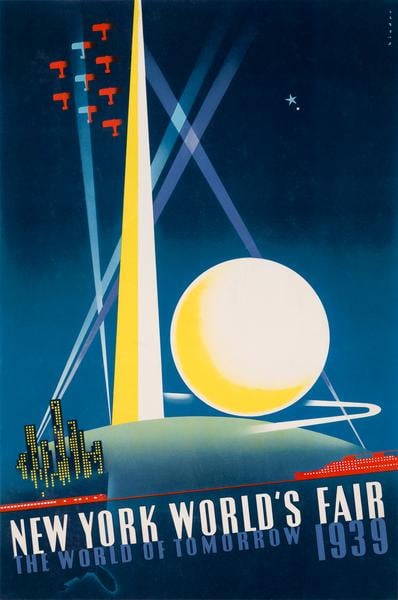
April 30, 1939: The New York World's Fair opens in Flushing Meadow-Corona Park, in Queens. With a theme of "The World of Tomorrow," it remains the most celebrated of America's World's Fairs.
The Fair was heavily promoted: In the 1938 baseball season, all 3 of the City's Major League Baseball teams wore patches advertising it, a year ahead of schedule. Oddly, none of them kept the patch for the 1939 or '40 season. Instead, in 1939, every Major League Baseball team wore a patch honoring the 100th Anniversary of Abner Doubleday inventing baseball in Cooperstown, New York in 1939 -- which, of course, he didn't do, and this was already widely known.
The "Tomorrow" in question was 1960. Of course, since, as political columnist Jack Germond taught us, "The future is never a straight-line projection of the present," it was a 1960 with the Great Depression over, but with World War II not having happened.

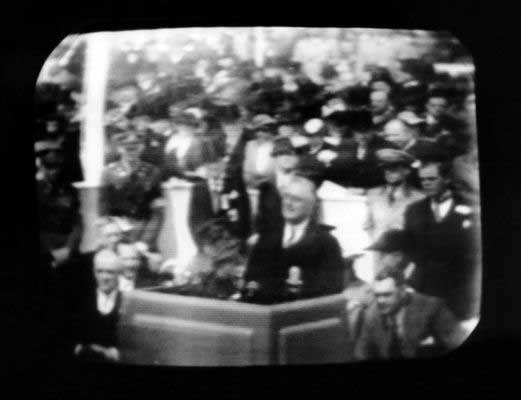
President Franklin D. Roosevelt officially opened the fair. RCA Chairman David Sarnoff, who ran the NBC radio network, used the occasion to start the network's television service. There were only about 100 TV sets capable of receiving the signal, so the birth of television broadcasting as we know it is a bigger deal in hindsight than it was at the time.
Actual preserved TV image of FDR's speech

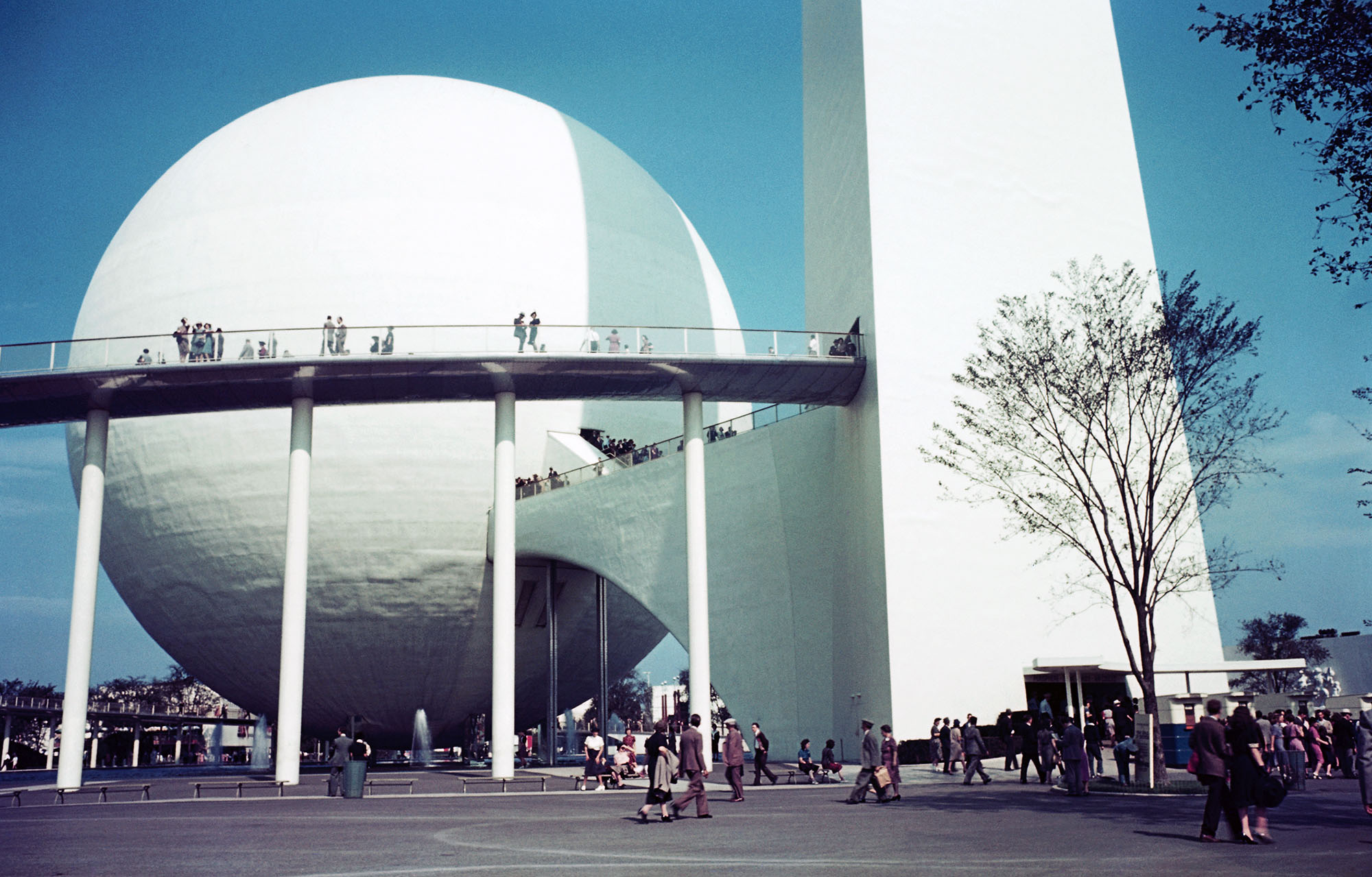
The centerpieces of the Fair were a 610-foot spire named the Trylon, and the 200-feet-in-diameter Perisphere. The latter was a "model city of tomorrow" where visitors could imagine what 1960 could look like.
The Fair was divided into Zones. The Communications and Business Systems Zone had major corporations putting their wares on display in "pavilions," including RCA, AT&T, IBM, General Motors, General Electric and Westinghouse. It also included a Masterpieces of Art building, with 300 works of art donated from around the world.
The General Motors Pavilion

The Community Interest Zone had "Demonstration Homes" of the future, an "Electrified Farm," and exhibits conducted by charitable groups such as the YMCA, the Christian Scientists, and the federal government's Works Progress Administration (WPA).

And the Government Zone had a Court of Peace, a Court of States, and a Lagoon of Nations. There were 60 pavilions on which various countries around the world displayed parts of their culture. Some of these were of nations that, at the least, pretended toward democracy, and some even gave it a good shot: Britain, France, Poland, Czechoslovakia, "Jewish Palestine," and "the Pan American Union."
The Fair was also the last gasp of the Art Deco movement.

Others were nations that seemed to flaunt their tyranny: Imperial Japan, Benito Mussolini's Fascist Italy, the fascist regime of Ioannis Metaxas in Greece, and the Soviet Union, then the only major nation practicing Communism. Nazi Germany did not send anyone, and wouldn't have been welcome in New York City, anyway.
A surviving color photo of the Soviet Pavilion

There was a Food Zone, a Production and Distribution Zone, and a Transportation Zone. And there was an Amusement Zone, with rides like a parachute jump.

The Fair stayed open until October, by which point World War II had begun. It reopened the following April, without the Soviet Pavilion. The French, Polish and Czech Pavilions were basically the biggest remaining pieces of free life in those countries. The Fair closed for good on October 27, 1940. By that point, many of the exhibits' home countries had fallen under the Nazis' control.

Over 45 million people attended over the 2 years, a little less than the 48 million that attended the 1933-34 Century of Progress Fair in Chicago. Among the visitors, in June, were King George VI and Queen Elizabeth of Great Britain, during their North American tour that also included meeting President and Mrs. Roosevelt and a visit to Canada. They visited all the pavilions from places in the British Empire.

Demolition began on December 10, 1940, including the moving of several rides, including the parachute jump, to the Boardwalk at Coney Island in Brooklyn. Billy Rose's Aquacade, a small stadium built by Rose, a songwriter and theater impresario, for water stunt shows, remained standing, but derelict and a ground for homeless people and drug deals, until the 1990s.

Two buildings remain. The New York State Pavilion is now the Queens Museum, and contains many artifacts, including tickets and usher's uniforms. And the World's Fair Station of the Interborough Rapid Transit (IRT) system remains in use.
The 1964-65 New York World's Fair opened on the same location, and some of its structures remain, including the Unisphere, a huge globe that was built on the site of the Perisphere. Over its 2 years, 51 million people attended, still a record for a World's Fair. It opened 5 days after Shea Stadium opened across the street, and the World's Fair station was renamed "Willets Point-Shea Stadium." When Citi Field opened in 2009, as Shea's replacement, people upset over naming the ballpark after a bank in the midst of a recession largely caused by banks led the MTA to rename the station "Mets-Willets Point."

The "zone" concept would be adopted by Walt Disney, first for Disneyland in Anaheim, California in 1955, then for Walt Disney World outside Orlando, Florida, which opened after his death, in 1971. Both included a "Tomorrowland," a nod to New York 1939.

And many of the exhibits from the '64 Fair ended up at Disney World. I went there in 1986, and my parents, from Newark, New Jersey, kept pointing out things left over from "the New York World's Fair," at which they dated in 1965: My father was 22, and my mother was 18. My mother's mother was with us, and she was a native of Queens, and she kept telling us that 1939 was "the real World's Fair," because she had been there, at the age of 15.

Had any of them done their research, as I've done for this article, they would have known that the "Spaceship Earth," the centerpiece of Disney's EPCOT Center, was based on the '39 Perisphere and its "model city of tomorrow."

*

April 30, 1939 was a Sunday. Football, basketball and hockey were out of season. These games were played in what would later be called Major League Baseball:

* The New York Yankees lost to the Washington Senators, 3-2 at Yankee Stadium. Oral Hildebrand was cruising with a 1-0 lead after 7 innings, but he ran out of gas in the 8th. Joe DiMaggio was injured, and did not play. Lou Gehrig flew out to center in the 2nd, flew out to right in the 4th, grounded to 2nd in the 6th, and flew out to center in the 8th. He played the whole game at 1st base, and had 7 putouts and 2 assists. It was his 2,130th consecutive game.

He never played again: Two days later, in Detroit, he asked manager Joe McCarthy to take him out of the lineup "for the good of the team."

* The Brooklyn Dodgers beat the Philadelphia Phillies, 3-1 at Ebbets Field.

* The New York Giants lost to the Boston Bees, 3-2 at National League Park in Boston. Mel Ott went 1-for-3. This was the 4th of 5 seasons in which the former Boston Braves experimented with new names for themselves and their ballpark after a disastrous 1935 season. The new names never caught on, and the Boston Braves and Braves Field names were restored for 1941.

* The Boston Red Sox beat the Philadelphia Athletics, 3-1 at Shibe Park in Philadelphia. Pitcher Jim Bagby Jr. and Bobby Doerr hit home runs for the Red Sox. Jimmie Foxx went 1-for-3. Rookie sensation Ted Williams did not play.

* The Detroit Tigers beat the Cleveland Indians, 14-1 at Briggs Stadium in Detroit. (It was renamed Tiger Stadium in 1961.) Charlie Gehringer hit a home run, going for 4-for-5 with 5 RBIs. Hank Greenberg went 3-for-4 with 2 RBIs.

* The Chicago Cubs beat their arch-rivals, the St. Louis Cardinals, 4-1 at Wrigley Field in Chicago.

* And the Chicago White Sox, well, the St. Louis Browns weren't exactly their arch-rivals, but the White Sox won, anyway, 6-5 at Sportsman's Park in St. Louis.

* And the Cincinnati Reds and the Pittsburgh Pirates were rained out at Forbes Field in Pittsburgh. The game was made up as part of a doubleheader on September 6. The Pirates won the opener, 5-4, when Paul Waner singled home the winning run in the bottom of the 11th. The Reds won the nightcap, 4-3, when Billy Werber doubled home the winning run in the top of the 10th.

Wednesday, April 27, 2022

April 27, 1967: Expo '67 Opens In Montreal

April 27, 1967: The 1967 International and Universal Exposition opens in Montreal. It is Canada's official celebration of the Centennial of its independence, and Quebec's coming-out party for the Province's "Quiet Revolution," not to mention for the Metro, Montreal's new subway system.

The fair was originally scheduled for Moscow, in celebration of the 50th Anniversary of the Bolshevik Revolution, but the Soviet Union decided to bow out, mainly for logistical reasons. Canada was happy to take it on, and so was everybody who could have made money off it: It remains the most profitable, and best-attended, World's Fair ever.

The theme for this World's Fair was "Man and His World," and the centerpiece was a geodesic dome designed by R. Buckminster Fuller. geodesic dome is a heimspherical thin-shell structure based on a "geodesic polyhedron." The rigid triangular elements of the dome distribute stress throughout the structure, making geodesic domes able to withstand very heavy loads.
But it turned out not to be fireproof: It burned in 1975, leaving only the outer skeleton. Nevertheless, it is one of the few surviving structures from the Expo, and is now known as the Montreal Biosphere. It helped inspire Walt Disney World's EPCOT Center.
The Fair was remembered for a visit from President Charles de Gaulle of France, where he stood on the balcony of Montreal's City Hall, and shouted, "Vive le Québec libre !and stoked the Quebec nationalism movement; and the Fair's nickname, Expo 67, being adapted for the expansion baseball team that was awarded the next year: The Montreal Expos.

Today, the islands that hosted the world exhibition are mainly used as parkland and for recreational use, with only a few remaining structures from Expo 67 to show that the event was held there.

*

April 27, 1967 was a Thursday. Game 4 was played in the Stanley Cup Finals. Appropriately enough, it was between Canada's 2 NHL teams, the 2-time defending Champion Montreal Canadiens, and the team that had won the previous 3 Cups, the Toronto Maple Leafs. But it was in Toronto, at Maple Leaf Gardens. The Canadiens won, 6-2, to tie the series.

But the Leafs won Game 5 in Montreal and Game 6 in Toronto, and won the Cup. They have not even been to the Finals since. The Canadiens have since been to the Finals 12 times, winning them 10 times.

Three days earlier, the Philadelphia 76ers had won the NBA Championship, beating the San Francisco Warriors in 6 games. Football was out of season. These baseball games were played:

* The New York Mets lost to the Chicago Cubs, 3-0 at Wrigley Field in Chicago. Ferguson Jenkins pitched a 3-hit shutout. Ernie Banks did not play.

* The Pittsburgh Pirates beat the Philadelphia Phillies, 5-4 at Connie Mack Stadium in Philadelphia. Roberto Clemente went 1-for-3 with a walk. Willie Stargell went 0-for-3.

* In the only game scheduled in the American League, the Cleveland Indians beat the Minnesota Twins, 5-4 at Cleveland Municipal Stadium. Harmon Killebrew went 2-for-3 with a walk. Rookie Rod Carew, not yet the great hitter that he would become, went 0-for-3 with a walk.

* The Houston Astros beat the St. Louis Cardinals, 6-4 at the Astrodome in Houston. Larry Dierker outpitched Bob Gibson. Joe Morgan went 2-for-5 with 3 RBIs. The Cards got 3 hits from Curt Flood, and 2 hits each from Mike Shannon, Tim McCarver and Bobby Tolan, but it wasn't enough.

* The Los Angeles Dodgers beat the Atlanta Braves, 6-0 at Dodger Stadium in Los Angeles. Claude Osteen pitched a 4-hit shutout. Ron Hunt went 2-for-4 with 4 RBIs. Hank Aaron went 0-for-4.

* And the Cincinnati Reds beat the San Francisco Giants, 3-2 at Candlestick Park in San Francisco. Pete Rose did not play. Willie Mays went 1-for-4 with an RBI, and Willie McCovey hit a home run.

December 31, 1999 & January 1, 2000: The Millennium

December 31, 1999:  The Millennium arrives. The people of planet Earth survived. At a terrible cost. But we hadn't destroyed ourselves. ...