Showing posts with label ucla bruins. Show all posts

Friday, December 2, 2022

December 2, 1915: What Became the Pac-12 Conference Is Founded

December 2, 1915: The Pacific Coast Conference is founded. It will evolve into the league known as the Pac-12.

The 4 original members were the University of California, at Berkeley, usually called "Cal" for sports purposes, and "Berkeley" for everything else; the University of Oregon, at Eugene; Oregon Agricultural College, which became Oregon State University in 1961, located in Corvallis; and the University of Washington, in Seattle.

Washington State College, in Pullman, was admitted in 1917, and was renamed Washington State University in 1959. Stanford University, in Palo Alto, California, between San Francisco and San Jose, was admitted in 1918.

The University of Southern California, a.k.a. USC, in Los Angeles, was admitted in 1922. So was the University of Idaho, in Moscow, just a few miles across a State Line from Washington State. The University of Montana, in Missoula, was admitted in 1924, but left in 1950. And the University of California at Los Angeles, a.k.a. UCLA, a campus which didn't even exist until 1919, was admitted in 1928.

Scandals broke out at several schools in the 1950s, leading to the PCC's disbanding in 1959. Cal, Stanford, UCLA, USC and Washington formed the Athletic Association of Western Universities (AAWU). Washington State joined in 1962, and Oregon and Oregon State joined in 1964. Idaho decided not to join.

In 1968, the league renamed itself the Pacific-8 Conference, Pac-8. In 1978, 2 members of the Western Athletic Conference (WAC), the University of Arizona and Arizona State University, joined, making the league the Pacific-10, or Pac-10. In 2011, Colorado left the Big 12, and Utah left the Mountain West Conference, both joining the Pac-10, which became the Pac-12: "Pacific" was no longer part of the league's official name.
From its inception in 1902 until 2001, the Rose Bowl in the Los Angeles suburb of Pasadena, California usually invited the top team on the West Coast to participate. This included the champions of the PCC (1916-59), the AAWU (1960-68), the Pac-8 (1969-78) and the Pac-10 (1979-2001). With the coming of the Bowl Championship Series (BCS) and then the National Championship Playoff (NCP), the Rose Bowl has not always featured a Pac-12 team, but it does seem to prefer one.

USC have been the league's representative in the Rose Bowl 34 times, Stanford 15, Washington 14, UCLA 12, Cal and Oregon 8 each, Washington State 4, Oregon State 3, Arizona State 2 and Utah 1. Arizona and Colorado have never played in the Rose Bowl. The Rose Bowls of 2002, 2005, 2011, 2018 and 2021 did not feature a Pac-12 team. (UPDATE: In 2023, Utah reached a 2nd Rose Bowl. In 2024, there was no Pac-12 team in the game.)

The Pac-12 has won more NCAA Championships across the sports spectrum than any other league. USC became the dominant school in football. In men's basketball, it was UCLA, but Arizona have done better in recent times. USC and Arizona State have been dominant in baseball, UCLA and Oregon in track, Stanford in women's basketball and soccer. 

The rivalries are intense: USC and UCLA; Cal and Stanford, "The Big Game"; Oregon and Oregon State, "The Civil War"; Washington and Washington State, "The Apple Cup"; and Arizona and Arizona State, "The Duel in the Desert."

On June 30, 2022, UCLA and USC announced plans to leave the Pac-12 for the Big Ten Conference, starting in 2024. For old-time Pac-8/10/12 fans, this must have seemed like what New England baseball fans felt when they saw Red Sox heroes Wade Boggs, Roger Clemens and Johnny Damon go to the New York Yankees. It is feared that this move will break the Pac-12.

UPDATE: In 2023, Colorado announced it would leave the Pac-12, and rejoin the Big 12. This was, almost immediately, followed by Arizona, Arizona State and Utah also heading for the Big 12, and Oregon and Washington bolting for the Big Ten. And, in what is, at least in terms of names, the most absurd move, Cal and Stanford announced they were joining the Atlantic Coast Conference (ACC).

As of December 2, 2023, the Pac-12 appears to be going into the 2024-25 schoolyear with just 2 members: Oregon State and Washington State. The NCAA has announced that it has given the Pac-12 until 2026 to have enough members to meet its bylaws. A merger with the WAC or the Mountain West is possible.

*

December 2, 1915 was a Thursday. Baseball was out of season. Football was in midweek. Professional basketball barely existed. And the hockey season was about to start. So there were no scores on this historic day.

Sunday, November 27, 2022

November 27, 1965: Pauley Pavilion, and Kareem's Career, Open

November 27, 1965: Pauley Pavilion opens, on the campus of the University of California at Los Angeles.

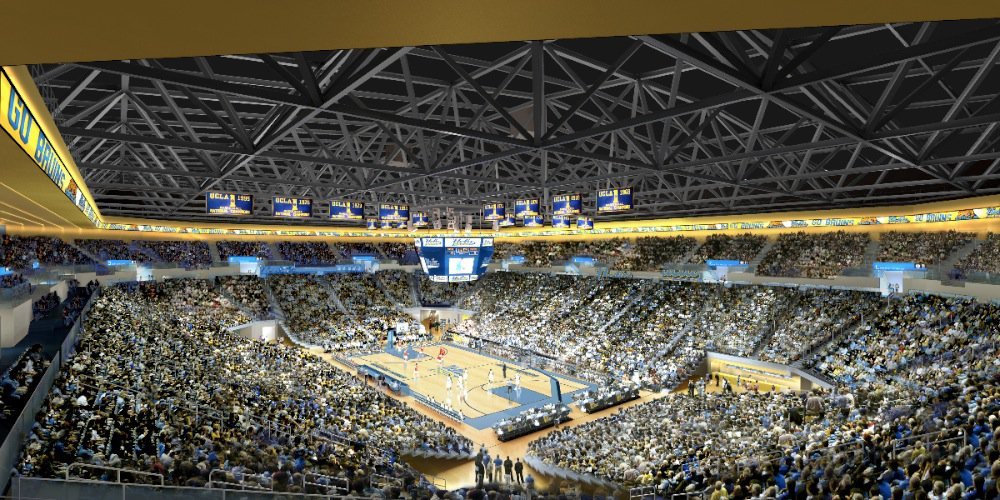
Following their 1964 National Championship -- they would win it again in 1965 -- UCLA coach John Wooden wanted a suitable arena for his ever-growing program. He got it in time for the 1965-66 season, and it has hosted 9 more National Championships, making for 11 banners, 10 coached by Wooden.

But they would not win the 12,829-seat Pavilion's opening game. In fact, the 1st game was between the UCLA varsity and the UCLA freshman team. Until 1972, the NCAA did not allow freshmen to play on varsity teams, with rare exceptions. (For example, due to the manpower drain of World War II, it was allowed for the duration.) The freshman team won, 75–60.

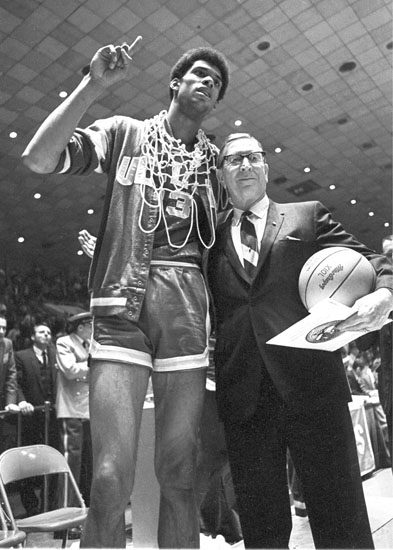
How could this happen? Had UCLA been hit that hard by graduation? No, they were hit that hard by Wooden's prize recruit: Ferdinand Lewis Alcindor Jr. Better known as Lew Alcindor, the Harlem native had been the top high school player in the country. Every college coach in the country wanted him, thinking he would be the next Bill Russell or Wilt Chamberlain. Wooden told him that he could be the first star of a big new building in one of America's biggest cities.

Alcindor justified that faith, starting in the 1st game: Against the 2-time defending National Champions, he scored 31 points and grabbed 21 rebounds. Against junior colleges and 4-year schools' freshmen teams, the UCLA frosh went 21-0.

As a sophomore in 1966-67, Alcindor led the Bruins to a 30-0 season. As a junior in 1967-68, they went 29-1, losing only a nationally-televised regular-season "Game of the Century" to Elvin Hayes and the University of Houston at the Astrodome. That loss was solidly avenged in the NCAA Tournament Semifinal. In 1968-69, they went 29-1, losing only a meaningless conference finale to their arch-rivals, the University of Southern California (USC).

In his 3 seasons on the varsity, Alcindor led UCLA to a record of 88-2, and 3 National Championships, winning the NCAA Tournament's Most Outstanding Player all 3 times. Counting his freshman record, he went 109-2.
In 1971, just after leading the Milwaukee Bucks to the NBA Championship, Alcindor, having converted to Islam 3 years earlier, publicly announced that he had changed his name to Kareem Abdul-Jabbar. There were 2 people he allowed to continue to call him "Lew": His father -- after all, it was his name, too -- and Coach Wooden. He went on to win 5 more NBA Championships, back in Los Angeles with the Lakers. The greatest player in the history of college basketball became one of the Top 10 players in the history of professional basketball.

Pauley Pavilion was named for an oil magnate who was also a Regent of the University of California system, whose donation to its building went a long way toward making it possible. Edwin Pauley was a friend of, and appointee to several offices by, Presidents Franklin Roosevelt and Harry Truman, but the student protests of the 1960s led him to switch parties and support Ronald Reagan for Governor.

Speaking of politics, the Pavilion was the site of the 2nd debate of the 1988 Presidential campaign, where CNN anchor Bernard Shaw asked the question that shattered the campaign of Governor Michael Dukakis – not that the Duke helped himself with his answer. Oddly, Dukakis chose to hold held his Election Eve rally there, despite being a Bostonian. (In contrast, Boston's JFK held his Convention in the Los Angeles Coliseum complex, but his Election Eve rally at the Boston Garden.)


Pauley Pavilion was renovated during the 2011-12 season, which the Bruins spent playing home games at the Los Angeles Memorial Sports Arena. They had won the National Championship game there in 1968 and 1972. Ironically, until 2006, it was USC's home court, until USC opened the nearby Galen Center.
With the Pavilion renovated and modernized, the Bruins now play in a 13,800-seat venue, on the Nell and John Wooden Court, named for the old coach and his wife. The 11 National Championship banners hang overhead: 1964, 1965, 1967, 1968, 1969, 1970, 1971, 1972, 1973, 1975 and 1995.

*

November 27, 1965 was a Saturday. It was a big day in college sports, as it was the end of Thanksgiving week, and thus rivalry week in football. These games were played, not all of them rivalries:

* Rivalry: Number 5 Alabama beat Auburn, 30-3 at Legion Field in Birmingham. 'Bama won the Southeastern Conference title.

* Number 6 Notre Dame and Miami played to a 0-0 tie at the Orange Bowl in Miami. This late-season game, in a stadium named after the New Year's Day game played there, was as close to a bowl game at Notre Dame would come: From the 1925 season until 1969, they refused all bowl bids.

* Number 8 University of Southern California (USC) beat Wyoming, 56-6 at the Los Angeles Memorial Coliseum.

* Rivalry: Number 9 Tennessee beat Vanderbilt, 21-3 at Neyland Stadium in Knoxville, Tennessee.

* Rivalry: Army and Navy played to a tie, 7-7 at John F. Kennedy Stadium in Philadelphia.

* The Quantico Marines beat Memphis State, 20-14 at Butler Stadium in Quantico, Virginia. The Marines were a 2-touchdown underdog. Memphis State University became the University of Memphis in 1994. The Quantico Marines had a team from 1919 to 1972, and the NCAA counted them as a "college football team." The program was canceled due to rising costs. 

While graduates of the U.S. Naval Academy can become officers in the U.S. Marine Corps, the closest thing the Marines have to their own academy is the Quantico Marine Base in Quantico, Virginia -- the town that is also home to the FBI Academy, and to the headquarters of the CID, which investigates crimes involving the Army and the Air Force, and the NCIS, which investigates crimes involving the Navy and the Marines (though the TV show NCIS still shows the agency headquartered at the Washington Navy Yard).

* Rivalry: Boston College beat Holy Cross, 35-0 at Fitton Field in Worcester, Massachusetts.

* Rivalry: Georgia beat Georgia Tech, 17-7 at Grant Field in Atlanta.

* Rivalry: Florida beat Florida State, 30-17 at Florida Field (now Ben Hill Griffin Stadium) in Gainesville.

* Rivalry: Mississippi (Ole Miss) beat Mississippi State, 21-0 at Scott Field (now Davis Wade Stadium) in Starkville, Mississippi.

* Rivalry: Texas Christian University (TCU) beat Southern Methodist University (SMU), 10-7 at Amon G. Carter Stadium in Fort Worth, Texas.

* Baylor beat Rice, 17-13 at Rice Stadium in Houston.

* Brigham Young University (BYU) beat New Mexico, 42-8 at University Stadium in Albuquerque, New Mexico.

* Rivalry: Arizona State beat Arizona, 14-6 at Sun Devil Stadium (now Mountain America Stadium) in the Phoenix suburb of Tempe, Arizona.

* Two days earlier, on Thanksgiving, there were 6 games, including Texas beating Texas A&M, 21-17 at Kyle Field in College Station. But only 1 involved a ranked team: Number 3 Nebraska beat Oklahoma, 21-9 at Memorial Stadium in Lincoln, to clinch the Big 8 Conference title.

* Idle that week, but not yet finished with their regular season: Number 4 UCLA, Champions of the Athletic Association of Western Universities (which became the Pacific-Eight in 1968, the Pacific-Ten in 1978, and the Pacific-Twelve in 2011); 

* Having finished their schedules the week before were the entire the Big Ten Conference, including Number 1 Michigan State; the entire Southwest Conference, including its Champion, Number 2 Arkansas, and Number 10 Texas Tech; Number 7 Missouri; and New Jersey's teams, Rutgers and Princeton.

At the time, the final Associated Press (AP) sportswriters' poll was taken after the regular season, but before the bowl games. So Michigan State were named National Champions in that poll. Entering New Year's Day, the top 3 teams were all 10–0, but all lost: Number 1 Michigan State lost the Rose Bowl to Number 5 UCLA, Number 2 Arkansas lost the Cotton Bowl to Number 14 Louisiana State (LSU), and Number 3 Nebraska lost the Orange Bowl to Number 4. Alabama. So the post-bowl United Press International (UPI) coaches poll named Alabama the National Champions. (Number 6 Missouri beat Number 12 Florida in the Sugar Bowl.)

There were 4 games played in the NBA:

* The New York Knicks lost to the Cincinnati Royals, 132-129 at the old Madison Square Garden. Oscar Robertson scored 44 points.

* The Boston Celtics beat the Los Angeles Lakers, 101-95 at the Boston Garden. Bill Russell scored 28 points, and had 35 rebounds.

* The St. Louis Hawks beat the Baltimore Bullets, 136-110 at the Kiel Auditorium in St. Louis.

* And the Philadelphia 76ers beat the San Francisco Warriors, 124-117 at the Civic Auditorium (now the Bill Graham Auditorium) in San Francisco. Wilt Chamberlain, who had played for the Warriors in Philadelphia, scored 38 points and had 31 rebounds.

The NHL's entire "Original Six" were in action:

* The New York Rangers lost to the Chicago Black Hawks, 1-0 at the old Madison Square Garden. Yes, the Garden hosted an NBA game and an NHL game on the same day.

* The Montreal Canadiens beat the Detroit Red Wings, 3-2 at the Montreal Forum.

* And the Boston Bruins beat the Toronto Maple Leafs, 2-1 at Maple Leaf Gardens in Toronto.

Friday, November 18, 2022

November 18, 1967: USC vs. UCLA: "The Game of the Century"

O.J. Simpson's 4th quarter touchdown

November 18, 1967: One of college football's occasional "Games of the Century" is played. And the schools involved were based just 10 miles apart, and even shared a stadium at the time.

The University of California at Los Angeles (UCLA) was founded in 1919 as the southern branch of the University of California, with its main branch in Berkeley, outside San Francisco. It became a separate school in 1927.

Located 12 miles west of downtown Los Angeles, in a neighborhood called Westwood, it is a State-sponsored school, and by 1967, it had already produced such legendary athletes as Jackie Robinson, Bob Waterfield and Rafer Johnson. At the time, it had a quarterback who was a favorite for the Heisman Trophy, Gary Beban; and the best player in college basketball, Lew Alcindor, who would later change his name to Kareem Abdul-Jabbar.

Since 1967, it's produced football quarterback Troy Aikman; basketball legends Bill Walton, Ann Meyers, Reggie Miller and Russell Westbrook; baseball players Chase Utley and Gerrit Cole; tennis legends Arthur Ashe and Jimmy Connors; track icons Jackie Joyner-Kersee and her sister-in-law Florence Griffith Joyner; and soccer stars Cobi Jones and Brad Friedel.

The University of Southern California (USC) was founded in 1880, and is a private school. Its campus, 4 miles south of City Hall, effectively marks the border between downtown L.A. and the South Central ghetto.

Its football program then had the other favorite for the 1967 Heisman Trophy, running back Orenthal James "O.J. Simpson." It had already produced the 1965 Heisman winner, Mike Garrett; and also Red Badgro, Frank Gifford and Willie Wood. In the late 1920s, they had a player named Marion Morrison, but his misbehavior got him kicked off the team. He stayed in L.A., became an actor, and changed his name to John Wayne.

Since 1967, USC has produced Heisman winners Charles White, Marcus Allen, Carson Palmer, Matt Leinart and Reggie Bush, and other football stars like Ron Mix, Sam Cunningham, Lynn Swann, Anthony Munoz, Ronnie Lott, Willie McGinest, Junior Seau, Troy Polamalu, Bruce Matthews, Bruce's brother Clay Matthews Jr., and Clay's son Clay Matthews III.

Their highly successful baseball program had already produced Tom Seaver, and has since gone on to produce Bobby Valentine, Dave Kingman, Fred Lynn, Mark McGwire, Randy Johnson, Mark Prior, Barry Zito, and Bret and Aaron Boone.

In basketball, they had already produced Bill Sharman, and went on to produce Paul Westphal, Cheryl Miller, Lisa Leslie and Cynthia Cooper. They produced Olympic swimming Gold Medalist and actor Buster Crabbe, diving Gold Medalist Dr. Sammy Lee, swimming Gold Medalist Murray Rose, shot put Gold Medalist Parry O'Brien; and have since produced pole vault Gold Medalist Bob Seagren and swimming Gold Medalist John Naber.

The Los Angeles Memorial Coliseum opened in 1923, and USC had played football there ever since. UCLA began playing there in 1933. The Coliseum had hosted the Olympic Games in 1932, the NFL's Los Angeles Rams since 1946, and, 10 months earlier, the 1st Super Bowl. But, to Los Angelenos, it never hosted a bigger game than this one.

UCLA started the season by beating then-Number 9 Tennessee at home. They won away to Pittsburgh, Washington State and Penn State. They beat Cal at home, and Stanford away. Then came a blemish on their record: A 16-16 draw against Oregon State. 

USC started with home wins over Washington State and then-Number 5 Texas, beating Michigan State away, rising to Number 1. They continued, beating Stanford at home, beating then-Number 5 Notre Dame away, Washington away, Oregon at home, and Cal away.

But, 7 days after forging the tie with UCLA, Oregon State struck again, beating USC in Corvallis. That same day, UCLA rebounded with a 48-0 home win over Washington.

They rebounded with a 48-0 home win over Washington, and went into the the battle with USC ranked Number 1. USC was Number 4. A crowd of 90,772 filed into the Coliseum to watch UCLA in powder blue and USC in cardinal red face off in front of a national audience on ABC. The winner had the inside track to the Championship of the Athletic Association of Western Universities (the league now known as the Pacific-Twelve), the AAWU's berth in the Rose Bowl, and a shot at the National Championship.

It was billed as "The Game of the Century," despite that label having been used just a year earlier for Notre Dame vs. Michigan State. USC was favored by 3 points. Admission: $6.00 -- about $50 in today's money.

Each team scored a touchdown in the 1st quarter: First UCLA on a 12-yard run by Greg Jones, then USC when Pat Cashman intercepted a pass that Beban had intended for Jones, returning it 55 yards for a touchdown.

In the 2nd quarter, Zenon Andrusyshyn of UCLA missed a field goal attempt, and Simpson had a 12-yard touchdown run, dragging 2 UCLA tacklers into the end zone. At halftime, the Trojans led, 14-7.

Beban was not about to let down his effort in the game, and in the Heisman debate with O.J. In the 3rd quarter, he threw a 53-yard touchdown pass to George Farmer, tying the game. USC coach John McKay noticed that Andrusyshyn tended to make low kicks, so he sent 6-foot-8 linebacker Bill Hayhoe into the middle of the line, and he blocked 2 field goal attempts. The game remained 14-14 at the end of 3 quarters.

Early in the 4th quarter, Beban, battling a rib injury, threw a touchdown pass to Dave Nuttall. But, just as he had blocked those field goal attempts, now, Hayhoe blocked Andrusyshyn's extra point attempt. It was 20-14 UCLA, but that block would matter.
Gary Beban

With 10:38 left to play, and 3rd and 7 from the USC 36, USC quarterback Toby Page called an audible known as "23 blast." Simpson remembered thinking it was a terrible call. It wasn't: A key block from Dan Scott enabled O.J. to cut back to the middle, and run 64 yards for a touchdown. Rikki Aldridge kicked the extra point, and it was 21-20 USC.

Beban's injuries became too much for him, and he was unable to get the Bruins back across midfield. The 21-20 score held to the end, and USC had won. Any 1 of the 3 kicks that Hayhoe blocked would have made a difference, either giving UCLA a 23-21 win, or forging a 21-21 tie -- or forcing USC to decide, trailing 21-20 at the end, to decide whether to go for a 21-21 tie or a two-point conversion and a 22-21 win.

Chris Schenkel and former Oklahoma coach Bud Wilkinson called the game for ABC. Keith Jackson, then in only his 2nd season with ABC, narrated the taped highlights, and called it the greatest game he ever saw. So did Giles Pellerin, a USC graduate who saw every game the school played from 1925 until 1998, when he died while watching the USC-UCLA game, 797 games in a row.

Beban was unable to play the next week, and UCLA lost at home to Syracuse. They were not invited to a bowl game. Nevertheless, in one of the closest votes in the award's history, Beban was awarded the Heisman Trophy. UCLA ended the season 7-2-1, ranked Number 10.

USC had no more regular-season games. They went to the Rose Bowl, to face Indiana, then ranked Number 4, and won, 14-3, clinching the National Championship.

Simpson was a junior, so he returned for 1968, and seemed headed for another National Championship. They beat ranked opponents in Minnesota (away), Miami, Stanford (away), Cal and Oregon State. And, again, they beat UCLA, 28-16. And O.J. easily won the Heisman.

However, traditionally, when USC plays Notre Dame, it's in the middle of the season when it's the Fighting Irish's turn to host, to avoid the November cold of northern Indiana; and at the end of the season when it's the Trojans' turn, so it's in L.A. and warm. Notre Dame was ranked Number 9 at the time, and escaped with a 21-21 tie. It dropped them to Number 2, and sent them to the Rose Bowl to face Number 1 Ohio State. The Buckeyes' ended the Trojans' 12-game winning streak, 27-16, and won the National Championship.

O.J. went on to have a sensational pro career, at least on an individual basis, rushing for 11,236 yards, 2nd all-time at the time of his retirement. He set records, since broken, for rushing yards in a season (2,003 in 1973) and in a game (273 in a 1976 contest). He became one of the most popular athletes of his generation, and also gained praise as an actor. Team-wise, he was less successful: His Buffalo Bills played in only 1 Playoff game, smacking into the Pittsburgh Steel Curtain, although O.J. did score a touchdown in the game.

Beban -- like Simpson, a native of San Francisco -- had considerably worse luck than that. He was drafted by the Los Angeles Rams, so he didn't have to move, even playing in the Coliseum. But they already had All-Pro Roman Gabriel as their quarterback. And the Rams had already messed this situation up recently: They drafted the 1962 Heisman winner, Terry Baker, and he couldn't win the starting job from Gabriel, either.

So, before Beban signed a contract, the Rams traded his rights to the Washington Redskins, who already had future Hall-of-Famer Sonny Jurgensen. Sonny was 34, so trading for his replacement was a good idea. And the 'Skins had one of the greatest quarterbacks ever as their head coach, Otto Graham. But Sonny remained the starter, and Beban was released on the eve of the 1970 season. He was cut by the Denver Broncos before the 1971 season, and never played again.

Like Simpson, he was elected to the College Football Hall of Fame. But rather than being elected to the Pro Football Hall of Fame, his pro career consisted of 5 appearances, 1 incomplete pass, 5 rushes for 18 yards, and 1 trick play where he caught a pass for 12 yards.

Beban became a broadcaster for UCLA football, and a successful real estate executive. Chances are, even he would have been unable to sell the house where Nicole Brown Simpson and Ronald Goldman were murdered on June 12, 1994; or the house where O.J. Simpson was arrested for those crimes 5 days later. Perhaps, even before that, Gary Beban would not have been willing to trade lives with O.J. Simpson; certainly, he would not have wanted to do so afterward.

*

November 18, 1967 was a Saturday. These other notable college football games were played:

* Number 2 Tennessee faced Mississippi, a.k.a. "Ole Miss," on somewhat neutral ground at the Liberty Bowl in Memphis. Tennessee won, 20-7, wrapping up the Southeastern Conference title.

* Number 3 Purdue beat Michigan State, 21-7 at Ross-Ade Stadium in West Lafayette, Indiana. The week before, they had beaten Minnesota. But the following week, they lost to arch-rival Indiana in Bloomington, forcing a 3-way tie for the Big Ten title.

Purdue couldn't go to the Rose Bowl, anyway: The Big Ten then had a rule that none of its teams could go to the Rose Bowl in back-to-back years, and despite the fact that Minnesota had beaten Indiana, seemingly breaking that tie, Minnesota had gone more recently, and so the league presidents voted to send Indiana instead, where they were beaten by USC.

* Number 6 Wyoming beat Texas-El Paso, 21-19 at the Sun Bowl in El Paso, Texas. Wyoming thus clinched the Western Athletic Conference Championship, but lost to Louisiana State in the Sugar Bowl.

* Number 7 Oklahoma beat Kansas, 14-10 at Memorial Stadium in Norman, Oklahoma. Oklahoma won the Big Eight title, and then beat Tennessee in the Orange Bowl. But the winner of that game would only have won the National Championship if USC had lost the Rose Bowl, which they didn't.

* Number 9 Notre Dame beat Georgia Tech, 36-3 at Grant Field in Atlanta. Notre Dame went on to beat the University of Miami in the Orange Bowl.

* Texas A&M, not ranked at the time, beat Rice, 18-3 at Rice Stadium in Houston. A&M beat arch-rival Texas on Thanksgiving to clinch the Southwest Conference title, and beat Alabama in the Cotton Bowl.

* Penn State, not ranked at the time, beat Ohio University (definitely not Ohio State), 35-14 at Beaver Stadium in State College, Pennsylvania. They went to the Gator Bowl, finishing in a 17-17 tie with Florida State.

* Yale beat Princeton, 29-7 at Palmer Stadium in Princeton, New Jersey, to wrap up the Ivy League title. They still had to play Harvard, and don't ever tell anybody from either school that "The Game" is meaningless. Yale won it, 24-20 at the Yale Bowl in New Haven, Connecticut.

* New York City's only real remaining college football team, Columbia, lost to Penn, 26-6 at Franklin Field in Philadelphia.

* And New Jersey's biggest team, Rutgers, lost to Holy Cross, 21-10 at Rutgers Stadium in Piscataway.

* My high school, East Brunswick in Middlesex County, New Jersey, beat Sayreville, 41-0 away.

The brand-new American Basketball Association had no games scheduled for the day. Probably for the best, giving that this was, along with the following Saturday and New Year's Day, 1 of the 3 biggest dates on the college football calendar, thus interfering with attendance and TV ratings. But 5 NBA games were scheduled:

* The New York Knicks lost to the Baltimore Bullets, 101-93 at the old Madison Square Garden. They would move into the new Garden 3 months later.

* The Boston Celtics beat the Philadelphia 76ers, 116-111 at The Spectrum in Philadelphia. For the Sixers, Billy Cunningham scored 31 points, Hal Greer 22, and Wilt Chamberlain only 8, but he also had 33 rebounds and 6 assists. For the Celtics, Sam Jones and Bailey Howell both scored 33.

* The Chicago Bulls beat the Detroit Pistons, 132-130 at the Chicago Stadium.

* The Los Angeles Lakers beat the St. Louis Hawks, 127-107 at the Kiel Auditorium in St. Louis.

* And the San Francisco Warriors beat the San Diego Rockets, 142-124 at the San Diego Sports Arena. (The building is now named the Pechanga Arena. The Rockets, an expansion team that year, moved to Houston in 1971.)

There were 5 games in the newly-expanded NHL:

* The New York Rangers lost to the Boston Bruins, 3-1 at the Boston Garden.

* The Toronto Maple Leafs and the Chicago Black Hawks played to a tie, 2-2 at Maple Leaf Gardens in Toronto.

* The Philadelphia Flyers and the Minnesota North Stars played to a tie, 2-2 at the Metropolitan Sports Center in the Minneapolis suburb of Bloomington, Minnesota.

* The Pittsburgh Penguins beat the St. Louis Blues, 5-3 at the St. Louis Arena.

* The Oakland Seals beat the Montreal Canadiens, 2-1 at the Oakland Coliseum Arena.

* And the Detroit Red Wings and the Los Angeles Kings were not scheduled.

Also, Arsenal drew with Leicester City, 2-2 at Filbert Street in Leicester. 
Saturday, November 12, 2022

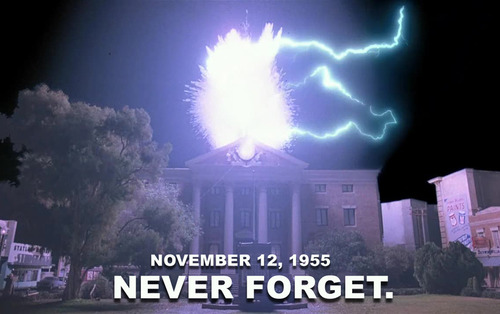
November 12, 1955: "Back to the Future"

November 12, 1955: The climax of the 1st Back to the Future film takes place -- and so does the climax of the 2nd one.

Note: I don't normally do these posts for fictional events. This time, I couldn't resist.

With help from their inadvertently time-traveling son, Marty McFly (played by Michael J. Fox), George McFly (Crispin Glover) and Lorraine Baines (Lea Thompson) realize that they are meant to be together, and kiss at the Enchantment Under the Sea dance at their alma mater, Hill Valley High School, somewhere in Southern California.

This is in spite of the actions of 2 different versions of George's -- and Marty's -- nemesis, Biff Tannen (both played by Thomas F. Wilson): The 18-year-old one that belongs in 1955, and the elderly one that, in Back to the Future Part II, stole the DeLorean time machine in 2015 to give his younger self the information he could use to make himself rich and respected.

Then, with the help of the younger version of the time machine's inventor, Dr. Emmett Brown (Christopher Lloyd), Marty gets back to October 26, 1985, where and when he belongs, and discovers that his week in 1955 has had repercussions -- fortunately, they seem to favor him and his family.

*

November 12, 1955 was a Saturday. Les McKeown, lead singer of the Bay City Rollers, was born on this day.

Baseball season was over, and the NFL played the next day, but there were college football games played.

* One of these was mentioned in Back to the Future Part II, and even had a recreated radio broadcast of its final minute: UCLA, ranked Number 4, needed a last-second field goal from Jim Decker to beat the University of Washington, 19-17 at the Los Angeles Memorial Coliseum. UCLA went on to win the Pacific Coast Conference Championship.

* Number 1 Oklahoma beat Iowa State, 52-0 at Memorial Stadium in Norman, Oklahoma. The Sooners won the Big Seven Conference Championship. (Oklahoma State joined in 1957, making it the Big Eight.)

* Number 2 Maryland beat Clemson, 25-12 at Memorial Stadium in Clemson, South Carolina. Maryland won the Atlantic Coast Conference Championship, and played a de facto National Championship game against Oklahoma in the Orange Bowl. Oklahoma won, continuing their winning streak that would reach a record 47 games.

* Number 3 Michigan State beat Minnesota, 42-14 at Macklin Stadium in East Lansing, Michigan. In 1957, despite Jim Macklin, the former coach for whom it was named still being alive, MSU's home field was renamed Spartan Stadium, and still carries that name today.

* Number 5 Notre Dame beat North Carolina, 27-7 at Kenan Stadium in Chapel Hill, North Carolina.

* Number 6 West Virginia were upset by their arch-rivals, Number 17 University of Pittsburgh, 26-7 at Pitt Stadium in Pittsburgh.

* Number 7 Michigan beat Indiana, 30-0 at Michigan Stadium in Ann Arbor.

* Number 8 Texas Christian University beat Texas, 47-20 at Memorial Stadium in Austin, Texas. The novelization of the 1st Back to the Future movie shows Marty, confused by his 1955 surroundings, turning on the radio, and hearing mention of TCU's All-American running back Jim Swink, and saying, "Swink? Is he kidding?" TCU won the Southwest Conference Championship.

From a town named Rusk, Texas, and known as the Rusk Rambler, Swink led TCU to another SWC title in 1956, went to medical school, played for the Dallas Texans (later the Kansas City Chiefs) in their inaugural season of 1960, became an Army surgeon, received a Bronze Star and a Purple Heart for his Vietnam War service, and remained a practicing orthopedic surgeon nearly until his death in 2014.

* Number 10 Ohio State beat Number 20 Iowa, 20-10 at Ohio Stadium in Columbus. Ohio State and Michigan State did not play each other this season. Michigan State only lost 1 game, but it was to Michigan, which Ohio State beat. Ohio State lost 2 games, but both were outside Big Ten Conference play, so they, not either of the Michigan teams, won the Conference Championship. Nevertheless, Big Ten rules then prohibited the same team from representing it in the Rose Bowl 2 years in a row, so it was Michigan State that played, and beat, UCLA in the game.

* Number 11 Georgia Tech beat Alabama, 26-2 at Legion Field in Birmingham. Tech went on to beat Pitt in the Sugar Bowl.

* Number 14 Mississippi beat the University of Houston, 27-11 at Mississippi Veterans Memorial Stadium in Jackson. "Ole Miss" won the Southeastern Conference Championship (Houston was not a member), and beat TCU in the Cotton Bowl.

* Army beat Penn, 40-0 at Franklin Field in Philadelphia.

* In New York City, Number 12 Navy beat Columbia, 47-0 at Baker Field.

* In New Jersey, Rutgers lost to Penn State, 34-14 at the old Rutgers Stadium in Piscataway.

* Princeton beat Yale, 13-0 at Palmer Stadium in Princeton.

There were 4 games played in the NBA, although 2 of them were played other than where you might have expected them to be:

* The New York Knicks beat the Boston Celtics, 96-95 at the old Madison Square Garden.

* The Philadelphia Warriors beat the Minneapolis Lakers, 100-89 at the Hershey Sports Arena in Hershey, Pennsylvania, outside Harrisburg. The Warriors occasionally played games at this small (7,286 seats) arena, now named the Hersheypark Arena. The most notable was the one in 1962 when Wilt Chamberlain scored 100 points against the Knicks.

* And a doubleheader was played at the Kiel Auditorium in St. Louis. In the opening, the Rochester Royals beat the Fort Wayne Pistons, 84-79. In the nightcap, the Syracuse Nationals beat the St. Louis Hawks, 91-81.

In 1957, the Royals moved to Cincinnati, and the Pistons moved to Detroit. In 1960, the Lakers moved to Los Angeles. In 1962, the Warriors moved, becoming the San Francisco Warriors. In 1963, the Nationals moved, becoming the Philadelphia 76ers. In 1968, the Hawks moved to Atlanta. In 1971, the Warriors moved across San Francisco Bay to Oakland, becoming the Golden State Warriors. In 1972, the Royals moved again, becoming the Kansas City Kings. In 1985, they moved again, becoming the Sacramento Kings. In 2019, the Warriors moved back to San Francisco, but kept the Golden State name.

Two games were played in the NHL: The Montreal Canadiens beat the Detroit Red Wings, 3-0 at the Montreal Forum; and the Boston Bruins beat the Toronto Maple Leafs, 3-2 at Maple Leaf Gardens in Toronto.

Also, Arsenal beat Sheffield United, 2-1 at Highbury in North London. 

Thursday, October 27, 2022

October 28, 1922: The Rose Bowl Stadium Opens

October 28, 1922: The Rose Bowl stadium opens in the Los Angeles suburb of Pasadena, California. And the matchup for the opener couldn't have been better: A battle of unbeatens.

The University of California, from the system's main campus in Berkeley, outside San Francisco, was 4-0, and took on the 5-0 team from the University of Southern California, based in Los Angeles. A safety gave Cal a 2-0 lead at halftime, and the Golden Bears held on 2 goal-line stands, before adding a touchdown and a field goal to beat USC, 12-0.

On January 1, 1923, the Rose Bowl game, previously played at the 40,000-seat Tournament Park, was played there for the 1st time. This time, USC won, beating Penn State 14-3. The Rose Bowl has been played there annually since, except for 1942, when concerns over the bombing of Pearl Harbor led it to be moved to Durham, North Carolina, where host Duke lost to Oregon State; and 2021, when it was moved to Arlington, Texas due to COVID restrictions.

Originally a horseshoe, an expansion in 1928 made it the largest stadium in the country. Attendance peaked at 106,869, for the 1973 Rose Bowl, in which USC beat Ohio State 42-17. A renovation in 2013, with wider seats, dropped seating capacity to 92,542.

It was the home field for Caltech from 1923 to 1976, California State University at Los Angeles from 1957 to 1969, the North American Soccer League's the Los Angeles Wolves in 1968 and Los Angeles Aztecs in 1978 and '79, and MLS' Los Angeles Galaxy from 1996 to 2002. UCLA have played home games there sine 1982.

It has also hosted the 1983 Army-Navy Game (Navy won, 42-13), 8 games of the 1994 World Cup (including the U.S.' win over Colombia and loss to Romania, and Brazil's win over Italy in the Final), 4 games of the 1999 Women's World Cup (including the U.S.' win over China in the Final), cycling at the 1932 Olympics, and soccer at the 1984 Olympics.

And it has hosted 5 Super Bowls: XI, 1977, the Oakland Raiders beating the Minnesota Vikings 32-14; XIV, 1980, the Pittsburgh Steelers beating the Los Angeles Rams 31-19; XVII, 1983, the Washington Redskins beating the Miami Dolphins 27-17; XXI, 1987, the New York Giants beating the Denver Broncos 39-20; and XXVII, 1993, the Dallas Cowboys beating the Buffalo Bills 52-17.

*

October 28, 1922 was a Saturday. There was another major college football milestone: For the 1st time, a football game is broadcast on live nationwide radio. The year before, the University of Chicago had become one of the first colleges to send its football team to play a team outside its home region, beating Princeton University 9-0 at Palmer Stadium in Princeton, New Jersey. Now, they would have a rematch at Stagg Field on the South Side of Chicago.

The Princeton Tigers entered the game 4-0, the Chicago Maroons 3-0. After 3 quarters, thanks to 3 touchdowns by John Thomas, Chicago led 18-7. Then came the kind of collapse people would still be talking about nearly a century later if it had happened on TV and the footage had been preserved. The Maroons fumbled, the Tigers recovered, and took it in for a 40-yard touchdown. Harry Crum scored for Princeton in the closing minutes, and, since Princeton made their PATs, and Chicago didn't make theirs, the Tigers emerged victorious, 21-18.

On the basis of the win over Chicago, Eastern and Midwestern sportswriters proclaimed Princeton to be the National Champions after the season. Western writers gave the title to Cal. No playoff in those days. Bowl games? Cal had won the Rose Bowl in 1920 and tied it in 1921, but in 1922 and 1923, they didn't go. From September 25, 1920 to October 3, 1925, under coach Andy Smith, the Golden Bears had a 50-game unbeaten streak, still the longest in college football history: Played 50, won 46, tied 4, lost exactly none.

Coaching took a severe toll on Smith, who went just 6-3 with Cal in 1925. On a visit to Philadelphia, where he had coached the University of Pennsylvania from 1909 to 1912, he was hospitalized with pneumonia, and died on January 8, 1926, only 49 years old. His career coaching record was 116-32-13, including 74-16-7 at Cal.

This was also the day that Benito Mussolini's Fascists marched on Rome. I have a separate entry for that event. And on the opposite end of the political spectrum, if not quite on the opposite end of the Eurasian continent, the Communists finally completed their conquest of Russia, as the Red Army conquered the Siberian port city of Vladivostok. The Reds would be in power in Russia for the next 69 years, the Fascists in Italy for 21 years.

Also on this day, basketball coach Butch van Breda Kolff and French soccer star Ernest Vaast were born.

The Major League Baseball season had ended earlier in the month, with the New York Giants winning the World Series over the New York Yankees. There was, as yet, no major professional basketball league. The National Hockey League's new season was still a few weeks away. The nascent National Football League did play games that weekend, but all the next day, Sunday.

But, being a Saturday, there were college football games. In addition to Cal vs. USC and Princeton vs. Chicago, including the following:

In New York City, New York University played Rhode Island State at Ohio Field in The Bronx, and won 23-7. Fordham University played Westminster College of Pennsylvania at Fordham Field, also in The Bronx, and won 12-0. Columbia University wasn't so lucky: They played Williams College of Massachusetts, at South Field, just south of their famed Low Library in the Morningside Heights section of Manhattan, and lost 13-10.

And, aside from Princeton the main team in New Jersey, Rutgers University went to Morgantown and lost to West Virginia University 28-0.

Also, in English soccer, Arsenal lost to Newcastle United, 2-1 at the Arsenal Stadium, a.k.a. Highbury, in North London.

Thursday, September 29, 2022

September 29, 1946: The Rams Debut & Desegregate the NFL

Kenny Washington

September 29, 1946: The Rams, who played in Cleveland from 1936 to 1945, play their 1st home game in Los Angeles, making them the city's 1st real major league sports team. (Previous pro football teams had "Los Angeles" as their name, but their leagues could hardly be called "major.") The defending NFL Champions lose to the Philadelphia Eagles, 25-14.

This game is even more significant than the city's debut on the major league stage, because it is the NFL debut for halfback Kenny Washington and end Woody Strode, both of whom had played for UCLA at the Rams' new home, the Los Angeles Memorial Coliseum. They became the 1st black players in the NFL in 13 years, ending the color bar.
Woody Strode

Marion Motley and Bill Willis of the Cleveland Browns were doing the same in the All-America Football Conference that Autumn, so pro football had "four Jackie Robinsons," a few months before baseball had one. (Robinson had also played football at UCLA, and ran in the same backfield as Washington in 1939 and '40. In between UCLA and the Rams, Washington had played for the Hollywood Bears of the Pacific Coast Professional Football League.)

Washington played 3 seasons in the NFL before knee injuries forced him to retire at age 30. He worked for the Los Angeles Police Department, and when the Dodgers moved to Los Angeles in 1958, he became a scout for them. His son Kenny Jr. played in their farm system. But Kenny Sr. battled ill health, and died in 1971, only 52 years old. He was elected to the College Football Hall of Fame, UCLA retired his Number 13, the Los Angeles Memorial Coliseum Commission inducted him into the stadium's Court of Honor.

Strode only played the one season with the Rams, then went to Canada, helping the Calgary Stampeders win their 1st Grey Cup in 1948. He became a professional wrestler and an actor, notable for his role as the Ethiopian gladiator Draba in the 1960 film Spartacus. He seemed to specialize in Westerns, and his last role, filmed just prior to his death in 1994, showed him as an old man watching Sharon Stone walk into town in The Quick and the Dead.

Motley and Willis, both Ohio natives, helped the Browns dominate the AAFC winning its title all 4 years, before coming into the NFL and winning their title in 1950, beating the Rams in a classic NFL Championship Game. (By that point, both Washington and Strode were out of football.) Motley, who had played at the University of Nevada, where his Number 41 was retired, remained with the Browns until 1953, and last played with the Pittsburgh Steelers in 1955. With the Browns, he wore 76 and then 36. He was frustrated by his attempts to gain a coaching job, and worked in various capacities.
Marion Motley

Willis had his Number 99 retired by Ohio State, whom he'd helped win the 1942 National Championship. He was elected to the College Football Hall of Fame. He also remained with the Browns through 1953, usually wearing Number 30. He worked with the City of Cleveland Department of Recreation.
Bill Willis

He and Motley were both elected to the Pro Football Hall of Fame. Paul Zimmerman, the Sports Illustrated pro football expert known as Dr. Z, called Motley the greatest player he'd ever seen. Motley died in 1999. Willis, the last survivor of the 4, lived until 2007.

Canadian professional football also integrated in 1946 -- but might have done so earlier. It has been suggested that Robert "Stonewall" Jackson, a player for the Regina Roughriders (now the Saskatchewan Roughriders) in 1930, was black. But he may have been passing as white.

The first player to be signed by a Canadian football team that knew he was black was Herb Trawick, with the 1946 Montreal Alouettes. He was a two-way lineman from Pittsburgh, who attended what's now named Kentucky State University, an HBCU in the State capital of Frankfort.
Herb Trawick

He played 12 seasons with the Als, made 7 CFL All-Star teams, helped them win the Grey Cup in 1949, had his Number 56 retired and was elected to the Canadian Football Hall of Fame. He lived until 1985.

*

September 29, 1946 was a Sunday. In the NFL, in addition to the Rams losing to the Eagles:

* The Washington Redskins and the Pittsburgh Steelers played to a tie, 14-14 at Griffith Stadium in Washington.

* The Chicago Bears beat the Green Bay Packers, 30-7 at Green Bay City Stadium, the predecessor to Lambeau Field.

(The following day, the Chicago Cardinals beat the Detroit Lions, 34-14 at Comiskey Park in Chicago. The day after that, the New York Giants beat a team named, believe it or not, the Boston Yanks, 17-0 at Braves Field in Boston.)

In baseball:

* The New York Yankees closed out a lackluster regular season with the sweep of a doubleheader from the Philadelphia Athletics, 6-0 and 2-1 at Shibe Park. Joe DiMaggio goes 1-for-7 across the 2 games.

These were the last games for Ed Barrow as general manager: Every bit as unhappy as recently resigned manager Joe McCarthy was with the new ownership of Del Webb, Dan Topping and Larry MacPhail, he resigned as GM on December 31.

Other MLB scores on this day:

* The Brooklyn Dodgers lose to the Boston Braves, 4-0 at Ebbets Field. Mort Cooper pitches a 4-hit shutout.

* The Chicago Cubs beat the St. Louis Cardinals, 8-3 at Sportsman's Park in St. Louis. This Cardinal loss, combined with the Dodgers' loss, forces the 1st-ever official Playoff for either major league's Pennant. The Cardinals will sweep the best-2-out-of-3 series.

* The New York Giants beat the Philadelphia Phillies, 3-1 at the Polo Grounds.

* The Washington Senators beat the Boston Red Sox, 7-0 at Fenway Park in Boston. Ray Scarborough allowed 7 hits, including a single by Ted Williams, but kept the shutout. Nevertheless, the Sox had run away with the American League Pennant, and faced the Cardinals in the World Series.

* The Cincinnati Reds swept a doubleheader from the Pittsburgh Pirates, at Crosley Field in Cincinnati. The Reds won the opener 1-0, as Johnny Vander Meer pitches a shutout, but, unlike those famed back-to-back games in 1938, it is not also a no-hitter: He allows 6 hits. The Reds won the nightcap 3-2.

* The Cleveland Indians beat the Detroit Tigers, 4-1 at Briggs Stadium in Detroit. (It was renamed Tiger Stadium in 1961.)

* And the St. Louis Browns beat the Chicago White Sox, 8-7 at Comiskey Park in Chicago.

Tuesday, September 27, 2022

September 28, 1929: Bryant-Denny Stadium Opens

September 28, 1929: Denny Stadium opens on the campus of the University of Alabama. It is named for the man who got it built, George H. Denny, president of the University from 1912 to 1932. Having recently become both a regional and a national power under head coach Wallace Wade, 'Bama beat Mississippi College, 55-0.

Based in Clinton, Mississippi, Mississippi College now play in NCAA Division II, and should not be confused with the University of Mississippi (a.k.a. "Ole Miss"), Mississippi State, Southern Mississippi, or Mississippi Valley State, all of whom are in Division I.

Earlier in the year, a 115-foot-high bell tower was opened on the University's Quad, in memory of the University's victims of World War I. But it was named for the man who got it built as well: The Denny Chimes.

Wade left Alabama after the 1930 season, and was replaced by Frank Thomas. It was Thomas who would recruit two ends who would be among the greatest names in football: Don Hutson, who became professional football's 1st great receiver, leading the Green Bay Packers to 3 NFL Championships; and Paul Bryant, known as "Bear" because he allegedly wrestled one at age 12, who returned to 'Bama in 1958 after leading Texas A&M to a National Championship, and raised the Crimson Tide to new heights.

In 1975, the Alabama State legislature renamed the facility Bryant-Denny Stadium. It was a rare honor: Not only was Bryant still alive, but he was still coaching there. Wade would get a stadium named for him, at his next stop after Tuscaloosa: Duke University renamed Duke Stadium "Wallace Wade Stadium" in 1967.

'Bama had outgrown Denny Field, where they'd played since 1915. The new stadium opened with a capacity of 12,000. It was expanded to 24,000 in 1937, 31,000 in 1946, 43,000 in 1961, 60,000 in 1966, 70,000 in 1988, 83,000 in 1998, 92,000 in 2006, and 101.821 in 2010. Some tweaks, allowing for more accessible seating, reduced capacity slightly to 100,077 in 2020. The Bear had AstroTurf laid down in 1968, but real grass returned in 1991, and remains.

Before the stadium's opening, Alabama claimed National Championships for the 1925 and 1926 seasons. Since then, they've been awarded them for 1930 under Wade; 1934 and 1941 under Thomas; 1961, 1964, 1965, 1973, 1978 and 1979 under Bryant; 1992 under Gene Stallings; and 2009, 2011, 2012, 2015, 2017 and 2020 under Nick Saban. That's 16 while playing at Bryant-Denny Stadium, and 18 overall. No other school can match this.

In addition, they won 4 Southern Conference Championships, and the Southeastern Conference Championship 30 times since its founding in 1933: 1933, '34, '37, '45, '53, '61, '64, '65, '66, '71, '72, '73, '74, '75, '77, '78, '79, '81, '89, '92, '99, 2009, '12, '14, '15, '16, '18, '20 and '21. (UPDATE: They won again in 2023.)

Hard to believe, but Bryant only had 1 Heisman Trophy winner, and that was at Texas A&M: John David Crow in 1957. Alabama didn't get one until the 21st Century, but now, they've had 4: Running backs Mark Ingram II in 2009 and Derrick Henry in 2015, receiver DeVonta Smith in 2020 and quarterback Bryce Young in 2021.

Other 1929-onward 'Bama legends include Hutson, 1930s running back Dixie Howell, 1960s linebacker Lee Roy Jordan, 1970s running back Johnny Musso, 1970s guard John Hannah, 1970s tight end Ozzie Newsome, 1970s defensive tackle Marty Lyons, 1970s defensive end E.J. Junior, 1980s linebackers Derrick Thomas and Cornelius Bennett; and 2010s quarterbacks A.J. McCarron, Tua Tagovailoa and Jalen Hurts.

Auburn fans will argue that their Jordan-Hare Stadium is better. And Legion Field in Birmingham has hosted many historic games. But who's kidding who? Even more than the State Capitol in Montgomery, Bryant-Denny Stadium is the most famous structure in the State of Alabama.

*

September 28, 1929 was a Saturday. These other notable college football games were played that day:
* Army beat Boston University, 26-0 at Michie Stadium in West Point, New York.
* Navy beat Denison University, 47-0 at Thompson Stadium in Annapolis, Maryland.
* Fordham beat Westminster College of Pennsylvania, 43-0 at Fordham Field in The Bronx.
* New York University (NYU) beat Vermont, 47-0 at Ohio Field in The Bronx.
* Rutgers beat Providence, 17-0 at Neilson Field in New Brunswick, New Jersey. Princeton, New Jersey's other major football school at the time, opened their season the next week.
* The football teams at the University of Southern California and the University of California at Los Angeles play each other for the 1st time, at both teams' home field, the Los Angeles Memorial Coliseum. It is no contest, as USC beats UCLA 76-0.
There was 1 game played in the NFL: The Frankford Yellow Jackets beat the Dayton Triangles, 14-7 at Frankford Stadium in Northeast Philadelphia.
And the baseball regular season entered its final weekend. These games were played:
* The New York Yankees were swept in a doubleheader by the Washington Senators, 6-4 and 6-3 at Griffith Stadium in Washington. The Bronx Bombers were reeling in the wake of the death of their manager, Miller Huggins, 3 days earlier. Over the 2 games, Babe Ruth went 4-for-7 with a walk and 2 RBIs, and Lou Gehrig went 2-for-8 with 2 RBIs.
* The Brooklyn Dodgers -- or the Robins, as they were known while Wilbert Robinson was their manager from 1914 to 1931 -- swept a doubleheader from their arch-rivals, the New York Giants, 5-1 and 10-3 at the Polo Grounds, beating Fred Fitzsimmons and Carl Hubbell in the process. Over the 2 games, Bill Terry went 3-for-9, and Mel Ott went 1-for-7 with a walk.
* The Philadelphia Athletics beat the Boston Red Sox, 6-3 at Fenway Park in Boston. Jimmie Foxx had an unusual game: He went 0-for-1, but drew 3 walks, and stole home plate, a rare thing for a big slugger.
* The Philadelphia Phillies swept a doubleheader from the Boston Braves, 9-8 and 8-6 at Baker Bowl in Philadelphia.
* The Cleveland Indians beat the St. Louis Browns, 4-1 at League Park in Cleveland.
* The Detroit Tigers beat the Chicago White Sox, 11-10 at Navin Field in Detroit. (That ballpark was renamed Briggs Stadium in 1938, and Tiger Stadium in 1961.) This was a wild one. It was 3-0 Tigers after 1 inning, 8-3 White Sox going to the bottom of the 6th, and the Tigers tied it 8-8 in the bottom of the 9th. The White Sox scored 2 in the top of the 10th, but the Tigers scored 3 in the bottom of the 10th, with Charlie Gehringer singling George Uhle home with the winning run. Uhle was the winning pitcher, coming in to pitch the 10th, and future Hall-of-Famer Ted Lyons took the loss after pitching an inning and a third. Marty McManus hit a home run for the Bengals, and Clarence Hoffman hit one for the Pale Hose.
* The Cincinnati Reds beat the Chicago Cubs, 5-3 at Wrigley Field in Chicago. The Cubs won the Pennant, anyway, losing the World Series to the Athletics.
* And the Pittsburgh Pirates beat the St. Louis Cardinals, 8-5 at Sportsman's Park in St. Louis. Dick Bartell went 4-for-5 with 3 RBIs, Fred Brickell and Charlie Hargreaves each went 3-for-5 with an RBI, Earl Sheely went 3-for-4, Paul Waner went 1-for-5, and Lloyd Waner went 2-for-5 with an RBI. For the Cardinals, Ernie Orsatti went 3-for-4.

Sunday, May 1, 2022

May 1, 1923: The Los Angeles Memorial Coliseum Opens

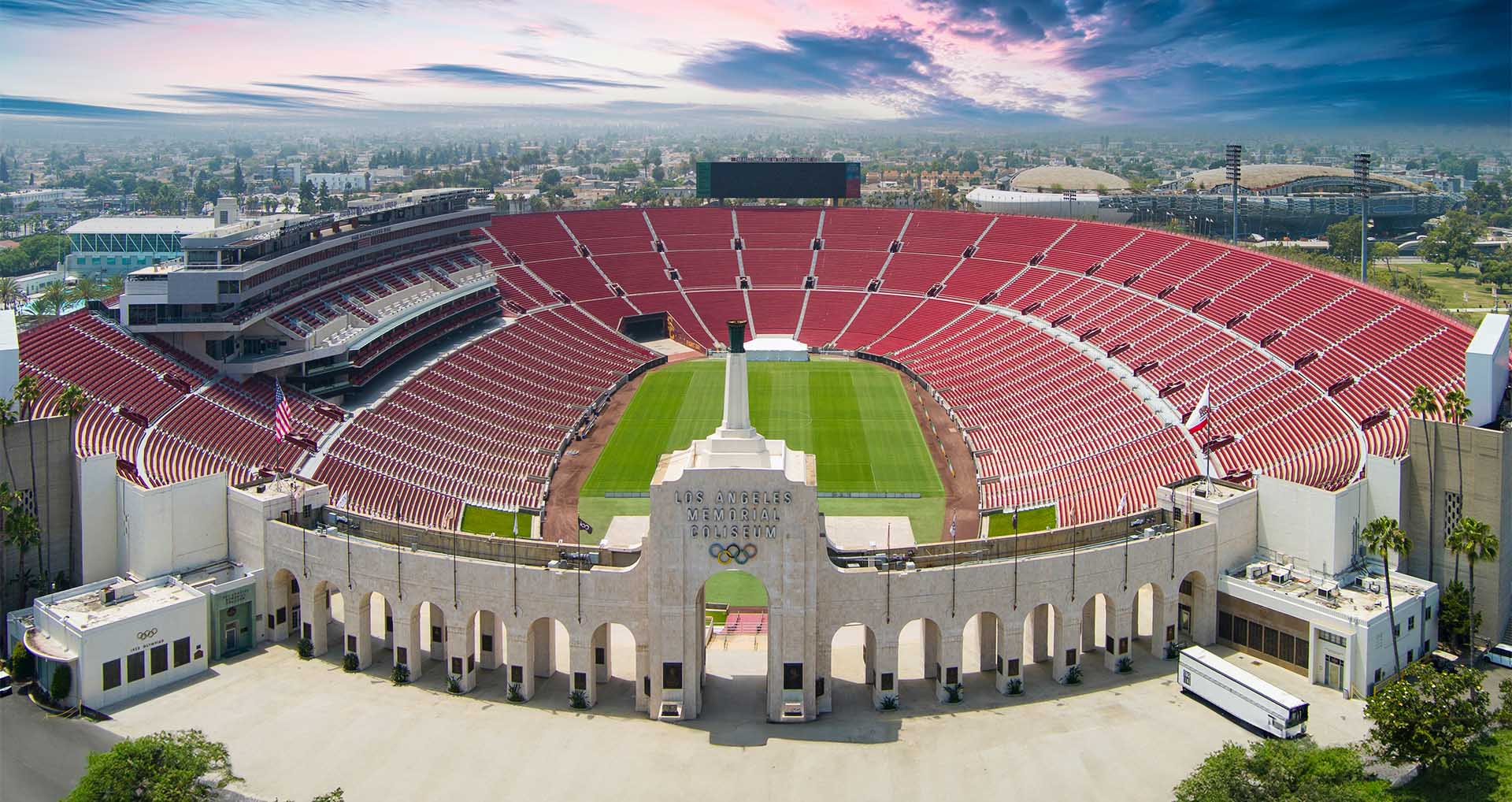
May 1, 1923: The Los Angeles Memorial Coliseum opens, adjacent to the campus of the University of Southern California. It completed a stretch of two weeks in which three of the greatest stadiums ever built on planet Earth opened: The original Yankee Stadium in New York on April 18, and the original Wembley Stadium in London on April 28. Of the three, the Coliseum is the only one that still stands, 99 years later.

Unless you count the nearby HOLLYWOOD sign and the Golden Gate Bridge in San Francisco as "buildings," the Coliseum is the most famous building in the State of California.

At its opening, seating capacity was 75,144. It was expanded to 101,574 for the 1932 Olympic Games. A renovation, necessary after the 1994 Northridge Earthquake, dropped capacity to 93,103. Another recent renovation, including wider seats, and bigger media facilities (including a new press box, named for the late Los Angeles Times executive Otis Booth), requiring the removal of some seats, has made the current capacity 77,500, making it the 2nd-biggest stadium in California, behind the Rose Bowl in nearby Pasadena.

It hosted a football game for the 1st time on October 6, 1923. The University of Southern California hosted Pomona College, and won, 23-7. The USC Trojans have used the Coliseum as their home field ever since.

Their nearby rivals, the University of California at Los Angeles, played home games there from 1933 to 1981. The UCLA Bruins now play home games at the Rose Bowl, which, due to the Trojans' success, has often seemed like a secondary home field to them, not just every other year when they play UCLA in their home-and-home series, but also on January 1, when the Rose Bowl game is usually played.

The Coliseum has also been the leading professional football venue in Southern California. In the NFL, the Los Angeles Rams played there from 1946 to 1979, and again from 2016 to 2019; the Los Angeles Raiders from 1982 to 1994; Super Bowl I in 1967 and Super Bowl VII in 1973; and the postseason Pro Bowl from 1951 to 1972, and again in 1979.

Other pro football teams using the Coliseum: The Los Angeles Dons of the All-America Football Conference from 1946 to 1949, the Los Angeles Chargers of the American Football League in 1960, the Los Angeles Express of the United States Football League from 1983 to 1985, and the Los Angeles Xtreme of the XFL in 2001.

It has hosted the U.S. national soccer team 20 times, starting in 1965; and Mexico's team 61 times. In 1967, the only season of play for the United Soccer Association, it hosted the Los Angeles Wolves, who won that league's title. It also hosted the city's entry in another league starting that season, the Los Angeles Toros of the National Professional Soccer League. After that year, the two leagues merged to form the North American Soccer League, whose Los Angeles Aztecs used the Coliseum as their home field in the 1977 and 1981 seasons.

The Los Angeles Dodgers used the Coliseum as their 1st home field after leaving Brooklyn, while waiting for Dodger Stadium to be built, from 1958 to 1961. Their home games in the 1959 World Series against the Chicago White Sox attracted over 92,000 fans, the highest-attended competitive games in Major League Baseball history. An all-time record crowd for baseball, 115,300, attended a preseason game between the Dodgers and the Boston Red Sox on March 29, 1958, honoring the Dodgers' 50h Anniversary in Los Angeles.
Baseball setup

And, of course, the Coliseum was the main venue for the 1932 and 1984 Summer Olympic Games. While SoFi Stadium will host the Opening Ceremony of the 2028 Summer Olympics, the Coliseum will host the track & field events for the 3rd time.
Post-renovation, with all red seats
and the Otis Booth Press Box

In 2018, naming rights to the playing surface were sold. It is now United Airlines Field. The Coliseum name remains for the stadium as a whole. 

*

May 1, 1923 was a Tuesday. Joseph Heller, known for his World War II novel Catch-22, was born on this day. So was television director Ralph Senensky, who directed 6 episodes of the original Star Trek series.

It was the off-season for the NFL and the NHL, and there was no NBA yet. But a full slate of Major League Baseball games was played:

* The New York Yankees, flush off the successful opening of their new Stadium, beat the Washington Senators, 8-7 at Griffith Stadium in Washington.

* The New York Giants, no longer having to share the Polo Grounds with the Yankees, and expanding it to compete with Yankee Stadium (unsuccessfully, as it turned out), hosted their arch-rivals, the Brooklyn Robins, and beat them, 4-3. The Robins were named for their manager, Wilbert Robinson. After he was fired following the 1931 season, they reverted to their previous name, the Brooklyn Dodgers.

* The Boston Red Sox beat the Philadelphia Athletics, 5-4 at Fenway Park in Boston.

* The Boston Braves beat the Philadelphia Phillies, 12-10 at Baker Bowl in Philadelphia.

* The Chicago Cubs beat the Cincinnati Reds, 3-1 at Redland Field in Cincinnati. It was renamed Crosley Field in 1934.

* The Detroit Tigers beat the Cleveland Indians, 6-5 at Navin Field in Detroit. It was renamed Briggs Stadium in 1938, and Tiger Stadium in 1961.

* The Chicago White Sox beat the St. Louis Browns, 5-3 at Comiskey Park in Chicago.

* And the Pittsburgh Pirates beat the St. Louis Cardinals, 6-2 at Sportsman's Park in St. Louis. 

Thursday, March 31, 2022

March 31, 1975: The End of the John Wooden UCLA Dynasty

March 31, 1975: The Final of the NCAA Division I Men's Basketball Tournament is held at the San Diego Sports Arena. (It's now named the Pechanga Arena.)

The NCAA Tournament had varied from between 22 and 25 teams since 1953. For the 1974-75 season, due to the frustrations of teams unable to win the Conference Tournaments, and thus qualify for the NCAA Tournament, despite previously having exceptional seasons, the NCAA expanded the Tournament to 32 teams, and allowed teams that failed to win their conference in.

In the Mideast Regional Final, at the University of Dayton Arena in Dayton, Ohio, on March 22, Indiana, then undefeated at 31-0 and ranked Number 1 in the country, faced Number 5 Kentucky, who were 24-3, with 1 of their losses coming to Indiana in Bloomington. This time, Joe B. Hall's Wildcats beat Bobby Knight's Hoosiers, 92-90, and secure Kentucky's 1st berth in what would later be called "the Final Four" since losing the 1966 Final. This would be the only game that Indiana would lose between March 11, 1974 and December 1, 1976, a stretch over which they went 66-1.

The University of California at Los Angeles had won 7 straight titles, and 9 out of 10, under coach John Wooden, before losing in the 1974 Semifinal to North Carolina State. In 1974-75, the Bruins finished the regular season 23-3, losing only away to Stanford by 4 points, away to Notre Dame (again) by 6, and, in their only bad game of the season, away to Washington by 22.

At the time, the league then known as the Pacific-Eight Conference had no Conference Tournament, but UCLA easily won the regular-season title. The Bruins struggled in the NCAA Tournament: They needed overtime to beat Michigan, beat the University of Montana by only 3 points, beat Arizona State to get to the Final Four, and needed overtime to beat the University of Louisville, coached by Wooden's former assistant, Denny Crum.

After that Semifinal win over Louisville, Wooden announced his retirement: Win or lose, the Final against Kentucky would be his last game.

The game was tight. So were the Bruins, as if they were trying too hard to send Wooden out a winner. The lead changed hands several times in the 1st half, which ended with UCLA ahead, 43-40. Kentucky stayed close, and were within 76-75 with less than 7 minutes left.

Dave Meyers -- brother of UCLA women's star Ann Meyers -- was called for an offensive foul on a shot attempt during which he bumped into Grevey. Meyers yelled at referee Hank Nichols for this, and was assessed a technical foul. This led the normally mild-mannered Wooden to run onto the court, and call Nichols a "crook."

Maybe this shook the Wildcats up, because Kevin Grevey, their best player, missed all 3 free throws. Kentucky never recovered, and UCLA won, 92-85. Wooden and UCLA had their 10th National Championship, all within the last 12 years.

As with so many other great college coaches, Wooden cast a shadow that his successors found it difficult to get out of. The following year, Gene Bartow got UCLA back to the Final Four, but lost to Indiana, with Knight leading them to what remains the last undefeated season for an NCAA Division I men's basketball team.

In 1978, Hall led Kentucky to their 1st National Championship in 20 years, while Grevey helped the Washington Bullets win the NBA Championship. Under Larry Brown, UCLA got back to the Final in 1980, losing to Louisville and Wooden's former assistant Crum, who would win the National Championship again in 1986.

UCLA has won 1 National Championship without Wooden, in 1995, under Jim Harrick Sr. In 2006, Ben Howland took them to the Final, where they lost to Florida.

Of Wooden's '75 Bruins: Marques Johnson starred with the Milwaukee Bucks, becoming a 5-time NBA All-Star; Dave Meyers was his teammate on the Bucks; Andre McCarter played a season each with the Kansas City Kings and the Bullets; Ralph Drollinger played 1 season, the expansion season of the Dallas Mavericks, 1980-81; Brett Vroman, that same season, played 11 games with his home-State Utah Jazz, the extent of his NBA career, though he also played in Europe, mostly in Italy; Richard Washington, named the Tournament's Most Outstanding Player, played 6 seasons in the NBA, including 1 as a teammate of Johnson and Meyers, and another as a teammate of Drollinger; and Wilbert Olinde never played in the NBA, but starred in Germany's basketball league.

And then there was Gavin Smith. He transferred to the University of Hawaii, where he set the school's single-season scoring record, which still stands. He became a stuntman, an actor, and a film studio executive. In 2012, he disappeared after leaving a friend's house in the Los Angeles suburbs. Two years later, his remains were found, and a man was convicted of his murder.

John Wooden had been a star player at Purdue University in the early 1930s, before coaching at Indiana State (later the Alma Mater of Larry Bird) from 1946 to 1948, and then at UCLA until 1975. His career record was 664-162 -- including 335-22 from 1963 to 1975, for a percentage of .938.

He won National Championships in 1964, with Walt Hazzard and Gail Goodrich; 1965, with Goodrich; 1967 and 1968, with Lew Alcindor, who later changed his name to Kareem Abdul-Jabbar; 1969, with Kareem and Sidney Wicks; 1970 and 1971, with Wicks; 1972 and 1973, with Bill Walton and Keith Wilkes, who later changed his name to Jamaal Wilkes; and 1975, with Marques Johnson.

In 1972, Sports Illustrated split its Sportsman of the Year award for the 1st time, between Wooden and tennis star Billie Jean King. For King, it was a recognition of not just her performance in her sport, but her activism for it, including for female players to be paid as much as male players. For Wooden, who had won his 8th title, it seemed more like a lifetime achievement award.

It's worth noting that Wooden titled his autobiography They Call Me Coach. Even long after his retirement, his former players, even those who had gone into coaching themselves, still called him "Coach" rather than "John." It's also worth noting that Kareem only let 2 people continue to call him "Lewis": His father, Ferdinand Lewis Alcindor Sr.; and Wooden.

It's also worth noting that Wooden was just 64 when he retired, though he looked older. To put this in perspective: Dean Smith and Gary Williams each coached their last college game at 66, Bobby Knight and Jud Heathcote 67, Don Haskins 69, Roy Williams 70, Lute Olson 72, Denny Crum 74, Mike Krzyzewski and Larry Brown 75, Jim Calhoun 79, Rollie Massimino 83. As of March 31, 2022, Jim Boeheim and Tom Izzo are still coaching at 67, Rick Pitino at 69.

He was the 1st person elected to the Basketball Hall of Fame as both a player and a coach, the former in 1960 and the latter while still coaching in 1973. His success led to UCLA building the Edwin W. Pauley Pavilion in 1965. In 2003, the school named the playing surface the Nell and John Wooden Court. John insisted that, if he were going to be so honored, his late wife's name should go first. That same year, President George W. Bush awarded him the Presidential Medal of Freedom. He died in 2010, 4 months short of his 100th birthday.

In 1995, Marques Johnson's son, Kris Johnson, won a National Championship at Duke. The Johnsons are 1 of 4 father-son pairs to win National Championships, along with Henry and Mike Bibby, Scott and Sean May, and Derek and Nolan Smith; and the only pair to both win for the same school.

*

March 31, 1975 was a Monday. There were no games in the NBA. There were 2 in the American Basketball Association. The Kentucky Colonels beat the San Antonio Spurs, 103-89 at Freedom Hall in Louisville. Artis Gilmore had 36 pionts and grabbed 25 rebounds. And the Utah Stars beat the Virginia Squires, 103-97 at the Salt Palace in Salt Lake City, Utah. Ron Boone scored 36 points.

Baseball was in Spring Training. Football was out of season. There were no games in the NHL. There were 2 in the World Hockey Association. The Winnipeg Jets beat the Indianapolis Racers, 4-1 at the Winnipeg Arena. And the San Diego Mariners beat the Edmonton Oilers, 5-2 at the brand-new Northlands Coliseum in Edmonton.

December 31, 1999 & January 1, 2000: The Millennium

December 31, 1999:  The Millennium arrives. The people of planet Earth survived. At a terrible cost. But we hadn't destroyed ourselves. ...