Showing posts with label 1912. Show all posts

Wednesday, November 9, 2022

November 9, 1912: Carlisle Upsets Army

Jim Thorpe. In this case, the C doesn't stand
for his college team, the Carlisle Indians,
but for his pro team, the Canton Bulldogs.
The picture is colorized, but otherwise real.

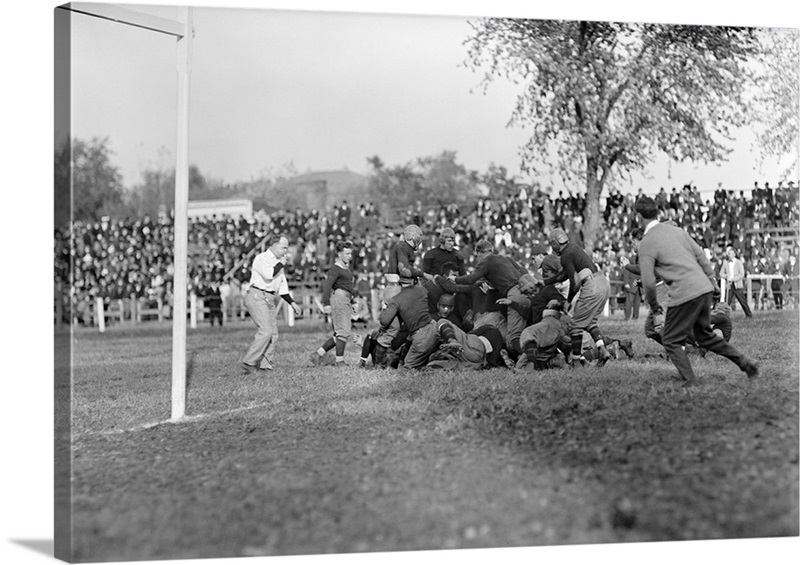
November 9, 1912: The biggest upset that college football had ever seen to that point takes place. In hindsight, though, it shouldn't have been considered an upset.

The football team at the United States Military Academy, at West Point, New York, usually called just "Army" in the newspapers, played their home games on The Plain, essentially a parade ground, which it still is. It would take until 1924 before they built a proper football facility, Michie Stadium.

But they were one of the top teams in the country, along with Ivy League schools Harvard, Yale, Princeton and the University of Pennsylvania; and Midwestern schools Michigan, Minnesota, and the University of Chicago.

Not considered one of the top teams in the country was the Carlisle Indian Industrial School, of Carlisle, Pennsylvania, established in 1879 as America's top boarding school for Native American teenagers. One of these was a member of the Sac and Fox tribe of Oklahoma, named Wa-Tho-Huk. No, that doesn't mean what it sounds like. It means "Bright Path." His "white man's name" was Jim Thorpe.

Thorpe was the greatest athlete in America. He had already showed his prowess on the football field at Carlisle, taking them to an 11-1 record in 1911, their only loss a 12-11 defeat away to Syracuse. They had beaten Harvard, Penn, Brown, and the University of Pittsburgh.

Before the 1912 season, he went to Stockholm for the Olympic Games, and won the Gold Medal in the decathlon and the pentathlon. When the Games' host, King Gustav V of Sweden, gave him his medals, he said to Thorpe, "You, sir, are the greatest athlete in the world." Thorpe said, "Thanks, King." Ever since, the winner of the Olympic decathlon has been granted the unofficial title of "the world's greatest athlete."

In 1912, Carlisle went into their game away to Army at 10-0-1, having beaten Pittsburgh again, avenged their defeat to Syracuse, and come away with just one blemish on their record, a 0-0 tie against Washington & Jefferson University.

No one expected them to beat Army at West Point. But they did, 27-6. Thorpe scored 3 touchdowns, and kicked 3 extra points, missing 1.

It was called the biggest victory of Indians over the U.S. Army since the Battle of the Little Bighorn in 1876.

Legend has it that Dwight D. Eisenhower, later the leading General of World War II and the 34th President of the United States, broke his leg trying to tackle Thorpe in this game. It's not true: He played in Army's next game, against Tufts University, and that's when he sustained the injury that ended his playing career -- though, fortunately, not his Army career.

Ironically, just 7 days after their greatest victory, Carlisle would suffer their greatest defeat, losing their undefeated season by losing to Penn 34-26 at Franklin Field in Philadelphia. Army would also lose at Franklin Field that season, to Navy, and had already done so the previous season.

Thorpe, already the greatest track & field athlete in the world, became the 1st great player in pro football. He also played Major League Baseball, famously getting the only hit in the only MLB game whose 1st 9 innings had no hits, the "double no-hitter" by Fred Toney of Cincinnati and Jim "Hippo" Vaughn of the Chicago Cubs in 1917, won as Thorpe singled home a run for the Reds in the top of the 10th inning. And he played in an early pro basketball league.

But it was discovered that he had played minor league baseball under an assumed name, and the International Olympic Committee took his medals away. In 1950, the Associated Press named him the greatest athlete of the 1st half of the 20th Century. He died in 1953. In 1982, the IOC restored his medals to his family.

The Army would get its revenge on Carlisle in only 6 years. In 1918, with America having gotten into World War I, the federal government, which already ran the school, closed it, and transferred control from the U.S. Department of the Interior, which since its creation has run "Indian Affairs," to the U.S. Department of War (renamed the Department of Defense in 1947). The property is now part of the U.S. Army War College.

How good a football player was Jim Thorpe, by today's standards? Hard to tell, although the college award for the best defensive back is named the Jim Thorpe Award. In 1999, The Sporting News ranked him 88th on its list of the 100 Greatest Football Players.

In 2010, 57 years after his death and 82 years after he last played so much as a down in the pro game, the NFL Network ranked him 37th on the list of the 100 Greatest Players. I don't know what happened in the ensuing 11 years to make him jump 57 places in spite of new players making the list. Maybe some old film was discovered, providing previously lost insight.

*

November 9, 1912 was, naturally, a Saturday. Baseball was out of season. Basketball was still a new sport, and not played professionally. Hockey was at the dawn of its professional era, and its season usually started in December. Football had begun to go professional, but it usually played on Sunday so that it wouldn't interfere with the college game on Saturday. So it was all college football on the day:

* Did I mention that Franklin Field in Philly was a tough place to play? On this day, Penn beat Michigan, 27-21. That version of Franklin Field was built in 1895, and the site has hosted America's greatest track meet, the Penn Relays (the University of Pennsylvania Relay Carnival) ever since. The current stadium on the site was built in 1922.

* Harvard beat Vanderbilt, 9-3 at Harvard Stadium in Boston. Both teams came in with 6-0 records, and Vanderbilt had outscored its opponents 342-3. Two weeks later, led by star runner and kicker Charley Brickley, Harvard beat Yale to complete its undefeated season. When National Champions were retroactively named for the pre-poll era (1869 to 1935), Harvard were named the 1912 National Champions.

* In a "crosstown" matchup, the University of Chicago beat Northwestern University, 3-0 at Marshall Field in Chicago. Yes, it was named after the leading department store in Chicago, which was named after its founder, Marshall Field. I suppose they could have called it "Marshall Field Stadium," but they didn't.

* In another North vs. South matchup, Wisconsin wrecked Arkansas 64-7 at Randall Field, in Madison, Wisconsin. Camp Randall Stadium would be built on the site in 1917.

* Princeton University hosted New York University, and beat NYU 54-0.

* Rutgers College beat Rensselaer Polytechnic Institute of Troy, New York, 21-0 at Neilson Field in New Brunswick, New Jersey. What became Rutgers University moved across the river to Rutgers Stadium in 1938. In 1953, the school's main library was built on the site of Neilson Field.

* Fordham beat Albright College of Reading, Pennsylvania, 13-6 at Fordham Field in The Bronx.

* For a reason I can't find, Columbia University did not play football between 1906 and 1914.

And Woolwich Arsenal lost to West Bromwich Albion, 2-1 at The Hawthorns in West Bromwich, outside Birmingham in England's West Midlands. The 1912-13 campaign remains the worst season in the history of the team that would become simply Arsenal Football Club, the one and only season in which they have ever been relegated. 

Saturday, November 5, 2022

November 5, 1912: America's Wildest Presidential Election

November 5, 1912: Woodrow Wilson is elected the 28th President of the United States. The Governor of New Jersey and the former President of Princeton University, he remains the only New Jersey-based politician ever to become President, although he was born in Virginia and raised in Georgia and South Carolina.
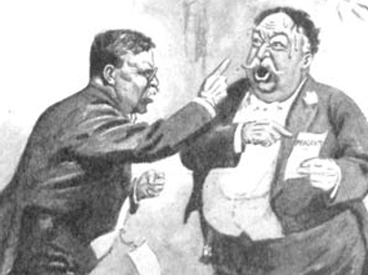
He wins because the Republican Party is split between the conservative wing, led by incumbent President William Howard Taft, and the progressive wing, led by former President Theodore Roosevelt, who believes that Taft and his allies have betrayed what he tried to do from 1901 to 1909.
It's actually a 4-way race, also including the Socialist Party nominee, labor union leader Eugene V. Debs. In the popular vote, it's Wilson 6.3 million, Roosevelt 4.1 million, Taft 3.5 million, and Debs 900,000. (Debs would slightly top that total when he ran while in prison in 1920, but with a lower percentage of the vote.) In popular vote percentage, it's Wilson 41.8, Roosevelt 27.4, Taft 23.2, Debs 6.0 -- meaning that, combined, the 2 Republicans got 50.6 percent, a majority, making Wilson a plurality President.
But it's Electoral Votes that matter. Wilson won 435, Roosevelt 88 (winning Michigan, Minnesota, Pennsylvania, South Dakota, Washington, and 11 of the 13 then available in California), Taft 8 (winning only Utah and Vermont), while Debs won 2 Counties in Minnesota and 1 in North Dakota, but no States.

Wilson won 40 of the 48 States then in the Union -- New Mexico and Arizona having gained Statehood that very year, and voting for President for the 1st time. Had the votes for TR and the votes for Taft been combined in each State, Wilson would have won Alabama, Arkansas, Florida, Georgia, Kentucky, Louisiana, Mississippi, North Carolina, Oklahoma, South Carolina, Tennessee, Texas and Virginia -- 13 States, all of them Southern, for a total of 149 Electoral Votes, while the Republican nominee would have won 382. But Taft's conservatism and TR's ego split the GOP, and Wilson got in.
Although Wilson has become identified with Princeton, New Jersey, where he lived before entering the White House; and elsewhere in Washington, where he lived after leaving, his birthplace was in Staunton, Virginia, in the Blue Ridge Mountains in the western part of the State (not to be confused with the separate State of West Virginia), and the house where he was born, and a now-connected house next door, have been converted into his Presidential Library, which opened on January 1, 1990.

The bridge carrying Interstate 95 over the Potomac, at the southern end of the District of Columbia, is the Woodrow Wilson Bridge. And, on the Virginia side, in Arlington, a major thoroughfare is named Wilson Boulevard. High schools have been named for Wilson in Camden, New Jersey; Washington, D.C.; Portsmouth, Virginia; Beckley, West Virginia; Dallas, Texas; Los Angeles and Long Beach, California; and Tacoma, Washington.

The USS Woodrow Wilson was a submarine in service from 1963 to 1994. The Woodrow Wilson International Center for Scholars opened in Washington in 1968.

There are high schools named for Wilson in Los Angeles, in neighboring Long Beach, in Dallas, in the suburbs of Philadelphia, and in Virginia and West Virginia. The Wilson High in Dallas is the only high school in the country to graduate 2 winners of the Heisman Trophy: Davey O'Brien of Texas Christian University in 1938, and Tim Brown of Notre Dame in 1987.

But Wilson's racism has led to several cities taking his name off schools, replacing them with the names of black leaders: August Martin in New York's Jamaica neighborhood in Queens, Jackson-Reed in D.C., Ida B. Wells-Barnett in Portland, and Silas in Tacoma.

Also named Woodrow Wilson High School, but no longer: Eastside High in Camden, New Jersey; Harry S Truman High in the Philadelphia suburb of Levittown, Pennsylvania; Manor High in Portsmouth, Virginia; Dakota High in Fargo, North Dakota; and, outright closed, in Middletown, Connecticut; Youngstown, Ohio; and San Francisco.

Statues of Wilson are more common in Europe, where he's more popular than in America, including in Poznan, Poland; Prague, Czechia; and Tirana, Albania. A Wilson statue was removed from the campus of the University of Texas in Austin. But the "Presidential City" display in Rapid City, South Dakota still has him on display.
Statue, Rapid City, South Dakota

In 1934, a gold certificate bearing Wilson's portrait and the value of $100,000 was issued by the U.S. Department of the Treasury. It was a one-time thing, to help stabilize the economy during the Great Depression. It was never put into circulation, only 12 are known to survive, and it is illegal for private citizens to possess them.

Wilson remains the last President born in Virginia, and the only one to represent New Jersey in politics.

Wilson, in 1944, was the 1st color film about a President. Alexander Knox starred, with Ruth Nelson as 1st wife Ellen, Geraldine Fitzgerald as 2nd wife Edith, Thomas Mitchell (Uncle Billy in It's a Wonderful Life) as private secretary Joseph Tumulty, a young Vincent Price as son-in-law and Secretary of the Treasury William Gibbs McAdoo, and Cedric Hardwicke as Wilson's Congressional nemesis, Senator Henry Cabot Lodge.

Among the other actors who have played Wilson are: Earl Lee in The Story of Will Rogers in 1952, Whit Bissell in Profiles in Courage in 1965, Frank Forsyth in Oh! What a Lovely War in 1969, Backstairs at the White House in 1979, Josef Sommer in The Young Indiana Jones Chronicles in 1993, Bob Gunton in Iron Jawed Angels in 2004, Bryan Scott Johnson in Timeless in 2018, and Ian Kelly in The King's Man in 2021.

Bainbridge Colby, Secretary of State for the last year of the Administration, was  the last surviving member of the Wilson Cabinet, living until 1950.

*

Like all modern U.S. Election Days, November 5, 1912  was a Tuesday, so no football; and November, so no baseball. And neither the NBA nor the NHL had been founded yet. So there were no scores on this historic day.

Sunday, October 30, 2022

October 30, 1912: Vice President James S. Sherman Dies

October 30, 1912: Vice President James S. Sherman dies in his hometown of Utica, New York. He was 57 years old, and he remains the last incumbent Vice President to die in office.

There have been 7 Vice Presidents who have died in office: George Clinton, under James Madison, on April 20, 1812; Elbridge Gerry, also under Madison, on November 23, 1814; William R. King, under Franklin Pierce, on April 18, 1853; Henry Wilson, under Ulysses S. Grant, on November 22, 1875; Thomas A. Hendricks, under Grover Cleveland, on November 25, 1885; Garret Hobart, under William McKinley, on November 21, 1899; and Sherman, under William Howard Taft.

There have been 9 Vice Presidents who have vacated the office due to a vacancy in the Presidency: John Tyler, upon the death of William Henry Harrison, April 4, 1841; Millard Fillmore, upon the death of Zachary Taylor, July 9, 1850; Andrew Johnson, upon the death by assassination of Abraham Lincoln, on April 15, 1865; Chester Arthur, upon the death by assassination of James Garfield, September 19, 1881; Theodore Roosevelt, upon the death by assassination of McKinley, September 14, 1901; Calvin Coolidge, upon the death of Warren Harding, August 2, 1923; Harry Truman, upon the death of Franklin D. Roosevelt, April 12, 1945; Lyndon Johnson, upon the death by assassination of John F. Kennedy, November 22, 1963; and Gerald Ford, upon the resignation due to scandal of Richard Nixon, August 9, 1974.

Two Vice Presidents have resigned: John C. Calhoun, due to a dispute with President Andrew Jackson, on December 28, 1832, at which point he had already been thrown off the ticket for re-election and replaced, anyway; and Spiro Agnew, under Richard Nixon, due to a plea deal on corruption charges, on October 10, 1973.

James Schoolcraft Sherman was born on October 25, 1855 in Utica, New York. He was a member of the interrelated Baldwin, Hoar, and Sherman families, prominent lawyers and politicians of New England, New York and Ohio. The Shermans he was related to included Roger Sherman, who signed both the Declaration of Independence and the Constitution of the United States; and General William Tecumseh Sherman and his brother John, a Senator from Ohio, Secretary of the Treasury under Rutherford B. Hayes, and Secretary of State under McKinley.

James S. Sherman married Carrie Babcock in 1881, and they had 3 sons: Sherrill, Richard and Thomas. James was elected Mayor of Utica as a Republican in 1884, and to the U.S. House of Representatives in 1886 and 1888. Losing in the Democratic landslide of 1890, he returned to the House in 1892, and was continually re-elected until 1908, when he was elected Vice President on a ticket with William Howard Taft.

At first, Sherman and Taft found themselves at odds over both tariff policy and the role of the Vice President. During the beginning of his term, Taft, who had been associated with progressives, had to deal with the Speaker of the House, Joseph G. Cannon of Illinois, who was the leader of the Republicans' conservative wing. Sherman, who had more experience in Congress, was expected to be a liaison for Taft with Cannon. "I am going to rely on you, Jim, to take care of Cannon for me. Whatever I have to do there will be done through you," proposed Taft.

Some later Vice Presidents have done this for their bosses. Sherman refused, saying, "Not through me. You will have to act on your own account. I am to be Vice President, and acting as a messenger boy is not part of the duties as Vice President." This is why, from Jimmy Carter with Walter Mondale from 1976 onward, Presidential nominees have talked things out with potential Vice Presidents before offering their names to the Party's Convention, so that the would-be VP knows what the would-be Prez wants, and can accept or decline on that basis.

But as Taft became embattled with parts of the progressive faction of the Republican Party, the two of them worked together more harmoniously – a relationship eased further by First Lady Helen Taft's enjoyment of the company of James and Carrie Sherman. Mrs. Taft, who wanted to be First Lady more than her husband wanted to be President -- he really wanted to be Chief Justice of the Supreme Court, which he eventually became -- was definitely the power behind the throne.

Taft declared that Sherman accomplished much on Capitol Hill by his "charm of speech and manner, and his spirit of conciliation and compromise," backed by a "stubborn adherence" to his principles. In other words, he ended up doing what Taft had wanted him to do in the first place.

So Sherman became the 1st Vice President to be nominated for re-election since Calhoun in 1828. (Calhoun had served a term with John Quincy Adams and a term with Jackson.) But the conservative-progressive split in the party led former President Theodore Roosevelt to challenge Taft, who had been his handpicked successor, for the nomination. Taft controlled the Delegates, and won.

Roosevelt then formed the Progressive Party, splitting the Republican vote, and making it nearly impossible for either of them to beat the Democratic Party's nominee, Governor Woodrow Wilson of New Jersey.
Roosevelt was shot while campaigning in Milwaukee on October 14, but recovered. What hardly anyone knew was that Wilson's health wasn't as good as it appeared. But in the most danger of all was Sherman: In 1904, he had been diagnosed with Bright's disease, a kidney disorder that is treatable now, but, at the time, was usually a death sentence within 5 years. Sherman should have told Taft about it as far back as being offered the Vice Presidential nomination in 1908 -- although it almost certainly wouldn't have had any effect on either the 1908 or the 1912 election.

On October 30, 1912, 6 days before the election, Sherman died at his home in Utica. Wilson and his running mate, Governor Thomas R. Marshall, finished 1st in a landslide in the Electoral Vote, but did not get a majority of the popular vote. Roosevelt and his running mate, Governor Hiram Johnson of California, finished 2nd.

Nicholas Murray Butler, the much-admired President of Columbia University, was designated by the Republican Party to receive whatever Electoral Votes to which Sherman would have been entitled. But, since Taft won only 2 States, Vermont and Utah, he and Butler each received only 8 Electoral Votes.

The Vice Presidency remained vacant until Inauguration Day, March 4, 1913, when Wilson and Marshall were sworn in. In that interim, the next person in line for the Presidency, under the law in effect at the time, the Presidential Succession Act of 1886, was the Secretary of State, Elihu Root.
Elihu Root

Carrie Sherman lived on until 1931. She was buried next to her husband at Forest Hill Cemetery in his hometown of Utica. Several other political figures are buried there, including Horatio Seymour, Governor of New York, and the Democratic nominee for President in 1868; and Roscoe Conkling, who was, at a time when that office did not yet officially exist, effectively the Senate Majority Leader in the 1870s. Despite their difference of party, Conkling married Seymour's sister.

*

October 30, 1912 was a Wednesday. There were no scores on this historic day: Baseball season had ended with the Boston Red Sox winning the World Series over the New York Giants 14 days earlier, football was in midweek, professional basketball barely existed, and it was too early for the National Hockey Association and Pacific Coast Hockey Association seasons to start.

Saturday, October 15, 2022

October 16, 1912: The Fred Snodgrass Game


October 16, 1912: Game 8 of the World Series. Game 2 had been called due to darkness while tied – no lights at ballparks in those days – so this will decide it. The greatest pitcher the game had yet seen, Christy Mathewson, hero of the 1905 Series, squares off against Hugh Bedient in quest of his 1st win of this Series.
Fenway Park at its opening, 1912

Matty takes a 1-0 lead into the 7th‚ but with 1 out‚ Boston manager Jake Stahl hits a pop-up to short left field. The ball drops among Art Fletcher‚ Josh Devore‚ and Fred Snodgrass. Heinie Wagner walks‚ and with 2 outs‚ pinch hitter Olaf Henriksen doubles home the tying run. Smoky Joe Wood relieves Bedient‚ and the 2 aces match zeroes until Red Murray doubles and Fred Merkle singles in the 10th to give New York a 2-1 lead. It looks like the Giants will win the Series.

But in the last of the 10th‚ pinch hitter Clyde Engle lifts an easy fly, a "can of corn," to center fielder Snodgrass. Interviewed about it in 1965, Snodgrass said, "Well, I dropped the darn thing." Engle reaches 2nd base on the error.

In the next at-bat, Snodgrass makes a great catch of a long drive by Harry Hooper. If only Snodgrass had made an ordinary catch of Engle's popup, and let Hooper's drive drop for a hit, the final score would have been exactly the same, but the perception of how the teams got there would have been totally different, and Snodgrass wouldn't have gone down in history as the man who made "The $30,000 Muff," a figure equivalent to the difference between the totals of the winning and losing teams’ shares. (About $877,000 in today's money.)

To be fair, though, Snodgrass wasn't a bad ballplayer at all, and dealt with it far better than teammate Merkle did with his "boner" that helped to cost the Giants the 1908 Pennant. As it is, Merkle has, for the moment, the RBI that will win the World Series, and stands to have been completely redeemed.

But Mathewson, for a decade the very definition of a control pitcher, walks Steve Yerkes, bringing up Tris Speaker. The all-time leader in victories by a National League pitcher, with 373, faces the all-time leader in doubles, with 792, a true classic confrontation.

"Matty" gets "Spoke" to pop a high foul along the first-base line. Catcher John Meyers -- a member of the Cahuilla Indian tribe and thus nicknamed "Chief" -- chases it‚ but it drops a few feet from Merkle‚ who could have taken it easily. Much more so than the 1908 "boner," this is something for which to fairly criticize Merkle.

Reprieved‚ Speaker didn't need a written invitation to put his .345 lifetime batting average to work. He singles in the tying run and sends Yerkes to 3rd. After Duffy Lewis is walked intentionally‚ 3rd baseman Larry Gardner hits a long sacrifice fly to a retreating Devore that scores Yerkes with the winning run.

Just as in the playoff necessitated by the Merkle's Boner game in 1908, Mathewson, often hailed as the greatest pitcher of all time (especially back then), did not get the job done.

The Red Sox win the World Series in their 1st season in Fenway Park. By the time Fenway has hosted 7 seasons, the Sox will have won 4 World Championships there, plus the 1st-ever World Series from when they were playing at the Huntington Avenue Grounds. In their next 85 seasons at Fenway, the Sox will win a grand total of no World Series.

If either Merkle or Meyers had caught Speaker's popup, the Giants might have held on to win. In fact, you can make a better case for Merkle being a "bonehead" on October 16, 1912 than you can for him being such on September 23, 1908. Ordinarily, both he and the Chief were very smart players, but they both blew it big-time on this one.

Then there's Mathewson. Even more than a century later, it seems like sacrilege to blame "The Christian Gentleman" for this loss. But, just as in the Merkle playoff 4 years earlier, if he had pitched like Christy Mathewson, the Giants would have won both games.

Most of all, the Red Sox were better. True, the Giants won 103 games and were defending NL Champions. But the Sox won 105, a record for Boston baseball that stood until the 2018 Red Sox won 108. And the Sox did win 3 of the 1st 4 decisions in the Series. While the Giants won the Pennant again in 1913 and again in 1917, the Sox would win the World Series again in 1915, 1916 and 1918 -- the Giants wouldn't win another until 1921.

Snodgrass was a standup guy about it all for the last 62 years of his life, becoming a banker in Oxnard, California, and later being elected the city's Mayor. He died on April 5, 1974, at the age of 86.

The last survivors of this Series were: For the Red Sox, Wood, who lived on until 1985, at the age of 95; and, for the Giants, Hall of Fame lefthander Richard "Rube" Marquard, who lived on until 1980, at the age of  93.

*

October 16, 1912 was a Wednesday. It was the last game of the baseball season. Football was in midweek. Professional basketball barely existed, and the hockey season was a few weeks away. So there were no other scores on this historic day.

Clifford Hansen was born on this date. A Republican, he served the State of Wyoming as Governor from 1963 to 1967, and then as a U.S. Senator until 1978.

Friday, October 14, 2022

October 14, 1912: Theodore Roosevelt Is Shot

October 14, 1912: Running to regain the White House, as the nominee of the Progressive Party -- a.k.a. the Bull Moose Party, in honor of his argument that he felt as fit as a bull moose -- after his Republican Party essentially rejected him for being too liberal, Theodore Roosevelt, the 26th President of the United States, serving from September 14, 1901 to March 4, 1909, is shot coming out of the Gilpatrick Hotel at 333 W. Kilbourn Avenue in Milwaukee.
The Hotel Gilpatrick

The shooter is John Schrank, a 36-year-old German immigrant, who claimed that William McKinley, Roosevelt's predecessor, had come to him in a dream and told him to do it. Doctors examined him and ruled him insane. He was committed to a State hospital, and died there in 1943.

Roosevelt was on his way to the Milwaukee Auditorium, at 500 W. Kilbourn. His life was saved because he had his long speech tucked in his pocket, and it slowed the bullet down. He gave the speech anyway, telling the crowd, "It takes more than a bullet to stop a Bull Moose!" He talked for an hour and a half before he was finally persuaded to go to the hospital.
The doctors, possibly remembering how the doctors attending McKinley after his shooting in 1901, and James Garfield after his in 1881, had made things much worse in trying to remove the bullets, left Roosevelt's bullet in. He recovered, finished 2nd in the election, and lived another 6 years. When he died on January 6, 1919, his assassination attempt had little to do with it.

The Republican incumbent, President William Howard Taft, and the Democratic nominee, Governor Woodrow Wilson of New Jersey, suspended campaigning until Roosevelt was released from the hospital. In the end, because of the split in the Republican ranks, Wilson won: He got only a plurality of the popular vote, but an overwhelming majority of the Electoral Vote, since Roosevelt, who remains the last 3rd party nominee to finish as high as 2nd, won 6 States, and Taft only 2.

The 4,086-seat Milwaukee Auditorium, built in 1909, still stands, under the name of the Miller High Life Theatre. The Milwaukee Arena, a.k.a. the MECCA, was built next-door in 1951, the Bradley Center across State Street from the MECCA in 1988, and the new Fiserv Forum across Highland Street from that. The Bradley Center has now been demolished, while the MECCA has been renamed the UW-Milwaukee Panther Arena, after the University of Wisconsin's Milwaukee campus and its teams.
Both Taft, the man that Roosevelt suggested as his successor and then opposed for deviating from his principles, and Wilson gave speeches at the Auditorium.

So did West German Chancellor Konrad Adenauer in 1956, Presidential candidate John F. Kennedy in 1960, Martin Luther King in 1964, Presidential candidate Michael Dukakis in 1988, Presidential candidates George W. Bush and Ralph Nader in 2000, and Presidential candidate Donald Trump in 2016 -- which, along with Russian hacking and leftists abandoning Hillary Clinton, may have helped him win Wisconsin.

The Gilpatrick, opened in 1907, was torn down in 1941. A new hotel, the Hyatt Regency, was built on the site in 1979.
The Hyatt Regency, Milwaukee

*

October 14, 1912 was a Monday. It was midweek for football, the off-season for hockey, and professional basketball barely existed.

But the baseball season was reaching its climax. Game 6 of the World Series was played that day, at the Polo Grounds in New York. 

Did the Boston Red Sox' management attempt to fix a World Series game? The Sox needed only one more win over the New York Giants to take the Series. But manager Jake Stahl was told to start Buck O'Brien, not staff ace Smoky Joe Wood, he of the 34-5 regular season record. If the Series goes longer, that means there will be a Game 7 at Fenway, and more gate receipts.

What no one but O'Brien knews was that he was hideously hungover from the night before. He gave up 5 runs in the 1st inning, including a steal of home plate by Buck Herzog. That's all Giant starter Rube Marquard needed, and the Giants won, 5-2. There will be a Game 7 on Boston. But the Red Sox still lead, 3 games to 2, with a tie, and can win the title tomorrow.

However, the Giants would win Game 7, and force a deciding Game 8 at the Sox' new ballpark, Fenway Park. A famous error in the bottom of the 10th inning, by Giant center fielder Fred Snodgrass would point the way to an 8-7 win for the Red Sox.

Friday, October 7, 2022

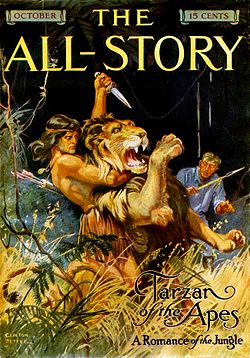
October 7, 1912: The Debut of Tarzan

The debut cover

October 7, 1912: The All-Story Magazine prints a story by Edgar Rice Burroughs: Tarzan of the Apes: A Romance of the Jungle. It is the debut of one of the most famous fictional characters ever created. And while American audiences have tended to accentuate each syllable, pronouncing his name "TAR-ZAN," it was originally "TAR-zin," with the accent only on the 1st syllable.

While modern readers might define "romance" as "emotional attraction towards another person and the courtship behaviors undertaken to express the feelings," from the late 18th Century onward, the word was then understood within the realm of "Romanticism," a movement that broke away from neoclassicism, and emphasized nature, the imagination and emotions.

In Burroughs' story, John Clayton, Viscount Greystoke, the son of a British lord, the Earl of Greystoke, and his wife, who were marooned on the coast of West Africa by mutineers. When Tarzan was an infant, his mother died, and his father was killed by Kerchak, leader of the ape tribe by whom Tarzan was adopted.

Soon after his parents' death, Tarzan became a feral child, and his tribe of apes is known as the Mangani, great apes of a species unknown to the science of the time. Kala is his ape mother. She gives him the name "Tarzan," meaning "White Skin."

His jungle upbringing gives him abilities far beyond those of ordinary humans. These include climbing, clinging, and leaping as well as any great ape. He uses branches, swings from vines to travel at great speed, and can use his feet like hands, a skill acquired among the anthropoid apes. He prefers going barefoot, because he relies on the flexibility of bare feet.

His strength, speed, stamina, agility, reflexes, and swimming skills are extraordinary; he has wrestled not just full-grown apes, but also gorillas, lions, rhinos, crocodiles, pythons, leopards, tigers, and, in the most fantasy-laden stories, sharks, giant seahorses and dinosaurs. He is a skilled tracker, and uses his exceptional hearing and keen sense of smell to follow prey or avoid predators.

As originally depicted, Tarzan is very intelligent and articulate, and does not speak in broken English as the classic movies of the 1930s depict him. He can communicate with many species of jungle animals, and has been shown to be a skilled impressionist, able to mimic the sound of a gunshot perfectly.

Tarzan is literate in English before he first encounters other English-speaking people. His literacy is self-taught after several years in his early teens, by visiting the log cabin of his infancy and looking at children's primer/picture books. He eventually reads every book in his father's portable book collection, and is fully aware of geography, basic world history, and his family tree.

He is "found" by traveling Frenchman Paul D'Arnot, who teaches him the basics of human speech and returns with him to civilization. When Tarzan first encounters D'Arnot, he tells him (in writing): "I speak only the language of my tribe -- the great apes who were Kerchak's; and a little of the languages of Tantor, the elephant, and Numa, the lion, and of the other folks of the jungle I understand."

But he proves that he can learn a new language in days, ultimately speaking many languages, including that of the great apes, French, English, Finnish, Dutch, German, Swahili, other Bantu languages, Arabic, Ancient Greek, Ancient Latin, and Mayan.

At the age of 18, Tarzan meets a young American woman named Jane Porter. She, her father, and others of their party are marooned on the same coastal jungle area where Tarzan's human parents were 20 years earlier. When Jane returns to the United States, Tarzan leaves the jungle in search of her, his one true love.

Contrary to what many fans would come to believe, in The Return of Tarzan, published in magazine form in 1913 and in book form in 1915, Tarzan and Jane marry. In later books, he lives with her for a time in England. They have one son, Jack, who takes the ape name Korak, meaning "The Killer."

Tarzan is contemptuous of what he sees as the hypocrisy of civilization, so Jane and he return to sub-Saharan Africa, making their home on an extensive estate in British East Africa that becomes a base for Tarzan's later adventures. (British East Africa would become Kenya.)

Born on September 1, 1875 in Chicago, Edgar Rice Burroughs wrote 24 Tarzan novels, 11 John Carter of Mars novels, and many other works of adventure, including fantasy and science fiction, before dying on March 19, 1950 in Encino, California, at the age of 74.
Elmo Lincoln starred in the 1st Tarzan film, the silent, black & white Tarzan of the Apes in 1918. In 1932, Olympic swimming Gold Medalist Johnny Weissmuller starred in Tarzan, the Ape Man, the 1st of 12 films in which Maureen O'Sullivan (mother of Mia Farrow) played Jane. The first film introduced "the Tarzan Yell," which has become as synonymous with the character as as this version's broken English, wearing nothing but a loincloth, and swinging from the vines. The scene where Jane asks him his name, and he goes, "Tarzan, Jane, Tarzan, Jane," got mixed up in the public mind, and the incorrect phrase, "Me Tarzan, you Jane" entered the lexicon.

The 2nd film, Tarzan and His Mate, in 1934, was one of the most controversial films of all time. It's "His Mate," not "His Wife." At no time in the film are they said to married. But they sleep together, Jane is shown showering in silhouette, and, with a body double subbing for O'Sullivan, she is shown swimming naked in a river -- while Tarzan keeps his loincloth on. It was the movie that made the keepers of "The Hays Code," the moral guardians of the American film industry, get serious.

The films would show Tarzan joined by a chimpanzee named Cheetah, and, starting in 1939 with Tarzan Finds a Son!, by Johnny Sheffield, then 8 years old, as the older version of a baby that Cheetah had rescued and brought to Tarzan and Jane, whom this version of Tarzan, not the most imaginative of men, names "Boy."
From the 1939 film Tarzan Finds a Son! Left to right:
Jiggs Jr. as Cheeta, Johnny Sheffield as Boy,
Johnny Weissmuller as Tarzan, and Maureen O'Sullivan as Jane. 

Weissmuller died in 1984, O'Sullivan in 1998, Sheffield in 2010.

Lex Barker took over for 5 films from 1949 to 1953, then Gordon Scott for 6 from 1955 to 1960, then Jock Mahoney for 1 in 1962 and another in 1963, and Mike Henry for 3 from 1966 to 1968. At the same time as the Henry films, Ron Ely starred in a Tarzan series for NBC.  That series, as well as the films of Mahoney and Henry, did not include Jane or Boy, but did have Cheeta.

In 1981, Miles O'Keefe starred in Tarzan, the Ape Man, with Bo Derek as Jane, and her real-life husband John Derek directing. It was universally panned, and considered soft-core pornography. A much-better-regarded film came in 1984, with French actor Christopher Lambert in Greystoke: The Legend of Tarzan, Lord of the Apes. Casper Van Dien starred in Tarzan and the Lost City in 1998, the same year a Disney cartoon musical was released, with Tony Goldwyn voicing Tarzan. Swedish actor Alexander SkarsgÃ¥rd starred in The Legend of Tarzan in 2016.

It has been suggested that Tarzan is the 2nd-most popular fictional character of all time, behind only Sherlock Holmes. The imitations of him, or at least the stories of jungle adventure after him, have been many. Frank Buck, hunter and animal collector, with his 1930 book Bring 'em Back Alive and the works based on it. King Kong and his copy, Mighty Joe Young. Jungle Jim. The cartoon parody George of the Jungle, and the parody of that on PBS' The Electric Company, Jennifer of the Jungle. Congo Bill and Congorilla.  

In 1947, The Andrews Sisters had a hit with "Civilization," with its chorus of, "Bongo, bongo, bongo, I don't wanna leave the Congo, oh no no no no no. Bingo, bangle, bungle, I'm so happy in the jungle, I refuse to go." In 1969, Ray Stevens, master of novelty songs, had a hit with "Gitarzan." In 1970, The Kinks had a hit with "Apeman."

The character of Sheena debuted in comic books in 1938. She was played on TV by model Nellie "Irish" McCalla in 1955. McCalla admitted that she couldn't act, but she looked good in the outfits. Tanya Roberts starred in a 1984 film version of Sheena, and Gena Lee Nolin played her in a new TV series in 2000. Ironically, the name "Sheena" comes from Gaelic, and is a variation of Jane, the feminine version of John. So Sheena, the closest thing pop culture has to a female Tarzan, is really "Jane." Even Sheena has been copied, with Marvel Comics' Shanna, the She-Devil.

*

October 7, 1912 was a Monday. It was the day before the start of the World Series, which the Boston Red Sox would win over the New York Giants in 8 games. Yes, 8: Game 2 would be called due to darkness while tied, and the Series would, as it was supposed to, continue until one team or the other had won 4 games.

But there was one score on this historic day, and it was in college football: The University of Iowa beat Iowa State Teachers College, 35-7 at Iowa Field in Iowa City. ISTC, located in Cedar Falls, became the State College of Iowa in 1961, and the University of Northern Iowa in 1967. In 1973, they began playing in NCAA Division II. In 1981, they moved up to Division I-AA, now the Football Championship Subdivision (FCS).

Tuesday, September 20, 2022

September 21, 1912: College Football's Modern Rules

Carlisle beating Georgetown, 34-20,
at Georgetown Field in Washington,
on October 26, 1912.
Somewhere in the middle of that is Carlisle's Jim Thorpe.

September 21, 1912: A new season begins for college football. It contains some key rule changes:

* Teams were given 4 downs, instead of 3, to gain 10 yards.
* The value of a touchdown was increased from 5 points to 6 points.
* The length of the playing field was reduced from 110 yards to 100 yards, and end zones of 10 yards were added.
* Kickoffs were to be conducted from the kicking team's 40-yard line, rather than at midfield, the 50-yard line.

It's hard to tell what kind of a difference this made, as college football had already become a big business. Certainly, over the next few years, it became a bigger one. But these rules were a major step in making American football recognizable as the game we know today.

*

September 21, 1912 was a Saturday. As for the actual games played under these new rules, on this season-opening weekend, there were only 3:

* The Carlisle Indian School, led by Jim Thorpe, beat Albright College, 50-7 at Indian Field in Carlisle, Pennsylvania, outside Harrisburg. The year before, Carlisle went to Boston and upset Harvard. Just 7 weeks after this, they would pull a bigger upset, beating Army at West Point. Despite their success, the school folded after the 1917 season.

* Cornell beat Washington & Jefferson College, 3-0 at Percy Field in Ithaca, New York.

* And Dartmouth beat Bates College, 26-0 at Alumni Oval in Hanover, New Hampshire.

Albright is in Reading, Pennsylvania; Washington & Jefferson is in Washington, Pennsylvania, outside Pittsburgh; and Bates, is in Lewiston, Maine. All of them downgraded their programs in the 1950s, and now compete in NCAA Division III.

These baseball games were played:

* The New York Highlanders lost to the Cleveland Naps, 5-4 at League Park in Cleveland. Napoleon "Nap" Lajoie, the manager and 2nd baseman for whom the home team was named, went 1-for-4. Shoeless Joe Jackson went 2-for-5. The Highlanders became the New York Yankees the next season. The Naps became the Cleveland Indians in 1915, and the Cleveland Guardians in 2022.

* The New York Giants beat the Pittsburgh Pirates, 2-1 at the Polo Grounds. Red Murray went 3-for-4 with a home run. Honus Wagner went 1-for-4.

* The Brooklyn Dodgers beat the St. Louis Cardinals, 12-0 at Washington Park in Brooklyn. George Napoleon "Nap" Rucker pitched a 7-hit shutout. The Dodgers played just 9 more games at Washington Park. The next season, they moved into Ebbets Field.

* The Boston Braves beat the Cincinnati Reds, 13-3 at the South End Grounds in Boston.

* The Philadelphia Phillies swept a doubleheader from the Chicago Cubs, 3-2 and 5-3 at National League Park (later Baker Bowl) in Philadelphia.

* The Boston Red Sox beat the Detroit Tigers, 11-4 at Navin Field (later Briggs Stadium and Tiger Stadium) in Detroit. Tris Speaker went 2-for-3 with a home runs, 2 walks and 2 RBIs. Ty Cobb went 0-for-4.

* The St. Louis Browns beat the Philadelphia Athletics, 4-3 at Sportsman's Park in St. Louis. Eddie Collins went 2-for-3 with a walk and 2 RBIs.

* And the Chicago White Sox and the Washington Senators were rained out at Comiskey Park in Chicago. The game was made up as part of a doubleheader the next day. The Senators swept, 6-3 and 4-1. Walter Johnson was the winning pitcher in the opener.

And in English soccer, Woolwich Arsenal went to Yorkshire, and beat Sheffield United, 3-1 at Bramall Lane. However, the 1912-13 season would be the worst in the team's history, as they were relegated for what remains the only time. They then moved across the River Thames, from South-East to North London, opened the stadium that became known as Highbury, and returned to Division One in 1919.

Tuesday, September 6, 2022

September 6, 1912: Smoky Joe vs. The Big Train

Joe Wood (left) and Walter Johnson

September 6, 1912: The most-hyped pitching duel in baseball history, to that point occurs at the brand-new Fenway Park in Boston.

Walter Johnson of the Washington Senators, not quite 25 years old, born in Kansas and raised in Southern California, was believed to be the fastest pitcher in baseball, and possibly the best. Certainly, the best in the American League, with Christy Mathewson of the New York Giants still regarded as the best in the National League.

But, as the man known, for his speed, as "The Big Train" told a reporter that season, "Mister, no man alive can throw a ball harder than Joe Wood." Two years younger, also a righthander, born in Kansas City but raised in Colorado, the ace of the Boston Red Sox threw so much heat that he was known as Smoky Joe.

When the Sun came up on September 6, the AL Pennant race was effectively over. The Red Sox led the 2nd-place Philadelphia Athletics by 14 1/2 games. (This would be the only season between 1910 and 1914 that the A's did not win the AL Pennant.) The Senators were also 14 1/2 back, trailing the A's by percentage points. But Johnson was always a big draw. And, on this afternoon, he would be starting against Wood. And each man would be going for his 30th win of the season: Wood was 29-4, Johnson and was 29-10.

Clyde Milan singled off Wood to begin the game, but was erased via a double play. Steve Yerkes singled off Johnson with 1 out in the bottom of the 1st, but was eliminated when Tris Speaker grounded into a force play, and then Speaker was caught stealing 2nd.

With 1 out in the bottom of the 2nd, Johnson allowed singles by Larry Gardner and Clyde Engle, but got out of the jam. Wood got in trouble in the top of the 3rd. George McBride led off with a double, and Eddie Ainsmith bunted him over to 3rd base. Johnson himself grounded into a fielder's choice, leading to McBride being caught in a rundown. He was finally tagged out at the plate by Sox catcher Forrest Cady, but Johnson, a good hitter for a pitcher, made it to 2nd. Wood then, unintentionally, walked Milan and Eddie Foster to load the bases. Then he struck Danny Moeller out to end it. It was still 0-0.

Speaker led off the bottom of the 4th with a walk, but was stranded. With 1 out in the top of the 5th, Wood walked Ainsmith, and gave up an infield single to Johnson. But he got Milan and Foster to fly out. Wood allowed a double to Frank LaPorte with 1 out in the top of the 6th, but he didn't score.

With 2 outs in the bottom of the 6th, Johnson finally buckled, allowing doubles to Speaker and Duffy Lewis, to make it 1-0 Boston. In the 8th, Foster singled and stole 2nd with 1 out, but couldn't score. LaPorte led off the top of the 9th with a single, and was bunted over to 2nd by Frank Moran. But Wood struck McBride and Ainsmith out to end it. Final score: Red Sox 1, Senators 0.

Wood finished the season 34-5, with an ERA of 1.91, and a WHIP of 1.015. He would win 3 games in the World Series, including the deciding Game 8 over the Giants. (Yes, Game 8.) But in the next year's Spring Training, he hurt his thumb, and was never the same. He was 81-43 before the injury, 36-14 after it. He switched to the outfield, became a good hitter, and stayed in the major leagues until 1922, before becoming the longtime head coach at Yale University.

Johnson finished the season 33-12, with a 1.39 ERA. The next season turned out to be his best: 36-7, 1.14 (still the lowest in the American League for a full season), and a WHIP that doesn't seem possible, 0.780. He finally won a World Series in 1924, and retired with an AL record 417 wins, a record 113 shutouts, and a since-broken career record of 3,508 strikeouts. He was 1 of the 1st 5 players elected to the Baseball Hall of Fame. However, he didn't get to enjoy it as long as he should have: He died of a brain tumor in 1946, only 59 years old. Wood lived until 1985, at 95.

*

September 6, 1912 was a Friday. These other baseball games were played that day:

* The New York Highlanders lost to the Philadelphia Athletics, 4-2 at Hilltop Park in Upper Manhattan. Two errors by Hal Chase in the top of the 9th inning cost the game for the team that would become the Yankees the next year. Chase must have had a bet going.

* The New York Giants swept a doubleheader from the Philadelphia Phillies, 3-0 and 9-8 at National League Park (later Baker Bowl) in Philadelphia. Jeff Tesreau pitched a no-hitter in the opener, coming within 2 walks of a perfect game. For all the hype that Wood and Johnson got on the day, neither man had the day's best pitching performance.

The nightcap wouldn't be so simple. It was 3-0 Giants after 4 innings, 6-3 Phillies after 6, and 8-6 Giants going to the bottom of the 8th. The Phils made it 8-7 in the bottom of the 8th, and Christy Mathewson had to come in to relieve. The Giants scored a run in the top of the 9th, but the Phils could only come back with 1 in the bottom half, and lost.

* The Brooklyn Dodgers beat the Boston Braves, 2-1 at Washington Park in Brooklyn. This would be the last month that the Dodgers used it. The next April, Ebbets Field opened.

* The Cleveland Naps beat the Chicago White Sox, 5-2 at Comiskey Park in Chicago. Joe Benz made a bad throw on Joe Birmingham's bunt, opening the door for 3 Cleveland runs in the top of the 11th inning. Napoleon "Nap" Lajoie, the manager and 2nd baseman for whom the team was named, went 1-for-4 with a walk. So did Shoeless Joe Jackson. The Naps became the Cleveland Indians in 1915, and the Cleveland Guardians in 2022.

* The St. Louis Browns beat the Detroit Tigers, 4-2 at the new Navin Field in Detroit. Ty Cobb went 1-for-3 with 3 stolen bases. The ballpark would be renamed Briggs Stadium in 1938, and Tiger Stadium in 1961.

* The Chicago Cubs beat the Cincinnati Reds, 6-5 at the new Redland Field in Cincinnati. It was renamed Crosley Field in 1934. It closed in 1970, whereas, of its fellow 1912 debutants, Tiger Stadium closed in 1999, and Fenway Park is still open.

* And the Pittsburgh Pirates beat the St. Louis Cardinals, 8-0 at Robison Field in St. Louis. Wilbur Cooper allowed 9 hits, but kept the shutout. Honus Wagner went 1-for-5.

Sunday, July 3, 2022

July 3, 1912: The $11,000 Beauty

July 3, 1912: The New York Giants sweep a doubleheader from the Brooklyn Dodgers, 2-1 and 10-9 at the Polo Grounds.

Note that I didn't say that they swept "their arch-rivals." The Dodgers then thought of the Giants as such, but this was not reciprocated. This was just 4 years after the Giants and the Chicago Cubs had a very nasty Pennant race that included Fred Merkle's "Boner" and the ensuing "playoff" game, so the Giants and their fans still thought of the Cubs as their rivals.

The 2nd game of the doubleheader was a back-and-forth affair, and the great Christy Mathewson had to come in and nail down the save. That had not been the case in the 1st game: Richard William "Rube" Marquard outpitched George Napoleon "Nap" Rucker.

Like Cleveland baseball star Napoleon Lajoie, Rucker was nicknamed "Nap" because of part of his name. Marquard was nicknamed "Rube" because of the great George "Rube" Waddell, another lefthanded pitcher with a great fastball. Marquard had another nickname: The $11,000 Beauty.

A baseball player, an athlete, a tough guy, nicknamed "Beauty"? Beats being called the $11,000 Lemon.

Richard William Marquard was born on October 9, 1886 in Cleveland. After going 23-13 for the Canton Chinamen -- yes, such a team name actually existed; the "Progressive Era" was only comparatively progressive -- of the Central League in 1907, and 28-19 to help the Indianapolis Indians win the 1908 American Association Pennant, the New York Giants signed him for $11,000, a record signing for the time -- about $350,000 in 2022 money.

When he got off to a rough start in the majors, going 5-13 in 1909 (but with a 2.60 ERA), the press called him "the $11,000 Lemon." But he led the National League in strikeouts in 1911, helping the Giants win the Pennant, and he became "the $11,000 Beauty."

The win on July 3 made him 19-0 on the season. In fact, he had won his last 26 decisions, dating back to September 4, 1911. He allegedly celebrated by buying an opal stickpin to reward himself. Upon being told by a friend that opals were a jinx, he threw the pin into a river. Too late: If such a curse existed, it had already done its work, and he lost his next decision, to the Cubs of all teams, 7-2 on July 8.

He went 24-7 in 1911, 26-11 in 1912, and and 23-10 in 1913. The Giants won the Pennant in all 3 seasons. After a down year in 1914, the Giants traded him to the Dodgers -- or the Robins, as they were known from 1914 to 1931, while Wilbert Robinson was their manager. In 1916, he went 13-6, and Jeff Pfeffer went 25-11, and the Robins won the Pennant. (Rucker was still on the team, but was hurt most of the season.)

In 1920, Marquard helped the Robins win yet another Pennant. They were set to play the Cleveland Indians -- his hometown team. On October 9, his 34th birthday, a few hours before Game 4, the 1st World Series game ever played in Cleveland, Marquard was arrested. He tried to sell a ticket for $350 ($5,121 in 2022 money -- and you thought Yankee Stadium tickets were expensive now!), but his would-be customer is an undercover cop. When the case went to court, he was found guilty, and fined one dollar, plus court costs, for a total of $3.80 -- about $55.60 now.

His teams went 0-5 in World Series play. He was 2-5 with a 3.07 ERA in World Series games. He retired after the 1925 season, at which point he was 201-177, with a 3.08 ERA, a 1.237 WHIP, and 1,593 strikeouts -- at the time, 3rd all-time by a lefthander, trailing only Waddell and Eddie Plank. He was elected to the Baseball Hall of Fame in 1971, and lived until 1980.

Dave Bancroft, a Hall of Fame shortstop acquired by the Giants after Marquard left them, was also nicknamed "Beauty."

*

July 3, 1912 was a Wednesday. These other baseball games were played that day:

* The New York Highlanders (renamed the Yankees the next season) were swept in a doubleheader by the Washington Senators, 3-2 and 10-2 at American League Park (later renamed Griffith Stadium) in Washington. In the 1st game, Jack Martin got 3 hits, but the rest of the Highlanders only managed 6 hits off Jim "Hippo" Vaughn. Walter Johnson outpitched Ray Fisher in the 2nd game.

* The Philadelphia Phillies beat the Boston Braves, 8-5 at Braves Field in Boston.

* The Boston Red Sox beat the Philadelphia Athletics, 7-2 at Shibe Park (later to be renamed Connie Mack Stadium) in Philadelphia. Tris Speaker went 1-for-5 for Boston. Eddie Collins went 2-for-4 for Philadelphia.

* The Cleveland Naps (named for Lajoie) beat the Detroit Tigers, 8-6 at the brand-new Navin Field (later to be renamed Briggs Stadium and Tiger Stadium) in Detroit. Lajoie went 2-for-4 with a walk and an RBI. Shoeless Joe Jackson went 1-for-4 with a walk and an RBI. Ty Cobb went 2-for-5 with an RBI.

* The Chicago White Sox and the St. Louis Browns were rained out at Sportsman's Park (later to be renamed Busch Stadium) in St. Louis. The game was made up as part of a doubleheader on September 24. The White Sox won the 1st game, 6-2. The 2nd game was tied 2-2 after 10 innings, and was then called due to darkness.

* And the Chicago Cubs, the Cincinnati Reds, the Pittsburgh Pirates and the St. Louis Cardinals were not scheduled.

Tuesday, June 21, 2022

June 22, 1912: The Republicans Kick Theodore Roosevelt Out of the Party

June 22, 1912: The Republican National Convention wraps up at the Chicago Coliseum. It is embarrassing for the Republican Party, but they had no one to blame but themselves.

Theodore Roosevelt chose not to run for what would have amounted to a 3rd term in 1908. His handpicked successor was his Secretary of War, William Howard Taft, who would have preferred to be the Chief Justice of the U.S. Supreme Court. Taft won in a landslide.

But his Administration proved to be considerably more conservative than that of the progressive Roosevelt. And so, in 1912, Roosevelt ran to regain the Republican Party's nomination for President. It was the 1st time a sitting President running for re-election had been seriously challenged for his own Party's nomination.

For the 1st time, Presidential Primaries mattered -- but not as much as Roosevelt would have hoped. There were 13 States holding Primaries, and Roosevelt won 9 of them. Oddly, Roosevelt won Taft's home State of Ohio, but Taft won Roosevelt's home State of New York.

But three-quarters of the States, 36 out of 48, did not hold Primaries. Their Delegates were either members of Congress, or Presidential appointees, including postmasters. And Taft had managed to replace many Roosevelt appointees. So he had a hammerlock on the nomination.

Taft had the support of the Party's conservative wing. Roosevelt, who had one of the most progressive Administrations ever to that point, and was proposing even more progressive legislation, including improvements to labor law, old-age pensions, and even universal health care. He wasn't just 20 years ahead of his cousin Franklin Roosevelt and his New Deal: He was 50 years ahead of John F. Kennedy's New Frontier and Lyndon Johnson's Great Society, 80 years ahead of Bill Clinton, nearly 100 years ahead of Barack Obama.
Chicago Coliseum

The Taft and Roosevelt camps engaged in a fight for the delegations of various States, with Taft emerging victorious, and Roosevelt claiming that several delegations were fraudulently seated ,because of the machinations of conservative Party leaders. Roosevelt then accused Taft of steamroller tactics, and ordered his supporters to take no further part in the convention.

He would not have put it in these words, but the Republican Party, to which he had devoted his adult life, had kicked him and his supporters out, for not being conservative enough. This was the first time it had happened to a big chunk of the Republican Party. It would not be the last.

Following the seating of the anti-Roosevelt delegations, Governor Hiram Johnson of California, a Roosevelt supporter, proclaimed that progressives would form a new party to nominate Roosevelt. They did. Roosevelt ran a 3rd party campaign, as part of the Progressive Party, holding their own Convention at the Chicago Coliseum. This split in the Republican Party cost them the White House, and a plurality of voters gave an Electoral Vote landslide to the Democratic Party's nominee, Governor Woodrow Wilson of New Jersey.

It was the most disastrous Convention in Republican history. They would not have another one anywhere near that damaging until their hate-fest in the Astrodome in Houston in 1992.

Roosevelt and Taft later swallowed their differences, and resumed their formerly close friendship. The Party united behind Charles Evans Hughes, a Supreme Court Justice and a former Governor of New York, in 1916. Roosevelt wasn't crazy about the choice, but campaigned for him. So did Taft Wilson beat Hughes in a very close election.

By November 1918, when World War I ended and the Republicans won control of Congress in the election, Roosevelt was considered the front-runner for the Republican nomination for President in 1920. But he died on January 6, 1919. In 1920, Senator Warren Harding of Ohio was elected President. In 1921, Harding appointed Taft to be the Chief Justice, the job he always wanted. He held the job until 1930, retiring due to ill health, and dying soon thereafter.

*

June 22, 1912 was a Saturday. These baseball games were played that day:

* The New York Highlanders were swept in a doubleheader by the Boston Red Sox, 13-2 and 10-3 at Hilltop Park in Upper Manhattan. In the 2nd game, Duffy Lewis hit a home run. Over the 2 games, Tris Speaker went 4-for-8 with 2 walks and an RBI. The Highlanders had already been called the Yankees for a while, and made the name change official the next season.

* The New York Giants swept a doubleheader from the Boston Braves, 17-5 and 14-12 at the South End Grounds in Boston. In other words, the Braves scored 17 runs on the day, and went 0-2. In the opener, the Giants scored 10 runs in the top of the 7th inning, the kind of support Christy Mathewson was glad to get, but usually didn't need. Doc Crandall was the winning pitcher in the nightcap. Over the 2 games, Fred Merkle went 5-for-8 with 5 RBI, Beals Becker went 3-for-8 with a walk and 4 RBIs, and Fred Snodgrass went 6-for-9 with 2 walks and 2 RBIs.

* The Brooklyn Dodgers beat the Philadelphia Phillies, 9-8 at Washington Park in Brooklyn. The winning run came in the bottom of the 10th inning: Herbie Morgan singled, and Maury Kent scored on an error. Zack Wheat went 3-for-5 with 2 RBIs.

* The Washington Senators beat the Philadelphia Athletics, 12-4 at Shibe Park in Philadelphia.

* The Pittsburgh Pirates beat the Cincinnati Reds, 2-1 at Forbes Field in Pittsburgh. Honus Wagner went 1-for-3 with an RBI.

* The Cleveland Naps beat the Detroit Tigers, 11-3 at Navin Field in Detroit. That ballpark was renamed Briggs Stadium in 1938 and Tiger Stadium in 1961. For the Tigers, Ty Cobb went 1-for-4. 
Napoleon "Nap" Lajoie, the manager and 2nd baseman for whom the home team was named, went 3-for-5 with an RBI. Shoeless Joe Jackson went 2-for-4 with a walk and an RBI. The Naps became the Cleveland Indians in 1915, and the Cleveland Guardians in 2022. 

* The Chicago White Sox beat the St. Louis Browns, 8-1 at Comiskey Park in Chicago.

* And the Chicago Cubs beat the St. Louis Cardinals, 10-2 at Robison Field in St. Louis.

December 31, 1999 & January 1, 2000: The Millennium

December 31, 1999:  The Millennium arrives. The people of planet Earth survived. At a terrible cost. But we hadn't destroyed ourselves. ...