Showing posts with label district of columbia. Show all posts

Saturday, December 31, 2022

December 31, 1934: The Oval Office Opens

December 31, 1934: The modern Oval Office opens, in the West Wing of the White House in Washington. It has been the seat of power for every President of the United States from Franklin Delano Roosevelt onward.

There is an Oval Room on the 2nd floor of the main building of the White House, and it inspired previous Oval Offices. In 1903, Theodore Roosevelt had the greenhouse on the west side of the building torn down, to make for more office space. He took a corner office, and had it built in an oval shape.

His successor, William Howard Taft, didn't like the design, and had it totally rebuilt. In 1929, a fire gutted the West Wing, and Herbert Hoover had to have it redone. Finally, FDR, wanting to remove every last vestige of Hoover, had it torn down and rebuilt.

That office has been the site of some of the most important speeches broadcast from the White House: FDR's "Fireside Chats" from 1935 to 1944, Dwight D. Eisenhower's announcement of sending federal troops to desegregate Little Rock Central High School in 1957, his Farewell Address warning of the dangers of the military-industrial complex in 1961, John F. Kennedy's announcement of the naval blockade during the Cuban Missile Crisis in 1962, his announcement of a civil rights bill in 1963, Lyndon Johnson's announcement that he wouldn't seek re-election in 1968, Richard Nixon's "Silent Majority" address in 1969, his resignation in 1974, Jimmy Carter's "Crisis of Confidence" speech in 1979, and Ronald Reagan's memorial to the Space Shuttle Challenger victims in 1986.

To this day, people working in the West Wing feel that others measure their influence by how close they are to "The Oval." Its importance is emphasized in its recreation in every Presidential Library from FDR's onward, decorated to look as it did during that President's tenure.

*

December 31, 1934 was a Monday. Baseball was out of season. The NFL season had ended 22 days earlier, with the New York Giants beating the Chicago Bears in the Championship Game. No college bowl games were played. The NBA hadn't been founded yet. And the NHL had no games scheduled for this date. So there were no scores on this historic day.

Monday, December 12, 2022

December 12, 1937: A Rookie Quarterback Wins the NFL Championship

December 12, 1937: The National Football League has been holding Championship Games, under the name "NFL Championship Game" from seasons 1933 to 1965, and the name "Super Bowl" from seasons 1966 onward. Only twice has it been won by a team with a rookie starting quarterback.

Sammy Baugh nearly led Texas Christian University to the National Championship in 1935. In 1937, in their 1st season in the nation's capital after 5 ill-attended seasons in Boston, the Washington Redskins drafted him.

With team owner George Preston Marshall presenting the professional team in the same manner as a college team, complete with a marching band and a fight song, "Hail to the Redskins," and coach Ray Flaherty and Baugh leading the most-passing offense the NFL had ever seen, the Redskins did very well at the box office, and equally well on the field. They split their 1st 4 games, then won 6 of their last 7 to finish 8-3, winning the NFL Eastern Division.

The season before, in Boston, they had won the Division, but lost the NFL Championship Game to the Green Bay Packers. This time, they were playing the Chicago Bears, who had gone 9-1-1. They didn't have a notable passer, but they did have Bronko Nagurski, the man who became the model for all big, bruising fullbacks to follow. Since it was the Western Division Champions' turn to host the title game, it would be at Wrigley Field in Chicago.

The game kicked off at 1:15 PM Central Time (2:15 Eastern). Cliff Battles put the Redskins on the board first with a 7-yard touchdown run. The Bears' Jack Manders, also their main placekicker, ran it in from 10 yards, and caught a 37-yard touchdown pass from Bernard Masterson. At halftime, it was Chicago 14, Washington 7.

Baugh took to the air in the 2nd half, throwing a 55-yard touchdown pass to former Notre Dame end Wayne Millner to tie the game. But before the 3rd quarter ran out, the Bears retook the lead on a short pass from Masterson to Edgar "Eggs" Manske.

The Redskins owned the 4th quarter. Baugh threw a 78-yard touchdown pass to Millner and a 35-yard touchdown pass to Ed "Chug" Justice (no relation to later Washington running back Charlie "Choo Choo" Justice). Washington won, 28-21.

Baugh would lead the Redskins back to the NFL Championship Game in 1940. By that point, however, the Bears had retooled, drafting quarterback Sid Luckman, running the T formation on offense, and and boosting their defense. The Bears won by a reality-shaking 73-0. They won again in 1941, beating the New York Giants. In 1942, Baugh and the Redskins beat Luckman and the Bears.

In 1943, Baugh had the greatest season any individual player has ever had, leading the NFL in passing yards, punting yards, and interceptions by a defensive player. And he got the Redskins back into the Championship Game. But the Bears won. The Redskins got back into the Championship Game in 1945, losing to the Cleveland Rams. Their quarterback was Bob Waterfield, and he became the 2nd rookie quarterback to win an NFL Championship. There has never been a 3rd.

After that, the Redskins got old, and Baugh was soon the last remaining player from the 1937 and '42 title teams, retiring in 1952. The Redskins didn't reach the Playoffs at all -- not even the 2nd-place Bert Bell Benefit Bowl of the 1960s -- between 1945 and 1972. But they won the NFC Championship in 1972, and won 4 in a span of 10 years from 1982 to 1991, going 3-1 in Super Bowls.

Baugh lived to see them all: When he died in 2008, he was the last surviving charter inductee of the Pro Football Hall of Fame in 1963. Until recently, the Washington Football Team had a policy of not officially retiring numbers, only "unofficially retiring" them, with the exception of Baugh's Number 33.

From 1992 to 2021, under any name, the team now known as the Washington Commanders has made the Playoffs only 6 times, winning only 2 Playoff games.

The Commanders have a Ring of Honor, based on the Washington Wall of Stars that had been erected at Robert F. Kennedy Memorial Stadium. From the 1937 NFL Champions, it includes quaterback Sammy Baugh, running back Cliff Battles, and end Wayne Millner. The Washington DC Sports Hall of Fame has elected each of them, and also head coach Ray Flaherty.

Millner enlisted in the U.S. Navy after America entered World War II, so he was not there for the Redskins' return to the Championship in 1942, though Baugh was still quarterback, and Flaherty was still head coach. With The War over, Millner returned, and, with Baugh throwing to him and Dudley DeGroot as Washington coach, played in the 1945 NFL Championship Game, which, as I said, they lost to the Rams. No additional player from the 1945 team has been elected to either the Commanders Ring of Fame or the DC Sports Hall of Fame.

George Preston Marshall, the owner who brought the team to Washington, was elected to both, but was removed from both in 2020, over his racism. The monument to him that had been erected outside RFK Stadium was also removed, and put into storage.

It speaks to Marshall's mismanagement of the team from 1946 until the stroke that incapacitated him in 1963, leading to his death in 1969, that there were only 5 players from the 1950s elected to the Ring of Fame: Quarterback Eddie LeBaron; running backs "Bullet" Bill Dudley, Charlie "Choo-Choo" Justice and Dick James: and defensive end Gene Brito. From the 1960s, but not the 1972 NFC Championship, there have been 4: James, guard Vince Promuto, flanker Bobby Mitchell, and linebacker Sam Huff.

All of those men were also elected to the DC Sports Hall of Fame. So was Jim Gibbons, who broadcast for the team from 1943 to 1967. In 1999, The Sporting News released their list of the 100 Greatest Football Players. In 2010, the NFL Network released their list of the 100 Greatest Players. Baugh ranked 11th in the former, and 14th in the latter, despite it being 47 and 58 years, respectively, since he had played his last game.

*

December 12, 1937 was a Sunday. Singer Connie Francis was born on this day.

This was the 2nd and last season of one of several leagues with the name of the American Football League, and the Los Angeles Bulldogs beat the Cincinnati Bengals, 14-3 at Nippert Stadium in Cincinnati. The Bulldogs won the AFL Championship, then folded with the league. The team that debuted in the 1960s AFL in 1968 named themselves the Cincinnati Bengals after this team.

Baseball was out of season. The NBA hadn't been founded yet. There were 3 games played in the NHL:

* The New York Rangers beat the Detroit Red Wings, 5-2 at the Olympia Stadium in Detroit.

* The New York Americans and the Montreal Canadiens played to a tie, 4-4 at the old Madison Square Garden.

* The Chicago Black Hawks beat the Montreal Maroons, 3-2 at the Chicago Stadium. Paul Thompson scored the winning goal with 39 seconds left in overtime. The teams were going in opposite directions: The Hawks won the Stanley Cup in 1937-38, while the Maroons went out of business.

* And the Boston Bruins were not scheduled.

Sunday, November 27, 2022

November 27, 2007: The Death of Sean Taylor

November 27, 2007: Sean Taylor is shot and killed in his home in Miami. He was only 24 years old.

Sean Michael Maurice Taylor was born on April 1, 1983 in Florida City, Florida, about 30 miles southwest of Miami. He grew up in the bigger city, and played football, basketball and track in high school. He played free safety as a sophomore on the University of Miami's 2001 National Championship team, and was a sprinter on their track team. As a senior in 2003, he led the country with 10 interceptions, returning one for a touchdown against Rutgers.

The Washington Redskins made him the 5th pick in the 2004 NFL Draft, the 1st defensive player taken, behind Eli Manning, Robert Gallery, Larry Fitzgerald and Philip Rivers; and ahead of such players as Kellen Winslow II, Roy Williams, DeAngelo Hall, Ben Roethlisberger, Jonathan Vilma, Steven Jackson and Chris Snee.

He made an immediate impact, and was named to the Professional Football Writers Association's All-Rookie Team. He wore Number 36 that season, and, when Number 21, which he'd worn in high school became a available, he switched to it. (He had worn Number 26 in college.) In 2005, he helped the Redskins reach the Playoffs.

In 2006, his 3rd season, he had 111 combined tackles, 86 solo tackles, 6 pass deflections, 3 forced fumbles, and an interception, and was named to the Pro Bowl. Gregg Williams, the Redskins' defensive coordinator, called him the best athlete he had ever coached. This says something: Williams had been defensive coordinator for the Houston Oilers/Tennessee Titans franchise in the 1990s, and head coach of the Buffalo Bills. Prior to the start of the 2007 season, Sports Illustrated named him the hardest-hitting player in the NFL.

In 2007, the Redskins were 5-6, but Taylor, despite missing the last 2 games with a knee injury, was tied for the most interceptions in the NFC. He was having another season that would see him elected to the Pro Bowl.

On November 26, a day after the Redskins lost to the Tampa Bay Buccaneers on Monday Night Football, and 2 days before Thanksgiving, Taylor was at home in Miami, with his fiancée, Jackie García, and their 18-month-old daughter, Jackie. He heard noises in the house and, while investigating the cause, he was shot in the upper leg by an intruder. His femoral artery was severed, causing extensive blood loss, and he died the next day.

On November 30, 4 men were charged with felony first-degree murder, armed burglary, and home invasion robbery with a firearm. Confessions were given. The actual gunman was only 17 years old, so the death penalty was not sought. A 5th man was later charged. All were convicted. As of November 27, 2022, all 5 are still alive and in prison in Florida.

The NFL placed Number 21 decals on the backs of all players' helmets during the next week's games. A moment of silence was held before each game that week. Players on other teams were given the option to continue wearing the decals in subsequent weeks. (There had been controversy about that in the past.)

The Redskins had the Number 21 painted on the field, and wore it on shoulder patches. They began their next game with 10 men, with the free safety spot unoccupied, much as the New York Yankees left the catcher's position empty when they took the field in their 1st game after Thurman Munson's death in a plane crash in 1979. Now named the Washington Commanders, the team retired his number, and named one of the access roads into FedEx Field Sean Taylor Road.

Taylor became the 1st player posthumously voted to the Pro Bowl. The NFC team also opened the game with the free safety spot unmanned. His Washington teammates named to that team, Chris Cooley, Chris Samuels and Ethan Albright all wore Number 21 in the game. The jerseys were auctioned off, and the proceeds were donated to a trust fund that the Redskins had set up for daughter Jackie Taylor.

*

November 27, 2007 was a Tuesday. Baseball was out of season. Football was in midweek. There were 7 games played in the NBA:

* The New Jersey Nets lost to the Memphis Grizzlies, 110-103 at the Izod Center at the Meadowlands. Vince Carter scored 32 points in defeat.

* The Miami Heat beat the Charlotte Hornets, 110-90 at the American Airlines Arena (now the Kaseya Center) in Miami.

* The Cleveland Cavaliers beat the Boston Celtics, 109-104 in overtime at the Quicken Loans Arena (now the Rocket Arena) in Cleveland. LeBron James scored 38 points.

* The Chicago Bulls beat the Atlanta Hawks, 90-78 at the United Center in Chicago.

* The Philadelphia 76ers beat the Milwaukee Bucks, 114-99 at the Bradley Center in Milwaukee.

* The Indiana Pacers beat the Denver Nuggets, 112-110 at the Pepsi Center (now the Ball Arena) in Denver.

* And the Los Angeles Lakers beat the Seattle SuperSonics, 106-99 at the Staples Center (now the Crypto.com Arena) in Los Angeles. Kobe Bryant scored 35 points.

And there were 3 games played in the NHL:

* In an "Original Six" matchup, the Montreal Canadiens beat their arch-rivals, the Toronto Maple Leafs, 4-3 in a shootout at the Air Canada Centre (now the Scotiabank Arena) in Toronto.

* The Detroit Red Wings beat the Calgary Flames, 5-3 at the Joe Louis Arena in Detroit.

* And the Vancouver Canucks beat the Anaheim Ducks, 4-0 at General Motors Place (now the Rogers Arena) in Vancouver.

Monday, November 21, 2022

November 22, 1875: Vice President Henry Wilson Dies

November 22, 1875: Henry Wilson dies in Washington, suffering the latest in a series of strokes that had left him him in ill health for his entire term in office.

President Ulysses S. Grant was good at some things, but picking Vice Presidents was not one of them. In 1868, he ran with Schuyler Colfax, a Representative from Indiana and the Speaker of the House of Representatives, who had to drop out of the run for re-election in 1872, when it was revealed he was one of the politicians caught up in the Crédit Mobilier railroad-construction scandal.

So Grant and the Republican Party turned to Wilson. Born on February 16, 1812 in Farmington, New Hampshire, as Jeremiah Jones Coldbath, he was indentured to a nearby farmer, giving him a lifelong hatred of slavery. When he turned 21, in 1833, he legally changed his name. He chose the name Henry Wilson, inspired either by a biography of a Philadelphia teacher, or a portrait from a book on English clergymen.

He couldn't find work in New Hampshire, and walked all the way to Natick, Massachusetts, where he trained as a shoemaker. He made enough money as one to go to law school. He was elected to the Massachusetts House of Representatives in the Whig Party's William Henry Harrison landslide of 1840. He was elected to the Massachusetts Senate in 1843, and again in 1850, serving as its President.

In 1854, having become one of the founders of the Republican Party, he was elected to the U.S. Senate from Massachusetts. In 1861, just before the American Civil War began, he was named Chairman of the Senate Military Affairs Committee (now known as the Committed on Armed Services). In 1866, he wrote the bill that became the Civil Rights Act of 1866. He seemed an ideal running mate for Grant in 1872.

But on February 13, 1873, as Vice President-elect, Wilson was implicated in Crédit Mobilier. In testimony before a Senate committee, he admitted that he had bought stock from Representatives Oakes Ames of Massachusetts, the leading figure in the scandal, but developed concerns about the propriety of the whole thing, and returned the money. Ames backed this testimony up. Congress took no action against Wilson, who remained popular, but censured Ames.

Both men soon suffered strokes: Ames died from his on May 5, while Wilson suffered his on May 19, just 76 days into his term. His health improved somewhat, and he was able to preside over the Senate. But he wasn't able to give speeches: He was expected to do on December 16, 1873 in Boston, on the 100th Anniversary of the Boston Tea Party, but, while he attended, he did not give a speech.

In March 1874, he attended the funeral of his former Senate colleague from Massachusetts, the great abolitionist Charles Sumner. On February 27, 1875, he cast the tiebreaking vote in the Senate for the Civil Rights Act of 1875 -- which turned out to be the last law to bear the name "Civil Rights Act" until 1957.

On November 10, 1875, he suffered a stroke at the Capitol. His health soon improved to the point where it was thought he had completely recovered. However, on November 22, back at the Capitol, he had another stroke, and died. His remains were accorded the honor of lying in state in the Capitol Rotunda. He was buried at Old Dell Park in Natick, a town now best known as the hometown of football quarterback Doug Flutie.

Under the Presidential Succession Act of 1792, with Wilson's death, the man next in line for the Presidency from Wilson's death on November 22, 1875 until the Inauguration of the next President and Vice President on March 4, 1877 was the President Pro Tempore of the Senate, Thomas Ferry of Michigan.

Schuyler Colfax lived on until 1885, outliving Henry Wilson by a little over 9 years, and almost outliving Grant.

*

November 22, 1875 was a Monday. There were no scores on this historic day: Baseball season was over, football was in midweek, basketball hadn't yet been invented, and hockey barely existed.

Monday, October 31, 2022

November 1, 1897: The Library of Congress Opens

The Thomas Jefferson Building

November 1, 1897: The current Library of Congress building opens in Washington, D.C., across First Street from the U.S. Capitol Building. There is a dispute as to whether it or the British Library is the largest in the world, based on total number of volumes contained therein. Both have over 170 million volumes.

Once the national capital moved to Washington in 1800, the Library of Congress was housed in the Capitol. Much of its original collection was burned by the British troops in the War of 1812, along with the rest of the Capitol, and the White House, on August 24, 1814. That remains the worst attack on the Capitol. During the Trump Insurrection of January 6, 2021, the Library of Congress was safe: Most of those people wouldn't intentionally go anywhere near a library.

After the fire, Congress purchased former President Thomas Jefferson's entire personal collection of 6,487 books, to restore its own collection -- and also to help him pay off his debts. Over the next few years, its collection slowly grew. But on Christmas Eve, December 24, 1851, another fire broke out in the Capitol chambers. This destroyed a large amount of the collection, including many of Jefferson's books.

After the American Civil War, the importance of the Library of Congress for legislative research increased, and there was a campaign to purchase replacement copies for volumes for its lost books. The library received the right of transference of all copyrighted works, and deposit of two copies of books, maps, illustrations, and diagrams printed in the United States. The Library also built its collections through acquisitions and donations.

Between 1888 and 1894, Congress constructed and moved the collection to a large adjacent library building, across the street from the Capitol. On April 13, 1976, on the anniversary of Jefferson's birth, and in connection with the nation's Bicentennial, the main Library was renamed the Thomas Jefferson Building, 

Two more adjacent library buildings, the John Adams Building, opening in 1939, and the James Madison Memorial Building, opening in 1980, hold expanded parts of the collection and provide space for additional library services.
The Jefferson Building's Main Reading Room

The library's primary mission is to research inquiries made by members of Congress, which is carried out through the Congressional Research Service. It also houses and oversees the United States Copyright Office. The library is open to the public for research, although only high-ranking government officials and library employees may borrow -- i.e., temporarily take custody of -- books and materials.


*

November 1, 1897 was a Monday. There were no games on this historic day: Baseball season was over, football was in midweek, and basketball and hockey were both still all-amateur.

Sunday, October 30, 2022

October 30, 1944: "Appalachian Spring" Premieres

Aaron Copland

October 30, 1944: Appalachian Spring premieres at the Library of Congress in Washington, D.C. It is generally regarded as the greatest ballet ever written in America.

Aaron Copland, perhaps America's greatest composer of classical music, was awarded the 1945 Pulitzer Prize for Music for it. Martha Graham choreographed it, and danced the lead role at the premiere.
Martha Graham

The main theme has been used by CBS News for news programs from the dawn of the television era: First for Edward R. Murrow's investigative program See It Now, then for the occasional special CBS Reports. I can remember hearing CBS use it in the early and mid-1990s, for their specials honoring the 50th Anniversary of World War II and the 25th Anniversaries of late 1960s events like the 1968 assassinations and the Apollo 11 Moon landing.

Copland (1900-1990), known as "The Dean of American Composers," also wrote Fanfare for the Common Man, Lincoln Portrait (designed to be played while speakers recite the speeches of Abraham Lincoln), and ballets about the Wild West, including Rodeo and Billy the Kid.

Graham (1894-1991) remains the defining figure in classical American dance.

*

October 30, 1944 was a Monday. Baseball season was over. Football was in midweek: It would be another 26 years before the start of Monday Night Football. The NBA hadn't been founded yet. And while the NHL season had started 2 days earlier, there were no games scheduled. So there were no scores on this historic day.

Thursday, October 27, 2022

October 27, 1967: Theodore Roosevelt Island Is Dedicated

October 27, 1967: Theodore Roosevelt Island is dedicated, on what would have been the 89th birthday of its namesake, the 26th President of the United States.

The island, on the Potomac River between the District of Columbia and Virginia, had been known by previous names, most recently Mason's Island, until May 28, 1932, when it was renamed for TR. (Apparently, he didn't mind the use of his initials, but hated the nickname "Teddy.")

The Island is accessible by a footbridge from Virginia, but not D.C.; and not by car or public transit from either. The Theodore Roosevelt Bridge opened on June 23, 1964, and carries Interstate 66 and U.S. Route 50 over the Potomac, and crosses the southern tip of the Island, but does not provide access to it.
According to the National Park Service, which administers and maintains the island, "In the 1930s landscape architects transformed Mason's Island from neglected, overgrown farmland into Theodore Roosevelt Island, a memorial to America's 26th president. They conceived a 'real forest' designed to mimic the natural forest that once covered the island. Today miles of trails through wooded uplands and swampy bottomlands honor the legacy of a great outdoorsman and conservationist."

But it took until 1960 for Congress to act to put a memorial for TR on the island, to match the ones on the National Mall for George Washington, Thomas Jefferson and Abraham Lincoln. (The ones for Dwight D. Eisenhower, President in 1960, and Franklin Roosevelt, TR's cousin, have followed.) The memorial was designed by Eric Gugler, and contained 4 large stone monoliths, inscribed with familiar quotations of TR's, and a 17-foot statue of him, hand raised as if in mid-speech, sculpted by Paul Manship.
There is a Theodore Roosevelt Dam on the Salt River in Arizona, creating Theodore Roosevelt Lake. There are towns named for him in Georgia and Missouri, and Counties in Montana and New Mexico. U.S. Route 1 in Philadelphia is Roosevelt Boulevard, and Illinois Route 38 in Chicago, formerly 12th Street, is Roosevelt Road.

There are Theodore Roosevelt High Schools in The Bronx (my grandfather went there), Yonkers, Washington, the suburbs of Cleveland, Dayton, Indiana, Chicago, Des Moines, Minneapolis, St. Louis, San Antonio, Sioux Falls, Colorado, Los Angeles, Fresno, Seattle and Honolulu. There have been 3 ships named the USS Theodore Roosevelt: A troop transport in 1918 and 1919, a submarine serving from 1961 to 1982, and a nuclear-powered aircraft carrier, CVN-71, nicknamed The Big Stick, in service since 1986.

Among the actors who have played TR: Claude Akins in The Gambler Returns: The Luck of the Draw in 1991, James Gammon in The Young Indiana Jones Chronicles in 1992, Tom Berenger in Rough Riders in 1997, and Robin Williams in A Night at the Museum in 2006. (Gammon and Berenger both starred in the Major League series of baseball films.)

James R. Garfield, the son of President James A. Garfield, served as Secretary of the Interior for the last 2 years of TR's Presidency. He lived until 1950, becoming the last surviving member of the Cabinet.

TR was the 1st President born in New York City. Only one has followed him: Donald Trump. TR would have known how to handle him.

UPDATE: The Theodore Roosevelt Presidential Library opened on July 4, 2026, the 250th Anniversary of American independence, at Theodore Roosevelt National Park in Medora, North Dakota, which also includes his cattle ranch.

*

October 27, 1967 was a Friday. Scott Weiland, lead singer for the rock bands Stone Temple Pilots and Velvet Revolver, was born on this day.

Baseball season ended 16 days earlier, with the St. Louis Cardinals beating the Boston Red Sox in Game 7 of the World Series.

There were 2 college football games played that night. The University of Miami beat Auburn, 7-0 at the Orange Bowl in Miami. And the University of Texas at El Paso (UTEP) beat the University of New Mexico, 75-12 at University Stadium in Albuquerque, New Mexico. Just a year and a half earlier, on May 27, 1966, the UTEP name was adopted, replacing the former name, Texas Western University. On March 19, 1966, under the Texas Western name, the school put an all-black starting five onto the court against an all-white Kentucky team and beat them in the NCAA's Division I Men's Basketball Tournament Final.

No games were scheduled for the NHL that day. But there were 5 games played in the NBA:

* The Philadelphia 76ers, defending NBA Champions, beat the Seattle SuperSonics, an expansion team playing only their 6th regular-season game, 132-115, at The Spectrum in Philadelphia, a new arena in only its 4th NBA game. Hal Greer scored 26 points, while Wilt Chamberlain scored 15 and had 18 rebounds.

* The Boston Celtics beat the Detroit Pistons, 128-109 at Cobo Hall (now Huntington Place) in Detroit.

* The Cincinnati Royals beat the San Diego Rockets, 116-113 at the San Diego Sports Arena (now the Pechanga Arena). Jerry Lucas had 26 points and 20 rebounds for the Royals. The Rockets, like the Sonics, were an expansion team, playing only their 7th game, their 5th home game. They moved to Houston in 1971. The following year, the Royals moved, becoming the Kansas City Kings, and moved again in 1985, becoming the Sacramento Kings.

* The Los Angeles Lakers beat the Chicago Bulls, 125-117 at the Los Angeles Memorial Sports Arena. Bob Boozer scored 42 for the Bulls, but the Lakers got 39 from Archie Clark and 27 from Elgin Baylor.

* And the San Francisco Warriors beat the Baltimore Bullets, 124-111 at the Oakland Coliseum Arena. Nate Thurmond scored 25 and had 33 rebounds. When the Coliseum complex opened in 1966, the Warriors began playing some home games there. In 1967-68, they played 18 games there, almost as many as they played at the Cow Palace. In 1971, they moved to Oakland in full, until the Chase Center opened in San Francisco in 2019.

The American Basketball Association had just begun play, and played 3 games that night:

* The Pittsburgh Pipers beat the Denver Rockets, 91-77 at the Civic Arena in Pittsburgh. The Pipers went on to win the 1st ABA title. In spite of that, they did not survive to be absorbed into the NBA, while the Rockets were, as the Denver Nuggets, a name change made in 1974 in anticipation of entering a league that already had the Houston Rockets.

* The New Orleans Buccaneers beat the Dallas Chaparrals, 101-97 at the State Fair Coliseum in Dallas. The Buc reached the 1st ABA Finals, losing to the Pipers. In spite of that, they did not survive to be absorbed into the NBA, while the Chaps were, after moving in 1973, becoming the San Antonio Spurs.

* And the Indiana Pacers beat the Oakland Oaks, 119-105 at the Oakland Coliseum. This was the 1st time an arena hosted an NBA game and an ABA game on the same day. So, unless the Oakland-Alameda County Coliseum Authority was going for that particular distinction, I can't imagine why they would do both. Certainly, I find it hard to believe the NBA, never mind the Warriors organization, would want to share an arena, even for 1 day, with a team in a "rebel league." The Oaks won the ABA title in 1969, but did not survive. The Pacers won it in 1970, 1972 and 1973, and did survive.

October 27, 1907: Union Station Opens In Washington

October 27, 1907: Union Station opens in Washington, D.C., 6 blocks north of the U.S. Capitol, replacing 2 earlier stations. It hosts service for the Pennsylvania Railroad and the Baltimore and Ohio Railroad (a.k.a. the B&O).

The New Jersey Avenue Station opened in 1851, 2 blocks north of the U.S. Capitol Building. It was the city's terminal for the B&O. The Baltimore and Potomac Railroad Station opened in 1872, 5 blocks west of the Capitol. It was the city's terminal for the railroad of the same name, and also for the Pennsylvania Railroad. It was there that President James Garfield was shot on July 2, 1881.

Both stations were phased out when Union Station opened. The Senate Fountain now stands on the site of New Jersey Avenue Station, and the National Gallery of Art, a unit of the Smithsonian Institution, is on the site of the Baltimore and Potomac Station.

In 1971, in the wake of the bankruptcies of most of America's passenger railroads, it becomes the headquarters of Amtrak. In 1976, Washington's subway system, the Metro, opened, with Union Station being a stop on its Red Line. In 1988, a hall was converted into the District of Columbia's premier upscale shopping center.

In 1984, MARC (Maryland Area Rail Commuter) began operating there, providing service to Baltimore, and to western Maryland, all the way to Martinsburg, West Virginia. In 1992, VRE (Virginia Railway Express) began service to Manassas and Fredericksburg, both sites of Civil War battles. In 2012, Greyhound moved its intercity bus service to a station in the Station's parking deck.

*

October 27, 1907 was a Sunday. Baseball season was over. Pro football and hockey records from this era were sketchy. Pro basketball did not exist. So there were no scores on this historic day.

Monday, October 24, 2022

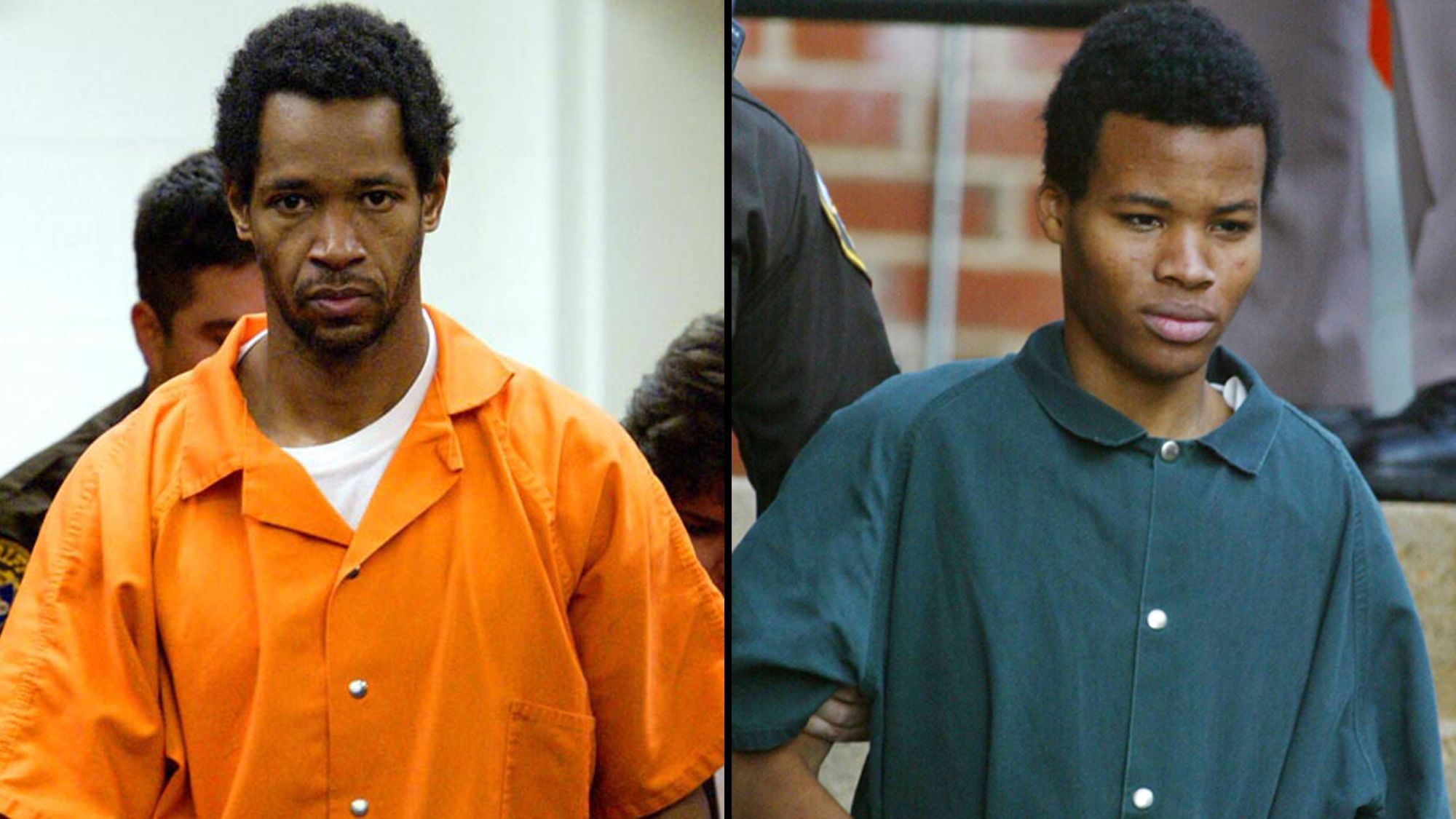
October 24, 2002: The Beltway Snipers Are Arrested

John Allen Muhammad (left) and Lee Malvo

October 24, 2002: The "Beltway Snipers," who killed 7 people in the Washington, D.C. area, are arrested.

John Allen Muhammad was 41 years old, and a native of Baton Rouge, Louisiana. He joined the Nation of Islam, dropping his birth name of John Allen Williams. In 1999, he kidnapped his children and took them to the Caribbean island nation of Antigua, apparently engaging in credit card and immigration document fraud.

It was during this time that he became close with Lee Boyd Malvo, who was living on Antigua with his mother. Then 17 and a native of Jamaica, he fell into a Svengali relationship with Muhammad, being converted to Islam and moved to Bellingham, Washington. There, he shoplifted a Bushmaster XM-15, an AR-15 style semi-automatic rifle.

At first, Muhammad was making Malvo shoot people connected with his ex-wife, Mildred Williams. On February 16, 2002, 21-year-old Keenya Nicole Cook was shot and killed by Malvo at the front door of her aunt's home in Tacoma, Washington. The aunt, Isa Nichols, had been good friends with John Allen Muhammad's ex-wife Mildred and had encouraged her to seek a divorce. This was the 1st of 9 shootings that the FBI later classified as "preliminary attacks": 3 in Maryland, 2 in Louisiana, and 1 each in Washington State, Arizona, Atlanta and Alabama.

Then came the series of shootings that became known as the Beltway Sniper attacks. A hole was cut at the rear of a blue 1990 Chevrolet Caprice driven by Muhammad and Malvo, as a firing port to be used during their attacks. This allowed them to remain hidden and escape the scene following their attacks.

On October 2, a shot was fired in Aspen Hill, Maryland, but it didn't hit anybody, and it was originally presumed to be random, before it was later compared to the other shootings. Just an hour later, in a supermarket parking lot in Wheaton, Maryland, James Martin was shot and killed.

The next morning, all within a span of 2 hours and 17 minutes, 4 people were killed in the Maryland suburbs of Washington, all in open areas where they were easy targets: A man at a car dealership in Rockville; a man at a gas station in Aspen Hill; a woman at in a shopping center parking lot in Norbeck; and a woman at a gas station in Kensington. That night, a man was killed outside a Target in the Shepherd Park neighborhood of Washington, D.C.

The next day, October 4, the pair of killers crossed the Potomac River into Virginia, and shot a woman in a mall parking lot in Spotsylvania. She survived. There were no shootings for 2 days, but on October 7, a 13-year-old boy was shot outside his school in Bowie, Maryland. He survived. On October 9, a man was shot and killed at a gas station in Manassas, Virginia. On October 11, a man was shot and killed at a gas station in Spotsylvania.

Charles Moose, Chief of the Montgomery County Department of Police, headed the investigation. Since more than one State was involved, he worked closely with the FBI even before one of their employees became a victim. On October 14, with the killers probably not realizing they were now messing with the wrong people, they shot a woman who was an FBI intelligence analyst in a shopping center parking lot in Falls Church, Virginia.

Just as a belief that the serial killer known as the Son of Sam was killing women with long blonde hair in New York in 1977, and women started tying their hair up or dying it, gas stations responded to these shootings by putting tarps up to conceal their customers, and some people crouched over while pumping their own gas.

It would take 5 more days before the shootings resumed. On October 19, a man was killed in a restaurant parking lot in Ashland, Virginia. At 90 miles, this was the furthest yet from downtown Washington. On October 22, a man was shot on his house steps in Aspen Hill.

Just after midnight on October 24, 2002, refrigerator mechanic Whitney Donahue called 911 at a rest stop off Interstate 70 near Myersville, Maryland. He said he saw a dark blue 1990 Chevrolet Caprice with New Jersey license plates, which matched the description that law enforcement had said they were looking for. At 3:19 AM, Muhammad and Malvo were found sleeping in their car, and were arrested on federal weapons charges.

The stolen Bushmaster rifle was found, and ballistics tests later conclusively linked it to 11 of the 14 shootings, including one in which no one was hurt. The Caprice was later discovered to have formerly been used as an undercover police car in Bordentown, New Jersey.

In total, Muhammad and Malvo were responsible for 27 people being shot, 17 of them fatally. There were 12 attacks in Maryland, 5 in Virginia, 2 in Louisiana, and 1 each in the District of Columbia, Washington State, Arizona, Georgia and Alabama.


In 2003, both defendants were convicted. Muhammad was sentenced to death, and was executed by lethal injection at Greensville Correctional Center in Virginia on November 10, 2009. As Malvo was legally a juvenile at the time of the shootings, he received 6 life sentences in Maryland and 3 in Virginia.

Charles Moose died in 2021. As of October 24, 2022, Mildred Muhammad, John Allen's ex-wife, is a motivational speaker and counselor, counseling people affected by crime, including the victims and the families of the perpetrators. Lee Malvo is serving multiple life sentences at Keen Mountain Correctional Center in Virginia. He is unlikely ever to be released alive. 

*

October 24, 2002 was a Thursday. This was also the day that Gary Lineker, former star soccer player for Leciester City Football Club, led a consortium to buy the team and save it from bankruptcy. the I have a separate entry for that event.

Game 5 of the World Series was played. The San Francisco Giants beat the team then known as the Anaheim Angels, 16-4. Jeff Kent hit 2 home runs. The most well-known moment in this game occurred in the bottom of the 7th inning, when Giants 1st baseman J.T. Snow scored off a Kenny Lofton triple. Three-year-old batboy Darren Baker, son of Giants manager Dusty Baker, ran to home plate to collect Lofton's bat before the play was completed, and was quickly lifted by the jacket by Snow with one hand as he crossed the plate, with David Bell close on his heels. Had Snow not acted quickly, Darren could have been seriously injured in a play at home plate.

The Giants were now 1 win away from winning the World Series for the 1st time in 1954, when they were still in New York. They would have to wait. Darren Baker was later drafted by the Washington Nationals as a 2nd baseman.

(UPDATE: In 2024, he played 9 games for the Nationals. These were his only major league games through the 2025 season.)

The NFL was in midweek. Two games were played in college football. Number 12 North Carolina State beat Clemson, 38-6 at Memorial Stadium in Clemson, South Carolina. And Colorado State beat Brigham Young University, 37-10 at Hughes Stadium in Fort Collins, Colorado.

The NBA season started 5 days later. There were 9 games in the NHL:

* The New York Islanders beat the Florida Panthers, 5-3 at the Nassau Coliseum.

* The Boston Bruins and the Ottawa Senators played to a tie, 2-2 at the FleetCenter (now the TD Garden) in Boston.

* The Philadelphia Flyers beat the Montreal Canadiens, 6-2 at the First Union Center (now the Xfinity Mobile Arena) in Philadelphia.

* The San Jose Sharks beat the Nashville Predators, 2-1 at the Gaylord Entertainment Center (now the Bridgestone Arena) in Nashville.

* The Minnesota Wild beat the Chicago Blackhawks, 3-2 at the United Center in Chicago.

* The Colorado Avalanche beat the Phoenix Coyotes, 3-2 at the American West Arena (now the Mortgage Matchup Center) in Phoenix.

* The Dallas Stars and the Calgary Flames played to a tie, 3-3 at the Saddledome in Calgary.

* The St. Louis Blues beat the Edmonton Oilers, 2-1 at the Skyreach Center (as the Northlands Coliseum was then known) in Edmonton.

* And the Vancouver Canucks and the Mighty Ducks of Anaheim played to a tie, 2-2 at General Motors Place (now the Rogers Arena) in Vancouver.) 

Saturday, October 1, 2022

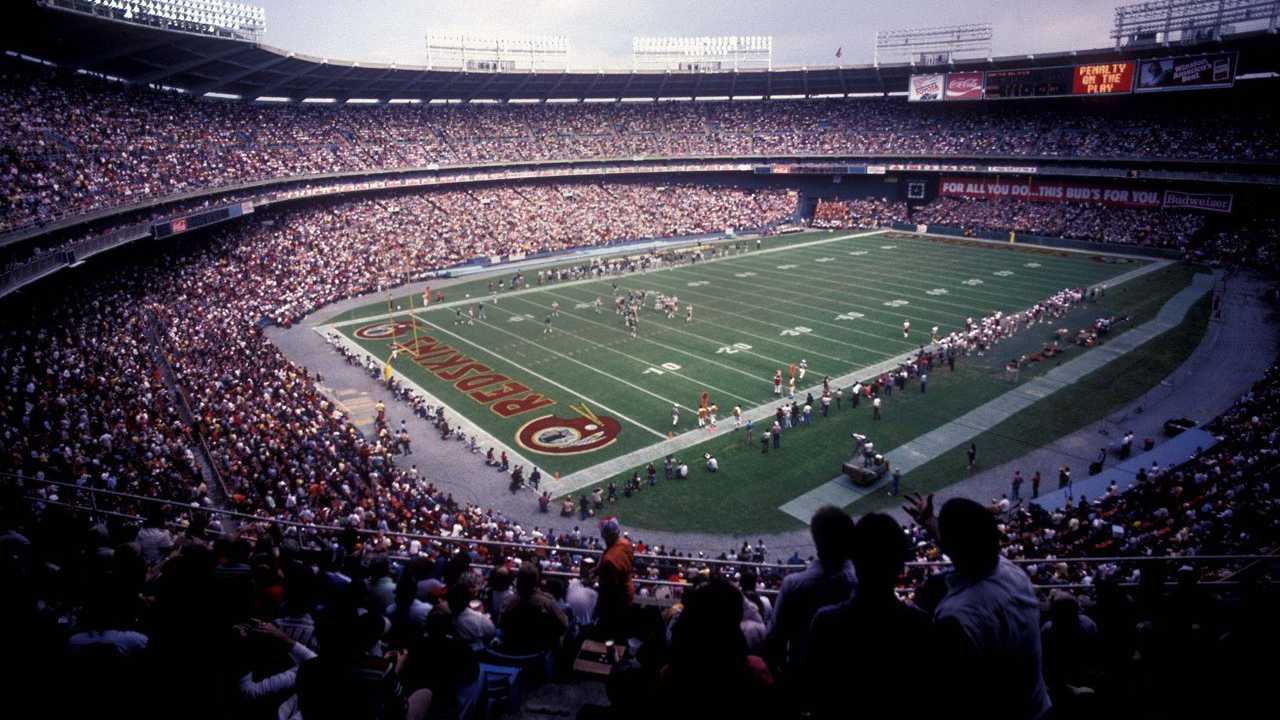
October 1, 1961: America's National Stadium

October 1, 1961: District of Columbia Stadium opens in Washington, D.C. The Washington Redskins lose to the New York Giants, 24-21.

As with most major American cities early in the 20th Century, the biggest stadiums were the baseball parks. The biggest stadiums built for football were on the campuses of State universities, which tended to be in or near State capitals, which were not necessarily the biggest city in their State.

In 1916, Representative George Hulbert, a Democrat, proposed the construction of a 50,000-seat "national stadium" -- not in New York City, where the Rochester native had practiced law, but in the nation's capital, Washington, D.C.. The idea was that it would host the 1920 Olympics, the Army-Navy football game, and Davis Cup tennis matches. It wasn't taken seriously.

Later, another Representative from New York, Representative Hamilton Fish III, and D.C.'s Director of Public Buildings and Parks, Ulysses S. Grant III -- the former's grandfather had been Secretary of State under the latter's grandfather -- decided to build a 100,000-seat national stadium, as a memorial to President Theodore Roosevelt, either on the island in the Potomac River that bore TR's name, or on the National Mall, as a bookend to the Lincoln Memorial. In addition to the preceding events, it was thought that Presidential Inaugurations could be held there. But Los Angeles won America's bid to host the 1932 Olympics, and, eventually, the National World War II Memorial became the Lincoln Memorial's bookend.

In 1944, a 9-man National Memorial Stadium Commission was appointed, and a site was chosen for a national stadium, next to the D.C. Armory, which opened in 1941, where East Capitol Street met the Anacostia River. But, with World War II still ongoing, getting Congress to fund a 100,000-seat stadium for the 1948 Olympics was impossible, and the Games were held in London.

In 1956, Representative Charles R. Howell, Democrat of New Jersey (I wasn't born yet, but, had I lived then where I live now, he would have been "my Congressman") proposed legislation funding a national stadium, after the National Capital Planning Commission re-proposed "the East Capitol Site."

Clark Griffith, longtime owner of baseball's Washington Senators, had recently died, leaving the team to his nephew, Calvin Griffith, and he didn't want to play at Griffith Stadium, a 27,000-seat stadium, expandable to only 35,000 for the NFL's Washington Redskins, and in a neighborhood that was growing increasingly black -- to the point where, after the ballpark was demolished, Howard University, the school known as "the Black Harvard," built its hospital on the site. It was thought that a national stadium could not only attract the Olympics and the Army-Navy Game, but save the Senators and Redskins from moving.

This time, Congress passed the District of Columbia Stadium Act, authorizing a 50,000-seat stadium, and President Dwight D. Eisenhower signed it into law on July 29, 1958. It was the 1st stadium built from scratch for both baseball and football -- up the Parkway, Baltimore repurposed the existing Municipal Stadium as Memorial Stadium for both sports in a conversion process from 1950 to 1954 -- and it opened in time for the Redskins to open the 1961 season there. (By a weird coincidence, both that stadium and DC/RFK Stadium would be built across the street from a school named Eastern High School.)

There was a snag, though: The Redskins were the last NFL team that hadn't racially integrated, and the stadium was on federal government property. When John F. Kennedy became President on January 20, 1961, he appointed Representative Stewart Udall of Arizona as Secretary of the Interior, overseeing the site. (Stew's brother, Morris "Mo" Udall, won his seat, and each of them had a son who went on to be elected to the U.S. Senate.) The Secretary told Redskins owner George Preston Marshall, a known racist, that he had to integrate the team, or he couldn't have D.C. Stadium. Marshall caved.

Griffith moved the Senators for the 1961 season, anyway, making them the Minnesota Twins. An expansion franchise was placed at Griffith Stadium for 1961, named the Washington Senators. D.C. Stadium became their home on April 9, 1962, and they beat the Detroit Tigers, 4-1. It hosted the 1962 and 1969 Major League Baseball All-Star Games. JFK threw out the ceremonial first ball at both Opening Day and the All-Star Game in 1962.
JFK is flanked by Vice President Lyndon Johnson
and White House aide Dave Powers. Also identifiable behind him:
Senators Hubert Humphrey, Everett Dirksen and Mike Mansfield;
and White House aide Larry O'Brien, later Chairman of the Democratic Party
(his offices at the Watergate were bugged in 1972) and NBA Commissioner.

On January 18, 1969, having served the entirety of the JFK and Lyndon B. Johnson Administrations, Secretary Udall announced that the stadium had been renamed Robert F. Kennedy Memorial Stadium, for JFK's brother and Attorney General, who had been elected to the Senate in 1964, had run for President in 1968, and, like JFK, had been assassinated. A formal rededication ceremony was held on June 7. (Most people dropped the "Memorial" when talking about it, and called it "RFK Stadium," or even just "RFK.")

On July 1, 1977, the Washington Metropolitan Area Transit Authority opened the Stadium-Armory subway station, serving RFK Stadium and the D.C. Armory on the Blue Line and the Orange Line, with the Silver Line later added. It was a bit of a walk, though: The station was at 19th and A Streets Southeast, a 10-minute walk from the Stadium, whose mailing address was 2400 East Capitol Street Northeast.

Not having subway access hurt the Senators, who left after the 1971 season, and, with a few exceptions such as preseason exhibitions and old-timers' games, baseball did not return until 2005. The Washington Nationals arrived, and remained through the 2007 season, then moved into Nationals Park.

The Redskins played there until 1996, building the NFL's most intimidating home-field advantage, reaching 4 Super Bowls, winning 3. Their last game there was on December 22, 1996, a 37-10 pasting of their arch-rivals, the Dallas Cowboys. Moving out to the far larger stadium in suburban Landover, Maryland turned the 'Skins from the team with the best home-field advantage in the NFL to the worst.
This seat would have been behind home plate
in the stadium's baseball configuration.
You can make out the dugouts.

Unlike most countries, the United States does not have an official "national stadium." RFK is the closest we come to it: Not only is it in the nation's capital, but it has hosted the national soccer team more times than any other venue, 24 times. (The Los Angeles Memorial Coliseum is 2nd, with 20; with the now-demolished Orange Bowl in Miami right behind, with 19.) Which become more amazing when you realize that the 1st such match wasn't until 1977, and the 2nd not until 1991. Why? Interest in the team was too low: RFK Stadium was too big for them until they reached the 1990 World Cup.

In those 24 matches, the U.S. won 15, lost 3, and drew 6. These matches include the 100th Anniversary match of the U.S. Soccer Federation, held on June 2, 2013, a 4-3 U.S. win over Germany. I was there -- it was hot and humid, and it had rained earlier -- and I took this photo.
This seat would have been in center field
in the stadium's baseball configuration.
Again, you can make out the dugouts.
After hosting the Washington Wolves and the Washington Diplomats of the old North American Soccer League, the latter including Dutch superstar Johan Cruyff, in 1996, RFK Stadium became the home of D.C. United, a charter team in Major League Soccer. It continued to be DCU's home through the 2017 season, after which they moved into Audi Field. DCU won the MLS Cup while playing there in 1996, 1997, 1999 and 2004, with the MLS Cup Final being played there in 1997, 2000 and 2007.
The last event at RFK Stadium was on October 22, 2017, a 2–1 D.C. United loss to the New York Red Bulls. It has been announced that RFK Stadium will be demolished in 2021. The 1st of the multi-purpose oval stadiums built in America in the 1960s, '70s and '80s, it is one of the last to still be standing. The only one still in use is the Oakland Coliseum, although the Astrodome is still standing.
In the 2014 film X-Men: Days of Future Past, Erik Lensherr, a.k.a. the supervillain Magneto (played in the flashback sequences by Michael Fassbender, and as an old man by Ian McKellen), ripped the circular stadium off its foundation, levitated it, and moved it across town, surrounding the White House, with the intention of killing President Richard Nixon. He failed. Computer-generated imagery was used to simulate the stadium's appearance in 1973, complete with period-appropriate advertising.
UPDATE: Demolition was delayed until 2025. That year, the District, the NFL, and the renamed Washington Commanders agreed on a deal to built a new stadium on the site, intending to open it in time for the 2030 season.
In "death," RFK Stadium still holds the record for most times hosting the U.S. Men's National Team (USMNT), with 24. The L.A. Coliseum is still 2nd, with 20. But Dignity Health Sports Park, in the Los Angeles suburb of Carson, California, has tied the Orange Bowl for 3rd, with 19. The Landover replacement for RFK Stadium, currently named Northwest Stadium? Only 2.
*
October 1, 1961 was a Sunday. This was also the day that television network CTV went on the air in Canada. I have a separate entry for that event.
These other games were played in the NFL:
* The football version of the St. Louis Cardinals beat the Philadelphia Eagles, 30-27 at Franklin Field in Philadelphia.
* The Baltimore Colts beat the Minnesota Vikings, 34-33 at Memorial Stadium in Baltimore.
* The Cleveland Browns beat the Dallas Cowboys, 25-7 at Cleveland Municipal Staidum.
* The San Francisco 49ers beat the Detroit Lions, 49-0 at Tiger Stadium in Detroit.
* The Green Bay Packers beat their arch-rivals, the Chicago Bears, 24-0 at Green Bay City Stadium (later renamed Lambeau Field).
* And the Los Angeles Rams beat the Pittsburgh Steelers, 24-14 at the Los Angeles Memorial Coliseum.
In the American Football League:
* The New York Titans beat the Boston Patriots, 37-30 at the Polo Grounds. The Titans became the Jets in 1963, and the Patriots became the New England Patriots in 1971.
* The Dallas Texans beat the Houston Oilers, 26-21 at the Cotton Bowl in Dallas. The Texans became the Kansas City Chiefs in 1963, and the Oilers became the Tennessee Titans in 1999.
* The Oakland Raiders beat the Denver Broncos, 33-19 at Candlestick Park in San Francisco. The Raiders wouldn't actually play a game in Oakland until 1962, moved to Los Angeles in 1982, moved back to Oakland in 1995, and moved to Las Vegas in 2020.
* And, the day before, the San Diego Chargers beat the Buffalo Bills, 19-11 at War Memorial Stadium in Buffalo. This was the Chargers' 1st game as a San Diego team, after spending the AFL's founding year of 1960 in Los Angeles. They returned to Los Angeles in 2017.
And it was the last day of baseball's regular season:
* The New York Yankees beat the Boston Red Sox, 1-0 at Yankee Stadium. The only run of the game came in the 4th inning, when Roger Maris hit his record-breaking 61st home run of the season, off Tracy Stallard. Bill Stafford (3 hits over 6 innings), Hal Reniff (a perfect 7th) and Luis Arroyo (1 hit over 2) combined on a 4-hit shutout. I have a separate entry for this game.
* The St. Louis Cardinals beat the Philadelphia Phillies, 2-0 at Connie Mack Stadium in Philadelphia. Bob Gibson pitched a 6-hit shoutout. Stan Musial appeared only as a pinch-hitter, and did not reach base.
* The Pittsburgh Pirates beat the Cincinnati Reds, 3-1 at Forbes Field in Pittsburgh. Roberto Clemente did not play. Frank Robinson went 0-for-2 with a walk. Despite this game, the Reds had dethroned the Pirates as National League Pennant winners, and would face the Yankees in the World Series. The Yankees won in 5 games.
* The Los Angeles Dodgers beat the Chicago Cubs, 8-2 at Wrigley Field in Chicago. Ernie Banks went 1-for-4 with an RBI. Duke Snider drew a walk as a pinch-hitter.
* A doubleheader was split at Milwaukee County Stadium. The San Francisco Giants won the opener, 8-2. The Milwaukee Braves won the nightcap, 3-2. Al Spangler singled Hank Aaron home with the winning run in the bottom of the 10th inning. Over the 2 games, Aaron went 4-for-9, and Willie Mays went 3-for-7 with a home run and 3 RBIs.
* The Detroit Tigers beat the Minnesota Twins, 8-3 at Metropolitan Stadium in the Minneapolis suburb of Bloomington, Minnesota. Norm Cash hit a home run, and Al Kaline had an RBI double as a pinch-hitter. This was the Tigers' 101st win of the year, but the Yankees won 109 to take the American League Pennant.
For the Twins, completing their 1st season after being "the old Washington Senators," Harmon Killebrew went 0-for-3 with a walk, and relief pitcher Pedro Ramos hit a home run, 1 of 3 he hit on the season, and 1 of 15 he hit in a surprisingly powerful career for a pitcher who was mainly a reliever.
* The Kansas City Athletics beat "the new Washington Senators," 3-2 at Kansas City Municipal Stadium.
* After providing a venue for the Pacific Coast League's Los Angeles Angels from 1925 through 1957, and the major league expansion team with the same name this season, the West Coast version of Wrigley Field hosts its last professional baseball game. The Halos are defeated by the Cleveland Indians, 8-5 in front of 9,868 fans. Wrigley West will be torn down in 5 years, to make room for an eventual public playground and senior center.
* And the Baltimore Orioles and the Chicago White Sox completed their seasons the day before, against each other, with the O's winning, 4-3 at Memorial Stadium in Baltimore.

Friday, September 30, 2022

September 30, 1971: The Washington Senators' Riotous Farewell

September 30, 1971: The last Washington Senators game is played, against the New York Yankees at Robert F. Kennedy Memorial Stadium in Washington. Team owner Bob Short, having already moved the NBA's Minneapolis Lakers to Los Angeles in 1960, has announced he's moving the Senators to the Dallas area, to become the Texas Rangers. He complains about the low attendance, despite having the highest ticket prices in the American League, and no subway access to RFK Stadium. (Washington's Metro would not open until 1976.)
Frank Howard, the Senators' most popular player in their 2nd go-around of 1961-71, hits the last home run. Dick Bosman starts, and stands to be the winning pitcher, as the Senators lead 7-5 with 1 out left in the 9th. All he has to do is get Bobby Murcer out.
Frank Howard

But he can't, through no fault of his own. Angry fans from the "crowd" of 14,461 people storm the field. The umpires cannot restore order, and they forfeit the game to the Yankees. The next April, Bosman also started the team's 1st game as the Rangers.
Only 2 AL games have been forfeited since, both promotions that turned into fiascos: The Cleveland Indians' Ten-Cent Beer Night in 1974, and the Chicago White Sox' Disco Demolition Night in 1979. Rusty Torres, who turned 23 on this day, was also in uniform on each of those occasions.
That last season had been a difficult one for the Senators, even before the move was announced. Ted Williams had been named their manager in 1969, and the man who literally wrote the book on hitting (The Science of Hitting, published the next year) really improved their hitting, to the point where the Senators won 86 games. It was the best season in Washington baseball since 1945, when the original Senators, who moved to become the Minnesota Twins in 1961 and were replaced by this expansion team, won 87 and missed the Pennant by a game and a half.
But the Boston Red Sox legend couldn't improve the pitching, and soon, the hitters stopped listening to his authoritarian ways. The Senators won only 70 games in 1970. In 1971, they traded for Denny McLain, the former 2-time Cy Young Award winner whose shoulder injury and bad attitude rendered him nearly useless; and the rights to Curt Flood, who had refused to accept a trade from the St. Louis Cardinals to the Philadelphia Phillies, but was willing to come back and play in Washington, and was so rusty after sitting 1970 out that he had to retire.
The Senators won just 63 games, and while a solid core of fans missed them, the D.C. metropolitan area as a whole did not. As Richard Nixon, President at the time, was quoted as saying, "All anybody cares about in Washington is the Redskins." And since the Redskins won the NFC Championship in 1972, and stayed contenders for the next 20 years, this was one time when Nixon was right.
In 1973, the NBA's Baltimore Bullets moved down the Baltimore-Washington Parkway, and were successful for the next 10 years, including a Championship in 1978. The 1970s also saw a renaissance in basketball at the University of Maryland, located outside the District of Columbia, but inside the Capital Beltway.
In 1974, the NHL introduced the Washington Capitals, and, while they were terrible their first few years, they have usually been contenders since the mid-1980s. The 1980s also saw the rise of the basketball team at Georgetown University.
In 1984, President Ronald Reagan went to the MLB city closest to Washington at the time, Baltimore, and threw out the ceremonial first ball before the Orioles' home opener, restoring the old Washington tradition. Although the Orioles fell into decline after a generation of winning, including 3 World Series wins (including 4 Pennants from 1966 to 1971, which took many Maryland fans away and, indirectly, helped to doom the Senators), Washington insiders began making the trip up the Baltimore-Washington Parkway, and the Orioles became D.C.'s team as well as Baltimore's.
The Orioles' 1989 Playoff run, though ultimately unsuccessful, increased interest from Washington area fans. The building of Oriole Park at Camden Yards in 1992 moved them just 4 miles, but it also put them next to Interstate 95, the Baltimore-Washington Parkway, and Camden Station, all with access to D.C.
This whetted capital-area baseball appetites even more, and led to the 2004-05 move of the Montreal Expos, becoming the Washington Nationals. They played the 2005, '06 and '07 seasons at RFK Stadium before moving to Nationals Park. Being in the other League means their rivalry with the Orioles isn't as nasty as Yankees-Red Sox, Dodgers-Giants, or even Cubs-Cardinals. The fact that the teams are partners in the Mid-Atlantic Sports Network (the O's own 77 percent of MASN, and the Nats 23 percent) also helps.
The Nats finally started making the Playoffs in 2012, the 1st postseason for a Washington baseball team since the 1933 Senators, unless you count the Homestead Grays of the Negro Leagues, who split their "home games" between Washington and Pittsburgh. And in 2019, the Nats won the World Series, the 1st such win for Washington since the 1924 Senators.
The last active player for the "New Senators" was Toby Harrah, who played until 1986. The last active player for the "Old Senators," who became the Minnesota Twins in 1961, was Jim Kaat, who pitched until 1983.
*
September 30, 1971 was a Thursday. These 8 other Major League Baseball games were played that day:
* The New York Mets beat the St. Louis Cardinals, 6-1 at Shea Stadium. Tom Seaver gets the win, his 20th of the season, and will go on to win his 2nd Cy Young Award. A young right fielder named Ken Singleton, who had grown up in New York as a Met fan, hits 2 home runs. But he will become better known for playing for the Baltimore Orioles, and broadcasting for the Yankees.
No one knows it at the time, but this is the last game the Mets will play with Gil Hodges as their manager. At the end of Spring Training in 1972, he suffers a heart attack and dies, not quite 48 years old.
* The Chicago Cubs beat the Montreal Expos, 5-3 at Jarry Park in Montreal. The retiring Ernie Banks played his last game with the Cubs 4 days earlier.
* The Pittsburgh Pirates beat the Philadelphia Phillies, 4-3 at Veterans Stadium in Philadelphia. Roberto Clemente and Willie Stargell both went 1-for-4.
* The Atlanta Braves beat the Cincinnati Reds, 6-2 at Atlanta Stadium (later Atlanta-Fulton County Stadium). Pete Rose went 1-for-4. Both the Reds' Johnny Bench and the Braves' Hank Aaron got the day off.
* The San Francisco Giants beat the San Diego Padres 5-1, at what was then named San Diego Stadium. (It was later renamed Jack Murphy Stadium, Qualcomm Stadium, and SDCCU Stadium.) The Giants thus clinch the National League Western Division title. This turns out to be their only postseason berth between 1962 and 1987.
* The Chicago White Sox beat the Milwaukee Brewers, 2-1 at Comiskey Park in Chicago.
* The California Angels beat the Minnesota Twins, 3-2 at Metropolitan Stadium in the Minneapolis suburb of Bloomington, Minnesota.
* And the Los Angeles Dodgers beat the Houston Astros, 2-1 at Dodger Stadium in Los Angeles.
And actress Jenna Elfman was born.

December 31, 1999 & January 1, 2000: The Millennium

December 31, 1999:  The Millennium arrives. The people of planet Earth survived. At a terrible cost. But we hadn't destroyed ourselves. ...