
January 10, 1917: The Sentinels of Liberty, a group of "suffragettes," advocating for American women to be granted the right to vote, begins protesting in front of the White House in Washington. They were the 1st political group to directly picket the President of the United States at the White House.
Though they march and hold up signs marked with messages supporting their causes, they do no chanting. One of them, Harriot Stanton Blach, daughter of the late women's rights activist Elizabeth Cady Stanton, nicknamed them "the Silent Sentinels."
Organized by Alice Paul, then widely seen as the successor to Mrs. Stanton (who died in 1902) and Susan B. Anthony (who died in 1906) as the leader of the "women's suffrage movement," over 2,000 of them engaged in this nonviolent protest. They began doing so after a meeting between their representatives, including Paul, with Wilson on January 9, during which he told them that they should "concert public opinion on behalf of women's suffrage."

Alice Paul
At first, the picketers were tolerated, but they were later arrested on charges of obstructing traffic. Given the amount of automobiles in Washington at the time, this charge was ridiculous. Nearly 500 women were arrested, and 168 served jail time. In solidarity with other activists in her organization, Paul purposefully strove to receive the seven-month jail sentence. In her case, it started on October 20, 1917 at the District Jail.
Whether sent to the District Jail or the Occoquan Workhouse in nearby Lorton, Virginia (now the Lorton Correctional Complex, still a holding center for D.C. prisoners despite being in Virginia), the women were given no special treatment as political prisoners. They had to live in harsh conditions with poor sanitation, infested food, and dreadful facilities.
In protest of the conditions at the District Jail, Paul began a hunger strike. This led to her being moved to the prison's psychiatric ward, and being force-fed raw eggs through a feeding tube. "Seems almost unthinkable now, doesn't it?" Paul told an interviewer from American Heritage magazine when asked about forced feeding in 1974, "It was shocking that a government of men could look with such extreme contempt on a movement that was asking nothing except such a simple little thing as the right to vote."
On November 14, 1917, the suffragists who were imprisoned at Occoquan endured brutality allegedly endorsed by prison authorities, which became known as "the Night of Terror." There were beatings, chokings, draggings, and hanging from chains by the arms. However, no sexual assaults against these women have ever been alleged. One physician reported that Alice Paul had "a spirit like Joan of Arc, and it is useless to try to change it. She will die but she will never give up."
The National Woman's Party (NWP) went to court to protest the treatment of the women such as Dorothy Day, Lucy Burns, Dora Lewis, and Alice Cosu, Lewis' cellmate in Occoquan Prison, who suffered a heart attack at seeing Dora's condition.
The women were later moved to the District Jail. On November 27 and 28, all the suffragists were released from prison. Within two months, Wilson announced a bill on women's right to vote.
The irony was that there was little that the President could do about the situation. Wilson did eventually lobby Congress to pass an Amendment to the Constitution of the United States. But the President cannot sign an Amendment into law: It becomes law when two-thirds majorities of each house of Congress, and then majorities of the legislatures of three-quarters of the States (at the time, 36 out of 48), ratify it. The 19th Amendment was ratified by the U.S. House of Representatives on May 21, 1919; by the U.S. Senate on June 4, 1919, at which point the Sentinels finally stopped their protest; and by a 36th States, Tennessee, on August 18, 1920. It was certified as adopted by the U.S. Department of State on August 26, 1920.
Alice Cosu was said to be older than any of the Sentinels, and history loses track of her after 1917: I can find no information on her after that. Dora Lewis, also older than most of the Sentinels, lived until 1928; Harriot Stanton Blach, until 1940; Lucy Burns, until 1966; Alice Paul, until 1977; and Dorothy Day, until 1980. Paul and Day lived to see some of the gains of what became known as "second-wave feminism."
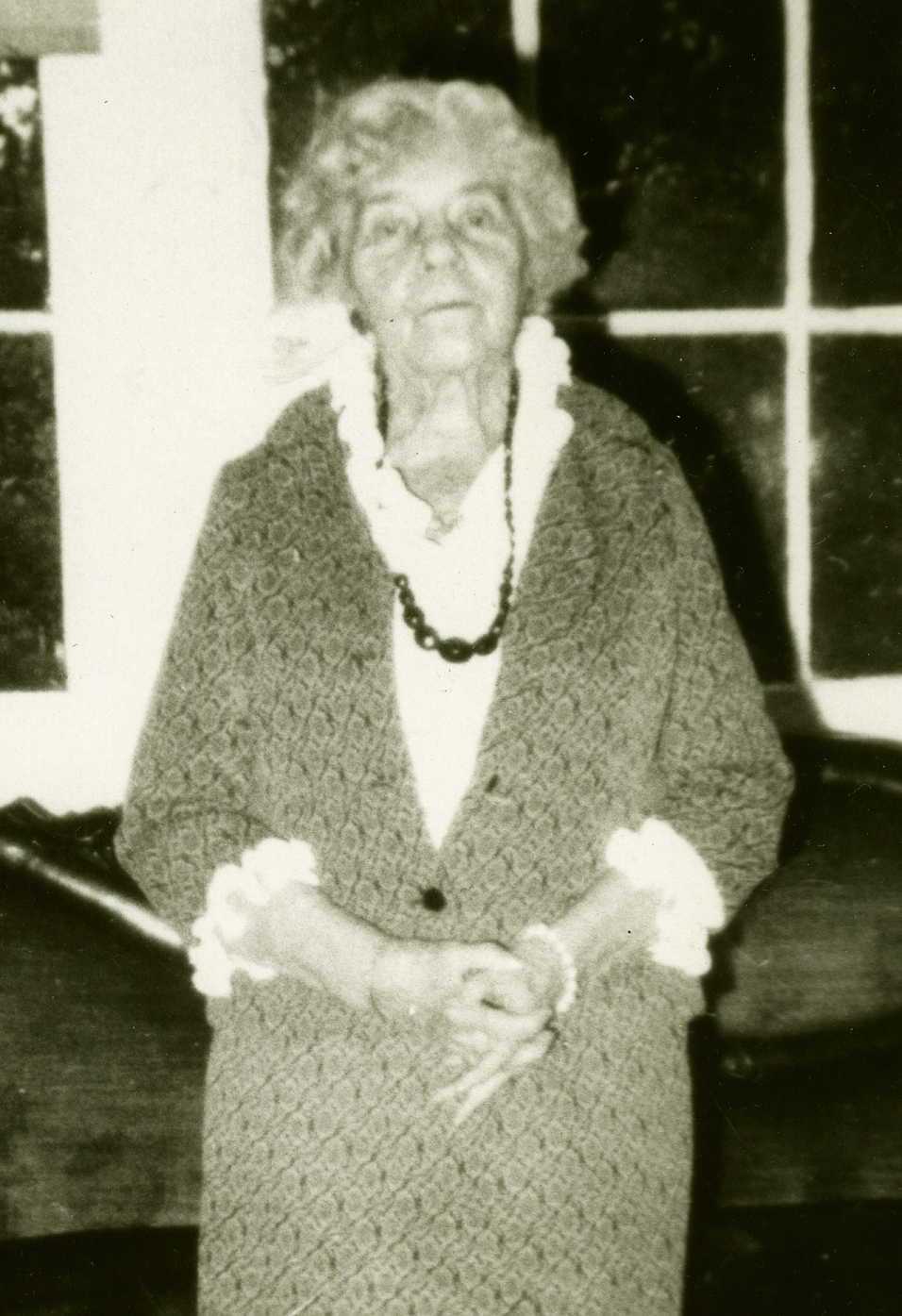
Alice Paul, photo dated 1965
On January 21, 2017, the day after Donald Trump first became President, 100 years to the month after the Sentinels' vigil began, there was a large women's rights protest in Washington. Some of the demonstrators showed up dressed as 1917-20 suffragettes.

I seriously doubt that Alice Paul would have permitted
profanity on her group's picket signs. But if the slogan fits...
*
January 10, 1917 was a Wednesday. This was also the day the Shackleton Expedition got home without losing a man. I have a separate entry for this event.
Baseball and football were out of season. Professional basketball barely existed. This was the last season of the National Hockey Association. One of its teams was a military team, the Toronto 228th Battalion, taking the place of the disbanded Toronto Shamrocks, and with a roster of professional players. On this day, the Montreal Canadiens beat them, 6-1 at the Montreal Arena (a.k.a. the Westmount Arena). The 228th were coached and captained by Howard McNamara, who had played for both the Canadiens and the Shamrocks.
Also on this day, the Quebec Bulldogs beat the Ottawa Senators, 5-4 at the Quebec Arena. And the Toronto Blueshirts beat the Montreal Wanderers, 9-4 at the Mutual Street Arena in Toronto.


