Showing posts with label frank sinatra. Show all posts

Sunday, December 11, 2022

December 11, 1992: The End of the Big Band Era

William B. Williams

December 11, 1992: Perhaps it was fitting that the end of the era of "Big Band" music came while George H.W. Bush, the last President who served in World War II, was a "lame duck," and Bill Clinton, the 1st President born after The War, and the 1st President to grow up in the Rock and Roll Era, was President-elect.

Radio station WNEW debuted February 13, 1934, as "New York's newest radio station," at 1280 on the AM dial, and with new call letters representing its city of license: "NEWark, NEW Jersey."

In 1935, WNEW moved into a new studio in New York, at 501 Madison Avenue at 53rd Street. That year, pioneered the concept of a disc jockey when staff announcer Martin Block needed to fill time between news bulletins during his coverage of the trial of Bruno Hauptmann, accused (and eventually convicted) of kidnapping Charles Lindbergh Jr., a.k.a. "The Lindbergh Baby." Block did not have access to a live orchestra to play music during the breaks, as most network stations did, so he played records instead.

Soon afterward, he piloted a 15-minute experimental show called the Make Believe Ballroom, during which he played records from popular bands and singers, posed as a live performance in an imaginary ballroom. During Block's tenure as host of Make Believe Ballroom, the show attracted 25 percent of the listening audience in New York City.
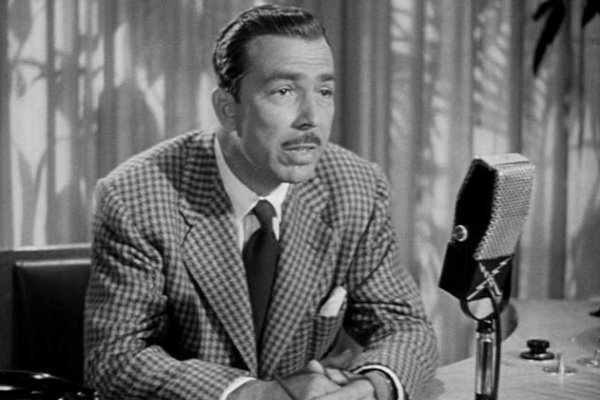
Martin Block

Thus did WNEW -- its call letters eventually redefined, with retroactive irony, as "the NEWest thing in radio" -- become known for its popular adult music selection, as well as its staff of radio personalities including Block, Dee Finch, Gene Klavan, Al "Jazzbo" Collins, Ted Brown, William B. Williams, and, from 1948 to 1952, future TV game show host Gene Rayburn. From 1935 to 1959, its general manager was a woman, a rarity for that era: Bernice Judis.

In addition to its music and entertainment programming, WNEW featured an award-winning news staff and became "The Voice of New York Sports," for broadcasting games of the NFL's New York Giants, the NBA's New York Knicks, and the NHL's New York Rangers.

As an independent radio station, WNEW lacked the funds larger networks like NBC, CBS and Mutual Broadcasting System used to produce daily programming, such as comedy shows, soap operas, game shows and dramatic programs. However, Judis was not discouraged, and welcomed the opportunity to develop her own schedule of innovative programming that included creating the first all-night radio show, dubbed Stan Shaw's Milkman's Matinee, and cultivating a line-up of popular morning radio show personalities.

On November 12, 1941, WNEW moved to 1130 on the AM dial, where it remained. In 1957, the DuMont Broadcasting Company, having given up the ghost on television, tried to expand its radio base, and bought WNEW, making it a sister station of their TV station, WADB (named for founder Allen B. DuMont) on Channel 5. In 1958, DuMont was bought out by Metromedia, and Channel 5's call letters were changed to reflect the flagship radio station, WNEW.

The rise of rock and roll in the mid-1950s led some stations to change their formats, including New York's WINS, WMCA and WABC. Not WNEW: They continued to play popular adult standards, or softer hits from the current charts. People called them "Middle of the Road," or "MOR for short -- and while young rock and roll fans considered this an insult, grownups and the WNEW staff and executives did not. Martin Block kept playing it until his death in 1967.

By 1972, some radio stations, like WCBS-FM, were treating early rock and roll, from the mid-1950s to the early 1960s, essentially the pre-Beatles era, as "oldies." But WNEW kept on playing songs from the Big Band Era, the late 1920s (when it replaced "Tin Pan Alley") to the late 1950s (when rock and roll fully took over).

I remember a TV commercial with a woman dressed like a showgirl, complete with top hat and cane, dancing around a stage, with names of old-time bandleaders hung on a stage behind her. Nearly all of them were already dead. The refrain of her song was "Where the music is king!" (As if it wasn't on other stations?")

One of my grandmothers, who grew up on that kind of music, kept her radio on in her house, always tuned to 1130, no matter what, until her death. (The other grandmother was younger, but she liked music even older than that, the kind that Guy Lombardo and Mitch Miller played.)

But, as that story suggests, the core audience for WNEW was dying of old age. Symbolizing this, William B. Williams, who was to Big Band what "Cousin" Brucie Morrow was to early rock and roll, and appeared in some of the station's commercials, died in 1986. They began a "Sundays with Sinatra" show, trying to get the people who may have listened to both early rock and Frank Sinatra's peak music in the 1950s, hoping to peel off some people now in their 50s and 60s.

But Williams wasn't the only departure in 1986: Fox Broadcasting Company bought WNEW-Channel 5, converting it into a Fox Network station and switching the call letters to WNYW. In 1988, Metromedia sold WNEW 1130 to Westwood One. They convinced Larry King to do an overnight show, since he grew up on the Big Band music. This didn't work, so they went back to their 1960s format of playing softer songs current to that era. That alienated both those artists' fans and the station's aging fans, and they backed off from it in 1991.

Finally, on August 15, 1992, Westwood One sold the station to Michael Bloomberg's company, Bloomberg L.P. As a fan of that kind of music, but more a fan of business-themed programming on both radio and television, Bloomberg gave them a chance to say goodbye. On December 11, 1992, at 8:15 PM, with several former WNEW personalities by his side, Mark Simone played the last song: Sinatra's version of the World War II song "We'll Meet Again."

The station became WBBR, and remains at 1130 AM, broadcasting business news and business-themed talk shows.

A few Big Band Era performers outlived the station. Sinatra lived until 1998. The last of the old Big Band leaders, Artie Shaw, lived until 2004, having lived long enough to sit for an interview with Ken Burns for his 2001 documentary miniseries Jazz.

*

December 11, 1992 was a Friday. This was also the day the film version of Aaron Sorkin's play A Few Good Men premiered. I have a separate entry for that event.

Baseball was out of season. Football was in midweek. There were 8 games played in the NBA:

* The Seattle SuperSonics beat the Boston Celtics, 100-90 at the Boston Garden.

* The Los Angeles Clippers beat the Philadelphia 76ers, 125-110 at The Spectrum in Philadelphia. Jeff Hornacek led all scorers on the night with 36 in defeat for the Sixers.

* The Atlanta Hawks beat the Denver Nuggets, 112-107 in overtime at The Omni in Atlanta. Dominique Wilkins scored 33 points.

* The Phoenix Suns beat the Orlando Magic, 108-107 at the Orlando Arena.

* The Detroit Pistons beat the Cleveland Cavaliers, 107-103 at The Palace in the Detroit suburb of Auburn Hills, Michigan.

* The Houston Rockets beat the Chicago Bulls, 110-96 at the Chicago Stadium.

* The Los Angeles Lakers beat the Washington Bullets, 118-93 at The Forum outside Los Angeles in Inglewood, California.

* And the Indiana Pacers beat the Portland Trail Blazers, 134-124 in double overtime at the Veterans Memorial Coliseum in Portland. Detlef Schrempf scored 32 for the Pacers.

And there were 6 games in the NHL:

* The New York Rangers beat the Tampa Bay Lightning, 5-4 at the ThunderDome (now Tropicana Field) in St. Petersburg, Florida.

* The New Jersey Devils beat the Pittsburgh Penguins, 2-1 at the Brendan Byrne Arena at the Meadowlands.

* The Washington Capitals beat the Winnipeg Jets, 8-6 at the Capital Centre in the Washington suburb of Landover, Maryland. Teemu Selänne scored a hat trick in defeat for the Jets.

* The Calgary Flames beat the Toronto Maple Leafs, 6-3 at Maple Leaf Gardens in Toronto.

* The Buffalo Sabres beat the Hartford Whalers, 9-3 at the Buffalo Memorial Auditorium.

* And the Detroit Red Wings beat the Philadelphia Flyers, 4-2 at the Joe Louis Arena in Detroit.

Thursday, December 8, 2022

December 8, 1963: Frank Sinatra Jr. Is Kidnapped

December 8, 1963: Given the people he is alleged to have known, kidnapping Frank Sinatra's son was only slightly less stupid than kidnapping Liam Neeson's daughter in the 2008 film Taken. And yet, it happened.

Frank Sinatra Jr. is kidnapped.

Frank Sinatra had 3 children, all with his 1st wife, Nancy Barbato: Nancy Sandra Sinatra, born on June 8, 1940 in Jersey City, New Jersey, next-door to Frank's hometown of Hoboken; Francis Wayne Sinatra, a.k.a. Frank Sinatra Jr., born on January 10, 1944 in Jersey City; and Christina Sinatra (no middle name), a.k.a. Tina, born on June 28, 1948 in Los Angeles.

Because of Frank Sr.'s traveling, the children did not see him much growing up. Nevertheless, Nancy Jr. and Frank Jr. both wanted to be entertainers themselves. In 1960, Nancy Jr. married singer Tommy Sands, and was also involved in Frank Sr.'s TV special with Elvis Presley. She later made a film with him, Speedway -- not one of his good ones.

On December 8, 1963, Frank Jr., only 19 years old, was kidnapped from Room 417 at Harrah's Lake Tahoe in Nevada, and held for ransom. He was released 2 days later, after his father paid the $240,000 ransom demanded by the kidnappers -- about $2.3 million in 2022 money. Frank Sr. had offered $1 million, but the kidnappers declined the larger offer.

The kidnappers demanded that all communication be conducted by public telephone. During these conversations, Frank Sr. became concerned that he would not have enough coins, which prompted him to carry 10 dimes with him at all times for the rest of his life.

Frank Jr. was taken to Los Angeles, and released. He was found in Bel Air after walking a few miles and alerting a security guard. To avoid the press, he was put in the trunk of the guard’s patrol car and taken to his mother Nancy’s home. He described what he knew to FBI agents, but he had barely seen two of the kidnappers, and only heard the voice of the third conspirator.

In a 2002 interview with radio show host Ira Glass, the mastermind of the kidnapping, Barry Keenan, said that he initially intended to earn back the ransom over years, and pay it back to Frank Sr. His co-conspirators were Joe Amsler, like him 23 years old, and a high school classmate; and Johnny Irwin, a 42-year-old house painter.

Irwin broke first, spilling the beans to his brother, who called the FBI office in San Diego. Hours later, Keenan and Amsler were captured, and nearly all of the ransom was recovered.

Keenan was sentenced to life plus 75 years in prison, but was later adjudged to have been legally insane at the time of the crime, and hence not legally responsible for his actions. Each kidnapper served only 4 1/2 years.

Keenan went on to become a successful real estate developer, and died in 2022. Amsler died in 2006. I can find no evidence of whether Irwin is still alive as of December 8, 2022, but, if he is, he would be 91 years old.

Shortly after his release, Frank Jr. was hired as the vocalist for Sam Donahue's band. He also learned a lot about music and its business while working with Duke Ellington, a friend of his father's. He built his own band and appeared in Las Vegas, and crowds came to see him, knowing full well which Frank Sinatra they were seeing. Like his father, he turned to acting; like his father, he played men on each side of the law, including 3 episodes of Adam-12 as Officer Tom Boyd.

He never achieved the fame of his father Francis Albert, or even that of his sister Nancy. Musically speaking, though the man billed as Frank Sinatra Jr. may have been the most talented one in the family, to the point where, in 1988, Ol' Blue Eyes asked him to conduct his orchestra. As Rod McKuen put it:

As the senior Sinatra outlived one by one all of his conductors and nearly every arranger, and began to grow frail himself, his son knew he needed someone that he trusted near him. [Frank Jr.] was also savvy enough to know that performing was everything to his dad and the longer he kept that connection with his audience, the longer he would stay vital and alive.

In 1997, Frank Jr. was offered the role of holographic Las Vegas lounge singer Vic Fontaine on Star Trek: Deep Space Nine. He was a Trekkie, but he turned the role down, saying that he only wanted to play an alien. The role went to a contemporary of his, James Darren. In 2000, Frank Jr. played himself in an episode of The Sopranos, not objecting when Paul "Paulie Walnuts" Gualtieri called him "the Chairboy of the Board."
Francis Albert Sinatra died in 1998. Among the items he was buried with in Palm Springs, California were a bottle of Jack Daniel's whiskey, a pack of Camel cigarettes, a Zippo lighter, cherry Life Savers, Tootsie Rolls, a dog biscuit, and 10 dimes.
Francis Wayne Sinatra died in 2016. His sisters Nancy and Tina are still alive. Of Frank's descendants, only Nancy's daughter, A.J. Lambert, now 49, performs in his style.

*

December 8, 1963 was a Sunday. These games were played in the NFL:

* The New York Giants beat the Washington Redskins, 44-14 at Yankee Stadium.

* The Baltimore Colts beat the Minnesota Vikings, 41-10 at Memorial Stadium in Baltimore.

* The Detroit Lions beat the Cleveland Browns, 38-10 at Tiger Stadium in Detroit.

* The Chicago Bears beat the San Francisco 49ers, 27-7 at Wrigley Field in Chicago.

* The football version of the St. Louis Cardinals beat the Philadelphia Eagles, 38-14 at the 1st Busch Stadium, formerly the last Sportsman's Park, in St. Louis.

* The Pittsburgh Steelers beat the Dallas Cowboys, 24-19 at the Cotton Bowl in Dallas.

* And the night before, the Green Bay Packers beat the Los Angeles Rams, 31-14 at the Los Angeles Memorial Coliseum.

In the American Football League:

* The New York Jets lost to the Buffalo Bills, 45-14 at War Memorial Stadium in Buffalo.

* The Boston Patriots lost to the Houston Oilers, 46-28 at Jeppesen Stadium (later Robertson Stadium) in Houston.

* The Kansas City Chiefs beat the Denver Broncos, 52-21 at Kansas City Municipal Stadium.

* And the Oakland Raiders beat the San Diego Chargers, 41-27 at Frank Youell Field in Oakland.

There were 2 games in the NBA. The Philadelphia 76ers beat the Cincinnati Royals, 126-116 at the Cincinnati Gardens. And the San Francisco Warriors beat their arch-rivals, the Los Angeles Lakers, 114-112 at the Los Angeles Memorial Sports Arena.

And the NHL's entire "Original Six" were in action:

* The New York Rangers and the Boston Bruins played to a tie, 2-2 at the old Madison Square Garden.

* The Toronto Maple Leafs beat the Detroit Red Wings, 5-3 at the Olympia Stadium in Detroit.

* And the Chicago Black Hawks beat the Montreal Canadiens, 3-0 at the Chicago Stadium.

Monday, November 28, 2022

November 28, 1966: Truman Capote's Black and White Ball

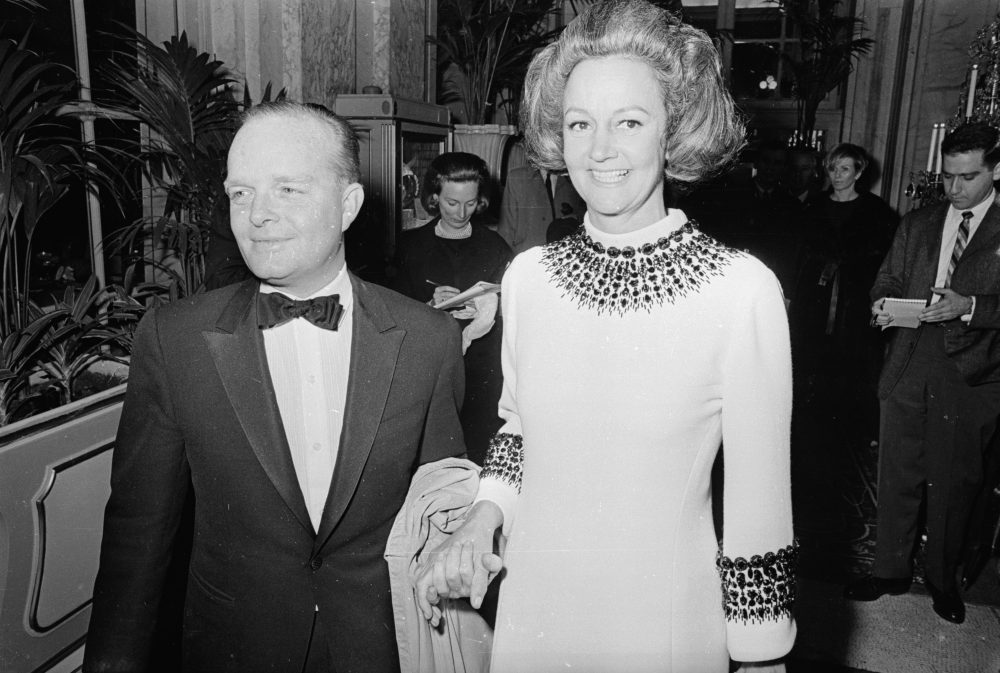
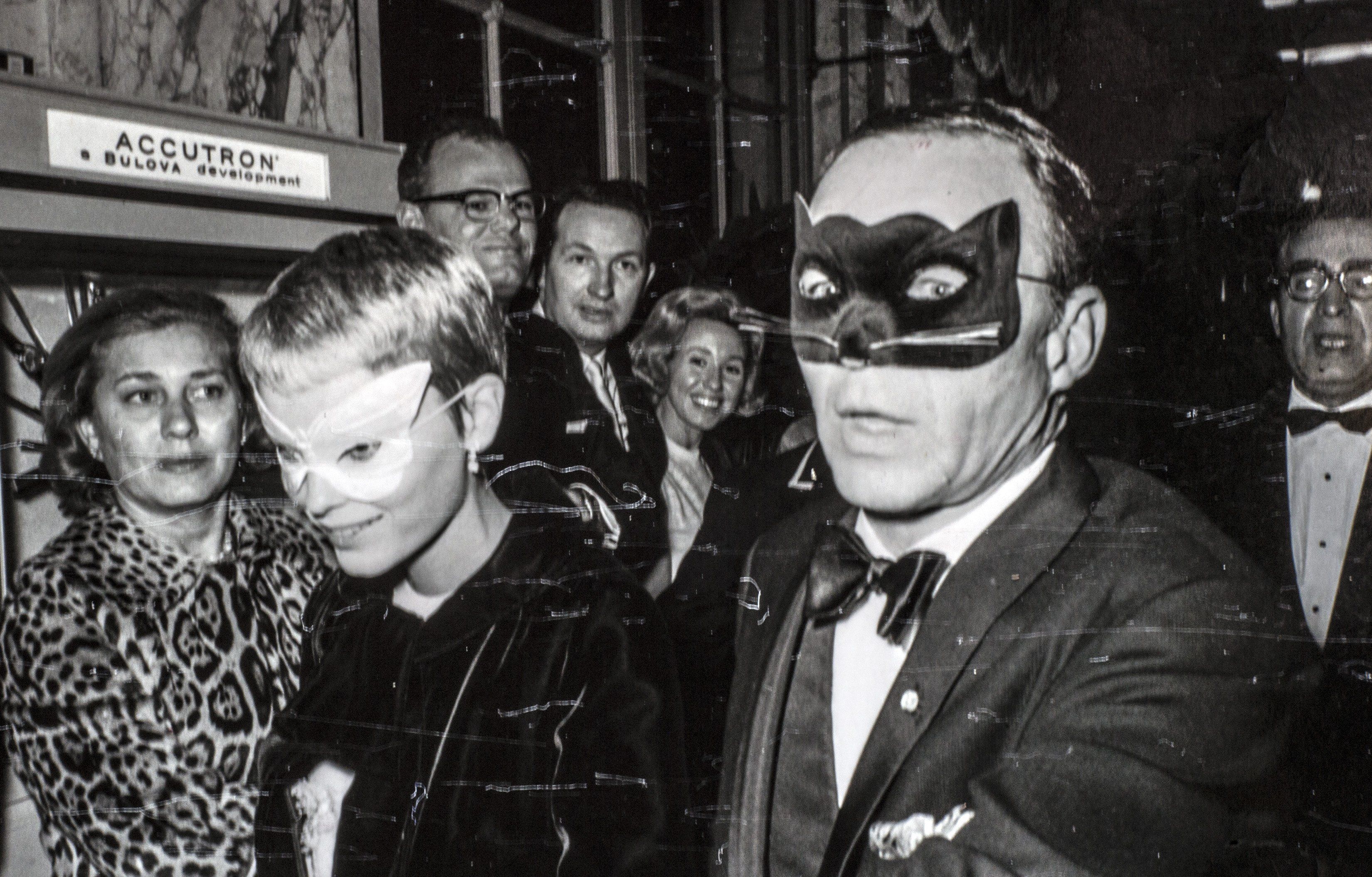
November 28, 1966: Author Truman Capote hosts "The Black and White Ball" at the Plaza Hotel, off Grand Army Plaza, at the southeastern corner of Central Park, at 59th Street and 5th Avenue in Manhattan, New York City.

Supposedly, it was meant to honor Katharine Graham, publisher of The Washington Post. Historian Deborah Davis, who wrote a biography of Graham, also wrote a book about the ball, titling it Party of the Century.

Truman Streckfus Persons was born on September 30, 1924 in New Orleans. After his parents divorced, his mother took him to her hometown of Monroeville, Alabama, where one of his childhood friends was another author-to-be, Harper Lee. In To Kill a Mockingbird, Lee named the character based on herself Jean Louise Finch, nicknamed Scout; and the one based on Capote "Dill."

When he was 8, his mother remarried, to a Cuban-born bookkeeper living in New York, named JosĂ© GarcĂ­a Capote (pronounced "Kah-POH-tay"), who adopted him as his son, and renamed him Truman GarcĂ­a Capote. They lived on Park Avenue, so his stepfather was doing well. Too well, as it turned out: He was convicted of embezzlement.

By 11, the boy was writing. At 15, the family moved to nearby Greenwich, Connecticut. At 18, he got a job as a copyboy at The New Yorker magazine. Two years later, he was fired for having angered Robert Frost, America's greatest living poet. That was the 1st time he willingly annoyed a better writer than himself. It would not be the last: Speaking of Jack Kerouac in 1959, he said, "That's not writing, that's typing."

He published Other Voices, Other Rooms in 1948, The Grass Harp in 1951, and Breakfast at Tiffany's in 1958. In 1959, he went to Kansas to write about the murder of the Clutter family. In 1965, he published his "nonfiction novel" about the case, In Cold Blood. It gained him the greatest acclaim of his career.

And that's what he was after: Like many people who make it big, he was less interested in being good at what he did than he was in being a star. He was a relentless self-promoter. Had he been buried rather than cremated, his epitaph could well have been his self-description: "I'm an alcoholic. I'm a drug addict. I'm a homosexual. I'm a genius."

Yes, Truman Capote was openly gay -- not just in the 1960s, but in the hyper-repressive 1950s. He may have been the reason why the word "flamboyant" became a stereotype of gay men. His clothes, his mannerisms, his lisping voice... Even if he hadn't come out of the closet, people would have guessed.

According to a friend, writer Leo Lerman, as far back as 1942, he said that when (not if) he became rich and famous, he would throw a party for his rich and famous friends. In June 1966, he felt secure enough to start setting it up. He was inspired by another author, Dominick Dunne, who had given a black and white ball in 1964, for his 10th wedding anniversary. Capote was a guest. Another inspiration was that year's film version of the musical My Fair Lady: In the scene at Ascot Racecourse, the women all wore black and white dresses.

There had to be a guest of honor. And even Capote didn't have the chutzpah to make himself that. He decided that "Kay" Graham needed cheering up. She disagreed, but knew she couldn't stop him from giving the party: "I was sort of baffled... I felt a little bit like Truman was going to give the ball anyway, and that I was part of the props."
"Tru" and "Kay" at the Ball

While Other Voices, Other Rooms was his 1st published novel, the 1st he'd written was titled Summer Crossing, and its 1st scene was in a dining room at the Plaza Hotel. So he hired the Grand Ballroom of the Plaza. Red tablecloths, with gold candelabra as centerpieces. The menu, served at midnight: Scrambled eggs, sausages, biscuits (Breakfast at midnight?), pastries, spaghetti and meatballs, and, a specialty of the Plaza and one of Capote's favorite dishes, chicken hash. And 450 bottles of Taittinger champagne. How much did Capote spend on this thing? $16,000 -- about $147,000 in 2022 money.

Capote's 540 guests, asked to wear black and white, and masks, included luminaries from New York, Washington, Hollywood and New Orleans. They included the aforementioned Graham and Lerman; CBS chairman William S. Paley and his wife, the former Barbara Cushing, now known as Babe Paley; Scottish businessman Kenneth Keith, Baron Keith of Castleacre, and his wife, the former Mary Gross, now known as Slim Keith; polo champion Winston Guest and his wife, the former Lucy Cochrane, now known as C.Z. Guest; and Prince StanisĹ‚aw "Stash" Radziwiłł, and his wife, the former Caroline Bouvier, now known as Lee Radzill, sister of former First Lady Jacqueline Kennedy -- but the invited guests did not include Jackie herself.

Babe, Slim, C.Z. and Lee were the leading members of a group of fabulously wealthy and stylish women who glommed onto Capote as a "safe" gay man that they could talk to while their husbands were off making deals and having affairs. He glommed onto them, too, calling them "my swans." He turned out not to be trustworthy, and exposed them in a very nasty article for Esquire magazine in 1975.

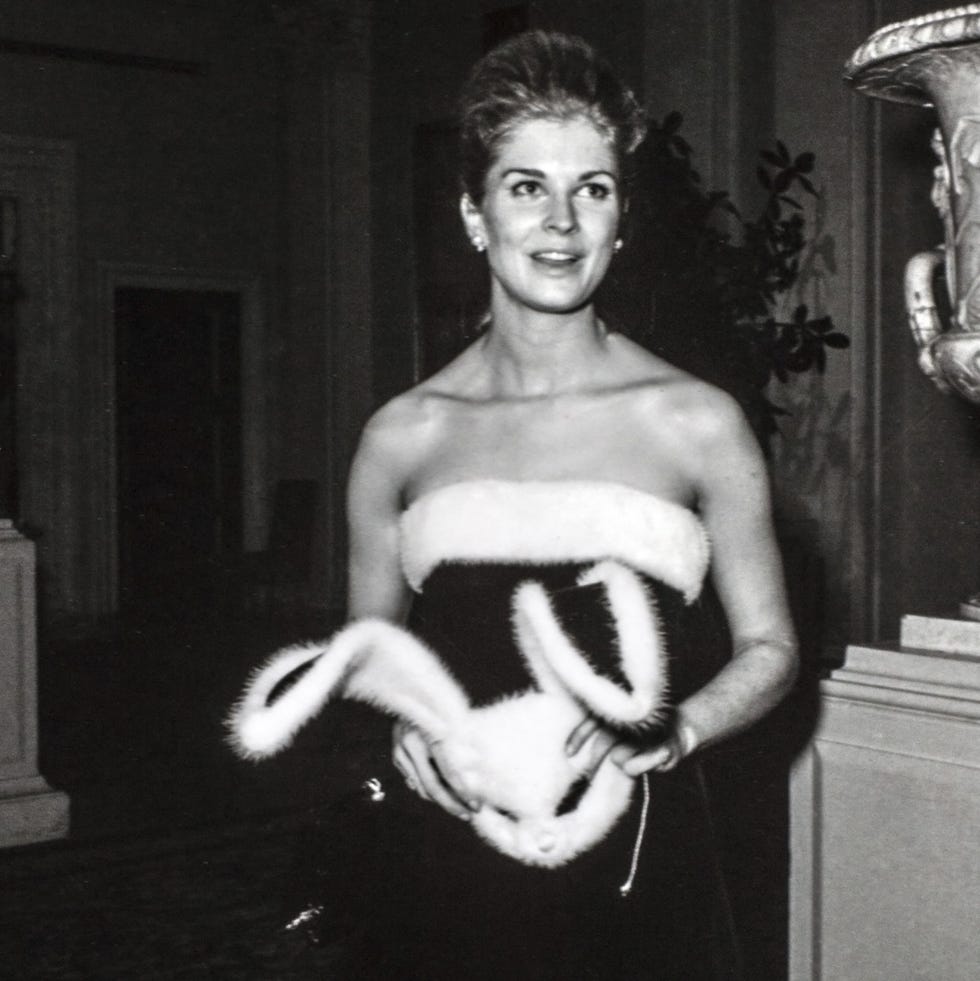
Also among the guests: First Lady Claudia "Lady Bird" Johnson (but not President Lyndon Johnson), the Duke and Duchess of Windsor (formerly King Edward VIII of Britain and Wallis Simpson); Ford Motor Company chairman Henry Ford II, journalist Walter Lippmann, economist John Kenneth Galbraith, National Security Adviser McGeorge Bundy, writers Lillian Hellman, Norman Mailer, John Knowles and George Plimpton; Random House publisher and What's My Line? panelist Bennett Cerf, his wife, and his children; San Francisco Chronicle columnist Herb Caen, historian Arthur Schlesinger Jr., editor Norman Podhoretz, Frank Sinatra and his then-wife Mia Farrow, fashion designer Oscar de la Renta and his wife, Vogue magazine editor Françoise de Langlade; heiress and fashion designer Gloria Vanderbilt, philanthropist Brooke Astor, Harper's Bazaar editor Gloria Guinness, poet Marianne Moore, painter Andy Warhol, Broadway producer Hal Prince, Broadway choreographer Jerome Robbins, photographer Gordon Parks, singer Harry Belafonte, actors Douglas Fairbanks Jr. and Henry Fonda, then-married actors Lauren Bacall and Jason Robards, actress Tallulah Bankhead, and actress Candice Bergen.
Mia looks comfortable attending. Frank does not.

Oddly, he didn't invite Dunne. Carson McCullers, a woman who, like Capote, was a novelist, a Southerner, and gay, and was allegedly a friend of his, was snubbed as well. Gore Vidal, also an openly gay writer, was not invited, but that wasn't a surprise: They were in a feud that lasted for the rest of Capote's life. Writer William Styron and his wife Rose were invited; he didn't want to go, and didn't, while she did want to go, and did.

Mailer and Bundy nearly got into a fight over the way the Administration was conducting the Vietnam War. Bergen -- only 20 years old at the time -- had misgivings involving the war as well:

I remember the guilt I felt, or actually the guilt that other people thought I should feel. I was 19, I think. Reporters accosted me. "Wasn't it inappropriate to have a ball for five hundred people, when a war was going on?"

Someone said -- could it have been Douglas Fairbanks, in his executioner's hood? -- "The question's inappropriate." Somebody else, who was wearing a mouse mask with little ears, said, "The war's inappropriate."

Nowadays, I don't see how anyone can rationalize a gesture like a ball.
Candice Bergen, 22 years before becoming Murphy Brown

Sinatra did not have a good time. Just before midnight, when the food would be served, he turned to Caen, and said, "Hey, let's get out of here." They and their wives tried to sneak out. Capote tried in vain to stop them. Caen later said of Capote, "I think he was hurt. It was one of those great parties that never got off the ground."

R. Couri Hay, eventually a gossip columnist for Warhol's magazine Interview, but then only 17 years old, once wrote, "Truman always claimed that he invited five hundred of his friends, and made fifteen thousand enemies."

But Mailer, who infamously stabbed his wife at a party he'd hosted at his New York apartment 6 years earlier, said, "It was one of the best parties I ever went to. There was so much action… so many people whom you'd never met before... Everybody there felt anointed that night. I think that's Truman's greatest coup. To me, that party's greater than any of his books."

As Deborah Davis wrote in her book about the Ball:

There was no question that the party triggered an insatiable thirst in readers for the very, "who-wore-it-better" coverage that is so popular today. But the distinction is that, at that moment in time, you had to earn your place on the red carpet. And celebrity had a different definition, it wasn't the "15 minutes of fame."

The thing about the black and white ball was that it was a private party that we were given an insider peek at, and it did create a monster, and it also marked Capote's demise in a sense, because, before the ball, he had always said that gregariousness is the enemy of art. When he was writing a book, he would go off into seclusion and he would never be interrupted by any element of social life. After the ball, he became the world's best guest. And he just went from one event to another, and he lost his hold on his art. And that was very sad. The culture changed, and Capote changed as well.

Capote did a little acting, including in the 1976 murder-mystery comedy Murder By Death, where he played a party host who ended up killed; and became a regular on the talk-show circuit, including making several appearances on The Tonight Show Starring Johnny Carson. He hadn't invited Carson to the Ball, but he did become close friends with Carson and his 2nd wife Joanne.

But he never wrote another novel after the Ball. In fact, if you don't count In Cold Blood -- which could count as a novel, since he was accused of making a lot of things up in it -- he published Breakfast at Tiffany's at the age of 34, and then didn't write another novel for the rest of his life. He died on August 25, 1984, from the effects of drinking, drugs and phlebitis, at Joanne Carson's Los Angeles home, where he'd been staying. He was a few weeks short of turning 60. Vidal got the last word in their feud, calling his death "a good career move."

In 1990, Robert Morse won a Tony Award for playing Capote in the play Tru, and an Emmy Award for reprising the role on PBS 2 years later. Philip Seymour Hoffman -- who, sadly, died from drugs even younger, at age 46 -- won an Oscar for starring in the 2005 film Capote, which was about the making of In Cold Blood.

Capote has also been played by Paul Williams in Oliver Stone's 1991 film The Doors, Louis Negin in 54 (about the discotheque Studio 54) in 1998, Sam Street in the Jacqueline Susann biopic Isn't She Great in 2000, and Toby Jones in Infamous in 2006. Michael J. Burg has played him 3 times: In The Audrey Hepburn Story in 2000, in The Hoax in 2006, and in the 1973-set 2009 TV series Life on Mars. (UPDATE: He was played by Tom Hollander in the 2024 FX miniseries Feud: Capote vs. The Swans.)

*

November 28, 1966 was a Monday. Baseball was out of season. Football was in midweek: There would be no Monday Night Football for another 4 years. And no games were scheduled in the NBA or the NHL. So there were no scores on this historic day. Unless you want to count: "Guests 500, Capote 0."

Thursday, November 24, 2022

November 24, 1950: "Guys and Dolls" Premieres On Broadway

November 24, 1950: The musical Guys and Dolls premieres on Broadway. Along with West Side Story because of its macho characters, and My Fair Lady because of its male chauvinism, it is 1 of 3 Broadway musicals that men can like, and not have their heterosexuality questioned.

No, not Damn Yankees. Yes, it involves baseball, and the film version had Gwen Verdon wearing the 1950s equivalent of skimpy outfits. But it also had a locker room scene with men walking around wearing nothing but towels, and even doing a chorus-line kick. Anyway...

The musical was written by Frank Loesser, with a "book" by Jo Swerling and Abe Burrows (father of Cheers co-creator and director James Burrows), based on the writings of Damon Runyon. His stories, written in the 1920s and 1930s, concerned gangsters, gamblers, and other characters of the New York underworld.

Runyon was known for the unusual comic dialect he employed in his stories; mixing highly formal language, without contractions, and colorful slang. For example, in the show, Joey Biltmore, owner of the Biltmore Garage, will not accept a "marker" (an I.O.U.) from "Good Old Reliable" Nathan Detroit. Upon hearing this, Nathan's friend, Nicely-Nicely Johnson, says, "Dis, I do not believe!"

("Nicely" is so nicknamed because, when you ask him how he's doing, he says, "Nicely, nicely, thank you." It may be a coincidence that there was a later real-life New York gangster named John Campopiano, nicknamed Johnny Echoes, because he said everything twice. He was depicted in the film Goodfellas as Jimmy Two Times, played by Anthony Powers: "I'm gonna go get the papers, get the papers.")

The show begins with a song titled "Fugue for Tinhorns," in which gamblers Nicely, Benny Southstreet and Rusty Charlie talk about racehorses that are running tomorrow, named Paul Revere, Valentine and Epitaph. Nicely enters a phrase into the American lexicon: "I got the horse right here, his name is Paul Revere... "

Nathan runs a "floating crap game": A dice-shooting contest whose location goes from place to place, to avoid the police. But NYPD Lieutenant Brannigan is "breathing down everyone's neck," and the only guy willing to host the game is Biltmore, and even he wants a security deposit of $1,000: "A grand." (About $12,000 in 2022 money, so we're not exactly talking pocket change.) Nathan admits, "The one thousand bucks, I ain't got." But there are so many high rollers coming into New York that his greed kicks in, and he can't simply cancel the game.

Among the high rollers is Sky Masterson, dressed like a million bucks, known for having extraordinary luck, and, when asked how he's doing, says, "Healthy at the moment." Nathan knows that Sky will bet on anything, so he sets up a sure thing. Sky is no dope: He sees through this immediately, and does not take the bet.

But Nathan knows that Sky is a womanizer, so he proposes a new bet: Sky must take a woman of Nathan's choice to dinner in Havana, Cuba -- in those pre-Castro days, the gambling capital of the Caribbean. Sky agrees, and Nathan chooses Sarah Brown, a Sergeant in a Salvation Army-type group. Sky knows he's been had, but he also knows that, in the circles in which he and Nathan travel, a guy can never "welsh" on a bet: He can neither call it off nor refuse to pay if he loses, or he loses all credibility, and nobody will ever deal with him again.

At the mission, Sky attempts to make a deal with Sarah, offering her "one dozen genuine sinners" in exchange for the date in Havana. In spite of her General telling her that her branch of the mission will be closed unless attendance rises, Sarah refuses, and they argue over whom they will fall in love with, with a duet titled "I'll Know."

Nathan has his own romantic problem: For 14 years, he has been engaged to nightclub singer "Miss Adelaide" (her last name is never mentioned), and she's not getting any younger, and she wants to be married. But he doesn't have enough money to support a wife. He would, if this weekend's crap game goes the way he thinks it will. But first, he needs the grand.

Nathan and Sarah are both forced by circumstances into doing what they don't want to do: Brannigan's presence forces Nathan's pals to say they're gathered together for his bachelor party, meaning he now has to marry Adelaide soon; and Sarah promises her General "one dozen genuine sinners."

Nathan sees the band, but Sarah's not in it. He's sure he's lost the bet. But he realizes that the mission will be empty, and he holds the crap game in there. Sure enough, Sky has flown Sarah to Cuba, where they have dinner. They arrive back at the mission in New York at 4:00 in the morning, having not done anything naughty, but admitting that they've fallen in love with each other. (It's Broadway: It requires a little suspension of disbelief.) They hear a police siren, and the cops break the game up. Nathan gets away, but Sarah sees it, and breaks up with Nathan.

The game has moved to the sewers. To protect Sarah's reputation, Sky gives Nathan $1,000, implying that he was unable to take her to dinner. (He might as well, since he won the terms of the bet, but lost the girl.) Sky offers a bet to every one of the gamblers, including Big Julie, a nasty but illiterate gangster from Chicago. (We know he's illiterate because he writes an X on a piece of paper, and says, "That's my marker!") If Sky loses his turn at the dice, he'll give every one of them $1,000 -- which he doesn't want to lose, as a matter of pride, but he does have, so it's not that bad. But if he wins, he gets their souls. No, he's not the Devil: They will have to follow him to Sarah's mission. Preparing to throw, he sings "Luck Be a Lady." He wins.

Among the gamblers following Sky to the mission is Nathan himself. He sees Adelaide, and tries to win her back, singing "Sue Me." The General is impressed by the turnout, Sarah is impressed that Sky kept his word, and Nicely is moved to genuinely repent, and the others join him in singing "Sit Down, You're Rocking the Boat."

So everything gets resolved: Brannigan shows up to arrest everybody, but Sarah says they weren't there last night, and the General backs her lie up, so Brannigan leaves. Nathan tells Sarah everything, and tells her that it must mean Sky truly loves her. The show ends with Sky using his gambling winnings to marry Sarah, and Nathan using his to marry Adelaide. They have both gone straight: Sky runs the mission band, and Nathan runs a newsstand, and none of the four ever has to worry about love or money again.

The original production, directed by George S. Kaufman, debuted on November 24, 1950, at the 46th Street Theatre. It is still in operation, as the Richard Rodgers Theatre, at 226 West 46th Street. Robert Alda, father of actor Alan Alda, played Sky. Sam Levene played Nathan. Isabel Bigley played Sarah, Vivian Blaine played Adelaide, and Stubby Kaye played Nicely. It won 5 Tony Awards, including Best Musical.

The film version premiered on November 3, 1955. It stars Marlon Brando as Sky, Frank Sinatra as Nathan, and Jean Simmons as Sarah. Blaine and Kaye reprised their roles. Joseph L. Mankiewicz directed. It was nominated for 4 Academy Awards, but won none.

The newsstand seen during "Fugue for Tinhorns" includes copies of the June 6, 1955 issues of Time and Life magazines, respectively showing Yugoslavia's Marshal Josip Broz Tito and Henry Fonda in Navy uniform as the title character in the film Mister Roberts, a non-musical Broadway play turned 1955 film; and Look magazine from June 14, 1955, showing Jackie Gleason and Art Carney, about to spin The Honeymooners off from a sketch of The Jackie Gleason Show into its own half-hour sitcom.

For those of you who are confused by the film:

* Frank Sinatra rather enjoyed playing losers, and Nathan Detroit, for all his popularity among his kind of guys, is very much a loser for much of the film.

* Yes, Marlon Brando was young and handsome once. Yes, Brando sings in this movie, and he's... not terrible. In fact, it was an inversion of the original stage production: Sam Levene, the original Nathan, couldn't sing; but in the movie, Nathan is played by Sinatra, the top singer of the era, while Brando, known for a speech impediment and dramatics, plays the comic but not-really-musical Sky. In the musical, Sam as Nathan only sings "Sue Me," while Frank as Nathan is in a couple of other numbers.

* No, this Jean Simmons is not related to Kiss singer Gene Simmons. For one thing, she used her real name. For another, she had loads of class, while he has none. If I'd been around then, Jean would have preceded Marina Sirtis, Catherine Zeta-Jones, Kate Beckinsale and Hayley Atwell as British brunettes that I could not resist.

The 1st Broadway revival was in 1976, with an all-black cast: Robert Guillaume as Nathan, Norma Donaldson as Adelaide, Jimmy Randolph as Sky, and Ernestine Jackson as Sarah. The 1992 revival was highly regarded. Actor Joseph Lane had renamed himself Nathan Lane after Nathan Detroit, and now played the role. Peter Gallagher played Sky, Josie de Guzman played Sarah, and Faith Prince played Adelaide. It won 4 Tonys, including Best Revival. A 2009 revival had Oliver Platt as Nathan, Lauren Graham as Adelaide, Craig Bierko as Sky and Kate Jennings Grant as Sarah.

Damon Runyon had already died in 1946. His last words were recorded as, "You can keep the things of bronze and stone, and give me one man to remember me just once a year." George S. Kaufman followed in 1961, Jo Swerling in 1964, Frank Loesser in 1969, Sam Levene in 1980, Abe Burrows in 1985, Robert Alda in 1986, Vivian Blaine in 1995, Stubby Kaye in 1997, Frank Sinatra in 1998, Marlon Brando in 2004, Isabel Bigley in 2006, and Jean Simmons in 2010.

*

November 24, 1950 was a Friday, the day after Thanksgiving. My Three Sons actor Stanley Livingston and original Lynyrd Skynyrd drummer Bob Burns were born.

Baseball was out of season. No games were scheduled for the NFL, the NBA or the NHL. There were 5 college football games played:

* Number 14 Miami beat Iowa, 14-6 at Burdine Stadium in Miami. The stadium was later renamed for the game annually held there, on or around New Year's Day: The Orange Bowl.

* Louisiana State University (LSU) beat Villanova, 13-7 at Tiger Stadium in Baton Rouge, Louisiana.

* The University of Houston beat Midwestern Texas State University, 40-18 at Public School Stadium (later renamed Jeppesen Stadium and Robertson Stadium) in Houston. MTSU, in Wichita Falls, Texas, became Midwestern State University. They now compete in NCAA Division II.

* San Jose State beat Montana, 32-7 at Honolulu Stadium in Hawaii

* And the College of the Pacific beat Boston University, 55-7 at Pacific Memorial Stadium in Stockton, California. The home team's school was renamed the University of the Pacific in 1961, and they dropped their football program after the 1995 season. BU dropped theirs after the 1997 season.

Friday, November 18, 2022

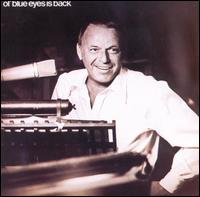
November 18, 1973: Frank Sinatra Releases "Ol' Blue Eyes Is Back"

November 18, 1973: Like a boxer who can't quit the ring, Frank Sinatra ends his retirement after 3 years, releasing his album Ol' Blue Eyes Is Back. Gordon Jenkins arranged it, and Don Costa conducted the orchestra.

Ol' Blue Eyes was up to date: The songs included compositions by Joe Raposo, Teddy Randazzo, Paul Anka, Paul Williams and Kris Kristofferson. The best-known song, although his was not the best-known version, was Stephen Sondheim's "Send In the Clowns." Give that he was about to turn 58 years old, one line was especially poignant: "Isn't it rich, isn't it queer, losing my timing this late in my career?"

The night of the release, NBC aired the special Magnavox Presents Frank Sinatra. Over 40 million people watched it. Nearly a year later, on October 12, 1974, Frank had a live album recorded at Madison Square Garden. With his love of boxing, it was titled The Main Event.

Eventually, Frank's 4th and last wife, Barbara, began calling herself "Lady Blue Eyes."

In 1991, Brent Spiner, who played the android Data on Star Trek: The Next Generation, recorded an album of standards. On the cover, he was in makeup, but wore a 1950s-style suit. The title was Ol' Yellow Eyes Is Back.

*

November 18, 1973 was a Sunday. Baseball was out of season. These games were played in the NFL:

* The New York Giants beat the football version of the St. Louis Cardinals, 24-13 at the Yale Bowl in New Haven, Connecticut. The Giants moved there after Yankee Stadium was closed for renovation. They wanted to use City-owned Shea Stadium until their new stadium was ready in the Meadowlands in East Rutherford, New Jersey, but Mayor John Lindsay, angry at the Giants for leaving the City, wouldn't let them use it. So they played the rest of their 1973 home games and all of 1974 at Yale. In 1975, new Mayor Abe Beame let them use Shea, and Giants Stadium opened in 1976.

* The New York Jets lost to the Cincinnati Bengals, 20-14 at Riverfront Stadium in Cincinnati.

* The New England Patriots beat the Green Bay Packers, 33-24 at Schaefer Stadium (later Sullivan Stadium and Foxboro Stadium) in the Boston suburb of Foxborough, Massachusetts.

* The Washington Redskins beat the Baltimore Colts, 22-14 at Robert F. Kennedy Stadium in Washington.

* The Miami Dolphins beat the Buffalo Bills, 17-0 at Rich Stadium (later Ralph Wilson Stadium) in the Buffalo suburb of Orchard Park, New York.

* The Denver Broncos beat the Pittsburgh Steelers, 23-13 at Three Rivers Stadium in Pittsburgh.

* The Detroit Lions beat the Chicago Bears, 30-7 at Soldier Field in Chicago.

* The Kansas City Chiefs beat the Houston Oilers, 38-14 at Arrowhead Stadium in Kansas City.

* The Dallas Cowboys beat the Philadelphia Eagles, 31-10 at Texas Stadium in the Dallas suburb of Irving, Texas.

* The San Diego Chargers beat the New Orleans Saints, 17-14 at San Diego Stadium (later Jack Murphy Stadium and Qualcomm Stadium).

* The Los Angeles Rams beat their arch-rivals, the San Francisco 49ers, 31-13 at the Los Angeles Memorial Coliseum.

* The Cleveland Browns beat the Oakland Raiders, 7-3 at the Oakland Coliseum.

* And the next night, on ABC Monday Night Football, the Atlanta Falcons beat the Minnesota Vikings, 20-14 at Atlanta Stadium (later renamed Atlanta-Fulton County Stadium).

Baseball was out of season. There were 4 games played in the NBA:

* The Buffalo Braves beat the Capital Bullets, 112-101 at the Cole Field House, on the campus of the University of Maryland, in the Washington suburb of College Park. The Bullets had been the Baltimore Bullets from 1963 to 1973, but had moved to the D.C. area. They were waiting for the Capital Centre to open in suburban Landover, Maryland. The following season, they renamed themselves the Washington Bullets. Bob McAdoo scored 43 points for the Braves.

* The Chicago Bulls beat the Detroit Pistons, 104-102 at Cobo Hall (now Huntington Place) in Detroit.

* The Los Angeles Lakers beat the Cleveland Cavaliers, 102-100 at The Forum outside Los Angeles in Inglewood, California.

* And the Seattle SuperSonics, 95-91 at the Seattle Center Coliseum.

There was 1 game in the American Basketball Association: The Utah Stars beat the San Antonio Spurs, 83-80 at the HemisFair Arena in San Antonio.

There were 4 games played in the NHL:

* The New York Rangers beat the Pittsburgh Penguins, 7-0 at Madison Square Garden.

* The Boston Bruins beat the Atlanta Flames, 5-2 at the Boston Garden.

* The California Golden Seals beat the Buffalo Sabres, 2-0 at the Buffalo Memorial Auditorium.

* And the Detroit Red Wings beat the Montreal Canadiens, 6-4 at the Olympia Stadium in Detroit.

And there were 6 games played in the World Hockey Association:

* The New York Golden Blades beat the Chicago Cougars, 5-3 at Madison Square Garden. A few days later, the Blades, formerly the New York Raiders, moved down the New Jersey Turnpike to the Philadelphia suburb of Cherry Hill, and became the Jersey Knights. They played out the 1973-74 season there, and moved across the country, becoming the San Diego Mariners.

* The Quebec Nordiques beat the Houston Aeros, 8-3 at the ColisĂ©e de QuĂ©bec.

* The Toronto Toros beat the Winnipeg Jets, 6-2 at Varsity Arena in Toronto.

* The Minnesota Fighting Saints beat the Edmonton Oilers, 5-2 at the Edmonton Gardens.

* The New England Whalers beat the Los Angeles Sharks, 5-2 at the Los Angeles Memorial Sports Arena.

* And the Vancouver Blazers beat the Cleveland Crusaders, 8-2 at the Pacific Coliseum in Vancouver.

Wednesday, November 9, 2022

November 9, 1945: "The House I Live In" Premieres

Still photo from the film

November 9, 1945: The House I Live In premieres, a 10-minute film about tolerance, directed by Mervyn LeRoy, and starring one of the biggest young singers in the country as himself.

The film is written by Albert Maltz. Frank Sinatra, approaching his 30th birthday, having been a star for 5 years, and a year past his launch to superstardom via the fan demonstration known as "The Columbus Day Riot," plays himself. The film begins with a recording session that isn't going well. He takes a break, and steps outside to smoke a cigarette.

In the alley, he sees several boys chasing a smaller boy, and intervenes. It turns out that the bullies are going after the other boy because he's Jewish. It has been just 6 months since V-E Day, when America united to defeat the greatest force of anti-Semitism the world has ever known.

Being Italian and Catholic -- his mother was from Genoa, in the north, and his father was from Sicily, in the south -- Frank certainly knew what it was like to face discrimination. His cinematic portrayal of himself isn't having it, and he lectures the boys, telling them that discrimination based on race and religion is un-American.

He sings the title song, with music by Earl Robinson, who had previously written the labor song "Joe Hill"; and lyrics by Abel Meeropol, the author of Billie Holiday's anti-lynching song "Strange Fruit." They wrote "The House I Live In" for a 1942 music revue, Let Freedom Sing. With the Nazis having been defeated, but with bigotry, both racial and religious, alive and well in America, the message was still needed. Given his popularity with young people at that time, Sinatra was the ideal messenger.

Maltz became one of "The Hollywood Ten," screenwriters who were blacklisted and jailed for refusal to expose fellow Communists before the House Un-American Activities Committee. He wrote the screenplay for The Robe, but it was many years before his name was restored to the official print of the movie. He later wrote the screenplays for Two Mules for Sister Sara and The Execution of Private Slovik, and died in 1985.

Robinson was also blacklisted, but in 1954, he and David Arkin -- father of actor Alan Arkin and grandfather of actor Adam Arkin -- wrote a song in tribute to the Supreme Court's decision in Brown v. Board of Education: "Black and White." Despite being recorded by both Sammy Davis Jr. and Pete Seeger, it took until the 1972 recording by Three Dog Night to become a hit, but it hit Number 1. Robinson lived long enough to see it, and died in 1991.

Meeropol and his wife Anne adopted the sons of the executed Julius and Ethel Rosenberg, Michael and Robert. He died in 1986.

LeRoy had previously directed Little Caesar, I Am a Fugitive from a Chain Gang, Gold Diggers of 1933, Fools for Scandal, Blossoms in the Dust, and Thirty Seconds Over Tokyo. He went on to direct the 1949 version of Little Women, Quo Vadis? Million Dollar Mermaid, Mister Roberts, The Bad Seed, No Time for Sergeants, The FBI Story, and Gypsy. He died in 1987.

Sinatra continued to sing the song. Even after his 1972 heel turn from Democrat to Republican, he sang it at a state dinner at the White House in front of Richard Nixon, and at the 1985 Inaugural Ball of Ronald Reagan.

*

November 9, 1945 was a Friday. Actor Charlie Robinson, who played court clerk Mac Robinson on the 1980s sitcom Night Court, was born on this day.

Baseball was out of season. The NBA hadn't been founded yet. No games were scheduled for the NHL.

There was 1 game in college football. The University of South Carolina and the University of Miami played to a 13-13 tie at Burdine Stadium in Miami, the stadium that would later be renamed the Orange Bowl.

Monday, October 24, 2022

October 24, 1962: "The Manchurian Candidate" Premieres

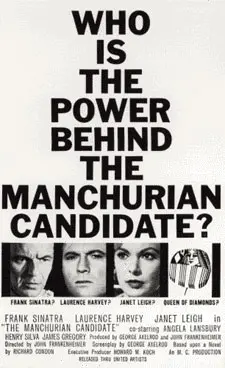
October 24, 1962: The film The Manchurian Candidate premieres, based on Richard Condon's 1959 novel. The fact that the Cold War-themed film's scheduled premiere turned out to be during the Cuban Missile Crisis probably brought it more hype than expected.

The film starts with the Red Chinese capturing a platoon of U.S. soldiers during the Korean War, and brainwashing them. (Manchuria is northeastern China.) Most of them are brainwashed only into believing that one of them, Sergeant Raymond Shaw, a shy, not particularly combative type (played by Laurence Harvey), saved their lives. Another, Major Bennett Marco (Frank Sinatra), recommends him for the Congressional Medal of Honor, based on this incorrect belief.

The trick is that this "war hero" is being set up for a political rise, as his conniving mother, Eleanor Iselin (Angela Lansbury), already a Communist agent, is married to his stepfather Senator John Iselin (James Gregory, later Barney Miller's Inspector Luger). Ironically, the Senator is a Red-baiter, like the late real-life Senator Joseph McCarthy. He is being set up to be nominated for Vice President, and the "hero" will then assassinate the Presidential nominee, setting the stepfather up to be President and the mother as the power behind the throne, aiding the Red cause. The climactic convention scene was filmed at the old Madison Square Garden.

One of the brainwashers is Dr. Yen Lo, played by Khigh Dhiegh, later to be better known for playing Wo Fat, the villain of the original Hawaii Five-O series. Janet Leigh, then the wife of Tony Curtis, and the mother of Jamie Lee Curtis, also appears as Rosie Cheyney, Bennett's girlfriend.

Sinatra had creative control over the film, and originally wanted Lucille Ball to play the mother -- which would have been as big a shock to 1960s viewers as it turned out to be to see kindly old Henry Fonda as the ruthless villain in the 1969 film Once Upon a Time in the West.

But Sinatra's choice as director, John Frankenheimer, coming off directing The Birdman of Alcatraz, had worked with Lansbury on the film All Fall Down, and insisted that Frank watch that film with him. Seeing it convinced Frank to cast Lansbury instead, even though she was only 3 years older than the actor playing her son, Harvey. In a further irony, Harvey died young, of cancer in 1973, while Lansbury just died at the age of 96, and was still acting almost until the end. (The year before, she had played the mother of Elvis Presley's character in Blue Hawaii, and was only 9 years older than Elvis.)

Frankenheimer directed political thrillers again with Seven Days in May in 1964, and the terrorists-at-the-Super Bowl Black Sunday in 1977. He lived until 2002. Dheigh died in 1991, Sinatra in 1998, Gregory in 2002, and Leigh in 2004.

Also in 2004, a remake of The Manchurian Candidate was released, directed by Jonathan Demme. It moved the war and brainwashing to the Persian Gulf War of 1991. Instead of the Communist nations, the antagonists are Manchurian Global, a private-equity firm that has been "buying" members of Congress to cut their taxes and eliminate regulations on business.

This time, the evil mother is a Senator (Meryl Streep), who maneuvers her Manchurian-controlled Congressman son (Liev Schreiber) to the Vice Presidential nomination, on a ticket with a Senator (Jon Voight) she hates but can't stop legally, and the election happens, and their party wins. So she sets up Marco (Denzel Washington) to assassinate the President-elect. As in the original, at the last moment, the Shaw character does the right thing and prevents the assassination.

*

October 24, 1962 was a Wednesday. This was also the day that James Brown gave the concert that became the album Live at the Apollo. I have a separate entry for that event. And Jay Novacek, the tight end on the Dallas Cowboys' 3 Super Bowl wins of the 1990s, was born on this day.

The baseball season had ended 8 days earlier, with the New York Yankees beating the San Francisco Giants in Game 7 of the World Series. Football was in midweek. The NHL season was underway, but no games were scheduled.

There were 2 games played in the NBA. The Chicago Zephyrs beat the Los Angeles Lakers, 118-107 at the Chicago Coliseum. Walt Bellamy scored 42 points. The next season, the Zephyrs became the Baltimore Bullets. In 1973, they moved to Washington. In 1997, they were renamed the Washington Wizards.

And the St. Louis Hawks beat the Cincinnati Royals, 121-114 at the Kiel Auditorium in St. Louis. Oscar Robertson scored 31 points. The Hawks moved to Atlanta in 1968. The Royals became the Kansas City Kings in 1972, and the Sacramento Kings in 1985.

Wednesday, October 12, 2022

October 12, 1944: Frank Sinatra's Columbus Day Riot

A young Frank Sinatra shows actress Lana Turner some of his fan mail

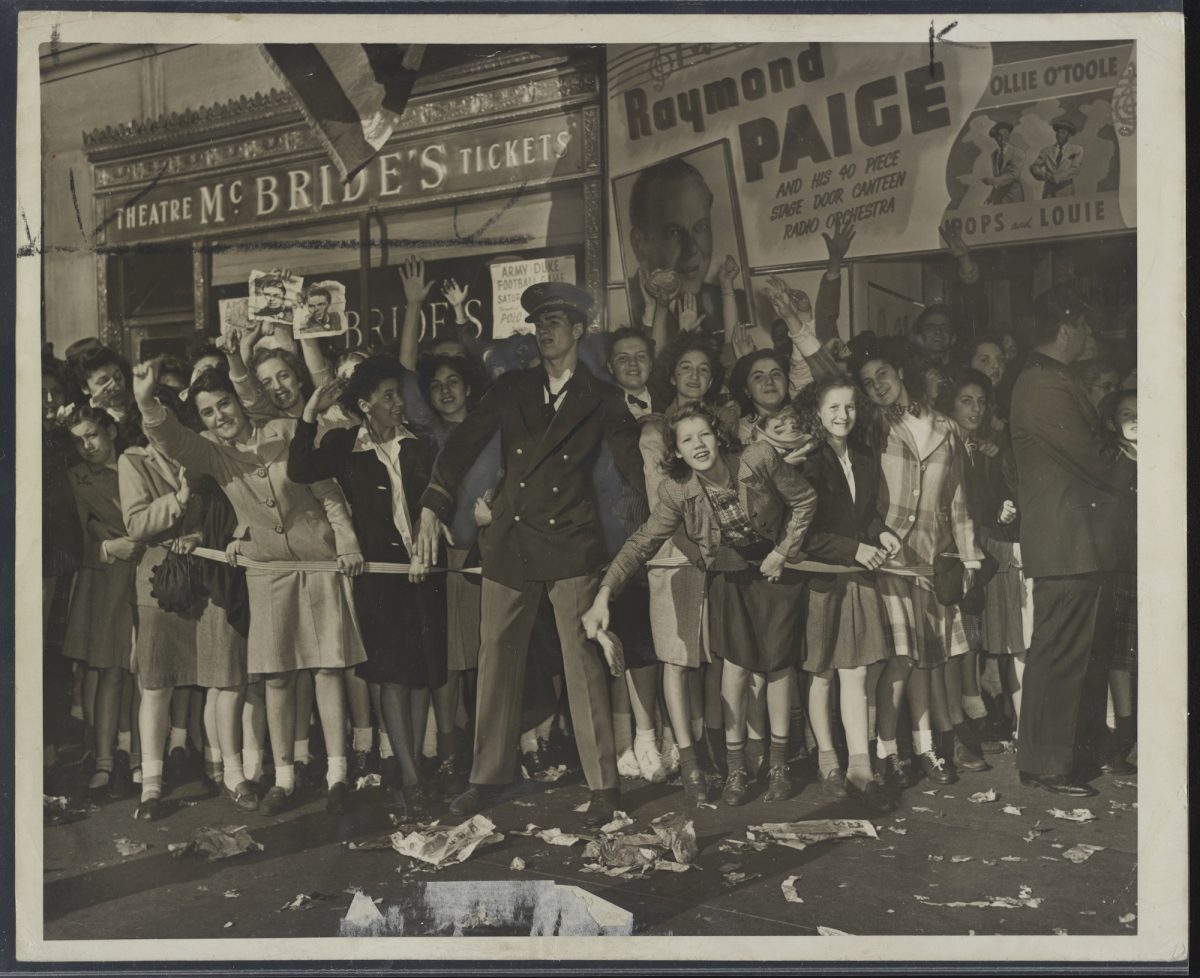
October 12, 1944: Frank Sinatra appears at the Paramount Theater in New York's Times Square. A full house of 3,664 is on hand to see him. About 25,000 others, mostly teenage girls -- "bobbysoxers" in the lingo of the day -- are turned away, and they vent their frustrations by smashing store windows. You could say that they were the original "riot girls."
It becomes known as the Columbus Day Riot, and for those Sinatra fans who grew up to have kids screaming over Elvis Presley and/or the Beatles, complaining that they never acted that way over a musical act they liked, well, guess what, old-timers, some of you did.
Just as One Direction ain't no Beatles, and Justin Timberlake ain't no Elvis, singers from Bobby Darin to Harry Connick Jr. to Sean Combs have deluded themselves into thinking they were "the new Sinatra," but none of them is in Sinatra's league. The man has more charisma dead than any of them do alive.

Sinatra was a big sports fan. He sang "There Used to Be a Ballpark" about Ebbets Field, although he remained a Dodger fan after they moved to L.A. He was a great boxing fan who talked Life magazine into making him their official photographer for the 1971 "Super Fight" between Muhammad Ali and Joe Frazier – and, I have to say, he knew what he was doing: He took good pictures.

On a 1972 Pittsburgh Steelers roadtrip to San Diego, the Steeler fan club known as "Franco's Italian Army" (named after the half-black, half-Italian running back Franco Harris, as well as for the general whose "Italian Army" enabled him to win the Spanish Civil War) invited Sinatra, then living in nearby Palm Springs, and offered to make him an "Honorary General" in the Army. Although he had no connection to Pittsburgh, he posed for pictures with them and accepted a helmet with generals' stars on it.
In 1974, he gave a concert at Madison Square Garden, "the Mecca of Boxing." He called it The Main Event, and that became the title of the live album from it. To keep the analogy going, he was introduced by ABC Sports' boxing lead, Howard Cosell.
In a 2012 episode of the YouTube series Epic Rap Battles of History, "Epic" Lloyd Ahlquist played Frank Sinatra, against "Nice" Peter Shukoff as Freddie Mercury, lead singer of the rock band Queen.
*
October 12, 1944 was a Thursday. At the time, Columbus Day was celebrated on the actual anniversary of Christopher Columbus' arrival in the New World, October 12, 1492. Since 1971, America has observed the holiday on the 2nd Monday in October -- which is also Canada's Thanksgiving Day.
This was also the day that the Nazis retreated from Athens, ending their occupation of the capital of Greece. I have a separate entry for that event.
The baseball season ended with the World Series 3 days earlier. It was a Thursday, so there were no NFL scores. The NBA hadn't been founded yet. And the 1944-45 NHL season didn't begin until October 28. So there were no scores on this historic day.

December 31, 1999 & January 1, 2000: The Millennium

December 31, 1999:  The Millennium arrives. The people of planet Earth survived. At a terrible cost. But we hadn't destroyed ourselves. ...