Showing posts with label pittsburgh pirates. Show all posts

Saturday, December 31, 2022

December 31, 1972: Roberto Clemente Is Killed

December 31, 1972: Roberto Clemente is killed in a plane crash, trying to get relief supplies from his native Puerto Rico to earthquake-ravaged Nicaragua.

Eight days earlier -- the same day as the football play known as the "Immaculate Reception" -- an earthquake measuring 6.3 on the Richter scale struck the Nicaraguan capital of Managua.

As with the San Francisco earthquake of 1906, there were fires started, and the city's firefighting equipment was damaged by the earthquake. Between the initial quake and the fires, the Managua disaster killed about 11,000 people, and left about 300,000 of the city's 1 million or so people homeless. The city's top 4 hospitals were destroyed, and there were food shortages.

The world responded with relief, but the country's right-wing dictator, Anastasio Somoza Debayle -- my autocorrect poignantly tried to turn that into "Debacle" -- had it distributed according to his own purposes, much like an old-style American city "machine politician."

Enter Roberto Clemente. The right fielder for the Pittsburgh Pirates had just completed his 18th major league season. At age 38, he showed no signs of slowing down. That season, he batted .312, helped the Pirates win their 3rd straight National League Eastern Division title, was named to his 15th All-Star game, was awarded his 12th Gold Glove, and collected his 3,000th career hit. 

He had won 4 NL batting titles, was named the NL's Most Valuable Player in 1966, and had helped the Pirates win the World Series in 1960 and 1971, being named the Series MVP in the ladder. 

He was not the first black Hispanic player in the major leagues, but, at this point, he was easily the greatest. Indeed, like actor-comedian Jackie Gleason was, and hockey star Wayne Gretzky later would be, he was nicknamed "The Great One." He was a point of pride for baseball fans all over Latin America, not just in his native Puerto Rico.

Already heavily involved in charities all over Latin America, Clemente had visited Managua only a few weeks before the earthquake. He organized three planeloads of relief supplies, but heard they had all been diverted by the Somoza government. He decided to accompany the fourth flight himself, to make sure that it didn't happen again.

The plane was a propeller-driven cargo plane, a DC-7. This particular plane, one of 338 that McDonnell-Douglas built between 1953 and 1958, was a bad choice, as it had a history of mechanical problems. On December 31, 1972, New Year's Eve, it was loaded up at Isla Verde International Airport outside the Puerto Rican capital of San Juan.
A DC-7, similar to the Clemente relief plane

Between cargo, and regular supplies like fuel, the plane ended up 4,200 pounds over its recommended limit. The plane took off at 9:20 PM (8:20 PM, U.S. East Coast time), for a 4-hour flight from San Juan to Managua -- meaning the New Year of 1973 would have begun for them in midflight.

But within 3 minutes, the pilot, Jerry Hill, realized he couldn't get the plane high enough due to the weight, and told the San Juan control tower that he had begun to turn around. Just afterward, one of the plane's four engines exploded, and it crashed into the Atlantic Ocean. 

Although most pieces of the plane were found, Hill was the only one of the five people on board whose body was found. There is no grand memorial for Roberto Clemente at any cemetery: He still lies somewhere off the coast of his homeland. He left behind a wife and three sons.
For baseball fans, January 1, 1973 did not present a "Happy New Year." The Pirates retired Clemente's Number 21, and wore that number in a patch on their sleeves all season long. It would be the only season from 1970 to 1975 that they didn't win the NL East title. On March 20, a special election was held for the Baseball Hall of Fame, and the five-year waiting period after a player's last game was waived, making Clemente eligible. He was elected with nearly 93 percent of the vote.
Manager Bill Virdon with the patch

The Pirates dedicated a statue of him outside Three Rivers Stadium. When they moved to the adjacent PNC Park in 2001, the statue went with them, and the neighboring 6th Street Bridge connecting the North Side with downtown Pittsburgh was renamed the Roberto Clemente Bridge.

An arena that was nearly ready to open in San Juan at the time of his death was named the Roberto Clemente Coliseum. New York City named a park across from the Bronx apartment building where Hank Greenberg grew up after a member of the Hall of Fame -- not Greenberg, but, reflecting that this neighborhood is now mostly Puerto Rican, Clemente.

On December 31, 1985, 13 years later, another New Year's Eve would be struck by air travel tragedy, as the crash outside Dallas of another McDonnell-Douglas plane with a troubled history, this one an old DC-3, killed seven people including early rock and roll star Ricky Nelson.

Earlier in 1985, Isla Verde International Airport in San Juan was renamed Luis Muñoz Marín International Airport, after the 1st elected Governor of the island, who had presided over the airport's opening in 1955.

*

December 31, 1972 was a Sunday. The end of the year marked the 1st year that Americans bought more color television sets than black-and-white sets, and the 1st year that a majority of American homes had color TV sets. I have a separate entry for that event.

It was the off-season for baseball. The NFL played its Conference Championship Games:

* Although the Miami Dolphins had an undefeated regular season, the Pittsburgh Steelers hosted the AFC Championship Game at Three Rivers Stadium, because the NFL was still using a rotating system for hosting the title game, not home field advantage.

Eight days after the franchise's 1st-ever Playoff win, on the Franco Harris "Immaculate Reception," the Steelers led 10-7 in the 3rd quarter. But the Dolphins came from behind to win, 21-17.

* The Washington Redskins dominated the defending NFL Champions, the Dallas Cowboys, 26-3 at Robert F. Kennedy Stadium. Head coach George Allen led his veteran "Over-the-Hill Gang" to the team's 1st Playoff win in 30 years. 

But the Dolphins would complete the perfect season by beating the Redskins in Super Bowl VII, 2 weeks later at the Los Angeles Memorial Coliseum.

There were no games played in the NBA or the ABA on New Year's Eve 1972. There were 3 NHL games played that day:

* The New York Rangers beat the St. Louis Blues, 6-1 at Madison Square Garden. 

* The Detroit Red Wings and the Minnesota North Stars played to a tie, 4-4 at the Olympia Stadium in Detroit. 

* And the Chicago Black Hawks beat the Buffalo Sabres, 4-2 at Chicago Stadium. 

And there were 3 games played in the World Hockey Association, which was in its 1st season:

* The New England Whalers beat the New York Raiders, 3-0 in the other game played on Madison Square Garden ice that day.

* The Quebec Nordiques beat the Ottawa Nationals, 8-4 at Le Colisée de Québec. Rene Levesque must have loved that.

* And the Philadelphia Blazers beat the Los Angeles Sharks, 3-1 at the Los Angeles Memorial Sports Arena. 

Sunday, December 11, 2022

December 11, 1975: A Big Day of Yankee Trades

Mickey Rivers

December 11, 1975: The New York Yankees trade right fielder Bobby Bonds to the California Angels for center fielder Mickey Rivers and pitcher Ed Figueroa.

The Yankees also trade George "Doc" Medich to the Pittsburgh Pirates for 2nd baseman Willie Randolph and pitchers Ken Brett and Dock Ellis. (Unlike Medich, "Dock" was his actual birth name.)

Early in the 1977 season, the Yankees traded Ellis, outfielder Larry Murray and infielder Marty Perez to the Oakland Athletics for pitcher Mike Torrez. Right before that season, they sent outfielder Oscar Gamble, pitcher LaMarr Hoyt, pitcher Bob Polinsky and $250,000 to the Chicago White Sox for shortstop Russell "Bucky" Dent.

Just before George Steinbrenner bought the team, but after he had begun negotiations, so he probably gave his okay to it, the Yankees sent catcher John Ellis, 3rd baseman Jerry Kenney, and outfielders Charlie Spikes and Rusty Torres to Cleveland for 3rd baseman Graig Nettles and catcher Jerry Moses. A year after that, the Yankees sent pitcher Lindy McDaniel to the Kansas City Royals for outfielder Lou Piniella.

While the White Sox got a Cy Young season out of Hoyt, and McDaniel helped make the Royal pitching staff one of the best in baseball (more due to his teaching than to his pitching, as he was near the end of his career), each and every one of these trades was genius for Yankee GM Gabe Paul (especially since he was the Indian GM for the Nettles trade, knowing he was going to the Yankees, in what was clearly a conflict of interest).

Specifically about the Rivers & Figueroa for Bonds trade: With the San Francisco Giants, the team for whom his son Barry would later become a legend, Bobby Bonds was one of the best players in the game, a rare combination of good power and great speed. Steinbrenner couldn't resist, and sent the beloved Bobby Murcer to Candlestick Park to get him. (Murcer would be reacquired in 1979.)

Bonds was a classic Brian Cashman player: Batted righthanded, had a lot of power, struck out too much (at the time, he had seasons of 189 and 187 strikeouts, then MLB records), took risky chances on the bases that hurt often enough to make people think the times it paid off weren't worth it, and had his season curtailed by injury. He had good stats for the Yankees in 1975, but didn't really fit in. It wasn't a question of should he be traded, but for what.

Figueroa joined a rotation that already had the 1st big free agent signing, Jim "Catfish" Hunter, and Ellis. It would soon have prospect Ron Guidry. Figgy was key for the 1976 Pennant and the 1977 World Series. In 1978, he became the 1st Puerto Rican-born pitcher to win 20 games in a season. He remains the only one.
Ed Figueroa

At the time of the trade, the Yankees were managed by Billy Martin. Rivers was Billy's kind of player: A contact hitter with a little power, great speed, smarter on the bases than Bonds, and a good fielder. He was a little flaky, but he was the ideal leadoff hitter for the late 1970s Yankees.

Randolph was a Martin-type player, too: A 2nd baseman like Martin had been, got on base, ran well, good defense. He would remain their starting 2nd baseman for 13 years, and would receive a Plaque in Yankee Stadium's Monument Park.
Willie Randolph

The Yankees would need a June 15 deadline day trade to secure the American League Pennant in 1976, but lost the World Series to the Cincinnati Reds. A few more deals were made, and they won the World Series in 1977 and 1978.

*

December 11, 1975 was a Thursday. Baseball was out of season. Football was in midweek. There were 5 games played in the NBA:

* The New York Knicks lost to the Cleveland Cavaliers, 109-95 at The Coliseum in the Cleveland suburb of Richfield, Ohio.

* The Washington Bullets beat the New Orleans Jazz, 117-109 at the Capital Centre in the Washington suburb of Landover, Maryland.

* The Atlanta Hawks beat the Buffalo Sabres, 122-99 at The Omni in Atlanta.

* The Philadelphia 76ers beat the Phoenix Suns, 110-106 at the Arizona Veterans Memorial Coliseum in Phoenix.

* And the Golden State Warriors beat the Portland Trail Blazers, 101-89 at the Oakland Coliseum Arena.

There were 2 games played in the American Basketball Association: 

* The New York Nets beat the Indiana Pacers, 124-123 in overtime at the Market Square Arena in Indianapolis. Billy Knight (no relation to Bobby) scored 36 points in defeat.

* And the Denver Nuggets beat the Virginia Squires, 111-100 at The Scope in Norfolk, Virginia.

There were 2 games played in the NHL. The New York Rangers beat their traditional rivals, the Boston Bruins, 5-1 at the Boston Garden. Steve Vickers and Wayne Dillon each scored 2 goals for the Rangers. And the Minnesota North Stars beat the Kansas City Scouts, 5-3 at the Kemper Arena (now the Hy-Vee Arena) in Kansas City.

And there were 2 games played in the World Hockey Association. The Edmonton Oilers beat the Calgary Cowboys, 3-2 at the Stampede Corral in Calgary. And the Indianapolis Racers and the San Diego Mariners played to a 3-3 tie at the San Diego Sports Arena (now the Pechanga Arena).

Monday, November 7, 2022

November 7, 1933: Pennsylvania Legalizes Sunday Sports

November 7, 1933: The Pennsylvania legislature votes to repeal the law banning the playing of professional sports on Sunday. Governor Gifford Pinchot signs the bill into law.

Pinchot was a Republican. He was elected in 1922, but the State Constitution then forbid Governors from serving consecutive terms, so he couldn't run again in 1926. He ran again in 1930, and won, but couldn't run again in 1934. A new Constitution, in 1968, made Governors eligible for 2 consecutive terms, but not 3. It's possible that Pinchot would have lost in the Democratic landslide of 1934, anyway.

For centuries, Christians followed the Commandment of "Remember the Sabbath Day, and keep it holy," defining it as 12:00 AM to 11:59 PM on Sunday, and not doing any work on the day. Of course, there would always be people who tried to get around this. But when professional sports became viable, some people of faith fought to get laws passed banning it on Sundays. They also tried to get laws passed banning other things on Sundays, like shopping. They called themselves "Sabbatarians."

Baseball was the first sport in America to really go professional. And when the National League was founded in 1876, the team owners chose not to challenge the laws: They refused to schedule games on Sundays. But this meant that that, since most people worked a six-day week, and permanent lights at a ballpark were not yet practical, thus making night games any day of the week possible, there would be no day on which the average working man could go to a baseball game.

In 1882, the American Association was founded, and they chose to play on Sunday -- where it was legal. Some teams got around this by playing games outside the city limits, or in neighboring States. A Boston team might play in neighboring Providence, Rhode Island; a Pittsburgh team might play in Wheeling, West Virginia: and a Detroit team might play in Toledo, Ohio.

The AA folded in 1891, but the American League, founded in 1901, adopted this "play on Sunday where and when you can" philosophy. The 1903 National Agreement between the NL and the AL allowed the NL to play on Sunday, where and when legal.

By that point, Saturday had become a non-mandatory workday for many people, allowing big crowds on the day; and professional football had become viable. The National Football League was founded in 1920, and began playing on Sunday because they didn't want to compete with college football, which played on Saturday.

It took until 1929 for Massachusetts to legalize Sunday sports. Right on time: The Great Depression came, and the Boston Red Sox, the Boston Braves, and anyone thinking of funding an NFL team in Boston needed those big crowds badly. (Of course, the big crowds still didn't come for George Preston Marshall's Boston Redskins, so he moved them to Washington in 1937.) Even so, for the 1929 season, the Red Sox made a deal with the Braves to play Sunday home games at Braves Field, because Fenway Park was "too close to a church." People really thought about such ridiculous things at the time.

In 1931, the NFL's Philadelphia team, the Frankford Yellow Jackets, folded. Their Frankford Stadium in Northeast Philadelphia had burned down, and they had trouble securing a new home field, since they couldn't play on Sunday, and most football stadiums of any size in the city had a college team playing there on Saturday afternoons.

In 1933, the rights to a Philly NFL team were bought by Bert Bell (later to be the Commissioner of the NFL) and Lud Wray, and they founded the Philadelphia Eagles. The same year, Art Rooney founded a football team named the Pittsburgh Pirates, which he would rename the Pittsburgh Steelers in 1940. Together, Bell and Rooney lobbied the Pennsylvania legislature to make Sunday sports legal, and they succeeded, making the long-term success of their teams possible.

The Pirates/Steelers debuted on September 20, at home at Forbes Field, and lost to the New York Giants, 23-2. The Eagles debuted on October 15, also against the Giants, and they were nearly strangled in their crib, losing 56-0 at the Polo Grounds. Three days later, playing their 1st home game, at Baker Bowl, home of the Phillies in North Philadelphia, they lost 25-0 to the Portsmouth Spartans, the team that would become the Detroit Lions the next season. 

Angelo Cataldi of Philadelphia sports-talk radio station WIP says of the city, "This place is wired for football." That's a little misleading: Philadelphia is a basketball city, but Pennsylvania is a football State. As political consultant James Carville, a graduate of Louisiana State University, said after getting Bob Casey Sr. elected Governor in 1986, "Pennsylvania is Philadelphia and Pittsburgh, with Alabama in between." He wasn't kidding: In neighboring New Jersey, we call the rural portions of the State "Pennsyltucky." The State is absolutely nuts about football.

In hindsight, legalizing Sunday sports was inevitable. Now, it is impossible to imagine an Autumn Sunday without a big percentage of the State's people in Eagles green and white, and another in Steelers black and gold.

*

November 7, 1933 was a Tuesday. Baseball season was over. Football was in midweek. The NBA hadn't been founded yet. And the NHL season started 2 days later. So there were no scores on this historic day, despite it being a day that made some scores possible.

Wednesday, October 26, 2022

October 26, 1934: The Joe Cronin Trade

October 26, 1934: Washington Senators owner Clark Griffith sells his shortstop and manager, Joe Cronin, to the Boston Red Sox for shortstop Lyn Lary and $225‚000 (about $4.9 million in 2022 money). Recently married to Mildred Robertson‚ Griffith's niece and adopted daughter‚ Cronin is signed by the Red Sox to a 5-year contract, a real rarity in those days.

This trade not only helps return the Red Sox to contention for the first time since Harry Frazee sold off several stars to the Yankees from 1919 to 1923, but it also helps wreck the Senators franchise, which had won the Pennant just 1 year earlier: For 77 years, from 1934 to 2011, only once, in 1945, had a Washington baseball team been in a major league Pennant race; only twice had they finished as high as 2nd, only 3 times as high as 3rd, and only 5 times had they had winning seasons.

This includes the "old Senators," from 1935 to 1960, when they moved to become the Minnesota Twins; the "new Senators," from 1961 to 1971, when they moved to become the Texas Rangers; the Washington Nationals, who had been terrible with flashes of fun since arriving in 2005; and the 1972-2004 interregnum when D.C.-area fans either had to go up to Baltimore, go to only the occasional exhibition game at RFK Stadium, check out minor-league teams (the Maryland cities of Salisbury, Frederick and Hagerstown, or Virginia teams like nearby Prince William), or stick to TV and go without live major league ball. 
It took the Nats until 2019 to finally bring D.C. its 1st Pennant since 1933 -- 86 years.

And yet, in spite of all the money that Yawkey spent from his 1933 purchase of the team until his death in 1976, the Red Sox didn't fare a lot better, as the New York Yankees kept winning Pennants. Cronin managed the Sox to a Pennant in 1946, then they didn't win another one until 1967, another in 1975, and another under Yawkey's widow Jean in 1986. It took until 2004 for the Red Sox to win their 1st World Series since 1918 -- also, 86 years.

Cronin served as Red Sox manager from 1934 to 1947, their general manager from 1948 until 1958, and as President of the American League from 1959 to 1973. He was elected to the Baseball Hall of Fame, the Red Sox retired his Number 4, and the Nationals elected him to their Ring of Honor.

Cronin's 1st major league team was the Pittsburgh Pirates. On April 1, 1928, they sold him to the Kansas City Blues of the American Association. On July 18, the Senators bought him from the Blues. The Pirates had won the National League Pennant in 1925 and 1927, but didn't win it again until 1960. So selling him was a really dumb transaction for them, right?

Not really: The Pirates stayed in contention the next 3 seasons, before having a losing record in 1931. The next season, they called up Joseph "Arky" Vaughan, who became one of the best shortstops of all time. He helped them come close to the Pennant in 1932, '33 and '38. Whatever prevented the Pirates from winning the Pennant for the remainder of Cronin's playing career, it wasn't the lack of a Hall of Fame shortstop.

*

October 26, 1934 was a Friday. Basketball player turned broadcaster Rod Hundley was born.

The baseball season had ended 17 days earlier, when the St. Louis Cardinals beat the Detroit Tigers in the World Series. The NBA hadn't been founded yet. The NHL season started 13 days later. There were some college football games played that night, but only one was between two teams that are now in the NCAA Division I Football Bowl Subdivision (formerly known as Division I-A): New Mexico State and Arizona played to a 0-0 tie at Arizona Stadium in Tucson.

Monday, October 17, 2022

October 17, 1979: The Pittsburgh Pirates' "Family"

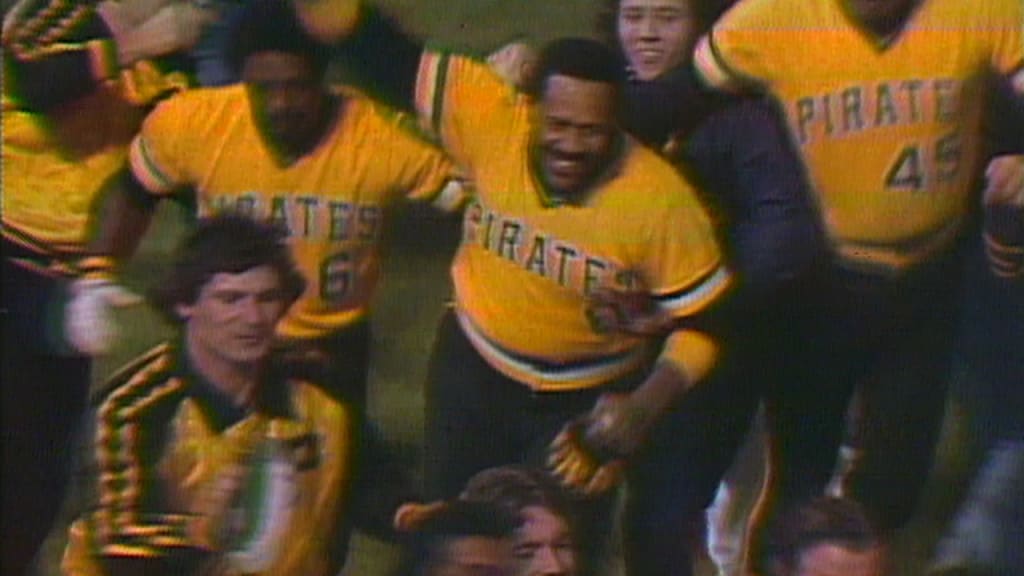
October 17, 1979: As in 1971, the Pittsburgh Pirates win the World Series by beating the Baltimore Orioles in Game 7 at Memorial Stadium, winning 4-1 to complete a comeback from 3 games to 1 down.
Willie Stargell, the 1st baseman known as "Pops" not just for his age (39) but because of his playing of Sister Sledge's hit disco song "We Are Family," hits his 3rd home run of the Series, and is named Series MVP, after having also been named MVP of the National League Championship Series.
Despite the group being from Philadelphia, and being about sisters rather than brothers, the song was adopted by the baseball team across Pennsylvania, the Pittsburgh Pirates, as they made their postseason run. It did not quite hit Number 1, getting stuck in June behind another iconic disco track, “Hot Stuff” by Donna Summer.
An online friend and fellow Yankee Fan, Paul Louis, once told me, "Part of me has come to suspect it might have been a subtle swipe at the dysfunctional image of the previous two seasons' World Series winning teams."
After the season, it was be announced that there was a tie vote for the regular-season MVP, between Stargell and the NL's batting champion, St. Louis Cardinals 1st baseman Keith Hernandez. Despite the only tie vote for an MVP in either League, Stargell became the 1st man, and remains the only one, ever to sweep the regular season, LCS and World Series MVPs in a single season.
This was the worst-looking World Series of all time. I don't mean it was poorly-played; that was hardly the case. I mean it looked bad. The Orioles had those bright orange home jerseys with the black lettering, and those dumb black caps with the white front panels and the Oriole head; the all-black caps with that head, which they wore from 1966 to 1974, looked a lot better.
Six of the NL's 12 teams wore 19th Century-style caps to celebrate the League's 100th Anniversary in 1976, and the Pirates were the only team to keep them, and continued to wear them until 1986. I didn't mind that. But their mix-and-match of white, white with yellow pinstripes, gold, and black, sometimes mixing up the jerseys and pants, was atrocious.
The stadiums were little better: I saw 3 games at Memorial Stadium, and liked it, but it had terrible lighting, and a grass field that was already chopped up by Colts games; while Three Rivers Stadium was a concrete ashtray with a hideous pea-green carpet of artificial turf. This was a World Series made for radio, not television.
The 1979 season was an outlier in its era. In the American League Eastern Division, the Yankees won in every season from 1976 to 1981, except 1979, when the Orioles won it. In the Western Division, the Kansas City Royals won in every season, except 1979, when the California Angels won it, for the 1st time in their 19-season history.
In the National League Eastern Division, the Philadelphia Phillies won it every year from 1976 to 1980, except 1979, when the Pirates won it, before giving way to the Montreal Expos in 1981. And in the NL West, the Cincinnati Reds completed their "Big Red Machine" era of dominance in 1976, and then the Los Angeles Dodgers won it in 1977, 1978 and 1981, losing a Playoff for it to the Houston Astros in 1980,  with the Reds winning again in 1979.
In the League Championship Series, the Pirates swept the Reds in 3 straight, gaining revenge for NLCS losses in 1970, 1972, 1974 and 1975, though they'd beaten the San Francisco Giants in the series since 1971; while the Orioles, having won the Pennant in 1969, 1970 and 1971, and lost the ALCS in 1973 and 1974, beat the Angels 3 games to 1.
Stargell, pitcher Bruce Kison and catcher Manny Sanguillen were the only players to have played for the Pirates in both the '71 and the '79 Series, although Sanguillen had left and since returned.
Game 1 of the World Series was supposed to be played in Baltimore on October 9, but was postponed due to rain and snow. The temperature for the postponed Game 1 was 41 degrees, the coldest on record, although there had been snow at a Series game in 1907. The O's won, 5-4, behind the pitching of Mike Flanagan, despite a Stargell home run. The Pirates scored in the 9th to win Game 2, 3-2.
Game 3 in Pittsburgh had a midgame rain delay, and the Pirates blew a 3-0 lead. Scott McGregor outpitched John Candelaria, as the O's won, 8-4. Despite another Stargell homer, the Bucs blew a 4-0 lead in Game 4, and the O's won, 9-6. Coming back from being down 3 games to 1 had only happened 3 times in World Series history to this point -- but the Pirates had done it twice, in 1925 against the Washington Senators, and in 1971 against the Orioles, with a few of the same people involved.
Pirate manager Chuck Tanner had planned to start Jim Rooker on short rest in Game 5, and then go to curveball master Bert Blyleven. That morning, his mother died. According to Kent Tekulve, the Pirates' submarine-pitching reliever, Tanner told the team before the game that his mother "knew we needed some help, so she went to get us some." Whatever the cause, Rooker had a no-hitter for the 1st 4 innings, and Tanner brought Blyleven in for the 6th, with the Orioles leading, 1-0. Then the Pirates got to Flanagan, and won the game, 7-1.
Back in Pittsburgh for Game 6, Candelaria and Jim Palmer traded goose eggs for 6 innings, before the Pirates reached Palmer, and they won, 4-0.
For what turns out to be the only time in his Presidency, Jimmy Carter attends a Major League Baseball game, and he picks a good one. He threw out the ceremonial first ball, saw Stargell homer off McGregor, saw Tekulve get his 3rd save in relief of Grant Jackson, and was among those congratulating the Pirates in the locker room afterward.
And, with the Pittsburgh Steelers having won Super Bowl XIII 9 months earlier, it gave the Steel City a rare MLB-NFL double, and the nickname "City of Champions." This was maintained 3 months later, when the Steelers won Super Bowl XIV. Sports Illustrated named Stargell and Steeler quarterback Terry Bradshaw "Sportsmen of the Year."
But in the 43 years since -- 2 full generations -- the Pirates have never won another Pennant, though they reached Game 7 of the NLCS in 1991 and '92, losing to the Atlanta Braves both times. The Steelers have since won 3 Super Bowls and appeared in 2 others; the Penguins have reached the Stanley Cup Finals 6 times, winning 5; and the University of Pittsburgh football team has won some bowl games and has usually been a contender for their conference title (formerly the Big East, now the Atlantic Coast Conference).
The Pirates? After 21 years out of the postseason, they made it for 3 straight seasons, 2011 to '13, but, so far, they can't get beyond the NLDS. So they're still waiting for the next generation of the Family to make good.
One more note about the '79 Series: When the Orioles won Game 4, the winning pitcher was Tim Stoddard. By simply appearing in the game, he became the 1st man ever to appear in both a World Series game and an NCAA basketball Final Four game. He was a member of the North Carolina State team that won the 1974 National Championship. He was still with the Orioles when they won the World Series in 1983.
He has since been joined only by Kenny Lofton, who reached the Final Four with Arizona in 1988, and the World Series with 3 different teams, the 1st being the Cleveland Indians in 1995.

Stargell retired after the 1982 season, and was elected to the Baseball Hall of Fame in 1988. The Pirates retired his Number 8. He threw out the ceremonial first ball before the last game at Three Rivers Stadium in 2000. He was invited to do it again for the first game at the new PNC Park, scheduled for April 9, 2001, with the dedication of a statue of him outside the park 2 days earlier. But his health declined, and he died the morning of the regular-season opener. He was only 61 years old.

Sister Sledge weren't quite "one-hit wonders," also hitting the Top 10 with their follow-up, "He's the Greatest Dancer." But they were one-shot wonders, as later albums failed to make much chart impact.

Nile Rodgers, leader of the disco band Chic, was their main songwriter and producer, and made them the 1st major music act to namecheck different fashion designers in music. He said, "They didn't even know what we were talking about when we wrote the lyric 'Halston, Gucci, Fiorucci'. First time anybody had ever name checked fashion designers." 

From oldest to youngest, the sisters were Debbie, Joni, Kim and Kathy. Joni passed away in 2017. As of October 17, 2022, the others are still alive. Debbie's daughters Amber and Camille, and Kim's daughter Julie, have toured with their mother and aunts. Kathy's daughter Kristen has not. Joni was the only sister to have had a son and no daughters.

UPDATE: The Pirates have a team Hall of Fame. From their 1979 World Champions, they have inducted 1st baseman Willie Stargell, catcher Manuel "Manny" Sanguillén, and pitcher Kent Tekulve -- but not yet manager Chuck Tanner, right fielder Dave Parker, or pitcher Bert Blyleven.
*
October 17, 1979 was a Wednesday. Football was in midweek. There were 7 games played in the NBA that night:
* The New Jersey Nets lost to the Philadelphia 76ers, 113-88 at the Rutgers Athletic Center (now the Jersey Mike's Arena) in Piscataway, New Jersey. Julius "Dr. J" Arena scored 22 points against his former team.
* The Boston Celtics beat the Cleveland Cavaliers, 127-108 at the Boston Garden.
* The Washington Bullets beat the Atlanta Hawks, 100-97 at the Capital Centre in the Washington suburb of Landover, Maryland.
* The Houston Rockets beat the Indiana Pacers, 116-112 at The Summit in Houston. Moses Malone had a monster game, 44 points and 29 rebounds. (The arena has since been converted into the Central Campus of the Lakewood Church, Dr. Joel Osteen's "megachurch.")
* The Milwaukee Bucks beat the Denver Nuggets, 125-97 at the Milwaukee Exposition, Convention Center and Arena, or "The MECCA." Since 2014, it has been named the UW-Panther Arena.
* The Golden State Warriors beat the Kansas City Kings, 107-94 at the Kemper Arena (now the Hy-Vee Arena) in Kansas City.
* And the Seattle SuperSonics beat the Los Angeles Lakers, 112-110 at the Seattle Center Coliseum.
And there were 6 games played in the NHL:
* The New York Islanders lost to the Boston Bruins, 3-2 at the Boston Garden.
* The Toronto Maple Leafs beat the Minnesota North Stars, 6-2 at Maple Leaf Gardens in Toronto.
* The Buffalo Sabres beat the Hartford Whalers, 3-1 at the Buffalo Memorial Auditorium.
* The Los Angeles Kings beat the Pittsburgh Penguins, 5-4 at the Civic Arena in Pittsburgh.
* In an "Original Six" matchup, the Chicago Black Hawks beat the Montreal Canadiens, 3-2 at the Chicago Stadium.
* The Vancouver Canucks beat the St. Louis Blues, 5-1 at the Checkerdome, as the St. Louis Arena was then known.
* And the Detroit Red Wings beat the Winnipeg Jets, 5-1 at the Winnipeg Arena.

October 17, 1971: A Stadium Called "Hell" In Iran

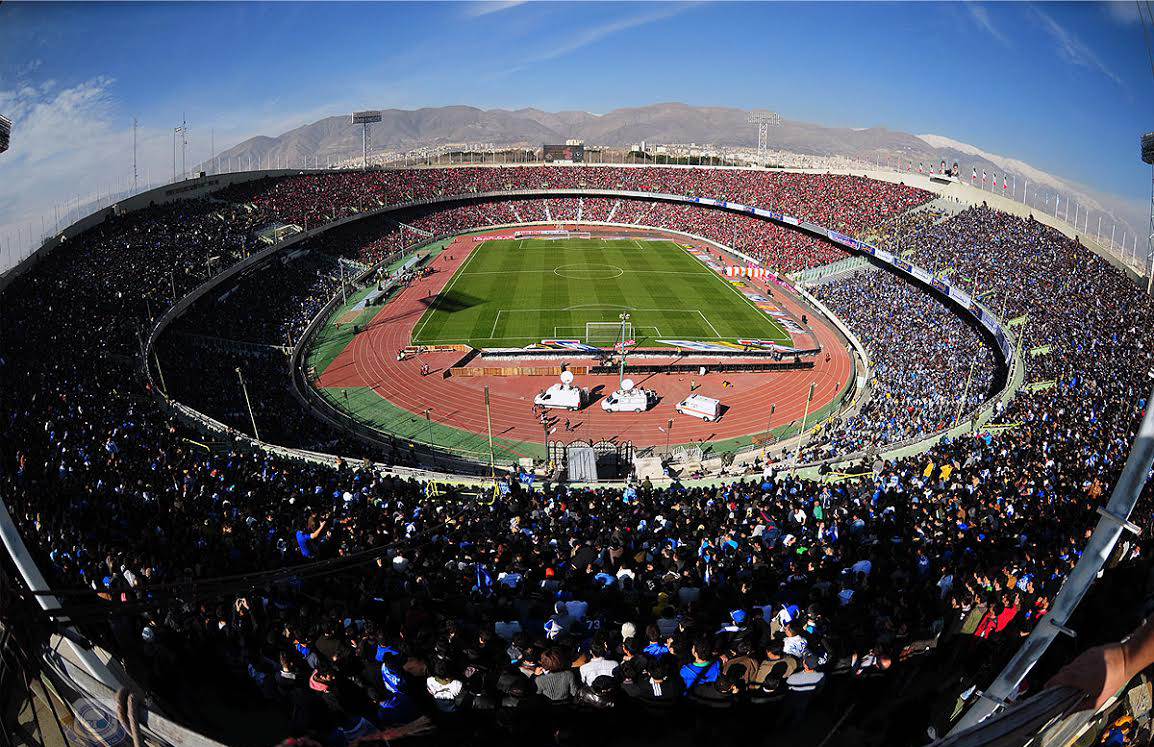
October 17, 1971: Aryamehr Stadium opens in Tehran, the capital of Iran. It became the home of Iran's national soccer team, and of the 2 biggest teams in the city, and in the country: Persepolis, a.k.a. the Red Army; and Taj, meaning "Crown," a.k.a. the Loving Blues and the Giants of Asia.

Among the other changes brought about by Iran's 1979 Islamic Revolution, the name of the stadium was changed to Azadi Stadium (ironically, "Azadi" means "Freedom"); and the name of Taj, to rid them of its connection to the deposed Shah and his royal/imperial family, was changed to Esteghlal (meaning "Independence").

Persepolis, founded in 1967, have won Iran's national league 14 times. (UPDATE: They have won again in 2023 and 2024, so that's 16.) Esteghlal, founded in 1945, have won it 9 times. However, they have won the AFC Champions League, Asia's continental club championship, twice, in 1970 and 1991; Persepolis have never won it.
A Tehran Derby. Persepolis red on one side, Esteghlal blue on the other.

The Azadi hosted the Asian Games in 1974, and a Frank Sinatra concert in 1975. From a record crowd of 128,000 for a 1998 World Cup qualifying match between Iran and Australia, the stadium's conversion to all-seater has dropped capacity to 78,116. Still, when split down the middle between 39,000 "Red Army" fans and 39,000 "Loving Blues" fans, it is as wild a sporting venue as any in the world. It is called "Johonam" -- the Farsi word for "Hell."

*

October 17, 1971 was a Sunday. Byron Chamberlain, a Super Bow-winning linebacker with the Denver Broncos and a Pro Bowl selection with the Minnesota Vikings, was born on this day.

The Pittsburgh Pirates beat the Baltimore Orioles, 2-1 at Memorial Stadium in Baltimore, in Game 7, to win the World Series. I have a separate entry for that event.

These NFL games were played:

* The New York Giants lost to the Baltimore Colts, 31-7 at Yankee Stadium.

* The New York Jets beat the Buffalo Bills, 28-17 at Shea Stadium. Both New York teams being at home on the same day could have been due to the baseball teams having scheduling priority at the stadiums, thus compressing each football team's home schedule to being from mid-October to late December.

* The Washington Redskins beat the football version of the St. Louis Cardinals, 20-0 at Robert F. Kennedy Memorial Stadium in Washington.

* The Los Angeles Rams beat the Atlanta Falcons, 24-16 at Atlanta Stadium (later renamed Atlanta-Fulton County Stadium).

* The Miami Dolphins beat the New England Patriots, 41-3 at the Orange Bowl in Miami.

* The New Orleans Saints beat the Dallas Cowboys, 24-14 at Tulane Stadium in New Orleans. This was an outlier: The Saints, as they usually did in their early days, finished below .500; while the Cowboys went on to win their 1st Super Bowl.

* The Detroit Lions beat the Houston Oilers, 31-7 at the Astrodome in Houston.

* The Cleveland Browns beat the Cincinnati Bengals, 27-24 at Riverfront Stadium in Cincinnati.

* The Minnesota Vikings beat their arch-rivals, the Green Bay Packers, 24-13 at Lambeau Field in Green Bay. Of course, the Packers consider their arch-rivals to be the Chicago Bears, not the Vikings.

* The Denver Broncos beat the San Diego Chargers, 20-16 at Mile High Stadium in Denver.

* The San Francisco 49ers beat the Chicago Bears, 13-0 in San Francisco. It turns out to be the last game for inured Bears star Gale Sayers. So, like the Beatles, Sayers' last paid performance was at Candlestick Park. Injuries limited Sayers to only enough games that it amounted to 4 full seasons. But he was still great enough to be elected to the Pro Football Hall of Fame.

* The Oakland Raiders beat the Philadelphia Eagles, 34-10 at the Oakland Coliseum.

* And the following day, on ABC Monday Night Football, the Kansas City Chiefs beat the Pittsburgh Steelers, 38-16 at Kansas City Municipal Stadium.

There were no games in the American Basketball Association that day, but there were 3 in the NBA:
* The New York Knicks beat the Cleveland Cavaliers, 121-120 in overtime at the Cleveland Arena.
* The Detroit Pistons beat the Houston Rockets, 112-99 at Cobo Hall (now Huntington Place) in Detroit.
* And the Milwaukee Bucks beat the Portland Trail Blazers, 127-94 at the Portland Memorial Coliseum.
There were 6 games in the NHL:
* The New York Rangers beat the Montreal Canadiens, 8-4 at Madison Square Garden.
* The Toronto Maple Leafs and the Boston Bruins played to a tie, 2-2 at the Boston Garden.
* The Minnesota North Stars beat the Buffalo Sabres, 3-2 at the Buffalo Memorial Auditorium.
* The Detroit Red Wings beat the St. Louis Blues, 5-3 at the Olympia Stadium in Detroit.
* The Chicago Black Hawks beat the Los Angeles Kings, 4-0 at the Chicago Stadium.
* The Pittsburgh Penguins beat the California Golden Seals, 4-2 at the Oakland Coliseum Arena.
* And the Philadelphia Flyers and the Vancouver Canucks were not scheduled.

October 17, 1971: Roberto Clemente Deja Claro Su Punto

October 17, 1971: Game 7 of the World Series is played at Memorial Stadium in Baltimore. The Baltimore Orioles were set to play the Pittsburgh Pirates. The Orioles were the defending World Champions. The Pirates last won in 1960, and 2 players from that team were left: 2nd baseman Bill Mazeroski, whose home run won that Series; and right fielder Roberto Clemente. Danny Murtaugh managed them in both, and 1960 player Bill Virdon was one of Murtaugh's 1971 coaches.
Earlier in the season, the Pirates had become the 1st team ever to field an all-black-and/or-Hispanic starting lineup, leading author Bruce Markusen to title his book about the '71 Bucs The Team That Changed Baseball.
Clemente was 37, the most popular Hispanic player in baseball, and the Pirates' greatest player since Honus Wagner. But English-speaking baseball fans -- especially white ones -- weren't as interested in him as they were in some others. To a racist, Willie Mays, Hank Aaron and Frank Robinson might be black, but at least they spoke English.
Of course, Clemente spoke English, too, even though it was his 2nd language. And he dared to insist upon being called "Roberto." His Topps baseball cards usually listed him as "Bob Clemente." And Pirates broadcaster Bob Prince, a.k.a. "The Gunner," called him "Bobby."
What's more, he played in Pittsburgh. He had never played in New York, like Mays and Mickey Mantle. He wasn't playing in Los Angeles, like Sandy Koufax and Maury Wills had. He wasn't playing in Chicago, like the newly-retired Ernie Banks. He wasn't playing in San Francisco, like Mays. He wasn't playing in the nation's capital, Washington, like Frank Howard. He wasn't playing in the strong-media city of Boston, like Carl Yastrzemski. And he wasn't playing in the baseball-beloved city of St. Louis, like Bob Gibson and Lou Brock. So he wasn't celebrated in the media as those men were. He had to deal with both the ignorance of racism and simply being ignored.
But the World Series is a national showcase. Every baseball fans watches. It helped launch Koufax to superstardom in 1963, Gibson and Brock in 1964, Frank Robinson in 1966, Al Kaline in 1968, and Brooks Robinson in 1970. In 1971, Roberto Clemente, already with 14 All-Star Game berths, 10 Gold Gloves, 4 National League batting titles, and a regular-season Most Valuable Player award, but without stardom outside Western Pennsylvania, wanted to show the country that he was as good as any of them.
But to do it, he and the Pirates would have to go through the Orioles, the defending World Champions, with Brooks Robinson, Frank Robinson, John "Boog" Powell, and pitchers Jim Palmer, Mike Cuellar and Dave McNally. And, being an odd-numbered year, the O's, as AL Champions, would have the home-field advantage for Games 1 and 2, and, if necessary, Games 6 and 7.
The Orioles won Game 1, 5-3, McNally outpitching Dock Ellis. They also won Game 2, 11-3, Palmer outpitching Bob Johnson. But when the Series went to Pittsburgh, the Pirates won Game 3, 5-4, with Steve Blass outpitching Cuellar; and Game 4, 4-3, Bruce Kison outpitching Eddie Watt. And in Game 5, Nelson Briles pitched a 2-hit shutout, beating McNally, and the Pirates won, 4-0. But, back at Memorial Stadium, the Orioles won Game 6, 3-2. Clemente hit a home run, but Brooks Robinson hit a sacrifice fly to score Frank Robinson with the winning run in the bottom of the 10th inning.
Hank Bauer of the Yankees still holds the record for the longest hitting streak in World Series play, 17 games. Clemente had gotten a hit in all 7 games in 1960, and had now gotten hits in all 6 games in 1971, for 13, the 2nd-longest such streak. But the Pirates had to win Game 7 on the road.
Prior to Game 7, Briles did something that no active player had ever done before: He sang the National Anthem before a competitive Major League Baseball game, and a Game 7 of the World Series, no less. It would not happen again until 2019, when another Pirates pitcher, Steven Brault, sang the Anthem before a regular-season game.
Blass started against Cuellar, the lefthanded screwball specialist from Cuba. The game was scoreless until the top of the 4th, when Clemente hit a home run off Cuellar. The teams exchanged runs in the 8th, but Blass went the distance. The outcome was still in doubt on the final play: Merv Rettenmund hit a bouncer that ricocheted off the pitcher's mound. Pirate shortstop Jacinto "Jackie" Hernández handled it, and threw Rettenmund out.
The Pirates had become World Champions for the 4th time, previously doing so in 1909, 1925 and 1960. In 1901 and 1902, they won the NL Pennant, and had a better record than the AL Champions both times, but there was no World Series until 1903, which they reached, losing to the team soon to be known as the Boston Red Sox.
Clemente played in all 7 games in '60 and in all 7 games in '71, and got hits in all 14 World Series games in which he played. In fact, all 5 of the Pirates' World Series wins, including the 1979 win that was yet to come, have been in 7 games.
Interviewed for Sports Illustrated, Pirate general manager Joe Brown said, "People said to me, 'My God, does he always play like that?' And I said, 'Yes. Always. You're not seeing anything that we don't see day in and day out.'" Clemente had shown the world what he not only could do, but had always done.
After the game‚ 40‚000 people rioted in celebration in downtown Pittsburgh. At least 100 people wre injured‚ some seriously, although no deaths were reported.
Immediately after the Game 7 victory, rookie hurler Bruce Kison and his champagne-soaked best man Bob Moose were whisked away from Memorial Stadium by helicopter to a waiting Lear Jet, to attend the 21 year-old Kison's 6:30 PM wedding in Pittsburgh, for which the groom arrived 33 minutes late.
Also after the game, NBC did what it usually did when covering the World Series, and not only hired the leading announcer for each participating team -- in this case, Prince for the Pirates and Chuck Thompson for the Orioles -- but sent the announcer for the winning team into the locker room to interview the victorious.
Clemente had become the 1st Spanish-speaking player to be named the World Series MVP. Prince called him over to the TV camera, and called him "Bobby." Roberto was 37 years old. He told Prince that he had something he wanted to say, in Spanish. He said: << En el día más orgulloso de mi vida, a mis hijos, les doy mi bendición. Y a mis padres pido su bendición desde Puerto Rico. >> 
They were the first words ever spoken in Spanish live on national television in America. In English, "In the proudest day in my life, to my children, I give my blessing. And from my parents, I ask their blessing from Puerto Rico."
At that point, with Honus Wagner dead, the Steelers yet to rise to dynasty status, and Mario Lemieux having just turned 6, Bob Prince might have been the one living person connected with Pittsburgh sports more popular than Roberto Clemente. But in that moment, Clemente transcended not just Pittsburgh, but his entire sport. He had shown the world how he always played. And he had shown Prince, and the world, that he was a human being, an adult, an American, a Puerto Rican, and a Spanish speaker, as well as a great baseball player, and that each status deserved respect.
He had made his point -- Había dejado claro su punto.
The following year, he collected his 3,000th career hit. Two months later, trying to fly relief supplies to earthquake-devastated Nicaragua, he was killed in a plane crash. In a span of 14 months, he had gone from local star to baseball icon to secular saint.
UPDATE: The Pirates have a team Hall of Fame. From their 1971 World Champions, they have inducted right fielder Roberto Clemente, 2nd baseman Bill Mazeroski, center fielder Al Oliver, catcher Manuel "Manny" Sanguillén, pitcher Steve Blass, and manager Danny Murtaugh.
*
October 17, 1971 was a Sunday. Byron Chamberlain, a Super Bowl-winning linebacker with the Denver Broncos and a Pro Bowl selection with the Minnesota Vikings, was born on this day. And this was the day what's now named the Azadi Stadium opened in Tehran, Iran. I have a separate entry for that event.

These NFL games were played:

* The New York Giants lost to the Baltimore Colts, 31-7 at Yankee Stadium.

* The New York Jets beat the Buffalo Bills, 28-17 at Shea Stadium. Both New York teams being at home on the same day could have been due to the baseball teams having scheduling priority at the stadiums, thus compressing each football team's home schedule to being from mid-October to late December.

* The Washington Redskins beat the football version of the St. Louis Cardinals, 20-0 at Robert F. Kennedy Memorial Stadium in Washington.

* The Los Angeles Rams beat the Atlanta Falcons, 24-16 at Atlanta Stadium (later renamed Atlanta-Fulton County Stadium).

* The Miami Dolphins beat the New England Patriots, 41-3 at the Orange Bowl in Miami.

* The New Orleans Saints beat the Dallas Cowboys, 24-14 at Tulane Stadium in New Orleans. This was an outlier: The Saints, as they usually did in their early days, finished below .500; while the Cowboys went on to win their 1st Super Bowl.

* The Detroit Lions beat the Houston Oilers, 31-7 at the Astrodome in Houston.

* The Cleveland Browns beat the Cincinnati Bengals, 27-24 at Riverfront Stadium in Cincinnati.

* The Minnesota Vikings beat their arch-rivals, the Green Bay Packers, 24-13 at Lambeau Field in Green Bay. Of course, the Packers consider their arch-rivals to be the Chicago Bears, not the Vikings.

* The Denver Broncos beat the San Diego Chargers, 20-16 at Mile High Stadium in Denver.

* The San Francisco 49ers beat the Chicago Bears, 13-0 in San Francisco. It turns out to be the last game for inured Bears star Gale Sayers. So, like the Beatles, Sayers' last paid performance was at Candlestick Park. Injuries limited Sayers to only enough games that it amounted to 4 full seasons. But he was still great enough to be elected to the Pro Football Hall of Fame.

* The Oakland Raiders beat the Philadelphia Eagles, 34-10 at the Oakland Coliseum.

* And the following day, on ABC Monday Night Football, the Kansas City Chiefs beat the Pittsburgh Steelers, 38-16 at Kansas City Municipal Stadium.

There were no games in the American Basketball Association that day, but there were 3 in the NBA:
* The New York Knicks beat the Cleveland Cavaliers, 121-120 in overtime at the Cleveland Arena.
* The Detroit Pistons beat the Houston Rockets, 112-99 at Cobo Hall (now Huntington Place) in Detroit.
* And the Milwaukee Bucks beat the Portland Trail Blazers, 127-94 at the Portland Memorial Coliseum.
There were 6 games in the NHL:
* The New York Rangers beat the Montreal Canadiens, 8-4 at Madison Square Garden.
* The Toronto Maple Leafs and the Boston Bruins played to a tie, 2-2 at the Boston Garden.
* The Minnesota North Stars beat the Buffalo Sabres, 3-2 at the Buffalo Memorial Auditorium.
* The Detroit Red Wings beat the St. Louis Blues, 5-3 at the Olympia Stadium in Detroit.
* The Chicago Black Hawks beat the Los Angeles Kings, 4-0 at the Chicago Stadium.
* The Pittsburgh Penguins beat the California Golden Seals, 4-2 at the Oakland Coliseum Arena.
* And the Philadelphia Flyers and the Vancouver Canucks were not scheduled. 

Saturday, October 15, 2022

October 16, 1909: Wagner vs. Cobb

Ty Cobb (left) and Honus Wagner

October 16, 1909: Rookie Charles "Babe" Adams comes through with a 6-hit shutout as the Pittsburgh Pirates beat the Detroit Tigers, 8-0. It is his 3rd complete-game World Series victory, and gives the Pirates their 1st World Series win -- if not, technically, their 1st World Championship.
Since there was no World Series in 1901 and 1902, and the NL was widely considered the better League, the present-day Bucs could claim "world championships" for those seasons, the way the New York Giants always did for 1904. However, they do not.
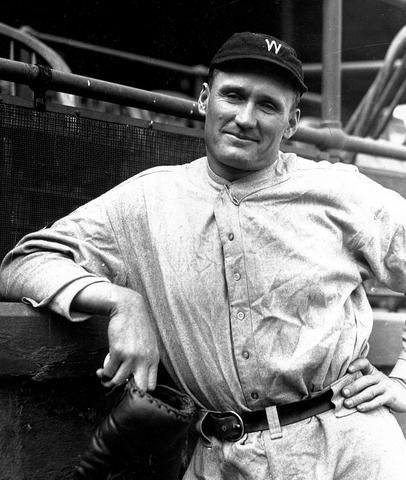
The Pirates and Tigers combine for 34 errors‚ with Detroit contributing 19. Both of these figures remain World Series records. In the battle between the 2 best players in baseball, Pittsburgh's John Peter "Honus" Wagner, a.k.a. the Flying Dutchman, considered the best player in the game at this point, excels much more than Detroit's Tyrus Raymond "Ty" Cobb, a.k.a. the Georgia Peach, who would soon replace Wagner as the best player in fans' imagination.
Adams would be the only Pirate player still on the team when they won their next Pennant and Series, in 1925, 16 years later. By the time the Tigers won another Pennant, in 1934, 25 years later, none would be left.
Babe Adams
Adams was the only rookie in the 20th Century to win a Game 7 in the World Series. The next to do it was John Lackey of the Anaheim Angels in 2002. Frank "Spec" Shea in 1947 and Mel Stottlemyre in 1964 would be rookies starting Game 7s for the Yankees, but Mel would lose, and while the Yankees did win in '47, Shea would not be the winning pitcher. Billy Martin was planning on using Ron Guidry had the 1977 Series gone to a Game 7, but the Yankees won Game 6 on Reggie Jackson's 3 home runs and Mike Torrez's complete game, rendering a Game 7 unnecessary.

The last survivors of this World Series? For the Pirates, pitcher Albert "Lefty" Leifield, who lived until 1970; for the Tigers, left fielder Davy Jones, who lived until 1972 -- beating out, by just 2 days, shortstop Owen "Donie" Bush. Ironically, Bush would be the manager of the next Pirate title team. He was also the namesake of the ballpark in his hometown of Indianapolis, home of one of the great teams of Triple-A ball, the Indianapolis Indians, whom he would serve as manager for many years.

In 1949, Ogden Nash, my grandmother's favorite poet, wrote "Line-Up for Yesterday" for Sport magazine, an alphabetical list of star players. For the letter C, he wrote: 

C is for Cobb,
Who grew spikes and not corn,
And made all the basemen
Wish they weren't born.

And for W:

W is for Wagner,
The bowlegged beauty;
Short was closed to all traffic
With Honus on duty.

UPDATE: The Pirates have a team Hall of Fame. However, from their 1900s teams, they have inducted only shortstop Honus Wagner and right fielder-manager Fred Clarke. From their previous period, from their 1882 founding until their 1899 merge with the Louisville Colonels, they have inducted 1st baseman Jake Beckley.
The Tigers do not have a team Hall of Fame, but they honor their Hall of Fame players on the outfield wall at Comerica Park. From the 1907, '08 and '09 Pennant winners, they honor center fielder Ty Cobb, right fielder Sam Crawford, and manager Hughie Jennings. Along with pitcher George Mullin and team owner Frank Navin, they are also in the Michigan Sports Hall of Fame.
Between their 1909 and 1934 Pennants, right fielder Harry Heilmann and left fielder Henry "Heinie" Manush were also elected to both the Baseball Hall of Fame and the Michigan Sports Hall of Fame.
*
October 16, 1909 was a Saturday. This was also the day that Jack Johnson knocked Stanley Ketchel out in one of the most famous Heavyweight Championship fights of the era. I have a separate entry for that event.
These notable games were played in college football:

* In a match of unbeatens, at the original Franklin Field in Philadelphia, the University of Pennsylvania beat Brown University, 13-5.

* In another match of unbeatens, on "The Plain" at the U.S. Military Academy in West Point, New York, Yale beat Army, 17-0.

* At Worden Field on the campus of the U.S. Naval Academy in Annapolis, Maryland, Villanova upset Navy, 11-6.

* Michigan beat Ohio State, 33-6 at Ferry Field in Ann Arbor, Michigan.

* Alabama beat Clemson, 3-0 at the Birmingham Fairgrounds in Birmingham, Alabama.

* At the Polo Grounds in New York, Carlisle beat Syracuse, 14-11.

* In New Jersey, in another battle of unbeatens, Princeton beat Sewanee, of Sewanee, Tennessee, 20-0.

* And Rutgers lost to Franklin & Marshall, 15-0 in Lancaster, Pennsylvania.

Also, Woolwich Arsenal lost 6-2 to Sunderland, at Roker Park in Sunderland, in the North-East of England. 

October 15, 1925: Walter Johnson's Last Stand

October 15, 1925: A steady downpour yesterday and today has left the field at Forbes Field in Pittsburgh a muddy mess, as Game 7 of the World Series is scheduled to be played. The weather forecast suggested rain for the next 3 days for both cities involved, Pittsburgh and Washington, making the moving of Game 7 to Washington pointless, and Commissioner Kenesaw Mountain Landis was anxious to get it over with.

I've never seen film of this game. I don't even know if any survives, although YouTube has footage from earlier in the Series, and of the Game 7s of 1924 and 1926. Maybe the film crews didn't want to risk getting electrocuted in the rain. At any rate, all we have to go on for the inclement weather are news reports.

UPDATE: On August 8, 2025, as commemorations for the 100th Anniversary of this Series began, I saw a photograph of a rather dubious method of drying the infield: Dousing it with gasoline and setting it on fire.
This insane tactic actually happened. It wasn't the only time, either.

But it would have been just plain wrong to play if the rain were as bad as what Philadelphia and Tampa Bay faced when Game 5 of the 2008 Series was suspended. There was a 6-day delay due to rain in 1911, and there were 3-day delays in 1962 and 1975. It could have been done again.

It was a short day for Pirate starter Vic Aldridge: 3 walks and 2 hits‚ and he was out of there with just 1 out in the 1st. Walter Johnson, the winningest pitcher in American League history, who finally became a World Series hero the year before, took a 4-0 lead to the mound. In what became known as "Johnson's Last Stand," the Bucs clobbered the 38-year-old Big Train for 15 hits‚ good for 24 total bases. Max Carey's 4-for-5 gave him a Series-high batting average of .458.

The Senators made the most of 7 hits‚ scoring 7 runs‚ including shortstop Roger Peckinpaugh's home run‚ the 12th homer of the Series by both teams combined‚ then a Series record, despite Forbes Field and Washington's Griffith Stadium both having some of the most distant fences in the game. Johnson would have fared better but for 2 more errors by Peckinpaugh‚ his 7th and 8th‚ still the Series record for any position. The Senators made only 1 other error in the 7 games.

Ray Kremer picked up his 2nd win with a 4-inning relief effort‚ as the Pirates won, 9-7. This was the Pirates' 1st World Championship in 16 years, and only one player remains from that 1909 title with Honus Wagner: Charles "Babe" Adams, who had pitched and won 3 games in '09, and was riding out the string in '25. It would take until 2019 for another Washington team to get that close to a World Series win.

In the next day's New York TimesJames Harrison wrote, "In a grave of mud was buried Walter Johnson's ambition to join the select panel of pitchers who have won three victories in one World Series. With mud shackling his ankles and water running down his neck, the grand old man of baseball succumbed to weariness, a sore leg, wretched support and the most miserable weather conditions that ever confronted a pitcher."

The last surviving member of the 1925 Pirates was shortstop Glenn Wright, who lived until 1984.

UPDATE: The Pirates have a team Hall of Fame. From their 1925 and 1927 National League Champions, including the 1925 World Series win, they have inducted 3rd baseman Harold "Pie" Traynor, center fielder Max Carey (who left after 1926), right fielders Hazen "Kiki" Cuyler and Paul Waner (who arrived in 1926), and Paul's brother, center fielder Lloyd Waner (who arrived in 1927).

*

October 15, 1925 was a Thursday. There was 1 other score on this historic day, a college football rivalry: North Carolina beat North Carolina State, 17-0 at Riddick Field on the N.C. State campus in Raleigh.

Friday, October 14, 2022

October 15, 1899: The End of Major League Baseball In Louisville

Honus Wagner, as a rookie in 1897

October 15, 1899: The Louisville Colonels beat the Chicago Orphans, 9-5 at the West Side Grounds in Chicago. The former Chicago White Stockings got this name because their longtime 1st baseman and manager, Adrian Anson, known as "Cap" (for "Captain") when he was younger and "Pop" as he got older, had retired, and "they missed their Pop."

The Orphans actually played 2 games against 2 different teams on this day. They also beat the St. Louis Perfectos, 7-0 at the West Side Grounds in Chicago. The Perfectos became the Cardinals in 1900, and the Orphans became the Cubs in 1903.

The Colonels' win over Chicago would be the last game they ever played, as they were absorbed by the Pittsburgh Pirates. Led by manager and left fielder Fred Clarke, and shortstop John "Honus" Wagner, they ended the season on this day in 9th place, at 75-77.

The National League contracted from 12 to 8 teams for the 1900 season. Barney Dreyfuss, owner of the Colonels, bought 
a half-interest in the Pirates. As part of the deal, he negotiated the transfer of the best Louisville players, namely Wagner (himself a Pittsburgh native), Clarke, center fielder Tommy Leach, and pitchers Charles "Deacon" Phillippe and George "Rube" Waddell, to the Pirates.

As a result of this deal, the Pirates won 4 of the next 10 NL Pennants, and were at least in the race for most of the rest. With Wagner becoming the best player in baseball, the Pirates reached but lost the 1st World Series in 1903, and won the World Series in 1909.

The Colonels began in the American Association in 1882, won the Pennant in 1890, and transferred to the NL with the AA's demise after the 1891 season. But most ballparks at the time were made of wood, and their home field, Eclipse Park, burned down on September 27, 1892. It was rebuilt, but burned down again on August 12, 1899, while the team was on the road, and they finished the season on the road.

Given the team's struggles on the field since entering the NL, and the fact that the NL was determined to contract -- the Baltimore Orioles, the Cleveland Spiders and the Washington Senators were also eliminated -- it made more sense for the Colonels to be one of the teams that gave up.

Louisville has since been one of the top minor-league cities of the last 120 years, in terms of both competitiveness and attendance. But it has never returned to the major leagues, nor is it likely to, since the Louisville metropolitan area is home to only 1.4 million people, and the city is just 82 miles from Cincinnati, itself one of MLB's smallest markets. Louisville has been denied a team in every MLB expansion: 1961-62, 1969, 1977, 1993 and 1998.

In a new, Class AAA league called the American Association, the Louisville Colonels won Pennants in 1909, 1916, 1921, 1925, 1926, 1930, 1939, 1940, 1944, 1945, 1946, 1954, 1960, 1961 and 1962. That team was moved, due to stadium issues. A new Louisville Colonels played in the Class AAA International League from 1967 to 1972, winning no Pennants.

On January 6, 1964, Charlie Finley signed a 2-year pact to move the Athletics from Kansas City to Louisville, pending American League approval. He is later denied that approval, and the A's stay put in Kansas City until after the 1967 season, when they moved to Oakland. 

In 1982, the Louisville Redbirds began play in the IL, and won Pennants in 1984, 1985 and 1995. They were renamed the Louisville RiverBats in 1999, and won the Pennant in 2001. The name was shortened to the Louisville Bats in 2002, and, through the 2022 season, they have not won another Pennant, although they have won their Division as recently as 2010.

Charlie Emig, a lefthanded pitcher from Cincinnati, who started 1 game for the Colonels in 1896, was not only the club's last surviving player, but also the last surviving man who had played a Major League Baseball (as we would now call it) game in the 19th Century. He died on October 2, 1975, age 100.

*

October 15, 1899 was a Sunday. There were 2 other baseball games played on this day, a doubleheader at League Park in Cincinnati, between the 2 Ohio teams. The Cincinnati Reds swept the Cleveland Spiders, 16-1 and 19-3.

I have a separate entry for that event, because the Spiders put together the worst season in the history of what's now called Major League Baseball. Their removal from the NL opened the door in 1901 for the AL team that was named the Blues, renamed the Bronchos in 1902, renamed the Naps for Napoleon Lajoie in 1903, renamed the Indians, in 1915, and renamed the Guardians in 2022.

Along with Cleveland and Louisville, the NL also dropped the Baltimore Orioles and the Washington Senators. The American League added teams with those names in 1901.

The Orioles had won the Pennant in 1894, 1895 and 1896, and had nearly done so in 1897. But the era of "syndicate baseball" meant that some of their best men were transferred to the Brooklyn team, including manager Ned Hanlon.

Hanlon's name reminded sportswriters of a circus troupe called Hanlon's Superbas, and so the team formerly known as the Grays and the Bridegrooms was renamed the Superbas. They won the Pennant in 1899, and would do so again in 1900. In 1911, they became the Dodgers.

The AL's Orioles were mismanaged, and the franchise was canceled after the 1902 season. A new team was established for the 1903 season, called the New York Highlanders, and renamed the Yankees in 1913. A minor-league version of the Orioles was established, and replaced in 1954 when the St. Louis Browns moved to Baltimore to take up the old name.

December 31, 1999 & January 1, 2000: The Millennium

December 31, 1999:  The Millennium arrives. The people of planet Earth survived. At a terrible cost. But we hadn't destroyed ourselves. ...