Showing posts with label gregory peck. Show all posts

Friday, November 11, 2022

November 11, 1947: "Gentlemen's Agreement" Premieres

Gregory Peck

November 11, 1947: The film Gentlemen's Agreement premieres, based on the recent novel by Laura Z. Hobson. It had been just 2 years since America defeated the greatest force for anti-Semitism the world has ever known. But the book and the film exposed America's own discrimination against Jews like nothing else ever has.

The term "gentlemen's agreement" refers to any unofficial, but still absolute agreement between a group to exclude people from joining the group based on race, religion, gender, or anything else. This included private clubs, hotels, and corporations. The choice of Major League Baseball team owners to exclude black men from playing, finally broken earlier that year with the debut of Jackie Robinson, had often been described as a "gentlemen's agreement." Such men are not gentlemen.

Producer Darryl F. Zanuck decided to make a film version of the novel after being refused membership in the Los Angeles Country Club, because it was incorrectly assumed that he was Jewish, which many Hollywood studio executives of the time were.

Before filming commenced, some of those executives, led by Samuel Goldwyn, approached Zanuck and asked him not to make the film, fearing it would "stir up trouble." They also warned that Hays Code enforcer Joseph Breen might not allow the film to pass the censors, as he had been known to make disparaging remarks about Jews. There was also concern that Dorothy McGuire's character being divorced would offend the National Legion of Decency, the Catholic group that had objected to racy films of the early 1930s, leading to the establishment of the Code.

The lead role was first offered to Cary Grant, but he turned it down. Gregory Peck decided to accept the role, although his agent advised him to refuse, believing Peck would be endangering his career. Jewish actor John Garfield agreed to play a lesser role in the film to be a part of it.

Widowed journalist Philip Schuyler Green (Peck) moves to New York with his aging mother (Anne Revere, identified only as "Mrs. Green") and his young son Tommy (Dean Stockwell, then 11, but who became a fine adult actor as well). Phil meets with magazine publisher John Minify (Albert Dekker), who asks Green, a Christian, to write an article on anti-Semitism.

At a lunch party, Phil meets Minify's niece, Kathy Lacey (Dorothy McGuire), who is actually the person who suggested the story idea. Phil then tries to explain anti-Jewish prejudice to his son. Realizing how difficult it is to explain these topics, he decides to write the story.

Phil and Kathy begin dating, and Phil adopts a Jewish identity to write the story from a fresh perspective. They agree to keep it secret that Phil is not Jewish. At the magazine, Phil is assigned a secretary, Elaine Wales. She turns out to be Jewish (as was her portrayer, June Havoc), but changed her name to get the job. After learning of Wales' experience from Phil, Minify orders the magazine to adopt hiring policies that are open to Jews. Phil meets fashion editor Anne Dettrey (Celeste Holm), who becomes a good friend and potentially more, particularly as strains develop between Phil and Kathy.

Having completed his service in World War II, Dave Goldman (Garfield), Phil's childhood friend, moves to New York, and lives with the Greens while searching a job and a home for his family. Being Jewish, Dave also experiences anti-Semitism. Housing is scarce in the city, but it is particularly difficult for him, since not all landlords will rent to a Jewish family.

While researching his story, Phil experiences several incidents of bigotry. When Phil's mother becomes ill with a heart condition, the doctor discourages him from consulting a specialist with a Jewish name. After hearing Phil is Jewish, the doctor becomes uncomfortable and leaves.

In addition, the janitor is shocked to see that a Jewish name is listed on the mail box. Furthermore, when Phil wants to celebrate his honeymoon at a swanky hotel, the manager refuses to register Phil, whom he tells to go elsewhere.

Tommy also becomes the target of bullies because of this. Phil is troubled by the way Kathy consoles Tommy, telling him their taunts of "dirty Jew" are wrong because he is not Jewish, not that the slur is wrong in and of itself.

Kathy's attitudes are revealed further when she and Phil announce their engagement. Her sister Jane invites them to a celebration in her home in the nearby suburb of Darien, Connecticut, which is known to be a community where Jews are not welcome. Fearing an awkward scene, Kathy wants to tell her family and friends that Phil only pretends to be Jewish, but he dissuades her. At the party, everyone is friendly to Phil, though many people cancel at the last minute.

Dave announces he will have to quit his job, because he cannot find a residence for his family. Kathy owns a vacant cottage in Darien, and Phil sees it as a solution to Dave's problem. Kathy, however, is unwilling to offend her neighbors by renting it to a Jewish family. Phil breaks his engagement to her, and announces he will be moving away from New York when his article is published. When it comes out, it is well received by the magazine staff.

Kathy meets with Dave and tells him how sick she felt when a party guest told a bigoted joke. However, she has no answer when Dave asks her what she did about it. She realizes that remaining silent condones the prejudice.

The next day, Dave announces that he and his family will be moving into the cottage in Darien and Kathy will be moving in with her sister next door to make sure they are treated well. Moved by this, Phil reconciles with Kathy. His mother, still recovering from her heart condition, tells Phil that his article has given her new hope for the future, a new motivation to get well.

The New York Herald Tribune described the film as a "brilliant blow against racial and religious intolerance." It won 3 Academy Awards: Best Picture for Zanuck, Best Director for Elia Kazan, and Best Supporting Actress for Holm.

The political nature of the film, however, upset the House Un-American Activities Committee (HUAC), which called Kazan, Zanuck, Garfield and Revere to testify before it. Kazan chose to "name names," which saved his career, but led to many actors refusing to work with him. His later film On the Waterfront is often considered his apology for that.

Revere, whose membership in the Communist Party was a barely-kept secret, refused to testify. Garfield was called in 1951, and appeared, but he refused to "name names." Both were placed in the Red Channels of the Hollywood Blacklist. Garfield remained there for a year, was called again to testify against his wife, Roberta Seidman, who made no secret of her Party membership. and died of a heart attack at the age of 39, before his second hearing date. HUAC had driven him to the grave -- although he was also a heavy drinker.

Albert Dekker died in 1968, Darryl F. Zanuck in 1979, Laura Z. Hobson in 1986, Anne Revere in 1990, Dorothy McGuire in 2001, Gregory Peck and Eliza Kazan in 2003, June Havoc in 2010, Celeste Holm in 2012, and Dean Stockwell in 2021. As events from the 2017 "United the Right" rally in Charlottesville, Virginia onward have proven, American anti-Semitism is alive and well. It should be neither.

*

November 11, 1947 was a Tuesday. Baseball was out of season. The Basketball Association of America, which became the NBA 2 years later, began its 2nd season the next night. No games were scheduled in the NHL.

There were 2 college football games played. New York University (NYU) beat Bucknell University, 19-6 at Yankee Stadium, And the U.S. Merchant Marine Academy beat Brooklyn College, 22-14 at Tomb Memorial Field in Great Neck, Long Island, New York.

Tuesday, August 30, 2022

August 30, 1951: "David and Bathsheba" Premieres

August 30, 1951: The film David and Bathsheba premieres. Directed by Henry King, it tells of Israel's greatest king, played here by Gregory Peck, and his best-remembered wife, played by Susan Hayward. Producer Daryl F. Zanuck wanted the film, inspired by Cecil B. DeMille's 1949 film Samson and Delilah.

David is said to have ruled, roughly, between 1000 and 960 BC, and his life is told in the Bible's Books of 1st Samuel and 2nd Samuel, named for the prophet (played here by Paul Newlan) who told of David's coming.

David becomes infatuated with Bathsheba, wife of one of his generals, Uriah the Hittite (Kieron Moore), as his mistress. She returns his affections. (In the movie, anyway. The Hays Code was still in effect. Most sources suggest that, as King, he could force her to submit.) When she becomes pregnant, David's plan is to send Uriah on a suicide mission, and then, after his death, marry Bathsheba, and pass their child off as premature and legitimate. At first, Uriah resists, but finally follows orders, and is killed. David does marry Bathsheba.

The prophet Nathan (Raymond Massey) reminds David that he is still married to Michal (Jayne Meadows), and has committed the sins of adultery and bigamy. A drought hits the land, and the newborn child dies. (Although the Bible doesn't have nearly the same problem with bigamy that it has with adultery. The Hays Code had a problem with it, though, and it insisted that sinners be properly punishes, especially for sex offenses. But, being a Biblical story, the Code allowed for repentance.) 

The people turn on David, and want him and Bathsheba to die for their sins. David tries to protect her, saying he is the one truly at fault, but she accepts her own responsibility. David, known as a poet, and the author of many of the entries in what became the Bible's Book of Psalms, recites what the modern world knows as his most famous work, Psalm 23: "The Lord is my shepherd. I shall not want."

He decides to face God's judgement alone. He goes to the Ark of the Covenant, and begs God to stop punishing Israel, and Bathsheba in particular, for his sins. He touches the Ark, thinking it will mean certain death. But there is a thunderclap, and he has flashbacks to his youth, including his fight with Goliath (Walter Talun, a Croatian professional wrestler) and his anointing by Samuel. When he takes his hands off the Ark, rain begins to fall. God has accepted his repentance.

The film ends there. It does not tell of David's later life, including his conflict with his eldest son, Absalom; or of the son that is later born to him and Bathsheba, Solomon, whom David eventually chooses as his successor.

Michelangelo carved his statue of David in Florence, Italy in 1504. David has also been played in film by Finlay Currie in Solomon and Sheba in 1959, Jeff Chandler in A Story of David on ABC in 1961, Timothy Bottoms (younger) and Keith Michell (older) in The Story of David on ABC in 1976, Richard Gere in King David in 1985, Nathaniel Parker in David and Max von Sydow in Solomon in 1997, and, with the story moved into the present day, with Christopher Egan as a young Captain David Shepherd in the 2009 NBC series Kings.

Timothy Bottoms, who played the younger David in the 1976 ABC production, was born on August 30, 1951, the day David and Bathsheba premiered.

Bathsheba was played by Jane Seymour in The Story of David, Alice Krige in King David, and an older version by Anouk Aimée in Solomon.

One more thing: People call the story of a team or a person that wins when supposedly overmatched a "David vs. Goliath story." The funny thing is, people forget that David didn't kill Goliath with a slingshot, which sounds like a child's toy. He knocked Goliath out with a sling, which can be a very formidable weapon, and then used a sword to hack the giant's head off. Goliath was overconfident, and didn't put his shield up to block the slung stone. David won because Goliath was a fool. And it wasn't the only battle he won because his opponent was a fool.

*

August 30, 1951 was a Thursday. This was also the day that the film Rhubarb premiered, and the New York Yankees traded Lew Burdette to the Boston Braves for Johnny Sain. I have separate entries for those events.

These baseball games were played:

* The New York Giants lost to the Pittsburgh Pirates, 10-9 at the Polo Grounds. I guess the buzzer system was working that day, but couldn't overcome the poor pitching of George Spencer, Sheldon Jones, Dave Koslo and Larry Jansen, the last of whom gave up a 9th-inning home run to Ralph Kiner. Rookie Willie Mays hit 2 home runs.

* The Brooklyn Dodgers beat the Cincinnati Reds, 3-1 at Ebbets Field. Preacher Roe outpitched Ewell Blackwell. Jackie Robinson went 0-for-2, but also drew 2 walks and stole a base. Duke Snider went 1-for-3 with a walk.

The Giants only lost 5 more games over the course of the regular season, and on only 3 of those days -- September 8, 11 and 20 -- did the Dodgers also win.

* The Boston Braves beat the Chicago Cubs, 16-2 at Braves Field in Boston. Earl Torgeson went 2-for-6 with a home run and 4 RBIs.

* The St. Louis Cardinals beat the Philadelphia Phillies, 6-3 at Shibe Park in Philadelphia. Stan Musial went 1-for-4.

* The Philadelphia Athletics beat the Cleveland Indians, 6-2 at Cleveland Municipal Stadium. Morrie Martin, in what had to be the career highlight for the lifetime 38-34 pitcher, outpitched Bob Feller.

* The Boston Red Sox beat the Detroit Tigers, 10-4 at Briggs Stadium (later renamed Tiger Stadium) in Detroit. Ted Williams went 0-for-4, but did draw 2 walks.

* And the New York Yankees, the Chicago White Sox, the St. Louis Browns and the Washington Senators were not scheduled.

Monday, July 11, 2022

July 11, 1960: Harper Lee Publishes "To Kill a Mockingbird"

July 11, 1960: Harper Lee's novel To Kill a Mockingbird is published. It becomes one of the most beloved, and one of the most controversial, novels of the 20th Century.

Nelle Harper Lee was born on April 28, 1926 in Monroeville, Alabama. Her father, Amasa Coleman Lee, was a lawyer, and later that year was elected to the Alabama House of Representatives, serving 12 years. Through him, she was descended from Confederate General Robert E. Lee. Just as Nelle, who dropped her first name for her pen name, made herself the basis for the novel's protagonist, Jean Louise, a.k.a. "Scout," her father became the basis for Scout's father, Atticus. Her mother was born Frances Finch, and Finch became the family's name in the book. Monroeville was renamed Maycomb.

She had 2 much older sisters, and a brother 6 years older, Edwin, who died in 1951, only 31 years old. He became the basis for Scout's brother James, or "Jem." During the Summer, a boy named Truman Capote visited Monroeville. They remained friends for the rest of Capote's life. In the book, Capote becomes Charles Baker Harris, a.k.a. "Dill."

She attended the University of Alabama, and moved to New York, working as an airline reservation agent and writing in her spare time. At Christmas 1956, her friends gave her a gift of enough money to amount to a year's wages, so she could take a year off and concentrate on writing.

She wrote something she titled Go Set a Watchman. But while her would-be publisher, Tay Hofhoff of J.B. Lippincott & Co. (which was bought out by Harper & Row in 1978), saw talent, she also saw disorganization, a collection of anecdotes rather than a genuine novel. She provided professional assistance, and, in 1960, the book was ready to go, as To Kill a Mockingbird. The title comes from something Atticus tells Scout: "It's a sin to kill a mockingbird," because they simply sing their song, and never harm others.

The book takes place in rural Alabama, which would later be the case with the film Forrest Gump, and the parody film Walk Hard: The Dewey Cox Story. We know the climax takes place in 1935, because Atticus tells Scout that the National Recovery Act, a big part of President Franklin D. Roosevelt's New Deal program, had been "killed." When she asks who killed it, he says, "Nine old men," already a longtime epithet for the Supreme Court of the United States.

Lee's mother died when she was living in New York, but in the book, Scout's mother has already died by the time the book begins, and the Finch's black cook, Calpurnia, helps to raise Scout and Jem. The family's tolerance for black people -- at least, in comparison to most of the white people in Maycomb -- is shown when Atticus becomes the only lawyer in town willing to defend Tom Robinson, a black man indicted for the rape and assault & battery of Mayella Ewell.

Atticus' cross-examination of Mayella's father Bob reveals that he had caused her facial bruises, beating her after she made advances on Tom. The people of the town referred to the Ewells as "white trash" and didn't trust them. Nevertheless, this was 1935 Alabama, and the jury was all white men, and Tom was convicted. Shortly thereafter, Tom is shot and killed, allegedly while trying to escape from jail. In essence, it was a lynching without the actual hanging.

Bob swears revenge on Atticus, first spitting tobacco in his face, then, after the school Halloween pageant, attacking the Finch children. They are saved by the mysterious Arthur "Boo" Radley, and the police cover up for him by saying that Bob fell on his own knife.

Atticus sums up Bob, and so many others among his fellow white Southern men, by saying, "Sometimes the Bible in the hand of one man is worse than a whisky bottle in the hand of (another)... There are just some kind of men who -- who're so busy worrying about the next world they've never learned to live in this one, and you can look down the street and see the results."

Outside the South, the book was hailed as an instant classic. It routinely makes best-ever lists. Inside the South, it was condemned. To this day, people try to ban it from school libraries -- conservatives because it makes racism look bad, and liberals because, in keeping with the language of the time, the book includes words that would be considered unacceptable today.

Amasa Coleman Lee died in 1962, a few months before the premiere of the film based on the book. Gregory Peck played Atticus, Mary Badham (sister of film director John) played Scout, Phillip Alford played Jem, John Megna played Jem, Brock Peters played Tom, James Anderson played Bob, and a young Robert Duvall played Boo.

The film was nominated for 8 Academy Awards including Best Picture, and won 3, impressive considering it was up against Lawrence of Arabia, Birdman of Alcatraz, Days of Wine and Roses, The Miracle Worker, The Music Man, Mutiny On the Bounty, Long Day's Journey Into Night, and Whatever Happened to Baby Jane? Peck won Best Actor, beating out Peter O'Toole for Lawrence, Burt Lancaster for Birdman, Jack Lemmon for Days of Wine and Roses, and Marcello Mastroianni for Divorce Italian Style.

Lee never wrote another book, and rarely granted interviews. In one, in 2011, she explained why she never wrote another book: "Two reasons: one, I wouldn't go through the pressure and publicity I went through with To Kill a Mockingbird for any amount of money. Second, I have said what I wanted to say, and I will not say it again." In 2007, President George W. Bush awarded her the Presidential medal of Freedom.

In 2014, Lee's lawyer found the original manuscript for Go Set a Watchman in a safe-deposit box. With her permission, it was re-submitted, 58 years after its 1st attempt. It was published the next year, and takes place in the 1950s, when Scout returns as an adult from New York to visit Maycomb, following Jem's death (reflecting the death of Lee's real brother).

She considers her father to be the moral compass, or "watchman," of the town, but is shocked to see him embracing racists and their views. Like many Southern politicians of the 1950s and '60s, he tries to justify it by saying he's trying to slow down federal government intervention into State politics. Her idol is shattered, reduced to the level of a man. Many readers felt the same way, and suggested that Lee, now elderly and infirm, had done the same to their Atticus, whom they could only see as the kindly Gregory Peck.

Harper Lee died less than a year later, on February 19, 2016, at the age of 89.

*

July 11, 1960 was a Monday. There was only one score on this historic day. From 1958 to 1962, Major League Baseball held 2 All-Star Games every season. This was the 1st, at Kansas City Municipal Stadium, and the National League beat the American League, 5-3.

The starting pitchers were Bob Friend of the Pittsburgh Pirates, who became the winning pitcher; and Bill Monbouquette of the Boston Red Sox, who became the losing pitcher. Home runs were hit by Ernie Banks of the Chicago Cubs, Del Crandall of the Milwaukee Braves, and Al Kaline of the Detroit Tigers.

Two days later, another All-Star Game was played, at Yankee Stadium. The NL won that one, too, 6-0.

Friday, February 4, 2022

February 4, 1937: Horatio Hornblower Debuts

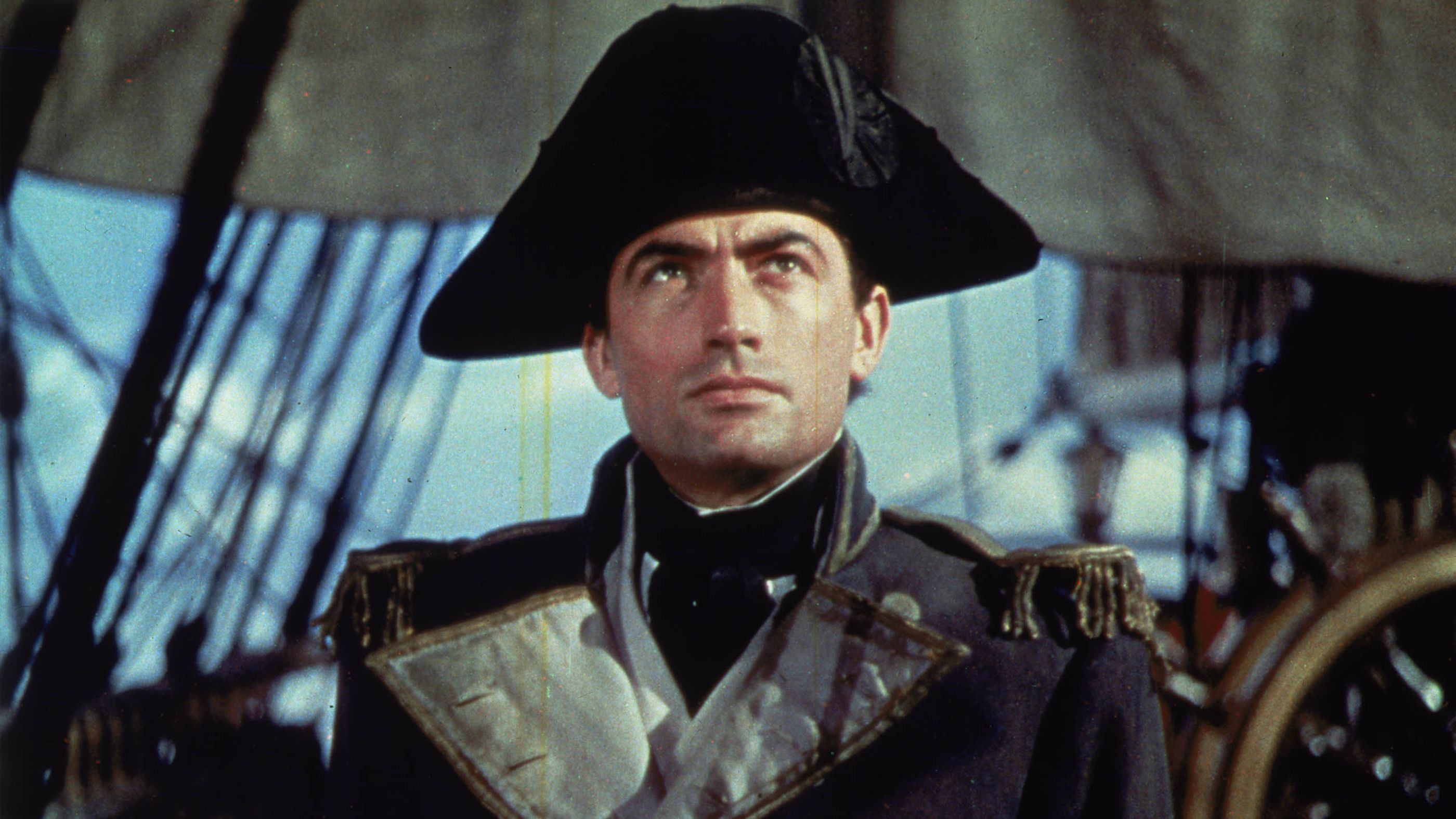
Gregory Peck starring in the film Captain Horatio Hornblower, 1951

February 4, 1937: The Happy Return, a novel by C.S. Forester, is published. It is the debut of one of the leading heroic characters in English-language literature: Horatio Hornblower.

Cecil Louis Troughton Smith was born on August 27, 1899 in Cairo, where his father was teaching English to Egyptian children. He dropped out of medical school, and was rejected for military service despite World War I going on.

He turned to writing, using the name "C.S. Forester." In addition to the Hornblower novels, of which there would eventually be 11, he wrote the 1935 novel The African Queen, turned into an Oscar-winning film in 1951. During World War II, he worked in propaganda for the British government, and convinced a co-worker, Roald Dahl, to start writing. He died on April 2, 1966.
C.S. Forester

The Happy Return takes place in 1808, at the height of the Napoleonic Wars. Hornblower is in command of the 36-gun frigate HMS Lydia, sailing to Nicaragua, then controlled by Spain, to aid the Spanish in the fight against France's dictatorial Emperor Napoleon Bonaparte. But Hornblower discovers that the Spanish lord he's supposed to aid has a god complex, and, as a matter of honor, Hornblower must oppose him. The story is similar to that of Joseph Conrad's 1899 novel Heart of Darkness.

After World War II, Forester lived in America, and, in later books, gave Hornblower a birthdate of July 4, 1776. He also gave him a humble beginning, showing that his rise in the Royal Navy is due to talent, not connections. To aid this, he gave Hornblower a classical education, making him a polyglot and a polymath.

In 1964, Gene Roddenberry pitched his idea for Star Trek to NBC by calling it "Hornblower in space," and later went out of his way to write the character of Captain James T. Kirk as not merely courageous and honorable (if a bit overly interested in women), but as brilliant, "a stack of books with legs."

Hornblower's career begins as a Midshipman in 1794, and ends it as Admiral of the Fleet, age 72, in 1848, in The Last Encounter, published a few weeks after Forester's death. Like Arthur Conan Doyle with Sherlock Holmes in His Last Bow, and Agatha Christie with Hercule Poirot in Curtain: His Last Case, Forester wanted to give Hornblower a definitive last story.

Gregory Peck starred in the 1951 film Captain Horatio Hornblower in 1951. Ioan Gruffudd starred in the ITV series Hornblower from 1998 to 2003, broadcast in American on A&E.

*

February 4, 1937 was a Thursday. Baseball and football were out of season. The NBA hadn't been founded yet. These games were played in the NHL:

* The New York Rangers played the Detroit Red Wings to a 2-2 tie at the Olympia Stadium in Detroit.

* The New York Americans lost to the Toronto Maple Leafs, 2-1 at the old Madison Square Garden.

* The Boston Bruins beat the Montreal Canadiens, 6-2 at the Montreal Forum.

* And the Montreal Maroons and the Chicago Black Hawks were not scheduled.

December 31, 1999 & January 1, 2000: The Millennium

December 31, 1999:  The Millennium arrives. The people of planet Earth survived. At a terrible cost. But we hadn't destroyed ourselves. ...